Better scalability with Cloud TPU pods and TensorFlow 2.1

Cloud TPU Pods have gained recognition recently for setting world performance records in both training and inference. These custom-built AI supercomputers are now generally available to help all types of enterprises solve their biggest AI challenges. “We’ve been greatly impressed with the speed and scale of Google TPU while making use of it for a variety of internal NLP tasks,” said Seobok Jang, AI Development Infra Lead at LG. “It helped us minimize tedious training time for our unique language models based on BERT, thus making it remarkably productive. Overall, the utilization of TPU was an excellent choice especially while training complex and time consuming language models.”Not only are Cloud TPUs now more widely available, they are increasingly easy to use. For example, the latest TensorFlow 2.1 release includes support for Cloud TPUs using Keras, offering both high-level and low-level APIs. This makes it possible to leverage petaflops of TPU compute that’s optimized for deep learning with the same user-friendly APIs familiar to the large community of Keras users. (The TensorFlow 2.x series of releases will also continue to support the older TPUEstimator API.)In this post, we’ll walk through how to use Keras to train on Cloud TPUs at small scale, demonstrate how to scale up to training on Cloud TPU Pods, and showcase a few additional examples and new features.A single Cloud TPU v3 device (left) with 420 teraflops and 128 GB HBM, and a Cloud TPU v3 Pod (right) with 100+ petaflops and 32 TB HBM connected via a 2-D toroidal mesh network.Train on a single Cloud TPU deviceYou can use almost identical code whether you’re training on a single Cloud TPU device or across a large Cloud TPU Pod slice for increased performance. Here, we show how to train a model using Keras on a single Cloud TPU v3 device.Scale up to Cloud TPU PodsYou only need minimal code changes to scale jobs from a single Cloud TPU (four chips) to a full Cloud TPU Pod (1,024 chips). In the example above, you need to set FLAGS.tpu to your Cloud TPU Pod instance name when creating the TPUClusterResolver. To use Cloud TPU slices effectively, you may also need to scale the batch size and number of training steps in your configuration. TensorFlow Model Garden examplesTensorFlow 2.1 includes example code for training a diverse set of models with Keras on TPUs, as well as full backward compatibility for Cloud TPU models written using TPUEstimator in TensorFlow 1.15. At the time of writing, Keras implementations for BERT, Transformer, MNIST, ResNet-50, and RetinaNet are included in the TensorFlow Model Garden GitHub repo, and a larger set of models with tutorials is available via the official Cloud TPU documentation.The TensorFlow Model Garden includes Keras examples with user-implemented “custom training loops” as well as Keras examples using higher-level model.compile and model.fit APIs. Writing your own training loop, as shown in this blog post, provides more power and flexibility, and is often a higher-performance choice when working with Cloud TPUs.Additional featuresTensorFlow 2.1 makes working with Cloud TPUs even easier by adding support for the following features.Automatic handling of unsupported opsIn common cases, unsupported ops can now be automatically handled when porting models to Cloud TPUs. Adding tf.config.set_soft_device_placement(True) to TensorFlow code (as shown below) will cause any ops that aren’t supported on Cloud TPUs to be detected and placed on the host CPUs. This means that custom tf.summary usage in model functions, tf.print with string types unsupported on Cloud TPUs, and others will now just work.Improved support for dynamic shapesWorking with dynamic shapes on Cloud TPUs is also easier in TensorFlow 2.1. TensorFlow 1.x Cloud TPU training requires specifying static per-replica and global batch sizes, for example by setting drop_remainder=True in the input dataset. TensorFlow 2.1 no longer requires this step. Even if the last partial batch is not even across replicas or some replicas have no data, the training job will run and complete as expected.Using ops with dynamic output dimensions and slicing with dynamic indexes is also now supported on Cloud TPUs.Mixed precision The Keras mixed precision API now supports Cloud TPUs, and it can significantly increase performance in many applications. The example code below shows how to enable bfloat16 mixed precision on Cloud TPUs with Keras. Check out the mixed precision tutorial for more information.Get startedTo quickly try out Cloud TPU on TensorFlow 2.1, check out this free codelab, Keras and modern convnets on TPUs. You can also experiment with Cloud TPUs in a Kaggle competition for the first time. It includes starter material to build a model that identifies flowers. Once you’re ready to accelerate your AI workloads on Cloud TPU Pods, learn more about reservations and pricing on the product page. Stay tuned for additional posts about getting started on Cloud TPUs and TensorFlow 2.1 in the coming weeks.
Quelle: Google Cloud Platform

DML without limits, now in BigQuery

Data manipulation language (DML) statements in BigQuery, such as INSERT, UPDATE, DELETE, and MERGE, enable users to add, modify, and delete data stored in BigQuery, Google Cloud’s enterprise data warehouse. DML in BigQuery supports inserting, updating, or deleting an arbitrarily large number of rows in a table in a single job. We are constantly making improvements to our DML functionality for better performance, scalability, and volume. We on the BigQuery team are happy to announce that we have removed all quota limits for DML operations, so BigQuery can now support an unlimited number of DML statements on a table. With this release, you can update your tables at a higher frequency without running into conflicts between different updates. Specifically, for scenarios like change data capture, this allows you to apply the changes more frequently, thus allowing you to get improved freshness for your data.In this blog, we’ll describe the changes made to BigQuery that make this possible. We will refer to UPDATE, MERGE and DELETE as mutating DML statements to differentiate them from INSERT DML statements, which only add new rows to a table.Execution of a DML statementBigQuery is a multi-version database. Any transaction that modifies or adds rows to a table is ACID-compliant. BigQuery uses snapshot isolation to handle multiple concurrent operations on a table. DML operations can be submitted to BigQuery by sending a query job containing the DML statement. When a job starts, BigQuery determines the snapshot timestamp to use to read the tables used in the query. Unless the input tables used in a query explicitly specify a snapshot timestamp (using FOR SYSTEM_TIME AS OF), BigQuery will use this snapshot timestamp for reading a table. This timestamp determines the snapshot of the data in the table for the job to operate on. Specifically, for the table that is the target of the DML statement, BigQuery attempts to apply the mutations produced by it on this snapshot. Rather than table locking, BigQuery uses a form of optimistic concurrency control. At the time of committing the job, BigQuery checks if the mutations generated by this job conflict with any other mutations performed on this table while this job was running. If there is a conflict, it aborts the commit operation and retries the job. Thus, the first job to commit wins. This could mean that if you run a lot of short DML mutation operations, you could starve longer-running ones. Automatic retry on concurrent update failuresRunning two mutating DML statements concurrently against a table will succeed as long as the two statements don’t modify data in the same partition. Two jobs that try to mutate the same partition may sometimes experience concurrent update failures. In the past, BigQuery failed such concurrent update operations. Applications would have to retry the operation. BigQuery now handles such failures automatically. To do this, BigQuery will restart the job, first determining a new snapshot timestamp to use for reading the tables used in the query. It then applies the mutations on the new snapshot, using the process described above. BigQuery will retry concurrent update failures on a table up to three times. This change significantly reduces the number of concurrent update errors seen by users.Queuing of mutating DML statementsPreviously, BigQuery allowed up to 1,000 DML statements to the table during any 24-hour period. BigQuery no longer imposes such quota limits. To achieve this, BigQuery runs a fixed number of mutating DML statements concurrently against a table at any point. Any additional mutating DML jobs against that table will be automatically queued in PENDING state. Once a previously running job finishes, the next PENDING job is de-queued and run. In practice, this new queueing behavior can make it seem like DML operations are taking longer, since they can exist in PENDING state while waiting for other operations to complete. If you want to check whether this is happening, you can look up the state of your DML jobs. If the job state is PENDING, then there is a good chance that this is the reason. Moreover, you can inspect this information after the fact. There are three times that get recorded in job statistics: creation time, which is the time the BigQuery servers received the request to run a job; start time, which is the time the job began executing in RUNNING state; and end time, which is the time the query completed. If there is a gap between creation time and start time, then the job was queued for some reason.BigQuery allows up to 20 such jobs to be queued in PENDING state for each table. Concurrently running load jobs or INSERT DML statements against this table are not considered when computing the 20-job limit, since they can start immediately and do not affect the execution of mutation operations. INSERT DML statementsBigQuery generally does not limit the number of concurrent INSERT DML statements that write to a single table. During the immediately previous 24-hour period (which is a rolling window), BigQuery runs the first 1,000 statements that INSERT into a table concurrently. To prevent system overload, INSERT DML statements over this limit will be queued while allowing a fixed number of them to run concurrently. Once a previous job finishes, the next PENDING job is de-queued and run. Once it starts queuing, BigQuery allows up to 100 INSERT DML statements to be queued against the table.Best practices for DML statementsBigQuery can scale to arbitrarily large mutations. With the changes described above, DML support offered by BigQuery works well with smaller size mutations as well. In general, the number of DML statements that can be executed against a table depends on the time it takes to execute each operation. To get the best performance, we recommend the following patterns:Use partitioned tables if updates or deletions generally happen on older data or on data in a date-localized manner. This ensures that the changes are limited to the specific partitions and can accelerate the update process.Use updates over clustered tables where there is clustering locality on the modified rows—they will generally perform better. This ensures that the changes are limited to specific sets of blocks, reducing the amount of data that needs to be read and written.Group DML operations together into larger ones to amortize the cost of running smaller operations.Avoid partitioning tables if the amount of data in each partition is small, and each update modifies a large fraction of partitions in the table. This reduces the amount of churn on metadata and improves the performance of the updates.Learn more about BigQuery DML.
Quelle: Google Cloud Platform

Transforming Next ‘20 into Google Cloud Next ‘20: Digital Connect on April 6-8, 2020

The health and wellbeing of Google Cloud customers, partners, employees and the overall community is our top priority. Due to the growing concern around the coronavirus (COVID-19), and in alignment with the best practices laid out by the CDC, WHO and other relevant entities, Google Cloud has decided to reimagine Google Cloud Next ’20, which will still take place from April 6-8.We are transforming the event into Google Cloud Next ’20: Digital Connect, a free, global, digital-first, multi-day event connecting our attendees to Next ’20 content and each other through streamed keynotes, breakout sessions, interactive learning and digital “ask an expert” sessions with Google teams. Innovation is in Google’s DNA and we are leveraging this strength to bring you an immersive and inspiring event this year without the risk of travel. As we work on all the details of this new digital experience over the coming weeks, we will update our Next ’20 website with additional information, including registration information.
Quelle: Google Cloud Platform

How to detect and prevent network outages—and stay compliant too

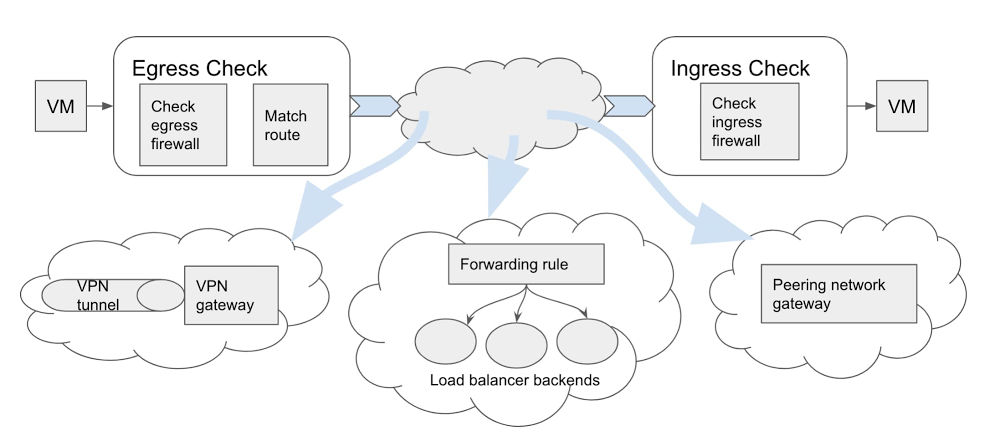
By some estimates, 75% of network outages and performance issues are the result of a misconfiguration, and more often than not, these misconfigurations aren’t discovered until they’re in production. That’s stressful for network administrators and architects—not knowing the impact of a configuration change in firewall rules or routing rules makes network monitoring reactive rather than proactive, introduces risk and leads to long troubleshooting times. We recently introduced Network Intelligence Center, Google Cloud’s comprehensive network monitoring, verification and optimization platform that works across the cloud and on-premises data centers, including an initial set of modules that can predict and heal network failures. In this post, we’ll take a deep dive into the Connectivity Test module, which helps diagnose connectivity issues and predicts the impact of configuration changes, so you can better prevent outages. Connectivity Test enables you to self-diagnose connectivity issues within Google Cloud, or Google Cloud to an external end-point that is on-prem or even in another cloud. You can also create, save and run tests. With these capabilities, Connectivity Test can help you perform a variety of important network administration tasks such as: Understand and verify network design and architectureTroubleshoot and fix connectivity issuesVerify the impact of configuration changesEnsure network securityMake your security and compliance audits easier and more manageableWe’ll discuss each of these use cases in greater depth below, but first, let’s look at the Connectivity Test architecture. Connectivity Test technical overviewThe Connectivity Test module is powered by a network reachability analysis platform, which determines whether there’s connectivity between source and destination. If there’s no connectivity, Connectivity Test pin-points where it’s broken and identifies the root-cause, for example, a firewall rule blocking the connectivity. Rather than the traditional approach of looking at live traffic flows or sending traffic through the data plane, this reachability analysis platform uses a network verification approach based on formal verification techniques. It creates an accurate and comprehensive model of the network based on the current network design, configurations and network state. The model can reason about all possible behaviors and help troubleshoot configuration issues or prove compliance with an intended policy. Thus, network verification can exhaustively prove or disprove reachability in ways that traditional approaches cannot.Connectivity Test uses two key components in particular to perform this analysis.  Data plane modelTo perform static reachability analysis, Connectivity Test relies on an idealized data plane model. In other words, Connectivity Test derives instances, networks, firewall rules, routes, VPN tunnels, etc. from GCP project configurations, which it then analyzes to verify whether two points can be reached. The most important configurations that it uses are VPC network properties, network services (load balancers), hybrid cloud configurations (VPN, Interconnect, Cloud Routers), and VM and Google Kubernetes Engine endpoint configurations. Network Abstract State MachineConnectivity Test also relies on a Network Abstract State Machine, an idealized model of how a Google Cloud VPC network processes packets. Specifically, Google Cloud processes a packet in several logical steps that are modeled as a finite state machine, which takes a bounded number of steps between discrete states until the packet has been delivered or dropped.The diagram below shows a model for how Connectivity Test simulates trace traffic between two VMs. Depending on your GCP network and resource configurations, this traffic could go through, for example, a Cloud VPN tunnel, a GCP load balancer, or a peered VPC network before reaching the destination VM.Simulating traffic between two VMs based on a network modelConnectivity Test in actionAs mentioned above, early Network Intelligence Center customers have been using Connectivity Test for five key use-cases. Let’s take a deeper look at each one.1. Understand and verify network design and architecture: As you migrate your workloads from on-prem to cloud, you want greater visibility into the network paths. You might want to check if traffic is going through a VPN or Interconnect, or which firewall or routing rules are getting applied between a source and destination endpoint. With Connectivity Test, you can see a complete trace of the packet flow from source to destination including all the hops (routes, egress/ingress firewall rules, VPN/Interconnect, VPC peering, NAT, and more), helping you better understand and easily verify the network design. You can even see multiple traces between source and destination, which is helpful for network configurations such as with High-Availability VPN.2. Troubleshoot and fix connectivity issues: Most network outages are the result of a misconfiguration, such as a badly designed firewall rule or an incorrect routing policy. In a complex cloud environment with shared VPCs and many firewall and routing configurations, it could take hours or days to troubleshoot connectivity issues and find the root cause. We see this frequently with customer support cases. With Connectivity Test, you can run a diagnostic test between the source and destination endpoint that is having a connectivity problem and quickly pinpoint the root cause, including the specific firewall rule or routing issue. You can then update the firewall rule and re-run the test(s) to verify if the firewall configuration update fixes the connectivity problem. This cuts down troubleshooting time from days or hours to minutes—and lets you very quickly root-cause, implement and then verify the fix.3. Verify the impact of configuration changes: In production environments, it’s imperative to to understand the impact of any configuration change before you deploy it, so you can catch any mistakes up front. With Connectivity Test, you can create a set of tests that reflect your connectivity intent, for example, that there should or should not be connectivity between a source and destination endpoint. After you make a configuration change, you can re-run a single test or all these tests to verify whether the connectivity intent hasn’t been violated. If you find that the intent has been violated, you can roll back the configuration change and re-run the test(s) to make sure your Connectivity stays as desired and expressed by your Intent in the test(s).4. Ensure network security: Connectivity Test helps ensure that your network configuration reflects your network security intent. For example, you may not want your web tier VMs to be connected to your database tier VMs, or database tier VMs should not be connected to the internet. You can express these security intents as Connectivity Tests, to verify that the endpoints are indeed “unreachable,” meaning the desired isolation exists. You can then run these tests periodically to detect any security violations.5. Make your security and compliance audits easier and more manageable: In the above example, we discussed how you could express your security intent through Connectivity Tests and detect and fix any violations that are caught. If your security and compliance audits have any specific rules, policies and/or intents that you need to comply with, you can create a set of tests, run the tests periodically and log your results. Then, during a security and compliance audit, you have a ready-to-go log of how your network performed against the audit’s requirements.All the above use-cases can be realized through an easy-to-use UI. You can also run tests from the command line or an API, to run the tests automatically as part of your CI/CD pipeline.What customers are sayingEarly Network Intelligence Center adopters report that the Connectivity Test module helps them find and resolve problems faster. Randstad,an employment agency, says that Connectivity Test has become a key part of its networking toolset. “We are excited about using Network Intelligence Center for troubleshooting network connectivity issues. We have become frequent users of Connectivity Test within Network Intelligence Center to resolve connectivity issues both within GCP configuration, and to confirm when the issue is outside GCP. It has reduced total troubleshooting effort, and saves us significant time.” – Kevin Scott, Senior Director, IT Infrastructure & Architecture, RandstadMeanwhile, managed service provider HIPAA Vault uses Connectivity Test to check and demonstrate compliance. “We’re excited that with the help of Network Intelligence Center, we’ll be able to verify that our network connectivity matches intent and quickly troubleshoot network configuration issues.” – David Breise, Cloud and Network Engineer, HIPAAVault.   To learn more about how you can leverage Network Intelligence Center and Connectivity Test to improve the performance and availability of your network, watch this video.
Quelle: Google Cloud Platform

With Kubeflow 1.0, run ML workflows on Anthos across environments

Google started the open-source Kubeflow Project with the goal of making Kubernetes the best way to run machine learning (ML) workloads in production. Today, Kubeflow 1.0 was released. Kubeflow helps companies standardize on a common infrastructure across software development and machine learning, leveraging open-source data science and cloud-native ecosystems for every step of the machine learning lifecycle. With the support of a robust contributor community, Kubeflow provides a Kubernetes-native platform for developing, orchestrating, deploying, and running scalable and portable ML workloads.Using Kubeflow on Google Cloud’s Anthos platform lets teams run these machine-learning workflows in hybrid and multi-cloud environments while taking advantage of Google Kubernetes Engine’s (GKE) enterprise-grade security, autoscaling, logging, and identity features. Barton Rhodes, Senior Machine Learning Engineer at DaVita, and an early user of Kubeflow on Anthos, said the enterprise features introduced in Kubeflow 1.0 will make a big difference for his organization: Having used Kubeflow (since 0.1) as a development foundation for a platform of several teams of data scientists needing to operate in hybrid-cloud environments, it has been a pleasure and an inspiration to see the project mature. When so much of the ethics and impacts of machine learning come down to the details of implementation, operations, safety, and reproducibility for the resulting artifacts, open source allows the broader community to build and tackle these challenges on top of shared foundations. With this release and exciting new features like multi-user isolation, workload identity, and KFServing, it is that much easier to introduce Kubeflow or its individual resources into the enterprise.  The blog post introducing Kubeflow 1.0provides a technical deep-dive into the core set of applications included in the open-source release. In this post, we’ll look at more details on the advantages of using Kubeflow 1.0 on Anthos for the enterprise. SecurityFor data scientists to be productive, they need easy and secure access to UIs like the Kubeflow dashboard, Jupyter UI, and TensorBoard.When you deploy Kubeflow on Anthos, it can be secured using Identity-Aware Proxy (IAP), Google Cloud’s zero trust access solution (also known as BeyondCorp). Using IAP, you can restrict access to Kubeflow based on either IP (e.g. to your corporate network), device attributes (e.g. to ensure Kubeflow is only accessed from up-to-date devices), or both.AutoscalingWhen deployed on Anthos, Kubeflow takes advantage of GKE autoscaling and node auto-provisioning to right-size your clusters based on your workloads. If the existing node pools have insufficient resources to schedule pending workloads, node auto-provisioning will automatically create new ones. For example, node auto-provisioning will automatically add a GPU node pool when a user requests a GPU. Autoscaling can also add more VMs to existing node pools if there’s insufficient capacity to schedule pending pods.LoggingGKE has direct integration with Cloud Logging, ensuring that the logs from all of your workloads are preserved and easily searchable. As this MNIST example shows, by using a query like the one below, you can fetch the logs for one of the pods in a distributed TensorFlow job by filtering based on the pod label.Cloud Logging’s integration with BigQuery makes it easier to begin collecting the metrics you need to evaluate performance. If your application emits logs as JSON entries, they will be indexed and searchable in Python. You can then leverage Cloud Logging’s export functionality to export them to Cloud Storage or BigQuery to facilitate analysis.Combining BigQuery logging with Kubeflow notebooks can help you analyze model performance. This GitHub notebook illustrates how the Kubeflow project is using this combination to measure the performance of models that automatically classify Kubeflow issues. Using pandas-gbq we can more easily generate Pandas Dataframes based on SQL queries, then analyze and plot results in our notebooks. Below is a snippet illustrating how you can log predictions from python.Here we’re using Python’s standard logging module with a custom formatter to emit the logs as serialized JSON. The structure is preserved when the logs are ingested into Cloud Logging and then exported to BigQuery, and we can search based on the extra fields that are provided.Workload IdentityOn Anthos, Kubeflow uses Workload Identity to help seamlessly integrate your AI workloads running on GKE with Google Cloud services. When you create a Kubeflow namespace using Kubeflow’s profile controller, you can select a Google Cloud service account to bind to Kubernetes service accounts in the resulting namespace. You can then run pods using those Kubernetes service accounts to access Google Cloud services like Cloud Storage and BigQuery without requiring additional credentials.The MNIST example mentioned above relies on workload identity to let your Jupyter notebooks, TFJobs, and Kaniko Jobs talk to Cloud Storage. What’s nextKubeflow 1.0 is just the beginning. We’re working on additional features that will help you be more secure and efficient. Here’s what you can look forward to in upcoming releases:Support for running ML workloads on-prem using AnthosUsing Katib and Batch on GKE to run large-scale hyperparameter tuning jobsA solution for preventing data exfiltration by deploying Kubeflow with private GKE and VPC Service ControlsGet startedTo get started with Kubeflow on Anthos, check out this tutorial. It walks through every step you need to deploy Kubeflow on Anthos GKE and then run MNIST E2E.
Quelle: Google Cloud Platform

Off to a fast start in 2020 with over 70 new Partner Specializations

As we embark on a new decade of the ‘20s, there’s no question that our greatest opportunities are ahead of us. The passion we see from our partners fuels our drive to help customers succeed, and we remain committed to supporting our customers and partners in theirjourney to differentiation. It’s amazing to see our partners growing their businesses with us, and even more incredible to witness our partners driving real business value for our customers with Google Cloud.We are aligning our Google Cloud solutions with the needs of our customers and giving our partners the ability to stand out with focus and precision. This will make it easier for customers to learn more about our partners and clearly understand partner capabilities.  For example, achieving a Google Cloud Specialization is not an easy task. Partners understand the value of investing in such a rigorous process and how beneficial their Specialization badge is because customers are reassured that they’ve been vetted by Google.We’re very excited to announce that partners achieved more than 70 new Specializations in Q4 2019. Congratulations to everyone involved, we know that the ability to differentiate your business through Expertise and Specialization is one of the many reasons you have chosen to grow with Google Cloud.As we look ahead at our mutual goals in 2020 and beyond, the key to growth will be the distinction of our business solutions, our commitment to expertise in deployment, and best practices for customer success. Together, we will solve today’s business challenges, while better serving our customers and partners at greater speed and agility. Commendation to our partners and their supporting teams who have worked so hard and have achieved such a momentous milestone last quarter in the following practices:Application DevelopmentCI&T | Davinci Technologies | GoPomelo | Informatica El Corte Ingles | IPNET | Noovle | SADA | Shortcut AS | Solstice | Techolution | Tempus Nova, LLC.Cloud MigrationCognizant | Epam Systems, Inc. | Nortal | Onix | RedaptData AnalyticsAgile GCP Labs | Core Compete | Davinci Technologies | Epam Systems, Inc. | Grupodot | Leega Consultoria | Nubosoft | Pandera Systems LLC | Servinformacion | SoftServe | SpringML | Zenta GroupEducationForward EdgeInfrastructureAmarello | Arctiq Inc. | CI&T | Cloudypedia | Grid Dynamics International, Inc. | Incentro | MediaAgility | Pandera Systems LLC | Taos | ZazmicInternet of Things (IoT)SOTECLocation-Based ServicesApplied Geographics, Inc. (AppGeo) | Globema | ProgisMachine LearningComputas | Kasna | MediaAgility | Pluto7 Consulting Inc | SantoDigital | Servian | TWT Business SolutionsMarketing AnalyticsConverteo | Crystalloids | SpringML | StackProsSecurityGFT | Maven Wave | RackspaceTrainingAgilitics Pte. Ltd. | Fast Lane Institute for Knowledge Transfer / ITLSWork TransformationHiView Solutions | Master Concept | Nubosoft | Nuva S.A.S. | Qi Network | Revevol Group | Shivaami | Suitebriar, Inc.Work Transformation EnterpriseAgosto | Cloudbakers | Devoteam | Noovle | WurstaLooking for a partner in your region who has achieved an expertise and/or specialization? Search our global Partner Directory. For our partners who are ready to go to the next level, visit Google Cloud Expertise and Specialization to learn more.For a list of Google Cloud partners with Specializations view here.Not yet a Google Cloud partner? Visit Partner Advantage and learn how to become one today!
Quelle: Google Cloud Platform

Google named a Leader in the Gartner 2020 Magic Quadrant for Cloud AI Developer Services

The enterprise applications for artificial intelligence and machine learning seem to grow by the day. To take advantage of everything AI/ML technologies have to offer, it’s important to have a platform that supports your needs fully—whether you’re a developer, a data scientist, an analyst, or just interested in AI. But with so many features and services to consider, it can be difficult to sort through it all. This is where analyst reports can provide valuable research to help you get the answers you need.Today, Gartner named Google a Leader in the Gartner 2020 Magic Quadrant for Cloud AI Developer Services report. This designation is based on Gartner’s evaluation of Google’s language, vision, conversation, and structured data products, including AutoML, all of which we deliver through Google Cloud. Let’s take a closer look at some of Gartner’s findings.Vision AI for every enterprise use caseYou don’t need to be an ML expert to reap the benefits that our AI portfolio offers. Our vision and video APIs, along with AutoML Vision and Video products, let developers of any experience level build perception AI into their applications. These products help you understand and derive insights from your images and videos with industry-leading prediction accuracy in the cloud or at the edge.Our Computer Vision products provide many features to help you understand your visual content and create powerful custom machine learning models: Through REST and RPC APIs, the Vision API provides access to pretrained models that are ready to use to quickly classify images. AutoML Vision automates the training of your own custom machine learning models with an easy-to-use graphical interface. It lets you optimize your models for accuracy, latency, and size, and export them to your application in the cloud, or to an array of devices at the edge.The Video Intelligence API has pre-trained machine learning models that automatically recognize a vast number of objects, places, and actions in stored and streaming video. AutoML Video Intelligence lets developers quickly and easily train custom models to classify and track objects within videos, regardless of their level of ML experience. The What-If Tool, an open-source visualization tool for inspecting any machine learning model, enhances your model’s interpretability, offering insights into how it’s making decisions for AutoML Vision and our data-labeling services.While powerful pre-trained APIs and custom model creation capabilities are part of meeting all of an enterprise’s ML needs, it’s equally important to be able to deploy these models wherever the business needs them. To that end, our AutoML Vision models can be deployed via container wherever it works best for you: in a virtual private cloud, on-premises, and in our public cloud. Easier and better custom ML models for your structured data AutoML Tables enables your entire team of data scientists, analysts, and developers to automatically build and deploy state-of-the-art machine learning models on structured data at a massively increased speed and scale. To create ML models, developers usually need training data that’s as complete and clean as possible. AutoML Tables provides information about and automatically handles missing data, high cardinality, and distribution for each feature in a dataset. Then, in training, it automates a range of feature engineering tasks, from normalization of numeric features and creation of one-hot encoding, to embeddings for categorical features.In addition, AutoML Tables also provides codeless GUI and python SDK options, as well as automated data preprocessing, feature engineering, hyperparameter and neural/tree architecture search, evaluation, model explainability, and deployment functionality. All of these features significantly reduce the amount of time it takes to bring a custom ML model to production from months to days.Ready for global scale As business becomes more and more global, being able to serve customers wherever they are or whatever language they speak is a key differentiator. To that end, many of our products support more languages than other providers. For example:Our OCR Language Support counts over 200 languages.Our speech-to-text product supports 120 languages and variants.Our translation product supports 104 languages. Our chatbot product supports 20+ languages, with more on the way. With such strong language support, Google Cloud makes it easier to grow your business globally.As the uses for AI continue to expand, more organizations are turning to Google to help build out their AI capabilities. At Google Cloud, we’re passionate about helping developers in organizations of all sizes to build AI/ML into their workflows quickly and easily, wherever they may be on their AI journey. To learn more about how to make AI work for you, download a complimentary copy of the Gartner 2020 Magic Quadrant for Cloud AI Developer Services report.Disclaimer: Gartner, Magic Quadrant for Cloud AI Developer Services, Van Baker, Bern Elliot, Svetlana Sicular, Anthony Mullen, Erick Brethenoux, 24 February 2020. Gartner does not endorse any vendor, product or service depicted in its research publications, and does not advise technology users to select only those vendors with the highest ratings or other designation. Gartner research publications consist of the opinions of Gartner’s research organization and should not be construed as statements of fact. Gartner disclaims all warranties, expressed or implied, with respect to this research, including any warranties of merchantability or fitness for a particular purpose.
Quelle: Google Cloud Platform

Dreaming big, traveling far, and expanding access to technology

Editor’s note: In honor of Black History Month, we’re talking to Cloud Googlers about what identity means to them and how their personal histories shape their work to influence the future of cloud technology. Albert Sanders, senior counsel for government affairs and public policy at Google Cloud, has worked in the White House, negotiated bipartisan deals in Congress, and recently addressed the United Nations General Assembly. His personal and professional travels have taken him to five continents—and he’s visited 11 (and counting!) countries in Africa. We sat down with Albert to hear more about his journey, some of his favorite moments, and advice on navigating career.Why did you choose a career in public policy?I’ve seen the real-life benefit when policymakers and government agencies get it right—and the troubling consequences when they do not. For example, I went to a high school where most students qualified for free, publicly funded meals. I didn’t fully appreciate it at the time, but that meant many of my classmates were living at or below the poverty line, so school was often the only place they’d receive balanced, hot meals on a consistent basis. We had some incredibly dedicated teachers and administrators, but my high school also operated at about double its maximum capacity. There were sometimes not enough seats or textbooks, so some of us had to stand in class and often we were prohibited from taking textbooks home. I learned early on that the decisions made in city halls, capitol buildings, and government agencies have a direct impact—sometimes positive, sometimes negative—on real people. Later in life I’d learn that this was not just true in education but all across society. So, I knew from an early age that I didn’t want to be a bystander. I wanted to have a direct impact on these decisions. Tell us about your path to working in government.My entree to public service was law school. I wanted to learn how the system worked, gain some expertise, and figure out how I could add value. I started out at a corporate law firm, working long hours learning the law, advising clients, honing my written and oral communication skills, and experiencing first-hand how various laws and regulations were directly impacting my clients. It was incredibly challenging and rewarding work. But, one day the phone rang with the proverbial “offer I could not refuse.”After a series of interviews, Senator Dick Durbin of Illinois asked me to join his Senate staff. At the time, he was the second-highest ranking U.S. Senator, who in 2004 had introduced a Senate candidate by the name of Barack Obama to the Democratic Convention. I was a twenty-something lawyer whose political “experience” was basically comprised of watching each one of those conventions from the age of 8—and telling my parents how to vote thereafter. Taking the job was a no-brainer. Adjusting to the 60% pay cut that came with it was much harder. Looking back, I’m so glad that I pursued my passion and chose to follow the path that gave me a chance to have the most impact—even if that meant waiting until later to maximize my earning potential. Money is important and individual circumstances differ, but no amount of money could purchase the experiences, opportunities, or relationships that blossomed during my time on Capitol Hill. What did you learn from your time on Capitol Hill?Television pundits, reporters, social media influencers, folks at the barber shop and others all across America were debating the things I was working on with Sen. Durbin each day. We were working incredibly hard to improve the lives of everyday Americans. And I loved every minute of it! Some days I was working on issues about which I had deep knowledge. Other days, I worked on issues that forced me out of my comfort zone, requiring me to lean on outside experts for insight. Both were equally valuable to my growth because they helped me build—and trust—my own instincts. I learned how to assess the character, knowledge, and motives of the external stakeholders trying to sway us one way or another on an issue. Having and exercising good judgment, especially where you have limited information or time, is a learned skill.I also saw the power of personal stories to compel people to action. When writing policy, we would look to the facts and the figures. But when it was time to advocate and persuade, Sen. Durbin encouraged us to find and share the stories of people who would be helped or harmed by a given approach. We did this in 2011, when I helped him build and lead the bipartisan coalition to pass the FDA Food Safety Modernization Act—the most comprehensive reform of our nation’s food safety laws in more than 50 years. It would not have happened without the courageous kids, adults, and seniors who came to Congress to talk about the loved ones they had lost or the physical and emotional consequences they endured as a result of foodborne illnesses. Those compelling voices, combined with a well-organized coalition of bipartisan advocates and a handful of policymakers willing to tackle the problem, got that bill through both houses of Congress and to President Obama’s desk for signature.What was it like working in the White House? I could talk about that experience for hours! I’ll never forget the day I received the phone call offering me the job of Associate Counsel to the President in the Office of White House Counsel. I am smiling as I reflect on it now. I was pacing in my bedroom, trying to process some bad news, when the phone rang. In an instant, that call changed my mood, and the course of my career! The opportunity to work for President Obama in the White House was literally a dream come true. My portfolio included oversight and investigations, cybersecurity and privacy, and high-stakes litigation. The substantive work was tough and invigorating, and offered an opportunity to apply lessons from each of my prior roles. The people on our team were some of the most brilliant and dedicated public servants I’d ever met. Their backgrounds and personal stories were so impressive, but I recall being even more impressed by their humility and work ethic. Working at the White House involved late nights, long weekends, and its fair share of stress. But I was reminded of the privilege I had and the gravity of my responsibility every time I parked my car on The Ellipse, chatted with Secret Service agents as I swiped my badge or gave a West Wing tour. I’ll never forget the smiles on the faces of the D.C. high school students we hosted in the basement bowling alley one weekend. Some of them came from high schools similar to mine, and I could see in their eyes just how special this moment was for them.We heard you have a goal to visit every African country. Can you tell us more?I do! That’s another topic I could speak on at length. I’ve been to 11 countries in Africa so far, and my goal is to spend quality time in all 54. My first trip was to South Africa several years ago. During that trip, we would barely scratch the surface of the culture, history, energy, challenges and opportunities of this beautiful, complicated county. But the depth of connection we felt, the openness of the people, and the overall richness of that initial experience made a lasting impression.I’ve tried many times—often unsuccessfully—to explain the special connection that I and many other African Americans feel to the continent of Africa. Many Americans may take for granted that they can trace their family origins to places outside the United States. One of the many enduring legacies of slavery is that most African Americans don’t have that direct connection to their family history. We were the only group of people to arrive on American soil en masse against their will, and it’s often difficult to trace family history even four or five generations. This creates a void that is often uncomfortable to discuss, because it’s a stark reminder of the present-day impact of our nation’s brutal history.Traveling through Africa is intensely personal. It’s a way to connect with a rich and textured personal history about which so many of us know so little. My visits are, in some ways, a small, personal tribute to that history and those who lived it. I may not know the names of my ancestors or the place of their birth, but I’m reminded regularly that they passed on to us a resilience, faith, and determination that could not be shackled. When they were praying for freedom in the bowels of a slave ship, nursing wounds from a vicious beating, or hoping for a better tomorrow—those prayers and hopes were for my generation and all the others that have followed. I stand on their shoulders and I can only hope that I make them proud. Traveling through Africa is also just incredibly fun. Every country I visit is packed with new discoveries, incredible adventures, amazing food, unforgettable people, rich culture and so much more! I’ve walked with gorillas in Rwanda’s Volcanoes National Park, scaled Sahara Desert sand dunes in Merzouga, Morocco, and I’ve run my fingertips over the hieroglyphics on Nubian Pyramids in Meroe, Sudan. I celebrated Eid al Fitr, the feast that marks the end of Ramadan, in Dakar, Senegal with a family who met me one day and welcomed me into their home the next. And I’ll never forget standing in the doorway and looking out into the expanse of the Atlantic Ocean from the Point of No Return at Cape Coast Castle in Accra, Ghana—the very same doorway through which many enslaved Africans began their horrific journey to the United States 400 years ago. How have your experiences shaped your work at Google? As the lead for global infrastructure public policy, I partner with subject matter experts, attorneys, engineers, and other Googlers from all over the world. Ultimately, we strive to help more people benefit from cloud computing. There used to be a huge technology barrier to building a business. With cloud computing, all you need is an internet connection and you can have the same computing power, data analytics, artificial intelligence, and secure infrastructure that powers Google products like Gmail, YouTube, and Google Maps. Google Cloud tools don’t only improve business outcomes, they expand technology access—and thereby opportunity. I’m pleased to help bring our cutting-edge technology to more organizations globally and support policymakers, NGOs, and other organizations that leverage our cloud tools to drive innovation, improve local economies, and enhance digital literacy.For someone so passionate about public service, moving into the private sector was definitely a change. But I continue to be guided by a personal mission statement of working for individuals, or in the case of Google, a company, with a mission I support and values I share.Do you have any career advice to share?Along with following a personal mission statement, I’ve gotten other advice from mentors and colleagues. First, it’s important to embrace the uncomfortable and unprecedented. Three years ago, I was the first hire on the public policy team for Google Cloud. Since then, our team has experienced exponential growth and global distribution. I still remember some of the early challenges, but it’s been an incredible journey and I’m happy I stepped up to the plate. Second, don’t be afraid to advocate for yourself. Suffering in silence or being reluctantly agreeable doesn’t win allies. It only builds internal resentment and deprives your existing allies of the opportunity to help you resolve issues. Third, representation matters. One of the reasons I do my best every day is because I’m aware that I must excel for myself—and for other people of color who are still terribly underrepresented in our industry. I appreciate Google’s various initiatives to address this issue. I’m committed to doing my part to support those efforts, ensure accountability, and demonstrate through my own work product and work ethic what’s possible when diverse perspectives and people have a seat at the table.
Quelle: Google Cloud Platform

Hitting the Silicon Slopes with a new Salt Lake City region, now open

Today, we’re launching our newest Google Cloud Platform region in Salt Lake City, bringing a third region to the western United States, the sixth nationally, and our global total to 22.A region for the Silicon SlopesUtah’s Silicon Slopes area is home to many digitally savvy companies. Now open to Google Cloud customers, the Salt Lake City region (us-west3) provides you with the speed and availability you need to innovate faster, build high-performing applications, and best serve local customers. Additionally, the region gives you added flexibility to distribute your workloads across the western U.S., including our existing cloud regions in Los Angeles and Oregon.The Salt Lake City region offers immediate access to three zones, for high availability workloads, and our standard set of products, including Compute Engine, Kubernetes Engine, Bigtable, Spanner, and BigQuery. Our private backbone connects Salt Lake City to our global network quickly and securely. In addition, you can integrate your on-premises workloads with our new region using Cloud Interconnect. This means that Salt Lake City-based customers can expand globally from their front door, and those based outside the region can easily reach their users in the mountain West.Visit our cloud locations page for a complete list of services available in the Salt Lake City region.What customers are sayingIndustries including healthcare, financial services, and IT are investing in Salt Lake City. Organizations across these verticals have turned to the Google Cloud to innovate faster and help solve their most complex challenges.PayPal, a leading technology platform and digital payments company, is migrating key portions of its payments infrastructure to the new region. For more on PayPal’s journey with Google Cloud, read today’s press release for details. Overstock, a 20-year-old tech company that provides best-in-class retail customer experiences, has been in the technology space long before enterprise cloud environments became a reality. “Our home-grown infrastructure was built in a pre-cloud world and needed upgrading. In our search for a cloud partner, we had a specific set of criteria in mind given our industry and global customer base. We were able to maintain site-wide performance while updating our legacy systems to a custom public/private cloud hybrid with Google’s systems. With this new region, we expect to achieve higher availability, lower latency, greater business continuity, and improved quality of our service going forward,” said Joel Weight, CTO, Overstock.  Recursion, a digital biology company based in Salt Lake City that focuses on industrializing drug discovery, selected Google Cloud as its primary public cloud provider as it builds a drug discovery platform that has the potential to cut the time to discover and develop a new medicine by a factor of 10. “Google Cloud’s continued investment in the area is a clear indicator that Salt Lake City is a force to be reckoned with as an influential tech hub. With the new cloud region, companies like ours have access to faster, scalable computing infrastructure to better serve their customers. We look forward to the opportunities that are ahead in collaboration with Google,” said Ben Mabey, Chief Technical Officer, Recursion.StorageCraft, a data protection and recovery provider headquartered in Draper, Utah, will deploy Google Cloud to support business growth and future-proof its data protection and recovery product cloud services portfolio. “StorageCraft Cloud Solutions are a central part of our product offering and growth strategy. As our business expands, we will continue to deploy technology that optimizes the performance of our solutions to the benefit of our partners and our customers. Collaborating with Google Cloud close to our headquarters will help ensure that we can easily scale the capacity of our offerings with high-performing cloud services. This is a critical requirement of partners and customers who rely on StorageCraft solutions to always keep their data safe, accessible and optimized,” said Jawaad Tariq, VP of Engineering, StorageCraft. What’s nextWe are excited to welcome you to our new cloud region in Salt Lake City, and eagerly await to see what you build with our platform. Stay tuned for more region announcements and launches this year, starting with our next U.S. region in Las Vegas. For more information, contact sales to get started with Google Cloud today.
Quelle: Google Cloud Platform

Introducing BigQuery Flex Slots for unparalleled flexibility and control

Organizations of all sizes look to BigQuery to meet their growing analytics needs. We hear that customers value BigQuery’s radically innovative architecture, serverless delivery model, and integrated advanced capabilities in machine learning, real-time analytics, and business intelligence. To help you balance explosive demand for analytics with the need for predictable spend, central control, and powerful workload management, we recently launched BigQuery Reservations.Today we are introducing Flex Slots, a new way to purchase BigQuery slots for short durations, as little as 60 seconds at a time. A slot is the unit of BigQuery analytics capacity. Flex Slots let you quickly respond to rapid demand for analytics and prepare for business events such as retail holidays and app launches. Flex Slots are rolling out to all BigQuery Reservations customers in the coming days!Flex Slots give BigQuery Reservations users immense flexibility without sacrificing cost predictability or control.Flex Slots are priced at $30 per slot per month, and are available in increments of 500 slots.It only takes seconds to deploy Flex Slots in BigQuery Reservations. You can cancel after just 60 seconds, and you will only be billed for the seconds Flex Slots are deployed.Benefits of Flex SlotsYou can seamlessly combine Flex Slots with existing annual and monthly commitments to supplement steady-state workloads with bursty analytics capability. You may find Flex Slots especially helpful for short-term uses, including:Planning for major calendar events, such as the tax season, Black Friday, popular media events, and video game launches. Meeting cyclical periods of high demand for analytics, like Monday mornings.Completing your data warehouse evaluations and dialing in the optimal number of slots to use.Major calendar events. For many businesses, specific days or weeks of the year are crucial. Retailers care about Black Friday and Cyber Monday, gaming studios focus on the first few days of launching new titles, and financial services companies worry about quarterly reporting and tax season. Flex Slots enable such organizations to scale up their analytics capacity for the few days necessary to sustain the business event, and scale down thereafter, only paying for what they consumed.Payment technology provider Global Payments plans to add even more flexibility to their usage with this feature. “BigQuery has been a steady engine driving our Merchant Portal Platform and analytics use cases. As a complex multinational organization, we were anxious to leverage BigQuery Reservations to manage BigQuery cost and resources. We had been able to manage our resources effectively in most areas but were missing a few,” says Mark Kubik, VP BI, data and analytics, application delivery at Global Payments. “With Flex Slots, we can now better plan for automated test suites, load testing, and seasonal events and respond to rapid growth in our business. We are eager to implement this new feature in our workloads to drive efficiency, customer experience, and improved testing.”Cyclical demand. If the majority of your users log into company systems at nine every Monday morning to check their business dashboards, you may spin up Flex Slots to rapidly respond to increased demand on your data warehouse. This is something that the team at Forbes has found helpful. “Moving to BigQuery Reservations enabled us to self-manage our BigQuery costs,” says David Johnson, vice president, business intelligence, Forbes. “Flex Slots will give us an additional layer of flexibility—we can now bring up slots whenever we have a large processing job to complete, and only pay for the few minutes they were needed.”Evaluations. Whether you’re deciding on BigQuery as your cloud data warehouse or trying to understand the right number of BigQuery slots to purchase, Flex Slots provide the flexibility to quickly experiment with your environment.The BigQuery advantageFlex Slots are especially powerful considering BigQuery’s unique architecture and true separation of storage and compute. Because BigQuery is serverless, provisioning Flex Slots doesn’t require instantiating virtual machines. It’s a simple back-end configuration change, so acquiring Flex Slots happens very quickly. And because BigQuery doesn’t rely on local disk for performance, there is no warm-up period with poor and unpredictable performance. Flex Slots perform optimally from the moment they’re provisioned. Flex Slots is an essential part of our BigQuery Reservations platform. BigQuery Reservations give intelligence-hungry enterprises the control necessary to enable their organizations with a powerful tool like BigQuery while minimizing fiscal and security risks:With Reservations, administrators can centrally decide who in their organization can make purchasing decisions, neutralizing the fear of shadow IT.  Users can manage and predict their organizations’ BigQuery spend and conformism to fixed budgets.Administrators can optionally manage how their departments, teams, and workloads get access to BigQuery in order to meet their specific analytics needs. Flex Slots offer BigQuery users an unparalleled level of flexibility—purchase slots for short bursts to complement your steady-state workloads. Getting started with Flex SlotsFlex Slots are rolling out as we speak, and will be available in the coming days in the BigQuery Reservations UI.You can purchase Flex Slots alongside monthly and annual commitment types, with the added benefit of being able to cancel them at any time after the first 60 seconds. To get started right away, try the BigQuery sandbox. If you are thinking about migrating to BigQuery from other data warehouses, check out our data warehouse migration offer. Learn more about:Flex Slots documentationBigQuery flat-rate pricing documentationReservations Quickstart guideReservations documentationWhat is a BigQuery slot? DocumentationChoosing between on-demand and flat-rate pricing modelsEstimating the number of slots to purchaseGuide to workload management with Reservations
Quelle: Google Cloud Platform