This Man Wants To Beat FanDuel And DraftKings At Their Own Game

Vic Salerno always puts his left shoe on first. He does not carry $50 bills. To avoid jinxing a team — his favorite being whichever is on a winning streak — he watches their games on the same television and drives the same route to work. He believes in rules, and that if you follow them, no matter how seemingly arbitrary, you’ll get the outcome you want.

All gamblers have their superstitions. But Salerno, an amiable 72-year-old with a raspy voice and a cleft chin, isn’t just an ordinary gambler. The Los Angeles native, who now makes his home just outside Las Vegas, is a sports-betting legend who almost single-handedly brought his industry into the wired era.

He computerized betting tickets. Helped usher in the era of over-the-phone bookmaking. And made sure that when it came to sports betting, there was an app for that. He is “one of sports gaming’s great innovators,” according to the American Gaming Association, which named him to its hall of fame last year. His longtime friend Michael Knapp calls him “the godfather of the industry,” adding, jokingly, that “it has nothing to do with the fact that he has a vowel at the end of his name.”

But now he’s taking on a pair of tech titans in a fight that pits his rule-following philosophy against the move-fast-and-break-laws ethos of Silicon Valley. It’s a fight with hundreds of millions of dollars at stake, money that the established gaming industry in Nevada largely missed the boat on and may now want to capture.

On a hot August day, Salerno steered his 2011 Lexus convertible to an office park two-and-a-half miles south of the Strip. On a floor newly subleased from a real estate firm, in what he likes to call his “war room,” flat-screen TVs streamed sporting events from everywhere in the world. In four other rooms, a handful of employees alternated between watching games out of the corners of their eyes and typing on laptops.

“Right now, I’m going crazy, to tell you the truth,” Salerno said, laughing. “But I feel great.” On this day, Salerno was in crunch mode on USFantasy Sports, a new daily and weekly fantasy sports startup that launched last week — at first only in Nevada sportsbooks and casinos, but, if all goes according to plan, nationwide and on smartphones by year’s end.

It won’t be easy. Salerno is up against many things — startup costs, consumer whims, a complicated and inefficient regulatory apparatus — but most immediately, he’s up against FanDuel and DraftKings, behemoths that have dominated the industry for the past half-dozen years. You know them because you’re one of the millions of customers who assemble football or baseball lineups on their sites, hoping to score payouts worth hundreds or thousands, maybe even millions. Or you know their ads, which swallowed your TV and phone last fall.

Or perhaps you’ve followed the regulatory crackdown that, since last October, has driven the industry to the brink of extinction. Like Uber, Lyft, and Airbnb, other self-described disruptors that operated in legal gray zones and got in trouble, daily fantasy sports companies are now at a major moment of reckoning.

Salerno thinks he’s come up with a daily fantasy game that does right by everyone. In his model, customers wager in a style that resembles horse-race betting, one already legal in most of the country. If Salerno is successful, he’ll have not only staked out profitable territory in the high-risk, legally ambiguous, crowded, and very, very lucrative world of daily fantasy sports, he’ll have invented a fairer — and, crucially, more legal — way to play the game, showing two of the world’s hottest startups that it pays to play by the rules.

Either that, or he’ll have sacrificed time, money, and a hard-earned reputation for a product nobody wants to use.

USFantasy Sports President Vic Salerno poses in the “war room” at his office in Las Vegas.

Jason Ogulnik for BuzzFeed News

Before Salerno was a Vegas legend, before he went up against FanDuel and DraftKings, he was a dentist.

After dental school in Wisconsin, he moved back to Southern California, where he’d grown up playing football, and into an eighth-floor office that overlooked the Marina del Rey harbor, where he made $200,000 a year working three and a half days a week. But he was bored, and soon channeled his energy into gambling. On a Friday, he might start the afternoon at the now-closed Hollywood Park racetrack, head to the evening horse races at Los Alamitos, and hop on an 11 p.m. flight to Vegas. “The sports-betting and sports entertainment business — once it gets in your blood, it’s such a high,” Salerno told me.

In 1978, Salerno took over the Vegas sportsbook Leroy’s Horse and Sports Place from his then-father-in-law. The place offered smoke, 50-cent pickled eggs, a floor full of empty beer bottles and losing tickets, and unruly patrons nicknamed Dick the Pick and Bobby the Midget. Once, a camera crew was getting ready to film the crowd, and Salerno warned them to be careful: “Some of our customers might be on the lam.”

“You can’t be a dentist and then be a bookmaker,” retired Vegas oddsmaker Michael “Roxy” Roxborough recalled thinking when Salerno showed up. “The professionals will just spit him out.”

But Salerno, always an early adopter, made his mark. He was among the first operators to allow people to place bets over the phone. In 1984, he co-developed hardware and software that let patrons trade their betting slips for computer-generated tickets and cashiers instantly look up every bet and payout; the first-of-its-kind system became a virtual monopoly across Vegas when Nevada required all race and sports books to be computerized. In 2002, Salerno developed one of the first self-service kiosks where gamblers could place sports bets 24 hours a day. In 2010, he masterminded the first regulator-approved app to let people in Nevada put money on a game without getting off the toilet.

“The sports-betting and sports entertainment business — once it gets in your blood, it’s such a high.”

By then, a transformation was taking over fantasy sports. Traditionally, it had worked like this: You picked imaginary team lineups at the start of a season and “played” other teams each week. At the end of the season, whichever team racked up the most wins, based on how its players played in real life, won. But starting around 2007, a new kind of site let players enter dozens, even hundreds of contests every day and week, for entry fees from $1 to $1,000 and prizes as high as $2 million.

In 2009, FanDuel was founded; headquartered in New York City, it now has $360 million in funding from Google, Time Warner, Comcast, and NBC, and partners with 15 NFL teams and about as many NBA teams, plus the NBA at large, which also has an equity stake. Boston-based DraftKings, founded in 2012, has raised nearly $600 million from Major League Baseball, Major League Soccer, the National Hockey League, and, as of this month, a firm co-founded by the Washington Capitals and Wizards’ owner. NASCAR, Major League Baseball, a dozen NFL teams, and nine basketball teams are just some of its partners. Both companies have been reportedly valued at more than $1 billion. More than 57 million people overall play fantasy sports.

During last year’s NFL season, FanDuel and DraftKings muscled their war chests and connections to flood the world in videos of fist-pumping bros waving banner-sized checks. The brands spent a combined $208 million on nearly 38,000 TV ads, according to iSpot — more than half the $371 million spent by the pizza industry. For three weeks, an ad aired every 90 seconds.

“Even the novice can come in and spend one or two dollars and win ten, twenty thousand dollars,” one commercial said. Another promised, “It’s the simplest way of winning life-changing piles of cash.”

And then in came the law.

On Oct. 5, 2015, the New York Times reported that a DraftKings employee had won $350,000 at FanDuel. The next day, New York Attorney General Eric Schneiderman was reportedly investigating whether the companies were letting staff use insider information to play each other’s sites. (The initial DraftKings employee was later cleared of such charges.)

As Schneiderman dug into their businesses, he came to believe they were using “deceptive advertising” to lure customers into an “unregulated online gambling operation.” By emphasizing instant gratification, rather than long-term strategy, they set up consumers for addiction, he argued. Moreover, whether they realize it or not, amateurs are facing off against a handful of “sharks” who employ deep research, deeper pockets, and, until recently, off-site computer scripts that automatically adjust hundreds of lineups. DraftKings data showed that nearly 90% of daily fantasy players had overall negative returns in 2013 and 2014, Schneiderman reported. And in the first half of last year’s baseball season, McKinsey & Company estimated that just 1.3% of players won 91% of the profits. (Some in the industry dispute these figures.) The consistently top-ranked player, Saahil Sud, told Bloomberg in 2015 that he’d banked more than $2 million that year. Every day he spent eight to fifteen hours, and an average of $140,000, entering hundreds of baseball and football contests.

This activity has defied easy legal definition. “Fantasy sports” are federally allowed, thanks to a 2006 online gambling ban that excluded what was then viewed as a low-profile, season-long hobby among friends, not a big-jackpot daily contest. But “sports betting” is gambling, according to a 1992 law, and permitted in only four states. (Even though office pools happen every day, most are illegal.)

DraftKings CEO Jason Robins has described his service as “almost identical to a casino.”

Several attorneys general argue that predicting which athletes will win, when their performance is beyond your control, is mostly a matter of chance. They note that DraftKings CEO Jason Robins has described his service on Reddit as “almost identical to a casino.” FanDuel and DraftKings, for their part, insist daily fantasy is not gambling, but another breed of game altogether. If a tiny minority wins most of the jackpot, they argue, that’s even more proof that picking successful lineups predominantly requires skill. “If it’s chance-based,” one industry veteran explained, “you should have winning percentages that look more like 50–50.”

“You can’t really drop an activity into a machine and it spits out a piece of ticker tape and it says it’s 28% skill, 72% chance,” said Chris Grove, publisher of Legal Sports Report, which tracks the industry. “Daily fantasy sports really reignited interest in that question of, ‘What does it take to qualify for these exemptions from the definition of gambling?’”

Regulators began seeking answers last fall. Ten days after the New York investigation went public, Nevada’s attorney general was the first of several to declare that daily fantasy sports were gambling. Blocked from operating without a license, FanDuel and DraftKings pulled out. And Salerno swooped in.

A digital billboard displays an advertisement for USFantasy Sports in Las Vegas.

Jason Ogulnik for BuzzFeed News

Two years earlier, in September 2013, Salerno met his friend Knapp, a gaming and race and sports books veteran, at Santa Anita Park in Arcadia, California, for a day of throwing back martinis and wagering on horses (“probably not very successfully,” Knapp recalled). Salerno was basically retired, having folded Leroy’s into a company called American Wagering and sold it for $18 million to William Hill, a British gambling corporation. The men got on the subject of FanDuel and DraftKings. Although the sites hadn’t yet bubbled up into the mainstream, the duo were already wondering how far legislators were behind them.

FanDuel and DraftKings contests come in every size and style: one-on-ones, big tournaments, 50–50s that pay the top 50% of winners, “multipliers” that double your money, friends-only competitions. You assemble a team of athletes with assigned values (say $9,000 for a top quarterback) under a given “salary cap” (like $60,000); filling one slot can mean choosing from 100 athletes.

It’s an impenetrably complex system, said Salerno, who rarely meets anyone who’s “won money, or won one contest, or gotten money back ever.” So at Santa Anita, Knapp proposed a simpler alternative based on the very track before them. Horse-race betting uses an accounting system called pari-mutuel wagering, conceived by a Frenchman in 1867. What if you were to bet on athletes like you bet on horses?

USFantasy’s contests let you choose from 20 or so athletes according to position. Bet on Aaron Rodgers to “win” in a quarterback contest, and you collect if he gains more yards and scores more touchdowns than all other quarterbacks that week. For a “place” bet, you collect if Rodgers comes in first or second, and for “show,” if he finishes first, second, or third. You could also make wagers like a “daily double,” where you’d have to pick, for example, both the winning quarterback and running back. And for a $1 entry, a weekly $1 million jackpot rewards whoever picks the top performers in all the contests. Just like in horse-betting, all bets are pooled together before the games, taxes and the house’s cut (in USFantasy, around 12%) removed, and the rest split among the winning tickets. Unlike FanDuel and DraftKings, USFantasy also shows odds changing in real time. If most people bet on Rodgers, their wagers won’t pay as well as ones on much-maligned Mark Sanchez.

USFantasy Sports / Via usfantasy.com

Quelle: <a href="This Man Wants To Beat FanDuel And DraftKings At Their Own Game“>BuzzFeed
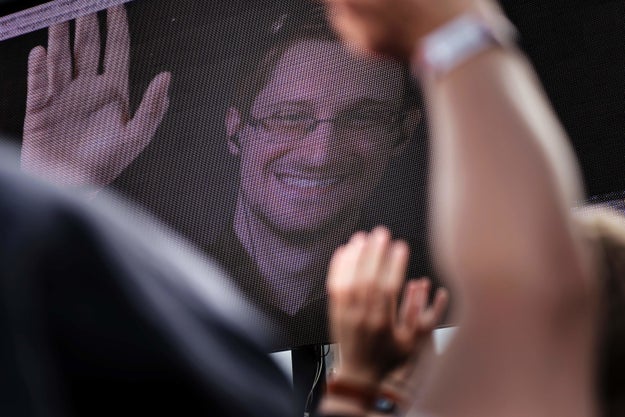
Intelligence Committee Condemns Snowden In Scathing Report

Mathias Loevgreen Bojesen / AFP / Getty Images

Edward Snowden isn&;t a whistleblower, nor is he a patriot. He&039;s “a criminal” — at least according to every member of the House Permanent Select Committee on Intelligence.

Following what lawmakers have described as an exhaustive two-year investigation, the committee released a scathing report Thursday condemning the former NSA contractor as a liar and a thief whose disclosures have endangered national security in ways we have yet to understand.

“[T]he vast majority of the documents he stole have nothing to do with programs impacting individual privacy interests — they instead pertain to military, defense, and intelligence programs of great interest to America&039;s adversaries,” states an unclassified summary of the report.

The summary advances several key findings, which the committee presents as a rebuttal to the idea of Snowden as an earnest whistleblower working to reform an oppressive surveillance state. The committee found that Snowden&039;s disclosures helped to diminish the government&039;s ability to collect information about foreign intelligence targets, failed to express his concerns of legal or moral wrongdoing to any official government channel, and that Snowden “was, and remains, a serial exaggerator and fabricator.”

“Edward Snowden is no hero — he’s a traitor who willfully betrayed his colleagues and his country,” said committee chair Devin Nunes in a statement. “I look forward to his eventual return to the United States, where he will face justice for his damaging crimes.” Ranking member Adam Schiff said of Snowden, “The Committee’s Review — a product of two years of extensive research — shows his claims to be self-serving and false, and the damage done to our national security to be profound.”

Upon the report&039;s release, Snowden took to Twitter to rebut its accusations. “The American people deserve better,” he wrote. “This report diminishes the committee.”

The classified report on Snowden&039;s disclosures comes on the heels of a public campaign by the ACLU, Human Rights Watch, and others calling on President Obama to pardon him. The House Intelligence Committee today took issue with that effort as well. In a separate document signed by all its members, the committee urged Obama not to pardon Snowden, who they say “perpetrated the largest and most damaging public disclosure of classified information in our nation&039;s history.”

While the four-page summary is available to the public, the full 36-page report is classified; however, every member of the House of Representatives will have access to it, according to the Intelligence Committee.

Quelle: <a href="Intelligence Committee Condemns Snowden In Scathing Report“>BuzzFeed

The Samsung Galaxy Note 7 Has Been Formally Recalled In The US For Explosion Risks

The Samsung Galaxy Note 7 Has Been Formally Recalled In The US For Explosion Risks

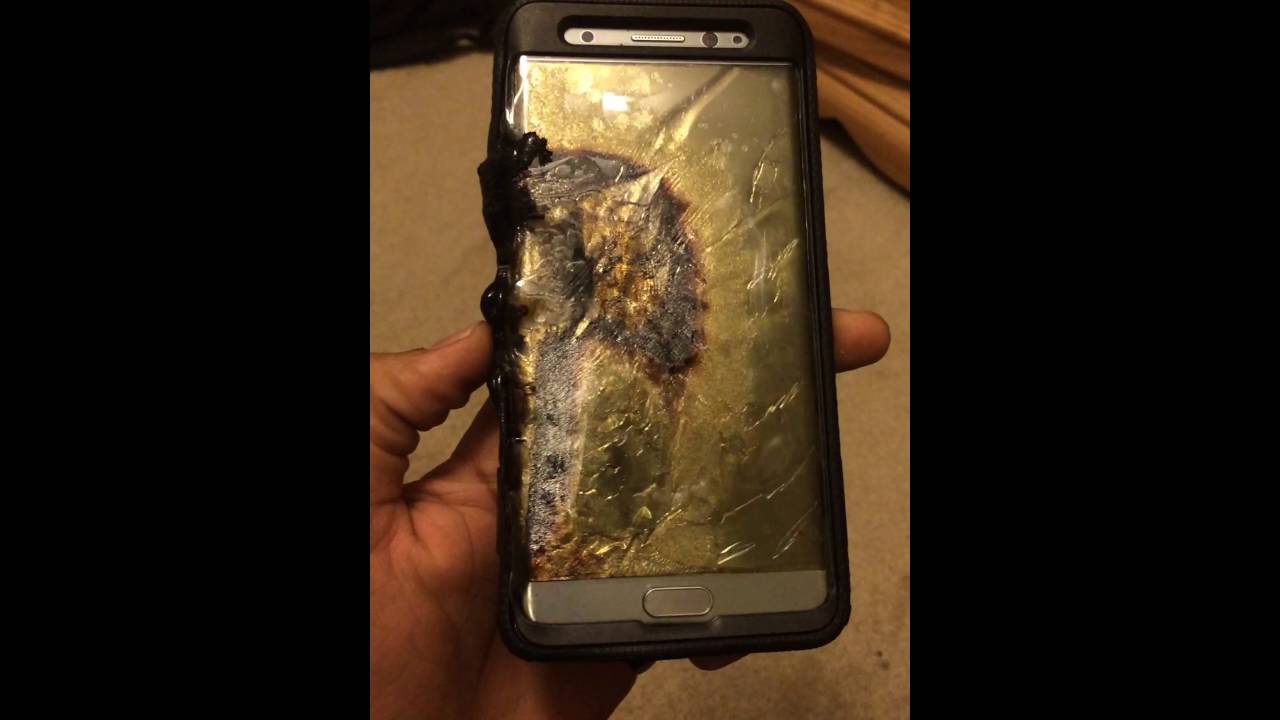
Roughly one million Samsung Galaxy Note 7 phones have been formally recalled by the US Consumer Product Safety Commission (CPSC) due to the danger of the phone’s lithium ion batteries overheating and exploding.

According to the statement, users are entitled to a replacement or a refund of their phones, which retail for between $850 and $890.

Any phone sold before September 15, 2016 is subject to recall. If you own a Samsung Note 7 and want to find out if your phone has been recalled, examine the IMEI number on the phone and either call Samsung— preferably on a separate phone&; — or visit samsung.com.

The recall statement reads, “Samsung has received 92 reports of the batteries overheating in the U.S., including 26 reports of burns and 55 reports of property damage, including fires in cars and a garage.” Mexico and Canada have also recalled Note 7, which went on sale August 19.

As early as September 2, the CPSC issued a warning about the potential for the battery cell in the phone to explode. Samsung by that point had already said it would “voluntarily replace” users’ devices because of the dangerous battery.

Following the cautionary statement, American airlines have been asking passengers to turn their Note 7 phones off for the duration of flights. In a September 9th statement, the CPSC recommended that users stop charging the device altogether and power it down. The current recall reiterates those sentiments.

However, while sales of the Note 7 dropped after reports of exploding batteries started surfacing, data from Apteligent shows that most people who already owned the phone hadn’t stopped using it.

Samsung’s president of Samsung’s mobile business, Koh Dong-jin said in a September 2 press conference, “It has been confirmed that it was a battery cell problem. There was a tiny problem in the manufacturing process, so it was very difficult to find out.”

The debacle has already cost Samsung $25 billion in market value, and the recall costs are estimated to be over $1 billion.

The recall could inspire other big markets, namely China, to recall the phone. Chinese media have noted that while Samsung has recalled 2.5 million phones in 13 countries, it has only recalled just under 2,000 phones in China.

youtube.com

Quelle: <a href="The Samsung Galaxy Note 7 Has Been Formally Recalled In The US For Explosion Risks“>BuzzFeed

A No Brainer: Why Twitter Should Clone Snapchat Stories, Also

A No Brainer: Why Twitter Should Clone Snapchat Stories, Also

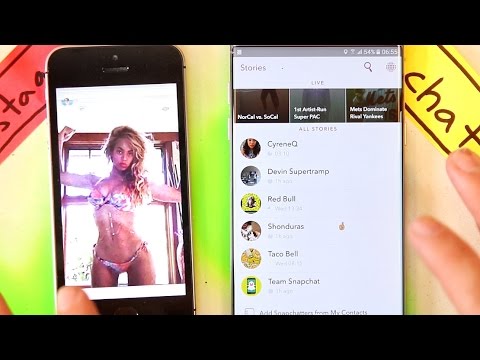
At the beginning of this year, Twitter product head Kevin Weil left the company for Instagram where he promptly cloned Snapchat Stories. (Hi, Instagram Stories). The brash, shameless move gave Instagram a way to spark more sharing of the carefree, fun videos it previously lacked. And, by taking the heat (and even some praise) for blatantly copying another app, Weil and company made it easier for others to follow along — including his former employer.

In fact, if executed properly, Stories could make even more sense within Twitter than it does within Instagram or Snapchat.

Skeptical? Consider the following:

  • Twitter&;s wants to be the destination for live updates and the Stories format is proving itself as one of (if not the) best ways to share video of what’s happening in the moment. Stories take little editing and are necessarily short form (like Twitter itself). They are also snackable, unlike many live streaming videos that require concentrated attention.
  • If someone shot a compelling video on Twitter Stories, people could easily share it with the world via a tweet. And thanks to the Retweet, a key Twitter feature that makes tweets blow up, a video contained in a Twitter Story could go viral faster than a video on any other platform.
  • The chance of a Twitter Story spreading like wildfire would incentivize public figures and brands to invest the time and energy needed to make Stories great.
  • Since you follow people on Twitter because you&039;re interested in what they&039;re saying and doing, you could expect their Twitter Stories to be relevant to you in a way that transcends mere friendship.
  • Currently, when you share a video on Twitter, there&039;s pressure for it to be really good. If Twitter added disappearing videos that don&039;t appear in the timeline automatically, there would be less pressure involved, and hence more videos shared to Twitter. This is critical at a time when video is becoming the dominant content format on Twitter.
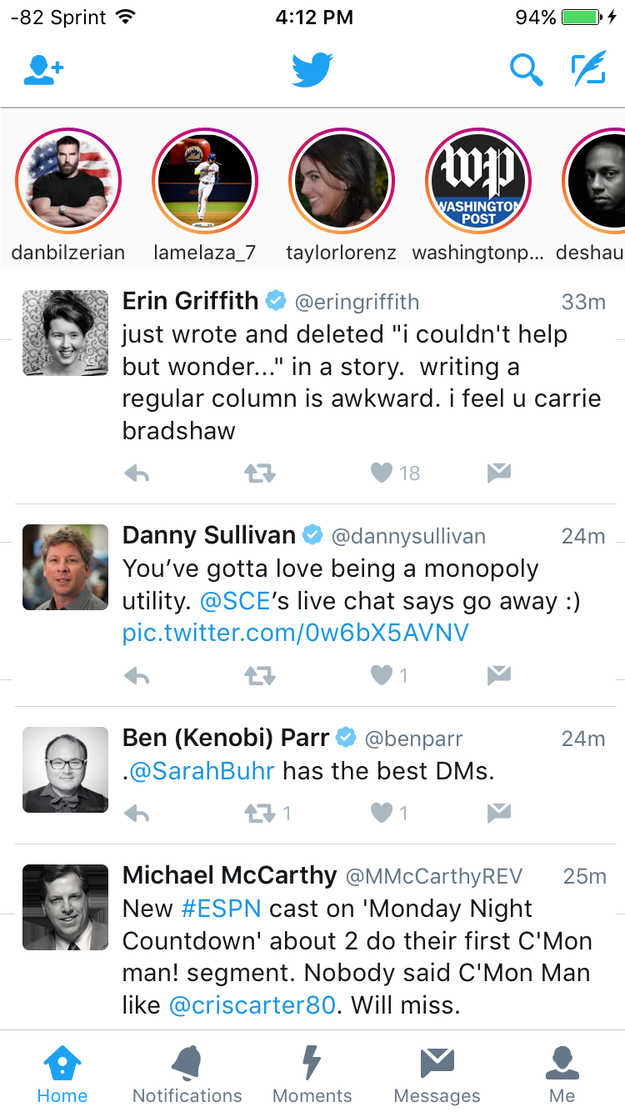
  • Having Stories reside in a top bar of Twitter would give people using the platform access to interesting videos every time they open the app, without having to scroll through the timeline.

When you find a worthy video within Stories a &039;Tweet&039; button could get it into the timeline quickly. This could give added life to videos within Twitter Stories in a way that Instagram simply can&039;t provide. Or even Snapchat itself.

Alex Kantrowitz / Via Taylor Lorenz

And heck, Weil, and Instagram&039;s CEO Kevin Systrom, have already largely made the argument for Twitter cloning Instagram&039;s by-all-accounts successful Snapchat clone:

“I think that the Stories format is seeing broad adoption and I think will be adopted by a lot of folks,” Weil told BuzzFeed News when Instagram Stories launched. “It’s a new format, it’s a powerful format, it’s one that I think will be adopted across the industry.”

Asked if it should consider introducing Stories to its product, Twitter declined to comment.

Quelle: <a href="A No Brainer: Why Twitter Should Clone Snapchat Stories, Also“>BuzzFeed

Apple Music Exec Shuts Down Rumors Of A Tidal Deal

Andrew Burton / Getty Images

Apple&;s appetite for acquiring music streaming services, and the agonies and ecstasies that come along with them, has apparently been satisfied. Squelching reports that have persisted since June, a member of Apple Music&039;s senior leadership said the company has no current plans to acquire Jay Z&039;s Tidal or any other rivals.

“We&039;re really running our own race,” Jimmy Iovine, who heads Apple Music, told BuzzFeed News in an interview. “We&039;re not looking to acquire any streaming services.”

The comment was in response to a question about a Wall Street Journal report from late June that Apple was “in talks” to acquire Tidal, which has fiercely competed with Apple Music for exclusive access to A-list artists. Until now, no one from Apple has commented publicly on the alleged talks. Iovine did not deny that such discussions had taken place, but said that no acquisition deal was currently in the works.

Following the June report, some suggested that picking up Tidal could help Apple shore up its bid for dominance in the streaming world, in which the two companies&039; mutual competitor Spotify has a head start.

Apple Music currently has around 17 million paid subscribers, compared to Spotify&039;s 40 million, according to the companies&039; latest announced figures. In addition to being a boon to its subscriber base, acquiring Tidal, which has said it has around 4.2 million subscribers, would have potentially helped Apple&039;s relationships with some of the biggest names in pop music. Beyoncé, Rihanna, Kanye West, and Madonna are among several high-wattage equity partners in Tidal that may have been incentivized to work with Apple on future releases. In late July, West urged Apple to move forward with a deal, saying that it should “give Jay his check.”

For now at least, Apple says it will pass.

On its own, Apple Music has picked up two million subscribers over the past three months, and a revamped, more streamlined version of the service was launched on Tuesday as a part of the new iOS 10 release. Since Jay Z acquired Tidal&039;s parent company Aspiro AB for $56 million in March of 2015, it has struggled to find its footing, churning through three chief executives in less than a year. Earlier this week, it reported a net loss of $28 million for 2015, more than double its losses from the year before.

When reached by BuzzFeed News, a representative for Tidal did not have a comment.

Quelle: <a href="Apple Music Exec Shuts Down Rumors Of A Tidal Deal“>BuzzFeed

Apple Says Initial Quantities Of iPhone 7 Plus, "Jet Black" iPhone 7 Sold Out

Planning a trip to the Apple store on Friday for the iPhone 7 Plus? Don&;t bother.

Apple has exhausted its initial supply of the new iPhone 7 Plus and will have no inventory in-store when the device officially goes on sale. Also sold out: the smaller iPhone 7 in the company&039;s new “jet black” finish.

Apple said it will have “limited quantities” of iPhone 7 in silver, gold, rose gold, and black available at its retail stores, and all models and colors on its website.

“We couldn&039;t be happier with the initial response to iPhone 7 and iPhone 7 Plus,” Apple spokeswoman Trudy Muller said in a statement. “We sincerely appreciate our customers&039; patience as we work hard to get the new iPhone into the hands of everyone who wants one as quickly as possible.”

Apple has not yet announced first weekend sales for the iPhone 7, nor will it. The company said last week that it would depart from tradition and hold off announcing how many new iPhones had been sold as of the first weekend following launch.

“… As we have expanded our distribution through carriers and resellers to hundreds of thousands of locations around the world, we are now at a point where we know before taking the first customer pre-order that we will sell out of iPhone 7,” the company explained last Thursday. “These initial sales will be governed by supply, not demand, and we have decided that it is no longer a representative metric for our investors and customers.”

Quelle: <a href="Apple Says Initial Quantities Of iPhone 7 Plus, "Jet Black" iPhone 7 Sold Out“>BuzzFeed

LeBron James Haunts My Dreams, And This Week He Haunted My Virtual Reality

Thearon W. Henderson / Getty Images

I haven&;t watched a single second of the 2016 NBA Finals since the night of June 19th, when LeBron James, Kyrie Irving, and the rest of the Cleveland Cavaliers completed the biggest comeback in basketball history to defeat the Golden State Warriors — and break my fragile Northern Californian heart.

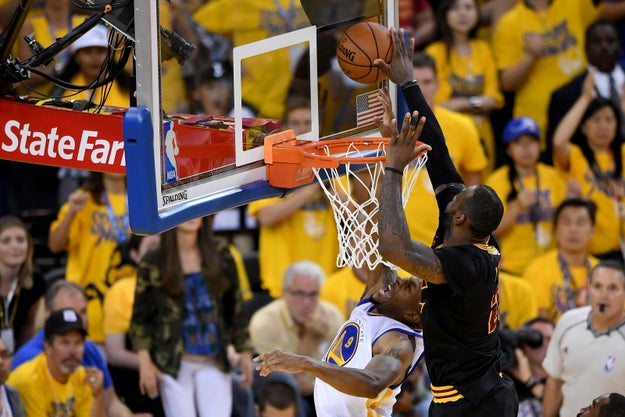
But that&039;s not to say that I haven&039;t seen the NBA finals since then. Watching occurs in the eyes, but sight happens in the brain. For about three hours after the end of Game 7, well into early Monday morning, I lay on my back, trying to sleep. But every time I closed my eyes, I saw the same thing: LeBron James striding across the court, Andre Iguodala swinging the ball around his hips, raising it to the rim, and then LeBron swatting it away.

I was able to repress every other memory from those cursed Finals — Kyrie&039;s go-ahead three pointer to win it all, Draymond Green&039;s series altering nut-shot. But LeBron still haunts my dreams, even though I haven&039;t watched a moment of that game, or The Block, ever since.

Until Tuesday, that is. I was invited, along with many other reporters, into the bowels of the NBA store in midtown Manhattan to see FOLLOW MY LEAD: The Story of the 2016 NBA Finals, a roughly 25-minute virtual reality documentary produced by the NBA, Facebook-owned VR company Oculus, and the production company m ss ng p eces (it&039;s really spelled that way). I strapped on a Samsung Gear VR and returned to my darkest hours, this time in full, immersive virtual reality.

It wasn&039;t pretty.

Matthew Zeitlin / BuzzFeed News

The film, which its creators say is one of the longest continuous-narrative VR videos to be made using video footage, will be released for free by Oculus Wednesday.

It&039;s style will be familiar to anyone who&039;s watched HBO&039;s 24/7 series, ESPN&039;s 30 for 30, or an NFL Films documentary: a pseudo-heroic narrative from a celebrity (Michael B. Jordan) that relentlessly dramatizes the circumstances of a sporting event. The NBA and Oculus got lucky in this case, because the 2016 Finals had one of the most compelling sports narratives in years: the league&039;s greatest player trying to vanquish its best ever team, in a rematch that also pitted the most culturally and economically ascendant region in the country — if not the world — against Cleveland.

“We wanted to prove you could do longform sports documentary in VR,” Eugene Wei, the head of video at Oculus, told me. “We wanted to prove you could do longform in VR period. A lot of people say VR has to be short, so let&039;s do something that&039;s storytelling versus experiential.”

Afp / AFP / Getty Images

The experience tends toward the cinematic — Wei said that the typical shot lasts six to eight seconds, which might be a little long for a traditional broadcast, but relatively short for VR.

So while Oculus, which sells its own VR gear, wants to see the virtual reality documentary evolve to compete and eventually surpass traditional video, the NBA wants people to get a new and exciting way to see a game. The league has already experimented with a VR broadcast, and the documentary is a way for tech-equipped fans “to have an opportunity to attend an NBA game,” said league media executive Jeff Marsilio.

To film games, they had cameras behind the rim, on the scorer&039;s table on the sideline, in the crowd, and cameras on the court to catch the post-game pandemonium.

So what does the Oculus version of the sonorous sports documentary give you, a virtual spectator there in the stadium? At first glance, you can look around and see a lot of people holding cell phones. And because for the most part, all the action is taking place on the court right in front of you, there isn&039;t much benefit to turning your head left or right and peering into the stands.

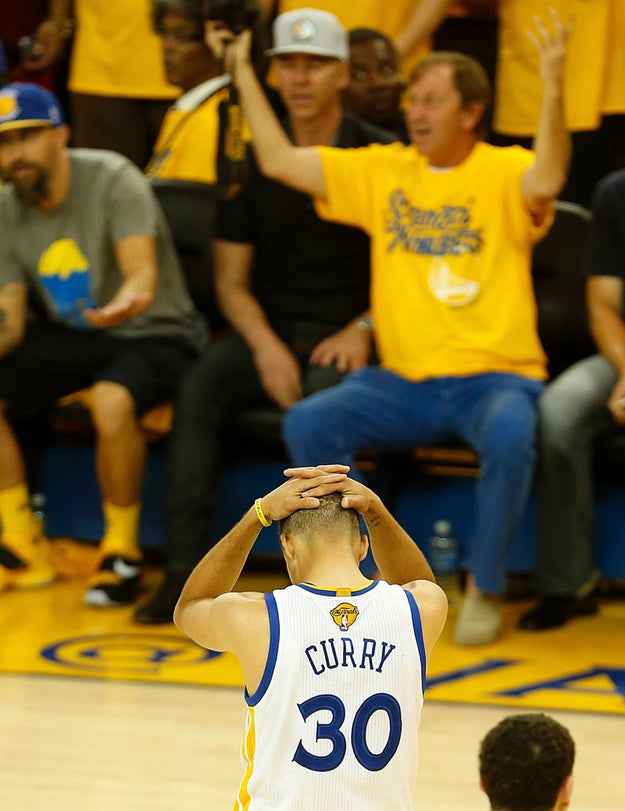
But when you do, it&039;s a sea of cell phones, photographing and filming the action. When you see Steph Curry or LeBron James being interviewed after the game, you can look around to see members of the sports press, filming it on their cell phones.

And when you see LeBron walking off the court (the camera sits around his collarbone level, so you look down on Kyrie Irving and up at Timofgey Mozgov), you again see everyone with their cell phones filming. The irony is that thanks to the very technology that helps enable VR, the NBA will try to get fans to be as engaged as the fans actually at the games…looking at their phones.

But being able to pan to, say, Jay Z and Beyonce sitting courtside, provides the tantalizing prospect of just being able to turn your head and watch them during the lulls in the game.

Wei said this effect is typical, and what people actually tend to expect from a VR broadcast — a simulation of really being there. “The endpoint of VR is the sensation of reality,” Wei said. “Anything that breaks the fourth wall accelerates your sensation of being there.”

So even when a Warriors fan yells right into the camera, it&039;s good for the experience — it&039;s a way of avoiding what Wei calls the “Ghost Effect,” named for the Patrick Swayze film where a man dies and comes back as a spirit who is physically present but is invisible to humans who aren&039;t Whoopi-Goldberg.

Pool / Getty Images

When it comes to filming game action with the VR cameras, there are shortcomings for the time being: The cameras can be big and stationary, and the lenses are wide and don&039;t zoom. It means the action can appear blurry if it&039;s farther from the cameras.

These shortcomings are also barriers to having regular VR broadcasts of what Marsilio calls the “crown jewel” of the NBA: the live game. While they were able to get a lot of access for the special VR broadcast, the cameras would compete with space that&039;s already taken up by regular TV cameras and photographers.

“It&039;s like snowboarding in the early day of the medium, the learning curve is very steep,” Wei said.

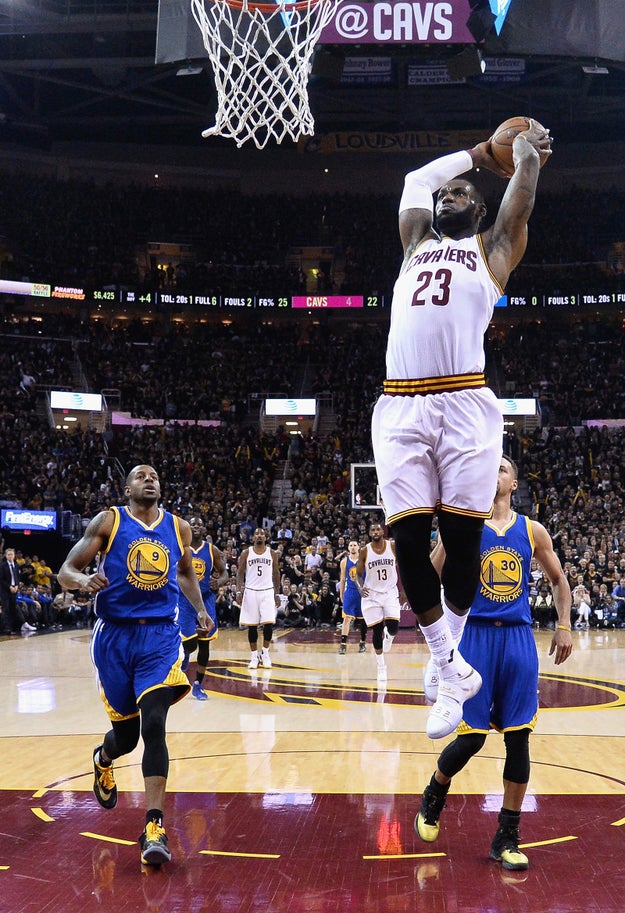
But at closer distances, issues like the blurriness are overcome by how thrilling it all is — the sensation of being there, the oohs and ahhs of the crowd, its silence and explosion right into your ears, with the shock of LeBron dunking right at you. If you could watch live games this way, it would blow traditional TV out of the water, and the NBA knows it.

“If we can bring the world truly courtside, live at the game, it would be the greatest thing we could achieve in VR,” Marsillio said.

Afp / AFP / Getty Images

Quelle: <a href="LeBron James Haunts My Dreams, And This Week He Haunted My Virtual Reality“>BuzzFeed

Ted Cruz Is Picking A Big Fight Over The Internet, And Top Republicans Are Backing Him

Chip Somodevilla / Getty Images

Republican Sen. Ted Cruz has a new battle to fight in the Senate: trying to block the long-planned transfer of the internet&;s technical management from the US government to an international body. Cruz is calling the move an internet “giveaway” and warns that it will open the Web to Russian, Chinese, and Iranian manipulation. But experts say blocking the transition would actually accomplish what Cruz fears, by undermining the stability and credibility of the internet’s current, long-standing stewardship model.

The internet is a complex network beyond the control of any one country, but one part of it — its global domain naming system, which allows you to type one unique Web address that takes you to the right site no matter where you are in the world — is technically under the control of the US Commerce Department. Since 1998, the Commerce Department has been contracting out this responsibility to an international nonprofit called the Internet Corporation for Assigned Names and Numbers (ICANN). However, the internet’s creators envisioned it as a space free from the interventions of governments — including the United States. So that vision led to plans for the Commerce Department to remove itself as the middleman and cede its management role to ICANN entirely on Oct. 1.

“No one controls the internet.”

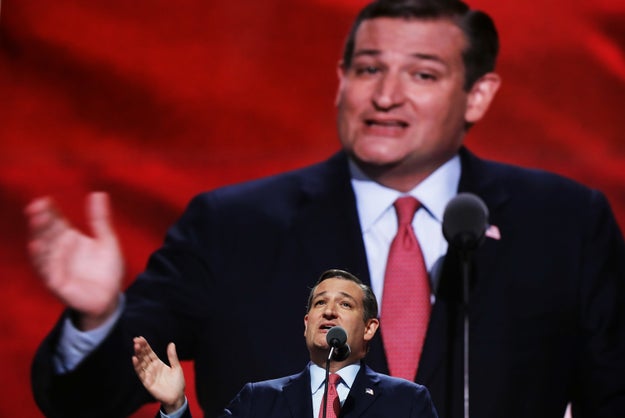
Sen. Cruz and his allies in Congress are arguing that if the domain name system switches to new management, antagonistic foreign governments might censor what people see online, undermining the openness of the Web. But during a contentious hearing in the Senate Wednesday, a top Commerce Department official and the President of ICANN dismissed Cruz’s concerns of Russian, Chinese, and Iranian manipulation of the Web.

Cruz has led been at the center of quixotic quests to block Obama Administration efforts before — including in 2013, when efforts to defund Obamacare led to a government shutdown — but he often did it to the chagrin of party leadership. This time, however, he’s been quite successful gathering support on Capitol Hill. Cruz counts more than two dozen lawmakers as allies in opposition to the transfer of management to ICANN, including Senate Majority Whip John Cornyn, whose office told BuzzFeed News that Republicans are working on a provision to block the transfer by attaching a provision to a short-term spending bill that must pass by Sept. 30th for the government to remain open.

“Imagine an internet run like many Middle Eastern countries, that punish what they deem to be blasphemy,” Cruz said, predicting what might happen if the transition happens. “Or imagine an internet run like China or Russia, that punish and incarcerate those that engage in political dissent.” To illustrate his point, Cruz hypothesized that ICANN, if it was no longer answerable to Commerce Department, could take down a website for political purposes. But Lawrence Strickling, a high-ranking official in the Commerce Department who testified at the hearing, rejected Cruz’s line of argument. “You’re not positing a realistic scenario,” Strickling said. “ICANN would never be involved.”

Representatives from ICANN say that Cruz and his allies’ concerns about a loss of internet sovereignty or political manipulation stem from a misunderstanding of what internet management means in practice. “No one controls the internet,” said ICANN president and CEO Göran Marby during the same hearing. The stewardship of the domain name system has “nothing to do with content or freedom of expression,” he said. While forms of internet censorship like government filtering, blocking, and traffic monitoring occur in many parts of the world, these practices operate on a different layer of the internet, not in the naming system that ICANN manages.

“We don’t determine … what can or cannot be on a website,” Theresa Swinehart, a senior advisor to Marby, told BuzzFeed News. “We don’t play a role in anything other than making sure the addressing function actually works, so that you can get to a certain website.”

A Commerce Department rep argued that Cruz&039;s plan to block the transfer of internet stewardship would actually be “a gift to Russia.”

Proponents of the transfer say that the transition to a multi-stakeholder model has been decades in the making. ICANN’s stewardship, they say, will continue the inclusive, globally oriented framework of the Web.

The Commerce Department’s Strickling also argued that blocking the transfer of internet stewardship would actually be “a gift to Russia,” emboldening it and other countries who are vying for a government-controlled management system, rather one overseen by ICANN. “If this transition doesn’t go forward, our credibility as a power in terms of supporting the multi-stakeholder model will be shot,” he said. “There will be people who say that the United States has reneged on its promises, and [this] will be exploited by these foreign governments.”

But Sen. Chuck Grassley, the Chair of the Senate Judiciary Committee, insisted that the Obama administration has not properly vetted the transition. He said significant questions remain about the transition, including the possiblie unconstitutional transfer of US government property, as well as human rights and free speech issues.

“It’s clear that the administration hasn’t conducted a thorough legal analysis of many issues outstanding,” he said. Congressional debate on the spending bill that may include the provision to defund the ICANN transition is expected to begin later this week, as lawmakers continue to hammer out the details of a short-term government funding package.

Quelle: <a href="Ted Cruz Is Picking A Big Fight Over The Internet, And Top Republicans Are Backing Him“>BuzzFeed

Hundreds Of Millions Of People May Soon Be Blocked From Using Grindr

Suryo Wibowo / AFP / Getty Images

Grindr, Hornet, and a total of more than 80 other apps and websites with LGBT content face a ban in Indonesia, the world&;s fourth most populous country, following a closed-door interagency summit held Wednesday at the country&039;s Ministry of Communications.

“The participants of the meeting all agree to block websites promoting LGBT,” Aidil Chendramata, director of information security for the Ministry of Communications, told BuzzFeed News following the meeting. The panel included representatives from the Ministry of Human Development, the National Police, and the Ministry of Religious Affairs, which was represented by a member of the country&039;s Muslim clerics association. “Most of the contents are leading toward pornography [and have] violated the law on pornography and the law on child protection,” Chendramata said.

The move comes several months after the Ministry of Communication announced it would craft a ban on LGBT “propaganda” in March, part of an unprecedented crackdown on LGBT rights in the country. The Constitutional Court is separately considering a petition that could make homosexuality a crime in Indonesia for the first time.

The meeting was initially convened to review a police request to block Grindr and 17 other gay apps they allege were used by a child prostitution ring. But the meeting reviewed a broader list, said Ericson Siregar, an officer with the National Police Criminal Investigations Department who participated in the meeting, because the Ministry of Communication had “previously investigated gay applications” and identified dozens for “promoting LGBT.”

“We would be pleased if the communication ministry blocked [gay apps] without hesitation because the smell of pornography is so strong on them, such as exhibiting nudity,” Siregar said.

Human rights activists have been alarmed at the impact this has had on the LGBT community, but internet companies and free speech advocates say this crusade is part of a much bigger battle as US-based social media companies have become a major force in the country of 250 million people.

The decision to ban LGBT content is simply the low-hanging fruit, said a representative from one global internet company with offices in Indonesia, and an easy target for conservative figures.

“We should all be concerned when we see these kinds of decisions being made, to ban an entire category of apps,” said the representative, who asked not to be named due to his company’s sensitive relationship with the Indonesian government. “It’s easy to see them starting with gay apps, and then finding a way to censor other parts of the internet… It’s easy to see them banning anything that represents the US or American values, as they see it. That’s what we are afraid of.”

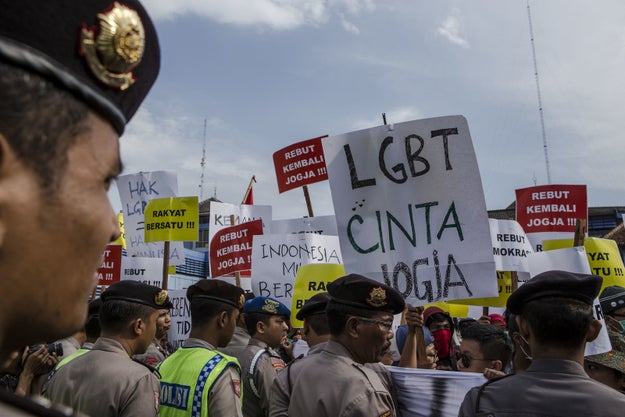
Pro-LGBT activists protest on February 23, 2016 in Yogyakarta, Indonesia

Ulet Ifansasti / Getty Images

Indonesia&039;s plan could cause an immediate quandary for Apple and Google, because Communications Ministry Head of Investigations Teguh Arifiadi said they will block the apps by requesting they be removed from the Apple App store and Google Play. (Apple and Google did not immediately respond to request for comment.)

“We will ask the stores to take down the apps for Indonesia,” Arifiadi told BuzzFeed News. He said specific decisions will be made on all 80 applications “as soon as possible” once allegations against them are “verified.”

Indonesia is 90% Muslim, and the call to reign in LGBT content online has been enthusiastically endorsed by the country&039;s largest religious organizations, which have increasingly warned that the internet is bringing toxic influences from abroad.

Said Aqil Siradj, chairman of the Nahdlatul Ulama, the world&039;s largest Muslim organization claiming 91 million members, described the internet as an “oppression against Islam” during a speech delivered in August.

“All news and information is dominated by Westerners, by outsiders — they intentionally aim to influence our mind, our way of thinking,” he said, so that “our next generation might not recognize anymore” fundamental aspects of their faith “because their thought have been shaped by Facebook, Twitter, social media, YouTube.”

In an interview following the speech with BuzzFeed News, Siradj added that Indonesia’s Islamic institutions were also fighting on a second online front — against extremist Islamic groups overseas.

“On Facebook, Twitter, and other sites, there are right-wing extremism, radicalism … ISIS also uses it, Al-Qaeda also uses it, other terrorists such as Jamaah Islam, Jamaah Tabliq Al-Hijrom, Mujahiddin also use it — so it is not only LGBT,” Siradj said. “Radicalism is not the nature or role of Islam in Indonesia…. Radicalism in religion all comes from the Middle East.”

“It is quite strange to ban people from finding friends.”

Grindr did not respond to repeated requests from BuzzFeed News to discuss Indonesia&039;s moves against the service. But Sean Howell, CEO of Hornet, said Indonesia would be by far the largest country to announce a ban on gay apps. Grindr and some other apps are blocked in some other countries, including Turkey, but he was aware of only the United Arab Emirates having a ban that affects so many apps in the single sector.

“There’s lots of reasons that [this move] is terrible,” Howell said. “How many other Islamic states will follow this? The internet, rather of being a tool of freedom, is becoming a tool of dictator states.”

A State Department spokesperson told BuzzFeed News that “the United States believes strongly in Internet freedom and supports the principle that has been recognized in successive multilateral resolutions that the same human rights people have offline must also be protected online.”

“We encourage the Government of Indonesia to ensure that any steps it may take that could result in limitations on access to social media sites are carefully considered, openly discussed, and consistent with the Government’s international human rights obligations,” said the spokesperson.

Yuli Rustinawati, chair of the LGBT group Arus Pelangi, said police should be focusing on the sexual abuse allegations against the child prostitution ring and not use it as a pretense to attack the LGBT community online. If the proposal moves ahead it will make the already embattled LGBT community even more vulnerable, she said.

“If gay applications are closed down, it only makes the community even more isolated as they won&039;t be able to find friends via the virtual world,” Rustinawati said. “It is quite strange to ban people from finding friends.”

Quelle: <a href="Hundreds Of Millions Of People May Soon Be Blocked From Using Grindr“>BuzzFeed

Here's How Amazon's New Echo Dot Is Actually Different

Amazon announced a redesigned, cheaper device with its personal assistant Alexa built in.

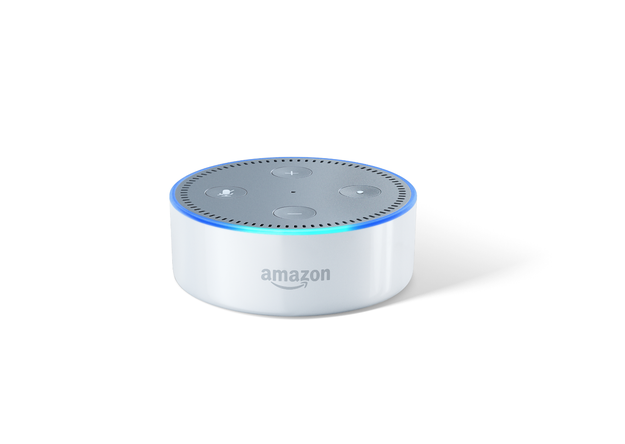
Today, Amazon unveiled the second generation Echo Dot, a smaller version of its best-selling Echo.

Today, Amazon unveiled the second generation Echo Dot, a smaller version of its best-selling Echo.

The Dot has a small built-in speaker, but its major advantage over the Echo is that you can connect the Dot to your high-quality home stereo system through a 3.5mm audio cable or a Bluetooth speaker (wireless headphones work, too). The Amazon Echo can only play audio through its built-in speaker. Those without a home audio system should opt for the Echo.

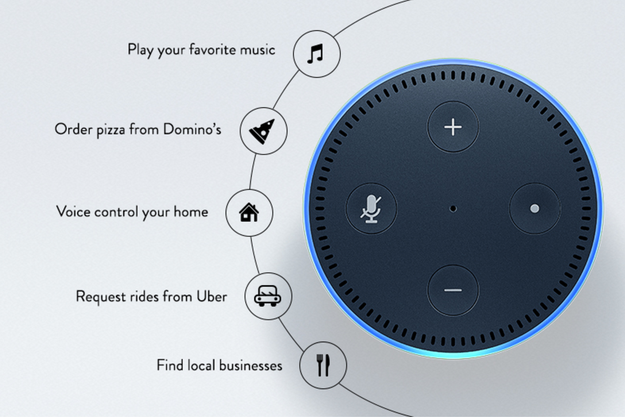
The small, hockey puck-shaped gadget is powered by Amazon&;s voice-activated personal assistant Alexa. You can ask the Dot questions like, “Alexa, what&039;s the weather like today?” or “What&039;s in the news?” Alexa also works with over 3,000 different apps (Amazon calls them “skills”) and responds to hundreds of different commands.

With its competition Google Home launching later this year, Amazon appears to be beefing up its hands-free speaker offerings. The second generation Echo Dot is slated for an Oct. 20 ship date – and here&039;s everything you need to know about it.

Amazon

The original Echo Dot was $90 and the all-new version is $50.

And, because this is Amazon, the new Dot can be bought in packs of six (buy five, get one free, so $41.67 each) or ten (buy eight, get two free, so $40 each).

The new Dot aims to fix the older model’s voice recognition problems.

The new Dot aims to fix the older model's voice recognition problems.

Some Echo dot reviews cited voice recognition inferior to the larger Amazon Echo. To power the device&039;s seven microphones, the second-generation Dot includes an improved speech processor that can recognize when you say the Dot&039;s wake word (either “Amazon” or “Alexa”) with more accuracy.

Amazon

The Echo Dot, which was previously unavailable for purchase on Amazon&039;s website and only sold to existing Echo customers, is available for pre-order for all US and UK customers and will ship October 12.

People with addresses in Germany and Austria can also pre-order a Dot. They&039;ll arrive in those countries on October 26.


View Entire List ›

Quelle: <a href="Here&039;s How Amazon&039;s New Echo Dot Is Actually Different“>BuzzFeed