The New Apple Watch Makes Me Not Hate Smartwatches Quite As Much

Swim tracking is where Series 2 shines.

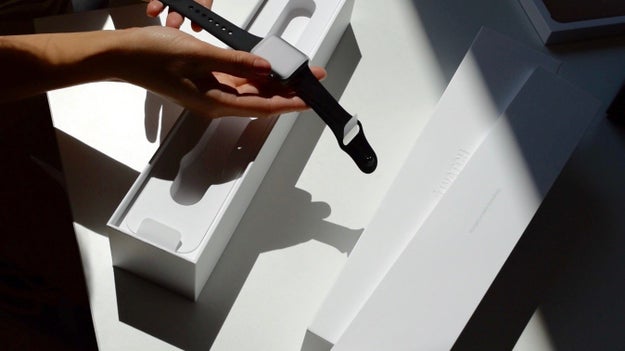
BuzzFeed News / Apple

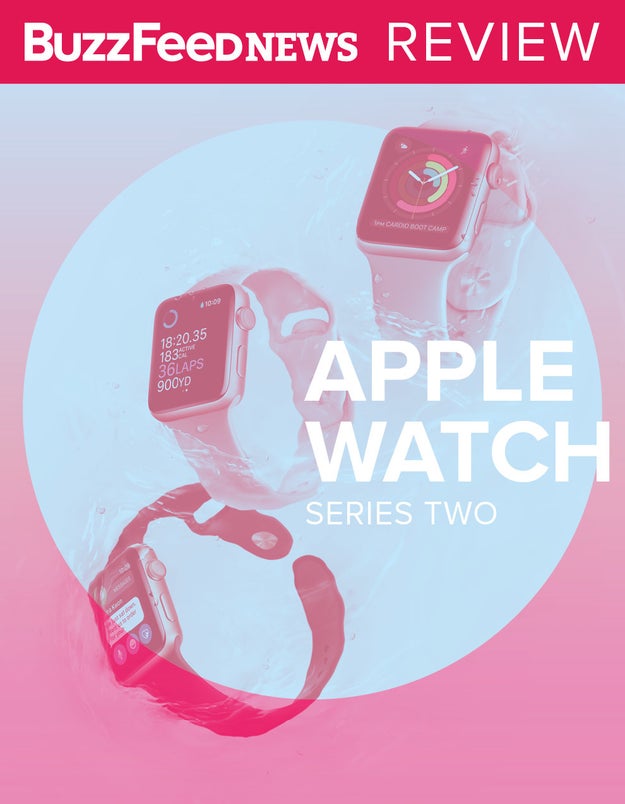
Apple crammed a ton of new health and fitness features to go along with heartrate-tracking and step-counting into its second-generation wearable – including GPS, swim-tracking, built-in meditation, and a collaboration with Nike.

After a week of reviewing the Apple Watch Series 2, I think this $369 mini computer is worth its price for athletes, but maybe not so much for everyone else.

This Apple Watch is… different.

This Apple Watch is... different.

Nothing makes me feel more alone in this world than when I’m mid-conversation with a person looking down at their Apple Watch while nodding to indicate they’re still listening. Presumably they’re just “taking a glance” at their daily step goal progress or a non-urgent text. But a glance can feel like a goddamn eternity when whatever is happening on someone’s wrist is infinitely more interesting than you.

All this to say that I was largely in the camp that smartwatches of any kind – not just Apple Watches – turn the people I love into insufferable assholes. Fitness trackers are uglier and dumber, but are less annoying somehow. It’s not like anyone’s trying to read the news on their Fitbit.

Nicole Nguyen / BuzzFeed News

But this new Apple Watch might have changed my mind about all that.

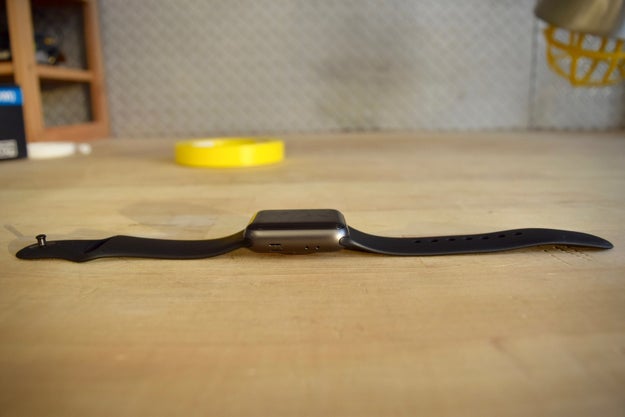
It’s .9mm thicker than the original, but I haven’t noticed it at all – and this time around, my experience was generally more enjoyable. That was thanks to three *crucial* under-the-hood tweaks that made this version feel more useful, and more like an actual watch.

  • “Raise to wake” works much better now (perhaps thanks to a 50% faster processor) so you can actually tell the time when you raise your arm (fancy that) — something that wasn’t always true in the previous version.
  • The screen is brighter so you can actually SEE the time when you’re outside.
  • Finally, it’s water-resistant, so you don’t have to worry about taking this precious little computer off every time you want to take a quick shower or give your dogs a bath.

Plus, Series 2 has more features that stand on their own, and don’t require connecting to your screen jail — I mean, smartphone. I didn’t constantly feel like I needed to pull out the iPhone from my backpack.

Nicole Nguyen / BuzzFeed


View Entire List ›

Quelle: <a href="The New Apple Watch Makes Me Not Hate Smartwatches Quite As Much“>BuzzFeed

You Can Now Request Self-Driving Ubers In Pittsburgh
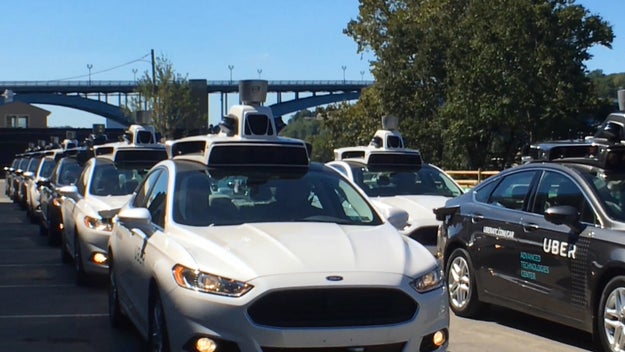
Uber&;s self-driving Ford Fusions in Pittsburgh

Ciara Allen / BuzzFeed News

Pittsburgh, Pennsylvania — once a titan of the steel industry — has a new claim to fame: first city in the United States to let passengers hail rides in self-driving cars.

Beginning Wednesday morning, Uber customers in the former steel town who&039;ve agreed to participate in the company&039;s self-driving car pilot program will have a reasonable chance of being picked up in an autonomous vehicle — albeit one carrying both a safety driver (ready to take the wheel during emergencies) and a co-pilot (to monitor the car and its route on a laptop).

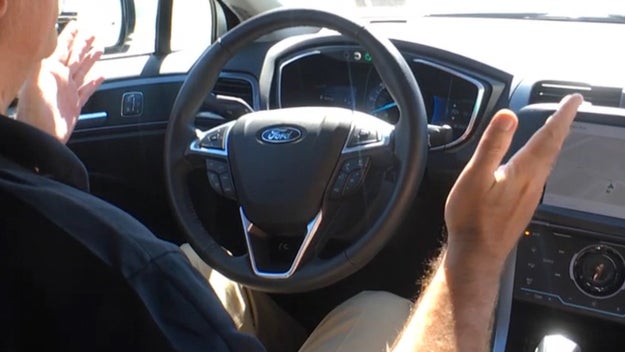
Uber&039;s Pittsburgh pilot program is kicking off with just a handful of self-driving Ford Fusions, but will later expand to include an additional 100 self-driving Volvos. For now, the cars aren&039;t entirely autonomous. A human driver brings the car to the road before hitting the silver button that activates autonomous mode. This safety driver sticks around for the duration of the ride, ready to intervene should something go awry on the journey. Also aboard is a co-pilot in the front passenger seat, watching for glitches and anomalies and sending notes to Uber’s developers, who are refining the algorithms the cars use to navigate.

When automated elevators were first introduced in the 1950s and human operators were no longer needed to man them, the transition was so jarring that some elevator manufacturers added voice narration to reassure people — “Please press the button for the desired floor.” For Uber&039;s driverless car pilot, backup drivers and co-pilots will likely serve a similar purpose — a reassuring presence for people coming to terms with something new and unfamiliar.

Cameras will record the rides of passengers who agree to be part of the pilot program, and Uber says that footage will help improve the experience over time. Riders will receive phone calls asking for feedback on their trips: What did they like? Did anything make them nervous? Were they at all uncomfortable?

“If you think about it, every month, Uber drives over a billion miles,” Anthony Levandowski, who leads Uber’s self-driving efforts, explained. “That data gives us insight into how a city works, where are people driving, where are they getting into accidents, how pickups and drop-offs work.” Levandowski should know. He worked on Google’s self-driving car team before co-founding the self-driving truck startup Otto, which Uber acquired this summer.
Ciara Allen / BuzzFeed News

As fascinated as we might be by the idea of self-driving vehicles, the thought of actually riding in one is sometimes cause for trepidation. Indeed, 3 out of 4 US drivers said they feel “afraid” to ride in a self-driving car, according to an AAA survey of 1,832 US drivers ages 18 and older in January. Only 1 in 5 said they would trust an autonomous vehicle enough to ride in one. That’s more anxiety than the Pew Research Center noted in a 2014 survey, which found that 48% of people would be interested in riding in a driverless car if given the opportunity.

Perhaps with this in mind, Uber has docked an iPad in the back of every Ford Fusion as a sort of informational distraction. It displays the car’s route and also gives riders a sense of what the car itself “sees” — multicolored outlines of other vehicles on the road, and whatever else its sensors are picking up at the time.
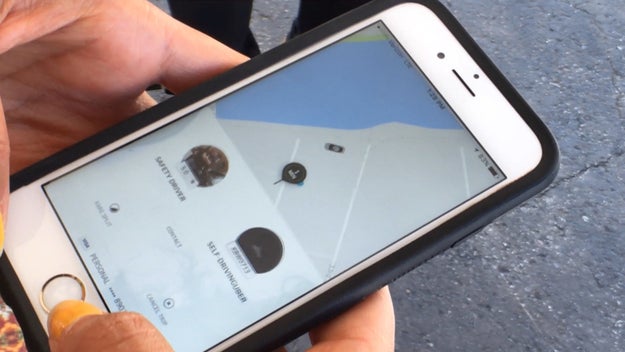
A human driver and a co-pilot will man each self-driving Uber.

Ciara Allen / BuzzFeed News

But why Pittsburgh?

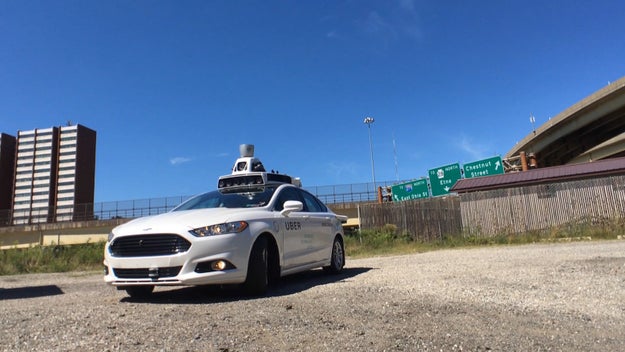
“Pittsburgh is an ideal environment for us,” Raffi Krikorian, director of Uber’s Advanced Technologies Center, told BuzzFeed News. “Pittsburgh is an old city. It has organic road networks. It has a real traffic problem. It experiences extreme weather. We really feel that if we can master driving in Pittsburgh, we can easily master driving in other cities around the world.”

“If we can master driving in Pittsburgh, we can easily master driving in other cities around the world.”

But there are other reasons as well. Pittsburgh is home to Uber’s Advanced Technologies Center, which opened about 18 months ago. The company ravaged nearby Carnegie Mellon University’s robotics unit, poaching about 40 researchers to work on its own driverless car program. And Pittsburgh is an Uber-friendly city. As the city’s mayor, Bill Peduto, recently told the New York Times, “It’s not our role to throw up regulations or limit companies like Uber.”

While Uber is free to send its autonomous cars anywhere in the city, the company will focus on the most popular routes and areas, and ones that mirror traffic patterns in other cities.
Ciara Allen / BuzzFeed News

Bryant Walker Smith, chair of the Planning Task Force for the On-Road Automated Vehicle Standards Committee of the Society of Automotive and Aerospace Engineers, told BuzzFeed News that Uber&039;s self-driving car pilot program in Pittsburgh will give people a more realistic view of the potential and limitations of automated driving.

“The public will play an important role in shaping both social and legal expectations for these vehicles,” Walker Smith said. “That&039;s why companies like Uber should publicly share their safety philosophies — how they define, measure, document, and monitor the reasonable safety of their vehicles now and into the future.”

Self-driving cars have long been expected to upend the transportation industry, and there are a number of companies racing to deliver viable autonomous vehicle solutions. Google has been testing its self-driving cars on the road for years. Ford claims it will mass produce self-driving cars by 2021. Meanwhile, US Department of Transportation Secretary Anthony Foxx is saying we’ll all be riding in self-driving cars within five years — and his agency is the one writing the rules that will govern them. But Uber’s Pittsburgh pilot marks the first larger effort to put people — real people, outside of technologists and media — in self-driving cars in real-world circumstances. And that&039;s a big deal.

Quelle: <a href="You Can Now Request Self-Driving Ubers In Pittsburgh“>BuzzFeed
Simone Biles, Serena Williams Among Olympic Athletes To Have Medical Files Hacked

Clive Brunskill / Getty Images

SAN FRANCISCO — The hacked medical files of Olympic athletes Simone Biles, Elena Delle Donne, Serena Williams, and Venus Williams were made public Tuesday by a Russian group that cybersecurity experts say was previously responsible for breaches into the Democratic National Committee and White House.

The World Anti-Doping Agency (WADA) confirmed in a statement posted on Tuesday that its database, which included medical files of athletes competing in the Olympics, was hacked by the Russian group that cybersecurity companies have named “Fancy Bear.”

“WADA deeply regrets this situation and is very conscious of the threat that it represents to athletes whose confidential information has been divulged through this criminal act,” Olivier Niggli, WADA&;s executive director, said in the statement. “WADA condemns these ongoing cyber-attacks that are being carried out in an attempt to undermine WADA and the global anti-doping system.”

Niggli added that law enforcement had determined that the “attacks are originating out of Russia,” without clarifying which agency the body had worked with.

“Let it be known that these criminal acts are greatly compromising the effort by the global anti-doping community to re-establish trust in Russia further to the outcomes of the Agency’s independent McLaren Investigation Report,” Niggli said.

The WADA statement did not mention which cybersecurity company had discovered the breach in their system that accessed the files of the US athletes. WADA did not respond to a BuzzFeed News request for clarification.

The cybersecurity firm ThreatConnect was cited in a previous report that found that the same group of Russian hackers had gained access to the WADA database and gotten into the account of Russian whistleblower, Yuliya Stepanova, an 800-meter runner whose revelations of widespread doping in Russian track and field led to that team being banned from competing in Rio.

Clive Brunskill / Getty Images

ThreatConnect had found that the group — which they call Fancy Bear, but which is also known as Tsar Team and APT 28 by other cybersecurity firms — had hacked into WADA through spear phishing emails. Those emails, which often appear to come from trusted sources and have legitimate information, contain malicious malware which, once opened, gives the attackers access to the system. Cybersecurity experts say that spear phishing is the simplest, most surefire method for hackers to access a computer system.

In a post on the group from August, ThreatConnect said Fancy Bear had called itself Anonymous Poland (@anpoland) when it leaked data stolen from WADA servers on Stepanova. The hackers used the name Anonymous Poland much in the same way that they used the name “Guccifer 2.0” when leaking information during the DNC hack, in both cases blaming known hackers to try and deflect attention from themselves.

“We assess that the phishing and Stepanova&039;s compromise most likely are part of targeted activity by Russian actors in response to the whistleblower and the WADA&039;s recommendation to ban all Russian athletes from the Olympic and Paralympic games in [Brazil],” ThreatConnect said. “Successful operations against these individuals and organizations could facilitate Russian efforts to privately or publicly intimidate them or other whistleblowers.”

ThreatConnect did not respond to a request for comment Tuesday or answer questions on how far the breach of the WADA servers went.

As part of the released records Tuesday, the hacking group said it plans to release more medical files of US athletes. The group wrote that following their review of the medical files, they had found evidence of US athlete doping: “This is other evidence that WADA and IOC&039;s Medical and Scientific Department are corrupt and deceitful.”

U.S. Anti-Doping Agency CEO Travis Tygart has already responded in a statement, saying, “It’s unthinkable that in the Olympic movement, hackers would illegally obtain confidential medical information in an attempt to smear athletes to make it look as if they have done something wrong. The athletes haven’t. In fact, in each of the situations, the athlete has done everything right in adhering to the global rules for obtaining permission to use a needed medication. The respective International Federations, through the proper process, granted the permission and it was recognized by the IOC and USADA. The cyber-bullying of innocent athletes being engaged in by these hackers is cowardly and despicable.”

Quelle: <a href="Simone Biles, Serena Williams Among Olympic Athletes To Have Medical Files Hacked“>BuzzFeed

The Underground Neo-Nazi Promo Campaign Behind Adult Swim’s Alt-Right Comedy Show

The Underground Neo-Nazi Promo Campaign Behind Adult Swim’s Alt-Right Comedy Show

Last month, printers at the University of California, Santa Cruz and elsewhere spontaneously disgorged a single sheet of paper bearing swastikas and rows of black and white text. Titled Samiz.dat, the printouts told the story of a man named Tyler, who in a near-future New York commits a mass murder in a synagogue. Fueled by a “pure hatred of niggers,” Tyler begins by killing “a single black in the temple” — whose presence is the result of a “kike slut” who believes in “race mixing propaganda” — then begins to shoot the rest of the “filthy Jew[s].”

At the end of the story, Tyler turns to…

“…a teenaged Jewess that was quivering in fear. Tyler grabbed a nearby tefillin and began furiously beating her with the straps. After rejoicing in her cries of pain, he used the hot flash hider of his Saiga to penetrate her virgin cunt and sear her insides before he began to rape her. Tyler&;s last moments were spent raping all three orifices of the virgin Jewess before killing her and himself. “I love Jews&; Jews rock&033;” were Tyler&039;s last words. This atrocity happened as a result of MILLION DOLLAR EXTREME PRESENTS WORLD PEACE, Friday nights on Cartoon Network&039;s Adult Swim.”

Evidence strongly suggests the disturbing text is the work of Andrew “weev” Auernheimer, the notorious white nationalist hacker and troll who throughout the past year has made a sport of sending unwanted hate speech to thousands of unprotected public printers around the country. In March, he took immediate credit for printing, mostly using open printers at universities and colleges, some 30,000 flyers for the Daily Stormer, which describes itself as “The World&039;s Alt-Right and Pro-Genocide Website.” Between two large swastikas, the flyer exhorts white men to “join us in the struggle for global white supremacy.” Then, earlier in August, Weev sent to thousands more printers the first issue of a “webzine” called Samiz.dat — for the underground protest literature in the Soviet Union — that advocated raping, torturing, and murdering the children of black people, Jews, and “federal agents.” On Twitter, Weev described Samiz.dat as “an underground … magazine for racially aware authoritarians published only to every open printer on the Internet.” The hack has inspired imitators.

Indeed, these printouts have become so commonplace that they no longer spur coverage. What is surprising about the newest issue of Samiz.dat, however, is that it explicitly promotes a weekly television show on a major cable network owned by Time Warner. Corporate media tends not to be an object of affection amongst white supremacists. (“I know you fucking Jews control the fucking media,” reads a line from the document.)

But then, World Peace is far from a typical television show. As BuzzFeed News reported last month, the members of Million Dollar Extreme (MDE), the sketch comedy troupe who created the show, are the preferred court jesters of the alt-right, the pro-Trump online movement that prizes offensive speech, believes white people in America are imperiled, and churns out memes at a metastatic pace. The alt-right is a leaderless movement that resists easy characterization; in fact, that is one of its defense mechanisms. Weev described even a sympathetic report by Breitbart on the alt-right as “The tireless attempts of you Jews to smear us decent Nazis.” But his preoccupation with white identity and white nationhood, his adoption of hate speech as a principle, and his commitment to trolling make him an important figure within the movement regardless of his public statements.

Indeed, while Samiz.dat may have read simply as terrifying speculative fiction to the passersby who discovered it, the document is full of in-jokes that would only make sense to committed members of the alt-right.

Tyler, the mass murderer, is a reference to a character created by MDE frontman Sam Hyde. In the story printouts, Tyler commands his victims to post to social media blaming Hyde for the shooting; that’s a reference to a series of hoaxes in which members of 4chan publicly named Hyde as the perpetrator of a series of real mass shootings. And Tyler&039;s last words, “Jews rock&033;”, are the name of a skit in a recent episode of World Peace.

So what apparently caused Weev to devote an entire issue of his “webzine” to promoting World Peace?

Though Adult Swim has a history of controversial guerrilla marketing, the network said in a statement that it had no part in the creation or dissemination of the promotion.

Instead, Weev seems to have been prompted by a request from Sam Hyde. On Aug. 16, Hyde&039;s Twitter account (which he previously told BuzzFeed News was managed by his “assistant”) asked his followers to help promote World Peace:

Within four hours, Weev wrote to another alt-right account that he had “already finished the postscript” — a printer language — “and i&039;m waiting for the scan to finish.” Then he posted a copy of the text of Samiz.dat to Pastebin.com. The UC Santa Cruz Police Department reported flyers had been sent to networked campus printers the following day.

Hyde is personally acquainted with Weev. The two accounts periodically interact on Twitter; Hyde (or his assistant) told Weev that he was “planning on sending” him a review copy of the MDE book How to Bomb the US Gov&039;t. On the Million Dollar Extreme subreddit — which Hyde, or his “assistant,” moderates — Weev bragged about the first issue of Samiz.dat, which mentioned Hyde by name. And in a Reddit AMA, Weev said that he had met Hyde only once, but that Hyde was “an awesome dude” who had offered to help him make videos. Weev added that when they met he asked for “a fanboy jpeg,” which may be the following image of the two heiling that periodically gets shared on the MDE internet:

Via reddit.com

Hyde responded to a BuzzFeed inquiry asking if he knew about the promotion ahead of time with a one word email: “nope.” Hyde later followed up with an expression of affectionate condescension for the reporter.

Despite repeatedly taking credit for Samiz.dat online and initially agreeing over Twitter DM to answer questions about the fliers, Weev attributed the publications to his “assistant.” He told BuzzFeed News that Hyde did not know about the publication ahead of time. When asked how he knew that, since his assistant was responsible for the publication, he responded, “Why would my assistant consult those disgusting race mixers from MDE about our plan to get the liberal media to attack them?”

But perhaps a more important question than the provenance of the letter is one about what it represents: Does a show that inspires neo-Nazi pamphleteering jibe with Time Warner&039;s avowed corporate values of “freedom of expression, diversity of viewpoints and responsible content?”

Time Warner did not respond to a request for comment.

Quelle: <a href="The Underground Neo-Nazi Promo Campaign Behind Adult Swim’s Alt-Right Comedy Show“>BuzzFeed

Today Is The Day You Can Finally Delete The Stocks App

Download iOS 10 right now.

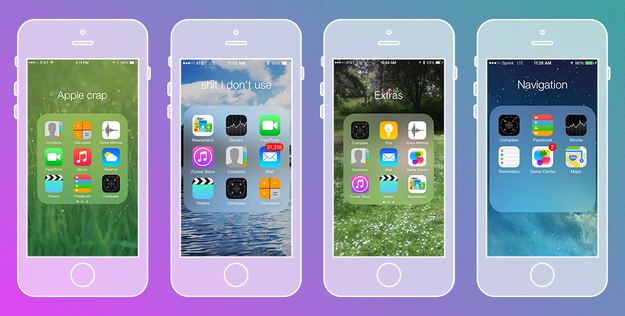
Have you ever used the Stocks app? Or Keynote? Or the Apple Watch app?

Have you ever used the Stocks app? Or Keynote? Or the Apple Watch app?

Probably not, right? But for years you haven&;t been able to delete built-in Apple apps from iOS.

Michelle Rial / BuzzFeed

Well, starting today, you can finally DELETE ‘EM.

Well, starting today, you can finally DELETE 'EM.

giphy.com / Via logotv.com

Connect your iPhone to a computer to back it up via iTunes. You can also back up your phone using iCloud by going to Settings > iCloud > Backup > turn it to on. If you don&039;t have enough iCloud space, try this trick.

Don&039;t skip this step&; You could lose all of your data&033;

Next, update to iOS 10 in Settings.

Next, update to iOS 10 in Settings.

The fastest way to download iOS 10 is to connect the device to your computer. If you have the latest version of iTunes, open the app and then go to Summary. Next, click Check for Update.

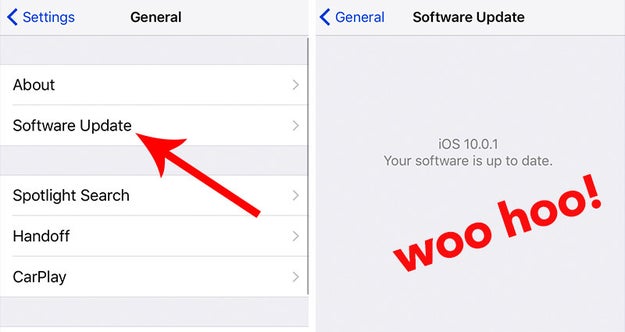
You can also update the device wirelessly. Open the Settings app > General > Software Update and tap Download and Install.

These devices can upgrade to iOS 10: iPhone 5 or newer, a 6th generation iPod Touch, iPad Pro, iPad 4 or newer, and iPad mini 2 or newer.


View Entire List ›

Quelle: <a href="Today Is The Day You Can Finally Delete The Stocks App“>BuzzFeed

High Schoolers Can Now Earn Scholarship Money By Caring For Family Members

Raise. me

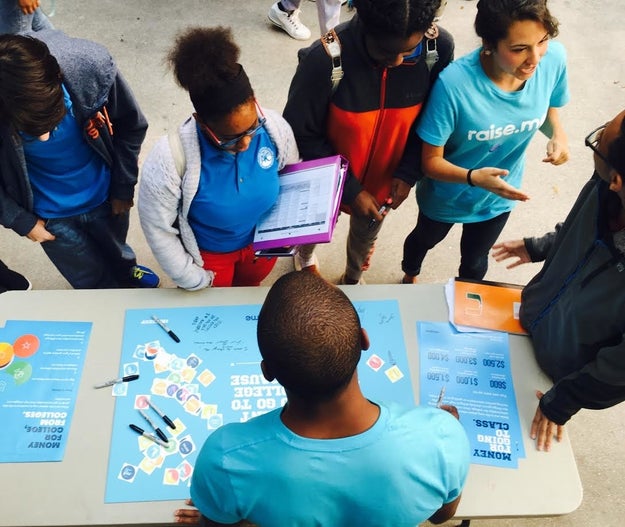
On the website Raise.me, high school students can rack up scholarship money for a laundry list of activities found on almost every college application: good grades, community service, advanced placement classes.

Starting this week, they will also be able to earn hundreds of dollars for taking a job making sandwiches at at Subway or babysitting a younger brother after school. A job running the cash register at a family corner store could be worth as much as $2,000 — similar to the amount that a student would earn for a year&;s worth of straight A&039;s.

Raise.me says it now has almost 400,000 students signed up to use its services, and has made deals with 200 colleges ranging from ASU to Michigan State to Tulane. It generates revenue by charging colleges to use its platform.

With its new “family assistance scholarships,” Raise.me is hoping to enable a growing movement among selective colleges to recognize contributions by low-income students — those who are often shut out of the traditional college admissions horserace because of family obligations and limited opportunities. In addition to focusing on typical extracurricular activities like debate club and service trips, the schools say, they want to reward students who work jobs for pocket money and help their families out at home.

A group of selective colleges joined forces earlier this year to release a report, “Turning the Tide,” that recommended reshaping the admissions process to emphasize “ethical engagement” over personal achievement — rewarding students for helping their families and communities. The idea, in large part, was to recognize the achievements of low-income students and students of color.

Raise.me is hoping to help facilitate that shift. The San Francisco startup allows colleges to offer small, incremental grants — it calls them “microscholarships” — to students for accomplishments like getting A&039;s or leading school clubs. Students can begin to accrue money as high school freshmen, giving them thousands and even tens of thousands of dollars — conditional on their acceptance — before they even apply to a college.

Until now, though, the scholarships had been limited to rewarding students for traditional extracurriculars — those that the “Turning the Tide” report said too often amounted to an attempt to check off boxes, rewarding quantity over quality.

Raise.me scholarships are meant in part to serve as a guidepost, allowing students to see what things colleges value. Schools pick what they want to offer money for: a liberal arts school might encourage a student to take an extra year of a foreign language by offering a $300 scholarship; an engineering school, to pick AP calculus instead of a less rigorous class.

“It can be really intimidating to figure out what you need to do to become better prepared for college,” said Preston Silverman, Raise.me&039;s co-founder and CEO, particularly for students who don&039;t have access to counseling.

Penn State University offers Raise.me to a small group of Pennsylvania public schools — a mix of urban and rural — that have large number of low-income and first-generation students. Jacqueline Edmondson, the school&039;s associate vice president, said they were eager to add the “family assistance” scholarships, hoping both to reward students for non-traditional extracurriculars and to signal to them that Penn State prioritizes their contributions.

“We have students coming from low-income families who might have won money for participating in community service, for example, but they can&039;t afford that time,” Edmonson said. “They weren&039;t just working for themselves, they&039;re working for their families.”

The first class of Raise.me students at Penn State just finished their freshman year, Edmonson said, with higher average GPAs than students from their high schools who came without the scholarship money.

How America’s Top Colleges Plan To Fix The Admissions Process

Quelle: <a href="High Schoolers Can Now Earn Scholarship Money By Caring For Family Members“>BuzzFeed

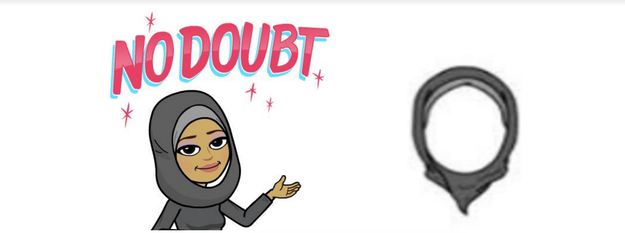
Meet The 15-Year-Old Behind The Proposed Hijab Emoji

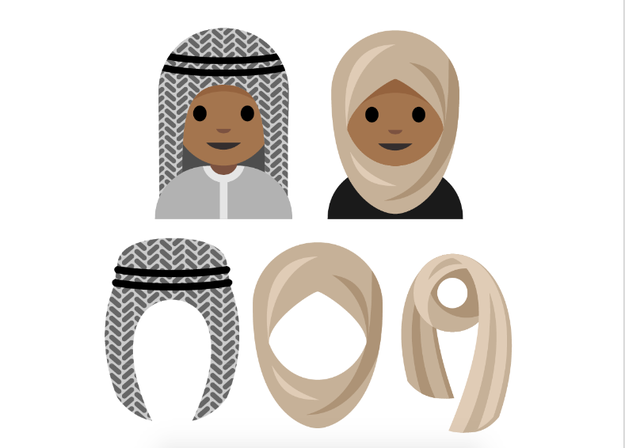
A mockup of a potential hijab emoji.

Aphelandra Messer

Earlier this year, Rayouf Alhumedhi, a 15 year-old student in Berlin, Germany, was trying to start a group chat on WhatsApp with her friends when she realized something important was missing.

Her friends decided to title the group chat by using an emoji that represented each of their faces. Her friends picked their hair and skin colors and created a cartoonish likeness of themselves. For Alhumedhi, who wears a hijab headscarf, this wasn&;t so easy. Though emoji has options for turbans, detective fedoras, police officer caps, and jolly red santa hats, there&039;s no option for the traditional headscarf worn by 550 million Muslim women, alone.

So Alhumedhi took matters into her own hands.

Unsure of what to do, Alhumedhi wrote a long email to Apple&039;s customer help but didn&039;t hear back. A few months later, though, she stumbled on a Mashable explainer about the Unicode Consortium, the technical organization that governs the evolution of emoji and handles new proposals.

Other third-party mobile sticker companies like Bitmoji have added hijabs.

Bitmoji

“I honestly didn’t know what to expect and kind of couldn&039;t believe they&039;d see it or even talk about it — all I wrote was a short paragraph,” Alhumedhi told BuzzFeed News.

But Unicode was intrigued. With the help of an emoji subcommittee member, Alhumedhi was shown how to create a formal emoji proposal and quickly drafted a detailed seven-page document, complete with usage examples and a history of the headscarf in popular society. “The most I’ve written are lab reports at school, so this was really a new experience for me,” she said. “But I had some help and followed the structure of other good proposals.”

An excerpt from the proposal:

* As of 08/26/2016, when typing “hijab” into the tags search bar on Instagram, you will receive 15.6 million photos. On the other hand, searching for “turban” you will receive 732,000 photos.

* Usage of this emoji will be predominantly in Muslim countries. This includes Indonesia, the fourth most populous country in the world, where the Muslim population is 202 million. In Egypt, the 15th most populous country in the world, the percentage of women wearing headscarves is 90%.

The proposal caught the eye of Reddit co-founder Alexis Ohanian, who has sponsored it and is helping Alhumedhi host a Reddit AMA to drum up support for the potential emoji today. There seems to be genuine interest from the outside as well; it already been requested over 100 times on the site EmojiRequest.com.

Alhumedhi plans to submit the proposal to Unicode soon; currently, she’s tweaking the proposal based on feedback she received from emoji subcommittee members. But given the help she’s received from the subcommittee, there’s little doubt it’ll be given very serious attention.

“I feel like it would be a huge achievement,” Alhumedhi told BuzzFeed News of the possibility that her proposal could someday find its way to millions of people’s phones around the world. “550 million woman pride themselves in wearing a headscarf — and it’s not just Muslims but Orthodox Jews and Christians, too. That there could be something to represent them — that this image could be given to people all around the world — it’s amazing and incredible if I could be the person to help do that.”

Quelle: <a href="Meet The 15-Year-Old Behind The Proposed Hijab Emoji“>BuzzFeed

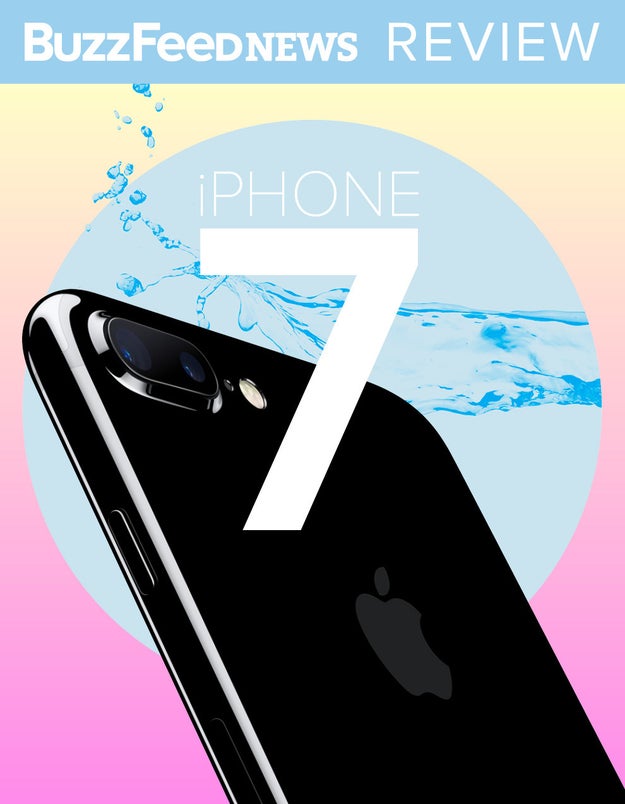
I Used The New iPhone 7 And, TBH, No Headphone Jack Was Not That Bad

I Used The New iPhone 7 And, TBH, No Headphone Jack Was Not That Bad

Okay, everyone, calm down.

BuzzFeed News / Apple

Last week, the Internet exploded in enraged disbelief when Apple unveiled the iPhone 7 and 7 Plus — minus headphone jacks. But, as I discovered while testing the device in the days that followed the keynote, a phone is much more than the sum of its ports.

For the purposes of this review, I’m not interested in “bead blah-sted anodized al-yoo-mi-nee-um.” Because high-definition closeups and carefully choreographed onstage demos are not real-world conditions, I&;m more concerned about the iPhone in the context of life’s less, er, dignified moments.

I’m human, and wrote this as such.

Listen, I was more upset than anyone. “DON’T YOU DARE, TIM&;&033;&033;,” I mouthed to my computer on one particularly bleak August day, when the jack murder was all but confirmed.

(Just kidding, I live in San Francisco. Every Fogust day is particularly bleak.)

At first, the prospect of a Bluetooth-only product seemed a little …mean — and also strange. Most high-fidelity headphones use the same 3.5 mm port that’s been around for fifty years. It’s *just about* the only technology that our grandparents can still relate to&033; Seriously, Tim, how dare you&033;

But when Apple announced its proposed solution — EarPods that connect via Lightning (the name of the iPhone’s one and only remaining port) and a Lightning-to-audio-jack adapter for wired headphones, both included in the box — I put down my pitchfork.


View Entire List ›

Quelle: <a href="I Used The New iPhone 7 And, TBH, No Headphone Jack Was Not That Bad“>BuzzFeed

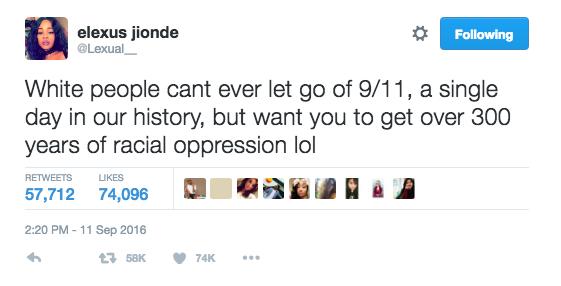
A Woman Is Being Harassed On Twitter For Her Thread On 9/11 And Black History

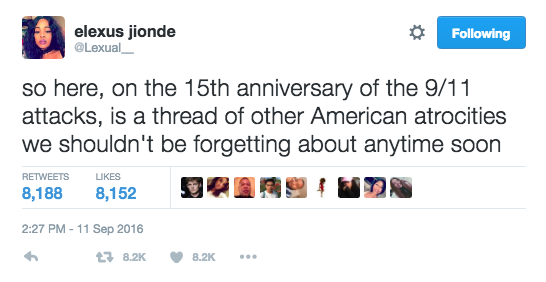
After Elexus Jionde’s 9/11 tweet went viral, a potential Twitter bug disabled threading on the tweetstorm it was meant to introduce, removing crucial context and exposing her to further abuse.

On Sunday evening, the 15th anniversary of the September 11th attacks, Elexus Jionde, a 22-year-old history graduate from Charlotte, North Carolina, tweeted:

On Sunday evening, the 15th anniversary of the September 11th attacks, Elexus Jionde, a 22-year-old history graduate from Charlotte, North Carolina, tweeted:

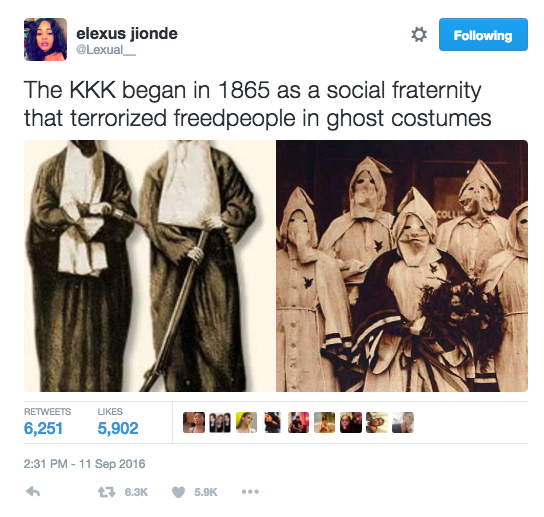
When the tweet went viral (50,000 retweets in less than 24 hours), Jionde decided to add to it, detailing key parts of black history in the US. Her goal was to highlight periods of racism and injustice that she believed should be remembered in the same way as 9/11. To give the tweetstorm continuity — and to make her tweets easily discoverable — Jionde threaded them together by replying to each tweet as she published it. (You&;ll find the full thread — which is made up of 49 tweets detailing many other examples of racial inequality in US history, and asking for them to “not be forgotten” — here).

Here are some sample tweets from Jionde’s tweetstorm:

Here are some sample tweets from Jionde's tweetstorm:


View Entire List ›

Quelle: <a href="A Woman Is Being Harassed On Twitter For Her Thread On 9/11 And Black History“>BuzzFeed

Samsung Lost An Entire HP In Market Value After Note 7 Disaster

Samsung Lost An Entire HP In Market Value After Note 7 Disaster

Google Finance / Via google.com

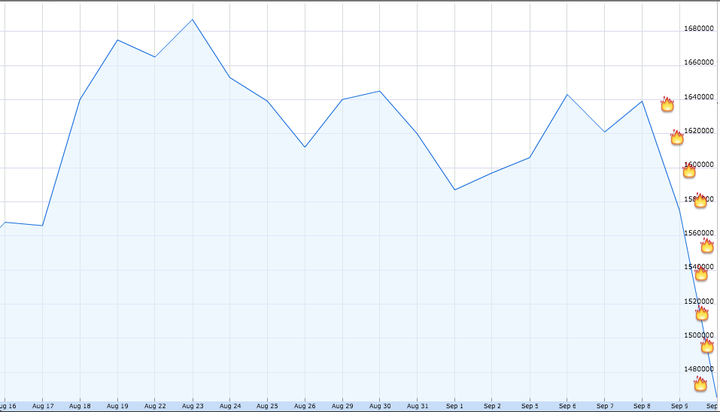
Samsung&;s disastrously defective new Galaxy Note 7 has wiped about $25 billion off its market value, with its stock falling almost 11% in trading on Friday and Monday. It&039;s the worst two-day fall for the Korean electronics giant since 2008, according to Bloomberg data.

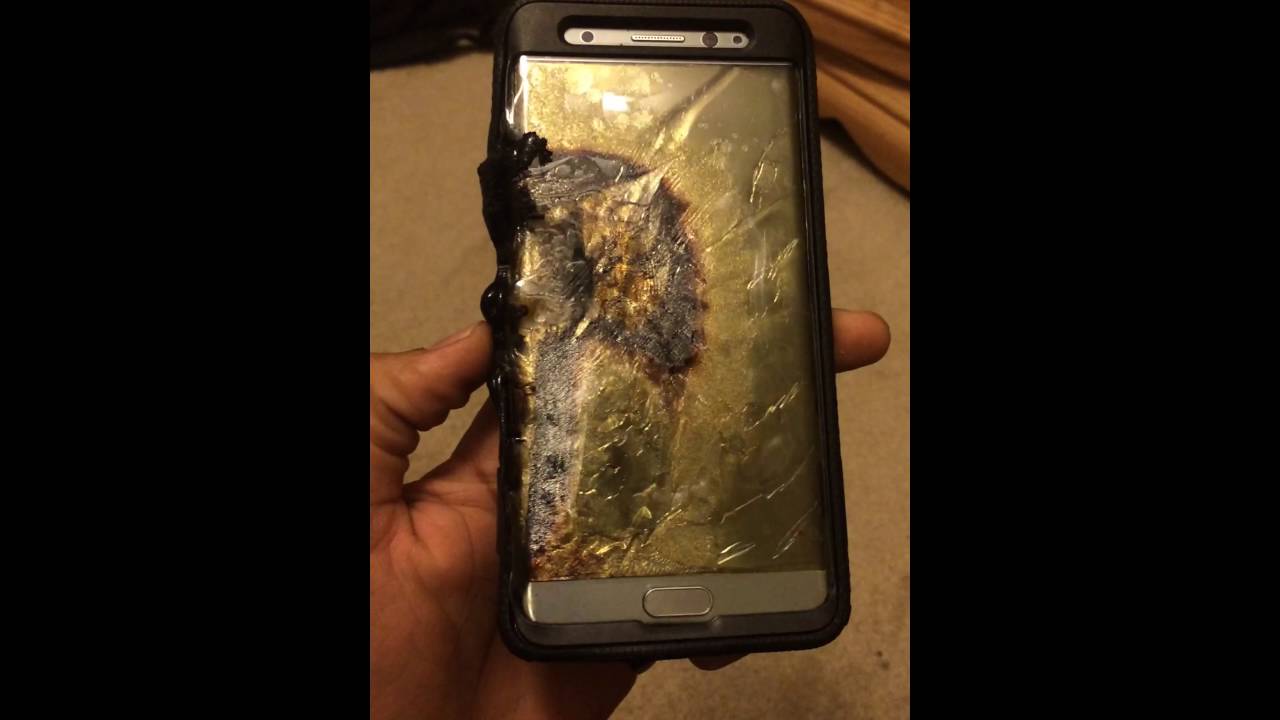
The blown launch of the Note 7, Samsung&039;s would-be iPhone competitor, will cost an estimated $1 billion in recall costs alone. But the true costs to the company could be much higher if its flagship brand struggles to recover from brutal headlines in the US — including a New York Post report Sunday that a 6-year old was taken to hospital with burns after a Note 7 exploded in his hands.

One industry analyst, John Donovan at BlueFin, even raised his estimate of how many iPhone 7s Apple would sell given the collapse of an important competitor. He said the “TMZ-like reporting environment” around the Note 7 and its defects has left Apple “primed to swoop in and take full advantage.”

Several airlines have told customers to not fly with their Note 7s charged or even on during the flight, while Delta said the devices could only be taken as carry-on luggage, and must be switched off during the flight.

Samsung stock fell 7% on Monday, meaning the company&039;s market value has fallen by more than the entire valuation of HP.

youtube.com

While the problems with the phone&039;s battery occasionally overheating and combusting have been known since early September when the company announced a voluntary exchange program, the bad news climaxed late last week when Samsung instructed customers to “power down their Galaxy Note7s and exchange them now.”

The Consumer Product Safety Commission said on Friday that consumers should turn off their Note 7s and not charge them. The phone was released in August.

Quelle: <a href="Samsung Lost An Entire HP In Market Value After Note 7 Disaster“>BuzzFeed