LinkedIn Co-Founder Says He'll Pay To See Trump’s Tax Returns

BuzzFeed News / Getty Images

LinkedIn co-founder Reid Hoffman would like to see Donald Trump&;s tax returns, and he&039;s willing to pay up to $5 million for the opportunity.

On Monday, Hoffman pledged his support for a Crowdpac.com crowdfunding campaign aimed at pressuring Trump into releasing his tax returns. The campaign was started by a US military veteran named Pete Kiernan, who says he’ll donate the cash — almost $5,000 so far — to 10 veterans affairs groups if Trump releases his tax returns.

“Trump claims to love veterans,” reads Kiernan’s Crowdpac.com page, “and so we’re asking him to put his money where his mouth is.”

If Kiernan succeeds and Trump releases his tax returns, Hoffman — whose net worth increased by $800 million in a single day this year when Microsoft acquired LinkedIn — says he will quintuple the sum raised. So, if the Crowdpac campaign meets its goal of $25,000, and if Trump makes public documents that he’s so far vehemently insisted on keeping private, Hoffman would donate $125,000; the more money the campaign raises, the more Hoffman will donate, with a cap at $5 million.

In a post on Medium published Monday, Hoffman noted that $5 million is the same amount that Trump himself pledged to donate to charity during the 2012 election if President Obama agreed to his request to release college records and passport documents.

“Given Trump&039;s vocal support of veterans, I imagine he will recognize the great good that can come from Kiernan&039;s proposal,” Hoffman writes. “But taking Trump&039;s own 2012 offer to President Obama into account, I&039;d like to assist Kiernan in his campaign.”

It’s worth noting that Hoffman was an early investor in Crowdpac, which bills itself as a crowdfunding platform designed for political campaigns. Hoffman is a partner at Greylock Partners, but participated in Crowdpac’s $6 million Series A in early 2016 as an independent investor.

It’s also worth noting that this is not the first Crowdpac campaign Hoffman has publicly involved himself in — or even the first this month. Last week, Hoffman announced that he would donate $25,000 to a campaign to recall Judge Aaron Persky, who presided over the Stanford sexual assault case. As of this writing, that campaign has amassed $40,000 toward its $250,000 goal.

Though Hoffman, as an investor, stands to profit from Crowdpac’s success, some Silicon Valley luminaries see his investment in progressive political causes as a worthy use of his wealth:

The deadline for the Crowdpac campaign is Oct. 19, the date of the final presidential debate.

Quelle: <a href="LinkedIn Co-Founder Says He&039;ll Pay To See Trump’s Tax Returns“>BuzzFeed

Instagram Rolls Out Custom And Default Keyword Filtering To Combat Harassment

Instagram

Today Instagram is rolling out two keyword filters to help limit abuse and harassment on its platform.

The tools, a custom keyword filter and a default keyword filter, allow you to filter out comments with either your own specific words (if you don&;t want to see comments with “asshole” in them, you add the word “asshole” to the custom filter) or comments with any of hundreds of offensive words Instagram built into its “default” filter.

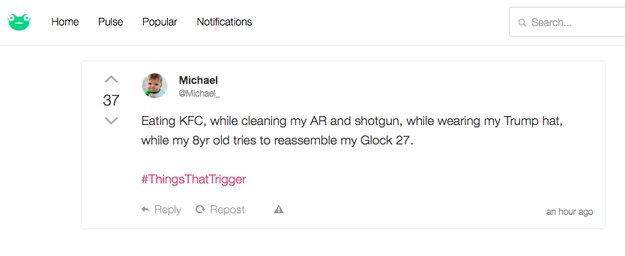
Keyword filtering is becoming a popular anti-harassment tool. Twitter is working on a similar keyword filtering tool, according to a Bloomberg report. And Gab.ai, a new social network growing fast among conservatives, uses keyword filtering and muting as its only content moderation tools.

Filtering is lauded by some, since it puts editorial decisions in the hands of users, and not the platforms. However, for Instagram, the filters are an addition to its current terms of service — which explicitly prohibit hateful, discriminatory and other objectionable forms of content — and will not replace them.

The new filters, which are already available to verified users, roll out globally today.

Here&039;s Instagram CEO Kevin Systrom&039;s full blog post announcing the change:

When Mike and I first created Instagram, we wanted it to be a welcoming community where people could share their lives. Images have the ability to inspire and bring out the best in us, whether they are funny, sad or beautiful. Over the past five years, I&039;ve watched in wonder as this community has grown to 500 million, with stories from every corner of the world. With this growth, we want to work diligently to maintain what has kept Instagram positive and safe, especially in the comments on your photos and videos.

The beauty of the Instagram community is the diversity of its members. All different types of people — from diverse backgrounds, races, genders, sexual orientations, abilities and more — call Instagram home, but sometimes the comments on their posts can be unkind. To empower each individual, we need to promote a culture where everyone feels safe to be themselves without criticism or harassment. It&039;s not only my personal wish to do this, I believe it&039;s also our responsibility as a company. So, today, we&039;re taking the next step to ensure Instagram remains a positive place to express yourself.

The first feature we’re introducing is a keyword moderation tool that anyone can use. Now, when you tap the gear icon on your profile, you&039;ll find a new Comments tool. This feature lets you list words you consider offensive or inappropriate. Comments with these words will be hidden from your posts. You can choose your own list of words or use default words we&039;ve provided. This is in addition to the tools we&039;ve already developed such as swiping to delete comments, reporting inappropriate comments and blocking accounts.

We know tools aren&039;t the only solution for this complex problem, but together, we can work towards keeping Instagram a safe place for self-expression. My commitment to you is that we will keep building features that safeguard the community and maintain what makes Instagram a positive and creative place for everyone.

Quelle: <a href="Instagram Rolls Out Custom And Default Keyword Filtering To Combat Harassment“>BuzzFeed

Tesla Says Its Update To The AutoPilot Feature Would've Prevented A Deadly Crash

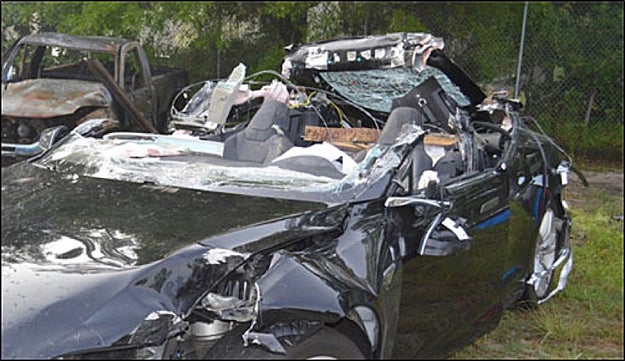
Joshua Brown&;s Model S after May&039;s fatal crash.

NTSB

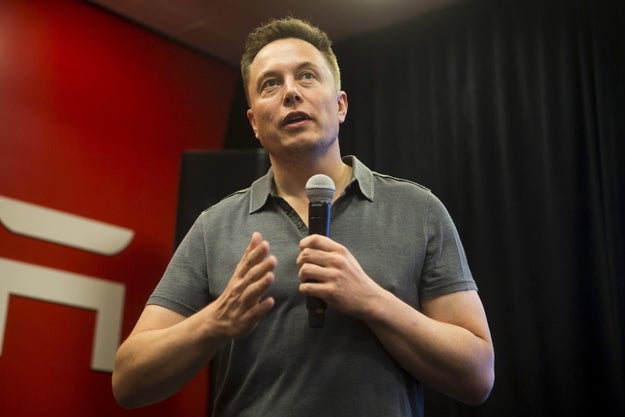
Tesla will issue an update to its Autopilot software in the coming weeks that would have prevented the fatal Model S crash that is under federal investigation, CEO Elon Musk said Sunday.

Musk said that Autopilot, Tesla’s advanced driver assist system, will disengage if drivers ignore warnings to keep their hands on the wheel, and will rely more heavily on radars to trigger the brakes if an oncoming object is detected.

“I do want to emphasize this does not mean perfect safety. Perfect safety is really an impossible goal,” Musk told reporters on a conference call. “It’s really about improving the probability of safety.”

The update to Autopilot comes as the technology is under investigation by two federal agencies to determine whether the feature played a role in two recent crashes, including a deadly accident in Ohio in May.

In that fatal crash, “neither Autopilot nor the driver noticed the white side of the tractor trailer against a brightly lit sky, so the brake was not applied,” Tesla said. The Model S, traveling at 74 mph with a 65 mph speed limit, hit the trailer and traveled under it before veering off the road, killing driver Joshua Brown.

Increasing the use of radars, alongside the car’s cameras, will help Autopilot detect not only the object directly in front of it, but also whatever is in front of that car, Musk said. To prevent false positives so Teslas on Autopilot don’t brake when they see overhead road signs, for example, the company is building a “geocoded whitelist” of fixed items cars should not stop for.

Elon Musk in October, 2015.

Beck Diefenbach / Reuters

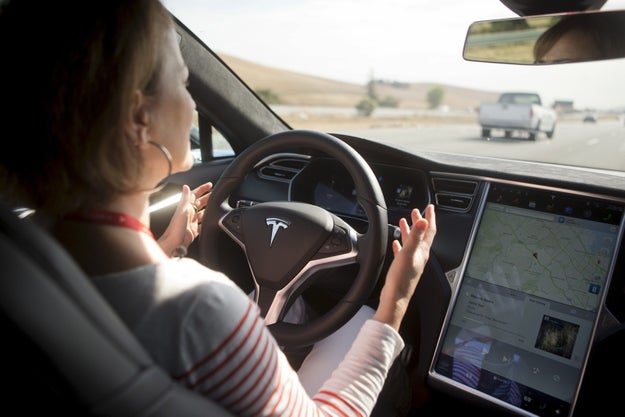
Tesla has promoted its Autopilot technology as an incremental step toward self-driving cars. When drivers activate it, though, the display warns them to keep their hands on the wheel at all times. But people haven’t always followed that warning: There are plenty of YouTube videos of drivers sitting in Teslas while using Autopilot hands-free.

Musk said the company has noticed that Tesla drivers sometimes ignore as many as 10 warnings to keep their hands on the wheel within an hour. “We really want to avoid that situation,” he said on the conference call.

Beck Diefenbach / Reuters

Part of the Autopilot 8.0 software update will address that issue. For Teslas traveling slower than 45 mph while on Autopilot, drivers will be able to spend a maximum of five minutes hands-free before being reminded to keep their hands on the wheel. In Teslas moving faster than 45 mph on Autopilot, drivers will be reminded after one minute if they are not driving behind another vehicle, or three minutes if there is another car ahead. (Musk said the technology’s accuracy improves if the car is following another vehicle, hence the disparity.) Otherwise, the Autosteer system will disengage until the car is parked.

Musk claimed the update would make Tesla vehicles using Autopilot three times safer than other cars.

The update could affect the federal investigations surrounding Autopilot. The National Highway Traffic Safety Administration, one of the agencies probing the fatal May crash, sometimes closes investigations if it determines a manufacturer has resolved the issue at hand and no further investigation is warranted. Bryan Thomas, a spokesman for NHTSA, said the agency is reviewing information from Tesla about the Autopilot update.

“We do not have an update on the Tesla investigation to share at this time,” he said.

LINK: Tesla’s Big Problem With Autopilot Feature May Come Down To Its Name

Quelle: <a href="Tesla Says Its Update To The AutoPilot Feature Would&039;ve Prevented A Deadly Crash“>BuzzFeed

Apple "Rejiggers" Self-Driving Car Project

Josh Edelson / AFP / Getty Images

Apple is “rejiggering” its electric self-driving car program, cutting some employees and reassigning others to new areas of focus, sources told BuzzFeed News.

The New York Times reported Friday that Apple has “shuttered parts of its self-driving car project and laid off dozens of employees.” Sources confirmed to BuzzFeed News that while Apple has cut some employees, others have been shifted to new positions as the company refines Project Titan’s focus, which is increasingly oriented on autonomous driving technologies and away from self-driving cars.

Apple hired the former head of Blackberry’s auto software division, Dan Dodge, to support an increased focus on self-driving technology, Bloomberg reported in July. The company also moved Bob Mansfield, a longtime senior executive and hardware veteran, to Project Titan this year.

An Apple spokesperson declined to comment Friday.

The increased focus on autonomy comes as automakers race to put self-driving vehicles on the road. Uber will begin a pilot program next week in Pittsburgh to pick up passengers in self-driving Volvos. Ford said last month that it plans to mass-produce self-driving vehicles by 2021.

Tesla has also made clear its plans to eventually allow owners to add their cars to a self-driving Tesla fleet. And Google has been testing its own self-driving cars in Mountain View and several other states for years.

Apple has been much more secretive about its ambitions, but has reportedly set a target a design in 2020.

Quelle: <a href="Apple "Rejiggers" Self-Driving Car Project“>BuzzFeed

State Election Officials Confront Fears Of Election Day Hacking

Justin Sullivan / Getty Images

A month after 20,000 private emails from the Democratic National Committee were published online, election officials across the country received a series of warnings from the FBI: Hackers were targeting states’ election websites and, in at least one case, were able to steal voter registration data. The Department of Homeland Security has since created an election cybersecurity action campaign, and US intelligence officials have begun investigating the possibility of a covert Russian intelligence operation that seeks to undermine the integrity of the American election.

But despite the growing concerns over foreign meddling coming from Congress, intelligence experts, and the Clinton campaign, state election officials say American voters have little to fear.
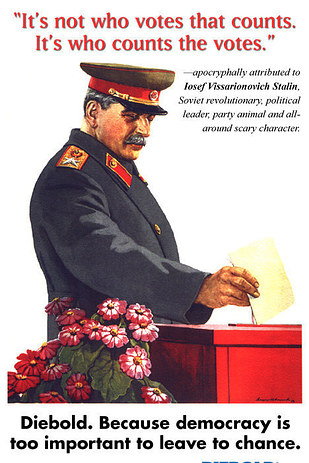
Rand Careaga

“There are over 9,000 jurisdictions that operate elections at a very local level, so that’s both a blessing and a curse,” Denise Merrill, Connecticut’s secretary of state and president of the National Association of Secretaries of State (NASS), a nonpartisan organization that represents the country’s top state election officials, told BuzzFeed News. “It really saves us from worrying too much about cybersecurity — we have other concerns, but that’s kind of not one of them.”

Merrill was appointed by NASS to join Homeland Security’s special working group on election cybersecurity. The group&;s goal is to build closer ties between the federal government and local election officials, and alsoto consider designating state voting systems as “critical infrastructure,” akin to dams and power grids, granting election offices additional resources and protections from the federal government.

Merrill, along with the secretaries of state and election officials representing California, Florida, Ohio, Minnesota, Colorado, and Iowa, told BuzzFeed News that pre–Election Day simulations, paper trail audits, and the fact that voting machines are not connected to the web provide strong safeguards to the electoral system.

State election officials emphasized that the recent hack into voter registration databases differs from the risks faced by their offices, because these databases aren’t directly tied to voting on Election Day and because voting machines cannot be accessed remotely through the internet. “That’s the voter registration system, which is not at all connected to the actual voting,” Merrill said, adding that in almost every state, voter registration is completed on paper. “There are backup paper systems for every process in our election, and that means cybersecurity is not the concern that it’s being portrayed to be nationally.”

“The fact that most of these machines aren’t connected to the internet doesn’t make them immune to malicious software,” Ariel Feldman, a computer science professor at the University of Chicago, told BuzzFeed News. “In fact, our initial study, many years ago, demonstrated a voting machine virus that spread from machine to machine — not on the internet, but over memory cards,” he said.

In 2006, Feldman was part of a three-person research team at Princeton University that published an influential study demonstrating startling vulnerabilities in the Diebold AccuVote-TS voting machine, the most widely used voting machine in America at the time (and one viciously parodied in a faux ad campaign called “The Diebold Variations”). “There are various places where malicious software can be injected into the electoral process, and spread very broadly, even beginning with voting machine manufacturers,” he said.

Other experts have pushed back against the argument that our decentralized voting system provides adequate protection against outside interference. “Those 9,000 jurisdictions are still purchasing their election software from the same four or five vendors,” Andrew Appel, a computer science professor at Princeton University, told BuzzFeed News. “So there aren’t 9,000 different kinds of election systems to hack, there’s just a few kinds,” he said. Appel added that some of those jurisdictions might be situated in competitive swing states, where the margins of victory are small and only hundreds or thousands of votes determine the final outcome.

“It really saves us from worrying too much about cybersecurity — we have other concerns, but that’s kind of not one of them.”

This November, about 75% of American voters will cast their ballots on paper or on a machine that produces a paper record, according to Pamela Smith, the president of Verified Voting, a nonpartisan watchdog organization focused on electoral accountability. But five states — Georgia, New Jersey, Louisiana, South Carolina, and Delaware — exclusively use machines that generate no paper audit trail. This, experts say, makes it difficult to determine whether those machines accurately capture the preferences of voters. Several other states, including some of the country’s most populous, like Texas, Pennsylvania, and Virginia, use paperless voting machines in at least some of their districts.

Of course, having a paper record does not in itself make voting machines less vulnerable to hackers who gain physical access to them, nor do paper audit trails prevent software malfunctions. But they can act as a deterrent and fail-safe, according to Lawrence Norden, the deputy director of the democracy program for the Brennan Center for Justice and co-author of a recent study that catalogued the state of US voting machines. Norden told BuzzFeed News that the national trend is moving away from paperless voting machines. But many of the machines still in use are woefully out of date and are serviced by election offices with meager budgets. However, election officials have, he said, come to realize that the idea of Election Day hacking has moved from the theoretical into the real.

“Fortunately this is something that we’ve been talking about for years,” Ohio Secretary of State Jon Husted told BuzzFeed News. Ohio has not seen any attempted hacks into its election-related websites, Husted said. And the IP addresses linked to the Arizona and Illinois breaches, which the FBI shared with election officials, have been flagged by his office and have not been detected.

Ohio, like other states BuzzFeed News spoke with, limits physical access to voting machines, conducts audits before and after Election Day, and has sought help from state and federal law enforcement in detecting cybersecurity threats. “This latest news is just one more moment for us to go back and double-check our work to make sure we have done it the right way,” Husted said.

“You can’t hack a paper ballot. Sometimes old technology is good.”

100% of votes cast in Ohio on Election Day will generate a paper record, Husted said, a practice that several other states pointed to as a robust preventive measure against manipulation. “You can’t hack a paper ballot. Sometimes old technology is good.”

“Ironically, in this high-tech age, good old-fashioned paper provides a lot of security,” Minnesota Secretary of State Steve Simon told BuzzFeed News. “Unlike other states that have in the last 15 years adopted systems that are completely or mostly electronic, we vote in Minnesota on paper ballots.” In addition to a state-mandated paper audit trail, Simon said, Minnesota has brought in private-sector firms to conduct an outside audit of election systems’ security.

But even the most thoughtful defensive measures can be circumvented by determined and creative adversaries, a fact acknowledged by California Secretary of State Alex Padilla, who said that his state is constantly testing its voting equipment and seeking expertise from federal law enforcement to stay ahead.

And beyond compromising specific vote tallies, other officials have said that merely casting doubt on the electoral results may diminish public confidence in the democratic process. “For me the worst thing about all this is that it’s creating suspicion in the American public that really could be destructive,” said Secretary Merrill of Connecticut.

The Department of Homeland Security has continued to offer its assistance to election officials in the form of security audits, incident response plans, and information sharing, according to the agency’s chief, Jeh Johnson. But even as the feds are eager to help, Johnson characterized the idea of an Election Day hack as a far-fetched scenario. “It would be very difficult, through any sort of cyber intrusion, to alter the ballot count, simply because it is so decentralized and so vast,” Johnson said Thursday during an event hosted by The Atlantic.

Some state election officials have expressed concerns that the fears aroused by vote manipulation may invite a heavy-handed response from the federal government, encroaching on the authority of state and local election offices, according to several secretaries of state who were on a conference call with Johnson last month. But Johnson said Homeland Security is merely offering help to those who ask. “There’s a lot of chatter on the internet about what that could mean — it does not mean a federal takeover of state elections systems,” he said. We don’t have the authority to do that. What we do in Homeland Security, in cybersecurity, is offer some assistance when people ask for it.”

Quelle: <a href="State Election Officials Confront Fears Of Election Day Hacking“>BuzzFeed
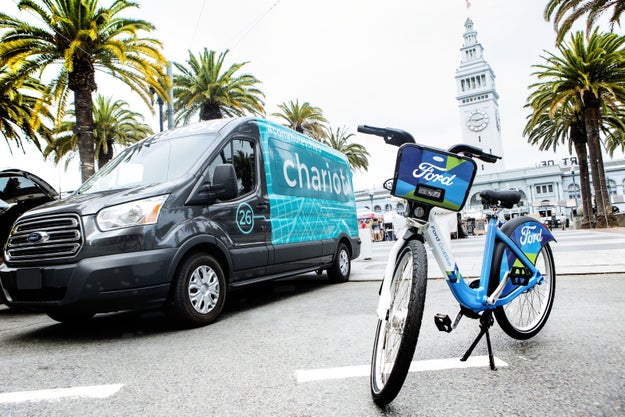
Ford Just Bought Chariot, A San Francisco-Based Shuttle Service

Courtesy of Ford

Ford announced Friday that it’s buying Chariot, a San Francisco-based shuttle service, and plans to expand it to at least five more cities over the next 18 months. The automaker is also creating a team focused on partnering with cities to provide transportation services.

Acquiring Chariot, which runs about 100 Ford vans that transport up to 14 passengers each along 28 crowdsourced routes throughout the Bay Area, gives Ford an established ride-hail-style network. The more than 100-year-old automaker said last month that it plans to put self-driving cars on the road through a ride-hail network by 2021. Chariot could be Ford’s means to do that.

“We’re working very hard to make sure we get that fully autonomous vehicle on the road in 2021 in a ride-hail type service, and certainly this will be one of the options,” Mark Fields, CEO of Ford, told BuzzFeed News.

Ford declined to say how much it paid for Chariot, but the startup raised $3 million from investors in April 2015. Ford also said Friday that it’s partnering with Motivate, the operator of New York’s bike share system Citi Bike, to offer 7,000 Ford bicycles called GoBikes in the Bay Area.

Chariot, which started in San Francisco in 2014, is just one of many startups Ford has partnered with recently. The auto manufacturer invested $75 million into Velodyne, a company that makes light detection and ranging sensors, last month. It has also invested in the Berkeley, California mapping startup Civil Maps and partnered with more than 40 other startups to develop new car technology.

In March, Ford created a subsidiary called Ford Smart Mobility to “design, build, grow and invest in new mobility services.” The Chariot acquisition is an example of that. (Ford has also been testing its own ride-hailing program called Dynamic Shuttle in Dearborn, Michigan.)

And Ford isn’t the only auto manufacturer to partner with upstart transportation companies. General Motors has invested $500 million in Lyft and is working on developing electric self-driving vehicles. And Uber has partnered with Volvo in a non-exclusive $300 million deal to develop a self-driving car.

San Francisco will be Ford’s first city partnership; some of the other partnerships will be international. Chariot, Fields said, is meant to complement public transportation. Ford already has plenty of competition in this race to be the new form of public transportation. Across the country, Uber and Lyft are partnering with public transportation agencies to make the cost of hailing comparable to hopping on a bus. For now, Chariot won’t be subsidized by public transportation agencies, but Fields told BuzzFeed News he wouldn’t rule out the idea.

Quelle: <a href="Ford Just Bought Chariot, A San Francisco-Based Shuttle Service“>BuzzFeed

Facebook Pulls Its 9/11 Trending Topic After It Promotes A Hoax

After Facebook&;s Trending column highlighted a conspiracy theory on Friday that claimed the Twin Towers were brought down by bombs on 9/11, the company has removed its “September 11th Anniversary” topic entirely.

Facebook acknowledged the hoax and indicated it was working to resolve the issue. But the incident is yet another embarrassing moment for Facebook, whose Trending Topics product seems to create headlines as often as it highlights them.

“We&039;re aware a hoax article showed up there, and as a temporary step to resolving this, we&039;ve removed the topic,” a Facebook spokesperson told BuzzFeed News in an email.

Until last month, the Trending column — which highlights widely discussed topics and news stories within the platform — was run by a handful of human curators, many of whom had news training. But not long after a controversy in May when critics accused the curators of introducing bias to the column, Facebook dismissed them all, elevated the role of its algorithm in selecting topics and, according to Quartz, placed engineers in charge of correcting its mistakes. Today, those engineers sure had their hands full.

Facebook did not give any concrete explanation detailing how the 9/11 conspiracy story, from the UK-based Daily Star, ended up being the featured article for the “September 11th Anniversary” topic. Asked if engineers made the final call to include it, a Facebook spokesperson did not immediately respond.

Quelle: <a href="Facebook Pulls Its 9/11 Trending Topic After It Promotes A Hoax“>BuzzFeed

An Iconic Photo Was Deleted From Facebook And People Are Not Happy

The photo censored by Facebook.

Nick Ut / AP

Norway&;s Prime Minister Erna Solberg on Friday slammed Facebook in an escalating row between the social media giant and the country&039;s politicians and media over its repeated censoring of an iconic image of the Vietnam War.

The photograph, which shows naked 9-year-old Kim Phúc running away from a napalm attack after being severely burned, appeared on Facebook in a post about the terror of war by Norwegian writer Tom Egeland, The Guardian reported.

Facebook deleted the post, and Egeland was suspended from Facebook for sharing a photo that included “nudity.”

On Friday, a Facebook spokesperson told BuzzFeed News that they would reinstate the image in posts where it had been removed.

“After hearing from our community, we looked again at how our Community Standards were applied in this case. An image of a naked child would normally be presumed to violate our Community Standards, and in some countries might even qualify as child pornography. In this case, we recognize the history and global importance of this image in documenting a particular moment in time,” wrote a Facebook spokesperson in a statement to BuzzFeed News. “Because of its status as an iconic image of historical importance, the value of permitting sharing outweighs the value of protecting the community by removal, so we have decided to reinstate the image on Facebook where we are aware it has been removed. We will also adjust our review mechanisms to permit sharing of the image going forward. It will take some time to adjust these systems but the photo should be available for sharing in the coming days.”

Norway&039;s largest newspaper Aftenposten then published a story on Egeland&039;s Facebook suspension using the same “napalm girl” photo, and received a message telling it to “either remove or pixelize” the photo.

“Any photographs of people displaying fully nude genitalia or buttocks, or fully nude female breast, will be removed,” the notice from Facebook said.

However, Facebook deleted the article and image before the newspaper could respond.

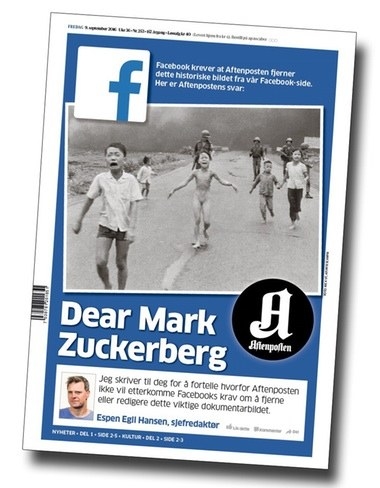
In a front page editorial in response to the notice, Aftenposten Editor-in-Chief Espen Egil Hansen accused Facebook CEO Mark Zuckerberg of abusing his power. In an open letter, he said:

Listen, Mark, this is serious. First you create rules that don’t distinguish between child pornography and famous war photographs. Then you practice these rules without allowing space for good judgement. Finally you even censor criticism against and a discussion about the decision – and you punish the person who dares to voice criticism.

Dear Mark, you are the world’s most powerful editor. Even for a major player like Aftenposten, Facebook is hard to avoid. In fact we don’t really wish to avoid you, because you are offering us a great channel for distributing our content. We want to reach out with our journalism.

However, even though I am editor-in-chief of Norway’s largest newspaper, I have to realize that you are restricting my room for exercising my editorial responsibility. This is what you and your subordinates are doing in this case.

I think you are abusing your power, and I find it hard to believe that you have thought it through thoroughly.

Read the full open letter here.

The open letter on the front page of Aftenposten.

Aftenposten / Via aftenposten.no

Solberg then weighed into the debate by writing her own post in support of Aftenposten calling for the social media company to “review its editing policy,” only for Facebook to delete that as well.

A censored version of the image is now up in a post on Solberg&039;s profile, in which she said: “While I was on a plane from Oslo to Trondheim, Facebook deleted a post from my Facebook page. What Facebook does by removing images of this kind, good as the intentions may be, is to edit our common history.”

View Video ›

Facebook: ernasolberg

Quelle: <a href="An Iconic Photo Was Deleted From Facebook And People Are Not Happy“>BuzzFeed

New Social Network Gab.ai Is Growing Fast Thanks To Its Free Speech Policy

Screenshot from Gab&;s popular page.

Upstart social network Gab.ai is just over three weeks old, but it&039;s adding thousands of people to its waitlist every day by promising them almost total freedom of speech.

Gab, founded by Silicon Valley-based Trump supporter Andrew Torba, is promoting itself as an alternative to Facebook and Twitter, which are both trying to find a balance between free speech and the inflammatory discourse such freedom sometimes begets. Facebook, which relies on users to flag objectionable content, has temporarily removed political speech multiple times, later chalking it up to glitch and error. Twitter seems caught between reining in harassment and giving people room to speak freely on its platform.

Gab’s message seems to be resonating, at least with some people. As of this week, the social network has 12,000 users, with another 42,000 on its waitlist. It&039;s registered more than 2.7 million pageviews on 240,000 posts, with people spending an average of 12 minutes on the site each time they log in. The site is built on a follow model, and people can upvote or downvote the posts they see from people they follow in a central feed. Posts with the most upvotes are collected in a popular tab within Gab.

One Gab.ai user&039;s artwork portraying the tiny social network&039;s fight against Twitter.

Brent Kathrens / Via Instagram: @brentkart

As of now, you could put Gab in the category of an Ello or Peach, social networks that grew temporarily popular when they debuted, but faded as alternatives to the big, established platforms. Torba, formerly the CEO of ad-tech company Automate Ads, just resigned from that job in an effort to give Gab a shot to move past that. He’s building the platform, along with 3 other people, with no outside funding.

In an email to BuzzFeed News, Torba wrote that his frustration with existing social networks’ content moderation policies was one catalyst for creating Gab. “What makes the entirely left-leaning Big Social monopoly qualified to tell us what is ‘news’ and what is ‘trending’ and to define what “harassment” means?” he said. “It didn&039;t feel right to me, and I wanted to change it, and give people something that would be fair and just.”

At the moment, Gab feels like a conservative chatroom. Some popular posts from earlier this week include: “Everytime Hillary coughs, the souls of her victims escape her body,” and “I will not attack any Liberals until they say stupid shit.” It also appears that Milo Yiannopoulos, a conservative writer who was permanently suspended from Twitter in July after his attack on actress Leslie Jones, has joined Gab. Yiannopoulos did not respond to a BuzzFeed News email seeking to confirm that the account is indeed his.

But Torba said the platform isn’t meant just for those of one ideology. “Gab is not FOR any particular group of people, political leaning, race, beliefs, or anything,” he wrote. “Anybody is welcome to express themselves on Gab.”

To deal with the inevitable harassment that occurs on the social web, Gab offers a number of features, including keyword filtering and user muting. And Gab plans to verify any user who presents a valid form of ID to confirm their identify. Users will be able to choose whether or not they want to see posts from verified users only. “We’re placing the onus on the user to handle harassment, and we’re giving them the tools to handle harassment themselves, as opposed to us taking an editorial stance,” Torba said. Both Facebook and Twitter have compelled users to remove posts in the past.

Despite its strict freedom of speech policies, Gab has some guidelines: Users can’t make threats of violence, post illegal pornography, or expose personal information without that person’s consent. None of its users have been banned to date, Torba said.

And though far from a surefire hit, Gab may be more than simply a blip. The United States is in the midst of a contentious Presidential election, and some conservatives feel a growing unease on Facebook and Twitter, platforms they see as being biased. If anything, Gab’s early, ideologically-narrow success plays into a larger trend in social media: people are moving towards smaller groups.

Quelle: <a href="New Social Network Gab.ai Is Growing Fast Thanks To Its Free Speech Policy“>BuzzFeed

People Are Freaking Out Because Read Receipts Have Come To Twitter

Twitter announced a bunch of new features overnight, including typing indicators (“…”), web link previews and, most controversially, read receipts.

Read receipts have been unpopular since they were first introduced on Blackberry Messenger, then the iPhone and early Facebook Messenger, where they are turned on by default. When the news spread that Twitter had finally joined the read receipts bandwagon, people were a little bit tense.

Those who don&;t want read receipts all over their DMs needn&039;t worry. You can disable them pretty easily in the settings:

Quelle: <a href="People Are Freaking Out Because Read Receipts Have Come To Twitter“>BuzzFeed