Mark Zuckerberg Sues To Force Hawaii Families To Sell Land Passed Down For Generations

Chad / Via Flickr: supercooper; Manu Fernandez / AP

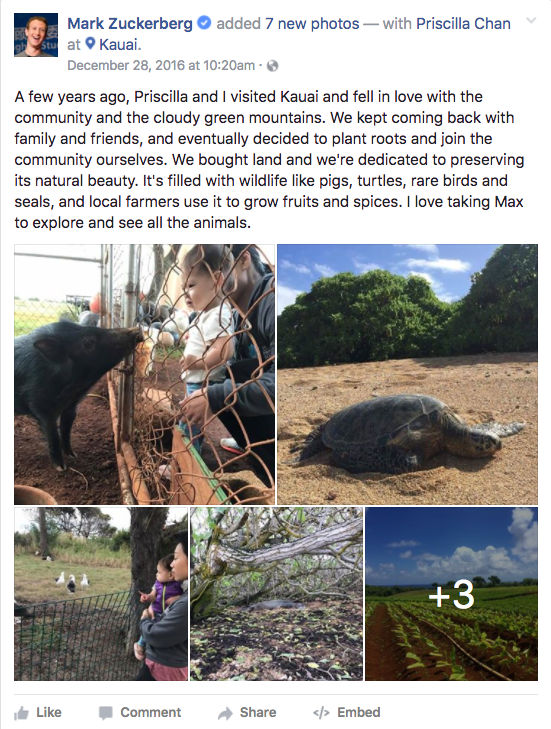
Facebook CEO Mark Zuckerberg has filed lawsuits against hundreds of Hawaii families who retain rights to small parcels of land within the vast estate he purchased on Kauai for close to $100 million.

Zuckerberg bought 700-acres on the island of Kauai in 2014, after purchasing several multi-million dollar condos on Oahu the year before. Within the large property on Kauai are more than a dozen small parcels of land that were partitioned during the 1850s and have been passed down for generations by local families.

In order to enhance his privacy, Zuckerberg has brought lawsuits aimed at finding and forcing these descendants to sell their land at a court auction to the highest bidder. (Zuckerberg has already worked on making his corner of paradise secluded by building a 6-foot-wall around it, which drew ire from many of his neighbors.)

Facebook / Via Facebook: zuck

Before land in Hawaii was divided in 1845, Hawaiians did not have private land ownership. Between 1850 and 1855, common people in Hawaii were granted land titles for places that they already had been living or working on for generations. Many, however, did not make claims for the land as the rules were complicated and they had no context to understand why it was important to have a title to land.

For the small fraction that did successfully claim land, it amounted to less than 1% of all of Hawaii. Now, individual descendants of those who did claim land might only be entitled to a very small fraction or may not even be aware of their rights to the land.

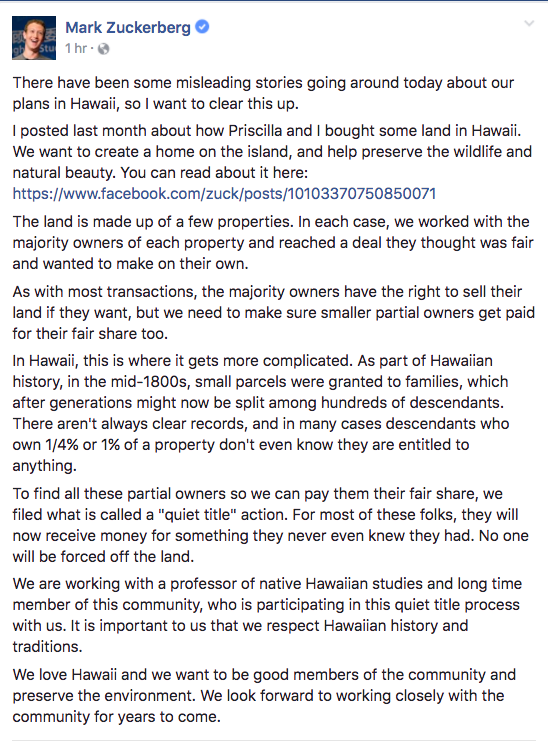
Zuckerberg said in a Facebook post Thursday that stories written about his property in Hawaii have been “misleading,” and that he hopes to make sure “smaller partial owners get paid their fair share too.” By filing a quiet title action, Zuckerberg does aim to find all land owners, but once they have been notified of their claims, a judge will likely order the land to be sold at public auction.

Since Zuckerberg is one of the world&039;s richest people, it&;s clear he will be able to outbid anyone in Hawaii who tries to contest his actions.

Facebook / Via Facebook: zuck

“For most of these folks, they will now receive money for something they never even knew they had. No one will be forced off the land,” Zuckerberg said.

Keoni Shultz, a partner at the Honolulu law firm Cades Schutte representing Zuckerberg companies in the litigation, said this is a common procedure.

“Quiet title actions are the standard and prescribed process to identify all potential co-owners, determine ownership, and ensure that, if there are other co-owners, each receives appropriate value for their ownership share,” Shultz said in a statement to BuzzFeed News.

BuzzFeed News reached out to Facebook and Shultz for more information but representatives were not willing to talk on the record about the matter.

The actions that Zuckerberg is taking to acquire the land is not uncommon in Hawaii, still for many people it serves as another example of ways that Native Hawaiians continue to be moved out of Hawaii by those with more money.

A Native Hawaiian Law primer published with the assistance of the University of Hawaii has stated the use of quiet title laws to force land sales has reduced Native Hawaiian landownership.

“The amount of land held by Native Hawaiians rapidly declined after Western contact. Quiet title and partition lawsuits, or actions, are other mechanisms by which Native Hawaiians continue to be divested of their interest in ancestral lands,” the primer said.

“Partition by sale in particular is highly problematic for the Native Hawaiian community because it severs a family’s connection to ancestral land,” it added.

Quelle: <a href="Mark Zuckerberg Sues To Force Hawaii Families To Sell Land Passed Down For Generations“>BuzzFeed

Here’s How To Protect Your Privacy In Trump’s America

Gregor Cresnar / The Noun Project / Getty / Chip Somodevilla

You’d think texts to your mom and calls to your takeout place are hardly in the government’s interest, but the feds might be monitoring your communications anyway. Sweeping government surveillance programs have grown in recent years – and some digital privacy advocates believe that civilian snooping will continue to expand under President Trump’s watch.

In the first half of 2016, government requests for Facebook account data were up 27% from the previous year, while requests for Google user data in the same period hit a record high of 44,943. The country that submitted the most requests to both of those sites? The United States.

Both presidents Bush and Obama supported domestic surveillance, and experts are concerned that the Trump administration will only strengthen that authority. According to Jay Stanley, a senior policy analyst at the American Civil Liberties Union, “There are extra reasons to worry under a Trump administration based on things he has supported.”

Trump has specifically called for the monitoring of mosques and activist groups like Black Lives Matter. He has also supported the reauthorization of NSA’s data collection program, which was discontinued in June 2015.

So, if you’re feeling, er, unnerved, here’s how to protect your information not only from Uncle Sam, but from hackers and prying corporations, too.

When you’re looking for tools to protect your privacy, there are many aspects to consider, but here are three important ones, according to the Electronic Frontier Foundation’s Noah Swartz:

1. Is the program open source? This allows other engineers to verify that its code is kept up to date, and that its encryption and privacy settings retain strong encryption and best practices.

2. Where is the data stored? Is it on someone else’s servers? In that case, find out who has the encryption keys.

3. Does it make promises that are too good to be true? Steer clear of vague language.

Hackers find security vulnerabilities all the time, so nothing is 100% bulletproof. That’s why it’s important to update your personal technology frequently, create strong passwords, and change those passwords often.

The word encryption is thrown around a lot when you’re looking for secure apps and services. Here’s what it means: When a message sent to you is encrypted, the message looks like gibberish to anyone except you and the sender. It’s a complex algorithm that ensures the message can’t be intercepted by your internet provider or your data carrier.

The most common way apps use encryption is in transit, when the message is traveling through Internet cables or bouncing between cell towers. If you’re looking for a platform that’s truly secure, it should offer what’s called end-to-end encryption, which means that it’s encrypted all the way, as it travels between “ends”: when it leaves the sender’s device, when it hits the platform’s servers, and when it arrives at the recipient’s device.

But, ultimately, end-to-end encryption doesn’t matter if an unauthorized person can easily get into one of those “ends” AKA your phone, computer, or accounts. Encryption is only as secure as your personal devices, so here are the most ~*basic*~ security measures you can, and should, take:

Add a passcode, dummy&;

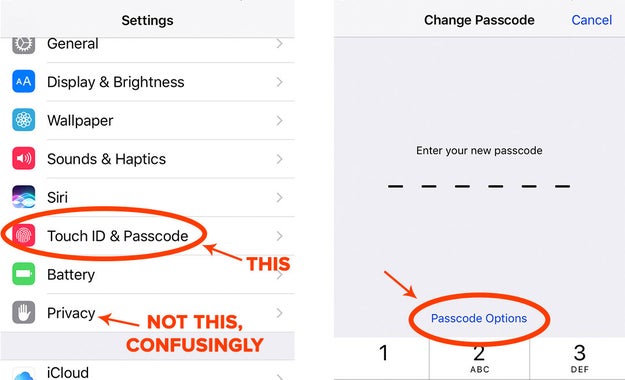
You wouldn’t leave your bike unlocked on the street, would you? At the very least, add a numeric code to your phone. (Pro-tip: don’t use “1234” or “0000.”) For those who want to be *super* secure, add a passcode with both numbers and letters, or an alphanumeric code.

For now, police can’t compel you to give up your passcode, but they can force you to use your fingerprint. So be wary of Touch ID, Pixel Imprint, and other fingerprint unlock features that are convenient, but may compromise your security.

In iOS, go to Settings > Touch ID & Passcode > Change Passcode > tap Passcode Options > Custom Alphanumeric Code.

In Android, go to Settings > under Personal, tap Security > Screen lock > PIN or Password. Additionally, encrypt your phone from the Security page (iPhones are encrypted by default).
Nicole Nguyen / BuzzFeed News

On your computer, add a login password and encrypt your computer’s hard drive.

On the Mac, go to System Preferences > Security & Privacy and set to Require a password for a certain time after sleep. Then move to the FileVault tab to turn on encryption. Don’t forget your FileVault recovery key&033;

On a PC, go to Start > type encryption > select Change device encryption settings > Manage BitLocker > Turn on BitLocker.

Turn on remote lock-and-erase for your devices.

For Mac and iOS, set up Find My Mac and Find My iPhone. From iCloud.com/find, you can completely wipe data from your Apple device remotely, as soon as it connects to the Internet.

For Android, find my phone is automatically enabled once you’ve connected the device to your Google account. Go to android.com/devicemanager to locate or erase data on the phone by performing a factory reset.

For Windows 10 computers, go to https://account.microsoft.com/devices to locate, ring, lock, and erase.

Update your software as soon as a new version is available, no matter how annoying those pop-ups are.

It is always worth your time to do so. If you don’t, it’ll make you more vulnerable to hackers who monitor which security holes were patched in the new update, in order to target those in older versions of the software.

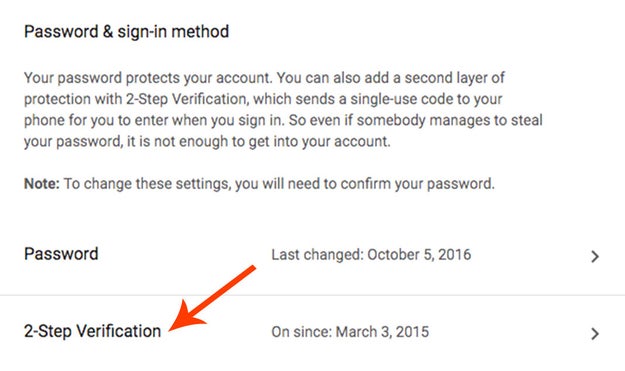
Add two-factor authentication to every account you can.

Not just for email and social media accounts, but for online banking, gaming, and retail, too. It requires that you submit a verification code sent to your phone, in addition to a traditional password, to log in.

Do it for Gmail immediately&033; Then, make sure your recovery email or phone are equally secure. Here’s a comprehensive list of websites that support two-factor authentication.
Nicole Nguyen / BuzzFeed News

After enabling two-factor, add an additional layer of security to your mobile carrier account by requiring a PIN when you call customer service. If someone has your name and the last four digits of your Social Security number, they can change the SIM number associated with your phone, rerouting two-factor verification codes to another device. An extra PIN helps prevent this. Here’s how to add one if you’re a Verizon, T-Mobile, Sprint, or AT&T customer.

OK, this is going to be a long section, because there are a lot of encrypted messaging apps out there. The TL;DR is that if you’re using one of the five apps mentioned here, you’re already communicating pretty securely.

Signal (free for iOS and Android), Wickr (free for iOS and Android), WhatsApp (free for iOS, Android and Windows Phone), Google Allo’s incognito mode (free for iOS and Android), and iMessage between iPhones (free for iOS) are five messaging apps that provide end-to-end encryption. If a government issues a request to any of these platforms, they won’t be able to hand over the content of messages.

However, each service handles their users’ metadata (in other words, who you messaged and when) a bit differently. It’s important to keep in mind that none of these apps can guarantee you total, uncrackable security — each one has its pros and cons.

Signal

The pros: Signal is very popular. NSA whistleblower Edward Snowden endorsed the app, and after Trump was elected, downloads increased by 400%.

By default, Signal doesn’t store your messages or metadata. The app provides a “safety number” for each conversation used to verify a person’s authenticity. Users can also elect to make messages disappear during intervals, whether it’s of five seconds or a week. Most important of all, Signal’s code is open to review and anyone can audit the software or contribute improvements.

The cons: When you sign up, Signal requires access to your address book, and as my colleague Hamza Shaban pointed out, that risks ratting out whistleblowers — if someone knows your number, they can tell whether or not you’re on Signal. If you were spilling stories about your company’s wrongdoings to a journalist, you might not want your boss to know that you’re using Signal. Moxie Marlinspike, the founder of Open Whisper Systems, the nonprofit behind Signal, suggests using a throwaway Google Voice or VoIP number as a workaround to sign up for Signal.

Wickr

The pros: Wickr offers all of Signal’s encrypted features. One advantage the app has over Signal is that Wickr does not need your phone number to sign up. Users have the option to create a unique handle, which protects those who don’t want their identities linked to the service.

The cons: Its code isn’t available for independent review, and Wickr’s user base isn’t as large as Signal’s, so it’s likely that you’ll need to convince contacts to sign up before you can start messaging with them.

WhatsApp

The pros: WhatsApp uses Signal’s protocol for encryption. It has the advantage of having over one billion users already on its platform, and it’s a feature-rich app with group messaging, voice calls and video chat built-in.

The cons: While the app, which is owned by Facebook, can’t read individual messages, it can record metadata like date, time stamp, and phone numbers associated with that message, according to a recently revised privacy policy. The app also announced last year that it was going to start sharing user information with Facebook, though it does let you opt out before agreeing to the updated terms of service. If you don’t opt out at that time, you have an additional 30 days to make your choice.

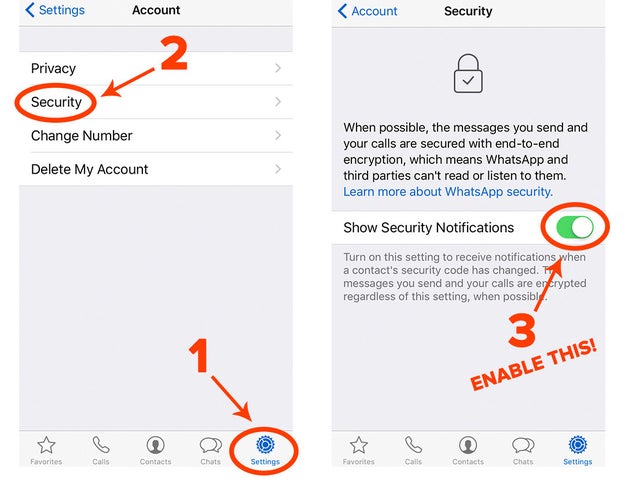
WhatsApp doesn’t include the option for disappearing messages. It also turns off security notifications when a contact’s key has changed (which occurs when they’ve re-installed WhatsApp on a new phone) by default, making you more susceptible to “man-in-the-middle” attacks by hackers.

Furthermore, the app allows you to backup your messages to iCloud or Google, which, while convenient if you lose your phone to switch to a new one, is not protected by WhatsApp’s end-to-end encryption.
Nicole Nguyen / BuzzFeed News

Allo

The pros: Google’s new messaging app includes the company’s artificial intelligence Google Assistant, which can help with tasks like making restaurant reservations or looking up movie times. It offers encrypted messaging with limited features (Google Assistant won’t work with it turned on) and you can set their messages to disappear after a certain period of time.

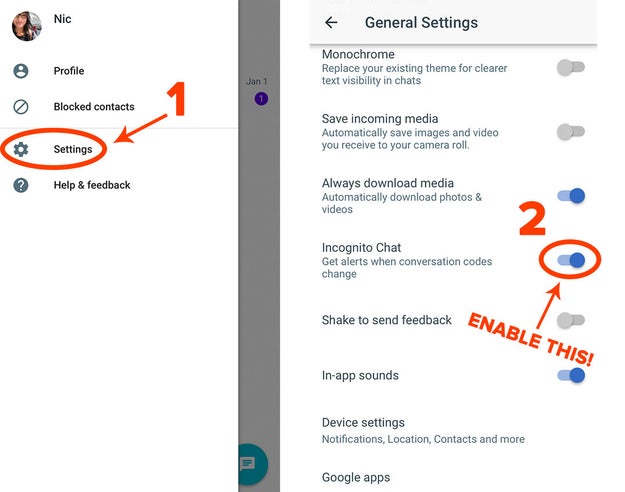
The cons: End-to-end encryption is disabled by default and you need to turn on incognito mode yourself.
Nicole Nguyen / BuzzFeed News

iMessage

The pros: Apple does provide end-to-end encryption for iMessage content (read more about its encryption technique on page 41 of this guide), and the company itself can’t decrypt the data – but only when both users sending messages have iPhones.

The cons: When you enter a phone number into iMessage, that number is sent to to Apple servers to determine whether or not that contact’s bubble should be green or blue (or, rather, whether to send the text through iMessage or SMS). Apple retains that data for up to 30 days and can be forced to hand it over to law enforcement with a subpoena or court order.

Many of the same apps that offer secure messaging also offer encrypted phone calls, including Signal and WhatsApp.

If you don’t use Signal or Whatsapp, any app that uses Ostel, an open source, end-to-end encrypted phone call tool, allows you to talk freely and securely. The easiest and cheapest way (it’s free&033;) to place a call through Ostel is through the Jitsi app for Mac, Windows, and Linux. An iOS app called Acrobits Softphone will cost you a one-time $7 fee to download the app, but this version only allows you to receive encrypted calls. Placing encrypted calls costs an additional $25.

While Gmail emails are encrypted in transit, Google’s popular email service is not secure enough for sensitive information. Google reads the contents of your email to determine which email appears in the Priority Inbox and, ultimately, to show you more personalized ads. If you’re getting a lot of emails about winter boots, you’ll see more winter boot banner ads.

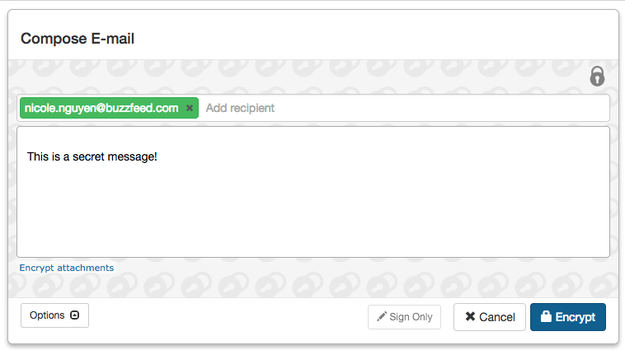
For simple encryption, you can use Chrome extension CryptUp for Gmail, which is easy to set up for n00bs but has an advanced settings options for nerds. It allows users to add a “challenge question” that only your recipient can answer to decrypt the message. If the recipient has CryptUp installed, you can send small, encrypted attachments as well.

To take your email security a step further, you’ll need to familiarize yourself with “PGP” or “Pretty Good Privacy” encryption. First, install the Mailvelope extension for Chrome or Firefox, which works for Gmail, Outlook.com, Yahoo&033; Mail, and GMX. Click on the extension icon and then click Options. Follow the instructions to Generate Key. Now, you have a public and private key.
Nicole Nguyen / BuzzFeed News

Quelle: <a href="Here’s How To Protect Your Privacy In Trump’s America“>BuzzFeed

Immigrants In Tech Wonder If Trump Will Make Their Problems Worse

David J. Phillip / AP

Attending the same college that Google CEO Sundar Pichai went to was Nisha’s first step out of the poor neighborhood in India where she grew up. After graduating with a degree in computer science, she landed an internship at a tech company in California and, later, a job.

For Nisha — that’s not her real name, she asked to remain anonymous because the company she works for doesn’t allow employees to talk to journalists — that first job wasn’t just a gateway to a career in tech, but also to a visa, and the beginning of a permanent life in the United States. “Do I regret coming to the US?,” Nisha told BuzzFeed News. “Not at all.”

But now, like many high-skilled immigrants working in tech — especially those from India — Nisha finds herself in a situation far more tenuous than she anticipated when she moved to the U.S. six years ago. Immigrants in Nisha’s position, — she moved here at a time when President Barack Obama’s ambitious immigration agenda promised to resolve the bureaucratic speedbumps around high-skilled immigration — are now facing an incoming Trump administration that has threatened to crack down on legal immigration. Already in the midst of a decade-long wait for a green card, they’re wondering whether forthcoming policy decisions will make their lives in the United States more difficult — or impossible.

“I&;ve made peace the with the fact that I probably won&039;t get a green card in my lifetime,” Nisha said.

Currently, 65,000 visas for high-skilled workers — known as H-1Bs — are allotted each year. While engineers come from all over the world to work in the US tech industry, a particularly large number come from India. But a much smaller number of Indians are granted green cards, and this has caused a decades-long backlog in the system.

Since the election, Madhuri Nemali, an immigration attorney who specializes in small businesses hiring foreign workers, has been hoping to avoid telling her clients “it’s going to get worse than it already is.”

“I don’t want to have to do that,” she said. “But I’m thinking I&039;ll probably have to based on the rhetoric from last year.”

An engineer at Cisco who asked to remain anonymous has been waiting for a green card for five years. He’s optimistic that the recent gathering of tech CEOs at Trump Tower will mean more immigrant-friendly policies under the new administration. But even so, he plans to return to India within the next five years, where’s he’s confident that, given his resume, he’ll find a job with a US company. Many — including Google, Apple, Facebook, Intel and Cisco — have campuses In India now.

“I don’t see a possibility unless something drastic happens with regards to green card regulations,” he said. “It’s been an excruciating process.”

How Trump’s administration plans to handle immigration policy for high-skilled workers remains, on the eve of his inauguration, more or less a mystery. After declaring last year that he would “end forever” the use of high-skilled immigrant workers as cheap labor, Trump later hedged, acknowledging that we “need highly skilled people in this country.” His administration is actively considering reforms for the program, with Reuters reporting that meetings with tech CEOs have nudged the president elect further in favor of the program. The high-skilled immigration program does have a legitimate gray market fraud problem, which regulators have recently begun to crack down on. Meanwhile, Republican Congressman Darrell Issa has recently reintroduced legislation that would limit skilled immigration to the U.S..

One anonymous engineer who’s three years into his green card wait described how, for immigrants in Silicon Valley, everyday financial decisions around taxes, 401Ks, and stock options, are more complicated because of the precariousness of their positions. “Everything else all along was bad — but at least it was predictably bad,” he said.

Already, this engineer explained, things like becoming a startup founder are more or less off limits to him because of what investors perceive as unnecessary risk. Now, the possibility of further job insecurity and economic stability is exacerbating those frustrations. For example, immigrants who lose their jobs have thirty days to find a new one or leave the country, a predicament that would be much worse if the economy dips and major tech companies initiated hiring freezes, as they did during the 2008 recession. “If the economy goes south, the housing market will go down as well. In a month, you might have to do a fire-sale of your house because you might never be able to enter the US again to sell it,” he said.

Current visa holders are hoping new regulations won’t impact immigrants who are already here. But given the current climate, they’re not rushing to encourage friends and family back home to join them. Avinash Conda, an engineer and immigration reform advocate, said he recently cautioned a cousin planning to get his masters in the US against the idea, at least for now. “My suggestion for now is stay tight, at least for another year,” Conda said. “Let the president walk in, and see what happens — on April 1st, how many applications are filed — what are the new laws being passed, and we’ll have to take it from there.”

Others reported telling loved ones back home to consider getting an education in Canada, where tech companies have big offices and it’s easier to get residency. “The job opportunities aren’t as good as in the US, but are still pretty good,” said one anonymous tech worker.

Nisha, the engineer who went to the same college as Google’s CEO, shares the same concerns. If the worst should happen, she’s confident her employer could move her to an office somewhere in Europe, or Canada — or even back to India. But she’s also worried that moving away from headquarters in Silicon Valley, where “all the interesting stuff that attracts people” gets done. A move like that could delay her career goals — possibly forever.

“If I move back right now, it’s sort of a dead end for me,” she said. “But I grew up next to a slum in India. I’ve seen way more difficult times than anything that could possibly happen now.”

Quelle: <a href="Immigrants In Tech Wonder If Trump Will Make Their Problems Worse“>BuzzFeed

Trump-Linked Insurance Startup Tells Members That Obamacare Is OK For Now

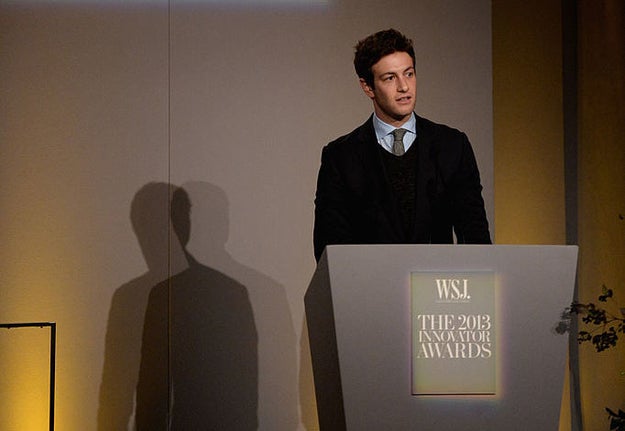
Josh Kushner speaks onstage at the Wall Street Journal Magazine&;s “Innovator Of The Year” Awards 2013.

Dimitrios Kambouris / Getty Images

The election seemingly made life complicated for Oscar Health. The insurance startup’s business model is based on the Affordable Care Act that President-elect Donald Trump has vowed to repeal. Yet one of its founders is the brother of Trump adviser and son-in-law Jared Kushner, and Peter Thiel, another Trump adviser, is an investor.

Oscar hasn’t said much about the ACA since November. But on the eve of Trump’s inauguration, the New York startup published a blog post that sought to reassure members that their ACA coverage would remain intact for now. It also noted it’s seen a spike in members researching birth control — which many women fear may no longer be covered if Congressional Republicans succeed in repealing the health care law.

In the post, which was previewed by BuzzFeed News and published on Oscar’s website Thursday evening, Dr. Harry Ritter, vice president of care delivery, wrote that searches for birth control on the site’s internal search engine for care options, known as the Care Router, were “up 300%.” This figure refers to the number of search queries over the first two weeks of January versus the last two weeks of December, a spokesperson told BuzzFeed News.

Ritter noted that Oscar covers a variety of FDA-approved birth control methods, from diaphragms to pills and IUDs, and urged members to consult their doctor. “If you need help finding one in Oscar’s network, do a search and filter based on your preferences,” he wrote, adding, “Or just call your Oscar concierge, and we’ll help you find someone great.”

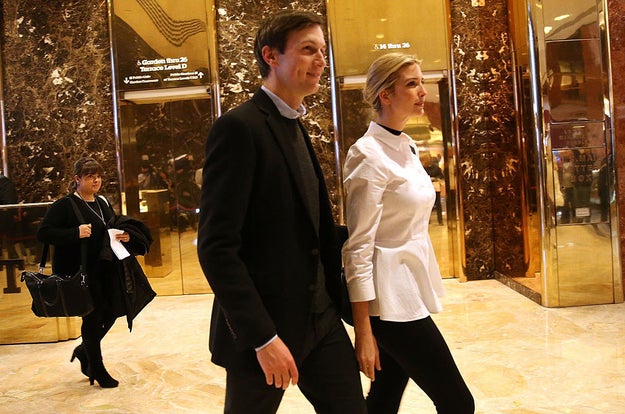
Jared Kushner, the son-in-law of President-elect Donald Trump, with his wife Ivanka on November 18, 2016.

Spencer Platt / Getty Images

Ritter also wrote, “Our plans cover birth control benefits in compliance with the Affordable Care Act. To date, there have been no changes that impact your 2017 coverage. If any legal changes impact you, we will be in touch to make sure you have all the facts and understand your options.”

Prior to Thursday, Oscar’s last blog post was Nov. 17, in which its co-founders both lamented the health care law’s flaws and praised the law for allowing the business to get started.

The increased interest in birth control isn’t surprising. Since the election, other online startups that prescribe and ship birth control have seen a flurry of sign-ups as they fielded concerns from female customers.

Oscar Health

But Oscar — which serves people who became eligible for insurance under the ACA — isn’t your average health care network.

Joshua Kushner co-founded the startup in 2012; his brother, Jared, is Trump’s son-in-law and newly appointed White House senior adviser. Oscar, which was most recently valued at $2.7 billion, has backing from a venture capital firm led by Thiel — who is also a member of Trump’s transition team. Meanwhile, Congressional Republicans have actively been moving to repeal the ACA. And Tom Price, Trump’s health secretary pick, both supports the repeal and opposes the law’s requirement that insurers cover birth control at no cost to customers.

Publicly at least, Oscar executives don’t see any reason to be concerned. Chief policy and strategy officer Joel Klein told Backchannel this month that the Kushner coverage is an “amusing media story” and that “what happens on health care is going to happen.” Oscar executives have said that starting in the first quarter of 2017, they plan to start selling to &;small companies in addition to individuals.

Oscar serves 135,000 members across New York, Long Island, Los Angeles, the Bay Area, Orange County, San Antonio, and Dallas.

Quelle: <a href="Trump-Linked Insurance Startup Tells Members That Obamacare Is OK For Now“>BuzzFeed

It's Not Just Your Phone: Trump Tweets Are Now All Over $25,000 Bloomberg Terminals

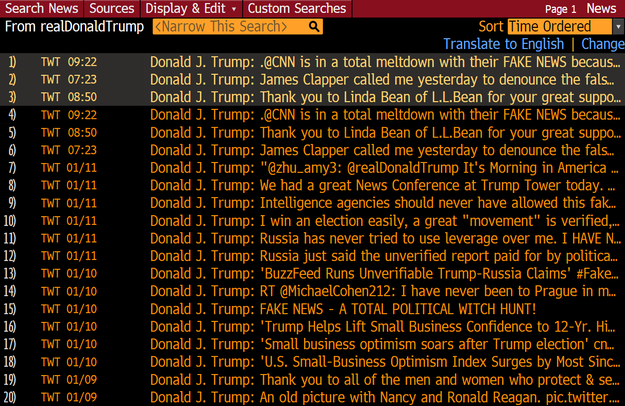
On a Monday afternoon a few weeks ago, Donald Trump was moved to discuss where Toyota builds its cars.

Wall Street&;s most beloved machine lit up. The Bloomberg terminal, the operating system of the financial industry, is now well-equipped to turn a Trump tweet into money.

Bloomberg&039;s years-long partnership with Twitter means the terminals, which cost about $25,000 a year each for the company&039;s more than 300,000 subscribers, now come with tools to track the president-elect&039;s every market moving statement — and make money from them.

In typical Bloomberg fashion, you can customize your alerts for Trump tweets to see only when he mentions certain companies you are following. You can see, in real time, how the things he says translate into changing public sentiment on a company, and what happens to a stock, currency, or pretty much anything else being traded on markets at the time. And with the right screening, you can filter out his furious responses to SNL episodes and many praise-retweets.

BuzzFeed

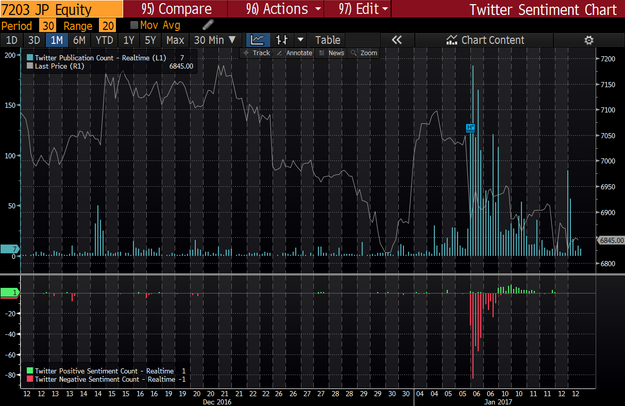
After that Toyota tweet in early January, Bloomberg terminals showed that as Toyota&039;s share price fell, the number of tweets about the company spiked, and the sentiment of the tweets turned sharply negative, according to Bloomberg&039;s tool for analyzing Twitter content.

Toyota’s share price (grey) and tweet volume (blue) alongside Twitter sentiment (green/red) after the Trump tweet.

Toyota's share price (grey) and tweet volume (blue) alongside Twitter sentiment (green/red) after the Trump tweet.

BuzzFeed

These tools are being used more and more as Trump picks the corporate winners and losers of the day. It happened to Lockheed Martin when he criticized the price of the F-35 fighter jet, and to Boeing when he declared the price of a new Air Force One too high.

This stuff matters to investors — especially if they get be on the right side of the stock market moves that happen as a result. Many financial institutions forbid social media use at work, making Bloomberg terminals a lifeline for traders wanting to keep up with the President-elect.

Morgan Stanley and JPMorgan Chase traders access tweets through their Bloomberg terminals, The Wall Street Journal reported last week, while just this month, the Japanese bank Mizuho gave its U.S. traders the ability to read tweets at work.

“He is publicly shaming people and companies,” Peter Tchir, a managing director at Brean Capital, said in a note. “He is trying to sway companies in a very public manner.” Investment banks now regularly rush out notes to clients based on Trump&039;s tweets about companies.

After the President-elect tweeted about Toyota, the Japanese bank Nomura said in an note to clients that “this tweet does not mark the first time Mr Trump has intervened in a company&039;s plans for the construction of a plant in Mexico, and we see the possibility of continued intervention in high-profile companies&039; plans for construction of Mexican plants after his inauguration.”

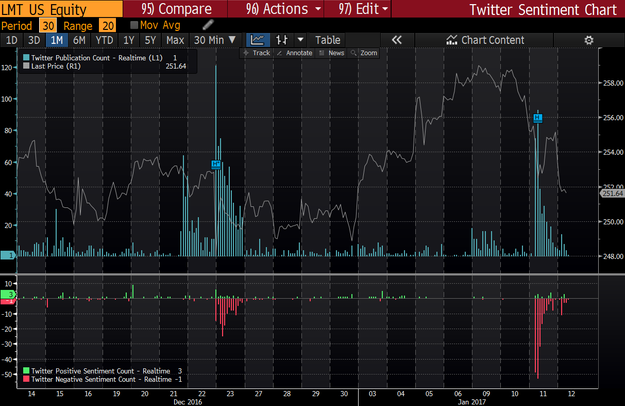
A few days before Christmas, Trump weighed in on federal contracting, tweeting that the cost of the F-35 fighter plane was “tremendous” and that he was asking a rival defense contractor (Boeing, another past victim of a Trump-shaming) to work on a comparable plane, leading to a 2% share dip in after-market trading.

Again, the Bloomberg analysis showed that tweets about Lockheed went from just a few every 20 minutes, to well over 100 — and they were mostly negative.

BuzzFeed

Quelle: <a href="It&039;s Not Just Your Phone: Trump Tweets Are Now All Over ,000 Bloomberg Terminals“>BuzzFeed

Uber Will Pay FTC $20 Million To Settle Claim It Misled Drivers On Pay

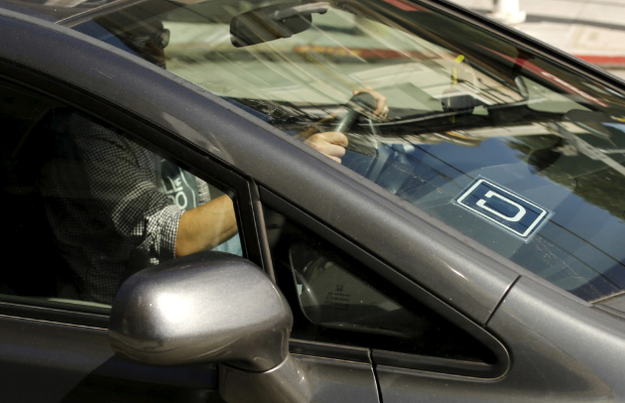
Uber will pay $20 million to settle allegations from the Federal Trade Commission that the ride-hail giant advertised inflated estimates of how much its drivers earn on its website and in Craigslist job postings to entice them to join the platform.

Uber claimed that drivers in San Francisco earn more than $74,000 annually, and that those in New York make more than $90,000 a year, according to the FTC’s complaint, filed in a California court. Less than 10% of drivers earn that much money, and the median income is $29,000 less in New York, and $21,000 less in San Francisco, according to the complaint.

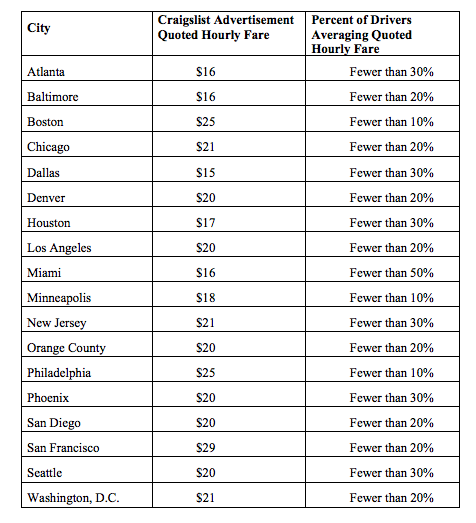
In 17 cities across the country, Uber advertised inflated hourly wages in job postings on Craigslist from at least January to March 2015, the FTC alleges, though the company’s own data showed that in several of those markets, fewer than 10% of its drivers had recently earned that rate.

“During and after the time period Uber has made these unsubstantiated earnings claims, in many markets, most Drivers have not made the claimed amount,” the complaint reads. “In many instances, Drivers have not made the promised amounts even when factoring in non-hourly earnings, such as payments for time-limited promotions and other incentives.”

Federal Trade Commission / Via documentcloud.org

Based on leaked documents and internal Uber calculations provided in response to the leak, BuzzFeed News reported in June that the net pay for drivers in some markets is comparable to that of a Walmart worker. BuzzFeed reported then that drivers in Denver take home an average of $13.17, those in Houston take home $10.75, and those Detroit take home $8.77.

The FTC also claimed that Uber promised to connect drivers with the “best financing options available” for a vehicle through third-party partner companies, but “Uber has not had any basis for making these claims.”

“Uber’s communications with at least one auto company have acknowledged payment terms and conditions that are inconsistent with Uber’s promises to Drivers,” the complaint reads.

As part of the settlement, Uber did not admit or deny the FTC’s allegations.

“We’re pleased to have reached an agreement with the FTC,” an Uber spokesperson said in a statement. “We’ve made many improvements to the driver experience over the last year and will continue to focus on ensuring that Uber is the best option for anyone looking to earn money on their own schedule.”

Quelle: <a href="Uber Will Pay FTC Million To Settle Claim It Misled Drivers On Pay“>BuzzFeed

Tesla Cleared In Fatal Autopilot Crash Investigation

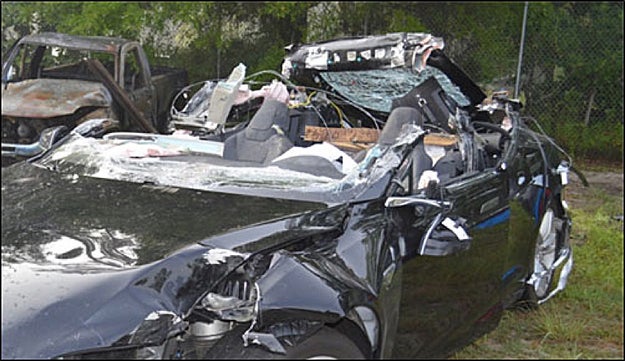
Joshua Brown’s Model S after the fatal crash in Florida.

National Transportation Safety Board

A federal regulator has closed a six-month investigation into whether Tesla’s Autopilot played a role in recent crashes, finding that it could not “identify any defects in design or performance.”

The National Highway Traffic Safety Administration opened an investigation into Tesla’s Autopilot driver assistance system last June after a fatal crash in Florida. That investigation also considered a later crash in Pennsylvania. In a final report released Thursday, the agency said that it found no “defect” in Autopilot, “nor any incidents in which the systems did not perform as designed.”

In the fatal Florida accident that led NHTSA to open an investigation into the design and performance of Autopilot, “neither Autopilot nor the driver noticed the white side of the tractor trailer against a brightly lit sky, so the brake was not applied,” Tesla said in a blog post. The Model S, speeding at 74 mph with a 65 mph speed limit, hit the trailer and traveled under it before veering off the road, killing driver Joshua Brown.

NHTSA, one of two federal agencies that opened investigations into Autopilot last year, requested information from Tesla about all crashes where airbags were deployed and Autopilot had been in use during or within the last 15 seconds. It found only two of those incidents – the Florida and Pennsylvania crashes – involved fatal injuries.

The investigators determined that for at least 7 seconds prior to the Florida crash, the tractor trailer should have been visible to the driver, according to the report.

After reviewing mileage and airbag deployment data provided by the company, the investigators found that Tesla’s vehicle crash rate dropped by 40 percent when Autosteer, one function of Autopilot that helps drivers remain within lanes, was activated.

“A safety-related defect trend has not been identified at this time and further examination of this issue does not appear to be warranted,” NHTSA’s report concluded.

The agency noted that manufacturers must consider the potential for misuse of any system by drivers. In Tesla’s case, people had filmed themselves going hands-free after activating Autopilot. The name Autopilot – by definition, a system that can drive itself in place of a person – also posed confusion. Drivers who activate Autopilot, however, see a warning to keep their hands on the wheel at all times.

“It appears that over the course of researching and developing Autopilot, Tesla considered the possibility that drivers could misuse the system in a variety of ways, including those identified above – i.e., through mode confusion, distracted driving, and use of the system outside preferred environments and conditions,” NHTSA wrote in its report. “The potential for driver misuse was evaluated as part of Tesla’s design process and solutions were tested, validated, and incorporated into the wide release of the product.”

And in September, Tesla announced it would send over-the-air updates to Autopilot that restrict the amount of time drivers can keep their hands off the wheel while Autopilot is activated. At the time, Tesla CEO Elon Musk said the updates would have prevented the fatal Florida crash.

NHTSA spokesman Bryan Thomas told reporters Thursday that the agency has concerns about the naming of driver assistance systems, and that “it’s important for manufacturers to design with the inattentive driver in mind.”

A footnote in the report nods to this issue, but says that “NHTSA recognizes that other jurisdictions have raised concerns about Tesla’s use of the name ‘Autopilot.’ This issue is outside the scoop [sic] of this investigation.”

Quelle: <a href="Tesla Cleared In Fatal Autopilot Crash Investigation“>BuzzFeed

Viral WhatsApp Hoaxes Are India’s Own Fake News Crisis

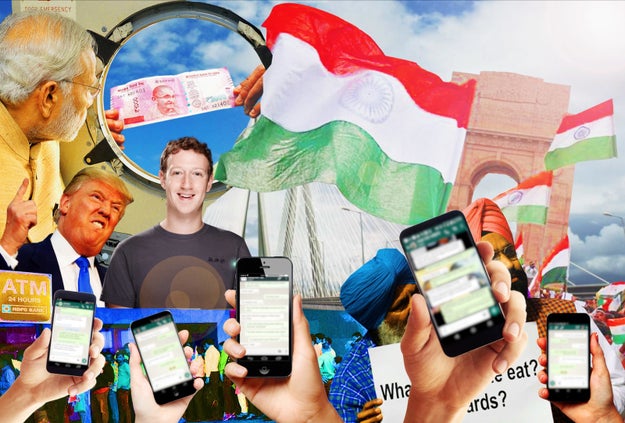
Viral WhatsApp Hoaxes Are India’s Own Fake News Crisis

Akash Iyer / Via BuzzFeed India

At 8 PM on November 8, India’s Prime Minister Narendra Modi unexpectedly banned 86% of the country’s legal tender from circulation. The goal was to wipe out “black money”&;—&x200A;a term used in India for cash that’s stashed outside the banking system to evade taxes. Old notes of Rs. 500 and Rs. 1,000 would no longer be legal. Instead, the government would issue new, redesigned Rs. 2,000 notes.

Hours after the Prime Ministerial bombshell, the rumors started flying fast and thick over WhatsApp, the Facebook-owned instant messaging app used by more than 160 million Indians: the new notes would include an embedded GPS chip that would allow the government to track down hoarders.

Twitter: @Nisha__Hindu

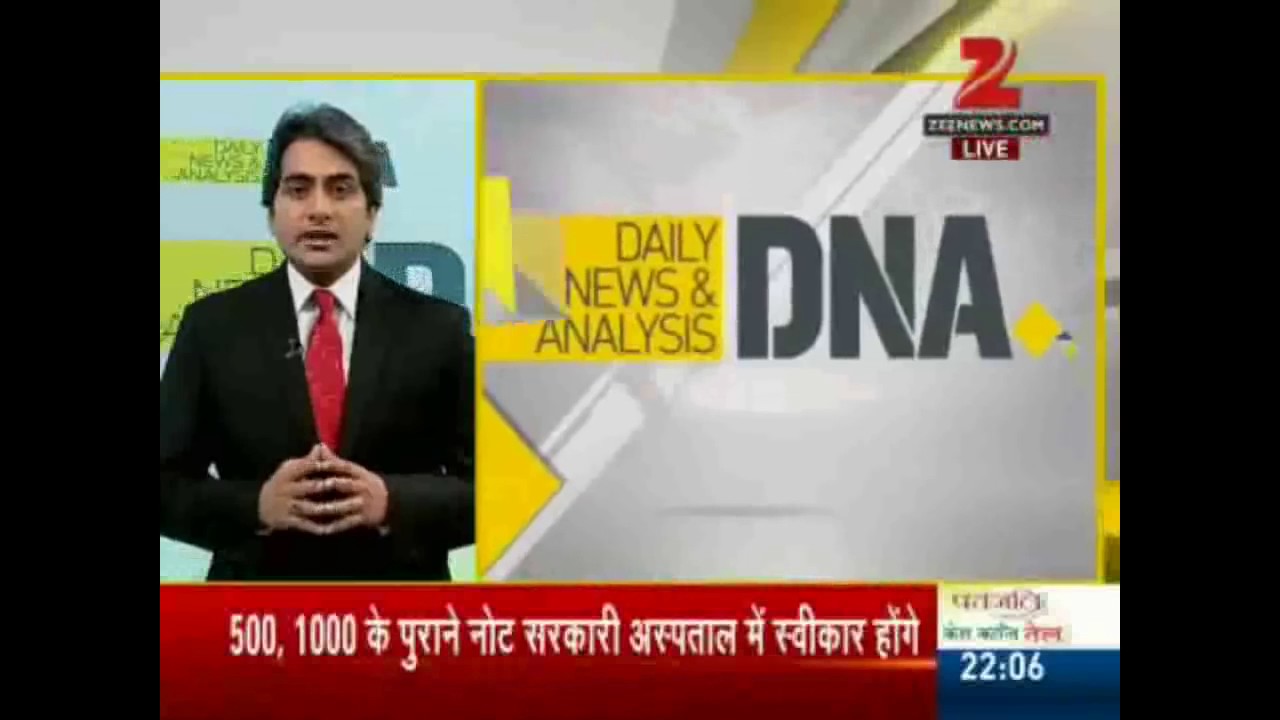
Soon a video purporting to show one of these GPS notes being tracked on Google Maps went viral on WhatsApp, and then Facebook. And &x200A;less than 24 hours after the rumor started&x200A;, &x200A;Zee News, a leading Hindi television news channel, ran a 90-second report about the high-tech note, leading the country’s reserve bank to finally debunk it.

The United States is currently experiencing a fake news crisis – bogus news articles disguised to look like real ones to mislead people, influence public opinion, and/or to simply use their massive reach to reap advertising profits. These operations are sophisticated, data-driven and highly targeted. But in countries like India where internet penetration and literacy still lag far behind the US, misinformation tends to have a more grassroots quality. Twitter is a fertile ground for all kinds of rumor mongering, but with just over 30 million users in the country, its impact is limited.

“Our problem is WhatsApp, because it’s fast, simple, and much more intimate compared to Facebook.”

The primary vector for the spread of misinformation in India is WhatApp. The instant messenger is fast, free, and runs on nearly all of India’s 300 million smartphones. It’s also encrypted end-to-end, which means it’s nearly impossible to track what flows through it. Its real-world ramifications, nonetheless, can be brutal.

In November, WhatsApp rumors of a salt shortage sparked panic in at least four Indian states and caused stampedes outside grocery shops as people rushed to stock up. The government eventually debunked the rumours – but not before a woman died.

A Different Kind of Fake News

India’s misinformation problem predates the internet. In the early ‘90s, rabble-rousers in northern India trying to stir up tensions in Hindu and Muslim communities would mass-produce cassette recordings full of fake gunfire, screams, and chants of “Allah-ho-Akbar,” and then play them in car stereos at full volume in the dead of the night to incite communal violence.

And once the internet and social media came to the country, hoaxes took on a life of their own. In 2008, Pepsi was forced to publicly rebut a video that claimed that its Indian subsidiary manufactured Kurkure — Indian Cheetos — out of plastic. A few years later, makers of Frooti, a popular mango drink, started offering guided tours of their facilities after a rumour about the beverage containing HIV-positive blood went viral. In 2015, Mumbai’s police commissioner set up a hotline for anxious parents and urged people to ignore WhatsApp rumors, which claimed that gangs of women were kidnapping school children.

“I think it’s unfair to draw a direct parallel between the kind of organized fake news industry we saw in the lead up to the US elections and what happens in India,” said the social media strategist of a prominent political party in Delhi who did not wish to be named. “Our problem is WhatsApp, because it’s fast, simple, and much more intimate compared to Facebook. There’s more incentive for perpetrators of misinformation in India to distribute it over WhatsApp than Facebook because the chances of having real-world impact through WhatsApp are higher.”

What is also a disincentive is how little average revenue each Indian user generates for Facebook annually, despite the fact that the country is Facebook’s largest market outside the United States. According to the company’s own numbers, each user in the Asia-Pacific region generates less than $8 annually compared to a US user who generates $62. That makes India a less attractive target for people like teens in Macedonia, for instance, who earned thousands of dollars in advertising revenue peddling pro-Trump fake stories on Facebook to millions of Americans.

A Nationalist Wave

“There&;s been a sharp increase in WhatsApp forwards that are just propaganda.”

In 2014, Narendra Modi, a right-wing politician known for his close ties to Hindu supremacist group RSS, won by a landslide to become the Prime Minister of India. Like Trump, Modi is a polarizing figure – and his rise to power birthed thousands of social media trolls and organized misinformation campaigns.

“Everything changed,” said author Rupa Gulab, who is an outspoken Modi critic. “The hoaxes that went viral a few years before were just silly, but with Modi and his fanatics, there’s been a sharp increase in the amount of WhatsApp forwards you receive that are just propaganda.”

The build-up started while Modi was still campaigning in 2014. In January of that year, a quote about Modi attributed to WikiLeaks founder Julian Assange went viral on Twitter, WhatsApp, and Facebook, boosted by shares from members of Modi’s party, the Bharatiya Janata Party (BJP).

Twitter: @mrsgandhi

WikiLeaks denied the quote.

Twitter: @wikileaks

That didn’t stop the wave of Modi-related forwards on WhatsApp.

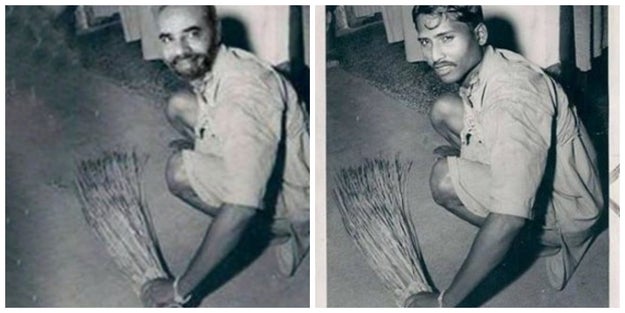
In October 2015, a photo of Modi sweeping the floor “during an RSS rally in 1988”&x200A; — &x200A;an attempt to highlight the Prime Minister’s humble roots &x200A;— &x200A;blew up. Later it became clear the image was Photoshopped.

A photo of Prime Minister Modi sweeping the floor “during an RSS rally in 1988” (left) was found to be Photoshopped from the original picture (right) in 2015.

Last year, India’s Press Information Bureau, an agency that manages government communication with the media, was left red-faced after it published a Photoshopped picture of the Prime Minister looking out on a flooded town in the flood-hit state of Tamil Nadu via its official Twitter handle. A new hashtag PhotoshopSarkar&x200A;—&x200A;Photoshop Government&x200A;—&x200A;was born.

Twitter: @SusegadGoan

And in August, Modi himself had to debunk a viral story that claimed that he had urged citizens to boycott Chinese-made firecrackers.

Twitter: @pmoindia

More recently, in a thread that went viral, Twitter user @samjawed65 deconstructed how an uncorroborated pro-government report in a mainstream Indian publication ended up in an aggregation echo chamber with half a dozen other media outlets re-reporting it, until the Huffington Post finally debunked it as fake news.

A recently published book details how the BJP deliberately created abusive social media campaigns using both WhatsApp and Twitter to troll prominent Indians and spread lies.

“[It’s clear] how seriously the political Hindu Right in India takes the online space as an ideological battlefield,” Rohit Chopra, a media studies professor at Santa Clara University who is working on a book about Hindu nationalism and new media, told BuzzFeed News. “They have invested money in it, they have mechanisms for flooding platforms like Twitter with messages either promoting their view or attacking contrary views, and they seem to employ a significant number of people in different capacities to manage this space.”

Krishna Prasad, former editor-in-chief of Indian news weekly Outlook, agrees. Once, Prasad recalls, a social media strategist asked him during a meeting with BJP politicians, “What have you gotten to trend on Twitter today?” “There are clearly people in India’s political parties buying hashtags and trying to influence trending topics,” he told BuzzFeed News.

“Individuals trying to influence trending topics are considered spammers and may have their accounts temporarily or permanently suspended,” a Twitter spokesperson told BuzzFeed News, and pointed to Twitter’s page that outlines rules for trending topics.

Dark Social

In November, local newspapers reported that a doctor in the eastern state of Bihar had died of a cardiac arrest after income tax officials raided his house and seized illegal currency – except it wasn’t true. The rumors had first spread on WhatsApp before trickling up to the local media that ran the story without verification. Eventually, the doctor had to call a press conference to declare he was still alive and there had be no raid.

WhatsApp groups are the connective tissue that bind most Indians.

India is the number one market for WhatsApp in the world. The instant messenger is the most popular messaging platform that connects everyone from school friends to India’s bureaucrats. WhatsApp groups are the connective tissue that bind most Indians — but they are also notorious for being hotbeds of spammy forwards and hoaxes.

“Most Indians belong to tight-knight groups on WhatsApp such as a friends group and a family group,” said Harsh Taneja, an assistant professor at the Missouri School of Journalism whose research focuses on audience behaviour and internet use. “But digital networks like WhatsApp are designed to connect us tightly with groups of acquittances too, who we may not otherwise have interacted with frequently.”

These “weak ties”, as Taneja calls them, are the reason why information spreads rapidly on closed networks like WhatsApp. “Most misinformation that originates within WhatsApp finds its way through this tight-knit network of weak ties,” Taneja said. But it’s tough to analyze WhatsApp. The messaging platform is encrypted end-to-end with no API, algorithms, or trending topics&x200A; – which means that it’s virtually impossible to track exactly how content spreads through it.

A spokesperson at the Hindu Sena, a Hindu nationalist party that celebrated Donald Trump’s victory in Delhi in December, told BuzzFeed News that he is a part of more than 50 right-wing WhatsApp groups, and sends “thousands of WhatsApp forwards around the country every day.”

Last year, police in different Indian states arrested half a dozen admins of WhatsApp groups, charging them with the crime of spreading misleading information, even though an admin has no control over what other members post in a group they belong to.

“We need to ask tough questions of Facebook, Twitter and Google in an Indian context.”

Other times, Indian authorities have resorted the using the bluntest weapon possible: turning off mobile internet entirely. In the first nine months of 2016, the Indian government turned off the internet 22 times in various parts of the country – including a four-month stretch in violence-ridden Kashmir – simply to prevent rumors from spreading over WhatsApp.

“We need to ask tough questions of Facebook, Twitter and Google in an Indian context, just like they are being brought to book in America,” said Prasad. “In a country like India that is so diverse and culturally different from the US, these companies cannot get away with saying that we are just platforms any longer.”

Facebook declined to comment on WhatsApp in the context of fake news. A Facebook spokesperson instead directed BuzzFeed News to CEO Mark Zuckerberg’s post on the topic. “We’ve made significant progress,” it says. “But there is more work to be done.”

Quelle: <a href="Viral WhatsApp Hoaxes Are India’s Own Fake News Crisis“>BuzzFeed

The Media Is Falling All Over Itself To Cover The Deploraballs

Couldn&;t get a ticket to the Deploraball, tonight&039;s not-quite-alt-right inauguration party at the National Press Club?

Don&039;t feel bad: Neither could much of the media, though we certainly tried.

Of the more than 200 requests for press passes the organizers of the event received, they granted only 20.

“Otherwise, it would have been one reporter for every fifth person,” said Jeff Giesea, one of the Deploraball&039;s planners.

The lucky outlets, among them the New Yorker, New York Magazine, Fox News, and Breitbart, will have dibs on asking questions of the 1000 guests, plied with an open bar and celebrating their victorious campaign, per the event&039;s website, “to meme our way to the Whitehouse.” (BuzzFeed News plans on covering the event.)

Of the more reasonable 50-1 ratio, Giesea said: “It&039;s still a lot of press.”

No, a lot of press is what will descend on Friday night&039;s smaller sequel, the Gay Deploraball, in the upscale DC suburb of Potomac, Maryland. That soiree will draw eighty-five news outlets, including the Washington Post, the New York Times, the New York Post, BBC, NBC News, CNN, Quartz, and BuzzFeed News. In addition, documentary crews from Vice and Anonymous Content — the production company behind The Revenant and Winter&039;s Bone — will strafe the guests.

All 200 of them.

That means, conservatively, there will be one member of the media for every two attendees.

“Isn&039;t it amazing?” said Katarina Niedermair, a spokeperson for the Gay Deploraball.

Amazing: The two parties — organized largely by political novices (Giesea, for example, has no background in politics and Niedermair is 22) — are set to receive the kind of coverage reserved for professional sporting events and major political press conferences. It&039;s a testament to the enormous public fascination generated by the meme-savvy faction of the pro-Trump internet, even as it seems to be undergoing an existential crisis.

Yes, Giesea and his co-organizers have gone to some lengths to distance themselves from the more explicitly racist elements of the pro-Trump internet — “We wanted to create a space for everyday citizens who supported trump to celebrate his inauguration,” he said. But it&039;s hard to imagine this sort of massive media interest in the event if there wasn&039;t the potential for some fireworks.

Those could come in the form of a stinkbomb attack by DC anti-fascists, or perhaps more likely, Nazi salutes from attendees unhappy with the Deploraball&039;s decision to ostracize publicly the overt racists and anti-Semites who helped fight the very same meme campaign.

The potential for such a subversion is keeping Giesea “busy and stressed,” he said, and for good reason: The infamous Nazi salute alt-right hero Richard Spencer presided over at a November conference in DC — the first post-election gathering of Trump-internet types attended en masse by reporters — led to much of the current agita within the movement. That event and that gesture controversially inflated Spencer into the leading figure in the alt-right, which had until then been a largely faceless movement.

That&039;s likely why Giesea has set a ground rule for reporters attending tomorrow night&039;s party: Interviews have to be opt-in, no ambushes by the bar. And CNN, which the Deploraball&039;s umbrella organization MAGA3X took to Twitter today to call “biased” and “irresponsible,” won&039;t be invited in. Still, hundreds of reporters and dozens of cameras at two controversial events seem likely not to let a stray gesture go unnoticed, or a stray slur go unheard.

In other words, expect a deluge of Deploraball content over the weekend. And don&039;t think that the organizers don&039;t know it.

“All the noise thats gone on has given us a pretty big opportunity,” said Niedermair. “The more coverage we can have, the better.”

Quelle: <a href="The Media Is Falling All Over Itself To Cover The Deploraballs“>BuzzFeed

The Alt-Right’s Meltdown Is Just Like Any Other Message Board Drama

Things have gotten bumpy for the alt-right online movement since the election. It’s facing an identity crisis (what does it mean to be the “alt” if you’re getting what you want?) and grappling with certain fundamental questions like “Are we OK with Nazis?” (Even if its very name was coined by, well, Nazis.) The handful of leaders who emerged over the last year or two are at odds with each other over those and other questions, forcing helpless anime-avatared Twitter trolls caught in the middle to choose sides.

The kerfuffle surrounds the DeploraBall, a black-tie-optional party in DC on Inauguration Night. There has been nasty and public fighting among the organizers. Stick with me here: Mike Cernovich, a lawyer who became an alt-right leader after taking up the GamerGate mantle, feuded with a fellow leader who goes by “Baked Alaska” and announced that Baked Alaska had been removed from headlining the event because he had said anti-Semitic things on Twitter. Another leader, Bill Mitchell, announced he was no longer part of the alt-right after they started using the racist hashtag . And just recently, Baked Alaska accused (and sources confirmed to BuzzFeed News) one of the DeploraBall organizers of planting a “rape Melania” sign at an anti-Trump protest in an attempt to make protesters look depraved. In the latest surreal twist, a popular alt-right podcaster and founder of the website The Right Stuff was revealed to have a Jewish wife, which sent his fans into a tailspin.

At first, this disarray might seem surprising. After all, the alt-right claims to be an unprecedented political phenomenon that memed a president into office. But if you want to understand what’s happening there, it’s helpful to think about it as an internet-first creature. While it’s possible — and necessary — to view it through the lens of political or social thought that it echoes, the other way of making sense of it is to look at it as a digital community, regardless of its politics. And if you view it as an online community rather than a political movement, its trajectory starts to look very, very familiar.

What we have here is a classic case of “mod drama.”

As someone who has spent a lot of time taxonimizing online communities, from places like Fark to SomethingAwful, 4chan to Facebook groups for moms, I can assure you that one need only look at how other internet groups rise and fall to see what’s happening in the alt-right.

STAGES OF A “MOD DRAMA” MELTDOWN:

. IRL gone wrong:

KnowYourMeme / Via knowyourmeme.com

The first stage of an online community hive death is the disastrous IRL meetup — for the alt-right this seems to be the DeploraBall. It’s also worth noting that the event does not even need to take place — the disaster can arise simply in the organizing of it. People who spend vast amounts of time on the internet are perhaps not best suited to real-world planning and action. There’s a rich graveyard of notable away-from-keyboard flameouts. Here are just a few examples:

  • DashCon: A meetup for Tumblr users that went so poorly it became a punchline of the worst stereotypes of Tumblr users. The organizers ran into money problems, claiming they needed more money from convention attendees (who had already paid for passes in advance) to keep the hotel space. After a speaker canceled, rumors flew that attendees would only receive compensation in the form of a free hour in the world’s saddest ball pit. (Eventually, organizers sent an email offering refunds.)
  • Goon Island: In 2009, a group of posters from the message board Something Awful attempted to move to Hawaii and live off the land. To the amusement of users on a different board from the same site, the group of message board posters was not exactly suited to life in the wild jungle. One moment in particular — a photo of one of the “goons” (as Something Awful posters call themselves) trying to shoot a wild pig with a BB gun — encapsulated how underprepared they were for the jungle.
  • Celeb Heights: If you’ve ever googled a famous person’s height (which, weirdly, you probably have), chances are you’ve ended up on a celebheights.com, a forum for a small subculture of people obsessed with celebrity sizes. When the owner of the site finally met up with one of the most prolific volunteers, he was shocked to discover the volunteer was shorter than he claimed, thereby throwing off everything he posted. A massive blog post about the drama was made, and the volunteer was permabanned.


2. Metaboard mocking:

Stage two takes place when the community members begin to question their community and leadership within the community itself, using its existing norms and forums to make their points. (On a traditional forum this would take place on the metaboard — a board to talk about the board.) This then forces community leaders to react, and sometimes to overreact. On Reddit, this exists as the /circlejerk board — a board that exists just to make fun of stuff that happens on the other channels, and sometimes to make fun of the admins and leaders.

For the alt-right, Twitter acts as its own form of metaboard — and unlike traditional metaboards, the discussion that happens there takes place in public. Bickering between the leaders like Mike Cernovich, Milo Yiannopoulos, and Baked Alaska over the DeploraBall has created rifts among the loyal. They in turn have begun attacking leadership, often using the same language and tactics previously used by the leadership itself. For example, calling Cernovich “Cuckovich”:

3. Splinter board formation:

Phase three, often a sure indicator of imminent online hive death, is the schism of the most devout into two groups, one of which decamps to another forum. This is also known as “the splinter board.” You can think of the splinter board as an inevitable consequence of the metaboard infighting when things really go south. This trajectory typically happens after moderators of the board run afoul of devout users, usually by instituting hardline rules or issuing bans on users.

One of the best examples of a splinter board is 4chan/8chan. In 2013, 4chan’s admin cracked down on GamerGate talk, and that faction fled to another site, 8chan, who promised an uncensored refuge for those deemed literally too nasty for 4chan.

But splinter boards aren’t just for raucous places like 4chan — you see it in all sorts of tamer internet worlds. For Facebook groups, the telltale signs are in the group names, where a group may proudly proclaim it’s splinter status. Take “Suffolk county thrift without the dumb rules,” a group for buy/sell/trade on Long Island. Clearly, some bad shit went down in the regular Suffolk county thrift group and a new, more lawless group was formed. A popular group for “freebirth” (no midwives or even checkups while pregnant) would ban people who mentioned any sort of medical talk — leading to the splinter group “Freebirth/Unassisted birth — NO JUDGEMENT&;”

For the alt-right, this splinter board schism is well underway.

Just before the New Year, Bill Mitchell, a prolific tweeter and radio host, announced that he was no longer affiliated with the alt-right after he was shocked — shocked&033; — to discover that the alt-right *may* be anti-Semitic and racist. He announced he was now going to be .

In the world of the alt-right — which has a slew of discussion forums, but its most public one is on Twitter — a hashtag can be its own universe. People follow these tags as much as they do individuals. They use the tags to organize themselves and keep up with the latest discussions. So, when a prominent figure rallies around a new one, that person is basically creating a splinter board. Which leads to….

4. An identity crisis of priorities, complete with censorship and fear of outsiders:

In the Neopets forums, a place for people to discuss an online role-playing game for children, experienced a crisis of censorship when mods had to ban any discussion of the Twilight series, going so far as to ban the keywords “Edward,” “Bella,” and “Jacob.”

A community for fans of the parenting podcast The Longest Shortest Time had a meltdown and eventually shut down their Facebook group when social justice topics kept coming up and the discussion became too heated.

A Facebook group for women writers to network, called Binders Full of Women, asked members not to talk about the existence of the group — something that became increasingly improbable as it ballooned to tens of thousands of members. When someone wrote about the group for Vogue, the author was instantly banned and mods treated it as the ultimate betrayal. Yet the group splintered and persisted with real-world conventions for female writers called BinderCon. At least until this year, when there was a dustup over breastfeeding mothers not being allowed to bring their infants (see: Phase 1 about IRL meetup disasters).

The central issue the alt-right seems to be struggling with is to what degree they’re willing to either support or tolerate actual white supremacists and white nationalists — either because they disagree with the actual dogma or because they’re just afraid that it looks bad to outsiders.

And those optics to outsiders are starting to matter more now that the alt-right&;s candidate of choice is in power. Once the goal of getting Trump elected was realized, some of its leaders are experiencing their own swings at mainstream success beyond just “popular poster on the internet.” Bill Mitchell, who gained attention by accurately predicting the election and tweeting A LOT, now appears on Fox News and has ambitions to join the mainstream news media. Milo Yiannopoulos, who was banned from Twitter permanently for writing bad things, is now reportedly being paid $250,000 by Simon & Schuster to write things in book form. For the leaders, real money and careers are at stake over what is acceptable speech within the alt-right.

Having “mod drama” has nothing to do with the political leanings of the alt-right or the fact that it’s mostly male. On the other side of the spectrum, the Facebook pages for people supporting the Women’s March on Washington have become similar epicenters of infighting and mod drama. According to the New York Times, when admins changed the name of one local march page, “many applauded the name change, which was meant to signal the start of a new social justice movement in Nashville, [but] some complained that the event had turned from a march for all women into a march for black women.”

Just as some online dissent about the dogma of a feminist march doesn’t mean the march won’t happen or its goals won’t be achieved, the mod drama of the alt-right doesn’t necessarily diminish its influence. The breakup of the centralized leadership may end up making it more powerful — if the “actual Nazis” cleave to one side, then the “I don’t approve of Nazis” crew like Bill Mitchell will be able to become more mainstream.

It’s impossible to say how the alt-right’s mod drama will ultimately play out. It’s a long way from memers to Neopets posters — one is filled with horrible people bent on moving the Overton window of acceptable social norms and the other is lousy with white supremacists. (I kid&033; I kid&033;) But while we may not be able to tell the future, the past is often a pretty good precedent. So I would humbly suggest, for the movement’s sake, that they invest in a really good ball pit for the inauguration.

Quelle: <a href="The Alt-Right’s Meltdown Is Just Like Any Other Message Board Drama“>BuzzFeed