Waymo: Uber Concealed Secret Self-Driving Technology From The Court

An Uber self-driving Volvo drives in Pittsburgh Friday, March 17, 2017. (AP Photo/Gene J. Puskar)

Gene J. Puskar / AP

Waymo, Alphabet’s autonomous car company, alleged in a court filing on Friday that Uber has been developing a secret, secondary self-driving technology that is a more direct copy of Waymo’s autonomous driving designs — and that the ride-hail giant intentionally concealed this project from the court.

“Uber has taken, copied, and used Waymo&;s technology. This, along with Uber&039;s subsequent cover up and violations of this court&039;s orders, show the need for an injunction in this case,” read Waymo documents filed today in support of its request for an injunction against Uber. The injunction would temporarily halt Uber’s self-driving car program.

“Uber should be enjoined from continuing to use Levandowski in its driverless car program and from continuing to misappropriate and infringe Waymo’s intellectual property,” Waymo wrote.

The filing is the latest development in the legal battle between Uber and Alphabet-owned Waymo over allegedly stolen self-driving car technology. Specifically, the lawsuit centers around LiDAR, or Light Detection And Ranging technology, which is what helps autonomous vehicles navigate.

In February, Waymo filed a lawsuit against Uber claiming that it had intentionally stolen Waymo’s intellectual property when it made Anthony Levandowski, a former Waymo employee, the head of its self-driving car program. (Levandowski was the co-founder of Otto, an autonomous truck startup, which Uber acquired in August 2016.)

In Friday’s filing, Waymo says that during deposition earlier this week, an Uber engineer “was forced to admit” that the company was working on a second LIDAR technology that more closely resembles technology built by Waymo.

Earlier this month, Uber emphatically denied Waymo’s allegations, saying that “A cursory inspection of Uber’s LiDAR and Waymo’s allegations fall like a house of cards.” Levandowski pled the fifth to avoid testifying. At the time, Uber argued its so-called “Fuji” LiDAR technology was “fundamentally different” in its design from that built by Waymo.

But in the reply filed today, the company says Uber’s claim that the four-lens Fuji LiDAR was its only LiDAR project is “a cover up” and alleges Levandowski himself worked on the second, secret self-driving technology, the name of which is redacted, but which Waymo says it copied from Waymo’s own LiDAR design, the name of which is also redacted. “In its Opposition, Uber misrepresents its LiDAR design efforts to this court,” reads the reply.

In the documents filed today, Waymo also surfaces evidence from a deposition earlier this month which suggests Uber started preparing for possible legal action regarding self-driving car technology before it even acquired Otto and “just two days after Levandowski left Waymo, and probably even before that.”

Uber did not immediately respond to request for comment.

The next hearing regarding the injunction in Waymo v. Uber is scheduled for May 3.

This is a breaking story and will continue to be updated.

Quelle: <a href="Waymo: Uber Concealed Secret Self-Driving Technology From The Court“>BuzzFeed

Video Shows Palantir CEO Ridiculing Trump And Slamming His Immigration Rhetoric

View Video ›

video-cdn.buzzfeed.com

More so than perhaps any other Silicon Valley startup, Palantir Technologies is poised to play a central role in the Trump era.

Its data-mining technology has long been used by federal agencies, and its chairman, the billionaire Peter Thiel, emerged last year as Donald Trump’s most prominent supporter from the tech world. Alex Karp, the Palantir CEO, joined the chiefs of much larger tech companies in a meeting with Trump shortly after the election. Thiel was there, too, seated prominently at Trump’s left.

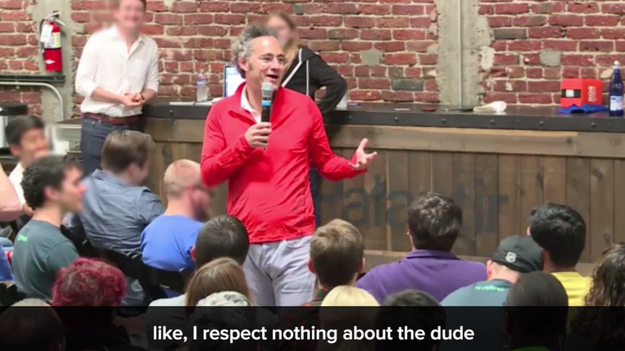
But an internal Palantir video exclusively obtained by BuzzFeed News shows that Karp, the CEO, was full of withering criticism for Trump more than a year before the election. In a Palantir staff meeting in August 2015, the video shows, Karp derided Trump’s “fictitious wealth,” called him a bully, and condemned his campaign rhetoric on deporting immigrants. He also said he had given Trump a brush-off.

“I’ve had the rare opportunity to meet Trump, which I turned down — I mean, this is off the record — but like, I don’t respect — like, I respect nothing about the dude,” Karp said in a roughly 45-minute-long “beer sync” talk that ranged widely, from company news to his own life philosophy. The meeting was filmed by Palantir.

“Like, you could almost make up someone that I find — it would be hard to make up someone I find less appealing,” Karp said of Trump.

Palantir, a Silicon Valley data-mining firm with a $20 billion valuation, relies on federal contracts for a significant portion of its revenue. It works for the CIA, the FBI, the Marine Corps, and Immigration and Customs Enforcement, deploying engineers to analyze and visualize the customers’ data. It’s currently trying to get a lucrative contract from the Army — an effort so important to Palantir that it took the Army to court, and won, after it wasn’t considered for the work.

If you have information or tips, you can contact this reporter over an encrypted chat service such as Signal or WhatsApp, at 310-617-1302. You can also send an encrypted email to will.alden@buzzfeed.com, using the PGP key found here.

Karp’s comments in 2015 reveal an ideological divide between the Palantir CEO and the man who is now his most important customer. Among other projects, Palantir is currently working on software for the government’s immigration enforcers that observers say could be used to help carry out Trump’s deportation goals.

Trump’s plan to “throw out all immigrants,” Karp said, “makes no sense” and “is bringing up the worst that a society can bring up.”

LINK: Palantir’s Relationship With America’s Spies Has Been Worse Than You’d Think

The remarks also highlight a divide inside Palantir itself. Thiel, who co-founded Palantir along with Karp, gave $1.25 million to support Trump’s campaign, spoke in support of Trump at the Republican National Convention, and joined Trump’s transition team. Karp has not publicly expressed his views on President Trump, though he said before the election that he was supporting Hillary Clinton. At the time Karp made the comments in the video, Thiel was still months away from endorsing Trump.

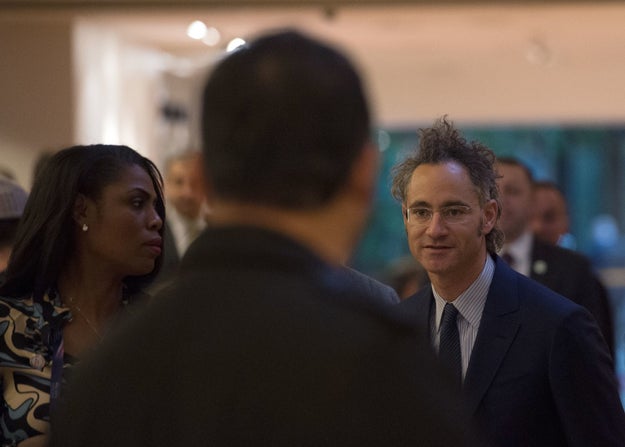
Palantir Technologies CEO Alex Karp and Trump adviser Omarosa Manigault at Trump Tower on the day the President-elect met with technology leaders.

Bryan R. Smith / AFP / Getty Images

Palantir, which counts foreign governments and big corporations among its customers, has long said that it has certain corporate values, and that it will prioritize ideology over financial incentives when making business decisions. For example, Karp told Fortune magazine that Palantir turned down business from a tobacco company out of concern that the company would use the technology to sell cigarettes to vulnerable communities. Still, Palantir told The New York Times that, for example, it has contracts with the Israeli government despite objections from some employees.

In an interview with Forbes in January, responding to fears that Trump might seek to create a registry of Muslims living in the United States, Karp said Palantir had not been asked to build such a registry, and “if we were asked, we wouldn&;t do it.”

A Palantir spokesperson declined to comment on the 2015 video.

Karp shared his views on Trump while expounding on economic inequality and fears of social unrest. Trump, he said, might do well politically, since he was responding to people’s economic anxiety. But Karp, a billionaire, also jabbed at Trump’s wealth.

“It’s like, the guy inherits $50 million and has a fictitious wealth he claims of 10 — it’s probably like half a billion,” Karp said. “So you inherit $50 million in the 70s, and you have — let’s just say you have $20 billion now. You guys can do compounding math. That’s not a good return. So even purely on the vulgar metric of, like, as a business person, then as a person, and then, like, as a bully — in any case, I don’t care if you guys vote for him or whatever, I’m just saying.”

Karp said he hoped he had seen the last of Trump.

“I think Trump, I don’t know what’s going to happen to him. I quite frankly would like him to go away, but, you know, he may do very well, because he’s sitting up and saying, you know, no one’s on your side, which may be true, it’s all dysfunctional, which may be true, and it’s going to be worse for your kids than for you,” Karp said.

“Therefore we should throw out all immigrants. Like, who’s going to do the work?” Karp added. “It’s like, it makes no sense. But you have to ask yourself, something that makes no sense, that, like, de facto is bringing up the worst that a society can bring up — which is, like, blame the people that work really hard, and that we need, and that are coming here at the risk of their life, instead of the dysfunction that you may have helped create — why is that person so successful?”

Quelle: <a href="Video Shows Palantir CEO Ridiculing Trump And Slamming His Immigration Rhetoric“>BuzzFeed

At The Start Of The Trump Era Facebook And Apple Spent More On Lobbying Than They Ever Have

Justin Sullivan / Getty Images

As Facebook has been tinkering with brain-computer interfaces and an augmented reality camera platform, it&;s also been cultivating some good old fashioned Washington influence. According to federal lobbying disclosures filed Thursday, the social network set it&039;s own all-time record high for spending in a single quarter.

Facebook spent $3.2 million lobbying the federal government in the first months of the Trump era. During the same period last year, Facebook spent $2.8 million (about 15% less). The company lobbied both chambers of Congress, the White House, and six federal agencies on issues including high-tech worker visas, network neutrality, internet privacy, encryption, and international taxation. Facebook was the twelfth highest spender out of any company and second highest in tech.

“Our work in Washington demonstrates our commitment to protecting the people who use our service and promoting the value of innovation to the US economy,” a Facebook spokesperson told BuzzFeed News. “As with the first quarter last year, our expenditure shows an increase that is mainly related to the timing of stock-based compensation for a number of employees.”

While Facebook&039;s first quarter figures for 2016 were the largest for that year, that was not the case in 2015. And outside firms that lobbied on behalf of Facebook spent more money in the first quarter of 2017 than in any other period in the past two years.

Apple spent $1.4 million, just $50,000 more than during the final months of the Obama presidency, when it set its previous record, but the most it has ever spent in a single quarter. Apple lobbied on issues including government requests for data, the regulation of mobile health apps, and self-driving cars.

Google, once again, outspent every other technology company. It was tenth overall, tallying $3.5 million.

“We think it is important to have a strong voice in the debate and help policymakers understand our business and the work we do to keep the Internet open and fuel economic growth,” a Google spokesperson told BuzzFeed News.

While the search giant decreased its lobbying spending compared to this time last year, Amazon, Microsoft, and Uber all boosted their beltway budgets for the first three months of 2017.

Amazon spent nearly $3 million on lobbying, behind only Facebook and Google, and was 17th out of all companies in or out of tech. Amazon met with government officials to discuss net neutrality, drone air cargo, drone privacy, and the flow of data across borders, among other issues. Microsoft claimed $2.3 million as the fourth biggest spender in tech and 27th overall.

Uber continues to dwarf its ride-hail competitor Lyft in lobbying heft. Lyft spent $110,000 in the first quarter of this year, a massive increase over its amount last year, at $20,000. But Uber towered over its rival, spending $370,000, continuing an upward trend.

SpaceX has also amplified its spending compared to the first quarter of last year. Founded by Elon Musk, who was tapped by President Trump as an economic adviser, the company spent $480,000. SpaceX lobbied NASA, the Department of Defense, the National Security Council, and Congress on issues including commercial space launches, NASA funding, and defense space transportation.

The second biggest spender out of any company was AT&T, which shelled out $4.6 million. The company&039;s proposed $85 billion merger with Time Warner, now under review by the Justice Department, is being closely watched by industry analysts and political observers. The outcome of the deal may serve as a test for President Trump, who vowed to squash the proposal if he were elected. But since winning the White House, Trump has softened his remarks.

Next week, during a confirmation hearing on Capitol Hill, Senators will scrutinize Trump&039;s pick to lead the Justice Department&039;s antitrust division, Makan Delrahim. As the country&039;s top competition enforcer, Delrahim would play a key role in AT&T&039;s merger review and in the bubbling debate over market concentration in tech, media, and the broader American economy. Before serving as deputy counsel in Trump&039;s White House, Delrahim worked as a lawyer and lobbyist at the law firm Brownstein Hyatt Farber Schrecka. Qualcomm and Comcast were among his lobbying clients.

Quelle: <a href="At The Start Of The Trump Era Facebook And Apple Spent More On Lobbying Than They Ever Have“>BuzzFeed

Inside The Hunt For Russia’s Hackers

SAN FRANCISCO — Just past 8 a.m. on March 14, police trod quietly through the snow to the double-fronted doors of Karim Baratov’s lavish home in Ancaster, Ontario. The officers passed by the garage where Baratov’s jet-black Mercedes Benz and Aston Martin DBS were parked, two of the only outward indications that the 22-year-old had money to spend. Minutes later, they took the Canadian-Kazakh hacker away into custody — a subdued end to an international cyber drama that involved the highest levels of the US government, Russian spies, a global cybercrime syndicate, and hundreds of millions of unsuspecting Americans.

The baby-faced Baratov is currently awaiting trial in the US on charges that he helped hack into half a billion Yahoo accounts — the largest known hack in history. His co-conspirators are Alexsey Belan, 29, a notorious Russian hacker still at large, and two Russian intelligence officers, Dmitry Aleksandrovich Dokuchaev, 33, and Igor Anatolyevich Sushchin, 43. The case against them is the starkest public example of the ways in which the Russian government works with cybercriminals to achieve its global agenda through cyberwarfare, and why those attacks have proven so difficult for governments around the world to track, let alone prosecute.
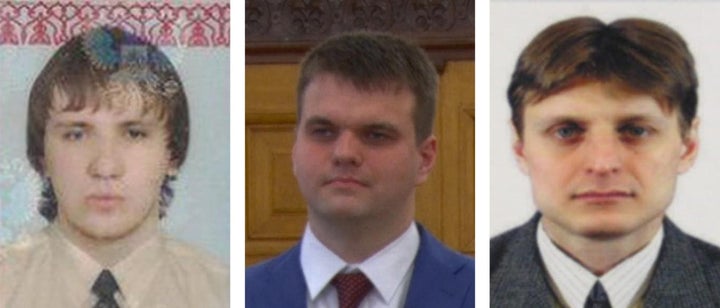
Left to right: Baratov, Dokuchaev, and Sushchin.

Courtesy FBI

Baratov, according to accounts given by US law enforcement, was a hacker for hire. It appears he simply took the wrong job.

“The Yahoo hack is a great example of the US government coming forward and saying we know what you are doing and we can prove it,” said Milan Patel, the former chief technology officer of the FBI’s cyber division and now managing director at the K2 Intelligence cybersecurity firm. “In the past the US and Russia engaged in a lot of tit-for-tat covert operations. But with Russia now, a lot is coming to the forefront and being made public about how they run their cyberactivities.”

“We would tip them off about a person we were looking for, and they would mysteriously disappear, only to appear later on working for the Russian government.”

That’s not always how it was. In the mid-2000s, FBI agents tried to work with their counterparts in the FSB, Russia&;s Federal Security Service, to investigate hackers, with regular bilateral meetings featuring US and Russian agents working together in the hope that the two countries could stem the growing tide of online crime. At least that’s how the Americans saw it.

“We would tip them off about a person we were looking for, and they would mysteriously disappear, only to appear later on working for the Russian government,” Patel said. “We basically helped the FSB identify talent and recruit by telling them who we were after.”

The arrest of Baratov and his co-conspirators signals a broader US government crackdown on Russian cybercriminals. For years, cybersecurity researchers and US authorities have traced the ties between cybercriminals and the Russian state, including how malware first developed for criminal enterprises has made its way into state-sponsored cyberattacks on Russia’s neighbors, and how botnet armies created by hackers have been repurposed to launch attacks on Russian targets. Now, they appear ready to strike. Earlier this month, Spanish authorities acting on behalf of the US arrested Pyotr Levashov, long known to authorities as one of the world’s most prolific spam kingpins. Five months ago, the US named a number of well-known Russian hackers as being behind the hacks on the Democratic National Committee, which they say were aimed at influencing the US elections. For those following the murky dealings of the world’s top hackers, the names did not come as a surprise. What was new was the willingness of US officials to publicly name the hackers, and to aggressively pursue Russian cybercriminals who aid Russia’s increasingly aggressive strides into cyberwarfare.

“Russia is playing with different rules — or maybe just without rules.”

Three Russian hackers told BuzzFeed News over the last month that there was “panic” about how far the arrests would go, and for how long hackers would be pursued by US authorities. US security officials told BuzzFeed News that they would do well to be scared, as “the gloves were coming off” with Russian hackers.

“We’ve reached a boiling point with Russia. They are the closest competitor to the US when it comes to cyberespionage and cyberattacks,” Patel said. “But Russia is playing with different rules — or maybe just without rules.”

Erik Carter for BuzzFeed News

Ask Americans to describe a typical Russian hacker who targets the US and they will likely describe a scruffy Russian teenager in a dimly lit basement, or a chiseled military figure in a warehouse-like room filled with hundreds of hackers, pounding away at their keyboards as they plot to take down the US. The truth is that Russian cyber operations are far more complex than either of those scenarios, with the Russian state relying on a network of hackers it hires within its military and intelligence divisions, as well as cybercriminal networks and hackers for hire it can recruit or co-opt as it needs.

“It’s a multilayered system, and it is very flexible. That’s what makes it so hard to track,” said one FBI agent who currently works within the bureau’s cyber division. He asked to speak off the record so that he could discuss open cases with BuzzFeed News. “Let’s say, for instance that Russian intelligence decide they want to hack into eBay to try and find information about a certain person. They might do that through an existing team they have in place, or they might go to a hacker, who has already infected a computer they want compromised and tell him to give them access or else … or they might just pay a guy who has previously hacked eBay to do it for them again.”

That flexibility makes it very difficult for the FBI, or any other law enforcement agency, to track what is being hacked, and why, the FBI agent said.

“They will use whatever method they need to use to get in, and they have no lines between criminals who are hacking for profit and those who are hacking for the government,” he said. “They might be going into eBay to steal credit cards, or they might be doing it as part of a covert op to target a US member of Congress. They might be doing both, really. It makes it hard to know when a hack is a matter of national security and when it is not.”

The hack on Yahoo that compromised the information of more than 500 million people lays out the complex relationship between the hackers and their targets. The accounts were hacked in 2014, with Yahoo only discovering the compromised accounts in September 2016. Just a few months later, Yahoo announced it had discovered a second, earlier breach, which had affected an additional 500 million people in 2013. Together, the hacks cost the company roughly $350 million, as users fled from the platform amid security concerns. It was, cybersecurity experts said, a death blow for Yahoo.

A spokesman for Yahoo did not answer a request for comment from BuzzFeed News. In a public statement published soon after the indictment was issued, Yahoo wrote: “The indictment unequivocally shows the attacks on Yahoo were state-sponsored. We are deeply grateful to the FBI for investigating these crimes and the DOJ for bringing charges against those responsible.”

For weeks, cybersecurity researchers investigating the hacks believed they were looking at a case of corporate espionage. But as the scope of the breach was discovered, researchers began to fear that an enemy of the US was compiling a massive database of all US nationals, complete with personal details and email accounts they could mine for vulnerable information. The indictments issued last month against Baratov, Belan, and the FSB officers revealed that the group had breached Yahoo looking for both political targets and financial targets. The hundreds of millions of other people who had been caught up in the breach were just collateral damage.

The hundreds of millions of other people who had been caught up in the breach were just collateral damage.

“The guys who did this to Yahoo, they were criminals. They could have turned around and sold the entire database to the highest bidder,” the FBI agent said. “We are lucky they didn’t.”

Enough is known about the four men to sketch a rough timeline of how they came together to carry out the hack. Dokuchaev was once known in hacker circles as “Forb,” and he spoke openly about hiring out his services until he was recruited into government work, as the Russian newspaper RBC has reported. At the FSB, Dokuchaev was partnered with Sushchin, and the two recruited Belan, a Latvian-born hacker who had been on a list of the FBI’s most wanted since 2012.

“This is the way it goes: They trap one hacker and then they get him to trap his friends,” said one Russian hacker, who agreed to speak to BuzzFeed News via an encrypted app on condition of anonymity. The hacker, who recently served time in a Russian prison and had fled the country once he was released, said the “pressure was intense” to do work on behalf of Russian intelligence officers. “They press on you. It’s not, like, a nice request. It’s a knock on your door and maybe a knock on your ass. If they can’t threaten you they threaten your family.”
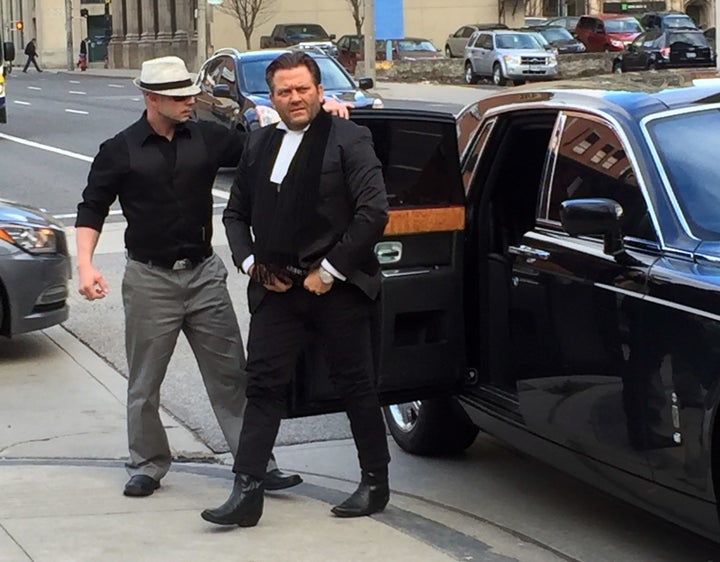
Amedeo DiCarlo, lawyer for Karim Baratov, arrives at the courthouse in a chauffeured Rolls-Royce in Hamilton, Ontario, Canada, on Wednesday, April 5.

Robert Gillies / AP

It’s unclear how the men were connected to Baratov, who immigrated to Canada from Kazakhstan with his family in 2007. Investigators say Baratov was a hacker for hire. In a July 14, 2016, post on his Facebook page, Baratov wrote that he first discovered how profitable hacking could be when he was expelled from his high school for “threatening to kill my ex-friend as a joke.” The time off school “allowed me to work on my online projects 24/7, and really move my businesses to the next level.” The post, which included photos of a BMW, Audi, and Lamborghini, claims he made “triple and even quadruple the normal amount” of income. He ended the post with “Taking shortcuts doesn&039;t mean shortcutting the end result.”

Once the group had gained access to Yahoo, its targets included an economic development minister of a country bordering Russia, an investigative reporter who worked for Russian newspaper Kommersant, and a managing director of a US private equity firm, court documents show. FBI investigators believe that in addition to searching for the political targets requested by the FSB, Belan also used the Yahoo database to line his own pockets by searching for credit card information and devising various schemes to target Yahoo users. In November 2014, he began tampering with the Yahoo database so that anyone interested in erectile dysfunction treatments was redirected to his own online pharmacy store, from which he got a commission for driving traffic to the site.

“It’s a knock on your door and maybe a knock on your ass. If they can’t threaten you they threaten your family.”

“When you look at this case, you realize it has national security and criminal elements. It doesn’t fit neatly into one box or the other,” the FBI agent involved in the case said.

Patel said that the FBI often had difficulty distinguishing between cyber cases that were criminal in nature, versus those which were politically motivated, or had ties to the Russian state. “The government is making an effort to bridge the gap between investigations that involve classified national security issues, and those which are criminal because those worlds aren’t separate anymore,” he said, explaining that departments were trying to form more joint task forces and share classified information when possible.

It’s unclear who within the FSB was responsible for the group, or if their orders ultimately came from another arm of Russia’s government. In December 2016, Dokuchaev was arrested in Russia and accused of treason. His arrest appeared to be part of a roundup of Russian military and cybersecurity figures, though little information has emerged since their arrests.

Andrei Soldatov, a Russian investigative journalist and co-author of The Red Web, a book about the Kremlin’s online activities, said that while the Russian government’s tactic of outsourcing cyber operations to various groups is helpful in distancing themselves (and ultimately providing deniability), it also left them vulnerable to hackers running amuck.

“Hackers are not people who are traditionally easy to control,” said Soldatov. “They might disobey you sometimes.”

Erik Carter for BuzzFeed News

When asked why they first started hacking, many Russian hackers say you’ve asked them to solve the question of which came first, the chicken or the egg.

“I hacked because I wanted to get online, and then I was online because I was hacking,” said one Russian hacker, who considers himself a veteran of the Russian hacking scene due to his early involvement in credit cards schemes in the 1990s. He agreed to speak with BuzzFeed News on condition of anonymity, as he was concerned for the safety of himself and his family. “In the &039;90s you could only afford the internet in Russia if you were rich, or a hacker.”

Russians visit a cybercafé on July 25, 1997, in Moscow.

Andres Hernandez / Getty Images

The internet came to Russia after the fall of the Soviet Union. A devastated economy and uncertain political times meant that few had access to the internet, which could cost hundreds of dollars to surf for just a few hours. The Russian hacker said he and his friends got involved in early credit card schemes as a way of paying for internet use, which they then used to discover more about burgeoning online crime.

“We were baby hackers. Nobody knew what was possible,” he said. “But when the internet came to Russia, so did the hackers.”

Police initially ignored cybercriminals, and a de facto rule came into effect that as long as the hackers were targeting people and institutions outside of Russia, they would be left alone by the state.

“We were baby hackers. Nobody knew what was possible,” he said. “But when the internet came to Russia, so did the hackers.”

Quelle: <a href="Inside The Hunt For Russia’s Hackers“>BuzzFeed

Teslas Is Recalling 53,000 Cars Over Parking Brake Issues

Spencer Platt / Getty Images

Tesla has issued a recall for 53,000 Model S and Model X electric cars it manufactured in between February and October 2016. The recall, which concerns issues with the cars&; parking brakes, accounts for two-thirds of the nearly 84,000 cars the company produced in 2016.

The problem affects a gear in the electric parking brake that could, if it malfunctioned, cause the brake to stick in place, according to Tesla&039;s statement. An Italian company, Brembo SpA, manufactured the part. Tesla will replace the brakes in affected cars and said that while customers wait, it&039;s still safe to use their vehicles.

The company said in a statement that less than 5% of cars were likely affected and that no accidents or injuries have been reported. “In order to be overly cautious, we are going to be proactively replacing these parts,” Tesla said.

The company also recalled 90,000 Model S cars in 2015 over concerns about the car&039;s seat belts.

Tesla&039;s stock has surged 700% in recent years, even climbing past Ford&039;s this month. However, Tesla is still not profitable. Ford turned a profit of $4.6 billion in 2016. Tesla&039;s stock fell 1% at the news of the recall and Ford&039;s is up 2.5%, but Tesla&039;s valuation is still higher.

The company is expected to ship its Model 3 in the summer of 2018, though analysts fear delays, which have plagued the company before. CEO Elon Musk has said he plans for Tesla to make one million vehicles in 2018.

Quelle: <a href="Teslas Is Recalling 53,000 Cars Over Parking Brake Issues“>BuzzFeed

Twitter Locks Trump Associate Roger Stone's Account, Again

Roger Stone is back in Twitter&;s penalty box.

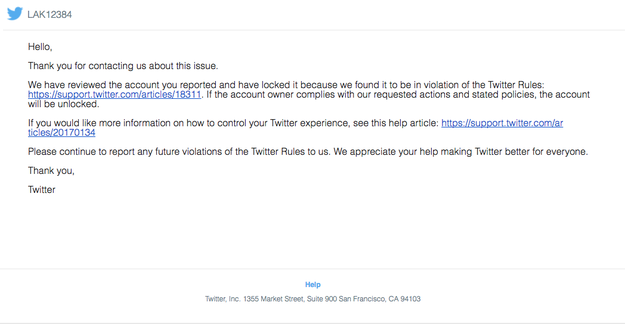
Stone, a confidant to President Donald Trump and former adviser to his campaign, had his Twitter account temporarily locked again this week after tweeting “I&039;m watching you and know what you&039;re up to. Better watch your ass” to Media Matters communications director Laura Allison Keiter on Wednesday afternoon. Twitter locked Stone&039;s account in March following another rules violation.

Reached via Twitter, Keiter forwarded an email she received from Twitter Thursday morning confirming it locked Stone&039;s account.

Laura Allison Keiter

Twitter&039;s in the midst of a scotched earth campaign against harassment on its platform. In recent months, the company has rolled out a number of anti-harassment tools including keyword filters and a new disciplinary measure that temporarily throttles the reach of users it believes are targeting others for abuse. In December, Twitter CEO Jack Dorsey said fighting harassment is the company&039;s top priority.

Roger Stone did not immediately reply to a request for comment.

Quelle: <a href="Twitter Locks Trump Associate Roger Stone&039;s Account, Again“>BuzzFeed

Why It's So Hard For Riders To Sue Uber

Why It's So Hard For Riders To Sue Uber

AP/Julio Cortez

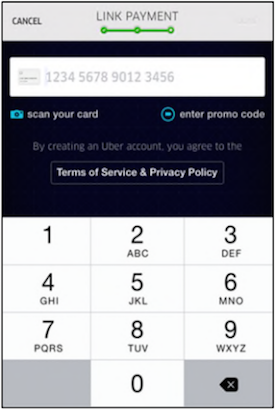
Uber users who sign up for the app and agree to its terms of service have been given sufficient notice that they have given up their right to sue the company, Uber said in a Massachusetts appeals court Monday.

A group of Massachusetts riders who sued the company for charging them an $8.75 airport ride fee, were “expressly and conspicuously informed” of Uber&;s terms and conditions once they clicked the “done” button to enter their payment information, Uber said. Those terms include giving up the right to bring a class action lawsuit against the company and an agreement to settle disputes out of court, it said.

“Reasonably communicated notice of terms, coupled with an opportunity to review those terms via hyperlink, satisfies the Massachusetts inquiry notice standard,” the company argued. Whether the rider “bothers to access and read those terms is irrelevant.”

A screenshot of Uber’s notification to consumers of its terms of service and privacy policy.

A screenshot of Uber's notification to consumers of its terms of service and privacy policy.

Uber / Via documentcloud.org

Last year a district court upheld Uber&039;s arbitration clause in a decision, but the Boston users are appealing that ruling, claiming Uber attempts to “obscure” its terms, which “abrogate basic legal rights,” including your constitutional right to a jury trial and any obligation to provide a safe
vehicle, or a safe driver.

“When Uber wants to notify consumers about surge pricing, it makes sure they know about the price hike and requires that they specifically agree to it,” Matthew Wessler, a principal at Gupta Wessler representing the Boston riders, told BuzzFeed News. “But when it comes to requiring the waiver of important constitutional rights, companies are much less likely to provide that kind of clear notice.”

Uber declined to comment to BuzzFeed News.

In a number of cases brought by consumers challenging contractual language that prohibits customers from suing, courts have upheld the contract. But a California court on Monday ruled that Uber obscured its terms of service and privacy policy on its sign up screen, meaning the rider suing the company was not reasonably notified that he was giving up his right to a class action lawsuit.

Uber is far from alone in using so-called arbitration clauses, which prohibit consumers from taking the company to court. They&039;ve become widespread across corporate America.

Companies like Starbucks, In-N-Out and Netflix all have agreements that prohibit class action lawsuits and push people into private arbitration. A number of credit cards, loan products and telecommunications companies like AT&T and Verizon also require consumers to agree to an arbitration provision.

In arbitration, instead of going to court, consumers pay fees that can be as much as $1,450 to resolve their complaints in front of an arbitrator in private proceedings, according to the Consumer Financial Protection Bureau, which released a study of arbitration in 2015. The process is similar to court proceedings, except it is less formal and any award is ultimately decided by the arbitrator, who is not a judge.

Consumers resolved 341 cases through arbitration between filed in 2010 and 2011, but only 32 of those cases ended with an award. The total amount awarded to consumers was $172,433, according to the study.

Following a series of state court decisions, arbitration has grown so common that nearly all consumer contracts contain some type of clause that prohibits class actions and forces people into a private dispute resolution process.

AP/Eric Risberg

Colin Marks, a professor at St. Mary&039;s University School of Law, told BuzzFeed News that courts have typically sided with companies when these clauses are challenged.

“It’s always on the consumer,” he said. “I don&039;t know if the average Uber user knows what arbitration means, but it assumes you know what it means.”

Marks said in this case, Uber met the minimum standard to tell users that they have terms and conditions at some point during the sign up process. Federal and state law does not require companies to disclose key points in the terms, including whether you&039;re giving up your right to sue.

“It&039;s not whether or not it&039;s a legal requirement as an ethical requirement,” Jennifer Bennett, an attorney with the consumer advocacy group Public Justice, told BuzzFeed News. “What companies are doing is sneaking in terms that they know consumers aren’t going to be able to find or know or understand which forces consumers to give up their right to go to court.”

Daniel Simons / Via youtube.com

Bennett said psychological research shows that people tend to overlook details while they are occupied with completing a particular task.

In one experiment, half of people who were asked to count how many times a basketball was being passed around were so focused on that task at hand that they didn&039;t notice a person walking by in a gorilla costume.

In Uber&039;s case, this could mean if a user is presented with the terms of service as a hyperlink while they are typing in payment information, it is unlikely they will click through to read the terms, she said.

“They keep trying to put the burden on the consumer to go around hunting for terms,” Bennett said. “It seems wrong for businesses to do.”

Quelle: <a href="Why It&039;s So Hard For Riders To Sue Uber“>BuzzFeed

You Can Now Add Multiple Users To Google Home

Allyson Laquian / BuzzFeed News

Google Home, the voice-activated smart speaker powered by Google Assistant, is about to get smarter. The speaker will finally be able to support multiple Google accounts, rectifying one of my biggest gripes with the device when I first reviewed it five months ago. Last week, Ars Technica spotted a message in the speaker’s app reading, “Multiple users now supported,” but, as it turns out, that notification was just a glitch. Today, Google is officially rolling out the ability to add up to six accounts to a single Google Home.

Managing six different users in one household sounds like a logistical nightmare, but Google Home uses your voice as authentication, so you won’t have to fiddle with the app or learn extra commands. Rather than saying, “How long is Nicole’s commute?,” a user will be able to say, “How long is my commute?” and the speaker will be able to switch to the correct profile by analyzing the characteristics of the voice.

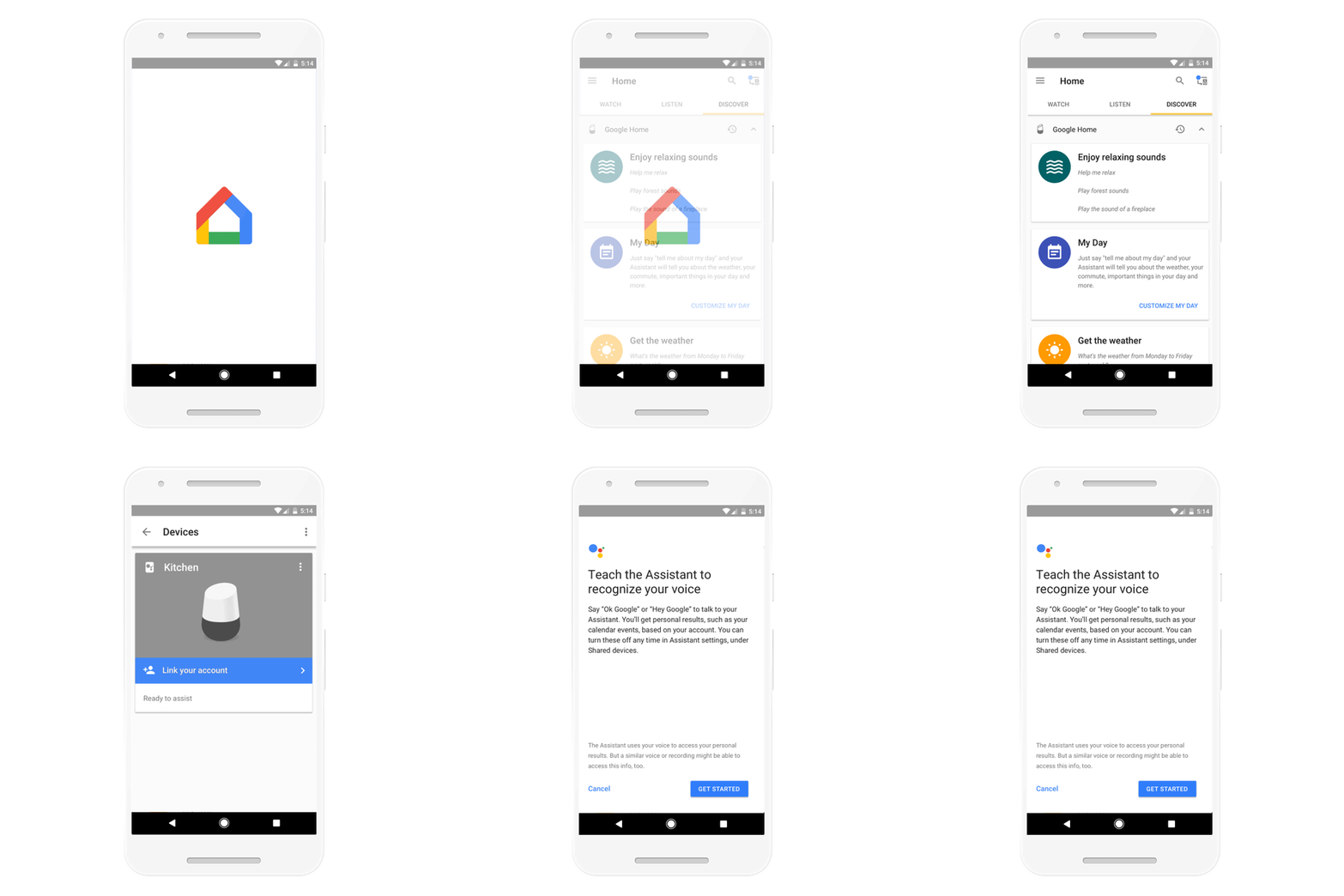
During profile setup, the Google Home app prompts users to say “Ok Google” and “Hey Google” repeatedly, so the software onboard the speaker can identify their voices’ distinct qualities. Every time someone activates Google Home, a neural network (in other words, a type of software that gets better over time) will perform an analysis that compares the voice input to those initial setup recordings. Apparently, the analysis occurs locally, on the device, rather than on a server, so it only takes milliseconds to complete.

This update means a household with multiple roommates or family members will be able to access their own personalized info when they interact with Google Home, rather than that of the primary owner. Each person can download the Google Home app and complete the set up process from their own device.

Google

However, it’s not clear what kind of content will – and won’t – be available in multi-user mode. Adding up to six different voices, especially if those voices are part of the same family and sound similar, makes profile authorization increasingly complicated.

And if the password to unlocking a profile’s private info is simply someone’s voice, then early multi-profile adopters may want to make sure that there isn’t something sensitive on, say, their calendars. Google Home may mis-identify a user’s voice and accidentally reveal the surprise party you’ve been planning for months, or the romantic date with a close friend you’ve been hiding from your roommate. It’s important to note that you can opt out of personal results, by opening the Google Home app > Menu > More settings > scroll down and toggle “Personal Results” to off.

In its announcement, Google specifically mentions personal commute times, calendars, shopping lists, news, and personal playlists. You can also check a flight’s status (based on your email history or calendar events) when you say, “Is my flight on time?” – but that feature isn’t cited in the press release.

Additionally, I’ll be curious to find out how multi-user mode handles third-party services, like music. Will multiple people be able to say, “Play my discover weekly on Spotify”? Also, will me and my partner be able to set two different timers and say, “How much time left on my timer”?

Unfortunately, this feature rollout, while useful, still doesn’t fix one of Google Home’s biggest flaw: being limited to only one calendar, the main calendar associated with your Google profile. So if someone shares their calendar with you, or if your employer uses Google Apps for Work, you won’t be able to add add these calendars to Google Home. This is bizarre — you can add multiple Google Calendars to Amazon Echo’s Alexa but not Google’s own Home&;

Nicole Nguyen / BuzzFeed News

Automatic voice recognition does, however, give the $129 Google Home an edge over the $180 Amazon Echo (or $50 Echo Dot). Echo users need to prompt Alexa to “switch accounts” to listen their own Spotify playlists or calendar agendas, and only two adults can be added to a household.

All US users will be able to add multiple accounts to their Home, starting today. UK customers won’t receive the feature for a few more months. When you open the app, you’ll see a prompt that says, “multi-user is available” and you can set up profiles there, or tap the “connected devices” icon in the top right, and select “Link your account.”

Quelle: <a href="You Can Now Add Multiple Users To Google Home“>BuzzFeed

Facebook Really Wants The Indian Government To Use Instagram

Press Information Bureau, Government of India

Instagram really wants officials in the Indian government to use its platform.

On Thursday, it organised a workshop in New Delhi for officials from various Indian ministries to get them more familiar with various Instagram features “for better government communication and outreach on social media” according to an Indian government press release. This is the first such workshop organised by Instagram in Asia.

India’s government officials have been known to aggressively use Twitter to engage directly with citizens. The country’s foreign minister, for instance, has built a reputation by directing tweets from citizens who need immigration help directly to concerned government departments. And Prime Minister Narendra Modi’s rise to power in 2014 is often credited to his social media savvy.

Modi has 7.1 million followers on Instagram, but so far, no other Indian government official or department has taken to the Facebook-owned social network.

At the workshop titled “Instagram for better Government Communication”, India’s Information and Broadcasting minister, M Venkaiah Naidu, said that Instagram would be an appropriate place for the government to visually engage with citizens and other stakeholders to communicate with a new generation of digital users. “The colours of India celebrated though its festivals, cultural practices, and region-specific dresses could best be experienced though visuals,” he said.

Instagram did not respond to BuzzFeed News’ queries for comment.

Quelle: <a href="Facebook Really Wants The Indian Government To Use Instagram“>BuzzFeed

Are You Ready To Trust Facebook With Your Brain?

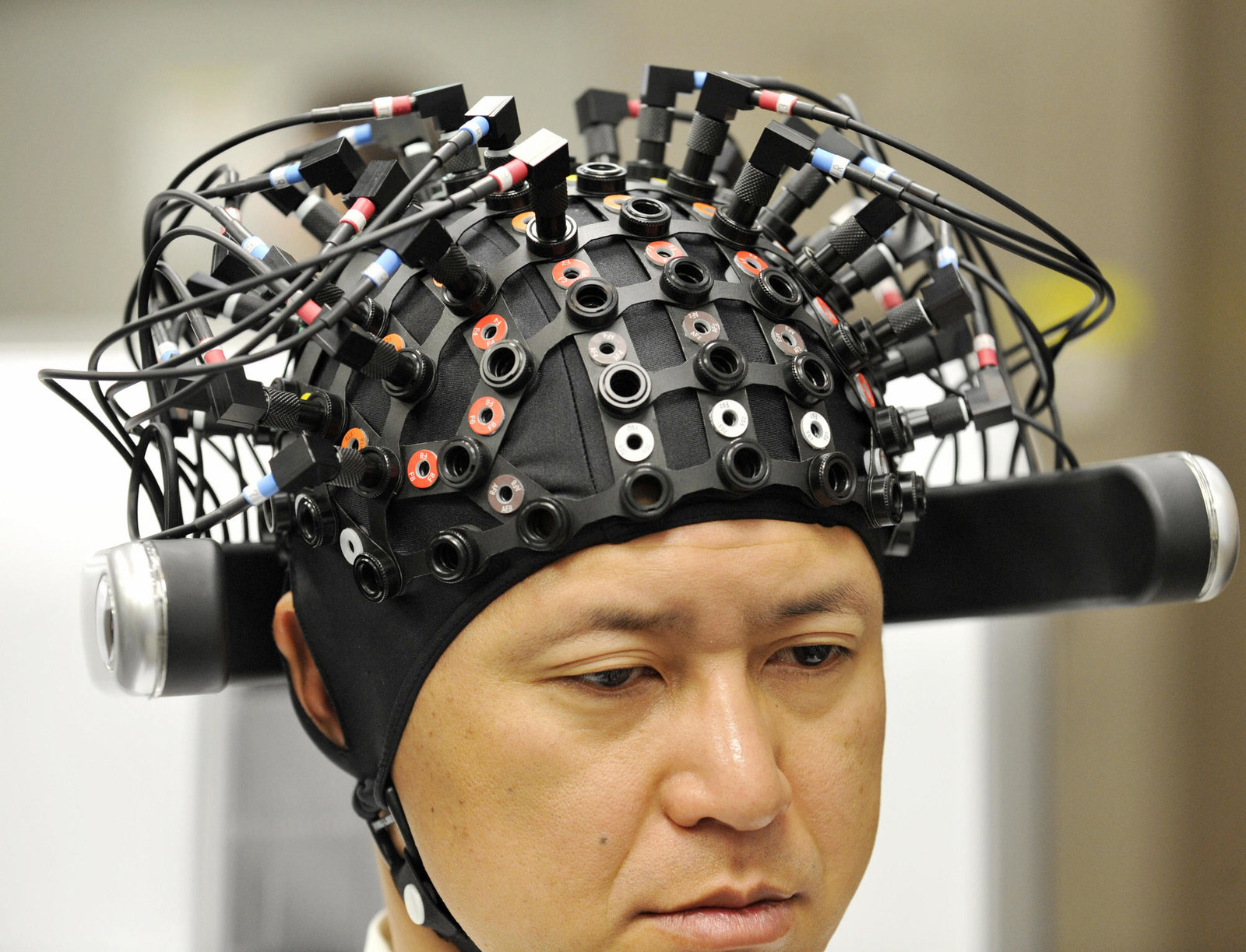
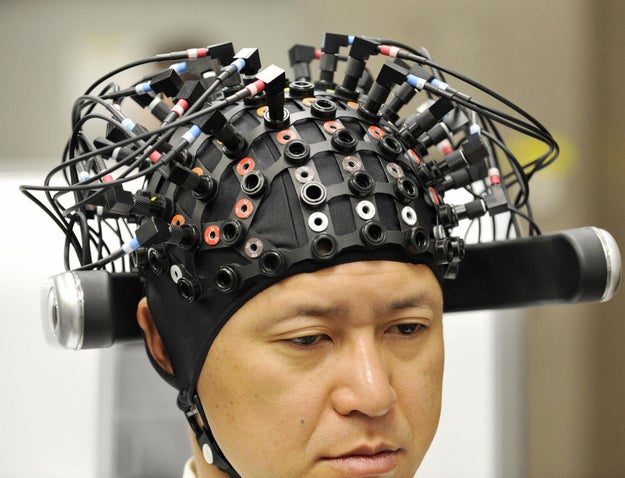
This is not Facebook&;s brain-computer interface

Yoshikazu Tsuno / AFP / Getty Images

In a 2015 Q&A, Facebook CEO Mark Zuckerberg argued that the future of communication may well be telepathy. “One day, I believe we&039;ll be able to send full rich thoughts to each other directly using technology,” he said. “You&039;ll just be able to think of something and your friends will immediately be able to experience it too.”

Now, two years later, Facebook is working hard to make Zuckerberg&039;s futurist vision a reality. And Regina Dugan — who headed up both the Defense Advanced Research Projects Agency (DARPA) and Google&039;s Advanced Technology and Projects group — is leading the effort. Onstage at Facebook&039;s F8 conference Wednesday, Dugan provided concrete details on the company’s telepathy efforts for the first time, introducing a research initiative she hopes will someday enable us to type words into Facebook posts simply by thinking them.

“We have a goal of creating a system capable of typing 100 words per minute … straight from your brain.”

“It sounds impossible, but it’s closer than you may realize,” Dugan said. “We have a goal of creating a system capable of typing 100 words per minute — five times faster than you can type on your smartphone — straight from your brain.”

For Dugan, the idea of such a brain-computer interface is not nearly far-fetched as it might sound. More to the point, it makes good sense. Thinking our words into a computer would likely be more efficient than manually typing them. And thinking commands into our smartphones could free us from staring at them so much, giving us more time to engage with the world around us. It too could make glasses overlaying digital information on the real world feel natural, since we wouldn’t have to operate them clunkily via touch or voice. “Even something as simple as a &039;yes,&039; &039;no&039; brain click would fundamentally change our capability,” Dugan said.

It remains to be seen if Facebook can develop such a technology and widely deploy it. But should it manage to do so it’ll likely encounter a perhaps more monumental task: convincing people to trust a company with a bumpy history of privacy missteps with their brains.

Well aware of such concerns, Dugan stressed that Facebook is taking a measured approach to these new brain-computer interfaces. “To be clear, we are not talking about decoding your random thoughts,” she said. “We’re talking about decoding those words, the ones you already decided to share, by sending them to the speech center of your brain.”

“To be clear, we are not talking about decoding your random thoughts.”

Dugan’s emphasis on thought-typing’s tie to voluntary human decisions could be the foundation of Facebook’s “trust us” pitch for such technology. You typically don’t move your arm unless you want to do so; you typically don’t speak without intending to say something; presumably you won’t think things into Facebook unless you choose to do so.

There will be hardware involved, of course. Dugan told BuzzFeed News that thought-typing will likely be done via an electronic headband or augmented reality glasses — or perhaps something the team hasn’t thought of yet. Asked if she thought people might be hesitant to wear such a Facebook-developed device, Dugan parried the question. “I want to be careful not to dial forward to a whole slew of potential hypotheses of what might and might not occur,” she said.

But Dugan did stress that Facebook isn’t blindly pursuing technological advancement without considering the implications. “We ask questions about technological progress and we always will,” she said. ”I feel optimistic about technological progress; I also feel responsible for doing the right things.”

Quelle: <a href="Are You Ready To Trust Facebook With Your Brain?“>BuzzFeed