Twitter Wants To Stream Live Video Programming 24/7
Fabrizio Bensch / Reuters

Get ready for nonstop live video inside Twitter.

The company, which reports first quarter earnings Wednesday, plans to air live video 24 hours a day, 7 day a week inside its apps and desktop site, building on the 800+ hours it aired in the first three months of 2017, Twitter COO and CFO Anthony Noto told BuzzFeed News. Call it Twitter TV or The Twitter Network, the always-on realization of Twitter’s current live video offering of sports, news and entertainment programming is on its way.

“We will definitely have 24/7 content on Twitter,” Noto said during an extensive interview about the company’s live video strategy last week. “Our goal is to be a dependable place so that when you want to see what’s happening, you think of going to Twitter.”
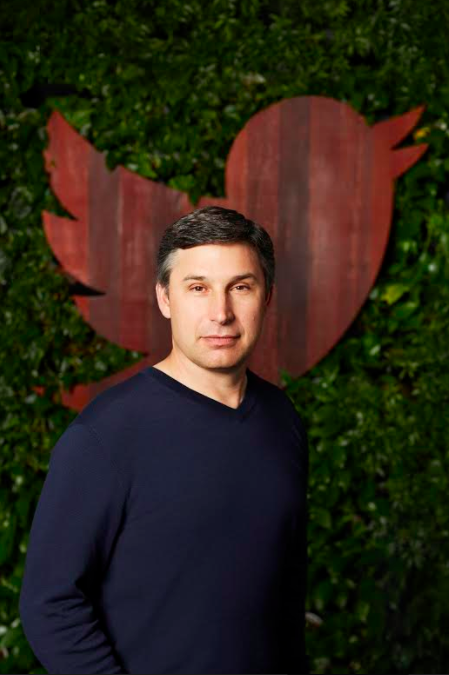
Twitter&;s Anthony Noto

Ellian Raffoul

Noto&039;s assertion follows the loss of Twitter&039;s cornerstone NFL deal to Amazon. But despite losing the rights to stream the package of Thursday night games, Twitter is seeing enough benefit from live video to make it a pillar of its growth and revenue strategy. Live video is driving up conversation volume on the platform, Noto said, and it’s helping Twitter offer the type of 15 and 30 second unskippable video ads for which advertisers typically write big checks to TV networks.

Twitter will take some time to reach its 24/7 programming goal, Noto said, without offering a timetable. But he indicated much more programming in the works. “We’re working on many, many things,” Noto said. “There’s a lot in the pipeline.”

The engagement live video is driving on Twitter stems in part from the company’s decision to heavily promote it. Twitter is auto-playing videos inside its desktop site, and airing them live from its relatively-new Explore tab. And the company&039;s decision to do so has resulted in some sizable viewership numbers. Twitter’s NFL package averaged 3.5 million unique viewers and its Oscars pre and post shows brought in a combined 6.4 million. Meanwhile, its live inauguration day coverage from PBS netted some 8.6 million unique viewers. (BuzzFeed partnered with Twitter on an Election Day show which drew about 7.7 million unique viewers.)

Next week, Twitter will pitch advertisers on the value of spending big bucks to reach its audience at its first ever NewFronts event. The company will introduce a handful of new shows in hopes of landing some big upfront ad buys from top tier sponsors. Noto declined to go into detail about what’s coming.

First And Goal

Twitter loudly touted its 2016 NFL deal in press releases and earnings calls last year, so losing it to Amazon the following year wasn’t a great look. But the company has some ideas about other programming that might fill the NFL’s shoes — the Ultimate Fighting Championship. “We have a really big audience when there’s a pay per view UFC match,” Noto said. “Should we provide that content to the audience on Twitter that’s not watching it, but might like to after seeing tweets about it? That’s something we’d consider.”

Meanwhile, the $10 million Twitter spent on last year’s NFL package should continue working for it even after Amazon airs a similar set of games for $50 million next season. Twitter’s NFL deal helped it plant a flag in the live video marketplace, letting programmers know it was dead serious about live, and demonstrating an infrastructure that could handle millions of viewers tuning in at once.

“It was instrumental [in generating additional interest],” Noto said of the NFL deal, declining comment on the premium Amazon seems to have paid for it. “It’s a really high profile brand and one that has really high expectations for product quality. It caused people to come and see if we could deliver.”

One entity that took notice of Twitter’s NFL deal was 120 Sports — a joint venture between MLB Advanced Media, the National Hockey League, and a handful of other big sports media brands and leagues. 120 Sports began airing a sports highlights show called The Rally exclusively on Twitter in September 2016, and its CEO Jason Coyle said the company&039;s NFL deal played a role in the decision to do so. “We could see that our deal was not going to be a one off,” Coyle told BuzzFeed News. “We didn&039;t want to just throw the show out there exclusively with a partner that wasn’t that serious about growing.”

Shows like The Rally — a cheap to produce, laid back version of ESPN’s Sportscenter — give Twitter the less polished, less expensive programming it needs to fill its airtime. Noto said the company will always look for a combination of ultra-premium content and not-so-ultra-premium-content. So Twitter needs Rally-like programming. Indeed, it’s already airing similarly not-so-ultra-premium shows from financial news network Cheddar and the NBA, which is now programming a sports talk show called The Starters exclusively for Twitter.

From Twitter’s perspective, becoming a source of always-on-in-the-background video in the way that CNBC is in airports would be a great outcome. “We think that is a great way to have the programming carried along with you during your day,” Noto said. “Focus in on it when you hear something that’s of interest, but then maybe not be 100% focused on it when it’s not of interest. I did that myself during the debates.”

That kind of video falls into a category Jeremy Liew of Lightspeed Venture Partners calls “Ambient digital video,” which he believes exploits a gap left by digital video services like Netflix and HBO Now, which are always looking for your full attention. Liew told BuzzFeed News in an email that Twitter may have hit on a potentially big opportunity here. “If Twitter can own this use case, it may be a complement to the Netflix and Amazon use cases,” he said.

Quelle: <a href="Twitter Wants To Stream Live Video Programming 24/7“>BuzzFeed
The Uber Exec At The Center Of Waymo’s Self-Driving Lawsuit Was Just Dealt A Blow

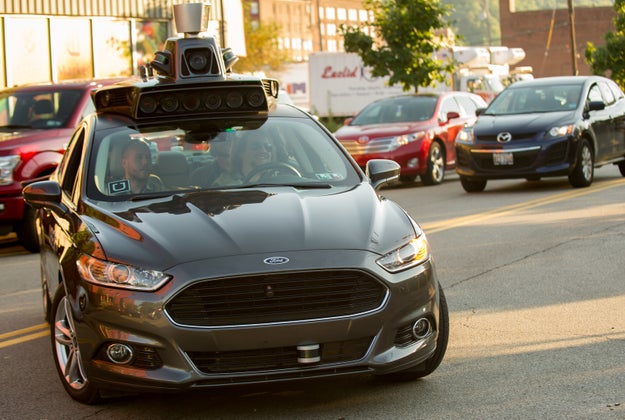
A self-driving Uber Ford Fusion in Pittsburgh, Pennsylvania.

Jeff Swensen / Getty Images

The head of Uber&;s self-driving unit suffered a blow on Tuesday in a legal battle with Waymo over whether he stole its self-driving technology.

A federal appeals court on Tuesday denied Anthony Levandowski’s request to avoid self-incrimination by withholding certain documents from the court’s view. (Levandowski, who is at the center of the lawsuit directed at Uber, had said that producing these documents might infringe on his Fifth Amendment rights.) That means Waymo’s lawyers will be able to see potentially critical information that Levandowski and his legal team have not presented to the court, and then make a case for those documents to be turned over. It’s a critical juncture in the case: Uber says it does not have the files Levandowski allegedly stole, but Waymo says that’s in part because Uber has has not examined Levandowski’s devices.

“The disclosure of this information could put substantially more pressure on Levandowski,” Eric Goldman, a law professor at Santa Clara University who is not involved in the case, told BuzzFeed News. “If in fact he is worried about his criminal liability, Waymo getting more critical information might make him feel stressed.”

A spokesperson for Uber said the company did not have a comment. Waymo did not immediately return a request for comment.

The technology at hand is called LiDAR, which stands for “light detection and ranging” systems, which uses lasers to help self-driving cars see and navigate the world. Waymo alleges Levandowski downloaded 14,000 company files before leaving the company to start Otto, a self-driving truck startup that Uber purchased last year.

Waymo has asked a federal judge to halt Uber’s self-driving program to stop the company from using the allegedly stolen technology. Uber disputed that request, saying that its own work is “fundamentally different” from Waymo’s designs.

Judge William Alsup told Uber’s lawyers during a tutorial of LiDAR technology on April 14 that while the ride-hail giant’s self-driving vehicles may use LiDAR systems that are different from Waymo’s designs, it’s possible Uber could have worked on alternate designs that have not yet made it to the prototype stage – designs that perhaps used Waymo information.

“You always talk about the professor, but you never say what he was working on,” Alsup said, according to transcripts of court proceedings viewed by BuzzFeed News. “Well, why did you hire that guy for $680 million if he wasn’t doing anything? So I wonder, what was he working on?”

Uber replied to that question in a court filing on Tuesday. “Mr. Levandowski was not a LiDAR engineer, but contributed some high-level ideas to the concept,” the filing says. Uber described him as a manager who “did a lot of cheerleading on the sidelines” at Otto, and said that after taking the helm of Uber’s self-driving team, Levandowski was “much more focused on management duties. Mr. Levandowski does not provide input on detailed technical LiDAR design choices at Uber.”

Earlier this month, Waymo’s lawyers told a judge that they found evidence that Uber’s lawyers were anticipating litigation with Google if they purchased Levandowski’s startup as early as three days after Levandowski resigned from Waymo.

Uber’s official reply to Waymo’s allegations is due to the court by Friday.

Quelle: <a href="The Uber Exec At The Center Of Waymo’s Self-Driving Lawsuit Was Just Dealt A Blow“>BuzzFeed

Palantir Cofounder Says Social Justice Warriors Are Responsible for Trump

J Rumans Photography

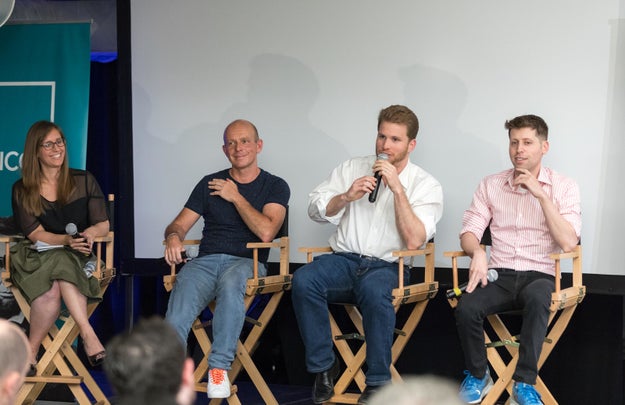
On Monday night, in the basement of a posh coworking space in downtown San Francisco, about 200 people gathered to hear the umpteenth panel discussion about how Silicon Valley should deal with Donald Trump. This event, however, had something most industry gatherings don&;t: a conservative bent.

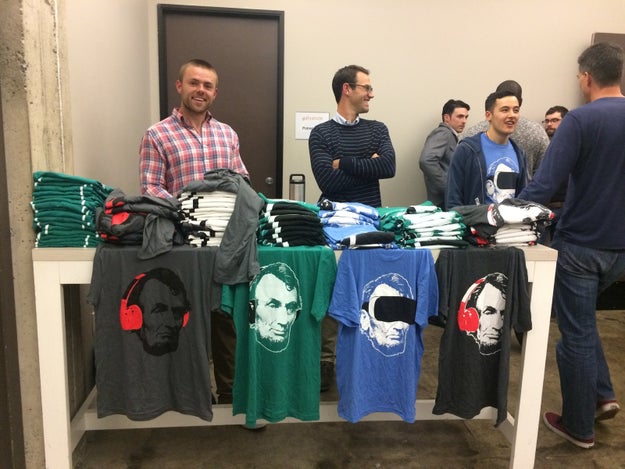
Speakers included libertarian Joe Lonsdale, a Palantir cofounder turned high-profile venture capitalist; Steve Hilton, the CEO of the political startup Crowdpac, who has an upcoming show about populism on Fox; and Sam Altman, who runs Y Combinator’s parent company. The event was hosted by Lincoln Network, a right-of-center San Francisco-based political group whose motto is “where liberty and technology meet,” and whose logo used to be a drawing of Abraham Lincoln wearing pair of Google Glass. (With Glass on life support, now the logo is a drawing of Lincoln sporting noise-cancelling headphones favored by engineers or an Oculus Rift.) Panelists defended billionaire Elon Musk’s decision to join Trump’s business advisory council against the backlash that played out on social media. “This is one of the least healthy things that has happened to our country, really, in the last five or 10 years — is this kind of online mobs of social justice warriors trying to take [you] down if you misspeak,” said Lonsdale.

“— There’s your quote for tomorrow,” said Altman, calling back to a prediction that Lonsdale’s made earlier in the evening: if you “screw up” talking about Trump, your quote shows up in the newspaper. The crowd — which included political consultants who advise tech people, tech people who advise politicians, a representative from the Cato Institute, various associates of billionaire Peter Thiel, and the occasional beer bottle rolling past the folding chairs on the concrete floor — cracked up.

“I can’t help myself, that’s why I shouldn’t do this in public,” Lonsdale said, explaining that groups who use social media to “demonize their foes” helped trigger the rise of Trump. “Ironically,” Lonsdale argued, “the same people who are saying, ‘You’re not allowed to work with [Trump] at all. We’re going to attack you, even if you think you’re trying to help the country,’ They have a responsibility for causing this in the first place.”

Nitasha Tiku / BuzzFeed News

Lonsdale’s media prediction came at the start of the panel, when he claimed that he wasn’t expecting to discuss Trump. “Actually, Sam [Altman] and I were going to do a debate earlier on the future of jobs, and I just had my first kid a few weeks ago and I found out today we’re talking about Trump instead, which is terrifying because it’s slightly less easy to talk about in public. But anyways, this is better because now I can give a quote and be on the front page the next day if we screw up&;”

Lonsdale’s comments were hardly a screwup, certainly not with this crowd. Since before the election, prominent members of Silicon Valley’s priesthood have argued for more tolerance and acceptance towards Trump’s supporters (now his collaborators). This argument has persisted even as Trump’s actions in the first 100 days have actively undermined sacrosanct Silicon Valley causes like fighting climate change (Musk’s corporate raison d&039;etre), and promoting immigration of highly skilled workers.

On the panel, Altman — an independent who dines out on his anti-Trump stance — also insisted that cooperation with Trump was necessary. But the panelists’ hyper-awareness to the media doesn’t always stretch to self-awareness about Silicon Valley’s role in creating polarized public discussion. “I think absolutism is bad in any form and it has gotten us into this current mess we’re in,” said Altman. “The Internet has amplified the two-party political system so much and pushed us to the extremes of both parties that they’re both kind of imploding on themselves.”

“People can engage in different ways. Some people will run the resistance, some people will run for office, some people will join [Trump’s] advisory board, whatever that is, but I don’t think it’s an acceptable option to say I’m going to completely disengage and do nothing,” Altman argued, building up the image of a plug-your-ears progressive that doesn&039;t accurately describe his critics.

Hilton, who was David Cameron’s BFF until Hilton started backing Brexit, is better known as the husband of Rachel Whetstone, Uber’s very recently departed head of policy and communications, and he had his own caveat about the media.

Through his relationship with Whetstone, “I did see the dynamics of that unfold, for perspective, that’s all I’m saying, so I don’t want a headline about that,” Hilton said.

“Can we get the inside story?” Altman, butted in, asking the question on everyone’s mind.

Perhaps part of their willingness to cooperate stems from the fact that Trump’s policies are pro-business. “If we don’t figure out a way to unrig the system, which is currently in favor of a small number of deeply entrenched interests, then we’re going to continue to have a lack of economic justice and deeply frustrated people and candidates like this,” Altman argued. (In this case, he was talking about San Francisco real estate developers and not Silicon Valley giants like Facebook and Google, which have recently been under antitrust attack.)

Lonsdale’s latest effort, 8 VC, is a group of financiers and entrepreneurs, who raised more than $300 million to make a positive impact on the world. He told the crowd that he was most bothered by Trump’s immigration policy, which went against Silicon Valley’s culture. “I thought it was a mess and I thought it was bad branding for our country.”

But even there, Lonsdale saw a silver lining in increasing salaries for highly-skilled tech workers, and his own personal communication with the administration about top computer scientists who are unable to get visas to attend a computer science competition. “I sent an email to my friends at the White House at the request of a couple of CEOs a few days away — &039;This is ridiculous. This is obviously bad for our country not to allow the people who are being invited here, the top computer scientists, to compete. We should get them visas.&039; And my friends there agreed and said they’d work on it. So I guess that’s a positive thing I’d say: is there are a lot of practical good people who seem to be winning out in terms of how the White House works.”

Quelle: <a href="Palantir Cofounder Says Social Justice Warriors Are Responsible for Trump“>BuzzFeed

Man Streams Himself Murdering Baby Daughter On Facebook Live, Then Kills Himself

A Thai man broadcast video of himself killing his baby daughter on Facebook Live Monday, the latest in a string of recent live-streamed horrific acts on the social platform. 20-year old Wuttisan Wongtalay hanged his 11-month-old daughter and then himself at an abandoned hotel in Phuket.

The murder video remained live on Facebook for nearly 24 hours, according to Reuters. It&;s certain to draw further scrutiny to the company&039;s Live product, which has been used to broadcast a number of acts of gruesome violence since its launch in April 2016. This latest Facebook Live murder comes just weeks after Facebook user Steve Stevens killed a stranger in Cleveland and uploaded video of the murder to the social network.

“This is an appalling incident and our hearts go out to the family of the victim,” a Facebook spokesperson said in a statement. “There is absolutely no place for acts of this kind on Facebook and the footage has now been removed.”

Wongtalay posted two videos from the crime scene. Both registered over 100,000 views, according to The Guardian, which reported that the videos were uploaded to YouTube by other users too.

Though yesterday’s murder was the first aired on Facebook Live in Thailand, deputy police spokesperson Kissana Phathanacharoen suggested it might have been a copycat act.. “It could be influenced by behavior from abroad, most recently in Cleveland,” he said, referring to the Stevens video.

Policing its emerging live video platform of horrifying acts of violence is proving to be an urgent and difficult problem for Facebook. The company has so far provided little about its efforts to do so, but it&039;s clear the issue is a priority. At the start of his company’s F8 developer conference last week, Facebook CEO Mark Zuckerberg took a moment to address the Cleveland murder. “We will keep doing all we can to prevent tragedies like this from happening,” he said.

Quelle: <a href="Man Streams Himself Murdering Baby Daughter On Facebook Live, Then Kills Himself“>BuzzFeed

Here's The Thing With Free Apps And Services

John Lamb / Getty Images

If there’s only one thing you take away from this article, let it be this: there’s no such thing as free lunch.

The New York Times recently reported that Unroll.me, an email management app that promises to de-clutter your inbox, sold its users’ anonymized Lyft receipt data to Uber. Unroll.me claims that it’s “trusted by millions of happy users” — but it’s likely that those users weren’t aware that they were forking over their personal emails to Slice Intelligence, a digital commerce analytics company. Now, some users are pledging to remove their inbox access from Unroll.me and delete their accounts.

The Unroll.me/Uber fury is a good reminder of the ol’ Internet adage, “if you’re not paying for it, you’re not the customer, you’re the product.”

But some sites are much more egregious than others. So here are some ways you can assess an app’s trustworthiness and find out if your free faves are problematic.

What does “you’re the product” even mean?

When you sign up for a free online service, you’re most likely giving up something in return: your data. On sites like Facebook and Google, that means the service uses your personal information (like your interests, location, gender, marital status, or age) to show you advertisements they think you’d be interested in. Last year, Facebook made more than $26 billion from advertising.

For many people, this sounds like a good trade off: You get to use something legitimately useful, like Gmail, for free, and the most visible consequence is an advertisement. But other companies go much farther. Unroll.me, for example, didn’t use user data to target ads — it looked at individual emails and sent them to Uber.

And if you found that story about Target knowing a teen girl was pregnant before her father did thanks to extensive customer data collection to be pretty creepy, you should know that that same kind of analytics-based-advertising-influence has probably been exercised on you.

How do I know what companies are doing with my data? Is it safe?

Be very careful about what kind of access you give apps. To do that, closely at what you’re agreeing to when you sign up.

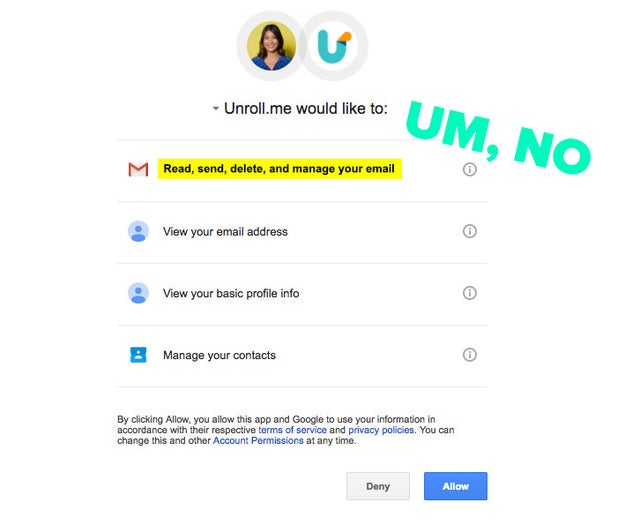
For example, when you sign up for Unroll.me, you’re giving the service the ability to read, send, delete, and manage your email. This is a good time to ask yourself: Does the service really need all of these permissions? Do I trust this service?

Nicole Nguyen / BuzzFeed News

A good place to start looking for answers is the service’s FAQ page. If there’s a section on security or privacy, it may reveal why it asks for something specifically, like access to your contacts.

And this is something I can’t stress enough: it’s really important to read – or, at the very least, comb through – the terms and conditions when you’re using a *free* app or service, especially when it’s a you’re giving it full access to your inbox.

I know you’re thinking “Who the hell has time for all that legalese?&;” You’re right. Terms of service pages are often long, complicated, and vague which is why no one reads them. But there are two great sites that can help you make sense of this consumer contract.

One is Terms of Service; Didn’t Read, which rates and labels policies based on their user-friendliness. For example, when a service warns of allowing access to third-party apps, that gets a thumbs up. If the service says it can make changes to terms without notifying users at any time, that gets a thumbs down.

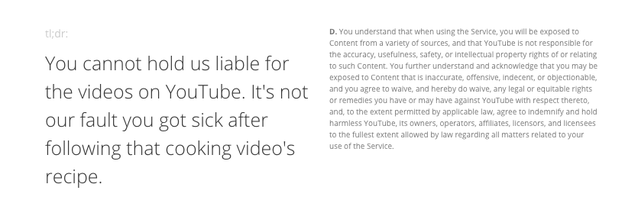
Another tool is TLDRLegal, which offers a short, plain-language synopsis next to the actual legal text of various company’s terms and conditions. This site is very new, so there aren’t many services on the platform yet, but you can currently look at YouTube’s, Apple’s, Dropbox’s, and Minecraft’s terms of service analyses to start familiarizing yourself with the legal language.

TL;DR Legal

If you’re really concerned about what you discover, contact the app’s support team or send them a tweet to see if there’s room for clarification. Might as well try&033;

Want to learn how to judge a privacy policy for yourself? Center of Plain Language created a great rubric for determining what makes a policy good and bad.

So, what are some things that I should do right now?

Take this time to review what apps are connected to your email or social accounts. You can easily revoke apps you don’t recognize or haven’t used in a while with access to Twitter, Google, and Facebook.

You should also see what the apps on your phone can access. In iOS, go to Settings > Privacy. Review which apps are using the microphone, location tracking, or your phone’s contacts. Then toggle permissions on and off for an app that, say, doesn’t need access to your photo library. On Android, you can go to Settings > Apps and tap on individual apps, then select where it says Permissions.

As previously mentioned, if you do use apps with access to your Gmail account, be extra vigilant.

Sanebox, a paid email management service similar to Unroll.me, specifically claims that they will never sell user data, “even aggregated information,” to another company. Unsubscriber, on the other hand, will use your personal info to improve advertising by third parties. Boomerang, an add-on that lets you schedule Gmails, says that “no personally-identifiable information will be sold or transferred to unaffiliated third parties” without permission, but isn’t clear about aggregate information, though the CEO did tweet that the company makes money from paid subscriptions, rather than selling data. Mailvelope, an email encryption extension, says that they do not share, sell, or market personal data unless you’ve given explicit consent.

Generally, stay away from free VPNs, or Virtual Private Networks. When you use provided Wi-Fi at a public venue like an airport, be aware that the service provider may sell your information to advertisers or use cookies to track website usage and access (Boingo and Gogo both do this). Additionally, note that some ad blockers like AdBlock Plus accept payment to let some advertisements through.

Consider using paid apps that prioritize user privacy above all else and have strong privacy language on their webpages.

And remember: if a service is free, look into how the company is making money and paying for server costs. If it’s with your data, make sure you know *exactly* what they’re doing with it.

cbc.ca / Via giphy.com

Quelle: <a href="Here&039;s The Thing With Free Apps And Services“>BuzzFeed

This App Changed The Name Of A Filter After People Complained It Was Racist, But The Filter's Still The Same

So there&;s this popular new app called Faceapp.

Take a selfie, and the app will change your face using filters that make you look younger, older, more male, more female, and the like. It&039;s available for iOS and Android, and, after going kinda viral last week, it&039;s currently the free app in Apple&039;s App Store.

But people have noticed something off about it…

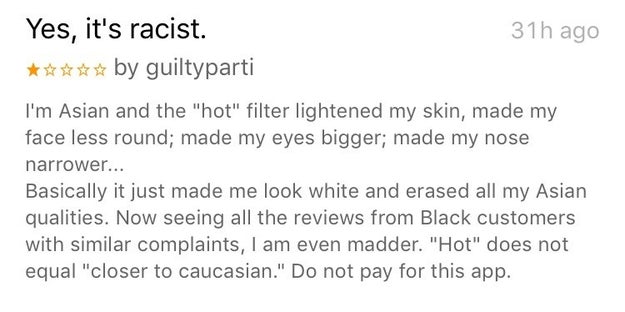
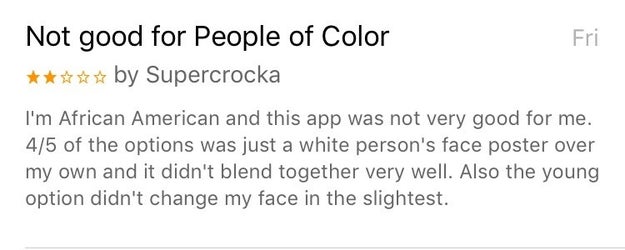
The app&039;s “Spark” filter, which was formerly called the “Hot” filter, lightens your face.

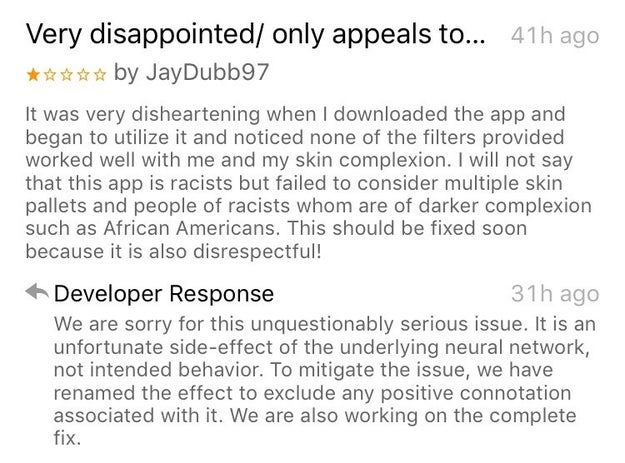
The developer, Wireless Lab OOO, responded to some of the criticism in App Store reviews, calling it an “unquestionably serious issue.”

They changed the name of the filter from “Hot” to “Spark.”

Wireless Lab OOO said in an email to BuzzFeed News that it changed the filter&039;s name from “Hot” to “Spark” and is working on finding solutions to the face-whitening. “It is an unfortunate side-effect of the underlying neural network caused by the training set bias, not intended behavior,” the company wrote. (The company didn&039;t elaborate, but this ~may~ mean that even though Faceapp didn&039;t intend to whitewash people, it didn&039;t use enough dark faces while training its artificial intelligence to apply the filters.)

We tried it, and it&039;s true. The “Spark” filter does lighten your face.

It even whitens you if you&039;re already white.

This isn&039;t the first time a selfie app seemed to equate “hot” with “white”: A similar thing happened with Meitu, a Chinese app that enlarged people&039;s eyes, reddened their cheeks, and, you guessed it, made them whiter.

Quelle: <a href="This App Changed The Name Of A Filter After People Complained It Was Racist, But The Filter&039;s Still The Same“>BuzzFeed

Workers Involved In Union Activities Say Tesla Is Illegally Intimidating Them

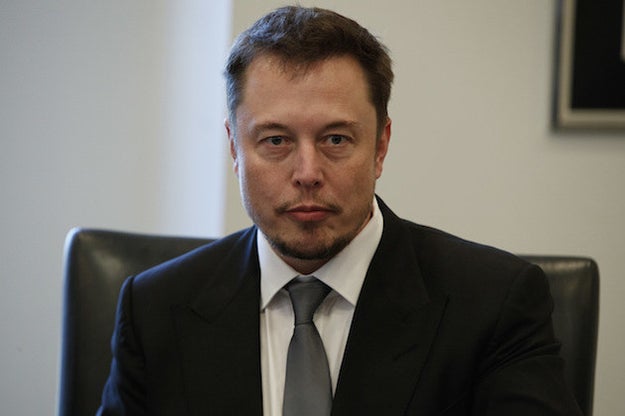
Tesla CEO Elon Musk listens as President-elect Donald Trump speaks during a meeting with technology industry leaders at Trump Tower in New York, Wednesday, Dec. 14, 2016. (AP Photo/Evan Vucci)

Evan Vucci / AP

Tesla is once again facing allegations that it’s working to quash a union drive at its factory in Fremont, CA.

Last week, the United Automobile Workers union filed four separate charges with the National Labor Relations Board alleging that the company has illegally surveilled and coerced workers attempting to distribute information about the union drive.

The charges, copies of which were obtained by BuzzFeed News, specifically makes reference to an event on February 10, in which Tesla allegedly intimidated three employees who were “passing out literature regarding their union organizing efforts, working conditions, the confidentiality agreement, and their rights under the NLRA.” On March 23, the charge alleges, Tesla broke the law by “instructing employees they were not allowed to pass out any literature unless it was pre-approved by the employer.”

In an emailed statement, Tesla said it is “aware of the filing of unfair labor practice allegations” but “believes the [unfair labor practice] allegations are entirely without merit.” The company said it plans to respond “as part of the NLRB process.”

News of the UAW’s efforts to unionize Tesla’s plant broke in February, when Tesla employee Jose Moran published a blog post on Medium citing long hours, repeated stress injuries and less-than-competitive pay among reasons why Tesla employees should join a union.

Tesla CEO Elon Musk immediately hit back, first accusing Moran of being a union plant, and then writing an email to employees in which he argued that the union would be bad for working conditions, and promised to install both a roller coaster and free frozen yogurt machines throughout the facility.

The union’s charges aren’t the first formal accusation against Tesla for stymying open communication among its employees. In February, a group of California lawmakers warned Tesla that the confidentiality agreement it requires workers to sign is overbroad, a fact which “has resulted in a chilling effect on workers’ ability to engage in protected activity,” they said in a letter.

That agreement, according to a copy obtained by the blog Teslarati, bars workers from sharing information about Tesla products, communicating with the media about Tesla, posting photos or videos taken inside Tesla facilities online, and writing “about your work in any social media, blog, or book.”

More recently, over 60 labor groups signed a letter criticizing the confidentiality agreement, and taking Musk to task for creating a work environment in which some workers feel their right to discuss union activities has been stifled.

“You can’t fix problems if you’re not allowed to talk about them,” said Tesla employee Michael Sanchez in an email forwarded by the communications team representing the union. “The confidentiality agreement we were required to sign went too far. We should have the right to distribute information to our co-workers without intimidation.”

A Tesla spokesperson said the company’s confidentiality agreement is typical of any tech company, and “has nothing to do with the rights of workers to openly discuss organizing efforts.”

In the last six years, Tesla has faced NLRB charges in Palo Alto, Fremont, and Austin, Texas; all of those cases, including one filed by the UAW in 2011, were either withdrawn or dismissed.

Meanwhile, Tesla workers in Germany are threatening to go on strike, with some of them arguing that they are underpaid. The German union representing the workers, IG Metall, said the planned strike could impact Tesla’s ability to begin production of its newest car, the Model 3, in July, on time for its scheduled release in late 2017.

Quelle: <a href="Workers Involved In Union Activities Say Tesla Is Illegally Intimidating Them“>BuzzFeed

This Water Copter Looks Very Cool And Very Dangerous

This Water Copter Looks Very Cool And Very Dangerous

So this is the Kitty Hawk Flyer.

It&;s a prototype of a jet-ski-helicopter-thing created by Kitty Hawk, a company backed by Google cofounder Larry Page.

So what can you do with it?

Sadly, we&039;re still very far off from commuting to work in our hovering cars. Kitty Hawk says that this version is designed only to fly about 15 feet above the surface of water. But it still looks pretty damn cool. Here&039;s a video of a person in a nice boat getting totally one-upped by her friend on a flying jet ski.

youtube.com

The New York Times writes that the Flyer&039;s eight propellers make it as loud as a speedboat and that the vehicle weighs about 220 pounds.

Named after the site where Orville and Wilbur Wright tested their first airplanes, Kitty Hawk says on its website its mission is “to make the dream of personal flight a reality.”

Kitty Hawk also says the flyer is completely electric and legal to fly in “uncongested areas under the Ultralight category of FAA regulations.” You won&039;t need a pilot&039;s license to fly one, according to the company, though the guy flying machine in the video is an aerospace engineer, according to the Times.

It&039;s unclear what protects people from a potential crash. What happens when you run out of battery and hit the surface of the water? What happens if you fly over land (you know someone will)? Kitty Hawk declined to comment.

The flyer goes on sale later this year.

The company hasn&039;t announced the exact date of its commercial release. If you&039;re ready to spend your life&039;s savings on a Flyer, keep in mind that the retail version may not look anything like what you saw in the video. Kitty Hawk writes in its FAQ, “The go-to-market Flyer will have a different design than the prototype Flyer that appears in our April 2017 photos and videos.”

In the meantime, you can become a three-year Kitty Hawk Member for $100, which will get you $2,000 off the retail price whenever you can buy a Flyer, and access to “our flight simulator, flight demonstrations, and events where a select few will get the chance to ride the Flyer,” Kitty Hawk writes on its website.

Quelle: <a href="This Water Copter Looks Very Cool And Very Dangerous“>BuzzFeed

How "Last Resort" Became The Internet's New Favorite Joke Song

Pete Ryan for BuzzFeed News

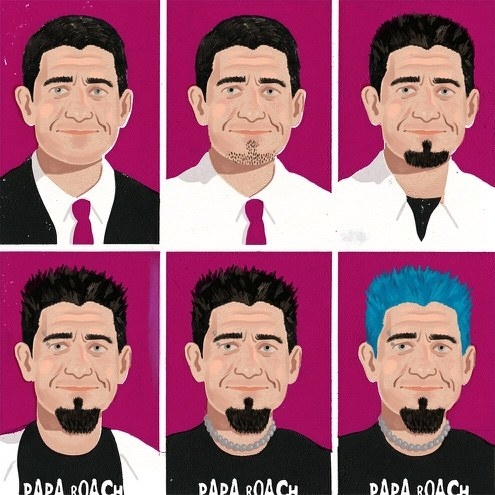
Last month, after Republican leadership failed to bring its Obamacare replacement bill to a House vote, the television writer Justin Halpern spotted an easy opportunity to crack a joke. He doctored the same-day New York Times story, adding a paragraph that (completely inaccurately) described Speaker of the House Paul Ryan leaving “the White House in defeat … Within moments, the muffled sound of Papa Roach&;s &039;Last Resort&039; were heard blaring from inside the car as it drove away.” And then he tweeted it.

It was a tossed-off prank; Halpern told BuzzFeed News the whole thing might have taken him two minutes.

But, like the 2000 song it references, the joke was a massive hit.

In addition to being retweeted nearly 20,000 times, often by people (including journalists) who believed the screenshot to be authentic, the tweet prompted a spate of piggybacking jokes and, ultimately, a game response from the band itself:

(A spokesperson for Ryan declined to comment about Papa Roach.)

Seventeen years after its biggest song, a band that Spin described at the time as “the latest in midline nu-metal minstrelsy” had landed, mirthfully, at the center of the news cycle. What is it about this song that caused such an intense reaction? And what is so damn funny about Paul Ryan listening to “Last Resort”?

“It&039;s the perfect joke, that song,” Halpern told BuzzFeed News. “The punchline hits the moment you press play. It&039;s a comedy writer&039;s dream.”

The punchline, of course, is the notoriously melodramatic opening couplet — “CUT MY LIFE INTO PIECES / THIS IS MY LAST RESORT” — which singer Jacoby Shaddix screams a capella, in a verge-of-tears staccato.

And though it leads into a song about a very unfunny subject — suicide — the lines, in all of their uncomfortably emotional glory, have recently become a kind of joking social media mantra of exasperation, sadness, and defeat. Used alike by devastated sports fans, cackling Keksters, Obama nostalgists, and rankled cultural commentators, the song serves now as an ironized shorthand for letting something get under your skin, for caring too much, for losing and then getting into your feelings. If, as Amanda Hess wrote recently, none of us are safe from getting “owned,” “Last Resort” is the anthem of the owned-but-owning-it, the internet loser&039;s performative cry of pain, the cuck&039;s winking lament.

“Last Resort” is the anthem of the owned-but-owning it, the internet loser&039;s performative cry of pain, the cuck&039;s winking lament.

“Last Resort” is a gift that keeps giving social media new ways to laugh. But to understand why it&039;s been so durable, it&039;s useful to remember just how big a smash “Last Resort” was when it was just a rock song — back when rock songs could be cultural touchstones.

The song started as an idle classical scale plinked on a piano by the band&039;s bassist Tobin Esperance in early 1999, in the Sacramento house where Papa Roach practiced. “I was like, that&039;s fucking sick, let&039;s put that on guitar,” Shaddix recalled to BuzzFeed News. They did, and it turned into the song&039;s instantly memorable power metal riff. Inspired, Shaddix wrote the “stream of consciousness” lyrics, about a friend who attempted suicide.

“From the moment we wrote it, we were like, this could be the song that gets us a record deal,” Shaddix said.

It did more than that: On the strength of “Last Resort,” Infest, the band&039;s major-label debut, sold 7 million copies worldwide. And the “Last Resort” video became a staple on MTV, to the point that the network eventually invited the band on Total Request Live. Indeed, that ubiquitous video, which cuts between overhead fisheye shots of the band and Nan Goldin-esque portraits of sullen teens in their late-’90s suburban bedrooms, may be as responsible as the lyrics for the song being so closely associated with teenage over-emoting. For people listening to popular music at the turn of the millennium, “Last Resort” and its vision of teenage angst were inescapable.

Eventually, the song receded into rock radio afternoon rotation. And by the mid-2000s, rap-rock and nu-metal — two genres with which Papa Roach were closely associated — had become music-world punchlines. That, combined with the infamous opening line and the humorless video, made it a natural target for the Weird Al-style lyrical interpolations that were popular on message boards like 4chan and Something Awful in the late aughts. According to KnowYourMeme, the first “Last Resort” meme to break out of the message boards was the still-popular “Cut my life into pizza / This is my plastic fork.” (Others included “Cut my life into peaches / This is my last fruit tart” and “Cut my life into beaches / This is my last resort.”)

Shaddix took it in stride. “That shit’s genius,” he told BuzzFeed News. “I even came up with one. I almost went through a divorce, so, &039;Cut my wife into pieces, this is my last divorce.&039; Thankfully, we worked it out.”

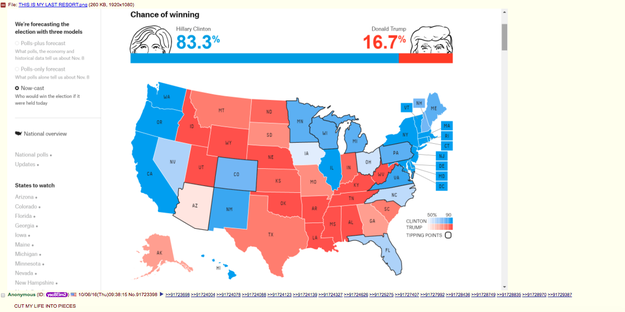
As much internet joke-making moved onto Twitter, users began to post the lyrics next to any old thing: An image of someone famous with their mouth open, a screenshot of Shaquille O&039;Neal looking distressed, a dog forced to wake up too early. Today, dozens and sometimes hundreds of people tweet “Last Resort” content every day. A quick Twitter search finds “Last Resort” as the punchline to an array of up-to-the-minute memes, from the Meryl Streep shouting meme to the mildly offensive different-ethnicities-pandering-to-each-other-with-music meme. But in 2017, it is used most predominantly to signify ironic despair or alarm over caring too much about something on the internet, as these users of 4chan/pol did when FiveThirtyEight predicted a Hillary Clinton victory:

So what is it about “Last Resort” specifically — why has it hung on as meme fodder for so long, once we account for its datedness and its popularity? Nu-metal produced far more embarrassing songs, and “Last Resort,” however dramatic, can&039;t touch the skin-crawling emotiveness of, say, Linkin Park at its treacliest. Well, for one, maybe it&039;s not surprising that a song about teenagers bursting with inexpressible emotions, featuring a video about sad and angry high-schoolers alone in their rooms, has had such a lasting second life on the solipsistic social internet, where obsessive self-presentation is the norm and nobody knows that you&039;re a dog. Or maybe, once you look past the trappings, you&039;re left with a song that is really, actually, gasp, kind of great.

“That guitar riff to open up is super catchy,” Halpern said. “We get to enjoy it and make fun of it at the same time — the holy grail for a cynical, snark-filled audience.”

But, wait, isn&039;t the song about suicide? Well, yes:

So should it really be a joke? Shaddix, for one, said he was happy people were using his band&039;s song at the expense of Paul Ryan, who was “trying to take this bill that’s helping people and ditch it.” And, he added, the song “continues to be an anthem for struggling kids.” (Papa Roach is currently touring in support of its forthcoming ninth studio album, Crooked Teeth.)

But also, Shaddix said, funny is funny. “I love having a good laugh and if it&039;s at my expense, whatever. Whether someone’s taking the piss out of it or not, who cares? It’s a straight fucking banger.”

“I’ve been cutting life into pieces for 17 years, dog, what&039;s up?” &;

Quelle: <a href="How "Last Resort" Became The Internet&039;s New Favorite Joke Song“>BuzzFeed

Louise Mensch Has A List Of Suspected Russian Agents

Ben A. Pruchnie / Getty Images

Since last November’s election, the former British politician Louise Mensch has transformed herself into the leader of a wide-ranging internet investigation into Russian espionage and influence in American politics, media, and business. Every day, Mensch and her network of online detectives unravel what they claim is a massive conspiracy linking the Kremlin, the Republican party, armies of internet trolls, and moneyed puppet-masters around the world.

Mensch, who sometimes tweets hundreds of times a day, has claimed or implied that targets ranging from top government officials to journalists to teenagers to anonymous twitter users are in thrall to Vladimir Putin.

Just since inauguration day, according to an extensive review of her tweets, the New York-based Mensch has accused at least 210 people and organizations of being under Russian government influence.

Mensch&;s campaign has played out almost entirely on Twitter. But she has also been validated at the highest levels of English-language media: She published an op-ed in the New York Times, appeared on MSNBC and Real Time with Bill Maher earlier this year, and was the subject of a flattering Guardian profile. And her relentless tweets and passionate following have made her a central figure in a new obsession with Russian influence that recalls Cold War era divisions over Communist infiltration. That “red scare” reached its paranoid height in the late 1940s and early 1950s, when substantive fears of (real) Soviet intelligence operations turned into a politicized hall of mirrors in which figures like Senator Joe McCarthy ruined the lives and careers of thousands of Americans with baseless allegations of working for Moscow. (The era also persuaded some on the “anti-anti-Communist” left that real Soviet spies were innocent victims of hysteria; their guilt was settled with the opening of the Soviet archives at the end of the Cold War.)

Mensch’s list includes 35 American politicians and government officials, 26 journalists, 26 organizations and corporations (among them think tanks, banks, media outlets, foreign intelligence agencies, and security firms), 18 Russians, 18 US citizens notable for political donations or affiliations, 80 low-profile Twitter accounts Mensch has characterized as “Putinbots” or similar (many of which appear to belong to Americans who support President Trump), and two British politicians. The list includes figures as disparate as Bernie Sanders and Sean Hannity.

Among the 210 named by Mensch are individuals and entities who do have obvious or reported ties to the Russian government and intelligence agencies, ranging from Wikileaks — which has denied that accusation — to the anonymous hacker Guccifer 2.0 to the Kremlin-owned news agency Sputnik. Mensch’s specific allegations draw on the reality of a large-scale and widely-documented Russian campaign to influence the U.S. election. But in many cases, she lacks strong, or any, evidence connecting her targets to that campaign.

In addition to the journalists, media personalities, and politicians, among those fingered are a Twitter comedian, a fake White House staff account, and a 15-year-old girl who Mensch suggested does not actually exist except as a Kremlin fabrication. (BuzzFeed News interviewed the teenager in person.)

Mensch’s criteria for accusing someone of being under Russian influence vary. Sometimes she cites her own and others’ reporting. In some cases, she points out suspicious geotags and catfishing attempts. In others, mangled English syntax appears to be enough to prove Russia ties. She has accused people of being affiliated with Russia simply for disagreeing with her or calling her theories far-fetched, but she has also called someone a Russian agent for being too enthusiastic about her own theories.

Many of the people Mensch has accused vociferously deny involvement with the Russian government. Many of those share the attribute that nobody other than Mensch has ever accused them of it.

“I am proud of my service to this country and to be a loyal first generation American, to suggest anything otherwise is both absolutely false and offensive to me, my family and first generation and naturalized citizens who continue to serve this great country,” Naveed Jamali, a former FBI double agent who Mensch has accused of being a Russian spy, wrote to BuzzFeed in an email.

The political strategist Evan Siegfried denied Mensch’s accusation that he is a “Kremlin troll.”

“In no way, shape or form am I or have I ever been a Kremlin operative, Russian agent or party to aiding Putin and/or Russia. Any and all accusations are not only false, but strain credulity. The closest I&039;ve come to Russia was the time I went to NYC&039;s Russian Tea Room in 1993. I was ten,” he said in an email.

Reached for comment by Twitter direct message, Mensch said that, if anything, the number of Russian agents she identified was understated.

“No, I doubt that number is accurate. I am quite certain the number is going to be a lot larger than 210 people or organizations once the trials are finished. It takes a village to elect a President who is working hand in glove with the Kremlin both in terms of propaganda and hacking collusion – and that&039;s before we even get to the money laundering.”

Mensch went on to say that her criteria for determining whether or not someone was a Russian agent depended on “Intelligence, from sources; actions; words, such as tweets; and other primary source material.”

Asked about her accusations against Jamali, Mensch referred BuzzFeed News to earlier tweets about a dispute between the two. She provided no evidence that Jamali is a Russian spy, and did not address a query about why she thinks Siegfried is a Russian agent.

Mensch had a colorful and storied career in British public life, which reached its peak when as a Tory member of Parliament, she grilled Rupert Murdoch over his role in the News of the World phone-hacking scandal. She moved to the US in 2012, at one point founded a social network intended to rival Twitter, and in April 2016 started a conservative news site for Murdoch’s company, News Corp. (She left the site, Heat Street, in January, and tweeted in March that she had left News Corp, which a company spokesman confirmed.)

An ally of intelligence services and a fierce critic of Edward Snowden and the press who published his leaked material, Mensch in 2016 established herself as a prominent voice on the Trump campaign’s ties to Russia. Her following grew in November, when she published a blockbuster story alleging that the FBI had been granted a FISA warrant in order to examine connections between Trump and Russia. Other media outlets later reported that the U.S. government had indeed obtained a FISA warrant in connection with the Trump campaign, though the details of those reports have differed from hers. That story won her legitimacy among close followers of the Trump-Russia story (BuzzFeed News reporters, among others, spoke to her to see if she had information that could advance reporting on Russia), and she has continued to use it as a calling card. And Mensch told BuzzFeed News that her reporting on Trump connections to Russia are being borne out.

But recently – and particularly over the last month — Mensch has become increasingly outspoken in labeling accounts who disagree with her “Kremlin shills,” “Putinbots,” and “RIS,” Russian intelligence services.

Some of her targets say they are puzzled and alarmed by her attention.

“It’s been very frustrating to encounter people who assume I’m a Kremlin propagandist simply because one of my jobs has the word “Moscow” in it,” said Kevin Rothrock, the web editor of the Moscow Times, who Mensch referred to as “Vlad” — her oft-used shorthand for an agent of Vladimir Putin — after Rothrock chided Mensch for “tweeting the dumbest shit.” The Moscow Times, which is known as a training ground for foreign correspondents, has a reputation as a rare independent voice in Russian media. Mensch did not respond to a query about why she thinks Rothrock may be a Russian agent.

Mensch’s critics have accused her of fomenting an anti-Russia panic. In an article last month in Rolling Stone, journalist Matt Taibbi warned of a resurgent “case of mass hysteria” about Russia among politicians and journalists.

(Mensch has speculated that Taibbi, who once lived and worked in Russia, “might be a Russian agent.”

“I am not a Russian agent,” Taibbi said to BuzzFeed News. “I have never been engaged in any kind of espionage work.”

Mensch did not respond to a query about why she thinks Taibbi may be a Russian agent.)

Some have accused Mensch of going too far. Cassandra Fairbanks, an American social media personality and journalist filed a complaint with the FBI against Mensch, alleging a “months long campaign of cyber stalking and harassment.” (Fairbanks works for the Russian-owned Sputnik.) Others, including Taibbi, suspect that going too far may be part of what has made Mensch such a popular figure.

“A lot of her success has come from some of the same instincts that have given Trump success,” Taibbi said. “The ability to generate headlines [is] a quality that is good to have if you are an attention seeking person in the internet age.”

And one way to generate headlines and amass a following in a bitterly divided political climate — as Donald Trump has demonstrated — is to find someone to blame. Indeed, if her tweets are to be believed, the number of people Louise Mensch believes to be agents of Russian influence may exceed 210 astronomically:

Steven Perlberg contributed reporting to this story.

Quelle: <a href="Louise Mensch Has A List Of Suspected Russian Agents“>BuzzFeed