You May Finally Be Able To Watch Amazon Prime Video On Your Apple TV

Amazon

If you’re an Amazon Prime member, you may be able to access Prime TV shows and movies on an Apple TV later this year.

Recode reports that the two companies are close to an agreement that may finally bring the Amazon Prime Video app to Apple’s set-top box — something that Amazon had resisted doing. Apple told BuzzFeed News in 2015 that “all are welcome” on Apple TV, but so far, Amazon Prime Video has been a glaring, high-profile omission on the platform.

The relationship between Apple and Amazon hasn’t exactly been the best so far. In October 2015, Amazon, which sells its own set-top box called the Fire TV, and a cheaper version called the Fire TV Stick, pulled Apple TV from its website. Amazon CEO Jeff Bezos later explained that the reason the company stopped selling Apple TV was because Amazon’s own Prime Video player wasn’t compatible with the device.

It isn’t clear whether Amazon will start selling Apple TV on its website again if it supports Prime Video. Amazon and Apple did not immediately respond to BuzzFeed News requests for comment.

Quelle: <a href="You May Finally Be Able To Watch Amazon Prime Video On Your Apple TV“>BuzzFeed

The Justice Department Has Opened A Criminal Investigation Into Uber

Toby Melville / Reuters

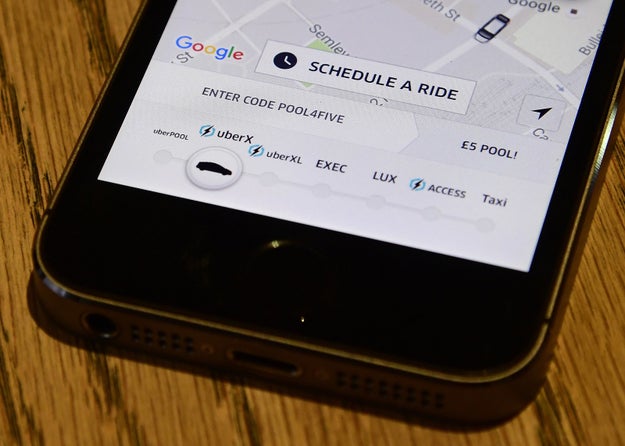
The Justice Department has launched a criminal investigation into Uber’s use of an internal tool to evade law enforcement and regulators, according to Reuters.

The tool, called Greyball and revealed by the New York Times in March, reportedly helped Uber sidestep law enforcement by targeting those users based on their credit card information and other data, and then showing them phantom cars. Uber has since said it has stopped using the tool to evade law enforcement.

The Justice Department did not immediately return a request for comment. An Uber spokesman declined to comment.

Uber used Greyball in Boston, Paris, and Las Vegas, among other cities, and across Australia, China, Italy, and South Korea, according to the New York Times.

“We have started a review of the different ways this technology has been used to date,” Joe Sullivan, Uber’s chief security officer, wrote in a March 8 blog post announcing a review of how Greyball was used. “In addition, we are expressly prohibiting its use to target action by local regulators going forward.”

Uber argued in the same blog post that Greyball was “used for many purposes, for example: the testing of new features by employees; marketing promotions; fraud prevention; to protect our partners from physical harm; and to deter riders using the app in violation of our terms of service.”

News of a DOJ review comes as Uber is grapples with a nasty legal battle with Waymo over allegations that it stole the Alphabet-owned company’s self-driving car trade secrets, and as it continues an investigation into allegations of systemic sexism inside the ride-hail company.

Quelle: <a href="The Justice Department Has Opened A Criminal Investigation Into Uber“>BuzzFeed

Facebook Is Closing Its Oculus Story Studio, Which Produced Virtual Reality Movies

Facebook is closing Oculus Story Studio, an in-house virtual reality content development arm meant to inspire creators to make virtual reality movies by creating its own high-quality VR films.

The company announced the closing today. “After careful consideration, we’ve decided to shift our focus away from internal content creation to support more external production. As part of that shift, we’ll be winding down Story Studio,” Oculus VP of Content Jason Rubin said.

Story Studio debuted with big expectations in January 2015. Facebook staffed it with a number of veterans from state of the art film and animation companies including Pixar and Lucasfilm. The company said these experts would share insights and best practices in an effort to help others learn from their work.

Story Studio's first short, Lost, debuted to rave reviews. “I just saw the first movie from Oculus, and it is the future,” a headline in The Verge read. And the division won an Emmy for its 2016 film, Henry.

Facebook acquired Oculus in 2014 for slightly more than $2 billion. Since then, the company's virtual reality ambitions have run into some speed bumps. In February 2017, Facebook decided to close 200 of its 500 Oculus demo stations in US Best Buy stories, according to Business Insider. And Oculus founder Palmer Lucky left Facebook in March 2017.

At its F8 conference in April, Facebook introduced Spaces, a social virtual reality experience that allows two people to spend time together in virtual reality, using avatars.

Quelle: <a href="Facebook Is Closing Its Oculus Story Studio, Which Produced Virtual Reality Movies“>BuzzFeed

Vegans On YouTube Love Drama. But This Woman Says It’s Gone Too Far.

Vegans On YouTube Love Drama. But This Woman Says It’s Gone Too Far.

In October 2016, Charles Marlowe, aka “Vegan Cheetah,” a popular personality in the strange internet corner of vegan YouTube, went live on his vlog. Two and half hours into his four-hour broadcast, Marlowe decided to sing about a recent alleged Skype call. “I’m sorry that I didn’t want to FaceTime fuck, FaceTime fuck, FaceTime fuck,” he sang while strumming an acoustic guitar.

“Scamartist in my DMs! Trying to see my cock on a Skype call,” the lyrics continued. “You were trying to show me your pussy, but I hung up the phone, because it didn’t really turn me on.”

Prior to this 12-bar serenade, Marlowe gave his viewers some backstory, from his standpoint: Earlier that fall, he claimed, a woman named Anna Scanlon, another vegan YouTuber he refers to as “Anna SCAM-lon,” called him on Skype. (YouTubers moving over to Skype is sort of their version of sliding into DMs.) While drinking a Monster energy drink, vaping, and complaining about his dad vacuuming in the background, Marlowe told his viewers that Scanlon tried to have Skype sex with him, but he hung up before it got intimate.

The Vegan Drama / YouTube

“If I had talked to her a few times and gotten to know her, I might have been down to freak out,” Marlowe said. “On a first Skype call, that’s like having sex on the first date.”

While Marlowe talked, a viewer following the broadcast posted a comment telling him he could have “confirmed if she had a bush.” Marlowe responded, “This is how the Skype call ended,” while mimicking Scanlon lowering the phone to her crotch. “When she did that I hung up,” he said.

As the comments poured in, Marlowe appeared ready to drop the discussion, telling viewers to go to his Tumblr to learn more. But then the plot thickened: Scanlon was online too, and she wanted to join the broadcast as a guest.

“If you have my Skype, call my Skype. I’m on,” Scanlon said to Marlowe after joining his vlog.

“To be honest with you, I’m logged out of Skype. Let’s just talk here, I’d rather do this on guesting,” Marlowe replied.

For the next 25 minutes, Scanlon and Marlowe engaged in a split-screen back-and-forth. The exchange is dizzying and awful. She repeatedly asked him to call her Skype — insisting that if they had Skype sex, as he claims, he would have her number in his Skype log. Marlowe refused, claiming she is associated with hackers and trying to doxx him. “You have nothing. You have nothing. Fuck you. You’re a creep. And you’re lying big time. I want you to show the receipts,” Scanlon said in one of her last attempts to get him to prove that they Skyped.
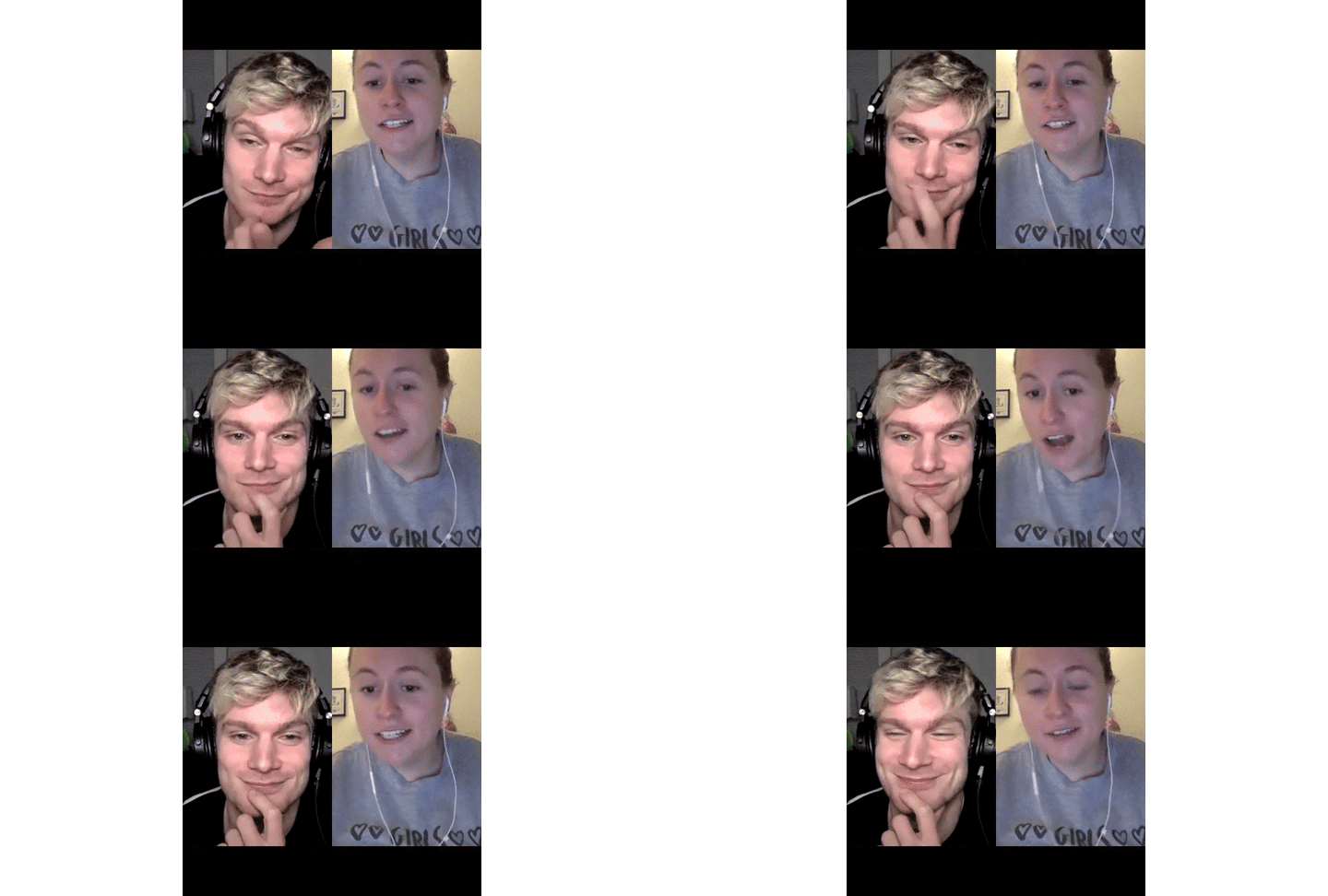
The Vegan Drama / YouTube

“Well, I guess we’ll have to leave it to the viewers. The burden of proof is on you, girl,” Marlowe said before ending Scanlon’s guest appearance.

That was the last time Scanlon and Marlowe spoke. Now, six months later, she has filed a lawsuit against him in Los Angeles County Superior Court alleging libel, defamation, and invasion of privacy. She is seeking $350,000.

It’s an interesting development. Both Marlowe and Scanlon are part of a fast-growing subgenre of YouTubers who have “drama” channels — a popular style of video where users revel in combining some reportage with a lot of gossip and unsubstantiated rumors about fellow content creators. And vegan YouTubers are really, really into it. Which makes the lawsuit a sudden, real-world — so to say — test of what constitutes libel or defamation on such channels.

“You have nothing. Fuck you. You’re a creep. And you’re lying big time.”

In the complaint, Scanlon says that Marlowe “published on his online forum to thousands of people” claims that “she solicited the opportunity for online sexual acts; performed lewd, unsolicited sexual acts online”; and called her “diseased,” a “wannabe academic,” and a “chronic liar.”

“Because [YouTube] is such a free-for-all market — which it’s supposed to be — it’s easier for people to overstep and commit internet libel,” Scanlon’s attorney, Bruce Jaques, told BuzzFeed News. “The world is sorting out how to deal with this phenomenal technology. It’s really a huge question.”

Jaques believes that the case could take at least six months. Some experts believe the only thing that’s certain is that these sort of claims can lead to long court battles.

“Defamation cases, they’re really, really, really difficult to prove,” University of Southern California law professor Michael Overing told BuzzFeed News. “The plaintiff has to prove that the statement was false, and you have been damaged in your reputation — she has to show that somebody shunned her.”

Marlowe and YouTube didn’t return several requests for comment.

To understand how things got to this point, you need to take a step back and understand the uniquely free-wheeling dynamic of vegan YouTubers, who seem prone to more drama than most social media communities. For example, the platform’s most popular vegan personality, Freelee the Banana Girl — the moniker is a reference to her daily ritual of eating 51 bananas — once infamously claimed that obese people got “stuck on the stairway on 9/11 preventing fit people from getting through and surviving.”

Marlowe doesn’t have nearly the reach of someone like Freelee; his channels have approximately 52,000 subscribers, while Freelee, who recently left her original channel but started a new one, has more than 700,000 subscribers. But what he lacks in reach he makes up for with his unique ability to pump out daily videos about the community. (Talking about YouTubers with bigger followings is a good way to game your videos into the coveted recommended videos sidebar. Many believe that YouTube made an algorithm change in December to actually decrease the views of these types of videos, deciding to instead promote videos that start trending on the site.)

“The world is sorting out how to deal with this phenomenal technology. It’s really a huge question.”

Marlowe’s vlogs chronicling the drama in the vegan community usually garner him between 10,000 and 50,000 views per video. Last year, Jezebel posted a story about Marlowe’s recurring series, “The Dumbest Vegan on YouTube,” where he slams other vegan YouTubers.

The videos include gossip such as critiques other video personalities’ diets, exercise regimens, and physical appearances — like another Vegan YouTuber feeding elk meat to his dog. Then there are clips where Marlowe says he is a recovering heroin addict and a convicted felon who has been arrested more than 20 times.

Anna Scanlon told BuzzFeed News she originally joined YouTube in 2014 to fill her free time while she finished up graduate school with making videos about beauty and lifestyle. Then she got very sick — she said her ailments included lupus and interstitial cystitis, a painful bladder condition. Instead of giving up her channel, she shifted its focus in April 2016 to talk about veganism, which she had recently adopted in hopes of improving her health.

At first, Scanlon really enjoyed the camaraderie in the community, made friends with other vegan YouTubers, and said she even watched and liked the Vegan Cheetah’s videos. She said an installment of “The Dumbest Vegan on YouTube” in which Marlowe trashes Freelee for advising young aspiring vegans to call “the authorities” on their parents if they don’t support their veganism was “pretty good.”

Scanlon said that she wasn’t really into the vegan YouTube drama. But her social profiles suggest that she found it impossible to avoid. A few months after she joined the vegan YouTube community, Scanlon says she also joined a closed Facebook group for vegans called the The Nut Milk Crew. Marlowe wasn’t a part of the group, but this is where his feud with Scanlon really begins.

In September 2016, after receiving screenshots of activity in the Facebook group, Marlowe published a video, since taken down but shared with BuzzFeed News, claiming the members were conspiring against him. He showed comments from members discussing his criminal history, including an arrest for breaking into a warehouse and stealing golf clubs to finance his heroin addiction — an incident he himself had not previously discussed on his YouTube channel. He also showed Scanlon commenting negatively about one of his videos, calling her a “psychotic witch.”

After Marlowe published his video outing the Facebook group, other vegan YouTubers lashed out against him and got the video taken down by alleging privacy violations. Scanlon says she filed one of those claims against Marlowe with YouTube — BuzzFeed News asked her for a copy — but she never heard back. She also said she filed a bullying complaint with YouTube about the video of him singing, but never heard back. BuzzFeed News has reached out to YouTube for comment several times about this.

Then, a little more than a month later, Marlowe went live on his vlog with his comments about the alleged Skype sex.

Scanlon told BuzzFeed News that after her guest appearance on the vlog, she received repeated threats and harassment from Marlowe’s audience — including several anti-Semitic remarks. For instance, Scanlon was sent comments and others were posted to her YouTube videos such as “What are you doing on YouTube, you should be preparing to get back in the oven” and “Your family should have died in the Holocaust.”

Meanwhile, Marlowe continued to discuss his claims online. During a guest appearance in February on the vlog of the Vegan Traveler, another vegan YouTuber, the host asked Marlowe if he stood by what he said about Scanlon.

“Why did you say those things about Anna?” Marlowe is asked.

“About what, that she tried to sexually harass me on Skype? Why did I say those things?” Marlowe responded. “Because, she had denounced me in some of the worst ways possible and I thought her viewers should know what she’s really about.”

Vegan Traveler then asked: “So you stand by those comments?”

“I stand by those comments,” Marlowe said.

“I had kind of decided to let it go. Then I heard him say that,” Scanlon said. “Then I googled myself, and I saw that the second result was Anna Scanlon accused of offering sex.”

After this, Scanlon emailed Marlowe a cease-and-desist letter. She asked Marlowe to rescind his comments and delete them to avoid a lawsuit.

“I am in contact with a lawyer who has advised me that in the state of California, I can garnish your wages for 25% until you end pay the entirety of whatever damages the court has ruled fit. If you think this is a joke, I will provide you further evidence,” the letter, which was provided to BuzzFeed News, reads.

But the only response she received from him was being blocked on social media. “It seems he thinks he is not in contempt of the law and would rather play hardball,” Scanlon said in a video.

In early March 2017, she announced that she was starting a crowdfunding campaign to raise money to sue Marlowe. “[Marlowe] made the false claim that I cheated on my partner and exposed myself to him via Skype,” she said in a video about the campaign. “Additionally, he followed me into chats, made fun of my [illnesses], and generally laughed at my hurt and the anguish this caused me.” So far, the campaign has raised more than $11,000 on GoFundMe. With enough to pay half of her attorney’s retainer fee, Scanlon filed the complaint at the end of April.

Scanlon’s attorney said that Marlowe has not been served the legal papers — they didn’t realize his full name is Charles Marlowe-Cremedas, which is not how it’s listed in the original documents — but they expect to serve him by the end of the first week of May.

However, in his videos, Marlowe made it obvious that he knows about the case.

“This only happens on vegan YouTube.”

“You’re not going to intimidate me. I’ll fucking meet every single court date. I’ve already looked into it. I know how to respond immediately once I get served. Try serving me. It’s going to be difficult. I don’t think it’s going to be as easy as you think it is. But try serving me papers,” Marlowe said in a recent video.

“And we’ll just have to see where it goes. Again, I don’t think it’s ever going to see the light of day,” he added, laughing. “You really can’t make this shit up in a book. This only happens on vegan YouTube.”

But Scanlon’s attorney said that he wouldn’t rule out the impact of a retraction from Marlowe, which could “denature the suit.”

“If you post a retraction so that everyone could see it as prominently as you posted the original, there’s a question of payment of attorney’s fees, but usually the case can go away,” Jaques said. The videos where Marlowe sings the song, discussed the Skype sex allegations, and has Scanlon on as a guest are still live, but are “unlisted” — you need to enter the link to see them and can’t search for them.

If Scanlon sees this lawsuit through, she’ll be opening herself up to to a long and invasive legal battle. It “gives the defendant a chance to go through your underwear drawer to see if your reputation was damaged,” Overing, the law professor, said.

So, if Marlowe rescinded his comments, deleted all the videos, and apologized for the whole thing, would Scanlon drop the case?

“I don’t know at this point. It’s already gone too far with the money. We’ve already paid the lawyer,” Scanlon said.

“I mean, I gave him a chance.” ●

Quelle: <a href="Vegans On YouTube Love Drama. But This Woman Says It’s Gone Too Far.“>BuzzFeed

Apple Says It’ll Invest More In US Manufacturing, Just Like Trump Wanted

Via cnbc.com

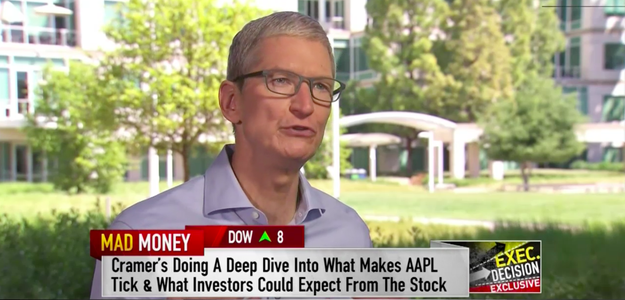
Apple has decided to invest $1 billion in advanced manufacturing in the United States, less than six months after a newly elected President Trump said he planned to use “a very large tax cut” to convince Apple CEO Tim Cook to “build a big plant in the United States.”

The investment doesn’t necessarily mean Cook is building a US plant, or hiring any US employees. For now, all Cook said is that the money will be used to create an “advanced manufacturing fund.” Apple will announce the first company to receive an investment from the fund later this month, Cook said on CNBC Wednesday.

“We're really looking at this thing deeply,” Cook said. “How do we grow our employee base? How do we grow our developer base? And how do we grow manufacturing? You’ll see us bring things to market in all of those areas across this year.”

Though the vast majority of Apple’s hardware products are manufactured in China, Apple estimates that among its retail arm, corporate headquarters, data centers, manufacturing supply chain, and developer opportunities linked to the app store, it’s responsible for over 2,000,000 jobs in the US. The company launched a new job creation landing page this week that breaks those numbers down in detail — for example, the “glass in every iPhone since its launch” is produced at a Corning plant in Harrodsburg, Kentucky, while a Nebraska company called Vishay Intertechnology “provides electrical components for many Apple products.”

Still, with its new investment, Apple joins other tech companies — including Amazon and Infosys — that have announced job creation initiatives since Trump took office.

President Trump specifically called out Apple and Cook both on the campaign trail and in an interview with the New York Times shortly after he was elected. “I got a call from Tim Cook at Apple,” Trump said in late November. “And I said, ‘Tim, you know one of the things that will be a real achievement for me is when I get Apple to build a big plant in the United States, or many big plants in the United States, where instead of going to China, and going to Vietnam, and going to the places that you go to, you’re making your product right here.’”

Apple does manufacture one product in the United States — it assembles Mac Pros at a plant in Austin, Texas through a partnership with Flextronics. Cook announced the opening of the Texas plant in 2012, along with a $100 million investment, close to two years after President Obama asked Apple founder Steve Jobs what it would take to manufacture iPhones in the United States.

At the time, Jobs told the president it would be impossible; and as he predicted, the Texas plant has notably struggled to keep up with demand. Cook said Apple employs a total of 6,000 people in Austin, in positions including engineering, financial services and customer support.

Pushed to comment on his relationship with the Trump administration on CNBC Wednesday, Cook said that while he supported plans for comprehensive tax reform, he remains willing to share his opposition on topics like immigration in hopes of influencing the president’s outlook.

“I think with each administration in every country in the world there are things you disagree and things you agree, and you look to find common ground and look to influence the things you don't,” Cook said. “If you don't show up, I think that's the worst scenario, because then you're quiet. And this doesn't do your cause any good.”

Apple declined to say anything further beyond Cook’s comments.

Quelle: <a href="Apple Says It’ll Invest More In US Manufacturing, Just Like Trump Wanted“>BuzzFeed

This Is Why That Google Doc Spear Phishing Email Tricked So Many People

Francois Lenoir / Reuters

SAN FRANCISCO — Cybersecurity researchers are already speculating that the spear phishing campaign that targeted Google users Wednesday was one of the fastest-spreading attacks of its kind in history, as attackers used methods that bypassed the traditional security measures most people have learned over the years.

Within an hour of it first being reported at 2:30 p.m. EST, media organizations including the BBC, BuzzFeed, TechCrunch, and The Atlantic reported being affected by the spear phishing emails — messages that appear to come from a trusted source but trick users into downloading malware or giving attackers access to their accounts. By Wednesday evening, several government agencies, universities, and NGOs also reported that their employees had fallen victim to the attack.

“It worked so well because it bypassed what people who have a basic knowledge of security know not to do. Even though it is incredibly simplistic, it was very effective,” said Collin Anderson, an independent cybersecurity researcher who is studying the attack. The types of security practices most people are taught — like being wary of entering a password on a separate password screen, or enabling two-factor authentication, which requires providing multiple, separate forms of authentication to gain access to an account — would have done nothing to prevent Wednesday’s spear phishing campaign.

The campaign targeted Google users by sending an email with a link to what appeared to be a Google document coming from someone they knew. As long as the users were logged into Google, clicking on the link gave the attackers access to the entire email account, including the users’ contact list.

“It appeared almost wormlike in its behavior. Clicking the link was enough to send the email to everyone on a user’s contact list, which just spread the campaign further,” said Cooper Quintin, a security researcher at the Electronic Frontier Foundation, a nonprofit digital rights group.

For the average user, receiving an email with a link to a Google doc that seemed to come from someone they knew was already enough to get them to click. What made the attack even more nefarious, however, was that the link itself appeared perfectly legitimate. The attackers created an app within Google itself called Google Doc, so that it appeared users were just clicking on the ubiquitous app, one used by organizations across the world. Instead, the attackers were asking users to give them access to their entire contact list, as well as the ability to send, receive, and delete emails.

“Other than its wormlike behavior, it’s still unclear what the actual goal of this campaign was,” said Quintin, who added that the campaign was almost “too successful.” So many people clicked on the link, and it so quickly affected people within their address books, that people began tweeting and sharing the viral Google Doc emails within minutes. “It was so successful it probably got shut down way quicker than the attacker had hoped.”

Discovering who was behind the attacks is difficult. The emails appeared to come from the email account hhhhhhhhhhhhhhhh@mailinator[.]com; Mailinator is a public, disposable email service. Paul Tyma, one of the founders of Mailinator, told BuzzFeed News that Mailinator likely provided a “dumping ground” for their attack, but that they did not read any email in the account as the inbox was entirely overwhelmed.

“We saw tens of thousands of emails come into that inbox and promptly shut it off. Mailinator inboxes only hold 50 emails at once anyway, so emails were overwriting each other at a high rate,” Tyma wrote BuzzFeed News in an email. A search through the Google app store shows that the fake Google Doc app was created by an email account named Eugune.Popov@gmail.com. As of Wednesday afternoon, the email account did not appear to be working.

Anderson said that at least some of the problem lay with Google.

“Google allowed for their company name to be misappropriated to trick people in this case,” said Anderson.

A spokesperson for Google said in a statement that the company has disabled the accounts where the hack originated.

“We’ve pushed updates through Safe Browsing, and our abuse team is working to prevent this kind of spoofing from happening again. We encourage users to report phishing emails in Gmail,” the statement read. Google did not comment on who was behind the attack or how many people were affected.

By Wednesday afternoon it appeared that the link used by the attackers could no longer be accessed and was no longer affecting new users. However, the method used by the attackers could be replicated.

The cybersecurity firm Trend Micro noted that it's not the first time this type of spear phishing campaign has been used. The group of Russian hackers known as Fancy Bear, who have used spear phishing emails to try to meddle in the US and European elections, used a similar method according to a Trend Micro report.

The attacks worked by sending out an email to Google users that encouraged them to install a security application called “Google Defender.” Once a user clicked “allow,” they were effectively handing over what is known as OAuth protocol, which was designed by Google to allow third-party applications access to internet accounts through the use of tokens. While Google developed the protocol for convenience — there are many trusted apps that use OAuth responsibly — it appears it is now being leveraged by attackers as well.

In a blog post on Talos Security, a security intelligence and research group, cybersecurity researchers wrote that, “Because of the success of this attack, we are likely going to see phishing attacks of this nature for the foreseeable future.”

Quelle: <a href="This Is Why That Google Doc Spear Phishing Email Tricked So Many People“>BuzzFeed

Facebook's Plan To Bring Millions Of Indians Online Is Dead Simple: Thousands Of Hotspots

Facebook

Facebook’s plan to bring millions of Indians online won’t involve solar-powered drones, or crazy balloons, or controversial programs like Internet.org. Instead, it involves hotspots. Thousands and thousands of plain old hotspots.

On Friday, the company announced that it is rolling out 700 WiFi hotspots in four of India’s 29 states — Uttarakhand, Gujarat, Rajasthan, and Meghalaya — followed by 20,000 more in the next few months across the rest of the country in partnership with Indian carrier Airtel.

Unlike the company’s Internet.org program that allowed Indians to access Facebook-approved websites for free — and which was shut down by regulators for violating net neutrality — Facebook’s new plan called Express WiFi, isn’t gratis. Instead, Facebook has partnered with over 500 local retailers, and other commercial establishments in the four states to make these hotspots available to users at affordable prices.

These partners will be able to set their own prices and data packs for Express WiFi, a Facebook spokesperson told BuzzFeed News.

Typical plans, according to Facebook, start out at Rs. 10 for 100 MB of data (about 15 cents) and go up to Rs 300 for 20 GB of data a day (about $5).

“Express Wi-Fi is designed to complement mobile data offerings by providing a low-cost, high bandwidth alternative for getting online and access apps, download and stream content,” said Munish Seth, Facebook’s Head of Connectivity Solutions for Asia Pacific in a statement, but Facebook did not comment on BuzzFeed News’ questions about the speed at which users will be able to access the internet using these hotspots.

Facebook has been testing Express WiFi in India since 2015. It’s the company’s fastest growing market and arguably its most important — 184 million of Facebook’s nearly 2 billion users are from India, and over 200 million Indians use WhatsApp, Facebook’s instant messaging service.

Facebook’s Express WiFi program is similar to what Google has been doing in India for some time now. By the end of 2016, Google installed free, high-speed WiFi at 100 Indian railway stations, and is now expanding the program into cafes, museums, restaurants and more Wi-Fi starved locations across the country.

Quelle: <a href="Facebook's Plan To Bring Millions Of Indians Online Is Dead Simple: Thousands Of Hotspots“>BuzzFeed

Facebook’s New Anti-Violence Plan Will Sometimes Leave Up Disturbing Videos To Help Authorities

Justin Sullivan / Getty Images

Facebook is adding 3,000 workers to fight violence on its platform, and their mandate isn’t simply to remove violent content.

Facebook may not immediately remove all violent live videos, Facebook CEO Mark Zuckerberg said during his company’s first quarter earnings call Wednesday. The company will also work with law enforcement to prevent violence, he said, even if it means risking airing the footage.

“A lot of what we’re trying to do is not just about taking the content down, but also about helping people when they’re in need on the platform,” Zuckerberg said.

Law enforcement recently prevented someone from killing themselves after Facebook alerted them to a suicidal broadcast, Zuckerberg said. In that case, authorities communicated with the person through the live video itself, and prevented them from going through with the act. For Facebook, a social giant of 1.94 billion users, using its power to simply remove violent content is not enough. It wants to prevent the violence itself.

Facebook’s 3,000 new content moderators, combined with the 4,500 moderators it already has, won’t be fighting violence alone. They will be enlisting Facebook’s artificial intelligence as well. Zuckerberg noted that even with 7,500 people scanning Facebook’s posts for possible violence, “we’ll never be able to look at everything.” Artificial intelligence, he suggested, could fill in the gap, though its presence may not be felt for years.

“Right now there are certain things that AI can do in terms of understanding text and understanding what’s in a photo and what’s in a video,” Zuckerberg said, noting that the technology was likely years away from working effectively. “Over time, for sure, more AI will do this.”

AI, in many cases, is still far from the romanticized treatment it gets in the press and in film. “This is still very far from where we want it to be,” Facebook’s head of AI research Yann LeCun told BuzzFeed News in a recent interview.

The highly-publicized violence on Facebook Live did little to scare Facebook’s advertising customers away in the first quarter of 2017. The company brought in more than $8 billion in revenue, up from $5.3 billion in the same quarter last year.

Quelle: <a href="Facebook’s New Anti-Violence Plan Will Sometimes Leave Up Disturbing Videos To Help Authorities“>BuzzFeed

Here Are The Funniest Tweets About The Google Docs Scam

Today, a massive, fake Google Docs phishing scheme spread across the internet.

Giphy

The attack worked by sending people emails that imitated how Google emails look when people share real Google Documents with each other. But in this case, the links were from a replica of Google Docs — and if you clicked on them and granted the app permission to access your account, the attack then spammed everyone on your contact list with requests to share more fake Google Docs.

If you've already clicked on a spam link, go to your Google account permissions and revoke access for “Google Docs.” The real Google Docs doesn't appear individually in that permissions list since it's part of Google Drive, so you won't be interfering with any of your real work.

After the initial panic subsided, people came up with some jokes.

If this kind of email hack sounds familiar, may I present to you several jokes at the Democratic National Committee's expense:

And if you've seen that one episode of Black Mirror, this tweet has you shook:

No one's yet claimed responsibility for the hack, but at the end of the day, it's obvious who's really behind it.

Quelle: <a href="Here Are The Funniest Tweets About The Google Docs Scam“>BuzzFeed

Google Technology Is Helping Exterminators Kill Bugs Faster

Sergeytoronto / Getty Images

Imagine opening your favorite breakfast cereal, only to find half a dozen feasting weevils inside the box. Panicked, you call an exterminator — but what if instead of a dime-store Ghostbuster, the person that shows up at your house is a smartphone-wielding, AI-using, Google-powered, bug-destroying 21st century pest technician?

If you live in the general vicinity of Reading, PA, that scenario could become a reality sooner than you might think.

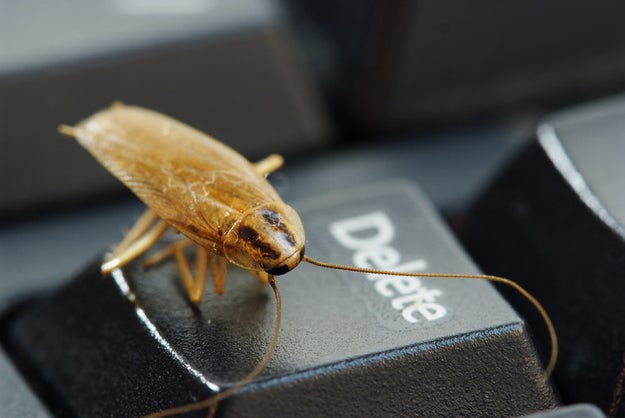
Using an app called PestID, exterminators who are part of the pilot program can take photos of bugs, upload them, and — using Google’s Vision API — instantly get information about what kind of insect it is and how to kill it.

Google’s Vision API tells you in words what an image depicts. PestID is trained on proprietary visual data owned by an extermination company called Rentokil, which is currently testing the technology in the field in Pennsylvania. The app, which is the result of a partnership between Google and Accenture, uses machine learning to constantly improve its accuracy.

“If I took a picture of a confused flour beetle, Google’s out of the box capability would be able to tell me it was a beetle,” said Nisha Sharma, an Accenture Mobility executive who worked on PestID. “But with Rentokil, it can actually tell you it’s a confused flour beetle.”

Pest extermination doesn’t exactly scream out as the obvious first workplace use case for advanced artificial intelligence. But apparently, it’s not as easy as you’d think. While most exterminators have plenty of experience and most extermination jobs are fairly routine, says Rentokil’s Keith Chisolm, a hard to recognize pest can really slow a pest technician down.

“If you do come across something that's particularly unusual, what would typically happen is they'd get in touch with a more experienced technician, or ask one of the support team to come and meet them on site,” he said. “ [PestID] helps them to deal with it themselves, and not have to lean on technical teams.”

Chisolm, who first had the idea of using AI to identify bugs when he saw that Facebook was automatically identifying people in photos, said exterminators who have used the app are blown away by how quickly it can identify a bug.

PestID can help Rentokil technicians with the more banal parts of pest extermination, too, like prompting the technician with the right treatment, and auto-populating paperwork; it can even use GPS to guess whether the pests are located inside or outside a facility. “There's a lot of stuff that these guys have to do manually,” said Accenture’s Sharma. “Using this app, we can automate it, and make it quicker.”

Employing faster technicians who can do more jobs in a single day is obviously attractive to a company like Rentokil, but it’s not the only perk of partnering with Accenture and Google. While the big companies own the underlying technology, Rentokil owns the database, which means as the system continues to learn about new bugs, Rentokil will own the most accurate and easy-to-use pest identification system on the market, which it can market directly to consumers.

“If you found an insect in your house, in the larder, munching away on your cereals, and you wanted to know, What is it? Do I need to be worried? What do I do about it? You could use the Rentokil app to identify the pest, we could give you advice, link you to a local pest controller, who could come and help you with that problem,” said Chisolm.

Even in a world where homeowners and companies pay for an app that identifies pests, Chisolm says a professional would still have to come by and actually kill the things. And that may be true, for now — but pest-killing drones and termite-destroying robots already exist.

“Could you replace that with a robot?” Chisolm asked. “I guess you could.”

Quelle: <a href="Google Technology Is Helping Exterminators Kill Bugs Faster“>BuzzFeed