People Broke Into My Starbucks App And Charged Me $100

The timing was perfect on this one.

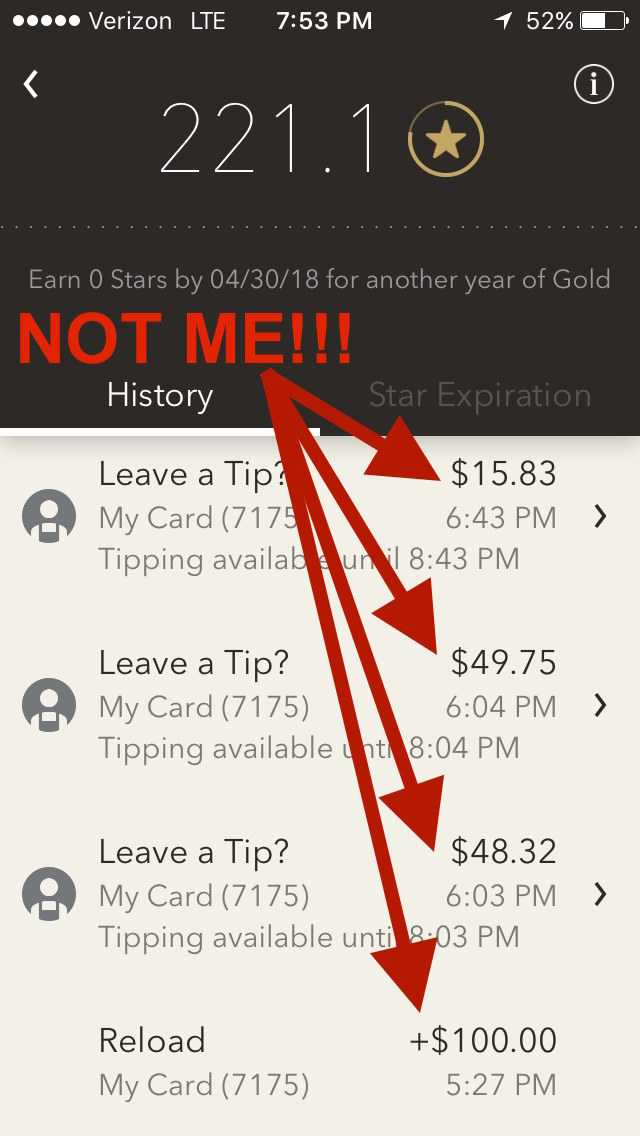
Last week, just as I finished writing a story about “unauthorized activity” on Chipotle's payment system, I received an email alert from Starbucks. It contained a receipt for reloading $100 onto my Starbucks mobile app, using my saved credit card.

The problem, of course, was I had nothing to do with that transaction. By the time I opened the app to see what was going on, the fraudster had already made three purchases at a Starbucks in San Diego: one for $48.32, one for $49.75, and another for $15.83.

By the time I was on the phone with customer service, my account had been completely emptied.

This is not a new thing — it's called an account takeover, and it's a long-running problem in the Starbucks app. In 2015, customers of the coffee chain reported having their accounts reloaded using their stored credit cards and then emptied, possibly onto gift cards that the scammers then sold at a discount on the black market.

At the time, the company said because many consumers reuse usernames and passwords on multiple sites and apps, criminals were obtaining stolen logins from hacked websites, and trying them out in the Starbucks app.

“We have a team of engineers dedicated to advancing our security and fraud prevention capabilities,” the company said in a statement at the time.

But two years later, the Starbucks app still seems vulnerable to exactly the same weakness. Despite the app being linked to people's credit cards, and capable of charging money to them at will, the company confirmed to BuzzFeed News that it does not support two-factor authentication — a widespread security measure that typically involves the user being sent a code via text message or email when attempting to log in from a new device.

It's a notable weakness, given that mobile payment now represents about 25% of all Starbucks transactions. For a chain that brought in $13.2 billion in sales in fiscal 2016 just through company-operated stores in the US, Canada, and Latin America, that means billions of dollars flowing through the app.

“Relying on usernames and passwords is a failure because no matter what you do, there will always be some percentage of users, probably double digits, who will use a password that they used somewhere else,” said journalist Brian Krebs, author of KrebsOnSecurity.

“I was surprised that in two years, Starbucks hasn’t gotten more aggressive,” said Rob LaMear, CEO of US Cyber Vault. LaMear said his and his wife's Starbucks accounts were both recently compromised. With a global brand, there's “a lot of volume at play here.”

A Starbucks spokesperson said in an email to BuzzFeed News “while account takeover (ATO) activity is an industry wide challenge, we see only a tiny fraction of one percent of our account holders impacted.”

Meanwhile, a slow trickle of complaints from Starbucks customers continues to emerge on social media.

Like many other big restaurant chains launching their own ordering and payment apps, mobile is a critical part of Starbucks' growth plan. While repeat customers are big fans of the convenience of these apps, the companies also benefit from the reams of highly-detailed data they collect on customer habits.

How serious is Starbucks about getting digital right? It's newly-appointed CEO, Kevin Johnson, was previously the CEO of tech company Juniper Networks, and was a senior executive at Microsoft before that. Last month, Johnson singled out “digital relationships with customers” as one of the company's “most important things for the future.”

Asked about rolling out two-factor authentication, Starbucks said, “While we do not share specifics on future security protocol timelines or practices, our security and anti-fraud teams actively continue to develop, and invest in, enhanced protection measures, further strengthening our platforms.”

Starbucks customer service said they would cancel the $100 charge with my credit card company and refund the balance that was on my account before it was compromised. The representative had me change my password while I was still on the phone with her.

Was your Starbucks account compromised? To contact the reporter on this story, email venessa.wong@buzzfeed.com, or go to tips.buzzfeed.com to learn how send your tip securely.

Chipotle Says Its Payment System May Have Been Hacked

Quelle: <a href="People Broke Into My Starbucks App And Charged Me 0“>BuzzFeed

If You Just Got An Unexpected Google Doc, Don’t Open It

Have you gotten an email today (or perhaps several), saying that someone from your contacts list shared a Google document with you? Think twice before opening it or clicking the link to access the doc.

A number of people have been victim of an apparent phishing attempt (where hackers try to get you to click on sketchy links) by an unknown organization starting around 11:30 am PT today.

At least some of the emails are addressed to “hhhhhhhhhhhhhhhh@mailinator.com” and appear to place the intended target in the BCC field. The subject line reads “[someone in your contacts] just shared a Google Doc with you,” imitating the way Google emails appear when people share Google Documents with one another.

If you click on the fraudulent link within the email, it will take you to a real Google page asking for widespread permissions across your Google accounts, which, if granted (don't) would give the attackers access to a vast amount of personal data. For now, it doesn't seem like the hack can access this information unless you give it permission; however, if you open the link, it does seem to forward the email to everyone on your contact list.

The attack hit a number an unknown number of employees within BuzzFeed and seems to also target people outside of the organization, including school districts.

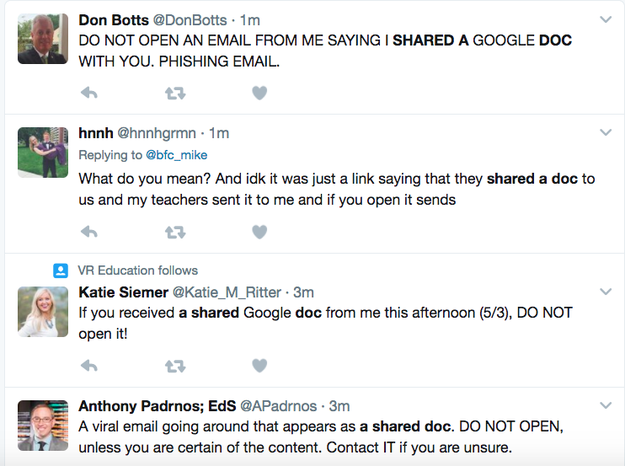
If you search “shared a doc” on Twitter, the results keep piling up.

Here's what to do if you did click the link to the suspicious Google Doc:

  • Go to the google security checkup and go through the checklist.
  • Pay close attention to the Account Permissions section. Check for anything that looks suspicious and revoke access.

Google did not immediately respond to requests for comment.

Quelle: <a href="If You Just Got An Unexpected Google Doc, Don’t Open It“>BuzzFeed

Waymo Alleges Ex-Employee And Uber Created A Cover-Up Company To Steal Its Self-Driving Tech

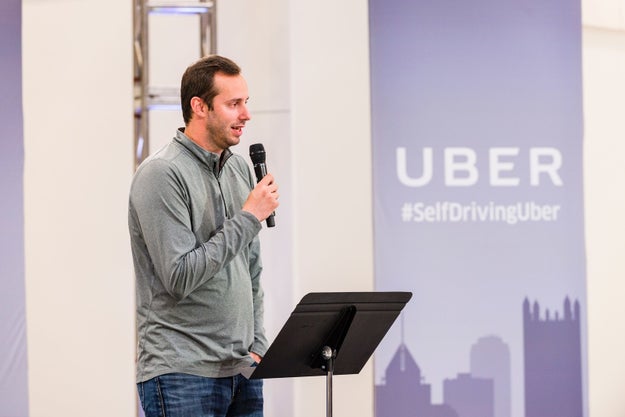
Anthony Levandowski, Otto Co-founder and VP of Engineering at Uber

Afp / AFP / Getty Images

In a court hearing on Wednesday, Waymo's lawyers alleged that Anthony Levandowski – its former employee who is at the center of its contentious lawsuit against Uber – started his self-driving truck company Otto as a ruse so Uber could acquire it and steal proprietary information about Google's self-driving car program.

“We've learned that Uber and Levandowski together created a cover-up scheme for what they were doing,” Charles Verhoeven, a lawyer for Waymo, said. “They concocted a story for public consumption. The story was that Mr. Levandowski left Waymo for his own company.”

Waymo's lawyers pointed to a stock agreement that gave Levandowski more than $5 million shares of vesting stock – an amount Waymo's lawyers said was worth about $250 million – on January 28, 2016, the day after Levandowski left Google.

According to state records, Levandowski’s company Ottomotto LLC was incorporated in Delaware on January 15, 2016. Uber acquired Otto and appointed Levandowski as head of its self-driving car program a few months later, in July 2016.

Uber told reporters outside the courtroom that the stock was granted at the time of the acquisition but the vesting was back-dated to account for Levandowski's time at Otto. The ride-hail giant's lawyers didn't address the vesting agreement in court.

The lawyers also pointed to emails sent in January by Brian McClendon, Uber's former vice president of maps who left the company earlier this year, that referenced a meeting with “Anthony,” presumed to be Levandowski.

The hearing on Wednesday is centering around whether US District Judge William Alsup should grant Waymo's request for an injunction to halt Uber's self-driving program pending a trial.

The lawsuit centers around laser technology called LiDAR (Light Detection And Ranging), which helps self-driving cars see and navigate. Uber says its own technology is “fundamentally different” from Waymo’s designs. Waymo alleges Levandowski downloaded 14,000 company files before leaving the company to start Otto.

This is a developing news story. Check back for updates.

Quelle: <a href="Waymo Alleges Ex-Employee And Uber Created A Cover-Up Company To Steal Its Self-Driving Tech“>BuzzFeed

Facebook Will Hire 3,000 People To Monitor Videos For Violence

Justin Sullivan / Getty Images

Following a series of violent videos uploaded or streamed to the social network, Facebook announced Wednesday it will hire an additional 3,000 workers to its community operations team in an effort to respond to and remove such media faster.

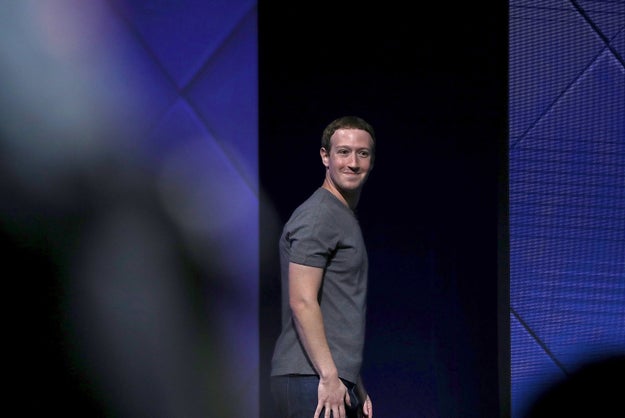
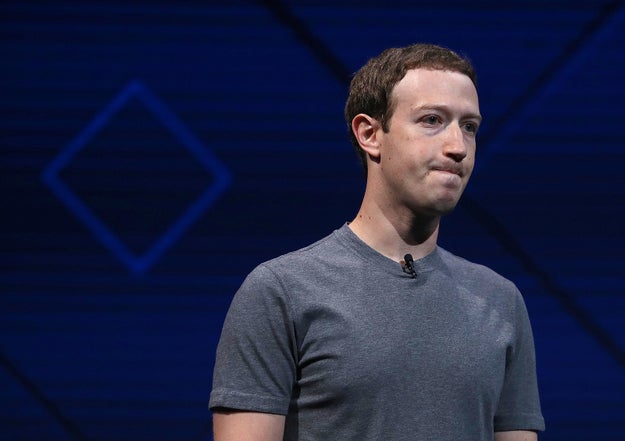
CEO Mark Zuckerberg announced the move in a Facebook post Wednesday morning.

“Over the last few weeks, we've seen people hurting themselves and others on Facebook — either live or in video posted later. It's heartbreaking, and I've been reflecting on how we can do better for our community,” Zuckerberg wrote.

“If we're going to build a safe community, we need to respond quickly. We're working to make these videos easier to report so we can take the right action sooner — whether that's responding quickly when someone needs help or taking a post down,” he wrote.

The new hires will try to address a problem that has plagued the social giant of late: violence either being streamed over Facebook Live or uploaded after being recorded. In only the past month, a man in Thailand livestreamed the murder of his infant daughter, an Alabama man livestreamed his suicide, an Ohio man uploaded a video of a murder he had committed, and teenagers in Tennessee recorded a shooting.

Facebook, which has pushed its Facebook Live service hard over the past year, has faced criticism for not doing more to notice and remove such content faster.

In his post, Zuckerberg said the community operations team already comprised 4,500 people, who review millions of reports about potentially offensive content a week. (As of December 31, 2016, the company employed 17,048 people.)

Read the post here:

View Video ›

Facebook: zuck

This is a developing news story. Check back for updates or follow BuzzFeed News on Twitter.

Quelle: <a href="Facebook Will Hire 3,000 People To Monitor Videos For Violence“>BuzzFeed

Google’s Getting Students Into US History With VR — And Free Hamilton Tickets

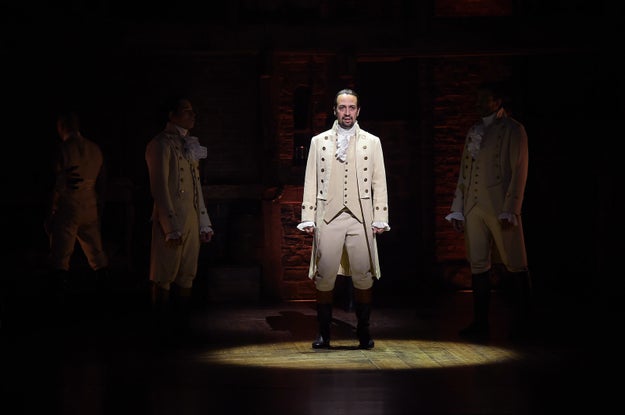
Lin-Manuel Miranda performs on stage during 'Hamilton' GRAMMY performance on February 15, 2016 in New York City.

Theo Wargo / Getty Images

Getting tickets to see the smash-hit musical Hamilton: An American Musical by Lin-Manuel Miranda will cost you. But last week, a Google-partnered school program called #EduHam gave thousands of students from low-income high schools in the Bay Area, Chicago, and New York a chance to see the show for free, and debut their own performances.

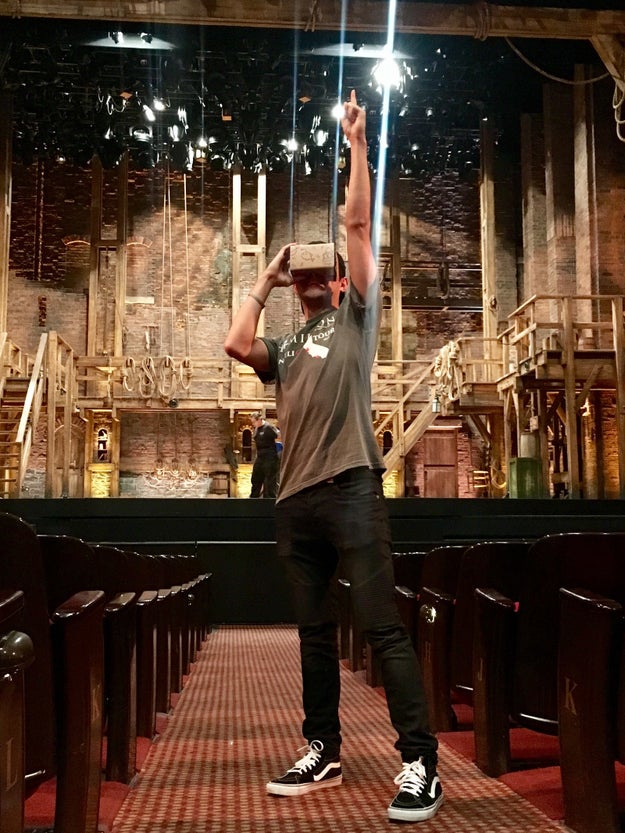
Google.org, which contributed an $800,000 grant to #EduHam to purchase tickets to the musical for students, also added a new twist to the educational program: virtual reality tours of Alexander Hamilton's life via its Google Cardboard Expeditions program.

The six-week #EduHam course brings American Revolution-themed studies to life as a part of students' regular history classes using curriculum developed by The Gilder Lehrman Institute of American History. Google's VR component draws primary source images from Gilder Lehrman's archives and Google Street View. The program culminates in students' writing and performing a history-inspired monologue, sometimes on the same stage as Hamilton performers, as was the case at San Francisco's Orpheum Theater. Then they get to attend a performance of the musical itself.

Destiny Freidin, a junior at San Leandro High School, was chosen from more than 300 members of her grade to perform on the Orpheum stage. Her performance as Sally Hemings (not a character in in the musical, but a historically important figure nonetheless) drew deafening cheers from a 2,000-person crowd made up of students from 14 Bay Area schools.

Freidin said she had learned a great deal about both history and stage presence from #EduHam. She had never heard of Sally Hemings before reading about her in class. And her previous audiences for school plays and musicals, she said, had been “max 300 people, and I knew most of them.” Ruben Cabral, the actor who plays Hamilton's friend John Laurens and Hamilton's son Philip in the San Francisco cast, said that Freidin's performance as Hemings was “killer.”

#EduHam, which offers reduced price or free admission to Hamilton performances, began with 20,000 public school students in New York City. Google's grant provided funds for 5,000 students to attend the show in San Francisco, Chicago, and New York City.

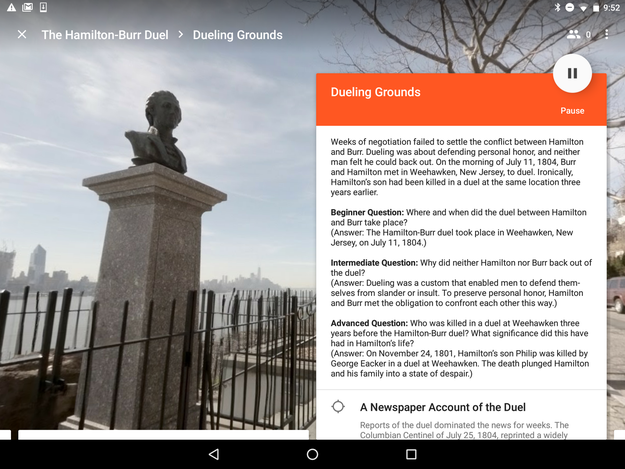
Gilder Lehrman and Google collaborated to create lesson plans and six 360-degree tours of important places in Alexander Hamilton's life: battlegrounds from the American Revolutionary War, the buildings in Philadelphia where debates over the US Constitution took place, the New York offices where Hamilton established the national bank, George Washington's White House, Hamilton's own house, and the dueling grounds where Aaron Burr mortally wounded Hamilton.

Students can access the tours with the lightweight Google Cardboard virtual reality goggles, which Google.org also distributed to all the schools that saw the show Wednesday. Within each simulation, students read information cards about Hamilton's life and pull up primary source documents like paintings and maps. Google is also putting a number of primary source documents, including Hamilton's letters and scans of his belongings, online at Google Arts and Culture.

Ruben Cabral, who plays John Laurens and Philip Hamilton in the San Francisco production of the musical.

Blake Montgomery

Suzanna Bobadilla, a member of Google's social impact division, praised how VR promotes engagement while students are learning: “Much like hip-hop modernizes Hamilton, I think virtual reality makes the history much more contemporary, more relatable to students.” She said in workshops she's led with students, she's compared discussions in public forums — one of the main ways to get information in 1776 — to conversations on Twitter over a trending hashtag, a metaphor that she said makes students laugh.

But is VR cool enough to win over skeptical high schoolers? Students in the audience were chattering about how the virtual sites, particularly the dueling grounds, had made them more excited about studying the subject. Cabral said he heard multiple times from the student performers that history had become their favorite class as a result of the program.

Three students from Aspire Golden State in Oakland, Alejandro Briseno, Arturo Cuevas, and Jose Fonseca, who used VR for the first time in class in the #EduHam program, said that the content in Expeditions wasn't as interesting as watching people perform live. But still, they said that their teacher had made the virtual lessons interesting by guiding their class through the digital spaces.

Cuevas, Fonseca and Briseno also performed a spoken word piece about John Adams at the Orpheum. “One thing we did learn for sure is that it takes a lot of nerve to perform. Our legs were shaking onstage.”

Quelle: <a href="Google’s Getting Students Into US History With VR — And Free Hamilton Tickets“>BuzzFeed

YouTube Wants You To Test Drive Its Redesign

YouTube is working on a redesign of its desktop site, and it's looking for feedback to help shape its new look. This morning, the company announced a design preview of the new site and invited the YouTube community to test it.

According to a YouTube spokesperson, the redesign is intended to declutter the site of the visuals that can sometimes distract from the video viewing experience, and to enable faster feature updates. Among the first of such updates is a Dark Theme that turns YouTube's typically white background black.

YouTube said in a statement that it wants the redesign to adhere to three main principles: “simplicity, consistency, and beauty.” YouTube has also rebuilt the site's backend with a framework called Polymer that it says will allow for faster feature updates.

“It's a clean, fresh look that makes the content shine,” the spokesperson told BuzzFeed News.

The changes are subtle for now. Here's YouTube's homepage before:

And here's the homepage redesigned.

The thumbnail images for videos are slightly wider, and instead of two rows of recommended videos, you see one row of recommended videos and one row of videos from a creator's channel that you subscribe to. And the old grey columns on either side of the page have been removed to make the page simpler.

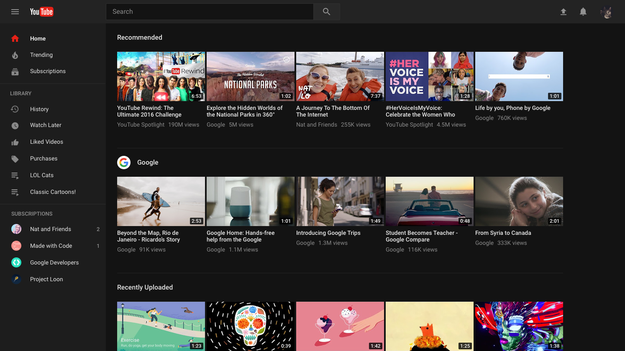
And here's the new “Dark Theme.”

It's designed to cut down on glare and to make it easier to watch YouTube at night on your brightly lit devices.

Dark Theme is similar to Twitter's Night Mode:

YouTube said Dark Theme was the most-requested feature from YouTube users. Now you won't have to sear your eyeballs when you stay up past your bedtime to watch cat videos.

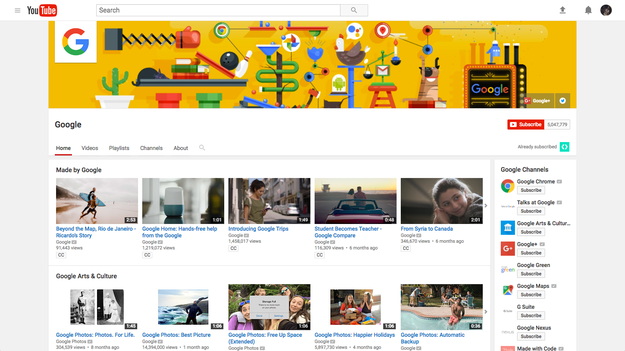
Channel pages are also getting a small facelift. Here's what they looked like before:

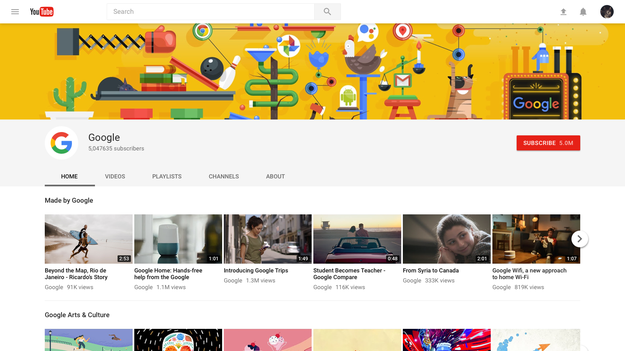
And after:

The tab on the right side of the screen that formerly recommended similar channels has disappeared, and the hero image at the top of the page now splashes across the entire page. The grey borders have been removed as well.

A YouTube spokesperson said of the expanded image, “It allows the creators to express themselves even more and show their audience who they are.”

You can opt into the trial at youtube.com/new. If you don't like it, you can return to the current design by selecting ‘Restore classic YouTube’ from the Account Menu, where you can also leave comments. YouTube said it will cap the number of people participating in the trial “when we reach enough users and feedback,” though it wouldn't specify how many people that was.

Quelle: <a href="YouTube Wants You To Test Drive Its Redesign“>BuzzFeed

Microsoft Announces The Surface Laptop, A Chromebook Competitor

Microsoft Announces The Surface Laptop, A Chromebook Competitor

Microsoft

Microsoft announced a new lightweight laptop that runs a new version of Windows 10 customized for less powerful computers today at a press conference in New York City.

Called the Surface Laptop, the device will run the new OS, called Windows 10S, a stripped-down iteration of Windows 10 that only runs Windows Store apps. The Surface Laptop and Windows 10S are geared towards the education market, where they will go head to head against Google's Chrome OS and a passel of affordable Chromebooks, which have proven remarkably popular for educators and students.

Microsoft

Boasting a battery life of more than 14 hours, the 2.76 pound Surface Laptop will also come with a touchscreen.

At $999, the device will cost significantly more than many of its Chromebook competitors.

youtube.com

Quelle: <a href="Microsoft Announces The Surface Laptop, A Chromebook Competitor“>BuzzFeed

Airbnb Just Settled Its Lawsuit Against San Francisco

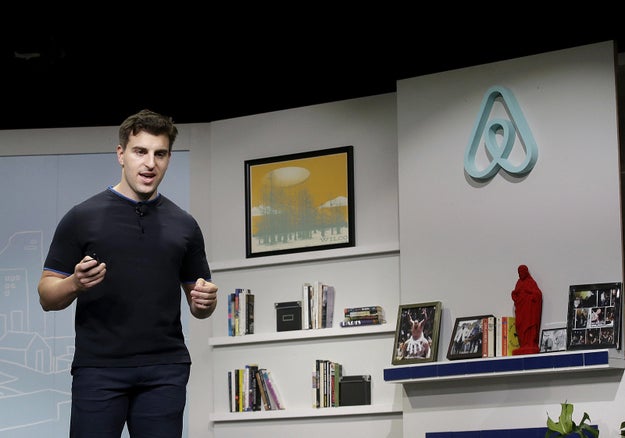
Airbnb co-founder and CEO Brian Chesky speaks during an event in San Francisco in 2016.

Jeff Chiu / AP

Airbnb agreed to settle its lawsuit against the City of San Francisco today.

As part of the settlement, Airbnb agreed to remove hosts from its platform if they fail to register with the city, and to require new hosts to have a city-issued registration number if they want to sign up to rent out their home.

Airbnb sued the city of San Francisco last June after the city council passed a law that would fine Airbnb $1,000 for each unregistered host, which essentially made hosts' failure to register the company's problem. Now, as part of the settlement, Airbnb will also begin redesigning the host on-boarding process in San Francisco so that new hosts will automatically be registered with the city when they sign up on the app.

“We believe a streamlined registration process should be available for all hosts,” said Airbnb global head of policy Chris Lehane during a Monday press conference. “Under the agreement, hosts can register their short-term rental with the city, get a business license and pay the [registration] fee all through Airbnb.” Previously, Airbnb hosts had to go to city hall in person to register and pay the city's $250 fee.

The new system, known as pass-through registration, will launch in early 2018, Lehane said. Airbnb has a four month deadline to ensure all new hosts are registered with the city, and eight months to boot existing hosts who don't comply.

“Enforcement with real teeth will begin in short order,” said San Francisco City Attorney Dennis Herrera during a separate press conference Monday.

The city wants hosts to register in order to ensure that housing stock reserved for low-income residents isn't being rented out short term on Airbnb.

At the city's press conference, former Supervisor David Campos — a longtime affordable housing advocate and Airbnb antagonist — said that the settlement, which comes three years after he first authored legislation to regulate Airbnb, came with “a sense of vindication.”

Both San Francisco Mayor Ed Lee and the San Francisco Board of Supervisors have to give the agreement their seal of approval before it's official. In an emailed statement, Mayor Lee said he's “pleased” with the terms of the settlement. “Requiring the registration of short-term rentals will allow us to effectively identify the bad actors who manipulate the process and deprive the City of much-needed rental units,” the statement reads.

San Francisco city attorney Dennis Herrera said that, out of the 8,000 properties currently listed on Airbnb in San Francisco, only 2,100 hosts have registered with the city. That means there are thousands of hosts who have eight months to register with San Francisco, or quit the platform.

Lehane said Monday that, based on Airbnb's efforts to register its hosts in Chicago and New Orleans, he's confident the company will continue “sustainable growth” under the agreement. But when pressed for details, Lehane couldn't say how many hosts Airbnb has lost in those markets since mandatory registration began.

San Francisco is not the only city Airbnb has sued; the list includes Miami, Anaheim, Santa Monica, and New York City, where a new bill aimed at creating more lenient Airbnb regulations was recently introduced.

Quelle: <a href="Airbnb Just Settled Its Lawsuit Against San Francisco“>BuzzFeed

Lyme Patients Are Bending The Old Rules Of Scientific Research, To The Dismay Of Some Scientists

Lyme Patients Are Bending The Old Rules Of Scientific Research, To The Dismay Of Some Scientists

Bertrand Guay / AFP / Getty Images

In late 2015, Lorraine Johnson was frustrated with what she felt was the slow progress of research on Lyme disease, the tick-borne rash that strikes thousands of Americans every year, in apparently increasing numbers. So as the head of LymeDisease.org, a leading advocacy group, she launched her own study: MyLymeData.org.

The site has since surveyed 7,000 people, Johnson reported this month at a conference in the San Francisco Bay Area. The site calls itself “the first national large-scale study of chronic Lyme disease.”

It’s one of the newest large online registries built by patients with rare or understudied conditions. Feeling ignored by academics and Big Pharma, they turn to the internet, where they can pool the collective wisdom of people who might otherwise never enroll in a clinical trial.

Scientists are increasingly relying on apps and websites like this one to conduct research. But as this approach becomes more popular, researchers have questions about its inherent lack of rigor and standardization.

Online surveys typically don’t require proof of a diagnosis, and self-diagnosis is often tricky. For example, the varied symptoms of Lyme disease — arthritis, fever, headaches, shooting pain, and memory problems, among others — crop up in many other conditions, making it difficult to identify conclusively, even for doctors. It’s also tough to keep people engaged in a study when they’re scattered across the country.

“The ability to get big data on large numbers of people fairly easily, that’s a strength,” said Dr. John Aucott, director of the Lyme Disease Clinical Research Center at Johns Hopkins University, who is not involved with MyLymeData. “The advantage is you’re getting patient symptoms — but the disadvantage is you don’t truly know they’re due to Lyme disease.”

Despite these potential issues, self-reported patient data could soon help pharma companies bring drugs to market faster. Under the 21st Century Cures Act, passed in December, companies applying for certain kinds of FDA drug approvals can submit data about how patients are reacting to drugs in the real world, rather than data collected from rigorously controlled clinical trials. Critics say this provision weakens regulatory oversight.

“In terms of generating really good evidence that you’re going to make people better off, [real-world data] is a good starting point, but it’s not the finish line,” said Vinay Prasad, a hematologist-oncologist at Oregon Health and Sciences University.

youtube.com

Around 300,000 people in the United States, almost entirely in the Northeast and upper Midwest, are diagnosed annually with Lyme, according to the Centers for Disease Control. The agency has clear criteria for diagnosing Lyme in its early days, including a tick bite, a bull’s-eye rash, and a lab blood test. A few weeks of antibiotics cures most patients. But some experience symptoms like headaches and joint and nerve pain for months, even years, after treatment.

The federal government has funded only a handful of Lyme disease studies, and one of the larger ones, published in 2001, enrolled just 130 people. All of the studies focused on patients who had symptoms even after taking antibiotics. Patients often call this advanced stage “chronic Lyme disease,” as does MyLymeData, though most doctors argue that this term has come to mean many things to different people and has no accepted definition They and the CDC instead use “post-treatment Lyme disease syndrome.”

Johnson says that she created MyLymeData to make up for this dearth of research on patients with lingering symptoms. “The problem with Lyme disease is essentially there is no data,” she told BuzzFeed News.

She doesn’t know of any cures or treatments in the works for Lyme patients who don’t respond to antibiotics — but hopes her database will inspire pharmaceutical companies to develop some.

The people who have signed up for MyLymeData, she said, “were just very anxious to push forward research because research had really kind of left them behind,” she said
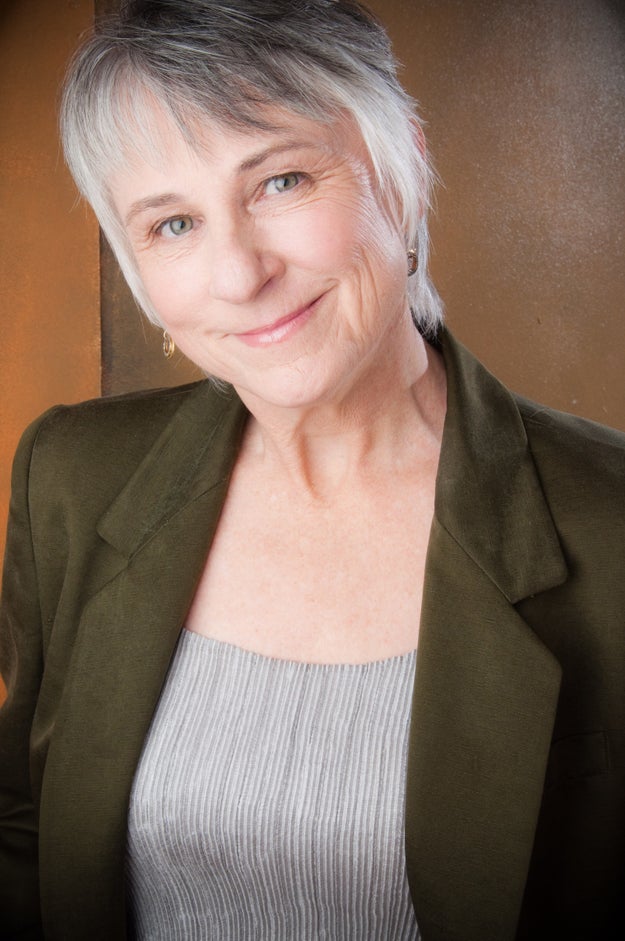
Lorraine Johnson

Courtesy / Lorraine Johnson

At a conference hosted last fall by the Lyme Disease Association and Columbia University, Johnson presented findings from an unpublished survey of more than 4,000 MyLymeData participants. The survey responses showed that people who were diagnosed at an early stage were more likely to report being healthy than those who were diagnosed later, and many claimed that their doctors had failed to accurately spot the disease. Johnson said at the time that the findings showed both the need for physicians to make diagnoses early on, and for “more effective treatments to help those patients who remain ill.”

But experts note that MyLymeData’s database may not accurately reflect Lyme patients, particularly those with persistent symptoms, the hardest stage to diagnose.

For Aucott of Johns Hopkins, making a diagnosis of post-treatment Lyme disease syndrome is a painstaking process. There isn’t one clear biomarker, like a genetic mutation or an X-ray reading, that proves someone has the condition. He and a nurse interview a patient, then review all of their medical records and lab reports, to establish both that they were healthy before getting diagnosed and showed Lyme symptoms after their antibiotic treatment. Aucott also tries to figure out if they might have anemia, thyroid disease, chronic fatigue syndrome, or something else with similar symptoms.

“I’ve seen 500 or 1,000 patients with decades of work,” Aucott told BuzzFeed News. “That’s the level of detail you need to really be convinced you have a uniform population.”

He and other experts told BuzzFeed News that they’re worried that MyLymeData allows, but doesn’t require, people to provide lab readouts and doctors’ notes to prove which stage of disease they’ve had, or even that they ever had the disease. To sign up, participants simply need to check boxes saying they live in the United States and have been diagnosed for Lyme by a health care professional. Then they answer a barrage of questions, such as how many times they’ve been infected, when they were first infected, and which symptoms they’ve had. (To test the service, a Lyme-free BuzzFeed News reporter successfully signed up and filled out responses about her nonexistent condition.)

“I’m not sure this kind of registry would be super helpful other than to tell you a little bit about what patients who have been labeled with ‘chronic Lyme’ complain about or have been treated for it,” said Paul Auwaerter, a professor of medicine and Lyme specialist at Johns Hopkins.

Others question how well the database represents actual patients.

“The problem with Lyme disease is essentially there is no data.”

“If the data are based on volunteered testimony, how do we know that those who choose to volunteer adequately represent those who don’t?” Paul Lantos, an assistant professor of internal medicine and pediatrics at Duke University School of Medicine, said by email. “If recruitment is promoted by advocacy groups, then how do we know those who volunteer represent Lyme disease patients more broadly?”

Johnson admitted that MyLymeData relies on the honor system, but pointed out, “I don’t think 7,000 people would take the time to go through and complete the surveys and do the follow-ups if they didn’t have a diagnosis.”

And, she said, the beauty of the database is that if a researcher wanted to study something about biomarkers, they could easily contact people through MyLymeData and ask for their lab reports and other medical records. She says that she and the academic researchers she’s working with, whose names she declined to share, will always be careful to point out the limitations of their research.

It is possible to glean accurate insights about diseases from self-reported data, says Ben Heywood, president and co-founder of PatientsLikeMe, a website where patients go to discuss their conditions. But, he added, it takes “a fair amount of manual curation” to make the data useful for research institutions that team up with the company, such as the FDA. PatientsLikeMe members have reported more than 30,000 treatments and symptoms for various illnesses, which staff then translate into medical terms (such as translating “chemo brain” into the more technical term, “cancer treatment-related cognitive impairment”).

“Doing real-world evidence or patient-generated health data in a rigorous scientific and methodological way, the way we do it, is hard,” Heywood said.
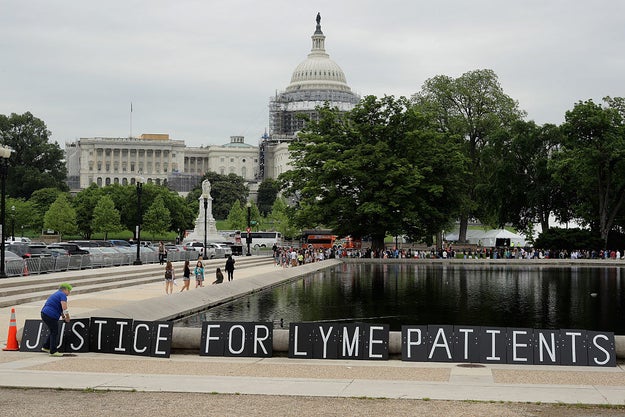
Chip Somodevilla / Getty Images

It’s understandable that chronic Lyme patients would want to take matters into their own hands after feeling ignored by mainstream doctors.

“I definitely think that many patients feel alienated from the ‘conventional’ medical community,” Lantos wrote. ‘This project may help us understand where our communication fails patients.”

Online patient registries like MyLymeData are becoming more and more common; by one count, there are 20. The earliest ones were dedicated to patients with rare, lethal diseases like cystic fibrosis and muscular dystrophy, and now there are ones about cardiovascular health and Alzheimer’s disease.

Registries will likely proliferate under the 21st Century Cures Act, says Kim McCleary, managing director of FasterCures, a think tank that was a key supporter of the legislation. And as for concerns that their kind of data threatens scientific standards, McCleary counters that it’s not an either-or question.

“I don’t think anyone expects [patient data] is going to replace double-blind placebo-controlled trials,” she said.

Quelle: <a href="Lyme Patients Are Bending The Old Rules Of Scientific Research, To The Dismay Of Some Scientists“>BuzzFeed
Facebook Created A Report That Described How Advertisers Could Target Insecure Teenagers

A leaked 23-page document created at Facebook describes how the social network could target teenagers as young as 14 with ads for when they felt “worthless” and “insecure”.

Justin Sullivan / Getty Images

The document, which was obtained by The Australian, states that Facebook can figure out when young people feel “defeated”, “anxious”, “nervous”, “silly”, “stupid”, “useless”, “stressed”, and a “failure” by using algorithms that analyze what they post and who they interact with. It then details how advertisers can target them at moments when they “need a confidence boost.”

Facebook didn’t immediately respond to BuzzFeed News’ request for comment, but a Facebook spokesperson told The Australian that the company had opened an investigation into why this internal report was created. “We will undertake disciplinary and other processes as appropriate,” the spokesperson said.

One of the most interesting parts of the report is Facebook’s analysis of the kinds of emotions that young people express during a typical week — “Monday – Thursday is about building confidence; the weekend is for broadcasting achievements,” it says.

This isn’t the first time that Facebook’s methods of ad-targeting have created a controversy. A 2016 report published by ProPublica revealed that advertisers on Facebook were able to exclude blacks, Hispanics and people from other races from certain ad campaigns, something that Facebook disabled earlier this year.

Quelle: <a href="Facebook Created A Report That Described How Advertisers Could Target Insecure Teenagers“>BuzzFeed