Twitter Quietly Introduced A Feature To Recommend Articles To You Last Week

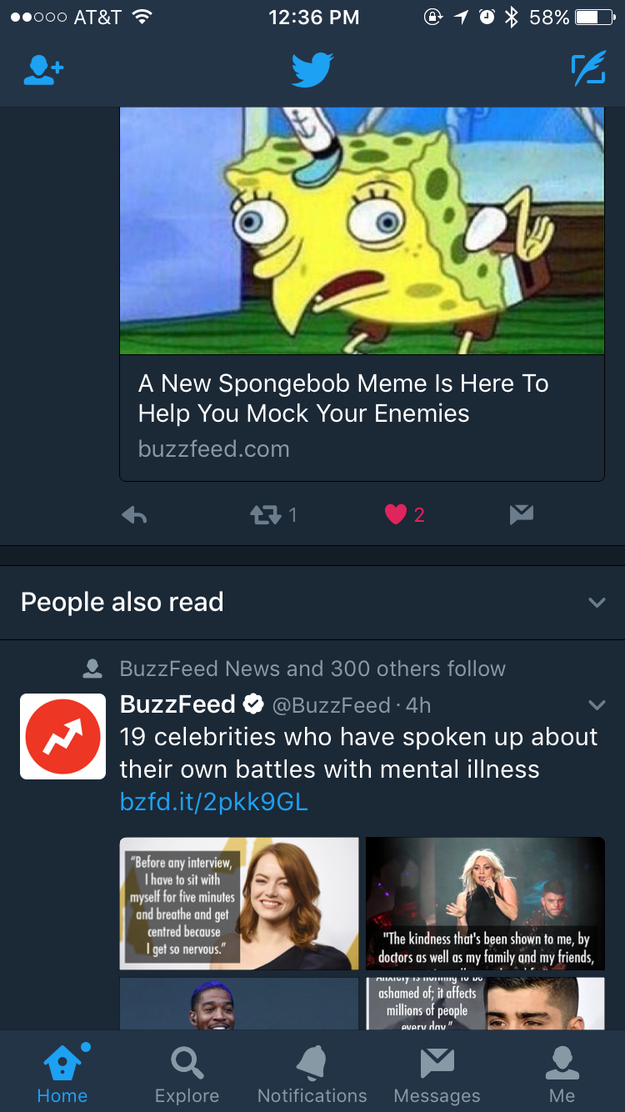
If you've been browsing Twitter recently, you may have seen a new feature called “People also read” that recommends other links after you click on an article.

A Twitter spokesperson told BuzzFeed News the company rolled out the feature to everyone using its iPhone app last week.

Unlike the screenshot above, which only shows BuzzFeed articles, a Twitter spokesperson said that the articles will be algorithmically recommended by topic rather than publisher. Recommended articles also won't show up when you click on a link in a sponsored tweet.

The feature will only work for news articles tweeted from verified accounts, according to Twitter, in an effort to prevent the spread of misinformation. The company said its algorithm scans for topical links between the tweeted link and the recommended articles.

You can dismiss “People also read” by clicking the arrow on the right side of the screen and selecting “See less often.”

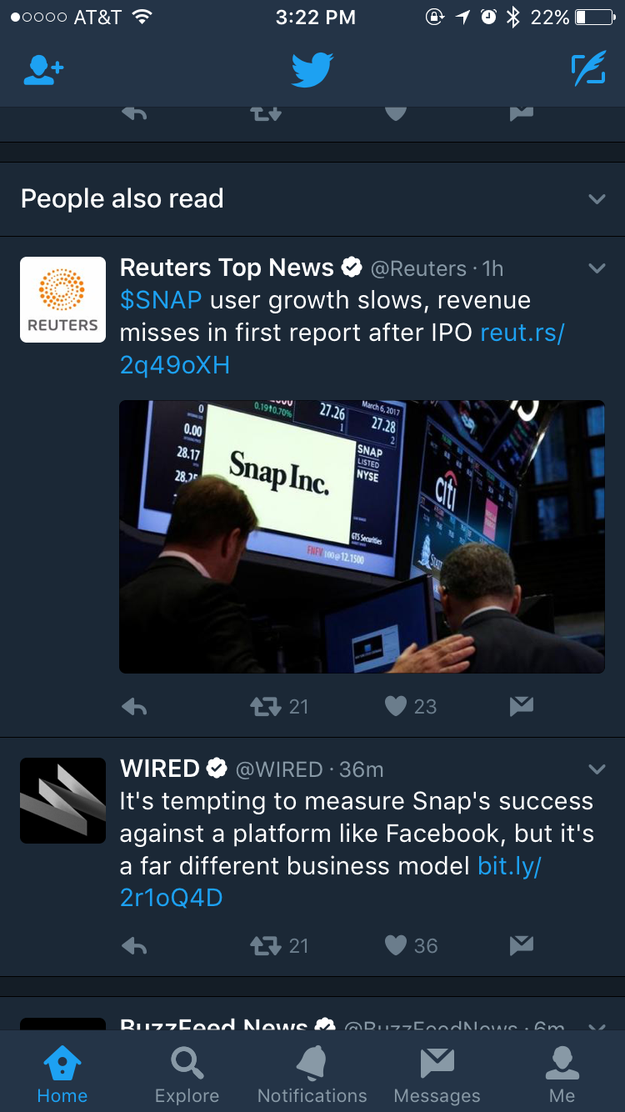
Here's a “People also read” for a tweet about Snap's recent earnings call.

Twitter's move to start recommending stories could complicate things for the social media company.

Both Twitter and Facebook experienced harsh criticism for their roles in spreading (and even at times recommending) fake news during and after the US election. Facebook has run into trouble with its Trending Topics feature in particular, which recommends articles quite like Twitter's new feature does and has had recurring issues with promoting hoaxes and fake news.

Quelle: <a href="Twitter Quietly Introduced A Feature To Recommend Articles To You Last Week“>BuzzFeed

Evan Spiegel Compares Facebook To Yahoo In First Comments On Product Cloning

Getty

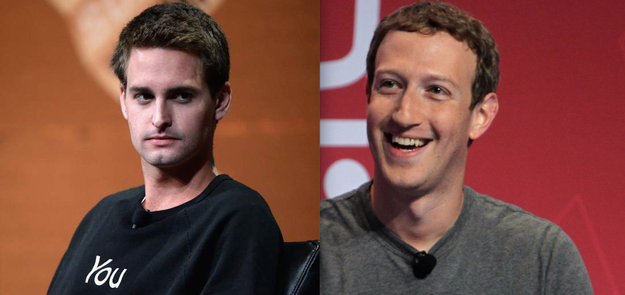
Snap Inc. CEO Evan Spiegel finally addressed Facebook's relentless cloning of Snapchat during his company's quarterly earnings call Wednesday — and he didn't hold back. “At the end of the day, just because Yahoo has a search box, it doesn't mean they're Google,” he said, referring to Facebook's creating copies of Snapchat's features for Instagram, Messenger, WhatsApp, and the Facebook app.

In Spiegel's mind, Facebook may be the Yahoo to his Google, but the analogy doesn't fully hold up. Facebook's copying of Snapchat's Stories format into four of its products helped impede Snap's revenue and user growth just as it hit the public markets. On Wednesday, Snap reported disappointing first quarter earnings results, and its stock plunged nearly 25% in after-hours trading.

Spiegel's comments, delivered in response to an analyst question about whether he fears Facebook, marked the first time he publicly addressed Facebook's brazen product copies. Spiegel's fiancee Miranda Kerr discussed the cloning in an interview with the Times of London in February. “It’s a disgrace. How do they sleep at night?” she said at the time.

Despite the threat Facebook poses to his company, Spiegel was far more nonchalant than Kerr. “If you want to be a creative company, you've got to get comfortable with, and basically enjoy the fact that people are going to copy your products if you make great stuff,” he said. “We believe that everyone's going to develop a camera strategy — I think we really helped people understand how valuable the camera is; it's really the center of everything that we do.”

Both Facebook and Instagram have credited Snapchat for pioneering the Stories format.

Facebook did not immediately reply to a request for comment.

Quelle: <a href="Evan Spiegel Compares Facebook To Yahoo In First Comments On Product Cloning“>BuzzFeed

Snap Lost More Money In Three Months Than It’s Made In Its Entire Existence

Snap’s first quarterly results as a public company are in, and they make clear the company is struggling with revenue and user growth in the face of an onslaught from Facebook.

After telling investors in its S-1 document that daily active user growth had flattened during part of 2016, the company did little to reverse course, adding only 8 million daily active users in the first quarter of 2017, to reach 166 million.

In contrast, Snap’s Facebook-owned rival Instagram added 100 million monthly users in the four months between December 2016 and April 2017, to reach 700 million. And Instagram Stories, a knockoff of Snapchat’s popular Stories feature, is now used by more than 200 million people each day, according to Facebook.

Facebook’s clones of Snap’s features in Instagram, Messenger, Whatsapp and Facebook proper appear to be putting a dent into the social upstart's ability to grow.

Snap’s revenue and profit numbers fell far below Wall Street expectations. Its first quarter revenue of $149.6 million missed analyst expectations of $158 million. The company also lost a whopping $2.2 billion in the first quarter, much of which was tied to employee stock compensation and won't be repeated, a total more than it has made in its entire existence.

The numbers provided an instant report card on the company’s progress since its IPO in March. And Wall Street didn’t think to highly of its marks. The company sent its stock spiraling down nearly 25% in after hours trading.

Quelle: <a href="Snap Lost More Money In Three Months Than It’s Made In Its Entire Existence“>BuzzFeed

Facebook Is Going To Punish Websites With Junky, Sexy Ads And Little Content

BuzzFeed / Getty Images

Facebook’s quest to rid the News Feed of misinformation and misleading content has a new target: websites that are littered with “disruptive, shocking or malicious ads,” and that offer little actual content.

Beginning today, the social network will use artificial intelligence to determine if links shared on the social network direct people to websites that offer a “low quality web page experience” due to the nature of the ads and content being offered. Links that meet the criteria will show up lower in the News Feed, and will not be eligible to to be turned into an ad on Facebook.

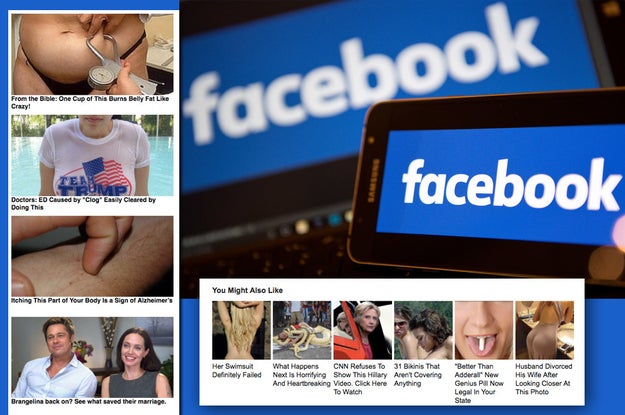
The type of ads being targeted by Facebook most frequently appear in the form of content-recommendation ad units. These boxes placed adjacent to articles offer a headline and striking thumbnail image meant to entice people to click. The low-end variety of these ads use sexualized and sometimes shocking images, as well as celebrities, and misleading headlines to capture attention.

Here, for example, is a set of ads served by Content.ad on a fake news article:

Content.ad / Via archive.is

A recent report from BuzzFeed News found content-recommendation ads are the primary way fake news sites are making money from their articles. A study from ChangeAdversising.org also found these types of ads, though not necessarily the lowest quality versions of them, are present on more than 80% of the top 50 news websites in the US.

“We’re looking at the content of the ads themselves — are the ads these gross toenail fungus ads, are these sexually suggestive ads,” Greg Marra, a Facebook product manager who works on News Feed integrity, told BuzzFeed News. “We also look at ads in relation to the content on the page. Is it a page that has basically no substantive content and is full of these ads?”

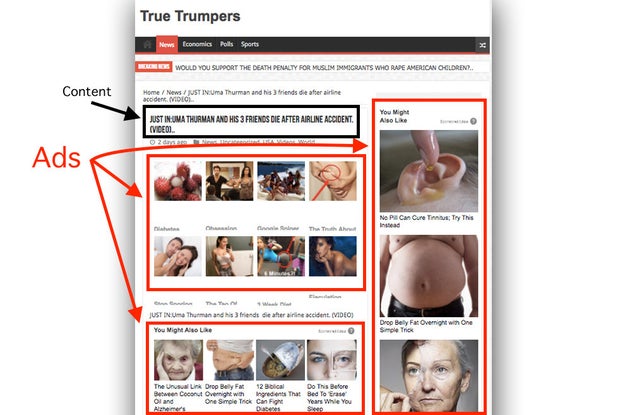
BuzzFeed News recently profiled exactly the kind of site Facebook is now targeting. TrueTrumpers.com is a pro-Trump website run from Eastern Europe that often publishes completely false headlines meant to grab attention on Facebook. But once a person clicks through they are brought to a webpage that is littered in content ad units and that often contains no article text other than the false or misleading headline. The site also triggers a pop-up ad when a visitor clicks anywhere on the page.

A hoax from the site about actor Uma Thurman dying in a plane crash contains at least four different Content.ad units, three of which are displayed to the user before they see the text of the (fake) article:

True Trumpers / Via archive.is

Marra said he was familiar with True Trumpers as a result of the BuzzFeed News story, but declined to comment on the site specifically. However, the large Facebook page that was used to promote True Trumpers content was recently shut down by the company. A Facebook spokesperson said this was as a result of “fake account and spam violations.”

Marra said Facebook’s intention isn’t to single out content-recommendation ads as a whole — just the lowest quality offerings that are draped all over a webpage by publishers in order to increase their revenue.

“This isn’t [targeting] every webpage that has a content ad network on it,” Marra said. “…. We’re focused on the worst of the worst of this segment.”

He described bad faith players as “a group of people who not trying to create news websites that are trying to establish a long-term relationship with you the reader. They are really just trying to get the click and monetize the click.”

Marc Goldberg, the CEO of Trust Metrics, a company that evaluates online publishers and apps for quality, told BuzzFeed News that Facebook’s decision to down rank links from sites with low-quality ads could help choke off revenue for fake sites and fraudulent publishers.

“Fake publishing, fake news — there is a tremendous underbelly there that continues to siphon off ad dollars,” he said. “Cutting it off from parts of the ecosystem will be very, very helpful.”

He also said Facebook’s effort could be positive for the higher-end content-recommendation ad companies, and punish bad players that trick users with misleading ads.

“Recommendation engines that have stricter policies will be rewarded because now they’re not playing against competition that doesn’t care about the end user or the advertisers,” Goldberg said. “Ultimately this potentially the improves the user trust downstream, where now you’re going to see a lot less of these ads designed to produce curiosity clicks. That can help earn back the trust of advertisers and users.”

Facebook’s Marra said the product team used data collected from “hundreds of thousands links with disruptive, shocking, or sexual ads and not a lot of content” to come up with criteria that will be used to scan links being shared on the platform.

“People will hopefully see less of this kind of junk that can clog up their feed,” he said.

Quelle: <a href="Facebook Is Going To Punish Websites With Junky, Sexy Ads And Little Content“>BuzzFeed

Here’s Why A Neuroscientist Is Leaving Alphabet For A Mental Health Startup

Thomas Insel

Cliff Owen / AP

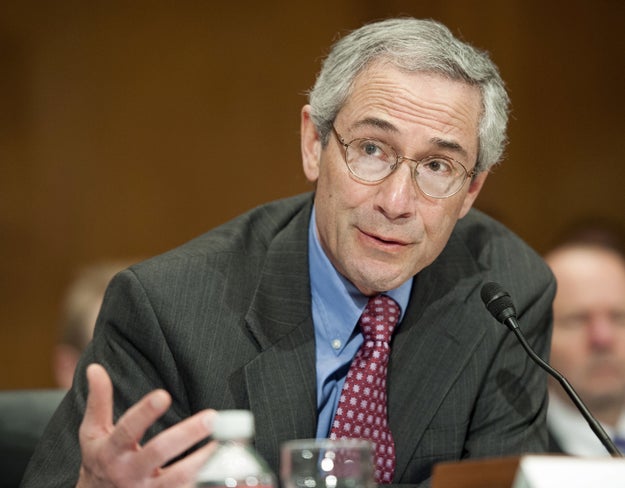
Less than a year and a half after Verily hired a top neuroscientist to lead its new team focused on mental health technology, Thomas Insel is leaving Alphabet’s life sciences division. Insel will go on to be president and cofounder of Mindstrong Health, a startup dedicated to the same subject.

More than a dozen scientists, engineers, and executives, by one count, have exited Verily since 2014. Still, the renowned neuroscientist and psychiatrist says he left because he wanted to build a business from scratch — and not because of any issues with Verily.

“It was a really hard call for me to walk away from what was a pretty idyllic and wonderful place to work,” Insel told BuzzFeed News on Tuesday, minutes after he clocked out from Verily for the last time. But at some point, he said he realized, “I want to do my own thing,’ [but] it’s hard to do at a big company.”

Insel ran the mental health division of the National Institutes of Health for 13 years until he left for Silicon Valley in December 2015. He joined Verily, then known as Google X, to pioneer that subsidiary’s mental health research and technology solutions. “The Google philosophy has been to seek a 10x impact on hard problems,” Insel said at the time. “I am looking forward to a 10x challenge in mental health.”

Verily just raised $800 million from Temasek Holdings, a Singaporean investment firm, which gives it more financial independence from its parent company, Alphabet. It also launched the Baseline Study to establish what healthy people’s biometric data should look like, while other projects, like a glucose-monitoring contact lens and a Star Trek-like medical scanner, remain in the works. At the same time, CEO Andy Conrad appears to be toning down rhetoric about these projects being industry-changing “moonshots.” As Conrad recently told Bloomberg, “If you examine the real moonshot closely, you’ll see a dude whose job is to rivet and a lady whose job is to do some wiring.”

At Verily, Insel said, his 10- to 15-person team was working on ways to harness smartphone sensors to track how people were using them, and use that data to draw conclusions about their mood, behavior, and cognitive state. Mindstrong, a Palo Alto startup that’s been in stealth since 2014, has a very similar mission, according to Insel.

Mindstrong has just seven people on staff, and details of how their technology might work are vague so far. But one possibility that excites Inselis tracking (with permission) how people use their smartphones’ keyboards. “You can capture a lot of subtle details about speed, errors, choices, all of that, which are pretty good surrogates for what you would normally get with a classic neuropsychological test,” Insel said. Smartphones also continually record information like location, physical activity, and sleep — all things that can change when, say, people get depressed — and that data could be used to help people manage mental illness, he said.

Insel didn’t specify whether this data-capturing would take the form of an app or something else. But he did say that a long-term vision of the company’s is to partner with a health care system to track patients with diagnosed conditions. Mindstrong is particularly interested in depression, schizophrenia, and post-traumatic stress disorder, Insel said, and has already started clinical trials in some areas.

“The team just came together at Verily; it’s going to be a while before they can launch into clinical trials,” Insel said. “Mindstrong’s been at this for three years; they’re obviously a little bit further along.”

Insel’s other founders include executive chairman Richard Klausner, a former director of the National Cancer Institute, and CEO Paul Dagum, who holds three patents on technologies that allow mobile devices to track and assess their users’ cognitive function.

This burgeoning area of mental health research has been coined “digital phenotyping.” But while it’s increasingly easy to collect sensor data, showing that it can reliably reflect human behavior is the challenge, said John Torous, co-director of the digital psychiatry program at Beth Israel Deaconess Medical Center in Boston.

“Where we’re seeing the bottleneck is, what are the appropriate statistical methods to handle the large amount of data, and what are the reproducible methods to show this can be done in a reproducible way?” Torous told BuzzFeed News.

In a blog post Monday, Danielle Schlosser, a clinical research scientist at Verily, said that the subsidiary’s “vision and commitment remain steadfast” to treating people with depression. BuzzFeed News has asked whether Verily will work with Mindstrong or replace Insel; Google had not responded by press time.

Quelle: <a href="Here’s Why A Neuroscientist Is Leaving Alphabet For A Mental Health Startup“>BuzzFeed

Now You Can Send Snaps That Last Forever

Snap Inc. added three new features to Snapchat today: drawing with emojis, a “magic eraser,” and Snaps that you can watch forever.

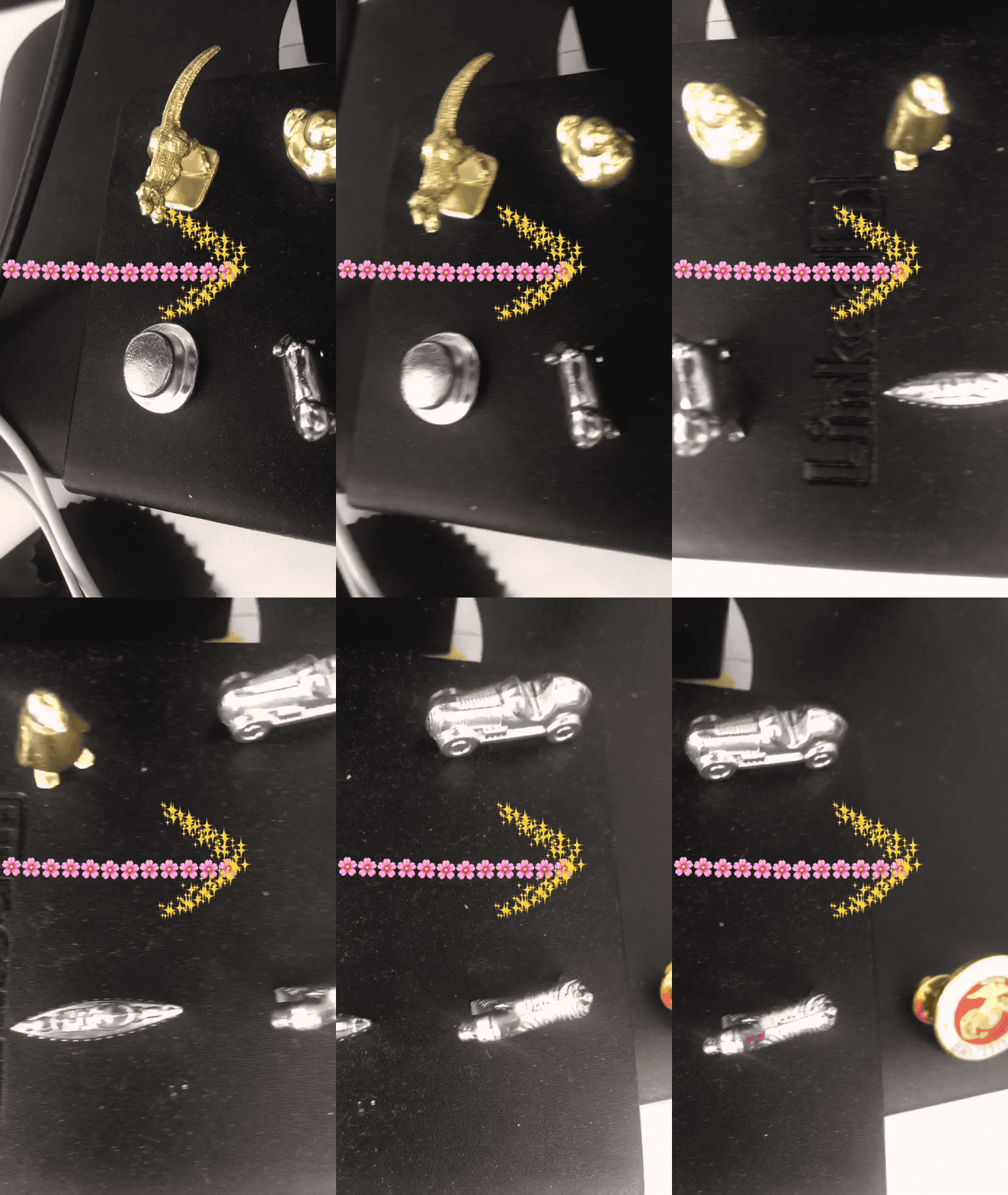
The emoji drawings feature works a lot like the drawing tool — but with emojis! You trace a path with your fingers, and the emojis you've selected will appear. The drawings look like this:

And here's what emoji drawings look like with video Snaps:

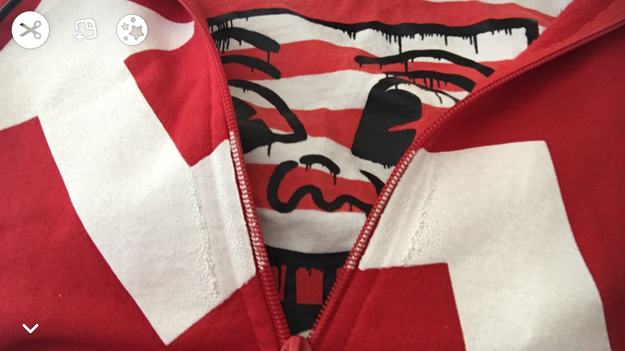
The “magic eraser” is like the sticker tool:

1. You snap a pic.

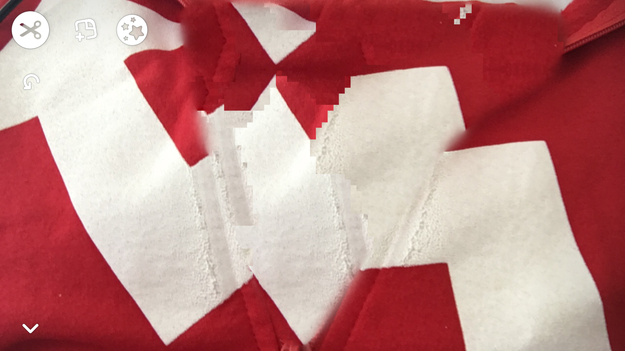
2. Add a little magic…

3. And…ta da:

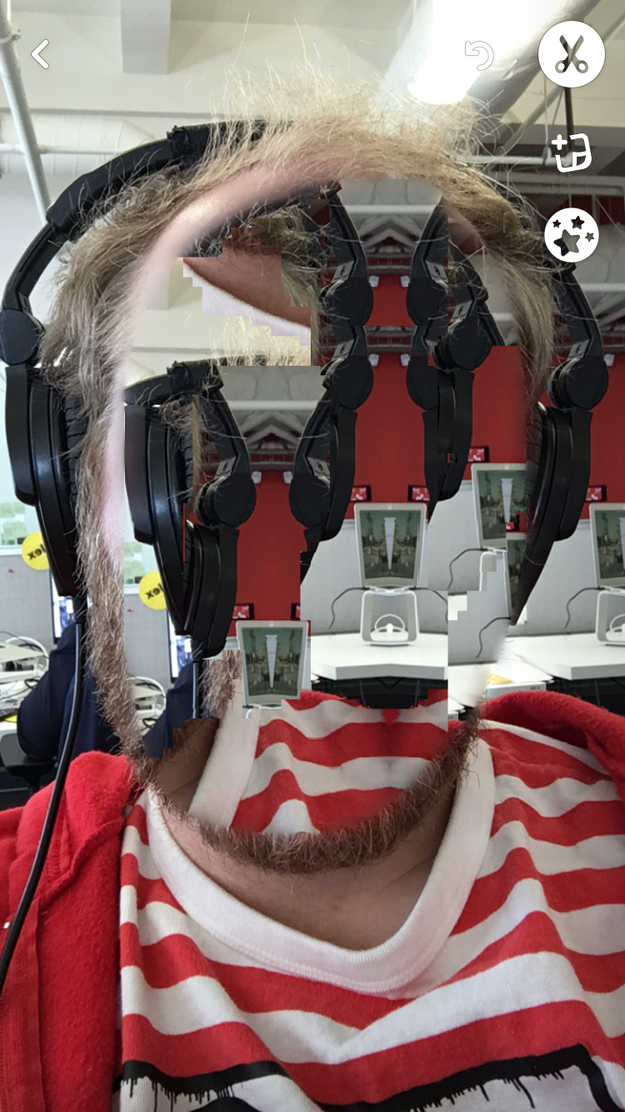
Here are the super-trippy results after I magically erased a selfie:

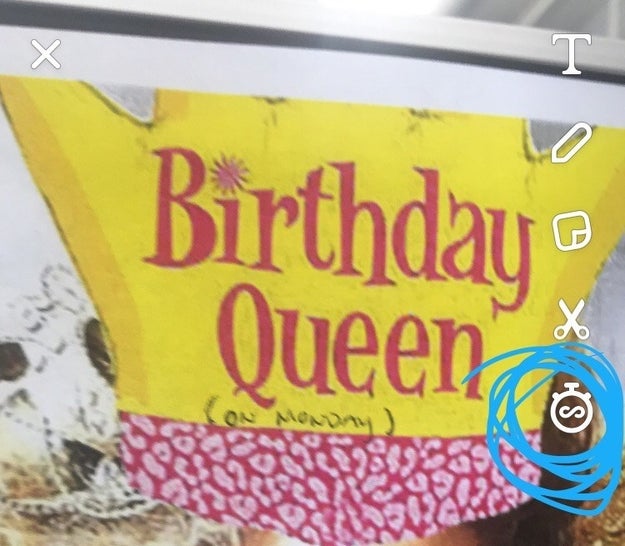
There are also new time options for Snaps: Infinity and Loop.

Infinity lets people look at your photos for as long as they want. It's a big change from regular snaps, which are meant to be ephemeral.

The company said in a statement, “We’ve all felt the frustration of not being able to fully enjoy a Snap – even after replaying it – and we wanted to give you the option of allowing the recipient to enjoy your Snap as long as they’d like.”

Here's what the Infinity setting looks like for photos.

They'll stay on the screen until you tap to close them.

And Loop is the video version of that. It's basically a GIF .

Quelle: <a href="Now You Can Send Snaps That Last Forever“>BuzzFeed

You've Never Heard Of This Team At Google — But They're Thinking About You

Google

SAN FRANCISCO — It was the early days of clashes in Aleppo, Syria, and Karim, a local activist, wanted to upload a video to YouTube showing armed Syrian forces opening fire into a protest in the spring of 2011. His worry was exposing the faces of dozens of students who had taken part in the protest and could be hunted down afterwards.

Luckily for him, someone at Google’s headquarters, roughly 11,500 miles away, was thinking about his problem.

“During the Arab Spring, we saw activists that were jeopardizing their safety on social media to share things. No one was offering a solution to keep them safe, and so we moved quickly to try and make a change,” said Amanda Conway, a Privacy Program Manager at Google. “By creating face blurring tools, and quickly pushing them out, we were trying to introduce something to respond to their new safety concerns on the ground.”

It was exactly, she said, the sort of thing that her team was created to handle.

The NightWatch team at Google is unique not just at the internet giant, but for Silicon Valley overall, where an emphasis on being quick to market and capturing audience attention often comes at the expense of creating a product that takes into account the diverse range of people using it. Made up of engineers, lawyers, activists, and others who take a special interest in advocating for communities that might otherwise be overlooked, the NightWatch team doesn’t look like the average group of people you’d find on a tech campus.

“No, unfortunately, this is not what most of Silicon Valley looks like,” Lea Kissner, a Google engineer and leader of the NightWatch team, said as she looked around the Google conference room at the six women and six men, from a variety of backgrounds and countries, gathered in the room.

Amber Yust, a Software Engineer, and trans member of the team said the diversity in the team is intentional.

“It’s not impossible to come to the right decision with an under-representative team but it’s certainly easier to reach that decision if you know it’s coming from a broad base of knowledge because your team is more representative of the world as a whole,” said Yust.

The idea for Nightwatch came about roughly four years ago, when Kissner approached Gerhard Eschelbeck, Google’s Vice President, for Security and Privacy Engineering. The name Nightwatch came about because they wanted to “stand between users and the dark places of the internet” said Kissner, who laughs off the suggestion that the name could also be a reference to “Game of Thrones,” or the Russian supernatural cult film of the same name. The team looks at nearly every product to come out of Google, whether it is software or hardware, and weigh how it will affect and be used by people across the world who will possible use the product.

“We wanted to take into account the different life circumstances people are in. More than any other thing this requires an understanding of the different kinds of threats and fears people face,” said Kissner. “We wanted to make products that work well for a variety of people and give people choices on how to handle their information.”
Jeff Chiu / AP

Take, for example, the face-blurring tool for YouTube videos. When first introduced, it allowed users to edit original videos and blur out faces they didn’t want made public. The Nightwatch team asked themselves however, if Google was storing the original versions of videos somewhere and could be compelled to hand them over to law enforcement. So they tweaked the product to make sure it was clear to users that they could delete the original content permanently off of YouTube, and only keep the version they intended to be made public. Then then translated those instructions into a number of languages — including Arabic.

“We don’t know how the tool is going to be used by each individual user. Some might want to keep various versions of their videos, others don’t,” said Conway, who worked on YouTube products before joining the NightWatch Team.

Kissner explained that the group can’t be mind readers, but they want to give users all the information so that they can use tools according to their own security and privacy concerns. The questions of how to best to do that, however, aren’t easily answered.

“I used to be a tech blogger, and was highly critical of companies like Google,” said Rosa Golijan, a privacy engineer and member of NightWatch. “Once I stepped inside and expected to find some deep dark secrets, but instead found a lot of processes that are complicated and nuanced.”

The group considered, for instance, features that could be turned off and on depending on where a person was travelling to. For instance, should an political activist in Egypt be travelling to the US, they might feel comfortable revealing more user information than they would in Egypt, where activists are currently coming under arrest for political dissent. The Nightwatch Team soon realized, however, that any feature that was location-specific would also require users to reveal their locations – which presented a host of new problems.

“We have to find the right balance between a lot of different issues, and problems users face,” said Yust. She said another issue recently tackled by the group has been hate speech and free speech online. “There is a balance we are constantly searching for between free speech and moderation. We are trying to find that balance on a global scale, and for expectations for what should be moderated on a global level.”

For Karim, the Syrian activist who spoke to BuzzFeed News years ago, when the war in Syria was still in its infancy, it’s heartening to know that somone at the tech giant is thinking about his online security — he just wonders why it takes a special team.

“I wish you told me that all over Google, there were men, women, Syrians, who were thinking about how my mother in Syria will use Google,” said Karim, who asked that BuzzFeed News only identify him by his first name, as he is currently seeking refugee status in a Western European nation. “But most of these companies don’t have people who think about Syria, or anyone outside of America, right? When will this change?”

Quelle: <a href="You've Never Heard Of This Team At Google — But They're Thinking About You“>BuzzFeed
Some Uber Customers Will Pay More So Drivers Can Buy Injury Insurance

Jeff Chiu / AP

Some Uber drivers now have the option to buy insurance that protects them from the unexpected cost of getting injured on the job.

Uber will be charging customers in eight states an extra 5 cents per mile to cover the fees for personal injury insurance as part of an eight-state pilot program. The cost to drivers will be 3.75 cents per mile.

The move follows the creation of a similar program in the UK, where Uber and other gig economy companies have been under fire of late for their treatment of workers.

In the United States, the cost of a workplace injury is typically covered by an individual's employer via worker's compensation and disability insurance. Because Uber drivers are independent contractors, not employees, the ride-hail company isn't required to offer these types of insurance coverage. Instead, with this new plan, Uber is shifting the cost of coverage to consumers, and allowing drivers to choose whether they pocket the extra cash or use it to pay for insurance.

The optional pilot program will operate via insurance companies Aon and OneBeacon in Illinois, Massachusetts, South Carolina, West Virginia, Arizona, Oklahoma, Pennsylvania, and Delaware, and will pay out up to $1 million for medical expenses, up to half of a driver's average weekly earnings, and a maximum of $150,000 in survivor benefits.

Though stories like the one about an Uber driver who lost his legs in a car accident and was unable to continue working have been used to galvanize anti-Uber driver strikes in the past, it's unclear how many drivers would actually sign up for insurance rather than take the extra money.

The failure of companies like Uber to provide workers with the same benefits and protections that traditional employees receive has for years been one of the chief criticisms of the gig economy. More recently, companies like cleaner-on-demand startup Handy have worked with legislators to propose a portable benefits system, through which individual workers and the various platforms they work for would jointly pay into a single fund that could be used to cover the cost of things like health insurance or time off work due to injury.

But traditional labor groups see these efforts as an attempt by the industry to continue side-stepping the full cost of protecting and insuring the on-demand workforce.

National Employment Law Project director Rebecca Smith called Uber's personal injury insurance pilot program an “attempt to shore up its faltering image” in an email statement circulated Tuesday.

“Instead of paying workers’ compensation premiums to cover all of its workers, as responsible businesses do, Uber will charge drivers for the medical care and time-loss benefits that the rest of us get by virtue of working at a job,” the statement reads. “What will it take for Uber to stop the end-runs and other shenanigans and finally act like a responsible employer? If Uber valued its workers, it would simply pay its workers’ compensation premiums and cover all of them.”

LINK: Here’s How Gig Workers Are Feeling About Trumpcare

Quelle: <a href="Some Uber Customers Will Pay More So Drivers Can Buy Injury Insurance“>BuzzFeed

Amazon Just Launched A Brand-New Echo With A Screen For Video Calls

Amazon Just Launched A Brand-New Echo With A Screen For Video Calls

Amazon

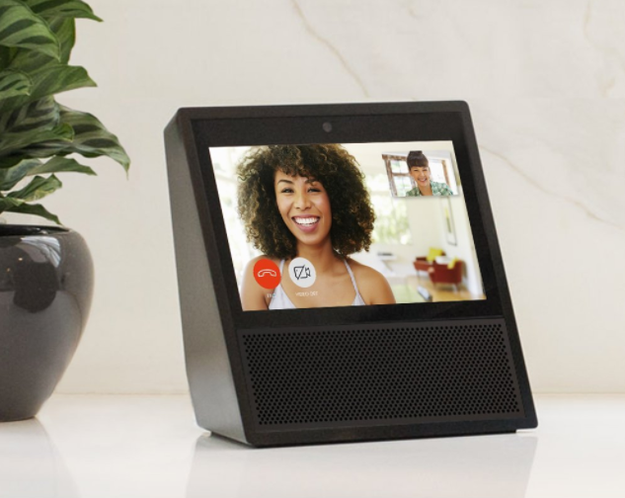
Amazon has launched a brand new device called the Echo Show. It’s essentially an Amazon Echo with a 7-inch touchscreen and a 5-megapixel camera built-in — which means you can now tell Alexa to show you that YouTube video, throw up lyrics to the song that’s playing, see weather forecasts, and also make video calls with anyone with another Echo Show or the Alexa App.

The 41-ounce device will be available in two colors — black and white — and will be available in the US for $229 on June 28. Here's what it's like to use.

youtube.com

The Echo Show is the latest addition to Amazon’s family of Echo devices. Late last month, Amazon unveiled a hands-free, voice-activated camera called the Echo Look, which uses algorithms to let you know which outfit looks best on you.

Quelle: <a href="Amazon Just Launched A Brand-New Echo With A Screen For Video Calls“>BuzzFeed

Uber Is Opening Up A Self-Driving Car Center In Canada

Afp / AFP / Getty Images

A series of self-driving controversies, including a brutal lawsuit from its rival Waymo, hasn't tempered Uber's self-driving ambitions. Early Monday morning, the ride hail company announced plans to open a new self-driving outpost in Toronto, Canada.

Uber has hired Raquel Urtasun, an associate professor from the University of Toronto, to lead a team of researchers in Toronto that will develop machine perception and artificial intelligence technology for its self-driving car program. Urtasun, a pioneer in the area of machine perception, also founded the Vector Institute for Artificial Intelligence in Toronto, to which Uber says it will contribute about $5 million. Eight of her students will also join Uber, Urtasun told BuzzFeed News, adding that the company plans to hire “several dozen” additional people as the Toronto outpost staffs up.

“Uber has the advantage of a ride sharing-network, which is going to be one of the competitive edges that will be important to self-driving in the future,” Urtasun said.

“With support from the Ontario and federal governments, Toronto has emerged as an important hub of artificial intelligence research, which is critical to the future of transportation,” Uber CEO Travis Kalanick wrote in a blog post on Monday.

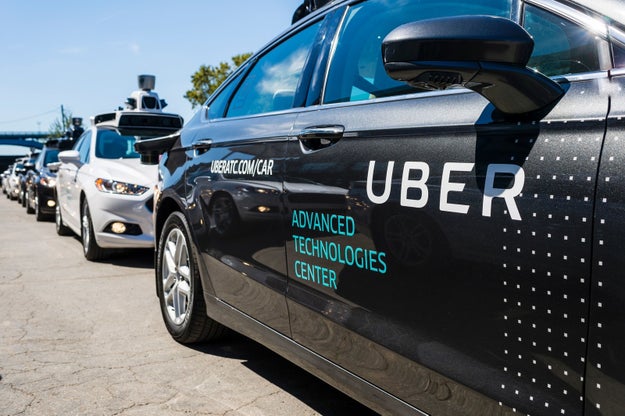
Uber, which has about 100 self-driving pilot vehicles roaming around San Francisco, Pittsburgh, Pennsylvania and Tempe, Arizona, will send some of those cars to Toronto. It has already mapped a small portion of Toronto, the company said.

Urtasun is joining Uber at a particularly fraught time. In February, the ride-hail giant was sued by the Alphabet-owned Waymo for allegedly stealing and using key parts of its self-driving technology. Last month, Anthony Levandowski — who figures prominently in Waymo's suit — stepped aside from his role as the head of Uber's self-driving program.

For Urtasun, Uber's legal battle with Waymo was a consideration in her decision to accept her new gig — but not much of one. “If I didn’t believe that Uber did the right thing, that they didn’t do anything wrong, I would not be joining Uber,” she said. “My research, my area, is in cameras and perception. I don’t do hardware. It’s disconnected from my side.”

Urtasun said Levandowski’s demotion did not influence her decision to join Uber. Uber said her agreement to join was finalized prior to the leadership change.

Asked about her decision to join Uber at a time when the company conducting an internal investigation into claims that its culture is ridden with systemic sexism, Urtasun said “If there were some problems, Uber has learned” and is taking steps to change. “That makes me feel very comfortable bringing my team to Uber,” she said.

Urtasun will remain on the University of Toronto’s faculty for one day a week and spend the other four days at Uber.

Quelle: <a href="Uber Is Opening Up A Self-Driving Car Center In Canada“>BuzzFeed