Was This Tweet From Jesse Tyler Ferguson An Ad Or A Dad Joke?

Welcome to “Is This an Ad?” — a column in which we take a celebrity’s social media post about a brand or product and find out if they’re getting paid to post about it or what. Because even though the FTC recently came out with rules on this, it’s not always clear. Send a tip for ambiguous tweets or ’grams to katie@buzzfeed.com.

THE CASE:

Alberto E. Rodriguez / Getty Images

Here we have a tweet about heartburn pill Pepcid from Jesse Tyler Ferguson, the actor from the hit tv show Modern Family:

A Facebook group for fans of the celebrity gossip podcast Who? Weekly flagged this tweet for me because they couldn't figure it out. Keep in mind, these are people who live and breathe celebrities on social media, and they're very savvy about whether or a tweet or Instagram post is #spon or not. So if this had them stumped, it's a real stumper!

THE EVIDENCE:

Saying that the giant, grotesque meal you're about to eat is “sponsored by Pepcid” is obviously a joke, right? I can totally imagine making that joke myself (almost). Overindulging on Shake Shake burgers so much that you need stomach medicine is the kind of thing people would make a self-deprecating joke about. Like if you posted a picture of yourself looking really hungover and captioned it, “sponsored by Jose Quervo and bad decisions.”

If it ISN'T a joke, then it's clearly an ad – the disclosure “I teamed up w/ PEPCID” is pretty clear that this is a spokesperson relationship. And though the FTC has recently cracked down on people doing sort of tricky things like saying “#sp” instead of “#sponsored” or using obfuscation to hide the #ad hashtag at the end of a super long caption, there isn't an official hard and fast rule on exactly what language someone MUST use. The idea is that it should be clear if you are working for the brand, and I think “I teamed up with [brand]” is clear enough disclosure.

Usually when I'm investigating a celebrity's social media post, the confusion is over whether the celeb's disclosure is clear to the average person. But this is different – the big question here is: Is this an ad, or just a cheesy dad joke?

THE VERDICT:

To find out once and for all, I reached out to Johnson & Johnson, which owns the Pepcid brand. “We know that Jesse can be quite the jokester, but lucky for us, he relies on PEPCID® to treat his frequent heartburn and he agreed to team up with us!” said a J&J spokesperson. “As he disclosed per FTC guidelines, this post is part of our partnership agreement – he’s been a paid spokesperson for the brand since 2016.”

There you have it folks. Sometimes a dad joke is really an ad.

Quelle: <a href="Was This Tweet From Jesse Tyler Ferguson An Ad Or A Dad Joke?“>BuzzFeed

It’s Easy To Fall For Email Phishing Scams. Here’s How To Protect Yourself

Lorena Salagre and B. Farias / Noun Project / Via thenounproject.com

You – and just about anyone with an email account – are susceptible to being tricked by what’s called a “phishing” scam, or malicious emails that look genuine. Hacked inboxes aren’t just a problem for political figures like vice president Mike Pence, senior members of Hillary Clinton’s campaign, and French president-elect Emmanuel Macron. Cybercriminals target Internet users of all stripes to gain access to email and other online accounts associated with that email address, like online banking or social media. In fact, these kinds of attacks are so widespread that in a recent consumer alert, the IRS reported a 400% increase in online phishing and malware incidents during the 2016 tax season.

With email hacking methods becoming more sophisticated, it’s important to know how exactly to identify illegitimate emails and what to do if you get tricked. Here’s a guide to everything you need to know to protect yourself from email scams.

What is “phishing”?

No, it is not the act of enjoying the band Phish.

Phishing is a form of social engineering. An email phishing attack is often a message designed to look like it’s from a trusted source when it’s actually not. It can appear to be an email from a colleague asking if you can take a look at a document. It can appear to be an automated message from a service you use, asking you to log in to your account to verify something.

Talented hackers thoughtfully craft their messages to make them look legitimate in order to get victims to give up personal information, click on a link, or download an attachment that may infect their device. To be “phished” usually requires user action. You need to actually do something – like click on a malicious link or attachment – otherwise, it’s just a phishing attempt.

Phishing can also be executed through malicious ads on unsecure websites or links sent through a text message.

Why is it called that?

A quick Google search for “origin of the word phishing” reveals that the term is a portmanteau of the words fishing and phreaking. Fishing refers to using different methods (like emails, advertisements, and links on sites) as lures for account information, like passwords. Phreaking was a term used to describe people who explored, experimented with, and hacked telephone systems in the ‘60s and ‘70s. The most commonly referenced origin story is that the term phishing was created in 1996 by a group of AOL hackers.

What does a phishing email look like?

What makes phishing emails so effective is that they look like normal emails from people you know or organizations you’re familiar with.

“I recently received an email from a lawyer that was completely within the wheelhouse of something he would ask me. It said, ‘Can you take a look at this attachment?’,” recalled Richard Aborn, president of the Citizens Crime Commission of New York City (CCC). That email turned out to be fraudulent.

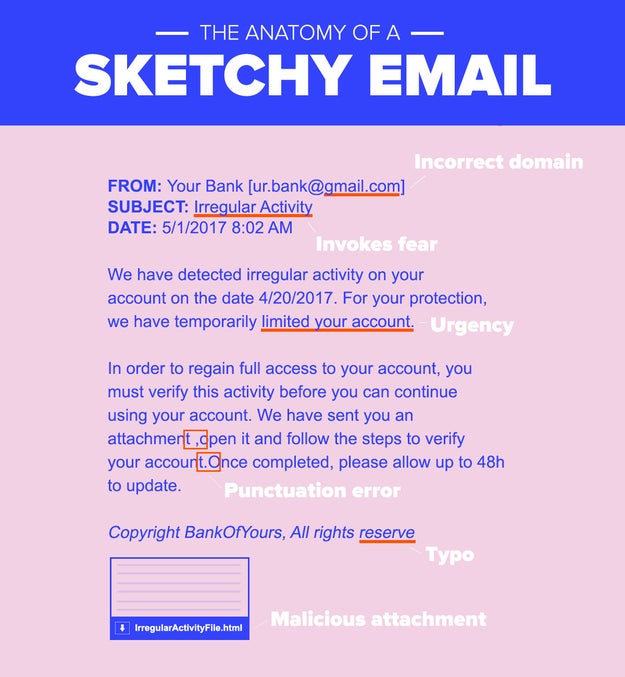
Aborn stressed that, when analyzing a sketchy email, paying attention to detail is crucial. “I also received an email from American Express that looked so real…but there was a small typo at the bottom.”
Nicole Nguyen / BuzzFeed News

The CCC, which recently published a report on the state of phishing, provides a great checklist of what to look out for. If you receive a suspicious email, ask yourself these questions:

– The sender: Is the “name” of the sender purporting to be an organization’s, but the sender’s email address domain is gmail.com? Is there a variation in the address’s domain (such as .net or .org, instead of .com)?

– The recipient: Does the email address you by name? If so, is it inaccurate?

– The message: Are there grammatical errors or typos? Does the message’s language sound urgent? Is there a deadline for action?

– Links or attachments: Hover over the hyperlink with your cursor and check if the hyperlinked text and URL match. Is it a sketchy IP address instead of a normal URL? Is it a .exe file (a type of file known to carry viruses)?

If you answered “yes” to one or more of these questions, it’s probably a phishing attempt.

Be extra vigilant about confirming an email's authenticity if it's an email you didn't expect, especially ones requesting sensitive personal information. Asking for things like your password, Social Security number, bank account PIN or credit card number is a telltale sign of fraud.

“A company with good security practices will never ask for your username and password via email,” said security expert Jessy Irwin.

One popular form of phishing is an email from a social media site like Facebook, Instagram, or Twitter, stating that you have become verified or there is an issue with your account because of copyright and threatening deactivation, unless you fill out a form linked in the email.

Another states that your iCloud or Microsoft Outlook account has been suspended or someone has logged in to your account on an unrecognized device. The email will have a link that leads to a website that *looks* like an official Apple or Microsoft page, with fields to submit a username and password, but the URL will look long and spammy.

In more sophisticated attacks, the hacker may already know something about you and use that nugget of information to their advantage. For example, it may appear to be from a friend or colleague and include language like, “Here are pictures from last week.” In one very targeted instance, a hacker breached a major oil company by sending a PDF of a takeout menu for a Chinese restaurant that was popular with employees.
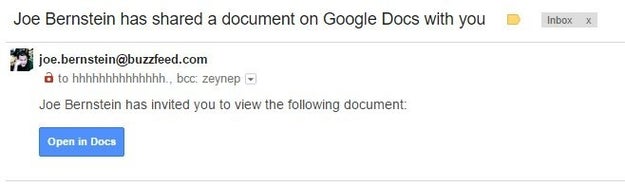
Twitter: @zeynep

The most recent viral scam, which security experts said was one of the fastest-spread phishing campaigns in history, had someone from a recipient’s address book send an email with the subject “[Name] has shared a document on Google Docs with you.” In the body of the email was an “Open in Docs” link, styled the way a genuine Google Docs email would. Clicking on the link sent the phishing scam to everyone on a victim’s contact list, and granting the app permission gave attackers complete access to their victims’ Google data.

What are some tips for avoiding phishing scams?

The CCC’s Aborn follows this simple rule: “Don’t click until you’re sure. Even if you know the sender.”

You can try verifying links is through a link checker (Norton Safe Web and Phish Tank have free online tools that can help you determine whether or not something is legitimate) – but the easiest, safest thing to do is navigate to the website directly in your browser or contact customer service. If the message purportedly from a colleague or friend, contact them through another method of communication (phone, text, Facebook, IRL, etc.) and ask for verification.

For attachments, don’t download anything that looks suspicious. Microsoft Word documents (which end in .doc or .docx), if opened in Word, have the ability to execute code that can infect your device. Gmail has a built-in anti-virus scanner that allows you to preview PDF or Word documents, and if you open an attached document in “preview mode” (by clicking “View” and not “Download”), you can see the contents of the file without opening the Word or Adobe desktop apps. However, I’d advise you not to even preview the file, even though that is considered less risky than downloading it. A very clever attack replicated the attachment pane in Gmail, and led users to a fake Google sign-in page.

Still, following these authentication steps may not be enough. Some hackers are very, very good at what they do, and even IT professionals have fallen for phishing schemes.

“Many people think that the trick to not getting phished is to spot suspicious emails and attachments 100% of the time, but it is an absolute waste of time to try to become an expert…because attackers are so far ahead of the email counterfeiting game,” Irwin said.

Irwin urges people to be picky about giving any app access to your email. “If you haven't used an app in a long time, or can't remember why you gave it permission to access your inbox, revoke its permissions immediately so that it cannot harvest any of your personal information,” she advised. You can easily revoke apps you don’t recognize or haven’t used in a while with access to Google, if you use Gmail. While you’re at it, check your app integrations with Twitter and Facebook, too.

You should also turn on two-factor authentication everywhere you can (here’s a comprehensive list of websites with two-factor), which requires an additional form of verification so your password isn’t the only way to access an account. However, Irwin notes that, “SMS is an incredibly insecure method for sending an extra factor of authentication.” Instead of text message, she suggests using a code generator app like Google Authenticator or a security key like Yubikey. However, two-factor may not be enough to stump hackers. They might have a copy of your backup codes or physical access to your phone with an authenticator app installed, for example.

“Don’t click until you’re sure. Even if you know the sender.”

Additionally, Irwin recommends using a password manager (like LastPass or 1Password), which can help you avoid being phished online by not auto-populating your username and password unless you’re on the right website. Most managers have browser extensions that automatically fill in your credentials for sites like Gmail or Facebook, and won’t recognize a spammy or fake URL.

Password managers can also help you create super strong, unique passwords for every account, which is *crucial* to protecting your online privacy. According to Brian Krebs, an independent cybersecurity journalist and author of Spam Nation, “most breaches in general – including email account hacking – involve successful phishing attacks. However, credential re-use across multiple sites is also a huge contributor to email account hacks, maybe bigger than phishing.”

What happens if I fall for a phishing scam? How dangerous is it?

Change your password immediately. Then, review the third-party apps you’ve authenticated with your account, and report the phishing attempt to the company the hackers were posing as:

Apple: Report hackers with iCloud, me.com, or mac.com email addresses to abuse@icloud.com and send emails to reportphishing@apple.com.

Facebook: Send emails to phish@fb.com.

Google: Report hackers with Gmail addresses here and emails in Gmail with the down arrow next to Reply > click Report phishing.

Microsoft: In Outlook, click the arrow next to Junk > click Phishing scam. You can also contact the Microsoft Answer Desk.

Amazon: Send emails to stop-spoofing@amazon.com.

Continue to check your login history for your Apple, Facebook, Google, and Microsoft after changing your password to remotely log out of any unrecognized devices, and make sure hackers still don’t have access to your account. There is no way to review where you are logged in with your Amazon account currently, so if your Amazon account is hacked, change your password immediately.

Next, if you are a US resident, file a complaint with the FBI’s Internet Crime Complaint Center. In Canada, reach out to the Anti-Fraud Center, and in the UK, you can report an attack to ActionFraud.

If hackers gain access to your email account, they may be able to reset the password of any account associated with that email address. They may also hold it for ransom and request a sum of money to turn it back over to you. Hackers can also hijack your reputation, by posting content to your social media accounts.

So, yeah, whatever you do: Don’t click if you aren’t sure and don’t re-use passwords!

cc.com / Via giphy.com

And don’t just protect your email accounts. “It's really important for people to realize that most of what can happen to them through email can also happen in their text messages and their social media inboxes, too,” Irwin said. “So building good habits for email, if applied to texting and to social media, can help everyone keep it together online.”

Quelle: <a href="It’s Easy To Fall For Email Phishing Scams. Here’s How To Protect Yourself“>BuzzFeed


After Trump Suggests Canceling Press Briefings, Twitter Exec Suggests Twitter Q&As

Twitter / Getty

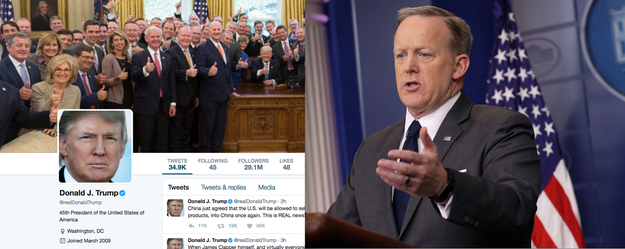
After watching his communications team get pummeled all week for their uncoordinated response to the firing of FBI director James Comey, President Donald Trump suggested a possible fix early Friday. In a tweet, he said it may be better to do away with the press briefings entirely and hand out written responses to questions instead.

Twitter CFO and COO Anthony Noto saw this as an opportunity, and replied to the president's tweet with an alternative suggestion. “May I suggest questions submitted and answered via Twitter. A perfect record and we distribute to the world not just those with a TV.”

Noto later clarified that he didn't support canceling the press briefing, but people reacted critically to his first tweet after it appeared to suggest otherwise. The White House press briefing is viewed widely as an important democratic activity, one that gives reporters a chance to come face to face with the administration and ask questions informed by their reporting — then they can explain the responses with context to those not watching the White House full time.

The issue is particularly fraught since Press Secretary Sean Spicer already suggested Trump may replace traditional interviews with social media Q&As.

Twitter's made no secret of the fact that it values Trump's presence on its platform. “I believe it's really important to hear directly from our leadership. And I believe it's really important to hold them accountable,” Twitter CEO Jack Dorsey told NBC in an interview earlier this week.

Trump's presence also appears to be helping the company grow its user base, according to a Noto statement on the company's earnings call last month: “There also is some evidence that we’ve benefitted from our new and resurrected users following more news and political accounts in Q1, particularly in the US.”

Quelle: <a href="After Trump Suggests Canceling Press Briefings, Twitter Exec Suggests Twitter Q&As“>BuzzFeed

Part Of Apple's New Billion Dollar Jobs Fund Will Go To Its Glass Maker, Corning

Thomas Peter / Reuters

The American company behind the signature glass of the iPhone and dozens of other electronic devices will receive a $200 million investment from Apple, as the company says it is committing to boosting US manufacturing through a billion dollar jobs fund announced earlier this month.

Corning, whose Gorilla Glass is found in nearly 5 billion products — including companies like Samsung, HP, and Dell — will use the money to bolster research and development and cutting edge glass production, according to Apple. A Corning plant in Harrodsburg , Kentucky, which supplies the glass for the iPhone, will be a focus of the investment.

Corning's partnership with Apple began a decade ago, with the first iPhone, and their relationship has helped create almost 1,000 US jobs, Corning's CEO and president Wendell Weeks said in a statement. For Apple, the investment is designed in part to support high-skilled jobs in the US. And the announcement follows commitments by other technology companies, including Amazon and Infosys — who have emphasized job-creation initiatives since Donald Trump took office.

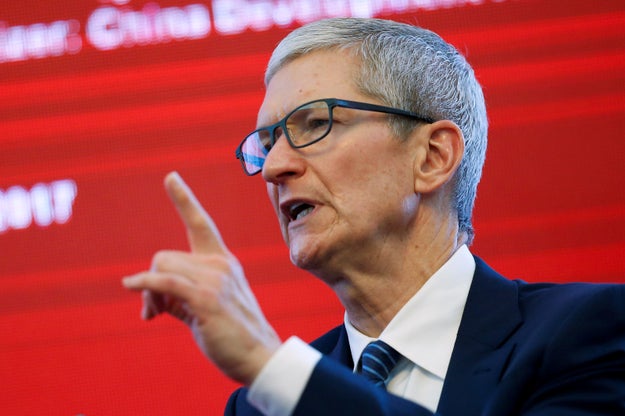
Apple estimates that it provides more than two million jobs in the US, even as the majority of its hardware is manufactured in China. Unveiled last week by CEO Tim Cook, Apple's billion dollar Advanced Manufacturing Fund comes as president Trump has pushed job growth as a top priority for his administration.

“We’re really looking at this thing deeply,” Cook said of the manufacturing fund. “How do we grow our employee base? How do we grow our developer base? And how do we grow manufacturing? You’ll see us bring things to market in all of those areas across this year.”

Quelle: <a href="Part Of Apple's New Billion Dollar Jobs Fund Will Go To Its Glass Maker, Corning“>BuzzFeed

Judge Asks Federal Prosecutors to Investigate Uber's Self-Driving Car Program

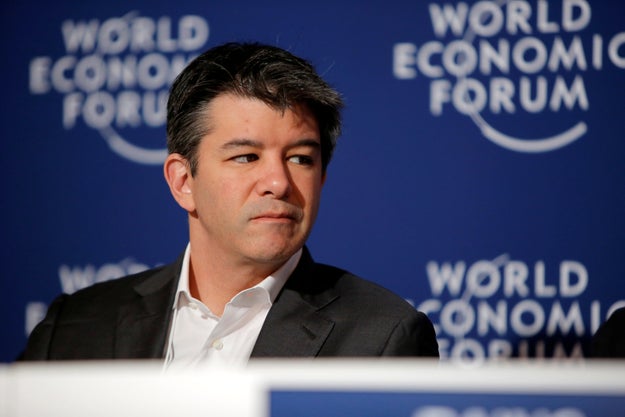
Uber CEO Travis Kalanick

Staff / Reuters

The judge presiding over Waymo's high-profile lawsuit against Uber has asked federal prosecutors to investigate the ride-hailing company and one of its top autonomous vehicle executives for potential theft of trade secrets from the Alphabet-owned autonomous car company.

The referral of the lawsuit to the United States Attorney means that Uber is now facing two Justice Department Investigations. Waymo had also requested US District Judge William Alsup grant an injunction to halt Uber's self-driving program pending a trial. Alsup issued an order “granting in part and denying in part” that request, but the court order is still under seal. Alsup also denied a bid by Uber to force the case into arbitration.

Alsup's decision deal a significant blow to Uber, which is also under criminal investigation by the Justice Department over its use of an internal tool used to circumvent regulators. Waymo filed the lawsuit against Uber in February, alleging that Anthony Levandowski, its former employee, downloaded 14,000 files before leaving the company and joining the ride-hail giant – and then using Waymo’s trade secrets to help Uber build its own self-driving technology.

An Uber spokesperson said in a statement that “It is unfortunate that Waymo will be permitted to avoid abiding by the arbitration promise it requires its employees to make. We remain confident in our case and welcome the chance to talk about our independently developed technology in any forum.”

Uber declined comment on Alsup's referral of the case to the U.S. Attorney’s office.

In referring the case to the Justice Department, Alsup – who has thus far told Waymo it has one of the strongest cases he has seen in his career – said he takes “takes no position on whether a prosecution is or is not warranted, a decision entirely up to the United States Attorney.”

The lawsuit centers around LiDAR technology, which uses lasers to help self-driving cars see and navigate the world. Waymo’s lawyers have argued that the situation is so damaging to its own business that the court should halt Uber’s use of the technology it allegedly created using stolen trade secrets, essentially putting the brakes on the ride-hail giant’s self-driving program. Uber’s lawyers said exhaustive searches of the company’s systems have not turned up the files Waymo alleges were stolen. Whether Alsup has granted Waymo's request for an injunction – and how extensively – will become clear when the court order becomes public.

On April 27, Levandowski stepped down from his leadership position in Uber’s self-driving program and into a lesser role. Uber’s lawyers cited the move as evidence he is not working on the technology at hand pending a trial. Waymo's injunction request, however, had asked the judge to stop Levandowski from working on Uber's self-driving program entirely.

This is a developing story.

Quelle: <a href="Judge Asks Federal Prosecutors to Investigate Uber's Self-Driving Car Program“>BuzzFeed

Apple Will Announce Amazon Prime Video Coming To Apple TV At WWDC

After a fraught few years, Apple and Amazon have reached something of an accord over their rival video efforts.

Sources in position to know tell BuzzFeed News that Amazon's Prime video app — long absent from Apple TV — is indeed headed to Apple's diminutive set-top box. Apple plans to announce Amazon Prime video's impending arrive to the Apple TV App Store during the keynote at its annual Worldwide Developers Conference (WWDC) on June 5 in San Jose, CA. A source familiar with the companies' thinking say the app is expected to go live this summer, but cautioned that the hard launch date might change. Amazon had previously declined to even submit a Prime Video app for inclusion in Apple's Apple TV App Store, despite Apple's “all are welcome” proclamations.

Recode earlier reported that Apple and Amazon were nearing an agreement that may finally bring the Prime Video app to Apple TV. It's now official.

As part of the arrangement between the two companies, Amazon — which stopped selling Apple TV devices two years ago, when it also banned Google’s Chromecast devices from its virtual shelves — will resume selling Apple's set-top box. In October 2015, Amazon forbid third-party electronics sellers from selling Apple TVs and Google Chromecasts through their Amazon storefronts, arguing that the devices inspired “customer confusion.”

“Over the last three years, Prime Video has become an important part of Prime,” Amazon told BuzzFeed News at the time. “It’s important that the streaming media players we sell interact well with Prime Video in order to avoid customer confusion. Roku, XBOX, PlayStation and Fire TV are excellent choices.”

A hard date for the Apple TV's return to Amazon and its storefronts couldn't be learned.

Apple declined comment on forthcoming Amazon Prime Video announcements. Amazon has not yet responded to a request for comment.

Quelle: <a href="Apple Will Announce Amazon Prime Video Coming To Apple TV At WWDC“>BuzzFeed

Your Apple Watch Could Someday Detect This Risky Heart Condition

Siphotography / Getty Images

The Apple Watch’s heart rate sensors come in handy for knowing how hard your blood is pumping at the gym. But a new, if preliminary, study suggests that the smartwatch also has the potential to spot a much more serious medical condition: an irregular heart rate, known as atrial fibrillation.

The study’s researchers first trained an algorithm to recognize instances of atrial fibrillation in heart rate measurements submitted by people all over the world. The algorithm then accurately detected when a small group of people was experiencing atrial fibrillation in real time, based on data flowing from the Apple Watch on their wrists.

These results are being presented Thursday at the Heart Rhythm Society’s annual conference in Chicago. They have not been published in a scientific journal and need to be validated in larger groups of patients, so don’t expect your Apple Watch to replace a heart check-up any time soon.

Still, cardiology experts say that if the concept is proven to work, the Apple Watch could be a useful tool in helping identify, track, and treat patients with a medical condition that affects an estimated 2.7 million Americans. Atrial fibrillation increases risk of blood clots, stroke, and heart failure — but because it sometimes doesn’t result in symptoms, it can go undetected and untreated, according to the American Heart Association. Catching it early, alerting a doctor, and treating it with blood-thinning medications could save lives.

“This is an important study which gives hope to the notion that someday, it may be possible on a widespread basis for patients or individuals to detect atrial fibrillation with smartwatch technology,” said Hugh Calkins, director of the Cardiac Arrhythmia Service at Johns Hopkins University, who was not involved with the study. He also stressed that it is “no more than an early proof of concept.”

“We were pretty surprised that a device you could go into Best Buy and purchase was capable of this level of accuracy.”

The study, led by researchers at UC San Francisco and the heart rate-analysis startup Cardiogram, illustrates how wearables could help make scientific research and health care more personalized, precise, and effective. Millions of devices sold by companies like Apple, Fitbit, Garmin, and Jawbone are capturing unprecedented quantities of biometric data, from steps to sleep to heart rate, that researchers have never had access to before.

There are already a couple wireless, FDA-cleared devices that atrial fibrillation patients can use to track their heart rate, but because they aren’t meant to be worn all the time, they inevitably miss some data. The Zio Patch sticks to your chest for two weeks, which makes it most useful for monitoring patients right after they’re discharged from the hospital. The AliveCor, a set of electrodes that straps onto the back of your smartphone, produces a heart-rate readout when you press on it.

But people wear Apple Watches all the time. One analyst estimated that Apple sold 6 million units in the last quarter of 2016 alone — nearly 80% of the total smartwatch market. That popularity, along with its high-quality heart-rate sensor, makes it an attractive tool for researchers like Greg Marcus, an atrial fibrillation expert at UCSF and senior author of the study.

Instead of requiring people to buy new gadgets, “the idea here is that we can leverage what people are buying on their own and using anyway,” Marcus told BuzzFeed News.

Marcus is leading an ongoing research project, called the Health e-Heart Study, which aims to study heart disease and health in people scattered throughout the globe. For this study, his team drew from a pool of about 6,400 Apple Watch owners, including 166 people with atrial fibrillation and AliveCor devices. Together, they produced nearly 140 million heart rate measurements and 6,340 AliveCor recordings.

Justin Sullivan / Getty Images

Cardiogram, a startup that’s raised $2 million from Andreessen Horowitz and other investors, collected those data points through its iOS app. Then it used them to train an algorithm to distinguish atrial fibrillation patterns from normal heart rhythms.

To see if it worked, Marcus’ group waited for atrial fibrillation patients to come to UCSF for cardioversions, the procedure for restoring a normal heart rhythm. They gave the patients Apple Watches to wear before, during, and after, and also ran electrocardiograms for a definitive record of their heartbeats. When the algorithm was later applied to the collected heart rate data, it turned out to flag atrial fibrillation episodes with 97% accuracy.

“We were pretty surprised that a device you could go into Best Buy and purchase was capable of this level of accuracy,” said Brandon Ballinger, cofounder of Cardiogram.

It’s an early example of how machine learning can potentially help diagnose people and spot health problems before humans do. But it may be a while before physicians feel totally comfortable relying on an algorithm.

“The downside is there’s a bit of a black-box nature to it,” Marcus said. “By its nature, it’s figuring out the best way to do it and we as investigators may not have as much transparency into the exact algorithm it’s using. That’s going to take some getting used to.”

Other hurdles mean algorithms and wearables are a long way from becoming a mainstay in medical care. When the Apple Watch was being tested on patients in the study, it had to be in workout mode in order to continually capture data. People had to keep still, since the heart rate sensors are potentially less accurate when the wearer is moving around. The algorithm was also tested on a small group of about 50. “This is just a promissory note because they only have a limited number of people they’ve analyzed so far,” said Eric Topol, a cardiologist and geneticist at the Scripps Research Institute, who was not involved with the study.

And while many people have Apple Watches, not all of them are at risk for atrial fibrillation, since the condition is more common in people over age 60. As Calkins put it, “Is your grandmother going to be able to wear this smartwatch to figure out if she has atrial fibrillation or not?”

Still, Topol says that he can see a future where “the Apple Watch and other wearables will get to a point where people will get an alert on their phone or through their devices that says look like you may have atrial fibrillation.” He added, “That’s where we’re headed.”

Quelle: <a href="Your Apple Watch Could Someday Detect This Risky Heart Condition“>BuzzFeed

Top Liberals Are Unintentionally Building An Anti-Trump Conspiracy Media

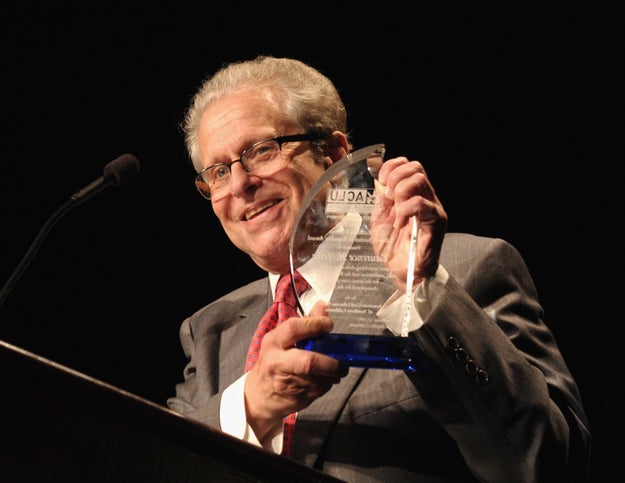
Harvard Law School's Laurence Tribe accepts an award from the ACLU in 2011.

Alberto E. Rodriguez / Getty Images

Democrats and the mainstream media have spent the months since Donald Trump's election fixated on the the flood of unconfirmed reports, half-truths, and outright propaganda that accompanied his rise.

But some of the country’s leading liberal lights — respected figures including elected officials, prominent legal scholars, members of the media and celebrities — are themselves sharing wild allegations about the Trump administration from unreliable sources.

Perhaps no one embodies this trend so well as Laurence Tribe. Tribe is one of the country’s foremost constitutional lawyers, a the Carl M. Loeb University Professor at Harvard Law School. He has argued dozens of cases in front of the Supreme Court. He’s a major figure in American public life. In recent months Tribe has devoted much of his activity on Twitter to outraged extrapolation about the Trump administration. Often, these take the form of “big if true” tweets that cite unconfirmed reports about Trump’s possible misdeeds and are essentially conjecture.

On April 22, Tribe shared a story from a website called the Palmer Report — a site that has been criticized for spreading hyperbole and false claims — entitled “Report: Trump gave $10 million in Russian money to Jason Chaffetz when he leaked FBI letter,” a reference to the notorious pre-election letter sent by former FBI director James Comey to members of Congress that many have blamed for Hillary Clinton’s November loss.

The “report” the article points to is a since-deleted tweet by a Twitter user named LM Garner, who describes herself in her Twitter biography as “Just a VERY angry citizen on Twitter. Opinions are my own. Sometimes prone to crazy assertions. Not a fan of this nepotistic kleptocracy.” Garner, who has 257 followers, has tweeted more than 25 thousand times from her protected account.

“I don't know whether this is true,” Tribe’s tweet reads, “But key details have been corroborated and none, to my knowledge, have been refuted. If true, it's huge.”

Reached by email, Tribe said that he was aware of the Palmer Report’s “generally liberal slant” and “that some people regard a number of its stories as unreliable.” Still, he added, “When I share any story on Twitter, typically with accompanying content of my own that says something like “If X is true, then Y,” I do so because a particular story seems to be potentially interesting, not with the implication that I’ve independently checked its accuracy or that I vouch for everything it asserts.”

Asked whether he had considered his role in spreading unconfirmed information, given his stature in American society, Tribe responded that “I really don’t have anything to tell you about my thoughts regarding my personal role in sharing information over social media in this usually agnostic manner.”

Tribe is far from alone among prominent liberals in sharing unconfirmed, speculative, and sometimes wild information. But he is emblematic of an information echo chamber that has grown up since the election around sites like the Palmer Report and figures like the anti-Russian influence crusader Louise Mensch, in which anti-Trump public figures share unreliable information, the very act of which the sources of these reports use to bolster their own legitimacy. It therefore operates similarly — though it is smaller and far less powerful — to the vast new right wing online media that launders dubious claims through increasingly mainstream outlets before, sometimes, reaching the highest levels of government.

The Palmer Report is the work of Bill Palmer, who describes himself on his website as a “political journalist who covered the 2016 election cycle from start to finish.” Before the Palmer Report, Palmer ran a site called Daily News Bin, which Snopes’ Brooke Binkowski called “…basically a pro-Hillary Clinton “news site.” It was out there to counter misinformation.” Last November, Palmer introduced his new site as an “investigative reporting…side project” and has since written hundreds of articles that range from “evidence-free” assertions that Vladimir Putin personally ordered last month’s chemical attack in Syria to a story entitled “Brain specialist doctor believes Donald Trump’s frontal lobe is failing” based on a single tweet by a doctor. Along the way Palmer has collected more than 63 thousand Twitter followers and more than a few famous signal boosters.

Indeed, the site includes a “Thank Yous” section, a long list of liberal notables who have shared the site’s stories. It includes MSNBC host Joy-Ann Reid, Harvard Law School Professor Laurence Tribe, novelist Joyce Carol Oates, director Rob Reiner, Trump foil Rosie O’Donnell, and Mark Hamill — Luke Skywalker. The Democratic California Congressman Ted Lieu is specially thanked for sharing a Palmer Report story on his official website.

Lieu's office did not respond to a request for comment.

The site had its most significant exposure yet this week. As confusion swirled in Washington Wednesday following President Trump’s firing of FBI director James Comey, Democratic Massachusetts Senator Ed Markey went on CNN to make an explosive claim: A grand jury had been empaneled in New York to investigate Trump’s ties to Russia. (Another grand jury investigation, in Virginia, has been reported by CNN.)

Among the outlets that eagerly picked up the news were the Palmer Report and the Twitter feed of Louise Mensch, the anti-Trump crusader who has accused hundreds of people of being Russian agents, often with no evidence.

And what were Markey’s sources for this alarming claim? According to a Guardian reporter and the Daily Caller, none other than the Palmer Report and Mensch themselves. Hours after making the claim, Markey was forced to apologize for spreading unsubstantiated information, and through a spokesman, to reveal that he had no direct knowledge of any New York investigation.

Markey's office did not respond to a request for comment.

And despite Markey’s apology, as of Thursday afternoon, the Palmer Report headline read: “U.S. Senator confirms grand jury is now underway in Donald Trump case in New York State.”

Quelle: <a href="Top Liberals Are Unintentionally Building An Anti-Trump Conspiracy Media“>BuzzFeed

This Is What Snapchat's East Asian Competitors Do To Your Selfies

“The beauty filters make me look cute, but I’m cute as hell anyway.”

Sian Butcher / Laura Gallant / BuzzFeed

Earlier this year, an app called Meitu, made by the Chinese technology company of the same name, was discovered by Americans and Europeans and went viral. Photo apps like Snapchat and Instagram reign supreme in the West, but outside this sphere, there's a whole universe of popular photo editing apps like Meitu that most English-speaking people haven't tapped into yet. And if the viral – albeit short-lived – success of Meitu is anything to go by, it's only a matter of time before similar apps from East Asia break into the Western market again. So it's probably time to get to know what's out there.

We decided to test out three popular East Asian camera apps.

We decided to test out three popular East Asian camera apps.

We picked three apps to try, based on their popularity in East Asia, their growth in countries outside East Asia, and recommendations from current users. Snow is an app released in 2015 by Naver, a Korean company that also owns the popular messaging app Line. On Snow you can add filters and stickers to selfies, create stories, and send pictures to friends who also use the app. Snow boasts 100 million users worldwide, and is particularly popular in South Korea and Japan.

BeautyPlus is another app created by the company behind Meitu. It allows users to edit selfies, as well as offering filter options. BeautyPlus is popular in Japan, and like other Meitu partner apps, its appeal is quickly growing outside Asia.

Foodie is owned by Line Corporation, an offshoot of Naver. The app was originally created so people could take better photos of their food, but users have found that it's also pretty great for seflies. Each filter is named after the type of food or drink it best complements. Foodie is popular in South Korea and Taiwan, where it was the No. 1 app early last year.

We asked BuzzFeed staff members to try out these three popular East Asian beauty apps and tell us whether they'd consider swapping their staple photo apps for these alternatives.

Naver / Meitu / Line Corporation


View Entire List ›

Quelle: <a href="This Is What Snapchat's East Asian Competitors Do To Your Selfies“>BuzzFeed

Show This App The Receipts, And It Could Save You Money On Late Deliveries

Late online shopping deliveries are annoying, but arguing with customer service reps to try to get a refund is even more annoying. Now you can let robots do that for you, via a Capital One-owned app called Paribus, all for the low, low cost of access to your inbox, the ability to send emails from your account, your retailer login credentials, and your credit card information.

As of today, the new, free feature works with Walmart and Amazon deliveries, but the company plans to roll it out to a variety of other companies soon.

This isn’t the first time Paribus has tried to hold major retailers, including Amazon, to their word. Many stores offer a partial refund if the price of a product falls within a few weeks after you buy it. Since it launched in August 2015, Paribus says it’s helped over 1.5 million customers of get partial refunds from more than two dozen retailers by tracking prices online.

Nine months after Paribus launched, Amazon stopped giving price drop refunds on any item except TVs. But Amazon does offer shipping fee refunds (and, occasionally, Prime membership extensions) if your order doesn’t arrive on time — and Paribus wants to make sure the company forks over the dough.

Here’s how Paribus works: It scans a customer’s email, looks for instances where the promised delivery date and actual delivery date are out of sync, and automatically contacts Walmart or Amazon from the customer’s email address, claiming a late delivery and asking for a refund.

Customers are only alerted by Paribus twice, once when it finds a discrepancy, and again when the claim is resolved. Existing Paribus customers will be signed up for the new feature automatically; new customers will be signing up to allow Parbus to check for both price drops and late deliveries.

No humans get involved in the refund process unless something goes wrong, and while CEO Eric Glyman declined to share the company’s success rate, he said it’s a figure he’s proud of. Of the 30 people currently employed by Paribus, around eight work in customer service, Glyman said.

Obviously, in order for Paribus to work, it needs access to your inbox. Glyman said customer emails are only moved to Paribus’s servers if both the subject line and the sender information confirm that the message contains a receipt pertaining to a recent purchase. Not only does Paribus not collect any other emails, Glyman said, it also doesn’t aggregate, anonymize or sell user data to any third parties, even though it reserves the right to do just that in its official privacy policy.

“Yes, we have the legal right to do it,” Glyman told BuzzFeed News. “But what’s most important to us is actually bringing consumer benefits and acting on people’s behalf in a positive way. We have a lot of responsibility, and our business is based on the trust we have with our customers, and we want to stay true to that.”

Recently, a New York Times article revealed that inbox management startup Unroll.Me had sold anonymized customer data about Lyft usage to its ride-hail competitor Uber. Unroll.Me experienced a major backlash over perceived violation of privacy, and ultimately had to make a public apology.

Glyman said he aims to be transparent with Paribus customers in order to avoid similar scandals. “Internally,” he said of the Unroll.Me debacle, “it steeled our resolve to make sure we are fighting on behalf of consumers.”

Paribus makes money by taking a 25% cut of price drop refunds, but it doesn’t plan to collect on late delivery refunds. Deciding not to sell consumer data to third parties means Paribus’s options for revenue are somewhat limited. For now, Capital One — which, like other big financial institutions, has been scooping up small dollar savings personal finance apps aimed at millennial audiences left and right — doesn’t seem to mind, for now.

If you’re interested in saving a couple dollars here and there with Paribus, but you’re not comfortable with a big bank-owned app poking around in your personal inbox and allowing its robots to pretend to be you, you can always set up a second email address just for online shopping. Amazon still might not be happy about it — a company spokesperson told Recode it advises customers “not to share their Amazon account credentials with anyone” — but in the end, the retailer’s goal is to guarantee cheap and timely deliveries.

“One of the reasons people sign up for Prime is free and guaranteed two-day shipping,” said Glyman. “Amazon just yesterday lowered their free shipping threshold to $25. I think Target is running similar tests. I think Walmart lowered their threshold. It’s one of the key areas people are competing on, and we’re excited to help make it right for customers when something doesn’t happen as advertised.”

Quelle: <a href="Show This App The Receipts, And It Could Save You Money On Late Deliveries“>BuzzFeed