How The Pro-Trump Media Responds To A Crisis In Just 4 Steps

This week has posed a new test for the pro-Trump media — a loose affiliation of news organizations, trolls, and independent journalists — who fight the moment-to-moment battle to defend the president and rally his supporters as he reels among self-imposed crises.

The latest came in the form of a bombshell report from the Washington Post that President Trump disclosed highly classified information to the Russian foreign minister and ambassador last week and, in doing so, may have jeopardized a source in the fight against ISIS.

The pro-Trump media operates as a mirror image of its mainstream counterpart with its own “alternative facts,” audience, and interpretation of truth. And perhaps never has this been clearer than in its response to Monday's news.

Below is a timeline and breakdown of how — in just 17 hours and 4 steps — the Upside Down media flipped the script on a particularly thorny news cycle.

Phase 1 – Quiet Period:

As the Washington Post scoop hit Twitter, the pro-Trump media's most active spaces — 4chan, Reddit, and Twitter — were unusually quiet while waiting to figure out how to respond to the story.

Phase 2: Blaming The Usual Suspects/Dismissal

It took about an hour or so for the first quick takes to appear. As is expected, they touched on familiar pro-Trump media talking points — reflexive plays to the base audience including:

Basically, an attempt to discredit the Washington Post and its reporting by suggesting that the decision to publish the sensitive information would tip the terrorist organizations and individuals involved.

Basically, an attempt to discredit the Washington Post and its reporting by suggesting that the decision to publish the sensitive information would tip the terrorist organizations and individuals involved.

The Washington Post story notes, however, that it did not publish sensitive details. “The Post is withholding most plot details, including the name of the city, at the urging of officials who warned that revealing them would jeopardize important intelligence capabilities,” the story read.

The Gateway Pundit, a far-right/pro-Trump outlet, also attempted to attack the Post's credibility, suggesting yesterday's report was the 4th false story from the paper in a week.

Another staple of the pro-Trump media is to call into question the anonymous sources, such as the ones cited in the Washington Post article. The suggestion: if the sources won't attach their name to the claim, then they have nothing to lose — and thus their credibility is suspect.

It's important to note that anonymous sources are a staple of investigative journalism on highly sensitive stories. While the use of anonymous sources are a contentious issue — Margaret Sullivan, the former public editor of the New York Times, used her column to attempt to get the Washington Post to crack down on its use of anonymous sources — they are used by reporters to unearth deeply sensitive or classified information that would otherwise not come to light.

Also, Jack Posobiec has often cited sources without naming them during his reporting on Twitter.

But the pro-Trump tactic of questioning the anonymous sources plays well with those outside of the media. A March poll by Morning Consult revealed that “half of Americans think it is inappropriate for journalists to cite anonymous sources in their reporting, and many think reporters are simply making up those sources.”

Early in the evening, White House national security adviser H.R. McMaster, spoke to the press and declared the Post story “as reported, is false.”

In the statement — which did not expressly deny that Trump disclosed classified information to Russia — McMaster noted that, “the President did not disclose any military operations that were not already publicly known.” And said that, “two other senior officials who were present, including the secretary of state, remember it being the same way and have said so. Their on-the-record accounts should outweigh those of anonymous sources. And I was in the room. It didn’t happen.”

On 4chan, anonymous users floated the theory that Trump — ever the mastermind — was planting false information to identify leakers. The suggestion that Trump is continually far ahead of his critics and constantly out-foxing the mainstream media is a common defense of some in the pro-Trump media.

The Deep State Leaks Defense
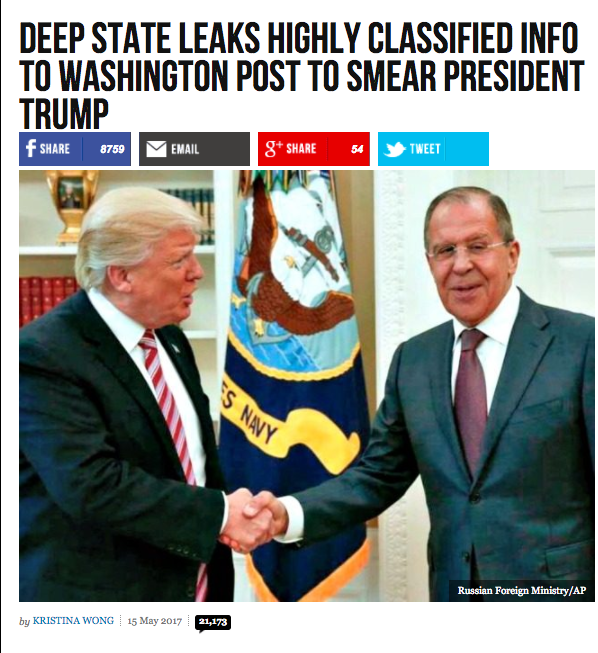
The Deep State Leaks Defense

In the early evening, Breitbart News published a pretty straightforward write-up of the days news with a sensational headline, blaming the leaks on the deep state to smear Trump. The body of the story hardly touches the deep state angle addressed in the headline. The story notes just below the headline that it “is 'unlikely' Trump broke any laws.”

By late evening, the Drudge Report — which largely helps set the right-wing media agenda — settled on a narrative, focusing on the White House's inability to crack down on leaks (the story Breitbart wrote).

Drudge has been very critical of White House leaks recently and reportedly expressed his distaste to President Trump during a recent trip to the White House.

After Drudge, the leak angle gained traction. The pro-Trump conspiracy and news site, Infowars, spun the story slightly, suggesting that McMaster leaked the story to save his own job.

Infowars' Alex Jones and Roger Stone argued that the leak “came out of the NSA and not the White House” and that since “McMaster's head is on the chopping block” he “leaked the information to make himself indispensable” to the news cycle — and thus un-fireable.

Across bigger conservative media outlets, the Washington Post story got very little real estate across homepages.

An archive.org rendering of FoxNews.com later in the evening shows that Fox News then changed the headline to reflect the White House's denial of the Post story. “'IT DIDN'T HAPPEN,'” the headline read.
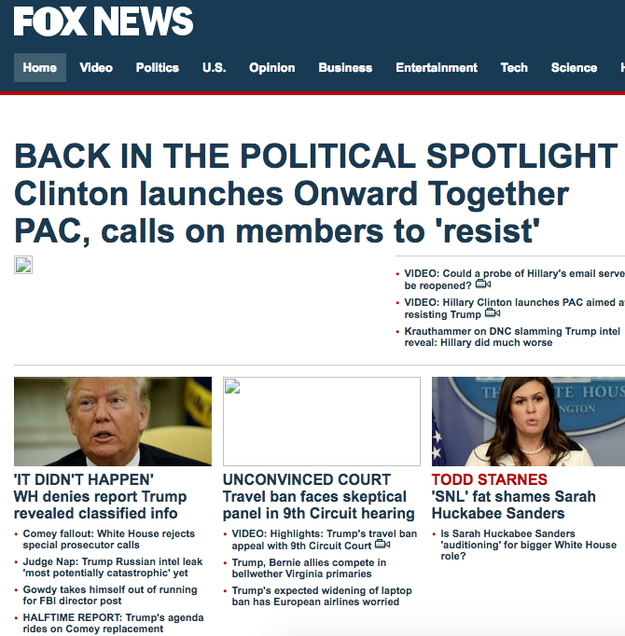
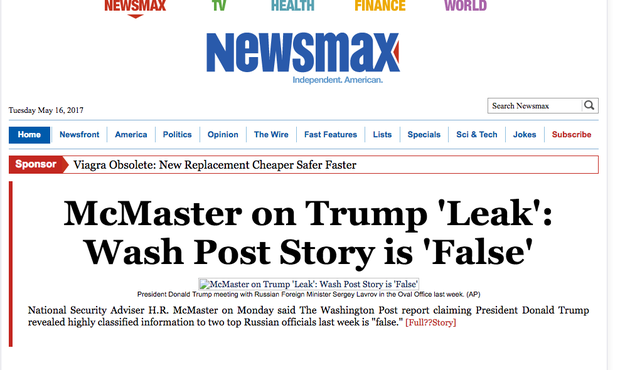
And Newsmax — a site whose CEO, Chris Ruddy, is a close friend of Trump — opted for a similar White House denial headline.
Phase 3: Changing The News Cycle

Just before 10:00 P.M., Fox 5 — a Washington D.C. affiliate — posted a report alleging that the murdered DNC staffer Seth Rich “was communicating with WikiLeaks prior to his death.”

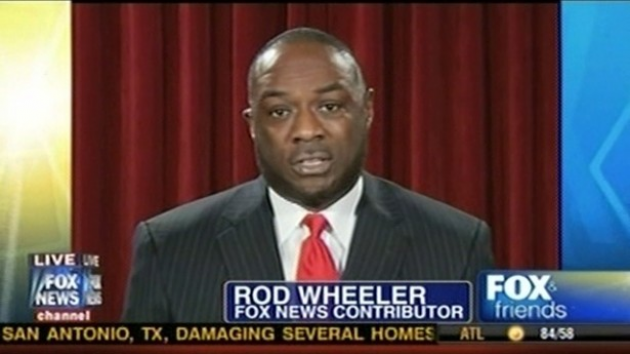
The story said that “Rod Wheeler, a private investigator hired by the Rich family, suggests there is tangible evidence on Rich's laptop.” It's since been confirmed by BuzzFeed News that Rich's family did not hire Wheeler as an investigator (a third party did) and that Rich's family rejects the report.

The report was quickly seized upon by some of the biggest pro-Trump outlets, including Breitbart and Drudge.

By morning, Breitbart was crediting Fox News, not the Fox 5 report.
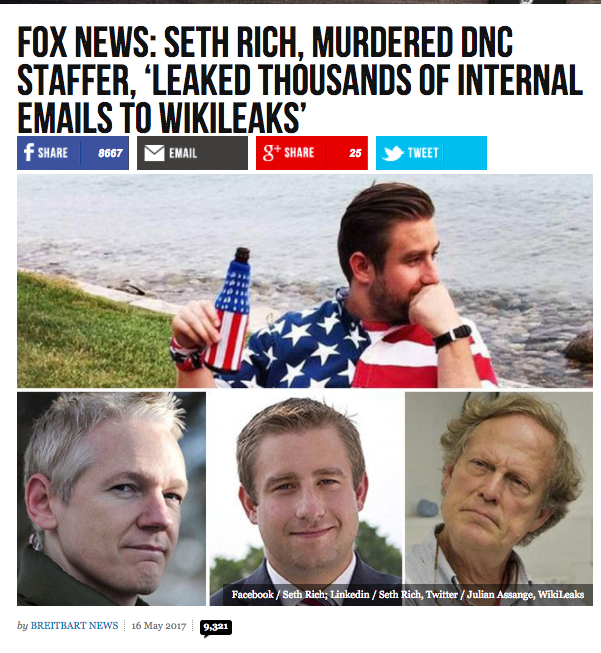
By morning, Breitbart was crediting Fox News, not the Fox 5 report.

Phase 4: Close The Loop/ Merge The Dueling News Cycles.

This is perhaps the thing that the pro-Trump media is best at. Here, Infowars' Paul Joseph Watson closes the conspiratorial loop and suggests that the initial Washington Post story was part of a nefarious plot to crowd out the news cycle and distract from the real news of the day — no matter that the Fox 5 report on Seth Rich came hours after the Washington Post scoop.

Here, the pro-Trump media continues to sow doubt and undermine the credibility of the Post and the mainstream media while flipping the script on those who believe that the Seth Rich story was timed to kill a news cycle that was hurting the Trump administration.

Quelle: <a href="How The Pro-Trump Media Responds To A Crisis In Just 4 Steps“>BuzzFeed
Meet The Private Detective Who Ignited A Clinton Conspiracy Theory

Fox News

A Washington, DC Fox affiliate report Tuesday night that a deceased DNC staffer had been in contact with Wikileaks prior to his murder set conservative media ablaze.

The story poured fresh fuel on a long-simmering wild conspiracy theory — for which there is no evidence — that the Clintons had the staffer, Seth Rich, murdered for leaking DNC emails to Julian Assange's organization. It was based on an interview with a single source, a private investigator named Rod Wheeler who, the article said, had been hired by the Rich family to investigate the crime.

This morning, though, the Rich family rejected the report and told BuzzFeed News through a spokesman that Wheeler had been “paid for by a third party” and was contractually “barred from speaking to press” without permission from the family.

So who is Rod Wheeler, what do we know about him, and what is his relationship to the Riches?

Wheeler is a former homicide detective for the DC Metropolitan Police Department, who, per his LinkedIn, has been a contributor to Fox News since 2002. And it was through his television appearances that he was ultimately put in contact with the Rich family, through a fellow Fox News contributor named Ed Butowsky.

Butowsky, a prominent wealth manager from Dallas and a contributor to Bretibart News who attended President Trump's inauguration, told BuzzFeed News that he reached out to the Rich family after hearing about the Clinton-Rich conspiracy theory from a friend.

“They said they didn’t feel they were getting any answers,” Butowsky said. “The investigation wasn’t going anywhere. I said 'why don’t you hire a private detective?' They said they didn’t have any money.”

Butowsky said he offered to pay for a private investigator, and called Wheeler. There, he said, his involvement ended.

“They negotiated something,” Butowsky said. “In their contract it said, any money Rod is going to bill, Butowsky is going to pay. But Rod Wheeler has never billed me a penny. Nobody has ever paid anybody anything.”

Beyond his involvement in the Rich case, Wheeler is mostly known for saying outrageous things on air. In 2007, in reference to a controversy over racial profiling and policing, Wheeler pulled his eyes back on air to demonstrate what “a Chinese male” looks like. And in the same year, on the Bill O'Reilly show, Wheeler said that a “national underground network” of armed lesbians were raping girls.

In addition to his private detective business, Capital Investigations, Wheeler is also, according to his LinkedIn, the CEO and founder of the Global Food Defense Institute. (“Food defense,” per the website of the FDA, focuses on “the risk of criminal or terrorist actions on the food supply.”)

But it's Wheeler's experience in the DC police department that seems to have qualified him to investigate the Rich case. In the Fox story, Wheeler said that a source within the department told him that they were ordered to “stand down” on the Rich investigation, and that it was “confirmed” that Rich was in contact with Wikileaks.

Calling Wheeler's allegations “unfounded,” a spokesperson for the MPD said that Wheeler had been employed by the department from 1990 to 1995 and that he was “dismissed from the agency.”

It's unclear what prompted Wheeler to speak to Fox, but earlier today, the Rich family denied having seeing the investigator's report in a statement:

“We see no facts, we have seen no evidence, we have been approached with no emails and only learned about this when contacted by the press.”

BuzzFeed News called a cell phone number appearing to belong to Wheeler and the number of the Global Food Defense Institute, which both had full mailboxes.

Quelle: <a href="Meet The Private Detective Who Ignited A Clinton Conspiracy Theory“>BuzzFeed

Instagram Adds Face Filters, Snapchat Cloning Complete

Getty

Here’s an idea for a fun social app: It starts with a camera. First, you take a picture or video. Then you add fun effects — masks that hew to your face, or crowns that rest at your hairline. You can send these images or videos to friends via a direct message, or share them with all your contacts via a feature called Stories. Also, they disappear.

A year ago, these features were unmistakably Snapchat’s. But now the Facebook-owned Instagram has them too. After copying Snapchat’s Stories feature last August, Instagram is releasing a version of its selfie lenses today, finishing off a brazen cloning of Snapchat’s most beloved features just as its parent company, Snap Inc., is getting its footing on the public market. The only thing missing is Discover, a collection of just-for-Snapchat media created by professionals and publications.

Snapchat didn’t invent selfie lenses, but it did popularize their use. That pioneering role did not merit a mention in an Instagram blog post announcing the new selfie lenses — which are interactive, just like Snapchat’s. This was a departure from when Instagram introduced its version of Stories, a feature that Instagram loudly credited to Snapchat.

“Today, we’re introducing face filters in the camera, an easy way to turn an ordinary selfie into something fun and entertaining,” Instagram said. “Whether you're sitting on the couch at home or out and about, face filters help you express yourself and have playful conversations with friends.”

Instagram's new “face filters”

Instagram

Instagram’s introduction of selfie lenses (it calls them “face filters”) comes in the midst of a major push from Facebook to layer digital experiences on top of the real world via its apps’ cameras. At its F8 conference in April, Facebook unveiled a new camera effects platform, inviting developers to create their own masks and filters that, after approval, would be made available for use inside Facebook (which already has its own set of face filters). Using the same backbone technology, Instagram could easily introduce a similar platform of its own.

With its effects platform, Facebook appears to be attempting to surpass Snapchat in terms of mask and filter quality. But its ambition is far greater. Relying on computer vision technology, Facebok would like to map out the world and allow developers to build games, and overlay digital art on top of the physical world we live in today. “When you can make it so that you can intermix digital and physical parts of the world, that's going to make a lot of our experiences better and our lives richer,” Facebook CEO Mark Zuckerberg told BuzzFeed News in an interview ahead of F8.

In the meantime, the Snapchat cloning appears to be a boost for Facebook, at least inside Instagram. Instagram’s Stories feature is used by 200 million people every month. WhatsApp’s Stories copy, Status, is used by 175 million people each day. Facebook and Messenger appear to be somewhat behind that. Snap, struggling to grow revenue and, to some extent, its user base, saw billions of dollars wiped off its market cap last week.

Asked if Instagram plans to ship more Snapchat-inspired features, an Instagram spokesperson said, “We aren’t sharing any other updates at this time.”

Even if they were, there’s little left to copy.

Quelle: <a href="Instagram Adds Face Filters, Snapchat Cloning Complete“>BuzzFeed

The Sexual Harassment Allegations Against This Virtual Reality Startup Are Really Gross

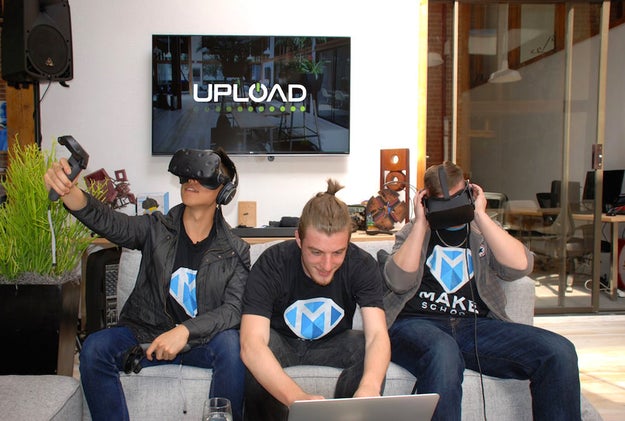
UploadVR / Via uploadvr.com

Some of the biggest companies in the tech world have been marked by sexual harassment and gender discrimination allegations over the last few years: from engineer Susan Fowler exposing an allegedly “systemic problem” at Uber, to Ellen Pao suing the venture capital firm Kleiner Perkins for discrimination, to the female engineers at Facebook claiming gender bias. The latest allegations concern virtual reality startup UploadVR, which is being sued by Elizabeth Scott, its former Director of Digital and Social Media, for sexual harassment, discrimination, and wrongful termination. But even in a culture that’s almost become inured to the shock of yet another sexual harassment lawsuit, the allegations in this one seem particularly egregious.

The complaint paints a picture of a wild frat house culture where women were allegedly referred to as “mommies” who had to clean up the condoms and underwear left behind in the company's “kink room,” where male employees would regularly have sex. According to the complaint, women at the company were allegedly subjected to a daily barrage of insults, sexual comments, and general degradation that made working there a total hell.

Here, we've compiled a list of the most horrendous allegations against UploadVR, taken directly from the complaint, as reported by TechCrunch. (UploadVR has not responded to BuzzFeed News's request for comment on the allegations.)

1. “Male employees … discussed sex at the office on a daily basis. [They] would discuss their sexual exploits in graphic detail at the workplace in front of Plaintiff and other female employees.” The sex life of one employee, Greg Gopman, in particular “was a frequent topic of discussion. The other male employees would talk about how he 'refuses to wear a condom' and 'has had sex with over 1000 people.'”

2. “Male employees stated how they were sexually aroused by female employees and how it was hard to concentrate and be productive when all they could think about was having sex with them.”

3. One male employee, Avi Horowitz, “would frequently comment about how attractive one of the female employees was, in Plaintiff's presence. He would talk about now he 'had a boner' and had to go to the bathroom to 'rub one out' so he could focus, meaning that he was going to the bathroom to masturbate.”

4. Company founder Taylor Freeman “made it known that he did not find Plaintiff attractive and that she could not be used for marketing purposes because she was 'too big.'”

5. Before a trip to Asia, company executives sent around an email about how they were trying to get 'Samurai Girls' — “submissive, Asian women” — for the trip.

6. “Male employees engaged in explicit sexual conduct in the office in the presence of Plaintiff and other female employees.” Gopman “brought a female companion to the office and she proceeded to straddle him and kiss him while they were in the shared office space.”

7. There was a room at Upload referred to as the “kink room” that contained a bed. “Male employees used that room to have sexual intercourse… often, underwear and condom wrappers would be found in the room.”

8. At a party at a rented house in Los Angeles that Scott was required to attend, a male employee invited prostitutes and strippers.

9. At a party at a conference in San Jose, Freeman forced Scott out of her room so he could have sex with a woman he brought to the event.

10. Men at the company separated themselves from the women and sat together in a separate room and refused to allow Scott to sit with them. They also refused to let her come to lunch with them and didn't include her on important emails or meetings.

11. Women at the company had to perform “womanly tasks,” including cleaning the kitchen, organizing the refrigerator, and tidying up the workspace. They also had to clean up after parties, including on their days off.

12. The women in the office were referred to as “mommies” who were there to “help the men with whatever they needed.”

Scott alleges she was fired in retaliation for complaining about the work environment. According to her suit, Upload’s executives are now “slandering her in the VR community, making her search for new employment very difficult.”

Quelle: <a href="The Sexual Harassment Allegations Against This Virtual Reality Startup Are Really Gross“>BuzzFeed

This Guy Skydived Using A Mega-Drone And It's Harrowing

This Guy Skydived Using A Mega-Drone And It's Harrowing

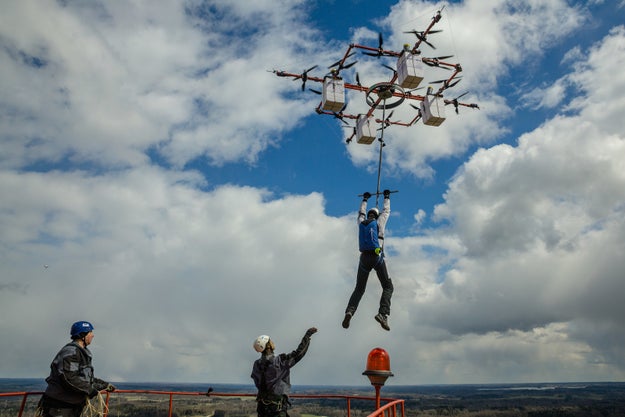
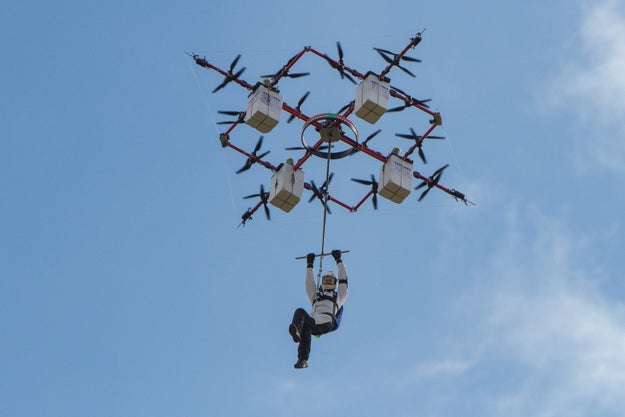
This is Ingus Augstkalns, a Latvian professional skydiver.

Roman Koksarov,tel.+37129429666

Here he is lifting off.

Go, Ingus, go!

Go, Ingus, go!

You may notice there's something different about Ingus' skydive.

Maybe he's using a different kind of helmet?

Or maybe it's a new type of jacket…?

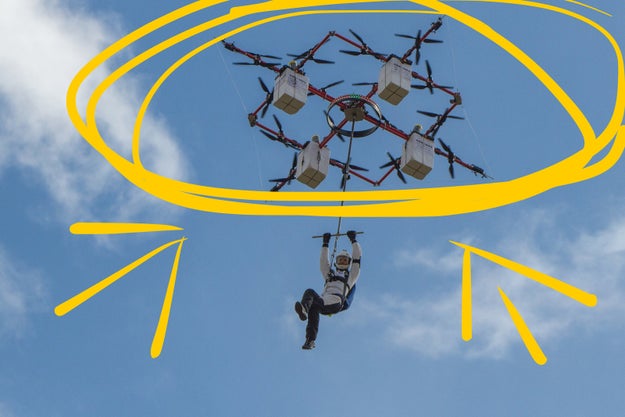
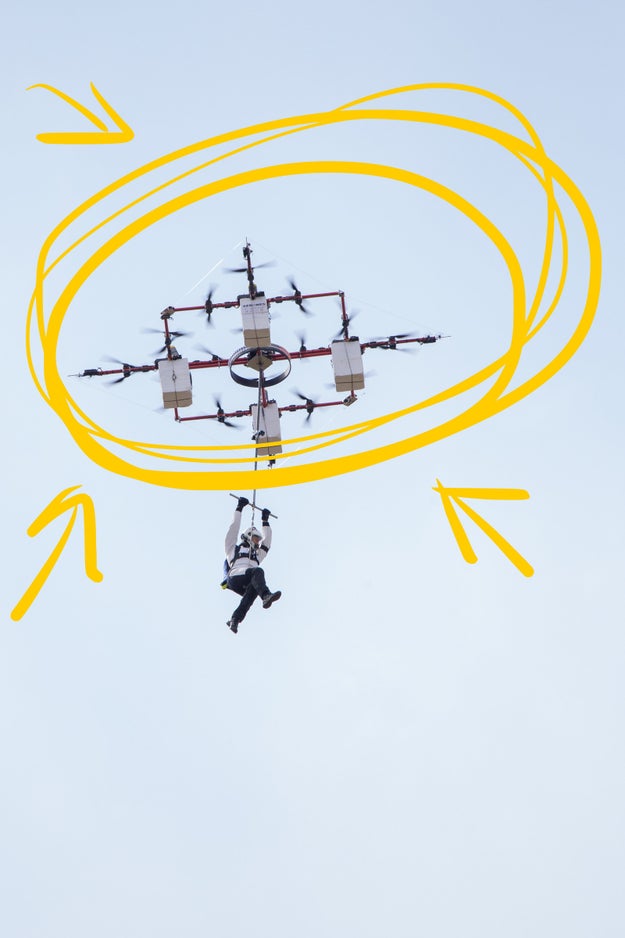
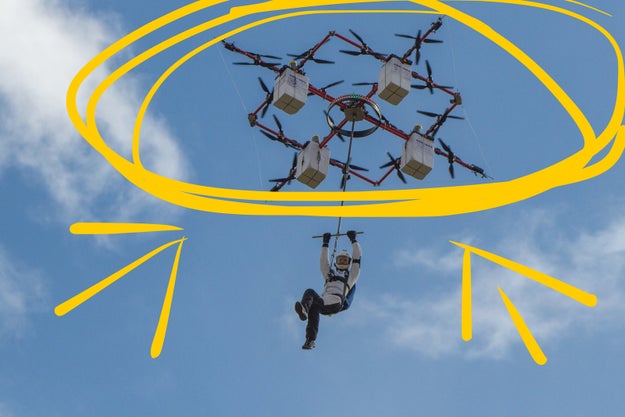
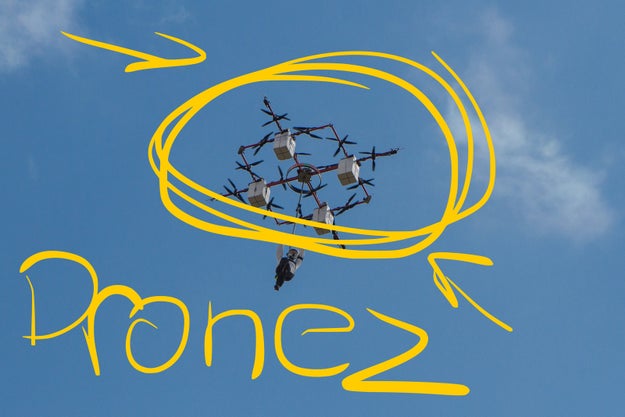
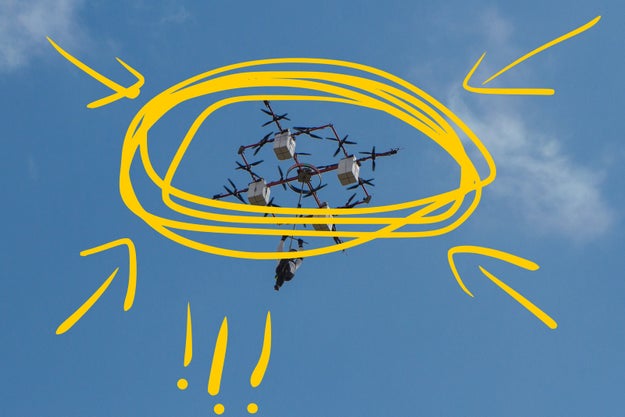
Or it could be the 28-propeller drone that's carrying him into the skies like an falcon that's caught a mouse.

The mega-drone, made by a company called Aerones, lifted Augstkalns to a height of 330 meters (~1082 feet) before he let go and opened his parachute.

The company specializes in making drones that carry heavy payloads, and it previously recorded towing a snowboarder with one. The company has also posted videos of drones used for firefighting and emergency rescue.

Augstkalns said he took part in the test because he believes that in the next four years, drones will be much more widely used, and he wanted to be part of that future. He also said, “it's always fun to do something new to challenge engineers and myself” and that he'd like to have a similar drone to use recreationally. Augstkalns' definition of “fun” is up for debate.

Here's a video of Augstkalns' ascent and jump:

youtube.com

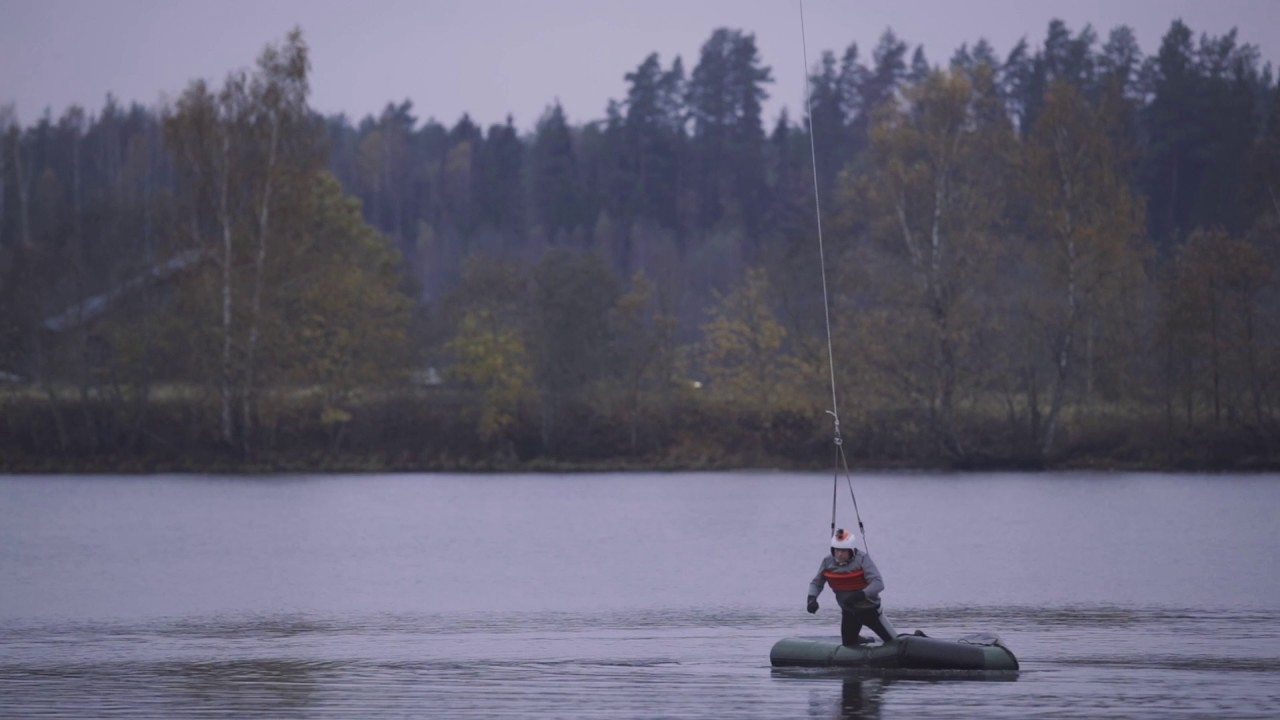
Augstkalns said Aerones conducted several tests using 90kg (~198 lb.) bags to approximate his weight, and the company also used the drone to carry him over water at low altitude.

Skydivers often go much higher than Augstkalns did — a typical dive starts between 12,000 and 18,000 feet above the ground. There are also often several seconds of free fall in a normal dive before the diver must open the parachute, whereas Augstkalns needed to open his immediately.

Aerones said that its skydiving drone won't be commercially available any time soon because the company is focusing on producing its firefighting drone.

Quelle: <a href="This Guy Skydived Using A Mega-Drone And It's Harrowing“>BuzzFeed

Uber And Google Are Fighting Over Very Old “Lidar” Technology. Here’s Why.

Uber And Google Are Fighting Over Very Old “Lidar” Technology. Here’s Why.

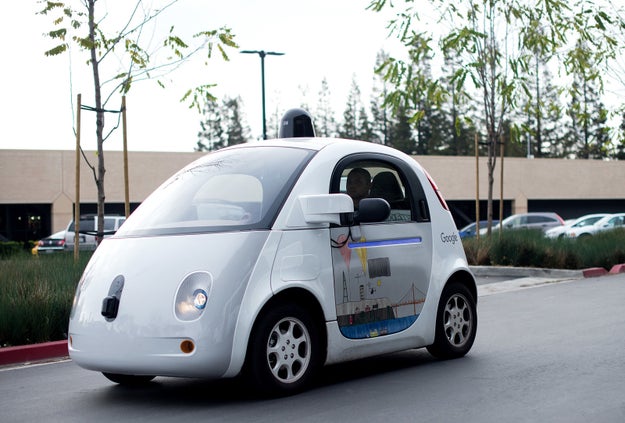
A self-driving car at Google's headquarters.

Noah Berger / AFP / Getty Images

The most high-stakes lawsuit in Silicon Valley, a nasty battle for the first commercial self-driving car, centers on a 54-year-old technology called Lidar.

Alphabet (Google’s parent company) claims that Uber stole Lidar-related intellectual property from its self-driving car company, Waymo, by hiring one of Waymo’s leading engineers, Anthony Levandowski. On Monday, Waymo got a court win when the judge ordered Uber to return any allegedly stolen documents and barred Levandowski from working on part of Uber's self-driving program.

The future of an industry, the safety of all its passengers, and a whole lot of money (not even counting the lawsuit) rest on Lidar, which allows self-driving cars to see and navigate the world around them. Waymo, Uber, and the world's biggest car companies are all racing to make Lidar systems that are safer than human drivers and only cost a few hundred dollars per car.

“Whoever cracks the nut, to make Lidar work with a safe self-driving car, will own the market,” roboticist Edwin Olson of the University of Michigan told BuzzFeed News.

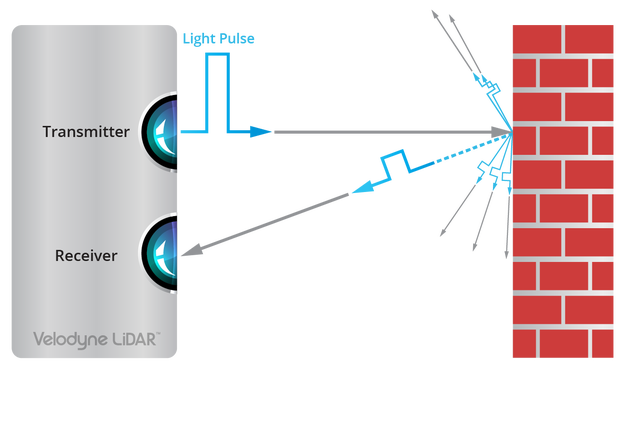
For something suddenly so important to the future of the auto industry, and at the heart of a stunning titan vs. titan lawsuit, Lidar is quite old in terms of technology. Pioneered soon after the 1958 invention of lasers, Lidar (or LiDAR, LIDAR, or LADAR, which we’ll get to) works by bouncing light off far-away things to reckon their distance and shape. Since light travels at an unvarying speed of 671 million miles per hour, the time it takes for projected light to bounce off remote objects and return tells you the distance to whatever is around the Lidar system, typically down to a centimeter.

Velodyne

Unlike oncoming headlights, automotive Lidar lasers typically operate in the near-infrared spectrum, invisible to the human eye, which means they don’t blind anyone.

“That’s pretty useful for a self-driving car,” roboticist Chistoph Mertz of Carnegie Mellon University in Pittsburgh told BuzzFeed News. (Carnegie Mellon has been a hotbed for self-driving car research: In 2015, Uber poached an entire CM robotics lab to try and beat Waymo, one of the backstories of the Levandowski lawsuit.)

On top of distances, changes in the reflectivity of returning Lidar pulses can provide information about whatever the laser hit, whether it’s hard or soft, light or dark (beer foam is 88% reflective, for example, while pavement is only 17%), and which way it’s facing, with a precision of around one-tenth of a degree.

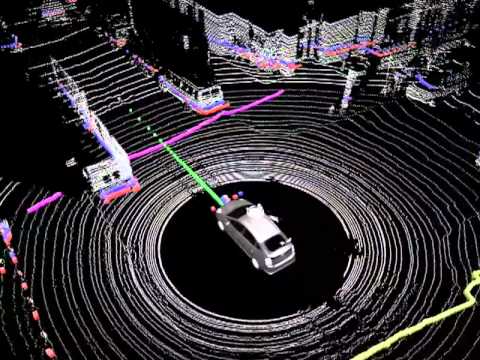
Some Lidar systems take millions of measurements every second. By building up a mosaic of these measurements in 360 degrees, Lidar can paint a three-dimensional picture of the world around it. Voila: a car that “sees,” at least out to a football field’s distance.

At least six of the main commercial self-driving car efforts use Lidar.

At least six of the main commercial self-driving car efforts — Ford, Toyota, Volvo, and Honda, plus Uber and Waymo — use Lidar. Although the basic technology behind Lidar is old, engineers at each of these companies are still trying to figure out how to cheaply take millions of Lidar readings and mold them into a car’s map of the world. It’s hard.

Each Lidar system includes lasers, sensors, lenses, a clock, and a lot of computer circuitry and programming to work out all the calculations. Waymo buys some components from the best-known Lidar company, Velodyne. But Waymo’s lasers and sensors are controlled by its own electronics, ones at the center of the lawsuit, according to court documents. For now, Uber's self-driving cars use Lidar units developed by Velodyne.

Lidar systems are expensive: Velodyne’s 64 laser and sensor system costs $8,000 — far too high to add on to the price of a car meant for typical buyers. Lidar systems also tend to be bulky, spinning like an oversized police siren atop cars to get an all-around view. The laser pulses might come every 5 nanoseconds and require high-speed clocks to accurately measure their return time. The laser light has to be tightly focused by a carefully engineered lens (and how this is done is one point of dispute in the lawsuit). Expensive sensors are required to characterize the returning light.

youtube.com

And it takes a lot of computer power to process those millions of measurements into something that computer algorithms can use to hit the brakes when a deer jumps onto a road.

“The challenge is making something work better than the human eyeball, which is hard,” Olson said. “We aren’t really there yet.”

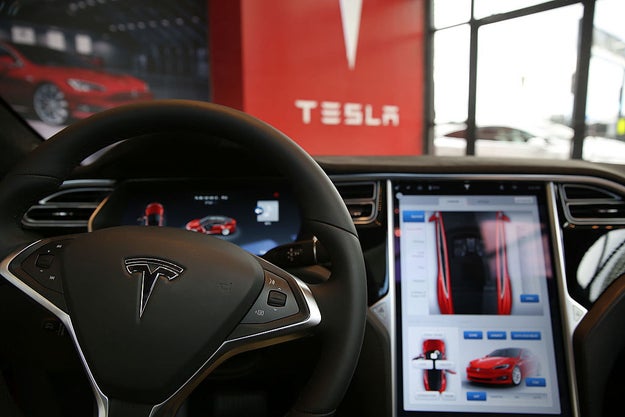
So far, only one notable self-driving car doesn’t use Lidar. Elon Musk’s Tesla instead relies on radar and a camera system, which can see to greater distances and is much cheaper, around $200. But cameras don’t work so well at night, and they can’t calculate distances off flat surfaces (like say, the side of a truck) very well. Lidar actually works better at night, because there isn’t any other light interfering with the laser reflections. (Black cars, which don’t reflect light well, can be a problem, though.)

The inside of a Tesla.

Spencer Platt / Getty Images

Lidar manufacturers, broadly speaking, have two avenues for improving their performance — amping up the power of the laser and the sensors, which is costly, or improving their capabilities so that they use tighter laser beams and less power. For the latter (also costly) approach, solid- state lidar systems are coming, which park the lasers and sensor on a silicon chip. If and when solid-state systems arrive, they’d replace the mechanical spinning gumball machines now seen on most experimental self-driving cars.

“That’s why we built a mega-factory,” Mike Jellen of Velodyne told BuzzFeed News, after a $150 million investment from Ford and Baidu, a Chinese automaker. (Velodyne’s competitors have also promised solid-state systems). Velodyne has promised a $50 price tag for the solid-state Lidar computer chip within the next three years, despite some skepticism.

Given advances, getting Lidar systems down to the hundreds of dollars in cost, rather than thousands of dollars, looks achievable, Mertz said. And this is exactly what all companies in the self-driving sector are racing to do.

Today’s self-driving cars most commonly fuse together signals not only from Lidar, but from cameras, radars, and other sensors as they interpret the world. They also rely on GPS signals and internal maps, and sometimes identifying signals transmitted from car to car.

“Every kind of sensor is making progress, which is a good thing,” Mertz said. “We are going to need robust, redundant systems,” he said, for self-driving cars, with Lidar as a keystone technology. He gives it a few years, while Olson is more pessimistic, giving it a decade.

Many Lidar systems don’t perform exactly as well as advertised, Olson said, and academic self-driving car labs spend a lot of time checking out limitations of new systems and sharing the results with each other. Some Lidar systems rely on clever ideas, optimized to pick out car tail lights to save power, for example, but with limited range for detecting anything else. Bad weather reduces Lidar’s range as well, and it doesn’t always perform well on wet surfaces.

“We’re going to have to add something to the paint on cars, maybe, to help Lidar,” Olson said. Anyone wanting to see more chrome on cars, he added, might be disappointed as well: “It can acts like a mirror and sends the [light] away instead of reflecting it back.”

There’s enough uncertainty about Lidar that at an April 12 tutorial on the technology for the Waymo v. Uber lawsuit, Judge William Alsup asked for a clarification on whether to call it LiDAR, an acronym for Light Detection And Ranging, or LADAR, the acronym for LAser Detection And Ranging.

The word “LIDAR” originated not as an acronym, but a mash-up of the word “light” and “radar.”

“I notice that sometimes it is spelled with a small ‘I’, and sometimes with everything else capitalized, and sometimes it is just the ‘L’ capitalized,” the judge complained.

It’s all the same thing, he was told.

(For word nerds, a three-paragraph Wikipedia history of the etymology of Lidar concludes that the word originated not as an acronym at all, but a mash-up of the word “light” and “radar,” first published in a 1963 astronomy report in New Scientist magazine.)

While most major innovations rely on a series of small improvements, Lidar “may be somewhat different,” economist David Mowery of the University of California, Berkeley, told BuzzFeed News. Whichever firm develops that cheap, reliable, Lidar for self-driving cars might effectively establish it as the dominant technology, regardless of its inherent flaws or strengths, as the rest of the auto industry immediately builds its cars around the technology it has waited so long for. In other words: The winner of this lawsuit might be the next Henry Ford.

Ultimate success in the self-driving car industry awaits more than just a cheap Lidar system but the computer brain to run it flawlessly, cautioned Olson, who is also a founder of self-driving car startup, May Mobility. Despite that, he jokes that he is the “most pessimistic person in the autonomous car startup industry.” Beyond Lidar that beats the human eye, he said, the industry still needs a computer that drives better than the human brain.

“What keeps me up at night are the totally unpredictable situations — the cop directing traffic at a broken stoplight,” he said, or the deer in the road. “Our visual cortex is really good at understanding these situations right away.” Computers aren’t.

Despite the 30,000 US traffic deaths every year, people are surprisingly good drivers overall, he said. “Matching human performance is really hard.”

Priya Anand contributed reporting to this story.

LINK: The Self-Driving Lawsuit Against Uber Could Land Executives In Prison

LINK: Judge Asks Federal Prosecutors to Investigate Uber’s Self-Driving Car Program

LINK: Uber Says It Didn’t Steal Waymo’s Self-Driving Tech

Quelle: <a href="Uber And Google Are Fighting Over Very Old “Lidar” Technology. Here’s Why.“>BuzzFeed

A Federal Judge Ordered Uber To Return Documents Allegedly Stolen From Google's Waymo

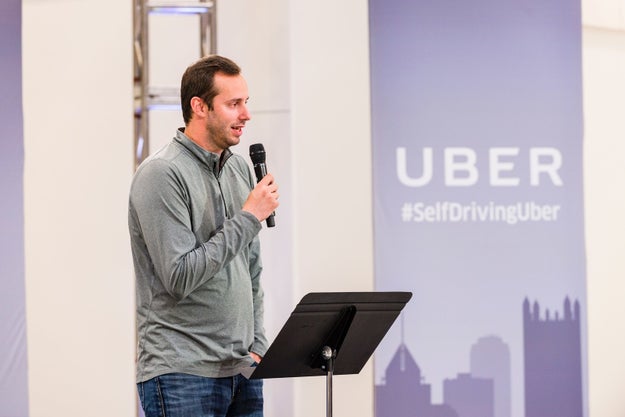
Anthony Levandowski

Afp / AFP / Getty Images

A federal judge has ordered Uber to return any driverless car documents its employees allegedly stolen from Google's Waymo by May 31 as part of a bitter trade secrets lawsuit between the two tech giants, according to an order unsealed by the court Monday morning. California judge William Alsup also barred a key engineer from working on a portion of Uber's self-driving car program.

Waymo had requested an injunction to halt or limit Uber's self-driving program pending a trial as part of its lawsuit alleging the ride-hail giant is using stolen trade secrets from Alphabet's autonomous vehicle unit for its own benefit. The court order on Monday requires Uber to produce a comprehensive log of all communications that Anthony Levandowski – the ex-Google engineer who now works at Uber and is at the center of the lawsuit – had about LiDAR, the technology at issue in the case. LiDAR refers to “light detection and ranging” systems; It uses rapid pulses of laser light to help self-driving cars measure distance and navigate the world around them.

“Competition should be fueled by innovation in the labs and on the roads, not through unlawful actions. We welcome the order to prohibit Uber’s use of stolen documents containing trade secrets developed by Waymo through years of research, and to formally bar Mr Levandowski from working on the technology,” a Waymo spokesperson said in a statement. “The court has also granted Waymo expedited discovery and we will use this to further protect our work and hold Uber fully responsible for its misconduct.”

Uber had already moved Levandowski down from leadership and into a lesser role, and said it would not allow him to work on LiDAR-related work during the case. The order stopped short of halting Uber's self-driving research or pilot programs. Uber's self-driving cars on the road now use LiDAR technology developed by the company Velodyne, rather than a system developed by the ride-hail giant in-house.

“We are pleased with the court's ruling that Uber can continue building and utilizing all of its self-driving technology, including our innovation around LiDAR,” an Uber spokesperson said in a statement. “We look forward to moving toward trial and continuing to demonstrate that our technology has been built independently from the ground up.”

On Thursday, Alsup asked federal prosecutors to investigate Uber's self-driving program and one of its top engineers for potential theft of trade secrets.

Waymo had requested that the judge bar Uber from using its trade secrets and prevent Levandowski from working on the self-driving project entirely. On April 27, Uber preempted an injunction decision by moving Levandowski out of a leadership position in its self-driving program and into a lesser role. The lawsuit centers around laser technology called LiDAR (Light Detection And Ranging), which helps self-driving cars see. Uber has said its own technology is “fundamentally different” from Waymo’s designs. But Waymo insists that Uber’s work has been informed by its own trade secrets. Levandowski's new role absolved him from any official involvement with LiDAR.

Uber's self-driving program got off the ground in February 2015, after the company poached dozens of researchers from Carnegie Mellon University's robotics unit. It has since lost many of those engineers to newer upstarts, including Aurora Innovation (started by the former leaders of Google and Tesla's respective self-driving programs) and Argo AI, which is backed by Ford.

The ride-hail giant has since launched pilot programs in Pittsburgh, Pennsylvania, Arizona and San Francisco. While its program is still in its early stages – in March, some of its cars in Arizona still needed human intervention about once per mile, according to internal metrics obtained by BuzzFeed – its program has made a very public splash.

Google's spinoff Waymo, on the other hand, began working on self-driving technology in 2009 and just launched a public pilot program in Phoenix, Arizona in April to chauffeur people around on a daily basis in its own cars. (The company has also invited many people over the years to ride in its vehicles, but this is its first pilot of this kind.)

At a court hearing last week about Waymo's request for an injunction against Uber, Alsup told Waymo it had one of the strongest bodies of evidence he had seen in his career. But while it had shown much evidence indicating Levandowski downloaded files before leaving the Google program, it but hadn't yet convinced him that Uber had benefitted from that information.

“All that has been proven is he downloaded 14,000 files. I’ve given you lots of discovery and so far you don’t have a smoking gun,” Alsup said.

In the order unsealed Monday, Alsup appeared to be more convinced.

“The bottom line is the evidence indicates that Uber hired Levandowski even though it knew or should have known that he possessed over 14,000 confidential Waymo files likely containing Waymo’s intellectual property; that at least some information from those files, if not the files themselves, has seeped into Uber’s own LiDAR development efforts,” he wrote.

Quelle: <a href="A Federal Judge Ordered Uber To Return Documents Allegedly Stolen From Google's Waymo“>BuzzFeed

What Happens When The Pro-Trump Media Get Actual Scoops?

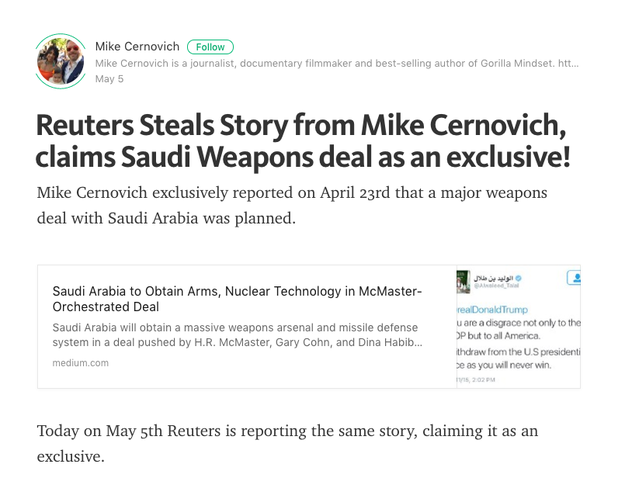
Last March, in a 60 Minutes segment on fake news, CBS’s Scott Pelley introduced a vast new audience to Mike Cernovich, touting the pro-Trump blogger and self-help author as a troll “who has become a magnet for readers with a taste for stories with no basis in fact.” For viewers at home, it was a reassuring characterization: Cernovich, who championed rumors of Hillary Clinton’s poor health during the final months of the election, was a troll masquerading as a journalist — fake news through and through.

But the early months of the Trump administration have proven Pelley wrong; certainly, they’ve complicated the once-black-and-white characterization of the pro-Trump media as purveyors of fake news. In recent weeks especially, the pro-Trump media has frequently seized control of the political news cycle via an unexpected tactic: real, and at times, well-sourced reporting.

Since April, Cernovich has broken a number of significant national security stories, many of which have been subsequently confirmed — at least in part — by mainstream outlets. In early April, he correctly reported that former Obama national security adviser Susan Rice had requested to unmask the identities of Trump associates. Days later, Cernovich tweeted, “Breaking news! Possible air strikes by the U.S. in Syria tonight” just 30 minutes before President Trump authorized the evening’s attack. He followed that up with another story that the national security adviser, Gen. H.R. McMaster, had drawn up a potential plan to bring ground troops into Syria. A number of details in the story were confirmed days later by Bloomberg.

And the scoops kept coming. Cernovich, an expert self-promoter, even took a victory lap with a Medium post titled “7 Stories Mike Cernovich Had Before the Mainstream Media — How Can They Call Him ‘Fake News’?”

The question in the headline is one that’s legitimately vexing, especially for the reporters who’ve been forced to follow, read, and react to the torrent of tweets, videos, and posts Cernovich churns out. Big scoops by personalities who rose to prominence online by crossing the line into trolldom have short-circuited a mainstream media bullshit detector that once spotted fake news by bylines alone. “He’s definitely really sourced up in DC, and it’s mind-boggling,” one White House reporter told BuzzFeed News.

Cernovich himself appears to be taken aback by his new role near the center of the political news cycle. “It's kinda surreal actually,” Cernovich told BuzzFeed News.

Self-help-style blogging targeted at a largely male audience prefaced Cernovich’s involvement in the troll-y men’s rights movement and, later, Gamergate. There, he earned a reputation as a date-rape apologist (which Cernovich vehemently rejects) and troll (which he embraces) among a large subset of the progressive internet. But that rep also helped him win his current audience, some members of which seem to have reasonably close ties to government. “I talk to everyone — Uber drivers, bartenders,” Cernovich said. “On Twitter, people see me as some mean guy, but in real life I am out there asking questions.”

Cernovich isn’t the only one making news. Last week, Jack Posobiec — a popular pro-Trump media figure and an organizer of the DeploraBall — claimed to have hijacked the mainstream media narrative for the 48 hours before the French presidential election when he publicized a document dump on 4chan’s /pol/ message board purporting to be the personal and professional emails and files of then–presidential candidate Emmanuel Macron. Without verifying the documents, Posobiec posted a link to the docs on Twitter along with a punchy hashtag: #MacronLeaks. By late Friday evening #MacronLeaks was a top trending topic on Twitter and had been featured on the Drudge Report. Just before midnight, WikiLeaks picked up Posobiec’s hashtag and began hosting the 4chan document dump on its own servers.

By Saturday morning, the New York Times had cited Posobiec as “the second-most mentioned individual on Twitter in connection with the hashtag behind WikiLeaks,” noting that the hashtag had appeared more than 100,000 times in the past day.

“The point was to get the information out,” Posobiec told BuzzFeed News last Saturday. “It’s nontraditional, I know. I don’t pretend the information isn’t gritty and raw, but this was about getting people access to real information.” Posobiec calls this — as well as his endless series of Periscopes from Antifa protests and both anti- and pro-Trump rallies — “4-D journalism,” which he describes as raw and immersive and always on. “You look at Twitter and a year ago all I posted was Game of Thrones reviews. So how’d I get here? All I do is write about what I see.”

Posobiec — who before the leaks was best known for championing #Pizzagate conspiracy theories and for a campaign to smear anti-Trump protesters with a fake “Rape Melania” sign — has used #MacronLeaks to cast himself as an enterprising reporter. And while his tactics were reckless by traditional journalistic standards (and the information was largely mundane and potentially mixed with fabrications), Posobiec wasn’t exactly wrong in his claims that he’d helped surface new, potentially consequential information.

In recent months Chuck Johnson has also made the pivot from troll to aspiring political reporter. It’s familiar territory for Johnson, who was once a freelancer for the Daily Caller but quickly earned a reputation for targeting and harassing the subjects of his reporting. He was banned from Twitter in 2015 for threatening a Black Lives Matters activist. He’s published the home addresses of two New York Times reporters, tweeted false rumors that President Obama was gay, and perhaps most infamously, outed the anonymous victim at the center of the UVA-Rolling Stone rape scandal while also publishing a picture that turned out not to be her.

More recently, Johnson has found a home in Trumpland politics, despite alienating himself from Republicans back in 2014. Early this year, Forbes reported that Johnson was advising Trump’s transition team in an informal capacity to vet potential administration appointees. And on his website, GotNews, Johnson has landed a few head-turning scoops.

In February, Johnson reported citing multiple White House sources — that Deputy Chief of Staff Katie Walsh had been leaking information to reporters. In March, Walsh resigned from the position, a move that Breitbart News credited to Johnson’s reporting. Just this week, Johnson again cited White House sources to report that the firing of FBI Director James Comey was a “warning” to Sen. John McCain, who had been “working with FBI Director Comey to help undermine President Trump since Trump was elected.” While the “warning” anecdote hasn’t been confirmed by another outlet, McCain, it appears, was one of the many taken off guard by Comey’s dismissal, which lends credence to the theory that Johnson might be hearing legitimate spin from inside the West Wing.

And why wouldn’t he be? For all the understandable hand-wringing about the legitimization of the pro-Trump media, its rise makes perfect sense: Their people are in the White House. Trump, clichéd as it may be, is an effective troll, and he brought with him a troll press corps. Increasingly, the mainstream media — and mainstream media consumers — are being forced to pay attention to personalities that, even weeks ago, they might have dismissed outright. This shift raises a number of thorny questions — about sourcing (in 2014, Johnson proudly admitted to paying for sources), about ideological agendas, and about whether traditional journalistic values and standards even matter at all.

There’s a good chance they might not to an audience that doesn't see careers in both trolling and journalism as mutually exclusive. And while Cernovich has significantly dialed back his trolling, to many, he may always be the Man Who Cried “Hillary Has Parkinson's!”

All of this is uncharted territory. The implications of legitimized, proudly ideological former trolls breaking news and gaining trust could further blur the lines between fact and fiction and lend credence to their older, provably false stories, like Pizzagate. Still, dismissing this emerging pro-Trump media outright could prove perilous for newsrooms. Especially in traditional conservative media, Cernovich and company’s national security sources are potentially worrisome for outlets that might have expected better access in a Republican White House. Alex Jones seemed to sense this when he snatched up Cernovich late last month for a regular hosting spot on Infowars.

Then, on Thursday, Infowars’ editor at large, Paul Joseph Watson, reported that White House sources reported that press secretary Sean Spicer “will be gone by next week” and that Chief of Staff Reince Priebus might be next. Minutes later, Mike Cernovich tweeted this:

If it’s true, it’s a monster scoop that could prove that the pro-Trump media isn’t just a parallel universe armed with its own interpretation of “alternative facts” — but rather a formidable (albeit unabashedly biased) adversary in our current reality.

Either way, the lines are blurred and the mainstream media is caught befuddled and playing catch-up. Which, in its own way, may be the Upside Down’s greatest troll yet.

Quelle: <a href="What Happens When The Pro-Trump Media Get Actual Scoops?“>BuzzFeed

Here's How To Deactivate Alexa Calling After You Sign Up

Amazon

Earlier this week, Amazon launched its own Internet voice and messaging service, Alexa Calling and Messaging, available free to all users with an Amazon Echo, Echo Dot, or Alexa app for iOS and Android. You can also use the service on Amazon’s new device, Echo Show, a touchscreen with a 5-megapixel camera and the company’s voice-enabled digital assistant Alexa built-in. But some users have noticed they don't have the ability to block people from calling their Echo devices — and they find it unsettling.

To use Alexa calling and messaging, users also need to verify their phone number and import their entire address book to the Alexa app, which a spokesperson says is stored “securely in the Amazon cloud.” Your phone number is essentially your username and, like on WhatsApp and Signal, anyone with your phone number will be able to contact you on your at-home Echo or Echo Dot (including, er, PR people, much to the chagrin of this reporter). WhatsApp and Signal allow users to block certain contacts, while Alexa does not. You can, however, turn on Do Not Disturb for Alexa, by telling your Echo, “Don't disturb me.” The feature can also be scheduled for certain days and times in the app.

There are other privacy concerns as well. There's no password protection to use Alexa calling, which means anyone in your household can make an Alexa call using your account (the call is placed over the Internet via the Alexa app). They can also ask your Echo device, “Play my message” when you receive a new text messages (Alexa calling does not support voicemail) and listen to that message without your consent.

If learning all of this means you're reconsidering your decision to enable Alexa Calling and Messaging on your device and you want to turn it off, it's a lot less straightforward than you might think. I combed through Amazon's entire Alexa-to-Alexa calling support site to find out how to deactivate calling and messaging but couldn't find instructions, so I reached out to Amazon.

As it turns out, users will need to call Amazon customer service to disable the new feature. You can do this one of two ways:

1. Call the general help number toll-free at 1-877-375-9365.

2. Go to this special Contact Us page and select Amazon Devices > your Echo name > Echo Devices > under “Select issue details,” Something Else > under “How Would You Like To Contact Us,” select Phone. You will then enter your phone number and an Amazon rep will call you.

I tried the second method, and it took 10 minutes for a representative to deactivate calling for my Amazon account.

If you don't want to disable the feature but you want more privacy, try using a burner number.

If you still want to use Alexa calling and messaging with a limited group of people (like the grandparents), sign up for a Google Voice or Sideline number (both are free), then use that number when setting up Alexa calling. Then, have your friends and family add that number to their address book and use it when they want to talk to you on your Amazon device.

Quelle: <a href="Here's How To Deactivate Alexa Calling After You Sign Up“>BuzzFeed

The Driverless Car Lawsuit Against Uber Could Land Executives In Prison

Anthony Levandowski

Afp / AFP / Getty Images

In an unexpected twist on Thursday evening, the federal judge presiding over Waymo’s bitter lawsuit against Uber referred the case to the United States attorney to investigate allegations that the ride-hail giant stole trade secrets from the Google driverless car spinoff. The specter of possible criminal implications has long been looming over the case; Its referral to the US attorney has added a new layer of intrigue and drama to an already high-stakes legal battle between two tech titans.

While it's impossible to say with any degree of certainty just what will come of such a call for a possible criminal probe — even the judge who made it said he “takes no position on whether a prosecution is or is not warranted” — former U.S. attorneys and legal scholars say it doesn't bode well for Uber.

“This is bad news for Uber,” said Timothy Heaphy, a former US attorney for the Western District of Virginia, who now chairs a white collar defense and internal investigations practice at the law firm Hunton & Williams. “The focus of the federal investigation would be how high did awareness of this activity go within Uber management?”

John Marsh, a trade secrets litigator and partner at the firm Bailey Cavalieri, said it’s rare for a case like Waymo v. Uber to be referred to a US attorney so early on. “I follow this area of law pretty closely,” he told BuzzFeed News. “I can’t remember a federal judge doing that.”

Asked whether Waymo has communicated with the Justice Department about the prospect of or existence of a criminal investigation, a spokesman declined to comment. An Uber spokesperson declined to comment on the matter as well. The Justice Department did not return a request for comment.

The maximum penalty for theft of trade secrets is up to 10 years of imprisonment, and a fine of up to three times the value of the trade secrets at hand.

Waymo’s case against Uber hinges on Anthony Levandowski, a former employee it alleges stole its self-driving car trade secrets before joining the ride-hail company to oversee its self-driving car program. Levandowski, though not party to Waymo's suit, has so far invoked his 5th Amendment rights to avoid self-incrimination should the case become a criminal matter. The referral of the case to the US Attorney would seem to raise the stakes on that issue.

“[Levandowski] is clearly at the thick of it. He’s a target,” said Heaphy, the former US attorney.

That said, there are many unknowns here and it’s possible that the US attorney could determine that prosecution or investigation is unwarranted. But legal scholars said there are a few scenarios federal prosecutors would likely consider while weighing a criminal probe. Foremost among them, the idea that some Uber executives might have been aware of Levandowski’s alleged theft of trade secrets. The maximum penalty for theft of trade secrets is up to 10 years of imprisonment, and a fine of up to three times the value of the trade secrets at hand.

Uber has emphatically denied in court that the files Levandowski allegedly stole from Waymo ever made it into its systems. But the company has not disputed allegations that Levandowski downloaded files he shouldn't have from Waymo. “We don’t have any basis for disputing that,” Uber’s attorney Arturo Gonzalez said in court last week, adding that “there’s no evidence” Levandowski consulted the Waymo files once he began working at Uber.

Still, Waymo claims that its allegedly stolen proprietary information did find its way into Uber's plans for its LiDAR system, a technology that uses rapid pulses of laser light to help self-driving cars measure distance and navigate the world around them. And it insists that same info helped Uber fast-track its driverless car efforts, avoiding years of costly research and development.

This mess of allegations and rebuttals is particularly fraught for Uber given Levandowski's reportedly cozy relationship with CEO Travis Kalanick. According to Bloomberg, Kalanick courted Levandowski on a series of 10-mile walks across San Francisco, and once said of the engineer, “I feel like we’re brothers from another mother.” Certainly, the question of who knew what and when does seem to be wafting about.

Waymo’s lawyers have not yet deposed Kalanick. In court last week, Uber’s lawyer Gonzalez said “we'll produce our CEO for deposition. Nobody's hiding at Uber.” As the case moves toward a trial – the judge denied Uber’s attempt to force it into arbitration on Thursday – the public may eventually have an opportunity to hear Kalanick’s side of the story.

“The relationship itself isn't proof he aided and abetted a crime,” Heaphy said. “There would need to be evidence Travis was aware of – and took steps to affirmatively facilitate – Anthony’s [alleged] removal of Waymo’s trade secrets, and use of that proprietary information.”

“The only person who can really share that is Anthony himself,” Heaphy said. “He’ll have a huge incentive to do that if he is personally culpable for a criminal violation. Walks and friendships fade away when somebody's facing a jail cell.”

Quelle: <a href="The Driverless Car Lawsuit Against Uber Could Land Executives In Prison“>BuzzFeed