Here's What 39,000 Teens Think About Fake News

They think they’re a lot better at spotting it than they actually are.

83% of US teens are familiar with the term “fake news”.

We wanted to poll some actual high schoolers, and After School verifies they're actually in high school through their Facebook and other factors. It's kind of like Yik Yak, but without the bullying, and it often runs fun polls for its users. Teens from all 50 states answered these questions – just over 39,000 teens in total.

A study from Stanford last year showed that middle and high school students aren't very good at determining fake news – especially more nuanced things like noticing bias in a source, or understanding the difference between sponsored content and a regular article. (If you want to test your own ability to sniff out fake news, try one of our quizzes to see if you're actually as good as you think.)

After the 2016 election brought the scourge of fake news into the national conversation, some schools started teaching kids media literacy and how to spot false stories on social media.

The polling standards here are not exactly scientifically rigorous, considering this survey's results came from a bunch of kids on an app answering a poll. So take this with a grain of salt.

Teens said that if they see something they think is a fake news story on social media, most of them will just ignore it.

But 31% actually will go ahead and call it out to the person who posted it. Bold!


View Entire List ›

Quelle: <a href="Here's What 39,000 Teens Think About Fake News“>BuzzFeed

A Senator Just Introduced The First Ever National Gig Economy Bill

Mheim3011 / Getty Images

If you’ve ever taken a paid sick day, collected worker’s compensation, or contributed to an employer-backed retirement plan, you’ve taken advantage of benefits that are only accessible to traditional employees. But millions of working Americans who aren’t classified as employees — whether they work in the gig economy, or as temp workers, or some other precarious work situation — don’t have these benefits.

On Thursday, the first piece of federal legislation aimed at addressing on-demand workers’ lack of benefits will be introduced by Virginia democrat Senator Mark Warner. The bill would create a $20 million fund that organizations across the country could use to build and evaluate portable benefits programs for independent contractors.

The idea behind portable benefits is that contract-based workers should, along with the company or companies where they work, pay jointly into a fund that can be used to cover healthcare costs and lost pay in case of injury, or even fund retirements. They’re called portable benefits because rather than being tied to a single worker with a single job, the fund can travel with workers from gig to gig, platform to platform, part-time job to full-time work, and back again.

Senator Warner, who estimates that currently a third of the US workforce falls outside traditional employment and predicts that figure will increase to 50% by 2020, said his goal is to get people to break out of the “mindset that … the only way you got benefits was if you're a full-time, permanent employee.”

“[Portable benefits is] that emergency fund,” Warner told BuzzFeed News Wednesday. “It might be a fund to take care of a disability if you get hurt. It might work with some existing retirement programs. Part of it would be, depending on what happens with Obamacare, an ability to help deal with health care expenses. I think there will be a variety of models.”

Warner’s fund, if approved, would allocate $5 million in grants to organizations already conducting portable benefits experiments, and $15 million to encourage new programs, according to a draft of the bill reviewed Wednesday by BuzzFeed News. He said a wide range of organizations, from nonprofits to startups to labor unions, are encouraged to apply. The grants made available in 2018 will be awarded by Labor Secretary Alexander Acosta, and reviewed by the Government Accounting Office in 2020.

The notion of creating portable benefits funds for on-demand contractors has broad support, including from Princeton economist Alan Kreuger and former Labor Secretary Robert Reich.

“There's no question we have to move toward portable benefits,” Reich wrote via email to BuzzFeed News. “It's not just gig economy workers who need them, but the large and growing number of people working part-time on any number of jobs. One way to structure it would be for workers to pay into a joint fund that would spread risks and also gain them economies of scale. I also think companies that employ contract workers should be required to pay into the fund on the basis of how many workers they contract with.”

Supporters of portable benefits at the Aspen Institute’s Future of Work Initiative have argued that rather than sweeping change, the best way to figure out how to update the social safety net is through experimentation on the local level.

Senator Warner, who worked in the technology industry prior to his career in politics, has been talking about creating laws to reign in the gig economy for years now. In 2015, the senator talked about creating a new classification of worker, a legal status that would ideally have blended the protections that employees receive with the flexibility and independence that contractors enjoy.

For now, the idea of creating a new type of worker in the US economy is pretty much dead. But, with Warner’s help, the idea of creating a portable benefits fund has taken its place. “[Portable benefits] could evolve into a third worker classification,” Warner said. “I think it will more likely evolve into a much more flexible benefits system that would be complementary to a traditional benefits system.”

While Warner’s bill is the first federal legislation to directly address the on-demand economy, a couple of states have proposed portable benefits bills. In Washington state, legislators are considering a bill that would require on-demand companies to contribute 25% of the the money they make per transaction and put it toward a benefits fund. And in New York, a similar (though less generous) piece of legislation was recently tabled while Governor Andrew Cuomo assembles a task force to investigate the issue further.

Meanwhile, some on-demand companies have already started introducing experimental programs around benefits for their workers. Care.com, which matches caregivers with families, announced last fall that it would be offering workers $500 a year to cover expenses associated with health care and transportation. More recently, Uber raised its rates in eight states by five cents per mile and said those funds would be made available to drivers, who have the option of using the money to buy personal injury insurance.

But while funds for portable benefits would help fill a crucial gap in coverage, not everyone thinks it’s the best solution to the dilemmas that on-demand workers face. In the case of the proposed New York bill, the creation of a portable benefits fund would mean codifying in law gig economy workers’ status as independent contractors. If the law was passed, the workers would never be classified as employees.

Workers across the gig economy have sued companies including Uber, Lyft, Handy, Instacart and Postmates for misclassification, arguing that they should have been hired as employees and are owed back pay for minimum wage, overtime, and unpaid benefits. Some, including Harvard Law’s Maia Usui and former NRLB chair Wilma Liebman, see the whole concept of creating portable benefits funds as a potential way for the tech industry to sidestep their legal obligations to workers. It’s worth noting that on-demand cleaning startup Handy helped write the New York portable benefits bill, which was supported by lobbying firm Tech:NYC, an organization that counts Uber among its members.

Dan Teran is CEO of Managed by Q, an on-demand office management startup that’s notable for hiring its workforce on as employees, providing them with benefits, and even offering stock options. “The idea that we would create a framework to provide employer paid benefits to people who can't currently access them is a net positive. However, it shouldn't be a trap door into deregulating labor,” Teran told BuzzFeed News regarding the portable benefits debate. “As these new frameworks are being built, government agencies should continue to enforce existing worker protections.”

Warner said he’s familiar with these criticisms, but said focusing on the benefits and protections that have been lost won’t help address the immediate problems people are facing in the 21st century economy.

“We can’t just wave a magic wand and say ‘Everyone is going to work the same job for 35 years again’. There were a lot of good things about the 20th century economy. Even if you didn’t have that much money, you had predictability,” he said. “We don’t have that now. This tries to meet the workforce where it’s at, and where it’s headed.”

Quelle: <a href="A Senator Just Introduced The First Ever National Gig Economy Bill“>BuzzFeed

The Trump Administration Wants To Hack Your Drone

Vincenzo Pinto / AFP / Getty Images

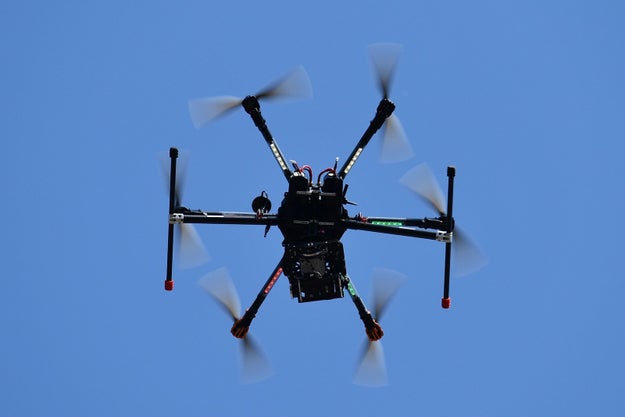
The Trump administration wants Congress to let it surveil, hijack, or strike down any drone in US airspace.

Trump's team has published a 10-page draft of legislation requesting authority for the federal government to develop countermeasures and take action against any drone over US soil deemed to pose a threat. The proposed bill focuses on commercial drones, such as small quadcopters like the DJI Mavic or Phantom that are easy to purchase online. The New York Times first reported the news.

What kind of threats do drones actually pose?

Drones pose a rising security risk as their technology advances, their range improves, and they're able to bear heavier payloads.

After ISIS used small quadcopter drones like ones you'd buy at Radioshack to surveil and drop explosives in Iraq and Syria, it stoked US officials' fears that the group will attempt to use drones to carry out terrorist attacks. And in 2015 when a drone evaded the White House's radar system and mistakenly crash landed on its lawn, the incident prompted a Secret Service investigation.

More and more people also have drones. Sales are expected to go well beyond $1 billion this year, up sharply from around $800 million last year. An estimated one million drones were sold in the 2015 holiday season alone.

So here are powers the government wants to have over drones:

  • Surveil them: “Detect, monitor, identify, or track, without prior consent, an unmanned aircraft system, unmanned aircraft, payload, or cargo, to evaluate whether it poses a threat to the safety or security of a covered event or location.”
  • Hijack them: “Redirect, disable, disrupt control of, exercise control of, seize, or confiscate, without prior consent, an unmanned aircraft system.”
  • Strike them down: “Use reasonable force to disable, disrupt, damage, or destroy an unmanned aircraft system, unmanned aircraft, or unmanned aircraft's payload or cargo that poses a threat to the safety of a covered facility.”
  • Research them: “Conduct research, testing, training on, and evaluation of any equipment.”

“Threats” in this case are defined as anything that could interfere with a wide range of government activities: disaster rescue or emergency services, prisoner detention, the safety of military or government personnel, transportation of nuclear materials, and other processes.

The document does say that the Federal Aviation Administration would still hold sway over the regulation of the general national airspace, so the Trump administration's power wouldn't be limitless if the new legislation passed as it is right now. But the regulation is likely to change as the administration consults the Department of Transportation, the FAA, and Congress.

The reason the Trump administration is having to ask Congress to give it this control over drones is because current privacy protection laws technically prevent the government from interfering with drones. As noted in the bill's draft, “some of the most promising technical countermeasures for detecting and mitigating [unmanned aircraft systems] may be construed to be illegal under certain laws that were passed when [drones] were unforeseen.”

The Trump administration did not immediately respond to a request for comment.

What are the privacy concerns?

The administration is asking for a broad swath of powers that may trouble drone owners. According to the draft, any drone that the government disables is immediately considered US government property, and its communications as well as its hardware may be dissected to develop more defenses against drones. That kind of research would subject all the digital records of your drone to government investigation.

The act does, however, stipulate that the privacy implications of any new measures must be reviewed by the Secretary of Homeland Security, a position appointed by the president. A recent court decision struck down the regulation obligating consumers to register their recreational drones with the Federal Aviation Administration.

The draft says that the government would have to take action against drones while respecting “privacy, civil rights, and civil liberties,” but it also says that US courts would have no power to hear lawsuits over the federal government's actions against drones, which means drone owners would have no recourse to recover their forfeited equipment. The information gathered under the legislation would also be exempt from information disclosure laws, according to the draft.

DJI, the world's largest drone manufacturer and seller, declined to comment, saying it was still evaluating the impact of the proposed legislation.

Quelle: <a href="The Trump Administration Wants To Hack Your Drone“>BuzzFeed

A Human Resources Shakeup At Tesla Follows Discrimination Suits And Allegations Of Labor Violations

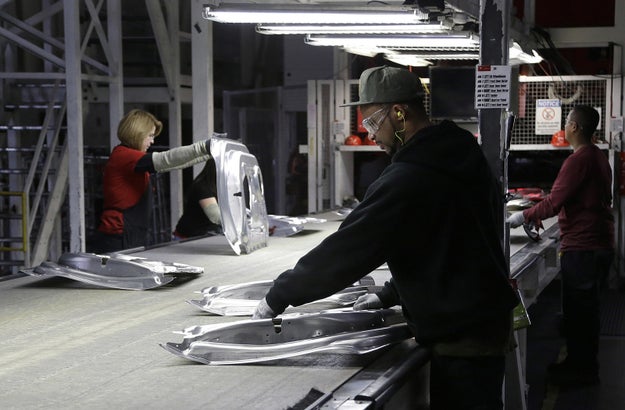
Tesla employees work in the Tesla factory in Fremont, Calif., Thursday, May 14, 2015. (AP Photo/Jeff Chiu)

Jeff Chiu / AP

Arnnon Geshuri, the high-profile VP of human resources at Tesla who oversaw its 2011 hiring spree, is leaving the company, BuzzFeed News learned earlier this month and Tesla confirmed in a blog post Tuesday evening. His departure is the third in a string of HR exec exits from Tesla, which has recently been beset by allegations of unsafe working conditions, discrimination and harassment, and potentially illegal mishandling of a union drive at its California manufacturing plant.

Geshuri follows two other HR executives who have left Tesla this year. The first — Jennifer Kim, director of HR for engineering — left Tesla this spring. The second — Mark Lipscomb, who served as VP of HR under Geshuri — left the company earlier this year for Netflix.

“Arnnon helped transition Tesla from a small car company that many doubted would ever succeed, to an integrated sustainable energy company with more than 30,000 employees around the globe,” reads Tesla’s blog post on the matter. “As Tesla prepares for the next chapter in its growth, Arnnon will be taking a short break before moving on to a new endeavor.”

Geshuri will be replaced by Gaby Toledano, an industry veteran who comes to Tesla from Entertainment Arts (EA).

In recent months, a growing body of evidence suggesting that, for workers, Tesla’s state-of-the-art factory in Fremont, California hasn’t always been the safest or most comfortable place to work. In fact, from 2013 to 2016, Tesla’s incident rate in that facility that was higher than the industry average, the Guardian reported and the company acknowledged earlier this week.

Today, a group called Worksafe published a report that pokes holes in Tesla's argument that the company has successfully lowered its incident rate for the beginning of 2017 to a number that's below the industry average. Worksafe said its independent review of public health and safety data shows Tesla's injury rate has “changed significantly since the company’s recent claims of success in reducing injuries in the first quarter of 2017.”

Allegations about working conditions at Tesla first arose on February 9, when factory employee Jose Moran kicked off a union drive with a blog post in which he points to long hours, repetitive stress injuries, and lower than competitive compensation as reasons why Tesla workers should unionize. Tesla recently staved off threats of a strike at its German factory over similar issues by offering workers there a pay raise.

The United Auto Workers — the union trying to organize Tesla’s Fremont, CA plant — filed charges against Tesla with the NLRB last month, alleging illegal coercion, surveillance and intimidation against workers who distributed information about the union effort. Geshuri is listed as the “employer representative” in those charges.

In addition to issues with the union, Tesla has faced broader allegations of discrimination. In March, a video surfaced in which Tesla employees repeatedly used the n-word and threatened violence against an African American colleague, a man named DeWitt Lambert who later sued the company. At the time, Tesla rebutted Lambert’s allegations, saying Lambert had accused his fellow employees, with whom he was friendly outside of work, out of retaliation when he mistakenly believed they had reported him to HR. But Tesla also acknowledged that an error in its investigation process caused the company to lose track of its initial HR investigation into the video.

“We don't feel that we met our standard in terms of how we handled the people involved in that situation,” said Tesla managing counsel Carmen Copher in an interview with NBC. “We also, pointedly, don't believe we met our standard in terms of how the investigation was handled.”

Geshuri’s departure was unrelated to this incident, according to Tesla.

Meanwhile, another Tesla employee, AJ Vandermeyden, is also suing Tesla for discrimination. Vandermeyden, who still works as an engineer for the company, alleges that she is paid less than her male peers, was passed over for deserved promotions because of her gender, and has endured “inappropriate language, whistling, and catcalls” on the factory floor. Vandermeyden’s suit, which was filed in 2016, is currently in private arbitration.

According to his LinkedIn, Geshuri had been with Tesla for over seven years; previously, he was senior director of staffing and human resources at Google, where he was involved in the high-tech antitrust litigation scandal.

Geshuri did not respond to request for comment from BuzzFeed News.

Quelle: <a href="A Human Resources Shakeup At Tesla Follows Discrimination Suits And Allegations Of Labor Violations“>BuzzFeed

The Man Behind The Seth Rich Private Investigation Has A White House Connection

Facebook

Ed Butowsky, the Dallas wealth manager and Fox News contributor who facilitated a private investigation into the murder of Seth Rich, is friends with and serves on the board of an organization started by White House Chief Strategist Steve Bannon.

“I consider him a friend and a very nice man,” Butowsky told BuzzFeed News of Bannon.

According to his website, Butowsky “serves as a Board Member for Reclaim New York, a non-partisan, non-profit think tank dedicated to advancing a grassroots conversation about the future of New York.” Per tax filings, Bannon is Reclaim's vice chairman. (The group's secretary and treasurer are Jennifer and Rebekah Mercer, the powerful daughters of right-wing moneyman and Trump champion Robert Mercer.)

In addition to Reclaim, Butowsky and Bannon know each other through Breitbart News, of which Bannon was executive chairman and to which Butowsky has contributed articles. In 2015, Bannon interviewed Butowsky for a Breitbart radio program.

Both Butowsky and a White House official deny speaking about Seth Rich.

Over the past week the Rich story has captivated conservative media, following a Fox News report that linked the murder of the 27-year-old Democratic National Committee Staff member with email hacks of the DNC that may have helped then-candidate Trump in his campaign against Hillary Clinton. Such a finding would contradict the view, widely held in the intelligence community, that Russian intelligence was behind the theft — a key point for those who believe there was an improper relationship between the Trump campaign and the Russian government.

Fox's report — a conspiracy theory with no corroborating evidence — was based on an interview with a private investigator, Rod Wheeler, who Butowsky introduced to the Rich family and offered to pay for. (Fox News yesterday retracted its story.) The Rich-as-leaker narrative's rise is the clearest example yet of the way an insurgent pro-Trump media has been able to push dubious stories beneficial to the administration into the limelight.

And the news that their benefactor has ties to a key figure in the administration — and the godfather of the pro-Trump media — has left the Rich family stunned.

“The family is in shock to learn that Ed Butowsky is both friends with and served on a board with Steve Bannon,” Brad Bauman, a spokesman for the Rich family, told BuzzFeed News Wednesday. “We are very much trying not to rush to judgment in order to allow this story to develop.”

Bannon declined to comment for the story.

Butowsky has long said that he heard about the Rich case from a friend, though he can't remember whom, and that he was motivated to connect the Rich family with Wheeler because he was moved by their story.

In an interview Tuesday outside Del Frisco's Steakhouse in Manhattan, where he was feeding pigeons, Butowsky told BuzzFeed News that he had never discussed the Rich case with Bannon, and qualified their friendship as warm but not close.

“It's not like I have a Steve Bannon teddy bear,” he said. “I've never eaten a meal with the guy.”

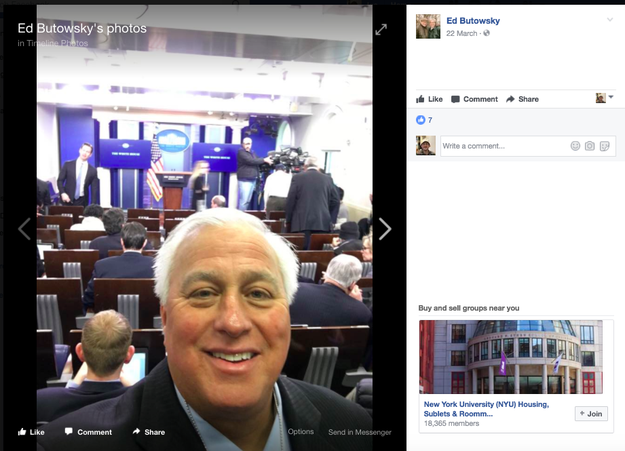
A photograph on Butowsky's Facebook page shows him in the White House briefing room on March 22. Butowsky did not comment on the record why he was at the White House, but did clarify that he had not met with any White House officials.

Butowsky added that his association with Reclaim was distant and purely based on his wealth management expertise.

“Am I really on the board?” Butowsky asked when informed that his website claimed he was on the board. “I've never been to a board meeting.”

Prior to his career as a wealth manager — his clients include a number of athletes and celebrities — Butowsky worked for nearly two decades at Morgan Stanley, where, according to his LinkedIn, he ran one of the highest earning teams at the firm.

Quelle: <a href="The Man Behind The Seth Rich Private Investigation Has A White House Connection“>BuzzFeed

U.S. International Tourism Market Share Is Falling Under Trump, Foursquare Data Shows

Foursquare

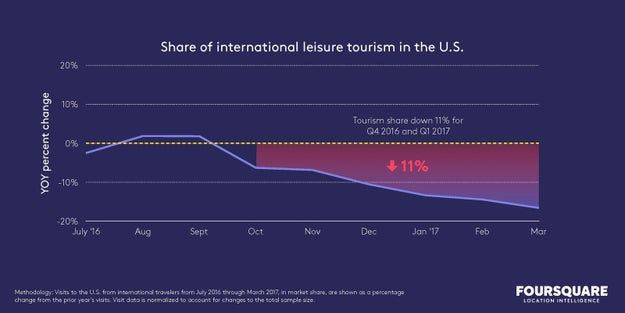
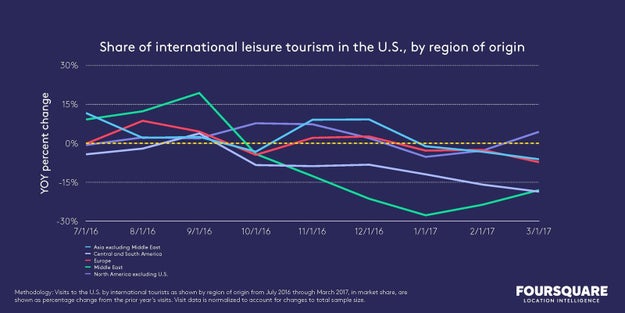
The United States’ slice of the international tourism pie is declining, according to a new report from Foursquare that looks at data from millions of phones worldwide.

The US share of international tourism dropped 16% in March 2017 compared the previous year. And it declined an average of 11% year over year in months spanning October 2016 to March 2017, according to the report.

The drop coincides with the final month of the US election, the Trump transition, and the early months of the Trump presidency, which notably imposed a travel ban on people from several majority Muslim countries in January 2017 that was eventually halted in court but is currently under appeal. Declines in tourism market share from people originating in the Middle East were more pronounced than the rest of the world, down 25% this January, along with a smaller decrease in South America, Foursquare found.

The data accounts for the percentage of international tourism coming to the US and not the absolute number of tourists, but Foursquare CEO Jeff Glueck told BuzzFeed News that it’s unlikely tourist visits to the US increased while share declined. “I don’t think you’d see a 16% decline in international market share and absolute numbers being up, I don’t think that’s compatible,” he said. “The volume of tourism doesn’t change that fast.”

Foursquare’s data comes from approximately 13 million users who opted to share their locations with the company, much like the data collection methods it used to accurately predict iPhone sales in 2015 and a massive decline in Chipotle sales in 2016. Foursquare tracks where the people holding these devices go at all times, allowing it to identify types behavior — including leisure and business travel — based on where they go and how often they visit these places. The data is anonymized. “We understand where phones sleep, generally over time where ‘home’ is,” Glueck said. “We’re able to see not just that someone traveled from Switzerland to Miami, but things like, did they walk into a mall, a museum, a restaurant; did they stay at a hotel?”

Foursquare

Other research seems to support Foursquare’s conclusions about a slowdown in international tourism to the US. While the US Travel Association, for instance, reported a small increase in absolute international travel to the US in its Travel Trends Index in March, it warned that “the modest pace of international inbound travel growth represents a dramatic slowdown, and portends a potential decline in the months to come.” The report noted that an increasingly valuable dollar contributed to the slowdown, along with “negative perceptions of Trump administration rhetoric and policies related to travel restrictions, immigration, and international relations.”

There are other indications that international tourism to the US may be tailing off. Marriott International chief executive Arne Sorenson said in April that his company has experienced a decline in bookings from Mexico and the Middle East during the Trump presidency. And travel app Hopper said searches for flights to the US were down 17% the day the travel ban was announced, compared to the Obama presidency's final two weeks.

While Foursquare’s report showed a declining US share of international tourism, it did find an increase in business travel of approximately 3%.

The decline in international tourism share could have a broader impact on the the US economy, Foursquare contends, and with good reason. International travelers spent $247 billion in the US last year, according to the US National Travel and Tourism Office. “The entire retail sector fell about 3% last year, and that led to almost 100,000 workers losing their jobs,” Guleck said. “A 16% drop in America’s tourism market share is a punch in the gut to a restaurant and shopping world that’s already under pressure.”

Quelle: <a href="U.S. International Tourism Market Share Is Falling Under Trump, Foursquare Data Shows“>BuzzFeed

Two New Facebook Live Features Just Launched To Use With Friends

Add in a friend to do a split-screen live video with, and make private chats on public videos.

And today, the company is adding two new features to make live videos better for both filming and watching.

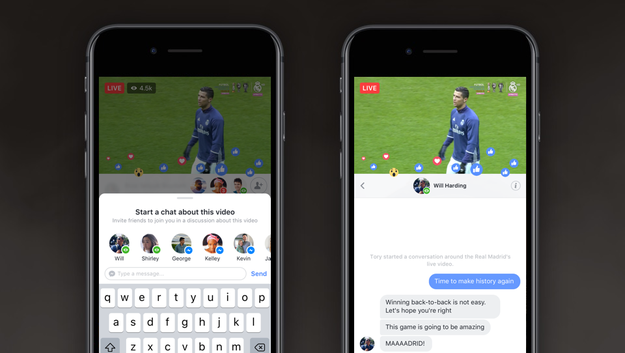
Now you can make a private chat with just friends on a public Live video.

Now you can make a private chat with just friends on a public Live video.

This means that on a popular live video, you can talk to just your friends without having all your comments swamped by hundreds of randos. Or, let's say that you're part of a niche community of veterinarians specializing in giraffe birth, and you want to be able to discuss the pregnancy of April the giraffe without all the riff-raff (this could happen, right?) This new feature would be perfect for that.

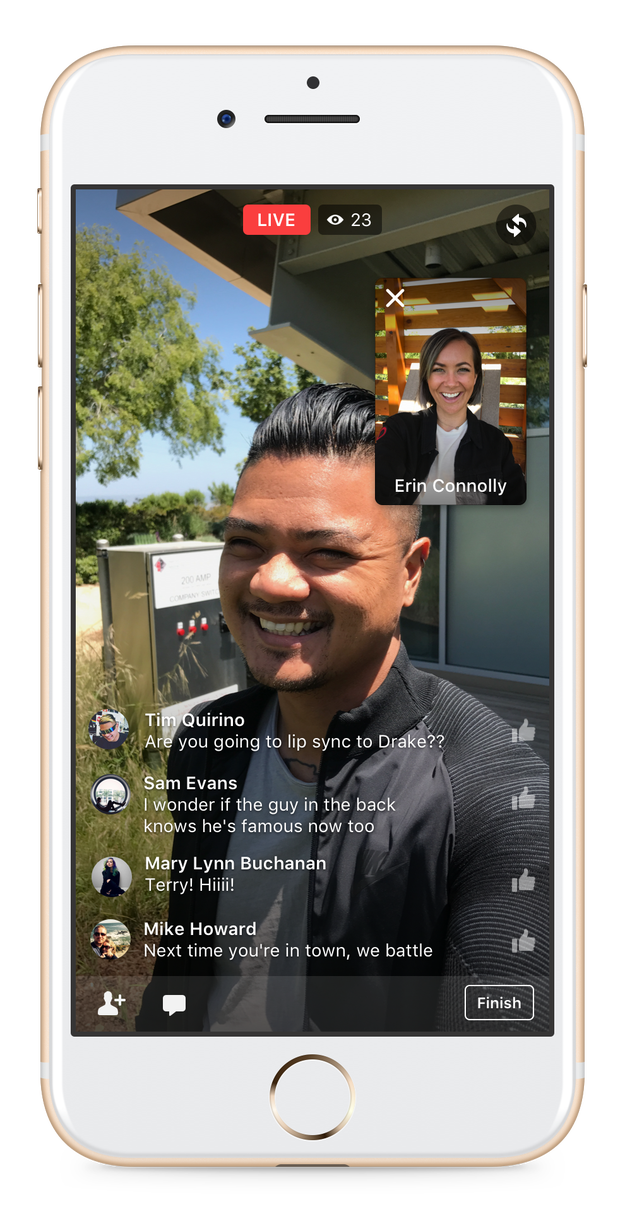
The next feature lets you do a joint live broadcast with a friend in a different location. It’s basically like letting other people watch your Skype or Facetime with your BFF.

The next feature lets you do a joint live broadcast with a friend in a different location. It's basically like letting other people watch your Skype or Facetime with your BFF.

Facebook offered this feature to verified users last summer, but now everyone can do it. This solves a big problem with doing a live video yourself, which is like… doing it alone is kind of boring? And you might not have anything to say. Now, you can share the awkwardness of a live video and make it like your own mini talk show, even if your friend lives on the other side of the country.

Quelle: <a href="Two New Facebook Live Features Just Launched To Use With Friends“>BuzzFeed

Instagram Is Introducing Algorithmically Curated Stories

Instagram

Instagram is at it again, reaching into Snapchat’s bag of features and pulling out yet another for use in its own product.

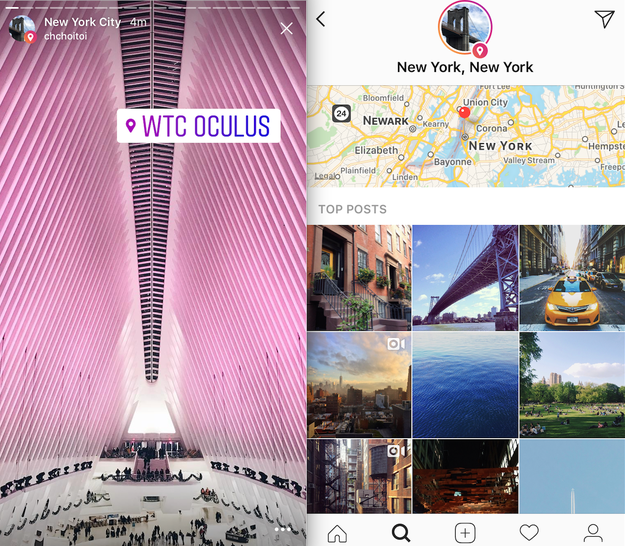
Today, the Facebook-owned app is introducing Location Stories and Hashtag Stories, its version of the algorithmically curated stories you can find via Snapchat’s search feature. These new features consist of images and videos gathered from public stories, and stitched together based on hashtag and location. They’ll be watchable as cohesive, curated videos in Instagram’s Explore tab and on location pages — much like Snapchat, which does this with keywords.

With Instagram’s stories, the algorithm is the editor; it scans all public images and videos posted using hashtags and locations, decides which images and videos to highlight for each specific hashtag and location, and picks the order they play in.

“There will be no human editing,” Blake Barnes, the director of product leading Instagram’s Explore tab told BuzzFeed News.

A look at Snapchat’s keyword-based Stories shows the divergent and sometimes discomfiting direction algorithmically curated stories can take. Searching the keyword “Syria” this weekend, for instance, revealed a number of users trivializing the brutal civil war in that country. One Snap played footage of Grand Theft Auto with a caption that read “Live footage of a USA soldier bombing Syria.” Another showed a man in a Trump jersey with the caption “YASSSS FU Syria.” Yet another showed a person in Ohio wearing a gas mask with the caption “Waking up in Syria like.”

Instagram will likely also be home to a mix of fun stories and complicated and potentially disturbing ones. The fun stories won’t be difficult to find. As an example, Barnes played a few, including a Hashtag Story for #ootd, or “outfit of the day,” — a compilation of people posting well, the outfit they wore that day. He also showed Location Stories from Tokyo and Paris — compelling peeks into cafes and city life. But when BuzzFeed News asked him to show Location Stories from Tehran and Kabul, Barnes demurred. “Maybe you can try it when you get it,” he said.

Instagram, which has more than 700 million monthly active users, is much larger than Snapchat, and simply by the nature of that scale, it’s likely its stories will contain violent, graphic, and upsetting images. This means that through Location and Hashtag Stories, Instagram will likely have to wrestle with the murders and gruesome violence that are now a major problem on Facebook proper. And with algorithms making the calls, there will be little safeguard against them. Asked about this, Barnes said users can report concerning content and the platform will review it. “Our focus will be to make sure the content that the content we show and pull together into these stories conforms to our policy guidelines,” he said.

Quelle: <a href="Instagram Is Introducing Algorithmically Curated Stories“>BuzzFeed

There's Now A New Kind Of Snapchat Story

There's Now A New Kind Of Snapchat Story

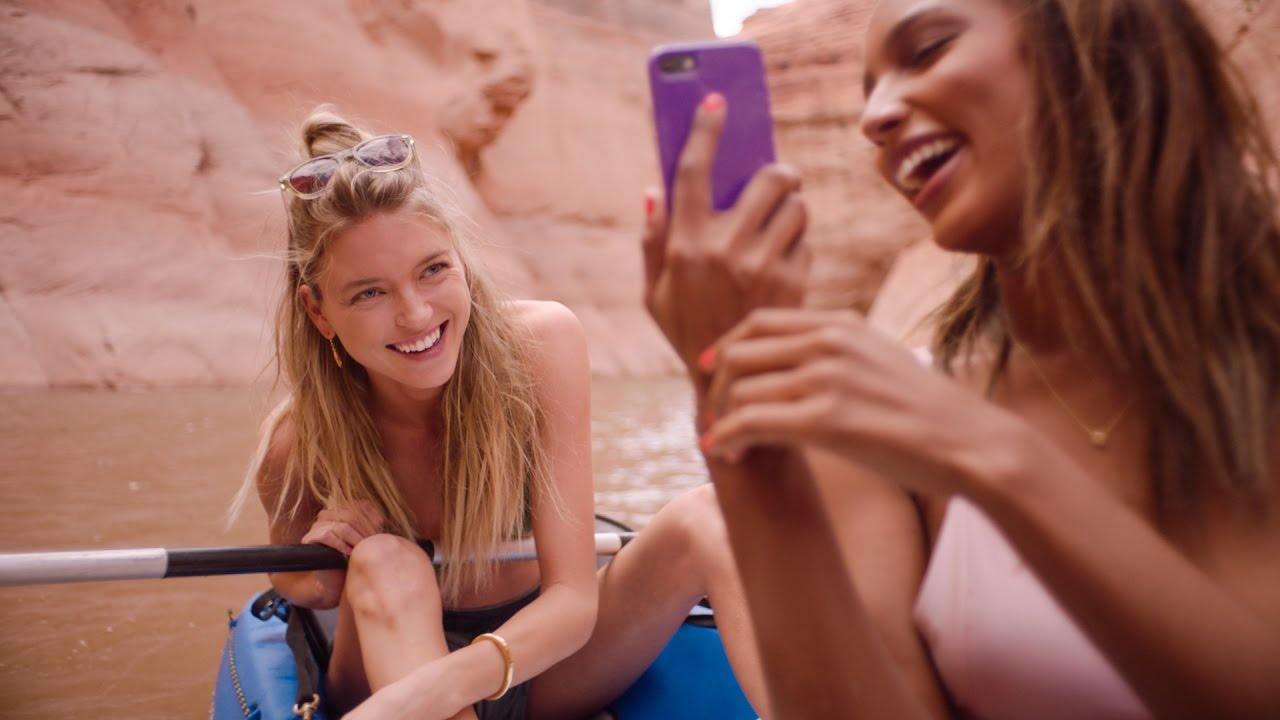
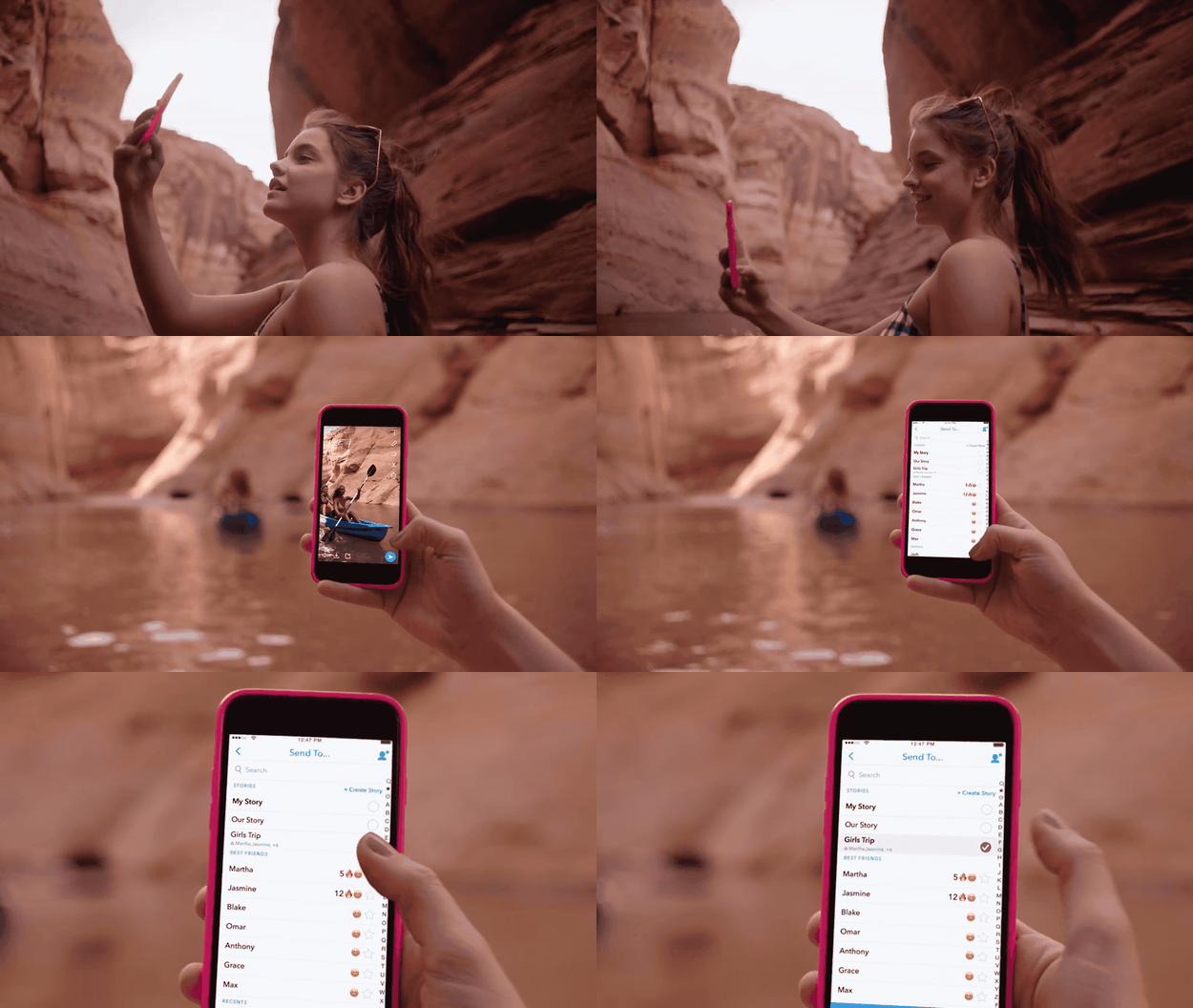
Snapchat just introduced a new feature, custom Snapchat Stories, which allows you to create stories with friends rather than by yourself.

Like with regular Stories, videos and photos in a custom story will display for 24 hours, and a custom Story will stay active until no one has contributed to it for 24 hours.

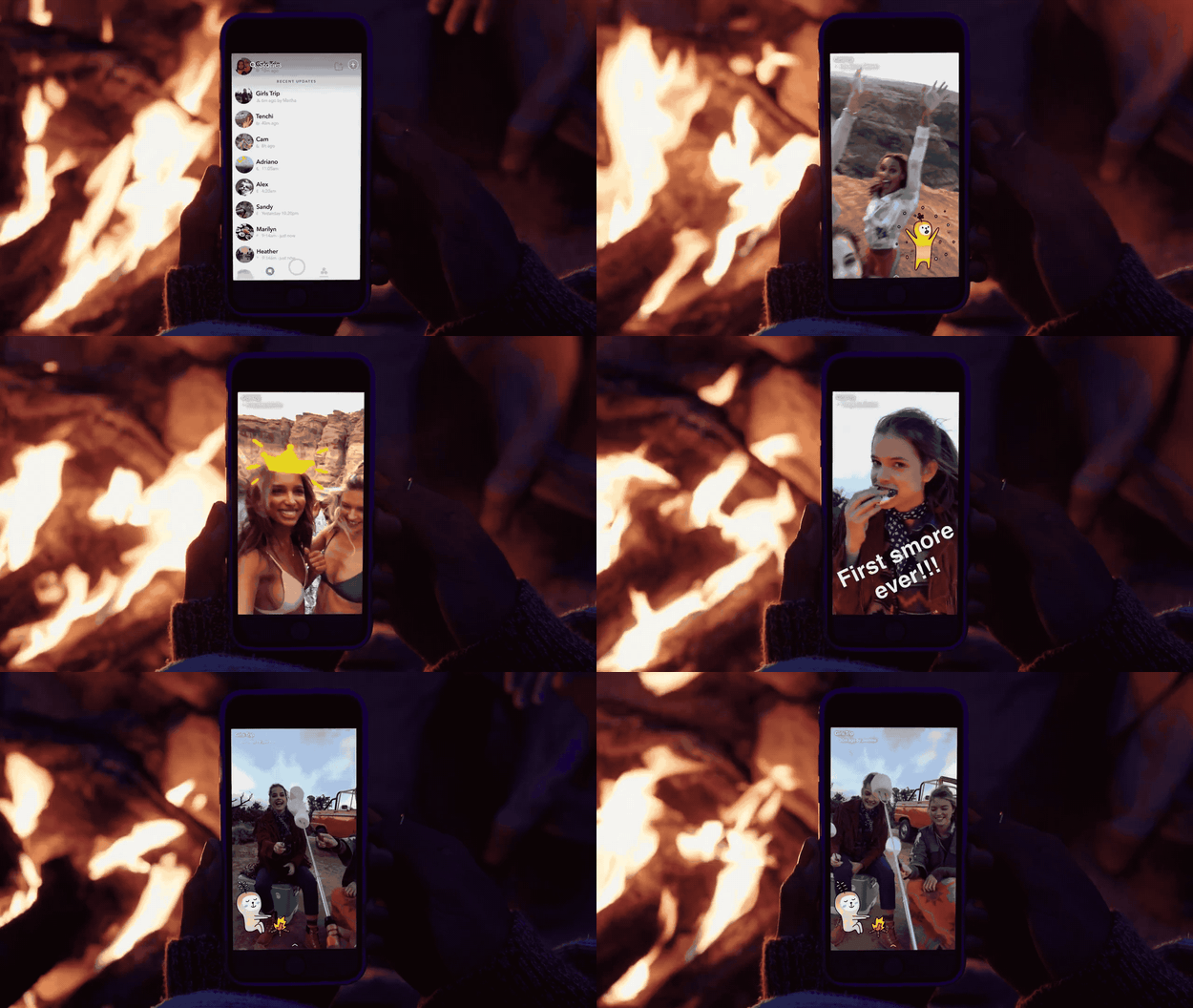
It's like a collaborative, ephemeral vacation slideshow, wedding album, or baby book.

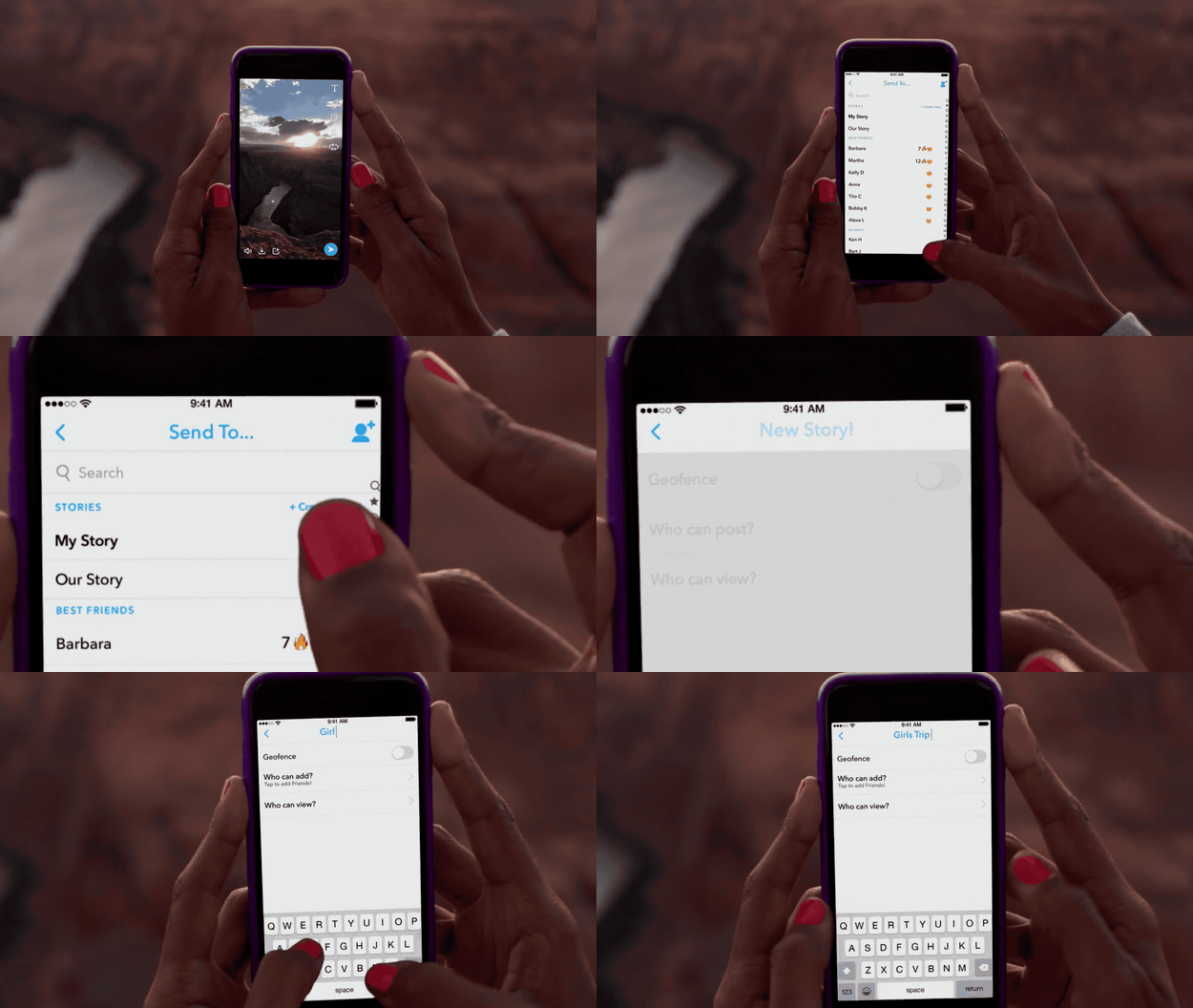
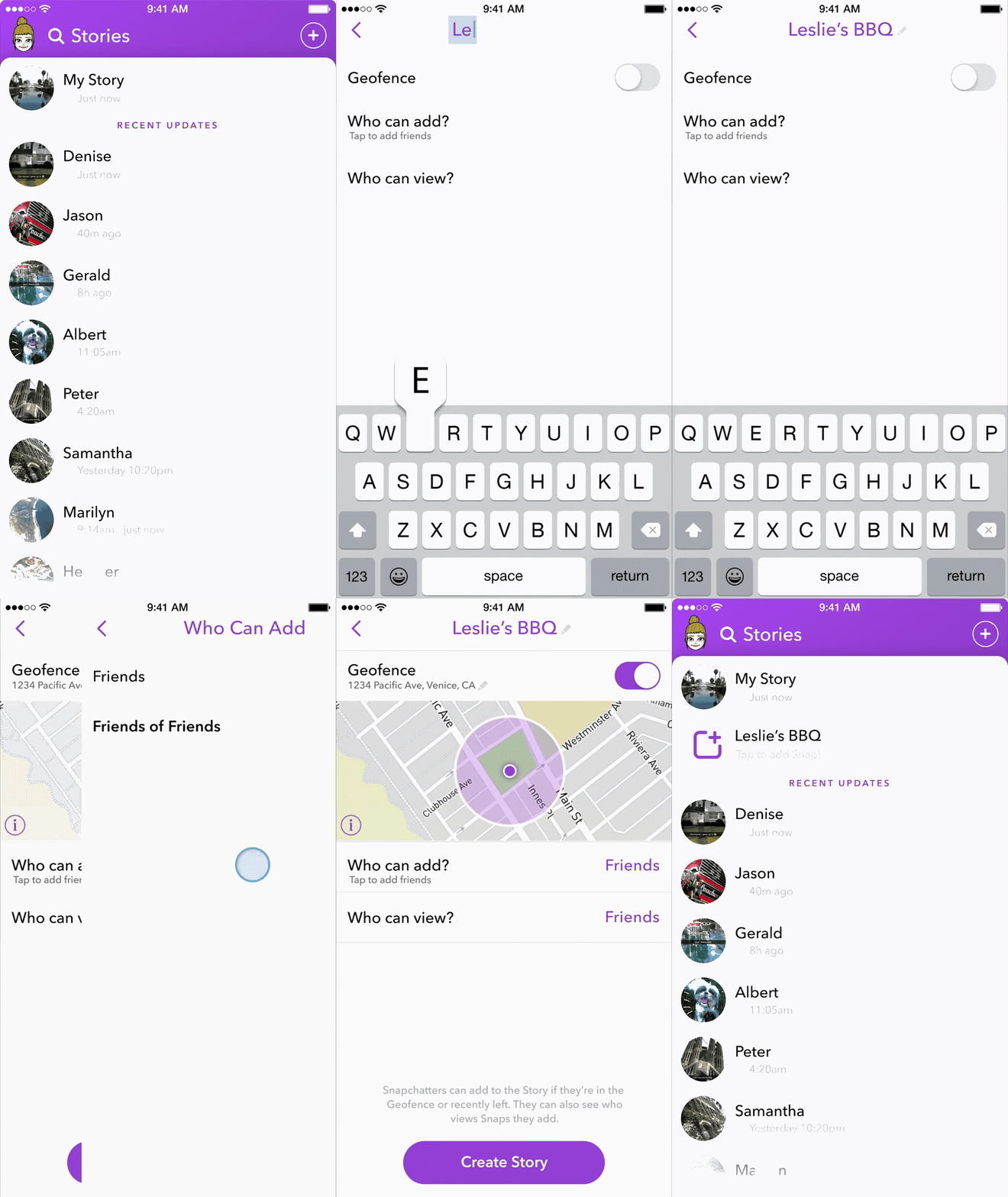
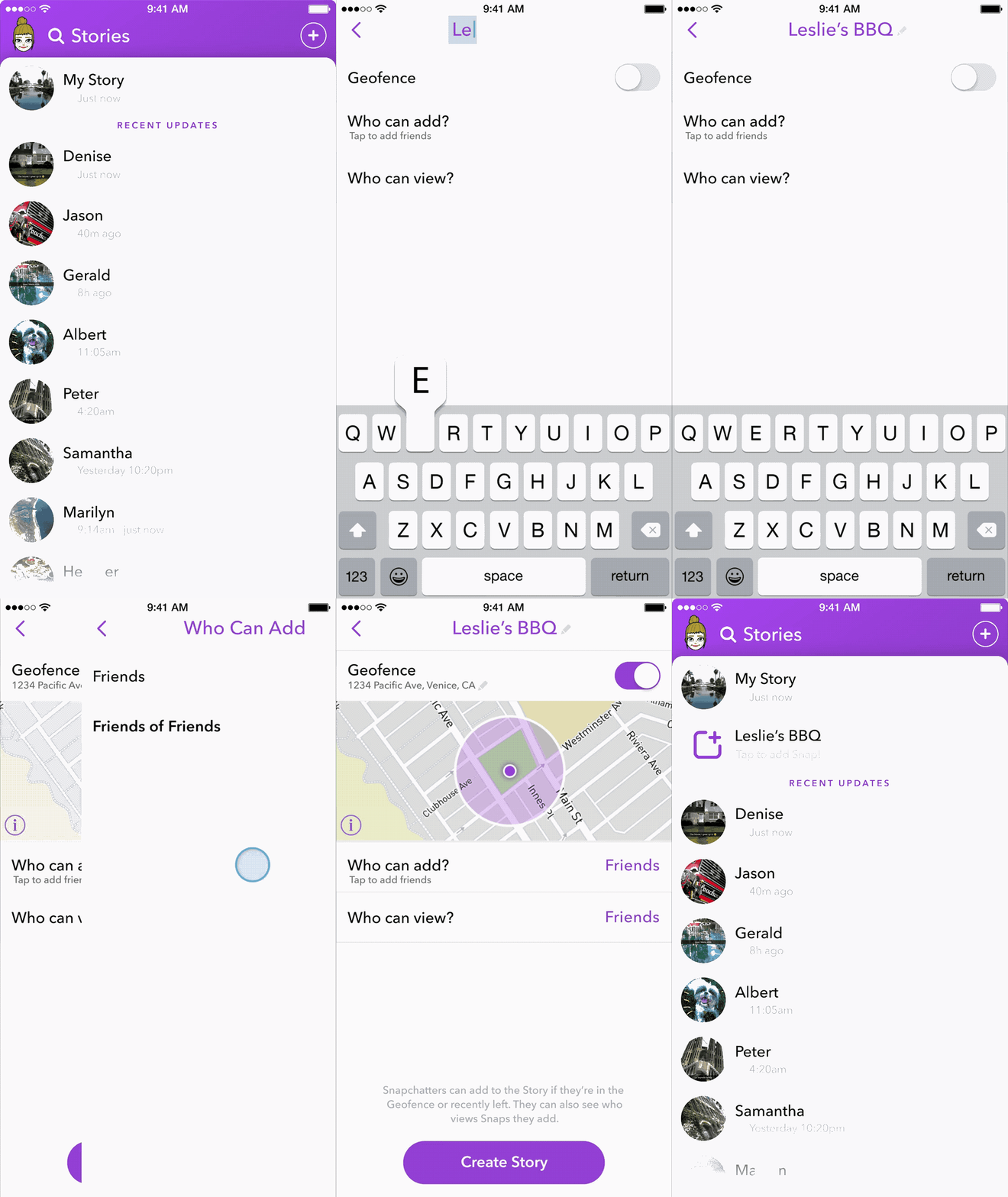
To create a custom story, you click “Create Story” in the Stories screen on Snapchat, name the Story, designate who can add to it, and then add images or videos.

The designated contributors will then be able to add to it. Custom stories will appear the My Story section.

You can be a contributor to an unlimited number of custom stories at a time, but you can only have three that you've created running at any one time.

You can make it location-specific, so any friend within a certain radius — “about a block in circumference,” according to Snap — can add to the story.

You can also set the geofence to allow friends of your Snapchat friends to contribute.

By default, custom stories are only visible to the contributors, but you can select which other friends can see them. If you select the geofence option and make your followers or friends of friends contributors, they can see it as well.

youtube.com

Quelle: <a href="There's Now A New Kind Of Snapchat Story“>BuzzFeed

The New Surface Pro Is Just A Little Better Than Last Year's

Microsoft

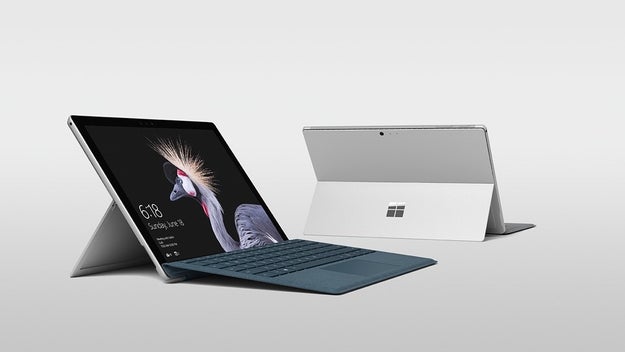
Today, at a special event in Shanghai, Microsoft took the wraps off its new, fifth-generation laptop-tablet hybrid, called just “Surface Pro,” dropping the number in previous models (eg. Surface Pro 4) because, well, they can.

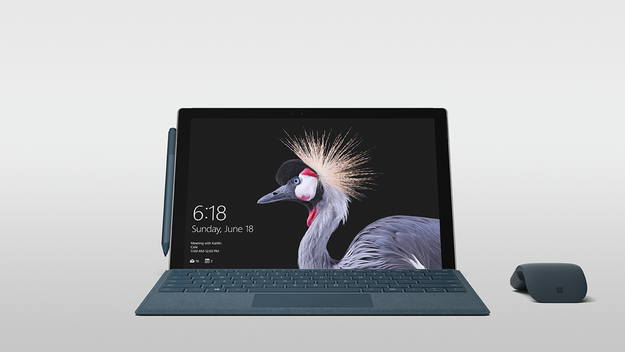
For those with last year’s Surface Pro, there isn’t that much to upgrade to. The new device looks nearly identical to the previous model (save for a few more rounded edges), but now has a better battery life, improved performance, and a new cellular LTE option that lets you browse the web without Wi-Fi. Additionally, the fifth-generation Surface Pen, a stylus for drawing and note-taking on the Surface Pro’s touchscreen that has typically shipped with the device, will now be sold separately (its price has not been announced yet).

The announcement is one of several major Surface brand releases in the past year. Microsoft’s new desktop PC Surface Studio aimed at iMac customers started shipping in early 2017, and the company also announced a Chromebook-competitor called Surface Laptop, which runs a version of Windows that only runs apps from the Windows Store, earlier this month. The Pro line is Microsoft’s most lightweight, affordable device under the touchscreen-friendly Surface brand, and the latest Pro is slightly more productive than its predecessor, but still not as powerful as the more expensive Surface Book or Surface Laptop.

The two most significant improvements are battery life and performance.
Microsoft

The new Surface Pro now has 13.5 hours of battery life, up from 9 hours in the previous version, while the aspect ratio (3:2), screen resolution (2736 × 1824 and 264 ppi), and screen size (12.3 inches diagonally) remain the same. The processors are also being upgraded to seventh generation Intel core processors. You can choose between the lightweight m3 processor, the faster i5 (both of which are now quieter because they are fanless), and the fastest tier, i7 (which has always been fanless but is even quieter in this model).

In addition to those internal upgrades, a 4G LTE version of the new Surface Pro, for web browsing over a cellular data connection without Wi-Fi, will be available later this year.

Drawing, note-taking, and typing have also been improved on the new Surface Pro.

Microsoft

Although it’s now sold separately, the Surface Pen is really one of the defining features of any Surface device. The new stylus has a stronger magnet that snaps to the side of the screen with more force.

It also has more lifelike drawing capabilities. Now, when you tilt it slightly, you can also adjust the thickness of the stroke, and when you tilt it even more, you can shade with it. It’s faster and more accurate than the previous pen. The pen has 4,096 levels of pressure sensitivity (up from 1,024 levels) and is twice as fast. The tablet’s kickstand also now goes down to 15 degrees for more comfortable pen interaction, mimicking Microsoft’s very high-end Surface Studio desktop PC.

The pen is also further integrated into Microsoft Word, Excel, and PowerPoint, which all support the new tilt and shading capabilities. You can customize a toolbar of favorite pen styles (pens, pencils, and highlighters) and colors that is synced across the three Office apps.

Another enhanced input experience in the new Surface is typing. There’s a new keyboard cover, called the Signature Type Cover, that has more bouncy keys, a full-size trackpad (like one you’d see on a dedicated laptop) and backlit keys. The whole device is also designed to be more sturdy on your lap.

The new Surface Pro starts at $799 (remember: without a pen), and every tier is incrementally more expensive.

Microsoft

You can configure the Pro with the processor and memory of your choice (4GB, 8GB, or 16 GB of RAM) or, in other words, how fast your laptop/tablet will be, as well as storage capacity (128GB, 256GB, 512GB, or 1TB).

What you need will depend on how you plan to use it. Generally, if you need a laptop just for Internet access and streaming music and movies, you can get by with the entry-level Core M. But if you need to work with apps like Office or Photoshop a lot – or even if you’re a web surfer who open lots of tabs at once – you’ll want (at the very least) the Core i5 with 8GB of RAM. Microsoft hasn’t updated pricing tier details yet, but we’ll update this post as soon as they do.

The laptop, which ships with Windows 10 Creators Update, and new keyboard cover (in four different colors: silver, burgundy, cobalt blue, and black) can be pre-ordered starting today, and will ship on June 15 in 26 countries, including the US, UK, Australia, China, Germany, France, and Japan. The Surface Pen, which comes in colors matching the keyboard covers) won’t be available for another couple of weeks, however, and the 4G LTE Surface Pro will come later this year.

Should I switch to a tablet laptop hybrid?

Tablet-laptop hybrids are great for their flexibility. Many Windows laptops now have touchscreens and, increasingly, Chromebooks do too. Their screens can be detached for note taking or drawing and then, when it’s business or study time, you can slap on a keyboard cover and run full Windows 10 desktop programs, like Photoshop. The problem is that historically hybrids have been underpowered and hard to use on your lap because of light, flimsy keyboards, compared to a dedicated laptop.

Many may find Apple’s similarly lightweight MacBook, which start at $1,299 for a core m3 processor and 8GB of memory, to be too expensive (though new upgrades are rumored to arrive next month). And affordable Chromebooks, which run Google’s apps (Chrome, Google Docs, etc.) very well and Android apps sort of well, may be be too limited for some people. A device like the Surface Pro is a good alternative.

The new Surface Pro addresses (but doesn’t fix) any of those issues, so if you weren’t a Surface Pro believer before, this might not be the device that convinces you to get one. But for those with older Surface Pros (like the Surface Pro 3), the improvements in the new tablet might be what you’re looking for.

Quelle: <a href="The New Surface Pro Is Just A Little Better Than Last Year's“>BuzzFeed