Uber Fired 20 People In A Harassment Investigation

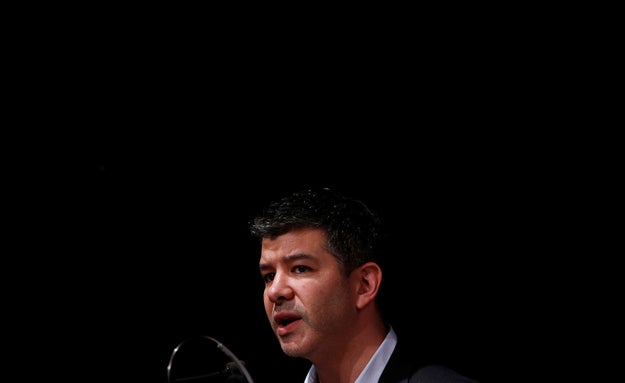
Adnan Abidi / Reuters

Uber told employees at an all-hands meeting on Tuesday that it has fired 20 people and investigated at least 200 claims of discrimination and harassment in an internal investigation into its workplace culture.

The information was shared by Uber's chief human resources officer Liane Hornsey; CEO Travis Kalanick was not present at the meeting, and is spending time with family following the death of his mother in a boating accident.

Uber launched an internal investigation into its workplace culture after a blog post by former engineer Susan Fowler Rigetti went viral in February, alleging systemic sexism. A source who declined to be named said those terminated were removed due to a variety of reasons including harassment, bullying or discrimination. The company's all-hands meeting was scheduled for an hour and started around 10 a.m. in San Francisco.

Uber on Monday announced that it had hired Frances Frei, a Harvard Business School professor, as senior vice president of leadership and strategy. Uber said in a blog post announcing the hire that she would “act as a partner” to its head of human resources, Lianne Hornsey, and called her “one of the world’s most respected authorities on organizational transformation.” Frei was introduced to Uber staff by Hornsey during Monday's meeting.

The company has also hired a second female executive this week, Bozoma Saint John, who previously served as Apple's head of global consumer marketing for Apple Music and iTunes, according to reports. TechCrunch and Bloomberg reported Tuesday that Saint John had joined Uber. An Uber spokesperson declined to comment but said Saint John would not be filling the role of chief operating officer, for which Uber has been interviewing candidates for several months.

This story is breaking and will continue to be updated…

Quelle: <a href="Uber Fired 20 People In A Harassment Investigation“>BuzzFeed

Hailing A Lyft In Boston? It Might Be Self-Driving

Kelly Sullivan / Getty Images

Lyft passengers who hail vehicles in Boston may soon be picked up by self-driving cars.

Lyft has partnered with the self-driving car company nuTonomy, based in Cambridge, Massachusetts, to offer self-driving cars on its platform in the “next few months,” according to Lyft cofounder and chief executive Logan Green. NuTonomy, which was born out of the Massachusetts Institute of Technology, already runs small pilot programs in Boston and Singapore.

The pilot will begin by integrating “our first couple of vehicles” onto the Lyft platform, nuTonomy cofounder Karl Iagnemma told reporters in a conference call announcing the news. Riders will receive a prompt to opt into the pilot, a Lyft spokesperson said. Those who agree may be picked up by autonomous cars manned by safety drivers – humans behind the wheel who can resume manual control of the vehicle if needed.

“We’re planning for future stages of our collaboration that could lead to thousands of cars on the Lyft platform,” Green said.

While Uber has opted to create its own self-driving software, Lyft instead has opted to partner with companies building the technology so it can run their vehicles on its platform. The deal marks Lyft’s third such partnership. Lyft has also partnered with General Motors, which invested $500 million in the ride-hail company, and Waymo, Alphabet’s self-driving car unit. The pilot will mark the first time Lyft offers passengers self-driving rides on its platform, albeit with a safety driver behind the wheel.

NuTonomy has snapped up several partnerships in the last year. It launched a small self-driving taxi trial program in Singapore last year, and also partnered with Grab, Uber and Lyft’s ride-hail competitor in Southeast Asia.

Lyft said rides will be free for riders who opt into the self-driving trial. The companies said the first phase of the pilot will focus on research and development efforts as they attempt to learn more about the rider experience in self-driving cars. The partnership does not involve any financial arrangements between the companies, Green and Iagnemma said.

Green said Lyft will update its app to provide instructions to a self-driving vehicle, and that a console inside each vehicle will offer a version of the Lyft app that riders can interact with.

While Lyft inks partnerships, Uber’s autonomous driving program is facing a bitter trade secrets lawsuit that could stall its self-driving ambitions. Waymo sued the ride-hail giant in February, alleging a former Google employee downloaded documents before decamping and eventually joining Uber. Waymo says Uber has benefitted from that knowledge.

Quelle: <a href="Hailing A Lyft In Boston? It Might Be Self-Driving“>BuzzFeed

This Bot Turns Trump's Tweets Into "Official" White House Statements

Donald Trump likes to tweet.

Okay, he really likes to Tweet.

He's also the president.

A new Twitter bot, @RealPressSecBot, fuses these two passions by publishing Trump's tweets in the official White House statement format:

Take a look at the bot in action. Here's a @realDonaldTrump tweet about the London attacks:

And here it is in White House release format:

That's some contrast, right?

Russel Neiss, the coder who built the bot, told BuzzFeed News it only took him 40 minutes to create it. Here's the tweet that inspired him:

Quelle: <a href="This Bot Turns Trump's Tweets Into "Official" White House Statements“>BuzzFeed

The Second Coming Of iPad

The Second Coming Of iPad

Apple CEO Steve Jobs had a favorite analogy for the post-PC era: Computers were trucks, and tablets were cars. He liked to compare the segue from PCs to tablets with the segue from trucks to cars that accompanied the urbanization of America.

“When we were an agrarian nation, all cars were trucks, because that’s what you needed on the farm,” Jobs said at the D: All Things Digital conference in 2010. “But as vehicles started to be used in the urban centers, cars got more popular. Innovations like automatic transmission and power steering and things that you didn’t care about in a truck as much started to become paramount in cars. … PCs are going to be like trucks. They’re still going to be around, they’re still going to have a lot of value, but they’re going to be used by one out of X people.”

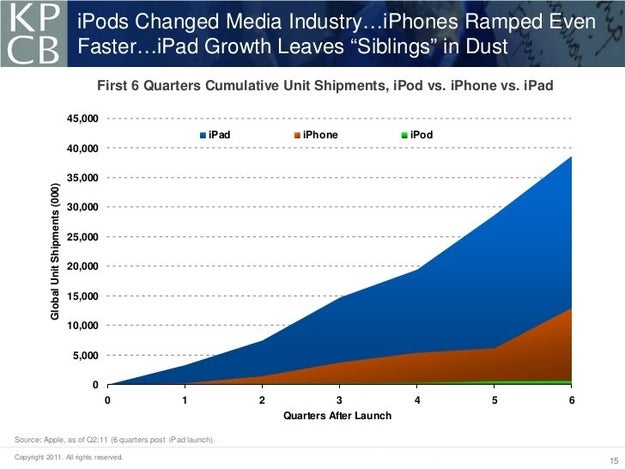
Jobs’ remark, made just six months after the debut of the first iPad, proved remarkably prescient. In a slide from venture capitalist Mary Meeker's annual “Internet Trends” report just a year later, the iPad is a rocket ship growing almost three times as fast as the iPhone did after its debut.
KPCB

But in the years that followed, that changed. By mid-2013, Apple’s iPad business had begun to shrink. And it was no temporary sales lull. Unit sales of the iPad, while still pretty huge, have dropped for 13 consecutive quarters now. Turns out, people tend to hold on to their tablets for quite a while.

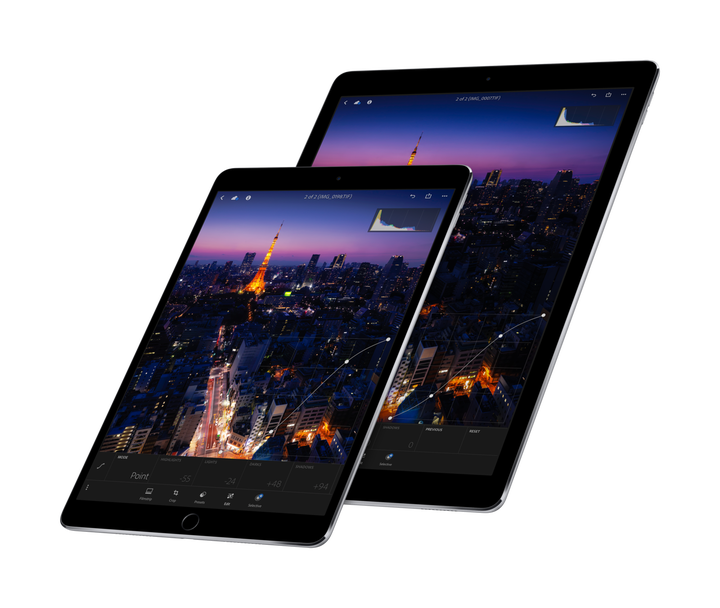
This year Apple is hell-bent on convincing them to buy new ones. In March, it uncrated a more affordable 9.7-inch iPad targeted at casual users. And today, the company debuted two iPad Pros targeted at hardcore users — a next-generation version of its 12.9-inch-display model and an entirely new 10.5-inch-display model. Both boast dramatically improved displays, more powerful innards, and more storage (a 512GB option!). Alongside them, Apple unveiled iOS 11, a new version of its mobile operating system that's heavy on iPad-specific enhancements.
Courtesy of Apple

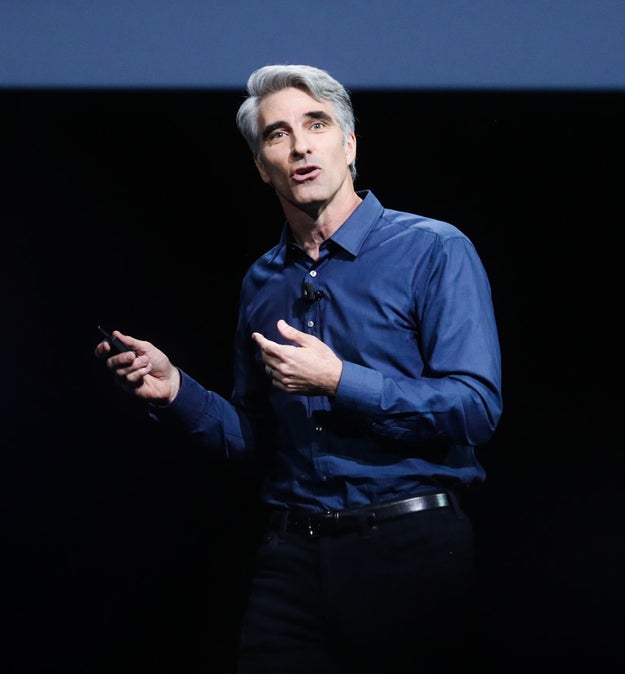
Craig Federighi, Apple's SVP of software engineering, says iOS 11 is “easily the biggest iPad release ever.” Marketing chief Phil Schiller one-ups that. “What we’ve done for iPad in iOS 11 is in and of itself enough for a major software release,” he explains. “You could say, ‘Here's the iPad version of iOS 11’ — if there was such a thing.”

Devotees of the iPad have pined for productivity enhancements for years — and this version has them, like the ability to drag and drop images or links from one app to another, and a smart way to manage files beyond looking for them in their associated app. There is a new, more affordable model for consumers, and two tricked-out models for pros that have a long-awaited iOS update tailored to iPads.
Craig Federighi, Apple's vice president of software engineering.

Gabrielle Lurie / AFP / Getty Images

For a while — since its inception — iOs has been iPhone-first, with nods to the iPad as well.

This is the first time that iOS has (seemingly) been designed from the get-go with the iPad at top of mind. While last year’s iPad Pro may have delivered on hardware, without a strong OS update to match, it felt incomplete as a “primary” computer. Yet given this new operating system — especially when taken together with this year’s hardware — it feels like the iPad may be at another inflection point.

Certainly, that seems to be Apple’s hope: “We want iPad to be an even better primary computing device for the people who want it to be that,” says Schiller.

For creatives and professionals who embraced the original 9.7-inch iPad Pro only to find themselves hamstrung by cramped keyboards and multitasking that just wasn’t quite there, the new 10.5-inch iPad Pro and the larger Smart Keyboard intended to accompany it will likely hit a sweet spot.

“The 10.5 crosses this really interesting threshold,” Federighi says. “By trimming down the bezels, we were able to maintain a size that’s great to hold in bed while reading, but it’s also got a full-sized keyboard. It’s deceiving to the eye, but when you put your hands down and start typing you immediately feel ‘oh yeah, now I can type just like on my Mac.’”

“You could say, ‘Here's the iPad version of iOS 11’ — if there was such a thing.”

It’s a seemingly elementary improvement, but it feels like a crucial evolution. If the iPad Pro is indeed “the clearest expression of Apple’s vision of the future of personal computing,” as CEO Tim Cook has said, you should be able to comfortably type with it, no? At least until telepathic typing becomes an actual thing.

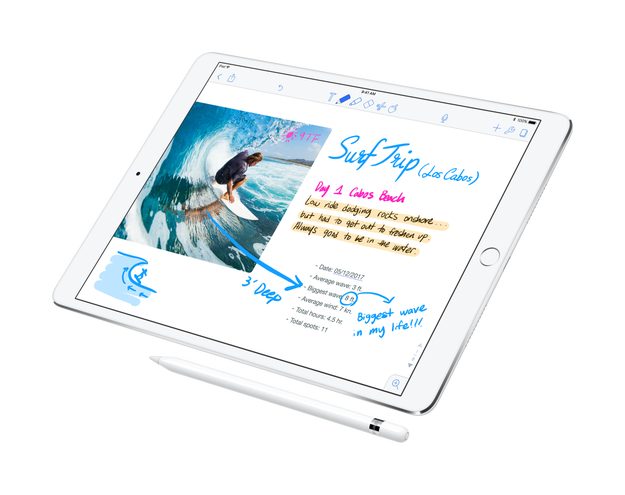
Similarly, since the iPad is a touch device first, touch interactions — be they via finger or Apple’s Pencil stylus — should be instantaneous, alive. And on the new iPad Pros they get pretty damn close, thanks to one of those world-of-pure-imagination innovations Apple is willing to spend years concocting. This one’s called ProMotion, and it doubles the number of times per second an image can be refreshed on the the iPad Pro’s display. Like most all mobile devices, the first-generation iPad Pro had a refresh rate of 60Hz. The new iPad Pro can ramp up to a refresh rate of 120Hz that’s more typical of 4K TVs.
Courtesy of Apple

What that means in practice is that anything that moves on the device’s screen — whether it be video or a line drawing or a photo zoom — appears smoother and more detailed. Some touch interactions are dramatically more responsive; you get the sense that Apple is speeding iPad toward finger-into-puddle-of-water levels of responsiveness.

Meanwhile, the Apple Pencil’s latency — that slight lag you get when drawing — has been reduced to the point where it’s virtually imperceptible; Apple says it’s just 20 milliseconds. And since Apple is so intensely focused on capturing the experience of putting pen to paper, it’s doing additional work in the background to remove the lag entirely with machine learning–based algorithms designed to predict where a Pencil is headed next.

“We actually schedule the next frame for where we think the Pencil's going to be, so it draws it right when you get there, instead of right after you have been there,” Schiller says.
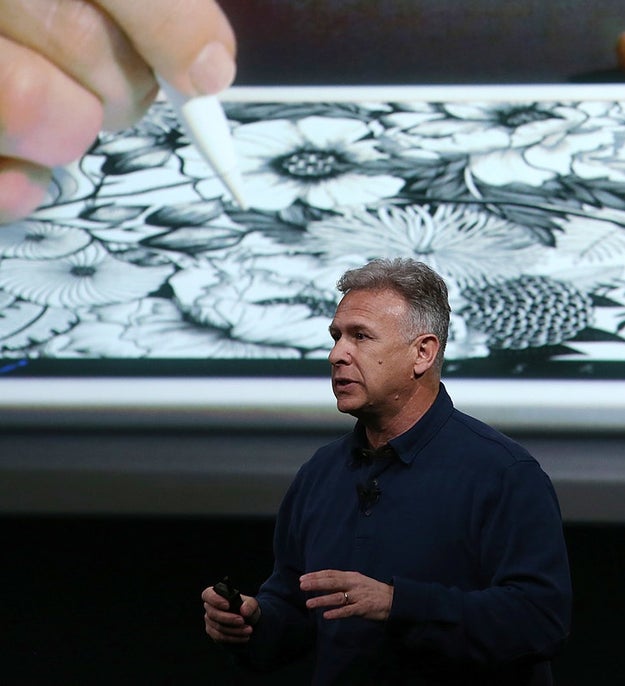
Phil Schiller, Apple senior vice president of worldwide marketing.

Justin Sullivan / Getty Images

For Federighi, who's had a hand in a broad array of Apple innovations since his return to the company in 2009, ProMotion is a dramatic upgrade to the iPad Pro. Asked about its origins, he leans forward in his chair and describes the holy-shit moment of discovery with the excitement of a kid who’s just learned you can make a volcano out of baking soda and vinegar.

“We built some early prototypes to experiment with super-low-latency touch on a 120Hz display, and we hooked them up to these big engineering rigs driven by Mac Pros,” Federighi says. “The touchscreen experience was incredible. It was like the display was directly attached to your finger.”

It’s worth noting that this was four years ago, and Apple almost immediately started working on the chip to support it. Only now are we seeing it commercially deployed, which gives you a sense of the massive amount of research and development involved in developing a chip powerful and power-efficient enough to drive a 120Hz iPad display. That’s important, because it shows how much Apple has committed to the iPad line; it’s worth that kind of multiyear investment.

“I know we use the word ‘magical' a lot, but that's how I feel about this one.”

“It was a massive, cross-functional effort,” says Federighi. “There’s hardly a team in engineering that didn't contribute to this effort, and I think we got it right. … I know we use the word 'magical' a lot, but that's how I feel about this one.”

So that's the hardware. But Apple prides itself on delivering “the whole widget,” as Steve Jobs used to say — a seamless integration of hardware, software, and services.

iOS 11 promises to do a good job of that for iPad. It may not be the “padOS” — an iPad-specific operating system — for which some folks have argued, but it's got a groaning board of thoughtful iPad features. There’s an ever-present (and very Mac-like) dock for favorite apps; There’s an intuitive and system-wide drag-and -drop for most anything you'd want to move from one app to another; Also newly added is the ability to annotate — or deface — documents, photos and screenshots in pretty much any app that supports printing simply by touching Apple Pencil to the iPad's screen
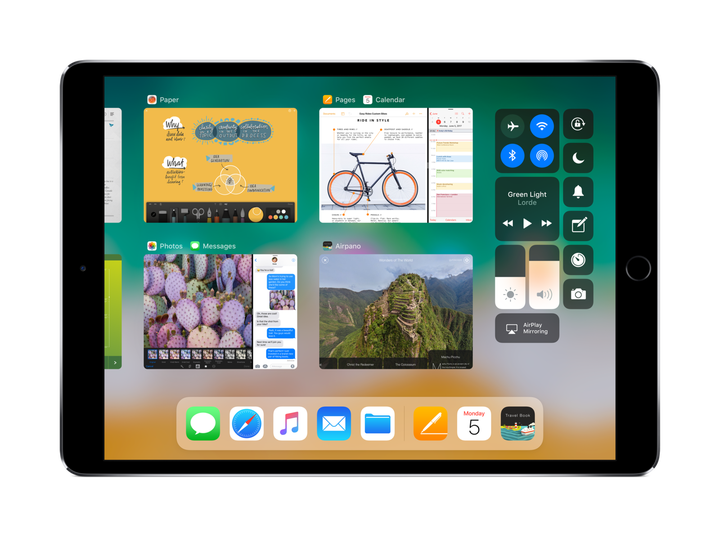
Courtesy of Apple

Best of all, and at long last, there’s a Files app that offers quick and easy access to all your documents and media, whether they're on your iPad, your Mac, or a third-party cloud storage service, like Dropbox or Box. It's simple enough for casual iPad users who just want things to be where they expect them to be and in the applications they use them. But it's also robust enough for workflow, uh, badasses who want to design their own file hierarchies.

There are other features as well, but for anyone who has tried and failed to use the iPad as a primary work machine, these four present a compelling case for going all in on the device again. It's hard not to look at the new 10.5-inch iPad Pro running iOS 11 and recall that “The computer for the rest of us” slogan Apple used in 1984 to launch the Mac. Today, might the same be said of the iPad?
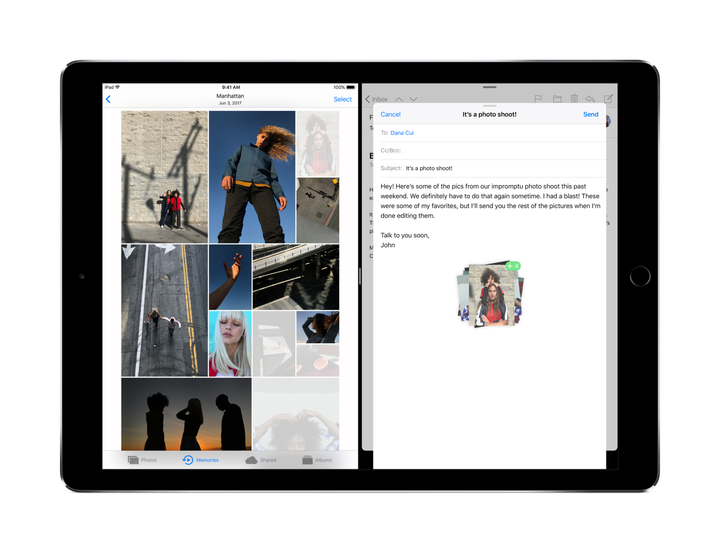
Courtesy of Apple

Perhaps. That said, Apple says it sees a long future for both Mac and iPad. “It’s simple, really,” says Federighi. “There a product you hold in your hand that’s designed for direct manipulation. And there’s product you use at your desk that’s designed for indirect manipulation. When you take those ideas to their fullest expression, when you extend their reach, there will inevitably be some overlap. But ultimately, people are going to choose the one that’s the most compelling for what they want to do.”

Which brings us back to Steve Jobs' cars and trucks analogy. Does it still hold up seven years later when smartphones are for many people their primary computing device? What if it turns out that phones, not tablets, are the cars?

Federighi and Schiller both think the comparison still holds. “Not to overstretch the analogy, but I think there's room for a car, a truck, and something that overlaps both,” says Schiller. “The smartphone is our key mode of digital transportation. It's with us all the time — it's our browser, it's our communication device, it's our camera. But can it do the heavy lifting of making a movie or writing an app? Of course not. For higher-end tasks like those, you need a truck; you need a Mac.”

“iPad provides something unique between the two,” Schiller concludes. “It's like the crossover vehicle. And in the vehicle world, crossovers are growing dramatically.” ●

Quelle: <a href="The Second Coming Of iPad“>BuzzFeed
The App Store Is About To Look Very Different

At its annual Worldwide Developer Conference (WWDC) on Monday, Apple announced that its App Store is getting a new look.

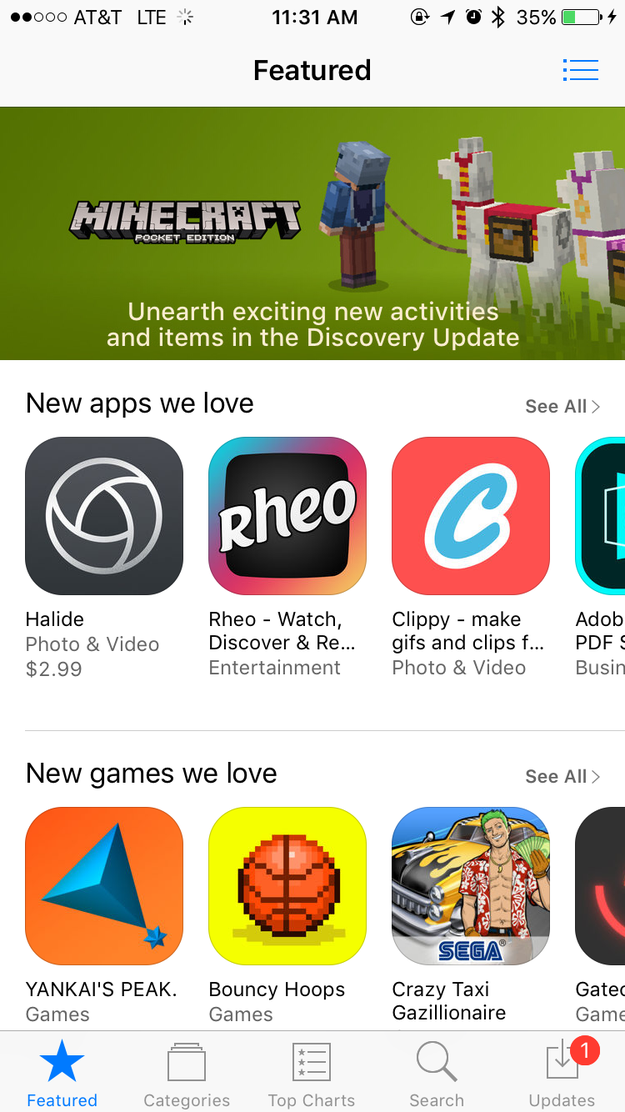
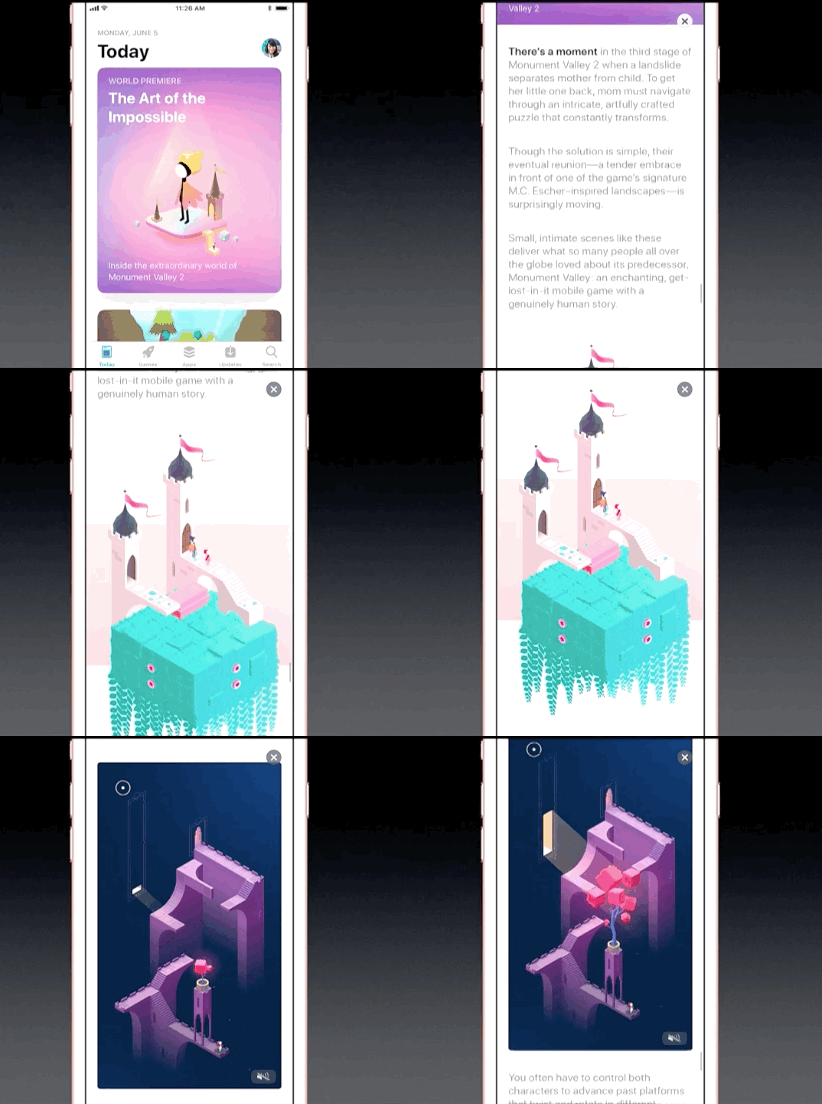
Here's what the App Store's homepage looks like now:

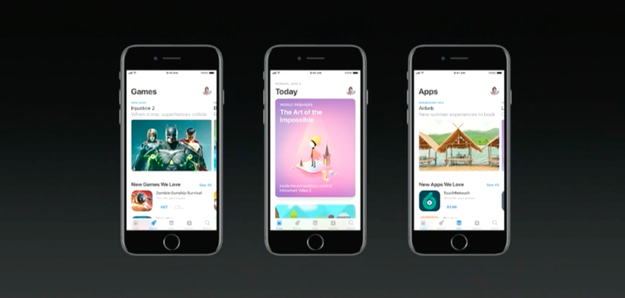
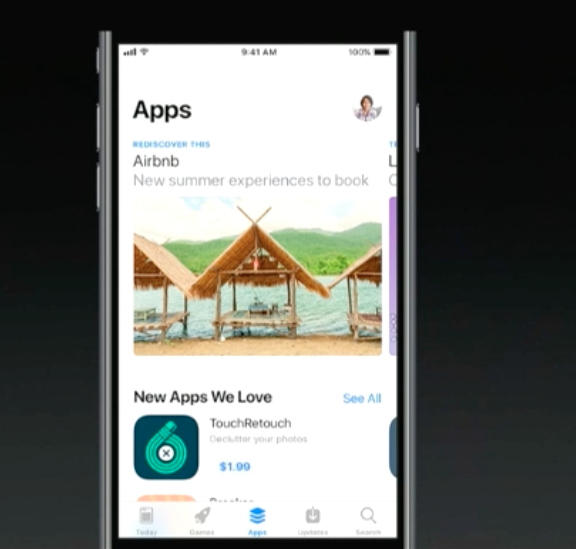
Here's what it will look like:

The redesign looks a lot like Apple Music's layout and is much more slick than the old App Store we're all used to.

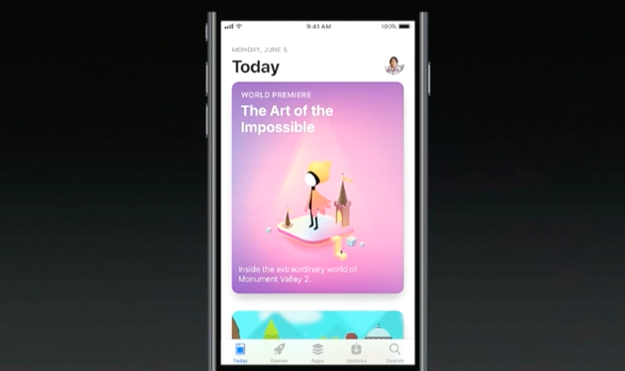
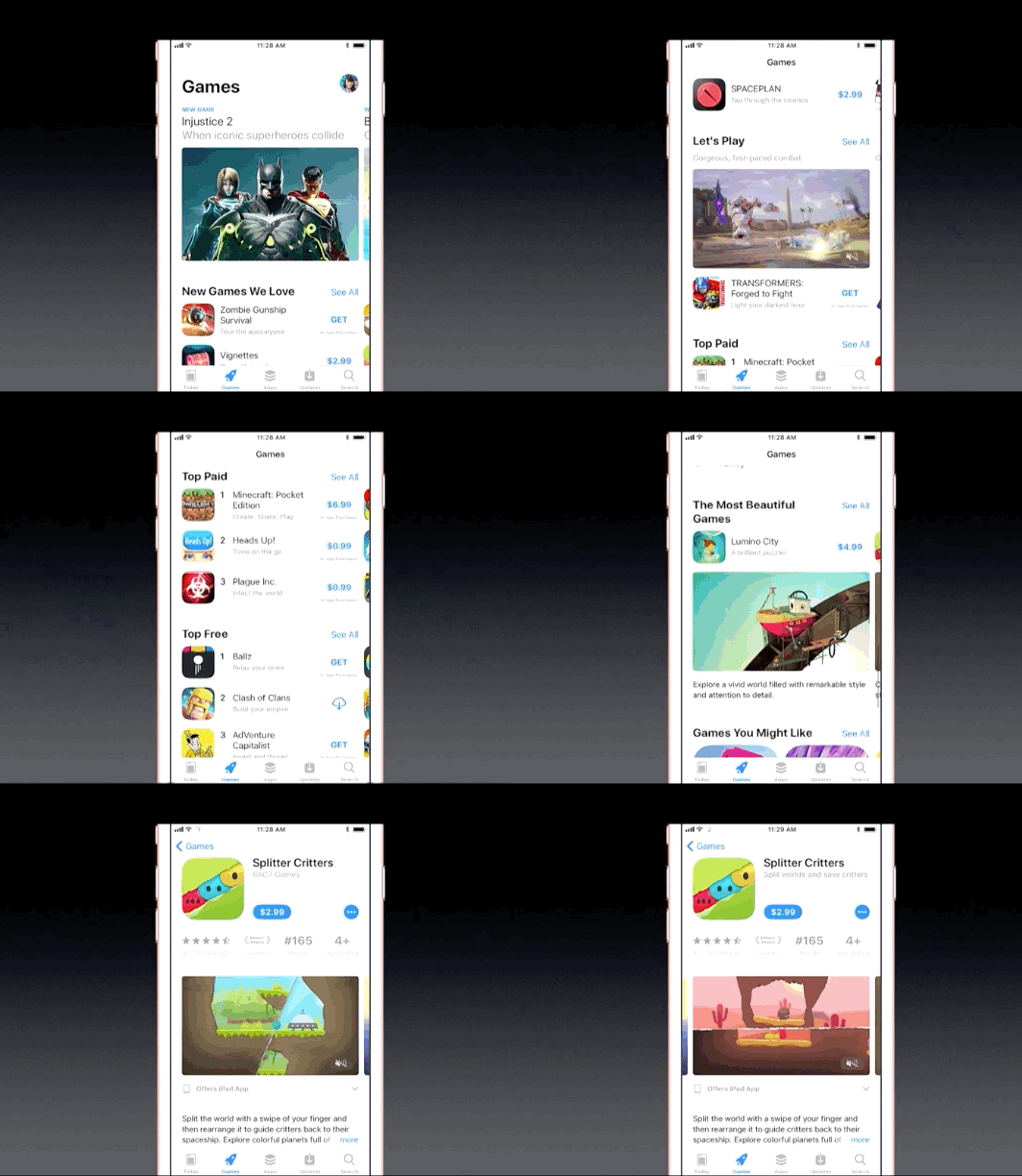
Instead of the “Categories” and “Top Charts” tabs, there will be a “Today” tab where Apple will feature apps. Apple is also adding a “Games” tab.

The Today tab will feature an app of the day, a game of the day, and daily lists in app categories like meditation. The changes seem to be aimed at improving the ease of discovering new apps with Apple's curation help.

Individual app pages are also getting a redesign.

Apple premiered the sequel to the popular game Monument Valley during its presentation of the new app pages.

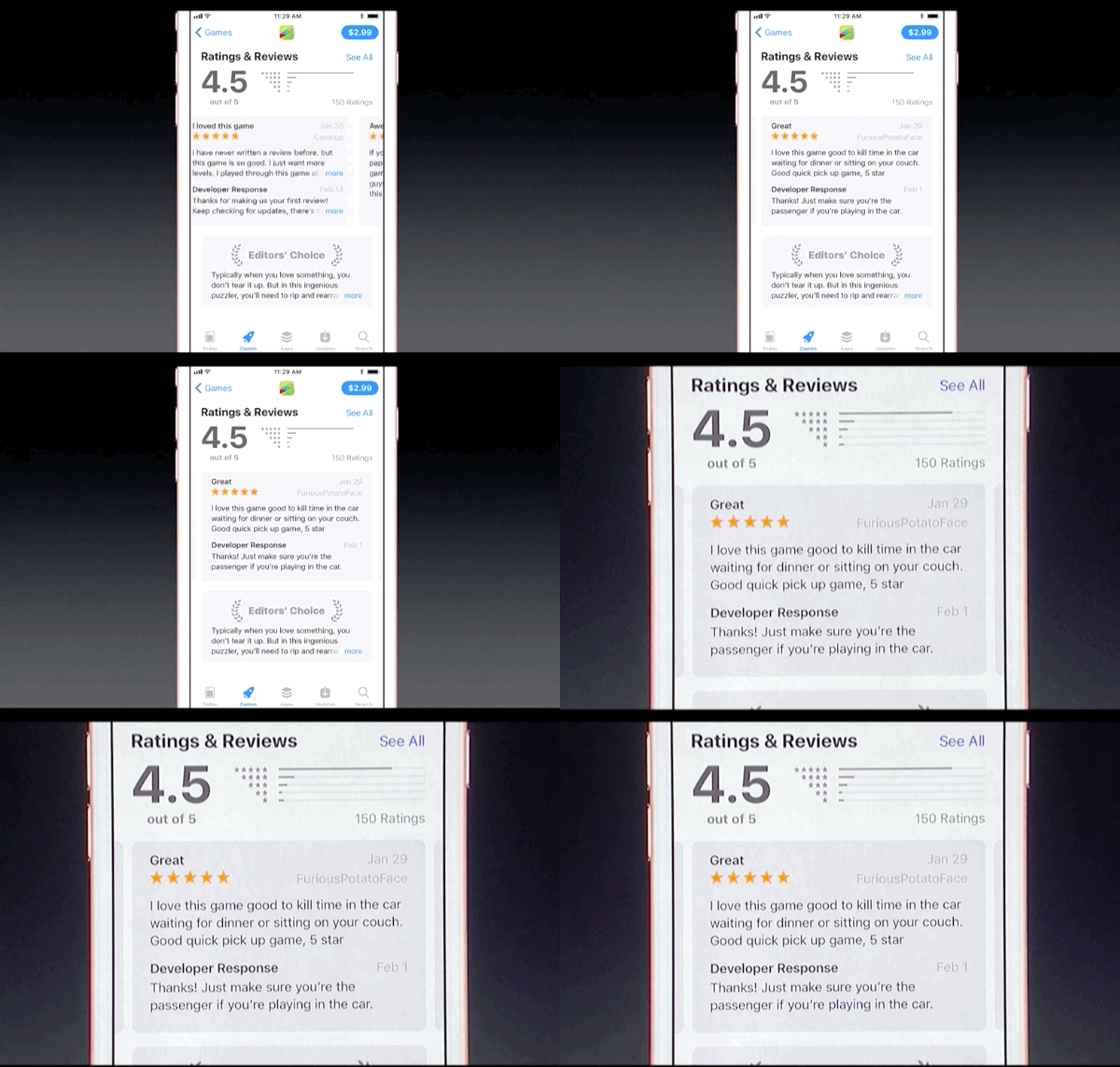
Reviews will look like this:

Some people were psyched about the redesign…

And some people were not.

Developers have complained before about the difficulty of getting users to discover and unearth their apps in the App Store.

Quelle: <a href="The App Store Is About To Look Very Different“>BuzzFeed

An Ad Network That Works With Fake News Sites Just Launched An Anti–Fake News Initiative

Revcontent / Via Facebook: Revcontent

An ad network launched a new initiative to “continue the fight against fake news” at the same time it was working with 21 websites that have published fake news stories, according to a review conducted by BuzzFeed News.

When contacted for comment, Revcontent subsequently removed four of the sites from its network, and in a statement suggested that a previous BuzzFeed News story about ad networks on fake news sites could itself be considered “fake news.”

Revcontent operates one of the biggest content-recommendation ad networks in the world, and its ad module appears on major websites such as Forbes, Newsweek, and Reuters. Similar to companies such as Outbrain and Taboola, Revcontent enables publishers to earn revenue by placing a widget on their website that shows a selection of headlines and images from companies that have paid for placement.

Late last week, Revcontent issued a press release to announce a new “Truth in Media Initiative” to combat fake news. The release explained the company will now enable readers to file a report if they see fake news displayed in the Revcontent widget.

“The cornerstone of journalism is about a relationship between media companies and their users,” said Revcontent CEO John Lemp in the press release. “As with any relationship, it needs to be built upon trust and creating a better user experience.”

But at the same time the company is calling on users to report fake news on its network, Revcontent continues to help popular fake news websites earn money. A recent BuzzFeed News review of ad networks on fake news sites found Revcontent's content ad module was present on 22 sites — making it the most common ad network on the more than 100 fake news sites reviewed.

BuzzFeed News visited those 22 sites again the day after Revcontent issued its release touting an “industry-first” initiative against fake news. Twenty of the original 22 sites were still displaying with Revcontent ads. BuzzFeed News also found at least one additional fake news site, ViralMugshot.com, was added to the network since March, bringing the total number of sites working with Revcontent to 21.

Of the two sites no longer displaying Revcontent ads, the company said both were removed due to violations of its publisher guidelines.

Fake news articles from two of the sites Revcontent was working with when it announced an anti–fake news initiative.

BuzzFeed / Via TheNoCHill.com / thelastlineofdefense.org

BuzzFeed News first contacted Revcontent in late March and provided it with a list of fake news sites earning money with its ad module. At the time, Katherine McDermott, the company’s brand manager, said Revcontent refuses roughly 94% of publishers who apply to join its network. She said it has “some of the most stringent standards out there” and performs “millions of terminations and denials every year.” McDermott did not comment on the specific list of sites.

BuzzFeed News contacted McDermott again late last week to ask why Revcontent was still working with many of the same sites while at the same time promoting an initiative to fight fake news. In a statement, the company said the definition it uses to determine whether a site is fake news is as follows: “content intentionally intended to deceive the public, and not satire disclosed as such.”

“We have enforced on this since Day 1 and, through our normal compliance activities, had already terminated some of the sites previously flagged and denied attempts by some of them to reapply,” the statement said. “We have also re-audited the list you sent over and terminated additional sites which we felt did not have sufficient satirical disclosure.”

The company said that as a result of BuzzFeed News reaching out again last week, it terminated an additional four sites from the original list of 22. But in spite of taking action based upon data provided to it for a second time, the company also said in its statement that BuzzFeed News’ original March article about ads on fake news sites could itself be considered “fake news.”

“If our investigators used the last article BuzzFeed had written as a test case and judged it on its own accord, then they would have a difficult decision because many would consider this article to be ‘fake news’ itself,” the statement said, citing the story’s “sensational claims” and “click-bait” tactics.

The company’s full statement — including a description of why a story that provided data it used to remove sites might be akin to “fake news” — is reprinted in full at the bottom of this article. The list of 21 sites that were monetizing with Revcontent as of late last week is also listed below.

Revcontent’s statement said many of the sites identified by BuzzFeed News offer a disclosure that their content is meant to be satirical, and the company said it does not want to restrict free speech by removing them. In a subsequent statement it said the four terminated sites were removed this weekend because it “determined that the disclosure was inadequate and therefore ran the risk of misleading the public.”

But a simple review of some of the sites that remain with Revcontent reveal inconsistencies in how the company applies its policy.

Some of the fake stories published by sites connected to the same network.

BuzzFeed

Two of the sites removed by Revcontent over the weekend are Celebtricity.com and TMZComedy.com, which are part of a network of over 30 sites that BuzzFeed News profiled in March. The sites have produced viral hoaxes such as “Angry Woman Cuts Off Man's Penis for Not Making Eye Contact During Sex” and “Donald Trump Dead From A Fatal HEART ATTACK!

Nine sites in that network continue to monetize with Revcontent and were not removed by the company this weekend. BuzzFeed News found that five of those sites have the same design template and disclosure text as TMZComedy.com, and also published some of the same fake stories. Yet these sites passed Revcontent’s latest compliance review.

Similarly, BuzzFeed News found two sites that share the same template and disclosure text as Celebtricity.com, and that also have fake news stories. But only Celebtricity was terminated.

Two other sites from that network — FedsAlert.com and TheNoChill.com — also use Revcontent. They both contain completely fake stories, and in the case of FedsAlert.com there is no disclosure on the homepage warning that its content is satirical.

BuzzFeed News asked Revcontent why these sister sites were treated differently by its compliance team.

“All of these sites are changing everyday, and if they violate our policies when we see it, we will take action,” the company said in a statement.

Another site using Revcontent is NationalReport.net, which is owned by Jestin Coler, the so-called godfather of fake news. He says he is now retired from the fake news game, and the site has removed its biggest fake news hits, such as a story claiming that a Texas town has been quarantined due to Ebola. Coler told BuzzFeed News that ad networks should be free to work with whichever sites they choose.

“Ad networks exist for the sole purpose of serving ads,” he said. “If an advertisement is served on a site that does not contain hate speech/threats of violence, pornography, or pedophilia, then the ad itself is still served, and likely to the appropriate demographic. I understand advertisers want to protect themselves from such exposure, but that is the responsibility of the advertiser, not the ad network.”

Revcontent said it continues to review the sites provided to it by BuzzFeed News, and that additional terminations are “likely.”

“As the compliance team continues their ongoing reviews, there will likely be additional instances where terminations are warranted based on the structure, content and disclosures of the then-current sites,” it said in a statement.

Below is the full statement from Revcontent, and well as the list of 21 sites that have published fake news and were found to be monetizing with Revcontent.

Truth in media is extremely important to us which is why we have been investing in technology to help facilitate truth between media companies and consumers. It is that focus that has allowed us to create machine learning technology to determine political bias in news articles even before “fake news” became a buzzword. It is also that focus which has allowed us to enhance our current user driven feedback mechanisms to allow consumers to report fake news from within the widget as a first step but with a future update including the ability to report articles on a page or domain as well. We also have been reaching out to other stakeholders, volunteering our time and technology resources in an effort to create solutions for the industry that can viably address a problem which, on the surface, appears simple but is actually highly complex.

Revcontent’s policy echoes the generally accepted definition of fake news: “content intentionally intended to deceive the public, and not satire disclosed as such.” Revcontent has a comprehensively documented history of enforcing this policy, along with its many other policies as a part of its acclaimed compliance program, that has resulted in the denial of 94% of sites that apply for our network. We have enforced on this since day 1 and, through our normal compliance activities, had already terminated some of the sites previously flagged and denied attempts by some of them to reapply. We have also re-audited the list you sent over and terminated additional sites which we felt did not have sufficient satirical disclosure.

If, however, we use the definition stated in your last article (“the sites were added to this list if they had caused sites such as Snopes, BuzzFeed News, or others to debunk their work more than once”) then a lot of “false positives” are created which include media sites that are genuine satire, such as “TheOnion,” as well as other large media organizations which have numerous stories “debunked” by your definition. A definition which does not have an exception for disclosed satire. This miscategorization creates a fundamental bias in the results and exemplifies the true challenge we are all faced with each day as we fight against “fake news.”

To further illustrate this point, if our investigators used the last article BuzzFeed had written (https://www.buzzfeed.com/craigsilverman/fake-news-real-ads?utm_term=.xcR3VBp6NJ#.shnAewEdOm) as a test case and judged it on its own accord, then they would have a difficult decision because many would consider this article to be “fake news” itself based on the following parameters.

First it appears the whole intent of the article is to maximize clicks via a common click-bait tactic of piggy backing on a major keyword and story within the news cycle, e.g. the term “fake news” which appears in the headline and is then combined with sensational claims against the companies mentioned.

Second, the text then abruptly changes the emphasis in a classic “bait and switch” tactic which could be perceived as intentionally poisoning the editorial data to create a conclusion that would intentionally generate more clicks and revenue. This is exacerbated by the inclusion of disclosed satire sites through a methodology that would include sites such as “The Onion.”

Third, the methodology is overtly inconsistent as it appears scientific and, yet, many major media organizations that would also fail under the definition are excluded.

Fourth, Buzzfeed itself is already involved in a lawsuit with claims against it regarding “fake news” which it does not disclose in the articles about the subject.

We only mention these points to illustrate the challenge and complexity of this issue. We all face the fight on this together and we believe both Buzzfeed’s and Revcontent’s interests are aligned in creating and implementing effective processes that will encourage transparency and education. This effort starts however by recognizing the inherent complexity and balancing the desire of solving this without putting companies in the position of censoring the internet and infringing freedom of speech. Freedom of the written word and the ability for people like you to report on tough topics, even topics with which we don’t agree, is at the heart of Revcontent’s mission. Otherwise, before we know it, we will be waging a war — the wrong war on the written word itself, on satire, on people whose opinions may differ from our own, where does it stop?

That is not the war we want to wage as it’s a war against society as we know it and the ultimate protection of our society which is the voice of the people.

Our goal is to help build trust in media and our technology is not the final step and you have every right to criticize us for doing it but at the heart of it we will continue to build this technology, because of the importance we feel it has towards our society and the hundreds of millions of articles our widgets touch everyday.

List of sites:

  1. nationalreport.net

  2. dailyfinesser.com

  3. huzlers.com

  4. ncscooper.com

  5. newsbiscuit.com

  6. badcriminals.com

  7. celebtricity.com (removed)

  8. drugsofficial.com

  9. fedsalert.com

  10. freewoodpost.com

  11. notallowedto.com (removed)

  12. qualitysharing.com

  13. stuppid.com

  14. thefrt.com

  15. thenochill.com

  16. uspoln.com

  17. viralcocaine.com

  18. viralstuppid.com

  19. ViralMugshot.com

  20. Thelastlineofdefense.org (removed)

  21. TMZComedy.com (removed)

Quelle: <a href="An Ad Network That Works With Fake News Sites Just Launched An Anti–Fake News Initiative“>BuzzFeed

Apple Gets Into The Smart Speaker Market With HomePod

Apple is finally getting into the home speaker business.

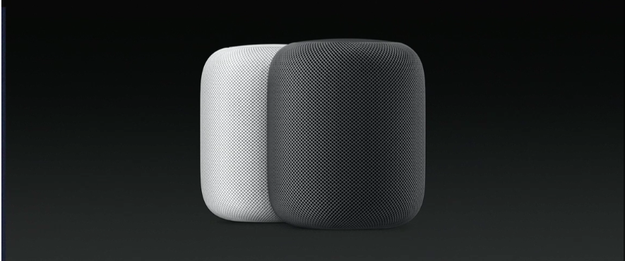
Today, the company that changed portable music with the iPod announced the HomePod, a plump, cylindrical, voice-activated speaker. Running Siri, Apple's virtual assistant, the device is clearly intended to go head to head with the current leading smart speaker, Amazon's Echo.

“Just like iPod reinvented music in our pockets, HomePod is going to reinvent music in our homes,” said Apple Senior Vice President of Worldwide Marketing Phil Schiller.

Schiller drew an early, implicit contrast between the HomePod and the Echo — which has been criticized for persistently listening to users — by announcing that HomePod won't send any data to Apple unless spoken to, and when it does it will be through an anonymized ID.

The 7-inch device will release in December in the US in two colors, white and space gray. It will cost $349.

Quelle: <a href="Apple Gets Into The Smart Speaker Market With HomePod“>BuzzFeed

Apple's New Pro iMac Is The Most Powerful Computer It's Ever Made

Apple

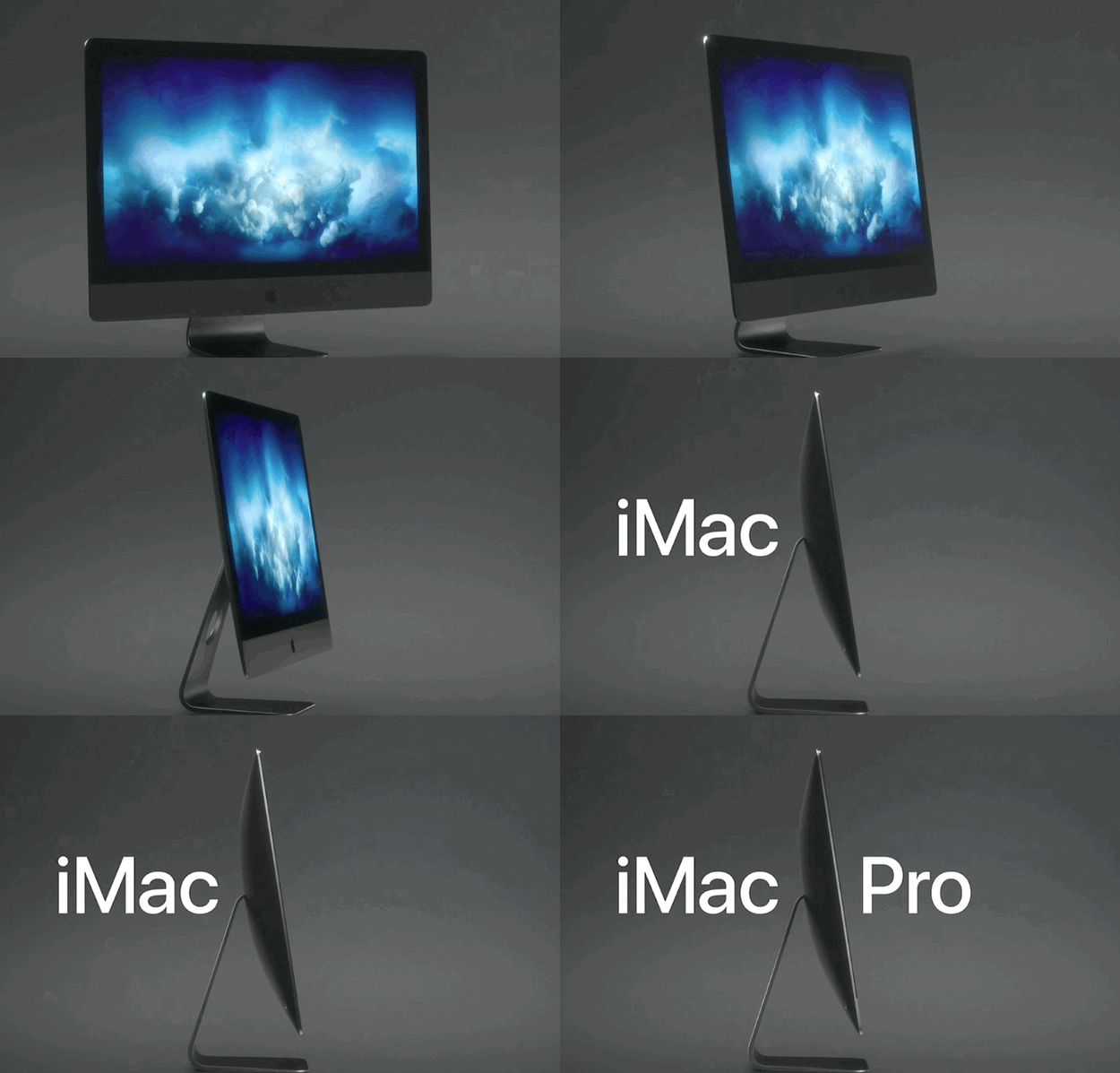
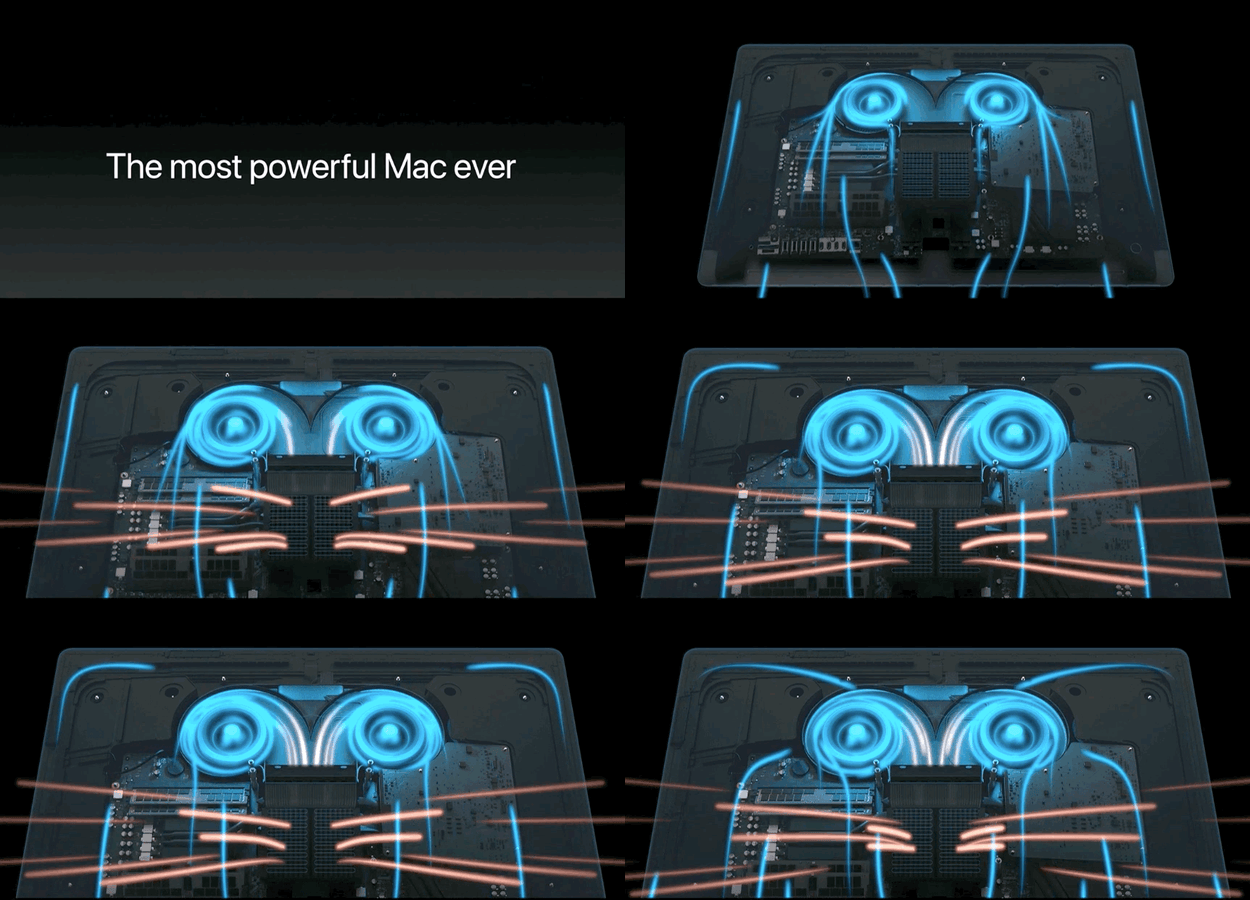
At WWDC, its annual developer conference, Apple has announced a brand new desktop aimed at the pro market — meaning the graphic designers and video editors of the world who need serious computing power. It’s called the iMac Pro and it’s the most powerful computer the company has ever made, says Apple. The company had said that it had “big plans for the iMac” in April.

Apple

The monster, which Apple says will put “workstation class performance in a 5K iMac design” will ship with an 8-core Xeon processor and will go all the way up to 18 cores. It will also be powered by a discrete AMD Radeon Vega graphics processor.

There's a bunch of other specs that Apple showed off onstage, but all you need to know is that this monster will be capable of delivering up to 22 teraflops of half precision computation — powerful enough for things like real-time 3D rendering, immersive VR, and machine learning development.

Twitter: @tomwarren

The iMac Pro, which will be available in space gray, will be available in December for $4,999.

In addition to showing off the iMac Pro, Apple also announced updates to its entire Mac line. All Apple desktops and laptops will now use Intel's latest Kaby Lake CPUs, they'll support faster hard drives and GPUs, and they're now slightly cheaper than they were before.

Quelle: <a href="Apple's New Pro iMac Is The Most Powerful Computer It's Ever Made“>BuzzFeed

Apple Announces ARKit, An Augmented Reality Platform For iOS

From Microsoft to Facebook, some of the biggest companies in tech have pushed hard into augmented reality.

Now Apple is set to join them.

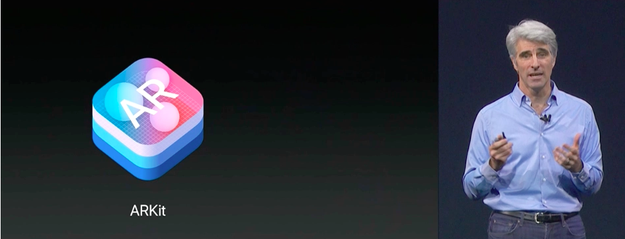
At its annual World Wide Developers’ Conference today, Apple announced ARKit, a new platform of development tools that will let people who make apps for iOS integrate augmented reality into their products.

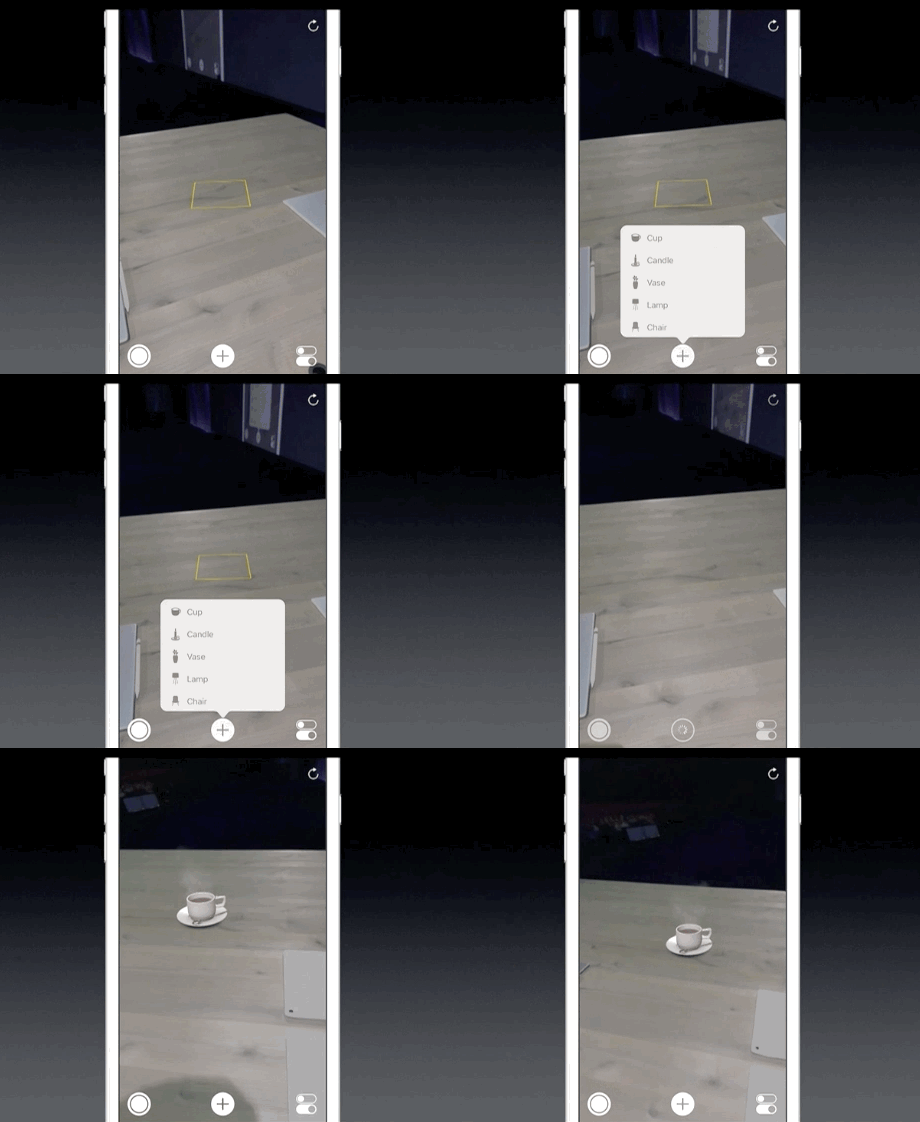
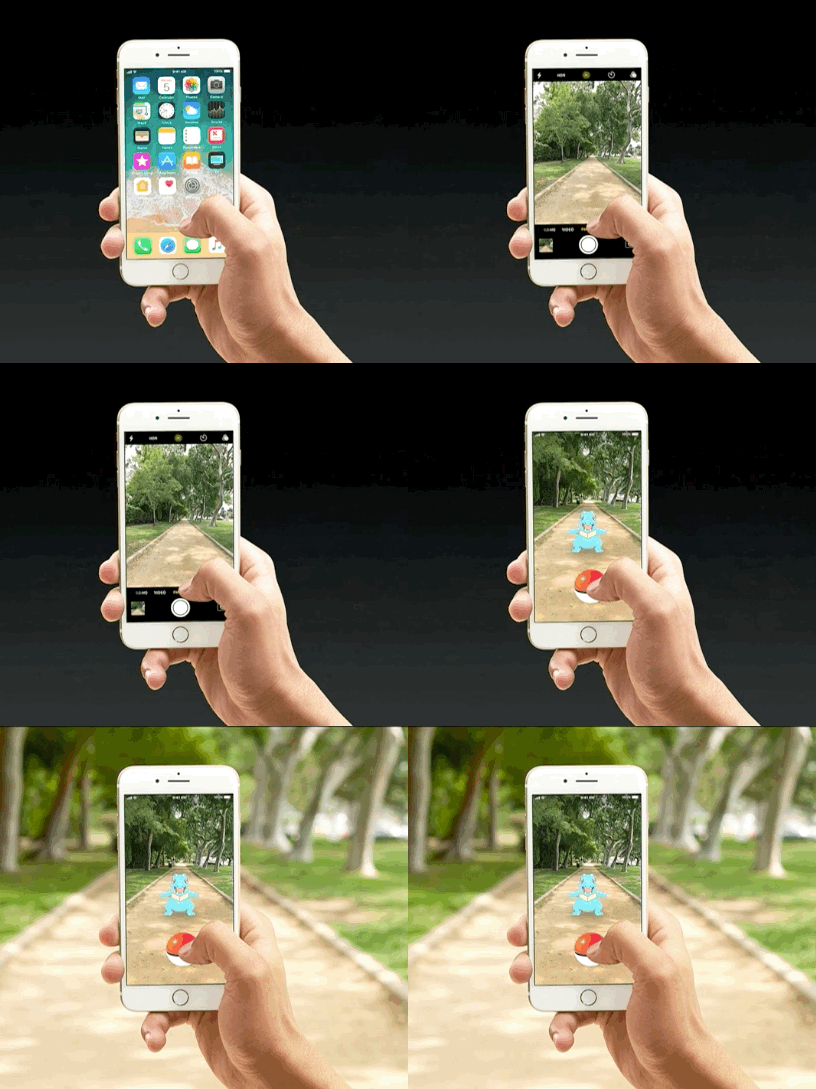
Like other AR tech, AR Kit will allow developers to superimpose digital images and videos on top of a real-time camera feed. Think virtual furniture placed in your home to see how it looks, or much more lifelike Pokemon jumping up and down in Pokemon Go.

The announcement follows Apple CEO Tim Cook's comments earlier this year (and before) about augmented reality earlier this year, when he told the Independent (UK), “I regard it as a big idea like the smartphone…I think AR is that big. It's huge. I get excited because of the things that could be done that could improve a lot of lives and be entertaining.”

On stage at WWDC, Apple showed off several potential uses for ARKit, including an ornate real-time CGI demo superimposed in real time on a table.

“We’ve had some third parties in to take a look at ARKit,” said Apple Senior Vice President of Software Engineering Craig Federighi, “and they are totally excited and we are just blown away by what they’ve been able to accomplish.”

Quelle: <a href="Apple Announces ARKit, An Augmented Reality Platform For iOS“>BuzzFeed