Judge Rejects Uber’s $100 Million Settlement For Being “Not Fair” To Drivers
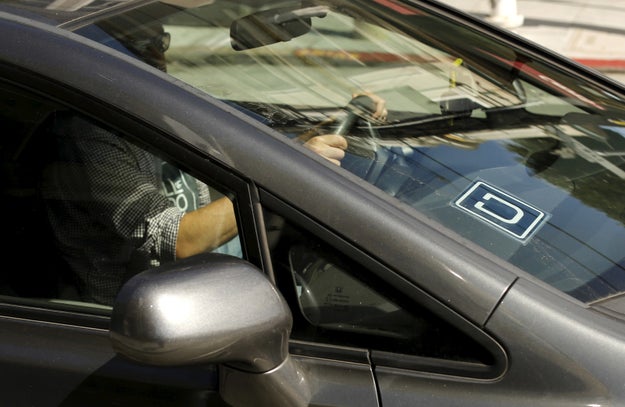
An Uber driver in San Francisco, California on May 7, 2015.

Robert Galbraith / Reuters

A federal judge has rejected an up to $100 million settlement Uber had agreed to pay to two class action lawsuits from drivers who argued they should be classified as employees rather than independent contractors, calling it “not fair, adequate, and reasonable.”

The drivers had argued they should be entitled to benefits like reimbursement for expenses such as gas while driving for Uber. The settlement, which would have allowed Uber to continue classifying drivers as independent contractors, would have left some of the about 385,000 Uber drivers in California and Massachusetts with as little as $10 each in settlements.

A sticking point for US District Judge Edward Chen was how part of the settlement would resolve an estimated potential $1 billion in liabilities drivers could sue for under California’s Labor Code Private Attorneys General Act (also known as PAGA), for only $1 million.

“The settlement, mutually agreed by both sides, was fair and reasonable,” Uber said in a statement. “We’re disappointed in this decision and are taking a look at our options.”

Shannon Liss-Riordan, the drivers’ attorney, did not immediately return a request for comment from BuzzFeed News. The lead plaintiff in the case called the settlement “disastrous” in early May and dismissed Liss-Riordan as his lawyer. Following outcry from other class members over their disappointment in the terms of the settlement, Liss-Riordan offered to reduce her own fee by $10 million, leaving her firm with between $11 million and $15 million. (The settlement offered $84 million to drivers, plus an extra $16 million if Uber were to go public.)

Earlier today, Uber said it was preparing to launch a pilot program in Pittsburgh for passengers to hail autonomous vehicles – a move that will eventually remove drivers from the equation entirely. For now, the 100 autonomous Volvos will still have humans in the driver’s seat.

Bloomberg also reported that the rejection of the settlement opens the class up to “substantial risk” regarding arbitration clauses signed by some drivers. “This risk would have the effect of substantially altering – if not effectively terminating – the class action in this Court,” US District Court Judge Edward Chen wrote.

“The drivers are in a holding pattern for now, while we see whether Uber will return to the settlement table or not,” Seattle University labor law professor Charlotte Garden told BuzzFeed News. “If not, and if the arbitration issue goes badly, then most drivers will be left to individually arbitrate their claims.” If that happens and the class is disbanded, Garden said it’s “unrealistic” that many drivers would pursue individual arbitration. That would be a win for Uber.

As part of the settlement, Uber had also agreed to clarify its tipping policy by allowing drivers to place signs in their cars noting that tips are not included. The judge was “not convinced” making the tipping policy clearer would actually substantially increase drivers’ income, according to a court filing, particularly because Uber has “actively discouraged tipping, arguing that it is inconsistent with its business model, drivers’ interests, and a positive rider experience.”

Last month, Uber argued in federal court that two subpoenas from the National Labor Relations Board — which is investigating the company’s labor practices — should be stayed, because this class action settlement would have resulted in the withdrawal of the underlying charges of the NLRB&;s case. Now, however, that settlement has been rejected, so Uber’s argument against the subpoenas is moot. In March, Uber was accused of impeding the NLRB’s ongoing probe into drivers’ employment status.

Uber has in recent months added several measures to placate drivers, including expanding a fee for passengers who make drivers wait longer than two minutes, and giving drivers the ability to cash out instantly whenever they wish.

Quelle: <a href="Judge Rejects Uber’s 0 Million Settlement For Being “Not Fair” To Drivers“>BuzzFeed
Twitter Announces Tools That Seem Intended To Curb Harassment

Twitter

Today, Twitter announced two product features that seem intended to help users handle abuse on the platform.

The features come one week after BuzzFeed News reported on Twitter&;s decade-long problem with harassment, thanks to what company insiders past and present describe as inaction and organizational disarray.

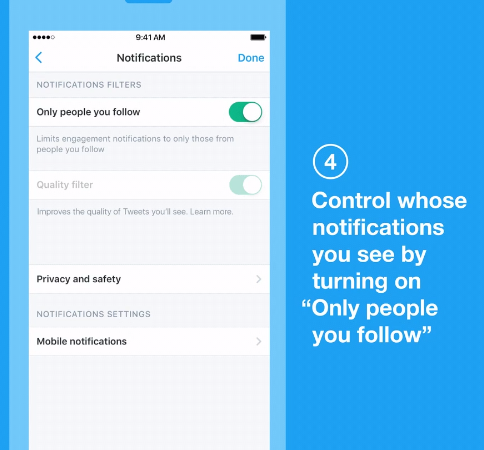
In a company blog post, Twitter revealed it will begin rolling out a setting that will allow users to limit notifications on desktop and mobile to only the accounts they follow. Alongside this feature, the company is also introducing a quality filter. Here&039;s how Twitter describes this new setting:

The filter can improve the quality of Tweets you see by using a variety of signals, such as account origin and behavior. Turning it on filters lower-quality content, like duplicate Tweets or content that appears to be automated, from your notifications and other parts of your Twitter experience. It does not filter content from people you follow or accounts you’ve recently interacted with – and depending on your preferences, you can turn it on or off in your notifications settings.

Both of these features are similar to the quality filter and notifications settings that have been available to verified users for a while now. The update is an attempt to standardize the experience between verified and non-verified accounts.

While the quality filter seems to be designed to stop spammers and pop-up troll accounts, it is unclear how effective the filter will be at ending targeted harassment at an individual by non-spam actors. The features also only seem to address harassment by limiting what users will see in their feeds when they&039;re logged on. The settings don’t appear to prevent someone from tweeting abusive things. As of now, there appear to be no changes to Twitter&039;s abuse reporting system or any plans to address how Twitter responds to abuse.

Quelle: <a href="Twitter Announces Tools That Seem Intended To Curb Harassment“>BuzzFeed

Uber Is Putting A Bunch Of Self-Driving Volvos On The Road In Pittsburgh

Vcg / Getty Images

Uber is making moves in its effort to to bring autonomous vehicles to the ride-hail industry. Later this month, the $66 billion startup will dispatch a fleet of self-driving “custom Volvo XC90s” on the road in Pittsburgh, Bloomberg reports.

Humans will monitor the autonomous Uber vehicles from the drivers&; seat, and rides will be free, to start out.

Uber started testing self-driving Ford Fusion cars in Pittsburgh in May of this year, out of its Pittsburgh Advanced Technologies Center, and has long held ambitions for building an autonomous fleet — a source of anxiety for the hundreds of thousands of drivers who rely on the company for income.

Uber also announced that it just bought Otto, a San Francisco-based company that launched in May 2016 with the goal of automating commercial trucking.

CEO Travis Kalanick introduced the news in a blog post Thursday morning, but declined to share how much the ex-Googler founded company cost him, though sources told Bloomberg it amounts to 1% of Uber&039;s latest valuation.

Otto founder Anthony Levandowski first met Kalanick while he was at Google, where he was a key part of the company’s autonomous car team before decamping in January 2016. “Together,” Kalanick wrote, “we now have one of the strongest autonomous engineering groups in the world.”

The founders of Otto said when the company launched that their goal was to make commercial trucking safer. Recently, an autonomous Tesla vehicle was involved with a fatal car crash, a high-profile accident that&039;s been seen as a setback for the self-driving vehicle industry.

In his blog post, Kalanick also announced that Uber will be partnering in a non-exclusive, $300 million deal with Volvo develop to an autonomous car together, citing Volvo&039;s safety record and the fact that “Uber has no experience making cars.”

Kalanick argues that, because Uber controls “the data and intelligence that comes from doing 1.2 billion miles on the road every month,” it has an advantage over competitors, which include Google and Tesla.

Many auto and ride-hail companies have partnered in their efforts to get self-driving cars on the road — for example, General Motors and Lyft. Earlier this week, Ford announced plans for an autonomous ride-hail fleet that it plans to put on the road by 2021. And Uber also announced a different strategic partnership with Toyota in May to advance autonomous car research.

Quelle: <a href="Uber Is Putting A Bunch Of Self-Driving Volvos On The Road In Pittsburgh“>BuzzFeed

The Two Biggest Scoundrels In Tech Are Fighting Over A Mysterious Company

What do John McAfee and Kim Dotcom have in common?

They&;re both notorious for being two of the biggest scoundrels in tech, and foreign nations (including the US, New Zealand, and Belize) have hunted both of them for crimes they deny. And now they&039;re feuding online over MGT Capital, a mysterious tech firm of which McAfee is the CEO. Today, Dotcom accused the firm of offering him half a million dollars as part of a pump and dump stock scheme.

Some background: MGT broke into the news in May, when its share price shot up from 39 cents to more than 4 dollars after McAfee — known best for founding the eponymous security company and fleeing police in Belize in 2012 for questioning related to a murder — was named CEO.

Though the stock briefly outstripped Bank of America as the most traded equity on the market, it quickly attracted accusations of inflation as part of a pump and dump scheme, in which McAfee&039;s splashy hire was intended to drive up the stock price. (A pump and dump scheme is fraud in which ownership encourages investors to buy shares in a company in order to drive up the price artificially, and then sells its shares while the price is high.)

Prior to the acquisition of the security startups Demonsaw and D-Vasive shortly after the McAfee hire, MGT had no investments in cybersecurity and was known primarily for its holdings in online betting. Both Demonsaw and D-Vasive were McAfee ventures prior to his involvement in MGT.

Then, today, Kim Dotcom — the flamboyant founder of the since-shuttered file sharing service Megaupload, who is wanted by the US government — tweeted that MGT had offered him $500,000 for a “no-substance partnership announcement,” which is exactly what skeptics had accused McAfee of doing.

So what caused Kim&039;s accusation?

Eijah is Eric Anderson, the founder of Demonsaw, who according to more tweets from Dotcom, felt “afraid” of McAfee. Shortly after, Dotcom posted tweets from McAfee threatening “war,” and later a video of him and Anderson together:

So what the hell is going on? It appears that Dotcom — who did not respond to a request for comment – poached one of McAfee&039;s employees to help him start his filesharing followup, and cast aspersions on his company at the same time. MGT Capital hasn&039;t responded to a request for comment, either.

McAfee is making his own accusations on Twitter now, too:

At least the two men are separated by an ocean.

Quelle: <a href="The Two Biggest Scoundrels In Tech Are Fighting Over A Mysterious Company“>BuzzFeed

Help Us Understand How Twitter Responds To Harassment

Ariel Davis / BuzzFeed News

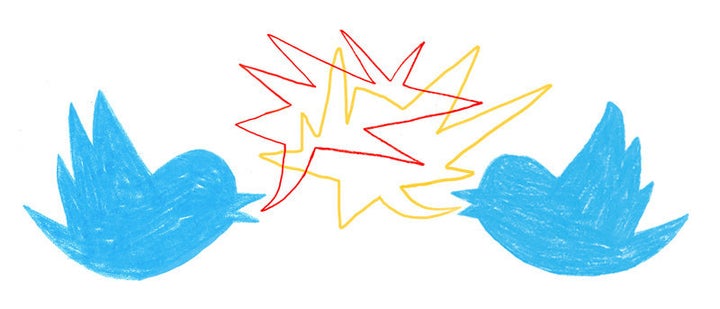
Over the past decade Twitter has not just tolerated abuse and hate speech, it’s virtually been optimized to accommodate it. As BuzzFeed News reported last week, harassment on Twitter is rampant thanks to what company insiders past and present describe as inaction and organizational disarray.

We&;re going to continue reporting on this issue and as part of that effort we&039;d like your help. We&039;ve created a survey intended to inform our understanding of how Twitter deals with abuse reports. It&039;s short and not all that different from the form you’d file to Twitter to report abuse. The information you provide will be kept confidential, unless you say otherwise.

You&039;ll find the survey here.

Thanks for your help.

Quelle: <a href="Help Us Understand How Twitter Responds To Harassment“>BuzzFeed

Why Silicon Valley Is Turning To An Exclusive Group Of Hackers To Fix Its Code

User:Colin / Wikimedia Commons / CC BY-SA 4.0 / Via commons.wikimedia.org

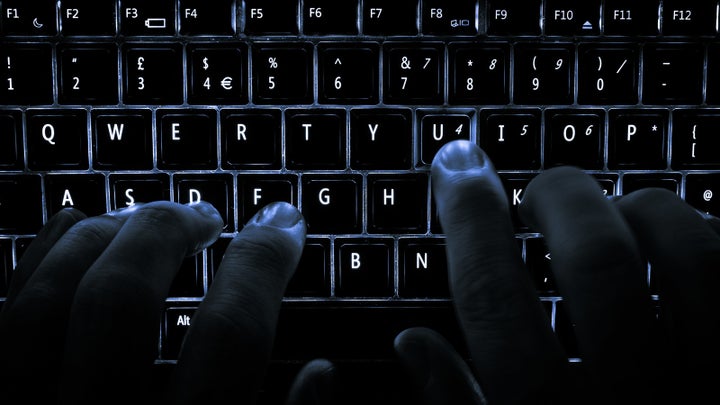
Like outgunned sheriffs in the Wild West, organizations from tech giants to government agencies have turned in recent years to bounty hunters to keep themselves safe. These mercenaries are hackers and security researchers, who companies pay to find and disclose flaws in their software and devices. The increasingly accepted practice is called the “bug bounty” system, and it gives hackers a legitimate way to reap rewards for making tech safer without going rogue. Still, the process can be daunting — how can companies strike the right balance between throwing their products open to hacking and keeping tight control over their security practices?

Traditional bug bounty programs, like those run by Microsoft, Twitter, and dozens of other organizations, are open to the public, meaning that anyone can warn about security flaws they think they&;ve found. But these public bug bounties often incentivize too much, generating scores of redundant bugs that may or may not pertain to actually harmful vulnerabilities. These can overwhelm companies that aren&039;t set up to handle them. And when companies aren&039;t ready to handle an influx of bug reports, they can overlook or have a delayed response to serious security vulnerabilities.

To deal with the problem, some organizations have decided to make their bug bounty programs private, meaning only certain hackers and researchers can submit bugs. This helps organizations build up to a public program over time by controlling the quality and frequency of submissions. Apple signaled the perks of private bounties when it announced its first ever, private bug bounty program last week at the hacker conference DefCon. LinkedIn, Tor, and a host of other entities are also keeping their programs closed, at least for now. According to BugCrowd, a company that runs bug bounties for clients, 63% of all its programs have started private, a proportion that is growing. HackerOne, a competitor, recommends private programs to all its customers.

“Inviting the world to submit can be an overwhelming and scary process,” said Jonathan Cran, VP of operations at BugCrowd. “It makes sense for companies to start with trusted folks.”

And trust is a big issue. One of the reasons bug bounty programs took so long to catch on after Netscape ran the first one in 1995 was the perception that these programs attracted the attention of malicious hackers. So not surprisingly, most organizations start their private bug bounties with a group of security researchers whom they already have a relationship with. That&039;s how Apple&039;s program, which starts in September, will work. According to Cran, the starting pool in a private program is generally between 50 and 100 researchers, though he has seen programs launching with a few as two. In addition to ensuring a manageable stream of germane reports, starting small helps companies get an overall picture of where potential exploits are. It&039;s a way for corporations doing bounties for the first time to dip their toes in the water before going public.

“You&039;re going to find out you&039;re more secure in some areas than you thought and less secure in others” said Alex Rice, CTO and cofounder of Hackerone. “There may be things you’re completely unaware of, like vulnerabilities in unmaintained code.” Determining where and how prevalent these problems are, according to Rice, helps companies set competitive prices, and standardize how quickly they deal with bug reports (which is sometimes a source of tension in big bug bounty programs).

The Complications of Closing Off Your Bounties

Some have argued, though, that such programs signal to hackers that they have a limited amount of time to find and sell exploits on the lucrative private market. In other words, that they encourage malicious hackers to find all the exploits they can before the program is opened up to the bug-hunting public.

“Every one you’re fixing, you’re erasing the value of one in the black market,” said Rice. Less than a week after Apple&039;s announcement, a private security firm offered $500,000 — twice the size of the biggest bounty in Apple&039;s program — for iOS Zero Day exploits. (Though, enormous sums for iOS Zero Days are nothing new.)

Another complication for private programs is that they have the potential to alienate researchers. One of the main benefits of bug bounty programs is incentivizing people with the skill to hack corporations and governments to use those talents for good. Though many companies, including Apple, would likely accept a valid vulnerability report from a hacker outside its private bug bounty, such a hacker may not think to submit it to a private program in the first place.

However, most private bounty programs plan to eventually expand to be more public, which Apple says it will eventually do. Rice said HackerOne programs have stayed private from three days to three years, though they typically last around three months. Cran says BugCrowd recommends six months for most clients. Indeed, in an ideal world, the announcement of a high-profile private program such as Apple&039;s signals to hackers that a company is, according to Cran, “eventually going to pay for things,” and a cue to “rip open an iOS device and test,” even if the program is at first closed.

“Everyone assumes private programs have hard restrictions,” said Katie Moussouris, a security consultant who created Microsoft&039;s first bug bounty and more recently advised the Department of Defense on its Hack the Pentagon program. “But it&039;s more of a perception problem than an access problem. One of the biggest issues is simply confusion over how to get invited to an initially private program.”

And getting in early matters. Sean “meals” Melia is the top-ranked hacker on HackerOne&039;s all-time leaderboard by its proprietary “reputation” metric. He makes more money on bounties than he does at his day job at a security firm — “And I make good money at my regular job,” he told BuzzFeed News. But even Melia, the very picture of a trusted hacker, wasn&039;t invited to a recent, major private bounty until nearly a year after it launched.

By the time Melia gained access, “people had already gone through and picked off a lot of the low hanging fruit,” he said. “I was pretty bummed. It&039;s disheartening to see people with low reputation or who are new to the platform were invited before me.” It&039;s easy to imagine a disheartened hacker, left out of a bounty program like Apple&039;s, turning to the private market.

Still, as private bug bounty advocates are quick to point out, companies have always had private bug testing that left out the vast majority of hackers. Even if they&039;re private, the growing number of bug bounties are a sign that even the most cautious organizations, from Apple to the American government, have realized that they — that everyone — needs the participation of the greater cybersecurity community to make their systems and products as secure as possible.

“Traditionally people didn’t talk about the fact they had a private program at all,” said Moussouris, who consulted with Apple prior to the announcement of its program. “This is a shift in thinking. It&039;s also saying to the world, we&039;re open to this concept, but we are also going to learn as we go through this process.”

Quelle: <a href="Why Silicon Valley Is Turning To An Exclusive Group Of Hackers To Fix Its Code“>BuzzFeed

Univision To Buy Gawker Media For $135 Million

Pool / Getty Images

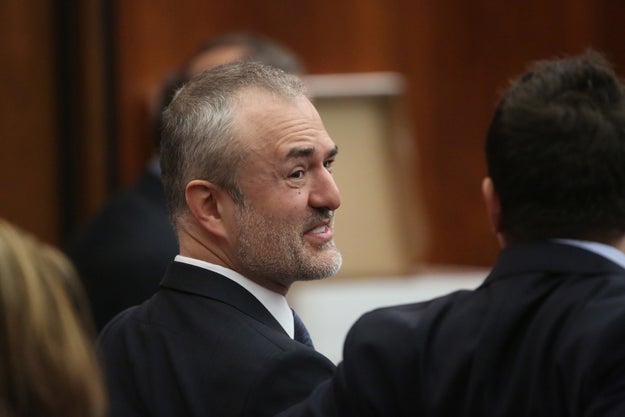
Univision Communications will buy the bankrupt Gawker Media network for $135 million dollars.

As first reported by Recode, Univision, known for its Spanish language television station of the same name, has won the auction to buy the distressed property, beating out a $90 million bid from Ziff Davis.

Gawker Media declared bankruptcy in June following a $115 million judgment against it in a violation of privacy lawsuit brought by former professional wrestler Hulk Hogan and funded by billionaire tech investor Peter Thiel.

The banker who represented Gawker in its sale confirmed the price to Recode. Gawker Media owner and founder Nick Denton had previously estimated his empire to be valued at around $200 million.

The sale will include all seven of the sites under the Gawker Media banner, and will be subject to the approval of a US bankruptcy judge. If the sale goes through, the Gawker Media sites will join the news and entertainment site Fusion as Univision properties.

Quelle: <a href="Univision To Buy Gawker Media For 5 Million“>BuzzFeed

How This Decades-Old Technology Ushered In Predictive Text

How This Decades-Old Technology Ushered In Predictive Text

Caroline O’Donovan / BuzzFeed News

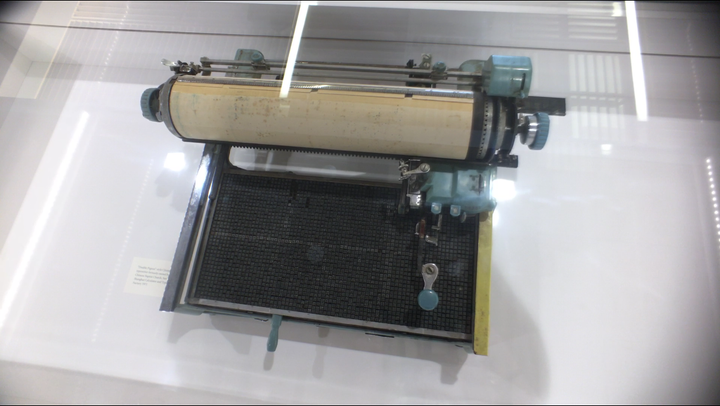
What do you call a typewriter with no keys? Though it sounds like a riddle, Stanford historian Tom Mullaney told BuzzFeed News, it’s not. A Chinese typewriter has 2,500 characters but zero keys, and Mullaney owns more of them than anyone else in the world.

The Chinese language has over 75,000 characters — way too many to fit on a keyboard with a single key per character. The inventor of the original Chinese typewriter slimmed that number down to just the 2,500 most used characters, but even still, that’s too many to type out as you would on an English-alphabet typewriter.

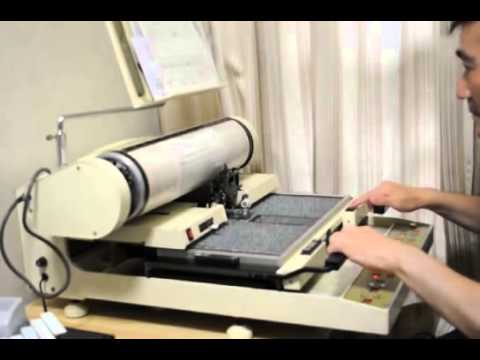
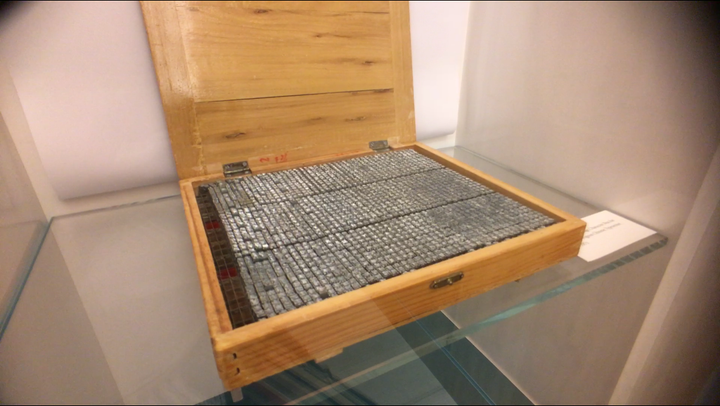
On a Chinese typewriter, those 2,500 characters correspond to 2,500 tiny metal squares, which lie side by side in a tray bed. Instead of pressing individual keys with individual fingers, the typist uses a knob in each hand to move a scroll of paper up and down, left and right over the keys. When the machine is on top of the character you want, you press down on a lever. Then, Mullaney explained, the metal piece gets pushed (or sucked up) into the type chamber, inked, and struck the surface of the paper, before being ejected and spit back out into the spot in the grid where it was.

Here’s what that process looks like:

youtube.com

That’s a lot of steps for just one character. Each stroke of the lever takes just a second, but the thing that slows Chinese typists down, and for years made them much slower than western typists, is the distance between characters — especially because the typewriter&;s characters were organized according to what Mullaney called “dictionary order.”

“The problem is, just like a dictionary, words don’t necessarily go together,” he said. “Aardvark and apple don’t show up in sentences together, despite being in the same part of the dictionary.”

So in the 50s, typists started dumping out all of the characters, and building their own custom tray beds from scratch, using tweezers to array characters based on how commonly they were used together.

A tray of metal characters that came with a Chinese keyboard in so-called “dictionary order.”

Caroline O’Donovan / BuzzFeed News

The thinking was, “If I have to write the name Mao Zedong, which is three characters, over and over, why would I move across the tray bed?” Mullaney said. “Let’s put them right next to each other.” The result was “completely personalized, completely individualized, completely idiosyncratic” tray beds.

This innovation made typing much faster, according to Mullaney. “If the top speeds in the 1930s and 40s was 20 characters per minute, and that was for a very fast typist, after the 1950s …. you had top speeds of 55, 60 characters per minute,” he said. “That’s a three time increase in the speed of the machine just by rearranging the characters in the tray bed.”

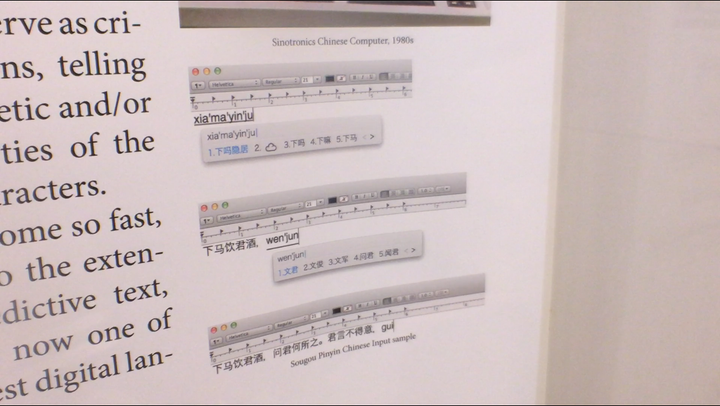
But he also sees it as an early, hand-crafted, analog version of the kind of predictive text we now find in Google autocompletes and advanced smartphone keyboards. “Predictive text of that sort was already baked into Chinese typewriters in the mechanical realm, and then gets brought into the realm of Chinese computing in the 60s and 70s.” Nowadays, he said, in China, pretty much every interaction a person has with a computer interface — from word processors to search bars — has predictive text built in.

Caroline O’Donovan / BuzzFeed news

These days, the QWERTY keyboard is standard in China — but instead of each key corresponding to a single letter in the alphabet, each key corresponds to a sound, and predictive text suggests a character that goes with those sounds. As a result, he said, after decades of relying on slower technologies, “the fastest Chinese computer inputter using a QWERTY keyboard input … is faster than the fastest alphabetic typist.”

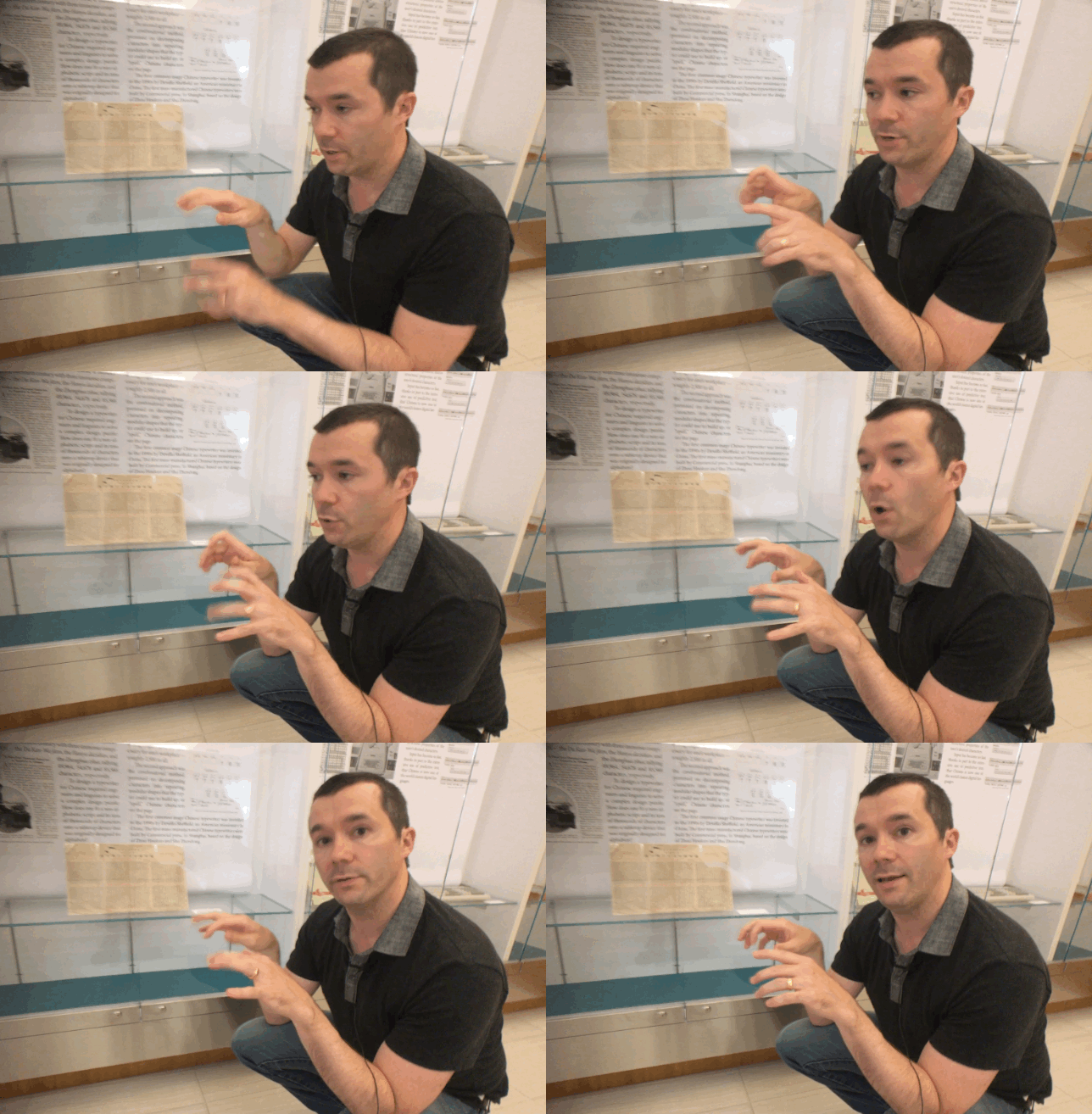
Stanford historian Tom Mullaney explains how *not* to use a Chinese typewriter.

Caroline O’Donovan / BuzzFeed News

Both alphabetic and Chinese typewriters had an indelible impact on the way we communicate today, but only the Chinese typewriter has been almost entirely forgotten. Only a few institutions in the United States, including the Huntington Library and the Museum of Chinese in America, have Chinese typewriters, and three Chinese speakers I spoke with about this article weren’t aware they had ever existed.

So Mullaney, who amassed one of the largest collections in the world more or less by accident, is trying to “Save The Chinese Typewriter” starting with a (successful) Kickstarter campaign. His first Chinese typewriter, which is seafoam green and was the leading model in China throughout the 1970s, was given to him by a man who worked at a church in San Francisco. The typewriter had been used to print Chinese-language bulletins, but its services were no longer needed, and the man didn’t know what to do with it.

“If these were Western typewriters, you’d have the pick of the litter in terms of where to donate a machine like this or sell it on the antique market,” Mullaney told BuzzFeed News on a hot afternoon outside on Stanford’s campus, where he is a history professor. “There’s no such thing for East Asian information technology and Chinese typewriters.”

In the end, Mullaney&039;s Kickstarter campaign raised more than $13,491, and his traveling exhibition will — “outside of maybe the National LIbrary of China and the National Diet Library in Japan” — feature more Chinese typewriters than any other collection in the world. The tour kicks off with an exhibition in the San Francisco Airport in 2017.

View Video ›

Facebook: video.php

Quelle: <a href="How This Decades-Old Technology Ushered In Predictive Text“>BuzzFeed

Ford Plans To Put Self-Driving Cars On The Road By 2021

Beawiharta Beawiharta / Reuters

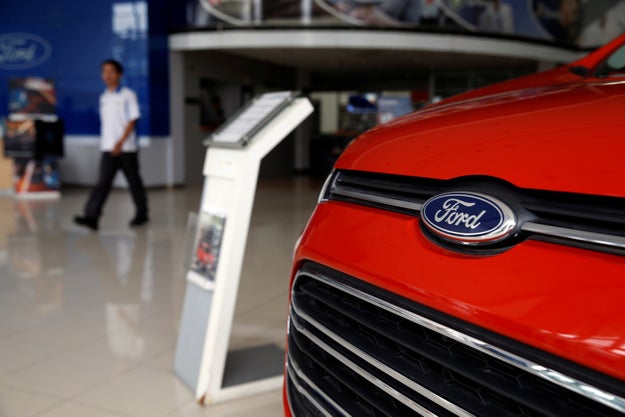
Ford announced a series of big investments in autonomous car technology on Tuesday, signaling that the old-school automaker is betting very seriously on self-driving vehicles as the future of personal transportation.

The company said it plans to put autonomous vehicles on the road in 2021 through ride-hailing fleets, and it will start selling them to individual drivers in the second half of that decade. To get there, Ford said it will double the Silicon Valley team it set up in Palo Alto a year and a half ago. Ford also announced Tuesday that it has invested $75 million into Velodyne, a company that makes light detection and ranging sensors, and it has acquired an Israeli machine-learning company called SAIPS that will help its autonomous vehicles learn about their environment.

The announcements come as many automakers and technology companies, from Tesla to Google, vie to be leaders in the self-driving vehicle race. Many companies have partnered in their efforts, for example, General Motors and Lyft. Ford would not say whether it will build its own ride-hailing platform or partner with established companies like Uber and Lyft. “There will be some things that we do on our own. There will be some things where we partner with others,” Ford CEO Mark Fields told BuzzFeed News. “We have a lot of options and business models that we’re working through.”

Ford opened its Palo Alto office in early 2015 and has a staff of more than 130 people there. The company says it’s working with more than 40 startups on new car technology. Ford has also invested in the Berkeley, California mapping startup Civil Maps, as well as Pivotal, a cloud-based software development company in San Francisco to boost its connected car efforts, this year. (Pivotal is working on Ford’s Dynamic Shuttle pilot program, a ride-hailing experiment it’s testing on its campus in Dearborn, Michigan. Employees use it to travel between buildings during the day.) And in March, Ford created a subsidiary called Ford Smart Mobility to “design, build, grow and invest in new mobility services.”

These investments and efforts show how the legacy car company is trying to match pace with newer automakers like Tesla, the many other upstarts that have cropped up, and ride-hailing companies such as Uber and Lyft — who are all also working on driverless cars. Tesla said last month that once it unveils autonomous vehicles, owners will be able to add them to a ride-hailing fleet and send them off to pick up fares, or request self-driving Tesla rides if they don’t want to drive.

Raj Nair, Ford’s chief technical officer, told BuzzFeed ahead of Tuesday’s announcement that personal ownership of Ford’s self-driving cars will become an option in the second half of the decade after the vehicles are introduced in 2021. By the time they’re available for sale, people will be used to them and they’ll be cheaper to make, he said.

“Certainly there will be some kind of market for personal ownership…as you significantly reduce the cost,” Nair said.

The old-school automaker regularly notes its history in manufacturing innovation when it talks about self-driving cars. “From our standpoint, our view is autonomous vehicles could have the same societal impact…as Ford’s moving assembly line did,” Fields said.

And one thing Ford does have compared to Tesla and other upstarts in the self-driving is scale. When the company says it will put autonomous vehicles on the road, it means it will do it in droves. “We’re not going to be talking about a couple hundred units like some science project,” Fields said.

Quelle: <a href="Ford Plans To Put Self-Driving Cars On The Road By 2021“>BuzzFeed

I Dropped Samsung's New Phone In A Lake And It's Totally Fine

A review of the Galaxy Note 7, the ultimate phone for anyone who&;s still obsessed with their stylus.

Ellie Sunakawa / BuzzFeed

There’s a big new Android phone on campus: Samsung’s Galaxy Note 7.

There's a big new Android phone on campus: Samsung's Galaxy Note 7.

This month, Samsung will unveil the sixth iteration of its Note series but is calling it, confusingly, the Galaxy Note 7 (because its current flagship phone is the Galaxy S7, but whatever).

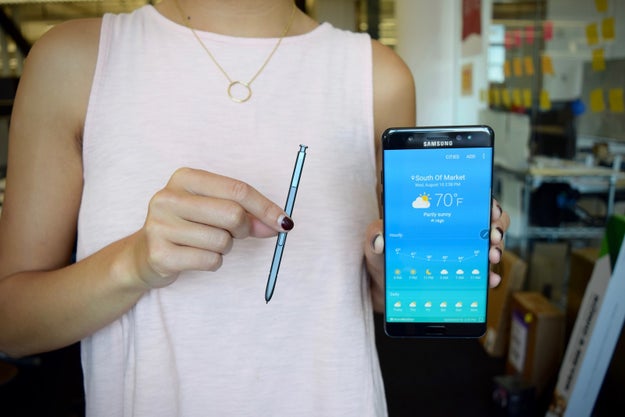
The new 5.7-inch Note is one of the best Android phablets you can buy right now – and, if you don&;t mind Samsung&039;s continually-improving-but-still-annoying TouchWiz interface, it is the best. I know, because Samsung lent me a Note 7 review unit ahead of its August 19 release date and I&039;ve been fumbling with its tiny little stylus ever since. And yes, phablet is the second worst name for a tech thing (next to ~dongle~).

I have always preferred “pure” Android devices like the Nexus 6P. In other words, phones developed in partnership with Google that run the latest version of the Android operating system. These phones, which you buy directly from Google&039;s online store, typically get the latest and greatest software updates first.

Galaxy phones are anything BUT “pure” Android devices (Samsung usually pre-loads a bunch of their own extra, Samsung-y stuff on them). And yet, it was impossible to deny just how good the Note is. The phone has a gorgeous new display with curved edges and is jam-packed with new features. Most of all, the Note 7 exceeds expectations where it matters most – battery life, speed, photo quality, and general lifeproof-ness.

Intrigued? More words ahead.

Nicole Nguyen / BuzzFeed

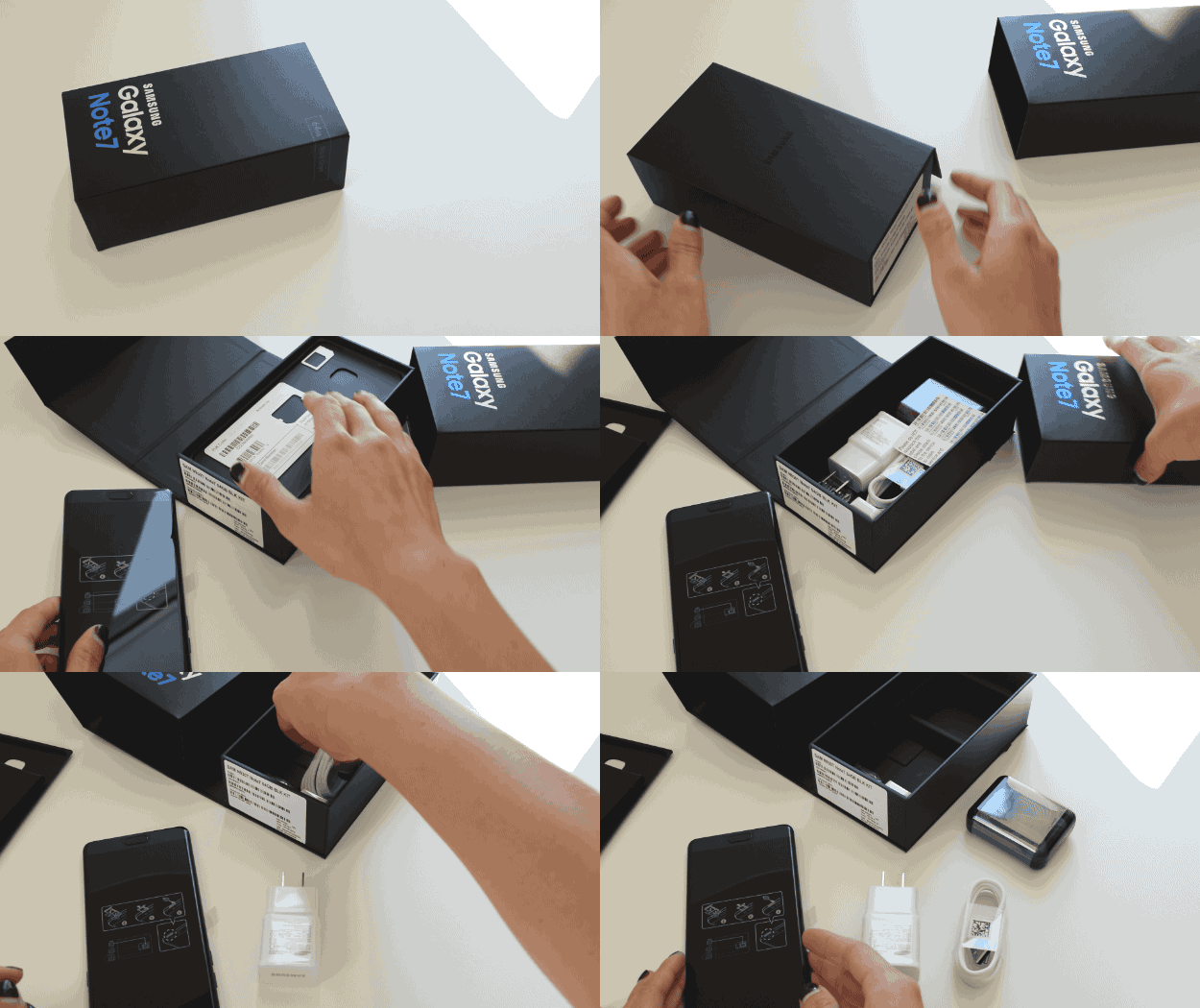
We’ll start with my favorite part: the unboxing.

We'll start with my favorite part: the unboxing.

The Note 7 comes with a pair of earbuds and a charging plug, per usual. There&039;s a schmancy new quick-charging USB C cable and a USB C-to-micro USB adapter, which can be used to connect your phone to pre-existing accessories.

Nicole Nguyen / BuzzFeed

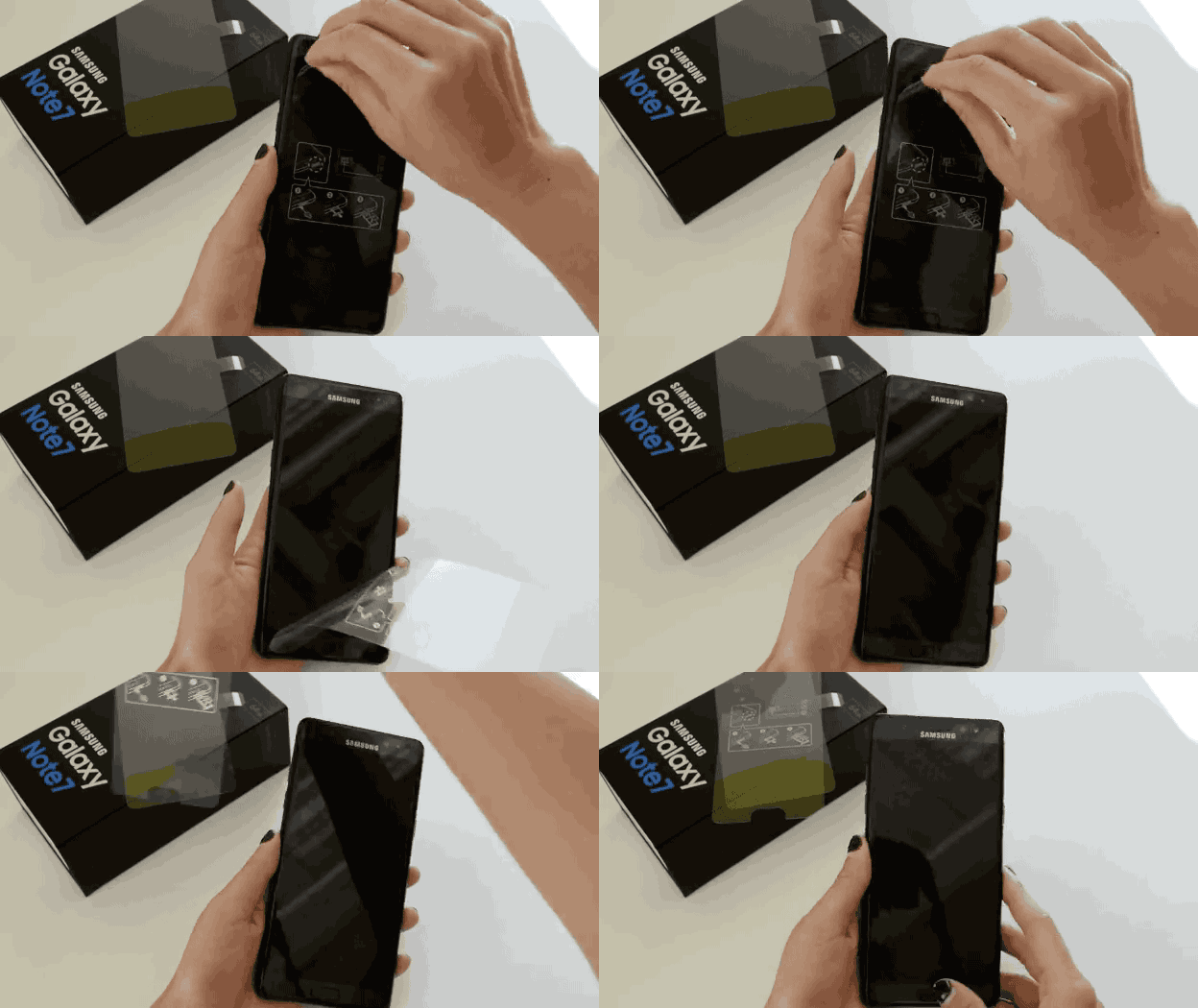
Now with me, slowly: yessssssssssssss.

Now with me, slowly: yessssssssssssss.

job perk = peeling off new screen protectors.

Nicole Nguyen / BuzzFeed


View Entire List ›

Quelle: <a href="I Dropped Samsung&039;s New Phone In A Lake And It&039;s Totally Fine“>BuzzFeed