Now That Snapchat Has Been Cloned By Instagram, Its Missteps Matter More
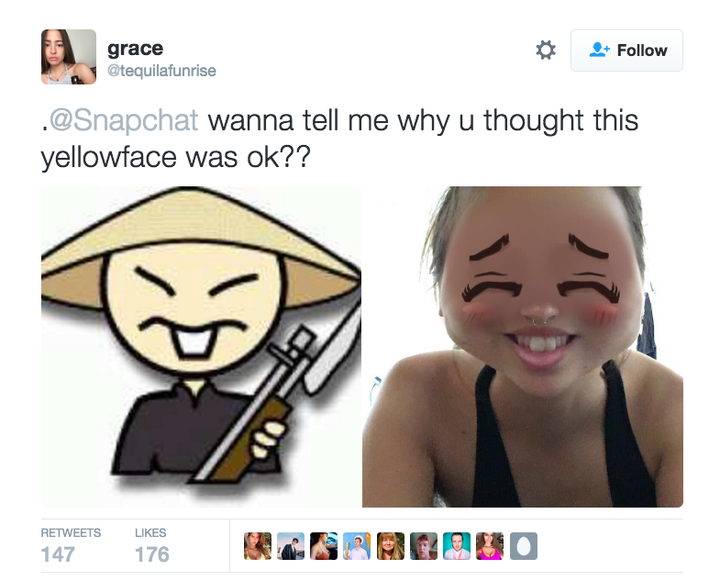
After watching Snapchat wade into racially insensitive territory once again last week, Katie Zhu decided she’d had enough. The San Francisco–based Medium engineer picked up her phone, deleted the app, and penned a Medium post encouraging others to leave as well. The post’s title: “I’m Deleting Snapchat, and You Should Too.

The screw-up that inspired Zhu to abandon Snapchat — a face-morphing filter resembling yellowface, an offensive Asian caricature — would until recently exist largely as a public relations problem. Social companies anger their users all the time, but the ire rarely translates into defection, since it’s hard to find the exact same features and network elsewhere (see: Facebook). But this time, it was different.

“Instagram now has a Snapchat Stories clone,” Zhu wrote. “So I’ll still be able to take mundane pictures of my day to day life.”

Zhu isn’t the only one noting the platforms’ interchangeability, and making a choice between them.

We’re just about two weeks into Instagram’s admitted cloning of Snapchat Stories, but tweets from folks jumping ship could be early signs of trouble, particularly if they gain momentum. In the past, Snapchat might have been able to skate away from slip-ups thanks to its product strength, but now users have a choice.

While Zhu&;s departure from Snapchat and those of the others whose tweets are listed above are hardly evidence of a brewing mass exodus, they suggest that Snapchat&039;s continuing filter foibles and Instagram&039;s offering of a Snapchat Stories alternative could become a recipe for attrition.

“They are not immune from people leaving the way Facebook was for so many years because they don&039;t own your social network.”

Karen North, director of USC Annenberg’s Digital Social Media program, told BuzzFeed News that Snapchat is not unsusceptible to such an event. “It&039;s easier and easier, frankly, to be able to leave a place where you don&039;t like the people, or the attitude, and find the same experience somewhere else,” she said. Snapchat, she explained, is “not immune from people leaving the way Facebook was for so many years because they don&039;t own your social network.”

Victor Anthony, managing director and senior analyst at Axiom Capital Management, agreed.

“Now that Instagram has essentially come out with an identical feature set, I do think it puts competitive pressure on Snapchat,” he told BuzzFeed News.

It&039;s worth noting that this isn&039;t the first time a poorly conceived Snapachat filter has elicited cries of outrage. In April, Snapchat released a Bob Marley filter some referred to as “digital blackface.”

The company defended itself following outcry over the yellowface resembling filter, telling The Verge that it was inspired by anime. But that explanation didn’t cut it for Zhu and others. Zhu’s response: “Buuuullshit. Anime characters are known for their angled faces, spiky and colorful hair, large eyes, and vivid facial expressions.”

“People in every walk of life accidentally stumble upon things that are insensitive because they&039;re thinking of one thing and they don&039;t realize it has implications for something else,” North said of the yellowface incident. “But when you&039;re a platform that has such broad distribution, meaning anything digital, there&039;s a responsibility to vet things much more carefully than people did in the brick and mortar days.”

For Snapchat, which rose to popularity on a pretty distinct feature set, there was a time when a high-profile misstep like yellowface might have been diffused with little in the way of user revolt. But with a powerful and well-established rival like Instagram positioning itself as a Snapchat alternative by cloning some of the service&039;s key features, user attrition could become more of a risk. Indeed, it seems at least a few folks are already heading for the door.

Snapchat has not yet responded to a request for comment.

Quelle: <a href="Now That Snapchat Has Been Cloned By Instagram, Its Missteps Matter More“>BuzzFeed
Peter Thiel Tries To Pivot His Personal Brand To Privacy Hero

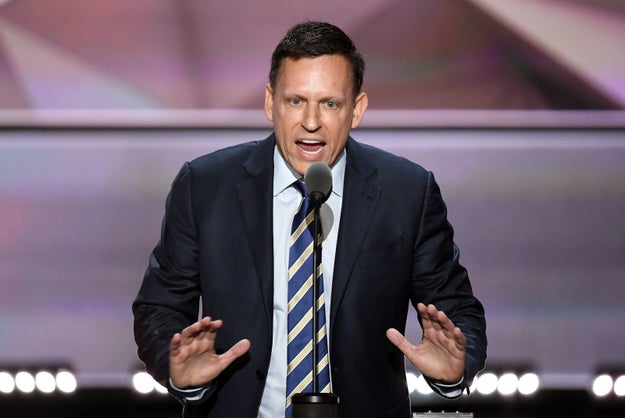
Jim Watson / AFP / Getty Images

Billionaire Peter Thiel published a passionate op-ed in the New York Times today, mere hours before the deadline for bids to purchase Gawker, the media company that Thiel helped to bankrupt in response to a blog post that publicly exposed his sexual orientation. In the editorial, Thiel positions himself as a defender of online privacy against the media&;s “lurid interest in gay life” and a champion of “[p]rotecting individual dignity.”

“All people deserve respect, and nobody’s sexuality should be made a public fixation,” Thiel writes.

Thiel recently baffled some of his Silicon Valley compatriots by speaking at the Republican National Convention in support of Donald Trump&039;s presidential bid. During his RNC speech, Thiel made a historic milestone by saying he was “proud to be gay” from the event dais. (Thiel followed that up by dismissing as a “distraction” calls from transgender activists for bathrooms that match gender identity.) Today&039;s op-ed is similarly savvy. It&039;s perfectly calibrated to infuriate all the people Thiel wants to infuriate, i.e., defenders of free speech and the press, while causing the vast majority of the public to nod their heads in agreement.

However, in his defense of online privacy, Thiel understates his role in spending $10 million to support an invasion of privacy lawsuit filed against Gawker by Hulk Hogan. He also radically downplays his influence in matters of online privacy as a billionaire board member of two companies with vast data-mining operations: Facebook and CIA-backed Palantir.

Thiel&039;s framing of his newfound crusade is canny. He mentions a widely reviled article in the Daily Beast last week:

Unfortunately, lurid interest in gay life isn’t a thing of the past. Last week, The Daily Beast published an article that effectively outed gay Olympic athletes, treating their sexuality as a curiosity for the sake of internet clicks. The article endangered the lives of gay men from less tolerant countries, and a public outcry led to its swift retraction. While the article never should have been published, the editors’ prompt response shows how journalistic norms can improve, if the public demands it.

He also attempts to draw a link between Hogan&039;s lawsuit against Gawker and ongoing efforts to combat revenge porn. Thiel does this by claiming that a bipartisan proposal called the Intimate Privacy Protection Act is nicknamed “the Gawker bill,” although the phrase is not commonly used. “It&039;s the Intimate Privacy Protection Act or IPPA,” a spokesperson for Rep. Jackie Speier, one of the bill&039;s sponsors, told BuzzFeed News. “I have no idea where &039;the Gawker Bill&039; name comes from, but it&039;s incorrect.”

Hogan won a $140 million legal judgment against Gawker. Both the media company and its founder, Nick Denton, filed for bankruptcy as a result. In the op-ed, timed hours before the final bids to buy the once-independent media company, Thiel expressed pride in bankrolling Hogan&039;s battle:

For my part, I am proud to have contributed financial support to [Hogan&039;s] case. I will support him until his final victory — Gawker said it intends to appeal — and I would gladly support someone else in the same position.

This is an about-face for Thiel. Hogan initially sued Gawker back in 2012. Despite rumors, Thiel did not admit to financing the lawsuit until May 2016 hours after Forbes broke the news that the billionaire was financing a secretive campaign to bring down Gawker.

What&039;s more, Thiel still has not disclosed which other lawsuits against Gawker he&039;s financially backing. Charles Harder, the lawyer representing Hogan, also represents other plaintiffs suing Gawker or current and former employees. Those clandestine actions are not exactly the behavior of a crusader for people&039;s rights.

Thiel also omitted the fact that he is paying for lawsuits against individual journalists, not just Gawker. Former Gawker editor A.J. Daulerio is a defendant in the Hogan case. In a signed affidavit last week, Daulerio included a screenshot of a bank statement that showed only $1,500 in his checking account. “I have been having trouble finding my own lawyer to advise me because I do not have enough money to pay for one,” he wrote.

Despite the fact that Thiel&039;s actions were personally motivated and his revenge privately orchestrated, he invokes “public outcry” and “public demands” against the invasion of online privacy throughout. The billionaire even goes as far as saying, “It&039;s not for me to draw the line”:

A free press is vital for public debate. Since sensitive information can sometimes be publicly relevant, exercising judgment is always part of the journalist’s profession. It’s not for me to draw the line, but journalists should condemn those who willfully cross it. The press is too important to let its role be undermined by those who would search for clicks at the cost of the profession’s reputation.

In a memo to his staff after filing for personal bankruptcy, Denton wrote: “Peter Thiel’s legal campaign has targeted individual writers like Sam Biddle, editors such as John Cook, and me as publisher. It is a personal vendetta. And yes, it’s a disturbing to live in a world in which a billionaire can bully journalists because he didn’t like the coverage.”

Thanks to Thiel&039;s masterful spin, however, the more lasting memory will probably be champion of privacy, just as he hoped.

Ziff Davis filed the opening bid in the Gawker auction in June for $90 million. Final bids are due today.

Hamza Shaban contributed reporting to this post.

Disclosure: The author of this post was formerly employed by Gawker Media.

Quelle: <a href="Peter Thiel Tries To Pivot His Personal Brand To Privacy Hero“>BuzzFeed

Werner Herzog on Harambe And Why He Loves Cat Videos

Werner Herzog on Harambe And Why He Loves Cat Videos

Werner Herzog

Courtesy of Magnolia Pictures

“When you are really down, you better switch on your laptop or smartphone and watch 60 seconds of crazy cat videos.”

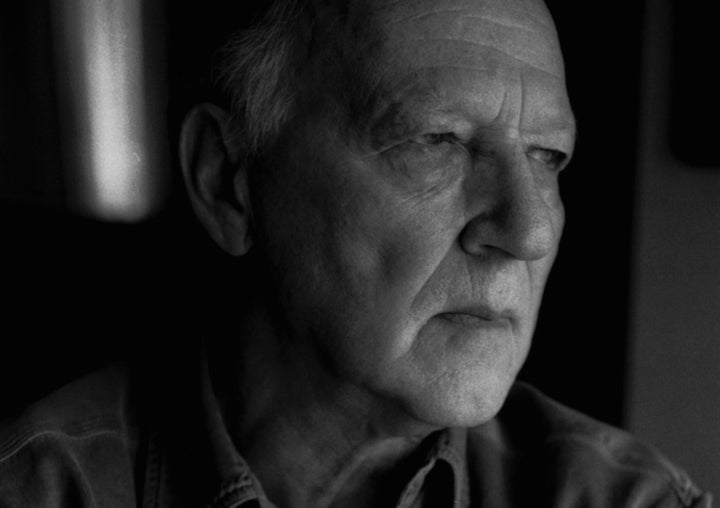
Legendary director Werner Herzog loves cat videos. “It&;s purely something that goes viral on the internet, and there&039;s nothing wrong about it,” he told BuzzFeed’s Internet Explorer podcast in an interview. “When you are really down, you better switch on your laptop or smartphone and watch 60 seconds of crazy cat videos. It just lifts your spirits. Nothing wrong about it.”

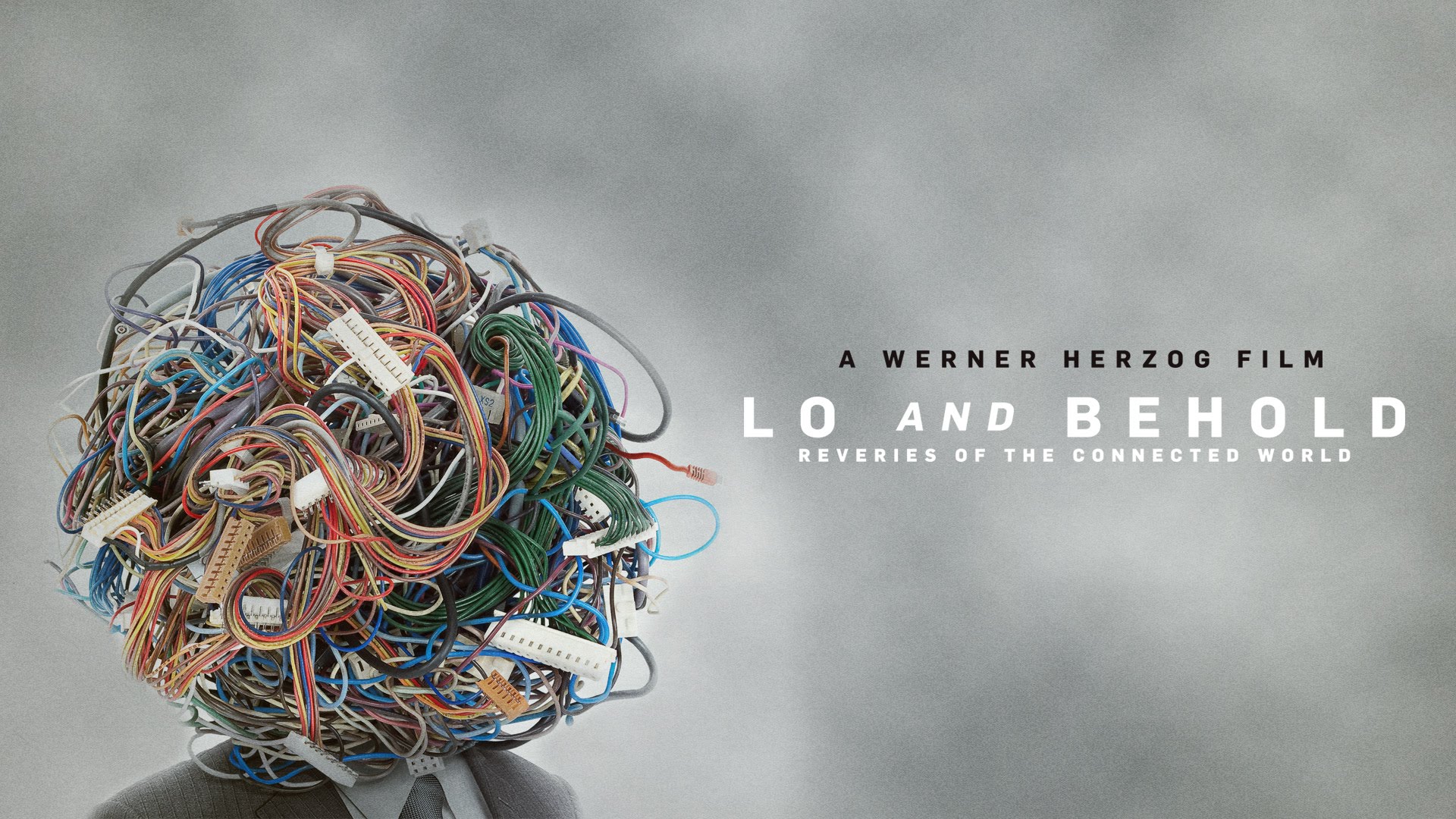
It&039;s something Herzog — director of classic films like Aguirre, the Wrath of God, and documentaries like Grizzly Man — has been thinking about, thanks to his new documentary about the internet and technology called Lo and Behold: Reveries of the Connected World, which will be released on Aug. 19. The film is a series of interviews with pioneers of the early internet, theorists, scientists, weirdos, hackers, robotics engineers, and space dreamers like Elon Musk.

It’s a perspective on “the internet,” both the term and technology, that&039;s different from the one that I, and I imagine most BuzzFeed readers, generally share. To digital natives like us, “the internet” is shorthand for people. When we say “the internet turned Michael Phelps’s game face into a meme” for example, we mean people did it; not a series of tubes and wires and code. It&039;s the same way political insiders mean the president and his cabinet when they refer to “the White House,” not a literal historic white building. To examine the internet as a piece technology that was created in universities in the ‘70s and is related to robots is to look at it through an architectural viewpoint, not anthropological.

“Nobody has become much happier by being on Facebook.”

But Herzog&039;s viewpoint makes sense considering he doesn’t use a cell phone (he does own one in case of emergencies) and admittedly doesn’t use the internet much. Well, he does, “but in a very limited way,” he said. “I use it to correspond with my brother who is in Vienna in Europe and we are nine hours apart. Or I send a longer text to a friend of mine and I would ask, &039;Can you send it back with corrections and ideas, write some notes about it?&039; I would use Skype for family. It doesn&039;t replace a real meeting but if some family member is in say, Berlin, it&039;s still better than no contact at all.”

And he doesn’t have much FOMO about not using social media. “Everything important has always reached me,” he said. Although, he is amused by the accounts that parody him, which he thinks are good satire. “I think nobody has become much happier by being on Facebook,” Herzog said. “I do not believe it. I think when we look at the depth of Facebook and this kind of shallow virtual friendships and collections, many of us will understand that just sitting together with friends and cooking a meal, leaving your cellphones behind and laughing and enjoying an evening has its own unparalleled value.”

“I think the internet is starting to develop its own humor.”

Herzog’s past films have a reoccurring theme of man versus nature, where the latter is a murderous and unfeeling thing, and those who naively think it’s good or try to tame it, like Fitzcarraldo or Grizzly Man’s Timothy Treadwell, end up with grave consequences. So, it seemed natural, seeing as it&039;s an intersection of his past and recent work, to ask Herzog about Harambe, the gorilla who was shot when a child fell into his cage and who has become an ironic internet meme. Is the internet so callous that we are laughing about a dead animal? Or is this our way of dealing with our tenuous relationship with our mastery over nature? “I haven&039;t seen any of this, but I do believe there are new forms of parody out there – new forms of irony, new forms of vile, anonymous interference of individuals into the internet,” Herzog said. “So there&039;s quite a few new phenomena out there, and I haven&039;t quite started all of it. I&039;m just curious what you are saying of course. I think the internet is starting to develop its own humor.”

Lo and Behold: Reveries of a Connected World trailer. The movie is released August 19th.

youtube.com

Read our review of Lo and Behold: Reveries of the Connected World

Quelle: <a href="Werner Herzog on Harambe And Why He Loves Cat Videos“>BuzzFeed

Livestreaming Dances Awkwardly Between The Horrifying And Absurd

On Wednesday afternoon, a man with four suction cups, a harness, and some rope began scaling Trump Tower in an attempt to meet with its proprietor.

Though the climber failed to get a personal audience with Donald Trump, he did succeed in creating another huge social livestreaming moment — a predictably successful one.

Social livestreaming is still in its infancy, but it’s quickly becoming clear that the videos that “go big” largely fall into two distinct categories: the horrifying and the absurd (with an element of suspense). Periscope is a little more than a year old, and Facebook Live a little less, and so far the streams that have captured the public’s attention seem to pendulum between death and baffling spectacle.

The Trump Tower climber was perhaps the perfect example of the latter. Full of absurdity (a man with suction cups was climbing a New York City skyscraper) and suspense (would he get apprehended? Or fall? Or unfurl a banner with a political message?), it’s no wonder its social livestreams did record numbers. CNN said the video was its most watched on Facebook Live, with over 5 million viewers.

An amateur Periscope broadcast of the incident reached over 200,000 concurrent viewers, a whopping number. And though Periscope won’t say whether that was its largest broadcast ever, a spokesperson said that around 25% of those who watched it stuck around the full stream. The stream lasted over an hour.

When you look back through social livestream history, you find more of the same. There was BuzzFeed’s exploding watermelon, an absurd and suspenseful video. And the congressional sit-in, which, while deeply serious, was also remarkable for the surprising and unexpected nature of a large gathering of politicians livestreaming their own sit-in. Indeed, when C-SPAN started airing Periscope and Facebook Live footage from the house floor, the moment became a watermark event for both platforms.

On the other end of the spectrum, there’s the horrifying. Social streams of shootings in the United States — such as aftermath of the police shooting of Philando Castile in Minnesota, Micah Johnson’s rampage against police in Dallas, and more — and the scenes of terrorist attacks in France, Belgium, Turkey, and elsewhere have struck a chord. They’ve been watched by many, incorporated into traditional media broadcasts, and turned social livestreaming into part of the story. For some, it’s become instinct to go live from the heart of devastation. Indeed, Diamond Reynolds, Castile’s girlfriend, did so right after her boyfriend was shot by a patrol officer.

Outside of these circumstances, little seems to move the needle for social livestreams. Yes, there was Chewbacca Mom. But that video was largely an outlier. Nothing has come close to its popularity, and the format (person in car laughing uncontrollably while wearing a grunting Star Wars mask) hasn’t proven itself as something that works for repeatable success.

But the fact that patterns are emerging at all bodes well for the future of social livestreaming, since they mean success (at least as far as the numbers look) should be repeatable. There will always be absurd things to stream, and, even more assuredly, there will always be horror. So yes, get ready for the format to stick around, even though you might get a bit of whiplash moving back and forth between its specialties.

Disclosure: BuzzFeed is a Facebook Live paid partner.

Quelle: <a href="Livestreaming Dances Awkwardly Between The Horrifying And Absurd“>BuzzFeed

Is This An Ad? Amber Rose And The $700 Juicer

Welcome to our weekly column, “Is This An Ad?“, in which we aim to figure out what the heck is going on in the confusing world of celebrity social media endorsements. Because sometimes when celebrities are being paid to post about something, it&;s very obvious, and sometimes it&039;s not.

The Case: Juicero and Amber Rose


Last spring, when the New York Times wrote about Juicero, a $700 Keurig-for-juice-style startup, a lot people scoffed at the machine and company as a totem of Silicon Valley excess and a tech bubble ready to burst.

But Amber Rose — talk show host, Kardashian frenemy, Slut Walk organizer, model, and designer — just saw a convenient way to get delicious, healthy fresh juice…. or did she?

On Snapchat, Rose posted videos of her friends (possibly paid assistants or her stylists/makeup artists; I admit my knowledge of the greater Amber Rose entourage is lacking) trying the juice. Unfortunately, I do not have saved evidence of the Juicero on her Snapchat story, due to the nature of Snapchat, you know, disappearing. You&039;ll just have to take my word for it that this did indeed happen.

On Twitter, she posted about how she was going to buy one:

Diet tea products

The evidence:

Rose is no stranger to a paid endorsement on social media. In the last few months, she&039;s hit the Holy Trifecta of Instagram ads with a diet tea, waist trainer, and teeth whitener.

So what do we think about the Juicero? On one hand, she does say right in that tweet that she&039;s buying it herself, based on a friend&039;s recommendation. “A recommendation from a trusted friend” is probably the best way someone is going to end up buying a $700 juicer, right? (assuming the musician A-trak and Amber Rose are friends. But really, when you&039;re a celeb, what is a “friend” anyway?)

On the other hand, is Amber Rose really just chatting about juice with her pals and then tweeting about it…. for free? Come on. Muva doesn&039;t do anything for free, right?

A final theory (brought up by one of the people in her replies to the tweet): she&039;s tweeting about a juicer the day after Kanye West&039;s video for “Famous” debuted on Tidal – the video which featured a wax figure of her nude. Perhaps she&039;s just trying to change the subject.

Waist trainer

The Verdict:

Not an ad&;

We reached out to the nice people at Juicero to ask them what the deal was. They told us that indeed, Amber decided to buy one herself based on DJ A-Trak&039;s recommendation. She was not paid to talk about the machine nor did she get it for free.

She just genuinely loves really, really expensive juicers.

Quelle: <a href="Is This An Ad? Amber Rose And The 0 Juicer“>BuzzFeed

Facebook Offers Few Details On Account Takedowns Following Korryn Gaines Standoff

Stephen Lam / Reuters

Earlier this month, Facebook, at the request of the law enforcement, disabled Korryn Gaines’ Facebook and Instagram accounts during the standoff with Baltimore County Police that would ultimately end her life. Facebook&;s decision to comply with that request has drawn sharp criticism — and is the latest example of internal murkiness around how and when the company censors speech — at a time when policing activists are demanding greater transparency from law enforcement officials.

It took about an hour for Facebook to disable Gaines’ accounts after police said her posts were escalating the standoff. But the social network’s policy and protocols for handling such emergency requests for the removal of content are unclear. On the company’s government request report, Facebook presents its information on emergency law enforcement requests as a single category; instances of Facebook taking someone’s account offline are lumped together with cases of Facebook handing over information to law enforcement. Facebook labels the category “Emergency Disclosures.”

“We comply with emergency requests based on representations from law enforcements and the facts as we understand them. That compliance without delay is required to prevent physical harm or death — that&039;s our standard,” a spokesperson told BuzzFeed News. Facebook has a team on staff that fields emergency requests, but the company declined to share details on the team’s makeup, its leadership, how many staff members they employ, or more on the protocols that guide the internal deliberation process.

The Baltimore County Police Department has said they filed for the emergency removal to help ensure the safety of Gaines, her child, and for the officers involved.

“Gaines was posting video of the operation, and followers were encouraging her not to comply with negotiators&039; requests that she surrender peacefully. This was a serious concern,” the police said in a statement. Most of Gaines’ posts from the encounter are no longer publicly accessible.

Facebook agreed to take Gaines’ accounts offline, and the police emphasized that it was ultimately the company’s decision.

Facebook releases information detailing the number of law enforcement requests for people’s data that the company receives. In the second half of 2015, Facebook received 855 emergency disclosure requests and complied with 73% of them. Facebook, however, does not state how many of those requests were for the suspension or removal of content, as opposed to providing data to law enforcement. A company spokesperson declined to clarify the figures.

As the Intercept reported earlier this week, Facebook’s policies on emergency requests from law enforcement appear to only apply to investigations in which law enforcement is seeking information, not trying to block its dissemination. According to the company’s government request report, Facebook displays information regarding “requests for data” and “percentage of requests where some data produced.” There’s no stated language on account takedowns.

The Facebook spokesperson told BuzzFeed News that its standards for compliance and the statistics it publishes on emergency requests apply to both disclosures and takedowns.

But Lee Rowland, an attorney with the ACLU’s speech, privacy, and technology project told BuzzFeed News that it’s a mistake for Facebook to consider law enforcement requests for deactivation the same way it does for disclosures.

“There should be a much higher bar for silencing content because you are not just impacting one person’s rights, you are impacting the public’s right to access that speech,” she said.

Rowland added that powerful images, including the Facebook live video of Castile, are playing a crucial role in elevating the national debate on police accountability. And by censoring speech at the request of law enforcement, without a warrant, Facebook risks not only circumventing our rights to record interactions with police, but in alienating Americans who see the company as all too eager to side with the government.

“We have the Constitution to protect us from government abuse,” she said. “What’s a little trickier to establish is a right to be free from social media giants who voluntarily cooperate with requests from law enforcement that don’t meet those Constitutional standards.”

Quelle: <a href="Facebook Offers Few Details On Account Takedowns Following Korryn Gaines Standoff“>BuzzFeed

Even Techies Can’t Afford San Francisco Anymore

Flickr / HJL

On Wednesday, Kate Vershov Downing, a corporate lawyer for an enterprise cloud company called ServiceNow, resigned from the Palo Alto Planning and Transport Commission. The reason, she said, was that she and her husband — a software engineer — could no longer afford to live there.

“We rent our current home with another couple for $6200 a month,” Downing wrote in a post on Medium. “If we wanted to buy the same home and share it with children and not roommates, it would cost $2.7M and our monthly payment would be $12,177 a month in mortgage, taxes, and insurance. That’s $146,127 per year&;—&x200A;an entire professional’s income before taxes. This is unaffordable.”

Like dozens of her friends have already done, Downing will be relocating outside of the Bay Area — a financial decision a new report says is becoming a trend.

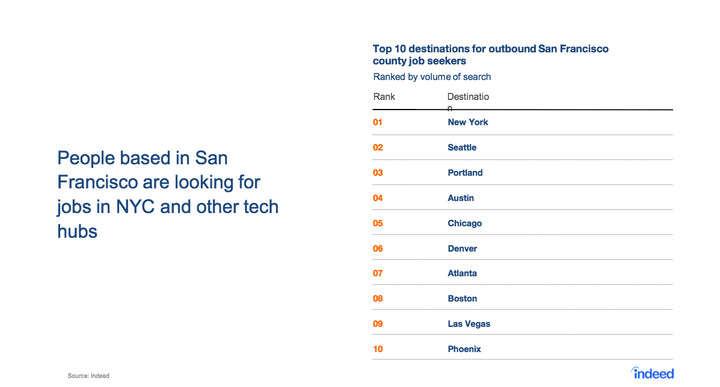
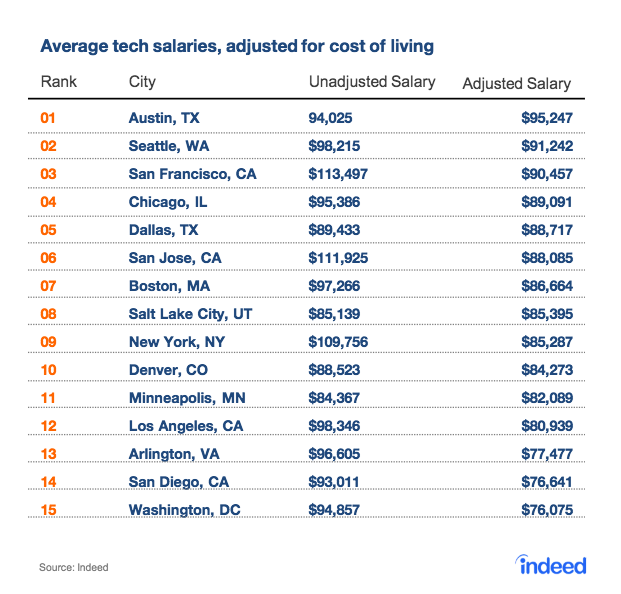
“Twenty six percent of software engineers in San Francisco are searching for jobs out of state,” said Indeed’s Paul D&;Arcy, who presented this research to San Francisco’s Chamber of Commerce on Wednesday afternoon. D’Arcy said that, specifically, they’re looking in Seattle, Portland, Austin and Denver — cities that have emerged as tech hubs, but where salaries go a little further.

According to Indeed, tech workers in San Francisco are making an average $113,497 a year. In Seattle, that figure is lower, at $98,215, and in Austin, lower still, at $94,025. But when those salaries are adjusted for cost of living, which is much higher in California than it is in Texas, that order is reversed. While San Franciscan techies are spending around 37% of their income on rent, Austinites are only shelling out 23% of their earnings on housing.

“We&039;ve seen, globally, tech salaries equalize,” said D’Arcy during his presentation on Wednesday. “It used to be people in San Francisco made much more, but that gap is decreasing. With the dramatic increase in cost of living, the economics are becoming less favorable to workers.”

As a result, according to Indeed’s data, San Francisco has has fallen behind Washington DC and Austin when it comes to desired destinations for people searching for jobs in tech. (San Jose is still in the lead, though.)

If the city is interested in reversing this trend, D’Arcy said, it will need to invest heavily in transportation systems that would help commuters access cheaper housing; if companies want to help, he said, they’ll need to offer workers based in San Francisco increased flexibility — aka, permission to work from home.

San Francisco is the third most unequal city in America after Bridgeport, CT and New York City, according to Indeed’s report, and that gap is widening. As the top earners get richer, the lowest earners — those in the bottom 20th percentile — are actually seeing their income decrease. It’s a problem Kate Downing is thinking about, even as she prepares to bail on Silicon Valley proper.

“It’s clear that if professionals like me cannot raise a family here,” she wrote, “then all of our teachers, first responders, and service workers are in dire straits.”

Quelle: <a href="Even Techies Can’t Afford San Francisco Anymore“>BuzzFeed

Sources: Twitter CEO Dick Costolo Secretly Censored Abusive Responses To President Obama

Getty Images

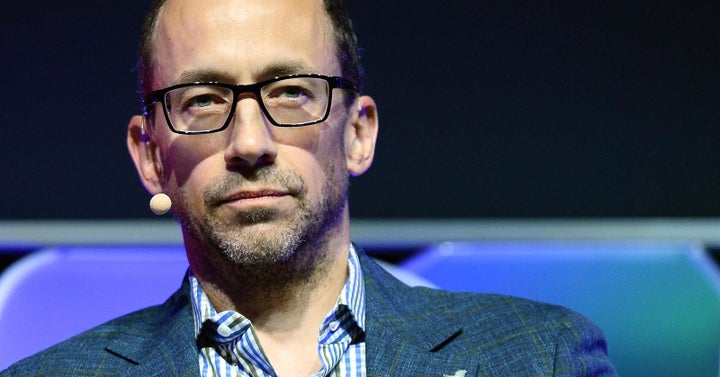
In 2015, then-Twitter CEO Dick Costolo secretly ordered employees to filter out abusive and hateful replies to President Barack Obama during a Q&A session, sources tell BuzzFeed News.

According to these sources, the May 2015 town hall came out of Twitter senior leadership&;s frustration with the fact that platforms like Reddit had become home to celebrity Q&As.

According to a former senior Twitter employee, Costolo ordered employees to deploy an algorithm (which was built in-house by feeding it thousands of examples of abuse and harassing tweets) that would filter out abusive language directed at Obama. Another source said the media partnerships team also manually censored tweets, noting that Twitter’s public quality-filtering algorithms were inconsistent. Two sources told BuzzFeed News that this decision was kept from senior company employees for fear they would object to the decision.

According to sources, the decision upset some senior employees inside the company who strictly followed Twitter&039;s long-standing commitment to unfettered free speech.

In its early years, Twitter took numerous public stands against censorship, even fighting a secret government order to provide user information for WikiLeaks. In 2011, Twitter senior executives published a blog post titled “The Tweets Must Flow.”

“There are Tweets that we do remove, such as illegal Tweets and spam,” the post read. “However, we make efforts to keep these exceptions narrow so they may serve to prove a broader and more important rule — we strive not to remove Tweets on the basis of their content.” Not long after the post, Twitter executives began publicly touting that “Twitter is the free speech wing of the free speech party.”

A different source alleges that Twitter did the same thing during a Q&A with Caitlyn Jenner.

“This was another example of trying to woo celebs and show that you can have civilized conversations without the hate even if you’re a high-profile person,” the source said. “But it’s another example of a double standard — we’ll protect our celebrities, while the average user is out there subject to all kinds of horrible things.”

A month after the Obama Q&A, Costolo stepped down as CEO, retaining a seat on Twitter’s board. In an exit interview with The Guardian on his last day, he defended Twitter’s commitment to free speech. “I will say directly that I think regulation is a threat to free speech,” he said.

Costolo did not respond to requests for comment.

Read more about Twitter&039;s 10-year failure to curb abuse here.

Quelle: <a href="Sources: Twitter CEO Dick Costolo Secretly Censored Abusive Responses To President Obama“>BuzzFeed

Snapchat Removes Filter After "Yellowface" Criticism

The company said it was supposed to be &;anime&;.

Everyone knows the best part about Snapchat is the filters. But a new filter was added that many people found offensive. “Yellowface” is when a non-Asian person dresses up or uses makeup (or in this case, a filter) to create cartoonish exaggeration of stereotypical asian features – it&;s considered offensive in the same way blackface is.

Snapchat told The Verge that the filter was “inspired by anime and meant to be playful.” The filter has been taken out of rotation due to the response.


View Entire List ›

Quelle: <a href="Snapchat Removes Filter After "Yellowface" Criticism“>BuzzFeed

Facebook’s Newsfeed Has A Friendship Problem

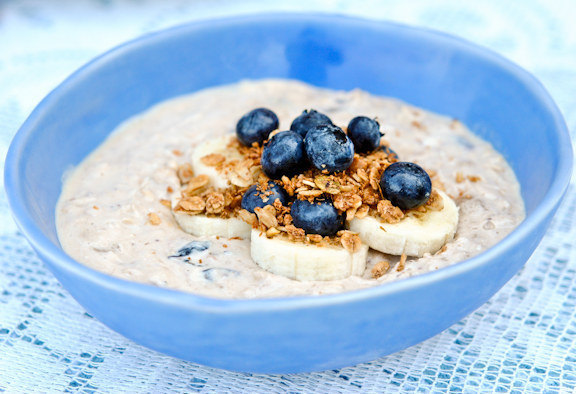
Blueberry banana overnight oats. Recipe HERE

Via foodfitnessfreshair.com

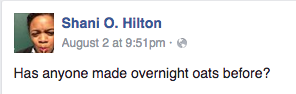
Last Tuesday night, Shani Hilton — head of U.S. news at BuzzFeed, apparent breakfast lover, and my Facebook friend — posted a simple status: “Has anyone made overnight oats before?&;

Shani’s quest for sensible breakfast advice and its string of replies has remained at the top of my Facebook feed for a week now. Every time I check Facebook for whatever the reason I compulsively check it multiple times a day, the overnight oats post glares back at me.

I never commented on it. I didn’t “like” it. I don’t even like overnight oats. I have no oat advice. This is not a topic I care about.

The intricacies of overnight oats had ground my mental state to the point of madness.

On Sunday, a full five days after Shani had posited the oat query, the oats were still at the top of my Facebook feed. They were even beating out an engagement and a pregnancy announcement — the gold standard of “sticky” Facebook content. I couldn’t take it anymore. The oat talk had taken over my life. Chia seeds, maple syrup, blueberries, whether to use regular or almond milk, the great debate over Greek yogurt. The intricacies of overnight oats had ground my mental state to the point of madness. And honestly, I still don’t really know what overnight oats are (are they different than oatmeal? Do they actually take a whole night?).

You know that thing where you say a word a bunch of times until it sounds really weird and not like a word at all? Oats. OATS. Ooooaaaatttssss. Oats. Fucking crazy, man.

This summer, Facebook announced that it was tweaking its Newsfeed algorithm — the thing that decides what goes to the top of your feed and what gets buried — to prioritize things posted by your actual friends, and to deprioritize brand pages and links to publishers (aka articles on websites like BuzzFeed). The reaction to this was mostly hand-wringing about the potential effect on publishers, who — like BuzzFeed — get a large chunk of their traffic from people sharing their content on Facebook.

Had Facebook toyed with these publishers, hypnotizing them into submission with a giant firehose of traffic, only to cruelly turn the faucet down to a trickle? Did Facebook ever care about publishing anyway? Or did it just care about “media” and “news” only when it was the one thing Twitter was beating them at, and as soon as they crushed their rival (however potentially hamfistedly), they lost interest and moved onto the next shiny thing – video? livestreams? Bots?

Or perhaps it was just going back to basics – people just want to use Facebook to interact with their friends, not to see a bunch of links to articles.

Interesting, but none of this is really relevant to my overnight oats problem.

Shani and I share a lot (97&;) of mutual Facebook friends, mainly coworkers here at BuzzFeed. So some of those replies with oat advice were from mutual friends. That’s an indicator to Facebook that this post must be something I’m interested in — look&033; Your mutual friends are discussing it&033; And because many of those mutual friends are also friends with each other, it kept bumping the post up to them as well, encouraging them to chime in with their favorite mix-ins. The cycle kept going and going, making Facebook more and more convinced that I would care about it.



I asked (on Twitter, of course) if anyone else had noticed lately that old posts had stayed “stuck” at the top of their Facebook feed for longer than normal. Several people had. Indeed, other coworkers and friends of Shani said that they too had had her oats post stuck at the top of their Facebook feed for days.

Facebook’s new news feed is operating based on the idea that you care more about what your friends have to say and their photos and videos than you do about links they post. Which is probably true&033; But even if it’s trying to be more friend-friendly, Newsfeed is still controlled by an algorithm. Based on a years-long friendship and a number of data points, the algorithm has figured out (I’m assuming — it’s a trade secret how the algorithm actually works, but it’s easy to guess) that I tend to be interested in what Shani posts.

Yet there is no way for it to understand that I do not care about overnight oats. That, in fact, I really really don’t care about overnight oats and I really don’t want to keep seeing a bunch of fucking overnight oat tips every time I check fucking Facebook.

What the oats revealed was machine learning&039;s limited understanding of friendship. There’s always been something a little cold and inhuman about the way that Facebook outwardly shows its understanding of how a human uses its service. When it rolled out its first Messenger bot earlier this year, it was a shopping bot to help you pick out clothing and shoes from an online store – the best way I found at the time to describe the experience is “this is something someone who works at Facebook would want to use.” It ignores the whimsy and pleasure of an online clothes shopping experience, where the user can browse for what they like. Instead, it just showed you just a few items in your price range in a generic category like “sneakers”. Messenger bots for weather and news were similarly panned at their launch for being glitchy and unuseful. Tech companies in general seem prone to explaining their services in this weird treacly simulacra of what a real human actually is. For a long time, the demonstration videos for new Apple features always seemed geared toward this imaginary perfect 40-something dad who loves exercising and just wants to share photos of his kids and find a great local sushi spot – I call him “Apple Man”. All the problems in his life can be solved by a slight new improvement in UI.

Facebook is sometimes is like the relative who thinks you still love horses because you were really into horses when you were 14 and keeps sending you birthday cards with horses on them.

But human relationships are messy in ways that technology and social platforms can’t really deal with. They get divorced but feel ashamed to announce it, they have weird passive-aggressive fights with their friends, they repeatedly lurk on the page of their partner’s ex. They have preferences that are not stated in their “Likes”, or they outgrow those Likes after a few years. If you look in your settings at what Facebook is telling advertisers that it knows about you, you will be shocked at both how creepily right it is and how hilariously wrong it is.

Facebook is sometimes is like the relative who thinks you still love horses because you were really into horses when you were 14 and keeps sending you birthday cards with horses on them. This uncanny feeling of someone sort of knowing you but not really is echoed all over the web. Like LinkedIn somehow suggesting you add someone you went on a blind date with years ago to your professional network. Or when you buy that pair of shoes online but the ads from Zappos for them follow you around every new site you visit seemingly forever, like a case of dynamic advertising HPV.

You, too, may have noticed in the last few weeks that certain posts from your friends seem to linger at the top of the Newsfeed for longer than usual – days even. Or that you have to scroll down further to see something that you haven’t already seen. If you’re a Facebook addict who checks multiple times a day and is used to fresh content, this is really annoying. Maybe it keeps showing you the same boring photo or post.

Or perhaps the real problem is that the limit of Facebook’s algorithm is that it’s only given the material to work with of who your friends are. If your friends are boring, you’re stuck with a boring feed.

But assuming you aren’t a monster, you like your friends. And Facebook knows that. But it doesn’t know that sometimes you don’t give a shit about what they post.

Point is, if you have good ideas about how to make overnight oats, please post in the comments below.

Quelle: <a href="Facebook’s Newsfeed Has A Friendship Problem“>BuzzFeed