Amazon’s New Alexa-Integrated Music Service Makes The Echo A Better DJ

Amazon has launched Amazon Music Unlimited, a premium version of Amazon Prime Music, and it&;s betting that its Alexa voice control technology will convince listeners to ditch their Spotify or Apple music subscriptions.

Here&039;s how it works

Unlimited gives users access to a library of tens of millions of songs. The current version of Amazon Prime Music, which comes free with a Prime subscription, has a library of a few million. Unlimited is available to Amazon Prime subscribers for $7.99 a month and to non-Prime members for $9.99 per month. Echo owners have access to a specific subscription plan: They can get a “just for Echo” subscription to Amazon Music Unlimited for $3.99 per month. It&039;s the same library, but it only works for Echo and any connected speakers. A more wide-reaching Unlimited plan works for smartphones and computers.

Here&039;s what&039;s cool about it
Via Giphy / Via giphy.com

The real difference between Amazon Music Unlimited and other streaming services, including Spotify and Apple Music, is its integration with the Echo, Amazon&039;s signature speaker, and Alexa, the voice-controlled assistant that goes with it. You can say things like “Alexa, play the latest single from Adele” to listen to “Send My Love to Your New Lover,” or “Play U2 from the &039;80s” to listen to the band&039;s music from a specific era. You can look up songs by lyrics: “Play that song that goes &039;One, two three; one, two three, drink,&039;” to look up Sia&039;s “Chandelier.” And you can combine genre and mood when you request, “Play sad country music from the &039;90s” to listen to some Shania Twain when you&039;re down.

Alexa&039;s also listening to you and learning your habits, so if you say “play dinner party music,” it&039;ll play low-key R&B if that&039;s your thing, or Bach if you&039;re more the type to host your boss. You can even ask Alexa to get you a free trial of Amazon Music Unlimited.

The Echo&039;s default music player is Amazon, but the speaker and its Alexa voice control will also play tunes from other streaming services. But if you&039;re asking Alexa to turn on Spotify, it won&039;t respond to your detailed requests; playing from a non-Amazon streaming service will be more like searching and playing from your phone. Amazon is hoping the difference in experience will attract customers who haven&039;t tried streaming services before, or that it will attract people who already subscribe to other services.

“We&039;ve done our best to mimic the way people talk to one another about music, rather than the way they search for it on their computers or smartphones,” Steve Boom, Amazon&039;s VP of Digital Music, told BuzzFeed News. “We believe the streaming industry is poised for a new phase of growth outside smartphones.”
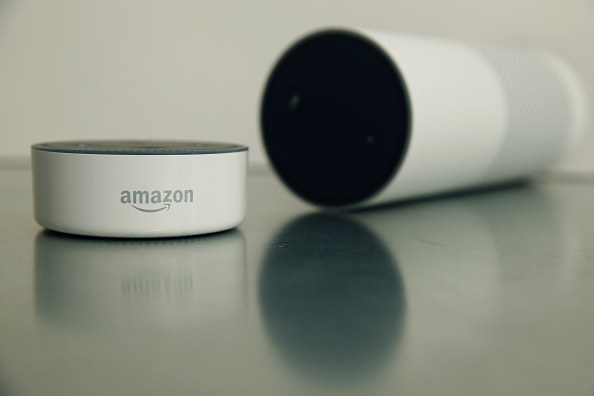
Amazon&039;s Echo and Echo Dot

Bloomberg / Getty Images

Amazon&039;s also created its own content to accompany the release. You can listen to “side-by-sides” with artists, where they talk about the creative processes behind their songs, or the Amazon Song of the Day, a track picked and described by an Amazon DJ.

Amazon faces stiff competition. Spotify, arguably the biggest player in streaming, is famously unprofitable. Apple is developing a smart speaker, which will likely integrate with Apple Music. Google Home, which offers Google&039;s search advantages, already integrates with Google Play. Boom said that Amazon is “definitely still in the investment phase” with Unlimited, but he said the company has a plan to make the service profitable within a few years.
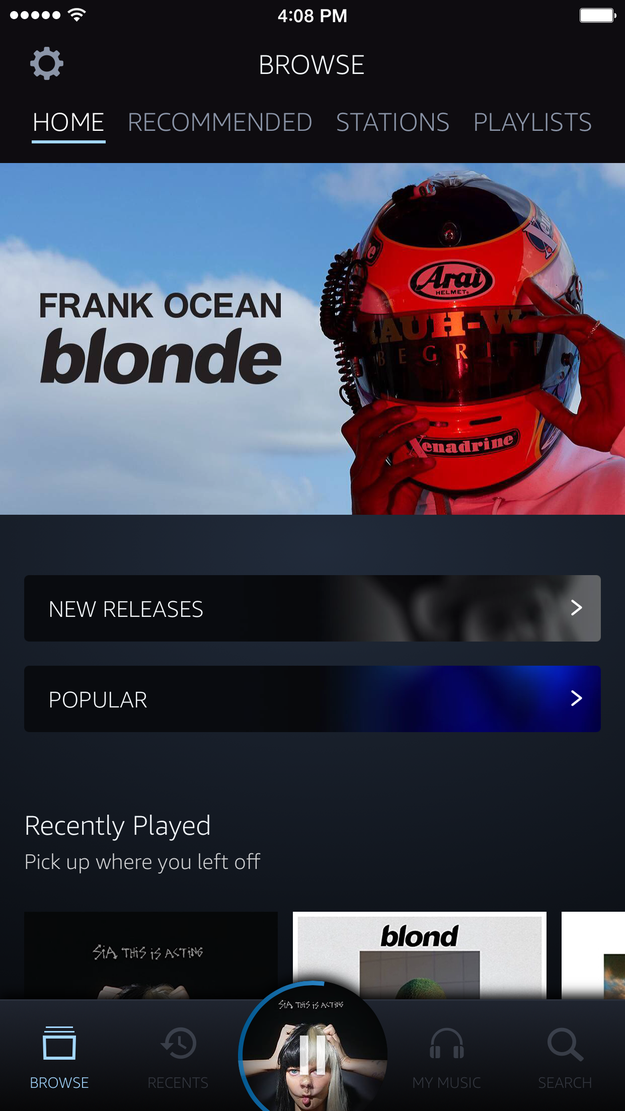
Image courtesy of Amazon

Quelle: <a href="Amazon’s New Alexa-Integrated Music Service Makes The Echo A Better DJ“>BuzzFeed

This Scientist Made A Meatless, Plant-Based Burger That Bleeds

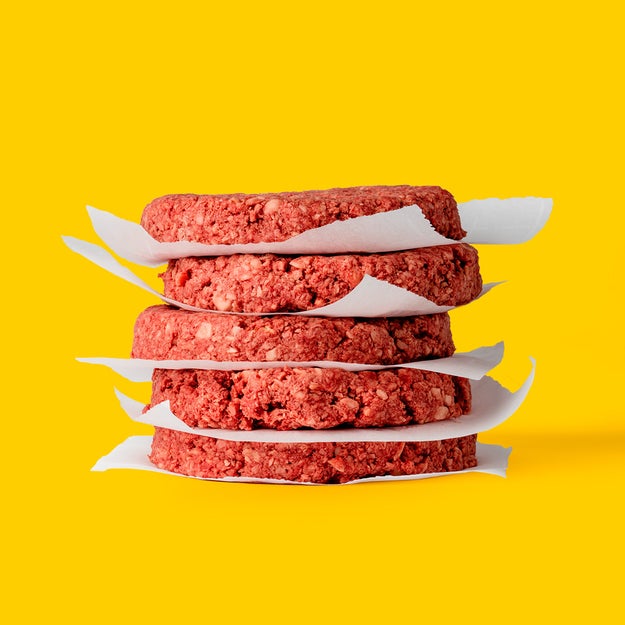
The “blood” is actually heme, a iron-based molecule Impossible Foods derives from soy plants.

Jess Misener / BuzzFeed

Six years ago, Dr. Pat Brown was a scientist on sabbatical. The Stanford University biochemist had built a career out of studying how genes are expressed in cancer, invented microchips that dramatically expanded the scale and possibilities of genetic research, and held prestigious titles such as Howard Hughes Medical Investigator and National Academy of Sciences member.

But during his break, Brown decided he wanted to focus his energy outside academia and tackle what he called “the most important problem in the world I thought I could have an impact on”: animal-based food. Brown, a vegan, thought that meat and dairy placed an undue burden on natural resources from land to water, and that plant-based alternatives, if done correctly, could be more sustainable — and, perhaps, equally tasty.

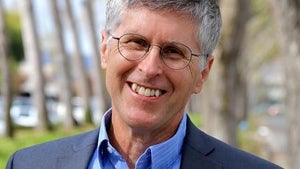
Dr. Pat Brown, founder and CEO of Impossible Foods.

Impossible Foods

Brown ended up leaving his “dream job” at Stanford for a new workplace he founded himself in 2011: Impossible Foods, a 130-employee vegan food startup whose first product is the meatless, meat-like Impossible Burger. After debuting at David Chang’s Momofuku Nishi in New York City in July, the company said today that, starting Thursday, the burger will be on the menu of three upscale California restaurants: Jardinière and Cockscomb in San Francisco, and Crossroads Kitchen in Los Angeles.

It’s not a Tofurkey-style, mashed-up vegetable kind of patty. Ingredients include water, wheat, coconut oil, soy and potato proteins, and a proprietary broth of amino acids and sugars. The key component, which the company says is the subject of several pending patents, is heme — an iron-containing molecule that can be extracted from the roots of nitrogen-fixing plants such as soybeans. (It’s also what makes your blood red, and the burger pink.)

“Animals are really, if you think about it, just a technology for transforming plants in meat, fish, and dairy foods,” Brown, who is Impossible Foods’ CEO and founder, told reporters recently. “They didn’t evolve for that function and they’re really not very good at it. We had the opportunity to take a fresh look at that problem and say, ‘OK, if you were in 2016 trying to come up with the best possible way to make these foods sustainably, affordably, scalably delicious and optimized for nutrition and so forth, how would you do it?’ Well, the last thing you would probably ever think of is ‘let’s just put plants into animals and kill them and eat them.’”

Impossible Foods

The goal is not necessarily to appeal to vegetarians, but to carnivores who like the taste of meat yet, for health or environmental reasons, are inclined to give up or cut back. Brown claims that, compared to a burger from cows, the Impossible Burger uses 95% less land and 74% less water, and emits 87% fewer greenhouse gases. It also lacks antibiotics, carbohydrates, artificial flavors, and hormones, and derives its fat from coconut oil, according to the company.

“People around the world love meat, fish, and dairy foods,” Brown said. “They’re really not going to stop eating them, and in fact, the demand for those foods has gone through the roof.”

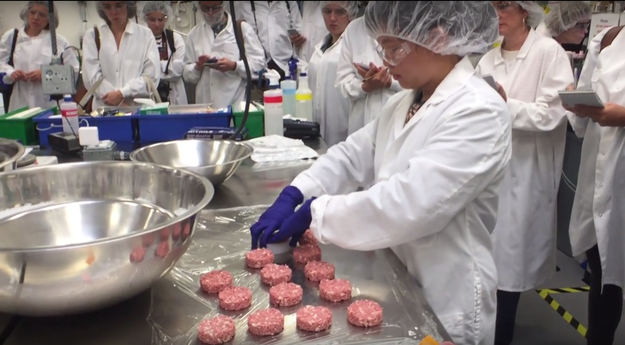
The patties are cranked out at Impossible Foods’ lab, which reporters were recently invited to tour. Here, white-coated PhDs spend their days obsessing over the molecules that make up the texture, flavor, color, and smell of meat. How do you duplicate the experience of turning a patty red to brown on a grill? How do you make sure it’s moist and tough, but not too moist and tough?

Stephanie M. Lee / BuzzFeed News

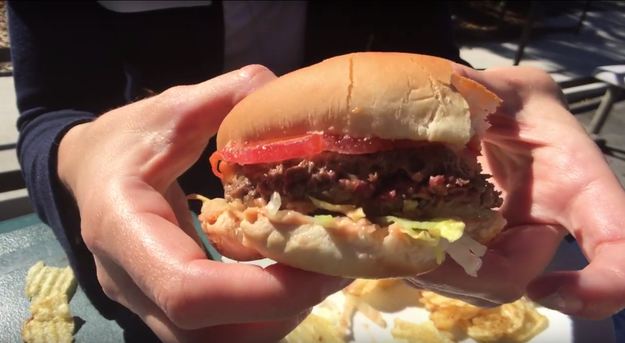
For BuzzFeed’s lifelong vegetarian tester, who doesn’t enjoy the taste of meat and has never eaten a “real” hamburger, the Impossible burger was viscerally unappetizing. In taste and texture, the burger’s resemblance to real meat was so strong that eating it stirred up a weird cognitive dissonance. But from a carnivore’s perspective, it was very close to the real thing, dense and chewy, although it was a bit softer and more prone to fall apart than is usually the case with burgers.

While these questions require complex problem-solving in molecular biology and biochemistry, the company, which is headquartered in Silicon Valley (an office park in Redwood City, to be precise), also has a strong connection to the tech world. Its $182 million in funding comes from Khosla Ventures, Bill Gates, and Google Ventures, as well as Hong Kong tycoon Li Ka-Shing’s Horizons Ventures, UBS, and Viking Global Investors. Google even tried to buy Impossible Foods for $200 to $300 million, The Information reported in 2015, but the deal fell through because the startup wanted more money.

As Impossible Foods tries to take a swing at animal-based agriculture, it’s not alone. Other rivals are growing animal cells into cultured meat to be used in the future for food or clothing. (Brown said this process, compared to Impossible’s, is much more difficult and labor-intensive on a big scale.) And Beyond Meat, a Los Angeles competitor, has a few years’ head start in selling plant protein-based beef and chicken strips and ground beef in grocery stores nationwide. This year, it’s starting to sell its own plant-based Beyond Burger (which has different ingredients, not including heme) in grocery stores rather than restaurants. Brown says Impossible Foods is entering restaurants first in an attempt to introduce the product to as many people as possible.

The Impossible Burger.

Stephanie M. Lee / BuzzFeed News

Impossible Foods next wants to work on chicken, pork, fish, and dairy products. One potential challenge for those, and for the current product, is costs of production, since the company is still getting off the ground. The burger (with fries or chips) will be $18 at Jardinière, $20 at Cockscomb, and $14 at Crossroads Kitchens — prices clearly targeted at an upscale clientele.

Brown says that while the company profitably sells an Impossible Burger at a cost equal to that of organic, grass-fed ground beef right now, it projects that the cost will drop to or below that of its mass-market equivalent (currently averaging $3.65 a pound nationwide) in two to three years and still be profitable. But that’s provided that Brown sells as many burgers as he thinks he can, and increases the manufacturing process accordingly without sacrificing quality. To scale up, “there’s no discoveries, inventions, breakthroughs required, just smart engineering required — and money, because producing any physical substance at a very large scale, to some degree it’s capital-intensive,” he said.

In the meantime, he’ll be waiting to see if customers bite.

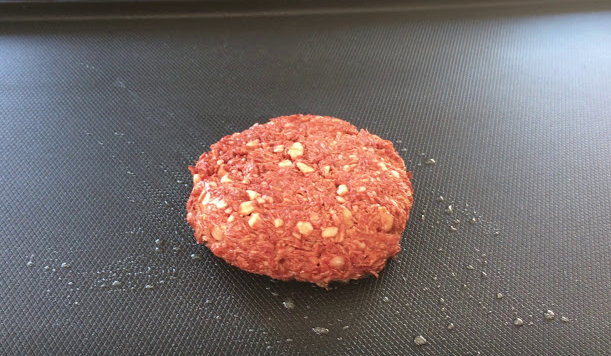
Dat sizzle though. (The white chunks are pieces of coconut oil.)

Jess Misener / BuzzFeed

Quelle: <a href="This Scientist Made A Meatless, Plant-Based Burger That Bleeds“>BuzzFeed

Facebook Deleted A Parody Account To Avoid Being Blocked In Brazil

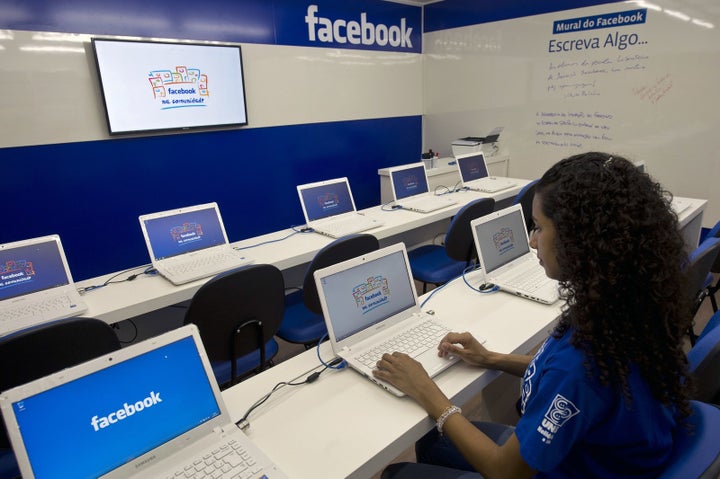
Picture of Facebook&;s Innovation and Entrepreneurship Lab in Sao Paulo, Brazil

Nelson Almeida / AFP / Getty Images

Facebook has complied with a demand by a judge in Brazil to take down a satirical page or face being blocked throughout the country for 24 hours.

The case centered on an account that parodied Udo Döhler, a candidate for mayor in the city of Joinville. On Monday, the Electoral Court of Joinville issued a decision that demanded that Facebook take down the page or be blocked throughout the country for 24 hours.

Facebook later on Monday obtained a court certificate that recognized that the company took down the page that originally generated the complaint, a spokesperson for the company told BuzzFeed News. The company also agreed to turn over the IP address of the user who was running the Döhler parody page, the spokesperson said.

The Brazilian telecommunications authority was not notified of the possibility of a Facebook outage, the spokesperson said, eliminating the risk that Facebook&039;s 100 million users inside Brazil would be effected.

Left undecided is whether Facebook will pay the fine that the judge, Renato Roberge, imposed on the company. Facebook was ordered to pay 30,000 reais ($9,500 US) plus another 30,000 reais every day it failed to comply; the company argues that it should have to pay nothing due to how quickly it removed the page.

The company said in a statement provided to Brazilian newspaper O Globo that it “has deep respect for the decisions of the Brazilian courts and complied with the court order within the deadline.”

“There is no doubt that the profile [goes against] the current electoral law, as it was clearly created for the purpose of invalidating the representative candidate,” Roberge wrote in his original decision.

“Freedom of speech has limits,” Roberge later told the BBC. “The law and the Constitution do not tolerate someone veiled by anonymity” to violate people&039;s honor and use images of them, he said.

“ITS Rio is disappointed that the Brazilian courts are threatening to block web services at the infrastructure level as an enforcement tool,” Fabro Steibel, Executive Director of the Instituto de Tecnologia e Sociedade do Rio, said in a statement. “Interfering with internet infrastructure can isolate the Brazilian network from the global Internet.

The showdown was the latest between the tech giant and the Brazilian government. Judges have ordered WhatsApp, the popular Facebook-owned messaging service, to be blocked in Brazil three times over the course of the last year. That feud centers around Facebook&039;s refusal to turn over information the Brazilians say is related to a criminal case.

Quelle: <a href="Facebook Deleted A Parody Account To Avoid Being Blocked In Brazil“>BuzzFeed

The Rise Of Viral Trump Merchandise

Redbubble

We’ve all been there: About to buy a cool new shirt, but afraid of showing up to the party and everyone’s wearing the same thing.

Donald Trump enthusiasts, however, are in luck: They’ve got options.

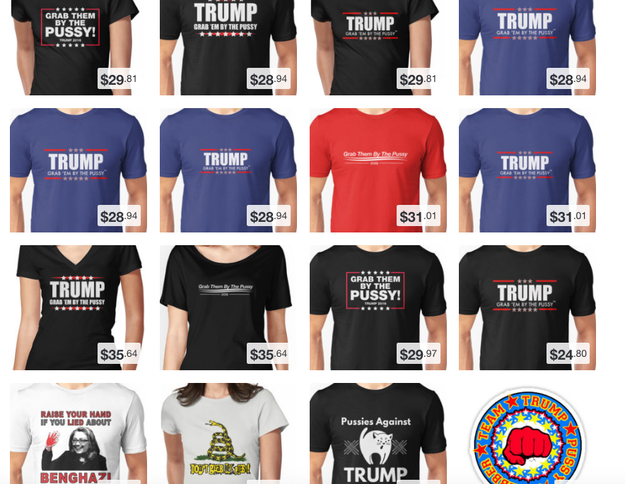
It’s only been four days since the Washington Post reported Trump’s vulgar 2005 suggestion to an NBC reporter to “grab them by the pussy,” but there are already 43 different styles with the quote available for sale on Redbubble.com.

On the social marketplace, which makes it easy to design and sell shirts, mugs, and posters, creators have already emblazoned Trump&;s latest not-quite-disqualifying remark onto a wide range of designs. They include a tasteful red-and-white, a cartoon speech bubble coming out of Trump&039;s mouth, and, for the subtler customer, a screen print of a black cat beneath the words “Locker Room Talk.” And these few dozen represent just a tiny fraction of the more than 10,000 Trump-related products ready for purchase on Redbubble, ranging from “The H Is Silent in Benghazi” t-shirts to “Pussy Game Strong” mugs to “1-800-Hotline-Trump” stationary.

They&039;re all part of a frantic, obscene, and crazily prolific market in unofficial and knockoff Trump merchandise that has flourished on big sites like Etsy and Redbubble (an Australian company that is sort of like Etsy crossed with Deviantart) and small web shops alike. Though the Trump campaign has its own official slogan and a corresponding acronym, this merch market is hardly limited to “Make American Great Again” and “MAGA.” Like the roiling internet communities that support Trump, the goods take the images and words of history&039;s most meme-able presidential candidate as a starting point from which to iterate endless $25 variations. It&039;s like 4chan or r/the_donald that you can wear.

“A picture of a red hat with &039;Grab Them By The Pussy&039; written on it had 2,000 retweets. That&039;s when it hit me.”

And like the global coalition of nihilists, ironists, racists, and actual conservatives who form these communities, the people who make merchandise are drawn to Trump&039;s image and speech for a variety of reasons.

Take Tyler Djokovic, a 19-year-old marketing student from Michigan. He got his start in viral t-shirts when he designed one featuring the inspirational musings of DJ Khaled, when those were a meme, all the way back in January. His Redbubble page also offers shirts featuring Harambe, Dat Boi, and Arthur&039;s fist.

Last week, shortly after the release of the now-infamous Access Hollywood video in which Trump lewdly discusses his pickup methods, Djokovic was searching the Twitter Moments tab, where he often goes to get an idea about trending memes. “Someone had tweeted out a picture of a red hat with Grab Them By The Pussy written on it, and it had 2,000 retweets,” he said. “That&039;s when it hit me.”

And so the “Grab Them By the Pussy” t-shirt was born. Or, maybe: The market for meme merch moves so fast that Tyler can&039;t be totally sure he was the first.

Djokovic said he didn&039;t make the t-shirt because he supports Trump — he declined to say whom he would vote for in November — but because it&039;s fun for him to try to predict what will go viral, and it&039;s a way to build his already robust social media presence. In fact, he considered the actual contest between Trump and Clinton an afterthought, merely a catalyst for creating internet culture.

“We&039;re not paying attention to the election,” Djokovic said. “We&039;re paying attention to the memes.”

Cameron Lee

Other meme-chandisers are paying attention to Trump&039;s speech — specifically his disdain for political correctness.

Cameron Lee, a 37-year-old designer from Southern California who lives in Tokyo, started making Trump t-shirts in March after being inspired by an image of Trump in World War One-era military regalia on 4chan. Shortly after, he came across a Facebook post in which several of his friends called all Trump supporters racist.

“I was standing there in my room thinking, this is horrible, this is terrible that I can’t say something like that without people thinking that I&039;m something I&039;m not,” Lee said. “Thats when I decided to go for it.”

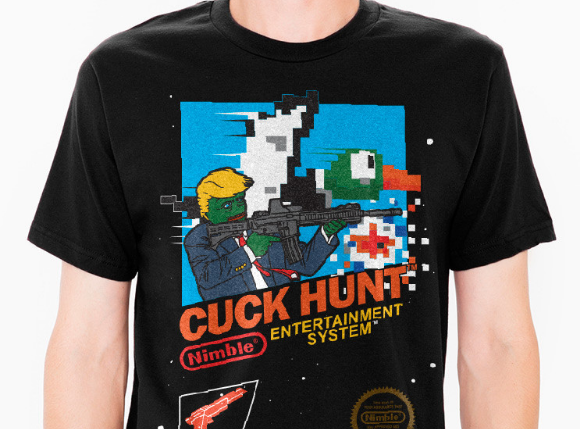
Lee, who has a background in streetwear design (he once made t-shirts for Monarchy — think Ed Hardy and Affliction) moved on to other 4chan-inspired images like “Cuck Hunt,” a t-shirt depicting a rifle-toting Trump-Pepe in the style of the NES classic Duck Hunt; a Supreme-style MAGA snapback hat; and a coffee mug entitled “Sakura Bloodbath” that features a drawing of Trump clad in futuristic battle armor while bearing a blood-stained sword and plucking cherry blossoms.

And then there is the rare viral Trump merchandiser who finds inspiration offline. Kristie, a 44-year-old graphic designer from Kentucky, was eating her annual birthday dinner at Red Lobster when she overheard a couple complaining about a comment Hillary Clinton had made about “deplorable” Trump supporters.

“I looked at my husband and said, &039;Hmm, that&039;s going to be a moneymaker,&039;” she said.

“I don’t like Hillary as far as I can throw her. But I have some Hillary stuff on Etsy.”

After dinner, Kristie came home and “threw something together that looks good on a shirt.” She uploaded it to Etsy and Redbubble. Within days, she was selling over $1,000 a day in shirts.

Kristie considers herself a Trump supporter. “I can’t wear my own Trump shirt because I’m afraid I’m going to get shot,” Kristie said. “I’m one of those silent people.” But like many of the Trump merchandisers, her ultimate allegiance is to what sells. “I don’t like Hillary as far as I can throw her,” Kristie said, “But I have some Hillary stuff on Etsy.”

Indeed, success in the viral merchandise market depends on a hyper-awareness of what is popular and current. Kristie said she hasn&039;t sold any “Deplorable” t-shirts in two weeks; Tyler said his Dat Boi and DJ Khaled merch are “dead.” (Meanwhile, there are already 40 Ken Bone t-shirts available for sale on Redbubble.)

While the Trump merchandise market appears vast, like the campaign and the online communities that inspire it, its depth and its staying power are unclear. The Redbubble sellers are hardly making a killing. Djokovic said he&039;ll make a couple thousand dollars off of the shirts; Lee said he&039;s sold at the most a thousand t-shirts; and Kristie said no one has bought a “Deplorable” shirt in weeks. (Though, she added, her Deplorable garden flags are still a hot item.)

And though the shirts do sell, and though Lee said happy customers send him pictures of themselves in his clothing, it&039;s difficult to find people showing the merchandise off on social media. Perhaps that&039;s because, like Kristie, there is a legion of Trump supporters who have stayed quiet and are waiting to flaunt their shirts on Inauguration Day, if their candidate wins. Or perhaps it&039;s because the shirts are, as Djokovic put it, “impulse buys,” forgotten as soon as they arrive.

The Republican nominee will probably keep saying crazy stuff through November 8, so Trump viral merchandise will persist at least that long. Beyond that, well, it depends on what people like Djokovic see trending on Twitter.

And for Lee, no matter what happens next month, there are always ways to cater to 4chan: “I thought I’d make a nice comfy green Pepe shirt for the winter.”

Quelle: <a href="The Rise Of Viral Trump Merchandise“>BuzzFeed

Supreme Court Presses Apple And Samsung On The Value Of Design

Court documents / Apple v. Samsung

Several Supreme Court justices challenged Samsung&;s argument on Tuesday that the company should owe Apple less than $399 million for infringing on the design of the iPhone. Other justices, though, pressed Apple to show why its damages in the case should be connected to Samsung&039;s profits made from the entire phone — rather than just the part of its exterior that Samsung was found to infringe.

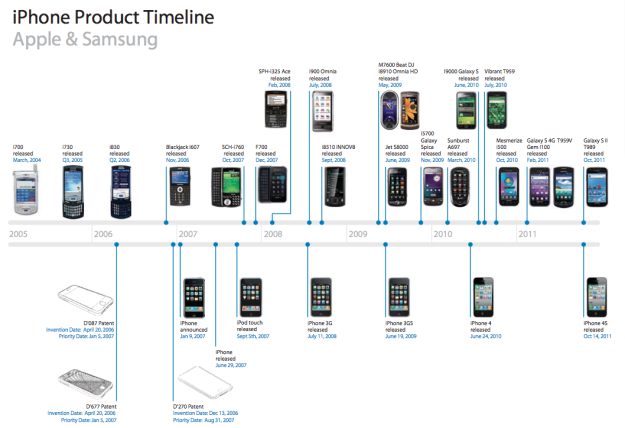
The dispute between the warring phone companies revolves around the $399 million penalty Samsung was ordered to pay Apple, stemming from a lawsuit that began in 2011. A lower court found that Samsung infringed on three of Apple’s design patents: the iPhone’s rectangular face with rounded edges, the phone&039;s bezel edge frame of the phone, and a home screen populated by apps arranged in a grid. The dollar amount comes from the total profits Samsung banked from eleven of its phone models that the lower court found ripped off Apple’s iPhone design. But exactly how much money Samsung must hand over is what the Supreme Court will decide.

Samsung tried to convince the Supreme Court that it shouldn’t have to forfeit all of the profits it generated from the phones, since only some parts of its devices were patented by Apple.

The law that the high court will interpret states that a design patent infringer is liable for “total profits” from the sale of an “article of manufacture.” But the oral arguments focused on pinning down what “article of manufacture” actually means: the justices could determine it refers to the entire phone, or just the components that were patented by the iPhone maker.

Apple, for its part, argued that the design of the iPhone is not merely ornamental — a minor aspect that that can be separated from the phone. The iPhone, when released, was a revolutionary product, Apple maintains, and its iconic design was integral to its success.

Chief Justice John Roberts needled Apple&039;s attorney on the “article of manufacture” point, saying that Apple&039;s design patent applies only to the phone&039;s exterior, not its “chips and wires.” Roberts said that the money awarded to Apple, if that&039;s so, shouldn&039;t be the total profits from the Samsung phones.

Samsung raised the issue of what it claims were problematic jury instructions in the lower court where this dispute began. Samsung argued that the jury should have been told to consider awarding Apple profits based on portions of the phone that could be economically tied to its design patent. Instead, the jury was instructed that if infringement did occur, Apple would be entitled to the total profit of the phone. Justice Anthony Kennedy, one of the more active participants on the dais, began his questioning by pointing to the confusion he might have serving on the jury under Samsung&039;s proposed instructions. “If I was a juror, I simply wouldn&039;t know what to do,” he said.

Justice Sonia Sotomayor echoed justice Kennedy&039;s remarks and said. “The phone could be seen by a purchasing consumer as being just … that rounded edge, slim outer shell.” Justice Ruth Bader Ginsburg asked Samsung to clarify how a jury might determine the value of a phone&039;s design if these component parts of aren&039;t sold separately.

The US Department of Justice also appeared before the court, speaking in favor of neither party, but advocated a multi-pronged approach. According to the lawyer for the government, the justices should consider taking a dynamic, contextual reading of design patent cases, where infringement penalties are determined by the scope of the design and how important a design element is to a product as a whole.

An extended comparison deployed by several justices was to look at this case as if it involved the Volkswagen Beetle, and it&039;s signature look. To determine what role the Beetle&039;s exterior had in people&039;s willingness to buy it, the government argued that expert witnesses from the industry could be brought in, along with consumer surveys.

Tech giants including Facebook, Google, Dell, and eBay are backing Samsung. In a brief to the court, they described Apple&039;s stance as “out of step with modern technology,” pointing to the undue power design patents could potentially wield. Justice Breyer Stephen mentioned this brief several times, and pointedly asked Apple to explain why its Silicon Valley neighbors are mistaken. (While Justice Clarence Thomas did not pose a question, he put his glasses on and appeared to read case material after Breyer referenced the tech companies&039; brief. They leaned closer to each other as Breyer&039;s case booklet was open few moments later, with Breyer appearing to point him to a certain page.)

Samsung and its supporters have argued that a victory for Apple could lead to absurd scenarios, in which a company that infringes on a tiny percentage of another firm’s design could be held liable for 100% of its profits. This is like a car company being forced to hand over its earnings because it copied someone else&039;s design for a back seat cup holder, Samsung has suggested. The company fears that a ruling in favor of Apple would breed a new class of patent troll, especially in the realm of technology where products are made up of thousands of complex parts, in addition to their design features.

Apple, in turn, claims more than 100 design professionals as allies, including Calvin Klein and Alexander Wang. The designers urged the court to consider that, in the minds of consumers, design often represents the product itself.

Samsung v. Apple was argued as both companies face heightened scrutiny from government officials around the world. In August, the executive arm of the European Union ordered Ireland to collect $14.5 billion in unpaid taxes from Apple. Meanwhile, Samsung phones have been exploding. The manufacturer has halted sales of the Galaxy Note7 amid a worldwide recall, following reports of the devices catching fire. The Federal Aviation Administration urged passengers Monday to “power down, and not use, charge, or stow in checked baggage, any Samsung Galaxy Note7″ while aboard an aircraft.

As the justices contemplate the design patent case, the Supreme Court continues to operate with only eight members, following the death of Justice Antonin Scalia in February. While President Obama has nominated Merrick Garland to fill the vacancy on the court, Senate Republicans have refused to move forward on the nomination. For both Hillary Clinton and Donald Trump, the filling of that vacancy remains a galvanizing campaign issue. A question about how they would choose to fill the vacancy drew sharp contrasts between them during the second presidential debate on Sunday night.

Quelle: <a href="Supreme Court Presses Apple And Samsung On The Value Of Design“>BuzzFeed

Law Enforcement Tracked Activists Using Twitter, Facebook And Instagram Data

Law Enforcement Tracked Activists Using Twitter, Facebook And Instagram Data

Recode/via screenshot / Via youtube.com

According to a report from the American Civil Liberties Union, law enforcement officials across the country used special feeds of raw data, including location information, from Instagram, Twitter, and Facebook to track and monitor racial protests.

The ACLU claims the social data used by law enforcement was provided by Geofeedia, a social media monitoring company that provides information to hundreds of local police departments. According to public records requests obtained by the ACLU, Geofeedia was granted special access to data feeds from the major social networks, including: access to the Instagram API that includes any location information; access to Facebook&;s Topic Feed API, which allowed Geofeedia to monitor public posts “including hashtags, events, or specific places;” and searchable access to a database of public tweets from Twitter.

All three social networks attempted to stop or, at least restrict Geofeedia&039;s access to data after the the ACLU reported its knowledge of the partnerships. Facebook and Instagram (which is owned by Facebook) cut off access to the topic feed and the Instagram API. According to a report from The Washington Post, this week Twitter ordered Geofeedia to stop accessing its public database with a cease and desist letter. The company said today that it would block Geofeedia&039;s access to its public feed.

The ACLU report raises concerns over how social media data can be coopted for the purposes of surveillance and stifling civil unrest. Emails obtained by the ACLU show a Geofeedia representative boasting to a law enforcement official that their tools “covered Ferguson/Mike Brown nationally with great success.

The report also presents a different face for Facebook and Twitter, which have taken numerous public stands in support of Black Lives Matter and activism intended to address police violence and racial inequality.

When reached, a Facebook spokesperson told BuzzFeed News that Geofeedia “only had access to data that people chose to make public. Its access was subject to the limitations in our Platform Policy, which outlines what we expect from developers that receive data using the Facebook Platform. If a developer uses our APIs in a way that has not been authorized, we will take swift action to stop them and we will end our relationship altogether if necessary.”

Geofeedia has not yet responded to a request for comment. Twitter declined to provide one.

Quelle: <a href="Law Enforcement Tracked Activists Using Twitter, Facebook And Instagram Data“>BuzzFeed

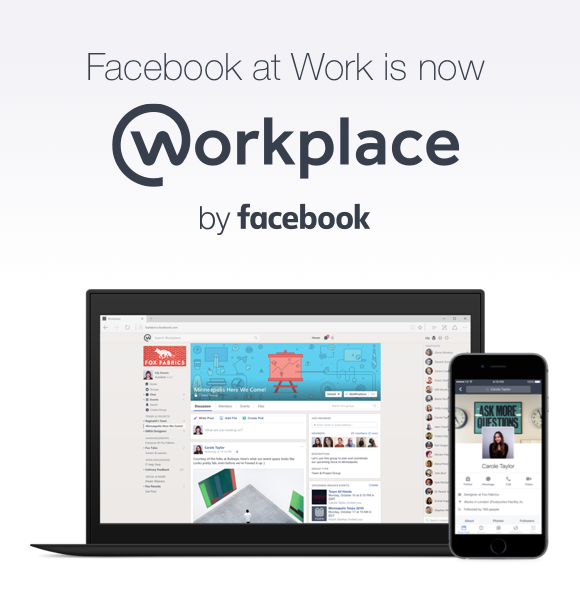
Facebook’s Workplace App Tries To Lure Away Slack Users

Facebook has launched Workplace, a paid chat system for employees to communicate with each other. The service strongly resembles regular Facebook.

You do not have to have an existing Facebook account to use Workplace, as it requires a separate login. Users create profiles with photos and other information just as they would on their personal profiles.

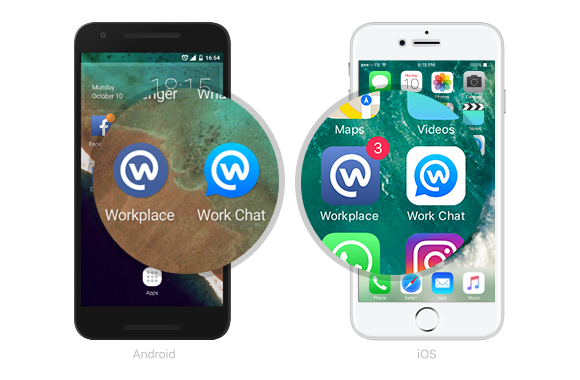
The app, which can be downloaded separately from the App Store or installed on a desktop, includes group chat, a news feed, live video, and direct messaging. It also supports voice and video calling. Employees can chat with one another by joining groups or DMing but will not see their outside-of-work friends in their Workplace news feeds, which only aggregate posts from professional conversations on the Workplace app. Employees can also follow certain groups or their coworkers to receive updates from them.

Image courtesy of Facebook / Via Facebook: workplace

Facebook has priced Workplace at $3 per month per user for companies with up to 1,000 users, $2 per user for up to 10,000 employees, and $1 for more than that. It&;s free for nonprofits and educational institutions. According to Workplace&039;s website, there are no long-term contracts associated with using the service, nor will the service display ads.

Why did Facebook launch an app for work? The company said in a press release that it saw an opening with the new ways people work: “The workplace is about more than just communicating between desks within the walls of an office. Some people spend their entire workday on the go, on their mobile phone. Others spend all day out in the field, or on the road.” The company repeatedly addressed the press release to “anyone” or “any company” and highlighted the app&039;s already-global reach.

Image courtesy of Facebook / Via Facebook: workplace

By contrast, Slack, Workplace&039;s most visible competitor, offers some services for free, a “Standard” version for $6.70 per user, and a “Plus” version for $12.50 a user. Slack also bills itself as a service for “your small- to medium-sized company or team.” And a service called Slack for Enterprise, presumably for larger companies, is in the works, according to the company&039;s website. Even beyond Slack, office chat technology is a crowded market; Workplace is also competing against Microsoft&039;s Yammer, Salesforce&039;s Chatter, and Hipchat.

Reactions on social media were mixed:

A source at Facebook said that the company will not use data collected from Workplace to target users with advertising, and that companies can control their own data via Facebook&039;s data API. According to Workplace&039;s website, Facebook is in the process of certifying the product under the EU-US Privacy Shield Framework to help companies in the EU comply with EU data transfer requirements.

Recode reports that the social network has been beta testing Workplace for the past two years with roughly a thousand companies. Facebook originally said the service would be live at the end of 2015, also according to Recode.

Quelle: <a href="Facebook’s Workplace App Tries To Lure Away Slack Users“>BuzzFeed

Samsung Has Suspended Production Of The Explosive Galaxy Note 7

Samsung Has Suspended Production Of The Explosive Galaxy Note 7

Jung Yeon-je / AFP / Getty Images

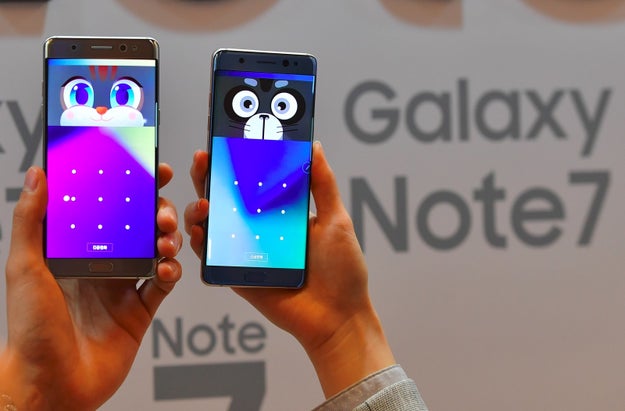
Samsung, working with consumer safety agencies in South Korea, the US, and China, has temporarily halted production of the Galaxy Note 7 smartphone after reports that replacement devices have caught fire, Yonhap News reported.

US phone carriers AT&T and T-Mobile have stopped selling the phone and are not issuing replacement Note 7s for previously sold phones, the Wall Street Journal reported. Both carriers are instead offering refunds or different devices in exchange for returned Note 7s.

Last month, Samsung issued a global recall of 2.5 million Note 7s, including 1 million in the US, after a number of reports that the phones&; batteries were overheating and causing them to explode. The electronics manufacturer offered replacement phones to buyers with defective ones, but some users reported that even these burst into flames as well.

The Note 7 hit the market on Aug. 19, but faced a recall in the US less than a month later on Sept. 15 after nearly 100 reports of the devices catching fire or exploding, some with dramatic results. Replacement phones arrived in the US on Sept. 21 but were met with resistance after a Southwest Airlines flight was grounded because of a smoking Note 7.

Samsung has lost $25 billion in market value due to the multiple failures of the Note 7. Recall costs, estimated at $1 billion, are also adding to the company&039;s financial woes.

Samsung did not immediately respond to a request for comment.

Quelle: <a href="Samsung Has Suspended Production Of The Explosive Galaxy Note 7“>BuzzFeed