Apple Is Dropping The Price On All Of Its USB-C Adapters

Maybe it&;ll make people less mad about the New MacBook Pro?

Last month, Apple unveiled their first MacBook Pro redesign since 2012.

Last month, Apple unveiled their first MacBook Pro redesign since 2012.

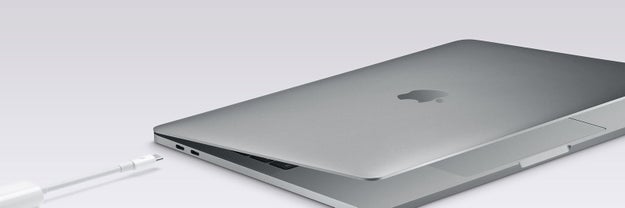
The all-new MacBook Pro is slimmer, lighter, and has a tiny new keyboard touchscreen.

Apple

That&;s right: no more SD card slot, USB port, Thunderbolt port, HDMI port, or MagSafe connector. (There is, however, still a headphone jack. )

For example, the USB-C to USB adapter is going from $19 to $9. The Thunderbolt 3 to Thunderbolt 2 Adapter is being cut from $49 to $29. The
SanDisk Extreme Pro SD UHS-II Card USB-C Reader is now $29 (down from $49).

In a statement to BuzzFeed News, the company said: “We recognize that many users, especially pros, rely on legacy connectors to get work done today and they face a transition. We want to help them move to the latest technology and peripherals, as well as accelerate the growth of this new ecosystem. Through the end of the year, we are reducing prices on all USB-C and Thunderbolt 3 peripherals we sell, as well as the prices on Apple&039;s USB-C adapters and cables.”


View Entire List ›

Quelle: <a href="Apple Is Dropping The Price On All Of Its USB-C Adapters“>BuzzFeed

A Russia-Linked Twitter Account Just Invited Hackers To Monitor The US Elections

Regis Duvignau / Reuters

SAN FRANCISCO — A Twitter account linked to Russia has called on hackers monitor the US elections and made claims that the person behind the account has registered as an independent election observer.

Guccifer 2.0, a figure which US intelligence officials and private cybersecurity companies believe was created as a Russian government-backed propaganda effort, tweeted Friday that “Democrats may rig the #Elections2016.” In an attached WordPress blog post, the account claimed Democrats would use “software installed in the [Federal Election Commission (FEC)] networks by the large IT companies.” The claim makes little sense given that the FEC is tasked with monitoring campaign finance information in the run-up to the elections, but has little role on November 8.

There have been previous claims, largely spread by fake news sites, that voting machines will be rigged or possible hacked with previously installed software. Those claims, however, have been widely discredited given the number of times machines are tested prior to use by Republican and Democratic Party officials, and the fact that they are never connected to the internet.

In a subsequent tweet, Guccifer 2.0 encouraged hackers to join in monitoring the vote on November 8, though it was unclear if the call was for interference, intimidation, or observation of the vote.

BuzzFeed News sent a request for comment from the Guccifer 2.0 account on what role it planned to take in monitoring the elections, but did not receive an answer.

The Guccifer 2.0 Twitter account, which first surfaced five months ago, originally claimed to be a Romanian hacker responsible for hacking into the Democratic National Committee (DNC). But a language analysis on the Guccifer 2.0 account showed it made mistakes typical of Russian speakers, and when asked questions in Romanian by reporters in an online chat, Guccifer 2.0 appeared to not be able to answer.

US intelligence agencies have since concluded that Guccifer 2.0 was an account created by a group of Russian hackers known as Fancy Bear to disseminate the hacked emails and launch a disinformation campaign about their origin. In an unprecedented statement on the hacks by the Department of Homeland Security and Director of National Intelligence, Guccifer 2.0 was specifically named as being an agent of the Russian government.

“The recent disclosures of alleged hacked e-mails on sites like DCLeaks.com and WikiLeaks and by the Guccifer 2.0 online persona are consistent with the methods and motivations of Russian-directed efforts,” the statement read. “These thefts and disclosures are intended to interfere with the US election process. We believe, based on the scope and sensitivity of these efforts, that only Russia’s senior-most officials could have authorized these activities.”

Quelle: <a href="A Russia-Linked Twitter Account Just Invited Hackers To Monitor The US Elections“>BuzzFeed

Virtual Reality Isn’t Ready To Handle Abusive Trolls

Brad Barket / Getty Images

Last month, Jordan Belamire unwittingly — and unwillingly — found herself the first public victim of a new kind of abuse. While visiting her brother-in-law, she tried out the new head-mounted virtual reality system HTC Vive — specifically, a multiplayer archery game called QuiVR.

“I was hanging out next to BigBro442, waiting for our next attack,” Belamire, which is a pseudonym, wrote in a now widely shared blog post. “Suddenly, BigBro442’s disembodied helmet faced me dead-on. His floating hand approached my body, and he started to virtually rub my chest.”

Belamire&;s experience raised a dreadful prospect: That the connected spaces in the booming field of virtual reality will suffer the same plague of anonymous harassment and abuse that has come to define the social internet in 2016.

Or, worse. The story suggested that anonymous abuse, in the context of a medium defined by the suspension of disbelief, would take on new and frightening contours.

Wrote Belamire,

“It felt real, violating. This sounds ludicrous to anyone who hasn’t stood on that virtual reality ledge and looked down, but if you have, you might start to understand. The public virtual chasing and groping happened a full week ago and I’m still thinking about it.”

For virtual- and augmented-reality evangelists, who have long touted the potential therapeutic benefits of immersive media, the incident was a bracing reminder that new technology is never immune to old problems. And behind that fact looms a serious question: Who will be held accountable for traumatic experiences caused by abuse in virtual reality?

The short answer: Probably not the corporations that make the hardware or the software.

“VR providers will likely face no liability whatsoever, period,” said Michael Risch, a law professor at Villanova University who has published widely on legal issues surrounding the technology.

That&039;s because VR providers will be largely shielded by Section 230 of the Communications Decency Act, which says that providers of internet computer services are not responsible for content that comes from users or other providers. It&039;s the same reason Twitter isn&039;t liable for the tsunami of hate speech and harassment on its platform.

“So long as the providers themselves are not doing the harassing, they don’t have to do a thing,” Risch told BuzzFeed News.

But, Risch said, they could be liable if they created the content themselves: Say, a virtual bot programmed to harass, or, in a slightly more far-flung hypothetical, a VR game that involved a rape or an assault. In this case, according to Risch, a traumatized person would be able to file an emotional distress suit against the company that wrote the code.

Still, such a plaintiff would have to convince a judge that a traumatic VR experience isn&039;t protected speech in the same way as a novel, a movie, or a traditional video game, which would depend on making a difficult argument about an ineffable technological difference.

“To the extent that there will be law imposed in virtual worlds, it will have to be imposed and enforced by the providers,” Risch said. In other words, bad and harmful behavior in VR will be governed in the same way it is on a monitor: Through codes of conduct and terms of service, and whatever other rights corporations reserve to maintain decency and order within their products.

But that&039;s one of the problems with the burgeoning VR industry: There are so many small developers and startups in various stages of funding and organization that the consistent enforcement of behavior standards seems impossible. QuiVr, for example, was in a pre-release alpha and was developed by two people.

“There was no mechanism in place to safeguard against the deplorables,” said Miles Perkins, the vice president for marketing communications at Jaunt, a VR startup that has raised more than $100 million from Disney and other investors.

Not that many of the major corporations in VR are eager to lead the way and talk about the steps they&039;ll take to combat abuse. Oculus — the Facebook-owned VR leader whose founder, Palmer Luckey, secretly funded an alt-right, pro-Trump non-profit — did not respond to requests for comment. Microsoft, Magic Touch, and WeVr, all major players in VR and AR, all also declined to talk to BuzzFeed News for the story.

HTC, which co-developed the Vive headset with the gaming services giant Valve, said in a statement, “Unfortunately, this behavior exists in the real world as well as various social platforms. We support content developers to create proper tools to prevent this type of behavior, and ensure people have a safe and trustable experience in VR.”

Perkins, the Jaunt vice president, pointed to the way Riot Games has curbed abuse in its popular League of Legends video game. That success depended on a heavily invested community with easy access to reporting tools and quick responses from Riot, as well as punishments (account suspensions and bans) that actually bothered abusers. Whether most VR experiences will be able to match those conditions is unclear.

“I think the responsibility lies in providing those mechanisms,” Perkins said. “If something bad happens, people should be locked out or held accountable for what they’re doing.”

For the time being, that may be the most VR providers can or will do, though it seems unlikely such steps would have prevented Jordan Belamire from being virtually groped. BuzzFeed News was unable to reach Belamire for comment; she recently deleted her Twitter account. Some have speculated she did so because of harassment.

Quelle: <a href="Virtual Reality Isn’t Ready To Handle Abusive Trolls“>BuzzFeed

Instacart Customers, Take Our Survey On Tipping

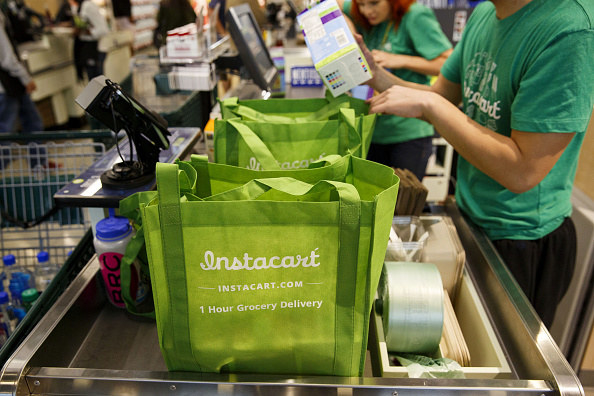
BuzzFeed News is doing a survey on Instacart and tips to try and figure out if customers are aware of recent changes to delivery workers pay.

Instacart rolled out some changes to its platform recently regarding how its drivers get paid. Initially, the company said the move was to help stabilize or increase earnings. But after some shoppers complained about losing earnings, and an analysis of their pay stubs backed them up, CEO Apoorva Mehta told BuzzFeed News the wage decrease for top shoppers was necessary for the company&;s continued growth. You can read more about that here.

One of things these full service shoppers were most upset about was losing tips, which are no longer set up as a default. Many of them say customers have no idea their tips aren&039;t going directly to the person who dropped off their groceries. We want to find out if that&039;s true. If you&039;re an Instacart customer and have been for longer than two weeks, please take the survey below.


View Entire List ›

Quelle: <a href="Instacart Customers, Take Our Survey On Tipping“>BuzzFeed

Supporters Trust That A Trump Presidency Will Fix Just About Everything

Chip Somodevilla / Getty Images

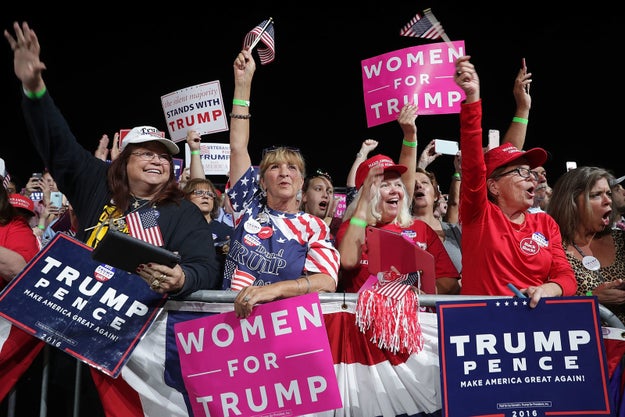
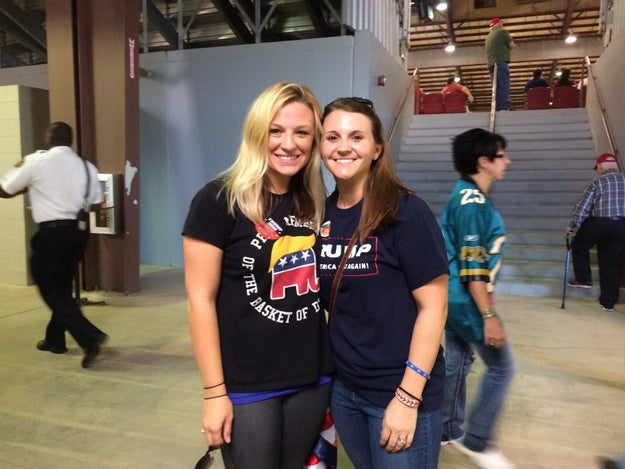
JACKSONVILLE, Florida — Donald Trump supporters in swing states like Florida and North Carolina shared high hopes in the waning days of the election that their candidate will change the direction of the country — even if he hasn’t yet revealed how.

“I’m looking for him to pretty much fix everything he could try to fix,” said Tolliver, a young man selling t-shirts on the lawn outside the Jacksonville Equestrian Center, where Trump held a rally on Thursday. “I think he’s going to change everything that he says he will,” said Lillian Traylor, beaming with optimism.

The midday crowd in Jacksonville was dominated by veterans. Traylor was there with her son Dale, a hydrographer with the Army Corps of Engineers, and her husband Robert, a retired naval chief. “We’re just excited,” she added, softly, nudging her son to share more specifics. “He’s going to bring back jobs to these United States,” said Dale. Lillian nodded in agreement, pleased that he found the right phrase.

Trump coasted from podium to podium on Thursday, relaxing into his new mode as a candidate mostly on message. His first stop of the day was in Jacksonville, where he offered the crowd some “breaking news” about the new investigation into Hillary Clinton&;s emails. “FBI agents say their investigation is likely to yield an indictment,” he said. It didn’t matter that Trump’s claim was without merit. His supporters responded by chanting, “Lock her up,” just as they had during the warm-up speakers, stomping their feet so that the bleachers rumbled from the packed seats up front to the empty rows further back.

After Jacksonville, Trump made two stops in North Carolina, first Concord, then Selma. None of the venues were filled to capacity despite the lines that formed early. In Selma, the audience seemed to get bored at one point before Trump got everyone cheering again by remarking on the size of the crowd.

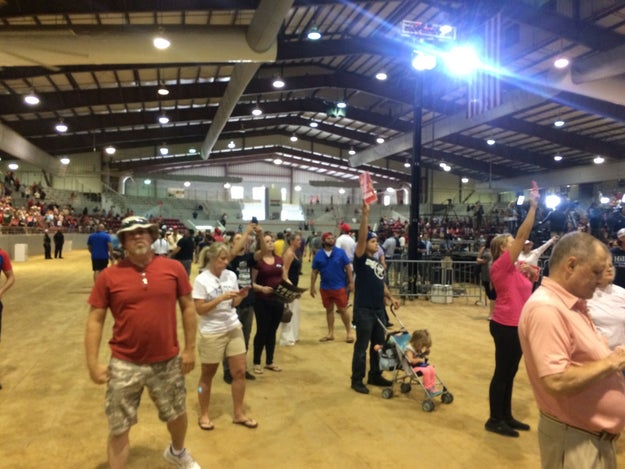
The Jacksonville Equestrian Center after Trump finished his speech

Nitasha Tiku / BuzzFeed

On stage, Trump ran through rising Obamacare premiums, the Wikileaks hack of the Clinton campaign, and his sneak attack strategy for Mosul like a litany of I told you so’s, without much fanfare.

His supporters, however, remained as fervent as ever. When BuzzFeed News asked how Trump’s policies would improve their life, the majority expressed unwavering optimism that he could restore America on any front — their faith in Trump rivaled only by disgust of “career politicians” like Hillary Clinton. Pressed to share the policy changes they wanted to see, those supporters echoed mainstays from Trump’s campaign trail: bringing back jobs, the Second Amendment, nominating Supreme Court justices who could rule on abortion, fixing foreign trade deals that screwed over Americans, protecting our borders, and repealing Obamacare.

Karo Matthews in Concord

Mat Honan / BuzzFeed News

Even disillusioned voters believed that Trump could pull off his promises. “I&039;m really looking forward to his bringing factory jobs back to North Carolina,” said Karo Matthews, 27, who showed up to Cabarrus Arena in Concord wearing black lipstick and carrying a sign that read “this lesbian voted Trump.” Matthews, who drove 300 miles to get to the rally lost her job as a news carrier. She’s never cast a ballot before this election. “I&039;ve always said I&039;ll never be a voter because it&039;s rigged in a way your vote won&039;t count. Donald Trump came along and changed my mind.”

Ronnie Goodman, who was also at the rally in Concord, shared the same sense of certainty around Trump’s impact. “He will bring back some of the jobs and keep them here,” said Goodman. “My mother worked the same job for 25 years and it went to China. She lost everything she had.”

Spencer Stevens, a yacht captain, listed fixing foreign trade deals at the top of Trump’s to-do list. “We’re losing so much work to companies that turn around and sell the products back to us. That doesn’t make sense,” said Stevens, who said he has a 100 ton masters license with the Coast Guard and is also an artist who makes mosaics. Trump could just “get with the right heads on that,” to get rid of NAFTA or change tariffs, he said confidently. Stevens was wearing a homemade Hillary costume: an off-white suit from Good Will that he colored with prison stripes, although guards asked him to ditch the accompanying Hillary mask for security reasons.

Some attendees has more strategic hopes. If Hillary gets in we’re gonna be locked up in Congress. If [Trump] gets elected, the Democrats and Republicans will be working together against him and we might actually get something done,” said Scott Kenefick, a 54-year-old maintenance supervisor attending the rally in Selma. The rhetoric was just how the game is played, he said. “There’s a false belief that presidents can make laws — he can’t repeal Obamacare, but it’s a good soundbite.”

Some just wanted Trump because they saw him as a change from the norm, even though they didn&039;t think he&039;d follow through and implement policy. “I don’t think he’s an eight year president,” said Eric, 30, a municipal worker who was also at The Farm in Selma. “He’ll get something rolling and then Mike Pence can come in in four years and deal with the political part.”

Haley Vaca (left)

Nitasha Tiku / BuzzFeed News

Priorities varied from city to city. In Selma, the common concern was the textile industry. Foreign policy took on a different cast in Jacksonville, which is home to a Navy ship base, Navy airport, and Marine Corps base. Haley Vaca, 25, who said she served in the Coast Guard, said the concern about border security stemmed from the fact that the people who lived there would be the ones put in jeopardy, only to come home be unable to get health benefits. “A lot of veterans feel like they’ve been cheated.”

Overwhelmingly, the sentiment seemed to be that Trump had earned their trust, regardless of his capabilities, because he shared their concerns.

Darin Hayes, a handyman, was sitting in a folding chair on the lawn in Jacksonville, tucked between Trump merchandise stands doing a brisk business. He wants Trump to bring back prayer in school, but more so than that, Hayes seemed to want a genuine representative for his point of view. “American is going off on the wrong track [compared to] when I was a little boy growing up. He&039;s speaking out for us. He&039;s not a politician. And I believe he&039;s a man of his word,” he said.

Despite that broad mandate, Hayes seemed forgiving of any potential roadblocks Trump might face from those career politicians. “Yeah that is a concern, but if anybody can clean house, he&039;ll do it best,” said Hayes. “He&039;s only one man.”

Darin Hayes in Jacksonville

Nitasha Tiku / BuzzFeed News

Quelle: <a href="Supporters Trust That A Trump Presidency Will Fix Just About Everything“>BuzzFeed

Sen. Al Franken Has Questions For Uber And Lyft About Racial Bias

Chip Somodevilla / Getty Images

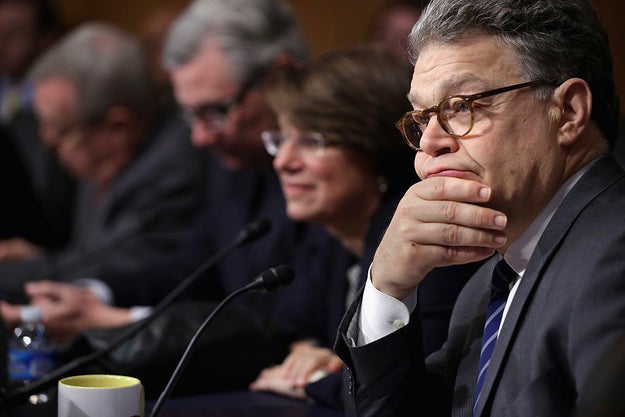
After a study published earlier this week found that ride-hail drivers discriminate against passengers who are black, or have African-American sounding names, Senator Al Franken has some questions for Uber and Lyft.

“New and emerging technologies have the potential to break down barriers, but we must work to ensure that these advances expand the horizons of all Americans,” Franken wrote in an open letter addressed to Uber CEO Travis Kalanick and Lyft CEO Logan Green. “As the study demonstrates, more can be done to guard against discriminatory behavior. In light of the study&;s troubling findings, I would like to better understand your companies&039; efforts to address discrimination through platform design and other measures.”

Franken&039;s letter goes on to enumerate a list of issues and questions he has about ride-hailing, and the potential for racial discrimination therein. He asks, for example, whether or not the use of profile photos for passengers could be eliminated. Currently, Lyft shows drivers photos of passengers before they choose to accept a ride or not, while Uber shows photos only after the ride is accepted.

The study found, however, that in the case of Uber, black passengers had longer wait times even without the photos if they had African-American sounding names. In his letter, Franken asks whether Kalanick or Green has ever considered “assigning travelers an alphanumeric code in lieu of using names.”

Franken also raises the issue of how Uber and Lyft&039;s data on driver behavior could be analyzed in order to detect drivers with patterns of discriminatory behavior. “Does your company periodically audit driver behavior? If not, will you develop plans to better detect driver behavior that could signal discriminatory conduct, or adopt a practice of performing periodic audits?,” the letter reads.

In June, Airbnb, facing evidence of discriminatory behavior by hosts and a civil rights lawsuit, admitted it had a problem with racial bias and promised it was working to fix it. Its Director of Diversity David King said that the company&039;s “data science teams will closely examine machine learning models and other tech tools we can use to help enforce our anti-discrimination policy.” Though Airbnb has yet to announce whether such a tool has been successfully developed, Franken seems to be suggestion a similar investigation take place at Uber and Lyft.

Franken&039;s letter gives Kalanick and Green until December 16 to respond to his questions. Given the public criticism Airbnb received from organizations like the Congressional Black Caucus this summer, it&039;s safe to assume more voices will weigh in on the ride-hail issue before Franken&039;s deadline.

When asked for comment on Franken’s letter, Uber replied with the same statement it offered in response to the study earlier this week: “Discrimination has no place in society, and no place on Uber.”

Quelle: <a href="Sen. Al Franken Has Questions For Uber And Lyft About Racial Bias“>BuzzFeed

Emojis Are Becoming Hyper-Realistic And That Is A Bad Thing

Via Twitter: @Opimi1

This week, Apple released a preview of iOS 10, which includes some big updates to some of your favorite emojis. There are a number of new additions (facepalm&; selfie&033;) but the biggest change is largely aesthetic. Emojis are getting hyper-realistic.

Take this comparison of everyone’s favorite dancing lady emoji, who now has a lot more details like a mouth and nose and is now flashing what feels like maybe a weird amount of leg for an emoji:

Emojipedia

Or just have a look at what’s happened to the poor ambiguous canine, who, as if by some kind of demonic puberty, evolved over night into a formidable gray wolf:

And how about the newest emojis, like “female farmer” and “female firefighter,” which you’d be forgiven for mistaking for background extras in a forgettable Pixar film:

Apple is hardly alone in evolving its emojis from goofy yellow disembodied heads into increasingly lifelike, skeuomorphic three-dimensional characters. Google, Facebook, Microsoft, and Twitter have consistently tweaked, detailed — and, in a few cases, completely overhauled — some of the original emojis.

And I, for one, am furious.

Things change. Software updates. But what’s happening to emojis represents the worst kind of gentrification of the internet. It’s unnecessary, sterilizing, and maybe even a little bit dangerous for the future of the beloved character set.

Arguably the biggest reason for emojis&; success has to do with their lovable weirdness and limitations — the constraints that forced its users to get creative and turn emojis into a language of their own. Emoji originated in Japan, and its culturally specific character set, with inscrutable inclusions (at least to non-Japanese users) like a video game controller, two (two&033;) compact discs, a bunch of fax machines, and lots of plugs and microscopes and envelopes with arrows all over them made the glyphs feel like a cool, weird discovery. (There’s something genuinely delightful about a limited set of illustrations that decides it is absolutely crucial to immortalize the eggplant ahead of most other foods.)

“They are trying to hard to be something they will never be.”

More frequently though, emoji’s constraints led its earliest adopters to assign their own meaning to individual emojis — little iMessage Rorschach tests with hidden meanings to interpret. Some characters’ meanings evolved completely into new near-universal standards (the eggplant became a dick and the peach a butt, and the youngs giggled and sexted and all was good) while others took on their own significance as inside jokes or shorthand. Definitions varied with one important constant: Emojis were a fun, joyful emerging form of self-expression. Slowly, at first and then very quickly, emoji began to transcend its status as a set of strange little pictures and became something not unlike its own almost-language — by the vegetable sexters and for the vegetable sexters.

But the ambiguity that helped turn emoji into its own means of expression is being quickly eroded. In Apple’s latest update, the peach emoji has shed its cartoonish shape for a realistic fruit skin and detailed leafing. A crucial rotation of the peach has all but eliminated its cleft, thereby calling its near-universal status as a set of juicy glutes into question. Or, as one co-worker said, “It still looks like a butt, BUT *whispers* it&039;s no longer a booty.”

The same goes — though arguably to a lesser extent — with the canine emoji’s transformation; Apple has taken away the option to assign one’s own interpretation to the glyph by changing its design specifically so that it is now, undeniably, a wolf. And that sucks. Many emojis are best employed to to convey an abstract feeling, rather than a well-defined, literal thing; one colleague explained using the dancing lady to express “a sort of nonspecific joie de vivre.” Of course that’s harder to do now, she said, “now that she looks like a real-life salsa dancer with a face.” By removing all uncertainty, Apple — and all the other big tech emoji purveyors — have stripped emojis of the ambiguity and weirdness that made emojis so different and fun. Simply put: It’s impossible to make emojis your own when the meanings are being so clearly rewritten and defined.

And then there’s the addition of dozens and dozens of new, specific items like foods like the burrito or avocado and cultural norms like the selfie and the facepalm. These aren’t so much diversity initiatives as they are user requests but they, too, mark a shift in emojis from the symbolic to the literal — from fun hieroglyphics to something more like a complete language. A good bit of emojis&039; charm comes from using imprecise emojis to convey a feeling or object (one colleague pointed out a clever example on Venmo in which somebody used the green tea emoji as a stand-in for guacamole. Ingenuity&033;).

From a design standpoint, emoji’s realistic evolution feels corporate — another example of the technology’s evolution from grassroots art toward more professional, marketing department–approved images. The new images — especially many of the human emojis — feel not just sterilized but off-putting with their large, longing, unblinking eyes. One designer who has worked with emoji summed up the problem with the new emojis in two words: “uncanny valley.”

Jennifer 8. Lee, a Unicode emoji subcommittee member, suggested that the realism of the new emojis is a betrayal of the medium’s original promise. “As they get more sophisticated, they become more photo-like, but the whole idea is that they were in a place between letters and images,” she said. “They are trying to hard to be something they will never be.” It’s a notion that touches on the most frustrating part of these new changes, which is that we didn’t ask for this. It feels utterly inconceivable that a normal human at any point ever stared down at the red dancing lady on their phone, longingly wishing for her to sprout a nose and mouth.
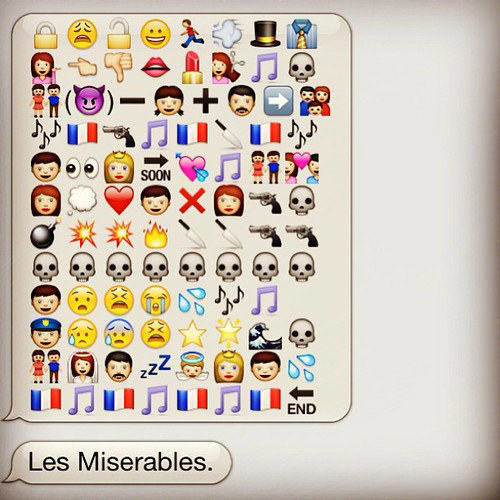
Via maggiethevaliant.tumblr.com

As of now, the exact reasons for the changes are unclear, and Apple did not respond to questions about it. Jeremy Burge, a Unicode member who runs the exhaustive emoji blog Emojipedia, suggested suggested improving tech might be the reason behind the decision to re-draw. “It’s clear that Apple&039;s old emoji images weren’t scaling well to retina screens, with all kinds of blurry lines and odd shadows showing,” he said of the changes. Another possibility: Emojis on iOS 10 now display three times larger (another product tweak nobody asked for&033;), which means more room for unnecessary detail. There’s also speculation that the realism trend could be meant to create more differences between male and female emojis to make room for a third, gender-neutral emoji set.

Others suggest perhaps it’s an unforeseen result of emojis&039; (very welcome and universally praised) diversification — that adding new combinations of skin tones and gender has led to a demand for more detail, which, in turn, has rather bizarrely resulted in more careful shading and texturing on the pit of the avocado emoji. Indeed, it’s possible that the Unicode Consortium’s admirable decision to make emojis more representative of their users — and their desires (which include the addition of the burrito, the selfie, and avocado, among many others) opened the door for emojis&039; evolution for better and for worse.
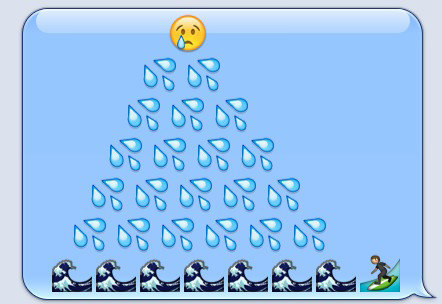
Emojipoems / Via buzzfeed.com

But still, it’s hard not to stare into the dead eyes of the farmer emoji or count the meticulously shaded ruffles on dancing lady’s red dress and feel like something essential is being lost. One co-worker compared emoji&039;s changes to when worried parents got together and forced entire neighborhoods to have their children trick-or-treat in the broad daylight of the afternoon — sure, it maybe makes sense, and it’s a bit hard to claim it’s actively harmful, but it still sucks and undermines the original spirit of the thing.

This argument isn’t lost on those close to emoji world — Burge, for example, supports the new emojis, but is sympathetic toward these frustrations. “Apple’s quirky artwork was certainly one reason many people fell in love with [emojis],” he said. “Over time as the emoji set has become more diverse and more detailed, I can see how this in some ways is less fun, even if it does arguably make emoji more useful.”

The issue here is a feeling of a sort of remodeling that&039;s all too common with weird pockets of the internet and technology. It&039;s the sanding off of the edges and imperfections that gave shape to and defined emojis. Maybe we should have seen it coming: Emojis&039; explosive popularity meant not only more scrutiny but marketability. Custom emojis have become their own cottage industry; emojis have been made their way onto T-shirts and pillows and news organization front pages and, soon, the big screen. There’s an argument to be made that as with most beloved, insanely popular things online, the brands and corporations discovered emojis and pounced, making them more mainstream, while driving away their earlier devoted crowd.

But emoji’s case is different. Emojis are not some great unknown bar suddenly overrun by douches after an article in the paper, or a hilarious fringe meme ruined by seeing your Aunt share it on Facebook — emojis were already universal. But what made them special is that, unlike so many universal things, we got to decide what they meant and how to use them. Emojis are meaningful because they’re personal and they’re personal because they’re not clearly defined. And now that’s changing and it’s probably only a few months now before Exxon builds a VR simulation where I can visit EmojiLand™ and go ballroom dancing with Cheryl The Red Dress Lady™ and take up birdwatching with Timmy The Friendly Poop Emoji™. I dunno, man, I just don’t like it one bit.

Quelle: <a href="Emojis Are Becoming Hyper-Realistic And That Is A Bad Thing“>BuzzFeed
Instacart CEO: Some Workers Must Earn Less For The Company To Grow

Bloomberg / Getty Images

Instacart workers are earning a lot less money after changes to the company’s pay structure — changes CEO Apoorva Mehta told BuzzFeed News are necessary for the company’s continued growth, but that hundreds of vocal Instacart shoppers say are threatening their livelihoods. According to a Buzzfeed News analysis of 15 workers’ pay stubs, shifts that once earned shoppers $100 or more in 4 to 8 hours have dropped closer to $60 to $80 for similar shifts. These shoppers estimate their earnings have fallen by around 30% so far.

When Instacart announced in September that it would be updating the way shoppers get paid, replacing its tips-based pay system with a pooled “service amount,” a company blog post described in detail how the changes would both increase driver pay and stabilize their earnings. But now, one week after the update rolled out in most markets, many shoppers who spoke with BuzzFeed News said the change has made working for Instacart non-viable.

Remington Donovan, an L.A. filmmaker, told BuzzFeed News he relied on tips to make an average hourly earning of around $25 an hour, which is twice L.A.’s minimum wage. But Instacart replaced those tips, which went directly to the individual worker delivering your groceries, with a fee that is collected by the company and distributed among all shoppers. Customers can still tip on the platform after an order is delivered, but that’s in addition to the service amount, and shoppers say the new tipping feature is hard for customers to find.

“Out of seven orders on one day, I only got two tips,” said Donovan. “My income decreased enough in just a couple days that by my assessment, it just won’t be worth it for me.”

The shoppers’ main complaint is that, although it is still possible to leave tips via Instacart’s platform, the tip feature is now hard to find, and customers, who were never explicitly told about the change, don’t realize they’re no longer leaving tips. Donovan called the move “knavish subterfuge.” Mehta says, from his perspective, “tipping is extremely, clearly, visible” in the app.

But some customers disagree. “I&;m a longtime user of Instacart and I love the service, but I&039;m very frustrated. I wanted to leave a tip, but I couldn&039;t figure out how, and I work in tech&;,” said Nicole Sullivan, a San Francisco based project manager. Some shoppers are taking time to explain how the new tip system works when they make deliveries, but even that might not solve their problem.“I finally found a way to add it,” Sullivan said, “but I can&039;t add a 15% tip on top of a 10% service fee on top of groceries that are more expensive than they would be in the store. It’s too expensive&033;”

While some low-earning shoppers will benefit from the pooled service amount, Mehta told BuzzFeed News that, for shoppers who were earning significantly above market rate wage, “the wages are reduced.” Indeed, paystubs shared with BuzzFeed News by more than a dozen shoppers do suggest tipping has decreased significantly since the changes rolled out.

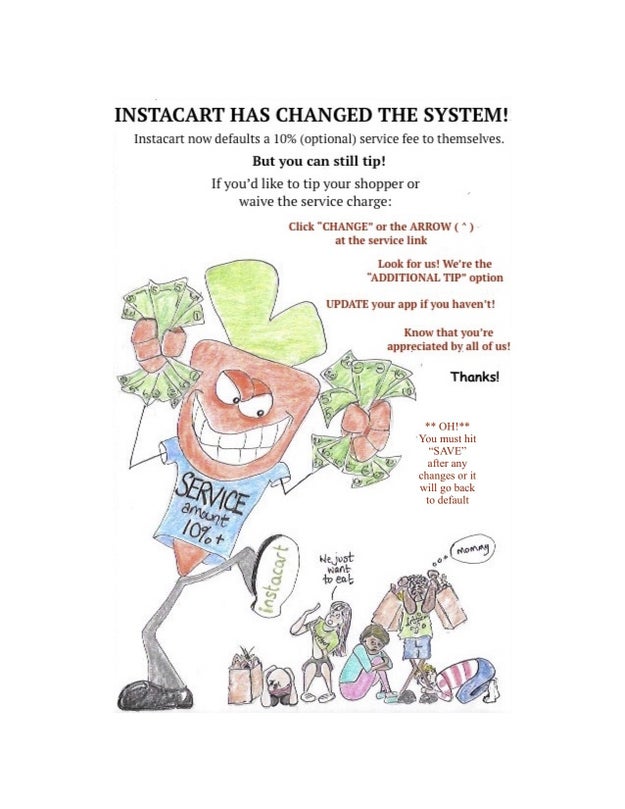
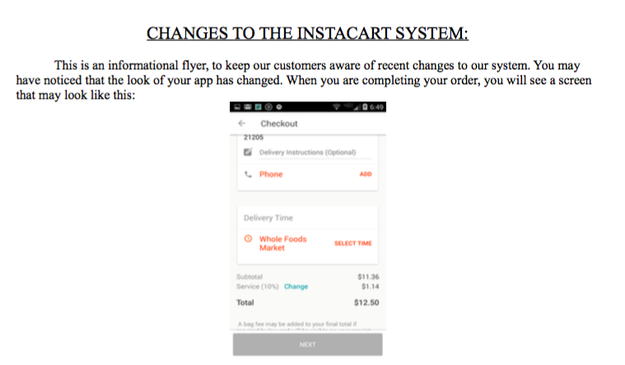
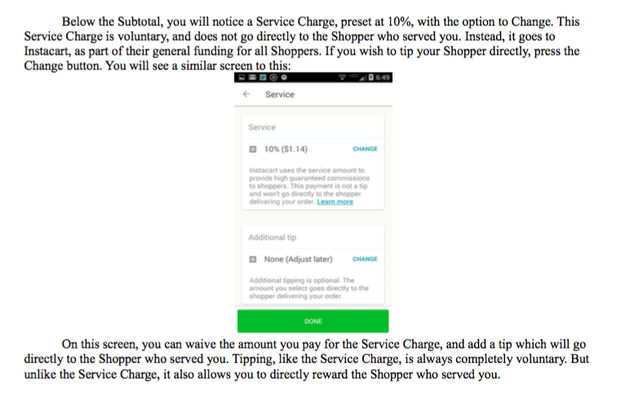
A flyer distributed to customers by Instacart shoppers explaining how to leave a tip.

(The vast majority of shoppers who spoke with BuzzFeed News for this article asked to remain anonymous out of concern that their accounts would be deactivated for speaking with the press; Instacart said it has never deactivated workers for speaking publicly about their experience with the company.)

For example, a female driver in Denver earned around $90 on Instacart during a four and a half hour shift on a Monday in October prior to these changes; over $50 of that 100 came from tips. The following Monday, the first day the changes took place, she earned only $60 in six and a half hours, and received only 19 dollars in tips. She said if the trend continues, she’ll have to find another job.

Like many other shoppers, she believes that Instacart is intentionally allowing customers to believe that the automatic 10% “service amount” is a tip that goes directly into her pocket. “I will not continue working for Instacart at this low of pay, and while customers are being tricked into thinking they left a tip,” she said in an email. Other shoppers had similar experiences. Six of the shoppers who shared their pay stubs got no tips at all, and three more made less than $5 in tips following the change. In the week before, most of them earned around $50 in tips, with three of them earning more than $100 in tips.

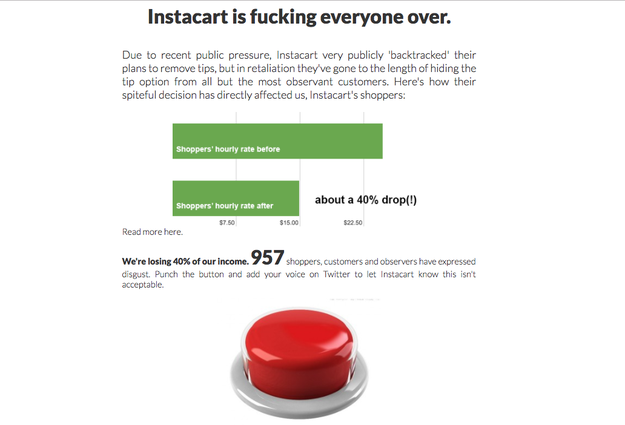
Only a portion of all Instacart shoppers — those who do both shopping and delivery and are independent contractors, not the ones who work in-store and are employees — were impacted by the pay structure changes, but the group has nonetheless been notably vocal on social media and successful in building momentum around their cause. There are two active Facebook groups, each with a couple hundred members, plus an Instagram page, a popular hashtag , and an anonymous open letter on Medium. The shoppers use these methods to share information about what they’re earning, as well as distribute materials like a flyer to explain what’s going on to customers. There’s even a website, Instawtf.com, where almost 1,000 people have pressed a big red button to tweet “wtf” at Instacart’s Twitter account.

These shoppers are hopeful that their combined efforts will convince Instacart to revert to a tips based system. But Mehta says that’s unlikely to happen. The purpose of changing the system, he told BuzzFeed News, was to “bring consistency to our model as we go from tens of thousands of shoppers to doubling that by the end of next year.”

The goal, Mehta said, is to have shoppers earning an average “market clearing wage” — so, in San Francisco, between $16 and $22.50 an hour. “If you are making more than that as a shopper, then your wage will go down,” said Mehta. “If you were making less, your wages will go up.” Instacart is confident that plenty of shoppers will be willing to work for the new rate, which Mehta said changes daily based on supply of workers and demand for orders in a particular market. In fact, since the new dynamic pay model started on Instacart, that base rate has already started to fall. In two Bay Area zones, for example, the new base pay rate rolled out at around $10 per trip, but was already below $9 per trip within a week, according to screenshots shared with BuzzFeed News.

As independent contractors, Instacart isn’t required to pay its full-service shoppers a particular amount — not even minimum wage. Like any free labor marketplace, Instacart only has to pay whatever it takes to keep its supply of workers steady. Even if some of the shoppers who are now earning less money quit, it doesn’t seem like that will be a problem for Instacart, at least not right away.

“We want to continue to hire, and double the fleet that we have,” said Mehta. “The way we’re going to be able to do that is to make sure it’s a great place for shoppers to earn a fair and competitive wage.”

But while it’s undoubtedly true that there are people willing to work for what one Instacart shopper on Facebook called “McDonald’s wages,” those who have been in the on-demand game a little while are concerned this move is just the beginning of a continuous crunch for Instacart shoppers, and other independent contractors who aren’t protected by employment law.

“Instacart is a great idea and a great company. It can be frustrating, but overall it&039;s been a fun job for me, part time,” Donovan said. “But I don’t think this is the right way to do business. We need to send a message to other on-demand businesses: this isn’t right.”

Quelle: <a href="Instacart CEO: Some Workers Must Earn Less For The Company To Grow“>BuzzFeed

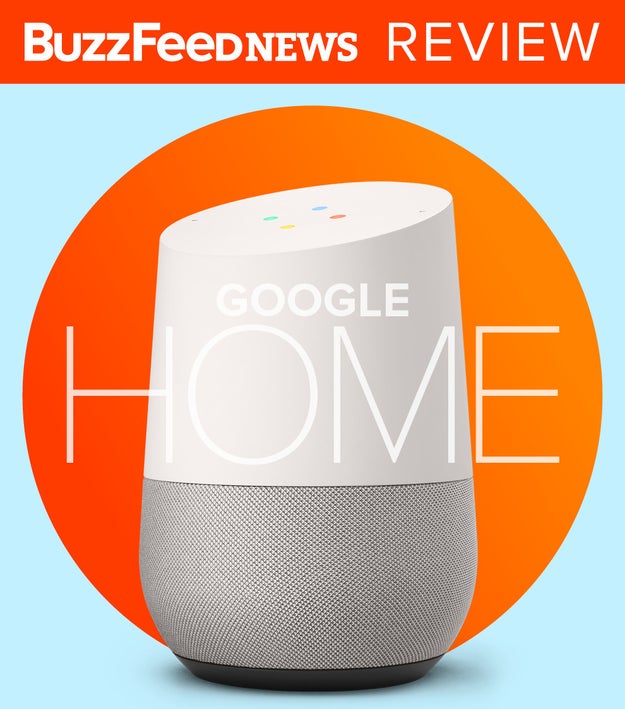
Google Home Could Replace Your Echo, Sonos, And Siri

The voice-activated speaker is impressively smart – and a great way to set up wireless, multi-room audio on the cheap.

BuzzFeed News; Google

It’s hard to think about Google’s new speaker without thinking of the Echo and Echo Dot first. Amazon’s sleeper hit (over 3 million Echo devices have been sold since 2014) made home-based bots mainstream and set the stage for its rival, Google Home, which hits shelves tomorrow, Nov. 4, for $129.

Both Google’s and Amazon’s voice-activated speakers are powerful, artificially intelligent personal assistants that listen for a special keyword, send your voice query to the cloud, and then spit back a response via a computerized female voice. Both want to answer your questions, play your music, and control your smart home.

The main difference? Amazon released the Echo two years ago, while Google’s hardware is just coming to market now. Google’s also had a four-year lead on a consumer artificial intelligence product (Google Now was first demo’d at Google I/O 2012), but it&;s been working on the technology for much longer.

Now, both companies are competing for a place in your living room or your kitchen or your bathroom or your bedroom — or all of the above.

I’ve talked to Google Home every day since I peeled it out of its box and found that while there are some quirks, Google’s new gadget is a contender. It’s smarter and works better in multiple rooms than the Amazon Echo does. Its biggest flaw is that you have to say “Google” so damn much.

Where Google really shows its intelligence is its ability to understand contextual questions.

When you ask Home a question like “Where’s the nearest gas station?” and then “When does it close?,” Google understands “it.” You could ask “What’s the capital of Nepal?” followed by “How do you spell that?” and Google would spell “K-a-t-h-m-a-n-d-u” (the Echo, on the other hand, spells “t-h-a-t”).


View Entire List ›

Quelle: <a href="Google Home Could Replace Your Echo, Sonos, And Siri“>BuzzFeed

Paranormal Action Squad Is YouTube's First Original Animated Series

Paranormal Action Squad Is YouTube's First Original Animated Series

YouTube

YouTube has announced its first original animated show, “Paranormal Action Squad,” for YouTube Red, its premium subscription service. The show will premier globally on November 16.

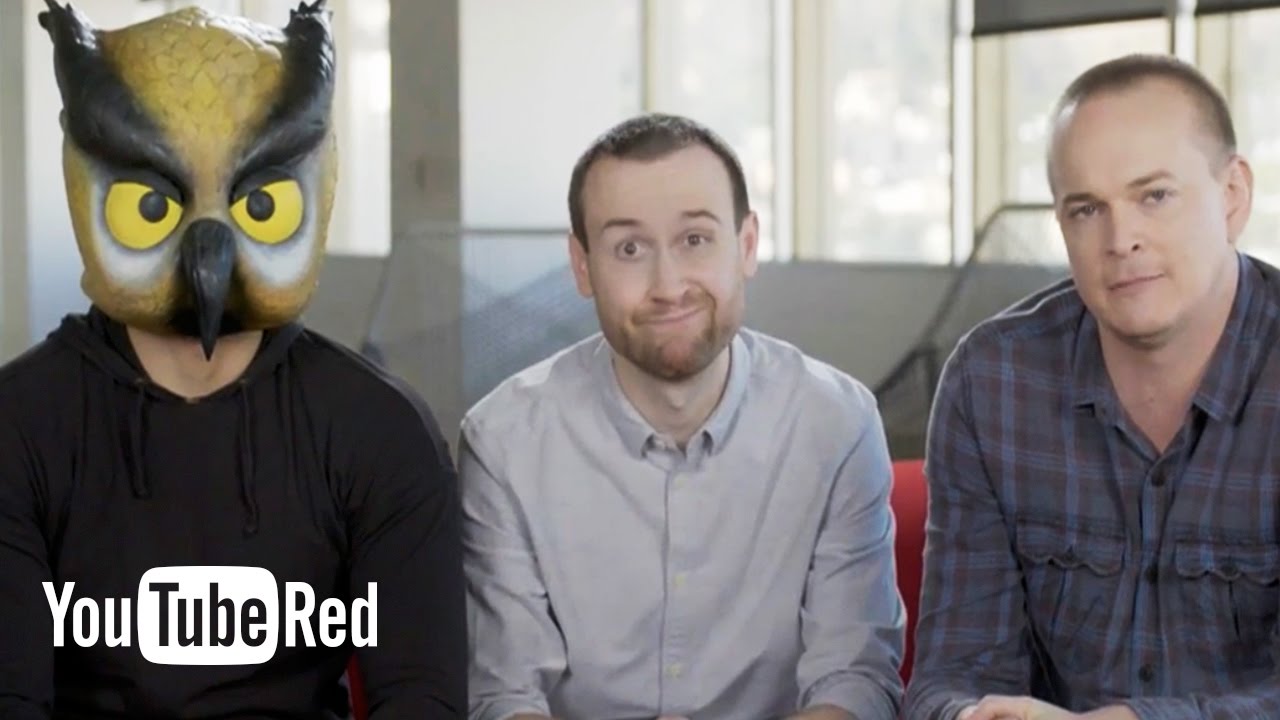
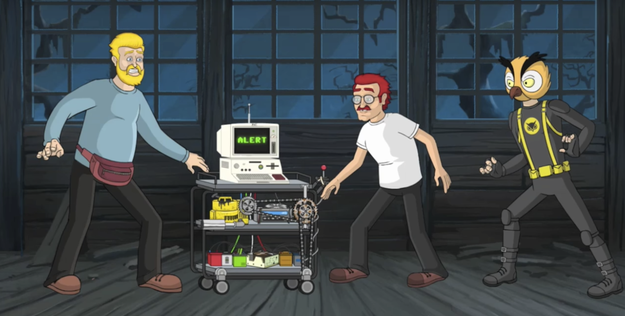
The eight-episode animated series follows the exploits of two hapless “paranormal enthusiasts,” Paul and Eddie, who investigate hauntings and other ghostly events with the help of their enthusiastic and idiotic neighbor Vanoss. “Paranormal Action Squad” features the voices of three YouTube gaming stars — Mr_Sark, Vanoss, and SeaNanners — who have a combined reach of about 25 million subscribers on the video platform. It&;s overseen by Michael Rowe, who’s written for “Futurama” and “Family Guy.”

In a promo video, Mr_Sark, one of the creators of “Paranormal Action Squad,” described the show&039;s humor as “off-color” and said that it will include “high-octane ass-kicking”. The cartoon, reminiscent of the shows commonly associated with Cartoon Network&039;s Adult Swim, is aimed at adults. YouTube&039;s marketing materials tout the show as “DIY heroes for WTF world.” Both YouTube Red and Cartoon Network did not respond to requests for comment.

You can see a sneak peak from the show below on Mr_Sark&039;s channel:

youtube.com

Quelle: <a href="Paranormal Action Squad Is YouTube&039;s First Original Animated Series“>BuzzFeed