Here's How Much You're Worth To Facebook

You&;re worth about $16 dollars a year to Facebook.

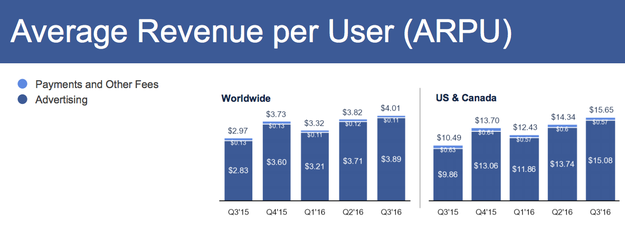
That&039;s according to the company&039;s newly released third quarter earnings report which breaks out average revenue per user worldwide and regionally — across markets like US, Canada, Europe, Asia-Pacific and the “Rest of World” — as well.

People using Facebook in the US and Canada are worth significantly more to the network than its global average. Facebook valued these folks at about $15.65 each in the 3rd quarter of 2016. That&039;s about $62 per user annually when you extrapolate that number across the rest of the year. Since Facebook makes the vast majority of its money through advertising, these figures largely reflect how much the company is making off those ads it shows you.

Advertising trends change seasonally, so the annual extrapolations aren&039;t perfect. The fourth quarter, for instance, is almost always an ad-supported business&039;s best thanks to a boost in ad spend around the holidays. But the estimates should get you very close.

Here&039;s how much Facebook makes per person in each region, extrapolated annually based on the network&039;s third quarter numbers:

Worldwide: $16.04

US $62.60

Europe: $18.88

Asia-Pacific: $7.56

Rest of World: $4.84

Some on Twitter reacted positively after hearing their worth to Facebook:

Others were less thrilled:

Whether you’re happy with your worth to Facebook or not, the company certainly is. It raked in over $7 billion on the quarter, beating analyst estimates on revenue as well as profit.

Quelle: <a href="Here&039;s How Much You&039;re Worth To Facebook“>BuzzFeed

Microsoft Debuts "Teams" Office Chat, And Slack Might Be A Little Worried

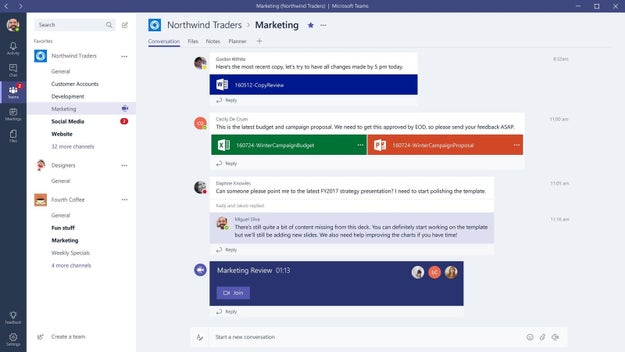
Today Microsoft announced Microsoft Teams, a new office chat platform that looks a lot like a Slack competitor. Microsoft created the enterprise software to help tie together work people do in Office365, which includes Skype, Office apps like Word and Excel, Outlook email, and other software.

Teams is available as a customer preview now and will be included in all Office365 Enterprise and Small Business Suite subscriptions in early 2017. Office 365 boasts 85 million monthly active users, according to Microsoft.

Microsoft

Slack replied to Microsoft’s announcement with an open letter ad that occupied the entire back page of the New York Times (it also posted it on its blog, Several People Are Typing). The letter offered Microsoft some “friendly advice” and said that “all this is harder than it looks.” Slack believes it’s “here to stay,” and its founder, Stewart Butterfield, seemed confident about this on Twitter:

BuzzFeed News reached out to Slack for comment. Microsoft declined to respond to the ad.

Office chat technology is a crowded market; Teams is also competing with Facebook Workplace, Salesforce’s Chatter, and Hipchat, in addition to Slack. Convincing customers to switch to Microsoft Teams from the products they’re comfortable using will be a challenge.

But Microsoft CEO Satya Nadella believes Team’s artificial intelligence gives the service an edge that differentiates it from other chat apps. Teams features organizational tabs and search, as well as bots like “Polly,” a parrot that takes polls, and “WhoBot,” a bot that will tell you information about your coworkers and their posts.

Nadella said during the presentation, “Just like Outlook brought email, contacts, and calendars under strong user scaffolding, Microsoft Teams will bring together chat, meetings, notes, and a host of other extensions to help teams get work done.” Microsoft already owns an enterprise social network, Yammer, and Skype has a chat system. Teams is also open to third party integrations.

The product is meant to go with the recently announced Surface Studio and the giant Surface Hub, a touchscreen whiteboard.

Microsoft reported improved earnings in Q3 2016, largely bolstered by its enterprise offerings and cloud software.

Quelle: <a href="Microsoft Debuts "Teams" Office Chat, And Slack Might Be A Little Worried“>BuzzFeed

Twitter Doesn't Think This Attempt To Disenfranchise Voters Violates Its Rules

Yesterday, Robert McNees, a physics professor at Loyola University, was curiously scanning through the popular alt-right account @therickyvaughn when he came across a number of tweets apparently designed to spread misinformation about voting toward African American and Spanish-speaking citizens. The tweets told voters they could “avoid the line” and “vote from home” via text (which to be clear, they can&;t). They were photoshopped to look as if they&039;d been created by the Clinton campaign, down to the small-print “Paid for by Hillary for President 2016″ disclaimer at the bottom.

McNees told BuzzFeed News he reported the tweet — a clear attempt to impersonate a campaign and disenfranchise voters — to Twitter. This morning, the company told him that the tweets and the account were not in violation of Twitter&039;s rules.

The photoshopped campaign ads may violate FEC laws. They also appear to be in direct violation of Twitter&039;s policies, which state in part that “Twitter accounts portraying another person in a confusing or deceptive manner may be permanently suspended.”

These kinds of fake voter ads have appeared on Twitter from numerous Trump supporting accounts during the campaign; just last month, the Democratic National Committee condemned a similar fake voter ad tweet, sent out by. Trump advisor Roger Stone.

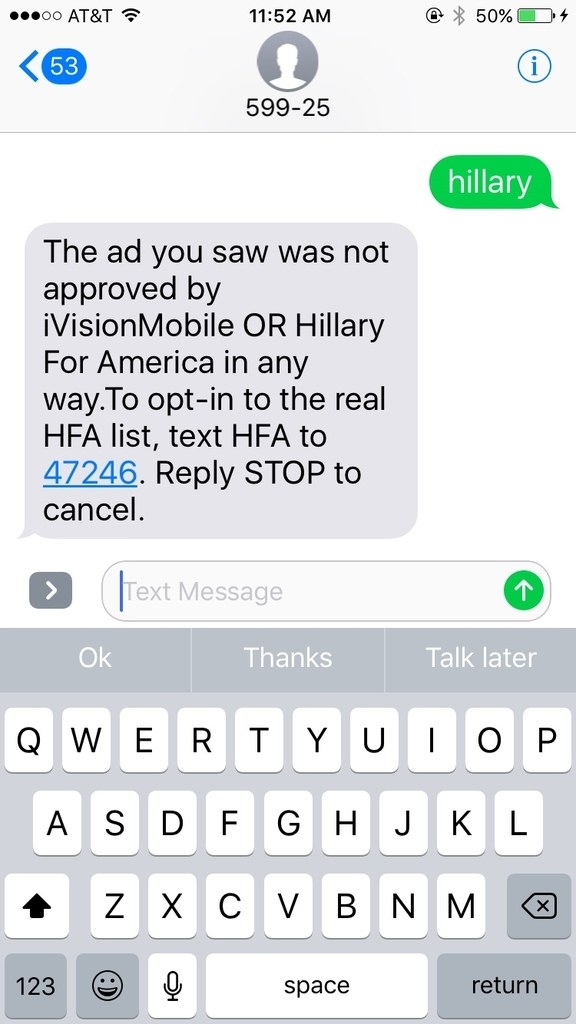
The Clinton campaign, for its part, appears to be actively combating the disinformation. When BuzzFeed News texted the number in the tweets, we received the following response:

Ellen Cushing

@TheRickyVaughn himself was been suspended from Twitter earlier this month after posting and retweeting anti-semitic and white nationalist content and images. The user has since created a new account — his bio now boasts he&039;s a “known white supremacist” who “regularly uses profanity and racial epithets while propagating conspiracy theories” — and has over 11,000 followers.

Twitter has not yet responded to a request for comment.

Quelle: <a href="Twitter Doesn&039;t Think This Attempt To Disenfranchise Voters Violates Its Rules“>BuzzFeed

Netflix May Soon Make Movies And Shows Downloadable So You Can Watch Offline

And people are beyond psyched.

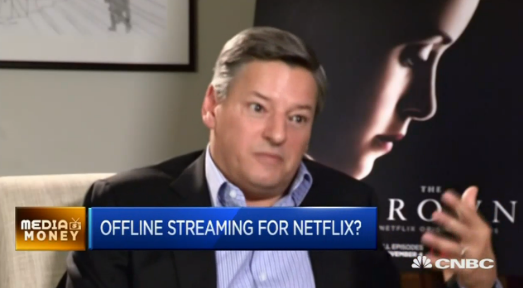
2016 may not be so SOL after all. Ted Sarandos, the chief content officer for Netflix, just told CNBC the company is working on an offline feature so that TV shows and movies could be played without Wi-Fi.

2016 may not be so SOL after all. Ted Sarandos, the chief content officer for Netflix, just told CNBC the company is working on an offline feature so that TV shows and movies could be played without Wi-Fi.

CNBC

“I think as we get into more and more (of the) undeveloped world and developing countries that we want to find alternatives for people to use Netflix easily,” he said.

Sarandos added that the company is “looking at it now, so we&;ll see when.”

Americans likely wouldn&039;t be the first to get the feature, since it would be mainly aimed at other markets.


View Entire List ›

Quelle: <a href="Netflix May Soon Make Movies And Shows Downloadable So You Can Watch Offline“>BuzzFeed

Blue Apron Didn't Get A State Processed Food Registration For Three Years

Matthew Mead / AP

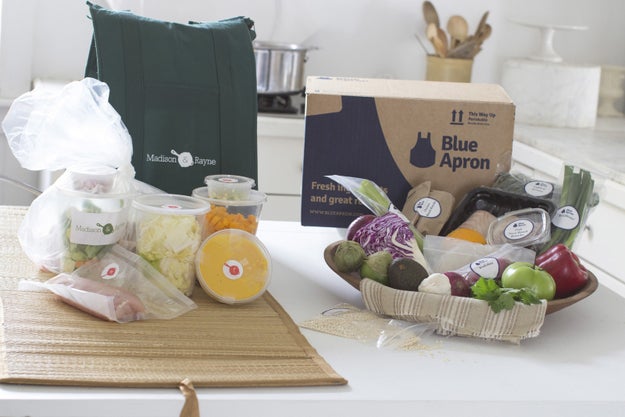
Blue Apron got approval to operate a food processing facility from the California Department of Public Health for the first time last month, despite having been packing and shipping boxes of fresh produce and raw fish, poultry, and meat in the state for over three years.

The company’s Oct. 5 registration with the state health department, which was confirmed by both the agency and Blue Apron, immediately followed the Oct. 2 publication of an investigation by BuzzFeed News into the working conditions of the company’s Richmond facility.

For its part, Blue Apron admits no fault, saying that its facilities have been appropriately regulated from the beginning, and that as soon as it was made aware it needed to register with the state of California, it did so. The state, meanwhile, says that while Blue Apron was immediately cooperative and is now in compliance, the onus was on the company — not regulators — to make sure it had the appropriate permits. Additionally, the Environmental Health Department of the Contra Costa County Health Services says it referred Blue Apron to the California Department of Public Health Food and Drug Branch more than once, but Blue Apron never contacted or registered with the state.

In a statement to BuzzFeed News, Blue Apron wrote that “we have always proactively sought to ensure that we maintain the necessary permits, have passed all facility inspections we’ve ever been part of, and have cooperated with all directives from regulatory authorities having jurisdiction over us.”

A spokesperson from the the state emphasized that Blue Apron did not have “any significant violations or sanitation issues.”

Since March 2013, Blue Apron has held a permit to operate from Contra Costa County Health Services; its most recent inspection by that agency, which it passed, was in January 2016. However, Contra Costa County Environmental Health Director Marilyn Underwood told BuzzFeed News that the scope of operations at Blue Apron’s Richmond facility — which ships boxes of fresh food all over the country — exceeded the standards for a retail food establishment regulated by the county, and, as such, it should have been registered with the California Department of Public Health.

Underwood said her department attempted to refer Blue Apron to the California Department of Public Health once in January 2016 and again in July 2016, before finally making an official complaint to the state regarding Blue Apron in September 2016, following BuzzFeed News reporting.

Blue Apron denied that Contra Costa County ever suggested it register its facility with the state. The company maintained that not only was it unaware of any need to register with the state agency, but it was told in a 2013 phone call with the California Department of Public Health that registering with county officials was sufficient.

Underwood put an end to this confusion in September 2016 when, having learned Blue Apron still had not applied for a Processed Food Registration from the state, she filed an official complaint to the state Food and Drug Branch. “We errantly issued [Blue Apron] a permit about a year ago,” Underwood wrote in an email dated Sept. 21, 2016, which she provided to BuzzFeed News. “When our inspector went to the facility in January for a routine inspection, she discovered that it is not a retail facility and more appropriately needs to go to you as it packages raw ingredients into packages that are delivered to the client they get from an order online.”

Blue Apron and the California Department of Public Health both said they were not contacted by Contra Costa County regarding this issue prior to September 2016.

However, a complaint inspection report provided to BuzzFeed News by Contra Costa County Health Services indicates that a health inspector did attempt to contact Blue Apron in July 2016, after a Blue Apron customer complained about receiving a box of food in which chicken blood had allegedly leaked onto produce. In her report, health inspector Priscilla Ruiz said she contacted the California Department of Public Health to inquire about Blue Apron and, after learning that Blue Apron had not received a Processed Food Registration from the state, tried to contact Blue Apron COO Matt Wadiak by phone “to talk about registering for [Processed Food Registration] license.” Wadiak did not answer, and, according to her report, Ruiz left a message.

In a statement, Blue Apron said that “Matt Wadiak has no record of a voicemail from Priscilla Ruiz in July 2016” and that “no record exists of Contra Costa County ever informing Blue Apron that the company needed to acquire a Processed Food Registration license from CDPH.”

Blue Apron said Ruiz’s suggestion that the company contact the state likely stemmed from a “unique and novel business model that does not squarely fit within existing regulatory classifications.”

Blue Apron says it did reach out to CDPH regarding these questions of regulatory jurisdiction when it opened its facility in California in 2013, and was advised to register with Contra Costa County. However, the state says, while it’s possible “a company representative could have called CDPH and spoke with one of our staff members,” it has no record of a 2013 meeting with Blue Apron. CDPH says its first contact with Blue Apron followed Marilyn Underwood’s official “complaint of an illegal wholesale food operation” on Sept. 21, 2016.

A spokesperson for CDPH confirmed that it is a company’s responsibility to locate and register with the appropriate regulatory body, and that “as [Blue Apron] grew, it would have been its responsibility to follow up with regulatory authorities and verify that it was still operating in conformance with the rules.”

CDPH also said it found no “evidence of intentional wrongdoing” on Blue Apron’s part. In addition to passing a preregistration inspection, companies seeking a Processed Food Registration must also be in compliance with federal Good Manufacturing Practice regulations and submit a fee of between $350 and $1,790 per year, depending on its size and number of employees. The state says Blue Apron is currently in good standing.

Quelle: <a href="Blue Apron Didn&039;t Get A State Processed Food Registration For Three Years“>BuzzFeed

San Francisco's Oldest Taxi Company Sues Uber For Predatory Pricing

A Cable Car passes a line of taxicabs as they wait for fares in front of the St. Francis Hotel on January 21, 2014 in San Francisco, California.

Justin Sullivan / Getty Images

Add another Uber lawsuit to the pile. A San Francisco cab company on Wednesday sued the ride-hail behemoth for predatory pricing and attempted monopolization.

Desoto Cab, which in 2015 rebranded as FlyWheel Taxi via a co-marketing agreement with taxi hailing startup Flywheel, alleges that Uber has created a “race to the bottom” among competitors by pricing rides so low that others can’t compete. The cab company, which has operated since the 1930s, filed the lawsuit in a federal court in San Francisco. It claims that since Uber launched its low-cost UberX option in 2012, the taxicab industry has seen a 65% drop in ridership and lost 30% of its drivers. Desoto alleges Uber intends to “monopolize the San Francisco Ride-Hail Market and injure competitors.”

“Once its competitors have been removed, UBER, free of the constraints of competition, will be free to implement unfettered price increases for its services, and consumers will be left with no choice but to pay the prices – however exorbitant – demanded by UBER,” the lawsuit alleges.

Uber did not immediately return a request for comment on the lawsuit.

Uber’s negative impact on the taxi industry in the United States is well-documented. In Los Angeles, for example, the number of taxi trips taken since Uber and its ride-hail rival Lyft began operating in the region has dropped by 30%. In New York, the price of a medallion to operate yellow taxi cabs has sunk by 40% from more than $1 million. Taxi owners there have sued the city for violating their right to operate by allowing Uber to pick up passengers.

To attract new customers and gain market share, Uber and Lyft have run promotions touting their rides as the cheapest. This summer in New York, for example, both companies matched each other’s promotional rates in a three week-long price war. But proving predatory pricing is more difficult than pointing to promotional prices that undercut taxi fares .

John Kirkwood, a professor of law at the University of Seattle and senior fellow at the American Antitrust Institute, told BuzzFeed News Desoto’s lawsuit against Uber is “a serious reach.”

There’s a two-prong test to determine whether a company is engaging in predatory pricing: Are rates set so low that they drive competition out, and also mean the company is losing money on every ride? And if so, did the company set prices higher after driving competitors out of business, so as to recoup money lost destroying the competition?

Bloomberg reported that Uber lost at least $1.2 billion in the first half of this year, mainly because it subsidizes many rides. Still, Kirkwood said, other competitors are still up and running.

“[Transportation] is a very high-profile market,” Kirkwood said. “If Uber were to drive out, say, Lyft, and raise prices, it would face increased competition from taxi companies and it would likely provoke entry by another company.”

The Federal Trade Commission hasn’t brought a predatory pricing case against a company since the 1970s, Kirkwood said, because “courts and government agencies are hostile to these types of cases.” The last plaintiff to win a substantial amount of money from a predatory pricing case was Spirit Airlines in a lawsuit against Northwest Airlines in the early 2000s.

The fact that Lyft is surviving – although it has reportedly has sought buyers – also gives the case less weight, Kirkwood said. He said if the case had been brought by Lyft itself, it would “add some credibility,” but even then it would be tough to meet the predatory pricing standards.

“It strikes me as implausible,” Kirkwood said. “It’s the second-largest company, but the fact that Lyft hasn’t filed a suit…this is unlikely.”

Quelle: <a href="San Francisco&039;s Oldest Taxi Company Sues Uber For Predatory Pricing“>BuzzFeed

Vine Co-Founders Finally Discuss Their New App: Hype

Vine Co-Founders Finally Discuss Their New App: Hype

When Twitter announced Vine’s death last Thursday, two of the app’s co-founders were getting ready to bring another app, called Hype, to life.

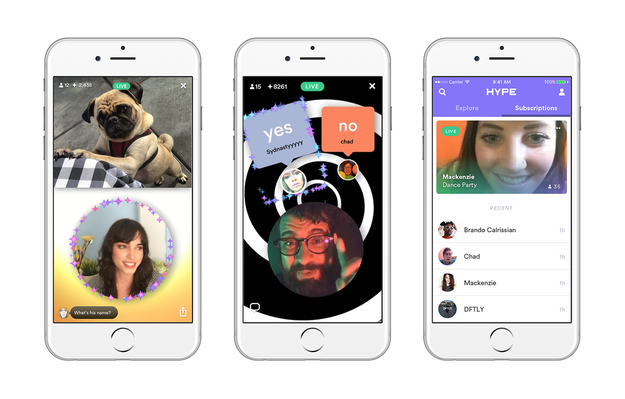
Rus Yusupov and Colin Kroll hadn’t officially debuted Hype, a live streaming app that offers a slew of creative tools that competitors, like Periscope and Facebook Live, don’t have. But after privately testing it for three months from their SoHo headquarters in New York City, they figured it was pretty much ready for showtime. So they started broadcasting, official announcement be damned. “What a day today,” Yusupov said as he kicked off the stream. “Heard some news from Twitter. It was kind of a surprise to us.” Within minutes, enough viewers joined the broadcast that it crashed.

When Yusupov and Kroll logged back in and began broadcasting again, they spent the next 36 minutes eulogizing Vine, and in the process showed off what makes watching and broadcasting live streams on Hype so different from the straightforward experience of Periscope and Facebook Live, currently the two social live streaming leaders. The difference is large enough, Hype earned funding from Lightspeed Ventures, though the founders declined to specify how much.

As they broadcasted, the two founders pulled Vine videos from their camera roll and played them on screen, they pinned comments on screen and discussed them, they played full screen videos and overlaid live video of themselves in a circle on top, and then they made the circle disappear entirely. The two played music from their phone in the background and then broadcast themselves fullscreen. It was fun. The inclusion of so much media made the broadcast feel more alive than the typical talk-into-the-camera live stream. Despite the bells and whistles, the broadcast did not feel overly chaotic.

Though Vine will die soon, its product took off thanks to a new format that offered people a simple way to create fun, engaging online video. Hype is built in the same spirit. The two founders, having seen the level of effort people are willing to dedicate to make quality online video, wanted to make something that could inspire the same level of work and creativity in live streaming. They’re giving creators simple tools for making more engaging live broadcasts that do more than simply show what’s in front of the camera.

youtube.com

“We’ve always been very interested in providing creative tools for storytellers,” Kroll said. “That’s been a guiding light throughout both projects.”

The tech world is, of course, very different from when Vine debuted in 2013. More powerful phones and better connectivity have expanded the range of possibilities for what both app developers and users can create on mobile devices, so a simple short form video app isn’t anything new. “People demand and want more immersive experiences,” Yusupov explained. “As developers, we felt the impulse to start experimenting with these tools and develop new tools that serve people and help them express themselves.”

Another key thing that’s changed since Vine’s debut is the ascendance of Facebook and Snapchat into a position so dominant that other social media companies are having trouble finding breathing room. And since both are going hard in video, making a play in that format especially difficult. Vine is dead; Tumblr is stagnant; and upstarts Peach, Ello, KnowMe, and Yo never took off. And just yesterday, Talkshow, a public messaging app, announced it was scrapping itself too.

And of course, if Hype lives up to its name, Facebook may simply copy its features, as its done to Snapchat (and Vine, in a sense, when it introduced video to Instagram six months after Vine launched). There’s no real answer for a fledgeling social company about how it would fend of such an attack, but Yusupov did his best. “My focus is on making sure that people get the best experience possible,” he said. “If Facebook does decide to adopt some of these norms and some of these new practices, I think that’ll continue to drive demand.”

In the aftermath of Vine’s death sentence, many argued that the platform helped pioneer a new form of online video, one that will live on even after the app’s death. Yusupov and Kroll are hoping Hype will do the same. “Thank god for the guy who created the piano. If it wasn’t for him, Mozart wouldn’t have existed,” Yusupov said. “These mixed media services that we’re building, we’re hoping will inspire new ways of creativity.”

Quelle: <a href="Vine Co-Founders Finally Discuss Their New App: Hype“>BuzzFeed

With App Update, Uber Brings Eats, Yelp And Snapchat To Ride Hail

Uber

Uber already knows when and where its riders traveling. Now, it wants to know where they might be traveling next and what they might want to do when they arrive — be it tomorrow or a month from tomorrow.

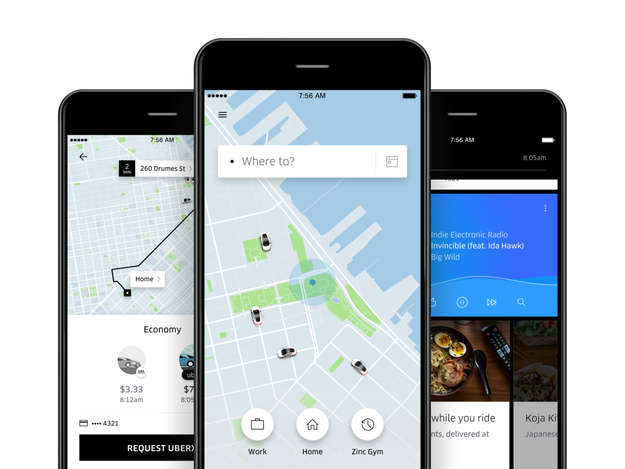
A redesigned version of the ride-hail giant&;s mobile app will use data from passenger calendars to predict likely destinations and integrate services like UberEats, Yelp, and Snapchat into an “Uber Feed” intended to keep riders engaged and double down on the company’s convenience pitch.

“We want to know what you want before you want it.”

“We want to know what you want before you want it, so we can deliver a more elegant, more streamlined experience,” Uber Chief Executive Travis Kalanick explained. “Let&039;s say you normally go home from work at 7 p.m, and you open up the app at 7 p.m. We wanted to give you a button to quickly push that just takes you home.”

With that in mind, the new Uber app uses smartphone calendar information to pre-populate likely destinations. Passengers must opt into this service. Those who do will see calendar appointments appear as shortcuts in the Uber app. Opting in grants Uber access to the entirety of a user’s calendar information, though the company told BuzzFeed News that it will pull only event locations, times and titles. That said, users who opt in agree to share their information under the same terms and conditions outlined in Uber&039;s privacy policy, which allows the company to collect and store information, and to share it with third parties.

In the newly overhauled Uber app, contacts can be destinations. That means if you&039;re going to meet a friend who also uses Uber, you can simply enter that person&039;s name in the app instead of their address. Uber will then send a push notification to your friend requesting permission to use their current location as the destination point for your trip.

Kalanick said these new features are intended to streamline the pick-up process, typically the most fraught part of the Uber experience. The company expects to roll out calendar integration and its contacts-as-destinations feature some time in December. The first piece of Uber&039;s big app redesign – a reimagined home screen with a swipeable menu of ride options and associated fares – begins to roll out to users worldwide this week.

“Meet a taco at your doorstep is basically the feature.”

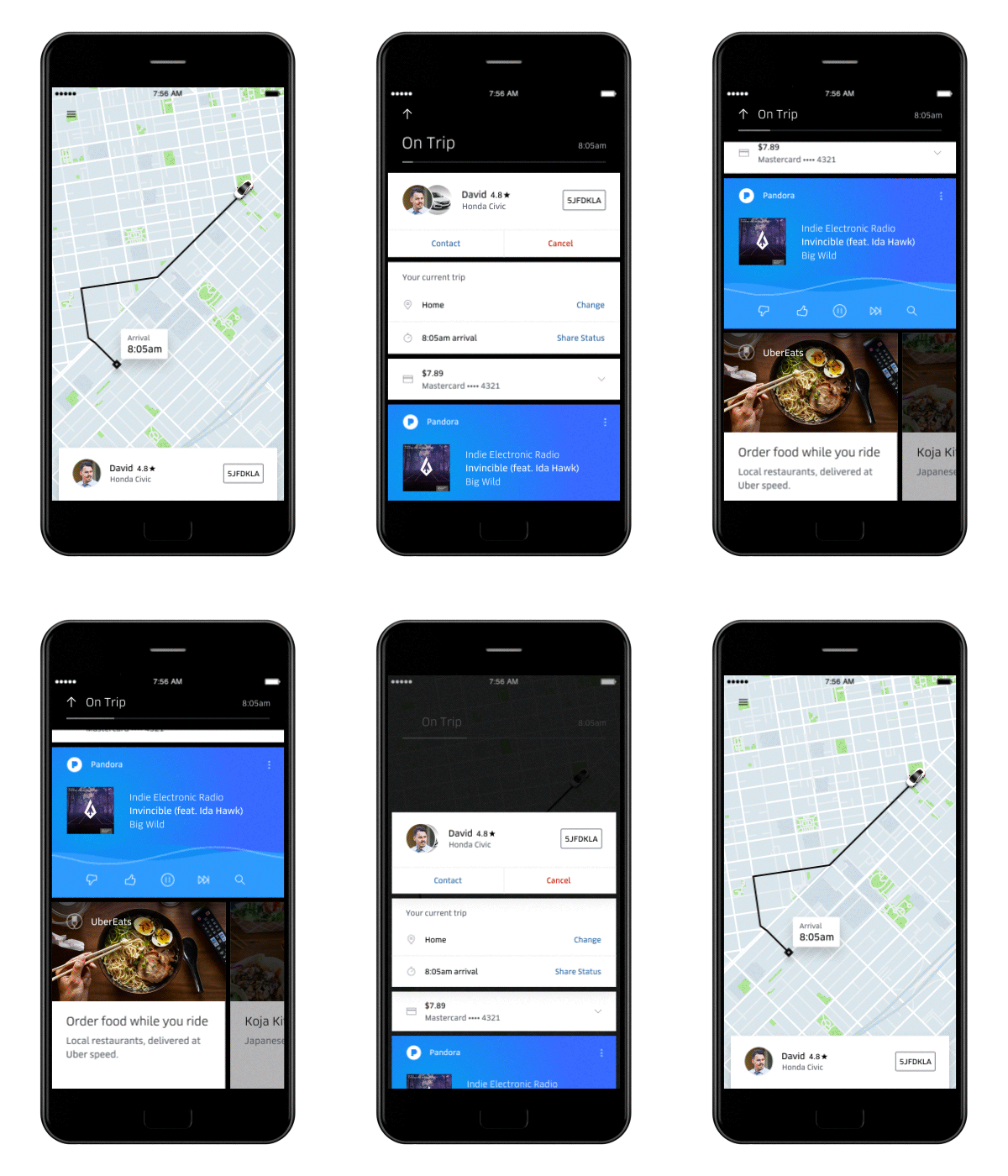
Beyond displaying expected arrival time and other ride information, the Uber Feed will also enable passengers to control music via Pandora and to order food from Uber eats and have it delivered to their destinations. “Meet a taco at your doorstep is basically the feature,” said Yuhki Yamashita, product manager for rider experience at Uber. A Snapchat integration will share ETAs with friends via selfies. And a another with Yelp will offer restaurant reviews and menus to passengers who are headed out to dinner. Uber expects to add more such features in the future and hopes to someday integrate transit information, such as subway, bus and train departure times.

The new version of the Uber app offers a swipeable menu of ride options. No more clicking back and forth to compare fares.

Uber

With Uber Feed, you can change music in the car through Pandora or order a meal with Uber Eats.

Uber

For Uber, this app overhaul is a bet that convenience will drive ridership, making it even easier for ride-hail to become a default mode of transportation for travelers who might otherwise use it as one option among many. If Uber already knows the location of my upcoming 6PM appointment and where I&039;m going for dinner afterwards, why bother taking the subway or hailing a cab?

“If we don’t start getting intelligent about what you want, you get 15 choices and you get the cognitive load of trying to decide. I call it the tyranny of choice,” Kalanick said. “From the moment you open up the app to when you’re in the car and even when you get out of the car, how can we make that a better experience and a more magical one?”

Quelle: <a href="With App Update, Uber Brings Eats, Yelp And Snapchat To Ride Hail“>BuzzFeed

Here’s The Fine Print On Mark Zuckerberg’s Plan To Cure Disease

Jeff Chiu / AP

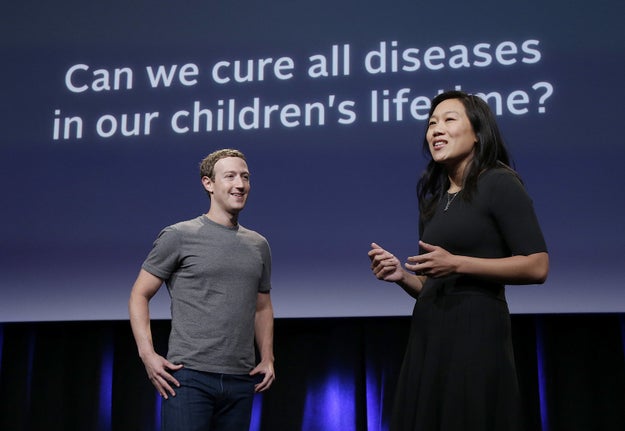
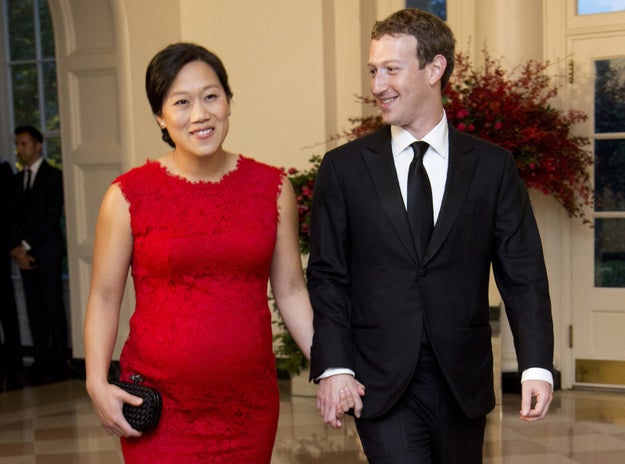
In September, Facebook CEO Mark Zuckerberg and his wife, Priscilla Chan, announced that they would invest at least $3 billion to “cure, manage, and prevent all disease by the end of the century.” The first piece of this plan is the Chan Zuckerberg Biohub, a $600 million scientific research organization powered by some of the brightest minds at UC San Francisco, UC Berkeley, and Stanford University.

It will be funded by the Chan Zuckerberg Initiative, a limited liability company formed in December 2015 by the Facebook CEO and his wife, a UCSF-trained pediatrician, when their daughter was born.

The agreement, signed by the heads of UC Berkeley, UCSF, Stanford, and the Biohub on September 15, was obtained by BuzzFeed News through a public records request. It lays out how the Biohub, universities, and researchers will work together.

When the project was announced, live on Facebook, one of its leaders said that “everything we develop … will be available to all scientists everywhere.” But exactly what this means is unclear. Although researchers will be allowed to make their findings open-source, the contract obtained by BuzzFeed News reveals that the tax-exempt charity has also retained the right to commercialize any discovery it funds.

A few charitable organizations, like the Bill and Melinda Gates Foundation, open up all research they fund to unrestricted access and reuse by the public. But the Biohub’s structure — which would allow it, for example, to license discoveries to a pharmaceutical company — is far more typical, intellectual property experts say.

Other successful nonprofit academic research centers with this model include the Broad Institute in Massachusetts and the Gladstone Institutes in San Francisco, both of which were also founded with large private donations.

“I think the structure of this agreement and who’s on board and how much each side seems to be willing to pitch in is a signal that the Hub is really going to be huge. It’s not going to be some fly-by-night thing,” said Jacob Sherkow, a New York Law School associate professor who specializes in biotechnology patent law and reviewed the document for BuzzFeed News.

“Whether or not it meets a goal of curing all diseases within our lifetime, that remains to be seen,” Sherkow added. “Needless to say, I am endlessly skeptical.”
Manuel Balce Ceneta / AP

So far, the Biohub’s scientific leaders have said that the first two areas of focus will be to map all cells in the human body, and to develop new tools for creating drugs, diagnostic tests, and vaccines for infectious diseases like HIV and Zika. The organization will initially dole out five-year grants to about 45 scientists from all three universities. Some work will be done in their home labs, and some in the Biohub’s dedicated space on the UCSF campus.

On Sept. 21, when Zuckerberg, Chan, Bill Gates, and a slew of scientists introduced the Biohub to the world during a Facebook Live-streamed event, there was only a passing mention of intellectual property.

“Importantly, everything we develop — every tool, every piece of data, every cell line — will be available to all scientists everywhere,” said neuroscientist Cori Bargmann, the Chan Zuckerberg Initiative’s new “president of science.”

Asked later for clarification, Bargmann said through a spokesperson: “Every tool, piece of data, or cell line that is developed through the transformative technology projects will be available to all scientists.” The spokesperson emphasized that the Biohub is in its early days and “is just beginning the strategy development process.”

Still, the contract allows for some discoveries to be kept proprietary, if the scientists so choose.

Inventors will have the option of making their discoveries open-source, provided that the Biohub approves and that they are jointly owned by both the Biohub and the scientists’ home universities. But the document also says that such discoveries can be patented, licensed to outside researchers or companies, and otherwise commercialized.

So in theory, a therapy for cancer — one of the four types of fatal diseases that Chan and Zuckerberg say they want to tackle — could be licensed to a pharmaceutical company. The contract also allows for research tools partly developed through the Biohub to be patented.

“Some people feel that, for certain inventions, they need to have patent protection for those inventions to receive the investment and funding necessary to bring them to market and help people,” Biohub co-president and Stanford professor Stephen Quake told BuzzFeed News. “And other people feel that their inventions are best disseminated by just giving them away for free. There’s a lot of examples in software where people say, ‘I want to give code away and let everybody use it.’”
Mike Windle / Getty Images

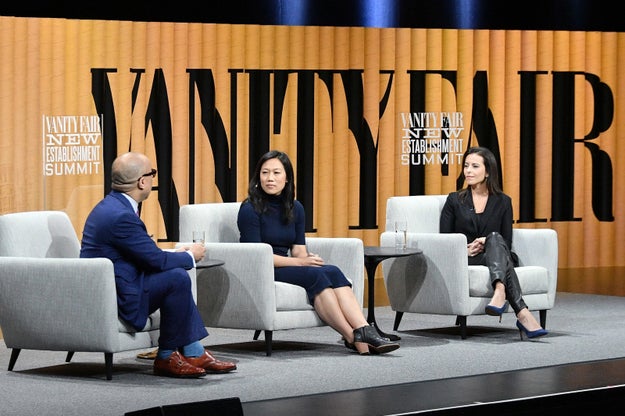
The document says that “the Hub” has the “exclusive right” to commercialize inventions. Quake, who is splitting Biohub leadership duties with UCSF professor Joseph DeRisi, said that, in practice, this means that the inventors will choose whether to open-source or patent something.

The redacted document does not disclose how revenues will be divvied up among the various institutions. If parties get into a dispute over who owns a discovery (whether patented or not), it will be settled by a third-party attorney or in confidential arbitration, according to the document.

Arti Rai, a Duke University professor who reviewed the document at BuzzFeed News’ request, said that the Biohub’s willingness to make discoveries open-source was unusual, and admirable.

“Most universities, at least, don’t give their professors the option explicitly of placing something in the public domain,” the patent law expert said. “They might de facto ultimately agree in a given case. But they don’t give that option usually in any of the formal contractual agreements.”

Not every policy described in the document is being adopted verbatim by the Biohub. For example, the document says that when scientists want to publish or present research, and the research is owned by both the Biohub and a university, the scientists are required to let the Biohub review their manuscript at least 30 days in advance, in case the Biohub wants to patent or remove confidential information from it.

But Quake said that he and DeRisi will not follow that policy: “It’s not something we feel a need to be doing in a nonprofit institution.”

Here’s the document:

LINK: Mark Zuckerberg And Priscilla Chan Want to Basically End Disease By 2100

Quelle: <a href="Here’s The Fine Print On Mark Zuckerberg’s Plan To Cure Disease“>BuzzFeed