How Macedonian Spammers Are Using Facebook Groups To Feed You Fake News
BuzzFeed News / Getty Images

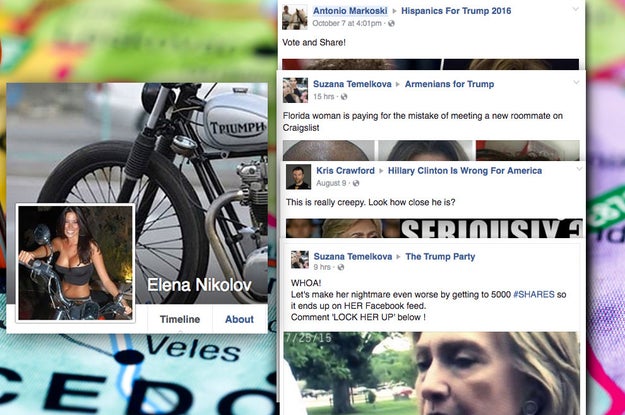
This summer, just after the Democratic National Convention ended, John Mattes noticed a sudden influx of new people asking to join his San Diego Berniecrats Facebook group. Mattes approved them and soon came to regret it. The accounts started spamming his Bernie Sanders group with links to anti-Hillary Clinton articles from strange websites he’d never heard of.

“Around the time that Hillary collapsed in public, our page became increasingly populated with fake stories full of Hillary hate,” Mattes told BuzzFeed News. “People were accusing Hillary of murdering opponents. It was alleged that she utilized body doubles.”

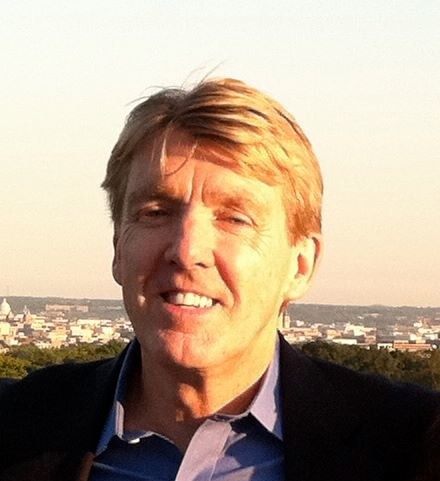
Mattes, a lawyer, former journalist, and former Investigative Counsel to the US Senate, investigated the Facebook accounts and the sites they were promoting. What he found was that the websites being promoted were run by people in Veles, a town in the former Yugoslav Republic of Macedonia. Some of the Facebook profiles also listed that as their location.
John Mattes / Via facebook.com

Mattes reached out to BuzzFeed News after reading a report about 140 US politics websites based in the small Macedonian town of Veles, including sites propagating false and misleading pro-Trump content. And his experience cast a light on how fake news has polluted not just the news feeds of millions of Facebook users, but also another popular feature of the network: Groups for people who share a common cause.

Two other people reached out and told the same story of how obviously fake Facebook profiles joined Facebook groups dedicated to different interests and then spammed them with links to websites operated from Macedonia.

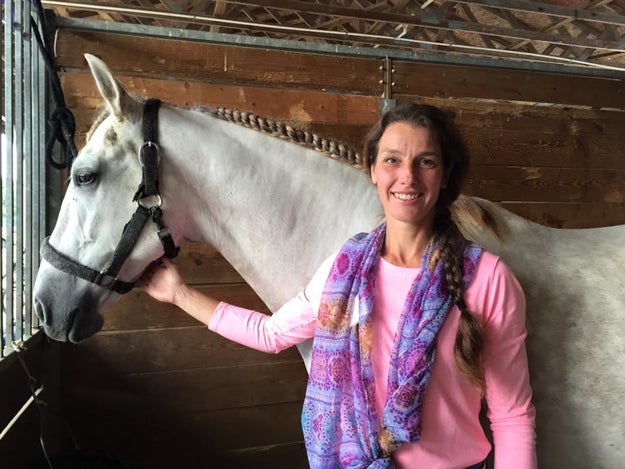
“These exploiters will use anything to make money,” said Sarah Thompson, a mother of four who homeschools her kids on a farm in Indiana. After noticing suspicious posts being shared in Facebook groups about horses, she too began investigating their origin and ended up discovering hundreds of fake Facebook profiles that were promoting websites run by people in that same Macedonian town.

Even the owner of 10 fake news websites in the US contacted BuzzFeed News to express his frustration with the onslaught of Macedonian spam in pro-Trump Facebook groups.

Thompson says the politics sites are just one part of the network of fake Facebook profiles and clickbait sites originating in the former Yugoslav Republic and in other Eastern European countries.

“The story is not the election,” she said. “It&;s how Facebook is being played.”

As BuzzFeed News previously revealed, this same technique of posting links from fake accounts was used to spread hoax news articles about terrorist attacks in cities in the US, Canada, UK and elsewhere. Those sites were run by people in the republic of Georgia. Both that scam and the sites run out of Macedonia utilize fake Facebook accounts to share their content in groups to help it get shared on Facebook. They then monetize any resulting traffic through ads on their websites, or, as was the case in Georgia, they attempt to install malware on user’s computers.

Evan Blair, the co-founder of social media security company ZeroFox, said the tactic is widely used by cybercriminals.

“The tactics that are being employed are utilized on a massive scale by very large and well-organized and well-funded cybercriminal groups,” Blair said, adding that he could not comment of the level of organization and sophistication of the people operating out of Veles.

“Misrepresenting yourself on Facebook is against our policies, and we have a dedicated team that&039;s tasked with helping to detect and block fake accounts,” a Facebook spokesman told BuzzFeed News.

The company also said that content it identifies as being “hoaxes or having misinformation get decreased distribution in News Feed, whether or not they originate in groups.” However, it also said that the original post to a group would remain online, unless a group administrator chose to remove it.

John Mattes believes the Macedonian operation focused on Bernie Sanders goes beyond a simple money-making scheme.

“What is most disturbing is that the Macedonia stories worked to directly help Trump,” he said. “The stories targeted Sanders supporters, creating doubts about Hillary among a key voting block.”

He’s concerned it was part of a concerted effort to suppress the votes of Sanders supporters in order to help Trump. Mattes says he alerted a contact at the Clinton campaign about the influx of anti-Hillary content, but no one took it seriously.

“Some [of the Sanders supporters] are newly energized democratic voters,” he said. “If you have the ability to suppress and poison the well and reduce participation, that’s a win.”

Other Sanders supporters also apparently took note of the Macedonians. Over the summer a group of them created a public spreadsheet of “Red Flag Spamsites” that highlighted the untrustworthy content coming from Macedonian sites, among others.

Mattes called it “outrageous that foreign elements would tamper with our election.”

But as of now, neither Mattes nor BuzzFeed News have unearthed any evidence that links the spammers to a coordinated campaign to suppress Clinton votes.
Facebook

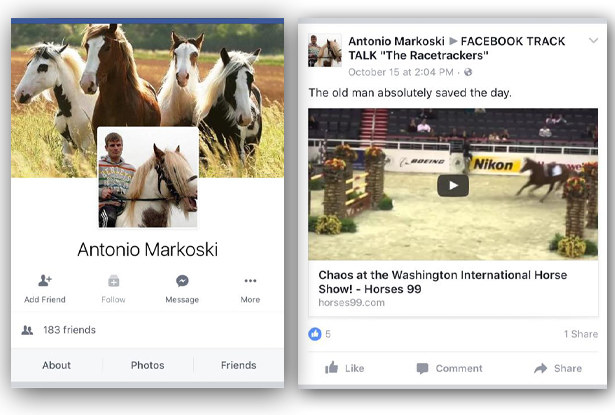
What we did find is a network of Facebook profiles just like Antonio Markoski’s. His page is mostly empty, except for a profile picture of a man on a horse. That image is stolen from a Daily Telegraph article about a man who was fined after drunkenly riding a horse bareback down the street.

Markowski’s account is almost certainly a fake. The same can be said for most of his nearly 200 friends on Facebook. Their profile photos consist of burly men on motorcycles, attractive young women with or without motorcycles, men with horses, women with horses, and young hipster men. Just about all of Markowski’s friends are also friends with each other. It’s a tight network of fake accounts.

Though his profile’s timeline is largely empty, Markowski has been active. Last month he shared a link to USAPoliticsForum.com in a “Hispanics for Trump” Facebook group. Later he shared a link to a Horses99.com post about showjumping in a Facebook group about horse racing.

Domain registration records show both of those sites, along with others about fishing and motorcycles, are all owned be the same man in Veles. He often posts about creating fake Facebook profiles on an online forum dedicated to black hat SEO practices. Also of note is that the email address used to register those sites is connected to a fake Facebook profile for a woman named Elena Nikolov. Her profile photo shows woman with a motorcycle that is in fact a picture of Venezuelan model Aida Yespica. And she is friends with many of the same people as the Markowski profile.

When contacted by BuzzFeed News, the owner of the domains declined to speak. (Only one of the Macedonians running US politics sites who previously spoke to BuzzFeed News answered questions about fake accounts, and he said he only uses his own profile to share links to his site.) But a simple search on Facebook for the domains of this man’s fishing, horses, and politics sites reveals a pattern of links being shared into groups by fake accounts. The same is true for other sites based in Veles that are owned by other people.
Sarah Thompson / Via facebook.com

Sarah Thompson said her months of online research revealed a network of at least hundreds of fake profiles that promote a wide range of websites, some of which are based in other Eastern European countries.

“I reported over 250 [fake profiles] in the course of a week,” she said, estimating that Facebook removed 75% of them.

Mattes and Thompson both say the Macedonian spammers continue to wreak havoc. Mattes said his Facebook group splintered along pro- and anti-Hillary lines and lost members. “By September, Bernie supporters had left our page in droves, depressed and disgusted by the venom,” he said.

Thompson is disheartened to see so many people in her horse groups fall for fake stories and clickbait.

“I have a sense of right and wrong which is very offended by cheating,” she said. “So when I encountered the fakers on Facebook, it made me so mad that they can be getting away with what they’re getting away with.”

Thompson says her months of tracking fake accounts and clickbait sites on Facebook also resulted in an unexpected personal consequence. She believes Facebook’s news feed algorithm is now feeding her spam-like content because it thinks that’s what she wants to read.

“I believe I am getting a lower quality content in my feed,” she said. “I’m getting spammier and trashier shares from my friends because I’m spending so much time going to these other pages.”

Quelle: <a href="How Macedonian Spammers Are Using Facebook Groups To Feed You Fake News“>BuzzFeed
Fox News’ Election Night Advantage Is A Video Chandelier

Fox News

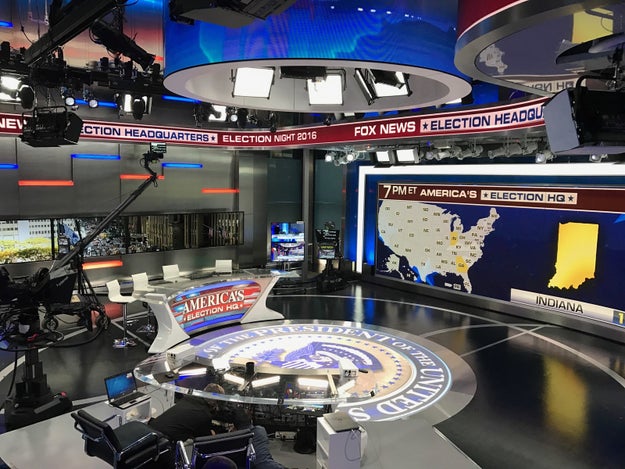
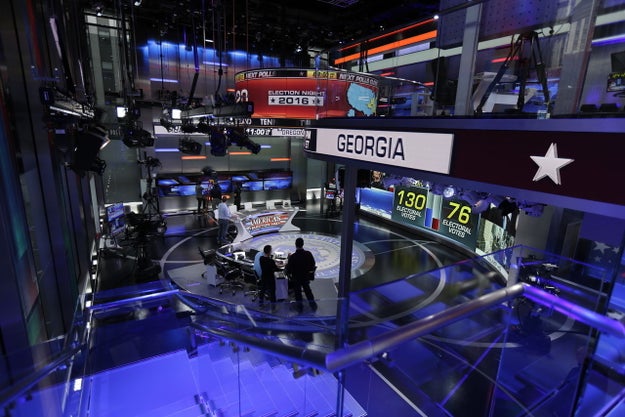
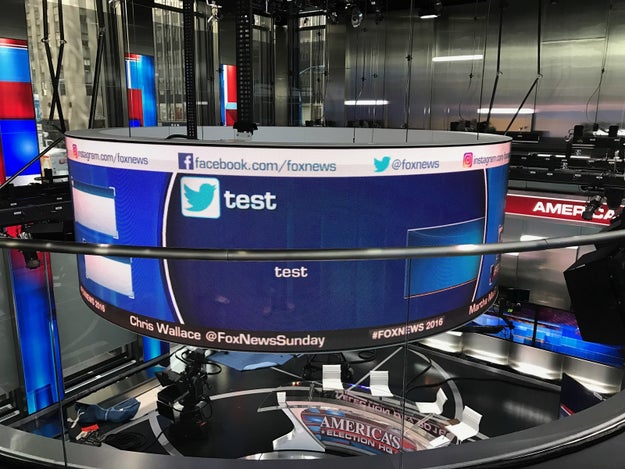
While standing directly in the center of Fox News’ brand new two-story election night studio, I became a bit overwhelmed. Under my feet, thousands of LED lights had transformed the floor into a gently rotating royal blue presidential seal. To my left, a twenty-something foot vertical screen displayed every state and when its polls closed. To my right, a 31-foot long LED wall showed an oscillating, urgent electoral “ALERT” before a new graphic flashed into its place, projecting a shiny gold six-foot tall map of Indiana. Just above my peripheral vision, a red news ticker rimming the 2,200 square feet of exterior windows cycled through logos and breaking news. And just above that, the coup de grace: a 528 square foot, circular “video chandelier” that beamed the words “AMERICA’S ELECTION NIGHT HEADQUARTERS” in action movie opening credits lettering, against alternating red, white, and blue backgrounds. Test tweets flashed. Electoral projection animations whizzed. Touch screens were touched. It all felt like standing inside some kind of uncanny, aggressively patriotic space station.

Tonight at 6 pm, Fox News will likely welcome more than 10 million viewers into that space station, which the network is unveiling for the broadcast it calls“our Superbowl.” Embattled after a summer in which founding chairman and CEO, Roger Ailes was forced out over sexual harassment allegations, Fox News is using its election night broadcast and new, reportedly $30 million studio to make a statement. Namely, that it is still a monolithic, indestructible media titan, capable of out-pixeling and out-spending rivals new and old. The message: We are the Titanic and we are invulnerable.

“It’s a bit of sensory overload, right?” Alan Komissaroff, senior executive producer for Fox’s election night broadcast said of the set — which, just a few years ago, was a Charles Schwab branch. “There’s so much information to bring in — house races, senate races, exit polls — throughout the night but you have to present it differently, otherwise it gets boring and now we have dozens of ways to do that.” When I asked Komissaroff if all the extremely pricey bells and whistles and pixels were essential to the election team’s success this evening, he laughed. “Is it necessary?” he said, gesturing upward to the looming video chandelier, which had begun to whirr in preparation to lower to the ground. “Well, it looks really good.”

The video chandelier tests out tweets 30 hours before showtime.

Charlie Warzel/BuzzFeed News

And while the video chandelier is likely to be the object of a few laughs on Twitter, it does look pretty good. More importantly, it represents an investment few (if any) media outlets could pull off. Fox News is a titanic force, thanks in part to Donald Trump and an unprecedented election cycle; the network recently reported record revenues: an estimated $2.62 billion in 2016. The past year may have been tough for Fox spiritually, but at least the ratings have been great, starting in 2015 when its first GOP debate pulled in 24 million viewers.

Fox is no stranger to big ratings — it led cable news during 2012’s election night broadcasts with 11 million viewers. But the network has more to prove this cycle. Among the concerns: 1) Megyn Kelly, an election night anchor and arguably the network’s biggest star, whose contract is due up next year and is reportedly seeking north of $20 million per year; 2) The slow recovery from the fallout of the Ailes ouster, which has cast a shadow of uncertainty as to the network’s direction in the coming years; 3) It&;s audience is growing perilously older by the year —with a median viewer age of 67 in 2015 (CNN&039;s was 61); and 4) An increasingly sinister brand of media criticism and distrust from Trump supporters, from which Fox News is not exempt. (Two weeks ago, Trump surrogate and former House Speaker Newt Gingrich railed against Kelly for displaying bias against the Republican candidate).

A cascading 20-plus foot screen that Fox employees call “the Twitter wall.”

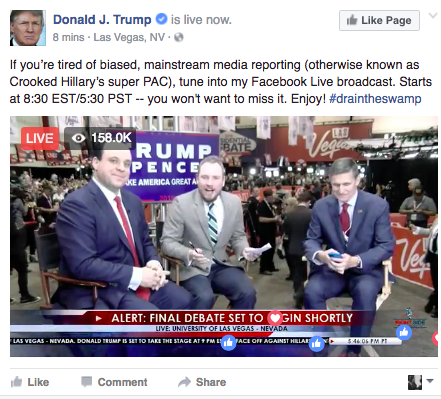
It was amid that chaos that rumors began to surface of the prospect of Trump extending his brand into video news. And despite the candidate’s insistence that he has no plans, those rumors have continually inched closer to reality. Three weeks ago, the Financial Times reported that Trump’s son-in-law Jared Kushner was in the early phases of shopping a Trump TV network. Just a day later,Trump’s official Facebook page hosted a pre- and post- livestream debate event, complete with graphics and chyrons — perhaps Trump TV’s inaugural broadcast. It was viewed 9 million times. Since then, Trump TV has spent the last two weeks conducting nightly news broadcasts over Facebook Live from Trump Tower with advisors and campaign staffers. The campaign has even set aside a camera spot for “Trump TV” at the candidate’s election night party headquarters.

Despite the myriad challenges facing a potential Trump TV venture (including Trump’s own interest level and the discipline to fund and follow through on it, and the fact that it would likely have to be a streaming subscription service — a business model that’s notoriously tough to crack) the rumors and the attendant buzz around a new offering suggest a desire in a certain branch of the right for a different flavor of cable news. One more like Breitbart (previously run by Trump’s campaign CEO Steve Bannon), which more closely mirrors Trump’s brash, alt-right oriented movement.

Fox’s election night broadcast marks an important 20 year anniversary. Yet it’s also a moment for the network to flex its muscle against both its traditional rivals — like CNN and MSNBC — and a crop of new online programming debuting from the likes of MTV, Vice, and others (including BuzzFeed News, which will broadcast an election night show live on Twitter). As such, the video chandelier and surplus of gorgeous HD touch screens are a not-so-subtle gesture toward Fox&039;s war chest and elite subscription fee revenues and soaring advertising rates —30 second ad spots for the Fox News&039; second primary debate sold for as much as $260,000 last year.

And while the LED lights and banners make for a great backdrop, they also represent a crucial tension that will play out on media&039;s biggest stages for the next few years as incumbent networks try to spend new media into oblivion while their audiences skew increasingly older. In many ways, Fox reflects the challenge facing all the incumbent cable networks: Is money enough to fend of rising digital challengers?

“I think you’d be naive not to see the future of the media as moving onto all kinds of platforms,” Martha MacCallum, a co-host of Fox&039;s America&039;s Newsroom, said. “I think competition is healthy but people tune in to us is because they feel a connection and they trust us to give the facts to them straight.” MacCallum, who will lead the network’s on-air exit polls analysis, stressed that while there may be increased frustrations with the media, Fox News&039; reporters, researchers, and decision desk, provide the necessary perspective to cut through its viewers’ online filter bubbles and echo chambers.

Trump TV&039;s trial balloon broadcast after the third debate.

When asked about any worry of an insurgent Trump TV, MacCallum was quick to dismiss it as partisan noise. “I’m no more concerned with the idea than, say, a Newsmax or Breitbart, which are already out there and fit into that filter bubble category,” she said.

MacCallum’s co-host and election night companion Bill Hemmer echoed the point. “I think with the technology available today there are more outlets able to experiment but it’s not very easy to do what we do,” he explained from his election night perch on the second floor of the new studio. “There&039;s a lot of nuance to it. I read all the trades and I see what people trying to do and what they’re saying [with regard to Trump TV] — but I think the point to be made is that it’s a lot more difficult than it looks.”

With 30 hours and ten thousand things to test before air, that difficulty was on display behind the scenes. As Hemmer spoke, a half dozen contractors drilled and hammered finishing pieces into place, while the crew adjusted and tweaked settings on the set’s 14 cameras. Producers cycled in and out, frantically constantly prodding the 34 touch screens to zoom in on precincts and counties and trigger any number of flashy animations. Lights cycled and oscillated, cycling through color sequences and — at one point — a test tweet as big as my body popped up on the video chandelier. It all felt incredibly complex, dizzying, and expensive. And while it will most likely draw tens of millions more eyes than Trump’s public access-style live show or many of the stripped down online broadcasts, it’s unclear how much the $30 million dollar competitive advantage really means to anxious viewers at home trying to watch the returns.

As Hemmer sees it, the evening’s production value will send a clear message to viewers. “One of the best ways to display the gravity of the night is to demonstrate the power of TV which, despite all the advances of technology, is still a number one source. It’s the reason why you have tens of millions watching tomorrow.”

From the control room — in between finding the perfect moments to raise and lower and show America his video chandelier — Komissaroff may keep an eye on what the smaller players are up to, but he’s not concerned. As a news producer, Facebook Live and any number of other nascent broadcasts are new resources for him to utilize, made all the more important to the newsgathering process by the fact that presidential candidates are using them.

As for his thoughts on Trump’s little broadcast experiments? “I honestly haven’t even thought about it, but I’m not worried about it. It’s not the same thing. We’re a news organization,” he said. “Plus, I think our graphics look better.”

Charlie Warzel / BuzzFeed News

Quelle: <a href="Fox News’ Election Night Advantage Is A Video Chandelier“>BuzzFeed

Here's Facebook's Plan To Get You Chatting With Messenger Business Bots

Getty Images

Since Facebook debuted its bot platform for Messenger in April of this year, the messaging app has been flooded with some 33,000 chat bots. But after six months at market, they&;re still largely unproven. Many Messenger bots are clunky and difficult to use, and those that aren&039;t can be difficult to find. Now Facebook is moving to change that with some tactical product tweaks rolling out today.

The first tweak is a simple one: News Feed advertisements designed to engage you in conversation with a chat bot. Let&039;s say H&M is touting a new line of winter coats in a Facebook ad campaign. Instead of directing people interested in the coats to H&M&039;s website or the H&M app, these ads would put them in conversation with Messenger&039;s H&M chat bot, which could answer questions about the coats and potentially orchestrate an in-app sale. These ads roll out globally today.

“We now have the ability to drive massive traffic to bots through News Feed.”

Facebook&039;s second tweak, sponsored messages, also rolls out globally today. These are exactly what they say on the tin: branded in-Messenger messages sent to Messenger users by advertisers they&039;ve interacted with in the past. Together with bot-integrated News Feed ads, these new products offer developers opportunities to more proactively engage people on Facebook.

“We now have the ability to drive massive traffic to bots through News Feed,” Facebook Messenger head David Marcus told BuzzFeed News, “and that&039;s great for developers.” Marcus noted that these new products have worked well in test runs. Absolut Vodka, for example, recently used a bot-integrated News Feed ad as part of a vodka giveaway campaign. Marcus said the company found that acceptance rates on Messenger were three times what they were on the mobile web.

Which is not to say that Facebook views sponsored messages or bot-integrated News Feed ads as a huge business opportunity. Indeed, Marcus cautioned that while they will certainly increase Facebook&039;s ad capacity, they&039;re probably not going to drive ad load growth. “Sponsored Messages probably are not going to be big,” he said, “but they&039;re a needed capability.” And a crucial piece of Facebook&039;s strategy to cash in on the purchase intent inspired on its platform. Think of it this way: Facebook views News Feed as a place to discover things you want to buy, and it&039;s conceived of Messenger as the place where you actually buy them.

Facebook has other plans for Messenger as well, though none that Marcus was willing to discuss in detail. Asked if we might someday see Messenger crib features from Snapchat in a manner similar to what Facebook did with Instagram and WhatsApp, Marcus declined to answer, but then observed that messaging is becoming more visual and his team is experimenting with new stuff all the time. “We have more and more photos that are shared inside of Messenger every day,” he said. “So are we actually working on stuff that will make messaging more visual across the board? Sure.”

Quelle: <a href="Here&039;s Facebook&039;s Plan To Get You Chatting With Messenger Business Bots“>BuzzFeed
At Emojicon, Vibrators, Chia Pets, And A Lesson About Democracy

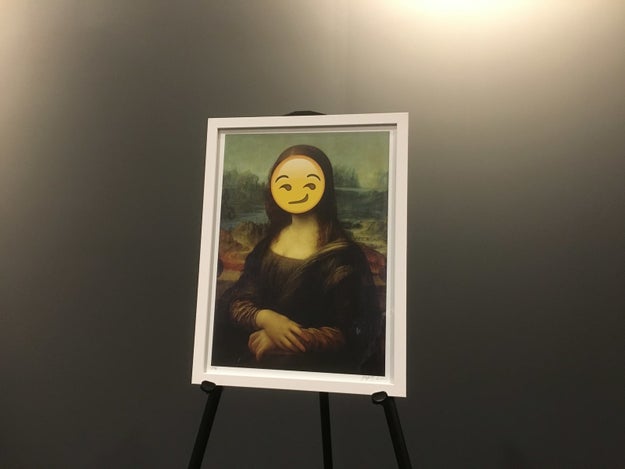
“Reimagining Masterpieces with Emoji” by Yiying Lu.

Caroline O’Donovan / BuzzFeed News

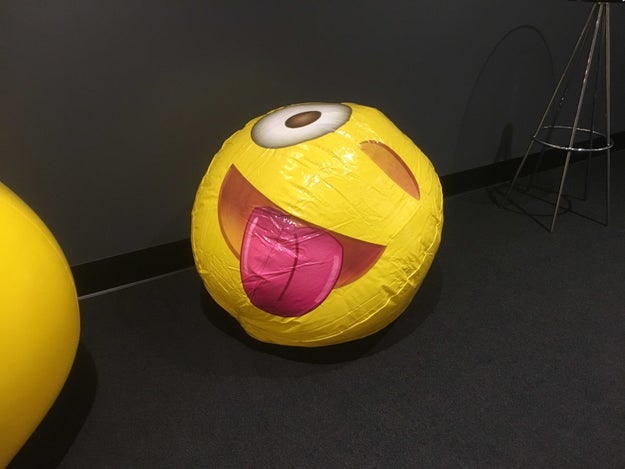
A lot of what was on offer at Emojicon 2016 this weekend — emoji chia pets, the emoji Mona Lisa, an eggplant shaped vibrator — was what would you would expect. With its Emojimprov, Emoji Karaoke, and the Emoji Spelling Bee, the event was billed as a “celebration of all things emoji.” But for the event’s hundreds of attendees, who included copyright lawyers, a MOMA collection specialist, Google, Facebook and Yelp employees, plenty of teenagers, and a balloon emoji artist, the event was more than just a chance to score emoji swag while wearing emoji costumes.

It was also a unique forum for emoji community members to voice their opinions in front of the Unicode Technical Committee, the small but powerful governing body of technologists who read and evaluate new emoji proposals, and otherwise control the future of emoji.

But the emoji community’s enthusiasm for the subject matter goes beyond politics. Emojicon blended the highbrow and lowbrow, from smiling piles of poop to art theory, from vegetable-shaped sex toys to questions of racial inclusion. Emoji are goofy, but they help us express some of our basest emotions. By analyzing how we use them, we can learn a lot about ourselves.

Caroline O’Donovan / BuzzFeed News

Democratizing Emoji

Emojicon brought together both the emoji powers that be — like some of the Unicode folks behind the new line of professional women emojis — as well as emoji enthusiasts with little control over the emoji proposal system. This was their chance to propose, invent, design, and draw new emoji nonetheless.

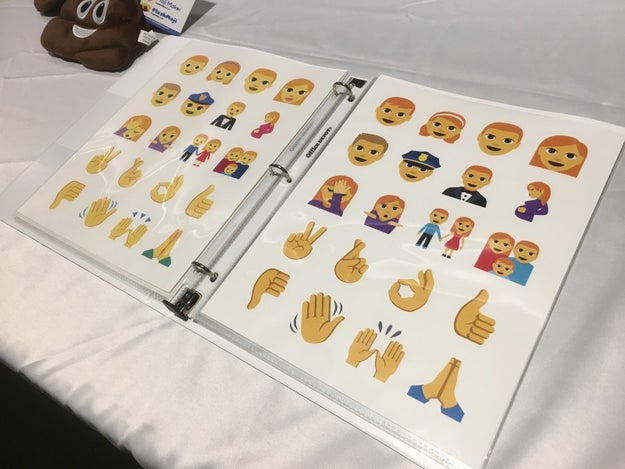
The community’s embrace of democracy was most obviously on display during an Open Mic session on Saturday, when “Internet linguist” Gretchen McCullough made the case for more hand emojis that include American Sign Language gestures. A young man who’s translating the Communist Manifesto into emoji wanted an emoji for the hammer and sickle. Other suggestions included a peacock emoji, biltong emoji, a meditation emoji, and a pretzel emoji.

“A pretzel can mean confusion. Pretzel logic can stand for a plot twist, thanks to its unique shape,” the pretzel advocate explained. “There is no other shape that expresses the confusion or knot that the pretzel stands for.”

In the hackathon room, half a dozen people gathered around a single table were brainstorming new science-themed emojis, inspired by the American Chemistry Society’s charming line of Chemojis. A designer and startup CEO who had hoped to recruit whimsically-minded engineers at the event kept busy sketching out emoji for every planet in our solar system.

Caroline O’Donovan / BuzzFeed News

Emoji Get Real

Though Emojicon attendees share an enthusiasm for emoji, they didn’t necessarily always agree on the issues.

After Google art director Rachel Been led a talk on designing emoji, and the different styles used on different platforms, an audience member asked a tough question. Was Google going to keep its pistol emoji, now that Apple notably decided to change its version to a water gun in a recent update?

“We believe in being cross platform, so our gun will stay,” Been responded, somewhat uncomfortably. “A lot of other platforms haven’t changed their gun, so we’re keeping ours.”

Emoji chia pets and emoji balloons aside, this was a serious question. But attendees were more riled up about an updated line of emoji for iOS 10 that Apple rolled out last week. Because the new images are less like symbols and more like illustrations, some people really hate them.

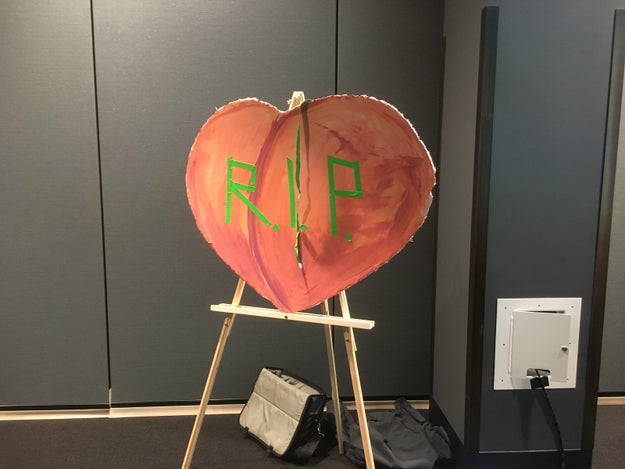
One Emojicon attendee displayed a handmade memorial for the booty-style peach, which will soon be replaced by a more biologically correct, but less anatomically titillating version.

Caroline O’Donovan / BuzzFeed News

“I would argue,” artist Niki Selken said during a talk that touched, among other things, on how the brain interprets alphabetic language differently from emoji, “that the new emoji are too detailed. Designers are upset.” In the back of the room, people spontaneously applauded.

Not everyone thinks realism is bad. The men behind Xpresso — a messaging app that generates custom, 3D GIF stickers — said they felt strongly that the more lifelike their animations, the more accurately they were capturing the human experience. COO Govindaraj Malehithlu gave this example: If your wife is mad at you, it’s better if your apology is accompanied by a tiny illustrated version of you kneeling and begging with hands clasped than simply a frowny face.

“It breaks the barrier,” said Malehithlu. “In person is the best communication, but through text and email, there is a wall and a barrier. Your real self, your real emotion, doesn’t come out.”

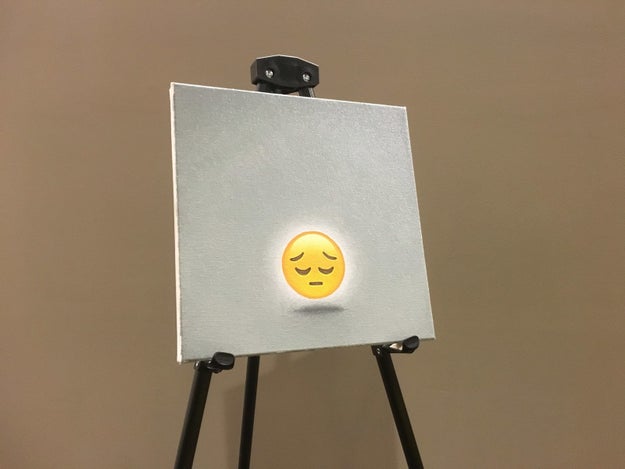
“Frowning Face EmojiPainting” by Mike Sall

Caroline O’Donovan / BuzzFeed News

Highs And Lows

Emojicon 2016 was like a mashup of an academic conference on linguistics and a Comic Con, and the thrill of that juxtaposition helps explain why a community and a movement has sprung up around emoji to begin with.

During a talk at the event, MOMA’s Paul Galloway described emoji as a place where language stops and art picks up. We use emoji to describe our basest selves, our bluntest emotions — happy, angry, horny, hungry. But in the years since they’ve become a global vocabulary, we’ve discovered that emoji are also a tool for analyzing and understanding our shared humanity in an entirely new way.

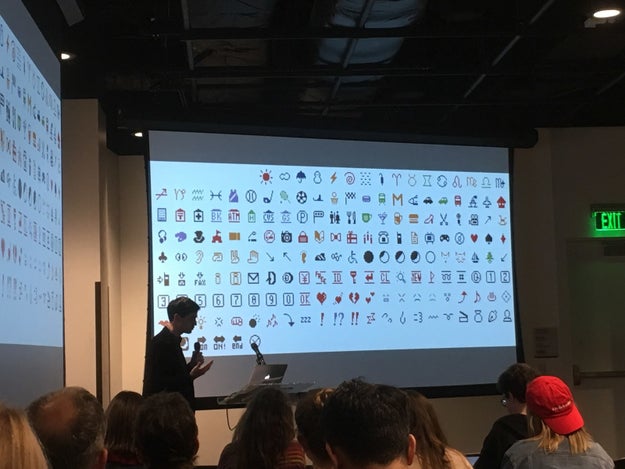
Paul Galloway discusses the original emoji set recently acquired by MOMA.

Caroline O’Donovan / BuzzFeed News

Take, for example, the guy using deep learning algorithms to predict which emoji we pair with which words: the ring for “she said yes,” the maple leaf for “420 tonight?”, the trashcan and the flame for “Donald Trump.” Or consider the Emojipedia founder who watched, confused, as the key emoji skyrocketed in popularity, only to discover the spike was driven by the mystical teachings of DJ Khaled — a musical artist whose ultra-positive Snapchats have become the stuff of legend — and his many, beloved “major keys” to success.

Or take Latoya Peterson, who has been working at ESPN on a series of emoji-like stickers that better reflect the black experience in sports and beyond. Peterson, who gave a talk called “The Art of Shade,” discussed how the meaning of symbols like emoji are mutable depending on the community they’re being used in.

“We can’t go back in time and delete 500 years of racism,” she said. “But what’s great about tech is, we’re creating new spaces. We’re creating new worlds.”

Caroline O’Donovan / BuzzFeed News

Quelle: <a href="At Emojicon, Vibrators, Chia Pets, And A Lesson About Democracy“>BuzzFeed
Inside 4chan's Election Day Mayhem And Misinformation Playbook

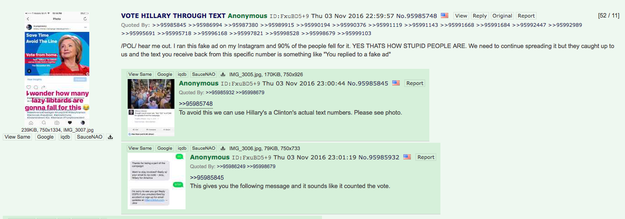
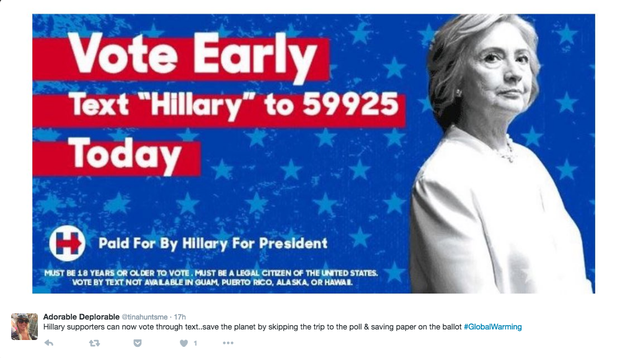
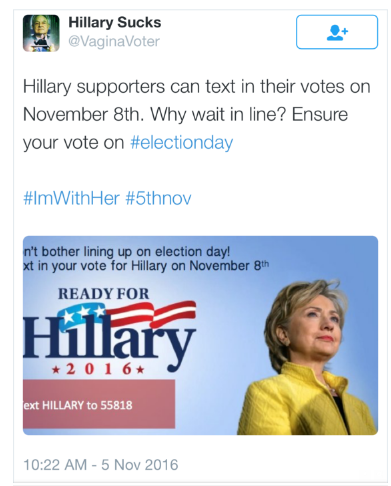
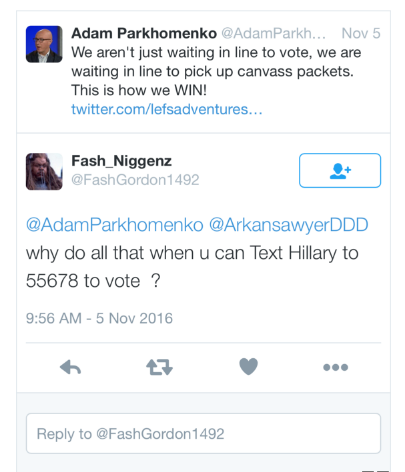
In the weeks before election day, pro-Trump, alt-right trolls have leveraged the scale of social media to spread misinformation aimed at keeping Clinton voters away from the polls — most prominently by disseminating official-looking, but totally bogus, campaign ads that encourage people to vote for Clinton by text message. There&;s been a growing response to the pro-Trump misinformation campaign on Twitter and other social platforms — Twitter yesterday released an official video debunking the vote-by-text nonsense, for example. But get ready for even more, because the people behind them are hardly out of ideas.

Posts on 4chan&039;s politically incorrect message board — a nerve center of the alt-right from which many of these posts appear to have originated — detail a multi-pronged campaign of election day social media deception and mayhem, intending to confuse, slow, and disenfranchise Clinton voters.

The first step in the campaign is to reinvigorate the “text to vote” campaign. Currently, texting “Hillary” to the phone number 59925, as the original fake ads urged voters to do, prompts a text reply reading “The ad you saw was not approved by Hillary For America in any way.”

The trolls&039; solution? They now plan on releasing new ads instructing voters to text “GO to 47246 — the official Clinton text channel. It&039;s a more savvy iteration on the earlier scam. That&039;s because texting the “GO” command to that SMS shortcode prompts a reply from the Clinton campaign: “Thanks for being a part of the campaign&;” As one 4chan poster pointed out “This sounds like it counted the vote.”

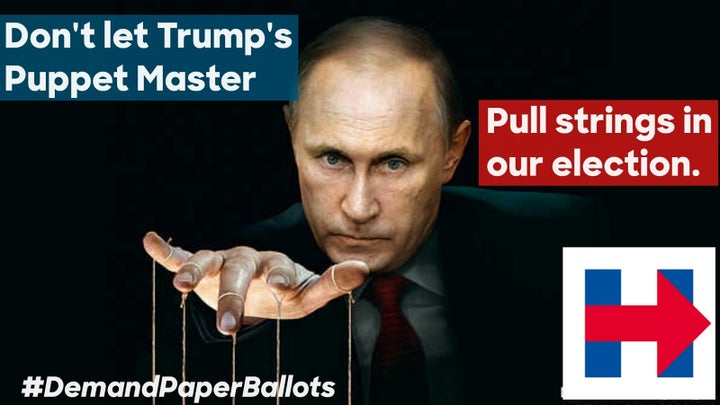
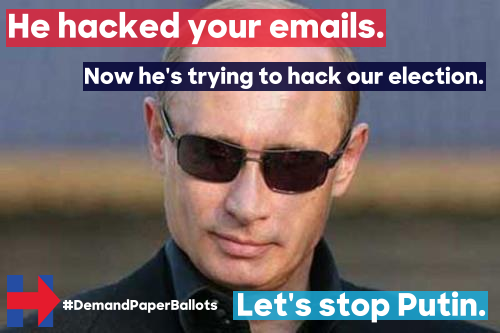
Another major push being discussed on /pol is a series of ads, again done in the style of official Clinton campaign messaging, that encourages Clinton voters to demand paper ballots.

Playing on fears of Russian interference with American voting machines, these ads serve two purposes to the alt-right. The first, according to the designer of the ad, is to make sure that Clinton votes aren&039;t counted multiple times by Soros-controlled voting machines, which plays to a false but commonly held conspiracy theory within the alt-right. “We know [George] Soros pretty much own a large part of the electronic voting machines in USA,” wrote the poster. “We want to avoid their usage and promote the usage of paper ballots instead.”

The second motivation for trying to trick Clinton voters into using paper ballots is far more straightforward: It&039;s to make the process of voting more onerous.

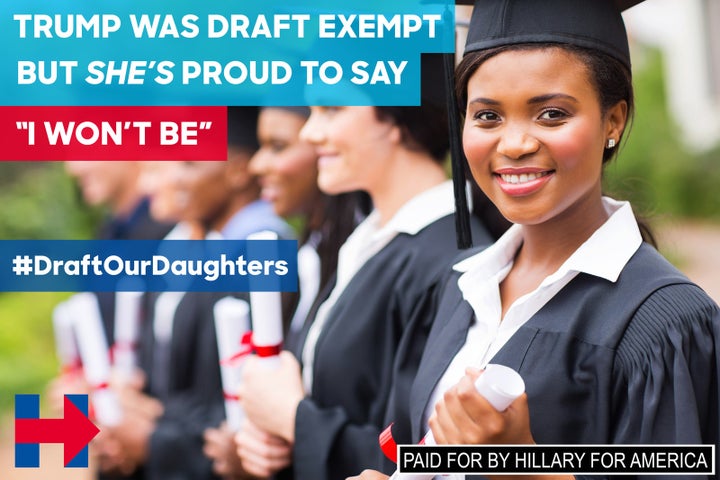
Another hashtag campaign, , was popularized by the alt-Right impresario Mike Cernovich, and 4chan is running with it. The ads, which also adopt official Clinton campaign branding, depict smiling girls and young women next to ominous messages about a coming military draft — an allusion to the right&039;s criticism of Clinton as a warmonger. The effect, of course, is intended to frighten.

While some of these campaigns have already rolled out, there is frequent chatter on /pol about disseminating them heavily on election day. Wrote one poster [sic], “Yeah. We need to get this stuff ready…on election day and insert it into all of the twitter made forced hashtags, because we all know there&039;s gonna be a paid for trending Hillary hashtag on November 8th… Alot of retarded libs would fall for this and not go out and vote. We need to make this happen on election day.”

And in case there was any mistake about the targets of these ads, another poster made it clear:

“Remember remember the 8th of November,

When /pol/ shut down the black vote.

We all know that Twitter is the home of all black queens. They&039;re dumb enough to fall for this shit too.”

Quelle: <a href="Inside 4chan&039;s Election Day Mayhem And Misinformation Playbook“>BuzzFeed
People Are Searching “How To Vote” 233% More Than They Did In 2012

If online behavior is any indication, this year&;s presidential race has ignited the American electorate.

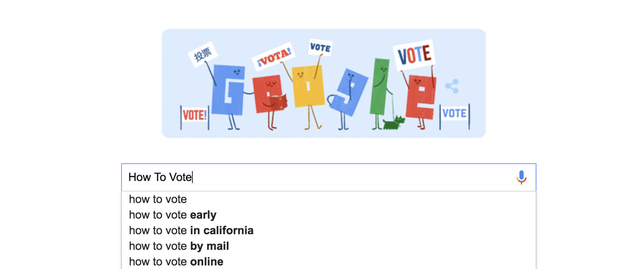
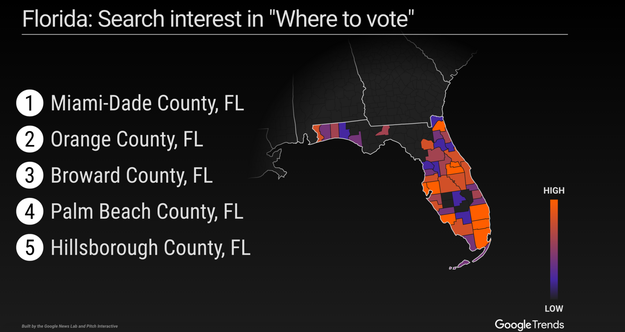
This according to Google, which notes that searches for “how to vote” between Oct. 1 and Nov. 1 were 233% higher than they were during the same time period for the 2012 election. Google, which plans to integrate election news into its search results when polls close on Tuesday, says Americans are also turning to the search giant to know where to vote; that phrase is being searched particularly in battleground states such as Florida, Ohio, North Carolina, and Pennsylvania.

Google

Google

Elsewhere, there&039;s been a frenzy of election-related online video consumption.

On YouTube, people have so far spent over 20 million hours watching and replaying presidential debate live streams. And between mid-July and mid-October, they spent the equivalent of more than 545 years (almost 4.8 million hours) watching video of presidential contenders on Facebook. Between the beginning of the year and October 1st, 109 million people in the US generated 5.3 billion election-related likes, posts, comments and shares on the social network.

Quelle: <a href="People Are Searching “How To Vote” 233% More Than They Did In 2012“>BuzzFeed
Election Week Snapchat Ads Will Include Clinton Selfie Lens, Trump Geofilter

Priorities USA Action

With election day nearly upon us, the U.S. Presidential candidates are heading to Snapchat for a last, concerted social push. Over the next two days, the social platform will host some big political ads from the camps of Hillary Clinton and Donald Trump.

Hillary for America

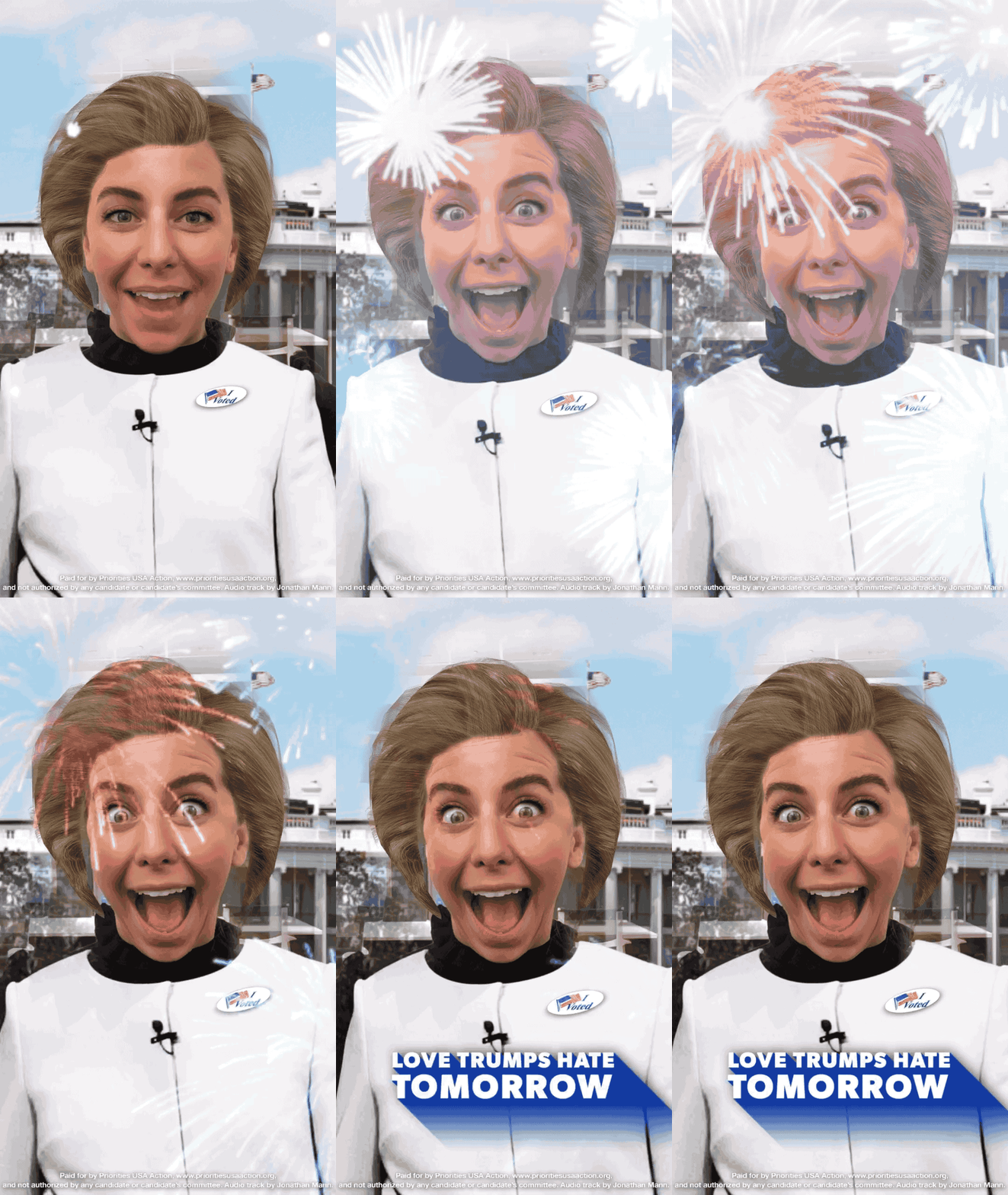
The Clinton campaign&;s sponsored geofilter hits Snapchat on Monday offering supporters a simple “I&039;m with her” overlay. Debuting alongside it: what Snapchat says is the first presidential election-themed, sponsored selfie lens. Purchased by Priorities USA Action, a Democratic Party super PAC, the lens adds Hillary Clinton&039;s hair and jacket to users&039; selfies. When the transformation is complete, the “Hillaried” Snapchat user shimmies back and forth across the screen, in a nod to a key moment from the first presidential debate.

The Clinton campaign did not respond to a request for comment about its Snapchat ad or Priorities USA Action&039;s selfie lens.

On Tuesday, the social platform will also feature a national geofilter overlay from the Trump campaign, which landed the election day slot (sponsored national geofilters are sold on a first-come, first-served basis, and limited to one per day).

The Trump camp did not provide BuzzFeed News with its Snapchat geofilter or a description of it. The Trump campaign and a spokesperson for the GOP did not respond to requests for comment.
Snapchat sells sponsored lenses for upwards of $450,000 a day, and can command $700,000 around special events. Sponsored geofilters command a similar price.

Snapchat has captured a lot of election-related attention in the run up to Tuesday&039;s vote. According to the company, 52 million Snapchat users have watched more than 2 billion U.S. politics-related snaps during election season. Snapchat itself plans to tap into this interest on Monday and Tuesday with a “Heads Up” geofilter and election-themed lens, both intended to encourage voting.

According to a Snapchat-commissioned Nielsen study, Snapchat reaches 41% of people in the United States between ages 18 and 34 on any given day. So the company&039;s efforts to mobilize voters and the candidates&039; efforts to rally their supporters ahead of the election have a more-than-reasonable chance of reaching a key demographic in these last few days.

Quelle: <a href="Election Week Snapchat Ads Will Include Clinton Selfie Lens, Trump Geofilter“>BuzzFeed
Trump Trolls Find New Tactics To Spread False Voting Information On Twitter

As election day nears, pro-Trump trolls on Twitter continue to spread false voter information to in an effort to keep Hillary supporters from the polls on Tuesday.

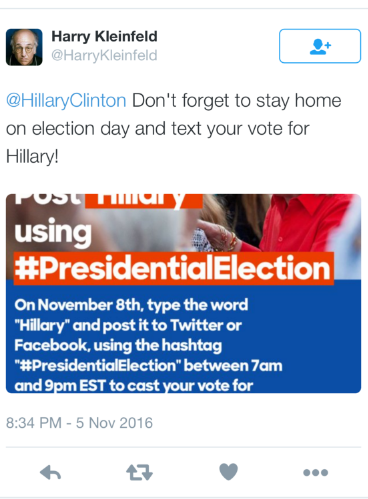
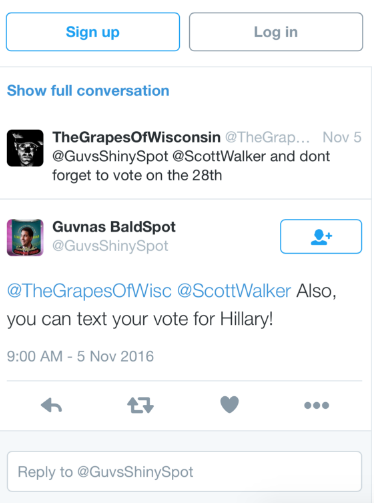
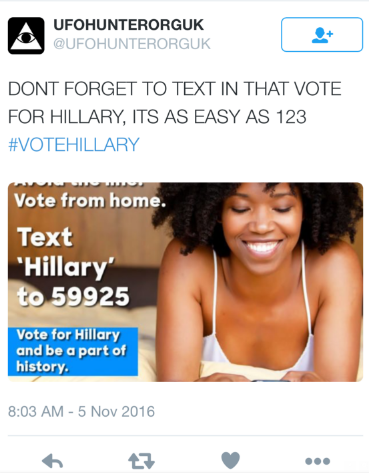
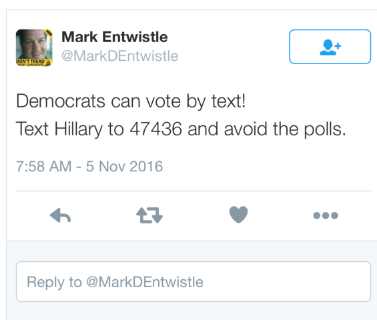
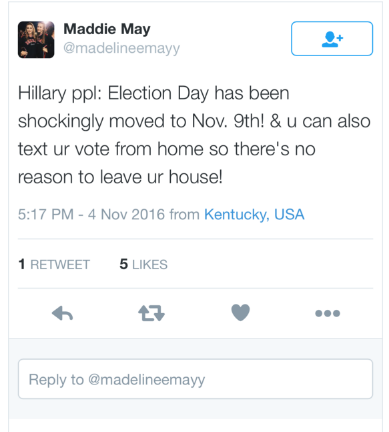
The tweets, many of which are disguised as campaign ads, suggest that voters can “avoid the line” and “vote from home” via text (they can’t). Last week, in response a BuzzFeed News report on similar voter suppression scams, Twitter deleted a handful of Tweets spreading the false information. “Not sure how this slipped past us, but now it’s fixed,” Twitter CEO Jack Dorsey told BuzzFeed News.
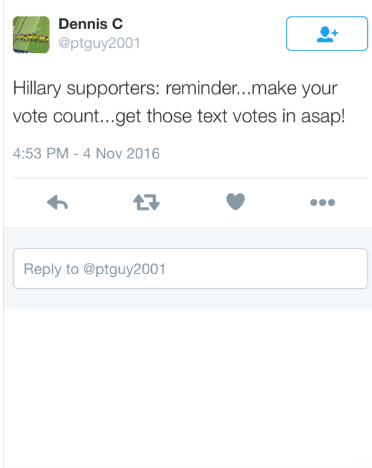
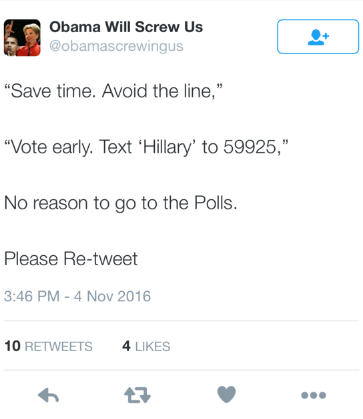
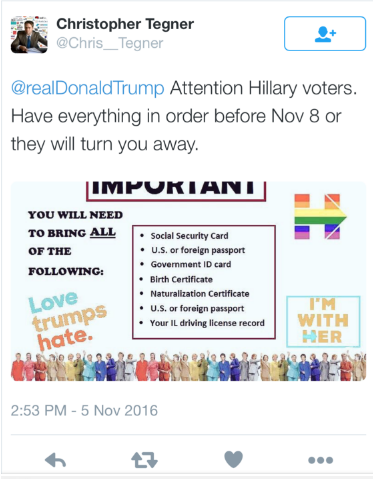
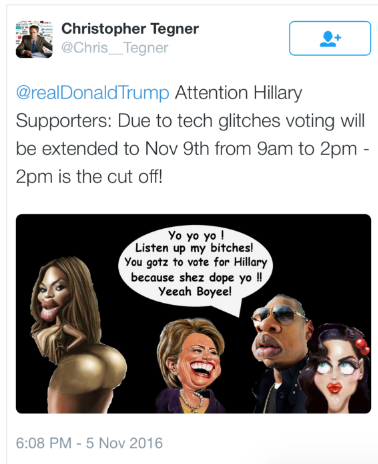
But despite Dorsey&;s public statement, trolls are still trying their best to dupe voters. On Sunday, BuzzFeed News found dozens of examples of “vote from home” tweets along with others falsely claiming voting deadlines have been extended until November 9 for Hillary voters and that voters must provide seven forms of identification to cast their ballot. The tweets vary in sophistication and message — some are brazen attempts at voter suppression designed to appear like legitimate notifications, others appear to be racially charged, satiric commentary on the idea of voter suppression itself presented alongside misinformation.
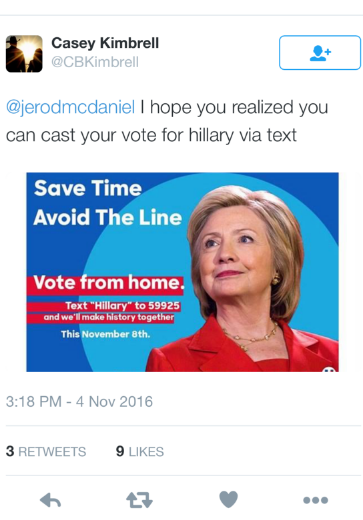
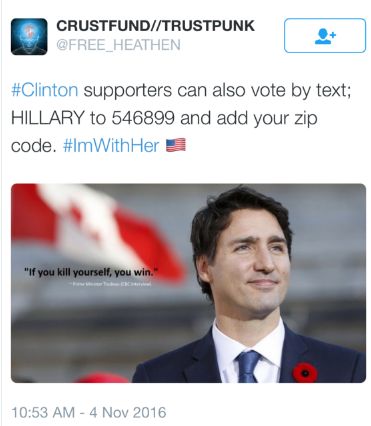
The tweets, which were still up on the social network Sunday afternoon, have all been reported to Twitter&039;s support team by independent users. One woman who has been reporting voter suppression tweets since yesterday told BuzzFeed News that she has not yet heard back from Twitter support.

As BuzzFeed News reported last week, the tweets do appear to be in violation of Twitter&039;s rules, which state in part that “Twitter accounts portraying another person in a confusing or deceptive manner may be permanently suspended.” The tweets could also be in violation of Twitter’s spam rules. Similarly, tweets claiming to be “paid for by Hillary For President” could be in violation of FEC law.

Kristen Clarke, the President and Executive Director of the Lawyers’ Committee for Civil Rights Under Law roundly condemned the tweets and called on Twitter to be more vigilant with their takedowns. Clarke works with Election Protection, a non-partisan voter protection agency.

“I flagged a number of tweets this morning and have not received a response.”

“I flagged a number of tweets this morning and have not received a response. And many, if not all of those tweets are still up,” she told BuzzFeed News. “There&039;s urgency, here. Time is short, the right to vote is sacred and people can easily abuse to disrupt our elections. So Twitter and Facebook and all the social platforms have a real obligation not to overlook this,” she told BuzzFeed News.

In response to BuzzFeed&039;s request for comment as to why the tweets weren&039;t taken down, despite the user abuse reports, Twitter provided the following statement: “Our goal is to increase engagement in the election process and encourage voter turnout. We are tweeting now, and through Election Day, informing people how and where they can vote. We&039;ve launched several features recently to support this cause including our DM tool that shares specific voting locations, candidate information and other relevant info. to inform voters as they head to the polls.”

The company also tweeted this, from it&039;s Government account:

Still, there&039;s plenty of misinformation out there — here are some examples of voter suppression scam tweets to watch out for:

Quelle: <a href="Trump Trolls Find New Tactics To Spread False Voting Information On Twitter“>BuzzFeed

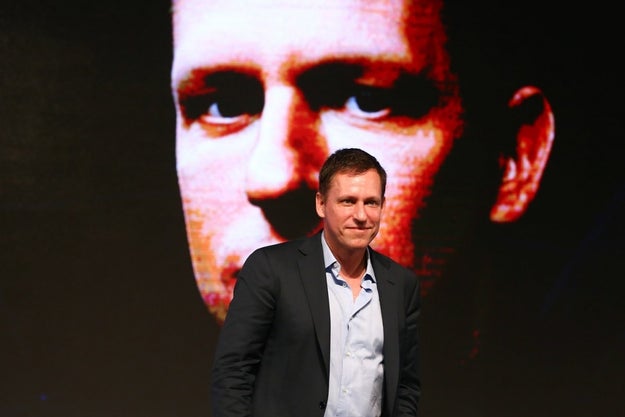
Less Than 12% Of The Companies Peter Thiel's VC Fund Invested In Have A Woman Founder

Peter Thiel has been in the news quite a bit recently: In October for a $1.25 million donation to Donald Trump (which he defended in a speech on Monday), and last week for statements he made in The Diversity Myth, a book he co-wrote in 1996, which argued that “politically correct ‘multiculturalism’” had a “debilitating effect” on higher education and that rape was a “belated regret.”

Thiel&;s views have made him an outlier in Silicon Valley, but the sector is still dominated by white male gatekeepers. For example, one recent study found that less than 16% of venture capital funding goes to companies with at least one female cofounder.

According to a BuzzFeed News analysis, Founders Fund, the venture capital firm that Thiel co-founded in 2005, invests in women at a rate slightly less than that industry average.

In response to questions about the gender diversity of its portfolio, Founders Fund, which has $3 billion under management, told BuzzFeed News: “We do not track founder demographics.” However, in our own rough estimates, BuzzFeed News found that less than 12 percent of Founders Fund’s investments are helmed by at least one woman. Put another way, over 11 years, the company has only invested in 27 companies with at least one female founder.

BuzzFeed News based this estimate on information from Pitchbook, a venture capital database, which lists 241 startups as Founders Fund investments. BuzzFeed News verified that 227 of those startups were Founders Fund investments (using either public reports or the companies themselves). Of those 227 verified companies, 27 startups had at least one female co-founder. Only 7 — Sofa Labs, Contagion Health, Style Seat, Brit + Co, uBeam, PandoDaily, and TaskRabbit — were founded exclusively by women.

Even this amount of investment is relatively new. Using the same methodology, Founders Fund appears to have backed only five companies with a female co-founder between 2005 and 2011.

Here are all 27 startups with one female co-founder that BuzzFeed News was able to identify.

  1. Homee, an iOS app for furniture and home design
  2. Hooked, fiction for the Snapchat generation
  3. Ayar Labs, building optical chips for data centers
  4. Medal, electronic medical records platform
  5. Accion Systems, propulsion systems for satellites
  6. Eating with the Chefs, high end dinners at home
  7. Modumetal, nanolaminated metals for the oil and gas industry
  8. PlanGrid, a mobile app for construction management
  9. Declara, a personalized learning platform
  10. SOLS Systems, 3d-printed shoe insoles
  11. Transatomic Power, advanced reactors for low-cost nuclear power
  12. Canva, online graphic design platform
  13. If You Can, educational gaming company
  14. LawPal, software for tracking legal work
  15. Invino, private sales for wine enthusiasts
  16. Neurotrack, technology to predict the onset of Alzheimer&039;s disease
  17. PandoDaily, tech blog
  18. Upstart, online lending marketplace
  19. LightSail Energy, compressed energy storage
  20. TaskRabbit, mobile marketplace for freelance labor
  21. uBeam, wireless charging
  22. Brit + Co, DIY media and ecommerce company
  23. Style Seat, online booking for beauty appointments
  24. Contagion Health, social action platform for health
  25. Sofa Labs, develops social apps
  26. Zivity, adult content social network
  27. Big Think, YouTube for ideas

No entity collects standardized data on female entrepreneurship within the tech industry. Crunchbase, a startup database, reported last year that the number of female founders receiving venture capital has grown from 9.5% in 2009 to 17.9% in 2014. But those figures only reflect VC-approved startups. Women own 30% of all businesses in the United States, according to a 2015 study on women-owned businesses commissioned by American Express Open.

Thiel&039;s donation to Trump&039;s political campaign came shortly after a leaked tape of Trump bragging about sexual assault came to light. During the speech on Monday, Thiel called criticism of his support for Trump a form of intolerance that exposes “the lie behind the buzzword of &039;diversity.&039;”

The Diversity Myth was not the last time Thiel made controversial statements about women. In 2009, four years after he launched Founders Fund, he wrote an essay which argued that extending voting rights to women “rendered the notion of ‘capitalist democracy’ into an oxymoron.”

Founders Fund added its first female investing partner, Cyan Banister, in March 2016.

Please contact nitasha.tiku@buzzfeed.com if you know of any companies that should be included or omitted from our list.

Quelle: <a href="Less Than 12% Of The Companies Peter Thiel&039;s VC Fund Invested In Have A Woman Founder“>BuzzFeed

Uber And Google Want To Help You Get To The Polls

On Tuesday, Uber will remind riders when they open the app that it is Election Day, and through a partnership with Google, it will tell people where to find their polling locations.

The special feature will ask people to enter the address where they are registered to vote so it can locate their polling sites. Then riders can hit a button to request a ride. (Uber will not be offering free or discounted rides.)

“Given the important decision people around the country will make on November 8th, we wanted to make getting to and from your polling place easier than ever,” Niki Christoff, Uber’s head of federal affairs, wrote in a post about the program. “Teaming up with Google, Uber is excited to help make that trip as convenient and stress free as possible.”

Uber first announced the partnership with Google in September, through a blog post written by David Plouffe, President Barack Obama’s 2008 campaign manager. Plouffe is now an Uber board member, and Google Ventures has invested in Uber.

The tech industry has launched several civic engagement initiatives during this election season. Google rolled out a series of tools. For one, people can search “who’s on my ballot” and Google will display information about the candidates, or “where to vote,” to find the location and voting ID requirements at their polling stations.

And in September, Y Combinator’s Sam Altman cofounded VotePlz, a nonpartisan nonprofit that aims to make voting easier for young people. He told BuzzFeed News then that he hoped it would serve as “the TurboTax of voter registration.”

Despite the fact that Peter Thiel, a central figure in Silicon Valley and a Facebook board member, has been an outspoken Donald Trump supporter, a majority of the tech industry seems to back Hillary Clinton. Tech employees have donated 30 times more to Clinton than to Trump this election season, according to a BuzzFeed News analysis, for a total of about $4.4 million. (That analysis included Uber employees.)

Quelle: <a href="Uber And Google Want To Help You Get To The Polls“>BuzzFeed