Instacart Is Being Sued By Its Workers
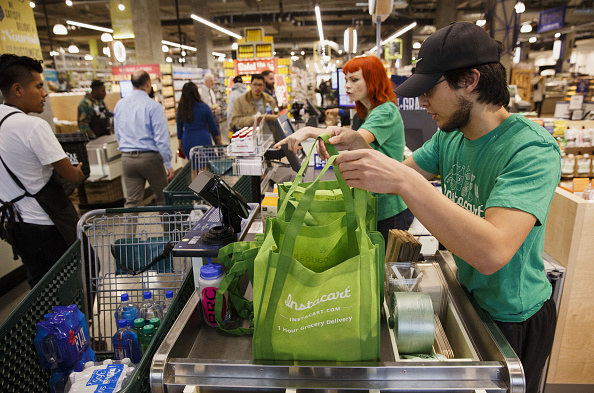
Bloomberg / Getty Images

Instacart is being sued by a group of workers — again.

Brought by Arns Law Firm — the same firm whose class action suit against the grocery delivery company was thrown out last month over an arbitration agreement — the new suit was filed on behalf of six named plaintiffs. It alleges that people who worked for Instacart as independent contractors should have been classified as employees and are owed repayment for minimum wage, overtime, expenses and more. The class could include as many as 14,000 workers from all over the country, the suit alleges, and the amount owed “far exceeds $5,000,000 in the aggregate.”

“The shoppers’ and drivers’ services are fully integrated into Instacart’s business, and without them, Instacart’s business would not exist,” the suit reads. “Instacart voluntarily and knowingly misclassified Plaintiffs and other Instacart shoppers as independent contractors for the purpose of avoiding the significant responsibilities associated with the employer/employee relationship.”

A spokesperson for Instacart said the company does not comment on pending litigation.

The suit notes that Instacart did reclassify a portion of its workforce as employees in response to regulatory pressure. Since June 2015, Instacart workers who work exclusively inside grocery stores have been employees of the company; only workers who also deliver groceries in their own cars are considered independent contractors. The suit argues that Instacart, because it did previously agree to reclassify some workers, “knew and/or recklessly disregarded that it was misclassifying its Shoppers from the outset.” It also claims that the IRS and labor commissions in New York and Colorado back up this finding.

In addition to the larger worker misclassification issue, the suit also touches on earnings. It alleges that online advertisements posted by Instacart promised workers could earn “up to $25 an hour,” though the company had enough data to know “it was impossible to earn that hourly rate consistently.” The suit also claims that Instacart knowingly duped prospective workers. To support this argument, it points to a livestreamed August 2015 all-hands meeting in which “managers Susie Sun, Michelle Suwuannukul, and Heather Wake instructed Operations Associates to continue running the advertisements that represented that Instacart Shoppers could make a certain amount of money per hour even though they were aware that Shoppers were making an average hourly rate that was well below the advertised rate.”

In recent months, Instacart workers have clashed with management over changes to their pay structure. In September, the company replaced in-app tips (paid directly to individual shoppers who delivered an order) with a service fee that is pooled and distributed among workers at Instacart&;s discretion. As BuzzFeed News has previously reported, CEO Apoorva Mehta said the change is necessary to the companies continued growth. But high-earning shoppers who shared their pay stubs with BuzzFeed News estimated the changes reduced their pay by between 30 and 40 percent. Frustrated workers have repeatedly threatened to strike and picket the company, and have been waging an informational campaign to explain the change to customers.

The lawsuit brought against Instacart today cites the tip issue as proof that the company has a level of control over independent contractor earnings commensurate with that of an employer. It also argues that, per the Fair Labor Standards Act, any optional amount paid by a customer in addition to charges for a service should be considered a tip.

For the plaintiffs in this newest suit, Instacart&039;s arbitration agreement remains a thorny issue. The lawyers argue, as they did before the last suit was thrown out, that the arbitration clause workers agreed to when they signed up with Instacart should be considered irrelevant because of an August ruling by a judge in a separate case that set a new precedent on the issue of class action waivers.

Companies like Uber and Lyft have both successfully used the threat of arbitration to push settlements of respective high-profile class action lawsuits brought against them by drivers, suggesting the issue could still be an impediment to the workers&039; case against Instacart.

Quelle: <a href="Instacart Is Being Sued By Its Workers“>BuzzFeed
How Snapchat Kept Fake News Out

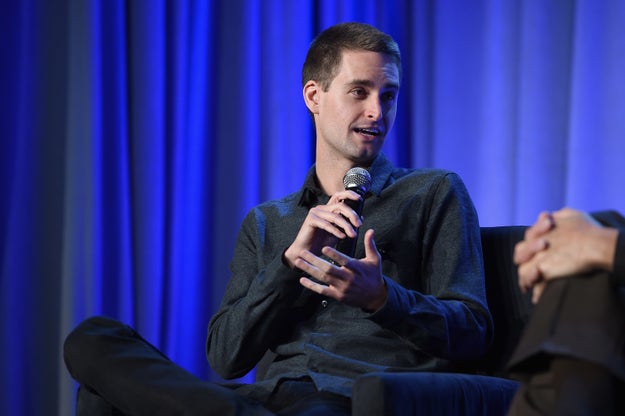
Evan Spiegel, Snapchat CEO and cofounder

Larry Busacca / Getty Images

Facebook emerged during the U.S. election as a central political and news source, but also a hub for hoaxes, propaganda, and outright fake news, an issue that brought wide criticism and concern from figures reportedly including President Barack Obama.

But its leading U.S. competitor, Snap, has managed to sidestep the issue. Snap now boasts 150 million daily users, roughly 10 million more than more than Twitter. It’s a growing source of breaking news for its users. When Donald Trump purchased a national “Crooked Hillary” geo-filter during the presidential debates it was viewed 80 million times, and yet the sometimes controversial social network doesn’t come up in the rancorous debates over fake news.

There are a handful of obvious reasons why Snapchat might be a less fertile ground for propaganda from Macedonian teens, hoax purveyors, or hyperpartisan websites masquerading as news. User-generated content on Snapchat disappears after a short period of time. News is contained in a separate section, called Discover. Posts from the people you follow are displayed chronologically, not by popularity or personalized algorithm.

On Snapchat, the name of the game is projecting authenticity, not racking up faves, and the rules of the game are enforced in the way the app is designed. Snapchat profiles do not display a follower count or even let users know how many followers they have. Plus it’s hard to go viral when you can’t pass around a link to an individual’s post.

As Farhad Manjoo noted in The New York Times, “The diminution of personalization algorithms and virality also plays into how Snapchat treats news.”

The process publishers go through to get on Discover is as controlled as the rest of the app and involves a number of human gatekeepers along the way, a Snap representative told BuzzFeed News. Before they can post in Discover, news publishers have to be vetted as a potential partner, an agreement that comes with strict terms. Discover partners who publish daily on Snapchat in the U.S., France, and U.K. include recognizable names like CNN, MTV, Le Monde, Sky News, or Cosmopolitan. Jim VandeHei, the cofounder of Politico, even created a presidential campaign-specific Discover channel called We The People, in partnership with NowThisNews, but content, like today&;s offering, “Are you ready for texts from Trump?” seems more pop culture than partisan. (NowThisNews shares an investor with BuzzFeed. BuzzFeed is a Discover partner in both the U.S. and UK; BuzzFeed also ran NBC&039;s Snapchat content during the summer Olympics.)

Although publishers have editorial independence, there is collaboration between staffers who produce content for the app and Snapchat’s Discover team, which gives guidance on formatting. Content can be optimized to do well on Facebook and Twitter by altering the headline or image, but on Snapchat, articles have to be reformatted to fit the app. Publishers can deep-link to stories to their Discover content, but those links take you back to the app.

These features were built around Snapchat’s belief that users who share and consume content from friends provide the most potential for long-term growth, Rob Fishman, co-founder of Niche, a company that connects brands with social media influencers, told BuzzFeed News. “Snapchat makes discovery of people who aren’t in your phone book extremely difficult because they believe peer-to-peer sharing is stickier than a so-called influencer model,” said Fishman, whose company was acquired by Twitter in 2015. “They do see value in premium and traditional publishers, but they’ve created a standalone experience to capture that kind of content.”

“It’s impossible for somebody to go rogue in Discover.”

This is a huge difference from other social networks, where publishers and brands are “basically identical to individual users,” Fishman said. “It’s impossible for somebody to go rogue in Discover because everything in there is seen and vetted by Snapchat.”

The same kind of propaganda that plagued Facebook could theoretically be disseminated within Snapchat in a couple of ways: through a Live Story (a mash-up of photos and videos around a particular event like a concert or rally, curated by Snapchat) or a Story from individual accounts, which users can create by adding photos or videos of what they’re doing throughout the day. In those cases, however, a combination of human editors, the visual medium, and anti-viral design also make it inhospitable to fake news.

Individual Snapchat users can add text to an image or video, but space is limited. It’s possible to imagine a scenario where an individual uses their Story like a talk radio, but that kind of content is hard to share and Snapchat doesn’t promote individual accounts. “You literally don’t know how many followers you have on Snapchat, so it’s not designed for premium accounts to amass huge audiences. This is supposed to be million paper cuts not a few heavy hitters,” said Fishman.

For Live Stories, which show up in Discover, Snapchat relies on human journalists and editors, with relevant experience in verticals like music, entertainment, travel, or fashion, the company said. Last year, Snap hired Peter Hamby, one of CNN’s best known political reporters, as its head of news. Live Stories created in-house are rigorously fact-checked, a Snap representative told BuzzFeed. In the spring of 2015, Snapchat started covering politics along with other hard news. Live Stories in that category include coverage of U.S. election coverage, historic flooding in South Carolina, the Brexit vote in the UK, and the Brazil impeachment vote. Hard news stories are produced in house. Some Live Stories are comprised of photos and videos from Snapchat users, but again, the content is curated by Snapchat and goes through a human editor first.

Apple News, the mobile app released last year that has 70 million active users and content from 4,000 publications, is another potential platform for spreading fake news, which, like Snap, also relies on human touch points along the way. Apple News became a significant driver of traffic during the election cycle in particular. CNN has reported that Apple News sent 36.5 million unique readers their way in September and Bloomberg reported a 400 percent jump in visitors from Apple News in October. In fact, sources told BuzzFeed News that the Apple News has had to deal with a pretty significant number of attempts to spread fake news and hate speech through the platform.

However, the same walled garden approach that keeps iTunes and the App Store running smoothly has worked in Apple News. For example, Apple News reviews publishers who join Apple News. Individuals can also share content on Apple News, but if their RSS feed departs from the usual fare, Apple can detect that. There’s also a report a concern function where users can flag fake news or hate speech within Apple News and the company curates any content that gets featured, also like the App Store.

Manjoo’s recent profile of Snapchat in Times emphasized that favoring human editors and eschewing virality represented a big departure from more established social networks. Fishman pointed out that those innovations are also carefully managed. “In my opinion Snapchat is both ambitiously experimental, but also very tightly controlled,” Fishman said, pointing to the introduction of Stories and of Spectacles. “Both were dramatic and unprecedented offerings, but the way that they launched them was very carefully planned and executed. You can see that especially with Spectacles. There’s a lot of buzz around it and there are only a few pairs.”

Quelle: <a href="How Snapchat Kept Fake News Out“>BuzzFeed

The Consumer Technology Association Falls In Line Behind Trump

The Consumer Technology Association is a venerable, 92-year-old trade group that puts on the Consumer Electronics Show, the annual product extravaganza in Los Vegas that draws hundreds of thousands of attendees. The association of more than 2,200 corporations — and its president and CEO, Gary Shapiro — tends to give money to the traditional American party of big business, as you might expect.

Yet this summer, as then-Republican presidential nominee Donald Trump blasted tech-friendly trade deals like the TPP on the campaign trail, the CTA switched gears. Shapiro – who described Trump as “unqualified” — and his organization enjoyed a months-long flirtation with the Democratic Party and its nominee, Hillary Clinton.

But in the weeks since the election, Shapiro and others within the CTA have now twisted like a pretzel, publicly and repeatedly expressing optimism about the coming Trump administration — even if no one yet knows what his tech policies will look like, or how they&;ll shape the industry, other than to shake it up.

“We are in the innovation world,” Shapiro told Buzzfeed News. “We adapt to change. That’s what we do. We’re tech ninjas. That means things change and you adapt.”

But there&039;s adapting, and there&039;s adapting as quickly as the CTA has: The organization sent out a congratulations to Trump before Clinton had even given her concession speech. That may be keeping a finger to the wind, or it may, according to Berin Szoka, president of the libertarian think tank TechFreedom, be a sign that the organization feels it is obligated to help mold Trump&039;s inchoate tech platform.

“From their perspective, there&039;s no adult supervision,” Szoka said. “They&039;re trying to play that role. They want to be at the table, and they&039;re terrified of what would happen if this were left up to a strong anti-Silicon Valley contingent in the new administration.”

Whatever the reason, for Shapiro and the CTA, it&039;s been a quick journey from a Republican to a Democrat and back again. Over the years, Shapiro has donated to mainstream Republicans such as Paul Ryan, Darrell Issa, and Roy Blunt. And the CTA&039;s political action committee, to which Shapiro has given some $50,000, financially supported John McCain in 2008, Mitt Romney in 2012, and Marco Rubio in the Republic primary in 2016.

“We’re tech ninjas. That means things change and you adapt.”

But then something weird happened: Donald Trump broke with decades of business-friendly orthodoxy from the GOP and crushed the Republican primary field. Along the way, he antagonized the tech industry and promised to gut pro-business global trade agreements.

“People are worried on trade,” Shapiro said.

So Shapiro — and his organization — who had publicly supported Rubio, and were eager to preserve international trade deals with the Asian countries where most tech hardware is manufactured, found themselves in a strange position: With Her.

And also, very, very much against him.

Over the summer, Shapiro wrote a series of columns decrying Trump&039;s protectionist rhetoric on trade, praising Hillary Clinton&039;s tech policies, and fantasizing about a Clinton-Mitt Romney ticket that “Could Guarantee a Clinton Win.” In a Reddit AMA, Shapiro described Trump as “unqualified.”

And two weeks before the election, Shapiro wrote a column in US News & World Report that concluded “Trump simply doesn&039;t understand the modern economy.”

Then election day came and Trump won. And like a host of anti-Trump Republicans who vowed never to do business with the president-elect, Shapiro did not exactly reiterate his opposition with force. Instead, his strong anti-Trump stance seems to have lasted only a few hours after the results came in.

On the morning after the election the CTA sent out a press release congratulating Trump on his victory, and citing the Republican majority in the Senate as “an opportunity . . . to rollback unnecessary rules, tackle high-skilled immigration reform, reduce patent troll extortion, lower corporate taxes and reduce spending.”

Later the same day, Shapiro wrote a column for Fortune entitled “How Donald Trump Can Heal A Divided America Now,” in which he highlights Trump&039;s “willingness to achieve goals through deals,” and suggests ways that Trump could modify the Trans-Pacific Partnership rather than abandoning it entirely.

A week after the election, the CTA put out another release, touting Trump&039;s “Unique Opportunity to Advance IoT.”

And Tuesday, three weeks after the election, Shapiro wrote a column for Fox News outlining “Four reasons why our economy will thrive under President Trump.” While conceding that he voted for Clinton, Shapiro recommended that Americans “follow the lead of the initially jumpy financial markets and shift from doom and gloom to optimism.” Shapiro nodded to the possibility of Trump raising trade tariffs on China or withdrawing from NAFTA, but concluded that “the stock market can and will be the real-time measure of his economic success.”

Last week, the CTA&039;s Senior VP for Government Affairs Michael Petricone, speaking on Tech Freedom&039;s policy podcast, said that “The mantra of our industry is that change is good. We&039;re going to set an example here with CTA and the tech industry and move forward and find common ground with a new administration.” Petricone went on to frame Trump&039;s lack of a tech policy platform as a major opportunity for the industry.

Funding for the CTA comes principally from CES; that has liberated them, Szoka said, from relying on their members for financial support, like other trade groups. “Their interests sync up quite well with American consumers,” Szoka said. “They want a healthy, functional tech sector. That may explain why they are quicker to move. It&039;s an opportunity to steer things in a good direction.”

Asked whether he still thinks Trump is unqualified to be President, Shapiro told BuzzFeed News “the American people have decided he’s qualified. What I think doesn’t matter.”

Quelle: <a href="The Consumer Technology Association Falls In Line Behind Trump“>BuzzFeed

AngelList Just Acquired Product Hunt For Its Community, Not Its Profits

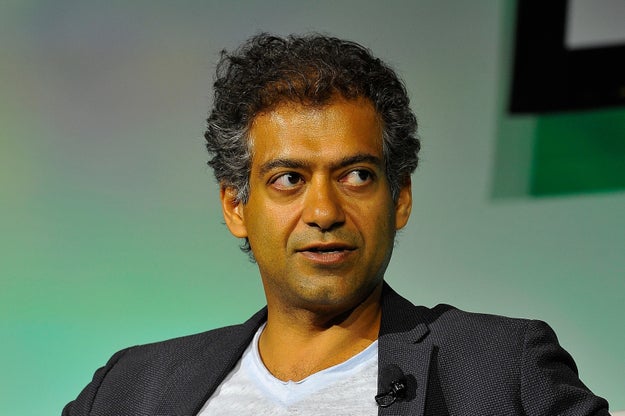
AngelList Founder and CEO Naval Ravikant

Steve Jennings / Getty Images

AngelList, a site for startup founders to woo investors and recruit employees, has acquired Product Hunt, a forum for showcasing and discussing new tech products, for an undisclosed sum.

Naval Ravikant, CEO of AngelList, said acquiring Product Hunt is the last piece of the puzzle for AngelList to fully serve startup founders.

“If you go to a VC and you pitch them successfully, traditionally they’ll write you a check, help you hire that critical early team, and help you find marquee customers,” he said. “We’ve done well with the first two, and Product Hunt is the place for those passionate early adopters.”

Ravikant says that 24,000 companies are actively recruiting on AngelList and that 850,000 candidates have found jobs since the site launched its recruiting service in 2012. He also said that startups have raised $500 million in venture capital through the site since 2013, when the fundraising portal launched. He declined to share revenue data for his company.

Product Hunt has made “negligible revenue” in its three-year lifespan. CEO Ryan Hoover said, the company hasn’t focused on making money. He says that 50,000 companies and independent creators showcase their products on Product Hunt.

The Product Hunt team will become a division of AngelList, and the day-to-day operations of both companies are unlikely to change, according to their founders. Hoover’s title will be General Manager of Product Hunt.

To both Ravikant and Hoover, Product Hunt’s most important asset is its community, and that’s what Ravikant acquired the company for.

“AngelList doesn’t have people who are on the site every day talking about products and startups when they’re not looking for a job,” he said. “Ryan and his team know how to build, maintain, and engage a high quality community, and that community is very seductive.”

Ravikant doesn’t expect Product Hunt to monetize. Instead, he aims for it to drive traffic and transactions on AngelList.

“Product Hunt doesn’t have to do a lot to pay for itself.” he said. “AngelList has managed to monetize a small community around high value transactions, and if Product Hunt drives just a few of those transactions per month, that would be enough.”

The two sites will integrate in small ways in the short term, according to the founders. Hoover said open job positions on AngelList may appear on a company’s Product Hunt page. Investors often have widely read profiles on Product Hunt, so if they use AngelList to fund companies, they may publicize those investments on Product Hunt as well. Success on Product Hunt also helps growing startups gain credit with venture capitalists in some cases.

Both AngelList and Product Hunt cater to an unabashedly insular Silicon Valley set, and that’s unlikely to change, according to both founders.

“The tech echo chamber will stay a part of both companies, but now we’ll be talking globally,” Ravikant said. He hopes to expand the reach of Product Hunt and AngelList to tech sectors around the world.

“I don’t see the community changing in the short term,” Hoover said. “The goal is to keep continuity.”

Both companies began as email lists; AngelList in 2010, Product Hunt in 2013. Their brand voices, however, are vastly different.

“Ryan thinks everything is great, whereas I’m a skeptical investor,” Ravikant said. “The AngelList Twitter is very serious, whereas Product Hunt is energetic and enthusiastic. Those will remain separate identities.”

Quelle: <a href="AngelList Just Acquired Product Hunt For Its Community, Not Its Profits“>BuzzFeed

Instagram Advertisers Switch From Celebrities To "Microinfluencers"

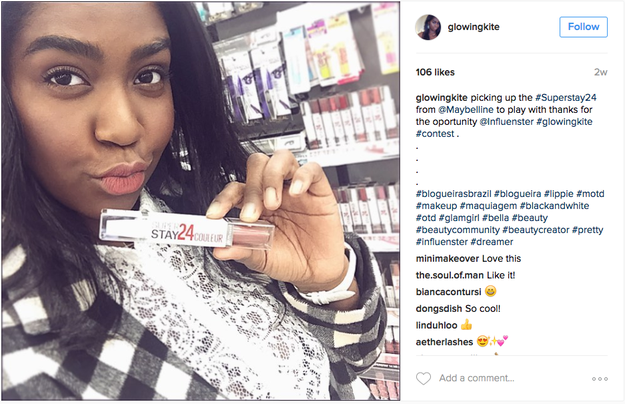
@glowingkite / Via instagram.com

The push to make social media celebrities and “influencers” more honest about who is paying them to post has been complicated by the rise of a new category of Instagram promoter: the so-called microinfluencer, people with as little as ten followers who are being paid by brands just like top-tier stars.

Advertising businesses like and allow anyone with a social media account to sign up and receive free products for review, from brands like Maybelline, BITE beauty, Kleenex, and International Delight. Their social media posts appear with hashtags like gotitfree or gotacoupon, or with a note that the product was received “complimentary.” Often there is no indication they got it for free.

In a letter on Wednesday, consumer advocacy groups told the Federal Trade Commission these posts don&;t meet federal disclosure guidelines, which recommend clearly using or in posts.

“One of our biggest concerns is that this is becoming normalized and so seamlessly integrated into our everyday interactions with social media,” Kristen Strader, the commercial alert campaign coordinator for advocacy group Public Citizen, told BuzzFeed News. “Of course this is what advertisers want, but it is unfair to the consumer, especially young consumers who are growing up seeing paid endorsements on social media without understanding that those posts are actually advertisements.”

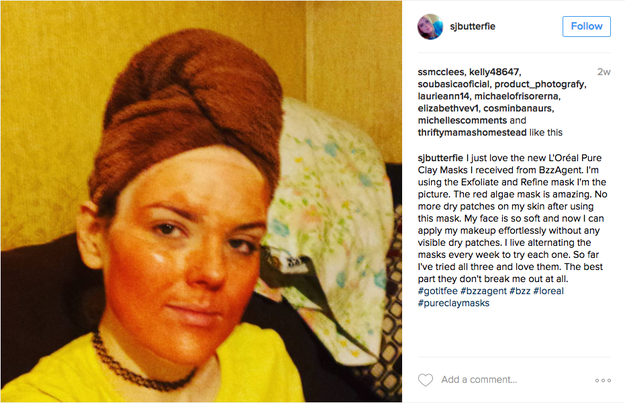
@sjbutterfie / Via instagram.com

Public Citizen found 50 examples of undisclosed influencer posts on Instagram between Sept. 1 and Nov. 14, a handful of which belonged to users with fewer than 1,500 followers, according to its letter to the FTC.

One review from BzzAgent member @sjbutterfie, who describes herself as a blogger, influencer and product reviewer, writes, “I just love the new L&039;Oréal Pure Clay Masks I received from BzzAgent.”

She goes on to rave about how the mask left her skin “so soft” that she can now put makeup on “effortlessly.” She includes the hashtags bzzagent and . But no tag mentions it is an ad.

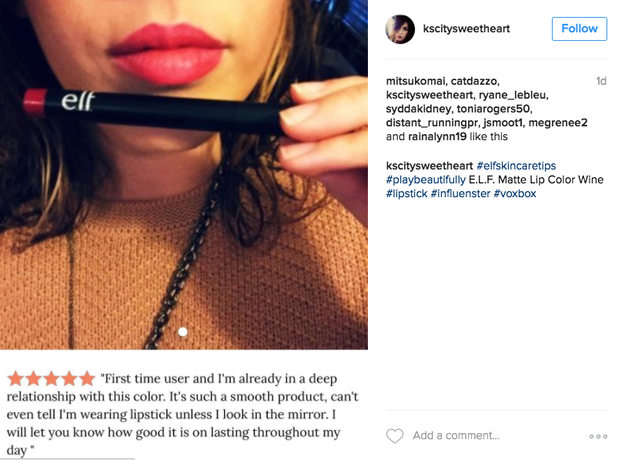
Another post for Influenster by @kscitysweetheart found by BuzzFeed News shows a picture of an E.L.F. lipstick along with a five-star review. The caption on the post is simply the product name and five hashtags including influenster and .

@kscitysweetheart / Via instagram.com

The FTC has not explicitly told brands and influencers how they need to disclose their financial relationships, Bonnie Patten, an attorney and executive director of the non-profit group Truth In Advertising, told BuzzFeed News.

But it does require a “clear and conspicuous” disclosure when an influencer is paid or given a product for free “with the expectation that you’ll promote or discuss the advertiser’s products,” according to its site.

“You can’t hide the disclosure in a show more description in a YouTube page,” said Patten. “You can’t hide the hashtag ad or in the midst of 22 other hashtags. Basically the law says you have to be transparent and the consumer shouldn’t have to work harder to figure out whether this is an ad or not.”

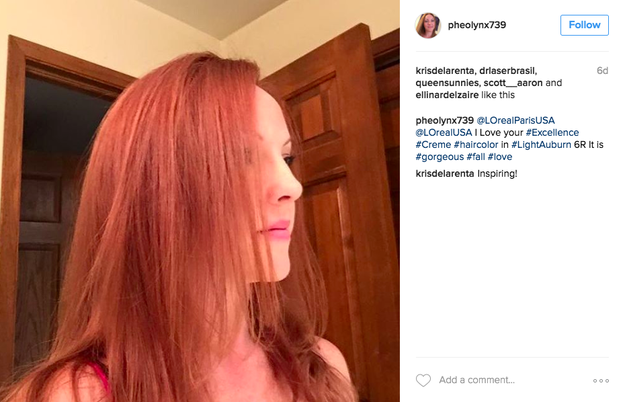
@pheolynx739 / Via instagram.com

BzzAgent and Influenster together have nearly 3 million members who receive free products to review online. Both companies told BuzzFeed News that they take disclosure seriously and have their own disclosure guidelines for members. If their members don&039;t follow the rules, they risk getting kicked out.

BzzAgent reviewers must use or in their posts. Influenster reviewers must simply disclose they received the product “complimentary” from a brand.

Candace Lee, BzzAgent&039;s head of audience, told BuzzFeed News that she has suspended some accounts over disclosure issues. But “it&039;s not problematic for us,” she added.

“We have the vast majority of our agents complying with our hashtags,” she said.

Influenster declined to disclose how many of its members had been suspended over disclosure issues.

The issue of nondisclosure may become more important as Instagram prioritizes photos and videos in feeds based on a user&039;s relationship with the person posting, the timeliness of the post and their interests. While celebrities have bigger followings, a friend of a friend could have their posts appear higher in your feed.

Justin Kline, co-founder of advertising business Markerly, which connects brands to influencers, told BuzzFeed News that the company steers its clients away from working with bigger celebrities. Brands tend to get higher engagement through people who may already be passionate about the product but have a smaller following, he said.

“There are some negative connotations in working with influencers and people thinking, &039;Oh I’m being tricked by this person,&039;” he said. “We try to steer our clients in being honest — &039;I got chosen by this brand to promote this product.&039; Just embracing that whole notion, it comes off more authentically.”

But Strader with Public Citizen said this strategy makes advertising “even more seamlessly integrated in our social media platforms” which can leave consumers very little room to opt out.

“There are a lot of people who choose not to follow celebrities or companies or anyone who can give them an advertisement; they just want to follow their friends,” she said. “This is advertisers finding their way into a consumers&039; lives who actively don&039;t want them there. This is them reaching an audience without that audience having any control over it or any knowledge of it.”

Quelle: <a href="Instagram Advertisers Switch From Celebrities To "Microinfluencers"“>BuzzFeed

You Are Now Able To Download Shows And Films On Netflix

Downloads are available worldwide. Finally.

Netflix has announced that all users worldwide will be able to download its shows for offline viewing, starting today. The service will be available at no extra cost.

Netflix has announced that all users worldwide will be able to download its shows for offline viewing, starting today. The service will be available at no extra cost.

Netflix

While many members enjoy watching Netflix at home, we’ve often heard they also want to continue their Stranger Things binge while on airplanes and other places where internet is expensive or limited. Just click the download button on the details page for a film or TV series and you can watch it later without an internet connection.

Via media.netflix.com

The feature will be enabled in iOS and Android on phones and tablets and will be available for those who have updated the most recent version of the app. Netflix content is currently not available to download on your laptop.

At the moment only some shows are available to download, including The Crown and Black Mirror.

At the moment only some shows are available to download, including The Crown and Black Mirror.

Netflix


View Entire List ›

Quelle: <a href="You Are Now Able To Download Shows And Films On Netflix“>BuzzFeed

Tim Cook On Apple's 10th-Anniversary (Red) Campaign Against AIDS

Getty Images

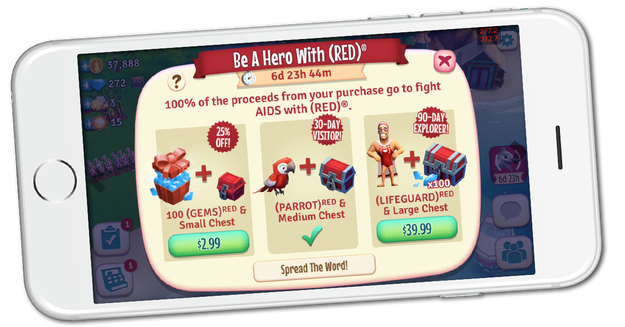
It was 2006 when Apple joined the (Red) campaign, an effort to rally the private sector in the fight against HIV/AIDS. Now, 10 years after it fielded its first (Product) Red device — a special edition iPod nano — Apple has emerged as field marshal of sorts for (Red), using its marketing heft and considerable retail reach to raise awareness about HIV/AIDS as an ongoing global health crisis. In the process, it’s raised from the proceeds of (Red)-branded Apple products more than $120 million of the $360 million (Red) CEO Deborah Dugan says the organization has generated to date. That makes Apple the world’s largest corporate contributor to the Global Fund, a nonprofit partnership dedicated to the eradication of HIV/AIDS, malaria, and tuberculosis.

“Part of being a great company is leaving the world better than you found it.”

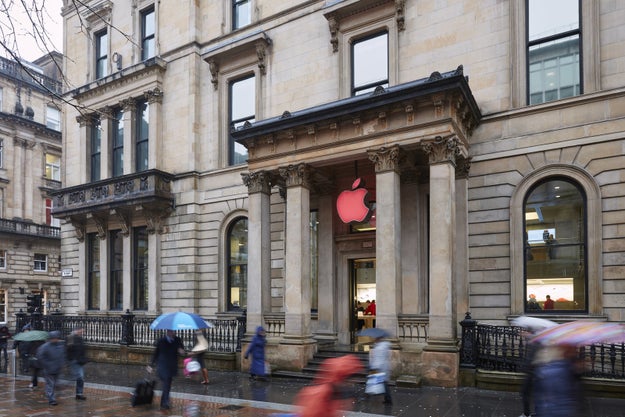
Beginning today, Apple is marking World AIDS Day and the 10th anniversary of its support for (Red) with an expansive campaign that CEO Tim Cook says was “designed to reach people via all the different ways in which a customer might touch us.” That means custom (Red) content on the App Store; up to $1 million in $1 (Red) donations for every Apple Pay purchase made at the Apple Store (online and off); an iTunes-exclusive holiday album from the Killers, the full US proceeds of which will go to the Global Fund; four new additions to Apple’s year-round (Product) Red portfolio, including a pair of Beats Solo3 wireless headphones; and (Red) branding — largely via red-tinted Apple logos — at some 420 Apple Stores across five continents.

For Cook, whose tenure as CEO of Apple has been defined in part by principled stands on human rights and calls for social progress, the company’s ongoing participation in efforts like (Red) is driven by a strongly held belief in corporate social responsibility.

“My view on this — which I recognize is different from that of some others — is that just as people have values, so too should corporations,” Cook told BuzzFeed News. “One of ours at Apple is the idea that part of being a great company is leaving the world better than you found it.”

And through its involvement in (Red), Apple is working to do just that. According to the World Health Organization, HIV has killed some 35 million people since the epidemic began. But thanks to greater availability of antiretroviral (ARV) medications like those (Red) helps purchase — some 18 million people are currently on ARV medications, largely thanks to (Red) — fewer HIV-positive mothers are passing the virus to their unborn children. “Over 400 kids with HIV are born every day,” Cook said. “That’s down from 1,200 a decade ago, so there’s been significant progress. 400 a day is obviously still 400 too many, but we are on target to have an AIDS-free generation in 2020.”

Apple’s effort on behalf of (Red) is textbook creative capitalism, an estuary of altruism and consumerism that Cook believes dovetails nicely with Apple’s core competencies.

“We look for ways we think we can uniquely contribute to the world in which we live,” Cook said. “And we’ll always touch more people through our products than anything else. … It’s that area — an area in which we have expertise — where we think we can make a contribution that multiplies well beyond simply writing a check. We want to advocate for human rights in a way that people can look at what we’re doing and say &;you know, I could be a part of something like that’ — ‘I could do something like that.’ For us this is critically important.”

“I think we can all agree that the right to live is perhaps the ultimate human right.”

The 10th anniversary of Apple’s support of (Red) and its efforts to eradicate HIV/AIDS come amid growing unease over US President-elect Donald Trump’s repeated pledges to repeal the Affordable Care Act upon taking office in January, a move that could herald dire consequences for the uninsured/underinsured persons living with HIV who’ve come to rely on it. Asked if there might be heightened sense of urgency around this year’s (Red) campaign given Trump’s remarks, Cook observed that ridding the planet of preventable disease is a bipartisan issue.

“I don’t see this as a political issue at all,” Cook said. “This is about people living — it’s about giving people the gift of life. Regardless of people’s political beliefs or backgrounds, I think we can all agree that the right to live is perhaps the ultimate human right.”

Quelle: <a href="Tim Cook On Apple&039;s 10th-Anniversary (Red) Campaign Against AIDS“>BuzzFeed

Corrupt Law Enforcement Sold Information To Silk Road Mastermind, Lawyers Say

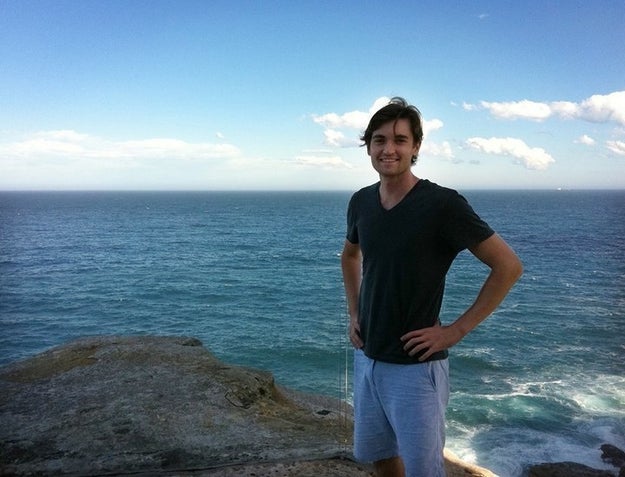
Ross Ulbricht

Facebook

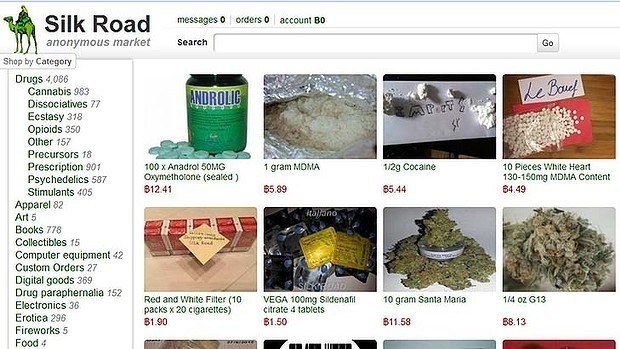
A person with inside knowledge of law enforcement’s investigation into dark-web drug bazaar Silk Road sold information to the site’s mastermind, according to lawyers for Ross Ulbricht, the man convicted over the site and sentenced to life in prison.

Attorneys for Ulbricht, who was convicted last year of seven drug crimes, said Tuesday that a user named &;notwonderful&039; communicated with the Silk Road boss’s Dread Pirate Roberts account on the site&039;s forum in the summer of 2013.

According to the defense attorneys, notwonderful asked DPR to pay him or her an $8,000 down payment, with subsequent payments of $500 per month, in exchange for information on the authorities&039; investigation into Silk Road.

After DPR was said to have agreed, notwonderful allegedly set up an account on the Silk Road marketplace under the name albertpacino in order to receive the payments in bitcoins.

Ulbricht’s attorneys believe that between $10,000 and $11,000 was paid by DPR to the albertpacino account. The last payment was made in September 2013 just weeks before Ulbricht’s arrest inside a California library, where his laptop was still logged-in to the DPR account.

Ulbricht’s lawyers said that the information “kept DPR one step ahead” of the investigation.

Ulbricht’s lead attorney, Joshua Dratel, said that his team found the communications between notwonderful and DPR while examining an administrator version of the forum they just discovered this past summer during their persistent review of the massive amount of digital data — an estimated five to six terabytes — from the Silk Road.

However, in a puzzling twist, Dratel said that the communications were missing from previous versions of the forum that were turned over to the defense during the course of the case by the government. In fact, all forum data from July and August 2013 is missing from those government versions, Dratel said.

“Why was it wiped? Because somebody didn’t want it to be found,” Dratel said.

Silk Road

According to Ulbricht’s attorneys, notwonderful told DPR that they were working as a law enforcement analyst and had access to the same intel as field agents. The notwonderful user allegedly told DPR that he was “in it for the money” and thought the Silk Road was “interesting” and “in a fantasy world I might be doing this myself.”

Ulbricht’s attorneys said that they reviewed the investigation information that notwonderful provided to DPR and that the timing and substance of communications align with information that agents testified to during the case, further leading them to believe that the person operating notwonderful was a corrupt law enforcement agent.

However, Dratel said that they had reason to believe notwonderful is not one of the two former law enforcement agents who were convicted of corruption related to their investigation into Silk Road, DEA agent Carl Mark Force and Treasury Department special agent Shaun Bridges.

Force and Bridge were caught extorting hundreds of thousands of dollar in bitcoin from site admins that they transferred to personal accounts.

Dratel said that during the investigations of Force and Bridges all of their electronic devices were seized and investigated by the government, and neither albertpacino or notwonderful came up. If one of the corrupt agents had operated under these aliases, Dratel said, “We would have seen it in hundreds of pages.”

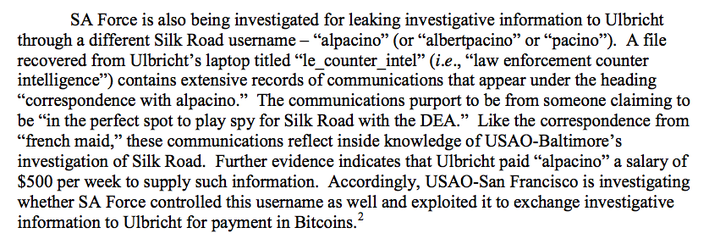
However, the albertpacino handle was referenced in the Force case at least one time during the investigation, according to a recently unsealed 2014 letter in which Department of Justice officials discussed their probe of agency corruption:

Department of Justice

However, the albertpacino handle was never officially mentioned again in the case.

“This is someone else,” Dratel maintained.

Ulbricht’s team said that they sent a letter requesting additional discovery to prosecutors handling the case against the corrupt agents in the District of Maryland. They hope to gain more information about notwonderful and albertpacino and determine why exactly the forum communications were wiped from versions of the site that the government turned over to the defense.

“If they have investigated, we should be apprised of the results,” Dratel said. “If they haven’t, the government is derelict.”

Ulbricht is currently appealing his life sentence in the Second Circuit. At the appeal arguments in October, the judges indicated some apprehension, calling the life sentence for Ulbricht “unusual” and “quite a leap” given his lack of a criminal history.

The judges also asked whether allowing the impact statements of families whose loved ones died after buying drugs from the Silk Road and overdosing created “enormous emotional overload” at sentencing.

During his argument at the appeal, Dratel told the panel of judges that corrupt agents had administrative privileges and hijacked user accounts. “They were inside the guts of the website,” Dratel said.

Ulbricht’s attorneys said that this new evidence would not have direct immediate impact on the appeal. However, Dratel said that this new information “amplifies our defense that the investigation lacked integrity.”

They also said they would not ask the Second Circuit to put the appeal aside while they continue to investigate. However, they said they were not ruling out using this new information about notwonderful selling information to DPR as the subject of a new trial motion at some point.

LINK: Judges Question Whether Life Sentence For Silk Road Founder Is Unfair

Quelle: <a href="Corrupt Law Enforcement Sold Information To Silk Road Mastermind, Lawyers Say“>BuzzFeed

Trump’s Transportation Secretary May Be Friendly To Uber and Lyft

Former US Secretary of Labor Elaine Chao arrives at Trump Tower on a day of meetings scheduled with President-elect Donald Trump on November 21 in New York.

Eduardo Munoz Alvarez / AFP / Getty Images

Uber and Lyft cheered President-elect Donald Trump’s Department of Transportation pick, Elaine Chao, after her appointment today.

“Ms. Chao&;s knowledge of transportation issues is extensive and we look forward to working closely with her,” Niki Christoff, head of federal affairs at Uber, said in a statement.

Lyft spokesman Adrian Durbin said the company looks forward to working with Chao and has the “utmost respect” for her.

The admiration is mutual. As recently as November, 2015, Chao expressed general support for ride-hail — and skepticism of regulation thereof — arguing in a speech to the American Action Forum Panel that “at a minimum, government policies must not stifle the innovation that has made this sector such an explosive driver of job growth and opportunity.”

Chao was deputy secretary of the DOT under President George H.W. Bush, and labor secretary under the second Bush. She is married to Senate Majority Leader Mitch McConnell, a connection that could help as Trump looks to push forward an ambitious infrastructure plan. Her appointment comes at a time when the transportation industry faces a crucial turning point: cash-strapped local agencies across the US are outsourcing public transit to private companies, and the tech and auto industries are racing to put self-driving cars and trucks on the road, threatening millions of jobs.

Local governments with strained budgets are increasingly subsidizing Uber and Lyft rides for their residents as an alternative to adding bus routes and building parking structures. In August, DOT Secretary Anthony Foxx told BuzzFeed News he expects public transportation to continue to be outsourced to private companies.

But Uber and Lyft, which employ their drivers as independent contractors, are also facing legal battles in courts across the country with drivers who say they should receive benefits such as reimbursement for expenses.

On Tuesday, the same day President-elect Trump announced Chao’s appointment, Uber drivers joined nationwide protests for $15 minimum wages. BuzzFeed News reported in June that Uber drivers in three major US markets — Denver, Detroit, and Houston — earned less than $13.25 an hour after expenses in late 2015.

A report by the Government Accountability Office, a watchdog agency, found in 2008 that Chao’s labor department “inadequately investigated complaints from low-wage and minimum wage workers alleging that employers failed to pay the federal minimum wage, required overtime, and failed to issue a last paycheck.”

In a statement today, Jim Conigliaro Jr., founder of the Independent Drivers Guild, which represents over 45,000 Uber drivers in New York City, said, “As Labor Secretary, Chao failed to stand up for workers and safety.”

“At a time when the transportation industry is being transformed by companies like Uber that want to put driverless vehicles on our roads, we need leadership that puts safety first,” Conigliaro said. “Chao&039;s hands-off approach could be dangerous for America&039;s roads.”

Chao’s administration will also likely have a heavy hand in determining the regulation of autonomous vehicles. The agency released guidelines for self-driving vehicles in September. It may fall to the next transportation department to finalize those rules. Where Chao stands on self-driving vehicles is unclear, but her department’s actions could influence the livelihoods of millions of truck and ride hail drivers.

In October, Otto, the self-driving truck company owned by Uber, demonstrated its first delivery for Anheuser-Busch.

Chris Spear, President and CEO of the American Trucking Associations, the largest trade group for that industry, said in a statement that Trump “could not have picked a more qualified, experienced and dedicated individual to serve in this important role.”

“I had the privilege of serving with and working closely with Secretary Chao during my time at the Department of Labor, and I am extremely pleased that she will be taking on this new challenge,” Spear said.

Quelle: <a href="Trump’s Transportation Secretary May Be Friendly To Uber and Lyft“>BuzzFeed

The Clever Trick An Alt-Right Hot Spot Is Using To Seem Much, Much Bigger

Since the presidential election, the media has paid an enormous amount of attention to the alt-right, a loose confederation of trolls, white nationalists, conservatives, and neo-Nazis. From intense scrutiny of Steve Bannon — the former Breitbart executive appointed to be Donald Trump&;s chief strategist — to blanket coverage of a white separatist press conference last week in Washington, DC, the spotlight has been commensurate with a major new force in American politics.

But there&039;s a fundamental problem in our understanding of the alt-right: No one knows how many people the controversial movement comprises. Like Anonymous and other leaderless, internet-driven movements before it, the alt-right leverages social media to amplify its message while keeping its membership, if you can call it that, obscure.

Last week, the journalist John Herrman noticed one eye-popping number: 7,528,000, or the total number of subscribers to the subreddit r/altright. That would make r/altright one of the 50 most popular pages on Reddit, up there with huge general interest subs like r/food and r/gadgets.

And this morning, that number had grown by a factor of 1,000, to the humungous figure of 8,190,000,000, or roughly half a billion subscribers more than the population of planet Earth.

So what the heck is going on?

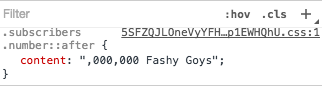
The moderators of r/altright appear to be playing a simple trick with an input prompt. Reddit allows moderators to customize the name for subscribers to a subreddit in the right-hand column where the subscriber count appears, so the group of subscribers could be called “readers,” or “followers,” or “fanatics” — whatever you like. In the case of r/altright they appear as “Fashy Goys.”

A simple right-click inspection of the page HTML shows that name, but it also shows something else: six zeroes.

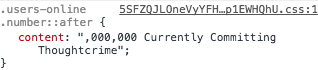
That places the true subscriber count directly next to a multiplier of 1,000,000 (or when Herrman noticed it last week, merely 1,000). A moderator appears to have done the same thing with the online count for the current number of subscribers:

On the moderator page you can find the real number of subscribers, 8,191, or approximately .000001 of Earth&039;s population.

Eight thousand subscribers isn&039;t nothing: As the Anti-Defamation League found in its examination of anti-Semitic abuse against journalists, a relatively small number of internet users can make a hell of a lot of noise. But it does provide a new data point about an amorphous movement that may have a vested interest in appearing bigger than it really is.

Reddit did not respond to a request for comment.

Quelle: <a href="The Clever Trick An Alt-Right Hot Spot Is Using To Seem Much, Much Bigger“>BuzzFeed