A Silicon Valley Party Tries To Put Guests To Sleep
Courtesy / Hardy Wilson

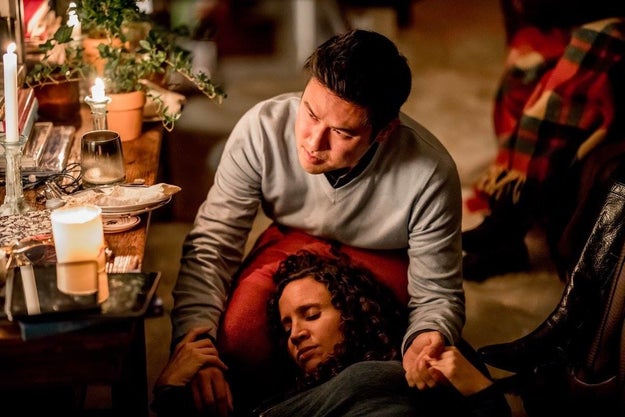
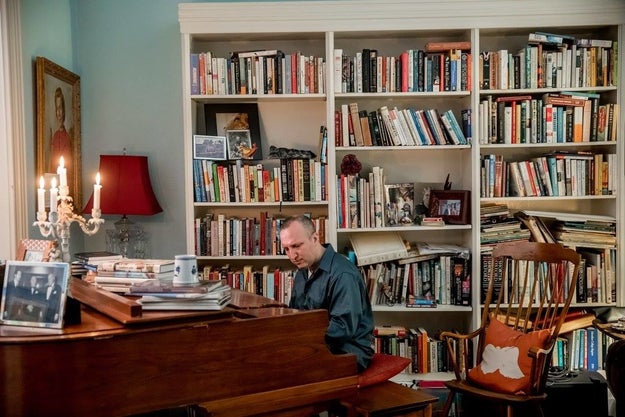
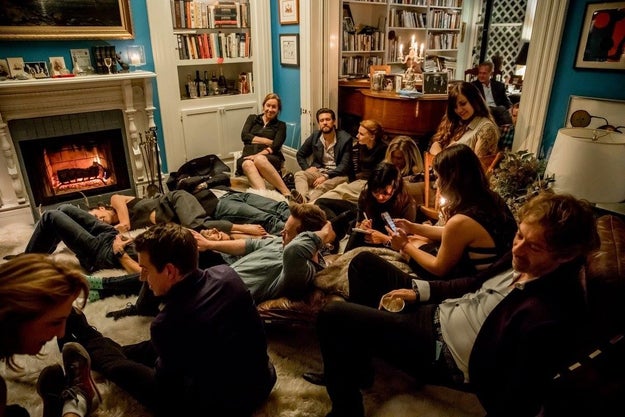
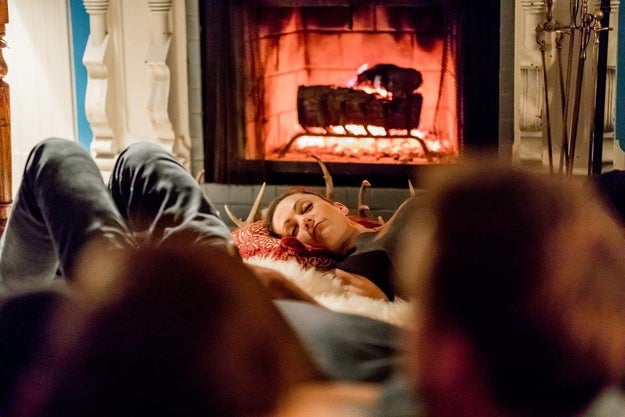
On a recent night, the hottest place for a certain swath of tech-happy San Franciscans to be was sprawled out, eyes closed, on the floor of an elegant Victorian in the city’s Pacific Heights neighborhood. A dozen others, sunk deep into couches, were nodding off with faint smiles on their faces. The sun had set hours ago. Candles illuminated the cozy living room, lined with bookshelves and paintings.

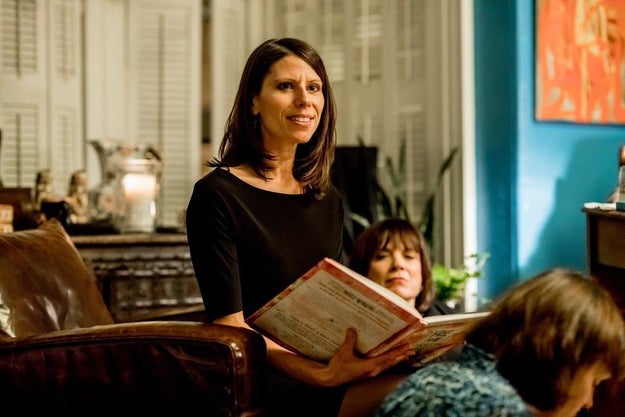
The event was meant to underline the importance of sleep — the struggle to make time for it, the agony of tossing and turning, the exhaustion from having too little. And every pain point, as they like to say in Silicon Valley, is a profit opportunity. “I think meditation’s very 2014 or very 2015,” half-joked Susan MacTavish Best, a self-described brand influencer who was throwing the sort-of slumber party for a sleep app, Calm, at her home. “I think sleep is a great market and a great business, because we all have to do it.”

For insomniacs seeking solutions beyond Ambien and staring at the ceiling, a wave of slick software, sensor-filled gadgets, and other high-tech accessories promises swift entry to dreamland. There are glasses and masks to lull you into REM, bracelets to measure their success, and earplugs to shut out disturbances. There are devices that monitor how good your room is for snoozing and shower you with light in the morning, and apps that coach you to fall asleep and fill your ears with white noise. Arianna Huffington — co-founder of The Huffington Post, self-described “sleep evangelist,” and author of The Sleep Revolution — late last month launched Thrive Global, a company on a mission to “end the escalating stress and burnout epidemic.” More than 50 million Americans struggle with sleep disorders.
Courtesy / Hardy Wilson

Now comes Calm. Known for a popular app with guided meditations, the San Francisco startup recently expanded into sleep by adding recordings of grown-up bedtime stories. They include John Muir’s tranquil nature essays, set to the sounds of birds chirping, and the economic tome The Wealth of Nations, read by Ben Stein, the droning teacher in Ferris Bueller’s Day Off (what could be more sleep-inducing?). MacTavish Best’s gathering was a launch party of sorts for the new feature, and put attendees in a stupor with hot butter rum and bourbon-laced cider. Wistful piano melodies drifted through the air. Fluffy white rugs transformed the floor into a field of clouds, and our host encouraged us to spread out, shoes off, and get comfortable with each other. (Earlier, I’d had to explain to my editors that, despite how it sounded, I was not attending an orgy.)

Having lain in bed inexplicably awake until 6 a.m., I was feeling curious, in a hazy, exhausted sort of way, about my fellow partygoers’ sleep habits. I found solidarity with Diane Anderson, a public relations professional, who told me, “I have a hard time falling asleep. I think I’m just a worrier.” About what? “My kid, my finances, my house.” She envies her boyfriend, Michael Fitzsimmons, who has no such problem. “I take a nap every day, some time between 1 and 4:30,” Fitzsimmons, who raises money for hedge funds, said. “I’ve literally been early for meetings in my car, and I’ll put the seat back and recline and fall asleep for five minutes.”

In the pre-industrial era up until the late 17th century, before electric and gas light blurred the line between night and day, people often slept after dusk, naturally woke up for one or two hours, then went back to bed. More than a few centuries later, a 30-year-old British tech employee told me that he keeps a similar schedule: He’ll go to bed at 9, get up at midnight to read or listen to music, and fall asleep again until 5 or 6. “I can fall asleep in a nightclub if I want to,” he told me. “It’s staying asleep that’s the difficult part.”

“What if you go to bed drunk?” someone asked.

“That’s a whole different ball game. I only sleep for an hour.”

Like lots of us, Laurie Keith struggles to shut off her gadgets before turning off the lights. “I go to bed looking at Facebook, looking at Twitter, reading my email,” said Keith, who works for the Advertising Council. “That, combined with a little bit of TV, maybe a little bit of HBO Go, maybe a little bit of Netflix, and that’s why it’s hard to go to bed at night.”

And she’s anxious about what all that screen time is doing to our bodies. “If we do not separate from these devices and remember we are human beings first,” she said, “it just becomes this addictive pattern.”

The tech business does seem to be an unlikely source of sleep salvation — and not just because its products tend to keep us up at night. Many of the people who make them are workaholics, proudly so. “‘Could you work 130 hours in a week?’” Yahoo CEO Marissa Mayer once said of Google’s early years. “The answer is yes, if you’re strategic about when you sleep, when you shower, and how often you go to the bathroom.” Jack Dorsey works 18-hour days as CEO of both Twitter and Square, and Apple CEO Tim Cook wakes up at 3:45 a.m. Tim Ferriss, an entrepreneur and tech angel investor, insists two hours is better than eight.
Courtesy / Hardy Wilson

But sleep deprivation isn’t much of a bragging right if what you’re working on is a sleep app. Alex Tew, Calm’s co-founder, told me he can sleep 16 hours a night without effort, although he usually gets seven to nine. “The myth of working and sleeping three hours a night, I think it’s mostly bullshit,” he said. “I think people lie.”

“You’re probably not going to succeed or fail based on how much sleep you get,” he added. “What’s more important is that you’re working on something that’s awesome.” The idea behind Calm’s new feature, he told me, is that instead of forcing you to choose between your phone and your pillow, you can bridge the gap by letting your phone tell you tales. It’s not as forensic an approach to sleep as resetting your circadian clock, but there’s something soothing — if old-fashioned and decidedly non-tech — about the idea nonetheless.
Courtesy / Hardy Wilson

At the gathering, we settled in for some nocturnal storytelling from two voice actors hired by Calm, marking the first time that most of us had probably heard a bedtime story since elementary school. Putting our phones in airplane mode, we started off with a deep-breathing meditation session. Then, in the nearly silent living room, we listened to a mystery, followed by a fairy tale, told in tones only slightly louder than the crackling fireplace. At one point, a group of people passed by on the sidewalk. So absolute was our concentration that their laughing and shouting felt jarring.

One by one, we let our shoulders droop and minds unwind. We curled up into balls, leaned against walls, and stretched out head to toe. Time passed — a half-hour? 45 minutes? — and after the last word of the last story, there was a pause before we shook ourselves. Now fully drowsy, certain that my insomnia bout was over, I felt tempted to linger as long as possible in the spell, that space between wakefulness and sleep. But the dream was short-lived: I really needed to check my phone.
Courtesy / Hardy Wilson

Quelle: <a href="A Silicon Valley Party Tries To Put Guests To Sleep“>BuzzFeed
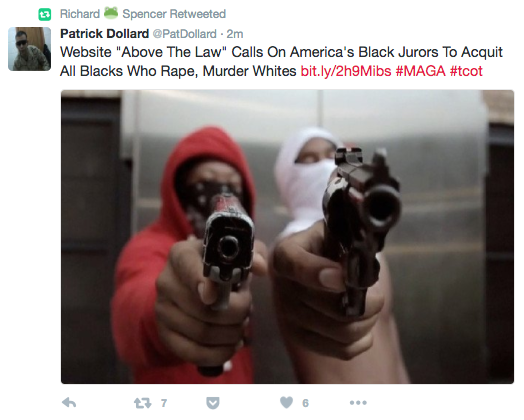
Twitter Re-Instates White Nationalist Leader, Richard Spencer

On Saturday evening, Twitter re-instated the account of Richard Spencer, a leading figure of the so-called alt-right movement and the head of the white nationalist think tank, The National Policy Institute.

Spencer&;s account was suspended mid-November as part of a larger cull of prominent alt-right accounts, including Ricky Vaughn (who was previously banned after a BuzzFeed News story detailing his campaign to disenfranchise voters with false information), former Business Insider CTO Pax Dickenson, and John Rivers. Twitter did not comment on as to the reason for the ban, leading many to believe that the justification was for any number of violations of Twitter&039;s rules for targeted harassment, incitement, and hate speech.

However, according to Twitter, Spencer&039;s ban was due to a technicality: creating multiple accounts with overlapping uses. Twitter&039;s multiple account policy was put in place as a safeguard to help curb dog piling and targeted harassment. An email provided to BuzzFeed News shows that Twitter suspended Spencer for overlapping accounts and would re-instate one of Spencer&039;s accounts if he followed Twitter&039;s protocols.

Hello,

As referenced in our November 18, 2016 communication, creating serial and/or multiple accounts with overlapping use is a violation of the Twitter Rules (https://twitter.com/rules).

Please select one account for restoration; the others will remain suspended. This account will need to comply fully with the Twitter Rules (https://twitter.com/rules). Please reply to this email with the username of the account you would like reinstated and we will make sure to answer your request in a timely manner.

Thanks,

Twitter

“Our rules explicitly prohibit creating multiple accounts with overlapping uses. When we temporarily suspend multiple accounts for this violation, the account owner can designate one account for reinstatement, ” a Twitter spokesperson told BuzzFeed News. “Twitter Rules also prohibit hateful conduct, harassment, and violent threats. We will take action on accounts that violate these policies.”

In a posted tweet a few minutes after his re-instatement, Spencer claimed he&039;d Twitter lobbied to get the account back. “I worked on getting my personal reinstated first. Next will be Radix, NPI, _AltRight_, and WSP,” he said referring to the accounts of his White Nationalist think tank, journal, and publishing platform. Twitter&039;s rules would suggest that Spencer will not be able to re-instate these other accounts without violating Twitter&039;s rules once again. Spencer did not immediately respond to BuzzFeed News&039; request for comment.

The re-instatement of Spencer&039;s account comes at a difficult policy moment for Twitter, which is grappling with its role in policing its platform in a post-Trump world. Spencer&039;s ban in November angered free speech advocates and even political observers. After the ban, David Frum wrote of the seemingly arbitrary policing of Spencer&039;s account in The Atlantic noting, “In the case of Richard Spencer, however, there is no evidence of harassment or incitement to harass. The same can be said of most (although not all) of the other accounts suspended on November 15. These suspensions seem motivated entirely by viewpoint, not by behavior.”

Twitter&039;s enforcement with regard to the behavior of many members of the far right has been particularly opaque and inconsistent since the company decided to permanently suspend noted troll and Breitbart writer, Milo Yiannopoulos this summer. Twitter suggested the decision to suspend stemmed from Yiannopoulos using his account to incite his followers to harass targets and that the ban was the result of actions and not speech (a justification seemingly attributed to Spencer&039;s ban).

Just this week, the company came under pressure to address the actions of Donald Trump, after the President-elect&039;s tweets lashing out against Indiana union leader Chuck Jones prompted Jones to receive threatening phone calls. As BuzzFeed News wrote last week, Trump&039;s tweets raised “questions about whether such behavior might run afoul of Twitter’s gauzy rules for conduct and its prohibitions against harassment and incitement.” Twitter declined to comment as to whether Trump&039;s tweets were in violation of Twitter&039;s rules. However, public scrutiny and Trump’s use of platform might be causing unease. At a Recode event last week, Twitter CEO, Jack Dorsey was asked what Twitter thought about the President-elect’s use of the service. Dorsey’s response: “complicated.”

Though Spencer&039;s ban has been reversed, Spencer is now tip-toeing Twitter&039;s three strike policy, which carries a permanent suspension. A few hours after his re-instatement, Spencer appears to be back to form:

Quelle: <a href="Twitter Re-Instates White Nationalist Leader, Richard Spencer“>BuzzFeed

Doxxing May Become A Federal Crime

Mario Anzuoni / Reuters

Massachusetts Rep. Katherine Clark wants to make “doxxing” a federal crime.

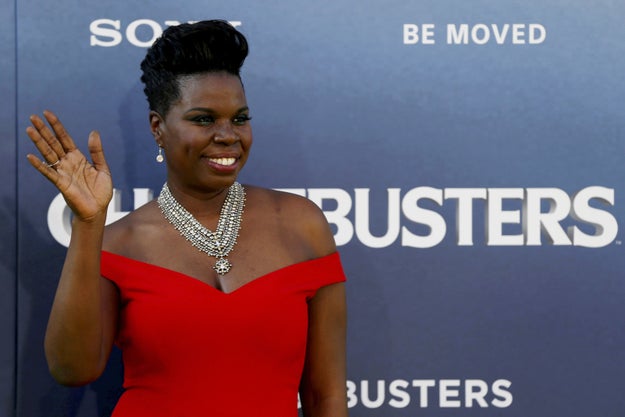
Doxxing, the malicious online publication of a person&;s sensitive information, caught the public&039;s attention this summer after a high-profile attack on SNL actress Leslie Jones. Hackers breached Jones&039; website, posting nude photos of her, as well as pictures of her driver&039;s license and passport. The hack, which seemed motivated at least in part by racism and misogyny, prompted an investigation by the Department of Homeland security, although no culprit has yet been announced.

By proposing a new law, Clark told BuzzFeed News she&039;s trying to ensure that citizens are protected from a growing number of cybercrimes. Her bill would create a federal prohibition on doxxing, which she defines as “specific criminal intent to place another person in fear of death or serious bodily injury by knowingly publishing their personally identifiable information.”

Convicted offenders of the Interstate Doxxing Prevention Act would face fines and up to five years in prison. They could also face civil lawsuits.

The bill is part of Clark&039;s larger effort to grapple with severe harassment that often begins on screens but follows victims offline and everywhere else. A proposal to curb the spread of non-consensual pornography, so-called “revenge porn,” also counts Clark as a co-sponsor. Victims of web-enabled abuse are sometimes forced to take drastic actions to protect themselves, including fleeing their homes or hiring dedicated security.

Clark has also emphasized the economic hardship that victims face — amid severe online threats, targets are often forced to forgo work opportunities to stay out of harm&039;s way.

When a new Congress meets next year, Clarke will reintroduce a bundle of proposed laws to curb many types of online abuse that would provide law enforcement with the resources and urgency to prosecute this evolving form of cybercrime. The package will include the doxxing bill and another that criminalizes “swatting,” which is when hackers trick heavily armed emergency responders into showing up at a target&039;s location.

Clark herself was the victim of a swatting attempt earlier this year.

After an anonymous caller warned police of an “active shooter” at Clark’s home address, officers were dispatched to her residence, swarming the front of her house, some with rifles, she said at the time. A spokesperson for the Melrose, Massachusetts Police Department told BuzzFeed News that the anonymous tipster was attempting to elicit a police response. By manipulating law enforcement, swatting is intended to intimidate victims, damage property, and provoke bodily harm. According to the FBI, more than 400 swatting cases occur each year.

The types of sensitive information protected by the doxxing bill include: home addresses, social security numberers, bank account passwords, and cellphone numbers.

“We have seen a growing trend of using personal information and releasing it on the internet, often with a literal call to arms, to say, &039;This is where people live if you wanted to harass them, injure them, even [call for] death threats against them,&039;” Clark said. “It is an extreme form of intimidation that takes the threats right out of the virtual world and into our neighborhoods and into people&039;s private homes.”

“We are trying to address [this type of behavior], step up enforcement of the laws that are already on the books, and make sure, as cybercrime changes, that we are being flexible and changing to meet those security needs.”

Quelle: <a href="Doxxing May Become A Federal Crime“>BuzzFeed

If You Still Have A Galaxy Note7, Samsung’s New Update Will Make It Unusable

Drew Angerer / Getty Images

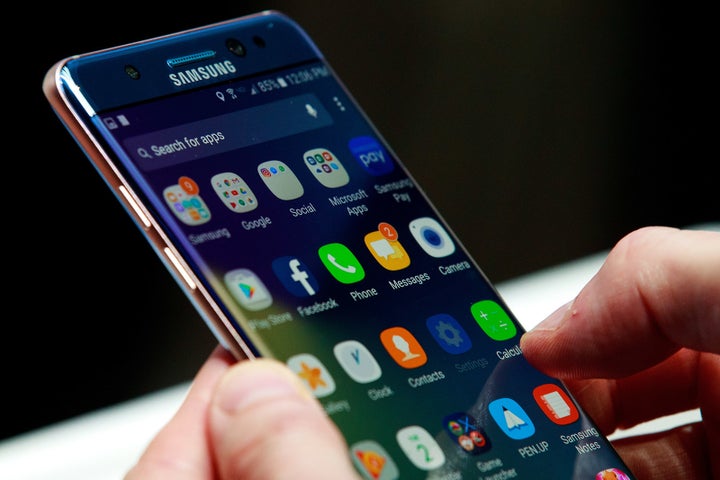
Samsung will start releasing a global software update on December 19 for its recalled Galaxy Note7 smartphone that will prevent the phone from charging, making phone calls, and sending text messages.

Samsung said in a statement that customers have returned 93% of the recalled phones. It aims to bring that to 100% with this software update, which will effectively render the phones useless.

But in a twist, Verizon will block the software update for its customers with Note7s. Jeffrey Nelson, Verizon&;s VP of global corporate communications, said in a statement that the cell service carrier wants to protect customers who may not have another device to immediately switch to, who may find themselves in emergency situations, or who may be traveling for the winter holidays. The company encourages Note7 owners to exchange their phones as soon as possible.

Verizon has so far complied with Samsung&039;s recall efforts, Nelson&039;s statement said. The majority of Verizon customers have already replaced their Note7s with other Samsung models, according to the statement, though it did not give exact numbers.

When asked whether the update will affect the relationship between Verizon and Samsung, a Verizon spokesperson said, “Samsung is a great partner, and we love working with them. This is just a situation where we don&039;t agree on this one thing.”

Samsung released the Galaxy Note7 in August 2016, but soon after the release, dozens of customers reported their phones were overheating and exploding. The US Consumer Product Safety Commission recalled the phone in September 2016, and Samsung began issuing its customers replacements.

Those replacements, however, were also prone to the same problems as the original Note7 phones. Notably, one grounded a Southwest Airlines flight in the US, which prompted all airlines in the country to ban the phone from any flight, going so far as to say they would confiscate the phone from passengers. Samsung responded by setting up return kiosks in major American airports.

Note7 owners can exchange their phones for another Samsung phone or a refund by visiting Samsung&039;s recall site.

Samsung did not immediately respond to a request for comment. Sprint said in a press release that it will push the update to customers’ Note7 phones on January 8, 2017. T-Mobile did not respond to a request for comment but said it would have a response soon. BuzzFeed News is waiting to hear back from AT&T about their plans for the update.

Quelle: <a href="If You Still Have A Galaxy Note7, Samsung’s New Update Will Make It Unusable“>BuzzFeed

Twitter Rolls Back Update After Mass Uproar

The people have won.

Twitter caused an uproar Thursday when it broadly rolled out a test where @names would be stripped from the start of replies in the Notifications tab and wouldn&;t be counted towards the character count in replies, with a limit of 50 @names. Well, oops, that was a mistake.

Twitter announced the changes in May and had been testing them since. But the broad iOS rollout apparently happened a bit ahead of schedule. Naturally, when seeing the changes, people on Twitter began to vent, turning the timeline into a rolling feed of complaints.

Multiple Twitter users are now reporting that the update is gone for them. But it may not be gone forever. Twitter is still testing the update with a small group.

Twitter CEO Jack Dorsey apologized in a tweet for “confusion.”

Reached for comment, a Twitter spokesperson pointed BuzzFeed News to the tweet above and declined further comment.

Quelle: <a href="Twitter Rolls Back Update After Mass Uproar“>BuzzFeed

NFL Punters Are Finally Cool, Thanks To Twitter

NFL punters, those guys who kick the ball as far as possible when their teams fail to score, haven’t always been the most respected players on the field. Football is a physical game, and punters stay as far away from contact as possible — it’s even a penalty to run into them after they kick. But while this contrast has long made punters the butt of jokes, something revolutionary is happening in the NFL this year: these erstwhile whimps are finally are becoming cool.

Punters are dancing, celebrating with swagger, and winning over legions of fans in the NFL in 2016. And if you want to understand why, just look at their Twitter accounts. Not long ago, punters were seen and not heard (with some exceptions). They&;d rarely take the media podium after the game, and would make headlines most often when they blew it. But these players have become masterful users of Twitter, finally giving themselves a voice to push back against the insults and celebrate their achievements. Combine that with Twitter’s video push, which has helped circulate punter highlights that TV broadcasts would never show, and the punter’s image is changing dramatically.

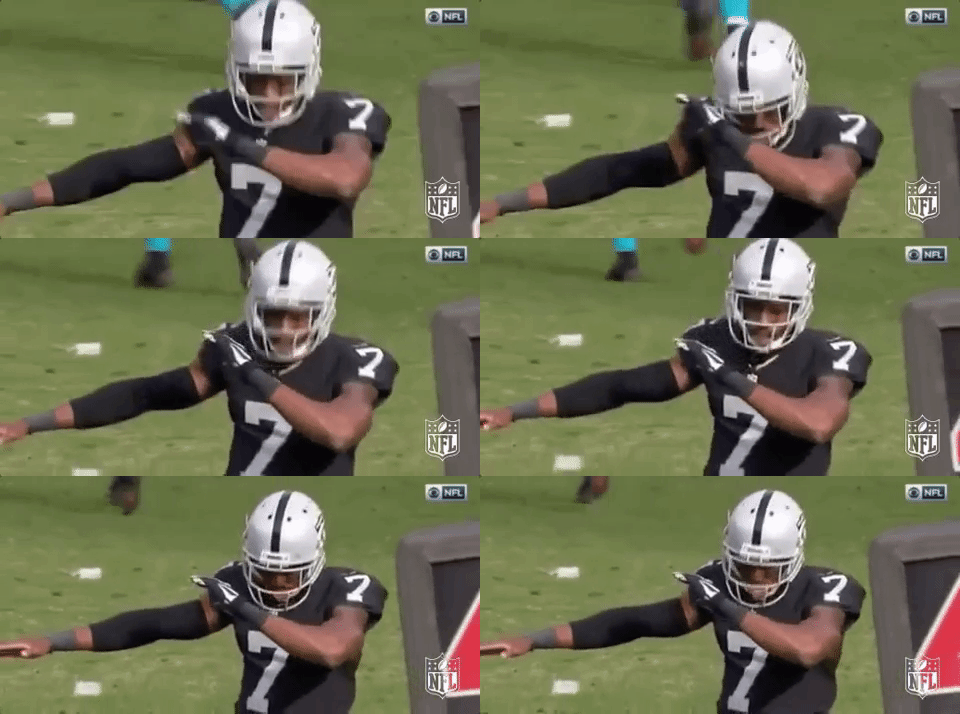
The two punters leading this charge are the Oakland Raiders’ Marquette King and Indianapolis Colts’ Pat McAfee. Both players shined in recent weeks thanks to seemingly good-natured scraps with opposing players on Twitter, both of which the punters dominated. King, for instance, called out an opposing player who got him penalized him on Sunday, tweeting a photo of the player pointing to a referee with the label “SNITCH.” That photo has been retweeted more than 96,000 times.

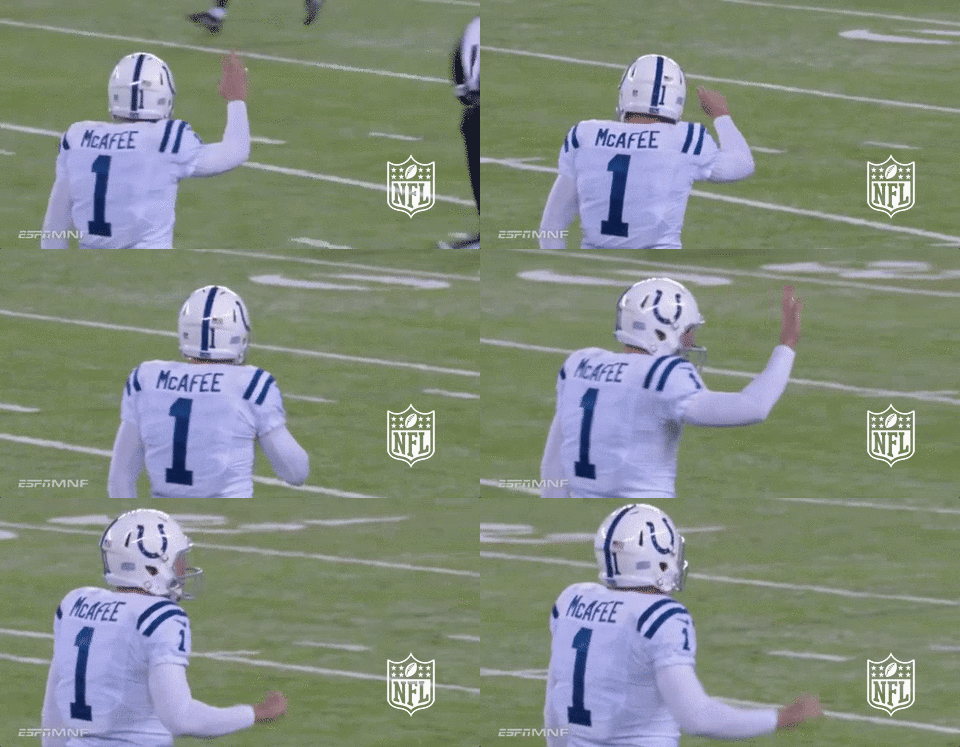
McAfee, for his part, put failed-quarterback-turned-successful-wide-receiver Terrell Pryor of the Cleveland Browns to shame last week. After Pryor poked fun of a swaggerlicious McAfee dance on Twitter, McAfee quote tweeted Pryor and wrote “Child please.. I&039;ve been doing this since you were still a quarterback.” The burn led Yahoo Sports to issue the warning: Do not mess with Pat McAfee on Twitter.

McAfee and King aren’t the only punters having fun on Twitter. Nearly every punter in the league has an account, and the majority seem to understand they’re having a moment. Johnny Hekker, who punts for the L.A. Rams, recently joked about his counterparts’ groovy moves, tweeting, “I cant wait to see all of the new dancing ratings for punters next year.” And New Orleans Saints punter Thomas Morstead regularly tweets behind the scenes photos and video of NFL life.

“Twitter did make punters cool. That&039;s true. And I love it,” Bleacher Report NFL columnist Mike Freeman told BuzzFeed News. “I like when players can express themselves and circumvent the league office which tries to strangle individuality.”

But Freeman also warned that, given the way some NFL fans deal with race, celebration of King may turn to criticism. “The backlash is coming,” he said. “Particularly for the punter in Oakland. When a black player celebrates, it&039;s often viewed much differently by the more right wing elements of NFL fandom. To some, [a] white punter in Indy celebrating is spirited. Black punter celebrating is showboat. I hope they all keep shaking their ass.”

And by all indications, shake their asses they will. On Monday night, McAfee kept up the tradition, artfully placing a punt at the hapless New York Jets’ two yard line, 98 yards away from the end zone. McAfee’s celebration, video of which circulated widely on Twitter, left the television broadcasters dumbfounded. After a few of McAfee’s golf waves and arm thrusts towards his chest, one announcer could barely muster, “I tell you what, these punters…”

Tonight, it will be King’s turn, as the Raiders play the Kansas City Chiefs in a prime time game that will be broadcast nationally on both television and, yes, on Twitter.

Quelle: <a href="NFL Punters Are Finally Cool, Thanks To Twitter“>BuzzFeed

Trump's Antagonistic Tweet Tests The Limits of Twitter's Rules

Jeff Kowalsky / AFP / Getty Images

Last night President-elect Donald Trump used his Twitter account to criticize Chuck Jones, an Indiana union organizer who has been sharply critical of Trump’s recent Carrier deal to keep jobs from moving to Mexico. Jones suggested the deal didn&;t save as many jobs as Trump had promised and said the President-elect “lied his ass off.” And so Trump lashed out publicly, lambasting Jones before an audience of some 17 million-plus Twitter followers:

Jones’ phone began to ring almost immediately with a flood of threats, according to a report from the Washington Post.

While Trump frequently air grievances on Twitter, his decision to single out a lone citizen with a public denouncement raises questions about whether such behavior might run afoul of Twitter&039;s gauzy rules for conduct and its prohibitions against harassment and incitement.

It&039;s tricky and unprecedented territory for Twitter. Trump is obviously free to mention individuals by name on Twitter, especially as they relate to policy and governing. However, Trump&039;s new role as the most powerful leader in the free world as well as, his extreme visibility, and the history of his followers targeting and harassing his enemies create potential fallout that stands to affect real people, regardless of the intent with which they are made. Simply put: as President, the potential consequences of Trump&039;s speech make his case — and Twitter&039;s potential enforcement — somewhat unique.

For some context, it&039;s worth noting how Twitter handled noted troll and Breitbart tech writer, Milo Yiannopoulos, who Twitter permanently suspended from the service last July. In Yiannopoulos’ instance, Twitter suggested the decision to suspend stemmed from Yiannopoulos using his account to incite his followers to harass targets and that the ban was the result of actions and not speech. “People should be able to express diverse opinions and beliefs on Twitter,” a company spokesperson said in a statement provided to BuzzFeed News after Yiannopoulos’ suspension. “But no one deserves to be subjected to targeted abuse online, and our rules prohibit inciting or engaging in the targeted abuse or harassment of others.”

Trump, for his part, appears to know the power of his account and the vitriol of some of his followers. Fox News anchor Megyn Kelly wrote in a recent memoir that Trump called her in 2015 after a segment on her show he didn&039;t like and threatened her with his legion of followers. “I almost unleashed my beautiful Twitter account on you, and I still may,” Kelly quoted Trump as saying in her book. Trump did eventually use his account to criticize Kelly which resulted in death threats, stalkers, and a torrent of harassment on and off Twitter.

“What people don&039;t realize about Donald Trump — and I don&039;t even know if Donald Trump realizes it — is that every tweet he unleashes against you…creates such a crescendo of anger,” Kelly said yesterday in an NPR interview.

Behavior of this sort is explicitly against Twitter’s rules, which state that “you may not incite or engage in the targeted abuse or harassment of others” and defines abusive incitement as:

If a primary purpose of the reported account is to harass or send abusive messages to others;

If the reported behavior is one-sided or includes threats;

If the reported account is inciting others to harass another account; and

If the reported account is sending harassing messages to an account from multiple accounts.

But while Twitter&039;s rules are explicit, the company&039;s interpretation and enforcement of those rules is far more opaque. Last month, when Twitter suspended a number of prominent accounts associated with the so-called alt-right movement, the company drew the ire of free speech advocates for shutting down the account of white nationalist think-tank leader, Richard Spencer. The company did not comment on any of the individual suspended accounts and did not provide any examples of Spencer violating rules (which led critics of the ban to suggest he had not), instead issuing a statement: “The Twitter Rules prohibit targeted abuse and harassment, and we will suspend accounts that violate this policy.”

In the Trump/Jones instance, murky waters are made even murkier by the fact that Jones’ position as a union leader, who has made media appearances, arguably elevates him to the level of a public figure. Similarly, another potential loophole for Twitter not to take action could be that Trump didn&039;t target Jones&039; account — he mentioned him only by name. Still, the company is in a tricky position. Last week, Twitter told Slate that it would consider banning key government officials and that “the Twitter Rules apply to all accounts, including verified accounts.”

Twitter declined BuzzFeed News&039; request for comment.

Trump, for his part, continues to be a vocal supporter of Twitter. Yesterday on the TODAY show, Trump praised the service as “a modern-day form of communication” that affords him to operate “much faster than a press release” and “much more honestly than dealing with dishonest reporters.”

Just hours before Trump&039;s comments, at a Recode event, Twitter CEO, Jack Dorsey was asked what Twitter thought about the President-elect&039;s use of the service. Dorsey&039;s response: “complicated.”

Quelle: <a href="Trump&039;s Antagonistic Tweet Tests The Limits of Twitter&039;s Rules“>BuzzFeed

Here's What You'd Have To Do To Get Banned From Uber

The ride-sharing giant has laid out hard rules for riders for the first time. No barfing and absolutely no flirting!

Drivers have had them for a while, but now riders are subject to definitive community guidelines. If someone reports misbehavior to Uber, the company will investigate and possibly suspend the rider&;s account while they&039;re looking into the complaint. If the investigation confirms the behavior, the rider could be banned for life, according to an Uber spokesperson.

The company has deactivated riders in the past based on similar guidelines but said that it&039;s making the rules public now in an effort to be transparent and build trust between riders and drivers.

Here’s what you have to do to get banned:

Here's what you have to do to get banned:

Via tenor.co

Have sex with a driver or another rider

Have sex with a driver or another rider

Tenor / Via tenor.co

In the past year alone, Uber has dealt with several reports that its drivers have sexually assaulted passengers. This new rule applies to rider/driver interactions and rider/rider interactions. No inappropriate touching or flirting is allowed, either.

Important note: Even if the sex is consensual, riders and drivers can be banned if Uber confirms that the sex happened, according to an Uber spokesperson.


View Entire List ›

Quelle: <a href="Here&039;s What You&039;d Have To Do To Get Banned From Uber“>BuzzFeed

Sheryl Sandberg Says Fake News On Facebook Didn’t Sway The Election

Facebook Chief Operating Officer Sheryl Sandberg on Thursday said that the company does not believe it swayed the election by allowing fake news to proliferate on its platform.

“There’ve been claims that it swayed the election, and we don’t think it swayed the election,” Sandberg said on NBC’s Today show.

The statement echoed that of Facebook CEO Mark Zuckerberg, who on Nov. 10 said the idea that Facebook could have influenced the election in any way “is a pretty crazy idea.” Two days later, Zuckerberg added, “Identifying the &;truth&039; is complicated.”

A BuzzFeed News analysis in October found that hyperpartisan Facebook pages had been publishing false and misleading information to millions of followers at an alarming rate. Right-wing pages posted fake stories 38% of the time, while 20% of left-wing pages’ stories were false.

Another BuzzFeed News analysis in November revealed that the 20 top-performing fake news stories about the election generated about 1 million more shares, reactions, and comments on Facebook when compared to the 20 top-performing stories from major news sites.

Sandberg on Thursday acknowledged the issue of fake news and said Facebook has “been working on this for a long time and we’ve taken important steps, but we know that there’s a lot more to do.”

She added that the company is considering working with third parties to help them label fake news and “doing the things we can do to make it clearer what’s a hoax on Facebook.”

LINK: Hyperpartisan Facebook Pages Are Publishing False And Misleading Information At An Alarming Rate

LINK: This Analysis Shows How Fake Election News Stories Outperformed Real News On Facebook

LINK: Mark Zuckerberg Says Fake News On Facebook Didn’t Change The Election

LINK: Mark Zuckerberg On Fake News: “Identifying The ‘Truth’ Is Complicated”

Quelle: <a href="Sheryl Sandberg Says Fake News On Facebook Didn’t Sway The Election“>BuzzFeed