This Alt-Right Investigations Site May Have Ties To The Trump Administration
The street protests following last Friday&;s inauguration saw two headline-grabbing acts of public violence. In one, a masked protestor in Washington, DC punched white nationalist leader Richard Spencer in the head, before running away. In the other, a Trump supporter in Seattle shot an anti-fascist protester outside a Milo Yiannopoulos speech at the University of Washington. (The protester survived.) The shooter later turned himself into police, who released him without charging him with a crime, and without naming him.

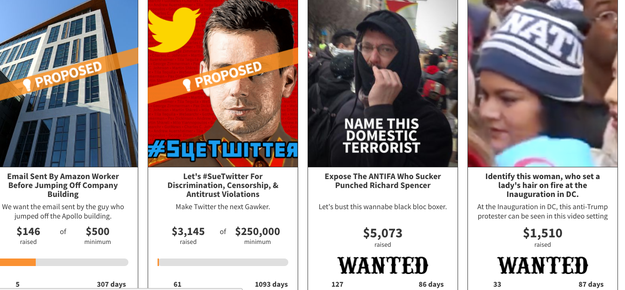
Two acts of violence, committed by two men unknown to the public, separated by one key difference: The identity of Spencer&039;s assailant is the subject of a $5,000 bounty on an eight-month-old crowd-sourced investigations site called WeSearchr that has become a hub for the often conspiratorial energies of the alt-right.

The model behind WeSearchr is simple: Staff or users post a bounty for “questions people want answered,” users fund the bounties through the site, and successful bounties get paid. “Questions people want answered” so far include what is in Megyn Kelly&039;s divorce records, “Are there satanic pedo tunnels under your walnut pizza kid&039;s hangout spot?” and “Has [former Gawker media owner] Nick Denton committed financial crimes?” Just as often, the site crowd funds projects that don&039;t reveal any new information, such as putting up a Pepe billboard in the Midwest or inviting Kathy Shelton — a rape victim whose attacker Hillary Clinton defended in court in Arkansas in the 1970s — to a presidential debate in October.

Internet citizen investigations aren&039;t new, and it&039;s well established that they can be parlous for their subjects. (Just last month, a man armed with an assault rifle entered a pizza parlor in Washington DC to look into the “Pizzagate” conspiracy theory that it was the site of a child sex ring.) And now — in the context of a new administration that has already offered the media “alternative facts” and catered to news outlets that have published demonstrably false news — there&039;s quite an opportunity for an explicitly pro-Trump, crowd-sourced information bounty service. The market for such information includes but is hardly limited to a new universe of Trump-loyal outlets that are in the process of creating a new reality.
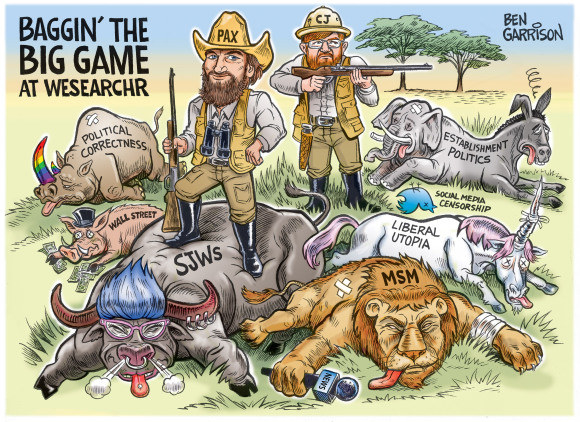
Above: A cartoon posted on the blog of WeSearchr co-founder Pax Dickinson, depicting he and co-founder Charles Johnson hunting “Political Correctness” and “Mainstream Media.”

Ben Garrison

Especially so since WeSearchr may have the ear of the Trump administration. One of the site&039;s cofounders is Charles Johnson, the troll and conservative activist who according to a Forbes story worked with members of the Trump transition staff to select cabinet choices. In an email to BuzzFeed News, Johnson called the Forbes story a “libelous hit piece,” but did not deny having access to the members of the new administration. Earlier this week, Twitter suspended WeSearchr&039;s account in response to its promotion of the bounty for identifying the man who punched Spencer.

In a separate email to BuzzFeed News, Johnson wrote that “I have discussed the matter with the Trump administration,” and that he plans to sue Twitter with money crowdfunded on WeSearchr. (Johnson would not say who he talked to in the White House.)

Asked whether he was concerned that the site condoned vigilantism, Johnson responded, “we have a very productive relationship with law enforcement and those relationships continue to grow thanks to the regime change in Washington. We will likely have the LEO community as a client this year. Our terms of service are pretty clear. We are crime stoppers for the 21st century.”

An update to the bounty yesterday stated “Information on the suspect who is the subject of this bounty will be immediately forwarded to the appropriate law enforcement departments. As our terms of service and disclaimers state, this is not a call for any vigilante justice, libel, or other illegal action.”

According to Johnson, WeSearchr has so far paid out “ten or so” bounties. Those include the surfacing of the divorce records of the David Mikkelson, the creator of Snopes (a $500 bounty); and video of a young Barack Obama speaking in Kenya that was subsequently broadcast on Infowars (a $10,000 bounty).

Still, the site has not yet succeeded in identifying the man who punched Richard Spencer. And another update to the bounty makes it clear that the submissions have not all been rigorously fact-checked: “Many are saying he has already been identified as a poop-eating degenerate called &039;Ray.&039; We are also told that this &039;Ray&039; character is deceased. Either way, we need more CONCLUSIVE PROOF as to who the ANTIFA attacker is, proof that would satisfy a police department, not just an MS paint meme.”

Quelle: <a href="This Alt-Right Investigations Site May Have Ties To The Trump Administration“>BuzzFeed
Facebook Is Tweaking Its Trending Product To Keep Fake News Out

Nurphoto / Getty Images

Facebook is changing its Trending product to try and make it better reflect the most discussed real world events on the platform, and to prevent false viral stories from trending.

Will Cathcart, the VP of product management for Trending, told BuzzFeed News the product will also now show the same list of trending topics to everyone in a country, as opposed to personalizing a list for users based on their behavior on Facebook. (Trending is currently only available to English-language users in the US, Canada, and UK.)

Facebook has been working to improve Trending — a box in the corner of the News Feed page that shows a list of top topics people are talking about on the platform — since it became a lightning rod for criticism last spring. In May, a former curator for the product claimed that conservative news and sources were being suppressed. A few months later, Facebook fired the curators that helped review topics and the associated news stories. It put more emphasis on having an algorithm identify topics and stories, and applied less human oversight. Following those changes, the Trending product repeatedly highlighted false news stories.

One change rolling out today is closely linked to the problem of misinformation on Facebook’s trending list. Cathcart said the Trending algorithm will promote topics that have a broad range of conversation and associated news articles, and avoid topics that are generating massive engagement from one or a few articles.

“The key thing about the change is looking not just at the volume of conversation but the breadth of voices across the Facebook community, and across the different articles discussing the topic,” he said.

This could in theory prevent a mega-viral false story, such as the one about Megyn Kelly being fired from Fox News, from making the Trending list.

“If there is a story on Facebook that has gone very viral and gotten lots engagement and there is another another story with hundreds of articles, we take the one with the hundreds of different articles,” Cathcart said. “The one that has gone super viral is less valuable.”

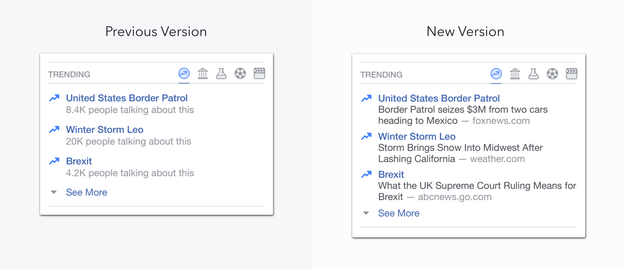
Facebook is also tweaking the way it determines which news article will be promoted as the top item in a topic. Cathcart said the top spot will go to articles that have a combination of strong engagement for the specific story as well as strong engagement for the publication overall on Facebook. Another change is that the Trending list will now show the top article&;s headline and source, as opposed to only showing it when users mouseover or click on the tropic.

The goal, Cathcart said, is to make sure the topics and associated news articles reflect real world events generating significant discussion and engagement.

Facebook

Facebook’s new focus on topics with broad engagement is in line with one of the suggestions made by computer scientists in a previous BuzzFeed News story about the problem of fake news on Trending.

Kate Starbird, an assistant professor at the University of Washington quoted in the story, said Facebook’s new changes are “a step in the right direction.”

“As we talked about a few months ago, my hunch is that this will have the effect of reducing hyper-partisan content and content propagated by crowd-turfing efforts,” Starbird told BuzzFeed News. “I’m really curious about how they will define ‘broad’ and I imagine it will require a lot of calibration initially and some adjustment over time.”

Starbird also said the move away from personalizing the Trending list could also help get people out of filter bubbles.“It doesn’t affect a user’s entire feed, but does represent one place where all users might see the same content,” she said. “A small change, but perhaps a valuable one.

Starbird emphasized that Facebook will need to keep tweaking its algorithm and approach to ensure it’s having the desired effect.

“It’s often difficult to predict what the unintended consequences of changes like these might be,” Starbird said.

Facebook said the new changes begin rolling out today and will be available to all Trending users within the coming weeks.

Quelle: <a href="Facebook Is Tweaking Its Trending Product To Keep Fake News Out“>BuzzFeed

Mark Zuckerberg Says He Is "Reconsidering" Lawsuits Forcing Hawaii Families To Sell Land

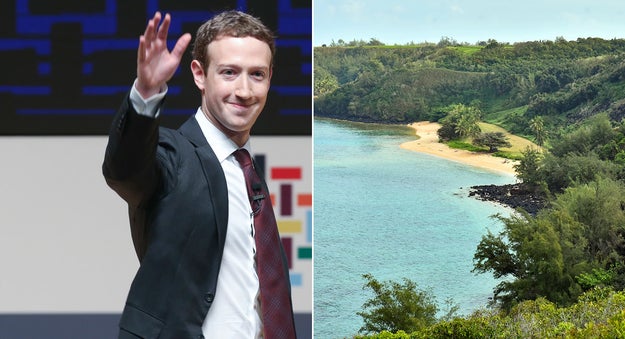
AP / Esteban Felix / Ron Kosen / photospectrumkauai.com via AP

After receiving widespread criticism, Facebook CEO Mark Zuckerberg said Tuesday he is “reconsidering” lawsuits he recently filed in Hawaii aimed at forcing hundreds of families to sell ancestral lands within his vast estate.

“Based on feedback from the local community, we are reconsidering the quiet title process and discussing how to move forward,” Zuckerberg said in a statement to BuzzFeed News. “We want to make sure we are following a process that protects the interests of property owners, respects the traditions of native Hawaiians, and preserves the environment.”

“We love Kauai,” Zuckerberg continued. “We want to be good members of the community and preserve the land for generations to come.”

Mark Zuckerberg / Via Facebook: zuck

Zuckerberg bought 700 acres of land on the island of Kauai in 2014 for $100 million. Within the property are 14 small parcels of land that were partitioned during the 1850s and have been passed down for generations by local families.

For privacy purposes, Zuckerberg brought lawsuits on Dec. 30 aimed at finding and forcing these descendants to sell their land at a court auction to the highest bidder.

The decision by one of the world&;s richest people to bring title actions against Hawaii families drew criticism from many, including neighbors, the Native Hawaiian Legal Corporation, and state Rep. Kaniela Ing, who said he would introduce legislation that would help local families in similar situations in the future.

“Quiet title actions are nothing new. Landowners have been using the law for decades to clear title to property,” Moses Haia, the Executive Director of Native Hawaiian Legal Corporation, said to BuzzFeed News. “This has had a devastating effect on Hawaiians interests in and connection to ancestral lands.”

On Thursday, Zuckerberg had taken to Facebook to defend his lawsuits, calling reports about them “misleading.” His statement saying he was “reconsidering” the lawsuits came through a spokesperson, instead of his Facebook page.

LINK: Mark Zuckerberg Sues To Force Hawaii Families To Sell Land Passed Down For Generations

Quelle: <a href="Mark Zuckerberg Says He Is "Reconsidering" Lawsuits Forcing Hawaii Families To Sell Land“>BuzzFeed

Apple Will Finally Help You Find Your AirPods

Apple finally has a solution for locating your lost AirPods remotely. The company has added Find My AirPods, a tracker function for the $159 bluetooth headphones, to the Find My iPhone app, as reported by Mashable.

The finder function comes bundled with the iOS 10.3 beta that began rolling out on Tuesday, and it&;ll also be available on the desktop version of Find My iPhone. If your AirPods are set up with an iPhone, iPad, or iPod Touch that already has Find My iPhone enabled, the new feature will automatically be available. A third party had beaten Apple to releasing an AirPods tracker, but the company booted it from the App Store on January 9.

AirPods, which were announced alongside the iPhone 7 and shipped in December after an uncharacteristic delay, hit the market without a way to locate them if they disappeared. The small, cordless headphones connect to phones via Bluetooth, and a single replacement AirPod costs $69, so customers have expressed concerns over losing them since their announcement.

Because the headphones aren&039;t connected to the internet, the tracker can only locate them in real-time if they are in range of one of your bluetooth-enabled devices that&039;s also logged into your iCloud account. If they&039;re not nearby, the app will display where they were last paired with one of your iOS devices. Similarly, if your AirPods are dead or inside the charging case, the app will display where they were last connected to one of your devices.

The Find My AirPods feature can also trigger a high-pitched sound on either one or both AirPods, and according to one developer, it gets quite loud. Though the sound does slowly ramp up in volume as a warning, be careful not to trigger the finder sound while wearing the headphones. Find My AirPods will warn users before beginning to beep.

Quelle: <a href="Apple Will Finally Help You Find Your AirPods“>BuzzFeed

Mark Zuckerberg Says He's Not Running For President

Via facebook.com

Mark Zuckerberg has no plans to run for president, the Facebook founder and CEO told BuzzFeed News Tuesday.

“No,” Zuckerberg wrote in response to a question asking if he had any plans to run for president. “I&;m focused on building our community at Facebook and working on the Chan Zuckerberg Initiative,” referring to the limited-liability corporation he and his wife, Priscilla Chan, founded in 2015 to advance human potential and promote equality through major bets in education and science research. Zuckerberg did not immediately respond to follow-up questions about whether he’d explicitly ruled out a run.

Zuckerberg’s response comes after weeks of speculation from the tech press and beyond, set off by a series of events that indicated a run might be in the cards, including a pledge to visit the approximately 30 US states he hadn’t yet been to. “Will Mark Zuckerberg Be Our Next President?” Vanity Fair asked in January.

The clues were there. Zuckerberg, who had previously been described as an atheist, said over the holidays that he believes religion is important. He’s touring the US asking “folks” about how they live. He hired a former White House photographer to take his Facebook pics. He included a clause about potentially serving for office into Facebook’s stock restructuring deal, and he hired a former presidential campaign manager to help his quasi-charitable works. But as Zuckerberg indicated Tuesday, he’s more interested in wielding influence from Menlo Park than Washington, DC. A source close to Zuckerberg told BuzzFeed News the 32-year-old CEO has privately denied it as well.

“There’s absolutely no truth to the idea that Mark is running for office and I’ve heard it directly from him,” the source told BuzzFeed News. “Here’s the thing: For Mark, Facebook is global community that already plays this huge part in the lives of billions of people around the world and plays an incredibly important role in shaping the base on the issues that matter.”

Zuckerberg is preparing for a political battle, the source was careful to emphasize, but as a private citizen focused on the goals he has already outlined through the Chan Zuckerberg Initiative. “There is absolutely a possibility that Mark may choose to play a stronger role in the political system and political debates,” the source said. Zuckerberg has been “very transparent” in his advocacy for “greater equality and optimizing research that find cures for disease and solves the fundamental problems of our time, but I really don’t see him stepping away from Facebook.”

Via facebook.com

Last week, Zuckerberg announced that he had poached Uber executive David Plouffe, a former campaign manager for Barack Obama, as CZI’s president of policy and advocacy. He also tapped Ken Mehlman, George W. Bush’s former campaign manager, in an advisory role. “You can make change, but in order for it to be sustainable, you need to build a movement to support it,” Zuckerberg told the New York Times.

Calling for a movement backed by bipartisan political operatives sounds awfully presidential, but Zuckerberg used the same language when he first launched CZI in December 2015.

The stock restructuring deal ties back to CZI as well. The changes were made after Zuckerberg and Chan donated 99% of their Facebook shares, then worth roughly $45 billion, to CZI. In order retain control while he gave away equity, Zuckerberg introduced a new class of stock and revised rules, including a concession that “serving in a government position or office” for two years would not constitute a voluntary resignation.

Success in business doesn’t necessarily guarantee success at the polls. “First thing is these people should not be running for office,” Bradley Tusk, an Uber adviser and investor, who also managed Michael Bloomberg’s 2009 mayoral campaign, told BuzzFeed News during a conversation about the increasingly political role played by Silicon Valley leaders. “It worked for Mike [Bloomberg] because of 9/11. If you look at the history of rich people from business or tech running for office, they almost always lose. That personality type is very different from running a company. The reality is if you’re Mark, with your wealth and platform,” then you’re better off as CEO of Facebook than as president, he said.

Tusk also mentioned that direct political engagement has not been as successful for Zuckerberg in the past. “Look at Fwd.us. How much money did those guys get taken for? And they accomplished nothing,” he said, referring to Zuckerberg’s ill-conceived immigration advocacy group. “They are better off using their strengths and their skills” than jumping directly into the political arena, Tusk said.

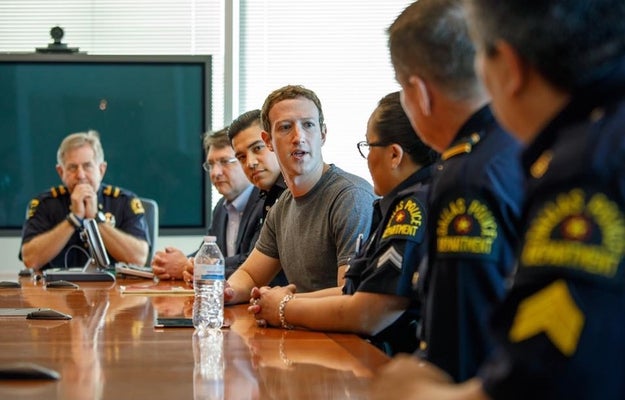
Zuckerberg meeting with the Dallas Police Department in January 2017.

Via facebook.com

Quelle: <a href="Mark Zuckerberg Says He&039;s Not Running For President“>BuzzFeed

Tumblr Now Has Stickers And Filters For Mobile App

Tumblr is adding a feature to its mobile app where you can add stickers or filters to photos you upload. The feature will roll out to all users by tomorrow.

The sticker pack includes extremely relevant things like: a fried egg, a trash can, a yin yang, recycling logo, an alien, pizza slice, a baguette, a tombstone, and more. You can also add text.

The filters are mostly colored – think more acid trip than Instagram&;s “Nashville”.

These new photo features for mobile come after a big update last May where you could create GIFs directly in the app, even shoot video straight to GIF.

Here&039;s how the new feature works:

Choose “Photo” post in the mobile app. Then, once you&039;ve either taken a new photo or found the pic you want to upload, choose from the three buttons at the bottom of the edit page. Right here:

The squares are filters, the letters are text, and the magic wand is for stickers.

The squares are filters, the letters are text, and the magic wand is for stickers.

Here, I greatly improved this photo of my coworker Matt, to reveal his true self:

Here, I greatly improved this photo of my coworker Matt, to reveal his true self:

Here’s more info on it from the Tumblr blog:

Quelle: <a href="Tumblr Now Has Stickers And Filters For Mobile App“>BuzzFeed

SpaceX, Uber Reach New Heights In Lobbying Spending

Kena Betancur / AFP / Getty Images

With Martian ambitions but earthly pragmatism, SpaceX spent nearly $2 million on lobbying in 2016, a new high for the gravity defying upstart. The company met with Congress, the Defense Department, and NASA among other federal agencies to discuss issues central to its business like commercial space transportation and NASA funding.

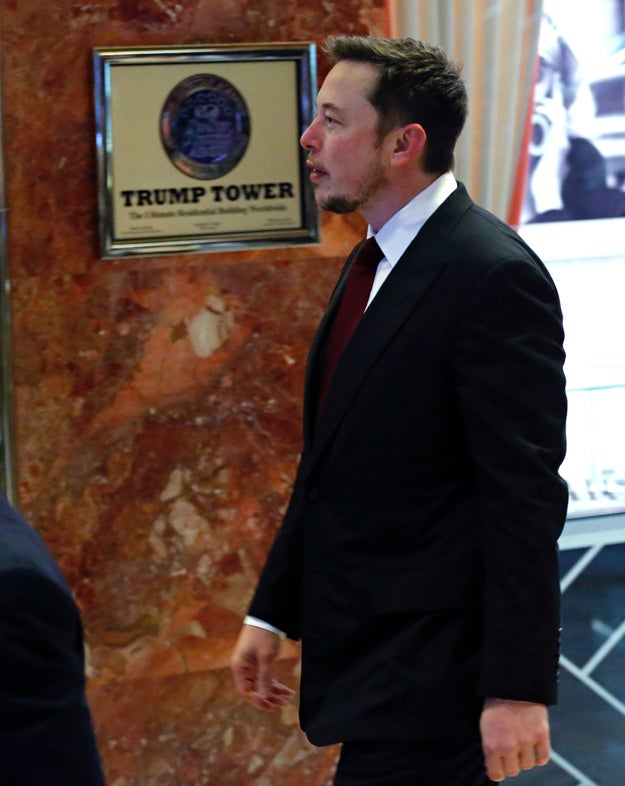
SpaceX Founder Elon Musk was recently tapped by President Trump to serve as an economic advisor, along with Uber CEO Travis Kalanick. Musk met with Trump on Monday along with a cadre of industry chieftains that included Dell CEO Michael Dell and the head of Ford, Mark Fields. During the two-hour meeting, Trump asked the business leaders for ideas to grow the US economy and to list the obstacles preventing them from hiring more workers and expanding their operations, according to White House Press Secretary Sean Spicer.

In 2016, Uber spent nearly $1.4 million lobbying Congress, traffic safety regulators, and US trade officials, nearly tripling its expenditures from the year before, according to federal lobbying disclosures due Monday. The company dwarfed what it spent in 2015, which totaled $470,000.

Not only did Uber cross the $1 million mark for the first time, but it continues to tower over ride-hail rival Lyft, as far as lobbying money is concerned. Lyft spent $250,000 on federal lobbying last year, a significant increase from its 2015 total, at $30,000, but still a way&;s off from Uber.

AT&T, whose proposed merger with Time Warner was quickly denounced by Trump on the campaign trail, has also spent big in 2016. The media and communications titan racked up $16.4 in lobbying last year, topping its 2015 total by $1.5 million. In the months after the $85.4 billion mega-deal was announced, AT&T spent $3.7 million lobbying the House and the Senate on a wide range of issues including surveillance, arbitration in consumer contracts, and cybersecurity.

While the AT&T-Time Warner deal undergoes a lengthy Justice Department review, the merger may ultimately serve as a major test of Trump&039;s campaign promises. In October, Trump condemned the merger, describing the deal as an undue concentration of media power. Since then, antitrust and media experts have been left pondering whether Trump&039;s initial statements would lead to a White House skeptical of mergers and inclined to shield consumer, or if Trump would simply revert to the traditionally Republican stance of de-regulation.

Earlier this month, Trump appeared to soften his position on the merger, even as he admitted to a lack of knowledge of the deal. “I have been on the record in the past of saying it&039;s too big and we have to keep competition,” he told Axios. “So, but other than that, I haven&039;t, you know, I haven&039;t seen any of the facts, yet. I&039;m sure that will be presented to me and to the people within government.”

With or without Trump&039;s blessing, AT&T must win the approval of the Justice Department to proceed, but it is unclear who will lead the agency&039;s antitrust division. Whoever is chosen to fill that role, like the attorney general, requires senate confirmation. Trump&039;s pick for the nation&039;s chief lawyer and law enforcement officer, Sen. Jeff Sessions, has not yet been approved by the Senate.

In the last quarter of 2016, only four corporations in the US spent more money lobbying than AT&T.

Google once again led the tech industry in beltway cash, spending over $3.5 million in the final months of the Obama era. Google was the 6th biggest spender of any corporation, behind only AT&T and a handful of industry giants that included Boeing and Comcast. In 2016 Google spent $15.4 million lobbying on issues like the Trans-Pacific Partnership (nixed by Trump on Monday), immigration, email privacy, and encryption.

Amazon and Microsoft came next. With lobbying expenditures of more than $2.6 million, Amazon ranked 13th overall and second only to Google in tech. The Treasury Department and the Federal Aviation Administration were among the agencies that Amazon lobbied in the fourth quarter of 2016. Amazon&039;s issues included corporate taxation, drone privacy, and . Microsoft ranked third in the tech industry and 16th overall, forking over $2.4 million.

Oracle followed, spending $2 million and ranking 27th overall. Hewlett Packard was close behind at $1.8 million and in the 31st position.

Facebook&039;s lobbying spend was down for both the fourth quarter (compared to 2015) and for the entire year of 2016. Facebook spent $1.7 in the last quarter of 2016 compared to $2.1 in 2015. And the social network tallied $8.7 million for all of 2016, while it spent just under $10 million in 2015. Facebook lobbied the White House, Congress, and federal agencies on high-tech worker visas , terrorism, and government surveillance, in addition to other concerns.

Apple&039;s spending for the quarter and the year roughly tracks its 2015 figures: about $1.4 million for the fourth quarter and $4.7 for the year. Apple&039;s disclosures listed energy efficiency standards, encryption, and the regulation of mobile medical apps as issues the company lobbied. The iPhone maker held meetings with the office of the President, Congress, Homeland Security, and the Commerce Department, among other federal agencies.

Quelle: <a href="SpaceX, Uber Reach New Heights In Lobbying Spending“>BuzzFeed

Twitter Is Already Playing A Big Role In The Trump Administration

Alex Wong / Getty Images

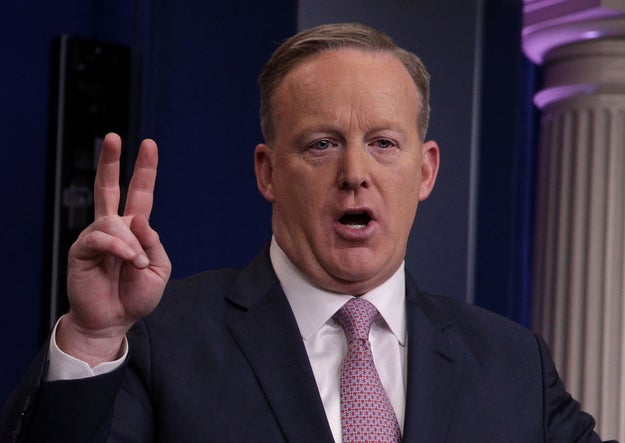
Within his first minute at the podium Monday, White House Press Secretary Sean Spicer let the assembled press know he&;d been checking his Twitter mentions over the weekend.

“As I get started, I know that [Obama press secretary] Josh Earnest was voted the most popular press secretary by the press corps,” Spicer said. “After checking my Twitter feed, I shot Josh an email last night letting him know that he can rest easy, that his title is secure for at least the next few days.”

The Trump administration is only four days old, but it&039;s already evident that Twitter is playing a significant role inside it — not just as a publishing tool, but as a feedback channel. Spicer and other members of the administration are clearly watching the platform closely, monitoring the activity on it and acting based on what they see there. Trump used the platform vigorously and effectively during his campaign; now, it seems, little has changed.

In fact, in each of his two visits to the James S. Brady Press Briefing Room, Spicer has led with Twitter. On Saturday, much of his statement focused on tweets the administration didn&039;t like.

“For all the talk about the proper use of Twitter, two instances yesterday stand out,” Spicer said at the start of his Saturday remarks. After criticizing a report that falsely claimed Trump had removed the bust of Dr. Martin Luther King from the Oval Office, Spicer then criticized news organizations&039; (accurate) tweets on the size of Trump&039;s inauguration crowd size. “Photographs of the inaugural proceedings were intentionally framed in a way, in one particular tweet, to minimize the enormous support that had gathered on the National Mall,” Spicer said.

The Trump administration&039;s focus on Twitter has already extended beyond news organizations. After the National Park Service retweeted tweets pointing out Trump&039;s smaller crowd size, administration officials ordered it to temporarily stop tweeting, reportedly out of concern it was hacked.

The Park Service apologized Saturday, calling the retweets mistaken.

And, of course, President Trump is keeping his “big, beautiful Twitter account” active, having tweeted more from @realDonaldTrump than @POTUS since his swearing-in. Trump regularly takes to the service to go around traditional media and its filters. His tweets often move markets and have already broken with behavior expected of a President.

As BuzzFeed News has reported, the discussion of Trump on Twitter far outpaces anything else on the platform. Trump is discussed more than ten times as often as all of the Kardashians combined.

Spicer, for his part, has suggested replacing traditional press conferences with social-media question-and-answer sessions.

Quelle: <a href="Twitter Is Already Playing A Big Role In The Trump Administration“>BuzzFeed
Snapchat Will Start Cracking Down On Fake News

Snap Inc (formerly Snapchat) is getting more strict about what shows up in its app&;s Discover section. On Monday, the New York Times reported, the company introduced guidelines requiring publishers to start fact-checking Discover content, both linked and within the app. The rules also prohibit misleading and unnecessarily shocking headline images in Discover. The move comes as Snap heads to a likely IPO.

The updated guidelines on headlines and Discover Tiles prohibit profanity, overly sexualized content, and violent content. There are, however, exceptions for news, according to Snap, if the content comes with appropriate warnings. Publishers will also have the ability to filter content for Snapchatters younger than 18 starting in February.

Snap told BuzzFeed News, “It’s been two years since we first launched Discover. During that time, our partners’ editorial content has continued to evolve in look and feel, and we felt our guidelines should be updated to thoroughly reflect these changes.”

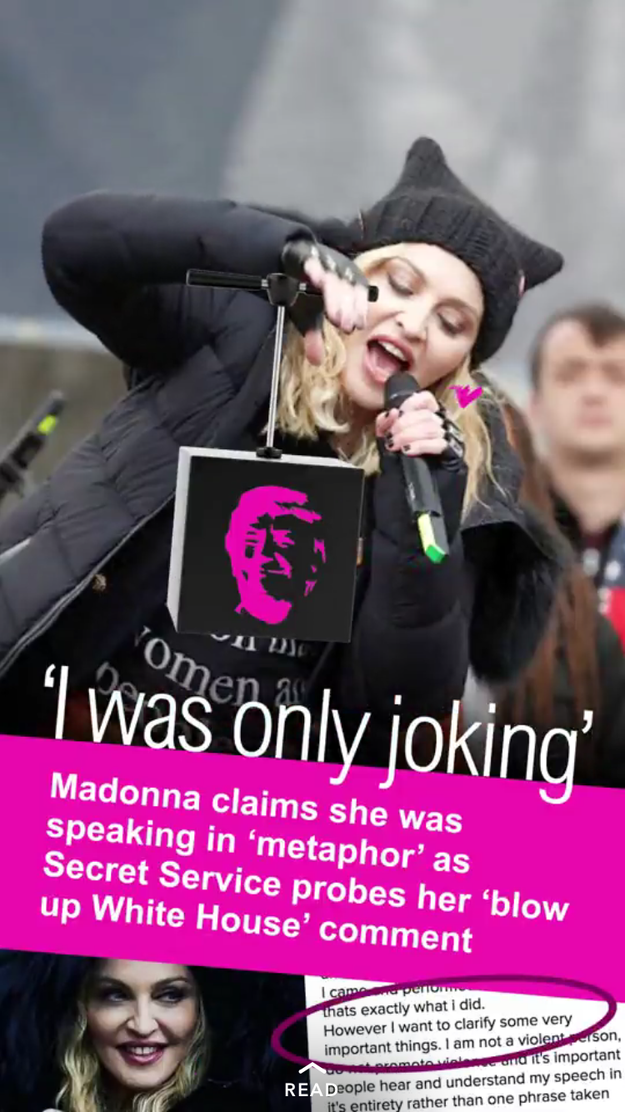
Snapchat may have trouble vetting the accuracy of all its publishers&039; content, though. On the same day as the update, the British tabloid The Daily Mail published a series of unverified Snapchat posts: “The Bigfeet Family,” “Did aliens &039;unlock&039; Uri?” and a story about one of Madonna&039;s Instagram posts, which the publication said was a response to a unverified secret service investigation.

The Daily Mail/Snapchat

The Daily Mail/Snapchat

The Daily Mail/Snapchat

The story about Madonna relies on an unconfirmed report from the Gateway Pundit, a pro-Trump site that publishes stories with headlines like “Organizer For DC Women’s March Against Trump Pictured Flashing the ISIS Sign” and “Trump And Mattis Take The Fight To ISIS, Bomb ISIS 31 Times On Day 1 (VIDEO)”. The Secret Service did not verify the alleged investigation to the Daily Mail, instead declining to comment.

Snap told BuzzFeed News that publishers maintain editorial independence once they are accepted as a partner, so the company doesn&039;t see content before it is published. But it said it follows up with publishers if users raise questions about their sourcing, accuracy, or other factors.

Snapchat&039;s move against dubious and exaggerated content comes at a time when Facebook and Twitter have faced sharp criticism over their unwillingness to fight the scams and fake news that proliferate on their platforms. Snap has managed to largely sidestep those debates, in part because of the tight control it&039;s always exercised over the Discover section. (BuzzFeed has partnered with Snapchat Discover for content distribution.)

Snapchat still faced a lawsuit in July 2016 alleging that, via Discover, it was “currently engaged in an insidious pattern and practice of intentionally exposing minors to harmful, offensive, prurient, and sexually offensive content, without warning minors or their parents” and that it “placed profit from monetizing Snapchat Discover over the safety of children.” The lawsuit was settled out of court, according to the Times.

Even before the new guidelines, the company already required that images and headlines in Discover be appropriate for users as young as 13. More than 100 million people view content in the Discover channels each month, according to the New York Times.

Facebook and Twitter have defended themselves against criticisms over fake news, harassment, and scams by claiming that they are content-agnostic tech platforms. Snap has taken an opposite tack, describing itself as “a publishing platform, built on values of providing Snapchatters with content that informs and entertains, from authoritative and credible media partners.” Those partners, Snap said, earn the community&039;s trust through “substantial, sourced and rewarding content.”

“We take the responsibility of being a source of news, entertainment and information for our community,” the company told BuzzFeed News.

Quelle: <a href="Snapchat Will Start Cracking Down On Fake News“>BuzzFeed

The Breathalyzer Device On "Shark Tank" Allegedly Ran False Ads

The Breathalyzer Device On "Shark Tank" Allegedly Ran False Ads

youtube.com

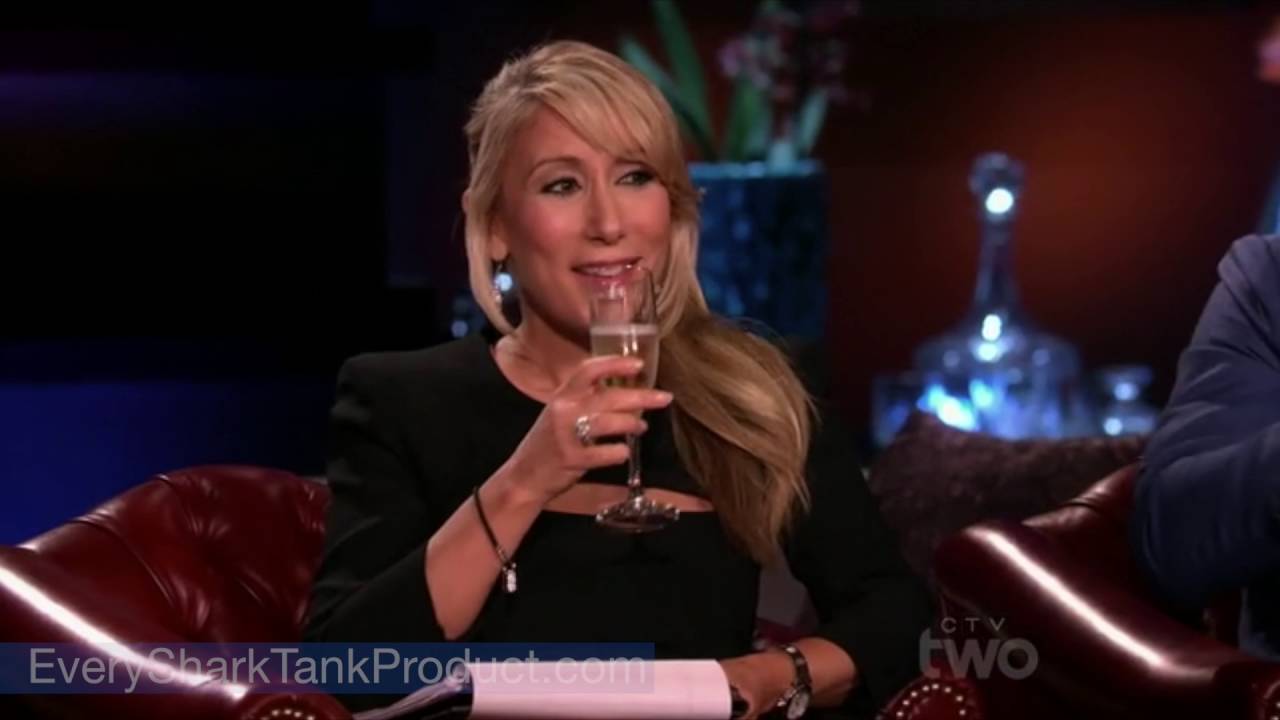
On the fifth season of ABC&;s hit show Shark Tank, entrepreneur Charles Michael Yim handed the sharks champagne as he pitched them on an irresistible invention: a smartphone-attached breathalyzer. Blow into the device and the app would calculate your alcohol levels, Yim explained, so you would know if it were safe to drive home. So charmed were all five investors that they offered to put $1 million in his startup, Breathometer, for a 30% stake.

But the Federal Trade Commission took a more sober view of the startup’s promises. On Monday, more than three years after the Shark Tank episode, the FTC said that Breathometer had settled allegations that “they lacked scientific evidence to back up their advertising claims.”

Under the settlement, Yim and Breathometer are prohibited from making accuracy claims about a consumer breathalyzer product unless backed by “rigorous testing,” according to the FTC. They must also notify consumers of the devices&039; inaccuracy and refund them.

“People relied on the defendant’s products to decide whether it was safe to get behind the wheel,” Jessica Rich, director of the FTC’s Bureau of Consumer Protection, said in a statement. “Overstating the accuracy of the devices was deceptive — and dangerous.”

The company acknowledged the settlement on its website, writing, “We feel it is important to clarify that this settlement does not undermine our achievements in creating quality consumer health devices.” It said that it had stopped making both Breathometer products in 2015, before the FTC’s inquiry.

As part of the settlement, Breathometer did not admit or deny the FTC’s allegations.

The Breathometer settlement is the latest in a series of incidents in which snazzy-sounding apps and gadgets make health claims that may be too good to be true. Scanadu, which was selling a Star Trek-style “tricorder” that claimed to instantly monitor your vital signs, recently told customers that it would stop making the devices per Food and Drug Administration orders. Last year, the company behind Lumosity, the online brain-training game, paid $2 million to settle FTC allegations that its marketing claims — that playing could stave off cognitive decline — were not scientifically validated.

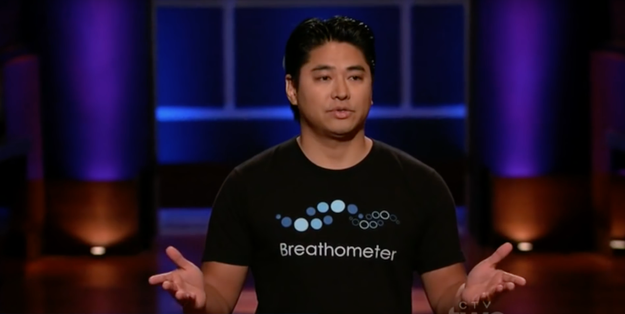
Breathometer CEO Charles Michael Yim.

Via youtube.com

The Breathometer device was sold online in two versions, Original ($49.99) and Breeze ($99.99), and generated $5.1 million in sales, according to the FTC. The company also raised nearly $140,000 in a successful Indiegogo campaign to make the gadget.

Ads for both products claimed that their accuracy was proven by “government-lab grade testing,” while Breeze was also touted as a “law-enforcement grade product,” according to the FTC. But the agency alleged that neither was properly tested for accuracy, and that the company knew that Breeze “regularly understated” blood alcohol concentration levels.

The startup has since switched gears and started selling a new device, Mint, in September. The $99.99 smartphone-attached device purports to measure your oral health by measuring gases correlated with bad breath and gum disease. “We stand behind our current product, Mint, and its quality and pioneering technology,” the company wrote on its website.

Quelle: <a href="The Breathalyzer Device On "Shark Tank" Allegedly Ran False Ads“>BuzzFeed