Facebook Promises Improvements After Removing Conservative Post
Getty Images / Alt National Parks Service

On Thursday evening, Cyrus Massoumi published a post on his conservative news website, Mr. Conservative, that he knew could cause trouble for his business. The post, written as an open letter to his readers, warned that Facebook could censor conservative-leaning news as a result of its efforts to remove misinformation from the platform.

Massoumi shared it with the more than 2 million fans of his Facebook page, and within minutes his worst fears seemed to come true. Traffic began plummeting as the number of people being referred from his Facebook page fell off sharply. He believed Facebook was taking action against his page.

“This is an algorithmic execution,” he wrote in a Skype message to BuzzFeed News at the time.

Then he saw that three earlier posts on his Facebook page had disappeared without warning or explanation.

“The way to censor that article if you specifically wanted to without deleting it would be to delete the previous posts,” he said.
Cyrus Massoumi

Massoumi’s experience is one of a series of recent content takedowns and bans imposed by Facebook and Google that have sparked concerns from publishers and activists about how these dominant platforms are applying their policies, and about the level of transparency they offer in explaining their decisions.

In response to a BuzzFeed News inquiry, a Facebook spokesperson said the company will aim “to do better.” They also emphasized that censorship played no role in the actions, and said the bans were in fact a result of automated systems meant to thwart spammers and other bad actors.

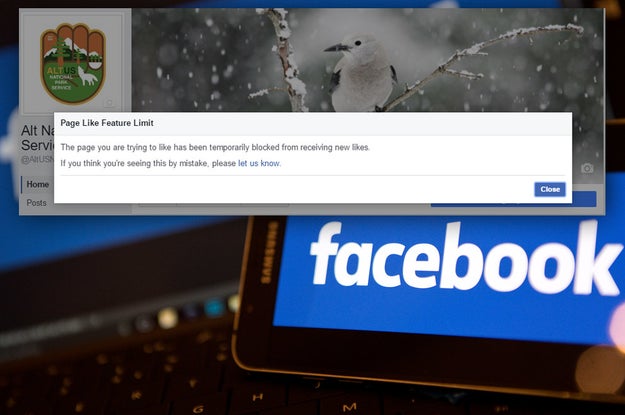
In Massoumi’s case, he did not receive a message from Facebook about the removed posts. At the time he assumed he was being censored, especially given the timing of the removals. Similarly, the Russian-government-funded broadcaster RT accused Facebook of taking politically motivated action when its largest Facebook page was given a temporary posting ban as a result of what the social network said was a copyright violation. Over the weekend, the Alt National Parks Service Facebook page, which sprung up in opposition to Trump’s policies, was handed a temporary ban on new likes. That also caused some to accuse Facebook of censorship.

A Facebook spokesperson told BuzzFeed News all of the above actions were taken by automated systems rather than by the community standards team that evaluates content for hate speech, graphic violence, and other violations.

“Facebook is a platform for all ideas,” said the spokesperson, who spoke on the condition that they not be named. “Our mission, and business, relies on giving people of all different voices and opinions a place to share. We&;re continuously working to improve how we serve everyone in our community — from better communication to more effective and accurate systems — and will learn from these experiences to do better.”

In the case of Google, last week it announced that it took action against 340 websites on its AdSense platform after reviewing a total of 550 sites “suspected of misrepresenting content to users.” When asked to disclose the list of sites and/or publishers, a Google spokesperson said they don&039;t comment on individual cases.

“We communicate with the publisher or the site directly for warnings or violations,” they said, noting that it could violate the privacy policy to disclose information about AdSense publishers publicly or to third parties.

However, after BuzzFeed News exposed a network of more than 40 sites that published hundreds of fake news articles in 2016, a Google representative emailed to say they had removed those specific sites from AdSense. When asked why they commented on that instance but not others, the spokesperson said they reached out to correct the impression that the sites were still in AdSense.
Getty Images

Facebook has close to 2 billion global users, and Google powers an ad network that earns revenue for close to 2 million websites. Performance on one or both of their platforms will make or break a content business — which means each ban or removal is treated as a life-or-death scenario by publishers.

Scrutiny of Facebook&039;s and Google’s actions is even more intense now that both companies have initiatives aimed at stopping the spread of online misinformation and deceptive content. American conservatives in particular have expressed concerns about the possibility of censorship. Massoumi raised the possibility of his site being targeted in a November interview with BuzzFeed News.

But even the liberals pushing Facebook and Google to crack down on what has often been pro-Trump fake news say they find the lack of transparency troubling. Angelo Carusone, president of the liberal watchdog group Media Matters, told BuzzFeed News it’s a struggle to get information from the companies. When his group sent Google a list of sites it considers fake news, he says the company did not follow up to say what, if any, action had been taken.

“There is a lack of transparency and unwillingness to at least identify the sites they take action against,” he said.

He said Google has been more of a challenge to deal with than Facebook.

“I think Google is doing worse in a weird way, even though they have better metrics to tout,” he said, citing its recent report of banning 340 sites. “I believe Facebook is genuinely committed [to fighting fake news] but has internal confusion and business concerns they are grappling with.”

Facebook and Google both say they are trying to balance a desire to act quickly and at a massive scale with the need to be transparent and communicate clearly with publishers and other partners.

“We’re talking about the scale of the internet here, and these bad actors move quickly,” a Google spokesperson said. “That’s what we’re trying to fight against.”

So just as automated systems like algorithms decide which content rises to the top of the News Feed and Google results, they can also remove content, ban pages and ads, and take actions that keep content and revenue out of the hands of publishers. When this is done without notice or a clear explanation, people worry about censorship and malicious intent on the part of platforms.

On Jan. 18, the broadcaster RT received a message from Facebook saying a temporary posting ban was a result of a copyright claim made by Current Time, a Russian-language broadcaster funded by the US government. But Current Time publicly denied that it registered a complaint. Within roughly 24 hours, Facebook restored RT’s posting privileges, but it did not immediately explain why RT was banned. A Facebook spokesperson now says RT was not the only publisher affected by the system error at the time.

The spokesperson also said the ban on new likes for the Alt National Parks Service page was instituted because it received a significant number of new likes in a very short period of time. That can trigger a temporary ban, since malicious pages often use automated methods that cause a spike in likes, according to Facebook.

After the ban was lifted, the Alt National Parks Service posted to say it had been put in place because of “complaints” registered with Facebook. The spokesperson said this was not the case, but commenters on the page continue to speculate about who was making the complaints.

View Video ›

Facebook: AltUSNationalParkService

The three posts Massoumi said were removed from his page included one post about Matt Damon expressing hope that Trump would be successful, another about the Mexican president canceling a meeting with Trump, and a third about recent insults directed at Melania Trump. One was restored without notice the next day.

The Facebook spokesperson said the post that was removed and later reinstated was initially taken down in error by an automated system designed to thwart spammers. (The company said it did not have any record of action being taken on the other posts Massoumi said disappeared from his page.)

It wasn&039;t the first time Massoumi had seen a post disappear and then reappear without explanation. On Jan. 20 he told BuzzFeed News via Skype that a Facebook post about the Trump inauguration was removed that day and later reinstated. He also said conservative-oriented posts about Muslims had recently been removed by Facebook’s community standards team due to what they said were hate speech violations. As a result, Massoumi, who was raised in a Muslim family, said he no longer posts about Muslims.

“I’m self-censoring, but my fans think they are getting everything authentically,” he said. “So, it’s worse than 1984, because you think you are getting real news, when in actuality I weigh everything against the risk of Facebook employees flagging it.”

In addition to concerns about humans reviewing his posts, Massoumi says he now has to worry about Facebook’s automated systems going awry and removing posts or imposing bans.

“I assumed it was much more nefarious,” he said. “In fact it’s entirely random.”

Quelle: <a href="Facebook Promises Improvements After Removing Conservative Post“>BuzzFeed
Square Really Wants More Businesses To Use Apple Pay

Square

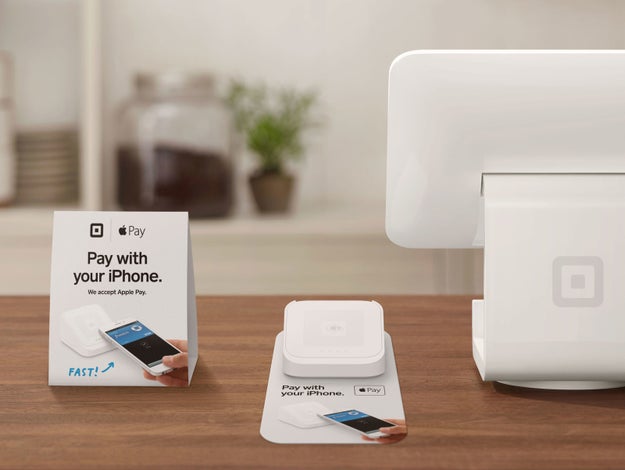
Square, the mobile payments company run by Twitter CEO Jack Dorsey, is offering US businesses a special promo this year: It won&;t charge them any fees to process about $12,000 worth of Apple Pay transactions if they&039;re using Square&039;s chip and contactless payments reader. Square&039;s normal processing fee is 2.75%, so companies can save up to $350.

Though Square is most commonly associated with small retailers, this promotion extends to companies of any size, according to the company. Companies already using Square&039;s reader or new customers who sign up in 2017 can take part. If the company is new to Square, it can purchase a reader at a discount, and the deal will apply for a year after it signs up.

The promotion is contingent on the retailer setting up marketing materials at their point of sale — Square asks them to verify this with a picture — encouraging customers to use Apple Pay. The company piloted the program in Portland, OR in 2016 and said that the number of contactless transactions at retailers tripled.

The company said it hopes to “educate buyers and sellers” about the benefits of contactless payments, namely increased security and speedier transactions. For that reason, the promotion is aimed at sellers with a visible point of sale — like a countertop.

Jesse Dorogusker, head of hardware at Square, told BuzzFeed News, “We&039;re promoting contactless and bringing it to our customer base because it’s typically the small businesses who lag behind in technological innovation, who don&039;t reap the benefits of technological advances.”

The promotion is part of a larger effort to integrate Square with Apple Pay and for each to promote the other. Square CEO Jack Dorsey announced in December 2016 that Square Cash, the company&039;s virtual bank account that can link to a Visa debit card, would integrate with Apple Pay.

When asked why the company focused so much on the partnership with Apple, Dorogusker said, “Contactless is new in the States. The only way to break through is with pristine implementation, and the two of us are really the only ones who have that right now.”

Chip credit cards proliferated throughout the US during 2016, but they&039;ve encountered issues with their processing speeds. Many people hate them.

Square claims their chip card reader is much faster than others, and the company hopes that encouraging use of contactless payments will give it a further edge over other payments processors.

Dorogusker said, “We&039;ve been focusing on the performance of our chip card reader, and that&039;s going well, but the ritual of a tap makes way more sense.”

Quelle: <a href="Square Really Wants More Businesses To Use Apple Pay“>BuzzFeed

The Battle Between Uber And Lyft Has Become Political

Getty

In the 36 hours between President Trump’s signing of an executive order restricting immigration and the same rule’s effects being halted by a federal judge in New York, the rivalry between Uber and Lyft abruptly became political. Largely as a result of its CEO’s decision to serve as a Trump advisor, Uber is facing a hashtag-driven social media revolt – even though it appears to be doing more to support drivers affected by the new immigration ban than Lyft.

In Trump’s politicized America, brands are caught up in a rapidly evolving political crisis, and are being forced to take sides. Trump’s executive order suspended the intake of all refugees for 120 days and Syrian refugees indefinitely. It also blocked people from Syria, Iraq, Iran, Sudan, Somalia, Libya, and Yemen from entering the US for 90 days. In the hours following the order, as the scope of the order became clear, pressure mounted on tech companies – who employ many immigrants on H1B visas – to publicly respond. For Uber and Lyft, who already compete for users with nearly identical services in a number of deeply anti-Trump cities, the ramifications of their political statements were immediately evident. By Saturday evening was trending on Twitter. Meanwhile, Lyft was being touted as an easy Uber alternative and lauded for its denunciation of Trump and $1 million donation to the American Civil Liberties Union.

Shortly after noon on Saturday — less than 10 hours after Trump signed the executive order — Uber told BuzzFeed it had reached out to about a dozen employees who may be affected with offers of support, including legal help. Travis Kalanick, the ride-hail giant’s chief executive, who has agreed to sit on Trump’s economic advisory group, prompting protests outside Uber’s San Francisco headquarters, emailed staff at 1:20PM.

If any Uber driver was outside the country and could not reenter as a result of the executive order, Uber would compensate that driver pro bono “to help mitigate some of the financial stress and complications with supporting their families and putting food on the table.”

Uber has disagreed with governments across the world before, Kalanick said, adding that it has effected change by fighting in some cases, and in others, “from within through persuasion and argument.” He promised that the executive order, shortened as on social media, was “an issue that I will raise this coming Friday when I go to Washington for President Trump’s first business advisory group meeting.”

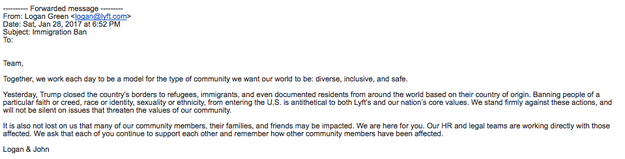
Five hours later, Lyft’s cofounders emailed their staff, too.

What people saw when they compared the statements: Uber is willing to work with Trump. Lyft is “firmly against” Trump’s actions.

Uber had responded faster to Trump&;s executive order, focusing on how it could help its employees. Lyft responded later – without some of the promises Uber made – but its broad denunciation of Trump’s refugee ban drew praise. Lyft’s leaders directly condemned Trump’s executive order as “antithetical to both Lyft’s and our nation’s core values” (It’s worth noting that tech billionaire and Trump advisor Peter Thiel is a Lyft investor who has publicly criticized Uber for being “ethically challenged.”) While Kalanick’s statement was one of the stronger ones to be issued by a tech CEO, it didn’t directly reject Trump. Instead, Kalanick said, “whatever your view please know that I’ve always believed in principled confrontation and just change; and have never shied away (maybe to my detriment) from fighting for what’s right.”

Kalanick also posted his note to staff, with the subject line “Standing up for what’s right,” on Facebook.

Making the optics even worse for Uber, the company had suspended surge pricing near New York’s JFK Airport after taxi drivers stopped working to join anti-Trump protests there. To some, the move appeared to undercut the protesting taxi drivers – many of whom are Muslim and immigrants – by keeping prices stable to entice riders. DeleteUber began trending on Twitter.

Within a few hours, Uber apologized.

“We’re sorry for any confusion about our earlier tweet — it was not meant to break up any strike,” Uber told BuzzFeed News in a statement. “We wanted people to know they could use Uber to get to and from JFK at normal prices, especially tonight.”

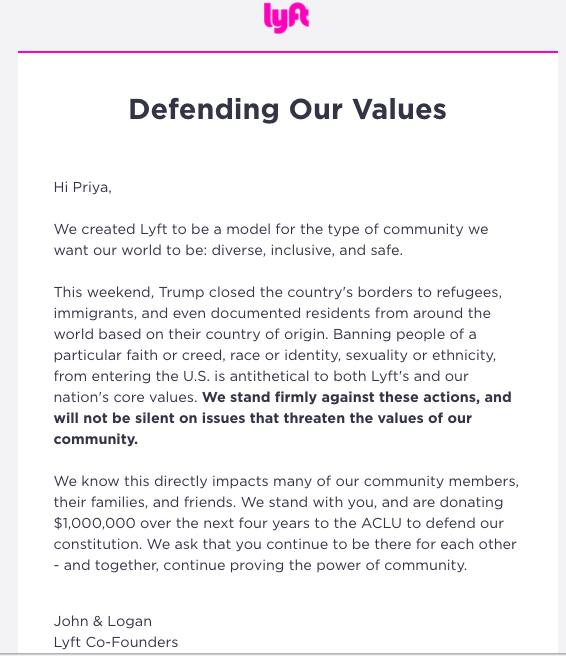
On Sunday morning, Lyft sent users an email reiterating its position and noting it would donate $1 million to the American Civil Liberties Union “to defend our constitution.”

The email helped Lyft further capitalize on the political tension that riled its – and Uber’s – user base and spurred the DeleteUber to trend on Twitter the prior night.

Meanwhile, Uber crafted a conciliatory response to riders who noted the company’s willingness to collaborate with Trump as their reason for deleting the app. “We share your concern that this ban will impact many thousands of innocent people,” it read, with a link to Kalanick’s full statement.

Uber did not immediately reply to a request for comment as to whether it was sending this response to every individual who cited the company’s relationship with Trump as a reason for deleting the app. But it appears others received a similar response as well.

Kalanick’s position as Trump advisor is causing internal tensions at Uber as well. On Saturday, after Kalanick’s email to staff, a software developer said he should resign from Trump’s advisory group and explicitly denounce the president.

Last week, Business Insider published portions of an internal email in which Uber’s chief technology officer called Trump a “deplorable person.”

Read how other tech companies reacted to Trump’s executive order here.


Quelle: <a href="The Battle Between Uber And Lyft Has Become Political“>BuzzFeed

#DeleteUber Started Trending After A Taxi Strike Against Trump's Refugee Ban

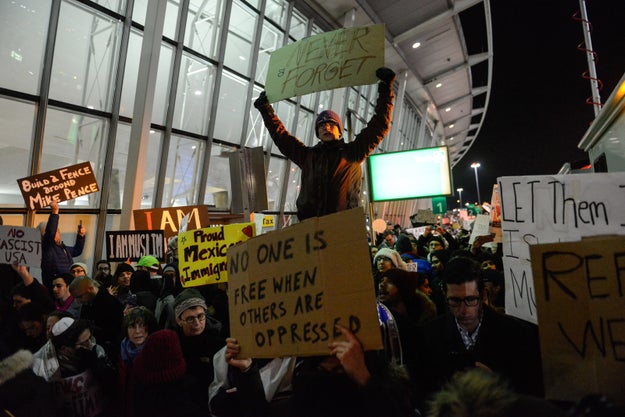
Protestors rally during at John F. Kennedy International Airport.

Stephanie Keith / Getty Images

Hundreds of people tweeted they are deleting their Uber accounts Saturday amid accusations the company took part in taxi cab strike-breaking in New York during a protests against President Trump&;s refugee ban.

Cabbies affiliated with the New York Taxi Workers Alliance refused to pick up passengers at New York&039;s JFK airport for an hour Saturday in solidarity with those protesting President Trump&039;s executive order banning refugees and limiting immigration from Muslim-majority countries.

They also sent out calls on social media for Uber and Lyft drivers to join in their show of support for the protests at Terminal 4. The city&039;s taxi drivers are a disproportionately Muslim and immigrant workforce, and many drive for apps in addition to independent for-hire work.

Shortly after the designated strike time of 6 p.m. to 7 p.m., Uber sent a tweet telling customers surge pricing had been suspended.

Since surge pricing increases the cost for passengers when demand is high, suspending it looked to some like an active undermining of the NYTWA&039;s strike. Uber told BuzzFeed News it was aware of the hour of solidarity, which its drivers were free to participate in, and the official strike hour had technically ended 36 minutes prior.

One popular Weird Twitter denizen, @Bro_Pair, tweeted out the following about an hour later.

Others repeated the claim that Uber had actively broken the strike, with some re-posting the full statement from the NYTWA in support of the protests.

“We&039;re sorry for any confusion about our earlier tweet — it was not meant to break up any strike,” Uber said in a statement to BuzzFeed News. “We wanted people to know they could use Uber to get to and from JFK at normal prices, especially tonight.”

Uber said the tweet about the suspension of surge pricing was intended to alert customers that Uber was a service available at regular, rather than inflated, cost. Uber has received criticism in the past for implementing higher prices during high-traffic times — and for ways its surge pricing affects worker organizing.

Earlier in the day, Uber CEO Travis Kalanick sent an email to employees addressing Trump&039;s executive order with the subject line, “Standing up for what&039;s right.” Kalanick is also a member of Trump&039;s new business advisory council.

In the message, he said Uber&039;s “People Ops team” had already reached out to the “dozen or so employees who we know are affected” and that the company was “working out a process” to compensate drivers during the next three months to “help mitigate some of the financial stress and complications with supporting their families and putting food on the table.”

Uber maintains that drivers are independent contractors, rather than company employees, a classification that is currently being disputed in a number of courts around the country.

Kalanick also said in the email he would “raise the issue” that the ban “will impact many innocent people” when he attends Trump&039;s first business advisory group meeting in the coming days.

Some tweeted that Kalanick&039;s presence on that advisory group contributed to their decision to delete the Uber app.

For others, it was both the alleged strike-breaking and the cooperation with the Trump administration.

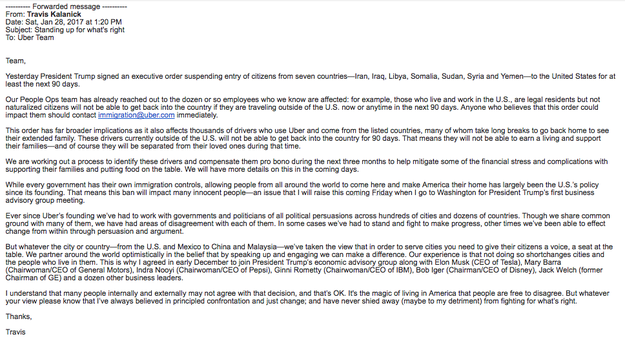
Read the full Uber company-wide email below:

Date: Sat, Jan 28, 2017 at 1:20 PM
Subject: Standing up for what&039;s right
To: Uber Team

Team,

Yesterday President Trump signed an executive order suspending entry of citizens from seven countries—Iran, Iraq, Libya, Somalia, Sudan, Syria and Yemen—to the United States for at least the next 90 days.

Our People Ops team has already reached out to the dozen or so employees who we know are affected: for example, those who live and work in the U.S., are legal residents but not naturalized citizens will not be able to get back into the country if they are traveling outside of the U.S. now or anytime in the next 90 days. Anyone who believes that this order could impact them should contact immigration@uber.com immediately.

This order has far broader implications as it also affects thousands of drivers who use Uber and come from the listed countries, many of whom take long breaks to go back home to see their extended family. These drivers currently outside of the U.S. will not be able to get back into the country for 90 days. That means they will not be able to earn a living and support their families—and of course they will be separated from their loved ones during that time.

We are working out a process to identify these drivers and compensate them pro bono during the next three months to help mitigate some of the financial stress and complications with supporting their families and putting food on the table. We will have more details on this in the coming days.

While every government has their own immigration controls, allowing people from all around the world to come here and make America their home has largely been the U.S.’s policy since its founding. That means this ban will impact many innocent people—an issue that I will raise this coming Friday when I go to Washington for President Trump’s first business advisory group meeting.

Ever since Uber’s founding we’ve had to work with governments and politicians of all political persuasions across hundreds of cities and dozens of countries. Though we share common ground with many of them, we have had areas of disagreement with each of them. In some cases we’ve had to stand and fight to make progress, other times we’ve been able to effect change from within through persuasion and argument.

But whatever the city or country—from the U.S. and Mexico to China and Malaysia—we’ve taken the view that in order to serve cities you need to give their citizens a voice, a seat at the table. We partner around the world optimistically in the belief that by speaking up and engaging we can make a difference. Our experience is that not doing so shortchanges cities and the people who live in them. This is why I agreed in early December to join President Trump’s economic advisory group along with Elon Musk (CEO of Tesla), Mary Barra (Chairwoman/CEO of General Motors), Indra Nooyi (Chairwoman/CEO of Pepsi), Ginni Rometty (Chairwoman/CEO of IBM), Bob Iger (Chairman/CEO of Disney), Jack Welch (former Chairman of GE) and a dozen other business leaders.

I understand that many people internally and externally may not agree with that decision, and that’s OK. It&039;s the magic of living in America that people are free to disagree. But whatever your view please know that I’ve always believed in principled confrontation and just change; and have never shied away (maybe to my detriment) from fighting for what’s right.

Thanks,

Travis

Caroline O&039;Donovan contributed reporting to this story.

Quelle: <a href="DeleteUber Started Trending After A Taxi Strike Against Trump&039;s Refugee Ban“>BuzzFeed

Airbnb Is Offering Free Housing To Those Turned Away By Trump's Refugee Ban

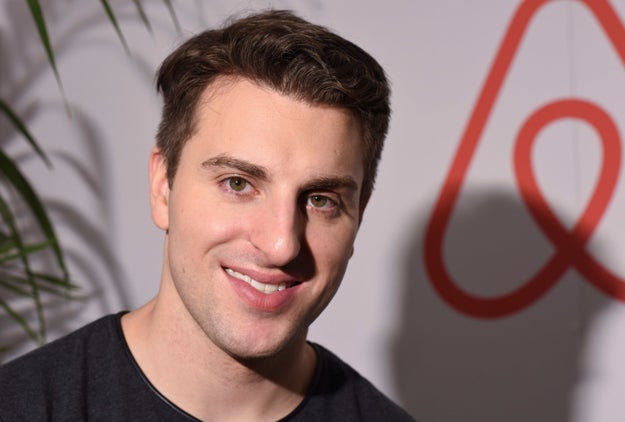
Airbnb Chief Executive Brian Chesky poses for Reuters in Los Angeles, California, U.S. November 17, 2016. REUTERS/Phil McCarten

Phil Mccarten / Reuters

This evening Airbnb CEO Brian Chesky posted a message on Facebook criticizing President Donald Trump&;s executive order temporarily halting the US refugee program. “Not allowing counties or refugees into America is not right, and we must stand with those who are affected,” Chesky wrote.

Chesky announced that Airbnb will provide free housing to refugees who have been turned away from US-bound flights, and are not in their “city/country of residence,” he said. Neither Chesky nor Airbnb responded to questions about the specifics of the program. An Airbnb spokesperson told BuzzFeed News that the company “will leverage existing tools and will share details in the next few days.”

The chief executives of several major technology companies have also responded to Trump&039;s immigration order, with varying degrees of concern, including Mark Zuckerberg, Tim Cook, and Elon Musk.

Here is Chesky&039;s Facebook post in full:

View Video ›

Facebook: brianchesky

Quelle: <a href="Airbnb Is Offering Free Housing To Those Turned Away By Trump&039;s Refugee Ban“>BuzzFeed

Nearly 200 Google Employees Affected By Trump's Immigration Order

Chandan Khanna / AFP / Getty Images

President Trump&;s executive order banning immigration from seven Muslim-majority countries is causing alarm inside Google, with close to 200 employees affected and others who have accepted jobs experiencing difficulty.

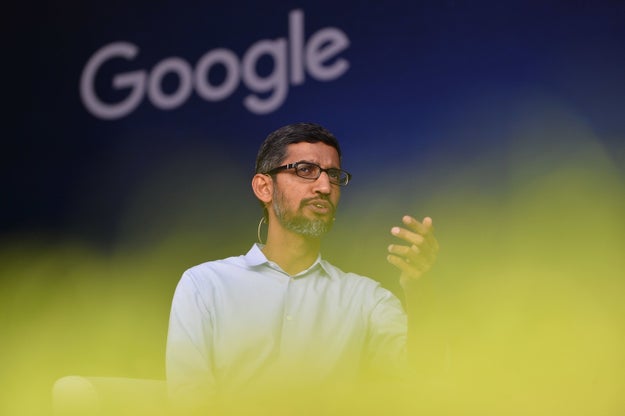
The executive order “affects the lives and families” of at least 187 Google employees, CEO Sundar Pichai told staff on Friday in an email that was reviewed by BuzzFeed News. In addition, 14 people who accepted jobs at the tech giant are coming from places covered by the ban and are currently working with Google lawyers, according to a person familiar with the matter.

Google is offering legal advice to employees who are in the United States on green cards to help them understand how they might be affected, the person said. The company has also updated an internal travel help site “with our best understanding of the situation” and made its global security team available to employees abroad, Pichai told staff.

“It&039;s painful to see the personal cost of this executive order on our colleagues,” Pichai said.

At a company discussion on Thursday, employees “heard from two Googlers grappling with what this might mean for them and their families,” Pichai continued. “Just as that discussion was happening, another Googler was rushing back from a trip to New Zealand to make it into the US before the order was signed.”

Google did not immediately respond to inquiries for this article. Previously, Google said it was “concerned about the impact of this order and any proposals that could impose restrictions on Googlers and their families.”

Bloomberg News earlier reported on Pichai&039;s email. Read the full email below:

President Trump has signed an executive order that temporarily stops foreign nationals from Iran, Iraq, Libya, Somalia, Sudan, Syria and Yemen from entering the US regardless of their visa status. This order affects the lives and families or at least 187 Googlers that we know of so far.

Our first order of business is to help Googlers who are affected. We&039;re updating Go/TravelAdvisory with our best understanding of the situation, but if you&039;re abroad and need help please reach out to our global security team via go/GSOC. For other questions, please email [immigration support email address].

It&039;s painful to see the personal cost of this executive order on our colleagues. Yesterday at TGIF we heard from two Googlers grappling with what this might mean for them and their families. Just as that discussion was happening, another Googler was rushing back from a trip to New Zealand to make it into the US before the order was signed.

We wouldn&039;t wish this fear and uncertainty on anyone — and especially not our fellow Googlers who contribute so much to our products, our business, and our lives. In times of uncertainty, our values remain the best guide. We&039;re upset about the impact of this order and any proposals that could impose restrictions on Googlers and their families or that could create barriers to bringing great talent to the US. We&039;ve always made our views on immigration issues known publicly and will continue to do so.

But let&039;s also focus on what we can do as individuals and co-workers and help one another and support the Googlers who are experiencing this first hand.

Quelle: <a href="Nearly 200 Google Employees Affected By Trump&039;s Immigration Order“>BuzzFeed

Sheryl Sandberg Just Criticized Trump’s Abortion Rule, And People Have Feelings About It

Drew Angerer / Getty Images

Sheryl Sandberg, Facebook COO, self-described feminist, and the author of Lean In, wrote a Facebook post on January 26 decrying Donald Trump&;s reinstatement of the “global gag rule.”

The mandate, which Trump reinstated on Monday via an executive action, prevents foreign healthcare providers who receive US aid from providing abortions to women or even talking about them. Public health experts believe it will lead to more unsafe abortions around the world.

View Video ›

Facebook: sheryl

She posted her thoughts alongside a New York Times article about how women&039;s healthcare providers around the world were preparing to deal with the gag order.

Before publishing the statement, Sandberg had come under fire because she did not attend or comment on any of the global Women&039;s Marches. In the days after the protest, the only post on her Facebook page was an interview with long-distance swimmer Diana Nyad. A Facebook spokesperson told BuzzFeed News that Sandberg could not attend for personal reasons but that “she wishes she could have been there.”

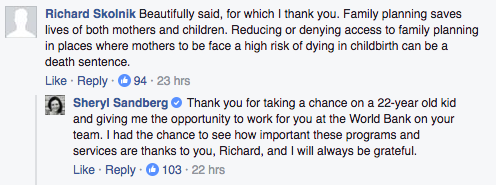
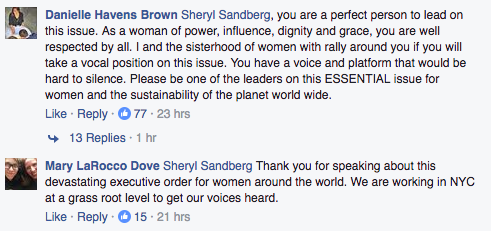
Some people were quite pleased that Sandberg spoke out against Trump.

Sandberg&039;s words weren&039;t met with unanimous cheers, however.

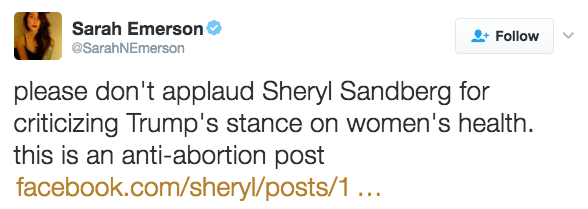
Some pointed out that Sandberg&039;s statement was framed in support of policies that would reduce the number of abortions, rather than fully supporting a women&039;s right to choose.

Others argued that as the founder of Lean In, Sandberg should have been a more vocal opponent of the Trump administration.

Pando Daily founder Sarah Lacy rebuked the Facebook COO&039;s silence on issues affecting women and the Women&039;s Marches, which drew massive crowds not only in the US, but around the world. “Sandberg can not or will not even acknowledge the most feminist thing that’s happened, which was largely organized on her company’s site and aligns with her stated personal political views,” wrote Lacy. “I’m not sure we could have clearer evidence at this point that Facebook is bending over backwards to embrace a Donald Trump world.”

Lacy pointed to LeanIn.org&039;s mission statement, which reads, “We are committed to offering women the ongoing inspiration and support to help them achieve their goals. If we talk openly about the challenges women face and work together, we can change the trajectory of women and create a better world for everyone.”

Trump&039;s campaign and presidency have been peppered with concerns over women&039;s rights, including the explosive moments when tapes of him saying he would grab women “by the pussy” on Access Hollywood surfaced and when he called Hillary Clinton “a nasty woman.” Beauty pageant contestants accused him of walking into their dressing rooms while they were naked, to which Trump responded “I sort of get away with things like that.” On the same day as Sandberg made her post, Vice President Mike Pence spoke at the annual March For Life. Pro-abortion rights groups are not enthused about the prospect of the Trump/Pence administration.

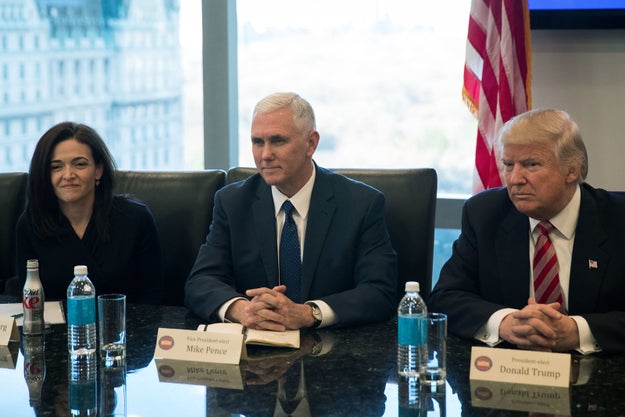
Sandberg previously met with Trump and Pence during a closed door meeting with tech executives at Trump Tower. The Silicon Valley bigwigs who attended were widely criticized for not vocalizing their previously stated opposition to some of Trump&039;s policies.

Nitasha Tiku contributed to this report.

Quelle: <a href="Sheryl Sandberg Just Criticized Trump’s Abortion Rule, And People Have Feelings About It“>BuzzFeed

Mark Zuckerberg Just Criticized Trump's Immigration Order

For the first time since the election, Facebook CEO Mark Zuckerberg has commented on the president&;s proposed polices. He posted on his Facebook profile on Friday to say that he&039;s “concerned about the impact of the recent executive orders signed by President Trump,” especially the ones related to immigration restriction.

He writes, “Expanding the focus of law enforcement beyond people who are real threats would make all Americans less safe by diverting resources, while millions of undocumented folks who don&039;t pose a threat will live in fear of deportation.” Zuckerberg advocated for continuing to allow refugees into the country and keeping the Deferred Action for Childhood Arrivals (DACA) in place.

View Video ›

Facebook: zuck

He closed his statement by saying that he will work with the team behind FWD.us, a controversial immigration reform political advocacy group backed by Bill Gates, Yahoo&; CEO Marissa Mayer, Netflix CEO Reid Hoffman, and Zuckerberg himself. The initiative launched a failed bid for reform in 2013 and restarted in late 2015.

Zuckerberg spoke out against the president while he was campaigning but had remained silent about him after the election.

Some have criticized the timing and narrowness of Zuckerberg argument as he calls out the “best and the brightest” immigrants, foreshadowing a debate over the H1-B visas for highly skilled foreign workers.

Zuckerberg&039;s comments come on National Holocaust Remembrance day. Last year, the German government opened an investigation into Facebook over Holocauast-related hate speech.

Quelle: <a href="Mark Zuckerberg Just Criticized Trump&039;s Immigration Order“>BuzzFeed

Mark Zuckerberg Cancels His Lawsuits Forcing Hawaii Families To Sell Land

Chad / Via Flickr: supercooper; Manu Fernandez / AP

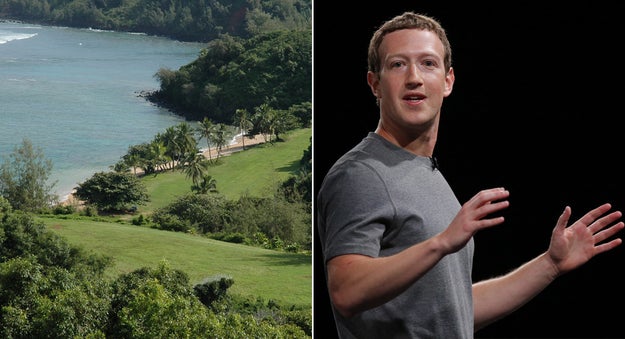
Mark Zuckerberg will drop his lawsuits over Hawaiian land, he writes in an op-ed for the Hawaiian newspaper The Garden Island. He said he did not previously understand the “quiet title” process but has reconsidered his legal actions after learning more about it.

The billionaire CEO of Facebook bought 700 acres of land on Kauai for $100 million in 2014, though he did not receive exclusive rights to the land with the purchase. In seeking those rights, he began what&;s called a “quiet title” process, which allows for ownership of land to be decided by a judge.

The question of land ownership stems from the privatization of Hawaiian land by The Kuleana Act of 1850 and the ensuing controversy. Prior to the act, Hawaiians did not have private land ownership. The pieces of land in dispute became known as “kuleana lands.”

He writes, “Our intention is to achieve an outcome that preserves the environment, respects local traditions, and is fair to those with Kuleana lands.” He pledged to “work with the community on a new approach.”

Zuckerberg&039;s quiet title lawsuits named hundreds of Hawaiians with small claims on parcels of land that may have conflicted with his own, sparking a backlash from the community he sought to join. To critics, his actions reeked of the white conquest of indigenous lands that brought Hawaii into the United States in 1893.

In an effort to smooth over the tension, Zuckerberg wrote in The Garden Island, “The right path is to sit down and discuss how to best move forward. We will continue to speak with community leaders that represent different groups, including native Hawaiians and environmentalists, to find the best path.”

Quelle: <a href="Mark Zuckerberg Cancels His Lawsuits Forcing Hawaii Families To Sell Land“>BuzzFeed

A Twitter Bot For Handclap Emoji Tweets Had To Shut Down Because It Became Racist

On Twitter, there’s a convention of adding the handclap emoji between each word for added emphasis. Imagine it done out loud, with a clap for each word: the effect is like a preschool teacher yelling at a child who doesn’t listen, or a cheerleader rah-rah-ing a statement. Like this:

The convention has been a meme for a few years, which means it’s permuted into various levels of irony. Like this:

Serena Parr, a graduate student at NYU’s Interactive Telecommunications Program, came up with the idea for a bot that would retweet emoji handclap tweets as a class project a few weeks ago. Since the handclaps are used for something you’re saying with conviction, Parr thought it would be amusing to see a feed of people’s most emphatic opinions, both serious and silly.

The first challenge was searching for these tweets. Normally, you can’t search emojis on Twitter, so Parr turned to a tool made by Matthew Rothenberg for his very fun website Emoji Tracker, which shows you real-time emoji use on Twitter. With a little bit of coding magic, the bot was made and launched in mid-January. She called it @lol_yelling.

And then, the inevitable and obvious thing happened. Much like Tay, the Microsoft Twitter bot that quickly became a Neo Nazi, within just two days, @lol_yelling took on the tenor of the rest of the cesspool of Twitter.

Parr wasn’t naive to the fact Twitter is often full of harassment and abuse, and she deleted her own personal account recently. “It was making me feel bad and miserable about the world,” she told me. She built into her bot a word filter to block out offensive language. But racism on Twitter isn’t just tweets that use the n-word. Ideologically racist stuff, like someone insisting that reverse racism is real or arguing that MLK’s “I have a dream” speech is bad because black people also owned slaves, kept getting through Parr’s filter. It was the kind of stuff that wouldn’t necessarily get someone banned, but is offensive to a reasonable person.

“If you click on these profiles, they’d retweet the most vile, racist, disgusting things. It was a strange glimpse into how this part of Twitter works,” Parr said. “There’s also really bad images and memes that would never get caught by a racist word filter.”

Less than five full days after it was created, Parr deactivated the bot, because she didn’t want to have to keep filtering out the bad tweets. She was keenly aware that the handclap emoji convention started in Black Twitter — the fact that it’s become so widespread that racists are using it makes the whole thing even more ironic and sad.

The bot isn’t doing any more retweets, but its account is still up, in case you want to enjoy it as a living monument to the fact that Twitter ruins everything .

Quelle: <a href="A Twitter Bot For Handclap Emoji Tweets Had To Shut Down Because It Became Racist“>BuzzFeed