A Jury Ordered Facebook To Pay $500 Million In Damages For Copyright Infringement

Glenn Chapman / AFP / Getty Images

A Dallas jury has ruled that Facebook owes $500 million in damages to a Dallas-based game maker that complained its inventions were stolen by Facebook&;s Oculus VR division.

Facebook, which acquired Oculus for $3 billion in 2014, said it plans to appeal the ruling.

ZeniMax claimed in its lawsuit that it had been the first to develop much of the technology used in the Oculus virtual reality headsets, and that one of its former employees, John Carmack, had given it away to Oculus&039;s founder Palmer Luckey. Carmack later became the chief technical officer at Oculus.

ZeniMax sought several billion in damages, claiming Facebook stole its trade secrets.

While the lawsuit is over two tears old, it attracted national attention a few weeks ago when Facebook founder Mark Zuckerberg was put on the stand in a Dallas courtroom. “The idea that Oculus products are based on someone else’s technology is just wrong,” Zuckerberg said in response to questions from a ZeniMax attorney.

The jury, however, concluded that Oculus and its founders Luckey and Brendan Iribe had infringed on ZeniMax&039;s copyrights. The jury further ruled that Carmack had contributed to ZeniMax&039;s infringement. Iribe was recently moved from the head of Facebook&039;s virtual reality group.

The jury ruled against claims that Oculus had stolen trade secrets.

“The heart of this case was about whether Oculus stole ZeniMax&039;s trade secrets, and the jury found decisively in our favor. We&039;re obviously disappointed by a few other aspects of today&039;s verdict, but we are undeterred. Oculus products are built with Oculus technology,” a spokesperson for Facebook&039;s Oculus division said in a statement. “We look forward to filing our appeal and eventually putting this litigation behind us.”

During his testimony, Zuckerberg — whose legal battles over Facebook&039;s origins are now Silicon Valley legend — tried to cast doubt on ZeniMax&039;s claims. “It is pretty common when you announce a big deal or do something that all kinds of people just kind of come out of the woodwork and claim that they just own some portion of the deal,” he said.

Quelle: <a href="A Jury Ordered Facebook To Pay 0 Million In Damages For Copyright Infringement“>BuzzFeed
The ACLU Just Joined A Silicon Valley Startup Incubator

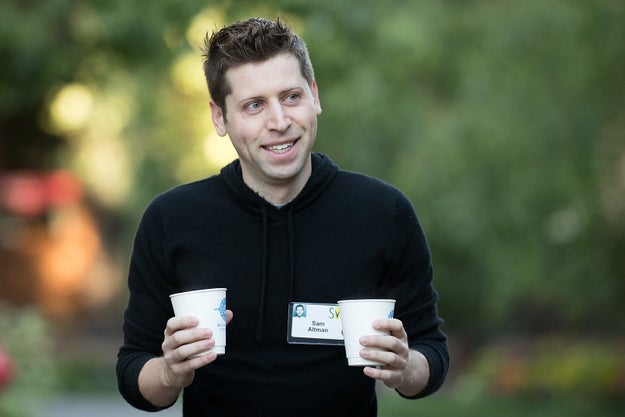
Sam Altman, president of Y Combinator.

Drew Angerer / Getty Images

The American Civil Liberties Union (ACLU) has joined the winter 2017 class of startups hosted by Silicon Valley startup incubator Y Combinator (YC), which in the past helped companies like Twitch, AirBnb, and Reddit achieve and manage initial growth. The ACLU, a 97-year-old nonprofit, falls outside the profile of a typical YC company, but the incubator has invited nonprofits to participate since 2013.

In a statement, ACLU Executive Director Anthony Romero said, “We’re thrilled to have the help of Y Combinator to help us reach new audiences and be at the leading edge of technology. Beyond financial contributions, the Silicon Valley community can help organizations like ours harness recent membership surges and spread the word about what the ACLU is doing.”

The ACLU raised $24 million this past weekend — six times its average amount of annual donations — after it wrested a stay on President Trump&;s immigration order from a New York federal court.

Public outrage over the order, which barred refugees and immigrants from seven Muslim-majority countries from entering the US, fueled protests at airports around the country. The crowds there were jubilant at the news from the ACLU. Several prominent figures in the tech industry matched donations to the ACLU. Most notably, Lyft gave the organization $1 million in a deftly timed move in its perpetual fight with Uber, which recently turned political.

The ACLU and Y Combinator began speaking weeks ago when YC partner Kat Manalac reached out to Romero for feedback about YC’s upcoming call for civic tech startups. Manalac told BuzzFeed News that Romero responded with a request for help on the ACLU&039;s own projects, which led Manalac to recommend it for YC&039;s incubator, and YC founder Sam Altman and Romero “worked out the details yesterday.” Several YC mentors will travel to New York to work with the ACLU.

In a statement, Altman wrote that YC itself will donate to the ACLU and give it “full access to the Y Combinator network and community.” The accelerator won&039;t have any financial interest in the ACLU. As part of its participation in the program, the nonprofit will also present to venture capitalists at YC Demo Day in March.

Altman wrote that the ACLU plays “a particularly important role now“; he invited engineers in particular to work with the organization, signaling that the nonprofit may have come to Silicon Valley specifically to attract some help from the area&039;s technical talent. Altman said on Twitter that 25 startup founders responded positively to the call.

YC has funded nonprofits before, declining to take its usual equity stake in favor of a donation. The incubator put out a call for civic technology companies in 2014, but the niche industry faces funding problems, and VCs are hesitant. Nevertheless, Altman put out a similar call the same day that the ACLU was accepted.

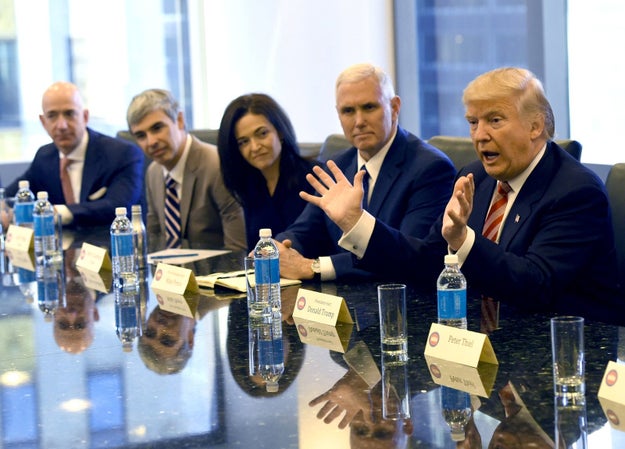
Like many of its fellow tech companies, YC traveled a bumpy road during election season and after. Peter Thiel, the tech billionaire and prominent Trump supporter who is now a member of the president&039;s transition team, sits on Y Combinator&039;s board, which has drawn criticism from many in Silicon Valley. Sam Altman vigorously defended Thiel&039;s role in YC, though Altman himself did not vote for Trump.

After Trump&039;s victory in November, Altman told BuzzFeed News he was “officially very worried.” Most recently, Altman has come out strong against Trump&039;s immigration order, offering support and a job to recently fired attorney general Sally Yates.

Quelle: <a href="The ACLU Just Joined A Silicon Valley Startup Incubator“>BuzzFeed

Uber Is Telling Customers The Immigration Ban Is "Against Everything We Stand For"

Carl Court / Getty Images

Uber, whose founder is an adviser to President Trump, is telling customers that the immigration ban is “unjust, wrong, and against everything we stand for as a company,” in an escalation of its public criticism of the policy.

The language is being used in a message sent to users who delete their accounts with the company. was trending on Twitter on Saturday, as protesters highlighted CEO Travis Kalanick&;s membership of a White House advisory group.

Protesters also criticized Uber for suspending surge pricing during a taxi strike at JFK Airport Saturday, where the largely immigrant taxi driver community was protesting President Trump’s executive order. On social media, many perceived that move as undermining the taxi workers’ protest.

In response to account deletion requests on Sunday, Uber told users, “We share your concern that this ban will impact many thousands of innocent people” and said it would compensate drivers affected by the order.

Since Monday night, messages confirming account deletion have contained a more blunt message: “Uber shares your views on the immigration ban: it&039;s unjust, wrong and against everything we stand for as a company.”

Both messages link to an Uber statement from Saturday, in which the company first promised it would compensate drivers affected by the immigration ban.

“We want to be as clear as possible. The initial response was less clear than the second one,” an Uber spokesman told BuzzFeed News. “Clarity is always better.”

The Battle Between Uber And Lyft Has Become Political

DeleteUber Started Trending After A Taxi Strike Against Trump’s Refugee Ban

Quelle: <a href="Uber Is Telling Customers The Immigration Ban Is "Against Everything We Stand For"“>BuzzFeed

Apple Sales Hit An All-Time High Over The Holidays

Stephanie Keith / Getty Images

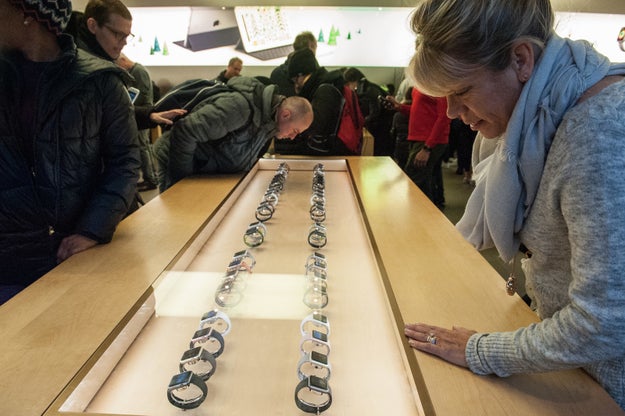
Apple&;s sales reached an all-time high in the final three months of 2016, with the company reporting record sales of its iPhones, Mac computers and Apple watches.

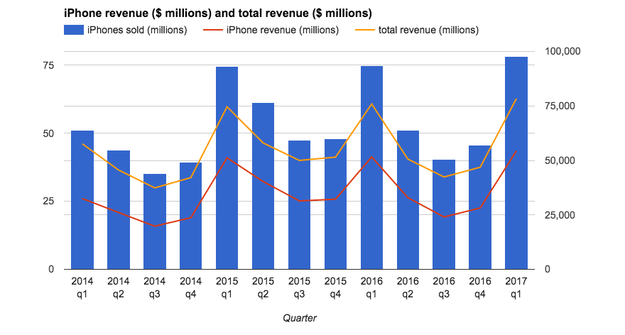
Revenue hit $78.4 billion for the quarter, slightly up from the $76 billion the company made in the same period of 2016. The quarter was a crucial test for Apple, whose sales typically peak during the holiday season, and whenever it rolls out a brand new phone. The new iPhone 7 was released just a few days before the start of the quarter.

Apple

iPhone sales rose by 5% over the year prior, but overall profit dropped by 2.6% to $17.9 billion. Apple shares are up 25% in the last year, but its stock is still trading below the all-time high it reached in 2015. In after-market trading on Tuesday, the company&039;s shares were up almost 3%.

Beyond the iPhone, Apple&039;s software services business continues to boom — it generated over $7 billion in revenue in the three-month period, up 18%. The services business includes iTunes purchases and Music subscriptions, AppleCare, and Apple Pay. The company&039;s “other products,” segement, which includes the Apple Watch, saw a 8% decline in revenue, while the iPad had a 22% drop.

One year ago, powered by the release of the iPhone 6s and 6s Plus, Apple reported the most profitable quarter in corporate history, earning $18.4 billion in profits on $76 billion of revenue.

Since then, the company reported its first annual decline in sales since 2001, raising questions among observers if Apple, despite continued sky-high profits that would be the envy of any other company, could still provide the massive growth it had experienced since the dawn of the iPod.

While the growth figures reported today were positive, it&039;s not the type of strong sales growth that&039;s typically been associated with brand new iPhone releases.

“We’re thrilled to report that our holiday quarter results generated Apple’s highest quarterly revenue ever, and broke multiple records along the way. We sold more iPhones than ever before and set all-time revenue records for iPhone, Services, Mac and Apple Watch,” Apple chief executive Tim Cook said in a statement.

Quelle: <a href="Apple Sales Hit An All-Time High Over The Holidays“>BuzzFeed

The Fate Of Net Neutrality Is Still Up In The Air In The Trump-Era FCC

Pool / Getty Images

Some of the most pressing questions about the way Americans interact with each other online and connect with their favorite services remain unanswered Tuesday, following the first meeting of the Federal Communications Commission in the Trump Era.

Ajit Pai, the new FCC Chair who was selected by President Donald Trump, declined to answer key questions on internet and telecom policy including the fate of Net Neutrality, the AT&T-Time Warner merger and a proposal backed by the Obama administration to overhaul the market for cable boxes.

“We haven&;t made any determinations at this time,” Chair Pai said, referring to the future of Net Neutrality rules. “My present position is pretty simple: I favor a free and open internet and I oppose Title II.”

Established in 2015 under President Obama, network neutrality rules require internet service providers like Comcast and Verizon to treat all web traffic equally. Heralded by the Obama administration, internet giants, and consumer advocates, the open internet rules were designed to protect websites and services like Netflix from being slowed, blocked or up-charged by broadband providers. The rules came into effect after broadband companies were designated so-called Title II services. The reclassification allows the government to impose more robust regulations on internet providers. It was aggressively opposed by telecom companies and by Republican members of Congress and the FCC.

Chair Pai voted against the open internet rules when he was an FCC commissioner, and he has argued that market-based solutions, not government regulations, will better ensure an open and competitive web. “The Internet has become a powerful force for freedom, both at home and abroad,” Pai wrote in 2015. “So it is sad to witness the FCC’s unprecedented attempt to replace that freedom with government control.”

While Pai did not elaborate on his comments at the meeting, experts tell BuzzFeed News that a Republican-controlled FCC could work to dismantle net neutrality in several ways: by simply ignoring violations and not enforcing the open internet rules; overturning them through the FCC; or pressing Congress to rewrite telecom law.

“If Ajit Pai&039;s past record is any indication of how he&039;ll be as chairman, he won&039;t be doing much policing of that industry,” Joshua Stager, policy counsel for New America&039;s Open Technology Institute told BuzzFeed News. “He thinks that the telecom industry can police itself just fine.”

When asked to comment whether the FCC should review the AT&T-Time Warner mega-merger, Chair Pai declined. The $85 billion deal is currently under review by the antitrust division of the Justice Department. Unlike the DOJ, which can sue to block a deal when the transaction is found to be anticompetitive, the FCC standard for approving a deal is broader. Businesses have to show the commission that the deal serves the public interest, a threshold that some experts say is harder to clear than the DOJ&039;s.

Pai also declined to share details on the fate of the set-top box proposal, a plan created during the Obama-era FCC to open up the cable box market to technology companies. Former FCC Chair Tom Wheeler, who backed the plan, saw it as a much needed corrective to exorbitant rental fees and outdated interfaces that cable customers were more or less stuck with. Pai said the proposal is one of 23 items the FCC is reviewing that were carried over from the last administration. The plan is not expected to advance under the leadership of the new chair.

Quelle: <a href="The Fate Of Net Neutrality Is Still Up In The Air In The Trump-Era FCC“>BuzzFeed

Amazon And Expedia Attack Trump's Immigration Order In Court

Timothy A. Clary / AFP / Getty Images

The attorney general of Washington state filed a lawsuit Monday challenging President Donald Trump&;s controversial immigration order, and he&039;s counting two Washington-based companies as courtroom allies: Amazon and Expedia.

Both companies submitted sworn statements as part of the lawsuit, each highlighting the business harms they face as a direct result of Trump&039;s travel ban. The legal battle marks the latest move in escalating tensions between technology companies and the Trump administration that has thus far played out only in public statements.

“Expedia believes that the executive order jeopardizes its corporate mission and could have a detrimental impact on its business and its employees, as well as the broader U.S. and global travel and tourism industry,” Robert Dzielak, Expedia&039;s executive vice president and general counsel, wrote in a declaration.

According to Dzielak, more than 1,000 Expedia customers who hold passports from one of the 7 affected countries — Syria, Iraq, Iran, Sudan, Somalia, Libya, and Yemen — have current bookings that begin, end, or connect in the United States. Dzielak noted that it&039;s unclear which of its customers will be affected, and how, posing additional burdens to the company as it tries to interpret and monitor how the executive order is being applied. In addition, Expedia said that several of its employees based in the US and abroad will be prevented from traveling.

“The direct financial impact to Expedia resulting from the Executive order ranging from increased business costs to the broader impact on the global travel market is not yet known,” Dzielak wrote.

Ayesha Blackwell-Hawkins, Amazon&039;s senior manager of mobility and immigration, said the executive order “immediately — and negatively — impacted employees, dependents of employees, and candidates for employment with Amazon.”

Amazon is aware of 49 employees born in one of the seven countries, 47 of whom are citizens of another country, while the remaining two have permanent legal residents elsewhere.

“One example of an impacted employee is a senior Amazon lawyer who was born in
Libya but has been a UK citizen for many years,” Blackwell-Hawkins wrote. “This employee had plans to travel to the United States for business during the month of February. We have instructed the employee to cancel her plans and remain in the UK rather than risk being denied entry to the United States.”

Amazon said it is aware of 10 dependents of employees who were born in the countries affected but live in the US lawfully.

In addition, Amazon has extended employment offers to seven people born in Iran but who are currently citizens of other countries: Germany, Canada and Australia. According to Blackwell-Hawkins, Amazon is “assessing alternatives,” possibly placing them in other countries outside the US.

In an email to employees Monday, Amazon CEO Jeff Bezos, said his company would explore legislative options to challenge the immigration order. “We are working other legal options as well,” he wrote.

A spokesperson for Microsoft, another Washington-based business, told BuzzFeed News: “Microsoft has been supportive and has provided information to the Attorney General and is willing to provide further testimony if necessary.”

Earlier in the day, White House Press Secretary Sean Spicer defended the president&039;s immigration order. “The majority of Americans agree with the president,” he said. “They recognize that the steps that he&039;s taken were to keep this country safe and to make sure that we didn&039;t look back and say &039;I wish we had done the following.&039;”

Here are the declarations in full:

Quelle: <a href="Amazon And Expedia Attack Trump&039;s Immigration Order In Court“>BuzzFeed

Twitter To Make Big Product Changes This Week To Combat Harassment

Key changes are coming to Twitter this week as the company attempts to solve its harassment and abuse problem.

In a tweetstorm posted late Monday, Twitter VP of Engineering Ed Ho conceded that Twitter didn&;t move fast enough to tackle harassment last year, and said that a number of product changes are coming “in the days ahead” to address it.

Among the fixes Twitter plans to implement: one that adjust mute and block controls to prevent repeat offenders from creating new accounts. Ho did not explain the solution Twitter has in mind. But some observers have recommended the company tie accounts to phone numbers, giving it a way to more easily police trolls who bypass its rules.

Twitter is expected to report its earnings for the final quarter of 2016 next week. Harassment, which was a regular issue on its calls with analysts last year, could be a theme once again.

Here&039;s Ho&039;s full tweetstorm:

Quelle: <a href="Twitter To Make Big Product Changes This Week To Combat Harassment“>BuzzFeed

Here’s What Airbnb Is Actually Doing For Refugees

When Airbnb CEO Brian Chesky tweeted Saturday night that his company would be offering free housing to immigrants displaced by President Trump’s travel ban, the move was lauded as one of the strongest in Silicon Valley.

Trump signed an executive order on Friday banning refugees and immigrants from seven Muslim-majority nations from entering the United States. Over the weekend, a string of tech companies came out against the policy with measured responses, usually saying that they didn’t support it and offering assistance to employees impacted by the ban.

But an offer of free housing made Airbnb stand out from the crowd. The company is asking its hosts around the world to volunteer their Airbnb listings as free housing for refugees and immigrants. If people need a place to stay and no hosts are willing to put them up gratis, the company says it will cover the costs.

In an email to BuzzFeed News, an Airbnb spokesperson said the company is already working with individuals who reached out about a place to stay, as well as with relief organizations that are in touch with immigrants in need of housing.

The ability to travel freely, and be accepted wherever you go, is central to Airbnb’s brand. Over the last year of the company’s public relations crises, from its apology for allowing racial discrimination on the platform to its promise to work with cities rather than suing them, it’s become clear that Airbnb is heavily invested in maintaining its reputation as the nice guy of the sharing economy. It’s an image that has slipped in recent years, as housing advocates attack the company — and Airbnb is willing to leverage both its capital and global network of homeowners in order to maintain it.

“We believe that you should be able to travel to, and live in any community around the world,” said Chesky in an email to employees on Sunday. “This is what we mean when we say anyone should be able to belong anywhere. If we want this to be more than just something we put on a plaque, we have to take action.”

Airbnb has been helping people in crisis find a place to stay since 2013. The company has activated a disaster response tool during a hurricane in the United States, an earthquake in Japan, and bombings in Europe; now, it’s doing the same thing for “refugees and those who may have unexpectedly been affected by the recent travel ban into the United States.” Hosts around the world can sign up to volunteer their homes, and Airbnb connects them with displaced people as needed.

The company didn’t say whether any immigrants have been connected with hosts yet, or the locations of people who had asked about housing.

Airbnb isn’t alone in these efforts. Other online platforms that exist specifically to offer housing to refugees have popped up over the last couple of years, including Refugees Welcome, a Danish platform used throughout Europe, and EmergencyBnb.com, built by an Egyptian immigrant living in the United States. Both of those platforms are free to the guests, and rely on the generosity of hosts.

Airbnb, meanwhile, says it has provided “over 3,000 nights” of free housing to relief workers and donated $1 million to the United Nations High Commissioner for Refugees (UNHCR). The company also invites hosts to “offer warm meals” to refugee families, an initiative it plans to expand in 2017.

Not every sharing economy company that dove into the realm of the political during protests against the immigration ban on Saturday got the same positive results as Airbnb. Uber experienced a major backlash when it offered affordable rides to and from the anti-Trump protest at JFK airport in New York. Critics said it was undercutting a concurrent strike by taxi workers, who opposed the refugee ban on the grounds that it could spark Islamophobia against Muslim drivers. That, combined with the fact that Uber CEO Travis Kalanick is signed on as a Trump economic adviser, inspired thousands of customers to vow to boycott the company, and by Saturday night, deleteuber was trending nationally on Twitter.

Airbnb, meanwhile, continues to be lauded for its offer of free housing to immigrants, regardless of whether it ends up costing the company anything. As Uber attempts damage control by targeting a pro-immigration message from Kalanick to “people interested in American Civil Liberties Union” on Facebook, Airbnb’s Instagram account has been underscoring its message of openness and acceptance by sharing glossy photographs of happy travelers and landmarks in Iran, one of the countries on Trump’s ban list.

Via instagram.com

Quelle: <a href="Here’s What Airbnb Is Actually Doing For Refugees“>BuzzFeed

Jeff Bezos Says Amazon Is Exploring "Legislative Options" Against Trump's Refugee Ban

Amazon founder and CEO Jeff Bezos gets on an elevator for a meeting between President-elect Donald Trump and technology industry leaders at Trump Tower in New York, Wednesday, Dec. 14, 2016. (AP Photo/Evan Vucci)

Evan Vucci / AP

Amazon CEO Jeff Bezos on Monday issued one of the strongest corporate statements of opposition to President Trump&;s refugee ban yet.

In an email to all employees (full text below), Bezos said Amazon does not support the order and is exploring “legislative options” for opposing it. He also noted that Amazon will submit a declaration in support of Washington State Attorney General Bob Ferguson, who is filing a lawsuit in federal court to stop the order.

Bezos, who was among tech executives who met with the president at Trump Tower in December, said Amazon&039;s legal team has filed a declaration of support of the Washington State Attorney General&039;s lawsuit against Trump.

When Bezos announced that Amazon would be creating over 100,000 new jobs in the next year and a half, Trump was quick to take credit for the move; at the time, Amazon did not respond to request for comment as to whether Bezos&039; meeting with Trump had played a role in the announcement.

Other tech executives, including those from Google, Apple Uber and Tesla, have been responding to Trump&039;s executive order with varying degrees of severity since Saturday; BuzzFeed News is keeping track of their responses here.

Here&039;s the full text of the email from Bezos:

RE: Advisory—New Executive Order’s Potential Impact on Amazon Employees

A quick update on where we are. This executive order is one we do not support. Our public policy team in D.C. has reached out to senior administration officials to make our opposition clear. We’ve also reached out to congressional leaders on both sides of the aisle to explore legislative options. Our legal team has prepared a declaration of support for the Washington State Attorney General who will be filing suit against the order. We are working other legal options as well.

We’re a nation of immigrants whose diverse backgrounds, ideas, and points of view have helped us build and invent as a nation for over 240 years. No nation is better at harnessing the energies and talents of immigrants. It’s a distinctive competitive advantage for our country—one we should not weaken.

To our employees in the U.S. and around the world who may be directly affected by this order, I want you to know that the full extent of Amazon’s resources are behind you.

Thank you,

Jeff

Quelle: <a href="Jeff Bezos Says Amazon Is Exploring "Legislative Options" Against Trump&039;s Refugee Ban“>BuzzFeed

Soon You'll Be Able To Talk To Your Starbucks App

Starbucks

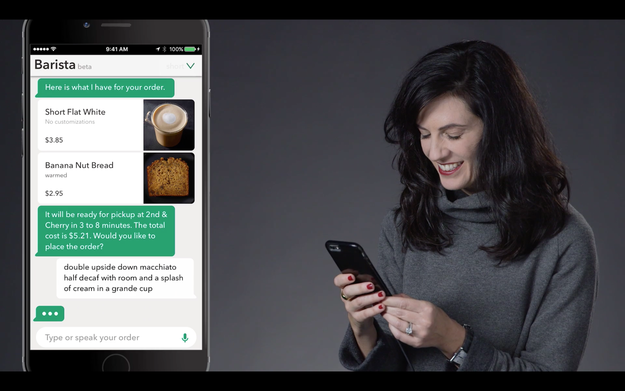
Starting this summer, you won&;t have to watch a barista roll their eyes when you order a double upside down macchiato half-decaf with room and a splash of cream in a grande cup. You&039;ll have the option to talk to a non-judgmental chatbot.

Starbucks plans to add a virtual assistant, which you can talk to or text with, to its already-popular mobile ordering app this summer. The bot is called My Starbucks Barista, and it&039;s available to about 1,000 people to beta test right now.

The chatbot will allow you to order via talk or text and add modifications, if for example, you specify that you want your “banana bread warmed.” Just like a regular barista, it will respond with questions like, “What size?”

Starbucks has made a video of someone making the kind of detailed orders only a human might understand.

Voice-activated AI bots have become increasingly popular in the US, sparked in part by the success of Amazon&039;s Echo speaker and AI assistant Alexa, which you can use to order items off Amazon, dim the lights in your room, or queue up streaming music. Siri, the voice-activated assistant Apple debuted back in 2011, hasn&039;t quite pleased customers in the same way that Alexa has.

Starbucks has also given Alexa the ability to order Starbucks for you. It allows customers “to order their &039;usual&039; Starbucks food and beverage items as they move throughout their day,” according to the company. But if your usual order is complicated, you won&039;t be able to change that order while you&039;re talking to Alexa.

The same day as Starbucks announced the feature, the company was embroiled in controversy.

On January 29, Starbucks CEO Howard Schulz responded to Trump&039;s immigration order from last Friday by saying that human rights in the USA were “under attack.” He pledged to hire 10,000 refugees over the next five years at Starbucks locations around the globe. Some Trump supporters were livid.

Even still, the controversy probably won&039;t hurt the popularity of Starbucks&039; ordering app.

People use the apps so often that Starbucks has had to redesign some stores in response. At an investor conference presentation in December 2016, Starbucks said that 8 million people had downloaded the app, with one third of them using Mobile Order and Pay. Mobile transactions accounted for 21% of Starbucks&039; US transactions in 2015, the same year it rolled out the Mobile Order and Pay throughout the US, according to Wired. That figure grew to 27% in 2016, the company said in a statement.

Quelle: <a href="Soon You&039;ll Be Able To Talk To Your Starbucks App“>BuzzFeed