Democrats Are Bracing For A Big, Public Fight To Protect Net Neutrality
Mandel Ngan / AFP / Getty Images

Higher monthly internet bills, obnoxious video buffering, and a market where a future Netflix will be smothered by broadband giants are all part of a dark vision of the internet put forward by leading Senate Democrats Tuesday, one they fear may come to pass unless the public stands up for network neutrality.

Flanked by a host of consumer groups and armed with arguments highlighting the impact of a less open internet, Sen. Ed Markey launched a public battle in Washington to shield net neutrality from President Trump and a Republican controlled Congress. Network neutrality requires internet providers to treat all web traffic equally. Established in 2015, the rules were created to protect websites and services from being slowed or blocked by broadband companies.

Markey also called out the new Republican chair of the Federal Communications Commission, Ajit Pai, describing him as a pawn for broadband kingpins. And he placed the campaign to safeguard net neutrality alongside other crucial efforts he said promote democratic values but are under assault by the new administration: the Affordable Care Act, the refugee program, and the Paris Climate Accord.

“Net neutrality rules ensure that those with the best ideas, not simply the best funded ideas, have the opportunity to share their content with the world,” Markey said during a press conference. “But now the big broadband barons and their Republican allies want to turn back the clock and make big cable and big cellphone companies the gatekeepers for internet access. And they have a new FCC chairman in Ajit Pai who will do their bidding.”

“Pai&;s number one target appears to be taking down net neutrality.”

Sen. Markey was joined by other outspoken Democratic supporters of net neutrality: Sens. Al Franken, Ron Wyden, Patrick Leahy, and Richard Blumenthal.

Franken was also highly critical of Chair Pai. The Minnesota Senator described the the Trump-selected FCC chief as someone who has “repeatedly sided with corporations over consumers.” He added, “Pai&039;s number one target appears to be taking down net neutrality.”

“We all know what the stakes are with the new chairman of the FCC,” said Sen. Wyden, who like Franken and Blumenthal don&039;t seem to expect an olive branch from Pai. “He is prepared to do the bidding of the big cable companies at the expense of consumers.”

According to Franken, the fight over net neutrality boils down to “mega-corporations” like Verizon and Comcast aiming to boost their bottom lines by choosing which content reaches American customers. Without net neutrality regulations, broadband companies will ultimately restrict what information, ideas, and entertainment people have access to, Franken said.

Getting rid of those rules, which prohibit broadband companies from discriminating or privileging certain content would be “completely irresponsible” Franken added.

“I hate buffering video, you hate buffering video.”

“I hate buffering video, you hate buffering video, and I think we can all agree that small businesses deserve the same opportunities as big businesses,” said VHX CEO Jamie Wilkinson. A subsidiary of Vimeo, VHX is a platform for selling TV and film online, a business whose operations depend on an equal playing field for internet upstarts, and one that would be choked off if internet companies can charge for so called “fast lane” tolls to connect services to people&039;s homes, Wilkinson said.

Gene Kimmelman, President and CEO of Public knowledge, a consumer group, said, “It is a fundamental consumer issue and a First Amendment issue when consumers have to pay through the nose for cable service and broadband service.” He continued, “When companies are, or certainly act like monopolies, to give them additional power to discriminate, to pick and choose winners on the internet, it is only going to drive up prices, limit choices, and harm all of us.”

As they underlined the stark consequences of an internet without net neutrality, Sens. Leahy, Wyden, and Blumenthal emphasized the need to rally support to influence Congress and the FCC, noting that nearly four million comments flooded the commission before net neutrality was passed in 2015.

“The millions of comments the FCC has gotten before, we just got to get them again,” said Sen. Leahy.

“This is another one where, early on, it&039;s going to feel like we are really pushing the rock up the hill,” said Sen. Wyden. “But if it comes down to the citizens and the people at the grassroots against the special interests, then we can win that.”

While Chair Pai has declined to say what measures he will take to dismantle or diminish net neutrality, he made his opposition to the open internet rules clear during his first meeting as the agency&039;s chief last week. “My present position is pretty simple: I favor a free and open internet and I oppose Title II,” he said, referring to the classification of broadband companies as akin to utilities, subject to more robust regulation.

In response to the criticism of Chair Pai at the press conference Tuesday, a spokesperson for the FCC told BuzzFeed News: “Consistent with the bipartisan consensus dating back to the Clinton Administration, Chairman Pai supports a free and open Internet but opposes heavy-handed Title II regulation. The Internet was free and open before the 2015 party-line vote imposing these Depression-Era regulations.”

Quelle: <a href="Democrats Are Bracing For A Big, Public Fight To Protect Net Neutrality“>BuzzFeed

Democrats Are Bracing For A Big, Public Fight To Protect Net Neutrality

Mandel Ngan / AFP / Getty Images

Higher monthly internet bills, obnoxious video buffering, and a market where a future Netflix will be smothered by broadband giants are all part of a dark vision of the internet put forward by leading Senate Democrats Tuesday, one they fear may come to pass unless the public stands up for network neutrality.

Flanked by a host of consumer groups and armed with arguments highlighting the impact of a less open internet, Sen. Ed Markey launched a public battle in Washington to shield net neutrality from President Trump and a Republican controlled Congress. Network neutrality requires internet providers to treat all web traffic equally. Established in 2015, the rules were created to protect websites and services from being slowed or blocked by broadband companies.

Markey also called out the new Republican chair of the Federal Communications Commission, Ajit Pai, describing him as a pawn for broadband kingpins. And he placed the campaign to safeguard net neutrality alongside other crucial efforts he said promote democratic values but are under assault by the new administration: the Affordable Care Act, the refugee program, and the Paris Climate Accord.

“Net neutrality rules ensure that those with the best ideas, not simply the best funded ideas, have the opportunity to share their content with the world,” Markey said during a press conference. “But now the big broadband barons and their Republican allies want to turn back the clock and make big cable and big cellphone companies the gatekeepers for internet access. And they have a new FCC chairman in Ajit Pai who will do their bidding.”

“Pai&;s number one target appears to be taking down net neutrality.”

Sen. Markey was joined by other outspoken Democratic supporters of net neutrality: Sens. Al Franken, Ron Wyden, Patrick Leahy, and Richard Blumenthal.

Franken was also highly critical of Chair Pai. The Minnesota Senator described the the Trump-selected FCC chief as someone who has “repeatedly sided with corporations over consumers.” He added, “Pai&039;s number one target appears to be taking down net neutrality.”

“We all know what the stakes are with the new chairman of the FCC,” said Sen. Wyden, who like Franken and Blumenthal don&039;t seem to expect an olive branch from Pai. “He is prepared to do the bidding of the big cable companies at the expense of consumers.”

According to Franken, the fight over net neutrality boils down to “mega-corporations” like Verizon and Comcast aiming to boost their bottom lines by choosing which content reaches American customers. Without net neutrality regulations, broadband companies will ultimately restrict what information, ideas, and entertainment people have access to, Franken said.

Getting rid of those rules, which prohibit broadband companies from discriminating or privileging certain content would be “completely irresponsible” Franken added.

“I hate buffering video, you hate buffering video.”

“I hate buffering video, you hate buffering video, and I think we can all agree that small businesses deserve the same opportunities as big businesses,” said VHX CEO Jamie Wilkinson. A subsidiary of Vimeo, VHX is a platform for selling TV and film online, a business whose operations depend on an equal playing field for internet upstarts, and one that would be choked off if internet companies can charge for so called “fast lane” tolls to connect services to people&039;s homes, Wilkinson said.

Gene Kimmelman, President and CEO of Public knowledge, a consumer group, said, “It is a fundamental consumer issue and a First Amendment issue when consumers have to pay through the nose for cable service and broadband service.” He continued, “When companies are, or certainly act like monopolies, to give them additional power to discriminate, to pick and choose winners on the internet, it is only going to drive up prices, limit choices, and harm all of us.”

As they underlined the stark consequences of an internet without net neutrality, Sens. Leahy, Wyden, and Blumenthal emphasized the need to rally support to influence Congress and the FCC, noting that nearly four million comments flooded the commission before net neutrality was passed in 2015.

“The millions of comments the FCC has gotten before, we just got to get them again,” said Sen. Leahy.

“This is another one where, early on, it&039;s going to feel like we are really pushing the rock up the hill,” said Sen. Wyden. “But if it comes down to the citizens and the people at the grassroots against the special interests, then we can win that.”

While Chair Pai has declined to say what measures he will take to dismantle or diminish net neutrality, he made his opposition to the open internet rules clear during his first meeting as the agency&039;s chief last week. “My present position is pretty simple: I favor a free and open internet and I oppose Title II,” he said, referring to the classification of broadband companies as akin to utilities, subject to more robust regulation.

In response to the criticism of Chair Pai at the press conference Tuesday, a spokesperson for the FCC told BuzzFeed News: “Consistent with the bipartisan consensus dating back to the Clinton Administration, Chairman Pai supports a free and open Internet but opposes heavy-handed Title II regulation. The Internet was free and open before the 2015 party-line vote imposing these Depression-Era regulations.”

Quelle: <a href="Democrats Are Bracing For A Big, Public Fight To Protect Net Neutrality“>BuzzFeed

Twitter Tackles Trolls With Three New Anti-Harassment Features

Ariel Davis / BuzzFeed News

In November, Twitter introduced a trio of features intended to combat abuse, hate speech, and trolling — a mute filter, muted conversation threads, and new user report infrastructure. Today, the company unveiled three more, making good on its public pledge last week to work more quickly to make its platform a safer place. Twitter introduced new “safe search” results, a timeline change intended to collapse “potentially abusive or low-quality” tweets, and a new effort to crack down on the creation of new abusive accounts from repeat offenders.

On Twitter, shutting down serial harassers requires a time-consuming, inefficient whack-a-mole style of policing because its so easy for trolls to quickly return to the platform with a new identity after they&;ve been banned. To stop this, Twitter is implementing a stricter policy that will “identify people who have been permanently suspended and stop them from creating new accounts.” The company didn&039;t say how it plans to enforce this policy.

Twitter is also rolling out new “safe search” results to filter out tweets that “contain potentially sensitive content and Tweets from blocked and muted accounts.” While it&039;s unclear exactly how Twitter defines “potentially sensitive” content — and how effective its filters will be in parsing and weeding out abuse — the change could help people more easily avoid content they don&039;t want to see.

Finally, Twitter is changing its timeline to identify “potentially abusive and low-quality replies”; It&039;s created a mechanism that collapses them. These tweets will still be discoverable, but you&039;ll need to click a “Show less relevant replies” button to see them. According to Twitter, it will look like this:

Like safe search, Twitter&039;s “show less relevant replies” feature is largely cosmetic — it hides abuse instead of fixing it. That said, it could help shield people who&039;ve suffered abuse on Twitter from further unwanted interactions.

These anti-abuse updates come as Twitter finds itself at the center of the political world, a key communication tool of the Trump administration, its supporters and opponents. As such, Twitter is under increasing scrutiny for the harassment that sometimes occurs on its platform, its efforts to police it and how its rules forbidding that kind of behavior might apply to one of the most powerful Twitter accounts around.

Amid the chaos, Twitter is focusing unprecedented attention on its abuse problem. Last week, its VP of engineering Ed Ho tweeted that the company was making harassment a “primary focus” inside the company with an eye toward faster iteration and response to pressing product problems. Shortly after, Twitter announced a small but important tweak by allowing users to report abusers even if the abuser blocked that person (previously a long-standing flaw in abuse reporting made it so that trolls could harass a user and then block them in order to prevent being reported). “We heard your feedback,” Twitter said at the time.

That Twitter finally appears to be listening to users who&039;ve called for better anti-harassment tools is a heartening. But after a decade of inaction, winning back user trust back won&039;t come easily.

Quelle: <a href="Twitter Tackles Trolls With Three New Anti-Harassment Features“>BuzzFeed

Hundreds Of Investors, Startups, And VC Firms Say Trump's Travel Ban Will Cause "Irreversible Harm"

Carlos Barria / Reuters

More than 200 tech industry leaders signed a letter to be sent to President Donald Trump on Tuesday opposing the administration&;s refugee and travel ban and highlighting what they claim are irreversible harms the immigration order will inflict on the US startup community.

Deep pocketed investors, tech startups, and venture capital firms are among the signatories, which include: Josh Kopelman, Ron Conway, Dave McClure, and Shervin Pishevar.

The investors and tech leaders took issue not only with the Trump administration&039;s travel ban — which will face a major legal test in federal court Tuesday evening — but with reports that Trump will seek to limit skilled work-visa programs favored by tech companies.

“We are deeply troubled by the recent Executive Order banning citizens of seven countries and refugees from entering the U.S., as well as the recently leaked draft Executive Order suggesting plans to roll back worker visa and parole programs,” states the letter. “We believe these actions are both morally and economically misguided, and will inflict irreversible harm on the startup community and America’s ability to compete globally.”

The coalition of startups and investors argues that the tech industry depends on skilled workers from abroad to satisfy the high demand for IT professionals. “The fact that so many startups rely on H-1B visas only serves to illustrate this fact, since no sensible, time-constrained startup would opt to rely on a bureaucratically difficult process for hiring foreign-born employees if simply hiring qualified American workers was an option,” states the letter.

Two dozen Democratic lawmakers also made an urgent case for promoting skilled immigrant programs in a letter to President Trump on Monday, and in a separate effort, more than 100 tech companies joined a friend-of the-court brief opposing the immigration order, in part, on economic grounds.

Accel, General Assembly, 500 startups, and the National Venture Capital Association were among the 214 signatories, as were Venmo, Pinterest, and Vimeo.

“While it appears that the White House isn&039;t backing down from the immigration ban, we&039;d like to believe that there is still time to convince the President to scrap the proposed Executive Order that would make it harder for the best and brightest innovators from around the world to come to the U.S. to launch and grow the startups that are responsible for all net job growth in this country,” Engine Executive Director Evan Engstrom told BuzzFeed News.

Quelle: <a href="Hundreds Of Investors, Startups, And VC Firms Say Trump&039;s Travel Ban Will Cause "Irreversible Harm"“>BuzzFeed

Here's How To Prevent Your Vizio TV From Spying On You

Facebook: vizio

If you bought a Vizio smart TV within the last two years, there&;s a good chance that TV automatically tracked what you were watching without asking for your permission, according to a complaint filed by the Federal Trade Commission and the State of New Jersey. Today, the California-based TV manufacturer agreed to pay $2.2 million to settle the charges and to more prominently disclose when and how it collects user information.

Since February 2014, software installed on the televisions allowed Vizio to continuously collect customer&039;s viewing history through software called “ACR,” or automated content recognition. This software captures a selection of pixels displayed on Vizio smart TV screens and sends that data to the company&039;s servers, where those pixels are compared to a database of different TV shows, movies, and commercials. ACR can also collect information like your Wi-Fi signal strength, nearby Wi-Fi access points, and IP addresses.

The complaint alleges that over 100 billion data points per day (information like what content you&039;re watching and how long you&039;re watching it) from more than 10 million Vizio televisions have been collected, and the company planned to store this data on their servers indefinitely. A stipulated federal court order requires that Vizio delete all data collected before March 1, 2016. An anonymized version of the data that did not include customers&039; name or contact information was sold to third parties for advertising and audience measurement purposes.

In a provided statement, Vizio&039;s general counsel Jerry Huang said, “The ACR program never paired viewing data with personally identifiable information such as name or contact information.” Huang also stated that, “Today, the FTC has made clear that all smart TV makers should get people&039;s consent before collecting and sharing viewing information and Vizio is now leading the way.”

As a part of the settlement, Vizio did not admit or deny the FTC&039;s allegations.

The FTC charged Vizio for violating Section 5 of the FTC Act, which prohibits deceptive and unfair acts affecting consumer privacy. In September, the FTC clarified this section as it relates to smart TVs. New guidelines for smart TV manufacturers include explaining data collection practices up front, requiring consent before collection, and making privacy settings easy to understand.

According to the FTC&039;s complaint, Vizio did not make it clear to customers that they intended to collect their TV viewing history, and the collection was turned on by default, which did not give customers a chance to opt out. A key part of the complaint is that Vizio promised customers recommendations based on the data collected, but never provided them to owners of older Vizio TVs.

In a separate statement, acting FTC Chairperson Maureen Ohlhausen said she agreed Vizio should have been more explicit about its data collection, but is further investigating if those practices are likely to cause “substantial injury.” Ohlhausen tweeted that she intends to start a dialogue about whether TV viewing history should be considered sensitive information, like health care or financial records.

If you own a Vizio TV, you can disable data collection by going to your TV&039;s Menu > Settings > Smart Interactivity, or any option with Automated Content Recognition, and turning it off.

Quelle: <a href="Here&039;s How To Prevent Your Vizio TV From Spying On You“>BuzzFeed

House Democrats Highlight The Risks To US Tech In Letter Opposing Trump’s Travel Ban

Carlos Barria / Reuters

Two dozen Democrats in Congress will send a letter to the president Monday, urging him to rescind his refugee and travel ban — and they are highlighting the risks to American tech to make their case.

“Like millions of Americans, we deeply object to your recent Executive Order barring the entry of residents and refugees of seven predominantly Muslim countries into the United States,” the letter begins, which was authored by Rep. Robin Kelly. “In addition to Constitutional concerns, the stance this Order takes is in contradiction of American values.”

The 24 lawmakers argue that the travel ban poses “great risk of lasting damage” to the US economy, with a focus on tech industry recruitment. They argue that Trump’s executive order undermines the ability of American tech companies to hire the world’s most talented workers. “This is a recipe for disaster,” the representatives write.

The lawmakers quoted Apple CEO Tim Cook, who told his employees soon after the executive order took effect, “Apple would not exist without immigration, let alone thrive and innovate the way we do.” And they noted the personal background of Google co-founder Sergey Brin, “We would not be ‘Googling’ had Sergey Brin’s parent’s never left the Soviet Union for American shores,” states the letter. The representatives are also seeking to protect so-called high-tech work-visa programs that allow tech companies to hire skilled workers for temporary stays.

President Trump has criticized the programs in the past. And a leaked draft of an executive order has raised concerns in Silicon Valley that the president may soon extend immigration restrictions to them. Critics of skilled-immigration visa programs say they are abused by outsourcing companies who place lower-paid foreigners in positions that Americans could otherwise fill. Proposals in Congress that would increase the salary requirements for these positions have already sent shock waves through India, where several outsourcing tech firms lost billions in market value last week.

But the representatives tell President Trump that the demand for STEM workers currently outpaces supply, with jobs in the fields of science, engineering, and math only expected grow.

“We have an obligation to continue beating the drum and fighting back against this reckless, unconstitutional and un-American Executive Order,” Rep. Kelly told BuzzFeed News in a statement. “The American people deserve to understand how much Trump’s Muslim ban endangers our morals, our economy, and our security.”

Reps. Barbara Lee, John Conyers, Ted Lieu, and Sheila Jackson Lee were among the letter’s signatories.

Quelle: <a href="House Democrats Highlight The Risks To US Tech In Letter Opposing Trump’s Travel Ban“>BuzzFeed

Snap's Head Of Creative Strategy Leaves Company Ahead Of IPO

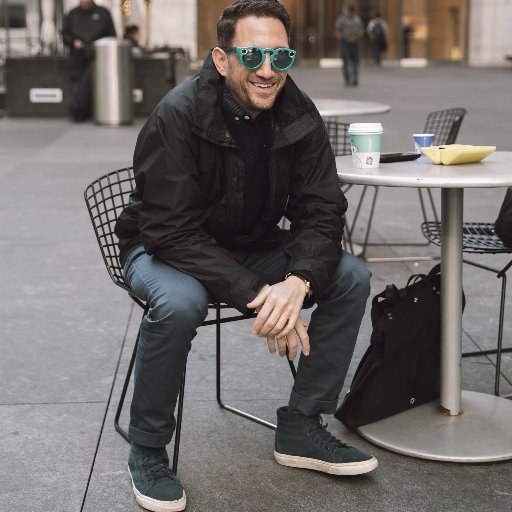
Snap&;s departing head of creative strategy, Greg Wacks

Greg Wacks

Greg Wacks, Snap&039;s head of creative strategy, has left the company ahead of its forthcoming IPO, BuzzFeed News has learned.

Wacks, who joined Snap in 2014, worked closely with advertising agencies on creative and strategy for ads, dealing with lenses, geo filters, and Discover. Snap declined comment.

Leadership turnover has been a problem for Snap in the past, which at one point in 2015 lost eight top execs within a span of 12 months. In its S-1 IPO filing last week, Snap listed leadership turnover as a risk factor that could cause the company serious harm. “The loss of key personnel, including members of management and key engineering, product development, marketing, and sales personnel, could disrupt our operations and seriously harm our business,” the company&039;s S-1 document stated.

Quelle: <a href="Snap&039;s Head Of Creative Strategy Leaves Company Ahead Of IPO“>BuzzFeed

Top US Tech Companies Already Pay Some Immigrants Over $100,000

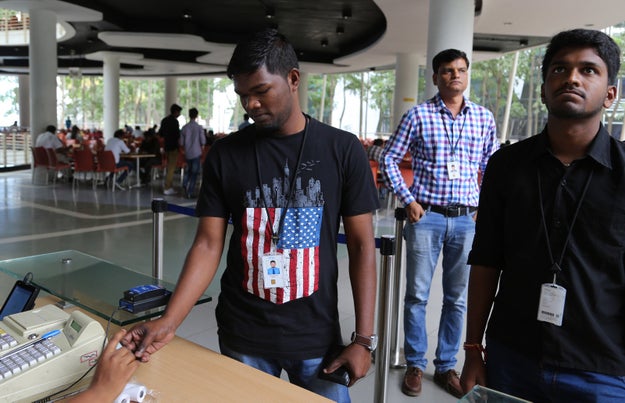
An Infosys employee wears a T-shirt featuring a US flag as he buys coupons for lunch while others wait for their turn at company’s headquarters in Bangalore, India, on April 15, 2016.

Aijaz Rahi / AP

As the world grapples with the implications of President Donald Trump’s order temporarily banning immigration from seven Muslim-majority nations, a leaked draft of another executive order is raising concerns in Silicon Valley that tech industry immigrants could be the administration’s next target.

The draft proposal is vague, and it’s unclear how heavily the Trump administration is considering the proposal or whether or not the president will even sign it. “It didn’t have a lot of teeth,” said immigration lawyer Sam Adair, who pointed out that the order hasn’t been signed despite being leaked almost two weeks ago. But it does make one definitive point: “Visa programs for foreign workers … should be administered in a manner that … prioritizes the protection of American workers.”.

Currently, there are a few legislative proposals in Congress aimed at achieving that goal by raising the cost of foreign labor. One bill proposed by Republican Rep. Darrell Issa would raise the salary floor for visa-dependent companies to $100,000; a separate bill proposed by Democratic Rep. Zoe Lofgren would make the floor even higher, starting at least $130,000 a year. Visa-dependent companies, defined as those where more than 15% of the workforce is on a visa, include Facebook, per a Reuters report.

But many high-skilled immigrants working for major US tech companies are already earning at least $100,000 a year. More than 90% of 2015 visa applications for software developer positions filed by Facebook, Google, Apple, and Microsoft paid more than $100,000 a year (at Uber, that figure was around 84%),* according to an analysis by JobsInTech.io, a searchable database of over 7 million applications for various visas dating back to 2000. Meanwhile, immigrants working for the India-based staffing agencies that are historically awarded the most visas and would be hardest hit by such a regulatory crackdown are earning much less.

“Companies will look to move those jobs overseas.”

At employers like Wipro, Tata, and Infosys — which together in 2015 applied for over 62,000 work visas — less than 1% of visa applications for software developer positions paid more than $100,000. The average salary at each company was closer to $65,000 — the prevailing wage companies sponsoring work visas have been required to pay since 1998.

Apple, Uber, Infosys, and Tata declined requests for comment on this story. Similar queries to Facebook, Google, Microsoft, and Wipro went unanswered.

Trump’s goal is to create more jobs for Americans, and to stamp out the fraud that has has come to light at places like Disney and University of California, San Francisco, where American employees were found to have trained their own foreign-born replacements before being laid off. Though his work-visa order hasn’t been signed, proposals in Congress have already given the India-based consultancies a good idea of its possible impact. Lofgren’s reform proposal shocked India this week, as tech consultancies there lost an estimated $7 billion in value; they plan to meet with President Trump to plead their case later this month.

If those India-based companies are forced to shut down their US operations because of high costs, some say US companies will simply outsource the work foreign programmers have been doing.

“There&;s a lot of people here on H-1Bs doing lower level tech jobs that, if they go, would leave a huge gap in the workforce,” said Adair. “These jobs aren&039;t going to go away, but they may not necessarily stay in the US. Companies will look to move those jobs overseas.”

“Hey look, you got a PhD here, you got a master&039;s degree here, you&039;re making good money and paying taxes, and we don’t want you here anymore.”

That concern was echoed by Indian immigrants in Silicon Valley. “There&039;s a belief that if H-1B is capped tomorrow, all the American companies would hire only Americans and stop using H-1B,” an H-1B visa holder at a large tech firm explained. “That&039;s wrong.”

Immigration lawyers who spoke with BuzzFeed News said they don&039;t expect any major changes to the high-skilled visa program before 2017 applications open on April 1. Even so, companies like Amazon and Microsoft are reportedly considering moving immigrants to offices in Vancouver. While Adair said he doesn’t know of any companies currently pursuing that strategy, he does have individual clients have raised the possibility. Kaz Nejatian, a Y Combinator grad who used to work in Canada’s immigration department, has been actively tweeting about startups opening positions there to foreign workers in the US. Meanwhile, TechCrunch reports that a new company is selling $6,000 relocation packages that include a one way ticket to Vancouver.

Proposed reforms for the work-visa program may not end up being hugely expensive for top-tier US tech firms — but increased scrutiny of the program and general tightening of immigration rules nonetheless create unpleasant uncertainty for foreign-born workers living in the US.

“I have clients right now who came to the US, got graduate degrees and really good six-figure jobs,” Adair told BuzzFeed News. “We&039;ve applied for the H-1B in past years and they haven&039;t gotten it, and if they don&039;t get it this year, they’re going to have to leave the United States. That&039;s potentially pushing out somebody who&039;s making over $100,000 a year and saying, ‘Hey look, you got a PhD here, you got a master&039;s degree here, you&039;re making good money and paying taxes, and we don’t want you here anymore.”

*Not all US-based tech companies pay visa holders as well as Apple or Google; at firms like IBM, Intel, and Qualcomm, between 24 and 40% of applications filed for software developer positions paid $100,000 or higher.

Quelle: <a href="Top US Tech Companies Already Pay Some Immigrants Over 0,000“>BuzzFeed

A Takeover In Silicon Valley: Founders Out, Private Equity In

A Takeover In Silicon Valley: Founders Out, Private Equity In

Revel Systems / Via youtube.com

Silicon Valley&;s quest to reinvent the cash register has hit some turbulence, with a shakeup at a major startup that follows weeks of internal turmoil, BuzzFeed News has learned.

Revel Systems, which has raised more than $130 million and deployed its software in thousands of iPad checkout terminals that sit on café and retail store counters, has dismissed its two founders and been taken over by one of its major investors, according to an announcement Monday and people familiar with the matter. The changes come as it contends with significant business and legal challenges.

Revel’s founders — CEO Lisa Falzone and CTO Chris Ciabarra — were bought out of most of their shares by a New York private equity firm called Welsh, Carson, Anderson & Stowe, which now has a majority stake in the company, people familiar with the matter said.

To take over as CEO, Revel has hired Scott Betts, a onetime Procter & Gamble executive who most recently was the CEO of a casino-floor cash machine company. He is coming out of retirement, he told staff in a note on Friday — “enjoying my two grandchildren (ya I&039;m that old), studying guitar-making, and riding motorcycles around the US and Europe.” He is expected to address employees at Revel&039;s San Francisco headquarters on Monday.

This reshuffle underscores Revel&039;s struggles to expand in a bitterly competitive industry. It also comes on the heels of changes to Revel&039;s overtime and vacation policies that were made in the wake of two lawsuits filed by former employees. One of those suits, which Revel settled last fall, claimed the company pressured a sales rep to quit after he learned he had cancer. The other, a class-action suit heading toward a settlement this month, claimed Revel shortchanged sales reps of overtime pay.

Revel, founded in 2010, has been held up as a leader in the new guard of “point of sale” startups, with its co-founder Falzone appearing on a Forbes “30 Under 30″ list. It said in 2015 that it had a valuation of more than $500 million, and last year it was reported to be in talks to be acquired by IBM, though no deal materialized.

The valuation in the latest deal couldn&039;t be learned. Welsh Carson, which previously led a $100 million investment in the startup, gained majority ownership through a $65 million transaction, according to an internal email sent on Friday by chief operating officer Bobby Marhamat.

“We do want to thank the founders for the great company they have built,” Marhamat told staff, “and at the same time we are excited to welcome Scott as our new fearless leader.”

Revels founders “have shown great vision and determination in building the company,” Eric Lee, a general partner at Welsh Carson, said in a statement on Monday, adding that the company&039;s new CEO “will bring terrific strategic and operational focus as we drive this next phase of growth.”

A Revel spokesperson declined to comment beyond Monday&039;s announcement. “We&039;re looking to concentrate our efforts on the exciting news for Revel,” the spokesperson said in an email.

Revel — which helps customers like Cinnabon, Stanford University and Goodwill process payments and manage their business — faces competition from rivals including Square, which went public in 2015, and Micros, which is owned by Oracle. More broadly, a number of deep-pocketed tech companies, including PayPal and Apple, are rushing to release payments technology that they hope will transform the way people shop. Even Amazon could one day pose a competitive threat, with plans for a system that lets shoppers pay without waiting in line — making the very idea of a payments terminal obsolete.

For at least two years, Revel has been trying to shift its business model to focus more on recurring software subscription fees rather than setup charges. The company recently celebrated a hard-won deal to install its terminals at Shell gas stations. But the business model shift has also resulted in increased cash burn and has not yet made Revel profitable, though “we expect profitability in 2018,” Falzone told staff in early January in an email reviewed by BuzzFeed News.

Highlighting the pressure it is under to increase revenue and reduce costs, in January the company raised sales quotas for junior sales reps, according to three people familiar with the matter. The reps were told they could quit with two weeks&039; severance pay if they didn&039;t like the higher expectations, the people said.

In addition, Revel is seeking to settle a class-action lawsuit brought by former sales reps who accused it of failing to pay legally mandated overtime and provide meal and rest periods — behavior that they said amounted to “a uniform policy and systematic scheme of wage abuse.” While the terms of the proposed settlement aren&039;t public, Revel told sales staff in January that they were no longer allowed to work overtime without special approval, according to five people familiar with the matter.

A hearing to approve the settlement has been set for later this month, at the California Superior Court in San Francisco. In court filings, Revel has previously denied the allegations. But the class-action suit isn&039;t the first time it has been accused of violating California law in its treatment of employees.

Last fall, it settled a lawsuit by a former sales rep, Robert Zelch, who had been diagnosed with colon cancer while working at the company. Zelch had told a human resources manager that he would need to receive weekly chemotherapy treatment and would join Revel&039;s sales meetings remotely, according to the complaint. Instead of accommodating him, the complaint says, Revel told Zelch he could accept a reduced salary or take a severance deal, which the human resources manager “repeatedly pressured” him to sign.

Zelch also claimed that, after initially informing Revel of his diagnosis, he was allowed to take only two weeks&039; paid time off, despite Revel&039;s policy of allowing unlimited time off. (While “unlimited” policies are popular in Silicon Valley, many workers say they can result in a situation where there&039;s pressure to take hardly any time off at all.)

Revel has denied these allegations. Still, in January, it changed its “unlimited” policy to a more conventional one, with accrual of a set number of days, people familiar with the matter said.

The lawsuits offer a glimpse at the high-pressure sales culture that Revel, like many software startups, fostered in pursuit of growth. In an internal video from November 2015, which was obtained by BuzzFeed News, Marhamat tells the sales team to “keep pushing” and “make it rain” to make up for a disappointing October. He also describes two attributes that he says would make sales reps “not the best fit for this team.” One is a reluctance to work weekends.

“Some of you left right at the buzzer on Friday, and you were nowhere to be seen on Saturday,” Marhamat says in the video. “That&039;s not what I expected, especially from some veterans on the team that know where we came from and what it means to be a part of a number one team.”

Last week, right before announcing the leadership change, Marhamat published a new video on his YouTube channel featuring employees dancing and tossing dollar bills in the air, over a Revel theme song. In one scene, someone pretends to attack people holding paper signs with Revel&039;s competitors&039; logos.

Revel

Even as it pushed its sales staff, Revel sometimes failed to adequately support existing customers, according to internal emails and former employees. In July 2015, when a sales support specialist sent an email blast to customers without concealing their email addresses, a flood of reply-alls poured in from disgruntled customers seizing the opportunity to air their grievances.

“This system is an absolute disaster as is the onboarding team,” one customer wrote. “I have wasted countless hours of my life that I will never get back.”

“I have been escalated so many times I could be on top of Mount Everest,” another said.

“My experiences have been rather nightmarish and seem to be in a similar vein of the emails echoed above,” said a third. One customer offered Revel some business advice and then said, “I&039;ll expect a Starbucks gift card for my consultation service within the week.”

The replies weren&039;t all negative, however. One customer said their experience was “seamless” and added, “So far Revel has been a blessing to my restaurant. It&039;s made life so much easier.”

Falzone, in the email she sent to staff in early January, said that “support has made incredible strides.”

“A year ago, I used to get about one escalation request per day because no one got back to the client on support,” she said. “Now, this is rare. Another amazing achievement.”

Quelle: <a href="A Takeover In Silicon Valley: Founders Out, Private Equity In“>BuzzFeed

97 Tech Companies Say Trump's Immigration Order Is Unconstitutional

Carlos Barria / Reuters

Nearly 100 technology companies supported a legal challenge to President Trump&;s refugee and travel ban executive order in a court filing overnight.

Tech industry titans — including Google, Apple, Facebook, Microsoft, Uber, and Twitter — have signed the amici curiae (friends of the court) brief that was filed early Monday in the US Court of Appeals for the Ninth Circuit. The brief comes in opposition to the Justice Department&039;s request that the appeals court allow the federal government to restart enforcement of the executive order.

The companies — supporting the arguments of Washington and Minnesota challenging the ban — argue that Trump&039;s order violates immigration law and the Constitution.

“For decades, stable U.S. immigration policy has embodied the principles that we are a people descended from immigrants, that we welcome new immigrants, and that we provide a home for refugees seeking protection,” the brief begins. “At the same time, America has long recognized the importance of protecting ourselves against those who would do us harm. But it has done so while maintaining our fundamental commitment to welcoming immigrants—through increased background checks and other controls on people seeking to enter our country.”

The tech companies argue that the Trump administration order marks a “sudden shift” in American immigration rules. Not only does the travel ban inflict “substantial harm” on US businesses — through more difficult recruiting, increased costs, and disincentives to expand operations in the country — but the tech companies argue the order “violates the immigration laws and the Constitution.”

The lawyers who wrote the brief, Andrew Pincus and Paul Hughes of Mayer Brown, also are counsel in the challenge to Trump&039;s order relating to the treatment of affected people coming into Dulles International Airport.

Box CEO Aaron Levie told BuzzFeed News in a statement: “The executive order on immigration goes against our core values as a nation. We are proud to join leading organizations in highlighting to the courts how the order is unconstitutional, unjust, and economically unsound.”

Read the brief:

LINK: Opponents Of Trump’s Travel Ban Make Their Case To Federal Appeals Court

LINK: A Stunning List Of Former Security And Diplomatic Officials Said Trump’s Travel Ban Makes America Less Safe

Quelle: <a href="97 Tech Companies Say Trump&039;s Immigration Order Is Unconstitutional“>BuzzFeed