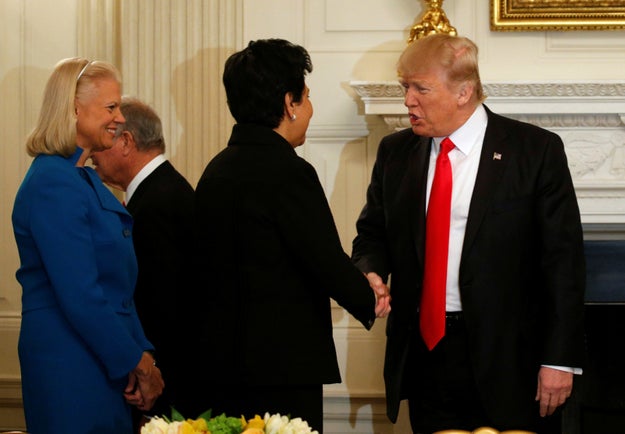
Read The IBM CEO’s Letter On Why She Won’t Stop Advising Trump

Kevin Lamarque / Reuters

The head of IBM, who also advises the president on business matters, sent a company wide memo Thursday defending her collaboration with the Trump Administration, as tech executives from Travis Kalanick to Elon Musk face intensifying pressure to challenge the White House on immigration and other issues.

“Some have suggested that we should not engage with the U.S. administration. I disagree,” IBM CEO Ginni Rometty told employees last week, in a letter obtained by BuzzFeed News. “Our experience has taught us that engagement – reaching out, listening and having authentic dialogue – is the best path to good outcomes.”

IBM declined to comment but did confirm the authenticity of the memo.

Rometty, like SpaceX and Tesla chief Elon Musk, serves as a business advisor to the president on his Strategic and Policy Forum. The group first met with Trump earlier this month, when they discussed jobs, cybersecurity, and the president&;s recent immigration order that barred refugees and people from seven Muslim-majority countries from entering the US.

At the White House meeting, Rometty said in the letter that she discussed “ways that advanced technology could address national security imperatives while also permitting lawful immigration and travel.” She added: “I explained that this is not an either/or choice. Our points were heard, and we will continue to engage to find solutions that align with our values.”

Rometty described her meeting with the president as part of a long history of non-partisan, public engagement at the company. “IBM leaders have been engaging directly with every U.S. president since Woodrow Wilson, and this was my ninth such meeting since becoming CEO,” she said.

Her stance contrasts with that of Uber CEO Travis Kalanick, who was slated to attend that White House meeting but backed out just a day before after mounting criticism and a viral campaign. In a letter to his employees, Kalanick announced that he would no longer be a part of the economic council. “Joining the group was not meant to be an endorsement of the President or his agenda but unfortunately it has been misinterpreted to be exactly that,” he said. Musk, on the other hand, said he would stay on as an advisor to the president for “the greater good.”

And while Uber, SpaceX, and Tesla were among the more than 130 tech companies that joined a friend-of-the-court brief opposing Trump&039;s immigration order, IBM was not a signatory.

In December a spokesperson for the company told BuzzFeed News that IBM would no help build or provide data for a Muslim registry, an idea Trump proposed during the presidential campaign. “No, IBM would not work on this hypothetical project. Our company has long-standing values and a strong track record of opposing discrimination against anyone on the basis of race, gender, sexual orientation or religion. That perspective has not changed, and never will.”

Quelle: <a href="Read The IBM CEO’s Letter On Why She Won’t Stop Advising Trump“>BuzzFeed

Here’s Who Drops The Most Cash On Candy Crush And Clash Of Clans

Alberto E. Rodriguez / Getty Images

If you were wondering how games like Candy Crush and Clash of Clans rake in millions of dollars, look to Norway and North Dakota. That&;s where the games&039; power players live.

In a recent study, “iPhone&039;s Digital Marketplace: Characterizing the Big Spenders,” researchers at the University of Southern California analyzed receipts from 776 million iPhone transactions totaling $4.6 billion from March 2014 to June 2015, and found that geography and gender play big roles in who&039;s buying digital goods from the App Store and iTunes.

USC

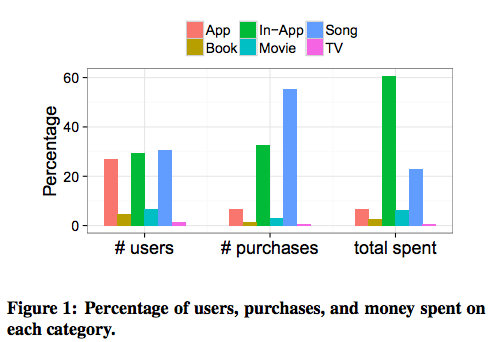
Researchers also found that in-app purchases account for 61%, or a whopping $2.8 billion, of all in-app purchases made through Apple&039;s stores. They defined in-app purchases as “bonuses or coins in games, for example,” but also included subscriptions within an app to services like Netflix or Apple Music.

The researchers used six categories to sort the various purchases people made on their iPhones: applications (apps), songs, movies, TV shows, books, and in-app purchases.” Purchasing an application, for instance, means paying to download an app and is separate from in-app purchases.

Farshad Kooti, one of the authors of the study and now a data scientist at Facebook, said, “The purchasing gap surprised us. I didn&039;t expect in-app purchases to dwarf all other kinds of media so vastly.”

What&039;s even more startling is that of those in-app purchases, 59% of them were made by only 1% of the 26 million people surveyed. That means this relatively tiny group was spending about $1.65 billion. By comparison, the bottom half of people who bought things in Apple&039;s digital stores accounted for less than 2% of the total purchases.

Among the people studied, nationality was a determining factor in who spends the most in Apple&039;s digital stores. Overall, Scandinavia had the highest concentration of “big spenders,” the term researchers used for the 1% of people who spend almost 60% of the money. The researchers also noted that Greek, Turkish, and Romanian users were more likely to be fall into that category. People in the United States were not as prone to making in-app purchases, but of all the states, North Dakotans were the most likely to do so.

Kooti hypothesized that the reasons for the skew are counterintuitive: “People in the US are more likely to have credit cards, which are what you use to purchase things in the App Store, but since everyone has one, that leads to more casual app users and players than hardcore ones. People outside the US, by contrast, are less likely to have credit cards, so if they’re playing these games and have entered their credit card information, they&039;re likely to be much more serious about gaming and spend more money per person.”

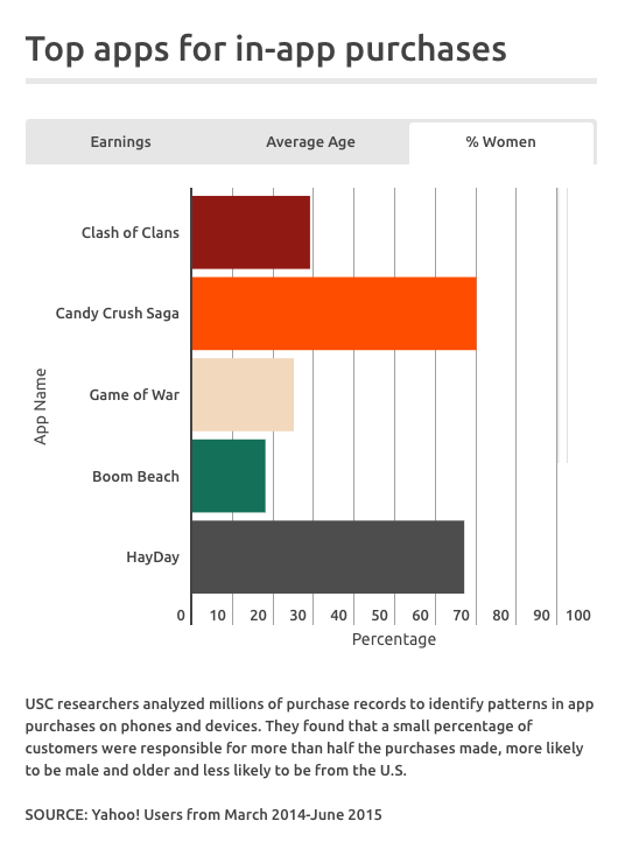
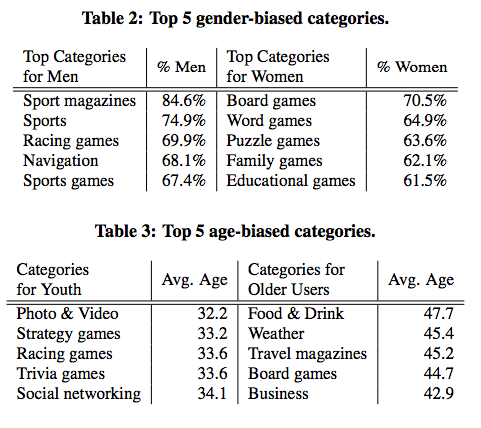
Gender also played a big role in who made a purchase and from what apps. Big spenders were 55% men and 45% women. Of the five most popular games, men heavily favored the war games Clash of Clans, Game of War, and Boom Beach. Women, by contrast, were more into Candy Crush Saga and the farmer-themed Hay Day.

Overall median spending during the time period studied was $31.10 among women, and among men it was $36.20. Peak age for spending was in the mid-30s for men, and mid-40s for women. Kooti hypothesized that, like gamers outside the US who have credit cards, older people who commit to familiarizing themselves with an iPhone game and playing it might be more likely to spend money because of the effort they&039;ve already put into the endeavor.

A breakdown of in-app purchases based on gender and age.

USC

The apps these people spent money on are familiar names: Clash of Clans and Candy Crush Saga have been among the most-downloaded and top-grossing apps for years. After Candy Crush became popular, some people got hooked and couldn&039;t stop buying lives and power-ups to feed that addiction. That obsessive gameplay has lured players into spending sprees that earned the games&039; creators millions.

It&039;s also worth noting that the same company, Supercell, is behind Clash of Clans, Boom Beach, and Hay Day. The company seems to have optimized in-app purchases: there were 330% more purchases in Candy Crush Saga than in Clash of Clans, but the amount per transaction for the latter were much higher, leading to 210% more revenue for the war game.

The app market remains risky, though. Researchers found that around just 0.1% of the apps measured took home 71% of in-app purchase dollars.

Kooti advised future developers that the App Store is a gamble: “People don’t pay attention to the fact that very few apps make any money at all. It&039;s very risky to go after the App Store market, but the apps that do well do very, very well.”

Besides in-app purchases, people spent money on individual songs from iTunes — 23% of the money — about a billion dollars — and buying apps outright — 7% of of the money, roughly $320 million. The study did not account for music purchases outside of iTunes. The people in the study purchased 430 million songs, and in the same period, they made 255 million in-app purchases, which had a much higher value per transaction, according to the study.

Apple raked in $20 billion from the app store in 2015, and that number likely rose in 2016. The company disclosed that it made $3 billion in December 2016 alone.

The study had one major limitation of note. It only targeted users of Yahoo&; Mail, which Kooti said became irrelevant for two reasons: the sample size, 26 million people, was large enough to smooth out demographic differences, and the researchers were comparing percentages of populations that behaved certain ways rather than comparing raw numbers.

Quelle: <a href="Here’s Who Drops The Most Cash On Candy Crush And Clash Of Clans“>BuzzFeed

The First Rule of These Facebook Groups: Don't Talk Trump

Kat Ayres moderates “Heughan&;s Heughligans,” a Facebook group devoted to the Outlander book series and its Starz adaptation. It&039;s a big job. The group&039;s 22,000 members write around 1,000 new posts a day — about everything from the show&039;s stars, Sam Heughan and Caitriona Balfe, to ancient Scottish tea sets — and Ayres and her nine co-moderators have to ensure they adhere to community guidelines that, in part, prohibit the discussion of politics.

“If there’s politics, it&039;s shut down,” Ayres told BuzzFeed News. “It leads to ugliness and bad feelings and drama.”

Leading up to the presidential election, that big job got even bigger. Heughan&039;s Heughligans had banned political discussion since the group started in 2013, but in 2016 political posts became more frequent and, as Ayres put it, “more intense.” She found herself spending hours a day poring over every post, trying to remove political content from the group; it felt like every other comment referred disparagingly to Donald Trump or Hillary Clinton. Finally, after Trump was elected and the political talk didn&039;t abate, Ayres and the other mods decided to take a drastic step: They enabled “Post Approval,” which requires everything posted to Heughan&039;s Heughligans to be blessed by a mod first.

“It was around Thanksgiving,” Ayres said. “We wanted to spend more time with our families.”

That&039;s right: It takes the the Heughan&039;s Heughligans mods less time to read and approve 1,000 posts a day than it does to retroactively spot-scrub the page and deal with the conflicts that emerge from letting people discuss politics before the posts can be taken down.

Yet such is the life of a certain kind of moderator in the age of the Trump administration. Across the internet of nonpolitical interest groups, from college football and Catholic community message boards to parenting, professional sports, and New Age Facebook groups, determined — if beleaguered — admins are trying their best to keep their spaces free from politics, which in 2017 really means the looming presence of one extremely polarizing person. They&039;re doing so on behalf of an untold number of users who have quickly found fandom and personal interest communities to be some of the last politics-free spaces on the English-language internet.

“A lot of the messages we get say, &039;Thank you for having this rule,&039;” Ayres said. “&039;Because this is the one place I know I’m not going to have to deal with politics.&039;”

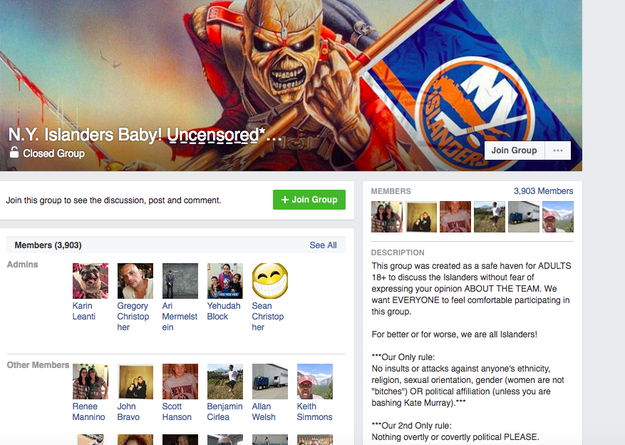
A post on the “N.Y. Islanders Baby&; Uncensored* Isles Talk for Adults” Facebook group.

Explicit or tacit bans on political talk in specialty message boards and other groups are nearly as old as the internet. And indeed, Heughan&039;s Heughligans and other no-politics groups would (and do) readily ban posts about Barack Obama, Bernie Sanders, and Hillary Clinton.

But over the past year, a half dozen moderators of various political persuasions told BuzzFeed News, something has changed. Begin with a presidential campaign that in the words of one mod was “the most heated and volatile one that most of our subscribers can remember.” Add a president who uses one social network, Twitter, as his own personal news channel, to the point of saturation. Throw in hyperpartisan filter bubbles that create parallel versions of current events (and nasty fights in the comments sections) on the biggest social network, Facebook. Finish it off with a mainstream media that has become all Trump, all the time, and you&039;ve got the recipe for a social internet that seems to be downright Trump-themed, no matter your politics.

In such an environment, the moderators of niche-interest communities say their spaces are more important than ever.

“We look at it as an oasis to get away from all the madness.”

“We look at it as an oasis to get away from all the madness,” said Gregory Christopher, who moderates a Facebook group called “N.Y. Islanders Baby&033; Uncensored Isles Talk for Adults,” which, well, censors political talk. “CNN is just 24 hours a day Trump.”

Christopher, in fact, has had to go further than just banning political speech. His group, which is made up of Islanders fans from across the political spectrum, doesn&039;t allow Trump&039;s image (or the image of any national politician).

“Someone posted a meme of an Isles fan in a Trump mask holding a sign saying “Make the Isles Great Again,” Christopher said. “It immediately set off a firestorm and we asked the poster to take down the post.”

Christopher and Ayres, as well as other moderators, said they don&039;t police political speech simply for the benefit of their users; it&039;s also for the overall health of the communities. As anyone who has spent time on Twitter or Reddit in the last few years will tell you, political arguments can quickly turn toxic.

“It is such an incendiary topic that you’re going to drive people away,” said John Borton, editor of The Wolverine, a magazine and message board devoted to University of Michigan football that significantly limits political opinion online. “It doesn’t matter which side it happens to fall on. You’re going to see people walking away saying, &039;I don’t need this. I can go to a hundred different websites.&039;”

These politics-safe spaces do welcome most off-topic conversation. It&039;s common for users of the The Wolverine to ask for legal advice, prayers for an ailing relative, or grilling tips. Indeed, the ability of these communities to draw in off-topic discussion is part of what makes them communities. But politics — particularly in the age of Trump — is a third rail.

“I don’t mind reading that you lost your yellow Lab, but those aren’t the kind of things that engender the fury that will make people not want to be here,” Borton said.

At times, no-politics rules can lead to unintended and alienating consequences. Olga Tomchin, an immigrants&039; rights lawyer and a former child refugee, submitted a post to a Facebook anxiety support group asking how to deal with stress related to the recent executive order banning travel from some Muslim-majority countries. A moderator of the group asked Tomchin to change the language in her post to make the cause of her anxiety less specific, and less political. Tomchin refused and left the group.

Another tricky situation for no-politics communities arises when someone who is an important figure to the group does something political. Last month, Outlander star Caitriona Balfe tweeted that she would be taking part in the Women&039;s March in Edinburgh. Despite the tweet&039;s relevance to the show&039;s fans, Ayres and her fellow mods decided not to allow any posts referencing it.

Yet for most niche-interest sites, Ayres said, despite pushback from a few posters, this form of censorship is necessary to preserve the increasingly rare places on the internet where people who love Donald Trump and people who hate Donald Trump can come together and talk about something completely unrelated to Donald Trump.

“It&039;s kind of like a vacation on Facebook to come to our group,” Ayres said, “and not have to deal with politics, drama, and constant fighting.”

Quelle: <a href="The First Rule of These Facebook Groups: Don&039;t Talk Trump“>BuzzFeed

More Than 100 People Displaced By The Trump Travel Ban Found Free Housing On Airbnb

More Than 100 People Displaced By The Trump Travel Ban Found Free Housing On Airbnb

122 people “impacted” by President Trump&;s recent travel and refugee ban have found free housing around the world though Airbnb, the company announced on Monday. In addition, 5,300 people signed up to open their homes to these displaced people free of charge. Most of them had not been Airbnb hosts before, according to the company.

The numbers come a little over two weeks after CEO Brian Chesky tweeted that Airbnb would offer housing to refugees and detainees, to widespread praise and media coverage. The company also ran a Super Bowl ad proclaiming “The world is more beautiful when we all belong. .”

Among those 122 Airbnb guests are Yemeni refugee reportedly left without housing in Denver, and a displaced Yemeni family who found housing in El Sobrante, a San Francisco Bay Area suburb.

Airbnb has made free places to stay available to those in crisis since 2013. Currently, hosts around the world can sign up to volunteer their homes, and Airbnb connects them with displaced people as needed. Most recently, it created a page for those affected by the Oroville, CA evacuation due to flooding risks. So far, only one host has signed up.

In January, BuzzFeed News reported that “Airbnb says it has provided &039;over 3,000 nights&039; of free housing to relief workers and donated $1 million to the United Nations High Commissioner for Refugees. The company also invites hosts to &039;offer warm meals/ to refugee families, an initiative it plans to expand in 2017.”

Quelle: <a href="More Than 100 People Displaced By The Trump Travel Ban Found Free Housing On Airbnb“>BuzzFeed

Senators Are Asking Questions About The Security Of Trump's Personal Phone

Pool / Getty Images

Is President Trump still using an insecure smartphone? If he&;s been given a secure device for his personal use, is he actually using it? And what security measures are in place to protect his personal phone from intruders?

These are some of the questions recently put to Secretary of Defense Jim Mattis by two Democratic Senators who serve on the Homeland Security Committee. In a letter dated February 9th, Sens. Claire McCaskill and Tom Carper expressed concern that Trump&039;s personal phone — which he may use to send tweets, they note, and may be vulnerable to hacking — poses a serious national security risk.

“Public reports originally indicated that President Trump began using a &039;secure, encrypted device approved by the U.S. Secret Service&039; prior to taking office,” the Senators wrote. “Subsequent reports, however, suggest that President Trump may still be using his personal smartphone, an &039;old, unsecured Android phone.&039; While it is important for the President to have the ability to communicate electronically, it is equally important that he does so in a manner that is secure and that ensures the preservation of presidential records.”

Sens. McCaskill and Carper describe these news reports as “troubling,” since hackers can target unsecured devices and activate a phone&039;s audio recording, camera, and location tracking. Even when people take precautions to secure their devices, hackers continue to exploit security weaknesses or create new pathways to personal data, the Senators said.

“These vulnerabilities are among the reasons why national security agencies discourage the use of personal devices,” the letter reads. “The national security risks of compromising a smartphone used by a senior government official, such as the President of the United States, are considerable.”

Sens. McCaskill and Carper asked Secretary Mattis to confirm whether the president has a “secured, encrypted smartphone for his personal use.” They also asked to review the Defense Department&039;s written policies for securing President Trump&039;s personal device.

Alongside the security risks, the Senators are also concerned that presidential records — including Trump&039;s tweets — may not be properly recorded if they are created on his personal device. “The National Archives and Records
Administration considers President Trump&039;s tweets to be records that must be adequately documented, preserved, and maintained for historic purposes, as required by the Presidential Records Act,” the letter explains.

One of questions posed to Secretary Mattis was whether the Defense Department collaborated with the National Archives and Records Administration to ensure that the security measures on Trump&039;s phone don&039;t interfere with the preservation of presidential records.

The Senators asked Secretary Mattis to respond by March 9th.

Last month, McCaskill and Carper wrote a letter to White House Counsel Donald McGahn seeking to find out if Trump&039;s staff complied with federal law regarding the use of private email accounts to conduct official business. They asked that he respond by February 10th. A spokesperson for Sen. McCaskill told BuzzFeed News that they have not received a response.

Quelle: <a href="Senators Are Asking Questions About The Security Of Trump&039;s Personal Phone“>BuzzFeed

Here's How Much Traffic A Trump Tweet Drives

When President Trump deployed his “big, beautiful Twitter account” to direct his followers to the swearing-in of Sen. Jeff Sessions as attorney general last Thursday, some 66,000 people clicked the link he created to get them there.

Trump, whose @realDonaldTrump Twitter account currently boasts 24.5 million followers, often uses a URL management tool called Bitly to shorten the links he tweets. And because he uses the public version of that tool, the anonymized traffic analytics for those shortened links is freely available.

That data — which would be inaccessible to the public were Trump to use standard URLs — reveals that @realDonaldTrump is a traffic cannon. Though the president&;s Twitter influence manifests itself largely in conversation-driving tweets like last Thursday night&039;s “SEE YOU IN COURT” missive, it&039;s also quite effective at directing his followers to stories and reports he wants them to read.

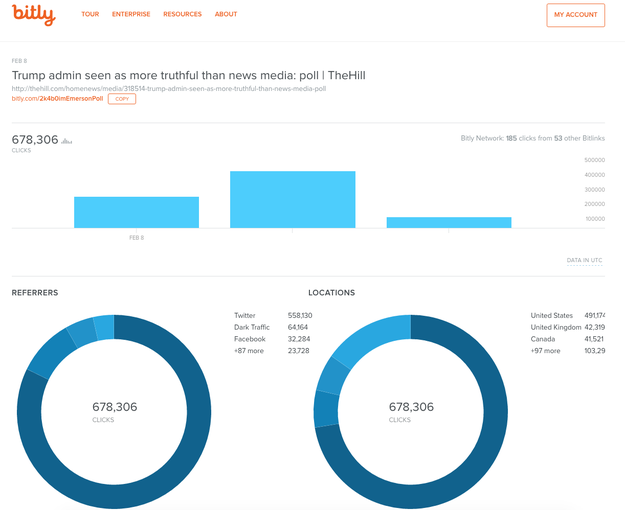
Last Wednesday, for instance, Trump shared a link to a story citing an Emerson College poll that found voters trust the Trump administration more than the media. Placing a plus sign after the Bitly link he created, “bit.ly/2k4b0imEmersonPoll,” summons a page displaying all the click data on the link — including the number of clicks through to the story and where they came from.

In the case of the Emerson poll story, published by The Hill, more than 678,000 people clicked Trump&039;s link to it — 558,000 of them on Twitter. 72% of those clicks occurred in the US, 6% were generated in the United Kingdom and another 6% in Canada. Of the remaining 120,000 clicks, around 32,000 originated from Facebook, and the rest from platforms other than Twitter.

Trump&039;s activity on Bitly blows away other links created with the service. In the first hour after he tweeted the Emerson poll link, 78,411 people clicked it, according to Bitly, far and away the most clicks on any Bitly link within that timeframe. The next-most-clicked Bitly link in that timeframe was another Trump-generated link, and the following eight in the top 10 a grand total of approximately 31,000 clicks.

Bitly

The caveat here is that Bitly measures all clicks on the shortened links it creates: If someone copied Trump&039;s link and shared it somewhere else, those clicks are included in this data as well. That said, Bitly&039;s analytics can put a rough, but reasonable, number on the kind of web traffic Trump drives. And, predictably, that number is massive — especially when compared to that of other celebrity Twitter accounts.

A recent Bitly link tweeted by Kim Kardashian, for instance, generated just 2,998 clickthroughs from Twitter despite the fact that Kardashian has an audience of 50 million followers — double the size of Trump&039;s.

Bitly

Trump, meanwhile, has averaged 84,000 clicks per tweet on the last 10 Bitly links he&039;s shared.

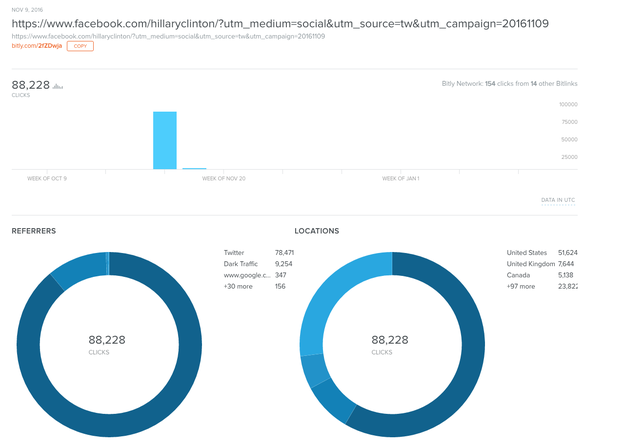
Hillary Clinton also uses Bitly. A tweeted link to her concession speech generated 78,000 clicks from Twitter, less than Trump&039;s average click number.

Bitly

Quelle: <a href="Here&039;s How Much Traffic A Trump Tweet Drives“>BuzzFeed

Thousands Of Protesting Uber And Ola Drivers Have Knocked New Delhi's Transport System Out Of Whack

Twitter: @sweta_goswami

Thousands of drivers working for Uber and Ola in the Indian capital of New Delhi have been on strike for more than 72 hours, throwing the city&;s transport system into chaos.

This is what they’re demanding from the ride-hailing companies: reduced working hours, better monetary incentives, higher base fare, and accident insurance among other things.

Surge-pricing — sometimes as high as three times the usual fare — kicked in over the weekend as thousands of cabs from both services went offline. Auto rickshaws and traditional radio cabs — legacy forms of transport that have been hit hard by Uber and Ola — made a killing, even as the Delhi government rushed to provide extra buses to stranded commuters.

Hundreds of drivers have been protesting at Jantar Mantar, a popular protest site in Central Delhi over the weekend. At least two people who were on hunger strike have been hospitalised, BuzzFeed News has learned.

Drivers want Uber and Ola to bump up the base fare from Rs. 6 a kilometer to Rs. 21 a kilometer — in line with what traditional radio cabs charge in the city. They also want both services to cut back on the commission that they take on each ride — typically between 20% and 30%, and provide accident insurance to drivers.

In response to the protests, Uber filed a court order against the two largest unions representing drivers in New Delhi in the Delhi High Court, which was granted on Monday. An Uber spokesperson told BuzzFeed News: “We welcome this court order, which prohibits unions, their leaders and anybody else from obstructing the activities of Uber driver partners as they go about their business. We hope it will enable drivers to get back behind the wheel, something many have been telling us they wish to do. We&039;re sorry that our service has been disrupted and for any inconvenience this has caused.”

“Our demands are not unreasonable,” said Manoj Kumar Verma, spokesperson at the Sarvodaya Drivers Association, one of the two drivers&039; unions that Uber filed a court order against, and which claims to represent over 150,000 drivers in New Delhi. “We used to make between Rs. 80,000 and Rs. 100,000 a month earlier. Now we are lucky to make Rs. 30,000.”

Over half a dozen Uber and Ola drivers that BuzzFeed News spoke to said that the key reason for the sharp dip in earnings was that both Uber and Ola have stopped doling out monetary incentives in the last two months. An incentive is a flat fee that both companies give out to drivers in exchange for meeting daily targets such as completing a minimum number of rides or driving a minimum distance.

“When we first signed up, [Uber and Ola] promised us that we would make lots of money,” an Ola driver told BuzzFeed News on the condition of anonymity. “That’s not true anymore. Ola and Uber have not even acknowledged our demands yet. They don’t care if we live or die.”

Twitter: @PranavDixit

Uber declined to answer BuzzFeed News’ questions about incentives, but provided the following statement: “We’re sorry that our service has been disrupted and for any inconvenience this has caused. Serving riders, drivers and cities is core to our mission and we are working hard to ensure that drivers are able to get back behind the wheel and riders can get from A to B conveniently, reliably and safely.”

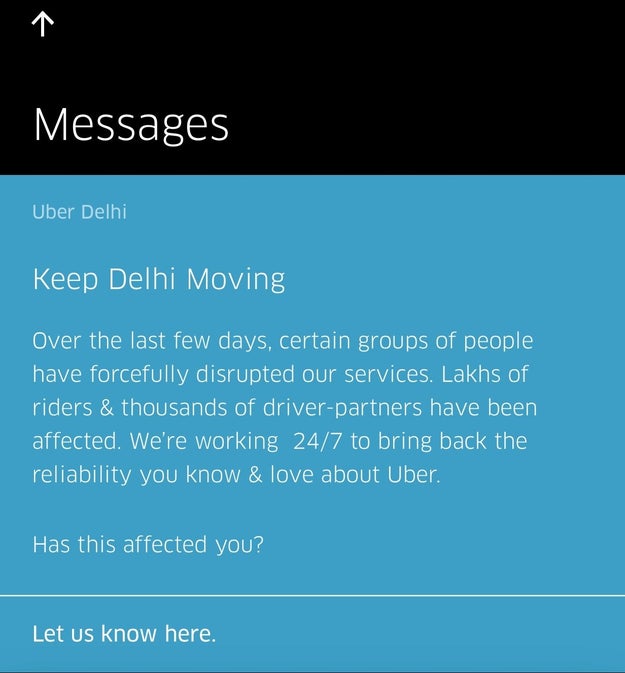
The company is showing the following message in its app to riders.

Pranav Dixit / Via BuzzFeed News

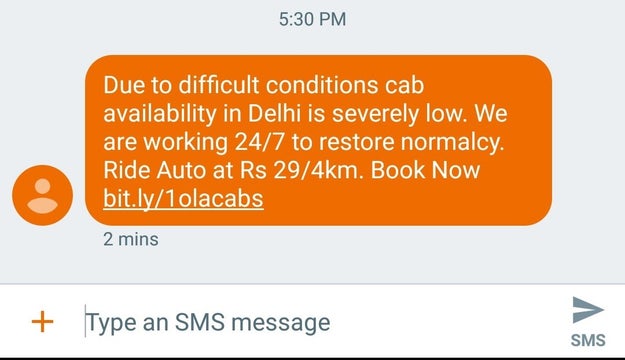
Ola told BuzzFeed News that the company would not comment on the protests. It has been sending out the following text message to customers in New Delhi:

Pranav Dixit / Via BuzzFeed News

New Delhi&039;s transport minister Satyender Jain told Reuters that he is planning to meet the striking drivers on Tuesday to resolve the issue. “I am going to hear all the sides and then we will set new rules soon,” he said.

This is not the first time that Uber and Ola drivers have gone on strike in India. Last year, Ola and Uber drivers in Hyderabad called for a five-day strike to protest against low earnings. And In January, drivers in Bengaluru, Uber&039;s largest market in India, went offline for a day to protest against dwindling earnings and long working hours.

Meanwhile, the New Delhi protests threaten to spread — once again — to Bengaluru, and Chennai. According to the Economic Times, more than 50,000 drivers in Bengaluru and 5,000 drivers in Chennai are planning to strike on February 15.

Quelle: <a href="Thousands Of Protesting Uber And Ola Drivers Have Knocked New Delhi&039;s Transport System Out Of Whack“>BuzzFeed

Behind The Rise Of The Anti-Trump Twitter Conspiracy Theorists

Behind The Rise Of The Anti-Trump Twitter Conspiracy Theorists

Just after 3:00 A.M. last Friday morning, Huffington Post contributor and progressive advocate Alex Mohajer set to work on a brief investigative project on Twitter. Pulling together red marker-circled articles, graphs, and screenshots from numerous financial websites, he rifled off 16 tweets with prosecutorial zeal and one ambitious goal: to build a compelling case linking Donald Trump to Russia’s $11 Billion sale of its oil giant, Rosneft.

“It’s getting harder to ignore growing evidence that Trump was involved with Russian oil deal,” Mohajer wrote after compling his tweets into a longer Twitter Moments thread. “CONCLUSION? Koch-backed front cos financed climate deniers/alt-right, took control of govt while Trump diverts attn for Exxon, Koch, Rosneft,” he wrote. A minute later he offered a hedge: “ALTERNATIVE CONCLUSION: I am batshit crazy and need some sleep&; Good night world. I will be curious to see if others are able to confirm.”

Mohajer wasn’t wrong to assume that others might try to confirm his tweetstorm. Since the election, he’s emerged as one of a number of vigilante investigators dutifully entering evidence into Twitter’s court of public opinion in hope of exposing corruption in Trumpland. Now that Trump is exercising his presidential power, the tweetstorms are intensifying — and growing ever-more conspiratorial. Unlike their more fantastical Infowars analogs, these vigilante investigators steer clear of explicit allegations, hewing instead to grave insinuations. Their evidence is almost exclusively rooted in already-published reporting; They sift through the tea leaves of unconnected media stories, raising questions yet to be answered by the professionals.

Call it the Alex Jonesification of the left or the rise of the Blue Detectives — the pure id of a strand of conspiratorial thought of the left and the anti-Trump movement. It’s intriguing and eyeroll-inspiring all at once, but for the crowd it’s a mooring force. Most of all, it’s an effective messaging tactic: it’s designed to go viral, to spark outrage — and perhaps even action.

If you spend enough time online, you’ll see Blue Detectives springing up everywhere. Two weeks ago, Google engineer Yonatan Zunger’s wrote a post on Medium that went viral. In it, he laid out a succession of “raw news reports” suggesting that the haphazard rollout and enforcement of Trump’s refugee ban across the country “was the trial balloon for a coup d’etat against the United States.” In the spirit of Silicon Valley A/B testing “it gave them useful information,” he argued. But as some, including Slate, have pointed out, Zunger’s post sometimes elides fact in favor of intrigue; His suggestion that the Department of Homeland Security could become a force loyal to the President alone, for example, does not acknowledge that DHS secretary Kelly was reportedly unaware of the administration&;s immigration order until just moments before Trump signed it.

On Twitter, especially, the Blue Detectives are increasingly active in theorizing that Trump and his associates are involved in a dizzying multi-dimensional plot — and, crucially, are always ten steps ahead of the American public. Perhaps the most infamous example comes from technology and business strategist Eric Garland’s “game theory” tweetstorm, which suggests a cunning on the part of the Trump administration and Russia to distract, dodge, and outwit the American public while bolstering its coffers and power. That 127-tweet screed plows through the last few decades of U.S. foreign policy ultimately arriving at a patriotic-but-empty conclusion, devoid of any compelling revelations about Russia.

This new online conspiracy culture can’t be fully divorced from an election affected more than usual by an actual conspiracy. Russian interference in favor of Trump was open, on state media, and covert, through hacking, which has been widely and convincingly documented. Intelligence agencies have also begun to confirm the credibility, CNN and BuzzFeed News reported Friday, of some elements of a dossier assembled by a former top British spy — though not the most lurid allegations of Russian blackmail. And the Washington Post recently reported that Trump’s National Security Advisor, Mike Flynn, had made false statements about his contacts with the Russian ambassador.

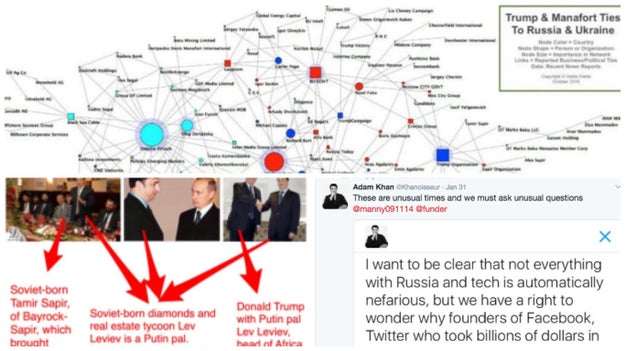
Meanwhile on Twitter, writers with a flair for what could be true and a good sense for their audience have taken those investigations well past the brink of what they know. The most effective of the bunch is Adam Khan, a former marketing consultant and tech guru turned Twitter investigator. Khan, who goes by the handle @khanoisseur, is an indefatigable presence on Twitter. Each day he monomaniacally strings together observations, charts and images into detailed tweetstorms that rack up thousands of retweets. None of them make news, but they raise questions and do attract eyeballs.

The images —mostly screenshots from deeply reported coverage of Russia and the Trump organization — are frequently annotated with red type, arrows and lines that encourage the reader to follow Khan’s logic. Veterans of forums like Reddit will see aesthetic parallels between Khan’s work and some of that site’s more conspiratorial r/findbostonbombers-style threads.

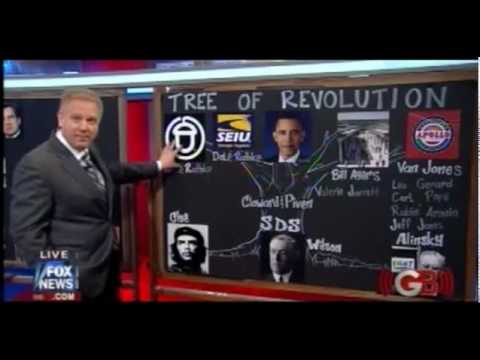
It is a digital updating of Glenn Beck’s famous blackboard, whose eraser was especially effective on the distinction between correlation and causation. But this is a form of vigilante investigation that’s native to the internet; Gawker once described it as “Chart Brut — a digital middle-ground between the string-and-thumbtack cork-board flowcharts favored by premium cable obsessives like Rust Cohle and Carrie Mathison and the meaningless tangles of agency responsibilities beloved by security-apparatus bureaucrats.”

Khan — who wrote an e-book on how to gain followers and influence on Twitter — uses the social network because he sees it as a direct line to journalists and big thinkers. He views his job as building flow charts of publicly available information to raise the big questions. “I’m not manufacturing anything new,” he told BuzzFeed News. “But I’m taking this piece of reporting from this journalist and showing clearly how it aligns with something else out there. And put together, I think it shows there&039;s a bigger story. If nothing else, I hope my work leads to more people doing their own investigative journalism.”
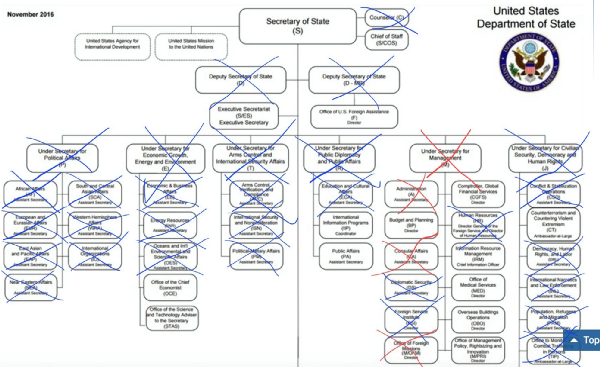
Zunger&039;s doctored State Department org chart from his Medium post, “Trial Balloon For a Coup?”

Just after the election, Khan quit his freelance consulting job to pursue the Trump investigations full-time. He has so far raised nearly $14,000 on GoFundMe in support of this effort. If he raises enough money, he may write a book. When he spoke to BuzzFeed News in late January, Khan said he’d been getting DMs from government sources with potential tips — among them, one from someone claiming to have a line on Trump’s still undisclosed tax returns.

Recently, Khan riled the tech world with a 23-tweet thread musing about possible ties between Russia, Trump senior advisor and son-in-law Jared Kushner and some of the startups in which he’s invested. “The more I dive into Russian-backed/Kushners&039; data collection efforts, the more I&039;m convinced there&039;s a bigger strategy,” Khan tweeted with a link to a different thread on the Kushner brothers’ investments. “Trump potentially has his own shadow NSA,” he further mused. Left unsaid, a crucial caveat: Kushner investments, made via a venture capital company called Thrive do not appear to give the Kushners operational control of the companies in which they invest. The thread checks all the boxes of the viral anti-Trump conspiracy: it’s well-researched, endlessly intriguing, and unsupported by evidence.

The internet has historically been a near perfect incubator for conspiracy theories. Not long after the attacks of 9/11 average citizens flocked to Blogspot accounts dedicated to vigilante investigations of the events leading up to that day. The same happened after Hurricane Katrina, with blogs launching serious amateur analysis of the collapse of New Orleans’ levees. A decade ago, conspiracy-minded bloggers made major contributions to reporting around everything from George W. Bush&039;s national guard service to intelligence failures in the run-up to the Iraq more.

Once these sorts of efforts were largely confined to obscure message boards, little known blogs, and occasionally AM talk radio. Their prominent voices tended to be volatile fringe figures who’d rarely appear in public. More recently — particularly with the advent of the Trump era — they’ve attained much greater visibility. Today, the work of the Blue Detectives and those on the far right is amplified and extended by same-minded people sharing what they want to believe — a byproduct of the social media echo chambers that birthed “fake news.” Once peddled by anonymous tin foil hat-wearers, even utterly unfounded conspiratorial musings are now disseminated by tech employees, opinion journalists —and even some of the left’s well known voices.

Take former United States Labor secretary Robert Reich — a regular on cable news and a professor of public policy at UC Berkeley. Two weeks ago, after a planned visit-turned-riot by Breitbart writer Milo Yiannopoulos, Reich penned a blog post about the event titled “A Yiannopoulos, Bannon, Trump Plot to Control American Universities?”

In their coverage of the riot, far right outlets including Breitbart News had suggested the Trump administration pull federal funding for the school. Reich’s response took a conspiratorial page from the far-right, suggesting that “the possibility that Yiannopoulos and Breitbart were in cahoots with the agitators in order to lay the groundwork for a Trump crackdown on universities and their federal funding.” While not a tweetstorm, Reich made his case in a familiar bulleted list. “Hmmm. Connect these dots,” he wrote before rattling off six semi-related points connecting Yiannopoulos to Breitbart and then the Trump administration. “I don’t want to add to the conspiratorial musings of so many about this very conspiratorial administration, but it strikes me there may be something worrying going on here,” he concluded.

The post is a textbook example of a Blue Detective conspiracy musing. It’s a bit ridiculous, but not quite out of the realm of possibility. It attempts to use well reported information to “connect the dots” and raise an ultimately unanswerable question. And it ends, like so many Blue Detective theories, with a self-effacing nod to readers. Yes, I know how crazy this sounds.

In person, Reich is more cautious about shifting the political discourse toward conspiracy theories. “That fringe stuff is out there more and more and that&039;s dangerous,” he told BuzzFeed News last week. “If we become a conspiracy society, we all carry around a degree of paranoia and that&039;s not healthy for democracy. And that&039;s why transparency is so critically important — we now have a responsibility to call a lie a lie.”

This desire for transparency is a key engine of the Blue Detectives. Its emergence is a side-effect of the rise of the Upside Down conservative media, which, along with its “alternative facts,” audience, and interpretation of the truth, has created two opposing political realities. “We’re way beyond having factual disputes now,” Reich said. “What we’re faced with are bald faced lies and it’s important to be extremely clear about what&039;s a lie and what&039;s true.” With basic facts in dispute, efforts by the anti-Trump resistance to monopolize truth have manifested in a peculiar role reversal. While the far right is building a media ecosystem that looks and feels a lot like the mainstream, some on the left are beginning to resemble the more conspiratorial fringes of the far-right. The resemblance is most uncanny when the two universes intersect, like this conspiratorial tweet about Infowars, which feels like it could have been written by Alex Jones himself:

But the emergence of the Blue Detectives is also a pointed critique of the mainstream press. The message: the media isn’t doing its job so we’ll do the legwork for them. Near the end of his Medium post, Zunger admitted as much. “Conclusive? No. But it raises some very interesting questions for journalists to investigate.” Adam Khan agrees.

“No question there was a huge failing among the media during this last election,” Khan said. He argued that the press is in “trance mode” when it comes to Trump and his distractions. “There’s so much to be chased down in a Woodward and Bernstein manner and so my job is to ask the questions for others to answer. To ask ‘Why? Why isn&039;t anyone else pursuing this angle?’” Khan believes without the right pressure and grassroots investigations from people like him, Trump will only claim more power. “There’s a need to apply more pressure to the press,” he said. “It’s sad, but if that&039;s what it&039;ll take to get the accountability, we’ll do it.”

In keeping with the tradition of the Blue Detectives, Khan is self-aware and by no means reckless. “You have to be careful because you don&039;t want to get into Alex Jones territory,” he joked. “You can’t run around yelling and making accusations. It’s about recognizing patterns that then require more digging.” Khan for his part is constantly thinking about his tone and how frequently he posts in order not to appear like somebody who’s taken his conspiracy too far. “How you do it divides you from somebody who’s asking the questions our senators and media should’ve asked and somebody who&039;s a conspiracy theorist.”

Members of the Upside Down media are paying attention, too. “It’s even happening to people who have reputations in the media for being pretty normal,” new right blogger and Twitter personality, Mike Cernovich told BuzzFeed News. “I saw this great meme the other day that said if there’s ever a terrorist attack in America under Trump the left is going to go full Infowars. And I think that’s totally true.” For Cernovich, the rise of the left’s conspiracy-theory tendencies is an opportunity to appeal to a broader audience.

“Honestly, that’s why I’ve pivoted with my brand and my trolling today compared to a year ago is mild,” he said. While Cernovich is still waging a Twitter war against the mainstream media and the left, his admitted softening highlights just how much the roles of the duelling media ecosystems of the far left and far right have reversed.

“They’ve adopted that fringe level mentality aggressively,” Cernovich said. “People on left are making themselves look ridiculous and so I see it as an opportunity to look reasonable by comparison.”

Caroline O’Donovan contributed reporting to this story.

Quelle: <a href="Behind The Rise Of The Anti-Trump Twitter Conspiracy Theorists“>BuzzFeed
Is This An Ad? Lady Gaga’s Super Bowl Airbnb

Welcome to “Is This an ?,” a column in which we take a celebrity social media post about a brand or product and find out if they’re getting paid to post about it or what. Because even though the FTC recently came out with rules on this, it’s not always clear. Send a tip for ambiguous tweets or ‘grams to katie@buzzfeed.com.

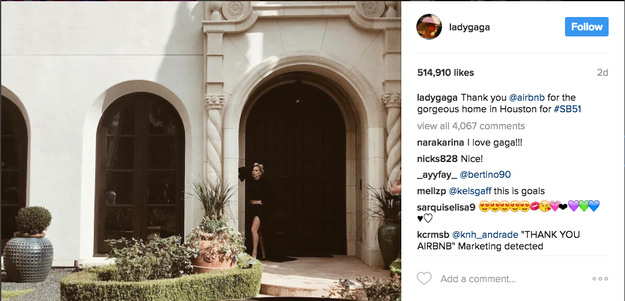
Was this Lady Gaga Instagram an ad for Airbnb?

Was this Lady Gaga Instagram an ad for Airbnb?

instagram.com

THE CASE:

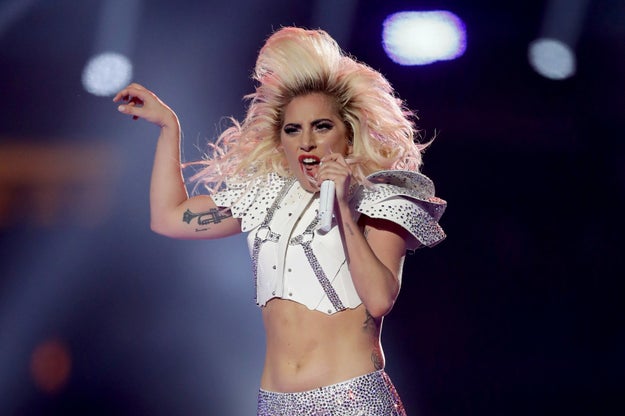
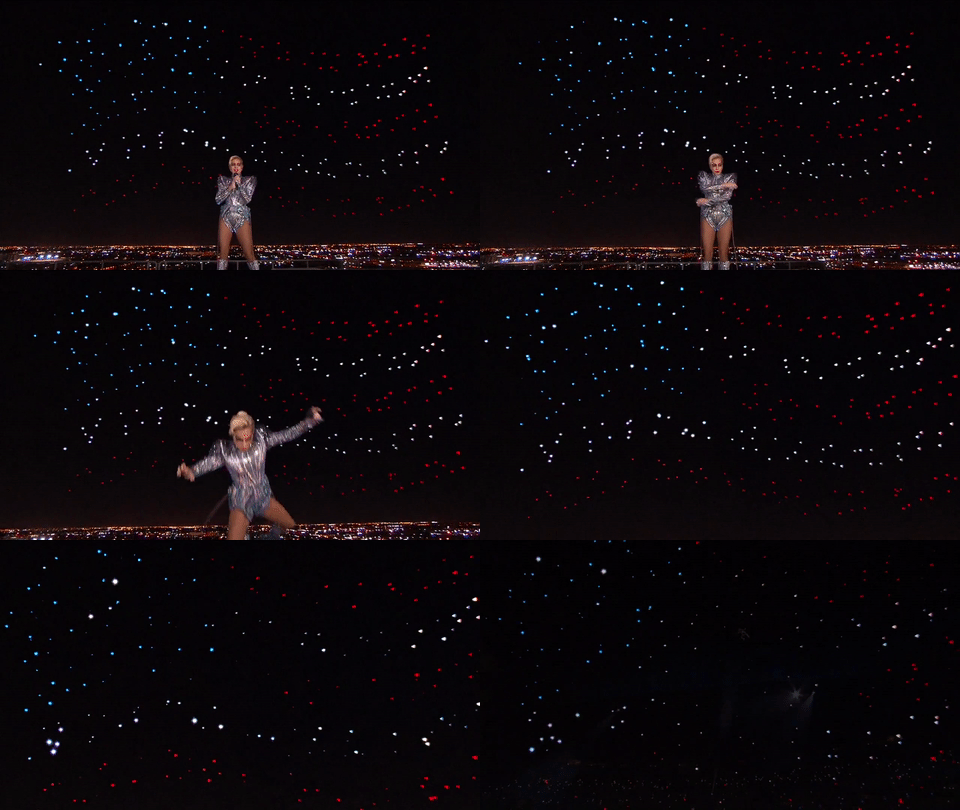
Last weekend, Lady Gaga performed at the Super Bowl in Houston. It was nice, we all had a great time, she jumped off a roof, she didn’t say anything political (or did she???), you know the deal. YAAASS Gaga, etc.

Ronald Martinez / Getty Images

After the Super Bowl, she posted an Instagram of herself in the doorway of a lavish house, with the caption “Thank you @airbnb for the gorgeous home in Houston for

What does that mean? Is that an ad? Before we get into it, let me ask you all your opinion. Because YOUR opinion matters a lot here, almost as much as the truth. The whole golden rule on these kinds of things is whether or not the average person (you) would be able to tell if it’s an ad.

So don’t think too hard. Pretend you’re not reading an article about this. Just imagine you’re scrolling through Instagram. Maybe you’re on the couch watching TV, maybe you’re in bed or class — your normal Instagram viewing sitch. Get into that mindset. Are you there? Ok, good. So you’re scrolling…. and you see this quickly in your feed. You don’t linger on it, you just see it, read the caption, and keep going.

THE EVIDENCE:

The phrase “thank you @airbnb” sounds like it’s proooooobbbably an ad, right? But it’s ambiguous&; When Mindy Kaling recently used that same phrasing for a free mattress, the company ended up asking her to change her wording after I reached out to ask about it. They admitted it sounded ambiguous, and her new caption now reads “thanks @casper for the gift&033;” Saying “thanks for the gorgeous home” doesn’t mean that it was free or a gift – it could just mean she was grateful that Airbnb exists and has such amazing luxurious places. I’ve stayed in some great Airbnbs and I’ve felt that way&033;

But look. I don’t want to yank your chain around too much here. The best evidence is to look to the past: Beyoncé’s Super Bowl Airbnb from last year.

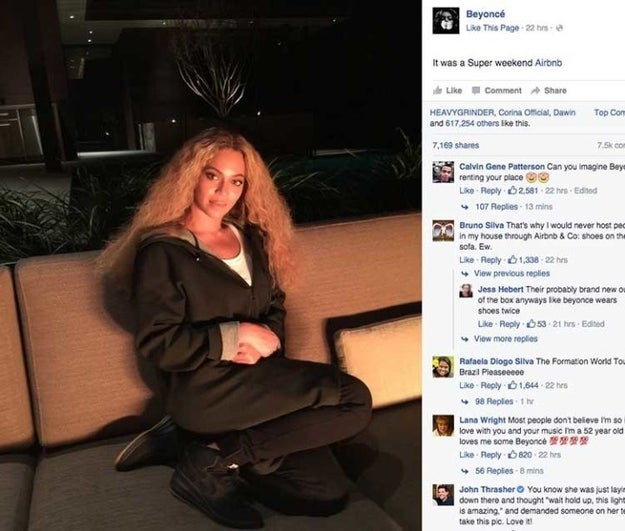
Beyoncé posted to Facebook a photo of herself sitting on the porch of a fancy house, with the caption “It was a Super weekend @airbnb”. At the time, I remember thinking that it was probably NOT an ad – she probably just preferred a private house to a hotel, right? I asked Airbnb to ask if it was an ad, and they wouldn’t really give me a straight answer, but months later did admit that it was a freebie (the home’s owner got paid by Airbnb, and Beyoncé didn’t pay anything).

Airbnb does this not infrequently – Mariah Carey, Kourtney Kardashian, and Kim Kardashian and Kanye West have all gotten “gifted” Airbnb freebies. So we know Airbnb is definitely in the habit of doing this type of celeb , and it’s not a leap to guess that’s what’s happening here.

THE VERDICT:

Airbnb confirmed to BuzzFeed News that just like with Beyoncé, they paid for Lady Gaga’s stay, but did not pay her on top of the free stay.

However, they did not respond to questions about whether or not her Instagram shoutout was an explicit or implicit quid pro quo arrangement. Did they just give it to her and never asked (but secretly hoped) that she might Instagram it? Or was a formal deal that she would create social content for them in exchange for a free stay? This distinction does seem to matter, right? To me, the second scenario feels way more ad-ish than the first.

But not to the Federal Trade Commission.Their stance is that there’s no difference between receiving merchandise (such as a free vacation rental) versus cold hard cash when it comes to social media endorsements. The house was listed for $10,000/night (although the listing is now suspiciously deleted from Airbnb) and she was there at least two nights (we know because she filmed the roof jump at a different night, so at least the day before and the night after. This means Airbnb provided her at least $20,000 worth of free housing, possibly more. So to the FTC, this is for sure an ad.

Was the language she used to indicate it’s an ad up to snuff for the FTC’s guidelines? Ehhh…. Probably not. The whole idea is it should be clear to a normal person whether or not she received a free stay; I don’t think it was totally clear. Saying “thanks for the gift” instead of “thanks for the home” would be more clear, perhaps.

The problem is that there’s an incentive to obscure the ad-iness of celebrity spon posts. An ad is much more effective if it doesn’t look like an ad. That’s the whole point, right? If she wrote “thank you for the free stay ad” it wouldn’t be quite as effective. Airbnb wants us plebes to think that Lady Gaga just loves Airbnb and chooses it over hotels. And Lady Gaga doesn’t want to seem like a craven shill who does Instagram sponcon like a Bachelor contestant.

Ironically, Airbnb is very excited to tell you about the other ad it ran during Super Bowl – a collage of faces of people of different ages and races with the tagline of . The ad was interpreted as being a direct shot at Trump’s immigration policy, especially because Airbnb CEO Brian Chesky had previously tweeted out that the company would offer free lodging to refugees. Or, it could be interpreted as an attempt to save face after a lawsuit alleging that hosts racially discriminated against black and non-white renters.

So what’s the difference? The TV ad was Advertising with a capital A – the kind of noble, artful Advertising that is made by smart creative people and that “starts a conversation” and “tells a story.” A 30-second Super Bowl spot is the pinnacle of that format.

But a Instagram from a celebrity? That’s not cool or prestigious. It’s seen as somewhat tacky, for low-level strivers and bogus products like weight loss tea.

Part of what makes whether we consider this an “ad” so confusing is the fact that the practice of giving free swag to celebrities in hopes that they’ll talk about it goes by a different name: publicity.

Allow me to try a theory here: advertising, with its biggest stage being a sports game, has a very macho, male connotation. Publicity, on the other hand, is for conniving fake women. Advertising’s mascot is Don Draper; publicity has PubLizity from The Kroll show and Lizzie Grubman. The reason Airbnb is happy to discuss its advertising but not its publicity is rooted in sexism.

Comedy Central

Ok, that might be a littttttle bit reaching.

But the difference between how a company views advertising vs publicity and how the FTC views that is perhaps where we run into problems. From the brand’s viewpoint, advertising is something very specific – a TV spot or a print ad made by an outside agency with a set budget and PowerPoints that show the campaign’s effectiveness. PR is more nebulous, often done in-house. Think about the process of making a print ad campaign for Gucci to be in Vogue versus the process of giving a Gucci gown to Nicole Kidman for the SAG Awards. It’s a whole different team of people, a different budget, a different metric for success.

Brands see publicity and advertising as very separate things. I think to a degree, consumers do, too. The FTC’s guidelines don’t really take into account this nuance between ads and PR. I’m slightly sympathetic to the fact that Airbnb doesn’t think it’s doing anything wrong by not complying fully with FTC rules and asking Lady Gaga to have her post be more explicit.

On the other hand, what we know about Airbnb is that it has a somewhat, hmm, how shall I say… loose stance on following government regulations about how it does its business. Airbnb has been embroiled for years in legal and legislative fights with local governments over whether or not its business model should be allowed.

Let’s just say that Airbnb had “A Million Reasons” to not make it a “Bad Romance” with the FTC and shouldn’t have to “Just Dance” around the issue that they gave large gift to Lady Gaga in exchange for her using her “Telephone” to post about it on Instagram and keeping a “Poker Face” about the “Perfect Illusion” that it wasn’t an ad.

NFL

Quelle: <a href="Is This An Ad? Lady Gaga’s Super Bowl Airbnb“>BuzzFeed

Women's March Organizers Met With Jack Dorsey And Sheryl Sandberg

On February 10, behind closed doors in San Francisco, national organizers of the Women&;s March on Washington met with Facebook COO Sheryl Sandberg and other tech executives to discuss the ongoing role of social media in organizing demonstrations over issues like reproductive rights, immigration and civil rights, which some fear could be under threat from Donald Trump&039;s presidency. At a separate meeting earlier in the day, organizers also met Twitter CEO Jack Dorsey.

“We&039;re here to ask, &039;how can tech be a part of the resistance?&039;” said Reshma Saujani, one of the march&039;s national organizers and CEO of the nonprofit Girls Who Code. “We came to talk about what role will they play as we make sure we’re standing up for undocumented immigrants, those affected by the Muslim ban, and other marginalized communities. We felt like we could find allies in the tech community, and we have.”

Jenna Arnold, one of the march&039;s national organizers, said she was thankful that many social media platforms had “generously fast-tracked a lot of the things we needed.” Arnold said that Sandberg and Dorsey were also eager for feedback from the march organizers on how their platforms were helpful.

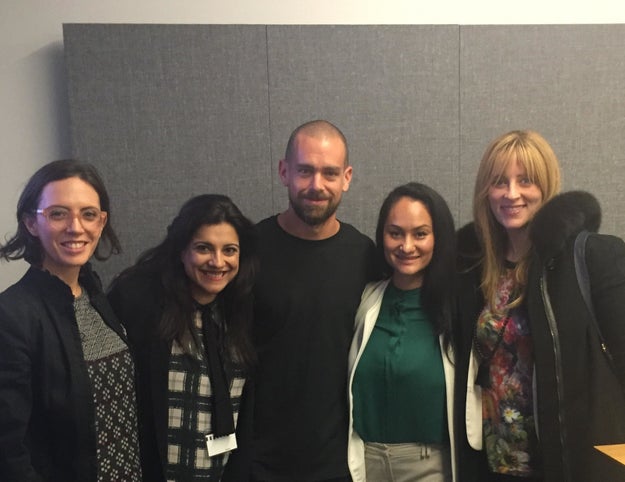
From left: Paola Mendoza, Reshma Saujani, Jack Dorsey, Carmen Perez, and Jenna Arnold.

The Women&039;s March began as a Facebook event, and it continues to use social media, primarily Facebook and Twitter, to disseminate information and issue calls to action, though Carmen Perez, one of the four national co-chairs and executive director of the nonprofit Gathering for Justice, stressed that it must be complemented with face-to-face interaction.

“We&039;re hoping that social media can continue to help us move people, policy, and energy, so we came here to discuss how to improve those partnerships,” Paula Mendoza, artistic director for the Women&039;s March, said.

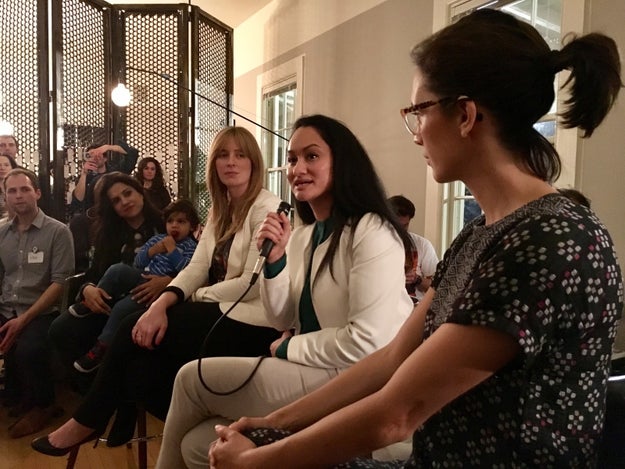
From left: Women&039;s March organizers Reshma Saujani, Jenna Arnold, Carmen Perez, and Paola Mendoza.

Blake Montgomery

The Women&039;s March is in the process of rolling out 10 actions protesters can take during the first 100 days of the Trump administration, some of which will likely involve social media, according to Saujani.

“It would be weird if we weren&039;t using social media to amplify our message, our partners&039; messages, and what everyday women are saying,” Saujani said.

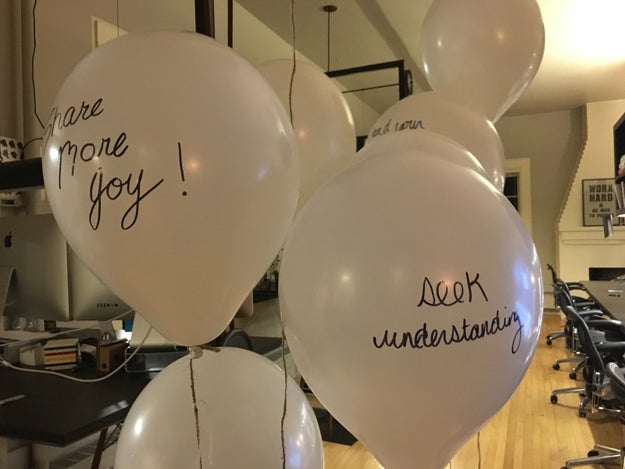
Allison Johnson, Apple&039;s former vice president of worldwide marketing communications, hosted a reception at the chic Presidio offices of her San Francisco marketing agency West along with photographers, painters, filmmakers, and other artists. People at the reception wrote wishes on notecards, dreams on white balloons, and visions of 2020 on long rolls of brown paper. Katie Stanton, former Twitter VP of global media, hosted a luncheon for the organizers and tech industry heads at the same space earlier in the day.

“The Women&039;s March is all about trusted networks,” Johnson said. “I had never met Paola Mendoza before, but when she called last week to say they were coming to San Francisco, I knew we had to host them and that it would be great.”

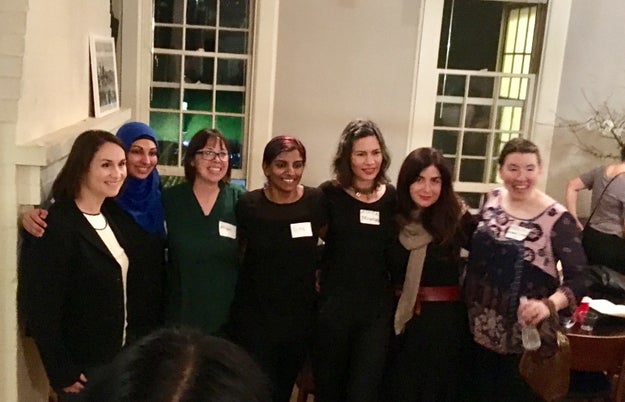
California Women&039;s March organizers.

Blake Montgomery

At the reception, Mendoza announced that the Women&039;s March would call for protests and vigils at Immigrations and Customs Enforcement (ICE) offices in response to recent raids across the country. Perez said her own extended family had been affected by ICE&039;s actions in Los Angeles.

“The Women&039;s March and our continued actions are a reminder that we are powerful,” she said while addressing the crowd. She called on them to protect and support undocumented immigrants.

Sandberg&039;s attendance of President Trump&039;s tech summit and absence from any Women&039;s March has earned her criticism from some women in Silicon Valley. Reshma Saujani, a Women&039;s March national organizer and CEO of the nonprofit Girls Who Code, told BuzzFeed News after their meeting that she believed Sandberg was “an unequivocal advocate for the Women&039;s March. Period.”

According to the organizers, neither the executives they met with nor the companies they lead will be donating money to the Women&039;s March.

“Though we will need money in the future, and it&039;s an easy and obvious ask, we weren&039;t here to ask for that,” Mendoza said. “There are more important things than money at this moment. The Women&039;s March is, after all, only 12 weeks old, and we&039;ve pulled off one of the largest gatherings in human history.”

The reception was a thank you to the city- and state-level organizers of the “sister marches” in California that happened January 21st alongside the titular march on Washington. A number of the California organizers had never been involved in activism before, and several of them met for the first time at the reception, gleefully exchanging differing perspectives on their work together.

The 13 marches across the Golden state boasted roughly 1.1 million protesters, accounting for one in three Americans who participated in the protest , the largest in the nation&039;s history, according to the organizers.

Carolyn Jasik, lead organizer for California, announced at the event that the state&039;s affiliated marches would host a statewide voter registration event on May 13, which would kick off a year&039;s worth of planning and preparation for the 2018 congressional elections.

“It&039;s not enough just to vote in these times,” she said. “You have to be an active voter. That&039;s what we&039;re interested in cultivating.”

As Arnold addressed the crowd and especially the California organizers, she said that their work was a gift because “we don&039;t have a grand solution, though people are looking to us for one.”

When asked what to expect next from the Women&039;s March, Mendoza said that people should look for both short-term planning that reacts to president Trump&039;s executive orders and long-term strategy for actions like the upcoming general strike, date TBD.

“What happened on the 21st didn&039;t stop on the 21st,” Perez said. “It was a catalyst for people to act now.”

Facebook and Twitter have not yet responded to requests for comment.

Quelle: <a href="Women&039;s March Organizers Met With Jack Dorsey And Sheryl Sandberg“>BuzzFeed