This Health Startup Says Its Tech Can Reverse Diabetes
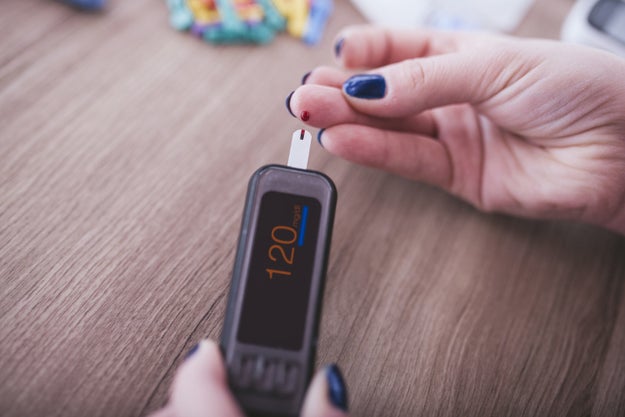
Azmanjaka / Getty Images

Sami Inkinen, co-founder of the real estate firm Trulia, figured he, of all people, was healthy. After all, he was a globally top-ranked triathlete. But around 2012, Inkinen’s doctor informed him that, despite his rigorous exercise, his carbohydrate-heavy diet had put him at risk for type 2 diabetes.

That led Inkinen to dive into the disease’s causes. And on Wednesday, he announced Virta Health, a new tech startup with a program that may, according to early research, be able to help patients reverse a diagnosis of type 2 diabetes.

Type 2 diabetes is rampant in the United States, where an estimated 28 million adults have it. It’s the country’s seventh-leading cause of death and costs an annual $245 billion in direct medical costs and lost productivity, according to the American Diabetes Association.

Virta aims for people to bring their diet and weight, and therefore their disease, under control, without surgery or medications — and it wants to make sure they follow through, even when they’re not physically in a doctor’s office.

“If we can reverse type 2 diabetes … and we can do it at scale with a solution accessible to anyone, this might be the first time we actually have the key to potentially solving this huge epidemic at the population level,” Inkinen told BuzzFeed News. In addition to Inkinen, the company’s founders are metabolic health and nutrition experts from UC Davis and Ohio State University.

Right now, a lot of doctors don’t have easy ways to monitor people if they’re not physically at a clinic. Marina Basina, an endocrinologist at Stanford University’s hospital, has patients come in every three to six months for disease-management classes. Otherwise, “if they have questions about diet or medication or blood sugar … we encourage them to send us messages through the hospital system, but obviously not everyone does it,” she said. “We’re relying on the patient.”
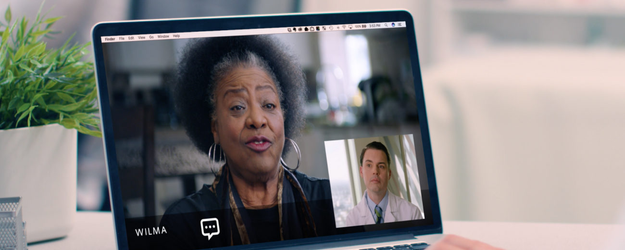
Virta Health

What Inkinen’s team is developing, in contrast, is a weight- and diet-monitoring program that can be administered anytime and from anywhere.

Here’s how it works: Patients sign up on Virta’s website. After being sent to a lab for a blood test, they videochat with a Virta doctor over their phone or computer.

Virta employs about five doctors who review patients’ vitals and make diet and medication recommendations; there’s also a set of virtual coaches who help patients adjust their food and medicine intake. They communicate with people through a combination of email, text, and phone, and after business hours, a chatbot supplies answers pre-approved by staff. Patients get personalized care and nutrition plans, which artificial intelligence-powered software helps shape by, for example, calculating a person’s unique risk for side effects. Finally, patients are given a box of FDA-approved devices with which to take daily measurements, such as blood sugar, blood pressure, and weight.

Unlike many health-technology startups, Virta is making its public debut with some proof under its belt. A study published Tuesday in the Journal of Medical Internet Research Diabetes looked at what happened to about 240 patients who underwent a 10-week trial of Virta’s program. The vast majority started out taking at least one diabetes medication, but by the end of the trial, most of them were able to cut back on or altogether stop taking at least one medication.

During a follow-up visit, 10 weeks after the trial ended, nearly half lowered their glucose to a level below a standard threshold for a diabetes diagnosis. And overall, participants lost an average of about 7% in body mass. (According to Basina, there is no such thing as outright “curing” a diagnosis of type 2 diabetes, but the best case scenario is to have the disease under control without need for medications.)

“A lot more needs to be done, but this is a very optimistic start,” said Bob Ratner, a professor of medicine at Georgetown University Medical School and an adviser to Virta.

Sami Inkinen, co-founder and CEO of Virta Health

Virta Health

Other doctors reacted more cautiously. Studies have shown that patients can effectively reverse their type 2 diabetes by losing weight, which sometimes means undergoing bariatric surgery. So Danny Sam, a primary care physician at Kaiser Permanente in Santa Clara, California, said he wasn’t surprised to see that Virta reported early improvements. Seeing results “sustained over a long period of time is the greatest challenge,” he told BuzzFeed News.

Similarly, William Cefalu, the American Diabetes Association’s chief scientific, medical and mission officer, said by e-mail that while the study confirmed previous trials, “there also exists a large body of evidence that demonstrates these extreme diets are not sustainable long term, once the high-support trial is concluded.”

Virta’s study is the first set of data from an ongoing two-year clinical trial, which upon completion will show if the results are truly long-lasting.

In the meantime, the startup has already lined up $37 million from some notable investors, like Obvious Ventures, the venture capital firm of Twitter cofounder Ev Williams; Paypal and Affirm founder Max Levchin’s SciFi VC; digital health investor Venrock; Allen & Company, and the Redmile Group.

Virta, which has about 60 employees total, charges patients $400 a month out of pocket for the first year. But people can also go through their employers if they cover it; Virta is focused on serving self-insured companies, although it won’t say how many customers it has.

And it offers a deal that may be hard for companies to refuse. Employers pay an upfront fee per patient. If, at the end of a year, a patient has not met criteria that indicate their diabetes has reversed, Virta refunds the employer.

“If we don’t deliver results in full, we deliver 100% of their money back,” Inkinen said.

Basina points out that even if Virta’s method works in the long run, she’s skeptical that it could someday be administered to all patients — particularly low-income ones — given the high intensity and costs of the monitoring. “This is a very selected patient population who are very, very highly motivated to do this,” she said.

Nevertheless, Virta is thinking big. “Our long term goal,” Inkinen says, “is to reverse diabetes in 100 million people.”

Quelle: <a href="This Health Startup Says Its Tech Can Reverse Diabetes“>BuzzFeed

Palantir's Man In The Pentagon

Saul Loeb / AFP / Getty Images

Palantir Technologies has an important new ally inside the military establishment, with one of the company’s own lobbyists being appointed to a top Pentagon job where he will have the ear of Defense Secretary James Mattis.

For years, the Silicon Valley data firm has fought to get a lucrative contract to work on the Army’s battlefield intelligence system. The company has deployed lobbyists and even sued the Army — successfully — to protest what it has called an unfair bidding process.

And now, Justin Mikolay, a Palantir insider who played a major role in that effort, has been hired by the Trump administration as a special assistant to the defense secretary, BuzzFeed News has confirmed. The role means Mikolay will be part of an intimate team of advisers who prepare Mattis for meetings with allies and the White House, a level of access enjoyed by few in the Pentagon.

Mikolay, 37, worked for Palantir for four years as an “evangelist,” according to his LinkedIn profile, meaning he met with government officials to sell Palantir’s software. According to a confidential email obtained by BuzzFeed News, Mikolay’s role at Palantir involved pitching the Army on the battlefield intelligence contract, which has become something of a white whale for the Silicon Valley firm.

A Defense Department spokesperson, Capt. Jeff Davis, told BuzzFeed News in a statement: “Mr. Mikolay took action to ensure he would not participate in any matters that would have a direct and predictable effect on Palantir, consistent with conflict of interest statutes and government ethics regulations. Further, he worked with the DoD Standards of Conduct Office to implement a screening arrangement to ensure all particular matters involving Palantir are forwarded to another senior defense official for appropriate disposition. Such recusals are not uncommon for civilian appointees who have worked previously in the private sector.”

Neither Mikolay nor a Palantir spokesperson responded to multiple requests for comment. ProPublica first reported Mikolay’s hiring on Wednesday.

Palantir already has a powerful ally in President Donald Trump’s orbit: Peter Thiel, its chairman and co-founder, who is a key adviser to the president on tech issues and is working on selecting political appointees for the administration. Though Palantir is a privately held company, its CEO, Alex Karp, was invited to Trump’s meeting with tech leaders late last year — alongside executives from much larger publicly traded giants like Facebook, Amazon, and Google.

In pitching the Army, Palantir wants a contract for the second phase of the Distributed Common Ground System, which analyzes data for soldiers in battle. Palantir has worked for three-letter agencies and the military’s Special Operations Command, but it failed to get the first phase of the Army project and wants to make sure it doesn’t miss the second. Since prevailing in its lawsuit, Palantir now has a shot at getting the potentially $200 million deal.

In November 2014, Mikolay and others from Palantir met with Army representatives in a sales effort, the email shows. The two sides discussed the potential work in some depth, including a proposed pricing model and a possible pilot program with an Army division.

Compared with a previous “super-confrontational” meeting, the November meeting was “a real discussion” during which an Army officer overseeing the intelligence system “asked specific questions aimed at identifying legitimate ways to incorporate Palantir into the core infrastructure/architecture,” Mikolay told Palantir colleagues.

In the end, this apparently didn’t count for much. Palantir wasn’t even in the running for the Army contract — an exclusion that the company said violated a 1994 law requiring government agencies to seek commercially available products.

Mikolay, in joining the Defense Department, is returning to an agency where he once worked as a speechwriter for former Defense Secretary Leon Panetta. He is a Navy veteran who attended the United States Naval Academy and got a master’s degree at Princeton’s Woodrow Wilson School of Public and International Affairs.

Mattis attended Mikolay’s wedding in 2013, according to Foreign Policy, which reported that the event, held at the Army Navy Country Club, included a serenade recreating the “You&039;ve Lost That Lovin&039; Feeling” scene from Top Gun.

youtube.com

Quelle: <a href="Palantir&039;s Man In The Pentagon“>BuzzFeed

Uber Rallies Drivers Against Teamster Unionization Efforts With Podcasts And Pizza Parties

As Uber scrambles to address an internal scandal over employee allegations of systemic sexism, it’s facing another, increasingly heated labor battle in Seattle — a union drive led by the Teamsters.

The ride-hail giant has opposed the unionization movement in Seattle since it began in late 2015. While the Teamsters worked to win the city approvals necessary to represent drivers, Uber ramped up a sprawling phalanx of anti-union efforts, including everything from in-app notifications and text messages to in-person seminars, collective bargaining pizza parties, and Teamster-critical podcasts.

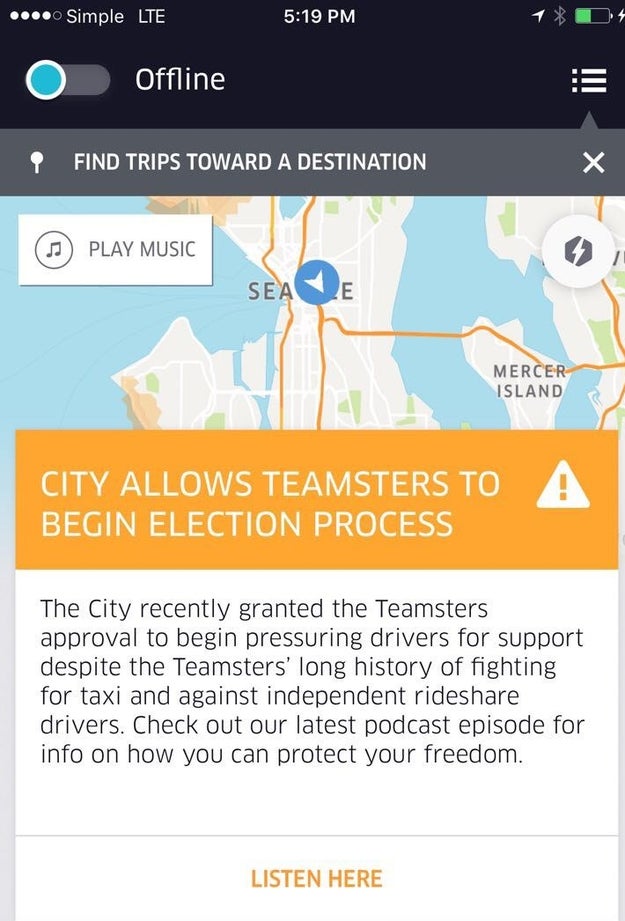
Just this week, an alert sent via Uber’s driver app warned drivers that Teamsters had been granted “approval to begin pressuring drivers for support” and directed them to information on how they might “protect [their] freedom.”

An in-app message sent to drivers from Uber warning them about the risk of joining the Teamsters union.

An in-app message sent to drivers from Uber warning them about the risk of joining the Teamsters union.

The gist of Uber&;s argument against the Teamsters: The organization isn’t qualified to represent Uber driver interests because of past efforts to cap the number of ride-hail drivers on the streets in Seattle and otherwise hamstring drivers.

Caleb Weaver, who runs public affairs for Uber in Washington, says the company has good reason to believe this. “Right now as an independent driver, drivers have the ability to decide when, where, and how much they want to drive,” he said. “If there are a series of new requirements imposed on the conditions of work, including things like minimum hours of driving, there will be a loss of control for drivers.”

Unions are typically reserved for employees, and Uber drivers are not employees of the company, but independent contractors; the Seattle collective bargaining ordinance is therefore unique, and the yearlong process of hammering out how a union of independent contractors would actually work has been understandably fraught.

Uber, which sued Seattle to block the ordinance, has been aggressively broadcasting its view in recent weeks. The company deployed a form-letter tool that allows drivers to email half a dozen elected officials in Seattle asking them to “deny the Teamsters’ application” to represent Uber drivers. It has also been holding in-person seminars on unionization efforts that frame the Teamsters as “the opponent of the independent driver” and an organization that “fights against” driver interests.

Lisa, a Seattle driver who attended one of Uber&039;s recent anti-Teamster meetings, said it played host to a mix of sentiments, with some drivers speaking out against unionization efforts, some interested in hearing directly from the Teamsters, and others airing grievances against Uber. “If I felt Uber had mistreated me, or violated civil rights or had workplace rights issues, then I would be fully supportive of a union,” Lisa told BuzzFeed News. “But I don&039;t feel that way about Uber.”

Another driver, who asked to remain anonymous out of concern for his future employment opportunities, has never been in a union before but supports the idea wholeheartedly.

“Uber’s treatment of the drivers is one-sided and abusive,” he told BuzzFeed News. “Uber holds all the power, and the drivers are voiceless.”

In New York, frustrated Uber drivers have found a voice in the Independent Drivers Guild (IDG), an Uber-endorsed labor organization run by the Machinists Union. “It&039;s unfortunate that Uber has taken an anti-union approach in Seattle,” said IDG founder Jim Conigliaro Jr. “They should afford workers a voice as they have here in New York. The dismissive attitude toward drivers who are simply trying to make a living is nothing new.”

An Uber spokesperson was unable to say whether the Drive Forward group in Seattle — co-founded by Uber and a group called Eastside for Hire — might one day resemble the IDG.

The Teamsters, meanwhile, reject claims that they’re wresting control away from drivers. “Uber drivers, like all Teamster members, will have the opportunity to negotiate, review, and vote on their contract before it goes into effect,” said Seattle Teamsters representative Dawn Gearhart. “Drivers have the final say on whether or not it makes sense to have a union, and they won’t approve an agreement that goes against their self-interest.”

For some Uber drivers drawn to the platform by its promise of a boss-free job with flexible hours, union membership — which comes with dues and a hierarchical power structure — can be off-putting. Said Fredrick Rice, an Uber driver who has appeared on the company&039;s podcast, “There is nothing to be gained by Uber drivers being incarcerated into a union, other than money into the union coffers.”

Uber isn’t the only startup that has a problem with how the driver-for-hire union effort has unfolded in Seattle; Lyft drivers are also impacted, and the company likewise opposes it. In a statement to BuzzFeed News, Lyft described the collective bargaining ordinance as “an unfair, undemocratic process,” arguing that a “significant percentage of drivers will be disenfranchised” because the collective bargaining ordinance currently only allows drivers who work a certain amount to vote for representation.

Members of Seattle’s city council have not yet responded to a request for comment. The city will be holding its next hearing on the ride-hail collective bargaining issue on March 21; Uber’s current lawsuit against the city is scheduled to be heard in court on March 17.

Quelle: <a href="Uber Rallies Drivers Against Teamster Unionization Efforts With Podcasts And Pizza Parties“>BuzzFeed

A Week After Snap's IPO, Facebook Brings Stories Copy To Messenger's 1 Billion+ Users

Facebook

A week after Snap Inc.&;s high profile IPO, Facebook is going for the jugular.

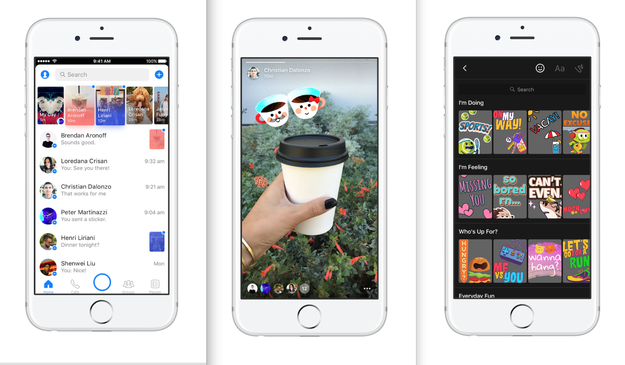
The social giant on Thursday introduced yet another copy of Snapchat’s Stories feature — this time to its wildly popular Facebook Messenger app and the 1 billion people who use it.

Called Messenger Day, the new feature — which allows users to post photo and video snippets of their day in updates that appear at the top of the app — rolls out globally to Android and iOS users starting today. It could further undermine Snap’s growth prospects just as the nascently public company is getting its footing on the New York Stock Exchange. As BuzzFeed News reported in last month, Snap has been falling behind Instagram in time spent per user on Android devices after leading it in the category prior to Instagram’s introduction of Stories.

With the addition of Messenger Day, Facebook now offers three major products featuring obvious copies of Snapchat’s Stories — Instagram (600 million users), Whatsapp (1.2 billion users) and now Messenger (1 billion users). Facebook is also currently testing a version of Stories in its 1.82 billion user main app. Snapchat, by comparison, has 158 million daily users.

Though it did provide a feature rich camera filled with fun lenses and stickers similar to the ones on which Snapchat built its success, Messenger previously did not offer a means of broadly sharing the photos and videos created with it. Now, thanks to some more shameless borrowing from Snap, it does. Facebook has been testing Day since last fall.

Facebook

Snapchat’s Snap Inc. parent company has been largely silent about Facebook’s copying of its signature feature with the exception of an acknowledgement in its S-1 IPO filing that the company “may be directly competitive.” Not so model Miranda Kerr, fiance to Snap CEO Evan Spiegel. “How do they sleep at night?” Kerr said of Facebook in a February interview. “When you directly copy someone, that&039;s not innovation.”

Facebook seems largely unbothered by such accusations. Asked for comment on perceptions that it is aggressively cribbing from an emerging rival a company spokesperson offered a statement that essentially shrugs them off:

“The way people share today is different than it was five or even two years ago, not only on our platform, but across any social media platform. The stories format is popular and we&039;ve seen it work in a variety of contexts. We&039;re now making that available in a way that we think people who use Messenger will enjoy. Just as News Feed eventually became a standard industry format to display updates from multiple people or sources, stories-style formats that allow people to post a collection of snapshots of their day in an ephemeral way are now a prominent way that people want to share.”

Though the “stories-style format” is indeed a prominent new method of sharing, it’s prominent across a number platforms largely because Facebook brought it to so many of its own. And while the social giant was once quick to give credit to Snapchat for developing Stories, it’s since abandoned that talking point. Pressed about Snapchat’s influence during Facebook’s rollout of the Snapchat-inspired “Status” on WhatsApp, for instance, a WhatsApp product manager would only say “I don’t think the format exists in just one app at this point.”

It&039;s worth noting that Facebook is launching Messenger Day with a strong nod to the social media influencers and creators that built up massive followings on Snapchat, but have recently become disillusioned with platform&039;s lack of analytics, technical support and how hard it is to find their content there. As part of its roll-out plan for Day, Facebook is promoting a handful of popular influencers. The implicit pitch: there&039;s a home for you on Messenger.

From a financial standpoint, the introduction of a Snapchat Stories clone to Messenger could be a boon to Facebook, which has yet to make meaningful revenue from Messenger. That said, the company has said it has no immediate plans to sell advertising inside Messenger Day, though the feature does seem a good candidate for generating both advertiser interest and inventory.

Quelle: <a href="A Week After Snap&039;s IPO, Facebook Brings Stories Copy To Messenger&039;s 1 Billion+ Users“>BuzzFeed

Uber Says It Will No Longer Use Tool To Evade Law Enforcement

Daniel Sorabji / AFP / Getty Images

Uber will no longer use an internal tool called “Greyball” – which showed a fake version of its app to individual, targeted riders – to thwart local regulators, the company said Wednesday.

Uber is also reviewing how the tool is used after a New York Times report on Friday recounted how the ride-hailing giant used it to “identify and circumvent” authorities.

“We have started a review of the different ways this technology has been used to date,” Joe Sullivan, Uber’s chief security officer, wrote in a blog post. “In addition, we are expressly prohibiting its use to target action by local regulators going forward.”

In response to the New York Times story, Uber said last week that Greyball denies ride requests to users who are violating the company’s terms of service, “whether that’s people aiming to physically harm drivers, competitors looking to disrupt our operations, or opponents who collude with officials on secret ‘stings’ meant to entrap drivers.”

However, the company’s blog post on Wednesday described Greyball as a tool that has “been used for many purposes, for example: the testing of new features by employees; marketing promotions; fraud prevention; to protect our partners from physical harm; and to deter riders using the app in violation of our terms of service.”

Uber’s use of the tool became the latest public relations flub in a series of crises for the company in the last month. About 200,000 users deleted the app after a viral social media campaign in January, spurred by the perception that Uber was undermining a taxi strike. Just weeks later, a former engineer published a blistering blog post alleging systemic sexism at the company. Uber CEO Travis Kalanick apologized to staff, promised to “do better,” and told the company’s female engineers that he would strive to earn credibility.

Days later, a video showed Kalanick yelling at an Uber driver who raised concerns about falling fares, and the CEO said he would seek “leadership help.”

Uber said “a number of organizations” have contacted the company for information about how the tool is used, and that it would respond after completing its review. An Uber spokesman declined to say which organizations have contacted the company about Greyball. But in Portland, Oregon, officials have publicly called for an investigation into whether Uber used the tool to obstruct enforcement of local regulations.

“Given the way our systems are configured, it will take some time to ensure this prohibition is fully enforced,” Sullivan said in Uber’s blog post.

Asked to elaborate on why it would “take some time,” an Uber spokesman declined to comment.

LINK: Uber’s ‘Greyball’ Technology Helped It Sidestep Law Enforcement Around The World

LINK: Uber CEO Apologizes To Employees After Claims Of Workplace Sexism

Quelle: <a href="Uber Says It Will No Longer Use Tool To Evade Law Enforcement“>BuzzFeed

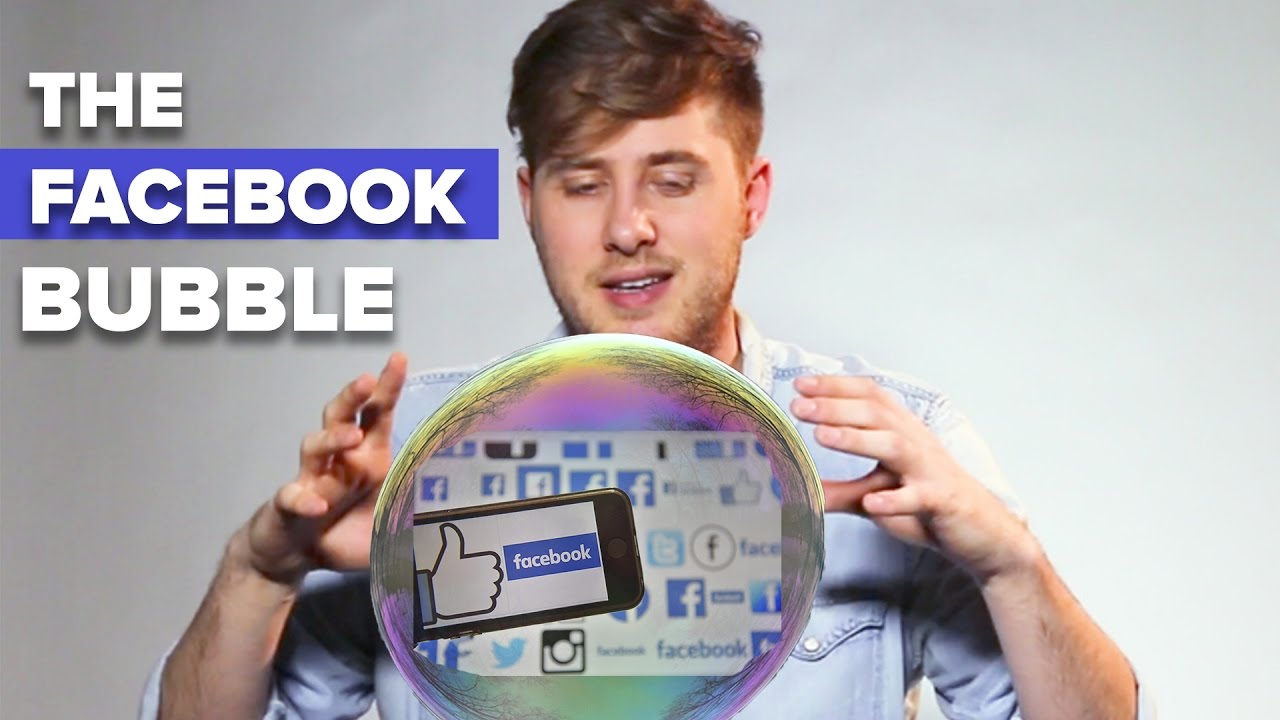
I Made A Facebook Profile, Started Liking Right Wing Pages, And Radicalized My Newsfeed In 4 Days

I Made A Facebook Profile, Started Liking Right Wing Pages, And Radicalized My Newsfeed In 4 Days

As an experiment, I hit the like button on the pages of a few Republican politicians and all of a sudden I found myself in a very different part of Facebook then I was used to.

Last week, I did something sort of weird. I made a brand-new Facebook profile.

youtube.com

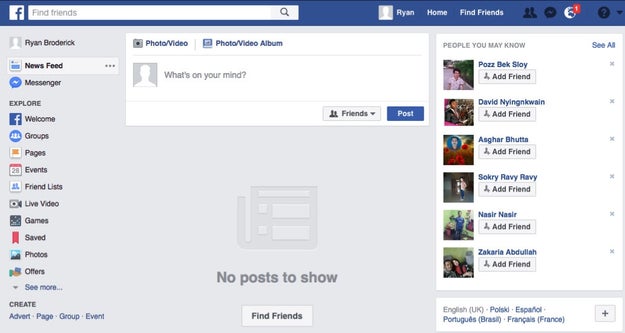
Here’s my completely empty News Feed.

Here's my completely empty News Feed.

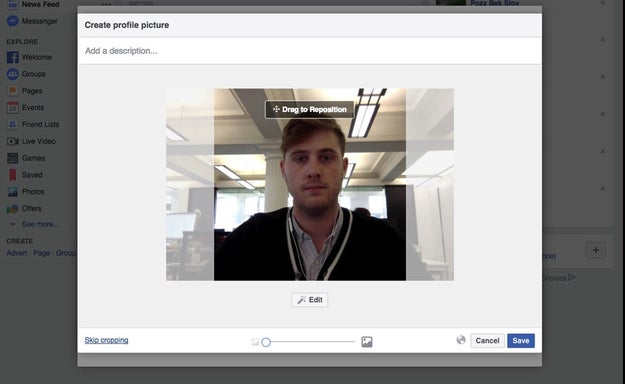
I added a profile picture and some personal information, like what college I went to and the fact that I work at BuzzFeed, and I put down that I was based in New York.

I added a profile picture and some personal information, like what college I went to and the fact that I work at BuzzFeed, and I put down that I was based in New York.

The News Feed is a tool for consuming not just news stories and memes that interest you, but also those that your friends like. Few people — if anyone — use Facebook the way I have. Your friends&; interests and tastes have a tremendous effect on what you see. But I wanted to see how Facebook&039;s recommendation algorithms worked in a purely friendless vacuum. What kind of content would it suggest if all it had to go on was what I liked, rather than who?


View Entire List ›

Quelle: <a href="I Made A Facebook Profile, Started Liking Right Wing Pages, And Radicalized My Newsfeed In 4 Days“>BuzzFeed

FBI Director Comey: "There Is No Such Thing As Absolute Privacy In America"

Darren Mccollester / Getty Images

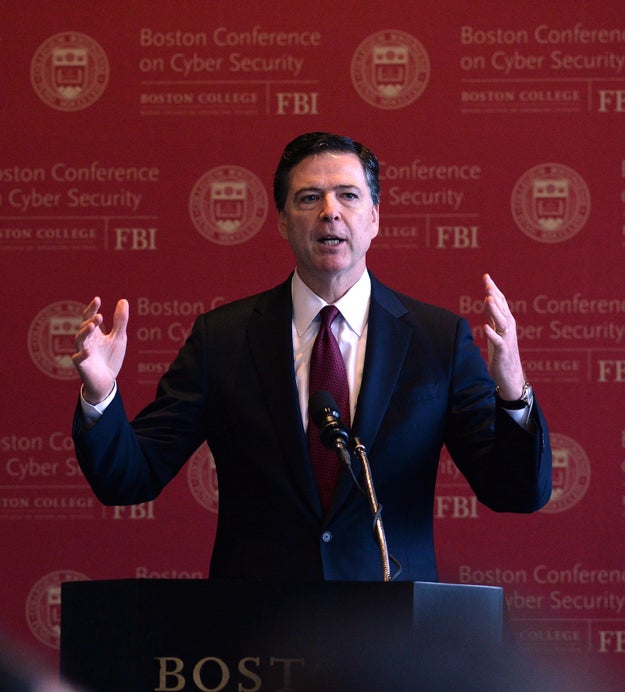
At a cybersecurity conference hosted by Boston College, FBI director James Comey did not discuss his part in the Clinton email scandal, the firestorm over the Russian dossier, President Trump&;s alarming wiretapping allegations, or unprecedented Russian meddling in the presidential election. Instead, he stuck to that other national controversy in which he maintains a starring role: encryption.

“There is no such thing as absolute privacy in America,” Comey said Wednesday. “That&039;s the bargain. And we made that bargain over two centuries ago to achieve two goals. To achieve the very, very important goal of privacy and to achieve the important goal of security. Widespread default encryption changes that bargain. In my view it shatters the bargain.”

Comey&039;s remarks come just a day after Wikileaks published 9,000 documents and files that it says came from the CIA’s Center for Cyber Intelligence and allegedly detail the agency&039;s ability to hack into phones, laptops, and “smart” TVs.

“It is not the FBI&039;s job to tell the American people how to live.”

To support his argument that ubiquitous, default encryption is limiting the FBI&039;s lawful surveillance powers, Director Comey said the agency received 2,800 devices for which it had had lawful authority to access in the final three months of 2016. The FBI was not able to open 1,200 of those devices, about 43 percent, Comey said. The devices were linked to an array of criminal cases as well as counterintelligence and terrorism investigations and could not be accessed using any technique available to the FBI, Comey added. Although, Comey did not explain how the inability to access those devices impacted investigations.

Comey disputed claims that he is advocating for weaker encryption or so called encryption backdoors into our phones. He insisted, contrary to arguments made by prominent computer scientists and much of Silicon Valley, that firms can retain access to a person&039;s communications while also providing strong encryption. “Here&039;s the deal though: it is not the FBI&039;s job to tell the American people how to live,” Comey said. “I also don&039;t think it&039;s the job of tech companies to tell the American people how to live.”

During the contentious legal dispute last year between Apple and the FBI, many saw the use of metadata and the FBI developing its own in-house hacking expertise as reasonable alternatives to a controversial legal ruling or new legislation on encryption. But Comey said Wednesday that metadata is generally too limited to prove guilt in criminal cases and that building FBI hacking tools would be overly expensive and impractical for broader use.

Comey acknowledged that Americans enjoy a reasonable expectations of privacy in our homes, cars, and devices. But, he added, that with good reason and a court&039;s permission, law enforcement should be allowed to invade our private spaces.

“The advent of default ubiquitous strong encryption is making more and more of the room in which the FBI investigates dark,” Comey said. According to the FBI Director, sophisticated criminals, nation states, and spies have had access to encryption technology for decades, limiting the FBI&039;s ability to monitor their actions. The problem the agency faces now, since the disclosures of Edward Snowden, Comey said, is encryption tools are now widely available, eclipsing a much larger portion of the criminal world from the FBI&039;s view.

“You&039;re stuck with me for another six and a half years.”

Over the weekend, Director Comey asked officials at the Justice Department to publicly reject President Trump&039;s claims that President Obama ordered his phones wiretapped at Trump Tower. But the FBI Director did not address Trump&039;s allegations.

After the election, then President-elect Trump told CBS 60 Minutes that he was not sure if he would ask Comey to resign. In January, however, Trump asked Comey to stay on as FBI Director. At the Boston conference, Comey said he intends to complete his 10-year term. In his opening remarks, Comey said, “You&039;re stuck with me for another six and a half years. And so I&039;d love to be invited back again.”

Director Comey has been invited by the House Judiciary Committee to speak as a witness during the first public hearing on Russian interference in the presidential election. The hearing is scheduled for March 20.

Quelle: <a href="FBI Director Comey: "There Is No Such Thing As Absolute Privacy In America"“>BuzzFeed

People Are Pissed That Snapchat's Marie Curie Filter Adds A Full Face Of Makeup

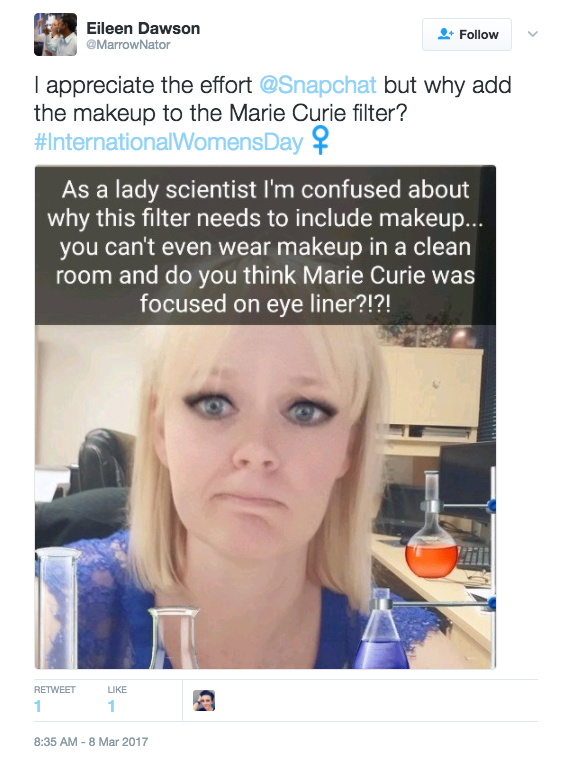
&;Didn&;t realize eye makeup and false lashes were essential to being a baller female physicist&;&;

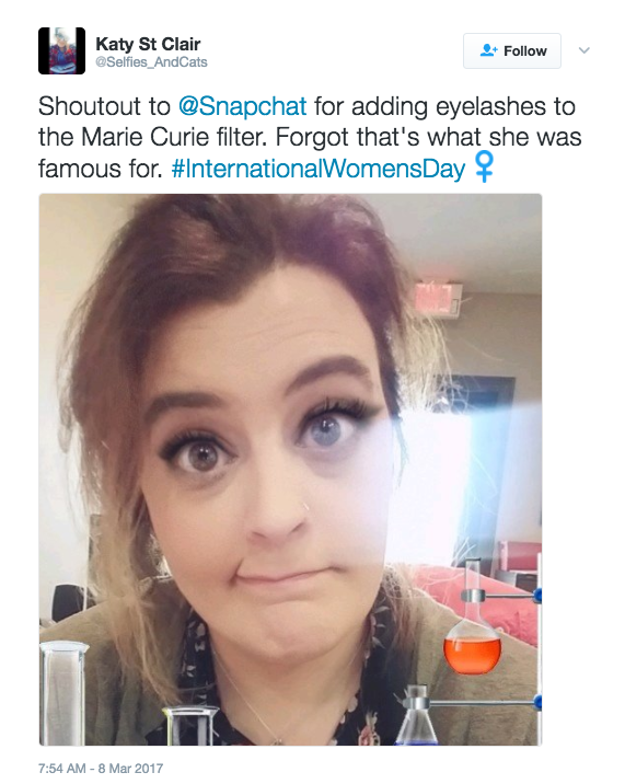
But some users have pointed out an odd detail in the Marie Curie filter: a smokey eye, false eyelashes, and complexion-smoothing makeup.

But some users have pointed out an odd detail in the Marie Curie filter: a smokey eye, false eyelashes, and complexion-smoothing makeup.

Twitter: @Selfies_AndCats

For anyone who isn’t familiar with Marie Curie, she was a Polish-born French physicist and chemist who won the Nobel Prize twice for research on radioactivity.

For anyone who isn't familiar with Marie Curie, she was a Polish-born French physicist and chemist who won the Nobel Prize twice for research on radioactivity.

Curie won the 1903 Nobel Prize in Physics and the 1911 Nobel Prize in Chemistry. She ultimately died due to radiation exposure from her research, and many regard her as a hero in the field of science.

mlahanas.de / Via commons.wikimedia.org

Given her work, many felt the makeup was unnecessary.

Given her work, many felt the makeup was unnecessary.

Twitter: @MarrowNator


View Entire List ›

Quelle: <a href="People Are Pissed That Snapchat&039;s Marie Curie Filter Adds A Full Face Of Makeup“>BuzzFeed

Apple Says It Has Patched The Vulnerabilities Mentioned In The Wikileaks Dump Of CIA Cyber Tools

The Apple logo is pictured on an iPhone in an illustration photo taken in Bordeaux, France, February 1, 2017. REUTERS/Regis Duvignau

Regis Duvignau / Reuters

SAN FRANCISCO — The ability of the CIA to hack into Apple products was one of the more noteworthy revelations made Tuesday, amid a trove of documents released by Wikileaks purporting to reveal the cyber tools used by the US intelligence agency. But on Tuesday night, Apple released a statement claiming that, as far as they knew, they had patched, or fixed, the bugs allegedly used by the CIA to hack into their products.

“Apple is deeply committed to safeguarding our customers’ privacy and security. The technology built into today’s iPhone represents the best data security available to consumers, and we’re constantly working to keep it that way. Our products and software are designed to quickly get security updates into the hands of our customers, with nearly 80 percent of users running the latest version of our operating system. While our initial analysis indicates that many of the issues leaked today were already patched in the latest iOS, we will continue work to rapidly address any identified vulnerabilities. We always urge customers to download the latest iOS to make sure they have the most recent security updates,” read the Apple statement.

The Wikileaks documents claimed that the CIA had exploits that could work on iPhones, which have widely been seen as a more secure choice than Android. The details of how those exploits work, however, were not included in the documents, likely making it difficult for Apple to conclude with absolute certainty whether it had patched all the bugs within their system the CIA had used to potentially infiltrate the phone.

Those bugs, or exploits, are commonly referred to as “zero days,” a name given to bugs or other issues with a piece of technology that the original manufacturer doesn’t know about yet. Zero days are essentially problems within a machine or system that the manufacturer has had zero days to fix, so whether within an app on an iPhone or Microsoft Word, hackers can use it to break in.

In their release, WikiLeaks wrote that, “‘Year Zero’ introduces the scope and direction of the CIA’s global covert hacking program, its malware arsenal and dozens of ‘zero day’ weaponized exploits against a wide range of U.S. and European company products, include Apple’s iPhone, Google’s Android and Microsoft’s Windows and even Samsung TVs, which are turned into covert microphones.”

LINK: No, WikiLeaks Didn’t Just Reveal That The Government Has Access To Your Secure Messaging Apps

Quelle: <a href="Apple Says It Has Patched The Vulnerabilities Mentioned In The Wikileaks Dump Of CIA Cyber Tools“>BuzzFeed

If You Have A Smart TV, Take A Closer Look At Your Privacy Settings

Tobias Schwarz / AFP / Getty Images

Over 40 million U.S. households own smart TVs, a category that made up more than half of TVs shipped globally in Q1 of 2016. These high-tech, Internet-connected displays offer viewers the ease of access services like Netflix, games, and social media without a Roku, Chromecast, or other media streamer – but they also may be tracking your viewing habits and listening to your conversations.

“Smart TVs are testing the privacy expectations that consumers developed in the era of traditional television,” said Bureau of Consumer Protection director Jessica Rich in her opening remarks at last fall’s smart TV workshop hosted by the Federal Trade Commission.

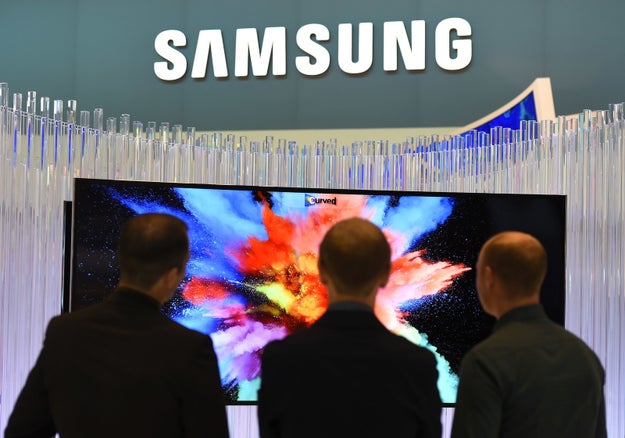
Today&039;s WikiLeaks release revealed that Samsung smart TV owners are particularly vulnerable to spying. Newly published documents detail a program called “Weeping Angel,” an attack designed by the CIA and United Kingdom&;s MI5/BTSS that makes Samsung smart TVs look like they’re turned off when, in fact, they’re not. The smart TV “operates as a bug, recording conversations in the room and sending them over the Internet to a covert CIA server,” according to the documents.

Here are some settings you should review if you’re concerned about snooping corporations.

Samsung TVs

In 2015, Samsung drew criticism for its always-on voice detection privacy policy that stated, “Please be aware that if your spoken words include personal or other sensitive information, that information will be among the data captured and transmitted to a third party.” Most Samsung smart TVs require users to press a microphone button before using voice commands, but the mic is always listening on models like the PN60F8500, which have voice recognition (“Hi TV”), as well as a built-in microphone and camera.

If you have a Samsung TV, there are several ways to turn off voice recording. On newer TVs, go to Home > Settings > System > Expert Settings > Voice Interaction and turn to off. On older TVs, it may be in Settings > select Smart Features > Voice Recognition > switch to off.

You can also go to Settings > Support > Terms & Policies and opt to “Disagree” with the policies for Viewing Information Services, Voice Recognition Services, and Nuance Voice Recognition and Privacy Notices.

If your TV offers gesture control or facial recognition to authenticate your Samsung account, you can turn this off in the Samsung Account settings menu or cover your camera with a piece of tape.

The “Weeping Angel” attack revealed today, which was designed by the CIA to put Samsung TVs into a fake “off” mode, affects Samsung TVs with firmware versions 1111, 1112, and 1116, sold between 2012 and 2013 with “UNF” in the model name. While the attack suppresses most indicator lights on the TV, the blue LED on the back of the TV remains on.

The only way to defend yourself from this particular attack is to either update the firmware or disconnect the smart TV from the Internet entirely, which would essentially make it a dumb TV.

Samsung can also track your viewing habits and send that data to advertisers for targeted marketing purposes. To prevent this tracking, go to Menu > Smart Hub > Terms and Policy > SyncPlus and Marketing > disable SyncPlus.

Vizio TVs

If you own a Vizio TV, you can disable data collection by going to your TV’s Menu > Settings > Smart Interactivity, or any option with Automated Content Recognition, and turning it off. It may also appear under System > Reset & Admin > Smart Interactivity or Menu > System > Reset & Admin > Viewing Data to Off.

In February 2017, Vizio agreed to pay $2.2 million to the Federal Trade Commission for failing to disclose when and how it collects user information and, more frighteningly, for transmitting the user data while it was unencrypted. “Automated content recognition software,” which was pre-installed on Vizio TVs sold since 2014, captured a selection of pixels displayed on Vizio TV screens and sent that data to company’s servers, where those pixels were matched to a database of TV shows, movies, and commercials. Essentially, the software recorded viewing history without the TV owner’s explicit consent.

LG TVs

LV TVs also include tracking software, but by a different name. On webOS TVs, go to Setting > General > About This TV > User Agreements > and opt out of Viewing Information, Personal Advertising and/or Voice Information. Opting out of Voice Information will disable voice control.

On older TVs, click on Settings > Options > LivePlus and toggle to “off.” Some LG TV models may call this Collection of watching info.

In 2013, LG’s smart TVs were found to have collected and sent data whether or not the Collection of watching info was set to “on” or “off” – but since then, LG pushed a software update that does not collect data when the user has opted out by toggling the setting to “off.”

Sony TVs

Go to Home > Settings > TV – About > Legal information > View Privacy Policy and opt to disagree with the policy to prevent the device from sending information to Sony’s servers. Older TVs may show Disable Upload Data instead.

Before I let you go…

When opting out of privacy policies and other user agreements, you may also be disabling automatic software updates. You may need to occasionally check for your TV’s firmware updates or security patches and update them manually.

Additionally, if you use a streaming device like Roku, Chromecast, or Amazon Fire TV, your viewing information is also being collected. You can opt-out of collection for Chromecast, as well as Amazon Fire TV (Settings > System > Internet based ads to off). Roku collects search history, records voice searches, and uses cookies to track what you’re watching. You can go to Settings > System > Privacy > and turn on Limit Ad Tracking to turn off personalized ads and prevent Roku from passing on identifiable ad measurement data to providers. Apple TV doesn’t collect viewing or search data but, if you opt in, it does record a logfile that helps the company diagnose bugs or system errors.

Services like Hulu, Amazon Video, and Netflix are also tracking your viewing habits, no matter what platform you use. You can delete individual titles from your watch history, and those services will stop recommending similar titles to you – but they are looking at what you’re watching and for how long.

Ultimately, it’s always worth it to thoroughly review your tech’s privacy settings options, whether it’s a phone, console, or smart TV.

Realistically, you won’t always be able to escape tracking, so it’s important to at least be aware of what data is being collected and where’s it’s going. If your data is being sent elsewhere, make sure it’s through encrypted means, so hackers won’t be able to access it. You may also be able to turn on settings that anonymize the data and keep your personal info out of it (like “Limit Ad Tracking”).

Quelle: <a href="If You Have A Smart TV, Take A Closer Look At Your Privacy Settings“>BuzzFeed