Twitter Troll Arrested For Allegedly Tweeting Seizure-Inducing Strobe GIF At Journalist

Kurt Eichenwald

Twitter

A Twitter troll who allegedly tried to cause Newsweek writer Kurt Eichenwald to have a seizure by tweeting a strobing graphic at him has been arrested by the FBI on federal charges, the journalist announced Friday.

The Dallas FBI office confirmed to the Verge that a suspect had been arrested. Eichenwald’s lawyer, Steven Lieberman, told Newsweek that agents arrested the suspect at his home in Salisbury, Maryland, on Friday morning.

The suspect, who was not immediately identified, is expected to appear in Baltimore federal court on Friday afternoon.

BuzzFeed News reached out to the FBI, which is expected to release more information on the case later in the day.

On Dec. 15, Twitter user @jew_goldstein tweeted at Eichenwald, who has previously written about being epileptic, a strobing GIF with text reading: “You deserve a seizure for your posts.”

The tweet has since been deleted and the @jew_goldstein account was suspended.

Good Morning America

Eichenwald’s wife responded on Twitter from his account that the strobing image had caused a seizure and they had alerted police.

In an interview with Good Morning America, Eichenwald said other Twitter users followed suit, sending him strobing GIFs.

“I can&;t look at my Twitter feed anymore,” Eichenwald said on GMA. “Apparently, a lot of people find this very funny. A lot of people who identify themselves as Trump supporters are loading up my feed with more strobes.”

On Friday, Eichenwald tweeted that more than 40 people tweeted strobing images at him after they learned they could induce seizures.

Quelle: <a href="Twitter Troll Arrested For Allegedly Tweeting Seizure-Inducing Strobe GIF At Journalist“>BuzzFeed

Monopoly Is Ditching Its Thimble For A T-Rex Token

In the most gripping display of democracy since the 2016 election, Monopoly fans have elected a T-Rex, a rubber ducky, and a penguin to the canon of the game&;s classic tokens.

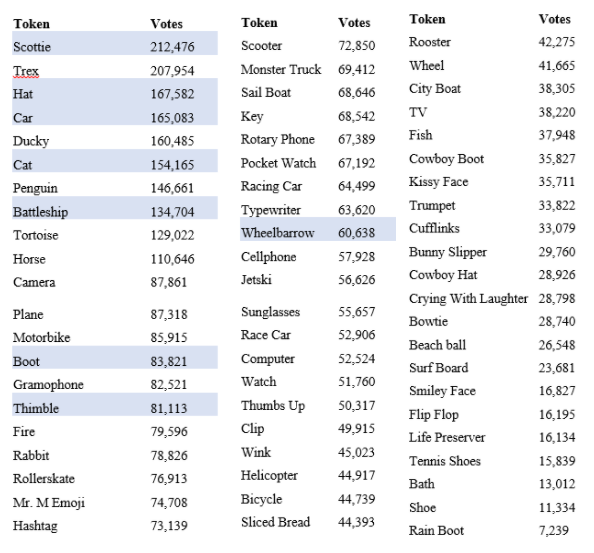
Five of the old tokens — the top hat, the race car, the battleship, Scottie the schnauzer, and the cat — are staying. The thimble, the boot, and the wheelbarrow didn&039;t make the cut, and a T-Rex, rubber ducky, and penguin will replace them in the version of Monopoly that will start hitting shelves in August 2017. The five returning tokens will maintain the same designs as before, and gameplay will not change.

Fans picked the eight pieces from 64 possible choices in an online poll run by Hasbro, which owns Monopoly. Options included digital symbols like a , a winking emoji, or a Facebook-esque thumbs up. Other tokens included old-school versions of current technology like a typewriter and rotary phone.

BuzzFeed News recently conducted its own informal poll of which millennial Monopoly piece people would choose from the 64 options: a Major Key, a hashtag, a winky face emoji, a thumbs up/Like button, a computer, a kissy face emoji, a classic smiley face, or a Rich Uncle Pennybags emoji. The computer far outstripped any competitors, garnering above a million votes, far outpacing the number of votes that Scottie the dog received in Hasbro&039;s poll. The next highest-voted token in BuzzFeed&039;s poll, the Major Key, received about 140,000.

These were all the choices

These were all the choices

Hasbro

Hasbro previously told BuzzFeed News that it culled the options from pop culture, previous versions of Monopoly, and the fictional life of Mr. Monopoly (think luxury: a helicopter, a money clip, a fancy watch).

The penguin, newly elected to the canon, was revived as a choice after making an appearance in Monopoly Here & Now: The World Edition in 2012 and 2013.

Here&039;s a breakdown of the vote

The eight tokens highlighted in blue below are Monopoly&039;s classic tokens. After nearly 60 years as part of the game, Scottie the Schnauzer is still king and received the most votes of any token. The T-Rex was the most popular new token, coming in with the second-highest number of votes. The poll ran from January 10 to 31, and Hasbro tallied 4.3 million votes in total.

Hasbro

Jonathan Berkowitz, senior vice president of marketing for Hasbro Gaming, told BuzzFeed News, “We didn&039;t know what to expect. We were all happy that Scottie was saved, and the t-rex&039;s popularity was surprising. My personal favorites were the rubber duck and the emojis.” Berkowitz also said that when the poll began, he was looking forward to finding out which pieces did not resonate with fans.

In a similar Hasbro poll in 2013, fans voted the cat token (sixth most popular in the most recent poll) into the game and dumped the iron token. The company said it decided to open up a vote on all the tokens in 2017 because of the high number of fans who participated in previous polls.

Quelle: <a href="Monopoly Is Ditching Its Thimble For A T-Rex Token“>BuzzFeed

Palantir Blocked Its Investors From Selling Their Shares, Lawsuit Claims

Palantir CEO Alex Karp at Trump Tower.

Andrew Kelly / Reuters

Palantir Technologies, one of the most valuable startups in Silicon Valley, has deprived investors of basic information about its business and repeatedly hindered efforts by investors to sell their shares, according to a blistering lawsuit filed by a longtime investor.

In addition to keeping at least some shareholders in the dark about its financial performance, Palantir has “engaged in a pattern and practice” of attempting to thwart their attempts to sell stock, according to the lawsuit, filed by investment firm KT4 Partners. Instead of letting these investors sell shares, Palantir has steered their sale opportunities to itself or its executives, while showering a favored brokerage firm with commissions even when the firm does no work at all, the lawsuit claims.

KT4 Partners first bought Palantir shares over a decade ago and is seeking to compel Palantir to hand over financial records, which it says are needed to understand the value of its investment. Further, KT4 claims it needs this information to investigate whether Palantir or its executives have engaged in “improper and illegal conduct” to harm minority shareholders. The lawsuit was filed under seal last week in the Delaware Court of Chancery; a partially redacted version was released on Monday and is reported here for the first time.

Palantir, in an emailed statement, referred to an earlier lawsuit that it filed against Marc Abramowitz, the managing member of KT4, claiming he stole Palantir’s intellectual property (a claim KT4 says is “meritless”).

“This lawsuit is nothing more than a blatant attempt to distract from Mr. Abramowitz’s unlawful and egregious theft of our intellectual property,” Lisa Gordon, a Palantir spokesperson, said in the statement. “His allegations are without merit and needless to say, Palantir will continue to aggressively pursue its existing legal action against him.”

Co-founded in 2004 by the billionaire Peter Thiel, who is now advising President Donald Trump, Palantir analyzes data for government agencies and major corporations. It has a $20 billion valuation, making it the third most highly valued startup in Silicon Valley, behind only Uber and Airbnb. Yet Palantir — whose stock changes hands only through private trades — goes to great lengths to keep any detailed information about its business private. A report by BuzzFeed News last year gave an unprecedented, though limited, account of its commercial operations.

The lawsuit, a highly unusual step for a startup investor, follows efforts by KT4 to obtain business information through other means. KT4 made a written demand last August to inspect Palantir&;s books and records, the lawsuit says. But then, according to the lawsuit, Palantir retroactively amended its investors&039; rights agreement “for the sole and express purpose” of avoiding disclosure obligations.

In September, Palantir filed its lawsuit against Abramowitz — which, according to KT4, has the “true purpose” of preventing disclosure of information and intimidating the investor. Palantir, in the lawsuit, described Abramowitz as a onetime confidant to Palantir executives who betrayed their trust.

Palantir is under increasing pressure from its shareholders, a number of whom have held its stock for a decade or more and are anxiously awaiting a payday. Former employees, who received a major part of their pay in stock options, have struggled to cash out, despite limited share purchase offers arranged by the company. Last fall, in a reversal of his longtime refusal to pursue an IPO, Palantir CEO Alex Karp said at a tech conference, “We’re now positioning the company so we could go public.”

This statement by Karp has a previously undisclosed backstory, according to the lawsuit: KT4 says it came after a formal request by the investor for information on whether Palantir had considered an IPO.

KT4 says its stake in Palantir is worth over $60 million — a significant sum by many measures, but small in the context of Palantir, which has raised more than $2 billion from investors. When KT4 tried to sell portions of its stake, Palantir repeatedly interfered, the lawsuit claims. Palantir, following a common practice in Silicon Valley, requires that any sellers of its stock seek the company&039;s approval for the transaction; companies do this to limit and manage ownership of their shares.

But remarkably, KT4 claims that when Palantir receives information from an investor about a planned sale, it uses that information to contact the buyer and persuade them instead to buy shares directly from the company or from certain Palantir insiders. One particular broker, Disruptive Technology Advisers, or DTA, repeatedly gets commissions from these sales, even when it “performed no legitimate work,” KT4 claims.

KT4 says it experienced interference by Palantir when it tried to sell shares to Highbridge Capital Management, a hedge fund that was owned by JPMorgan Chase, in May 2015. After KT4 notified Palantir of the planned sale, Palantir turned around and instructed DTA to “take the opportunity, on Palantir&039;s behalf,” and arrange a sale from Palantir to Highbridge instead, according to the lawsuit.

But when Alex Fishman, a founder of DTA, met with a senior managing director at Highbridge, the hedge fund executive said he would not break his deal with KT4, telling Fishman to leave his office, according to the lawsuit. The situation escalated when Karp, the Palantir CEO, learned of Highbridge’s affiliation with JPMorgan — a very important customer of Palantir&039;s — and that the bank&039;s CEO, Jamie Dimon, “would be asked to contact Karp directly to express displeasure” at these tactics, the lawsuit says. Karp then allegedly let the sale by KT4 go through.

Later, in December 2015, Palantir and DTA had more success in impeding a sale of shares by KT4 and other investors to a Chinese investment company, whose name is redacted in the document, the lawsuit says. DTA, representing Palantir, contacted the buyer and led it to believe that it was required to buy the shares directly from Palantir, ultimately leading the buyer to call off the deal with KT4 and the others.

Until KT4 made its recent demand for financial information, Palantir refused to provide financial information to buyers of its shares except through DTA — forcing buyers and sellers to do business with that firm or with Fishman, the lawsuit says.

Even when DTA was not involved in a deal, it still could get paid, according to KT4. Last summer, when UBS Securities was brokering a sale of Palantir shares, Karp demanded that UBS pay 25 cents a share to Fishman and DTA, even though DTA “had performed no work on the transaction” — and UBS agreed to make the payment, the lawsuit says. (KT4 says it learned this from a UBS managing director.)

Fishman and Alex Davis, the other DTA founder, recently “enjoyed a very close relationship” with Karp, according to the lawsuit. (According to Fishman&039;s LinkedIn profile, he sold his half of DTA to Davis last week and no longer works there.)

Emails sent to Fishman and Davis were not immediately returned. Spokespeople for JPMorgan and UBS also did not immediately respond to requests for comment.

Even as it blocks sales by smaller investors, Palantir has allowed Karp and Thiel to sell shares, according to the lawsuit. KT4 claims that these sales fly in the face of rights it has as an investor to participate in such transactions.

In addition to business data, KT4 says it is seeking information about the compensation and equity grants given to Palantir brass, to determine whether the company is spending on “lavish expenses” that serve no corporate purpose. KT4 says it has learned that Karp, the CEO, has “an unreasonably large number of executive assistants,” known inside Palantir as “Team Karp.”

In addition, KT4 claims it has learned that Palantir pays for someone or something — this part is, tantalizingly, redacted — to accompany Karp in the United States.

“There is no reason such [redacted]&; would be necessary or serve a valid corporate purpose,” the lawsuit says.

Quelle: <a href="Palantir Blocked Its Investors From Selling Their Shares, Lawsuit Claims“>BuzzFeed


A Security Expert Warned Congress That T-Mobile's DC Cell Network Has Been Hacked

Getty Images

Rep. Ted Lieu and a group of security researchers have been warning for a year that a vulnerability in the global communications network supporting cell service could offer hackers and foreign powers a way to exploit our phones. Now, according to a cybersecurity expert who contacted Rep. Lieu’s office, it seems hackers may have taken advantage of this security hole to infiltrate cell networks in Washington, DC.

The Washington Free Beacon reported Thursday that it had reviewed documents suggesting that hackers had stolen massive amounts of location data from phones in the DC area. The Free Beacon wrote that the Department of Homeland Security originally compiled the data while monitoring cell towers for suspicious activity.

A spokesperson for Rep. Lieu told BuzzFeed News that his office received a tip late last week from a cybersecurity expert that T-Mobile&;s wireless mobile network in Washington, DC may have been compromised by a hack. Rep. Lieu’s office could not substantiate the claims of the security expert (whom Lieu&039;s office did not name), but it notified the Department of Homeland Security of the warning. According to the spokesperson, Homeland Security did not provide any additional information since the supposed security breach may involve a private company. Homeland Security declined to answer BuzzFeed News’ questions about the alleged T-Mobile breach.

T-Mobile declined to comment.

Craig Young, the principal security researcher for the vulnerabilities and exposures research team at the cybersecurity firm Tripwire, told BuzzFeed News that the government should ensure that carriers are vigilant in monitoring what could be hugely invasive threats.

One of the most vulnerable points of telephone companies is the way they connect to one another. An exposed network known as SS7 could let an intruder secretly re-route calls so that a third party could listen in without the caller or their recipient knowing. “The end effect is that anybody can potentially go from having a phone number to intercepting your calls by exploiting SS7 weaknesses,” Young said.

Prompted in part by the claims of the cybersecurity expert, as well as broader concerns of the SS7 vulnerability, Rep. Lieu wrote a letter to Homeland Security Secretary John Kelly on Wednesday. Along with Sen. Ron Wyden, Rep. Lieu asked Kelly what resources Homeland Security had dedicated to addressing SS7-related threats. The lawmakers also asked Kelly whether wireless carriers had done enough to help law enforcement identify vulnerabilities in their mobile infrastructure or disclose previous attempts by foreign actors to use SS7 vulnerabilities to breach their networks.

“We suspect that most Americans simply have no idea how easy it is for a relatively sophisticated adversary to track their movements, tap their calls, and hack their smartphones,” Lieu and Wyden wrote. “We are also concerned that the government has not adequately considered the counterintelligence threat posed by SS7-enabled surveillance.”

A spokesperson for Sen. Wyden told BuzzFeed News that his office had contacted Homeland Security “regarding reports of anomalous cellular network activity, which may involve the SS7 system.”

Since early last year Rep. Lieu has been urging his colleagues on Capitol Hill to investigate the SS7 vulnerability, which poses an array of startling risks. “The applications for this vulnerability are seemingly limitless, from criminals monitoring individual targets to foreign entities conducting economic espionage on American companies to nation states monitoring U.S. government officials,” he said in a letter to the chair and ranking member of the House Government Oversight Committee last April.

It&039;s unclear if the alleged T-Mobile intrusion began through an attack on T-Mobile itself through spearfishing, an intruder posing as a legitimate wireless carrier, or through hardware that spoofs mobile phones into connecting with false cell towers.

Blake Montgomery contributed reporting for this story.

Quelle: <a href="A Security Expert Warned Congress That T-Mobile&039;s DC Cell Network Has Been Hacked“>BuzzFeed

Two Russian Spies Have Been Charged In The Massive Yahoo Email Hack

Dado Ruvic / Reuters

The Justice Department charged four men — two of whom are Russian Federal Security Service, or FSB, officers — Wednesday for stealing the personal information of at least 500 million Yahoo customers in a massive breach that rocked the company&;s reputation and slashed hundreds of millions of dollars off its sale to Verizon.

The two non-FSB defendants were criminal hackers hired by the Russian officials to breach Yahoo&039;s network. The stolen account information was used to gain additional content from customers&039; Yahoo accounts and accounts tied to other email providers, including Google.

Both Russian journalists and American diplomatic officials were then targeted using the data stolen in the hack. The charges for what was one of the largest computer intrusions in American history included conspiracy, economic espionage, wire fraud, and aggravated identity theft.

In a move that Acting Assistant Attorney General Mary McCord described as “beyond the pale,” the FSB officials behind the hack were members of a Russian unit that serves as the FBI&039;s liaison on cybercrime in Moscow. “These are the very people that we are supposed to work with cooperatively,” she said during a press conference Wednesday. “They turned against that type of work.”

One of the defendants, Alexsey Alexseyevich Belan, had been on the FBI&039;s most-wanted list for more than three years for cybercrime, McCord said. Another defendant, Karim Baratov, was arrested for the Yahoo breach yesterday in Canada. The US government will ask Russian law enforcement officials to extradite the remaining three defendants, who reside in Russia, said Paul Abbate, the executive assistant director of the FBI&039;s cyber branch.

“The indictment unequivocally shows the attacks on Yahoo were state-sponsored,” said Chris Madsen, Yahoo&039;s assistant general counsel and head of global law enforcement. “We’re committed to keeping our users and our platforms secure and will continue to engage with law enforcement to combat cybercrime.”

In December, Yahoo first revealed that hackers had stolen customer information from 1 billion Yahoo accounts in an attack dating back to 2013. The colossal breach was separate from the major intrusion that the Russian officials were charged with. That data breach was announced in September, when Yahoo said 500 million accounts had been compromised by a state-sponsored hacker in 2014. In both cases Yahoo said users&039; email addresses, telephone numbers, dates of birth, and passwords were likely stolen.

News of the attacks came just months after Verizon announced plans to buy Yahoo for $4.83 billion last summer. The embarrassing disclosures prompted Verizon to seek a nearly 20% discount of Yahoo&039;s sale price, totaling $925 million. But the two companies instead agreed to slash $395 million off the deal price because of the damage from the breaches.

Following the company&039;s review of the 2014 breach, Yahoo said CEO Marissa Mayer would not receive her 2016 annual bonus. Mayer also said she would forgo her 2017 equity award. Together, the pay cut appears to amount to a personal loss of $14 million, but Mayer will still receive a $23 million “golden parachute” once Verizon&039;s purchase of Yahoo is completed later this year.

Read the indictment here:

Quelle: <a href="Two Russian Spies Have Been Charged In The Massive Yahoo Email Hack“>BuzzFeed

Internal Metrics Show How Often Uber’s Self-Driving Cars Need Human Help

Jeff Swensen / Getty Images

Human drivers were forced to take control of Uber&;s self driving cars about once per mile driven in early March during testing in Arizona, according to an internal performance report obtained by BuzzFeed News. The report reveals for the first time how Uber’s self-driving car program is performing, using a key metric for evaluating progress toward fully autonomous vehicles.

Human drivers take manual control of autonomous vehicles during testing for a number of reasons, for example, to address a technical issue or avoid a traffic violation or collision. The self-driving car industry refers to such events as “disengagements,” though Uber uses the term “intervention” in the performance report reviewed by BuzzFeed News. During a series of autonomous tests the week of March 5, Uber saw disengagement rates greater than those publicly reported by some of its rivals in the self-driving car space.

When regulatory issues in December 2016 forced Uber to suspend a self-driving pilot program in San Francisco, the company sent some of its cars to Arizona. Since then, Uber has been testing its autonomous cars along two routes in the state. The first is a multi-lane street called Scottsdale Road — a straight, 24-mile stretch that runs through the city of the same name. According to Uber&039;s performance report on tests for the week of March 5, the company&039;s self-driving cars were able to travel an average of 0.67 miles on Scottsdale Road without human intervention and an average of 2 miles without a “bad experience” — Uber’s classification for incidents in which a car brakes too hard, jerks forcefully or behaves in a way that might startle passengers. Uber described the overall passenger experience for this particular week as “not great,” but noted improvement compared to the prior week&039;s tests, which included one “harmful” incident — and event that might have caused human injury.

Uber has also been testing its autonomous vehicles on a “loop” at Arizona State University. According to the performance report reviewed by BuzzFeed News, self-driving cars used on the ASU loop saw “strong improvement” during the week of March 5, traveling a total of 449 miles in autonomous mode without a “critical” intervention (a case where the system kicked control back to the driver, or the driver regained control to prevent a likely collision). The vehicles were able to drive an average of 7 miles without a “bad experience” that might cause passenger discomfort (a 22% improvement over the week prior) and an average of 1.3 miles without any human intervention (a 15% improvement over the week prior). The cars made 128 trips with passengers, compared to 81 the prior week.

Uber told BuzzFeed its disengagements could also include instances in which awhere the system kicks back control to a driver, and when the car returns control to a human driver toward the end of a trip. The company declined to comment on the internal metrics obtained by BuzzFeed News and its disengagement rate compared to those of competitors. Uber also declined to say how many miles and hours the vehicles in Arizona drove in total the week of March 5.

“To take out the safety drivers, you would want far better performance than these numbers suggest.”

Bryant Walker Smith, a University of South Carolina law professor and a member of member of the US Department of Transportation&039;s Advisory Committee on Automation in Transportation said it’s difficult to draw conclusions about the progress of Uber’s self-driving car program based on just one week of disengagement metrics, adding that the figures suggest that safety drivers appear to intervene regularly out of caution – even in cases where an accident may not be imminent.

“To take out the safety drivers, you would want far better performance than these numbers suggest, and you’d want that to be consistently better performance,” Walker Smith said. “If these are actual bad experiences for someone inside the vehicle, then that probably doesn’t compare very favorably to human driving. How often do people go 10 miles or 10 minutes and have a viscerally bad experience?”

Uber’s internal metrics are specific to its vehicles in Arizona. The state does not require companies testing there to release data on how their self-driving cars perform. California is the only state that requires companies that test self-driving cars on public roads to submit annual reports detailing how many times they “disengage” autonomous mode. Because Uber only returned some self-driving vehicles to San Francisco’s roads this month, after its trials were shut down in the state for not obtaining the proper permits December, it has not yet submitted a public report. But reports submitted by other companies to the California DMV do offer a point of comparison.

Alphabet’s Waymo said in a Jan. 5 report filed with the CA DMV that during the 636,000 miles its self-driving vehicles drove on public roads in California from December 2016 through November 2016, human drivers were forced to take control of their self-driving vehicles 124 times. That’s a rate of 0.2 disengagements per thousand miles — or 0.0002 interventions per mile, compared to Uber’s 0.67 and 1.3 rates on Scottsdale Road and the ASU loop, respectively. But Google’s report also notes that its figures don’t include all disengagements: “As part of testing, our cars switch in and out of autonomous mode many times a day. These disengagements number in the many thousands on an annual basis though the vast majority are considered routine and not related to safety.”

(Here are the CA DMV reports to compare Uber’s testing the week of March 5th in Arizona to the other companies that test on public roads in California and reported their statistics to the DMV for December 2015 through November 2016.)

Uber CEO Travis Kalanick has called self-driving cars “existential threat” to his ride-hail business. (If a competitor were to develop autonomous vehicles and run an Uber-like service that did not require giving a cut to drivers, the rides would be cheaper.) In February 2015, Uber poached dozens of top roboticists from Carnegie Mellon University to jump start a self-driving car program. Eighteen months later, Uber launched a pilot program in Pittsburgh that put passengers in the backseats of cars manned by a safety driver and a “copilot” riding shotgun. “Your self-driving Uber is arriving now,” the company wrote on its website. Headlines called it a “landmark” trial, and “the week self-driving cars became real.”

Uber’s self-driving program is quarterbacked by Anthony Levandowski, who helped build the first self-driving Google (now called Waymo) car before leaving to create his own startup, Otto. The ride-hail giant’s self-driving program is embroiled in a lawsuit from Alphabet over allegations that Levandowski stole a crucial part of Waymo’s self-driving technology before leaving. Uber acquired Otto in August, about three months after Levandowski launched the company out of stealth mode.

Levandowski became the self-driving program’s fourth leader in less than two years. Uber CEO Travis Kalanick described their relationship as “brothers from another mother,” saying the pair shared a desire to move autonomous technology from the research phase to the market. A few weeks after the Pittsburgh pilot launched, Levandowski set a new, ambitious goal for Uber’s engineers, according to an internal planning document viewed by BuzzFeed News: Prepare self-driving cars to run with no humans behind the wheel in San Francisco by January 2017.

In the end, in response to concerns raised by engineers who worried the goal was too aggressive, Uber did something far less ambitious. In December 2016, it launched a trial in San Francisco that mirrored its Pittsburgh pilot program: a human safety driver, accompanied by a copilot,” would man each self-driving Volvo on the road in San Francisco. On its first day, one of the vehicles was caught running a red light. Uber attributed the traffic violation to human error, but the New York Times reported in February that “the self-driving car was, in fact, driving itself when it barreled through the red light.”

“When they let us know they were doing the test, we kind of had to play catch-up because nobody had ever asked us that question before.”

Meanwhile, Uber’s self-driving truck division Otto has been working toward its own goals. In October, Ottomade headlines for completing the first publicly known self-driving truck delivery – a 120-mile beer haul along a public highway in Colorado for Anheuser-Busch, with the driver in the back seat.

“When they let us know they were doing the test, we kind of had to play catch-up because nobody had ever asked us that question before,” Mark Savage, deputy chief for the Colorado State Patrol, told BuzzFeed News. “We did put together a protocol that we had them walk through in order to determine whether the test was done safely and it was pretty involved.”

For one month ahead of the demo, the company performed trials along that route for 16 hours a day with human safety drivers behind the wheel, according to a Colorado state planning document obtained by BuzzFeed News. A video showed the truck driver crawling into the sleeper berth for the duration of the ride.

After completing five consecutive tests – a total of 625 miles – that did not necessitate human intervention, Otto embarked on a fully driverless demo at midnight on Oct. 20, with the state patrol “packaging” the truck with troopers during the event much like a motorcade, according to the planning document. The truck included two emergency stop buttons: one near the steering wheel, and one in the sleeper berth, where the driver sat during the ride, Uber told BuzzFeed. The company added the second button specifically for the delivery; In all other tests, Otto drivers remain behind the wheel.

Steven Shladover, chair of the federal Transportation Research Board’s vehicle highway automation committee, said Otto’s testing before the demonstration “tells nothing about whether the system is safe.” He said crashes occur when “some other driver happens to do something stupid. You’re not going to run into those circumstances by driving a few hundred hours.”

“Just the fact that they have however many hundred hours of driving doesn’t prove safety,” Shladover told BuzzFeed. “Putting together a show like that is nice for marketing purposes, but it doesn’t prove anything about the readiness of the technology to be put into public use.”

Quelle: <a href="Internal Metrics Show How Often Uber’s Self-Driving Cars Need Human Help“>BuzzFeed

A Bunch Of Hacked Twitter Accounts Tweeted Swastikas And Turkish Propaganda

Late last night, hackers took over hundreds of prominent Twitter accounts and started pushing tweets in Turkish that accused Holland and Germany of being Nazis. The hackers accessed the accounts, which include Forbes, Reuters Japan, Nike Spain, Starbucks Argentina, Duke University, through a third party app called the Counter, according to Gizmodo.

A translation of the above tweet reads: “ this is a little see you on what did I write? LEARN Turkish.”

The tweet links to a YouTube video praising Turkish president Recep Tayyip Erdogan titled “Reis&;i Üzeni de biz üzeriz. @sebomubu” (“If someone makes our Captain sad, we will make them sad”). The description of the video reads “Nazi Almanya, Nazi Hollanda &; Türk&039;ün sabr&;n&x131; zorlamay&x131;n. Biz bu yola kefenimizi giyerek ç&x131;kt&x131;k. Derken &;aka yapm&x131;yor idik.” (“Nazi Germany, Nazi Netherlands don&039;t try the patience of Turks. We were not joking when we said &039;we set off on this path wearing our burial shrouds.”) The user @sebomubu, named in the video&039;s title, has also been suspended from Twitter.

After a failed coup against him in 2016, Turkey&039;s Erdogan is campaigning for an April 16 referendum that would rewrite parts of Turkey&039;s constitution. Erdogan&039;s critics say he&039;s trying to consolidate power amidst a crackdown, and he&039;s been publicly feuding with Dutch Prime Minister Mark Rutte and German chancellor Angela Merkel over the referendum. Both countries have tried to block his attempts to campaign with expat Turks in the Netherlands and Germany.

Twitter said in a statement that it was aware of the hack and had responded: “Our teams worked at pace and took direct action. We quickly located the source which was limited to a third party app. We removed its permissions immediately. No additional accounts are impacted.”

Third party apps have long been an issue for Twitter, especially after the Saudi hacking group OurMine started exploiting their vulnerabilities to hack prominent users&039; accounts last year. The group hacked into the accounts of Facebook CEO Mark Zuckerberg, Google CEO Sundar Pichai, and Uber CEO Travis Kalanick. The social network has also struggled with harassment and hate speech for nearly its entire existence.

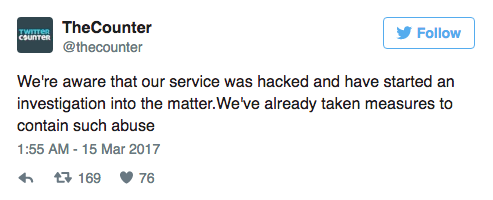
The Counter, which provides analytics on an account&039;s followers, tweeted before its account was suspended that it had begun investigating the hack and had attempted to contain the damage. The app&039;s site also displays a “down for maintenance” message. Twitter did not publicly provide an official reason for suspending the app.

Even if your Twitter account wasn&039;t hacked, this incident is a reminder to check your third-party Twitter extensions, de-authorize ones you don&039;t use, and make sure you&039;ve set up two-factor authentication for your account.

The hack comes at a bad time for Twitter. The marketing research firm Emarketer released a study Tuesday projecting that Twitter&039;s revenue from mobile ads would decline by nearly $1 billion in 2017. If the paper&039;s findings bear out, it will be the first time the company&039;s share of the mobile advertising industry decreases, even at a time when companies are spending more money on mobile ads.

Quelle: <a href="A Bunch Of Hacked Twitter Accounts Tweeted Swastikas And Turkish Propaganda“>BuzzFeed

How To De-Authorize All Of Those Twitter Apps You Forgot About

Hundreds of Twitter accounts were hacked with a swastika through a third party app, which means it&;s probably time to check on your Twitter apps.

Earlier this morning, hackers took over hundreds of Twitter accounts and posted a message in Turkish that included swastikas and a “NaziHolland” hashtag. BBC North America, Reuters Japan, Nike Spain, and Duke University&;s Twitter accounts were some of the targets.

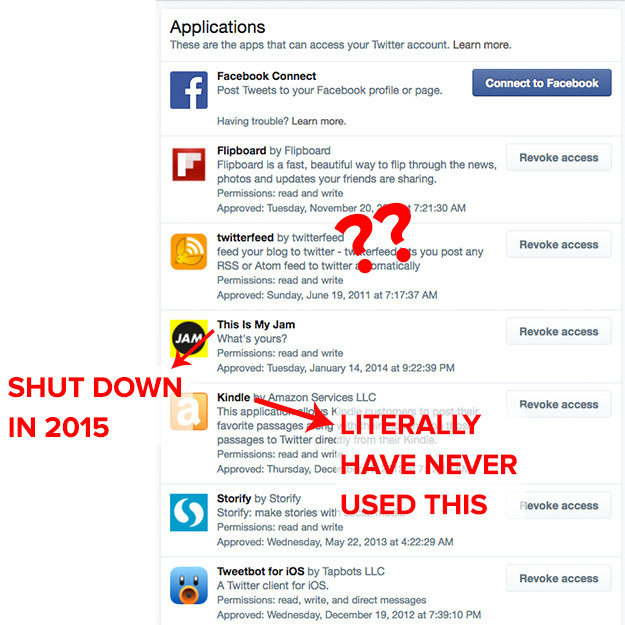
A statement from Twitter revealed that the source of the hack was a third party app. The company claims users don&039;t need to take any action, but now might be a good time to review which apps you&039;ve authenticated with your Twitter login details and revoke apps that you no longer use.

bravotv.com / Via realitytvgifs.tumblr.com

It’s *very* simple. Go to twitter.com/settings/applications and review all of the apps you’ve authorized.

It's *very* simple. Go to twitter.com/settings/applications and review all of the apps you've authorized.

Nicole Nguyen / BuzzFeed News

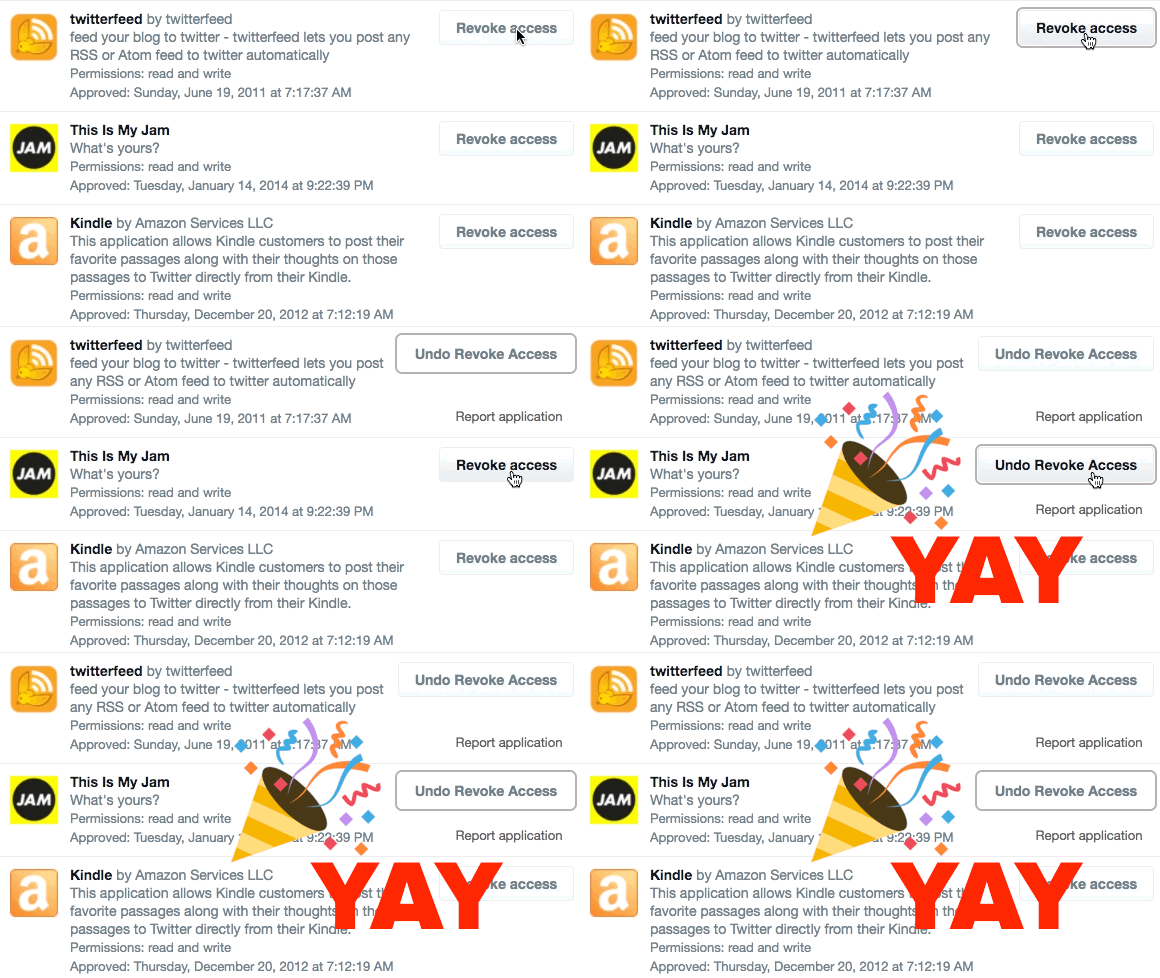
Then, click “Revoke access” (obvs).

Then, click "Revoke access" (obvs).

Nicole Nguyen / BuzzFeed News / Emoji One


View Entire List ›

Quelle: <a href="How To De-Authorize All Of Those Twitter Apps You Forgot About“>BuzzFeed

This Vibrator Maker Was Secretly Tracking Its Customers' Sexual Activity

We-Vibe

Yes, even your vibrator might be spying on you.

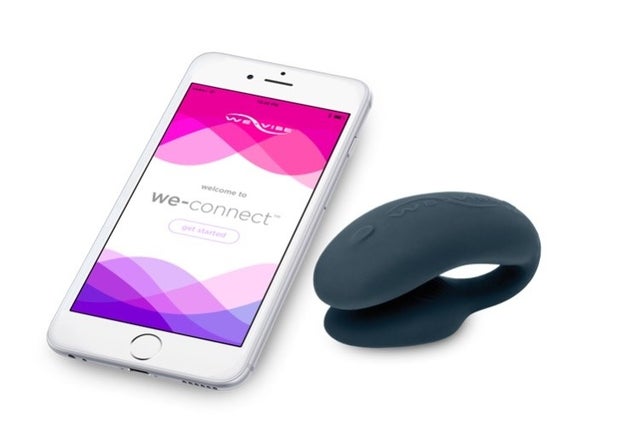
A sex toy company has agreed to pay $3.75 million for secretly collecting customers&; data while they were using its vibrators.

Under the agreement, We-Vibe will set aside about $3 million for people who downloaded and used an app that accompanied the vibrator and about $750,000 to customers who just bought its “smart vibrator” before Sept. 26, 2016. Those who controlled the toy with the We-Connect app will get up to $10,000 each, while those who just it will get up to $199.

However, people will probably receive much less due to fees, administration costs, and the number of claims submitted.

The amount of the actual payment to Class members will depend on the number of claims submitted and the total amount available in the respective settlement funds after applicable notice and administration costs, the incentive award, and attorney fees have been paid..

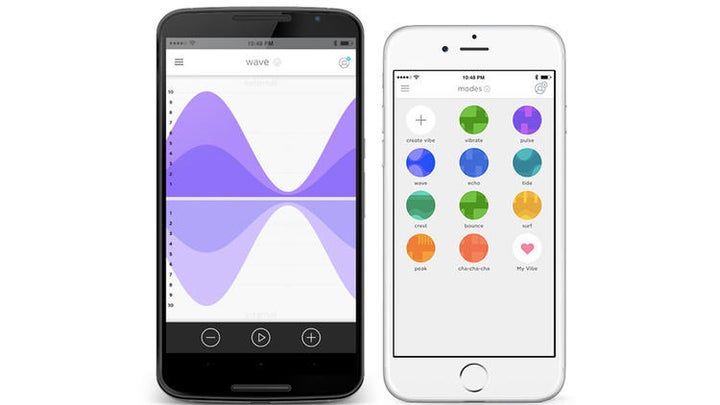
The high-end vibrators are designed for couples, enabling partners to text and video chat on the app, as well as adjust and control the toy through Bluetooth. But what they didn&039;t know was that the Canadian company was tracking how they used their devices, including intimate details like the time and date, the vibration intensity, temperature, and pattern, court documents show.

We-Vibe&039;s app, We-Connect

We-Vibe

The company, which has denied wrongdoing and liability, said it will destroy most of the information it collected.

A woman from Chicago, identified as N.P., sued Standard Innovation Corp., which owns We-Vibe, company back in September. She bought a Rave vibrator for $130 last May and frequently used the app, but said she was never notified We-Vibe was monitoring her. Another woman joined the complaint last month. They both claimed that the “highly offensive” secret data collection caused embarrassment and anxiety.

The women also say We-Vibe violated the Federal Wire Tap Act, privacy law, and made money at their expense.

“(N.P.) would never have purchased a We-Vibe had she known that in order to use its full functionality, (Standard Innovation) would monitor, collect and transmit her usage information through We-Connect,” the claim states.

About 300,000 people purchased We-Vibe devices covered by the settlement, and about 100,000 downloaded and used the app, according to court documents.

We-Vibe said in a statement to BuzzFeed News that it collected “certain analytical information to help us improve our products and the quality” of its app and that users could opt-out of this.

The company has now agreed to clarify and be more transparent about its privacy notices and data collecting practices.

Going forward, customers no longer have to register, create an account, or share their personal information. They can also opt out of sharing anonymous app usage data, the company said, noting that they now have a “new plain language privacy notices” that outlines “how we collect and use data for the app to function and improve We-Vibe products.”

Quelle: <a href="This Vibrator Maker Was Secretly Tracking Its Customers&039; Sexual Activity“>BuzzFeed

Shady Practices Lead To Departures And Firings At Facebook’s Toronto Office

Ernesto Benavides / AFP / Getty Images

Nearly 10 employees at Facebook’s Toronto office have resigned or been fired after engaging in sketchy practices inside the office’s sales organization, BuzzFeed News has learned.

The untoward behavior that led to the departures was a practice where sales employees would take credit for advertiser accounts that they did not set up or support in any way. The revenue associated with these accounts counted toward these sales peoples’ quotas, and they “earned” commission despite not doing any work. More importantly, some within the Toronto office also knew of ads that violated Facebook’s advertising policies, but did not immediately flag them. So Facebook took action.

Facebook declined to comment.

The activity in the Toronto office had no relation to the ad metrics inflation scandal Facebook has been embroiled in since late last year. But it’s sure to raise some eyebrows among advertisers already having trust issues with a platform that overestimated average video viewing times and other metrics used to determine success. One advertising agency CEO, for instance, immediately referenced the the metrics scandal when told of the Toronto turbulence.

Quelle: <a href="Shady Practices Lead To Departures And Firings At Facebook’s Toronto Office“>BuzzFeed