Meet the inspiring folks behind Google Cloud Public Sector

At Google Cloud, being a strategic partner is part of our DNA. Whether it’s listening closely to our customers, helping to build team skills for innovation or simply being there (since we know the cloud is 24/7), we get excited about working hands-on with customers to deliver new solutions. As we look to solve decades-old challenges with new technologies in workforce productivity, cybersecurity, and artificial intelligence/machine learning, we know that we are only as good as the people behind the technology. Today, we’re proud to spotlight a few of the inspiring folks behind Google Cloud Public Sector and celebrate their recognition in the industry. Melissa Adamson, Head of Government Channels at Google Cloud, has been named to the highly respected Women of the Channel list for 2021. This annual list recognizes the unique strengths, leadership and achievements of female leaders in the IT channel. The women honored this year pushed forward with comprehensive business plans, marketing initiatives and innovative ideas to support their partners and customers.Melissa was brought on to build the Public Sector channel from scratch. The initial focus was building the channel for the US government team and has since expanded to include education, Canada and Latin America.Having a career background at both Microsoft and Accenture, Melissa leveraged her extensive professional network to build the organic partnerships needed to accelerate the Public Sector partner ecosystem. This helped her drive two key wins (US Postal Service and PTO) and personally recruit top cloud partners in the industry. Melissa loves card games and is learning a new language.Todd Schoeder, Director of Global Public Sector Digital Strategy, was recently featured in the “Top 20 Cloud Executives to Watch in 2021” by Wash Exec. Recognized for his work in helping customers navigate through the impact of COVID-19 and developing innovative solutions to meet mission challenges, he says: “New partnerships are required to solve for the problems of the future. Challenges that were previously thought of as insurmountable, too risky or expensive, are actually quite the opposite — as long as you have the right partner that is working in your best interest with you.”Josh Marcuse, Head of Strategy & Innovation, received his second Wash100 Award for leading a digital transformation team that works to drive the development of public sector solutions, including cyber defense, smart cities, and public health.Josh has launched services to support collaborative team operations including Workspace for Government and an artificial intelligence-based customer service platform to support remote work needs. His work also includes leading Google Cloud’s partnerships with organizations to improve data sharing in the public health community, contact tracing activities, and supporting research efforts across national laboratories. Like Melissa, Josh was brought on to build a new team dedicated to strategy and innovation. This team’s purpose is to bring an intense focus to public sector mission outcomes and the public servants who own them. Josh spent a decade pushing digital modernization and workforce transformation at the U.S. Department of Defense, and co-founded the Federal Innovation Council at the Partnership for Public Service, and now brings that domain expertise to supporting government workers who are driving digital transformation.Join us in celebrating these folks for their leadership and contributions!
Quelle: Google Cloud Platform
How to do network traffic analysis with VPC Flow Logs on Google Cloud

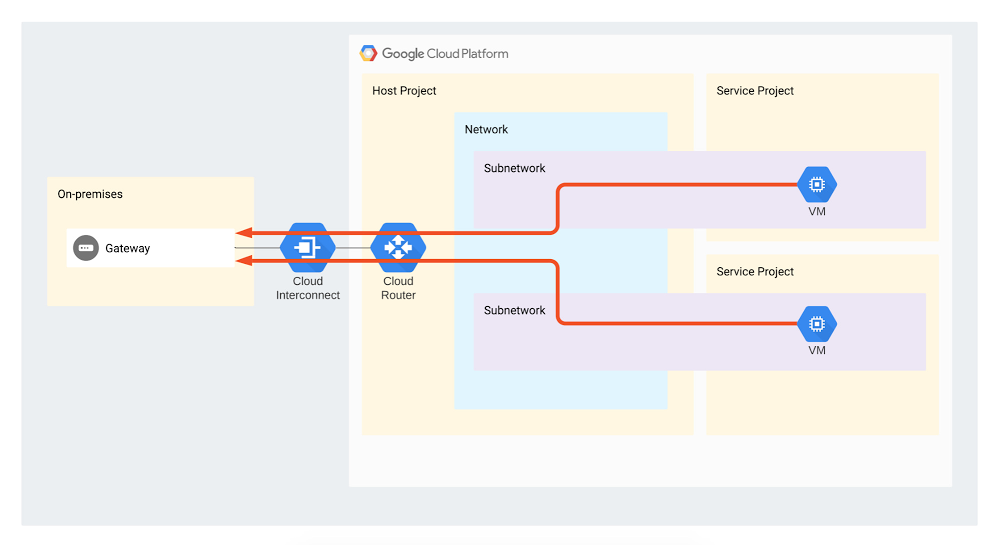
Network traffic analysis is one of the core ways an organization can understand how workloads are performing, optimize network behavior and costs, and conduct troubleshooting—a must when running mission-critical applications in production. VPC Flow Logs is one such enterprise-grade network traffic analysis tool, providing information about TCP and UDP traffic flow to and from VM instances on Google Cloud, including the instances used as Google Kubernetes Engine (GKE) nodes. You can view VPC Flow Logs in Cloud Logging, export them to third-party tools or to BigQuery for further analysis. But as it happens with powerful tools, VPC Flow Logs users sometimes don’t know where to start. To help, we created a set of guides to help you use VPC Flow Logs to answer common questions about your network. This post outlines a set of open-source tools from Google Cloud Professional Services that provide export, analytics and reporting capabilities for multiple use-cases: Estimating the cost of your VPC Flow Logs and optimizing costs Enforcing that flow logs be generated across your organization, to comply with security policiesExporting to BigQuery and performing analytics, e.g., doing cost analysis by identifying top talkers in your environment and understanding Interconnect utilization by different projectsAll of these tools and tutorials are available on GitHub. Let’s take a closer look at each of these use cases.1. Estimate the cost of your VPC Flow Logs and optimize log volume Before you commit to using VPC Flow Logs, it’s a good idea to get a sense of how large your environment might get, so as not to get caught off guard by the cost. You can estimate the size of VPC Flow Logs prior to enabling logging in your environment using the Pricing Calculator to generate a cost estimate based on your projected usage. You can view the estimated logs size generated per day via the subnet editing interface in the Cloud Console. If you want to estimate costs prior to enabling Flow Logs on multiple subnets, projects or an entire workspace, this Cloud Monitoring sample dashboard can estimate the size of your flow logs based on your traffic volume and log usage.  If needed, you can reduce the size of your VPC Flow Logs using a different sampling rate. This has a relatively low impact on the accuracy of your results, especially when looking at traffic statistics such as top talkers. You can also filter logs according to your needs, further reducing log volume. 2. Enforce Flow Logs use across your organization VPC Flow Logs provide auditing capabilities for the network, which is required for security and compliance purposes (many organizations mandate that VPC Flow Logs be enabled across the entire organization). To help, we created a script which uses Cloud Functions to enforce VPC Flow Logs in all the networks under a particular folder. The cloud function listens on a Pub/Sub topic for notifications about changes in subnets.You can find an overview and Terraform code here.3. Perform analyticsIf you want to perform cost analysis on your VPC Flow Logs, we also created a tutorial and Terraform code that show you how to easily export VPC Flow Logs into BigQuery and run analytics on them. Specifically, these scripts answer two different questions:Understand Interconnect utilization by different projects This Terraform code and tutorial describe and provide a mechanism for analyzing VPC Flow Logs to estimate Interconnect attachment usage by different projects. They are intended to be used by the network administrator who administers the landing zone (an environment that’s been provisioned and prepared to host workloads in Google Cloud).VPC Flow Logs capture different flows to and from VMs, but this script focuses only on egress traffic flowing through the Interconnect (as shown by red arrows on the diagram). The reason the script only focuses on egress is because you are only billed for traffic from the VPC towards the Interconnect (unless there is a resource that is processing ingress traffic, such as a load balancer).Click to enlargeIdentify top talkers This Terraform code lets you analyze VPC Flow Logs to identify top talker subnets to configurable IP address ranges such as on-prem, internet, specific addresses and more.Get started todayOf course, these are just a few use cases for this tool, which range from security use-cases to performing cost breakdowns and estimates. If you want to request a specific capability, do feel free to contact us and ask. The same goes for any specific analytics that you’ve created for VPC Flow Logs—we’d be thrilled for you to contribute them to this repository. To learn more, check out the VPC Flow Logs documentation.We’d like to thank the many Google Cloud folks who have made this possible: Alfonso Palacios, Anastasiia Manokhina, Andras Gyomrey, Charles Baer, Ephi Sachs, Gaspar Chilingarov, and Xiang Shen.
Quelle: Google Cloud Platform

Amazon Transcribe Medical bietet jetzt eine automatische Identifizierung geschützter Gesundheitsdaten (Protected Health Information, PHI) für Batch-Verarbeitung

Amazon Transcribe Medical ist ein HIPAA-kompatibler automatischer Spracherkennungsservice (ASR), der es Entwicklern erleichtert, Anwendungen für das Gesundheitswesen und die Biowissenschaften um Sprach-zu-Text-Funktionen zu erweitern. Wir freuen uns, Unterstützung für die automatische Identifizierung von geschützten Gesundheitsdaten (PHI) in Ihrer medizinischen Transkriptionsfunktion für die Batch-Verarbeitung einzuführen. Mit automatischer PHI-Identifizierung können Kunden nun Kosten, Zeit und Aufwand für die Identifizierung von PHI-Inhalten sowohl aus Live-Audiostreams als auch aus statischen Aufnahmen reduzieren. PHI-Entitäten werden mit jedem Ausgabetranskript eindeutig gekennzeichnet, sodass eine zusätzliche nachgelagerte Verarbeitung für eine Vielzahl von Zwecken, wie z. B. die Schwärzung vor der Textanalyse, problemlos möglich ist.
Quelle: aws.amazon.com

AWS Step Functions unterstützt jetzt das Senden von benutzerdefinierten Amazon-Ereignissen an EventBridge

AWS Step Functions unterstützt jetzt eine Service-Integration mit Amazon EventBridge, sodass Sie benutzerdefinierte Ereignisse aus Ihren Step-Functions-Workflows an einen EventBridge-Ereignisbus senden können, ohne benutzerdefinierten Code zu schreiben. Sie können jetzt benutzerdefinierte Ereignisse von Ihren Workflows ausgeben, die es lose gekoppelten Anwendungen ermöglichen, auf Schritte in Ihrer Geschäftslogik zu reagieren, die von Step Functions orchestriert werden. Sie können diese Integration auch nutzen, um Ereignisse an Anwendungen in einer anderen Region oder einem anderen Konto zu senden, indem Sie die konto- und regionenübergreifenden Funktionen von EventBridge nutzen.
Quelle: aws.amazon.com

Amazon RDS Data API unterstützt jetzt validierte FIPS 140-2-Endpunkte

Amazon Relational Database Service (Amazon RDS) Data API bietet jetzt nach Federal Information Processing Standard (FIPS) 140-2 validierte Endpunkte. FIPS 140-2 ist ein US-amerikanischer und kanadischer Regierungsstandard, mit dem die Sicherheitsanforderungen für Verschlüsselungsmodule angegeben werden, die vertrauliche Informationen schützen. Wenn Sie die Verwendung von validierten kryptografischen FIPS 140-2 Modulen benötigen, haben Sie jetzt mit RDS Data API die Möglichkeit dazu.
Quelle: aws.amazon.com





