Nearly 14,000 Uber And Lyft Drivers Sign Union Cards In New York

Lucy Nicholson / Reuters

Nearly 14,000 Uber and Lyft drivers in New York have signed up to join the local branch of the Amalgamated Transit Union, according to a union spokesperson. The group plans to rally at the NYC Taxi and Limousine Commission (TLC) headquarters next week to demand a formal vote on unionizing.

The 14,000 sign-ups exceed the 30 percent threshold that federal regulators say must trigger an official vote, the union says. The cards signed by drivers indicate that they seek ATU membership and authorize the union to act as their collective bargaining agent.

In May, Uber struck a deal with the International Association of Machinists and the independent Freelancers Union to form a new Independent Drivers Guild that would represent their workers. While not an official union, the Guild is open to the 35,000 drivers Uber says it employs in New York.

As a condition of the agreement to form the Guild, the Machinists union promised not to try to formally unionize Uber drivers for five years; both the ATU and the International Brotherhood of Electrical Workers have been actively trying to unionize Uber drivers since last winter.

Uber maintains its drivers are independent contractors, not employees, and therefore do not have the right to unionize, although recent legislation in Seattle affirmed their right to do so.

The ATU&;s Local 1181-1061 branch is the largest chapter of the ATU, representing more than 14,000 transit workers including drivers and mechanics throughout New York City, Westchester, and Long Island. The 190,000-member Amalgamated Transit Union represents city and school bus drivers, subway and ferry operators, mechanics and maintenance workers, among others in the U.S. and Canada.

Drivers will rally at the TLC headquarters in Long Island City on Tuesday, September 27, at 11AM.

Quelle: <a href="Nearly 14,000 Uber And Lyft Drivers Sign Union Cards In New York“>BuzzFeed

Twitter Asks You To Identify Tweets You Don't Like So It Can Hone Its Algorithm

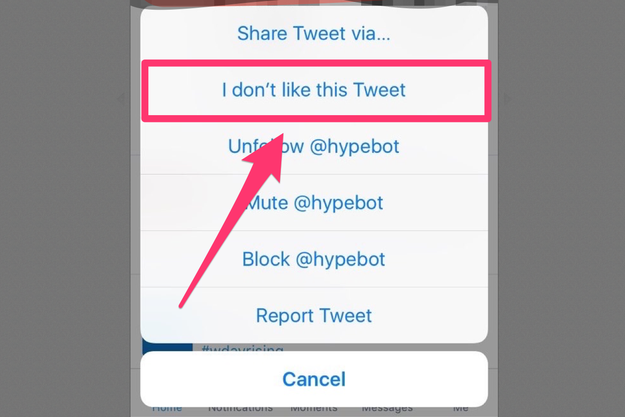
In an apparent attempt to improve the quality of Tweets served up by its timeline, Twitter quietly introduced a new feedback tool that lets users indicate types of tweets they&;d prefer to see less of.

The tool, simply labeled “I don&039;t like this Tweet,” is available in the options menu on individual tweets, and seems geared to help improve Twitter&039;s algorithmic elements. When you click the option, Twitter lets you know that it “will use this to make your timeline better.” Currently, the option is only available for some iOS users.

Reached for comment, a Twitter spokesperson pointed BuzzFeed News to a Twitter Help Center post that says the function “helps Twitter better understand the types of Tweets that you&039;d like to see less of in your Home timeline. We may use this information to optimize and tailor your experience in the future.”

In February, Twitter rolled out what it called an “enhanced timeline,” significantly increasing the prominence of algorithmically selected tweets in its product. Since the rollout, the company said that only 2% of users have opted out from the experience.

Though the new option doesn&039;t indicate plans to expand the program, a more expansive role for the algorithm has been discussed within the company, and given the current program&039;s success, it wouldn&039;t be a surprising if this feedback tool becomes part of something more robust.

Quelle: <a href="Twitter Asks You To Identify Tweets You Don&039;t Like So It Can Hone Its Algorithm“>BuzzFeed

Here's How The Heck iOS 10 Works

Apple&;s latest update for iPhone and iPad can be a little confusing. These tips and tricks will help.

Zoe Burnett / BuzzFeed

The Messages, Photos, and Maps apps got the biggest updates, but there are a lot of new, smaller tweaks throughout iOS 10 that may be causing new users some confusion.

If you&;re wondering what&039;s going on with the home button or where the heck the music controls are now, here are some essential tips and tricks.

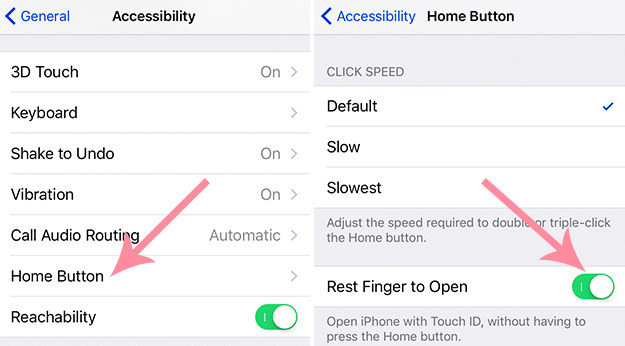
“Slide to unlock” doesn’t exist anymore. You now have to press the home button twice with Touch ID or once to enter in a passcode – but there’s a workaround.

"Slide to unlock" doesn't exist anymore. You now have to press the home button twice with Touch ID or once to enter in a passcode – but there's a workaround.

Go to Settings > General > Accessibility > Home Button > and then slide Rest Finger to Open to enable. This will allow you to open the iPhone with Touch ID, instead of having to press the home button every time.

If you don&039;t have a device with Touch ID (iPhone 5 or older), you&039;ll still need to press the home button to enter your passcode.

Nicole Nguyen / BuzzFeed News

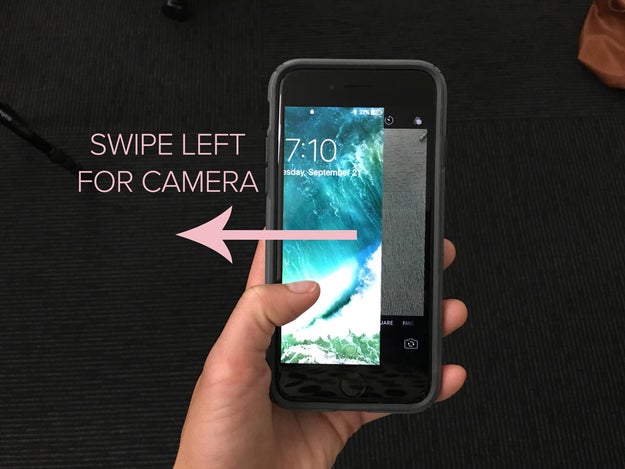
From the lock screen, access the camera by swiping left (instead of up).

From the lock screen, access the camera by swiping left (instead of up).

Nicole Nguyen / BuzzFeed News


View Entire List ›

Quelle: <a href="Here&039;s How The Heck iOS 10 Works“>BuzzFeed

500 Million Yahoo Accounts Have Been Hacked

Denis Balibouse / Reuters

Yahoo has confirmed in a press release that a hacker, possibly working with a foreign government, stole 500 million users&; account information in 2014.

The company said that it is working with law enforcement to catch the hacker. The data breach may have included names, email addresses, telephone numbers, dates of birth, hashed passwords, and security questions and answers. Financial data, according to Yahoo, were not part of the information taken.

Recode reports that a hacker nicknamed “Peace” may be responsible. In early August, a hacker by the same name had listed data from 200 million Yahoo accounts for sale on the Dark Web. At the time, Yahoo said it was aware of the listing, but it did not issue a password reset.

Yahoo is asking users to change their passwords and to be wary of any unsolicited communication. The company has updated its security FAQ page to include response measures, sent a security email to affected users, and issued a slew of other recommendations to users, including changing security questions, reviewing accounts for suspicious activity, and not clicking any links or downloading any materials from unverified emails. The company&039;s investigation into the hack is ongoing.

The hack may affect the $4.8 billion sale of Yahoo&039;s core business to Verizon. Verizon said in a prepared statement, “Within the last two days, we were notified of Yahoo&039;s security incident. We understand that Yahoo is conducting an active investigation of this matter, but we otherwise have limited information and understanding of the impact. We will evaluate as the investigation continues through the lens of overall Verizon interests, including consumers, customers, shareholders and related communities. Until then, we are not in position to further comment.”

Many online responses criticized the pace of Yahoo&039;s response and joked about its relevance in 2016:

The hack may also spread to other websites and accounts. Yahoo account holders should change their passwords for other websites as well, cybersecurity experts advise. Shuman Ghosemajumder, CTO of the Shape Security, said, “The real issue now is that these passwords will be used to breach thousands of other websites unrelated to Yahoo, as cybercriminals use advanced automated tools to discover where users have used those same passwords on other sites.”

Quelle: <a href="500 Million Yahoo Accounts Have Been Hacked“>BuzzFeed

Social Justice YouTubers Are About To Get A Big Boost

Social Justice YouTubers Are About To Get A Big Boost

Today, YouTube announced a global initiative that endorses a select group of YouTube video creators who confront issues ranging from hate speech to xenophobia in their videos posted on the site. The program, called Creators for Change, will profile and promote six “ambassadors” — though there are more to come, the company says — and provide $1 million in grants and equipment to videographers aspiring to make work focused on positive change.

In a press release, the company said it wants the ambassador project to “demonstrate the incredible power YouTube has to generate a positive social impact,” especially “in a time when the internet is criticized for fueling division and distrust.”

The six ambassadors each focuses on different issues, including minority media representation, xenophobia, and religious tolerance. Each creates different types of videos, ranging from lifestyle vlogs to design theory lessons to comedy. They hail from an array of countries, and not all of them are even YouTube famous, with the exception of Australia’s Natalie Tran, also known as CommunityChannel, with 1.8 million subscribers, and Nilam Farooq of Germany, who has 1.1 million. The other ambassadors are Fakir Almobtaghi Abdelouahid of Belgium, known on his channel as Abdel en Vrai, Omar Hussein of Saudi Arabia, Bar&x131;&x15F; Özcan of Turkey, and Humza Arshad of the United Kingdom, known by his channel name HumzaProductions.

YouTube will give its Creators for Change ambassadors production and equipment grants to fulfill a social impact project of their choice. The ambassadors will also work with YouTube to select the recipients of the $1 million in grants and production equipment.

Arshad said in a prepared statement, “I&;m honoured Google and YouTube have asked me to be their global ambassador for their campaign against Islamophobia. Right now so many people are suffering because of faith-based hatred and are too afraid to go on about their daily lives.” He creates short comedic videos about his life as a Muslim man in the UK in the series Diary of a Bad Man.

HumzaProductions&039; Diary of a Bad Man

youtube.com

As part of the Creators for Change initiative, YouTube will create its own videos profiling each of the ambassadors. In his profile, Arshad focuses on the negative perception of Islam and how he uses comedy to work against it. “I thought I should bring that positive energy that Muslims bring to the table to the mainstream,” he said in the video. “I try my best to change the perception that people have of Muslims. We’re just like everyone else…just a bit hairier.”

youtube.com

Tran, who has been creating videos since 2006 about her travels, her life and the representations of Asian people in media, has accrued half a billion channel views. In prepared statement, she said that one of things she appreciated about YouTube “is how willing people are to start or engage in real conversations.”

Here she is her talking about Asian representation in media and how it’s affected her life:

Here she is her talking about Asian representation in media and how it's affected her life:

justinjonestv.tumblr.com / Via justinjonestv.com

justinjonestv.tumblr.com / Via justinjonestv.com

justinjonestv.tumblr.com / Via justinjonestv.com

YouTube has struggled with a reputation for having some of the worst comment sections on the internet, though it has in recent years attempted to clean them up. When asked how it plans to moderate comments on Creator videos, a YouTube spokesperson told BuzzFeed News, “We are deeply troubled by reports of harassment on YouTube, and we work hard to address this issue through strict policies that prohibit misconduct.”

YouTube also plans to support more localized versions of Creators for Change in conjunction with NGOs and schools that will resemble its recent program in France that explored fraternité, French for “brotherhood,” in 140 videos featuring 700 participants. The company told BuzzFeed News it may name American ambassadors soon. The announcement of Creators for Change comes alongside a $2 million commitment from Google.org to nonprofits promoting inclusion and cross-cultural understanding.

Quelle: <a href="Social Justice YouTubers Are About To Get A Big Boost“>BuzzFeed

The Internet's Domain Naming System Is Now A 2016 Campaign Issue, Somehow

Mike Stone / Reuters

Donald Trump and Sen. Ted Cruz see eye to eye on at least one issue: blocking the long-planned transfer of the internet&;s technical management to an international body.

“Donald Trump is committed to preserving Internet freedom for the American people and citizens all over the world,” Stephen Miller, the national policy director for the Trump campaign, said in a statement released Wednesday. “The U.S. should not turn control of the Internet over to the United Nations and the international community.”

Since 1998, an international nonprofit called the Internet Corporation for Assigned Names and Numbers (ICANN) has been responsible for overseeing the web&039;s global domain naming system — which allows us to connect to unique Web addresses from anywhere in the world.

Oversight of the naming system officially resides with the US Department of Commerce. But for almost two decades the agency has contracted out the responsibility to ICANN. To remove the US government as a middleman, and to advance a vision of the internet as a truly global, open network, ICANN is scheduled to take on the management responsibilities of the naming system on Oct. 1.

Cruz, however, has been mounting a campaign to block the transfer and has been gathering support on the Hill from key Republicans. They fear that ceding authority to an international, multi-stakeholder organization will empower authoritarian governments to censor what people see online. Trump&039;s endorsement of the position elevates the ICANN transfer to the 2016 campaign stage.

“Internet freedom is now at risk with the President’s intent to cede control to international interests, including countries like China and Russia, which have a long track record of trying to impose online censorship,” Miller said.

Awkwardly, Cruz has thus far not endorsed Trump for president though his spokeswoman said the senator is “glad to have” Trump&039;s support on this particular issue.

In a recent congressional hearing on the ICANN transition, ICANN&039;s president and a top official in the Commerce Department insisted that fears of a Russian-Chinese takeover of the internet are unfounded. While authoritarian governments do deploy a variety of methods to filter, block, and surveil internet traffic, the domain name system that ICANN manages operates at a different level than those forms of censorship.

Experts say that blocking the transfer would actually embolden Russia and other foreign powers who would rather see internet stewardship reside with state governments, as opposed to the global, non-governmental make-up of ICANN.

But Cruz, and now Trump, remain unconvinced. Along with dozens of congressional Republicans, Cruz is working to delay the transfer of ICANN&039;s oversight. The disagreement over ICANN has also become entangled with protracted budget negotiations that must be resolved by Sept. 30, in order for the government to remain open.

“Congress needs to act, or Internet freedom will be lost for good, since there will be no way to make it great again,” Miller said. ICANN declined to comment for this story. The Clinton campaign did not immediately respond to a request for comment.

Quelle: <a href="The Internet&039;s Domain Naming System Is Now A 2016 Campaign Issue, Somehow“>BuzzFeed

Mark Zuckerberg And Priscilla Chan To Give $3 Billion To Science

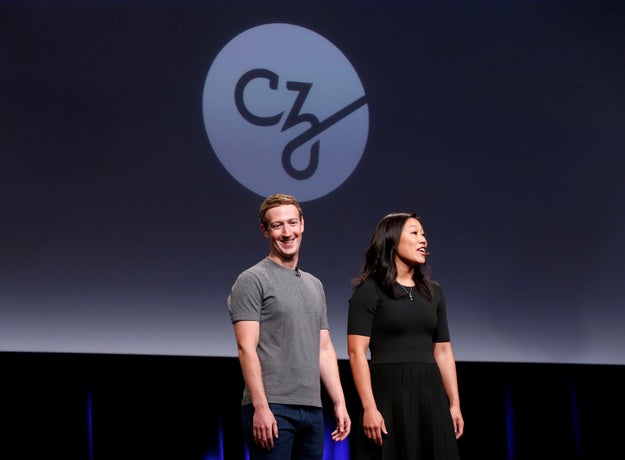
Pricilla Chan and her husband Mark Zuckerberg announce the Chan Zuckerberg Initiative at a news conference in San Francisco, California on September 21, 2016.

Beck Diefenbach / Reuters

When Mark Zuckerberg and Priscilla Chan welcomed their daughter, Max, into the world in December 2015, it was a birth announcement with a bang: They unveiled the Chan Zuckerberg Initiative, a limited liability company intended to “advance human potential and promote equality.” They funded it with 99 percent of their Facebook shares, then valued at about $45 billion.

On Wednesday, the pair announced the Initiative&;s biggest investment to date: at least $3 billion over the next decade to an all-star team of doctors and academics who will search for breakthroughs and develop tools to tackle the most common diseases — heart disease, cancer, infectious disease, and neurological disease. The goal? “Cure, prevent, or manage all diseases by the end of the century.” (No big deal.)

“That doesn&039;t mean that no one will ever get sick,” Chan said during an event at UC San Francisco, the university where she trained to become the pediatrician she is today after meeting Zuckerberg at Harvard University. “But it does mean our children and their children could get sick a lot less. And when they do, we should be able to detect and treat it or at least manage it as an ongoing physician.”

At times tearing up, Chan cited her difficult experiences as a doctor — “from making a devastating diagnosis of leukemia, to sharing with a family they were unable to resuscitate their child” — in showing her that “we are at the limit of what we understand about the human body and disease.” “We want to push back that boundary,” she said.

Curing, preventing, or managing “all diseases” in the foreseeable future is a lofty goal, to put it mildly, and the announcement was met with more than a little skepticism.

But the couple have assembled an impressive team to at least attempt this feat. Chan Zuckerberg Science is led by Cori Bergmann of Rockefeller University, whose work has investigated how neurons and genes affect behavior. And the first effort is a $600 million, 10-year “biohub” at UC San Francisco that will bring together researchers from that university, as well as nearby UC Berkeley and Stanford University. Leading it are two prominent Bay Area scientists: Stanford bioengineer and physicist Stephen Quake and UC San Francisco&039;s Joe DeRisi, who studies the underlying genetics of infectious diseases. Their initial focus, they said, will be on constructing a “cell atlas” — a characterization of all the cell types in the human body — and developing new ways to detect, respond to, treat, and prevent infectious disease.

Programmers will work alongside scientists on these kinds of problems, an interdisciplinary approach that fits Zuckerberg and Chan&039;s respective backgrounds. Zuckerberg described his own optimism for the future as rooted in an “engineering mindset.” “It&039;s this belief you can take any system, no matter how complex,” he said, “and make it much, much better than it is today, whether it&039;s code, hardware, biology, a company, an education system, a government — anything.”

This initiative isn&039;t the couple&039;s first contribution to health and medicine. Not far from the site of Wednesday&039;s event is San Francisco&039;s public hospital, which was recently renamed the Zuckerberg San Francisco General Hospital and Trauma Center after Chan and Zuckerberg donated $75 million toward its equipment and technology last year. Last year, Facebook said its engineers had developed personalized-learning software for a public school system. And Chan is opening a free school in East Palo Alto with a dual focus on health and education.

The couple&039;s philanthropy efforts have been controversial in the past; in 2010, they donated $100 million to Newark, N.J. public schools, an effort that critics described as poorly managed. Zuckerberg defended it.

On Wednesday, Zuckerberg and Chan stressed that they had done their homework over the last two years, “talking to scientists ranging from Nobel Prize laureates to graduate students,” as Chan put it. “We&039;ve learned a lot and we know we have a lot more to learn.”

At the end of the event, they got an endorsement from someone who&039;s been in their shoes: Bill Gates, whose foundation with his wife Melinda Gates has also backed projects tackling everything from public health to education. “This idea of curing and preventing all diseases by the end of the century,” Gates said, “that&039;s very bold, very ambitious, and I can&039;t think of a better partnership to take it on.”

Quelle: <a href="Mark Zuckerberg And Priscilla Chan To Give Billion To Science“>BuzzFeed

This Company Wants You to Stop Making Terrible Charts in Excel

Melanie Perkins, CEO of Canva, a company that makes online graphic design tools, wants her to software to “power the modern workforce.” But what she really wants is for people to stop making ugly graphics.

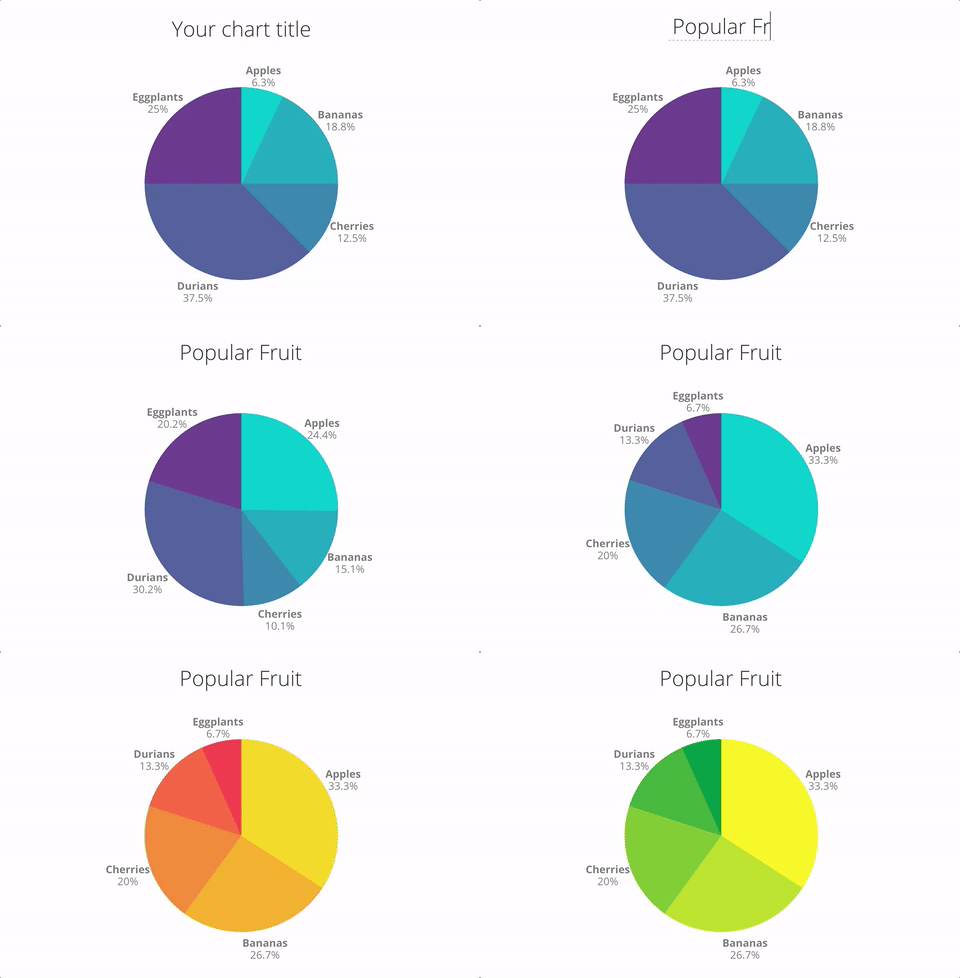
That’s why the company is debuting Canva for Charts, a simple tool to turn columns of data into pie charts and bar graphs with tasteful color schemes and fonts.

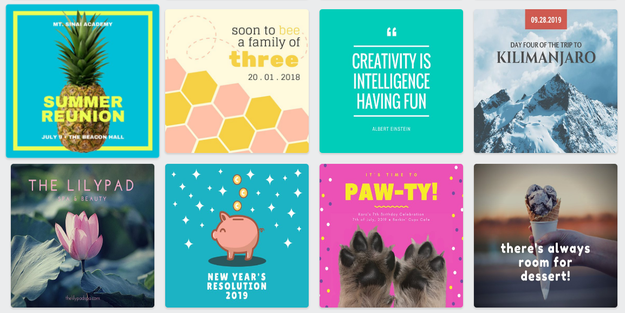
Canva, launched in 2013 in Perth, Australia, allows you to easily create and collaborate on visual content—like invitations, graphics, posters—and save them in the cloud. Most of the images you can make with Canva resemble greeting cards and are meant to be shared on social media. But with the introduction of Charts, Perkins is hoping that eventually, you’ll start using Canva in your office.

Regular Canva:

Regular Canva:

Examples of Canva&;s social graphics templates.

Canva / Via canva.com

Canva for Charts:

Canva for Charts:

A pie chart made with Canva for Charts.

Canva

Why the shift from cute social images to hard data? “Every profession is becoming more visual. There’s a huge demand for visual content in every industry,” Perkins told BuzzFeed News. She said things like sales pitches and investment decks — traditionally drab parts of doing business — are places where companies are looking for much more visual oomph in 2016.

Canva has big goals. Perkins hopes Canva for Charts will someday replace legacy software like Microsoft Office or Adobe Creative Cloud. It’s not total war, though: Canva users will still be able to download their charts in PDF format or as images to insert them into other applications.

Either way, it will be an uphill battle. Canva has 12 million users, Perkins said. The Microsoft Office suite boasts 1.2 billion users worldwide, according to Microsoft. And Adobe Creative Cloud cites a community of 6.6 million people on its Behance social network as of March 2016, though the company has not disclosed the total number of Creative Cloud subscribers. Convincing more than a billion individual users — and the historically slow-moving corporations where they work — to switch to a new design software will not be easy.

Canva’s ambition to take down legacy software recalls another attempt to make more user-friendly professional software: Prezi, which went after PowerPoint several years ago. As of February 2016, it has registered 60 million users, which is still a drop in the bucket compared to Office’s one billion plus. Perkins, though, told BuzzFeed News that Canva will make more of an impact because of its “high quality ingredients, previously only accessible to designers and a niche market, that we combine and make available to everyone. Now lots of people can use them.”

“Most design tools are too complicated,” Perkins added. “They’re hard to use and look bad.” Canva, she says, is so simple to use, it doesn’t require any design training.

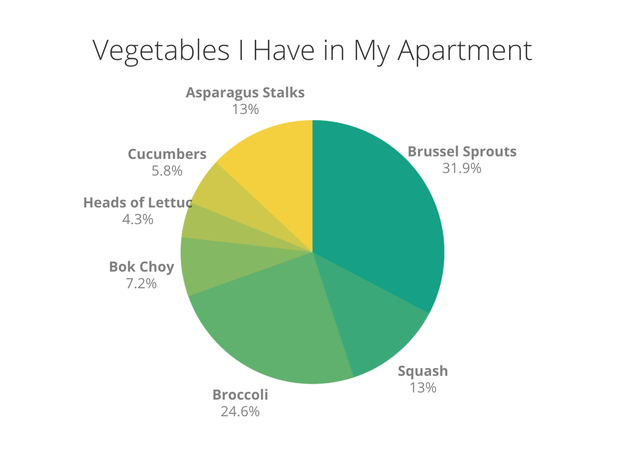
I mocked up this chart in Canva, visualizing the vegetables in my apartment. It isn’t that much fancier than one I’d make in Microsoft Word, Excel, or Adobe, but it was easier to do — it only took me about five minutes, including taking inventory of my fridge.

Blake Montgomery

On a larger scale, Perkins hopes that being able to save and share work in the cloud will eliminate the frustrating, chaotic workflow of sending multiple versions of visual content back and forth to a designer to make every single change. However, Microsoft Office 365 also allows users to save their creations in the Cloud and collaborate on them, as does Adobe Creative Cloud.

Canva for Charts is free, like the other tools Canva offers, though Perkins said she can imagine a premium version in the future. Currently, about 50,000 teams pay for Canva for Work, the site’s professional subscription version, which retails for $120 per user per year or $12.95 per user per month. Canva also makes money when users buy stock images for $1 from its library.

Quelle: <a href="This Company Wants You to Stop Making Terrible Charts in Excel“>BuzzFeed

Meet Google Allo: The New Messaging App That Talks For You

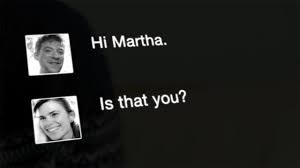
There’s an episode of Black Mirror, a British television show that imagines life in the near future, that tells the story of a woman who reunites with her deceased lover, reincarnated thanks to the wonders of artificial intelligence. While alive, Ash, the boyfriend, spends his time religiously jotting down observations and recording images of things he sees in an app. And when he dies, a tech company uses this information to create a chatbot that mimics the way he talks and what he’s interested in (it gets darker from there). It&;s a future that seems a bit far off in the show, but then again, the episode came out a few years before Google’s new messaging platform, Allo.
Channel 4

Allo is a new AI-powered messaging app that debuts today on iOS and Android. It’s a fun, conversational interface, to be sure. But not only does it host your conversations, it also learns how you talk, and composes messages for you, in your style.

Using Allo, which I first got my hands on last week, you can feel the mind-blowing aspects of AI in a way you simply can’t in other daily-use consumer products. And while Allo will likely struggle to break through in a saturated messaging app market, it would be foolish to write off its capacity to bring AI deeper into our lives. Remember, it&039;s powered by the heft of Google’s 18 year history of learning what we want via our searches, and its seven distinct billion-plus user products. Allo doesn’t quite take you into Black Mirror territory, but, for likely the first time in your life, it travels close enough for you to see it.

Consider the following conversation between Nick Fox, Google’s VP of communications products, and myself:

Me: “Hey&; How are you?”

Nick: “Pretty good. How are you?”

Me: “I’m doing well”

Nick: “That’s good to hear&033;”

It may appear banal, but there’s something amazing about this conversation: None of it was written by either of us.

For each of those messages, Nick and I picked text suggested by Allo via a feature called Smart Replies. Smart Reply suggestions are shown underneath the compose field in Allo and updated based on the context of the conversation. Tapping a Smart Reply sends it along as a message. When Fox sent me a picture of his kid, Allo looked at the picture and suggested I write back “beautiful smile” along a smile emoji.

What’s even more remarkable is how Allo adjusts after some use. If you usually say “Yo&033; Sup?” as a greeting, Allo will learn that and suggest the phrase instead of something more generic like “Hey&033; How are you?” It will also learn how you converse with different people, so it will suggest different messages to send to your boss and your wife and your pal. (Unless they’re the same person.) Smart Replies are available in Google’s Inbox product already (where people opt to use the AI-generated replies about 10% of the time, according to Google), but the live, fluid world of messaging is very different than the stilted world of email. In Allo’s case, the machines can talk to us — or each other, or some hybrid — in near real time.
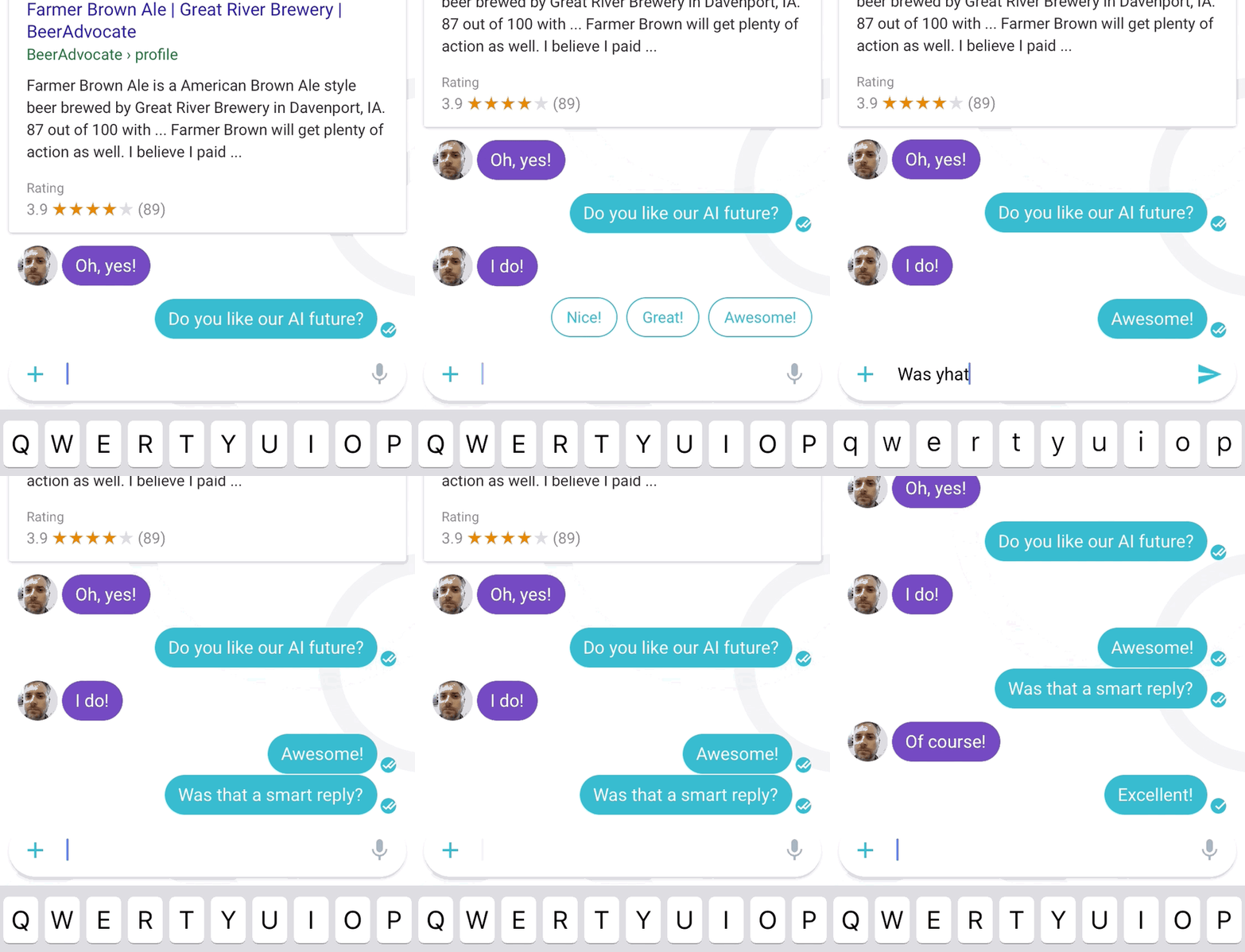
When Fox and I spoke without the assistance of AI, he told me that Allo’s Smart Replies work better for pleasantries and basic responses, and it probably won’t suggest things with deep detail, such as intentions to fly to another city later that day. “We&039;re not trying to replace human expression with smart replies,” he said. “We think of Smart Reply like a spell check, it&039;s assisting you with your expression, it&039;s helping you with your expression rather than a replacement.”

Smart Replies, of course, are not simple spell check. They are far more advanced. But Fox’s implication was clear: temper your expectations, and don’t fear this thing taking over human expression. Fair enough, but I still found myself tapping Smart Replies at almost every opportunity.

The Google Assistant

While I was messaging with a Google team member on Allo, I wanted to share a bit more information about “Be Right Back,” the Black Mirror episode starring the chatbot boyfriend. My usual process for doing this would be to go to Google, search for “black mirror be right back” click a link, copy it, and paste it into the messaging app. But inside Allo I simply wrote “@google black mirror be right back” and Google replied with a card filled more information about the episode. This was the work of the Google Assistant, the other big AI-powered feature in Allo.
Assistant is akin to a souped up Chatbot included in Allo, and you can bring it into any conversation you’re having within the app. In my discussion with Fox, he suggested I ask it to find nearby sushi places, and after I asked, it instantly replied with ten options. Fox responded with the name of one place, and Assistant sent a card showing its rating, cost, hours, and a short description. Within the card, I could hit shortcuts to call the restaurant, get directions or look at the menu.

You can also talk directly to Google Assistant in a private chat. It can tell you the weather, find places to eat, search the internet, call up messages from your Gmail, play games and more. It’s the most useful chatbot I’ve used other than Facebook’s M. (Of course, that’s a weak field; most chatbots make me want to throw my phone out the window.)

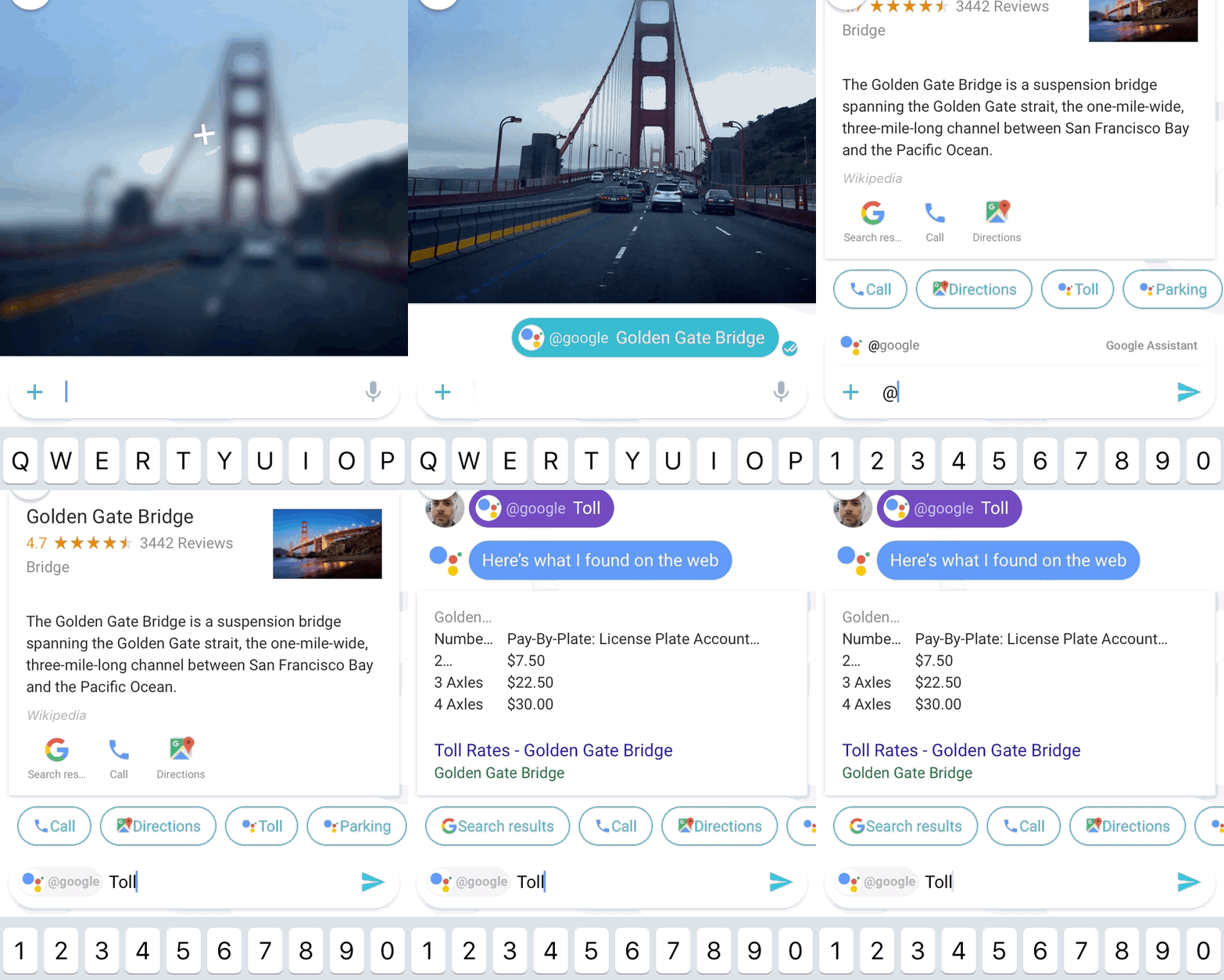
But it is perhaps most useful when it just pops into chats to help out. When I sent a colleague a photo of the Golden Gate Bridge, it suggested he respond with the a Google query for Golden Gate Bridge, which fired a “quick intro” culled from Wikipedia. Tapping a follow-up prompt gave us toll information, and then another tap sent us to Google Maps for directions. This all happened within a few seconds, and none of it felt like “searching.”

With Assistant, Google is creating a version of search adjusted for the fact that we spend most of our time in apps when we use our phones, and not in web browsers, which Google Search is built for. To remain competitive in this new world, Google knows search must live in various other forms, and releasing Assistant in Allo is just the start. Google will also embed Assistant in its Amazon Echo-like, voice operated product Google Home, and elsewhere. Fox described the product as “a cohesive glue across a number of Google services.”

So yes, Allo is another messaging app entering a market where there are already more than enough. But to think of it as simply a messaging service misses the point. Allo’s introduction gives humans a place to interact with AI more intimately than ever before. A few days into using Allo, I’m on board with that. And frankly, if a company wants to take my conversations turn me into chatbot after I die, I’m down with that too. Google, you have my permission.

Quelle: <a href="Meet Google Allo: The New Messaging App That Talks For You“>BuzzFeed
How To Beat Uber’s Surge-Pricing Algorithm (And Lyft’s Too)

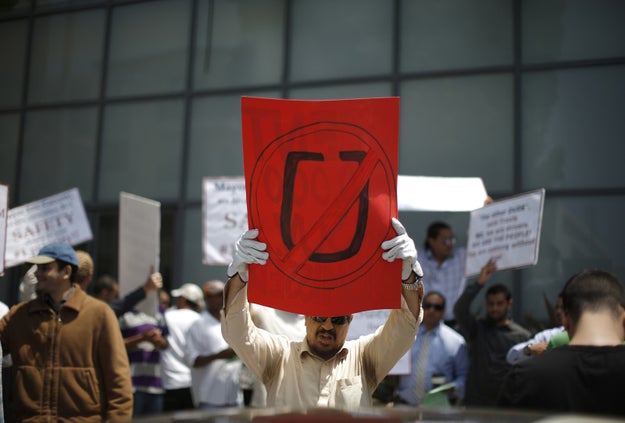
Uber surge pricing, Lyft Prime Time: Call it what you will, but it&;s never fun to fire up a ride-hailing app when you&039;re in a hurry only to discover that everyone else is in a hurry too — and your ride is going to cost more because of it.

Surge pricing is almost always a nasty surprise. And it&039;s widely loathed by ride-hail passengers — so much so that in January, Uber said it was moving away from surge multiplier notifications (like “3.0x the normal fare”) and instead showing prospective passengers the estimated total cost of their ride before its request. That makes it easier to avoid situations like this:

instagram.com

But surge pricing can still be frustrating, even if you know the cost of your ride in advance. Below, we&039;ve gathered a few handy tips and tactics for avoiding it, from the quick and dirty to some that require a bit more planning and effort.

Check the ride-hailing tab in Google Maps.

Priya Anand / BuzzFeed News

Google integrated Uber into its Maps service back in 2014. Earlier this month, it added Lyft and a handful of other ride-hail companies. Today, you can use Google Maps to compare estimated fare ranges and trip times for nine ride-hail companies across more than 60 countries — no need to fire up each app individually.

Schedule Lyft rides in advance.

Priya Anand / BuzzFeed News

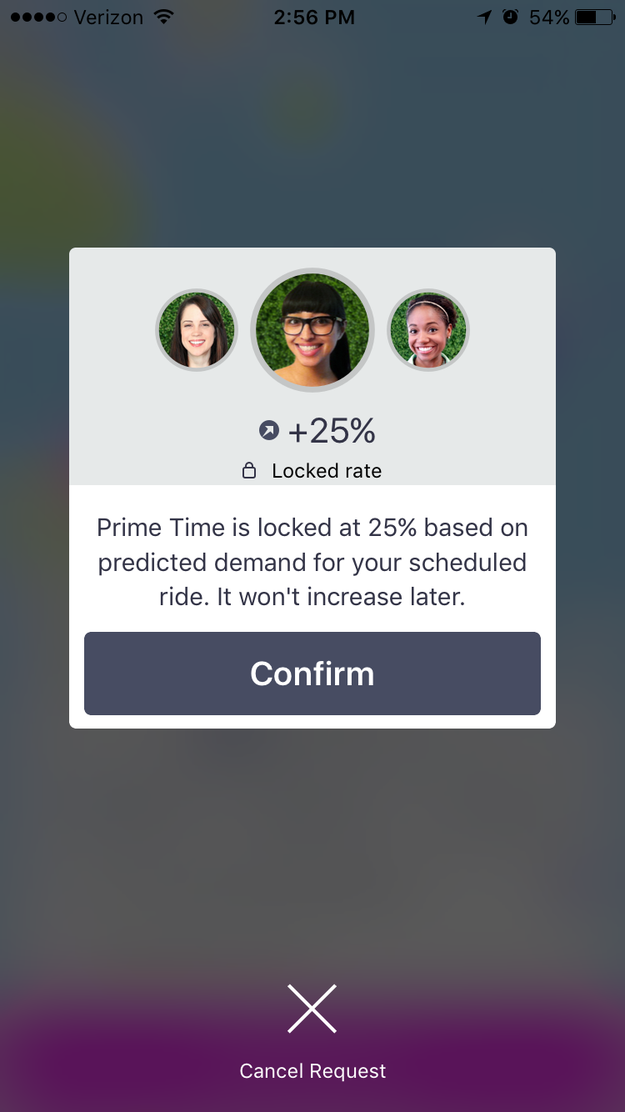
Uber and Lyft recently began rolling out a feature that allows passengers to schedule their trips in advance. Uber says these rides are subject to the pricing conditions at the time — including surge multipliers. But Lyft locks in your price if you schedule a ride in advance. The company&039;s estimate does account for whether or not your ride will occur during “Prime Time,” for example, if you schedule a pickup during rush hour. But beyond that, the rate is set and you aren&039;t susceptible to additional price hikes if demand increases further. You must schedule the ride at least 30 minutes or up to 7 days ahead of the pick-up time.

Wait it out — or walk a few blocks — and try again.

In a 2015 study, researchers at Northeastern University found that passengers with some free time on their hands have a reasonable chance of escaping Uber&039;s surge pricing simply by waiting it out — or by moving beyond the surge zone. They ran 43 versions of the Uber app pretending to be people in various parts of each city, and found that cities are divided into surge areas that look like this:

Courtesy of Christo Wilson

They also found that surge prices change frequently. “Theres a 60% chance the price is not going to stay high for more than five minutes,” Christo Wilson, who led the Northeastern team, told BuzzFeed News. “If you happen to be standing at a location that&039;s right between the border … you can actually get different prices just by walking across it.”

But that advice comes with a caveat: You could end up walking deeper into a surge zone. “The easiest thing is just to wait,” Wilson said. “If it&039;s not rush hour — or last call, when all the bars close simultaneously — the rest of the time if you see a surge, it&039;s ephemeral. It will go away.”

Try apps like SurgeProtector.

SurgeProtector, which launched in 2014, claims to take the guesswork out of gaming Uber&039;s surge. It uses Uber&039;s API to find locations close to you with lower surge pricing. Simply drop a pin and move it around to locate a surge-free locale. Reviews are mixed; SurgeProtector has three stars in the iTunes Store.

Download the driver apps.

If you&039;re really dedicated to saving your hard-earned cash, apply to drive for Uber and Lyft and then download their driver apps. Both use heat-map visualizations to show areas of heightened demand where fares will temporarily rise. In order to access these driver apps, you&039;ll have to share a bit more of your personal information with each company. But hey, you&039;re already giving them your credit card number, contact information, and location anyway.

Quelle: <a href="How To Beat Uber’s Surge-Pricing Algorithm (And Lyft’s Too)“>BuzzFeed