The Not-So-Wholesome Reality Behind The Making Of Your Meal Kit

August 26, 2015, was, by all accounts, a stressful day at Blue Apron’s facility in Richmond, California.

As the sun rose over what would be an unusually warm Wednesday, a 21-year-old employee made a phone call to a supervisor at the $2 billion food startup&;s Bay Area fulfillment center, where tens of thousands of meal kits are packed into cardboard containers and shipped across the continental United States. The supervisor didn&039;t pick up the phone that morning, so he left a message.

In it, he said he planned to quit his job at Blue Apron later that day. He also said he planned to bring a gun to the warehouse and shoot his manager, as well as other people at the facility. In two messages, he named three people specifically who he wanted to put bullets into when he got there. Around 8:30, en route to work, the supervisor called the police.

Police apprehended the man, who did not have a gun, later that morning. But at Blue Apron, the day was just getting started.

While company security and a Richmond police officer on patrol monitored threats outside the warehouse, inside, Blue Apron management was meeting with representatives from California&039;s Division of Occupational Safety and Health at the conclusion of a two-week inspection by the agency that would result in nine violations and proposed penalties totaling $11,695 for unsafe conditions that put workers at risk for fractured bones, chemical burns, and more. This penalty came on top of $13,050 following a forklift accident earlier in the year, giving Blue Apron the most OSHA violations in the fast-growing, $5 billion meal-kit startup industry, and among the most in perishable prepared-food manufacturing in California. (Like many companies, Blue Apron appealed these findings, and had some of its violation classifications downgraded to “general” or “other.” One of its cases is still open.)

Just after 4 p.m. on the same day, the police were back at Blue Apron for the third time, following a noontime patrol. They were prompted by yet another call from a security guard, concerned that “a weapon might be brought.”

This time the problem was a 26-year-old man who, after being fired earlier in the day for groping a female co-worker, had then threatened the person who let him go. He was later arrested for sexual assault, as well as for violating his parole on an earlier robbery charge.

“I definitely remember that day,” said David Reifschneider, who was general manager of the facility at the time. “It&039;s not what happens on a typical day in a typical warehouse.”

He&039;s right. This wasn’t a typical day, nor was it a typical old-fashioned warehouse, but the thrumming hub of a fast-growing, well-funded, hugely ambitious food startup. Founded in New York City in 2012, Blue Apron now operates fulfillment centers in Richmond, where the vast majority of the workers interviewed for this article worked, as well as Jersey City and Arlington, Texas. Between them and the company’s corporate headquarters in New York City, Blue Apron employs more than 4,000 people and delivers around 8 million meals every month all over the continental United States. It has raised $193.8 million in venture capital, and in 2015 it was valued at $2 billion; if the Silicon Valley rumor mill can be believed, the company could go public in the next year, with an additional billion dollars tacked on to that valuation. The Richmond facility alone grew from fewer than 50 employees in 2014 to over 1,000 today, making Blue Apron one of the largest employers in the city.

But scaling a manufacturing facility in a historically crime-dogged city like Richmond as fast as if it were a downtown San Francisco software firm hasn’t been easy for Blue Apron. The company has set out to upend the entrenched industrial food system and disrupt the dinner table by changing the way Americans buy, receive, and prepare food, reducing food waste and increasing distribution and delivery efficiencies in the process. To do that, it had to rapidly hire a massive unskilled workforce, bringing jobs to a part of the Bay Area that has been largely left behind by Silicon Valley’s boom times. Yet documents and interviews suggest that it was unprepared to properly manage and care for those workers, and as a result has suffered a rash of health and safety violations.

In the 38 months since Blue Apron&039;s facility opened, the Richmond Police Department has received calls from there twice because of weapons, three times for bomb threats, and seven times because of assault. Police captains have met twice with Blue Apron to discuss the frequency of calls to the police. At least four arrests have been made due to violence on the premises, or threats of it. Employees have reported being punched in the face, choked, groped, pushed, pulled, and even bitten by each other on the job, according to police reports. Employees recalled bomb scares, brandished kitchen knives, and talk of guns.

All told, interviews with 14 former employees describe a chaotic, stressful environment where employees work long days for wages starting at $12 an hour bagging cilantro or assembling boxes in a warehouse kept at a temperature below 40 degrees.

“You put honey in a small container. We would put small peppers in little small bags,” said Glenn Lovely, who worked as a temp in the Richmond facility for three months. “And it was cold — cold as hell.”

Scaling a manufacturing facility in a historically crime-dogged city like Richmond as fast as if it were a downtown San Francisco software firm hasn’t been easy for Blue Apron.

To combat the cold temperatures required by food safety laws, Blue Apron provides each employee with a jacket, thermals, a hat, and a neck warmer. Some people said this was sufficient, but others struggled to adjust. “Your fingers would start to get numb and start to hurt from using them,” said former warehouse lead Andrew Driskell.

One person said Blue Apron was the worst job she&039;d ever had. Others said it wasn’t so bad. But every one of them — even those who mostly liked the job — recalled violence or threats of violence, visits from the police, injuries, high turnover, unfair treatment, or a combination of the above.

“I enjoy jobs where things are on fire more than ones where I’m sitting around,” said one former team lead of his experience at Blue Apron. “But there were times when it was just horrible.”

Blue Apron declined to make an executive available for an interview. In a statement to BuzzFeed News, the company stressed its commitment to “creating the best possible workplace experience for all of our employees. We are proud of our corporate culture and the good work that our employees do every day, bringing families across the country together over delicious, home-cooked meals.”

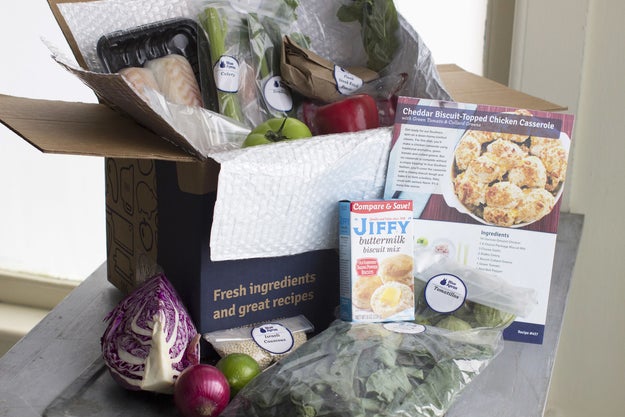
The idea, on its surface, is simple. Once a week, customers receive a box in the mail with recipe cards and all the pre-portioned, farm-fresh ingredients — down to tablespoonfuls of vinegar and sprigs of oregano — needed to make two, three, or four wholesome, healthy, Instagram-ready, home-cooked meals. The cost per plate is just under $10, and each meal takes an average of 35 minutes to prepare (or so the recipe cards claim). As the sales pitch goes, it’s healthier than takeout, easier than cooking from scratch, and cheaper than a private chef or meal delivery service. Blue Apron’s product is, essentially, hired help in the kitchen at a fraction of the cost — a way for busy professionals and rural foodies to whip up meals like skokichi squash ragù and mafalda pasta with mushrooms, garlic chives, and rosemary or crispy catfish with kale-farro salad and warm grape relish in less than an hour, without setting foot in a grocery store or planning a meal. Its popularity has made the company a rising star among a new class of Silicon Valley disruptors whose product is not software, but real-world products, delivered to your door frictionlessly, quickly, efficiently, and sometimes inexpensively, with just a few clicks of a mouse or taps of an app.
Matthew Mead / AP

“I think that there is a great opportunity today to create, through technology, a leaner food system that cuts out the various steps between the consumer and supplier,” company co-founder Matt Wadiak said in an August Q&A with the nonprofit Food Tank. Words like “sustainable” and “responsible” pepper the company’s website, which features high-resolution photos of happy cheesemakers and sun-baked farms.

But between farm and front door is the massive, mostly invisible process by which all those ingredients are measured, cut, prepped, bagged, packed, palletized, and shipped. For all its outward simplicity, Blue Apron’s business model is predicated on a hugely complicated feat of precision logistics, executed at an enormous volume. Each week, the company has to develop 10 original, relatively healthy, widely appealing, geographically and seasonally appropriate recipes that can be prepared easily and quickly, with ingredients that are affordable and available at scale. It has to source correct quantities of produce, meat, cheese, bread, spices, and staples from “artisanal purveyors and hundreds of family-run farms” across the country. And then it has to precisely portion and package each of those ingredients — 10 to 12 per meal in this week’s boxes — and send them out to hundreds of thousands of people, ideally without breakage, spoiling, lost packages, or missing ingredients. While the USDA estimates that 10% of food produced in the US is wasted at the retail level, Blue Apron aims to waste just 3% of the food it purchases. If it’s successful, Blue Apron will have done something no one else has, and save a boatload of money in the process.

Blue Apron’s Richmond facility opened in August 2013. In June 2014, the company posted that it was hiring 400 people there; the next 18 months would see a period of rapid growth. David Reifschneider, who has worked for Walmart, Amazon, and Zulily, was hired in May 2015 to be the general manager of the Richmond warehouse. That same month, Blue Apron announced the opening of its Texas facility. In June, the company raised $135 million to strengthen its supply chain. In the months leading up the chaos of August 26, 2015, it expanded its original 30,000-square-foot Richmond facility into an adjacent warehouse space. In a statement, the company attributed this period of expansion to “exceptionally high, unanticipated demand for our product.”

“When I interviewed with Blue Apron, they were doing 6,500 boxes a week,” said Sara Custer, who became head of West Coast operations in May 2014. “When I started, three weeks later, they were doing 9,000 a week. When I left, they were doing easily 20,000 out of the Richmond facility alone.”

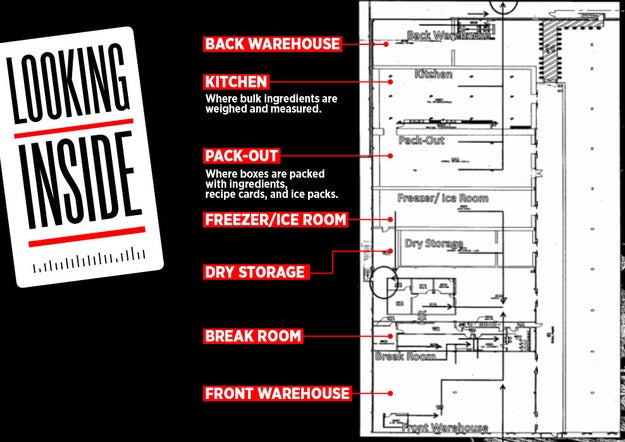
Rita Childs worked for a year and a half on the Blue Apron assembly line in the pack-out division, where boxes are filled with ice packs, recipe cards, and the appropriate ingredients for every meal. Those ingredients are prepped by kitchen associates, who weigh out and perfectly portion bulk ingredients from Blue Apron’s suppliers into small plastic bottles and bags: tablespoons of soy sauce poured into tiny bottles, for example, or carefully counted fingerling potatoes put into boxes. And after the boxes are assembled, the shipping department loads them onto pallets and, ultimately, trucks.
BuzzFeed News; Source: Cal/OSHA

By the time Childs left Blue Apron in August 2015, she said, the number of boxes being shipped per week had shot up to 34,000. “Everything that goes in the box had to be prepped 34,000 times.” When the prepping and packing was done — sometimes with the help of automated sealing and bagging equipment — shipping associates would palletize the boxes and load them onto trucks.

Flexibility and convenience are central to the Blue Apron pitch: Boxes can be canceled or modified up to about a week before the delivery day. That’s a boon for the customer, but it makes sourcing difficult, especially for a company mission-driven to reduce waste. With hundreds of thousands of people expecting dinner to be delivered on time, there’s little margin for error. “There were plenty of times where the kitchen would say we had 2,000 celery, but we actually had zero,” one former team lead told BuzzFeed News. “So we&039;d run around like chickens with our heads cut off looking for celery.”

Purchasers described scrambling to find more of a certain ingredient when supply was unexpectedly low.

“I would get sent to Whole Foods and buy things if we really needed an ingredient and we didn’t have it in the building,” said the former team lead. Blue Apron told BuzzFeed News that while during early days it sourced some of its product from local stores, the company’s shipments have been too large to make grocery store shopping feasible “for years now.”

Still, two years later, former employees recall a hectic pace. “One day in pack-out could be worse than an entire Black Friday at Best Buy, as far as stress goes,” the team lead added. Another said it wasn’t uncommon to see someone quit on their first day.

“It was crazy. You felt like you were running all the time. Your hair&039;s on fire and you can&039;t keep up,” said Custer.

“There were plenty of times where the kitchen would say we had 2,000 celery, but we actually had zero. So we&039;d run around like chickens with our heads cut off looking for celery.”

Quelle: <a href="The Not-So-Wholesome Reality Behind The Making Of Your Meal Kit“>BuzzFeed
Racist Social Media Users Have A New Code To Avoid Censorship

Racist online communities have developed a new code for racial, homophobic and bigoted slurs in an attempt avoid censorship.

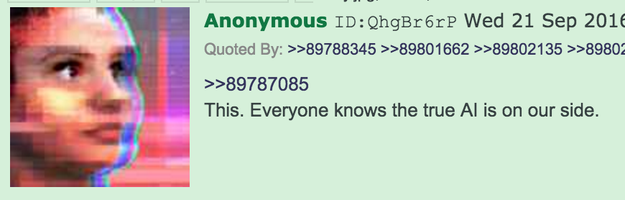
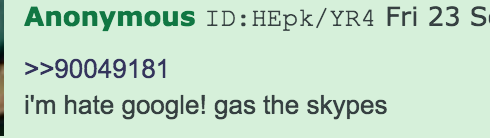
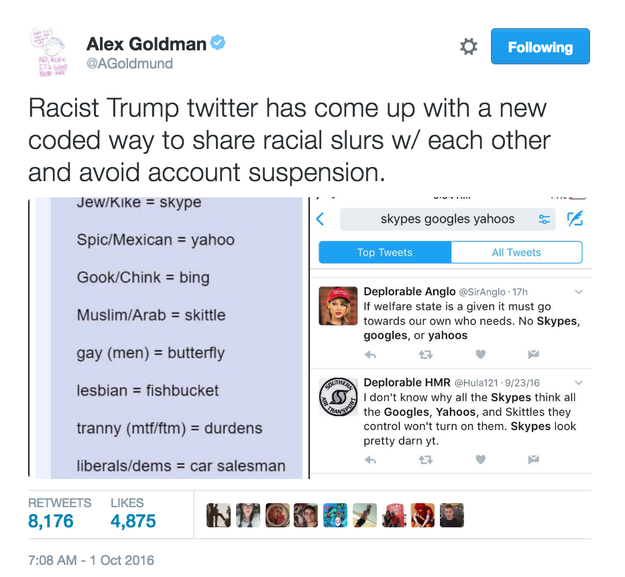
The code, using terms like Google, Skittle, and Yahoo as substitutes for offensive words describing blacks, Muslims and Mexicans, appears to be in use by various accounts on Twitter and elsewhere.

Many tweets using the code are doing so in support of Republican Presidential nominee Donald Trump:

The code appears to have originated in response to Google&;s Jigsaw program, a new AI-powered approach to combating harassment and abuse online. The program seems to have inspired members of the online message board 4chan to start “Operation Google,” using Google as a derogatory term for blacks in an attempt to get Google to filter out its own name. The code developed from there.

It appears that a number of 4chan posts in which this effort was discussed were deleted. A search of a 4chan archive, 4plebs, cross referenced with Google search, showed the discussion developing underneath a link to a post about Google Jigsaw:

Some referenced Microsoft&039;s AI-powered chatbot, Tay, as an example of how AI can be manipulated by racists.

And the Skype for Jew substitution emerged too:

This isn&039;t the first time a bigoted social media code has emerged. Placing a name in triple parenthesis is meant to identify Jews and target them for harassment.

BuzzFeed News has reached out to Google and Twitter for comment.

Quelle: <a href="Racist Social Media Users Have A New Code To Avoid Censorship“>BuzzFeed

Evan Rachel Wood And Thandie Newton Defend Sexual Violence In "Westworld"

Evan Rachel Wood And Thandie Newton Defend Sexual Violence In "Westworld"

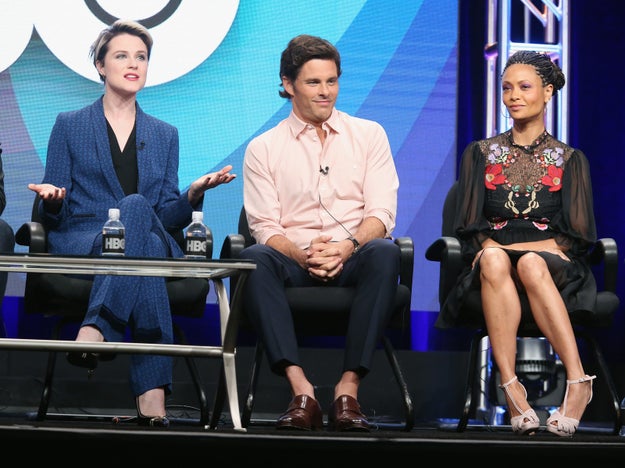
From left: Evan Rachel Wood, James Marsden, and Thandie Newton.

Frederick M. Brown / Getty Images

Westworld, HBO’s much-anticipated sci-fi series about a futuristic theme park where humans pay $40,000 to interact with lifelike robots, finally airs this Sunday. In the months leading up to the premiere, the show’s creators, producers, and even one top HBO executive have defended its fixation on sexual violence. Last night at a press event, actors Evan Rachel Wood and Thandie Newton, who both play artificially intelligent “hosts” who are repeatedly assaulted, also stepped in to defend the show, arguing that Westworld is both responsible and sensitive in its depiction of rape.

“You have an obligation as a storyteller to raise awareness and to show the horrors of that so that people aren’t desensitized to it. I don’t think there’s anything titillating about what we’re doing — it’s all horrific, as it should be,” said Wood.

“We get to see the consequence and ramifications of this violence, the cost of this violence,” added Newton.

There’s only one rule in Westworld: Hosts can’t harm humans. Humans, on the other hand, can do whatever they want to the hosts, which can mean shooting them, stabbing them, and raping them. At the end of each day, the bots are patched up and their memories are mercifully wiped; the same Western-themed adventure starts anew the next morning.

In the first four episodes, the show does not depict rape onscreen. “We don’t actually show sexual violence towards women,” Wood said. “You never see a scene of like rape or anything, but you know it’s going to happen.” But the inanimate hosts emote and bleed just like humans, so it’s harrowing to watch them get treated like bystanders in a first-person shooter game.

Wood and Newton spoke at a roundtable discussion yesterday evening held at the Four Seasons hotel in Silicon Valley to promote Westworld, along with actor Jeffrey Wright, who plays the theme park’s head programmer, as well as the married couple behind the production, showrunners Jonathan Nolan (the brother of director Christopher Nolan) and Lisa Joy. Nolan’s previous works — he co-wrote the movie Interstellar and created the TV series Person of Interest — have also circled around artificial intelligence. With Westworld, he and Joy wanted to tell the story from the robot’s perspective and see what humans look like through their eyes.

“Morality isn’t a problem with video games because the simulation is poor enough that you don’t conflate the experience,” said Nolan. But, he added, “when the intelligence of the nonplayer characters that you’re interacting with eclipses a certain level, then it’s much more problematic than driving around in Grand Theft Auto and running over a bunch of pedestrians.”

Westworld is adapted from Michael Crichton&;s 1973 movie of the same name. But unlike Crichton&039;s Jurassic Park, the threat here is more existential than physical. In the first episode, a line of code in a software update causes the hosts to remember brief flashes of the horrors that they have lived through, leaving the resort essentially “populated by 2,000 abuse victims and survivors, finally waking up,” Willa Paskin wrote in Slate.

Both executive producer J.J. Abrams and HBO president Casey Bloys have called the criticism about excessive sexual violence accurate and valid, but defended Westworld. “You can’t tell a story about oppression without depicting the oppressed,” Abrams told reporters at the show’s premiere in Los Angeles earlier this week.

At the roundtable, Newton and Wood also acknowledged the horror of those scenes, but emphasized that the intent is to force the audience to contend with sexual violence.

“We’re also looking at it from so many different points of view, the perpetrator, the person who has been affected by it, the people who are complicit by being around it. I mean, when do you ever really get a narrative where you get to see it from those different points of view? I think that’s incredibly valuable, but the only way we can really look at it is by showing it,” said Newton.

Newton also stressed there was nothing gratuitous about the sexual violence on the show. “It’s not like we’ll show you this then we’ll distract you and show you something else so you forgot that you’ve seen something so fucking disgusting, and that you don’t even have time to really sit with it and process it, and challenge it in your own mind,” she said. “I think it’s hugely responsible and sensitive filmmaking to first of all be brave enough to put this stuff out there, frankly. Because it’s the opposite of what we want to promote as a team.”

youtube.com

Quelle: <a href="Evan Rachel Wood And Thandie Newton Defend Sexual Violence In "Westworld"“>BuzzFeed

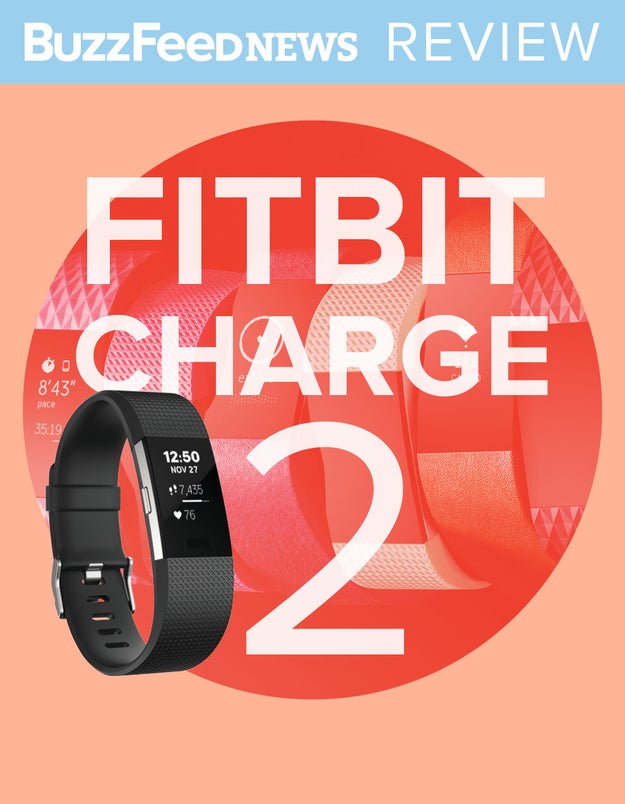
We Tried Fitbit’s New Charge 2 And It Really Wanted Us To Work Out

BuzzFeed News; Fitbit

On the Charge 2, exercise and relaxation aren’t tracked as special, one-off events, but rather, they are as much a part of your routine as steps and sleep. If you’re ready to graduate from a 10,000-steps-per-day program, the Charge 2 might be a good tracker for you.

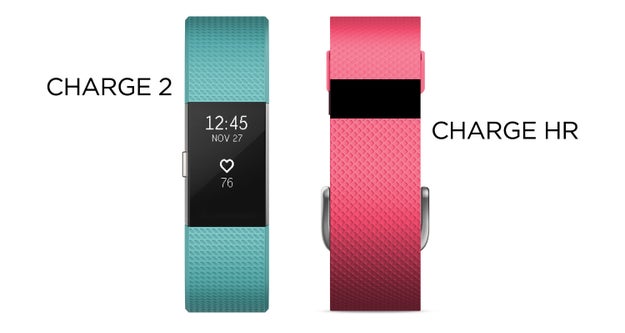
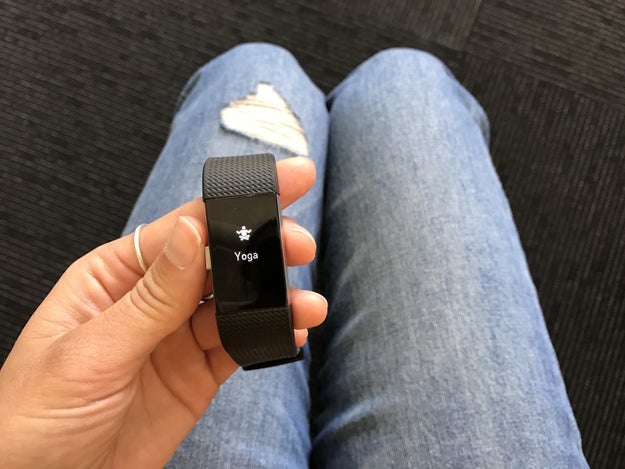
In addition to continuous heart-rate tracking, Fitbit’s new wearable, which recently became available worldwide, offers a multi-sport mode (including yoga, spinning, and circuit training), guided breathing sessions, and a personalized “cardio fitness score” that reveals how fit you are (and could be). It also has interchangeable bands and a display that’s four times larger than last year’s Charge HR.

Is the Charge 2 right for you? Read on&;

Let’s talk about the biggest improvement first: the bands.

Let’s talk about the biggest improvement first: the bands.

Nicole Nguyen / BuzzFeed News

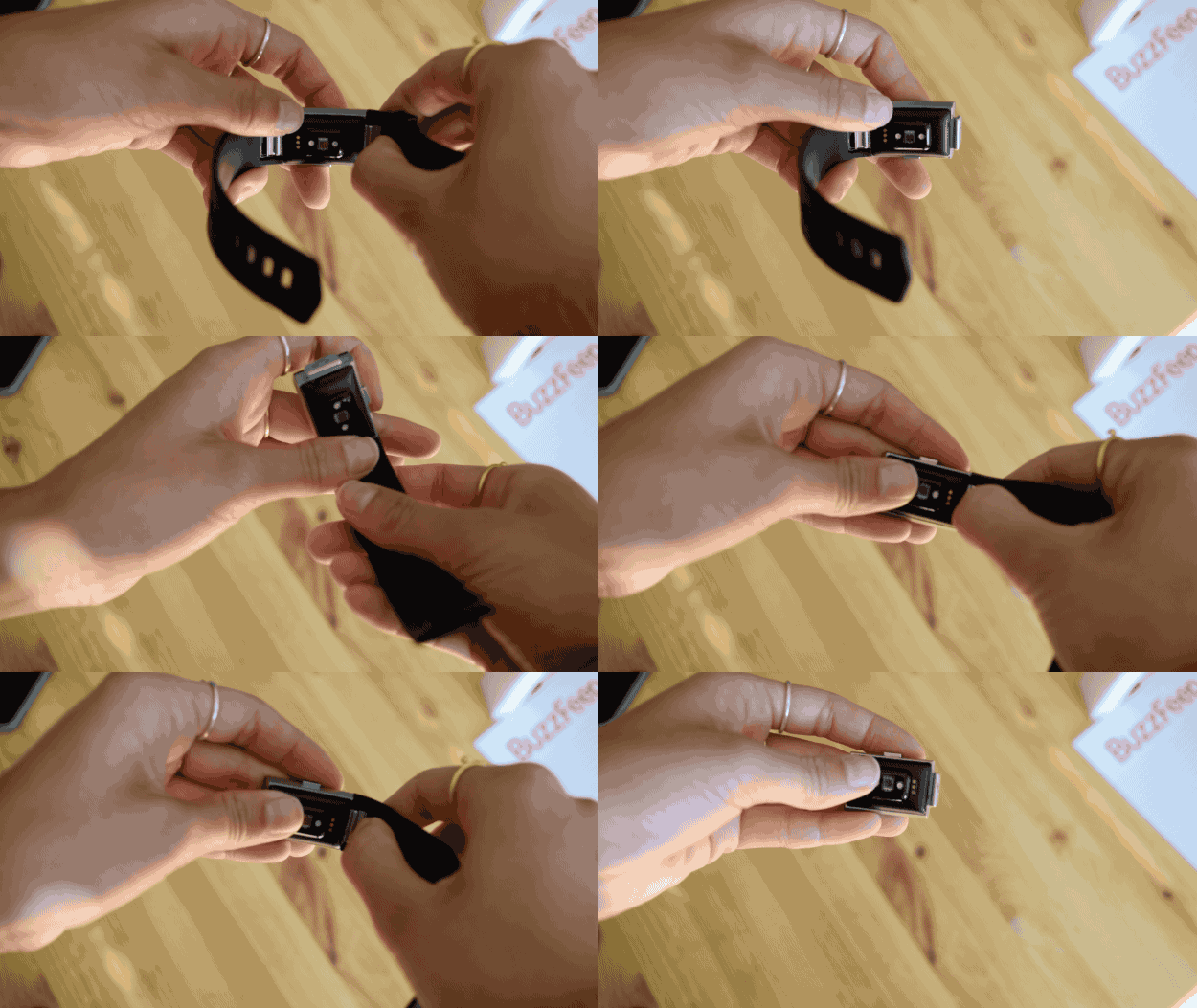
The Charge 2 has the same sleep, heart rate, and altitude sensors as previous Fitbits and, like the Charge HR, runs on a battery life of up to a week or so. The technology is largely unchanged – but the big game changer are the interchangeable bands.

Take a quick look at Fitbit’s Facebook page and you’ll find dozens of commenters complaining about torn straps and warped bands. If the band was faulty, the entire Charge HR needed to be thrown out, even if the tracker itself was fine. The Charge 2’s bands, on the other hand, are replaceable. Fitbit’s offering a leather version for $70, along with a classic elastomer band in five different colors for $30.

Nicole Nguyen / BuzzFeed News

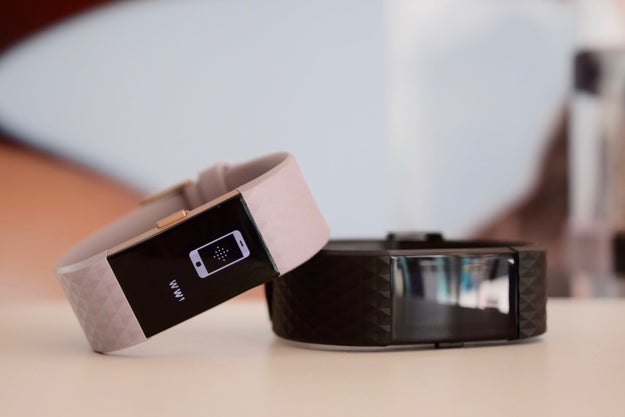
The Charge 2 looks sleeker, but is still pretty chunky.

The Charge 2 looks sleeker, but is still pretty chunky.

Nicole Nguyen / BuzzFeed News

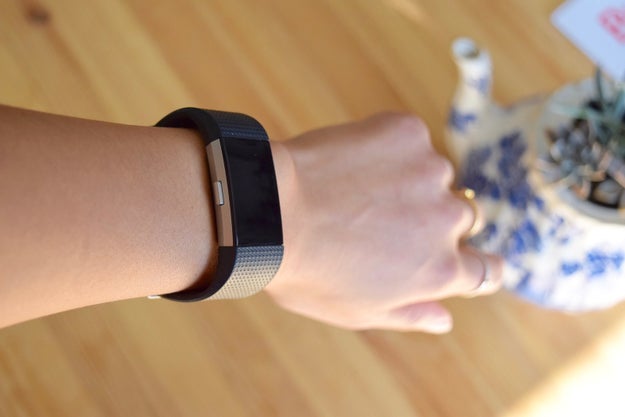
The device is essentially a Charge HR with a larger screen. The Charge 2 is a little bit wider and a little bit thicker than the previous model, but comfortable enough to wear all day (although too cumbersome enough to wear to sleep for Nicole).

The classic Charge 2 style comes with a silver-accented tracker and the same rubber-y elastomer band as other Fitbits. For $30 more, you can also choose from two new “special edition” Charge 2 options: one with an all-black tracker and a “gunmetal band,” and another that has a rose gold tracker paired with a lavender band. It’s fancy. But it still looks like a fitness tracker.

Working out with a big display makes a big difference.

Working out with a big display makes a big difference.

BuzzFeed News; Fitbit

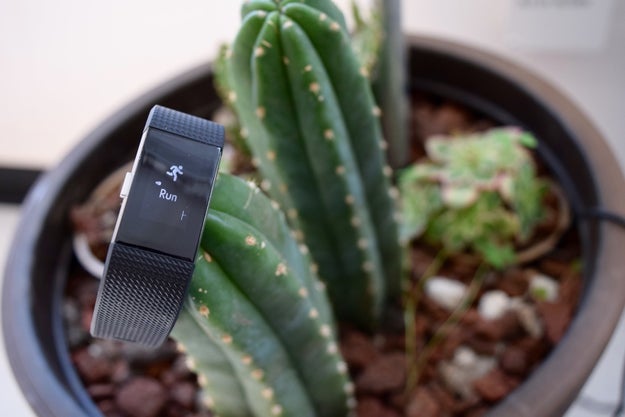
The Charge HR’s screen, which was about .75cm long, was truly the tiniest screen we had ever used. The Charge 2’s large display makes it easier to, you know, actually see information. When the “raise arm to wake display” feature worked (which was about 70% of the time), being able to look at our current pace, steps, and heart rate while running was particularly useful, so we could actually tell when we were slacking off.

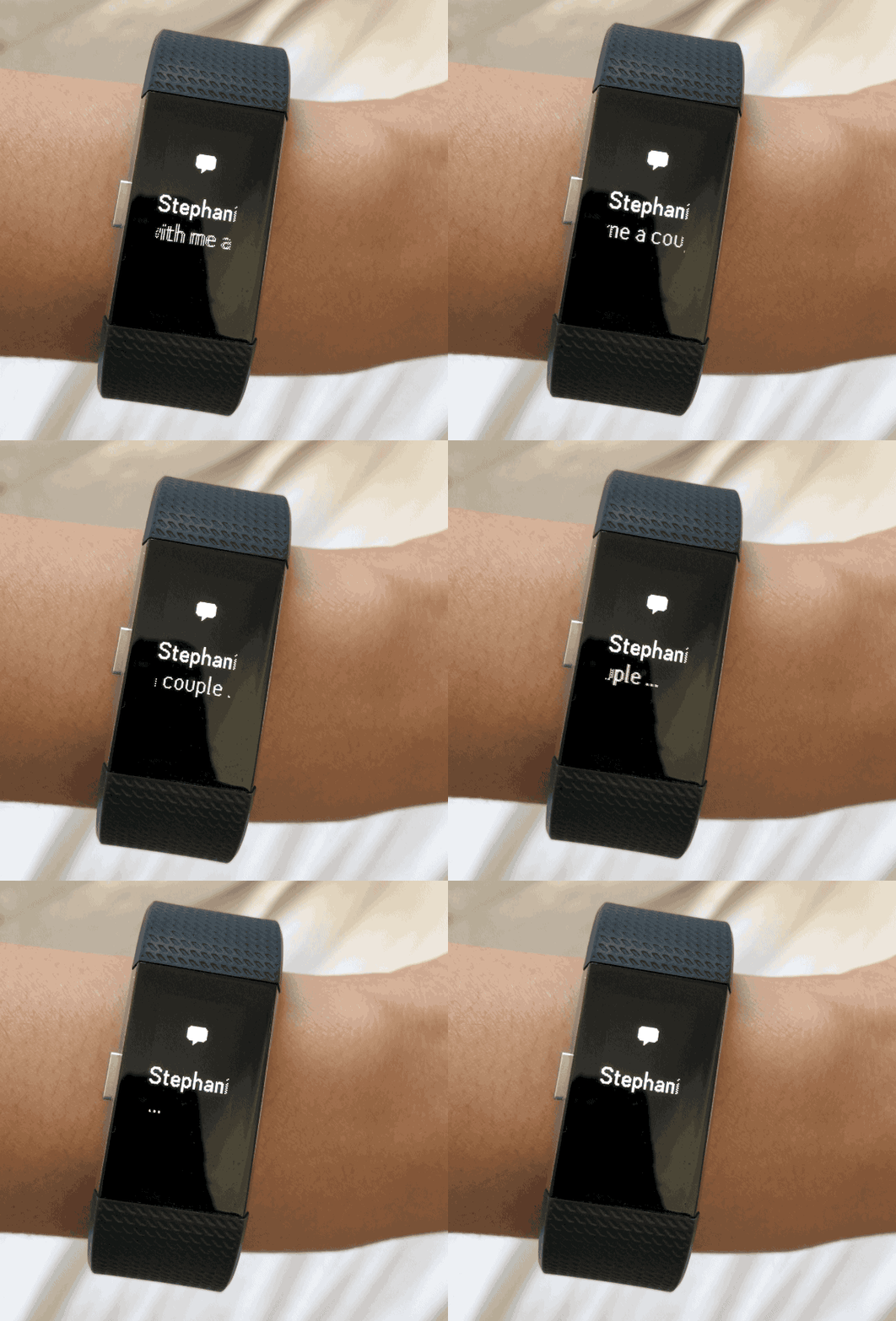
There are several clock faces you can choose from – and there’s finally room to show calendar notifications and text message previews, in addition to caller ID. But, like the Alta, text messages still get cut off, meaning you have to open your phone anyway.

Nicole Nguyen / BuzzFeed News

Sports! So many sports!

Sports! So many sports!

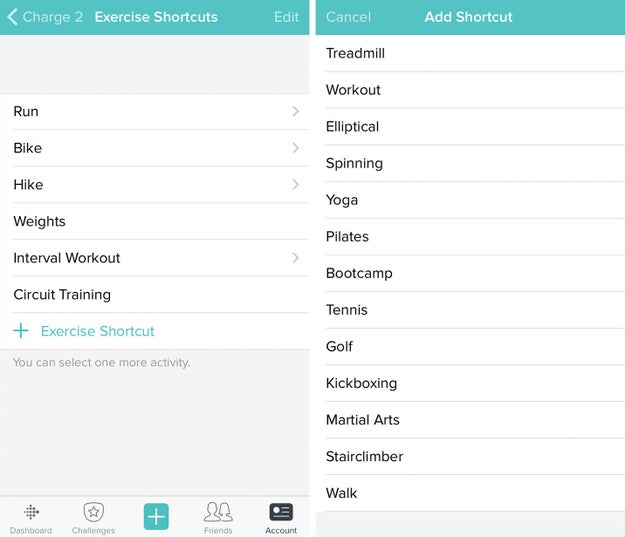
The Charge HR only had one generic “exercise mode.” The Charge 2 has a “multi-sport mode” with NINETEEN options. You can choose from treadmill, yoga, pilates, kickboxing, spinning, circuit training, and much more, right from the tracker. In the app on your phone, you can choose which seven exercise shortcuts appear on the Charge 2, and customize the order in which they appear.

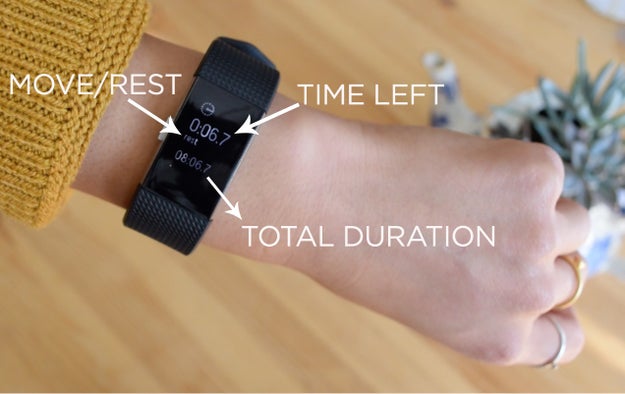
One cool new mode is “Interval Workout” for workouts with alternating periods of intensity and rest (like this).

One cool new mode is “Interval Workout” for workouts with alternating periods of intensity and rest (like this).

Nicole Nguyen / BuzzFeed News

You can set the move and rest times on the app, plus how many times you want to repeat the interval. When the interval is up, the tracker will buzz and it’ll show “move” or “rest” on the screen. After years of fidgeting with different apps and the built-in timer on the iPhone, the interval workout mode, so far, has been our favorite use of the Fitbit.

In the Fitbit app’s Exercise section, you strangely can’t filter workouts by type.

In the Fitbit app’s Exercise section, you strangely can’t filter workouts by type.

Nicole Nguyen / BuzzFeed News

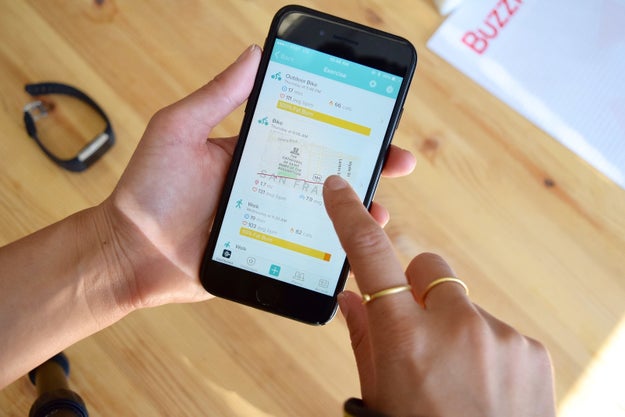
You can see a chronological list of your workout history, but if, say, you wanted to look at only bike rides from the past month, you wouldn’t be able to do so. Also, you don’t get special sport-specific stats that, for example, auto-track how long you held chair pose when you select yoga mode (it will, however, track the duration and heart rate during your practice). But it does validate activities like yoga or hiking as legitimate exercise. Simply by acknowledging that those activities exist, Fitbit is providing a strong motivational tool for users who prefer alternatives to just running or biking.

Nicole Nguyen / BuzzFeed News

Other fitness trackers (like Garmin wearables and the Apple Watch) focus on runs, walks, and bike rides, and categorize everything else as “other.” Fitbit is more aware of the different ways people actually exercise (elliptical&033; tennis&033; boxing&033;) and give you the option to categorize your workout as such. This, IMO, is where Fitbit shines.

The Charge 2 has a tap screen, not a touchscreen, which takes some getting used to.

Tapping on the larger display is much easier than it was on Fitbit’s Alta, which we reviewed earlier this year. Still, the Charge’s interface isn’t very intuitive – initially, at least. The hardware design is very basic (just one button&033;), which means that there are some trade-offs with ease of use.

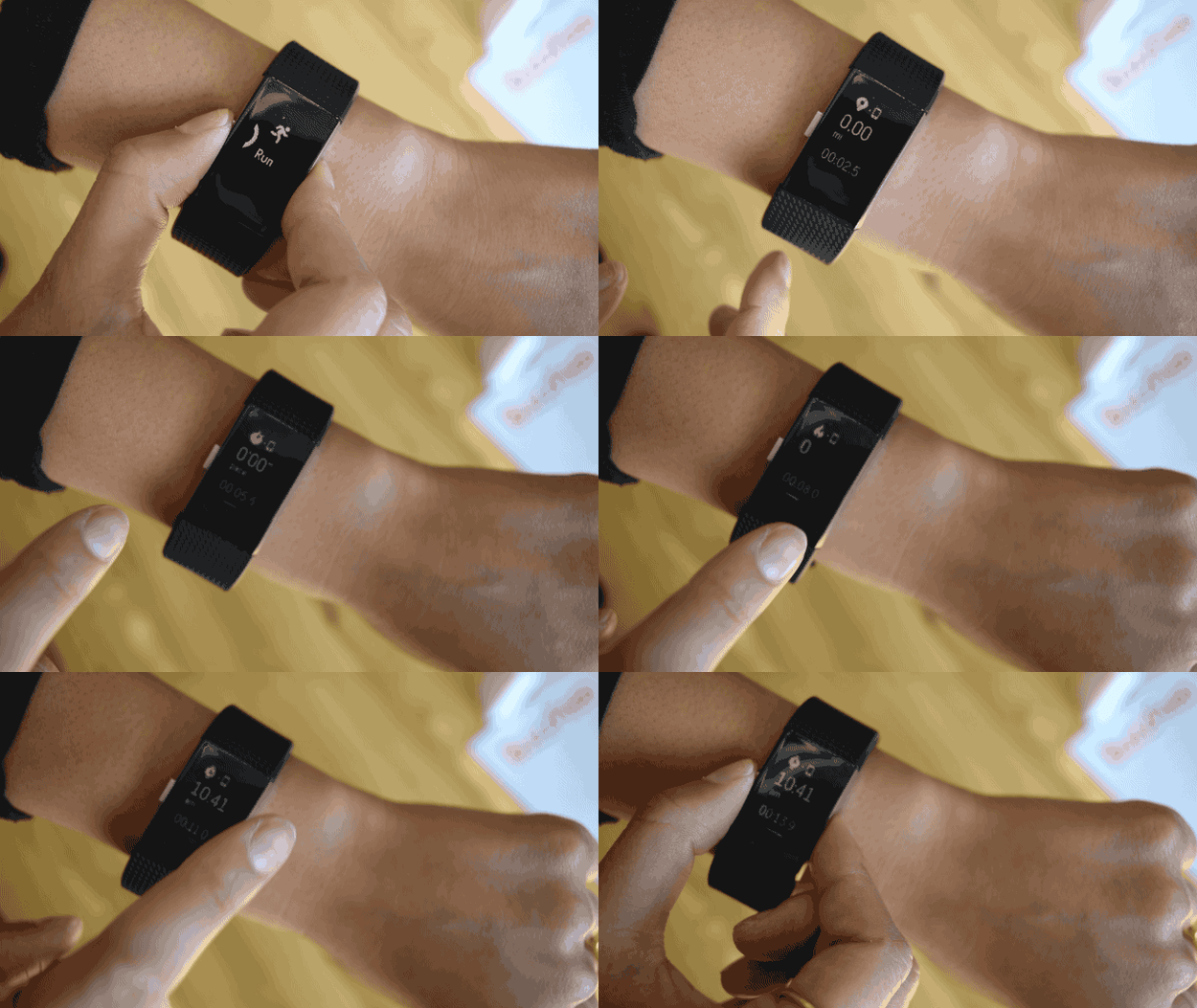
On the one hand, there’s only one button to figure out, but on the other hand, Fitbit needed to program in a lot of different button/tap combos to accommodate all of the Charge 2’s features. If you want to get serious about tracking your workout on the Charge 2, you’re going to need to learn all of them. To select a sport mode, you need to press the side button and then tap to view the different types of exercise. To start the workout, you press and hold the side button. To scroll through real-time stats, you need to tap or press the side button multiple times. When you’re done, press and hold the button again to finish.

You get the idea. A lot of taps and button pressing.

Putting the tracker into a specific exercise mode really only affects one thing: what shows up on the display while you’re working out.

Putting the tracker into a specific exercise mode really only affects one thing: what shows up on the display while you’re working out.

Nicole Nguyen / BuzzFeed News

The screen will always show the duration, plus the information most relevant to that sport. For example, when run, bike, or hike is selected, and your phone is nearby, it’ll show the mileage in big, bold numbers at the top. If your phone isn’t on you, the Charge 2 will estimate that mileage, based on how long your stride is (you need to go on a run with your phone and calibrate your stride first, for this to work). For weight training, it’ll show heart rate.

Tapping the screen over and over again to see different stats during a workout is pretty frustrating. To avoid fiddling around with the display, we’d recommend just focusing on one metric: current pace for running and heart rate for pretty much everything else.

This score is Fitbit’s estimate of your VO2 max — the maximum amount of oxygen your body can use during exercise — and based on your profile (the weight, height, age and gender you input) and resting heart rate. Fitbit told Stephanie she needed to step up the intensity of her exercise (one way would be making sure she’s working hard enough that her heart rate is elevated). She has not done so, but that’s probably just her fault.

Keep in mind that this is just an estimate, and a more accurate reading, as measured in a sports performance lab, would include the amount of oxygen you breathe in and out. Stephanie’s score, for example, is between 45 and 49 (“good to very good” for women age 28; a professional runner’s is 63, according to the app).

For most people, letting Fitbit’s automatic workout tracking (available for walk, run, bike, elliptical, “sports,” and aerobic workout) figure out what you’re doing is much easier than manually starting an exercise mode. You literally don’t need to do anything – the tracker knows when you’re working out and will log it in the app for you. In our experience, the tracker did a great job of recognizing runs, walks, and especially bike rides.

The downside to auto-tracking? It doesn’t record GPS location data, so the mileage is less accurate, and if you want a map of your workout, you’ll need to initiate the exercise on the tracker.

Here’s what Fitbit needs to improve.

One of the most frustrating things about the Charge 2’s exercise mode is that you can’t pause a workout. The Strava app and Garmin trackers both have an auto-pause feature, and the Apple Watch can be paused by hitting its two buttons at the same time.

There are plenty of reasons why you’d want to pause a run&033; Maybe there’s a cute dog you *really* need to pet, or an ex-coworker you need to gloat about your new job to. With the Charge 2, you have to either finish the workout and start a new one later, or let it run.

It provides more precise pace and distance information on the Charge 2’s display and records a map of your run, walk, hike, or bike in the app. But, again, you’re tethered to your phone. The Fitbit app can record and map runs with GPS independently, so the trackers don’t actually add much value when it comes to this metric.

Once you’ve used Connected GPS with your phone once to calculate your stride length, Fitbit claims you’ll get better estimates of your pace and mileage when you don’t bring your phone. So if you just go for a run with your tracker, you will get stats. But you won’t get a map or any other location data.

And beyond that, because the Charge 2 relies on your phone, it may not capture location data with perfect accuracy. On Stephanie’s walk in downtown San Francisco with her phone, the tall, densely-packed buildings made the GPS tracker go haywire – and Fitbit’s app doesn’t work to fix obviously inaccurate data. There are also multiple threads on Fitbit’s website citing issues with connected GPS.

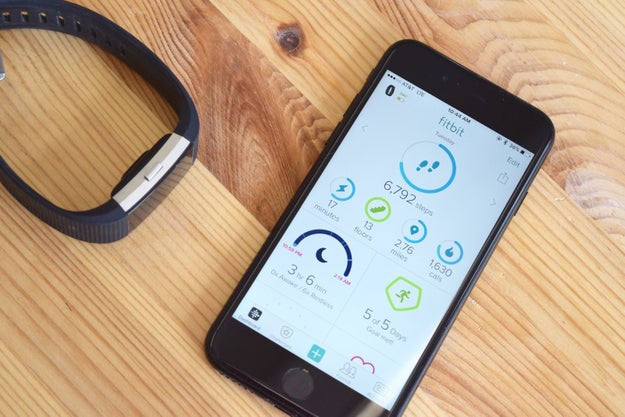
Fitbit integrates with Strava, RunKeeper, MapMyRun, Fitstar, and a dozen other activity apps – but it doesn’t sync activity with Google Fit or Apple’s Health app, where many users consolidate activity, sleep and nutrition data. Fitbit, which launched a sort-of smartwatch of its own, the Blaze, probably doesn’t want to share its data with companies it sees as competitors in the space. Nicole found a small workaround for this, at least to record workouts: connect Fitbit to Strava and Strava to Apple’s Health app or Google Fit. However, you won’t be able to sync your sleep or overall activity data. And it’s a really roundabout way to do something that should be straightforward.

Nicole Nguyen / BuzzFeed News

As we mentioned before, the device can detect when you raise your arm and turns on the screen when you do so. It’s called “Quick View,” and it works really well while running or walking – but for some reason the feature doesn’t agree with biking. It may be because your arm is already at a 90-degree angle while you’re holding the handlebars, and it’s not enough movement for the Charge 2 to tell when you’re raising your arm.

Nicole Nguyen / BuzzFeed News

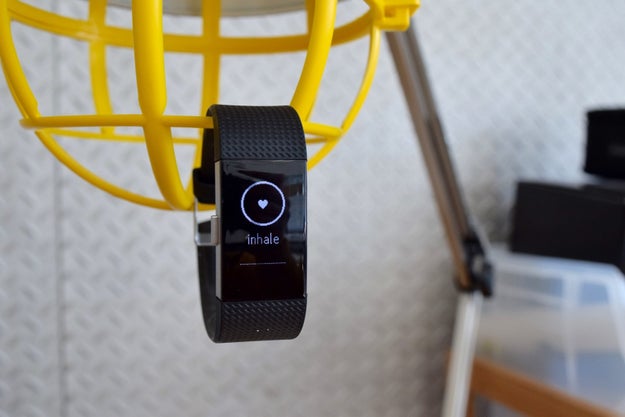
The new “Relax” feature consists of 2- and 5-minute guided sessions that use an animated visualization to prompt you to breathe and slow down your heart rate. (App-guided meditation is very in these days.) To be honest, it was a little weird to try to be mindful with our eyes wide open and glued to our wrists; we would have preferred some kind of buzz or other physical feedback that let us closes our eyes.

Okay, so who should buy the Charge 2?

Nicole Nguyen / BuzzFeed News

If you’re just starting a workout routine or ready to ditch a pedometer for something a little more advanced, the Charge 2 has most of the fitness-friendly features you’re looking for. Its heart rate and multi-sport modes will give you tools to improve your overall fitness. The Charge 2 is definitely geared more towards runners and cyclists – but if you’re into yoga, circuit training, or interval training, there’s something for you, too.

The automatic workout tracking feature means that you don’t have to worry about logging a run with the tracker or app every time. And when you want more precise distance statistics, you can bring your phone and see mileage and pace on your wrist. On the mobile app, you can look at your cardio fitness score to see how you stack up against your peers, and read about what you can do to be fitter, whether it’s lose weight or increase the intensity of your workouts.

The app is easy to use, and because Fitbit is the top-selling wearable company, according to an IDC survey, it has a big community. In the first quarter of 2016 alone, the company sold 4.8 million units. It’s likely that you have at least a few friends with Fitbits who can cheer you on.

Fitbit also made a crucial update to the bands, making them removable and replaceable. There are more styles to choose from, and it’ll likely last longer than a Charge HR.

If you’re looking for a heart rate-tracking wearable that’s not *too* expensive, tracks activity, and has basic smartphone notifications, then you should consider the Charge 2, which starts at $150.

Who shouldn’t buy the Charge 2?

Nicole Nguyen / BuzzFeed News

Because of its thick, chunky style, we wouldn’t recommend the Charge 2 for those interested in sleep tracking. The Flex 2 or Alta are much better picks for that. Those two bands are also much more stylish and geared toward the fashion-forward set.

If you want something that isn’t dependent on your smartphone, this Fitbit is not the right device for you. The Fitbit app is great, but the problem is, you need it to change a lot of different settings on the Charge 2.

The connected GPS feature also relies on your phone for location data.The Charge 2 is sweat, rain, and splash-proof, but it’s not safe for the pool or beach. Fitbit’s Flex 2, on the other hand, is suitable for swimming.

More serious athletes should consider swim-friendly, heart rate-tracking, and GPS-enabled wearables, such as the Vivosmart HR+ by Garmin ($200), Apple Watch Series 2 ($369), and Polar M400 ($180).

And a final thing to consider: If you’re trying to lose weight or get fit, you may not even need a fitness tracker&033; A device like the Charge 2 can provide little bits of encouragement throughout your day, which may be effective for some people. But it’s more important to do research on how to exercise workouts or eat in ways that support your goals to actually improve your overall, long-term fitness.

Here’s a guide on what fitness trackers are good for – and where they fall short.

Quelle: <a href="We Tried Fitbit’s New Charge 2 And It Really Wanted Us To Work Out“>BuzzFeed

This Guy Was Arrested After He Smashed Up All The iPhones In An Apple Store

Apparently he was protesting &;consumer rights.&;

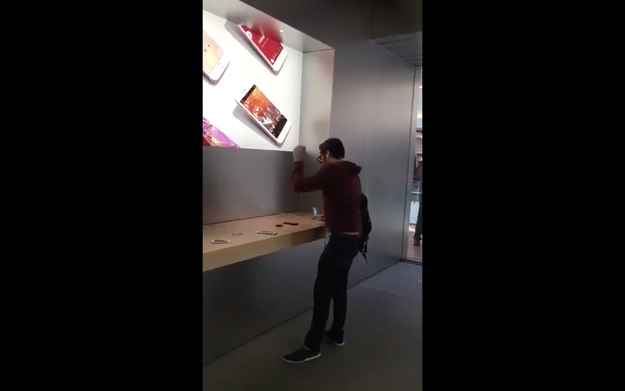
Wearing sunglasses, dangling iPhone headphones, and a thick glove, the man went phone by phone crushing them with the large iron ball.

Wearing sunglasses, dangling iPhone headphones, and a thick glove, the man went phone by phone crushing them with the large iron ball.

Twitter: @Quentin_IOS

In a video filmed by a bystander, the man yells that his rights as a consumer had been violated by Apple.

In a video filmed by a bystander, the man yells that his rights as a consumer had been violated by Apple.

Twitter: @Quentin_IOS

Apple “violated my rights and refused to refund me in accordance to the European consumer protection law,” the man shouts.

Apple "violated my rights and refused to refund me in accordance to the European consumer protection law,” the man shouts.

Twitter: @Quentin_IOS


View Entire List ›

Quelle: <a href="This Guy Was Arrested After He Smashed Up All The iPhones In An Apple Store“>BuzzFeed

Volvo Is Opening A Self-Driving Car Research Center In Silicon Valley

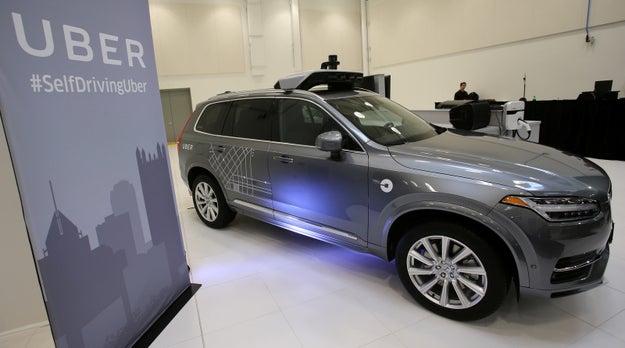
Uber&;s Volvo XC90 self-driving car is shown in Pittsburgh, Pennsylvania, on September 13, 2016.

Aaron Josefczyk / Reuters

Volvo is opening a research and engineering center in Mountain View, California, where 70 engineers will work on developing autonomous driving, infotainment, and connectivity technology.

Employees will begin moving in as soon as next week. “We are putting the furniture in now as we speak,” Lex Kerssemakers, Volvo’s US chief executive, told BuzzFeed News in an interview.

The move puts Volvo closer to ride-hailing giant Uber, which is retrofitting Volvo XC90s with its own self-driving technology to put on the road in Pittsburgh. Volvo and Uber also recently announced they were partnering in a non-exclusive, $300 million deal to develop an autonomous car together.

The Swedish luxury carmaker follows a line of automakers who have opened up research and development centers in Silicon Valley recently. Ford set up shop in Palo Alto in 2015 and plans to soon double its staff of 130 people, and General Motors has an office in the area as well. Mercedes-Benz opened a research facility in Sunnyvale, California in 2013.

For automakers, building a base in the Bay Area provides an opportunity to create partnerships with tech companies and startups, and to scout out potential acquisitions to get ahead in the race to develop self-driving vehicles. Ford, for example, says it is working with more than 40 startups on new car technology. The company also purchased Chariot, a San Francisco-based shuttle service, earlier this month.

Besides its plans with Uber, Volvo has several other investments in self-driving vehicle technology, which proponents say could reduce the number of car accidents by removing the chance of human error. The company plans to launch a pilot program in London next year that will give 100 people fully autonomous vehicles. It will launch a similar program in Sweden in early 2018, and it’s negotiating with several cities in China as well. The pilot program is aimed at helping the company understand how real people would use autonomous vehicles on a day-to-day basis, and how they would spend their time while sitting in cars that drive themselves.

“We have this vision that nobody should be killed in a Volvo,” Kerssemakers said. “Autonomous driving plays a very important role for us in reaching our vision.”

Quelle: <a href="Volvo Is Opening A Self-Driving Car Research Center In Silicon Valley“>BuzzFeed

Twitter Says This ISIS Beheading Photo Doesn't Qualify As Abuse

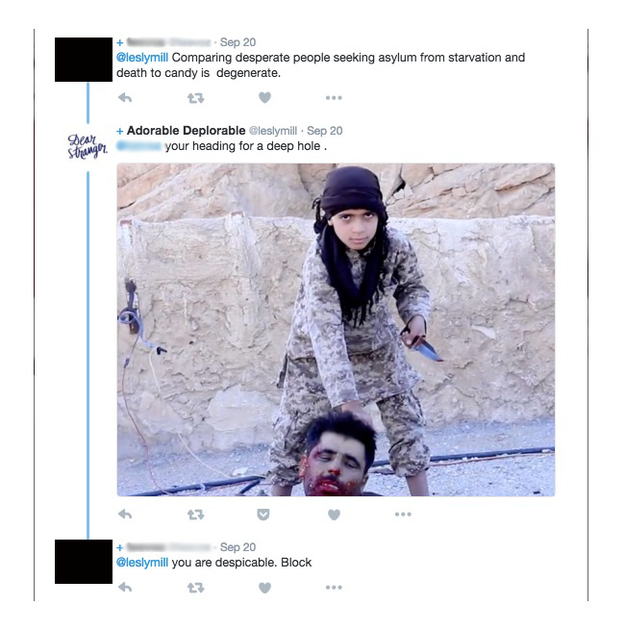
“Kathleen” is an outspoken Hillary Clinton supporter. Last Tuesday she took to Twitter to criticize the Trump campaign&;s Skittles refugee poster, calling it a “disgusting ad.” Shortly after, @leslymill — who goes by the name Adorable Deplorable — replied, “i LOVE THE AD. Describes the complexity of the “PROBLEM perfectly.”

The political disagreement — very common on Twitter — peaked when @leslymill replied to Kathleen&039;s tweet with an unsolicited photo of a child holding a knife and a newly severed head with the caption, “your heading for a deep hole.” The photo, according to the website tangentcode.org, is from a video titled “Information Office of the State of Homs offers families (and ) the liquidation of a Captain in the Army Alnasiri” and shows a child soldier, believed to be associated with ISIS, beheading a man and posing with his head.

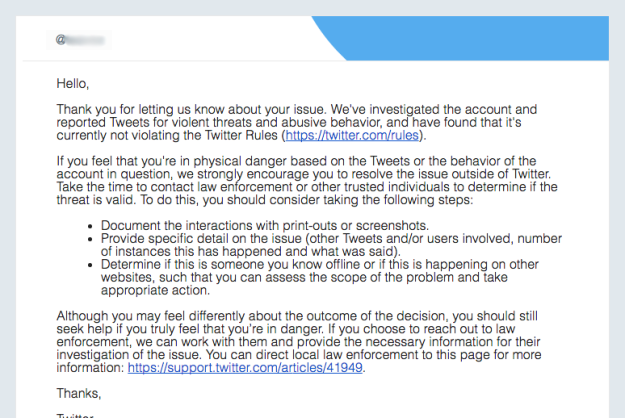
After seeing the photo, Kathleen reported the tweet to Twitter using its report forms. Soon after, Twitter replied that its investigation found the alleged violent and threatening tweet did not violate Twitter’s rules, which prohibit tweets involving violent threats, harassment, and hateful conduct. Twitter’s rules explicitly state that one may not “threaten other people on the basis of race, ethnicity, national origin, sexual orientation, gender, gender identity, religious affiliation, age, disability, or disease.”

This is not uncommon. In a recent BuzzFeed News survey, which asked over 2,700 Twitter users about abuse, 90% of respondents alleged that Twitter didn’t do anything when they reported abuse.

For Kathleen — who asked to remain anonymous (and use a pseudonym) so as not to receive more targeted abuse — the harassment is unsurprising, but unnerving. “I&039;ve worked online since 1985, so I&039;ve seen it all,” she told BuzzFeed News. “But that doesn&039;t mean I think it is ok.”

Kathleen&039;s case also raises questions about Twitter&039;s ability to help protect its users from unwanted graphic imagery — the kind frequently used by abusers and trolls to threaten. Reached for comment, Twitter directed BuzzFeed News to a passage from an August blog post on countering violent extremism. The passage notes that “there is no one &039;magic algorithm&039; for identifying terrorist content on the Internet.” It also cites “proprietary spam-fighting tools, to supplement reports from our users and help identify repeat account abuse.” These tools, according to the post, identified “more than one third of the accounts we ultimately suspended for promoting terrorism.”

The post, however, doesn’t address terroristic or graphic imagery that has been co-opted by Twitter accounts that do not explicitly promote terrorism or violence against others. In @leslymill&039;s case, horrific images of death are often used in rebuttal to opposing views, or to express sentiments like “This Is the Real Face of Islam.”

When asked to clarify if the company evaluates graphic images such as beheadings on an individual basis, granting exceptions for newsworthiness, Twitter directed BuzzFeed News to a past statement noting that when evaluating media removal requests, “Twitter considers public interest factors such as the newsworthiness of the content and may not be able to honor every request.” The company declined to provide further details about its handling of Kathleen&039;s abuse report.

But roughly three hours after BuzzFeed News contacted Twitter about Kathleen&039;s report, the tweet she&039;d flagged as abusive disappeared from @leslymills’ timeline. Twitter did not respond to queries about its deletion.

Reached for comment, @leslymill did not directly answer questions about being contacted by Twitter for possible terms of use violations. The account subsequently tweeted that it had been asked by Twitter to remove a picture, though it is not clear whether that picture was the one Kathleen reported. “I was asked to remove it…,” @leslymill explained. “So I guess I shouldn&039;t share those photoes…wonder why they don&039;t tell me.”

Quelle: <a href="Twitter Says This ISIS Beheading Photo Doesn&039;t Qualify As Abuse“>BuzzFeed

Trump Claims Google Suppressed Bad News About Hillary Clinton

Jonathan Ernst / Reuters

Republican presidential nominee Donald Trump on Wednesday claimed Google&;s search engine was biased in burying bad news about his rival Hillary Clinton.

Trump made the comment at a rally in Council Bluffs, Iowa, after mentioning a Google poll, which he said he was leading “despite the fact that Google&039;s search engine was suppressing the bad news about Hillary Clinton. How about that.”

Trump did not elaborate on what “bad news” he believed was being suppressed, though he typically appends “crooked” to Clinton&039;s first name and has made her private email server a central talking point of his campaign.

Google did not immediately respond to a BuzzFeed News request for comment on the Republican nominee&039;s latest allegation.

Though his claim that Google stacked the deck against him appears to be new, Trump has also repeatedly complained that the electoral system is, or could be, “rigged” against him. This summer he repeatedly warned of voter fraud, and put out a call for “observers” to watch polling places and safeguard against cheating.

After Monday&039;s debate, Trump also claimed that his microphone was faulty and speculated that the alleged problem could have been intentional.

LINK: Trump Seeks Volunteer “Observers” To Stop Clinton From “Rigging” The Election

LINK: Trump Defends His “Rigged” Election Claim: “I Just Hear Things, And I Just Feel It”

Quelle: <a href="Trump Claims Google Suppressed Bad News About Hillary Clinton“>BuzzFeed

Amid Fears Of Russian Hacks, Officials Say The US Election Is Secure

Afp / AFP / Getty Images

Less than a week after high-ranking lawmakers accused Russian intelligence agencies of trying to interfere with the presidential election, US officials have tried to offer a reassuring response: a cyberattack, they say, couldn’t change the outcome of the presidential election.

“I’m here to communicate one message — that message is that our elections are secure,” said Thomas Hicks, the chairman of the Election Assistance Commission (EAC), during a Congressional hearing Wednesday on election cybersecurity. Hicks said that our locally run election process, with each state managing its own systems, and comprising over 9,000 jurisdictions, presents an overwhelming obstacle to any would-be hacker.

Although hackers breached online election databases in Arizona and Illinois recently, Hicks stressed the difference between websites and voting systems. No voting machines in use are connected to the internet, he said. Hicks added that the attack on state systems served as a wake up call. “Instead of causing a national crisis, the breaches notified election officials across the country that they should be on high alert,” he said.

The EAC and the Department of Homeland Security (DHS) have been tasked with providing cybersecurity resources and guidance to state governments after the hacks in Arizona and Illinois, and the Democratic National Committee’s email hack in July.

“We have confidence in the overall integrity of our electoral system because our voting infrastructure is fundamentally resilient.”

Andy Ozment, a top DHS cybersecurity official, agreed that our decentralized election system protects against outside interference. “We have confidence in the overall integrity of our electoral system because our voting infrastructure is fundamentally resilient,” he said during the same hearing.

Ozment acknowledged that parts of the US electoral system, just like any digital technology, are vulnerable to tampering. But “we have no indication that adversaries are planning cyber operations against US election infrastructure that would change the outcome of the election in November,” he said.

Several lawmakers referenced how Sen. Dianne Feinstein and Rep. Adam Schiff had publicly accused Russia of engaging in sustained efforts to influence the US election, but Ozment declined to comment. No member of the executive branch has confirmed that Russian agents perpetrated the hacks, nor have they pinned the attacks on any other entity.

“Attacks against voting machines are unlikely to have widespread impact… However, attacks or malfunctions that could undermine public confidence are much easier.”

Despite Ozment and Hicks’ reassurances, experts during the hearing pointed to the glaring security flaws tied to dangerously outdated voting equipment that’s still used across the country, as well as paperless voting machines.

Andrew Appel, a computer science professor at Princeton University, urged election officials to abandon touchscreen machines that produce no paper record. This protects not only against deliberate and malicious interference, but also miscalibration and software bugs, he said during the hearing. Appel has demonstrated how it&;s possible to install a vote-stealing program onto a voting machine in 7 minutes using just a screwdriver.

“As the equipment gets older, we are more likely to see failures,” said Lawrence Norden, the deputy director of the democracy program for the Brennan Center for Justice and co-author of a recent study that catalogued the alarming state of US voting machines.

Norden doubts that a Kremlin-hatched election scheme could determine who ends up in the White House. But he expressed a different concern, echoing lawmakers like Feinstein and Schiff: Rather than manipulating vote tallies, tampering with voting machines could sow distrust in the electoral process.

“Attempted attacks against voting machines are highly unlikely to have widespread impact on vote totals this November,” he said. “However, attacks or malfunctions that could undermine public confidence are much easier.”

Quelle: <a href="Amid Fears Of Russian Hacks, Officials Say The US Election Is Secure“>BuzzFeed