A Self-Driving Uber Truck Just Made A Beer Delivery

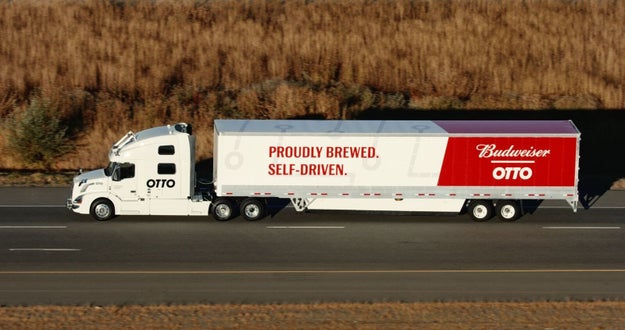
A self-driving truck from Otto, the startup Uber acquired this summer, drove a trailer of 2,000 cases of Budweiser more than 120 miles across Colorado on Thursday morning with the driver in the back seat, Otto announced today. And with this foray into cargo transportation, the ride-hail giant is launching Uber Freight, a platform to connect shippers and truck drivers.

The beer shipment for Anheuser-Busch is the first (publicly known) self-driving truck delivery, Otto says. It comes about two months after Uber acquired Otto, which was cofounded by Anthony Levandowski, an engineer who helped build Google’s first self-driving car and who is leading Uber’s pilot program to put passengers in self-driving cars in Pittsburgh.

“We can really bring Uber-like efficiency to the logistical market, and the same sort of experience you have of pressing a button and having an Uber driver show up after three minutes,” said Lior Ron, another Otto cofounder and also a veteran of Google, where he helped scale Google Maps. “The major building blocks are here…we have now the basic technology in place to do more of those shipments.”

Otto

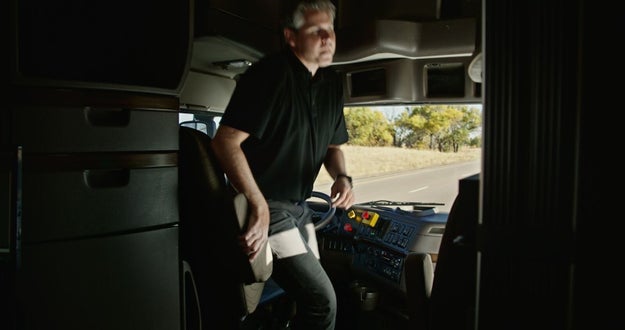
A commercial truck driver drove the vehicle from Anheuser Busch’s distribution center in Loveland, Colorado to the highway, and then crawled into the back seat, where he spent the next two hours watching the truck drive itself to Colorado Springs.

Otto

Anheuser-Busch approached Otto about a partnership after the self-driving truck company launched in May, said James Sembrot, senior director for logistics strategy at the beer conglomerate.

Sembrot told BuzzFeed News Anheuser-Busch estimates it can save 20-35% of the diesel its shipments use with self-driving trucks, which are more fuel-efficient. That could mean $40-50 million in annual fuel savings for his company, he said, if it were to one day complete all its shipments with trucks outfitted with Otto’s self-driving technology.

“I know, as one of the largest shippers in the United States – we ship over 1 million truckloads of our beers each year, driving 450 million miles every single year – that we have lots of opportunity to use this technology,” Sembrot said. “We’re excited to move this forward, but we can only move at the pace of availability.”

Anheuser-Busch paid Otto $470 for the delivery, a rate Sembrot called a market average. Ron said Otto is “actively discussing” partnership possibilities with other companies and truck manufacturers.

Increasingly, Uber is leveraging its platform to provide logistics services, such as food delivery through Uber Eats. Last year, it launched UberCARGO in Hong Kong – a service people could use to move their furniture, for example, or that businesses could hire to make deliveries. “If we can get you a car in five minutes, we can get you anything in five minutes,” Uber CEO Travis Kalanick told Vanity Fair in 2014. Uber Freight is the next step in that plan. Ron told BuzzFeed that Otto plans to “really accelerate and get to deployment as soon as possible.”

Otto isn’t the only company developing self-driving truck technology. The truck company Freightliner unveiled a prototype self-driving truck last year. Daimler, the parent company of Mercedes-Benz, has also been testing automated truck platoons. And Peloton, a startup based in Mountain View, California, is working on automating trucking as well.

Trucking is a huge market in the US and could eventually serve as a revenue-booster for Uber, which lost $2 billion in 2015 and $100 million in the US in the second quarter of this year, according to Bloomberg. Revenue for trucking companies reached a record $726 billion in 2015, according to the American Trucking Associations.

There are more than 3 million truck drivers in the US, according to the ATA, leading to concerns that if and when truck platoons are automated, millions of people could be out of jobs. Headlines have pondered: “What&039;s the future for America&;s 3.5 million truckers?” and “Will Technology Make Truck Drivers Obsolete In 10 Years?” In many states, trucking is the most common job. But Ron said he expects it’ll be years before technology would no longer necessitate human drivers.

“For the foreseeable future, there’s still a driver in the cabin,” Ron said. “He’s just now a copilot with the technology, with the computer, driving in the complex environment, [like] the city streets.”’

Quelle: <a href="A Self-Driving Uber Truck Just Made A Beer Delivery“>BuzzFeed

If You Bought An Apple Charger On Amazon It's Probably Fake And Might Catch Fire

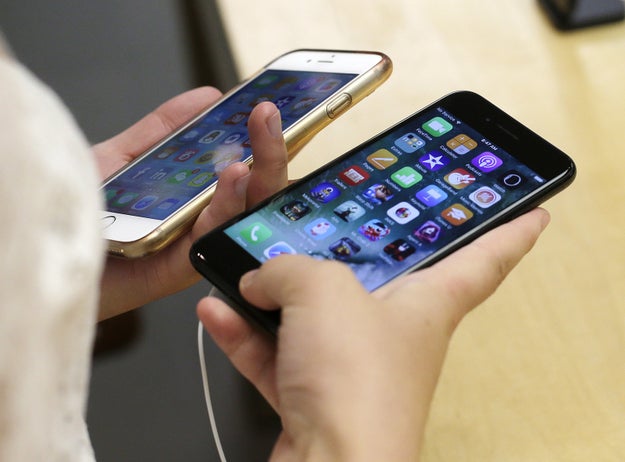
The majority of Apple chargers sold on Amazon are counterfeits and some have the potential to overheat and catch fire, Apple alleges in a lawsuit filed against a New Jersey company that sells the chargers.

The majority of Apple chargers sold on Amazon are counterfeits and some have the potential to overheat and catch fire, Apple alleges in a lawsuit filed against a New Jersey company that sells the chargers.

AP/Kiichiro Sato

As part of an ongoing battle against counterfeit products, Apple purchased a number of power products — adapters and charging and syncing cables — from Amazon and determined that they were counterfeit, according to a lawsuit filed with the U.S. District Court in San Francisco, California.

Apple accuses Mobile Star of selling Amazon counterfeit products that “pose an immediate threat to consumer safety.”

Mobile Star&;s products are not subjected to industry-standard consumer safety testing and “are poorly constructed with inferior or missing components, flawed design and inadequate electrical insulation,” the company alleges.

Groupon also sold Mobile Star&039;s power products through its site. Amazon and Groupon are not listed as defendants in the lawsuit.

In a statement, Amazon said it has “zero tolerance for the sale of counterfeits on our site.” The company said it works with closely with manufacturers and brands to stamp out fakes “and pursue wrongdoers aggressively.”

Mobile Star did not respond to BuzzFeed News&039; request for comment.

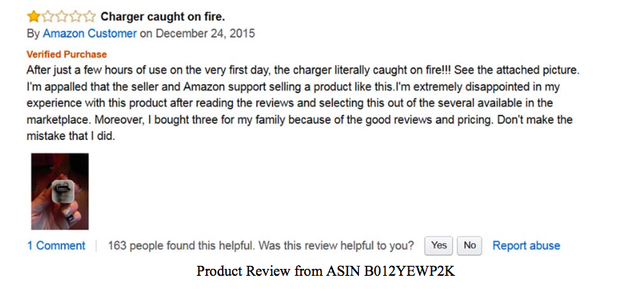
Apple claims Mobile Star’s products can overheat, catch fire, and send a “deadly electric shock” to consumers during normal use.

Apple claims Mobile Star's products can overheat, catch fire, and send a "deadly electric shock" to consumers during normal use.

The products are presented on Amazon as shipped and sold by Amazon.com using Apple&039;s own trademarks and images, the complaint says.

“Consumers are likewise unaware that the counterfeit Apple products that Amazon.com sourced from Mobile Star have not been safety certified or properly constructed,” Apple alleges.

Even with Apple&039;s efforts to stamp out fraudsters, fake product continues to flood the market, it said. Each month Apple “identifies and reports many thousands of listings for counterfeit and infringing Apple products to Amazon.com under its notice and takedown procedures.”

A review by the company of more than 100 iPhone devices, power products, and Lightning cables sold as genuine on Amazon.com showed almost 90% of these were counterfeit.

Read the full complaint:

Quelle: <a href="If You Bought An Apple Charger On Amazon It&039;s Probably Fake And Might Catch Fire“>BuzzFeed

Who’s Behind The Dating Site That Accused Julian Assange Of Pedophilia?

Who’s Behind The Dating Site That Accused Julian Assange Of Pedophilia?

ToddandClare.com

Who are Todd and Clare Hammond, and why are they leveling false charges against Julian Assange?

That&;s the question following last week&039;s bizarre news that the people behind the tiny online dating site ToddandClare.com abused their membership in a UN program to publicize a Bahamian sex crimes investigation into the WikiLeaks founder. Bahamian police said the investigation doesn&039;t exist — and WikiLeaks subsequently released a trove of documents that, if genuine, show a Todd and Clare representative attempting to blackmail Assange.

The Hammonds are the ostensible founders of ToddandClare.com. After interjecting themselves into an international dialogue on the role of WikiLeaks in the US presidential election, they remain curiously silent and unreachable — despite the efforts of journalists, WikiLeaks investigators, and the Reddit hive mind. But there may be a good reason they&039;re keeping such a low profile: Todd and Clare Hammond don&039;t seem to exist.

Instead, the person behind Todd and Clare appears to be an English toymaker, cartoon director, novelist, and book publisher named Akintunde Sahara Reid-Kapo.

Neither a small army of obsessed internet sleuths nor WikiLeaks and BuzzFeed News has been able to produce photographs, or any information beyond a dead LinkedIn page, about Todd and Clare Hammond. Nexis searches in the three states associated with ToddandClare.com — California, where they claimed to live; Texas, where the website is registered; and Michigan, where they claim to have been childhood sweethearts — returned no results remotely resembling a married couple named Todd and Clare Hammond.

The only obviously real and google-able person associated with the website ToddandClare.com (other than a programmer named Scott Drotar and a few now-baffled contractors) is Noam Chomsky, the leftist icon and Foucault interlocutor, whose endorsement of the ToddandClare side project KATIA (an algorithm to weed sex offenders out of the site) was plastered all over ToddandClare. (The site has been down since last week “following a serious hack.”)

Chomsky, for his part, seems similarly befuddled. In an email to BuzzFeed News, Chomsky said while it was possible he had endorsed the project, he had no recollection of doing so, “but that doesn’t prove much.”

But his endorsement, genuine or not, may be the key to unlocking the mystery behind ToddandClare. Metadata from an undated PDF press release touting Chomsky’s endorsement appears to indicate the file initially listed its author as “Yamie Chess Ltd” when it was created in mid-May, but was then re-saved a couple of minutes later to list “T&C Network Solutions” (ToddandClare.com&039;s corporate name) as its author.

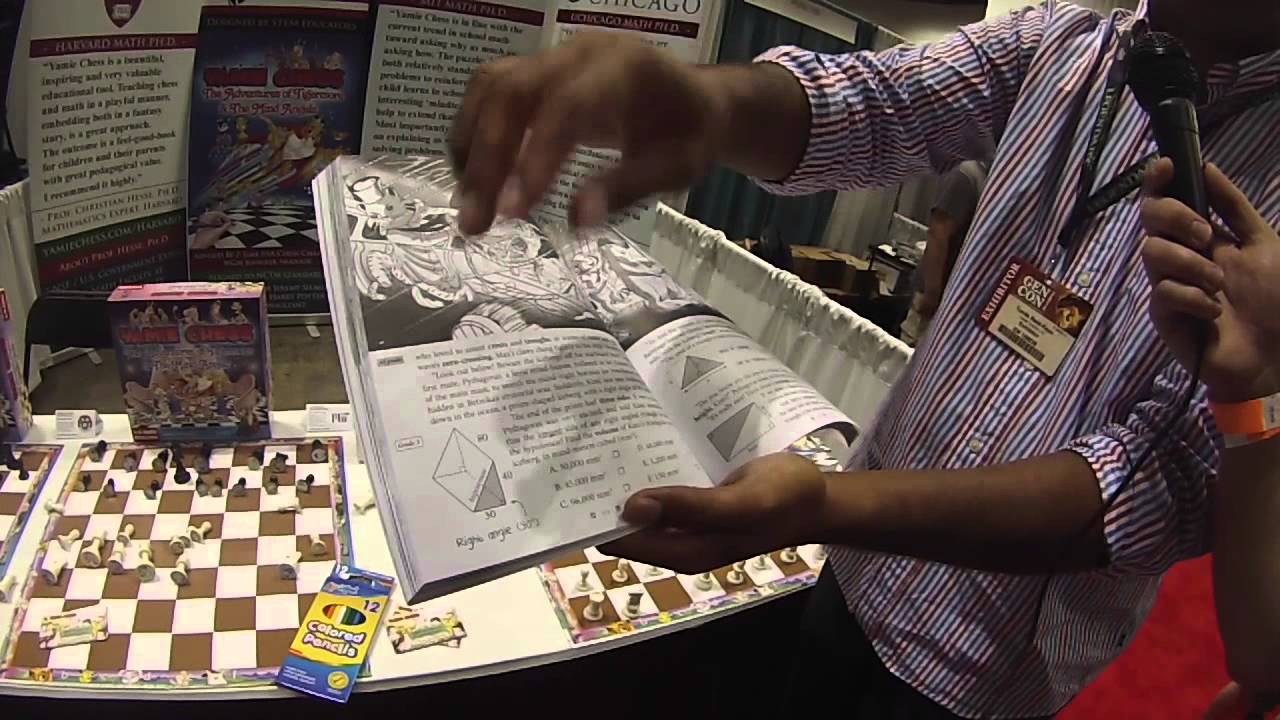
According to its website, Yamie Chess is “a diversified applied mathematics company” that makes a special chess set and accompanying comics for children, and that, jarringly, also does “data analysis and statistical consulting” for “military clients.” Though the company is now registered through a shell agent in Wyoming, the mailing address of its founder, Akintunde Sahara Reid Kapo, is 10685-B Hazelhurst Dr., Suite 14354, Houston, Texas 77043.

That&039;s the same address and suite number as ToddandClare lists here.

This indicates that someone associated with, or having access to the software of, a toy and data analytics company called Yamie Chess, which shares or shared an office with ToddandClare, wrote a press release for the dating site.

Like ToddandClare, Yamie Chess enthusiastically claims endorsements from prestigious institutions and academics; its website says “Yamie Chess has been endorsed by America&039;s best mathematicians.” (It&039;s actually not.) And like ToddandClare, it seems no one is eager to take credit for Yamie Chess. There is no staff listed on the Yamie Chess site, and the two employees listed on the Yamie Chess LinkedIn are remote contractors.

However, a 2014 Fox News article cites “Tunde Reid-Kapo” as the CEO of Yamie Chess. And on IMDB, Tunde Reid-Kapo is credited as the director and writer of “King Tigermore In Strawberry Fields,” a short and amateurish cartoon promoting Yamie Chess, which played in a handful of film festivals around the US.

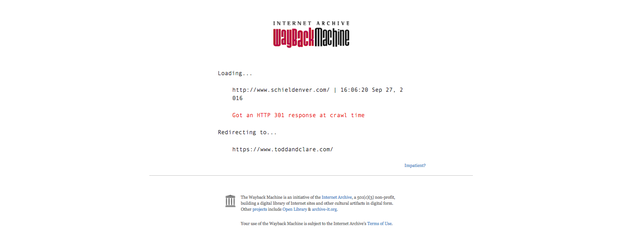
Reid-Kapo seems to have been born in England in 1984. He once owned a publishing company called Schiel and Denver, through which he published an “autobiographical” novella called My Autistic Waterlilly and a “personal declaration of independence” called Financial Existentialism. While running Schiel and Denver, Reid-Kapo signed up for the UN Global Compact — the voluntary organization that ToddandClare used to promote the phantom crime investigation against Assange. As this Medium post shows, Schiel and Denver shares a Google Analytics identifier with ToddandClare.com. And an internet archive search for Schieldenver.com shows that the site redirected to ToddandClare.com as recently as Sept. 27 of this year:

Tunde Reid-Kapo proves hard to find. His companies list addresses in Texas, Nevada, Wyoming, and London. A phone number provided to BuzzFeed News by one of the Yamie Chess–endorsing mathematicians connects to a Las Vegas law firm. In December 2015, the Australian Business Name register added a company called AKINTUNDE SAHARA REID-KAPO. But he&039;s not responsive from any of the phone numbers or email addresses connected to his name. A woman named Kate Hogan, who started sending emails on behalf of ToddandClare this month (and who, in an email obtained by BuzzFeed News, described Julian Assange as “an abhorrent and disgusting narcissist with no genuine interest in supporting women&039;s rights”), did not respond to a BuzzFeed News email asking her if she was in fact Tunde Reid-Kapo.

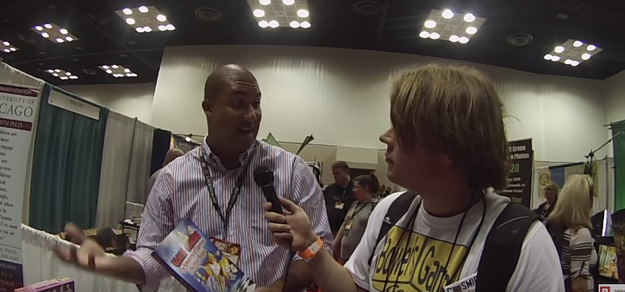
Tunde Reid-Kapo, left, at GenCon 2014.

Of course, there are a few people who might reasonably know his whereabouts. But they aren&039;t talking either. Scott Drotar, the programmer who claims to have built KATIA — the ToddandClare side project supposedly endorsed by Chomsky — hasn&039;t responded to calls and emails. Nor has the only other person strongly connected to Yamie Chess, the chess champion and professional poker player Jennifer Shahade.

The extent of Drotar&039;s involvement in ToddandClare is unclear. In February, Drotar told a BuzzFeed News reporter that he had been contracted by the site to analyze “preliminary data test studies” on KATIA, the sex-offender screening algorithm. (According to “Todd Hammond,” that algorithm had initially been built by a Google engineer, whom he refused to name. A story BuzzFeed News started in February about KATIA stalled when “Hammond” suddenly stopped cooperating after questions about this engineer.) In March, Drotar started a Kickstarter to fund “KATIA Plus.” The project videos feature both Drotar and Lexi Graboski, a Los Angeles actress who told BuzzFeed News she was hired to be a video spokesperson for ToddandClare over Fiverr, a freelance marketplace. (Graboski said that the account she interacted with on Fiverr, “NYCPrincess,” is now defunct.)

There’s also a connection between Drotar’s activity online and ToddandClare’s YouTube channel. On Drotar&039;s personal website, where he frequently blogs about living with spinal muscular atrophy, and on his personal YouTube channel, he promotes the work of Danielle Sheypuk, a psychologist known for her TEDx Talk about dating and sex for the disabled. A January video on the ToddandClare YouTube titled “Dating Advice for Guys With Disabilities” is captioned “In response to Dr. Danielle Sheypuk&039;s inspiring Ted Talk at Barnard College, Todd and Clare is the first American dating network to ACTIVELY WELCOME people with disabilities to join our network and search for love.”

And strangely, Drotar had an imaginary girlfriend named Claire before he started working as a programmer for ToddandClare. In a blog post from 2014 — months before Drotar claims to have started working on KATIA — Drotar describes his addiction to prescription painkillers. In it, he realizes that the addiction has led to a profound fabrication: “It was at this time that I realized something that completely changed my life. There was no Claire. Claire was a hallucination. Everything I thought that I knew about her is what my mind had made up to make me believe she was real.”

Then there&039;s Jennifer Shahade, a two-time US women’s chess champion. Listed on the Yamie Chess site and elsewhere as the game&039;s creator, Shahade promoted the game at several conferences in 2014, including Toy Fair in New York and GenCon in Indianapolis, where she appeared along with Reid-Kapo. She did not respond to calls or a Twitter message from BuzzFeed News.

The GenCon connection is especially interesting. In an interview with BuzzFeed News in February 2016 about ToddandClare, someone claiming to be Todd Hammond said that he and his wife, Clare, came up with the idea for the dating site at a tabletop gaming conference in Indianapolis called, you guessed it, GenCon.

Whether or not Reid-Kapo and Shahade — with or without Drotar — are the pair behind the tiny dating site, they certainly seem to hold the answers to the question of Todd and Clare Hammond&039;s real identities. Which leaves just one real question:

What, exactly, do they have against Julian Assange?

Stephanie Lee contributed to the reporting in this story.

Quelle: <a href="Who’s Behind The Dating Site That Accused Julian Assange Of Pedophilia?“>BuzzFeed

Here's What The iPhone's "Portrait Mode" Depth Effect Looks Like

Apple

At Apple&;s iPhone event in September, company SVP Phil Schiller announced “Portrait Mode,” a new camera feature exclusive to the iPhone 7 Plus. The beta version of Portrait Mode, which uses the device&039;s dual-camera system to add a gauzy, out-of-focus “bokeh” effect to a photo&039;s background while keeping the foreground in focus, is finally available today via the iOS 10.1 update.

The iPhone 7 Plus can preview Portrait Mode&039;s depth-of-field effect live, allowing photographers the ability to calibrate their portrait shots before hitting the shutter. “This is something you can’t even do with a DSLR,” Schiller said at Apple&039;s event.

Nicole Nguyen / BuzzFeed News

To try out Portrait Mode, you need to have an iPhone 7 Plus with iOS 10.1 installed. Back up your phone, and go to Settings > General > Software Update.

Once the update is installed, open the Camera app and swipe to the left to reach the Portrait tab.

You&039;ll see suggestions in the preview area, like “more light required,” “place subject within eight feet,” or “move farther away.”

Allyson Laquian / BuzzFeed News

Portrait is exclusive to the iPhone 7 Plus, because it takes advantage of the phone&039;s dual-camera system. The phone takes information from both the 56mm telephoto lens and the wide angle lens to map the “depth” of the image. The effect looks best on (no surprise here) close-up portraits.

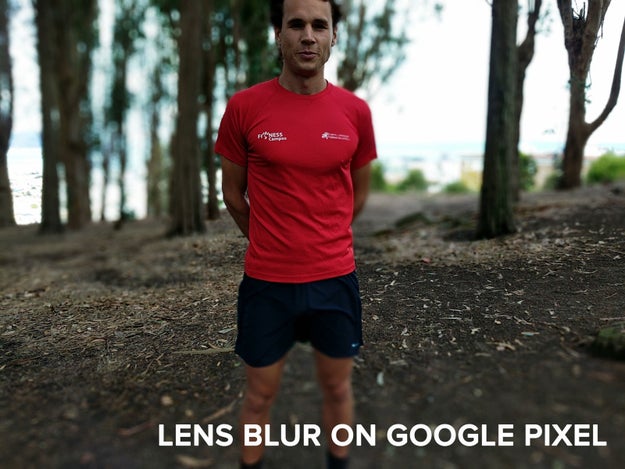
The Google Camera app has had a similar feature, called “Lens Blur,” since 2014. The app uses computer vision algorithms to track the camera&039;s 3D position and sense the depth of a photo to create the same depth-of-field effects.

Nicole Nguyen / BuzzFeed News

No word from Apple on when Portrait Mode will leave beta, but the company said it will continue to make improvements to the feature. Intrigued by Apple&039;s newest iPhones? Here&039;s our review of the iPhone 7 and 7 Plus.

iOS 10.1 includes some other noteworthy features. In Messages, effects will now play when Reduce Motion is enabled. Previously, Reduce Motion needed to be turned off to view full-screen and bubble effects. Users can also replay Messages effects in the update. The Maps app will now show a transit fare comparison when viewing alternative transit routes. On the iPhone 7, the Home Button click settings now appear in search results.

The update is available for iPhone 5 and newer, iPad 4 and newer, and the sixth generation iPod Touch.

Quelle: <a href="Here&039;s What The iPhone&039;s "Portrait Mode" Depth Effect Looks Like“>BuzzFeed

Here's What Tech Leaders Think About Trump

Silicon Valley entrepreneurs and investors spoke about Trump both onstage and to BuzzFeed News at Vanity Fair&;s New Establishment Summit in San Francisco.

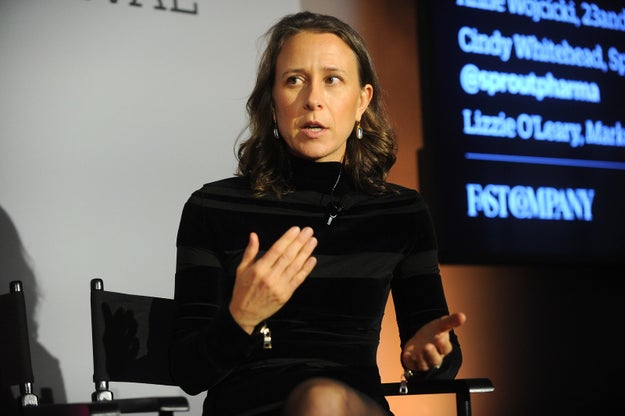
Anne Wojcicki, CEO and cofounder of 23andMe

Anne Wojcicki, CEO and cofounder of 23andMe

“I think this election has been a force in [highlighting] much bigger issues about how we think about women and immigration. It&;s gotten people engaged. I also think the creative energy that&039;s come out about women — there&039;s really the beginning of true change and true movement. And I give Trump thanks for that,” she said, smiling. Issues that affect women, such as sexual assault, were “already starting to reach crescendo,” and have now become national conversations.

Brad Barket / Getty Images

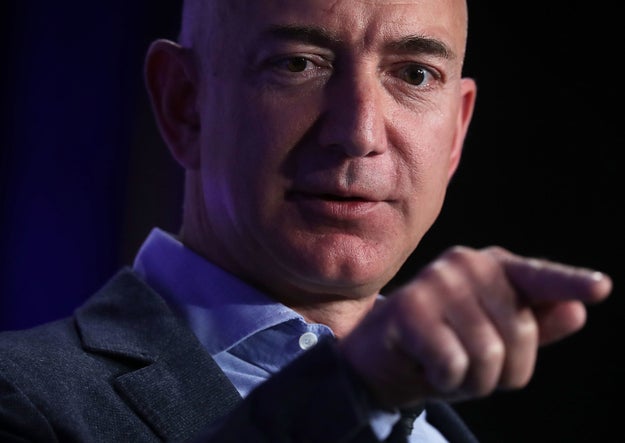
Jeff Bezos, CEO of Amazon and owner of the Washington Post

Jeff Bezos, CEO of Amazon and owner of the Washington Post

“I think the United States is incredibly robust. We’re not a new democracy, we’re very robust, but it is inappropriate for a presidential candidate to erode that around the edges. They should be trying to burnish it instead of erode it. And when you look at the pattern of things, it’s just not going after the media and threatening retribution for people who scrutinize him, it is also saying that he may not give a graceful concession speech if he loses the election. That erodes our democracy around the edges. Saying that he might block his opponent if he wins
erodes our democracy around the edges. These aren’t acceptable behaviors, in my opinion.

Alex Wong / Getty Images

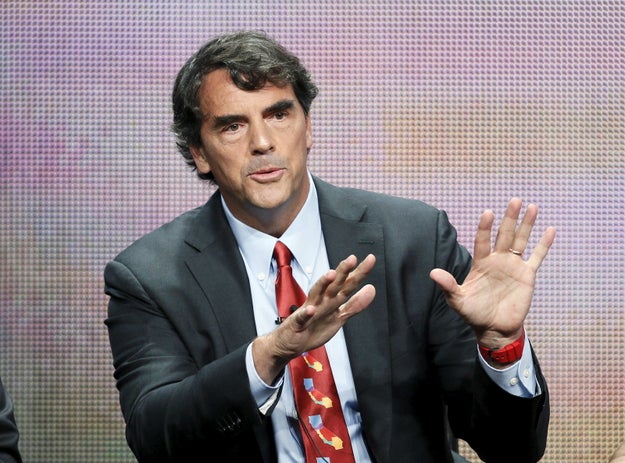
Tim Draper, venture capitalist

Tim Draper, venture capitalist

“We have a duopoly in government and it&039;s not working … We&039;re just an ATM and our vote doesn&039;t even seem to count. Washington seems to get a lot more out of California than California gets out of Washington. We have a huge problem. We need a new system. We need a third party. We’re given two candidates and that&039;s the best we can do?&;”

Danny Moloshok / Reuters

Chamath Palihapitiya, founder and CEO of Social Capital

Chamath Palihapitiya, founder and CEO of Social Capital

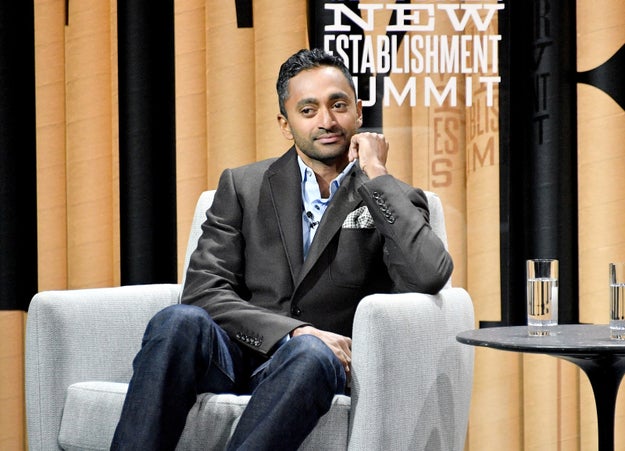
“The short-term impacts [on the stock market if Trump is elected] are probably overstated and the long-term impacts are probably underestimated. Most of us who have public market exposure are getting an emotive risk off going into November 8th, and so a lot of the volatility is going to be short term and relatively muted if he wins. I just think you have to take a bigger step back and say: It’s like you’re just repudiating all the good things that make America awesome — and the long-term implications of that. People like us, people like me — I immigrated to this country and I pour enormous amounts of capital, I pay enormous amounts of taxes. I want to be here, I want to help this team win.”

Mike Windle / Getty Images


View Entire List ›

Quelle: <a href="Here&039;s What Tech Leaders Think About Trump“>BuzzFeed

Inside The Strange, Paranoid World Of Julian Assange

Carl Court / Getty Images

On 29 November 2010, then US secretary of state Hillary Clinton stepped out in front of reporters to condemn the release of classified documents by WikiLeaks and five major news organisations the previous day.

WikiLeaks&; release, she said, “puts people’s lives in danger”, “threatens our national security”, and “undermines our efforts to work with other countries”.

“Releasing them poses real risks to real people,” she noted, adding, “We are taking aggressive steps to hold responsible those who stole this information.”

Julian Assange watched that message on a television in the corner of a living room in Ellingham Hall, a stately home in rural Norfolk, around 120 miles away from London.

I was sitting around 8ft away from him as he did so, the room’s antique furniture and rugs strewn with laptops, cables, and the mess of a tiny organisation orchestrating the world’s biggest news story.

Minutes later, the roar of a military jet sounded sharply overhead. I looked around the room and could see everyone thinking the same thing, but no one wanting to say it. Surely not. Surely? Of course, the jet passed harmlessly overhead – Ellingham Hall is not far from a Royal Air Force base – but such was the pressure, the adrenaline, and the paranoia in the room around Assange at that time that nothing felt impossible.

Spending those few months at such close proximity to Assange and his confidants, and experiencing first-hand the pressures exerted on those there, have given me a particular insight into how WikiLeaks has become what it is today.

To an outsider, the WikiLeaks of 2016 looks totally unrelated to the WikiLeaks of 2010. Then it was a darling of many of the liberal left, working with some of the world’s most respected newspapers and exposing the truth behind drone killing, civilian deaths in Afghanistan and Iraq, and surveillance of top UN officials.

Now it is the darling of the alt-right, revealing hacked emails seemingly to influence a presidential contest, claiming the US election is “rigged”, and descending into conspiracy. Just this week on Twitter, it described the deaths by natural causes of two of its supporters as a “bloody year for WikiLeaks”, and warned of media outlets “controlled by” members of the Rothschild family – a common anti-Semitic trope.

The questions asked about the organisation and its leader are often the wrong ones: How has WikiLeaks changed so much? Is Julian Assange the catspaw of Vladimir Putin? Is WikiLeaks endorsing a president candidate who has been described as racist, misogynistic, xenophobic, and more?

These questions miss a broader truth: Neither Assange nor WikiLeaks (and the two are virtually one and the same thing) have changed – the world they operate in has. WikiLeaks is in many ways the same bold, reckless, paranoid creation that once it was, but how that manifests, and who cheers it on, has changed.
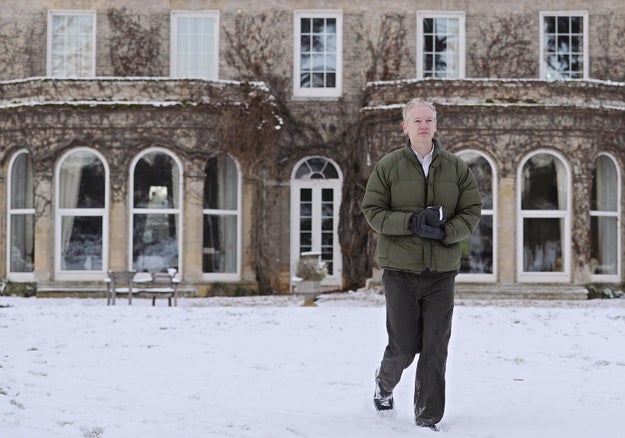
Julian Assange in the grounds of Ellingham Hall in December 2010.

Carl Court / AFP / Getty Images

The cable release

Clinton’s condemnation of WikiLeaks and its partners’ release of classified cables was a simple requirement of her job. Even had she privately been an ardent admirer of the site – which seems unlikely – doing anything other than strongly condemning the leak was nonetheless never an option.

That’s not how it felt to anyone inside WikiLeaks at that moment, though. It was an anxiety-inducing time. WikiLeaks was the subject of every cable TV discussion and every newspaper front page, and press packs swarmed the gates of every address even tenuously connected to it. Commentators called for arrest, deportation, rendition, or even assassination of Assange and his associates.

At the same time, WikiLeaks was having its payment accounts frozen by Visa and Mastercard, Amazon Web Services pulled hosting support, and Assange was jailed for a week in the UK (before being bailed) on unrelated charges relating to alleged sexual offences in Sweden.

Inside WikiLeaks, a tiny organisation with only a few hundred thousand dollars in the bank, such pressure felt immense. Most of the handful of people within came from a left-wing activist background, many were young and inexperienced, and few had much trust of the US government – especially after months of reading cables of US mistakes and overreactions in the Afghan and Iraq war logs, often with tragic consequences.

How might the US react, or overreact, this time? WikiLeaks was afraid of legal or extralegal consequences against Assange or other staff. WikiLeakers were angry at US corporations creating a financial blockade against the organisation with no court ruling or judgments – just a press statement from a US senator.

And the figurehead of this whole response was none other than Hillary Clinton. For Assange, to an extent, this is personal.
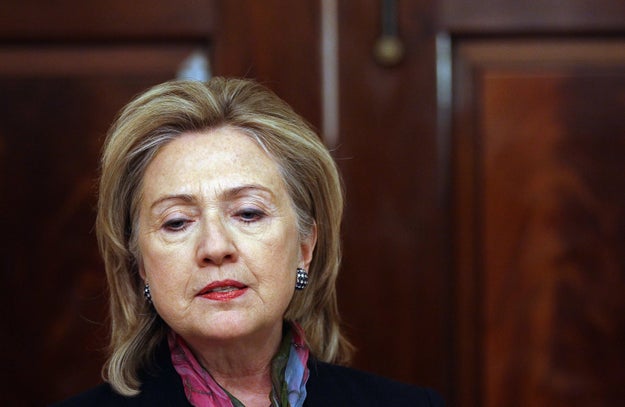
Hillary Clinton in 2010, giving remarks condemning WikiLeaks&039; release of classified embassy cables.

Win Mcnamee / Getty Images

In the room

It’s unfair, or at least an oversimplification, to say Assange is anti-American. He would say he supports the American people but believes its government, its politics, and its corporations are corrupt.

A result of this is that he doesn’t see the world in the way many Americans do, and has no intrinsic aversion to Putin or other strongmen with questionable democratic credentials on the world stage.

This shows in some of his supporters. A few days after Assange arrived with me and a few others at Ellingham Hall, an older man, introduced to us as “Adam”, turned up. Assange had invited independent freelance journalists from around the world to the country house to see cables relating to their country – usually no more than a few thousand at a time.

“Adam” was different: He immediately asked for everything relating to Russia, eastern Europe, and Israel – and got it, more than 100,000 documents in all. A few stray comments of his about “Jews” prompted a few concerns on my part, dismissed quickly by another WikiLeaker – “don’t be silly… He’s Jewish himself, isn’t he?”

A short while later, I learned “Adam”&039;s real identity, or at least the name he most often uses: He was Israel Shamir, a known pro-Kremlin and anti-Semitic writer. He had been photographed leaving the internal ministry of Belarus, and a free speech charity was concerned this meant the country’s dictator had access to the cables and their information on opposition groups in the country.

Assange showed no concern at these allegations, dismissing and ignoring them until the media required a response. Assange simply denied Shamir had ever had access to any documents.

This was untrue, Assange knew it was untrue, and I knew it was untrue — it was me, at Assange’s instructions, who gave them to him. A few days later, a reporter at a Russian publication wrote to WikiLeaks.

“I really can&039;t understand why Wikileaks is just cooperating with the magazine Russian reporter which never had a record of even slightly critising [sic] the Russian government,” they wrote.

“I contacted the person responsible for contacts with Wikileaks in Russia (Israel Shamir) but he told me we could not look at the cables ourselves and requested money which is not very convenient for us (not because of money but because we would like to go through the files as well).”

Anti-Semitism never seemed a major part of Assange’s agenda – I never heard him say a remark I caught as problematic in this way – but it was something he was happy to conveniently ignore in others. Support for Russia or its strongmen eastern European allies was much the same: tolerable for those who otherwise are allies of WikiLeaks and do as Assange says.

WikiLeaks has never had a problem with Russia: not then, not now.
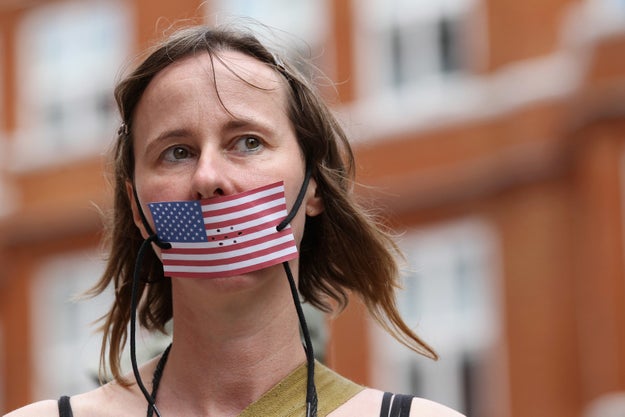
A supporter of Julian Assange outside Ecuador&039;s London embassy at a protest in 2012.

Oli Scarff / Getty Images

A certain resemblance

Assange is routinely either so lionised by supporters or demonised by detractors that his real character is lost entirely.

Far from the laptop-obsessed autist he’s often seen as, he’s a charismatic speaker with an easy ability to dominate a room or a conversation. He may have little interest in listening to those around, but he can tell whether or not he has your attention and change his manner to capture it. He has, time and again, proven to be a savvy media manipulator, marching the mainstream media up the hill and down again to often damp-squib press conferences. His technical skills are not in doubt.

What’s often underestimated is his gift for bullshit. Assange can, and does, routinely tell obvious lies: WikiLeaks has deep and involved procedures; WikiLeaks was founded by a group of 12 activists, primarily from China; Israel Shamir never had cables; we have received information that [insert name of WikiLeaks critic] has ties to US intelligence.

At times, these lies are harmless and brilliant. When, on the day the state cables launched, WikiLeaks’ site wasn’t ready (we hadn’t even written the introductory text), the site was kept offline after a short DDoS attack, so Assange took the opportunity to tweet that the site was under an unprecedentedly huge attack to give us time to get the site together.

Six hours later, when we were done, all eyes were looking: What was so bad in the cables that someone was working so hard to keep the site offline? The dramatic flourish worked, but other lies were dumb and damaging – and quickly eroded any kind of trust for those trying to work closely with him.

Redaction – possibly one of the clearest apparent changes between 2010 and 2016 WikiLeaks – became one of these trust issues. For Assange, redacting releases was essentially an issue of expediency: It would remove an attack line from the Pentagon and state, and keep media partners onside. For media outlets, it was the only responsible way to release such sensitive information.

These days, WikiLeaks routinely publishes information without redaction, and seemingly with only minimal pre-vetting. This is merely a change in expediency: There are no longer newspaper partners to keep onside. The results are a partial vindication for both sides – while it&039;s hard to dispute that some of WikiLeaks&039; publication of private data has been needlessly reckless and invasive, there remains no evidence of any direct harm coming to someone as a result of a WikiLeaks release.

Conversely, Assange often trusts strangers more than those he knows well: He dislikes taking advice, he dislikes anyone else having a power base, and he dislikes being challenged – especially by women. He runs his own show his own way, and won’t delegate. He’s happy to play on the conspiratorial urges of others, with little sign as to whether or not he believes them himself.

There are few limits to how far Assange will go to try to control those around him. Those working at WikiLeaks – a radical transparency organisation based on the idea that all power must be accountable – were asked to sign a sweeping nondisclosure agreement covering all conversations, conduct, and material, with Assange having sole power over disclosure. The penalty for noncompliance was £12 million.

I refused to sign the document, which was sprung on me on what was supposed to be a short trip to a country house used by WikiLeaks. The others present – all of whom had signed without reading – then alternately pressured, cajoled, persuaded, charmed, and pestered me to sign it, alone and in groups, until well past 4am.

Given how remote the house was, there was no prospect of leaving. I stayed the night, only to be woken very early by Assange, sitting on my bed, prodding me in the face with a stuffed giraffe, immediately once again pressuring me to sign. It was two hours later before I could get Assange off the bed so I could (finally) get some pants on, and many hours more until I managed to leave the house without signing the ridiculous contract. An apologetic staffer present for the farce later admitted they&039;d been under orders to “psychologically pressure” me until I signed.

And once you have fallen foul of Assange — challenged him too openly, criticised him in public, not toed the line loyally enough — you are done. There is no such thing as honest disagreement, no such thing as a loyal opposition differing on a policy or political stance.

To criticise Assange is to be a careerist, to sell your soul for power or advantage, to be a spy or an informer. To save readers a Google search or two, he would tell you I was in WikiLeaks as an “intern” for a period of “weeks”, and during that time acted as a mole for The Guardian, stole documents, and had potential ties to MI5. Compared to some who’ve criticised Assange, I got off fairly lightly.

Those who have faced the greatest torments are, of course, the two women who accused Assange of sexual offences in Sweden in the summer of 2010. The details of what happened over those few days remain a matter for the Swedish justice system, not speculation, but having seen and heard Assange and those around him discuss the case, having read out the court documents, and having followed the extradition case in the UK all the way to the supreme court, I know it is a real, complicated sexual assault and rape case. It is no CIA smear, and it relates to Assange&039;s role at WikiLeaks only in that his work there is how they met.

Assange&039;s decision – and it was a decision – to elide his Swedish case with any possible US prosecution was a cynical one. It led many to support his cause alongside those of Chelsea Manning or Edward Snowden. And yet it is more difficult, not easier, to extradite Assange to the US from Sweden than from the UK, should Washington even wish to do so.

Assange coming to believe his own spin may be what&039;s been behind six years of effective imprisonment for him. No one is keeping him in the Ecuadorian embassy – where he has fallen out with his hosts – but himself, and a fear of losing face. But the women who began the case have lost at least as much, becoming for months and years two of the most hated figures on the internet, smeared as “whores”, “CIA spies”, and more. They will never get their time back.
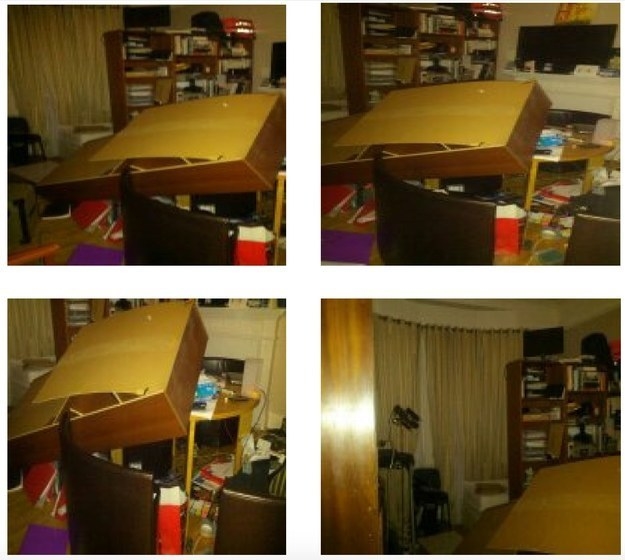
Four photos of Julian Assange&039;s room in Ecuador&039;s London embassy, prepared for an internal report following an incident in which officials believe Assange toppled a bookshelf.

Ecuadorian government report / Via buzzfeed.com

How it ends

All of this is the cocktail of ingredients that produces 2016’s incarnation of WikiLeaks. Julian Assange mistrusts the US government, dislikes Hillary Clinton, and has spent years trapped in a small embassy flat in west London, in declining physical and psychological health, monitored minute-by-minute in reports filed by his wary Ecuadorian hosts.

Assange would not, in my view, ever knowingly be a willing tool of the Russian state: If Putin came and gave him a set of orders, they’d be ignored. But if an anonymous or pseudonymous group came offering anti-Clinton leaks, they’d have found a host happy not to ask too many awkward questions: He’s set up almost perfectly to post them and to push for them to have the biggest impact they can.

The poet Humbert Wolfe wrote, “You cannot hope to bribe or twist / (thank God&;) the British journalist. / But, seeing what the man will do / unbribed, there&039;s no occasion to.” Such is Russia’s good fortune with Assange. If it is indeed Russia behind the leaks, as US intelligence has reported, he will need no underhanded deals or motives to do roughly as they’d hope. He would do that of his own free will.

The question is whether Assange will end up disappointed. Assange believes WikiLeaks was a primary driver of the Arab Spring, which led to major uprisings in around a dozen countries. This is the stage on which Assange believes he plays — the equal of a world leader, still the biggest story in the world.

For a time, he was. While the extent of WikiLeaks&039; role in the Arab Spring remains a matter for debate, Assange was at the forefront of an information revelation. His attempts to regain the spotlight in the meantime have largely failed.

WikiLeaks has republished public information as if a leak, published hacks obtained by Anonymous and Lulzsec for only moderate impact, and released email caches of private intelligence companies of much less significance than what went before. Even Assange&039;s attempt to aid Edward Snowden was largely botched, leaving the whistleblower stranded in a Moscow airport for weeks. In recent weeks, Snowden has publicly clashed with Assange over the latter&039;s handling of the Democratic National Committee leaks.

Assange&039;s approach has taken WikiLeaks from the most powerful and connected force of a new journalistic era to a back-bedroom operation run at the tolerance (or otherwise) of Ecuador’s government. This is his shot at reclaiming the world stage, and settling a score with Hillary Clinton as he does so.

Assange is a gifted public speaker, with a talent for playing the media, struggling with an inability to scale up and professionalise his operation, to take advice; a man whose mission was often left on a backburner in his efforts to demonise his opponents.

These are traits often ascribed to Donald Trump, the main beneficiary of WikiLeaks’ activities through the reaction, and its modern-day champion during presidential debates. Those traits have left Assange a four-year resident of a Harrods hamper–laden single room in a London embassy.

It remains to be seen what they’ll do for Donald Trump.

Quelle: <a href="Inside The Strange, Paranoid World Of Julian Assange“>BuzzFeed

At A Conference For Coastal Elites, Silicon Valley Talks Trump

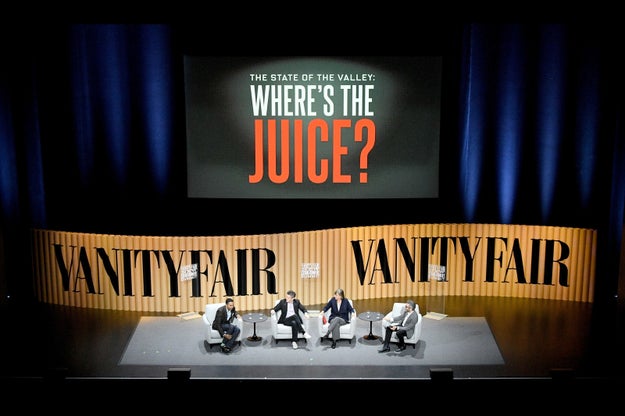
(L-R) Founder/CEO of Social Capital Chamath Palihapitiya, co-founder/CEO of Box Aaron Levie, partner at KPCB Mary Meeker, and special correspondent for Vanity Fair Nick Bilton.

Mike Windle / Getty Images

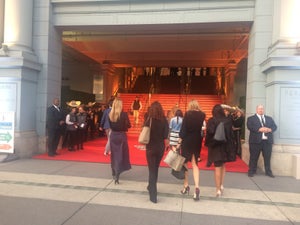
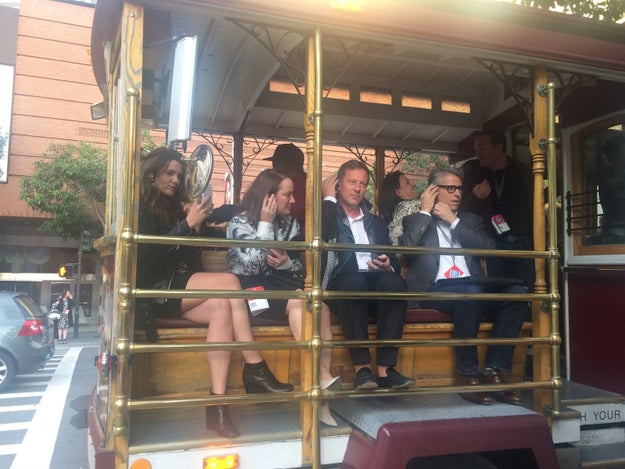
Unless you’re invited to Graydon Carter’s private dinner, the cocktail party at San Francisco’s historic Ferry Building is supposed to be the highlight of the annual Vanity Fair New Establishment Summit, a high-end business conference for the coastal elite. On Wednesday evening, guests were escorted from the Yerba Buena Center to the Embarcadero by trolley and greeted by a six-person mariachi band who played through the selfies. But a little past 6 p.m., the crowd in the cathedral-esque lobby had already thinned, save for black-clad waitstaff and a few chefs dutifully cranking out mini pies with duck or mushroom at the pizza station. Everyone else was huddled together in a small alcove bar where two TVs had been set up to show the final presidential debate. Investment guru Mellody Hobson and her husband, director George Lucas, snagged themselves a couple chairs in front of one screen. Most stood. It was hard to hear over the din, but when Hillary Clinton called Donald Trump a puppet for Vladimir Putin, the crowd cheered in unison.

Vanity Fair’s conference, now in its third year, draws from some of the right wing’s least favorite industries, like media, entertainment, and Wall Street. Conan O’Brien showed up to the cocktail party, as did CBS CEO Les Moonves, former Twitter CEO Dick Costolo, billionaire investor Yuri Milner, and 23andMe CEO Anne Wojcicki, who brought her mom and daughter. Many of the speakers who took the stage, like Amazon CEO Jeff Bezos, Uber CEO Travis Kalanick, and Priscilla Chan, who co-founded the Chan Zuckerberg Initiative with her husband, Mark Zuckerberg, were culled from the magazine’s annual “New Establishment” list. It was a gray-haired, blue-state audience, and speakers addressed everyone as though they were voting for Hillary Clinton. The two most crowd-pleasing panels were Fran Leibovitz’s rapid-fire roast of the GOP nominee and the interview with Bezos, where he said Trump’s recent comments about contesting election results “erodes our democracy around the edges.”

Guests walking into the Ferry Building.

Nitasha Tiku / BuzzFeed News

Trump is an unavoidable topic for Bezos, who owns the Washington Post, but the rise of Trump cast a shadow even over the more straightforwardly tech- and business-oriented panels. The tech leaders in the room seemed forced to contend with the reality that Silicon Valley’s rapid consolidation of power and wealth — and its vision for a world forever altered by the products and services — might be hastening the same inequality that helped to fuel this toxic election.

“I do understand what’s driving a lot of Trump support,” AOL co-founder Steve Case said on stage. Case is now CEO of the investment firm Revolution LLC, which has backed Zipcar, LivingSocial, and Sweetgreen. A couple years ago, he launched Rise of the Rest, a bus tour that hosts startup competitions in different cities and invests $100,000 in the winner. “There are a lot of people that are frustrated and scared and fearful and feel left out, got left behind by globalization, digitalization, and are really concerned about the future,” he said. “They’re mad.”

Last month Case, who hadn’t endorsed a candidate in 30 years, wrote an op-ed in the Washington Post to explain why he’s voting for Hillary Clinton.

During a session called “Where’s the Juice?”, panelists, including venture capitalists Chamath Palihapitiya and Mary Meeker, were asked about industries affected by that globalization and digitalization, and the 3.5 million truckers who might soon be out of a job because of self-driving technology. Palihapitiya said cities could charge these new services to bring in immense revenue and municipal debt relief. Meeker brought up programs that Amazon and AT&T have already put in place to re-educate their workforce, potentially for jobs with another employer.

In the crowd, it was easy to spot familiar faces like Derek Blasberg, “the Truman Capote of Instagram,” or Uber board member and VC Bill Gurley, or angel investor Ron Conway typing away on his laptop or thumbing through a file folder.

Earlier in the panel, Meeker said “democracy was agitated” and that Trump had raised important issues that “made people reflect a lot more.”

“I feel like everyone has had a wake-up call to this deep unhappiness and unrest,” Lexie Reese told BuzzFeed News. Reese worked at Google before joining Gusto, a human resources and payroll startup for small businesses. “I want people to understand what the world looks like outside of New York, LA, and San Francisco,” she said.

Trump’s name also cropped up on a panel called “What Are They Thinking? Man Meets Machine,” which featured Sebastian Thrun, CEO of the education startup Udacity, who is best known for founding Google X, the corporation’s big ideas division. Thrun was asked about the potential digital divide that could widen if “privileged people” have access to AI applications while the less privileged have less access and less knowledge about how the technology works. Thrun agreed that more could be done to close this gap. “It’s something I think in Silicon Valley we should be doing because [the industry can be] very myopic, looking inside, but there’s all of America. These days I scratch my head — how come so many Americans are voting for this guy called Trump?”

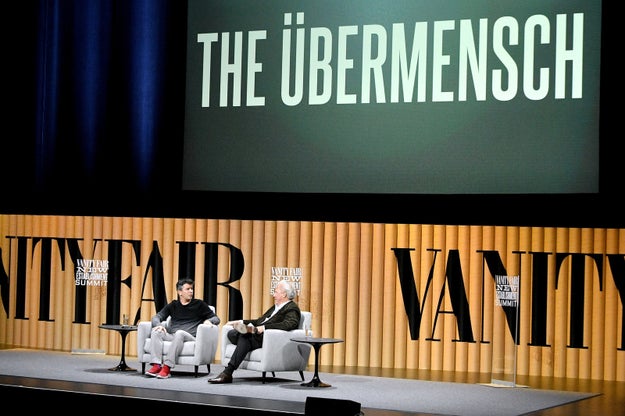
Co-founder/CEO of Uber Travis Kalanick, (left) and editor of Vanity Fair Graydon Carter speak onstage during “The Übermensch&;” at the Vanity Fair New Establishment Summit at Yerba Buena Center for the Arts in San Francisco, California, on Oct. 19, 2016 .

Mike Windle / Getty Images

A couple minutes earlier, Thrun had shared his vision for AI: “When we stop doing repetitive mindless work — the type of stuff most of us do in the office every day — and unfold our creativity, we’re going to have amazing great new jobs&;” The audience did not look entirely convinced.

In general, for all the self-consciousness spurred by the rise of Trump, tech leaders seemed more sure-footed envisioning an egalitarian future than explaining persistent inequality in Silicon Valley today, where the statistics are grim. Case, the bus tour CEO, said that black and Latino founders each only have access to 1% of the total venture capital funding invested and that 90% of venture capital funding goes to men. The audience muttered in surprise.

The tech industry has been flooded with venture capital during the tech boom. The topic of who gets access to that funding came up in a panel about how to find the next billion-dollar idea.

The moderator, Andrew Ross Sorkin, asked Michael Moritz, a general partner with Sequoia Capital, about the time Moritz said he didn’t want to invest in anyone over 27 years old. “You can’t say that legally in the state of California, I deny ever saying that,” the investor replied, seemingly in jest.

Sorkin asked the question again, noting, “I’ve heard Peter Thiel say 30 years old is the cutoff.”

Moritz replied that entrepreneurship is “far easier” when someone is “age of 18 or 19 or 21, which is often when we intersect with people who start the most interesting companies around — you have no sense of how difficult it’s going to be, and by the time you’re age 30 or 35 with all sorts of other obligations, you know how difficult building anything [can be].”

Later, Moritz tried to explain another potential employer violation: a TV interview from December where he said Sequoia had no female investors because the firm was not prepared to “lower our standards.” Onstage to his left were two top executives, both women, including Mary Parent, the Hollywood producer who is making a film about Theranos. When Sorkin read his “standards” quote aloud, Moritz slouched back in his seat and fidgeted, awkwardly stacking one foot on top of the other, patterned socks plainly visible.

“All of us have unconscious biases,” he said later. “Look at the four of us here. Imagine being a black or a Hispanic and trying to get a job as a senior position in Silicon Valley? It is brutal. Outrageously unfair.” The next day, Sequoia announced that it was hiring its first female investor after 44 years in business.

Thiel’s name had come up in other panels as well, but in relation to Donald Trump. Since Thiel’s speech at the Republican National Convention, the billionaire venture capitalist has become a reminder that for all its T-shirts and transparency reports on diversity, Silicon Valley is still ruled by at least a few white male oligarchs determined to conserve their own power. In fact, Vanity Fair’s conference landed just as the industry was mired in a debate over the news that Thiel donated $1.25 million to Trump’s presidential campaign. The donation was made not long after the release of a tape of Trump bragging about sexual assault and after numerous women came forward with sexual assault allegations.

Thiel is on the board of Facebook and a part-time partner at Y Combinator, a very influential incubator in Silicon Valley. Facebook and Y Combinator have both loudly voiced their commitment to diversity and benefited greatly from the goodwill that followed. Both were pressured to cut ties with Thiel to demonstrate a commitment to their stated company values and as a sign that they didn’t support Trump’s fascist and racist threats. Facebook and Y Combinator both opted to let Thiel stay in place.

It highlighted a position many tech leaders find themselves stuck in. The missions they espouse to the public are benevolent, but their decisions are inevitably governed by self-interest. They choose not to acknowledge that, leading to tortured statements like the ones written in defense of Thiel.

Palihapitiya, a former Facebook executive who has donated to Hillary Clinton’s campaign, said onstage that if Thiel were on the board of his investment firm, Thiel would be out, but Palihapitiya emphasized that his decision is possible because he has retained control of his firm.

“I think this is a free world. They’re entitled to their opinions,” said Meeker, who donated to Jeb Bush’s Right to Rise super PAC. Levie suggested that Facebook put its relationship with Thiel “on temporary pause.”

Bezos tried to put it all in perspective. “Peter Thiel is a contrarian first and foremost, and you just have to remember that contrarians are usually wrong,” he said. “My view is even though I would have a dramatically different opinion [from Thiel], I think that going down that path of tying everything to everything lies madness. You cannot say you don’t want to live in a country where you can’t associate with people who have wildly different political opinions from yourself.”

At the end of the panel on artificial intelligence, a young black woman asked Thrun whether bias in machine learning “could perpetuate structural inequality at a velocity much greater than perhaps humans can.” She offered the example of criminal justice, where “you have a machine learning tool that can identify criminals, and criminals may disproportionately be black because of other issues that have nothing to do with the intrinsic nature of these people, so the machine learns that black people are criminals, and that’s not necessarily the outcome that I think we want.”

In his reply, Thrun made it sound like her concern was one about political correctness, not unconscious bias. “Statistically what the machines do pick up are patterns and sometimes we don’t like these patterns. Sometimes they’re not politically correct,” Thrun said. “When we apply machine learning methods sometimes the truth we learn really surprises us, to be honest, and I think it’s good to have a dialogue about this.”

A couple hours later, the conference ended with an outdoor cocktail party in a closed off area of the park. Annie Leibowitz was sitting in the corner of a makeshift wooden booth. Waiters passed around bite-sized lobster rolls and little discs of steak. As the guests streamed in, women stopped by every so often to tell the person who asked about bias that they really liked her question.

Guests on their way to the Ferry Building listening to the third presidential debate on individual radios provided by Vanity Fair.

Nitasha Tiku / BuzzFeed News

Quelle: <a href="At A Conference For Coastal Elites, Silicon Valley Talks Trump“>BuzzFeed

Facebook Will Now Allow Graphic Content If It's Newsworthy

Prepare yourself: Your Facebook filter bubble might pop a few times in the coming weeks. In a Friday blog post, the company said it plans to allow more contentious content in your timelines and will now consider the newsworthiness of graphic words and images before censoring them.

“In the weeks ahead, we’re going to begin allowing more items that people find newsworthy, significant, or important to the public interest — even if they might otherwise violate our standards,” Joel Kaplan, Facebook&;s vice president for global public policy, and Justin Osofsky, the company&039;s vice president for global operations and media partnerships wrote. “… Our intent is to allow more images and stories without posing safety risks or showing graphic images to minors and others who do not want to see them.”

According to the Wall Street Journal, Facebook&039;s announcement follows intense internal debates over Donald Trump&039;s posts to the social network — particularly ones advocating for bans on all Muslim immigration. Some Facebook staffers argued that some of Republican presidential candidate&039;s comments violate the company&039;s rules about hate speech. But CEO Mark Zuckerberg determined that they should stay, telling Facebook employees that while Trump&039;s rhetoric qualified as hate speech, removing it could have far-reaching consequences. The Journal reports that several Muslim content moderators threatened to quit over the decision, saying that Zuckerberg was allowing Trump an exception to rules meant to protect users.

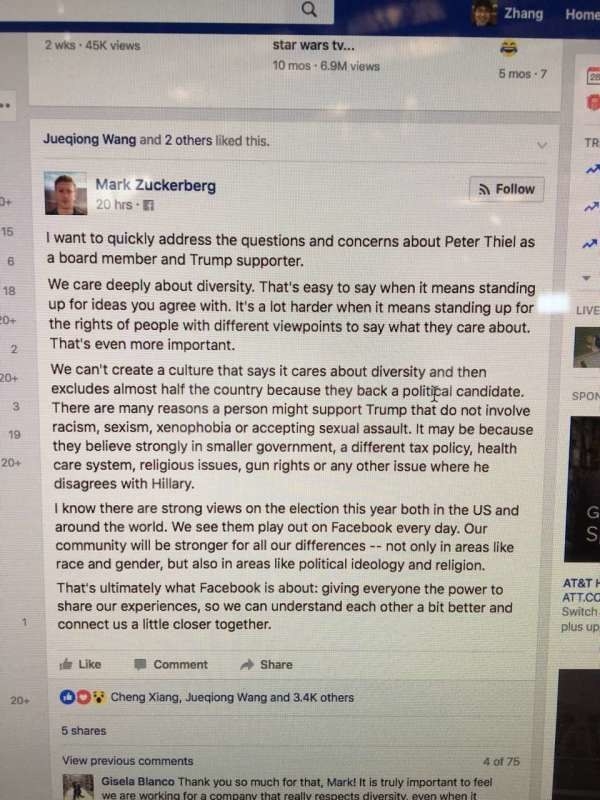
Zuckerberg is no stranger to controversy this election. He recently took to Facebook to defend venture capitalist and Facebook board member Peter Thiel&039;s support of Donald Trump&039;s campaign, saying that the company could not simultaneously value diversity and censor the views of a major party candidate and his supporters.

Via boingboing.net

Facebook as a whole is struggling to promote the perception of itself as an impartial platform, both with classically controversial content and contemporary political opinions in an especially polarizing election. Gizmodo interviewed former Facebook workers who alleged that they regularly suppressed conservative news and viewpoints. And a Norwegian writer recently posted the Pulitzer Prize-winning photo “Napalm Girl,” a linchpin of Vietnam War coverage, only to have his account suspended by Facebook&039;s human content moderators. Facebook did not apologize, though it did reinstate the post.

Quelle: <a href="Facebook Will Now Allow Graphic Content If It&039;s Newsworthy“>BuzzFeed

Airbnb Just Lost A Big Regulatory Battle In New York

Airbnb just took a hit in New York, where Governor Andrew Cuomo signed into a law a bill the short-term rental startup has been fighting for months.

The bill regulates short-term rentals throughout the state, including fees of up to $7,500 for individual hosts who violate state regulations. One NY state law that could particularly affect Airbnb hosts bans residents from renting out a home for more than 30 days if the home owner isn’t present. Thousands of New York users with listings on Airbnb could be subject to fines, Airbnb says. According to the company, it has more than 46,000 hosts in NY state.

New York City is Airbnb&;s largest market in the United States, but it has also been the site of some of the company&039;s most heated contention. Critics say short-term renting like Airbnb exacerbates the city&039;s ongoing struggle with affordable housing. In a statement, New York state assemblywoman Linda B. Rosenthal said the new law, “will help to keep housing available and affordable for thousands of hardworking New Yorkers and their families.”

After the bill passed to Cuomo&039;s desk earlier this month, Airbnb offered a last-minute litany of concessions to try to encourage the governor to veto the bill. Those proposals included changing the platform to prevent hosts from listing multiple properties, a revenue-sharing deal for landlords whose tenants are hosts, and a three-strikes-you&039;re-out policy for hosts who break the rules.

But, for the New York governor&039;s office, it seems that offer wasn&039;t enough.

Airbnb&039;s Head of New York Public Policy, Josh Meltzer, said the company plans to file a lawsuit against the state of New York later today. “A majority of New Yorkers have embraced home sharing,” he wrote in a statement, “and we will continue to fight for a smart policy solution that works for the the people, not the powerful.”

Some of the policy proposals Airbnb made on Wednesday will take place despite Cuomo signing the New York bill, including the “One Host, One Home” program. However, other offers, including $90 million in taxes, Airbnb says it can’t follow through on without cooperation from the state.

Airbnb has previously filed lawsuits against the cities of San Francisco, Santa Monica, and Anaheim, all of which are in California.

Quelle: <a href="Airbnb Just Lost A Big Regulatory Battle In New York“>BuzzFeed