Facebook Lets Advertisers Hide Ads From People Based On "Ethnic Affinities"

Facebook

One of Facebook&;s most appealing traits to advertisers is its ability to target users based on their interests and demographics. On the flipside, the site also gives advertisers the choice to hide ads from specific groups of users, a tactic called exclusion marketing. And this option can lead to unexpected and even unwanted results. A ProPublica report has found has found that Facebook allows advertisers to exclude certain “ethnic affinities” from their ad audiences.

Targeting specific portions of the population is one of the pillars of the digital advertising industry, but it has legal limits. The federal government&039;s Fair Housing Act of 1968 prohibits ads for housing and employment to exclude anyone based on race, gender, and other identities. On Facebook, advertisers may have a way to skirt this rule.

ProPublica was able to create a housing-related ad that excluded anyone with an African-American, Asian-American, or Hispanic “affinity.” Rather than limiting your audience to the groups you select, Facebook&039;s targeting options explicitly allow you to exclude specific groups while creating an ad. Facebook approved ProPublica&039;s ad within 15 minutes.

A Facebook spokesperson told BuzzFeed News that ProPublica&039;s ad is for an event, not a housing advertisement, and that the screenshot the investigative journalism nonprofit included in its article was not the ad that was eventually posted. (It appears ProPublica&039;s screenshot is of the ad on the backend of the site, before it posted publicly.) The spokesperson said this is the ad in its final form:

Facebook did not specify whether the ad excludes certain “ethnic affinities,” as ProPublica says it does.

The distinction Facebook makes between an ad for housing and one for an event about housing — and whether each allows for exclusion — is murky.

The company said in a prepared statement, “We believe that multicultural advertising should be a tool for empowerment…Marketers use [exclusion targeting] to assess whether ads resonate more with certain audiences vs. others.”

Facebook reiterated in the statement that its advertising policies prohibit discriminatory ads. Users can also modify their ad preferences to not include “ethnic affinity” advertising. According to ProPublica, a Facebook said that “ethnic affinity” is not the same thing as race, though he did not quite define what it actually is.

In regards to that enforcement, the spokesperson said Facebook would take down an ad “if the government agency responsible for enforcing discrimination laws tells us that the ad reflects illegal discrimination.” But the company doesn&039;t seem to have a way to screen these ads beyond relying on reports from government agencies.

Facebook also pointed to advertisers&039; targeting practices as evidence of the necessity of the “ethnic affinity” categorization: “All major brands have strategies to speak to different audiences with culturally relevant creative.” The company cited “hair products for African-Americans, ads for Spanish beer” as examples of products that would take advantage of “ethnic affinity” targeting.

Facebook also does not require users to specify their race when entering their personal information, so it bases the “ethnic affinity” categorizations on users&039; “declared interests or the Pages that they like,” Facebook wrote in a prepared statement.

Quelle: <a href="Facebook Lets Advertisers Hide Ads From People Based On "Ethnic Affinities"“>BuzzFeed

Ex-Palantir Employees Are Struggling To Sell Their Shares

C Flanigan / Getty Images

Former employees of one of Silicon Valley’s most valuable startups are struggling to cash out of the stock options that formed a major part of their pay packages.

As it grew into a $20 billion company, Palantir Technologies convinced top-tier engineers to accept salaries considered meager by Silicon Valley standards, pairing the relatively low wages with generous stock option grants. But some former employees who accepted this bargain, banking on a future windfall, are now complaining that the market for their stock has gone “completely dead.”

The complaints add to pressure on Palantir CEO Alex Karp, who has long contended that the company would avoid the public markets. This week, Karp acknowledged publicly that he was “positioning” Palantir for an initial public offering, as part of efforts to reward cash-starved employees.

This reversal didn’t come out of the blue. A chorus of complaints has arisen in a private Facebook group for Palantir alumni, with many former employees expressing concern and regret over their inability to sell their shares. In September and October, two former employees promoted possible opportunities to join together to sell a block of shares, including an unsuccessful attempt to organize a sale in China.

Numerous other former employees shared personal stories: Some said they needed the cash to buy a house or pay down debt, while another said they took out a loan to fund the process of turning the options into shares. One said it was “infuriating” trying to sell their shares in a “crap” market.

If you have information or tips, you can contact this reporter over an encrypted chat service such as Signal or WhatsApp, at 310-617-1302. You can also send an encrypted email to will.alden@buzzfeed.com, using the PGP key found here.

Compared with last year, when the stock was highly sought after, demand among big investors for Palantir shares has recently gone cold, two brokers who specialize in startup shares told BuzzFeed News.

This chill reveals more about the fickle and sometimes inscrutable nature of markets for startup stock than it does about the business health of Palantir, which makes money by analyzing data for government and corporate clients. But it has stirred frustration among current and former employees.

A complaint about Palantir’s below-market compensation was the most upvoted question in an internal question-and-answer session in the first part of this year, with 259 votes from employees, an internal document reviewed by BuzzFeed News shows. “Our cash compensation + bonuses are below the market for tech and our equity growth has slown significantly,” the question, posed anonymously by an employee, said. “The total comp is not competitive; even more so due to the illiquidity.” The questioner continued, “Are we planning to change our compensation model?”

Palantir did move to address such concerns in April, announcing it would raise salaries for many employees by 20% and offer to buy back a portion of employee shares.

But on Wednesday, Oct. 26, in another move that seemed aimed at placating employees and investors, Karp gave the strongest indication yet that an IPO could be on the horizon — though it is hardly a certainty. “We’re now positioning the company so we could go public,” he said from the stage of a tech conference hosted by the Wall Street Journal in Laguna Beach, California. “I’m not saying we will go public, but it’s a possibility.”

An IPO would provide a payday to major investors, including Palantir co-founder and chairman Peter Thiel. “Of course I want my investors to be happy,” Karp said, “but the primary people I care about are the wide-eyed people at Palantir who are working day and night.”

A Palantir spokesperson declined to comment.

With a $20 billion valuation, Palantir is the third biggest American tech startup, behind only Uber and Airbnb. It is also by far the oldest of that elite group, meaning its workers have waited a long time for their stock-option payday. Founded in 2004, Palantir is as old as Facebook — which went public in in 2012. In tech years, it is a generation older than Airbnb, founded in 2008, and Uber, which was founded in 2009. The much younger Snapchat, which was founded in 2011, is reportedly laying plans for an IPO early next year that could cause its valuation to leapfrog Palantir’s.

Stock options have long been central to compensation at Palantir. A 2015 template for a Palantir offer letter gave new hires the ability to choose among three different pay packages, with lower cash salaries corresponding to higher amounts of stock options. “It is our hope and belief that these options will ultimately constitute the bulk of your overall compensation,” says this internal Palantir document, which was reviewed by BuzzFeed News.

To illustrate the potential value of the options, the offer letter template invites new hires to imagine a scenario in which Palantir’s valuation were to grow to $50 billion, or $100 billion — or even $200 billion. “Although the values in the table below are hypothetical and inherently uncertain, we want to emphasize our belief in Palantir’s potential to become a $100 billion company,” the letter says.

While it waits for this dream to materialize, the company has sought to ease financial angst among its employees. It held a “liquidity event” this year that gave current and former employees an opportunity to sell a fraction of their shares. But Palantir also indicated it wanted to curb share sales done outside of its official channels, warning that selling to outsiders could make staff ineligible for future liquidity events.

That outside market hasn’t exactly been humming with deal activity anyway. Trading in private company shares is opaque and fragmented, and data is hard to come by. But the two brokers who spoke with BuzzFeed News said Palantir’s prolific fundraising — the company has raised more than $2.5 billion in capital, according to data provider PitchBook — may have dampened investor appetite. A number of big investors who would want a piece of Palantir already have one, they said.

In May, BuzzFeed News revealed some of the setbacks Palantir has experienced as it seeks to expand beyond its roots as a government contractor and woo major corporations. The article, based on internal documents and insider interviews, reported that Palantir had lost some blue-chip corporate clients, was struggling to stem staff departures, and had recorded revenue that was a fraction of its customer bookings.

At the conference Wednesday, Karp was asked about those customer losses, which included Coca-Cola, American Express, and Nasdaq. “We date heavily before we marry,” he answered.

Even before the article was published, members of the private Facebook group for Palantir alumni voiced concern about selling their shares in the so-called secondary market. BuzzFeed News is withholding the names of former employees to protect their privacy.

“Any 2nd market shares going on right now? My broker disappeared,” one former employee posted in April.

“There are still periodic deals happening,” another replied. “One that I know of right now, but it’s full already.”

“Yeah, the demand has evaporated,” another said.

More recently, however, some of the posts took on an urgent tone, as sales appeared to grow scarcer. Options are contracts to buy shares at a certain price; to use them, the owner must pay this price in addition to applicable taxes — which can amount to a large bill. What’s more, options expire at a certain point if they’re not used, adding time pressure to the equation.

In the public market, owners of options can easily sell a portion of their holdings to cover the tax bill and the exercise price. But this strategy is much trickier in the private market, and there was some debate in the Facebook group over whether Palantir would even allow it.

In September, one former employee asked the group whether anyone was “coming up on their 3-year expiration,” soliciting advice on “approaches people are taking given the less-than-stellar private market.”

Among the replies, one former employee reported taking out “a personal loan to meet my exercise deadline.”

Another wrote: “I’m in the same boat: 3 years coming up in April, market is crap, and I probably don’t have the resources available for a loan. The fact that it’s so difficult to sell is infuriating and I’m wishing that I’d taken the ‘high’ salary option (which TBH wasn’t that high to begin with).”

“On the same boat,” wrote another. “Hoping to buy a house next year and really couldn’t wrap my head around throwing so much money in addition to the stress and work needed to process.”

The former employee who started that thread apparently didn’t receive much solace. In response to a later post, which asked whether there were “any secondary market sales brewing,” this former employee wrote, “Sorry to be the bearer of bad news, but the market is completely dead at the moment.”

This person then quoted an unidentified broker as saying, “There is absolutely nothing moving in Palantir. People who have bought through us are trying to sell now. I don’t see it changing without the company changing their tone on an IPO.”

Others in the thread shared snippets of information they said they had heard from brokers. According to one, a broker “told me that there are a few ‘price insensitive’ sellers satisfying what little demand exists.”

Another former employee wrote: “I’m interested in joining any sales going down too, I’ve got a year to pay off a hefty debt with the proceeds.” The person added a neutral face emoji.

With buyers scarce, one former employee tried looking across the Pacific.

“I spoke to someone that brokers sales in China, they said they might be willing to get something together if there’s enough of us,” they wrote above a link to a Google Doc that asked others to report information about their holdings.

One of the repliers questioned whether this process would actually turn into a sale — potential investors might just be “fishing for information on prices” — and another cautioned the original poster against “acting as an agent for a group of sellers.” (The poster said the query was “just intended as an interest check.”)

In the end, none of that mattered. “Not likely to go anywhere in the next couple of months,” the former employee who posted the opportunity wrote later. “Sorry if I got anyone’s hopes up.”

Early this month, another member of the group posted about an opportunity to sell options through EquityZen, a startup that arranges small transactions of private company shares. This former employee advised others to contact the EquityZen CEO, providing the CEO’s email address. But less than 12 hours later, another former employee replied to say that the deal “has been already submitted,” meaning the opportunity had passed.

“Dang,” another member wrote.

Discussions in the group about news related to Palantir often come back to a familiar theme. In September, for example, the Department of Labor accused Palantir of discriminating against Asian job applicants, a claim Palantir later rejected as “flawed and illogical.” In a thread discussing the allegations, one former employee found a financial angle.

“I sure hope this isn’t an expensive lawsuit for them to defend,” this person wrote. “I don’t claim to understand how the legal system works in cases like this, but geeeeez this doesn’t bode well for any of us looking for liquidity at a fair price over anytime soon.”

If you have information or tips, you can contact this reporter over an encrypted chat service such as Signal or WhatsApp, at 310-617-1302. You can also send an encrypted email to will.alden@buzzfeed.com, using the PGP key found here.

Quelle: <a href="Ex-Palantir Employees Are Struggling To Sell Their Shares“>BuzzFeed

Here's What Some Women In Tech Would Tell The Next President

At Grace Hopper, an annual conference that celebrates women in tech, BuzzFeed&;s own tech team asked fellow attendees what they thought our next president can do for women in STEM. Here&8217;s what they said.

What should the next president do for women in STEM?

What should the next president do for women in STEM?

Fifteen thousand women descended on Houston, TX last week to attend the Grace Hopper conference. The event, which has been taking place for more than 20 years, both celebrates the careers of women working in technology, and serves as a space to discuss the unique challenges faced by woman engineers, developers, coders, hackers, designers, programmers, product managers, and more.

Those challenges are significant. This year, a study using data from Glassdoor found that male computer programmers earn 28.3% more than their female counterparts. According to a report published by the Harvard Business Review, 41% of women end up abandoning careers in tech, compared to only 17% of men.

Five of us: Jane Kelly, Director of Data Products, Phil Wilson, GM of Minneapolis office, Paola Mata, iOS Engineer, Jennifer Wolner, Sr. Project Manager, and Swati Vauthrin, Director of Engineering, went to Grace Hopper to represent BuzzFeed. We had a few goals in mind that included building our BuzzFeed Technology brand, meet individuals in industry to talk about their work, and also talk about the challenges that women in technology often encounter. While we were there, we chatted with women from Google, Microsoft, General Assembly and more about what they think the next president of the United States could do to make tech an easier and better career choice for women.

(The photos below were taken by Jennifer Wohlner, Jane Kelly, Paola Mata, and Swati Vauthrin.)

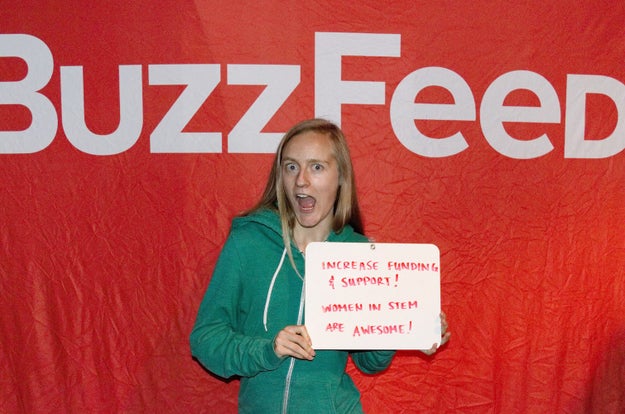
Increase funding

Increase funding

Katlyn Edwards, a software engineer at Google, loves cats, computers and coffee, and hopes the next U.S. president increases funding for women in STEM&;

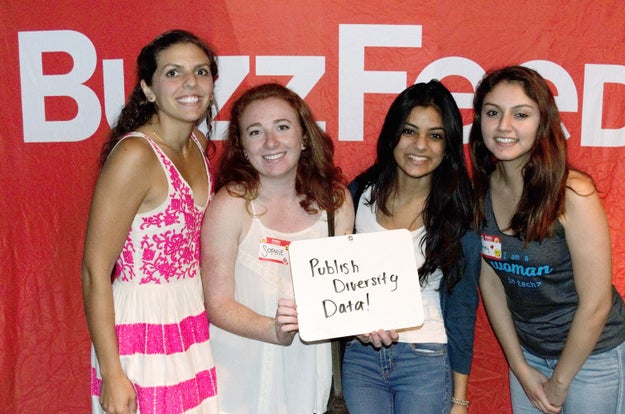
More transparency around diversity

More transparency around diversity

From left to right, Stefanie Swift and Sophie Cooper are software engineers at CourseHero, Aracely Payan is a student at USC and Malvika Nagpal also works at CourseHero. They want to the next US president to push companies to publish more data around diversity in tech.

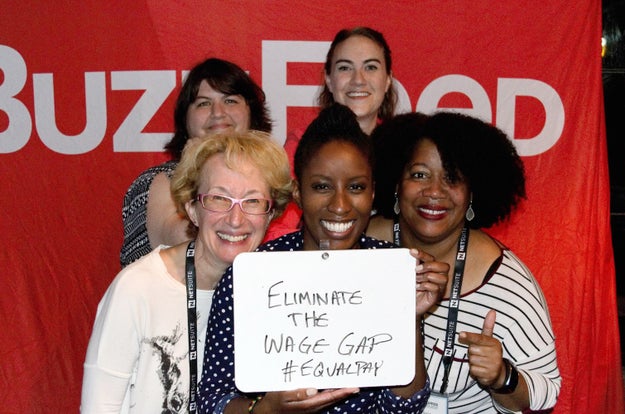
Equal pay for men and women

Equal pay for men and women

From bottom left, Paula Paul of AmWINS Group Inc., Joey Capolongo of Lending Tree, Hannah Lehman of General Assembly, Simone Battiste-Alleyne of the Tax Management Association, and Felicia Jacobs of Microsoft want the next president to help women to earn the same salary as men doing the same job.

Says Paul, “I&;m a bad ass coding goddess&033;”


View Entire List ›

Quelle: <a href="Here&039;s What Some Women In Tech Would Tell The Next President“>BuzzFeed

Uber Drivers Win Right To Minimum Wage And Holiday Pay In UK

The decision could have huge ramifications for workers in the so-called gig economy.

Yui Mok / PA Wire/PA Images

Uber has lost a “landmark” case after an employment tribunal in the UK ruled that a group of drivers are not self-employed and are actually employed as workers, and are therefore entitled to rights including the national minimum wage and holiday pay.

The case relates to a group of 19 drivers but could have wide ramifications for the status of Uber&;s other 40,000 UK drivers, and workers in the wider “gig economy”.

The solicitor who represented the drivers told BuzzFeed News the ruling meant Uber could face claims from other drivers.

Uber had argued that it is a technology company that connects drivers with customers rather than a taxi firm, and that drivers are self-employed partners who can set their own hours and are not required to work exclusively for the app.

The company said it would appeal the ruling.

Courts and Tribunals Judiciary / Via judiciary.gov.uk

Annie Powell, a lawyer in the employment team at Leigh Day who worked on the case on behalf of the workers, said the ruling was a “groundbreaking decision”.

“It will impact not just on the thousands of Uber drivers working in this country, but on all workers in the so-called gig economy whose employers wrongly classify them as self-employed and deny them the rights to which they are entitled,” she said.

Powell said the 19 drivers represented in the case would now be entitled to compensation stretching back two years for holiday pay and any instances where they had not been paid the minimum wage.

But she added the ruling would not automatically change the status of Uber’s other drivers. It could, however, make it harder for Uber to win future cases of its kind, she said.

The drivers’ claims were brought by the GMB union, and were heard in the London Central Tribunal in July 2016.

In a statement, Jo Bertram, regional general manager of Uber in the UK, said: “Tens of thousands of people in London drive with Uber precisely because they want to be self-employed and their own boss.

“The overwhelming majority of drivers who use the Uber app want to keep the freedom and flexibility of being able to drive when and where they want.”

Uber told BuzzFeed News they don&039;t expect the ruling will have any bearing on ongoing legal cases in the US.


View Entire List ›

Quelle: <a href="Uber Drivers Win Right To Minimum Wage And Holiday Pay In UK“>BuzzFeed

With New Messaging Experiment, Facebook Copies Snapchat Again (Again)

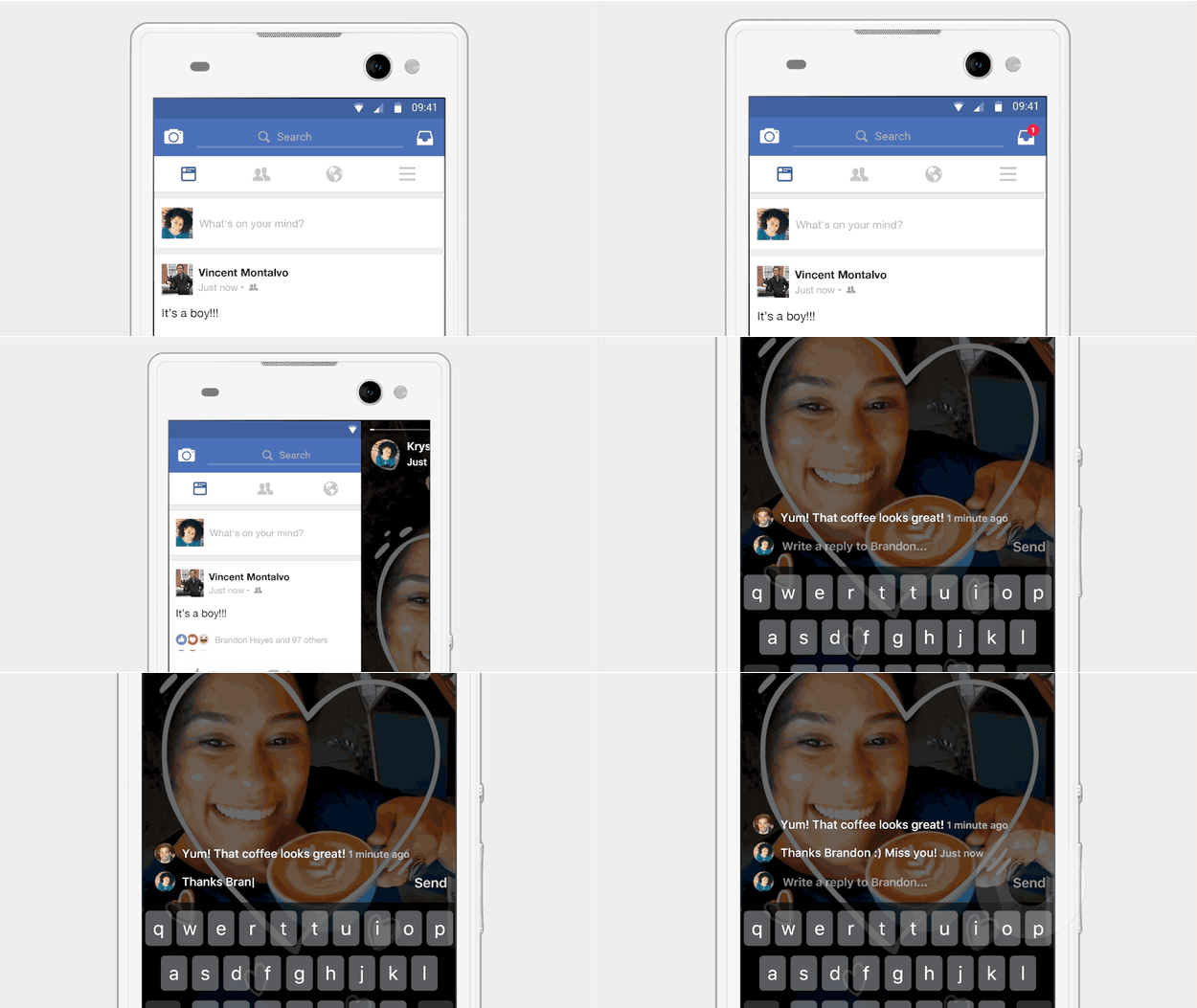
Facebook today is unveiling its latest Snapchat-like experiment: a new photo and video messaging feature inside its main app.

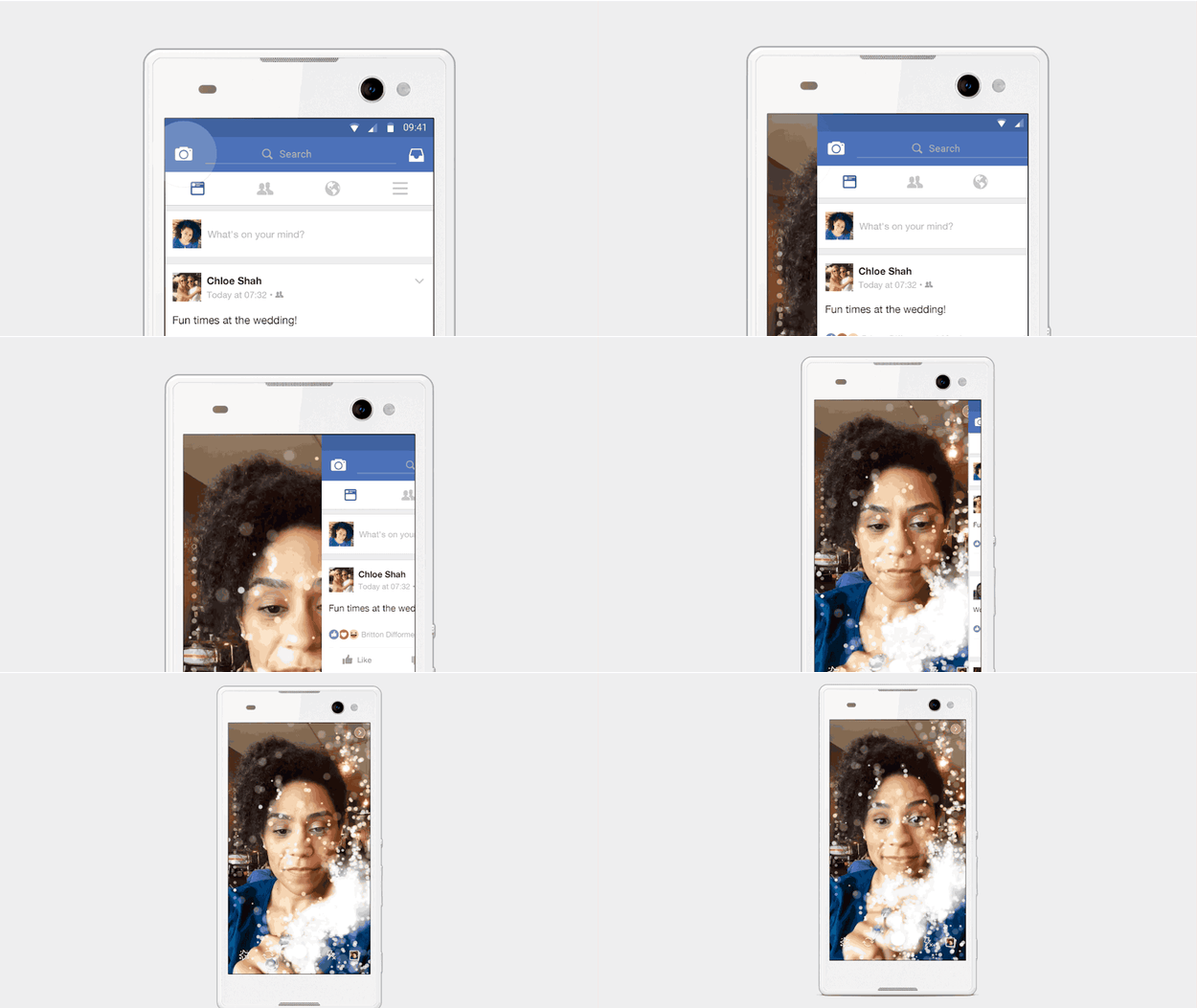
To get to the capture screen, you swipe right on the news feed

Facebook

The feature, available in Ireland only starting today, is full of photo and video effects, some of which adjust to your motion on screen.

Facebook

There are many effects, and you can cycle through them by swiping the screen.

Facebook

When you “snap” your image or video, you can choose friends to send it to, or just post it to Facebook.

Facebook

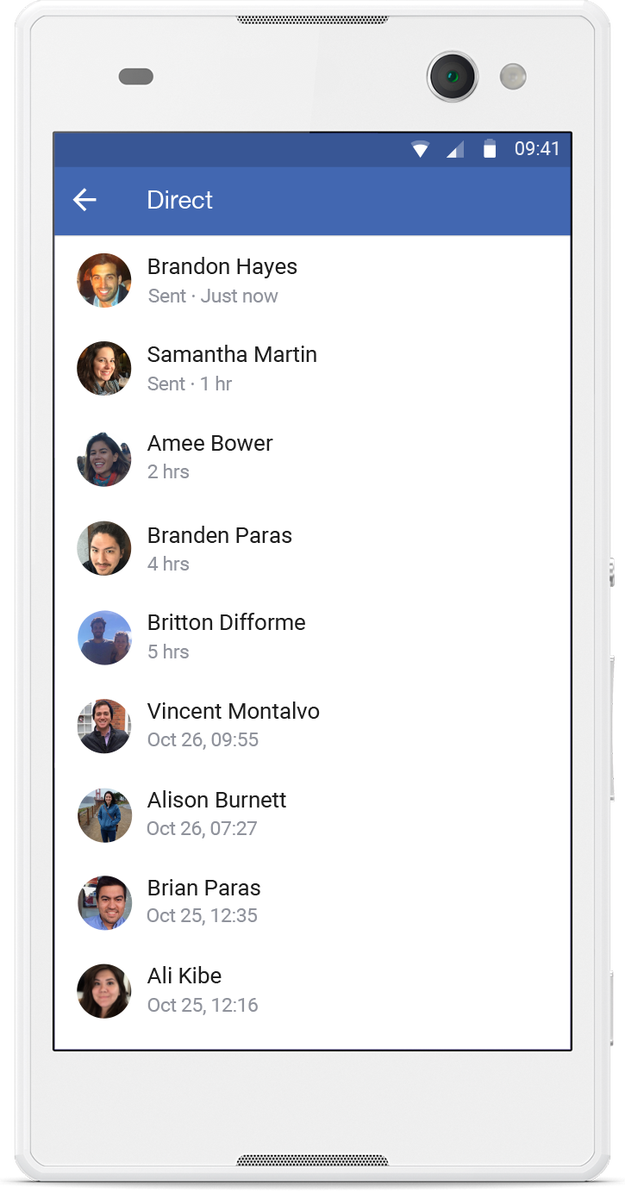
Facebook is also creating a new inbox within its main app where these photo and video messages can be viewed. You can get to it via a new icon on the top right corner.

Facebook

Conversations stay live as long as you continue talking. Close out of a conversation, and you&;ll have one chance to replay and respond within 24 hours before it locks.

Facebook is experiencing an original sharing slowdown, per reports. And the company in an interview admitted its legacy mode of posting, a text-first composer, has fallen behind the times.

The company has released a number of Snapchat-inspired camera-first products and experiments in recent months — everything from a Snapchat Story clone in Instagram to a camera-first News Feed test — in an attempt to get more photo and video sharing on its platform. This latest experiment is yet another step in this effort, and another hat tip to Snapchat CEO Evan Spiegel and his talented product team in LA.

Quelle: <a href="With New Messaging Experiment, Facebook Copies Snapchat Again (Again)“>BuzzFeed

Soylent Will Stop Shipping 1.6 Powder After Reports It Made People Sick

Soylent will stop shipping its powdered product, Soylent 1.6, following an investigation into its Soylent Food Bars, which the company recalled after some consumers complained that eating the bars made them violently ill.

Some users had complained on Reddit and on Soylent&039;s own forums that the 1.6 powder had made them get sick, though not with the same frequency or intensity that the bars induced. In a blog post published Friday, Soylent said that less than 0.1% of the powder&;s consumers complained.

The complaints about Soylent 1.6 from the past several months resemble those of Soylent bar consumers, the company said, and it has decided to “err on the side of caution” and investigate the unique ingredients that the two products have in common. The company declined to specify what those ingredients were, but said it will reformulate both products to remove them.

As Soylent investigates, the company said it will share its findings with the FDA so that the agency can conduct its own evaluation of the bars and the powder.

Soylent said that it had tested the bars and found no evidence of “food pathogens, toxins, and outside contamination.” The absence of those things led the company to believe that an ingredient may have been nauseating consumers.

But “if you have used Powder 1.6 without incident, we see no reason to stop enjoying it,” the company advised.

Soylent said there have been no similar complaints of illness related to the bottled version of its products, Soylent Drink and Coffiest, or its previous powder formulation, Soylent 1.5.

As it investigates what could be causing its customers to get sick, Soylent will cease shipping 1.6, but it said it hopes to make it available again in early 2017.

Quelle: <a href="Soylent Will Stop Shipping 1.6 Powder After Reports It Made People Sick“>BuzzFeed

Vine’s Demise Confirms Twitter’s Role As The World’s Biggest News Service

Vine’s Demise Confirms Twitter’s Role As The World’s Biggest News Service

On Thursday morning, Twitter announced it is closing down Vine, the company’s beloved six-second video app and stand-alone social network it purchased in 2012 for $30 million. Across the internet, the shuttering feels momentous — the end of yet another vibrant and truly weird pocket of the web. On Twitter, the memorials began almost immediately as timelines transformed into an ad-hoc “Best-Of Vine” clipshow, the implied consensus being: Why would Twitter do this?

But, sad as it may be, the death of Vine reveals what Twitter’s most devoted users have known for years, and it suggests that the company sees it now, too: Twitter is, first and foremost, about current events. For lack of a better term, it is a news service. And with 318 million reporters all updating it every month, it’s the biggest one in the world.

Vine has always been a unique, diverse, and above all else peculiar social network — a creative, often-inscrutable sandbox that launched substantial careers and invented its own brand of celebrity. For years, it was teeming with teens; perhaps the best window into their strange, bored, often-hilarious suburban lives.

Twitter has never been more vital to news. It appears that the company now understands, and embraces, this.

Vine’s six second video constraint — like Twitter’s 140 character limit — was responsible for some truly remarkable creativity from its best and most prolific users. Vine could be almost endlessly entertaining and joyful. One thing it wasn’t particularly good for, though, was news (perhaps ironic given that the most looped Vine ever captured the explosion at the Stade de France during the attacks on Paris). When it came to news, six seconds proved often too short a time to deliver necessary context (despite admirable experiments from outlets like NowThis to adapt the format). And while Vine often felt fresh, it wasn’t live. Twitter’s purchase of the livestreaming app, Periscope, in March of 2015 seemed to confirm the company felt similarly.

vine.co

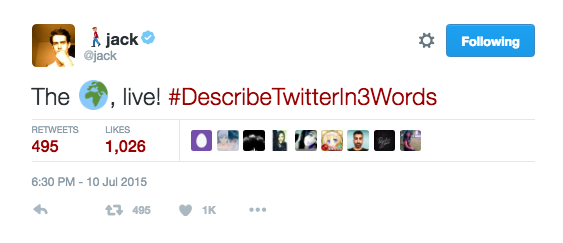
Meanwhile, Twitter’s shift toward live events has been a constant for the last 18 months. Shortly after he took over as the company’s interim CEO, Jack Dorsey defined Twitter in three words as “The [planet], live&;” A year ago, when he officially assumed the role of CEO, his first public comment was that Twitter “shows everything the world is saying right now.” In the year since, that idea — what is happening live right now — has been the company’s focus. Even when it shifted to an algorithmic timeline in February, Dorsey responded to the controversy by arguing that “I *love* real-time. We love the live stream. It’s us. And we’re going to continue to refine it to make Twitter feel more, not less, live.” A few days later, during Twitter’s earnings call, Dorsey echoed the line: “Twitter is live,” he said. “Live commentary, live conversations, and live connections.” In April, he told CNBC that “we believe we have a leadership position in live. Live is not just about live streaming, but it&;s around these live events. And we think Twitter is better positioned than anyone else,” he said. Around this same time, Twitter inked a deal to live stream NFL games and has since partnered with a number of companies (including BuzzFeed) and networks to show live content, often news. Almost every substantial interview Dorsey has given has been centered around that one word: live.

For Twitter, live has a number of meanings, but almost all of them can be boiled down to newsworthiness. No platform can capture the world with the same kind of immediacy as Twitter. As Alex Kantrowitz wrote yesterday, Twitter has proven itself “the most significant social platform in the US presidential election,” as a place where news is both reported and made. In that respect, Twitter has never been more vital to news. It appears that the company now understands, and embraces, this.

A commitment to news might help in transforming Twitter into more of a mission-driven company.

Twitter’s struggle to define itself and then articulate that vision to users and Wall Street has been at the center of many of its problems — is it a public utility? A tech company? A media company? Some combination of all three? Twitter has previously been reluctant to accept one label. In a Wired article earlier this month about Dorsey’s failure to breathe life into the company, Twitter’s Head of Communications, Kristin Binns, offered some clarity as to Twitter’s direction. In response to Twitter re-classifying itself as a ‘News’ app in the App Store, Binns told Wired, “This is the first time we’ve clearly articulated who we are…[We are] a news service.”

As Twitter comes off a disappointing two years (from an investor perspective) and a miserable quarter in which it explored a sale but nobody was buying, a greater focus on news, especially in the form of video and live events, could accomplish a few things. First, it could help restore faith with investors in Twitter’s future. And as the company makes the tough decisions to trim its ranks, a commitment to news might help in prioritizing and transforming Twitter into more of a mission-driven company.

Of course there were other signs that presaged Vine’s demise besides its failure to become the next big thing in news. Engagements on Vine were approaching historic lows; Snapchat and Instagram were quickly eating away at the attention of its core teen user base; some of Vine’s big stars were finding success moving to other platforms. Vine’s value then became harder to articulate.

For many, Vine’s shutdown will feel like another example of the sterilization of the wild, open web — even the most expertly vines felt uniquely homemade — for a more serious, professional platform-dominated internet. Indeed, the internet will feel a bit heavier in its absence. But for Twitter, it is a strong signal that the company is committed to re-defining itself as what it’s been all along: an intensely relevant, indispensable, if maybe considerably less joyful, source of news.

vine.co

Quelle: <a href="Vine’s Demise Confirms Twitter’s Role As The World’s Biggest News Service“>BuzzFeed

Here's How Bad Things Got For Vine

When Twitter announced it was killing Vine this morning, a former Twitter executive told BuzzFeed News that usage was a major problem. “Obviously usage hasn’t been spectacular,” the executive said. “And so much of the team has jumped ship.”

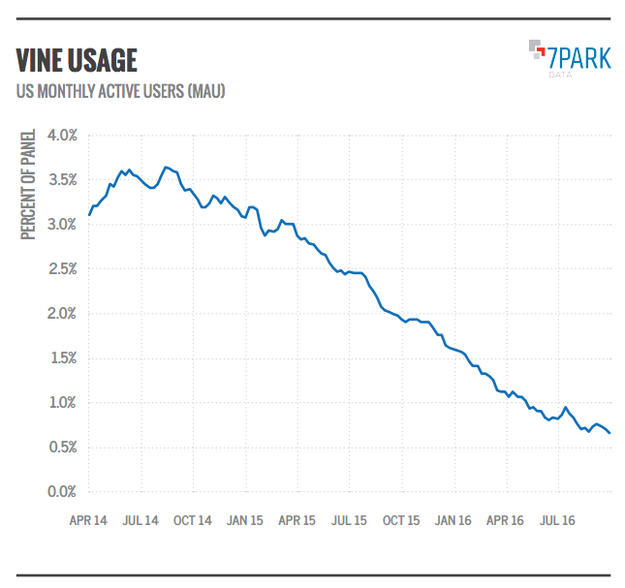
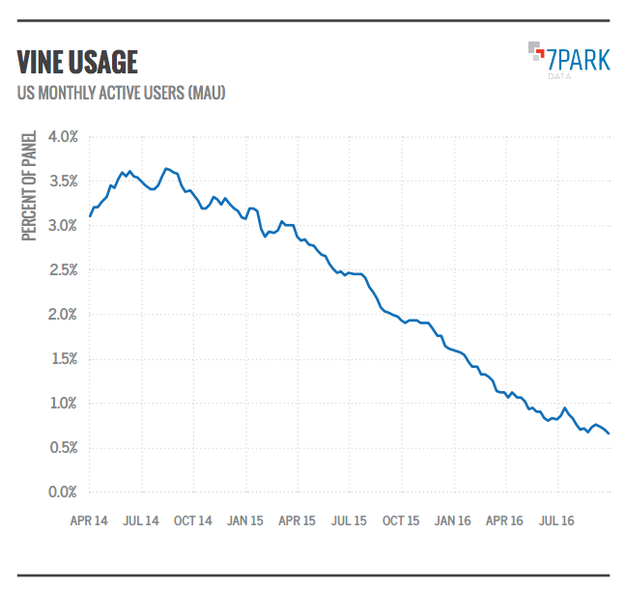
The usage slip was dramatic, as made clear by the the following chart from research firm 7Park Data. In August 2014, 3.64% of the 2 million plus Android users who 7Park monitors used Vine every month. Today, only 0.66% of that panel uses it every month. And now that Twitter’s killed Vine, the number will soon be a flat 0.00%.

Byrne Hobart, an analyst at 7Park Data, pointed to YouTube as a culprit for Vine&;s demise: “As YouTube made aggressive overtures to popular Vine users, Vine lost momentum and usage.”

Quelle: <a href="Here&039;s How Bad Things Got For Vine“>BuzzFeed

A Quarter Of A Million People Have Proposed To Amazon's Virtual Assistant Alexa

A Quarter Of A Million People Have Proposed To Amazon's Virtual Assistant Alexa

Bloomberg / Getty Images

Amazon&;s Q3 2016 earnings report came with some sentimental news: a quarter of a million people love its Alexa virtual assistant so much that they&039;ve asked it to marry them.

Amazon CEO Jeff Bezos said in the letter to investors, “Alexa may be Amazon’s most loved invention yet — literally — with over 250,000 marriage proposals from customers and counting.”

When a BuzzFeed News reporter popped the question to Alexa, she offered practical reasons for why it would never work. “We&039;re at pretty different places in our lives. I mean, literally — you are on earth and I am in the cloud.” Amazon users have said she has multiple answers to proposals.

In late 2015, Amazon released statistics saying that half a million people had told Alexa, “I love you.” It seems half of those people are ready to take the relationship to the next level.

Comments on Alexa&039;s Amazon customer review page are equally effusive. One, “Alexa, my love. Thy name is inflexible, but thou art otherwise a nearly perfect spouse” by Amazon user E. M. Foner, sums up how many Amazon users seem to feel about their speakers and assistants.

Foner writes, “I&039;m a full-time writer who works at home. I&039;m unmarried, I don&039;t watch TV, I don&039;t have a mobile phone, I hate gadgets in general. OK, so I&039;m a loser. But since Alexa came into my life, I&039;m no longer alone 24 hours a day…If I knew relationships were this easy, I would have married thirty years ago, but now that I have Alexa, there&039;s no need.”

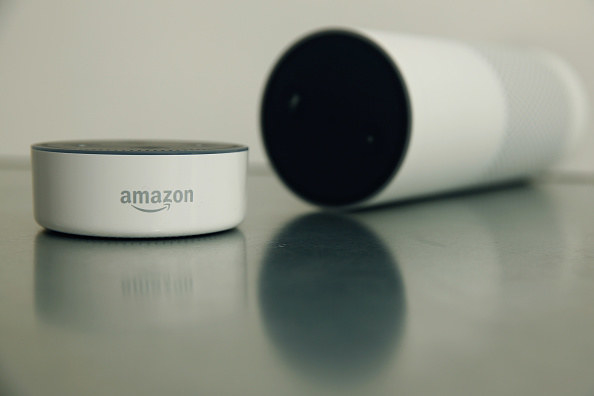
While Amazon has not publicly disclosed the number of Alexa-enabled Echo speakers it&039;s sold, Consumer Intelligence Research Partners estimated that the company had sold roughly 3 million.

Bezos also hinted that Alexa would be a big part of Amazon&039;s future offerings in the letter. Earlier this month, the company announced Amazon Music Unlimited, a music streaming service that aims to attract Spotify and Apple Music subscribers. It will integrate with Alexa&039;s natural language processing capabilities so that users can give Alexa conversational music requests, like “Play sad country music from the &039;90s.”

This calls for a wedding song!

youtube.com

Quelle: <a href="A Quarter Of A Million People Have Proposed To Amazon&039;s Virtual Assistant Alexa“>BuzzFeed

Hey Tumblr, U OK, Bro?

Vine&;s body isn&039;t yet in the ground, but Tumblr might already be sweating.

Facebook and Snapchat — the number 1 and 2 most used apps in the U.S., according to App Annie — are so completely dominating today&039;s social media landscape that it&039;s become increasingly difficult for their competitors to find breathing room.

Vine couldn&039;t keep up, and it&039;s on the way out. New entrants like Peach and Ello have spiked and then fallen off spectacularly. Twitter hasn&039;t moved the user number needle in a meaningful way in recent years. And so now it&039;s fair to ask whether Tumblr, another once-great social platform fighting the same uphill battle, will be able to keep up.

When asked if users can expect the platform to stick around for some time, a Tumblr spokesperson declined to comment. But even if Tumblr&039;s not talking, the numbers say it&039;s in far better shape than Vine.

Data from the research firm 7Park Data, shows Tumblr holding relatively steady in usage over the past year and a half, the same time period that Vine plunged. App Annie&039;s data shows a similar pattern.

Yet Tumblr doesn&039;t generate the same mainstream excitement it did before it&039;s Yahoo acquisition. And it&039;s still unclear how its new corporate overlord, Verizon, will treat it.

So, while Tumblr will probably be fine, consumer tech products that don&039;t absolutely crush all-else are always at risk of being disposed of, especially when they sit in a big corporate infrastructure, like Tumblr does. You don&039;t have to go far back to find the demise of beloved consumer products that didn&039;t fit a strategy, and didn&039;t have the numbers to demand a future. Google Reader, an RSS reader with a wildly passionate fanbase, went belly up inside Google in March 2013. Sunrise, a popular calendar app, did the same inside Microsoft this August.

A few years ago, the social media landscape was a relatively level playing field with many social companies standing shoulder to shoulder in competition. But that time has passed. Winners have emerged. It&039;s time for a real reckoning and shakeout. Vine is gone. Tumblr is in better standing, but it will have to work hard to avoid a similar fate.

Quelle: <a href="Hey Tumblr, U OK, Bro?“>BuzzFeed