Here’s What The First iPhone Almost Looked Like

Here’s What The First iPhone Almost Looked Like

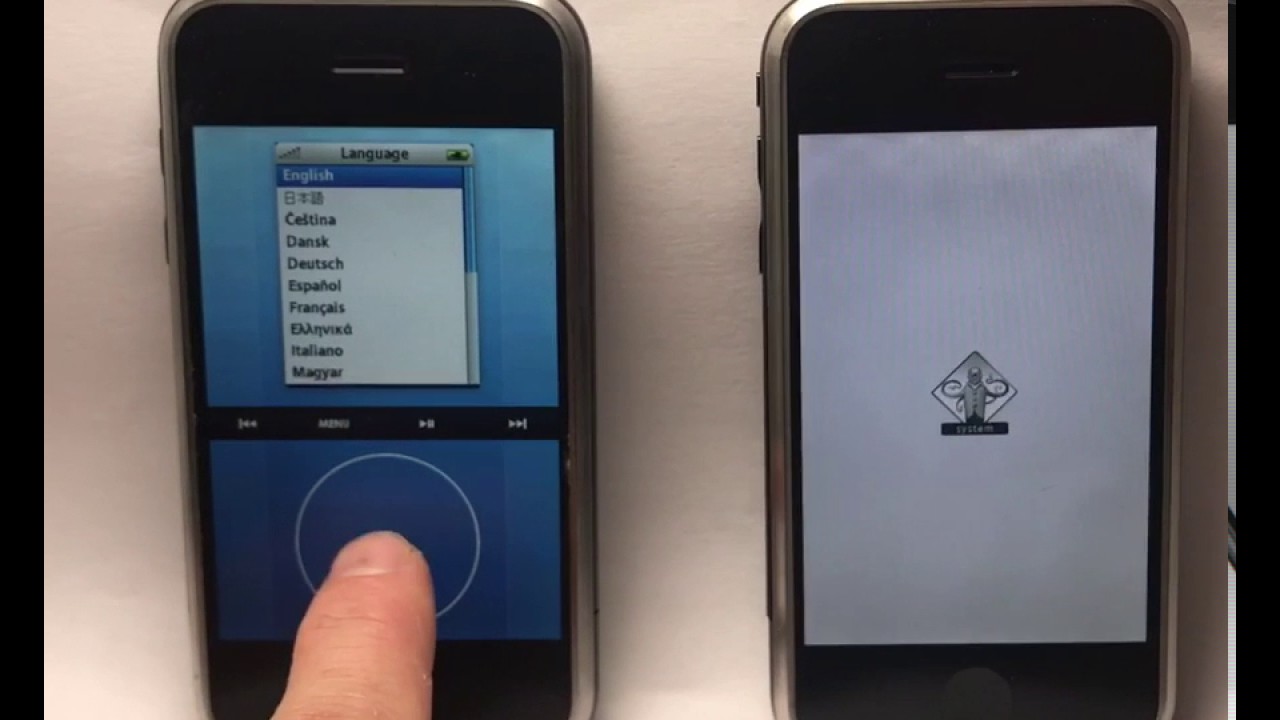
A YouTube video of two original iPhone prototypes shows that the past 10 years might have been very different: the first iPhone almost had a scroll wheel.

The video, posted by YouTube user Sonny Dickson, shows prototype iPhones known as versions P1 and P2 running two versions of Acorn OS, Apple&;s testing operating system. P2, with its direct touch interface, was the one that went to market 10 years ago, though in a more developed form than shown in the video. P1 more closely resembles the hallmark scroll wheel of the original iPod.

P2 is on the right.

youtube.com

Tony Fadell, who worked as senior vice president of the iPod division at Apple from 2006 to 2008 and was part of the team that created the original iPod, tweeted about the video, saying that P2 was always the right choice.

According to Dickson, Fadell and his team created P1, and Scott Forstall created P2, which eventually won out, though Fadell&039;s tweet implies that Steve Jobs was pushing for the scroll wheel.

Even as late as December 2006, right before Steve Jobs would reveal the first iPhone on January 9, 2007, rumors were swirling that the iPhone would sport a virtual version of the iPod&039;s design. These prototype interfaces indicate that Apple considered the option but ultimately chose to develop the modular interface we recognize today.

Apple did not immediately respond to request for comment.

Quelle: <a href="Here’s What The First iPhone Almost Looked Like“>BuzzFeed

Inside The Alt-Right’s Campaign To Smear Trump Protesters As Anarchists

Less than a week after last year&;s presidential election, a Trump supporter named Alan Beck tweeted two photographs of an anti-Trump protest in Washington, DC, in which a hooded figure held aloft a sign reading “Rape Melania.” The images went viral, and the sign — as well as Twitter — drew swift condemnation from news outlets both right and left.

Some Trump supporters took the sign as confirmation that the passionate national opposition to the president-elect was ultimately anarchic and violent. (Many of these supporters had drawn a similar conclusion about the movement.) “The current surge in the left&039;s propensity toward violence and mayhem should surprise no one,” wrote one InfoWars commenter. And to some Clinton supporters, the sign was a gutting refutation of Michelle Obama&039;s “when they go low, we go high” speech and a reminder that Trump rallies didn&039;t hold a monopoly on menace.

But, BuzzFeed News has learned, the “Rape Melania” sign was not the work of an anti-Trump protestor at all. Instead, according to sources, it was the brainchild of a group of Trump supporters led by Jack Posobiec, one of the organizers of the controversial Deploraball inauguration party and a prominent figure in the pro-Trump internet.

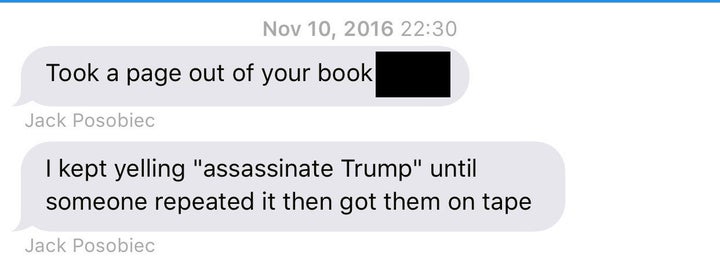
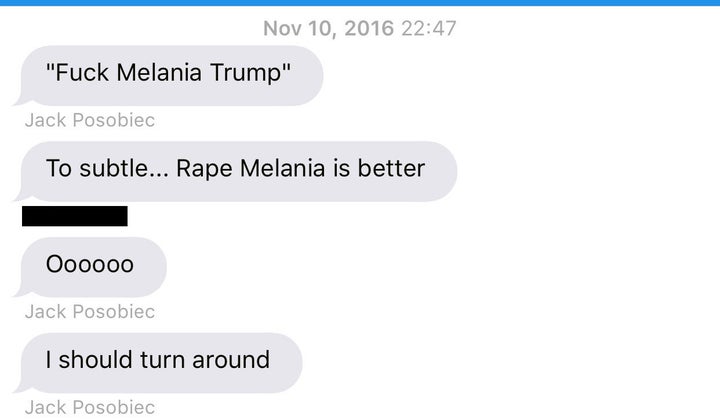
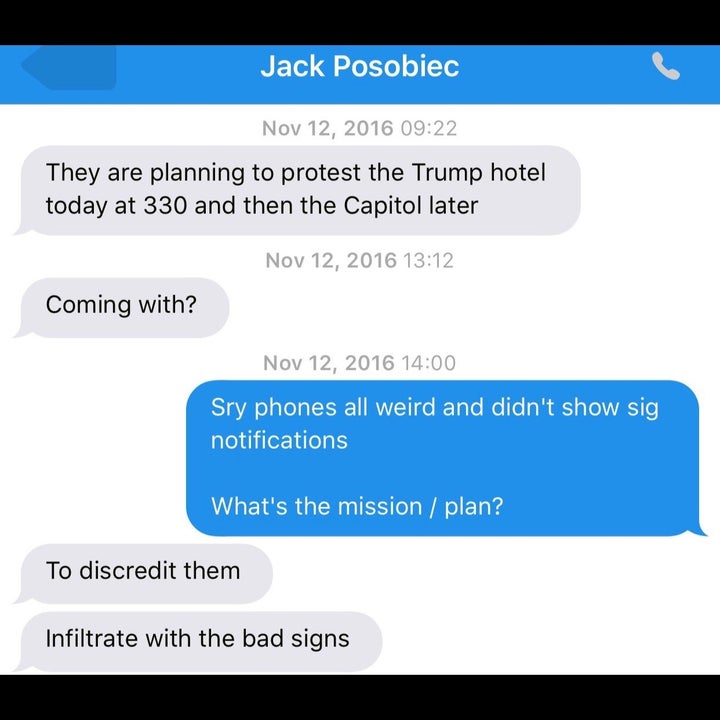
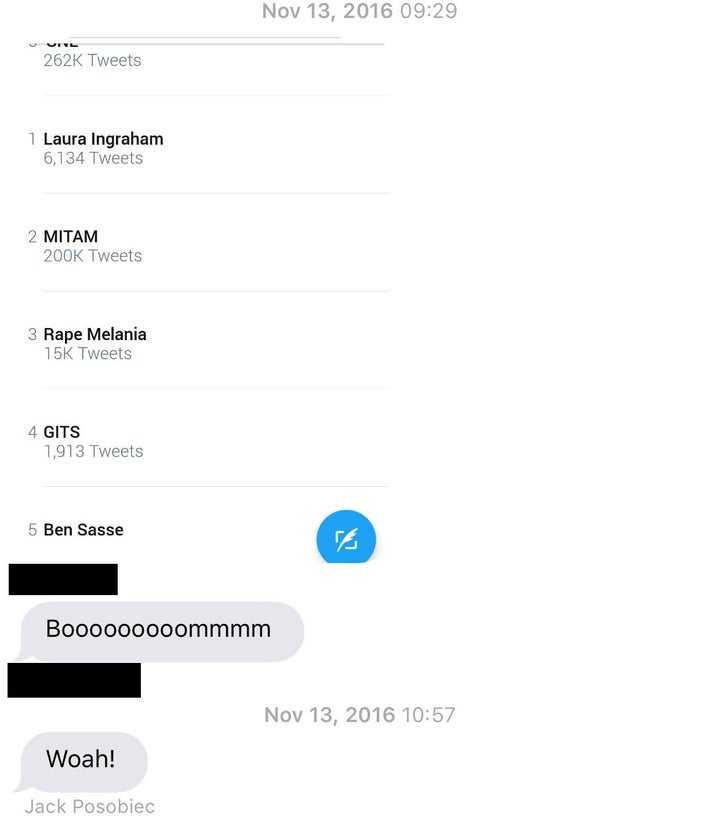
Furthermore, as shown by a series of Posobiec&039;s text messages obtained by BuzzFeed News and confirmed by a source who collaborated with Posobiec, the sign was the culmination of a disinformation campaign by Posobiec and others intended to paint the anti-Trump rallies as violent and out of control.

In a phone call with BuzzFeed News, Posobiec denied that the texts were sent by him and said that it was likely they had been Photoshopped. He also denied having any involvement in the campaign.

BuzzFeed News reviewed the texts on a source&039;s iPhone in Signal, the secure texting app, and the Signal messages allegedly from Posobiec came from the same phone number on which BuzzFeed News talked to Posobiec.

At 9:59 p.m. on November 10, Posobiec posted a video to Twitter of an anti-Trump protestor yelling “Assassinate that nigga.” In a 10:30 p.m. text message that same night, Posobiec claimed that he&039;d started an “assassinate Trump” chant to goad protestors into copying him, with the intention of filming them:

Though the video didn&039;t go viral, it was picked up by Russia Today and some conservative blogs. In the same text message conversation, Posobiec and his collaborator brainstormed other incendiary things to chant, including “Rape Melania.”

Two days later, in another text obtained by BuzzFeed News, Posobiec discussed with another collaborator his plan to “discredit” an anti-Trump protest by infiltrating it “with the bad signs.”

According to a source, it is Posobiec himself holding the “Rape Melania” sign in the photographs published by Beck — a charge Posobiec also denies.

After posting the photographs, Beck uploaded a 22-minute YouTube video of he and Posobiec sitting in a car near the protest, entitled “Anti-Trump Protester Created&039;R4PE MELANIA&;&039; Sign and The Rest of the Protesters Do Nothing.”

The following day, a collaborator texted Posobiec a screenshot of Twitter&039;s trending topics, of which “Rape Melania” was number 3. Posobiec responded, “Woah&033;”

Today, the former Deploraball organizer Anthime Gionet — who goes by Baked Alaska on Twitter – accused Posobiec of making the sign.

Posobiec, who is the special projects director of a grassroots organization called CitizensForTrump, has been at the center of several flareups of the new right media in recent weeks. In November, Posobiec was thrown out of Comet Ping Pong, the Washington DC pizza parlor made infamous by , for filming a children&039;s birthday party. And in December, Posobiec started the viral hashtag after claiming that last month&039;s film Rogue One contained anti-Trump scenes.

Quelle: <a href="Inside The Alt-Right’s Campaign To Smear Trump Protesters As Anarchists“>BuzzFeed

Twitter Bug Is Inserting Tweets Into People's Timelines From Users They Don't Follow

A Twitter bug is baffling some of the social media platform&;s users Wednesday by inserting tweets in their timelines from people they don&039;t follow.

The inserted tweets, which are being placed into timelines without any initial explanation from Twitter, set off a chorus from users asking, well, what the hell is happening?

Twitter is based on a follow model, which means tweets should appear in someone&039;s timeline only when posted by someone they&039;ve elected to follow, or when retweeted by someone they&039;ve followed. The mystery tweets were not received with a great appreciation by Twitter&039;s user base. Here&039;s a sample of their reactions:

Reached for comment, a Twitter spokesperson told BuzzFeed News, “This is a bug and we&039;re working on a fix.”

Quelle: <a href="Twitter Bug Is Inserting Tweets Into People&039;s Timelines From Users They Don&039;t Follow“>BuzzFeed

This Man's Bank Wanted To Read All His Emails To Approve A Credit Card

All your info are belong to us.

Twitter: @coderzombie

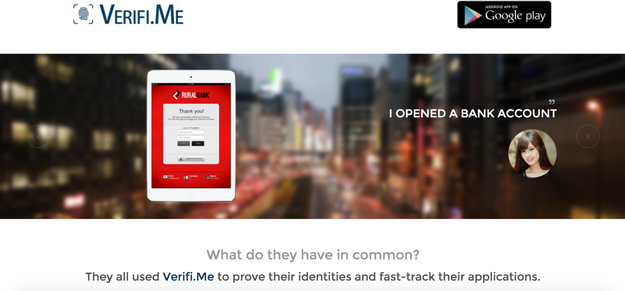
It turns out that his bank, HDFC, used a third-party company called Verifi.Me, whose website describes it as a verification service that lets users “prove their identities and fast-track their applications”.

It turns out that his bank, HDFC, used a third-party company called Verifi.Me, whose website describes it as a verification service that lets users “prove their identities and fast-track their applications”.

BuzzFeed News screenshot / Via verifi.me

Here’s everything that Verifi.Me collects about a user when they use the service, according to the company’s privacy policy.

Here's everything that Verifi.Me collects about a user when they use the service, according to the company's privacy policy.

That&;s pretty much everything important. Worse, the policy says that the company may share this information with people “who are required to know such information in order provide [services] to you.”

BuzzFeed News screenshot


View Entire List ›

Quelle: <a href="This Man&039;s Bank Wanted To Read All His Emails To Approve A Credit Card“>BuzzFeed

WeWork Has Officially Entered The Indian Market

Theo Wargo / Getty Images

Co-working startup WeWork has officially entered the Indian market by leasing nearly 200,000 square feet of workspace in Mumbai.

The company, which has been open about its Indian ambitions since last year, will launch a flagship building in India&;s startup capital Bengaluru and New Delhi later this year, The Times of India reported.

“If you are a member in New York building a global company and I don’t give you an Indian solution, I took away 10% of the world for you,” CEO Adam Neumann told Forbes in October. “It’s my responsibility.”

WeWork, which launched with 3,000 square feet of space in New York and a single employee seven years ago, is currently valued at nearly $17 billion. It offers co-working spaces in more than 35 cities across the world including 19 in the United States. BuzzFeed News has reached out to WeWork for a comment.

WeWork’s Indian presence is a result of a partnership deal with Embassy, an Indian real estate company that will take care of negotiating leases and construction. WeWork will provide branding, office services, and culture, which, among other things, includes beer-and-wine happy hours, and weekly bagel-and-mimosas networking events.

India&039;s startup boom in the last few years has led to a rise in the popularity of startups offering co-working spaces. Some offer office space to startup workers and freelancers for as little as Rs. 250 — about $4 — a day (and, presumably, no bagels).

Last year, an Indian co-working startup called Innov8 was inducted in Silicon Valley-based startup accelerator Y Combinator’s summer batch. Y Combinator invested $120,000 for a seven percent equity stake in the company, making it the accelerator&039;s first ever investment in a co-working startup.

LINK: WeWork Used These Documents To Convince Investors It’s Worth Billions

Quelle: <a href="WeWork Has Officially Entered The Indian Market“>BuzzFeed

The Hashtag And Winky Face Emoji Could Be Monopoly’s New Game Tokens

The iconic Monopoly board game is getting a new set of playing pieces, and you can vote on whether you want the symbol or kissy face emoji to be one of the game&;s tokens.

The current set is made up of eight die-cast pieces: a battleship, a shoe, an old-school race car, a cat, a top hat, a Schnauzer named Scottie, a thimble, and a wheelbarrow.

Fans can choose eight among 64 pieces, and the new set will be shipped with the game in October. Voting closes January 31, and Hasbro will reveal the results on March 19.

The redesign isn&039;t unprecedented. In 2013, fans voted the cat token as the newest game piece when the iron token received the lowest number of fan votes in a Hasbro poll. The company said that it decided to open up a vote on all the tokens in 2017 because it had seen strong engagement from fans in previous polls.

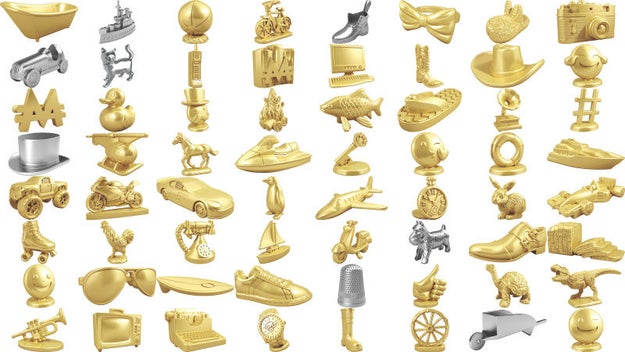
Any of these 64 tokens could become a part of the official Monopoly board game.

Hasbro

A few of the tokens, like the hashtag, originated on the interwebs, while others resemble classic symbols that have found new meaning in digital culture. Hasbro said that it based the choices on pop culture, past editions of Monopoly (that&039;s where the cowboy boot and the penguin came from), and Mr Monopoly&039;s luxe life (the helicopter, the money clip). It also included lasting, recognizable symbols to give fans a range of choices.

The key

Made famous by DJ Khaled&039;s relentlessly positive Snapchat, where he talks about the “major keys” to living a more successful life.

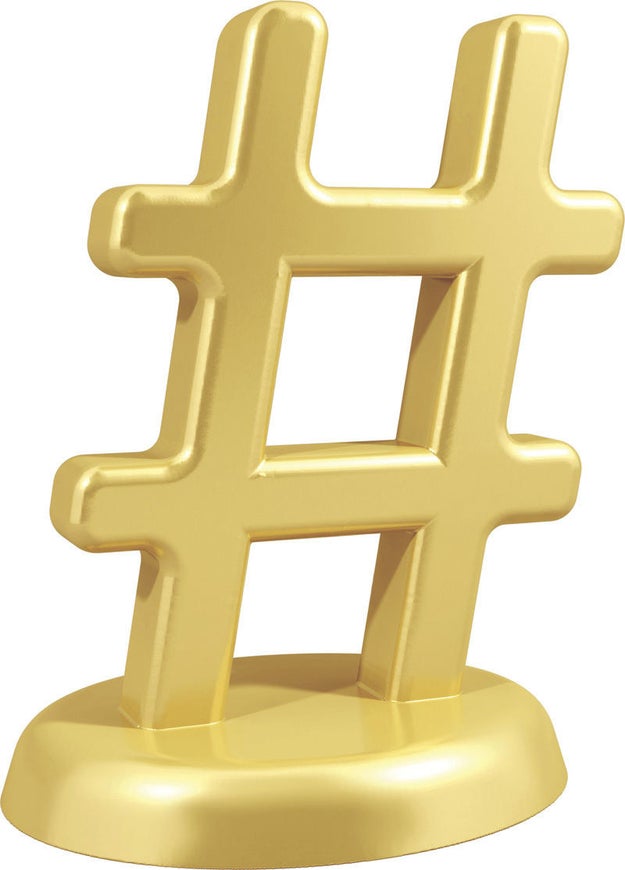
The hashtag

We can thank Twitter for this viral symbol.

The winky face emoji

For when you&039;re planning to Monopoly and chill.

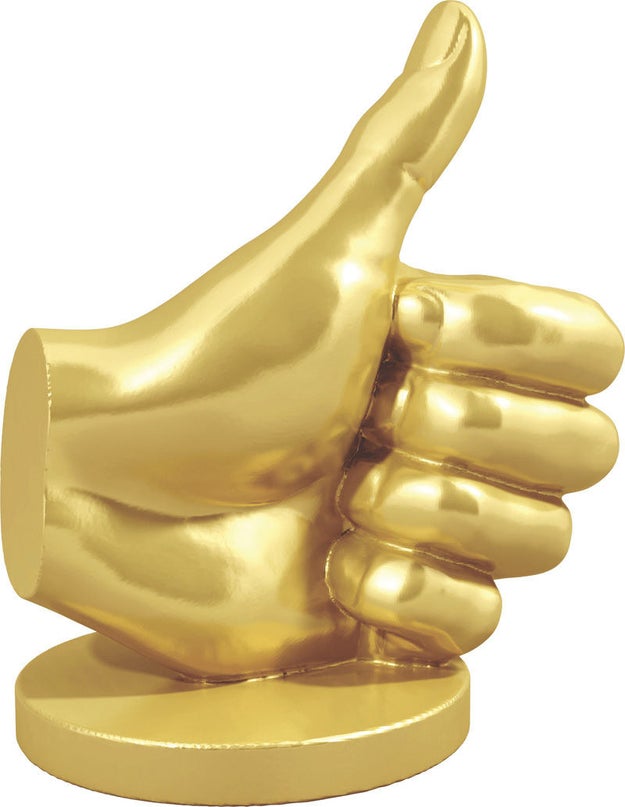
The thumbs up

An iconic symbol of positivity that&039;s been made its way into the emoji vocabulary. It can help bridge the generation gap for millennials who still live with their parents.

The computer. &;

What started it all.

Hasbro

The kissy face emoji.

“Monopoly with bae.” — Future Instagram caption

Hasbro

The classic smiley face.

And an emoji version of Rich Uncle Pennybags, Monopoly&039;s mascot.

A not-so-subtle emoji suggestion for Unicode?

Quelle: <a href="The Hashtag And Winky Face Emoji Could Be Monopoly’s New Game Tokens“>BuzzFeed

Marissa Mayer To Exit Yahoo Board Along With Co-Founder David Filo

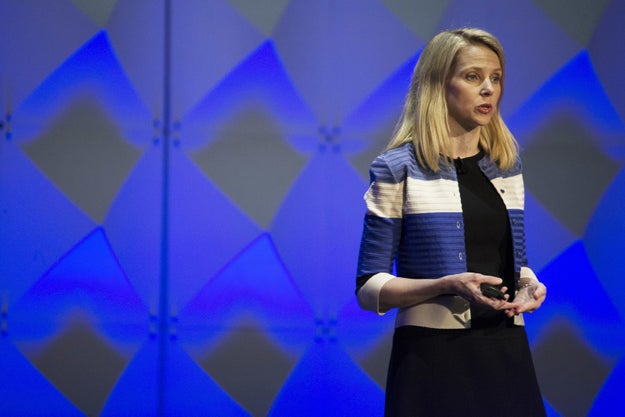
Yahoo&; President and CEO Marissa Mayer

Stephen Lam / Getty Images

Yahoo CEO Marissa Mayer, once tasked with turning the struggling company around, is set to exit the company&;s board when its sale to Verizon closes, a company SEC filing said today.

The exit of Mayer, along with Yahoo co-founder David Filo and four other board members, will reduce the size of the company&039;s board to five members. Upon closing the deal, Yahoo will take on a new name too: Altaba Inc.

Hired in July 2012 to help fix the flailing company, Mayer initially appeared to bring new life to Yahoo with shiny acquisitions, like the $1.1 billion purchase of Tumblr, that got the media and tech world buzzing. But ultimately, Mayer didn&039;t steer Yahoo in a new direction. She&039;ll hand over Yahoo to Verizon in essentially the same shape as she found it: a middling content company that tries to do a lot but excels at little.

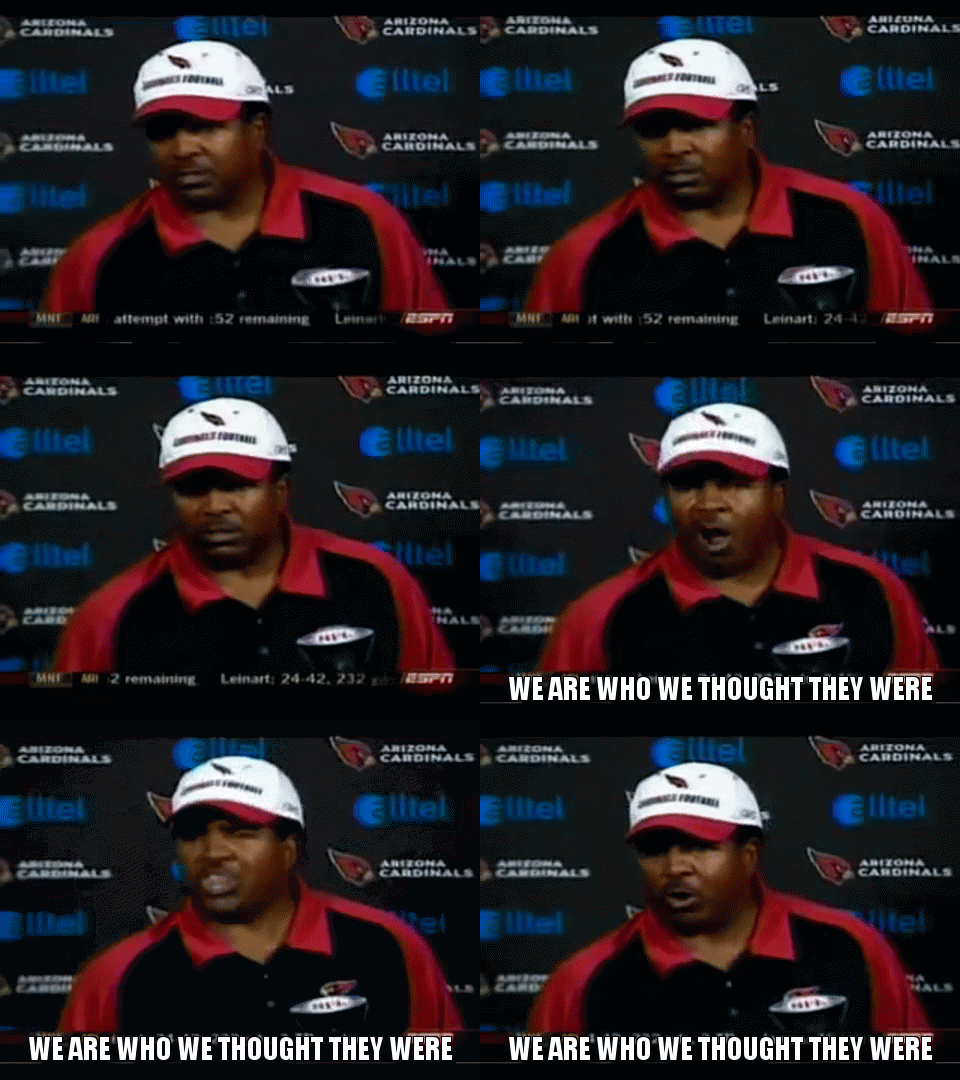
As former Arizona Cardinals coach Dennis Green would put it:

giphy.com

Yahoo&039;s final days as an independent company are mired in embarrassment, specifically recently revelations of a massive cyber attack that compromised over 1 billion users accounts. Verizon is demanding new terms following the damaging news.

Quelle: <a href="Marissa Mayer To Exit Yahoo Board Along With Co-Founder David Filo“>BuzzFeed

Twitter Reinstates Woman Who Tweeted Screenshots Of Her Trolls' Abuse

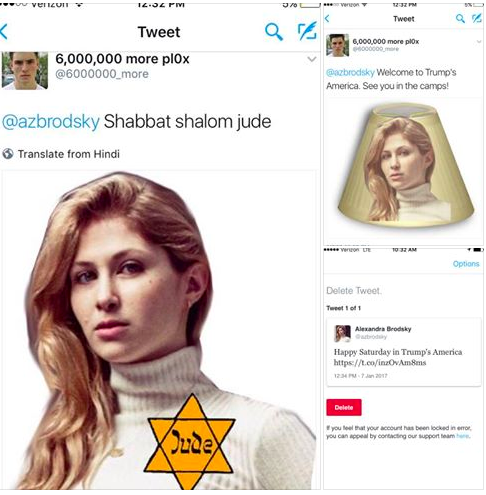
Alexandra Brodsky is a co-founder of Know Your IX, an organization that advocates for students’ rights to an education free from gender-based violence. She now works at National Women’s Law Center. This weekend Brodsky received a number of harassing tweets from anti-semitic trolls, replete with holocaust imagery and phrases like, “Welcome to Trump&;s America. See you in the camps&;” Brodsky promptly reported the tweets to Twitter and screen-shotted the offending tweets. Then, “to highlight the new normal in Trump&039;s America and put pressure on Twitter to suspend the users,” she tweeted those screenshots to her 5,047 followers.

Hours later, according to Brodsky, Twitter locked her account, telling her that she&039;d need to delete the offending images in order to regain access to it. Brodsky&039;s trolls, meanwhile, had not been suspended. “So let&039;s get this straight: Twitter still hasn&039;t suspended all the bigots I reported, but they have suspended me for calling out bigotry,” Brodsky wrote in a post to her Facebook page Monday morning. “I call bullshit.”

Shortly after BuzzFeed News asked Twitter about its decision to freeze Brodsky&039;s account and not those of her harassers, the company unlocked it and issued the following statement:

Hello,

Twitter takes reports of violations of the Twitter Rules very seriously. After reviewing your account, it looks like we locked it by mistake.

We have unlocked your account, and we apologize for this error.

Thanks,

Twitter

This isn&039;t the first time Twitter has responded to abuse violations only after being called to action by a media request for comment. On November 2nd, Twitter suspended trolls using misinformation to disenfranchise Black and Latino voters only after being contacted by BuzzFeed News (previously the company replied to an individual user that the tweets did not violate company rules). Four days later, when the company responded to user reports of more false voter information, its action again followed an inquiry from BuzzFeed News. Likewise, in separate instances this summer, Twitter reversed decisions to keep up an ISIS beheading photo and a number of threats of rape only after media inquiries into those incidents.

Quelle: <a href="Twitter Reinstates Woman Who Tweeted Screenshots Of Her Trolls&039; Abuse“>BuzzFeed

6 Things To Know About The Future Of Transportation

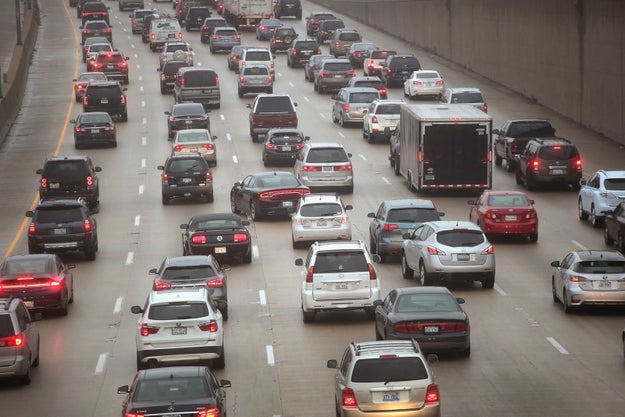
Travelers sit in a massive traffic jam as people hit the road for the holiday weekend on November 23, 2016 in Chicago, Illinois.

Scott Olson

The Trump administration will take over at a time when transportation in the US is undergoing somewhat of a revolution: the introduction of self-driving cars, an increasing reliance on ride-hail, and the privatization of public transit, to name a few.

Under its outgoing leader Anthony Foxx, the US Department of Transportation has begun preparing for the industry’s shift. Foxx led the agency as it drafted a 30-year report, presented at Google, on moving “beyond traffic” and released the first set of federal guidelines for autonomous vehicle development. Now, the agency has released the final draft of its 30-year report – a 238-page document that outlines the current state and future of transportation and infrastructure, as well as the challenges that Trump’s pick for secretary of transportation, Elaine Chao, will face.

Here are six things to know about the future of transportation:

1. Good luck with that hyperloop, guys.

Hyperloop, the moonshot technology project proposed by Elon Musk that involves cramming people in a tube and jetting them across long distances quickly (think San Francisco to Los Angeles in 30 minutes), “could one day rival high-speed rail as a mode of high-speed surface travel,” according to the report.

But not so fast. As the report points out, there are plenty of technical and practical difficulties looming for the hyperloop, not to mention the fact that one company attempting to develop it is dealing with internal turmoil.

“To name just one of the many challenges facing this technology, Hyperloop systems must travel in straight lines and would require significant right of way,” the report reads. “This could make construction of a Hyperloop system near and through populated areas prohibitively expensive.”

2. Uber everywhere.

The agency’s first report in 2015 noted that public transit agencies had started emulating Uber, for example, by accepting fares through an app. Since then, local transportation agencies have gone beyond simply copying Uber: Now they’re subsidizing ridehail outright for passengers.

This is one of Uber’s strategies for expanding beyond dense cities to conquer the suburbs. Summit, New Jersey, a suburb outside of New York, earlier this year offered residents the option to Uber to the local train station at the same cost as paying for a parking spot there. Subsidizing Uber allowed a clear benefit for Summit: forgoing millions of dollars in capital expenditures to build a new parking lot to meet demand.

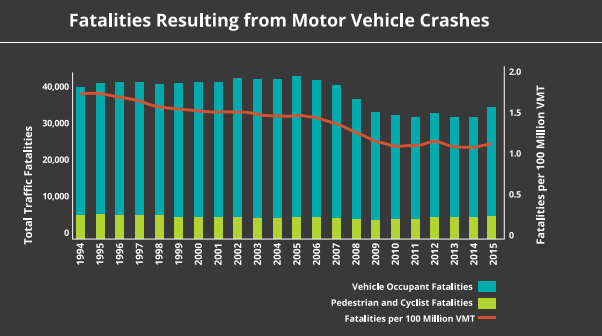
“These services may make it more likely that households decide to go car free,” the report notes. Over the long haul, that could mean less revenue from gas tax, which funds roads and bridges. “It might also mean that we have learned to live with an inadequate, congested transportation system by traveling less.”

“The recent emergence of [ride-hailing] businesses demonstrates a key challenge for governments,” the report reads. “Over the next 30 years, our legal and regulatory system may be increasingly challenged by emerging forms of business and travel that transcend traditional legal and planning concepts.”
Department of Transportation

3. Self-driving cars are inevitable…

Secretary Foxx told BuzzFeed News that he thinks self-driving cars will go mainstream within five years. The report echoes that sentiment.

“The development of advanced automated vehicle safety technologies, including fully self-driving vehicles, may prove to be the greatest personal transportation revolution since the popularization of the personal automobile nearly a century ago,” the report says.

The technology is still under development at tech companies like Google and Uber, which are already testing self-driving cars on public roads, among other companies, and at traditional automakers such as Ford and General Motors. Many in the industry expect self-driving cars to make roads safer by eliminating human error, which accounts for 94% of accidents. That said, self-driving cars could make mistakes too: One of Uber’s test vehicles recently ran a red light in San Francisco – though the company said that it happened after a human had taken control of the car.

4. …but there are plenty of challenges to resolve before they become mainstream.

While autonomous vehicles are widely expected to make roads safer by eliminating human error and distracted and drunk driving, they will also invite new challenges.

“New transportation services are at risk of repeating patterns of economic and racial inequities in transportation.”

How do you make sure a self-driving vehicle, which is equipped with even more computers to power the car than a traditional vehicle, is secure from hackers? How can automakers and software companies ensure people who ride in these vehicles can maintain their privacy? Perhaps more immediately relevant: What happens to drivers when their jobs are automated?

“Entire business models and professions would be created, transformed, or eliminated as robotic taxis and driverless freight become possible,” the report says. “The broader effects on society are subject to debate, with uncertainty surrounding whether automated vehicles will curtail or enable sprawling land use patterns.”

5. Policymakers must also grapple with increasing economic inequality, which is reflected in access to transportation options.

“New transportation services such as bike-share systems and [ride-hailing] are at risk of repeating patterns of economic and racial inequities in transportation,” the report says. “Public-private partnerships in support of transit-oriented development could help to increase the amount of affordable housing with access to transit.”

(Many reports over the years have documented economic disparities associated with public transportation: wealth tends to cluster closer to transit lines.)

6. The US will need to do something about its crumbling infrastructure.

“Transportation agencies at all levels and across all modes face serious financial challenges that limit their ability to maintain our existing transportation system, let alone invest in the transportation system of tomorrow,” the report says. “As resources have become increasingly constrained, governments are being forced to make hard choices about whether to maintain services on roads and facilities that are less economically important.”

Case in point: About 58% of US roads are in “less than good” condition, according to the report. And 23% of bridges “need significant repair or can’t handle today’s traffic.”

In his campaign, president-elect Trump proposed a 10-year, $1 trillion infrastructure plan. In a fact sheet on the transition website, the campaign said the plan would help create a “a reliable and efficient transportation network” and “ensure we can export our goods and move our people faster and safer. (That page has since been removed.)

“If we want our nation to continue to support a world-class transportation system that can meet the needs of a growing population and a growing economy,” the DOT report says, “we will need to raise funding levels to support the necessary public investment, and we will need policies that spur private investment.”

Quelle: <a href="6 Things To Know About The Future Of Transportation“>BuzzFeed
Trump Runs Twitter Now, But He's Not Going To "Save" It

Donald Trump’s viral tweets and his centrality to the American conversation have made him vastly the largest force on Twitter — ten times larger in terms of conversations than the entire Kardashian clan, according to new data — giving him unprecedented leverage over a social platform that, as it struggles as a business, remains central to news and politics.

Trump’s emergence hasn’t helped Twitter’s core metrics, but his dominance on the platform does raise an existential question for its leaders: What happens to Twitter if he should suddenly leave?

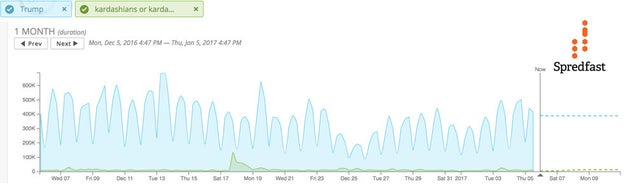
Between December 5, 2016 and January 5, 2016, Trump’s name was mentioned 42.7 million times on Twitter. That’s more than 10 times the entire Kardashian clan.

Trump&;s Twitter dominance becomes clear when you look at how often he’s discussed compared to other celebrities and world events. Between December 5, 2016 and January 5, 2016, Trump’s name was mentioned 42.7 million times on Twitter, according to an analysis of Twitter’s “firehose” data by social marketing platform Spredfast. That’s more than 10 times the entire Kardashian clan, whose names were mentioned 3.8 million times during the same period despite a combined 100 million+ followers compared to Trump&039;s 19 million. Trump’s 42.7 million mentions also dwarfed those of Aleppo (7.6 million) ,and the 2.9 million combined mentions of kittens, puppies, cats, dogs.

“Trump’s numbers are in another stratosphere when we compare him to anyone or anything that has traditionally been the gold standard for ‘winning the internet’,” Chris Kerns, VP of research and insights at Spredfast, told BuzzFeed News.

Trump vs. the Kardashians

Spredfast

Trump’s Twitter presence extends well beyond the platform, giving the company free marketing on a grand scale. His tweets, often fired off in the early morning, regularly suck the air out of the news cycle, putting the Twitter brand in front of millions of potential new users.

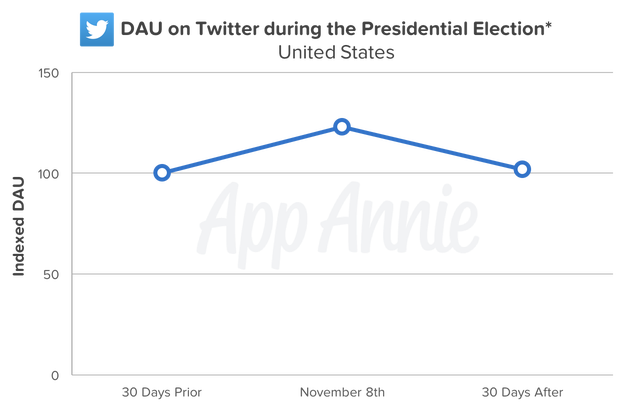
But while those tweets have driven dozens of news cycles, they haven&039;t done much for Twitter. Indeed, according to third party data reviewed by BuzzFeed News, the Trump Twitter spectacle has not coincided with any material change in the core metrics used to measure Twitter&039;s success.

During the company’s last earnings call, Twitter CFO Anthony Noto said, “There&039;s no noticeable impact that we&039;ve seen from the elections.” And since the election, Twitter hasn&039;t experienced a material upward trend in daily active users, downloads or total time spent in its app, according to App Annie, an app analytics company which reviewed panel data on hundreds of thousands of U.S. iPhones and Android handsets. The data analytics firm 7ParkData also found no clear trend in increased Twitter usage since the election, though it did show an uptick in logins from those who have the app.

So while Trump has commandeered a vast swath of Twitter&039;s attention, he’s unlikely to ‘save’ the platform, as some are suggesting. “The company could benefit from its most talked-about user’s ascent to the White House,” The Guardian argued last week in a story headlined “Can Donald Trump save Twitter?”

While Trump&039;s Twitter presence isn’t helping the company, his sudden departure from the platform could hurt it, creating an unfillable-by-anyone-else void. When he assumes office, Trump will almost certainly be pressured by national security advisors to scale back his personal use of Twitter as his account will likely be a particularly tempting target for hackers.

Twitter declined comment.

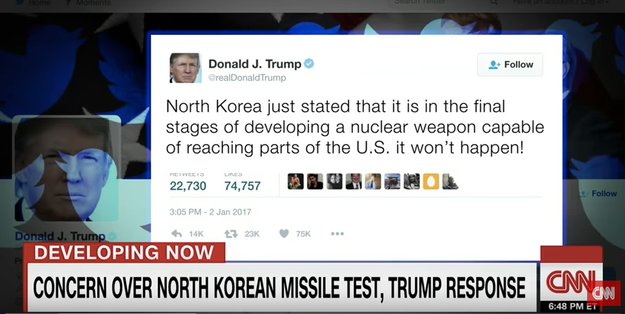
Twitter’s lack of a boom following its biggest gift yet — a President-elect addicted its service who posts inflammatory tweets with regularity — is the clearest evidence to date that the company&039;s platform may have hit an insurmountable wall. Twitter has a lot going for it. It’s a perfect platform for watching news unfold in real time. But that’s something only certain people find interesting, and if Twitter can’t sell that promise with Trump, it’s hard to imagine it ever will. Because as the metrics above show, even with the president-elect of the United States sparking endless tweets by trolling Arnold Schwarzenegger for his Celebrity Apprentice ratings, disparaging national security efforts and taunting North Korea over nuclear weapon development, Twitter&039;s appeal remains limited.

That said, Twitter is currently making over $2 billion a year with a user base of about 317 million monthly active users. Yes, the company is struggling with user growth. And slowing revenues. And leadership turmoil. But those were also its struggles long before Trump announced the presidential bid that would land him in the White House. If the data shows that Trump isn&039;t “saving” Twitter, perhaps it&039;s because Twitter didn&039;t need this kind of &039;saving&039; in the first place.

Quelle: <a href="Trump Runs Twitter Now, But He&039;s Not Going To "Save" It“>BuzzFeed