Facebook Is Trying To Smooth Over Relationships With The Media

Brad Barket / Getty Images

Facebook’s new head of news partnerships, Campbell Brown, is seeking to mend the company’s relationship with the media through a series of off-the-record get-togethers at her Tribeca home.

Over food and drinks on Jan. 24, Brown hosted a roundtable of top editors and executives at prominent US news outlets, including the New Yorker’s David Remnick, the New York Times’ Andrew Ross Sorkin, Vox’s Melissa Bell, and USA Today’s Joanne Lipman.

At the meeting, Brown and Facebook Chief Product Officer Chris Cox defended the company’s handling of the “fake news” phenomenon and discussed Facebook&;s huge clout in the media industry, according to Remnick and others familiar with the meeting.

“They are this enormous player in the news business, and they don&039;t yet know how to think about their own role and near hegemony,” Remnick said. He said Cox did most of the talking, while “Campbell had clearly done the inviting.”

Bell and Sorkin declined to comment. Lipman did not return requests for comment. Remnick said he wasn&039;t aware the event was off the record.

A Facebook spokesperson said in an emailed statement: “Since joining Facebook a month ago, Campbell has been reaching out to publishers, reporters, and editors from all kinds of publications. She and her team are continuing to hold one-on-ones, roundtables, and small group meetings both in the U.S. and abroad. As we build the Facebook Journalism Project, it is important to step up our partnerships with news organizations and keep open lines of communication both ways.”

BuzzFeed News’ head of US news, Shani Hilton, who was also present, declined to comment. BuzzFeed Editor-in-Chief Ben Smith was invited but didn’t attend, according to a person familiar with the matter. Smith declined to comment.

In the wake of the 2016 presidential election, Facebook has faced considerable backlash over its inability to stop the spread of misinformation on its platform. While Facebook CEO Mark Zuckerberg initially downplayed the notion that widespread fake political news stories could have swayed voters, the company eventually instituted a handful of measures to stem “fake news” and hired Brown — a former CNN host and controversial education activist — to rebuild trust with the media.

“Clearly Facebook feels some combination of responsibility, confusion, and determination to do something about it,” Remnick said. “It was receptive and encouraging. We’ll see what comes of it.”

Facebook has long had a tense relationship with the press, but over the past few years, as outlets have become increasingly reliant on the company to drive a huge number of people to their content, that relationship has become more acrimonious.

Now a series of mishaps like the “fake news” saga and reports last year that the company’s trending news team suppressed stories from conservative news sites has pushed Facebook to confront its fraught role in the news industry. And Brown’s hiring and the subsequent meetings demonstrate the company is trying to pacify top editors at outlets who work with, and have aggressively covered, the company.

One attendee said the room also discussed Facebook&039;s plans for helping publishers begin to draw in significant advertising revenue from the videos they are producing for the platform.

Brown’s public relations campaign is just getting started. She will host another set of media types at her home next week, according to two people familiar with the matter.

Quelle: <a href="Facebook Is Trying To Smooth Over Relationships With The Media“>BuzzFeed

Snap Inc.’s Growth Is Pissing Off Its Neighbors

Getty Images

You can pick out the Snap Inc. employees strolling through the company’s beachside Venice, California neighborhood with relative ease. “Snapchatters,” as they refer to themselves, walk around Venice with company badges clipped to their pants, Macbooks in hand, and stylish sunglasses resting on their noses. And unlike many people in Venice, they wear shirts.

Snap&;s headquarters are in Venice Beach, California. The funky West Los Angeles &039;hood has long been something akin to the Haight Ashbury of Southern California, home to body builders, artists, dropouts and weirdos. It&039;s the kind of place where you can buy pot more easily than a cheeseburger. But ahead of its massive IPO, as Snap has swelled to 1,859 employees scattered across the skate-friendly malecon and beyond, neighbors charge that it&039;s disrupting not only messaging, but also a vital piece of Los Angeles itself.

“They’re turning it into a horrible business park.”

“They’re turning it into a horrible business park,” Dave Martinez, a local barber and longtime Venice resident, told BuzzFeed News of Snap. “Closing shops, locking business doors, and making it office space. Streets that were alive with neighborhood and food and drink are now just locked front doors with security guards who are shooing the exact same people who lived in the neighborhood away.”

Asked about Snap&039;s appetite for Venice real estate, Cesario “Block” Montano, owner of Venice Originals — a local skate shop that recently went online-only — offered a simple analogy: “They’re like a fucking shark.”

Unlike its major competitors Facebook, Google and Twitter, Snap’s operations aren’t consolidated inside a big corporate campus. Instead, the company is scattered across at least 9 buildings throughout Venice, a handful of which are clustered on the same Market Street block. The setup makes for a company more integrated with its neighborhood, but also one butting up against local culture as it grows.

A Snap security guards stands watch outside of one of the company&039;s offices.

Snap’s presence is apparent throughout Venice, a town with a population of just over 40,000. You can see it in subtle ways: local eateries like Tacos Por Favor have been transformed into de facto corporate cafeterias, complete with sign in sheets at the register and cashiers checking Snap badges. There are other, more explicit signs as well: security guards biking around the streets in grey polos inscribed with “Snap Inc. Security” logos.

Snap’s expanding Venice footprint has taken over space previously occupied by local businesses over the past two years, including a local bar called Nikki’s. “It’s messed up man,” local skater Rene Flores told BuzzFeed News. “They’re closing off everything.”

A spokeswoman for Snap declined to comment.

Nikki’s name is still etched on the sidewalk outside of its former digs. Look past the security guards when the building’s door opens, and you’ll see Snap employees eating and drinking inside. On Nikki’s Yelp page — now emblazoned with an all caps “CLOSED” designation, an old review advises, “If you&039;re not coming here for a happy hour in Venice, you&039;re a fool.”

“It’s just getting bigger and bigger and bigger. What’s going to happen?”

Snaps has irked some locals that worry about change in culture. “There is a tremendous amount of land they are renting that is now all dead space,” Venice Neighborhood Council president Ira Koslow told BuzzFeed News. “It’s sort of creeping. It’s just getting bigger and bigger and bigger. What’s going to happen?”

That&039;s not an unreasonable question, particularly for Venice, which has undergone a number of dramatic transformations since its its inception in the early 1900s. The neighborhood has moved from a canal laden amusement area to music mecca to tech haven with many iterations in between. A Snap dominated Venice, some locals say, is just the region’s latest reinvention. “I see Snapchat and all the other startups here as just another point in that evolution,” Juan Bruce, founder of the Venice-based Epoxy, told BuzzFeed News.

A Snap security guard patrols Venice

Alex Kantrowitz

Indeed, local tech employees say Snap’s decision to headquarter in Venice has enhanced the area’s tech scene, drawing in new talent and driving growth. “I moved back here from Boston, expecting an influx of startups at the intersection of entertainment and tech to pop up around Snap,” Zack Servideo, partner at Venice-based Fabric Media explained to BuzzFeed News.

Snap&039;s Venice operations have also been a boon to some restaurants. “Just seeing the revenue we’re getting in the winter months, it’s definitely helping,” Ryan Steed, partial owner of Wild Poke, a lunch spot popular with Snap employees, told BuzzFeed News. About 30 Snapchatters show up to Wild Poke for lunch every weekday, he said.

Snap is trying to be a part of the Venice community in ways that go beyond merely patronizing the local shops. The company is funding a program called Codetalk at Venice’s St. Joseph Center, which offers low-income and homeless women coding and design classes. It’s also funded showers at Safe Place For Youth, a Venice non-profit dedicated to helping homeless young people.
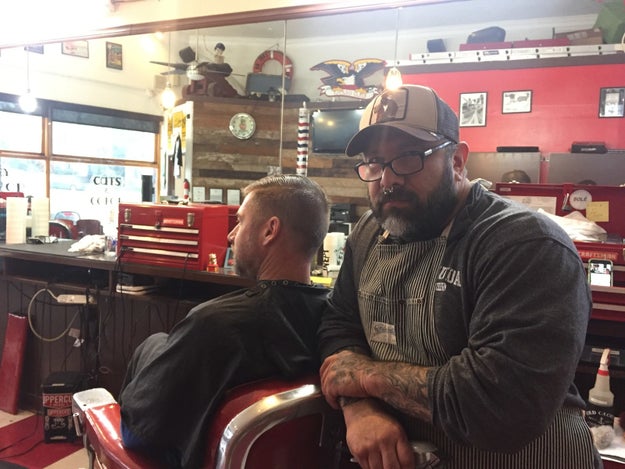
Dave Martinez

Enrico Moretti, an economics professor at the University of California, Berkeley, told BuzzFeed News that Snap’s presence will likely be a net positive for Venice. “For each job in the local tech sector in a city, five additional jobs in the local service sector will be created in that city in the long run,” he said. Twitter’s Market Street headquarters in San Francisco he explained, generated more jobs outside its walls than inside. “It’s good for retail, it’s good for restaurants, it’s good for all the local businesses that exist,” he said. “The bigger question is housing costs.”

The answer to that question looks bleak. In the last two and a half years, housing prices in Venice have risen noticeably, according to Suzy Frank, owner of Abbot Kinney Real Estate. A two bedroom one bathroom home that used to rent for $4,000 per month two years ago is now going for $5,000 to $6,000, she said. “You can not buy anything in Venice for under 2 million,” she explained. The increase in housing costs, Frank said, is largely the result of an ongoing influx of tech workers and entertainment professionals in the area. A longtime Venice resident, Frank said she’s not bothered by these changes. “It’s called progress,” she said.

“It’s called progress.”

Progress for some, hardship for others. Venice&039;s rising real estate prices have left some longtime residents struggling to make rent in a town that was once far more affordable. “I wouldn’t be surprised if I’m next,” said one Venice local who has seen a number of friends leave the area thanks to rent increases.

Snap is hardly the sole architect of the change Venice is currently undergoing, but its flashy public profile has made it a lightning rod for locals that view its ongoing expansion with dismay and resentment. “SAVE DOGTOWN&; GET OUT SNAPCHAT,” screams a front page editorial in the February edition of the Free Venice Beachhead broadsheet.

Penned by Venice local Mark Rago, the editorial accuses Snap of using the community like a private campus and calls for protests against the company. “It’s bad enough they have an entire street where a beloved local bar used to be, but now they have all of these other properties all over the community,” Rago writes. “And worse…they just don’t seem to care about locals or the character and spirit of our neighborhood. They are transforming our neighborhood into a private commercial district thus destroying the community in a way that’s reminiscent of a military occupation&033;”

Rago’s is an incendiary screed, but it speaks to the anger and bewilderment that Snap’s rapid expansion has inspired in many Venice locals. It’s not only the change that’s getting to people, it’s the rapidity with which it’s occurring, and the sense that it is utterly inexorable. Rago’s “incomplete list” of Venice properties Snap is nine locations long, dovetails into a second, hypothetical “what-will-they-buy-next” list and concludes with an “Oh wait that’s right –THEY ARE ALREADY TRYING TO BUY THAT” pronouncement.

“It’s happening at a whiplash pace,” said Martinez, the longtime Venice barber. “Before you can even figure out what’s going down the next wonderful business has closed and Snapchat has locked the doors and put a security guard up front.”

Quelle: <a href="Snap Inc.’s Growth Is Pissing Off Its Neighbors“>BuzzFeed

Facebook Wants To Start Streaming Major League Baseball Games

Butch Dill / USA Today Sports

Facebook is in negotiations with the Major League Baseball League to possibly stream one game per week during the 2017 season. Reuters first reported the news. What teams, which games, and where on Facebook the livestream would appear remain unclear, and Facebook did not immediately respond to request for comment.

This isn&;t the first major deal for Facebook&039;s sports partnerships division. The company recently struck a deal with Univision to live stream 46 Mexican soccer games with English commentary from Liga MX, a Mexican soccer league that has more viewers than the English Premier League. The Washington Post reports that executives at Univision cited the social network&039;s massive reach as a factor that drew them in.

Facebook has also inked a deal with Turner Sports and the NBA to live stream the 2017 NBA All-Star Slam Dunk contest.

MLB is likely in search of that big audience as well. The league currently has one of the oldest fanbases among any sports games, despite its popular and lucrative app MLB.com At Bat. Streaming baseball games on Facebook would allow the league to reach a younger and more diverse audience.

The move may be a threat to Twitter, which streamed NFL games last year in a bid to appeal to a live sports audience. The move seemed to work, as it increased NFL fan engagement on the social network.

In addition to streaming sports content, Facebook is taking aim at television sets by developing an app for cable set top boxes and Apple TV; it&039;s also in talks about potential deals to license TV-show style shows. The app will allow you to watch Facebook livestreams by publishers and friends on your TV. The push into television-esque delivery comes as Facebook&039;s news feed runs out of space for ads and the company seeks to diversify.

Quelle: <a href="Facebook Wants To Start Streaming Major League Baseball Games“>BuzzFeed

After A Big Bank Bought Simple, Things Got Complicated For Customers

Scott Beale / Flickr / Via Flickr: laughingsquid

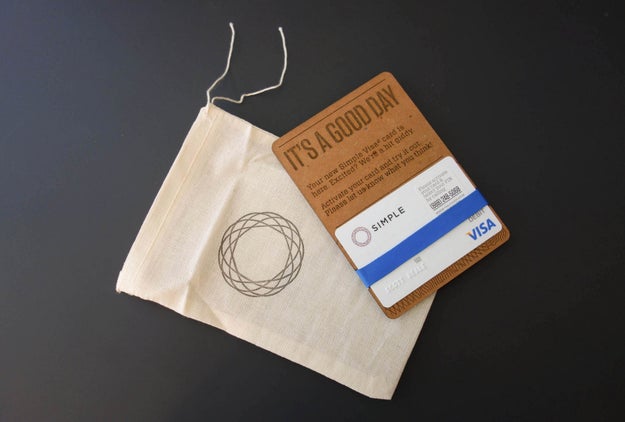
Customers of Simple — the 21st century bank with no branches or checkbooks, just a website, sleek interface, and debit cards — signed up because they wanted banking to be just that: simple. But after European banking behemoth BBVA Compass acquired Simple for $117 million three years ago, customers say the process of transitioning their accounts to the new bank has been rife with headaches and complication. And for Simple customers who were not US citizens, the transition wasn’t initially possible at all.

To integrate with BBVA, Simple had to rebuild its banking system, which took two years, according to a company spokesperson. When that process was complete, Simple began the process of transferring individual accounts from Bancorp, which previously backed Simple, to BBVA. This transition requires customers to provide multiple pieces of identification, transfer funds, and reconfigure features like direct deposit or autopay.

“It&;s opening a new bank account, which is why we fully understood that there would be frustration,” said Simple spokesperson Amy Dunn. “It’s a terrible experience no matter what. We tried to make it as painless as possible.”

Despite Simple warning customers of the pending transition back in April 2016, things didn’t go smoothly for everyone.

For example, in Google Play reviews and on Twitter, US residents here on green cards or work visas complained that they were unable to transition to new Simple accounts. A spokesperson for Simple said the problem arose because BBVA “didn&039;t have the existing infrastructure to open accounts for permanent residents who aren&039;t citizens.”

BuzzFeed News first inquired about this issue on Friday; since then, Simple — which recently publicly reiterated its commitment to immigrants’ rights — says it’s resolved the problem. “We’ll be able to approve new applicants with a green card or Visa (so long as they fit all other qualifications), and our team will be following up with customers who were impacted in the coming weeks,” Dunn wrote in an email. “If they&039;ll have us, we&039;d like to welcome them back.”

Dunn couldn’t say how many immigrants have returned to Simple since the fix was made, but the overall number of non-citizens using Simple is very small. However, plenty of people had other problems.

Neil Robertson of Denver opened a Simple account after a bad experience at Wells Fargo. Because he’s a musician who’s often paid in cash, Simple’s lack of branch locations can be annoying for him. But not as annoying as when his Simple debit card recently got declined at a bar despite him having plenty of money in his account.

“[Simple was] pretty exciting, but they were acquired and things seemed to stagnate.”

“It wasn&039;t just my card getting declined, which is always a weird feeling, but when I pulled up the app, I had to expose what&039;s in my account to show it to [the bartender],” Robertson said. “And every time you keep swiping that card, my account is saying it&039;s going through — $22, $22, $22.” Robertson didn’t ultimately lose any money, though he says he’s still waiting for “several hundred dollars” to show up in the new account.

Robertson transitioned onto the new BBVA-backed Simple platform in late January, but as of yet, his old account hasn’t closed; for him and other customers, this awkward transition period has caused confusion — it’s unclear which account actually holds their money. Robertson says he’ll keep his Simple account until he can find a better option, but not everyone else is as patient.

One woman said she quit Simple after suddenly being unable to use her debit card while travelling abroad. Another woman said she was temporarily cut off from her funds after her account was closed without sufficient warning as part of the transition process.

And other customers are having problems with automatic bill payments still being withdrawn from their old accounts.

Gordon Emmerson’s power company charged him $24 for an unexpected overdraft after his money had already been moved to his new Simple account. After some back and forth, Simple agreed to cover the fee. But Emmerson is no longer a customer. “That whole episode caused me to lose faith in the company and worry about the safety of my money, so I’m in the process of transitioning to a local credit union now,” he said. “I wouldn’t recommend Simple anymore, that’s for sure.”

Simple says it “can’t speak to specific customers’ accounts or issues for security reasons” but described many of these complaints as one-off issues. A spokesperson pointed to tweets from people who praised its handling of the transition, and said the majority of feedback has been positive. And, indeed, it seems like a lot of customers are happy with the service; even some who initially had a problem with the transition will be sticking with Simple.

“Simple was founded on the belief that a banking company can be on the same side as our customers,” said Dunn in an email. “We believe in our mission to help people change their relationship with money, and to help people feel confident and empowered instead of ashamed, confused, and taken advantage of.”

But the challenge for Simple, which is owned by a big bank, will be retaining the customers who came to it to get away from big banks.

“This isn’t the first time Simple has faced this problem — some of its customers are also frustrated by the fact that BBVA Compass is one of more than a dozen banks invested in the Dakota Access Pipeline. Though Simple says it “neither financially nor philosophically” supports the pipeline, the issue serves as another example of how a big bank isn’t what Simple customers signed up for.

For Aaron Shekey, the real sign of trouble with Simple came after he transitioned accounts, when he (and thousands of other Simple users) received a marketing email from BBVA about a Valentine’s Day promotion. Simple had told their customers that BBVA would never contact them.

“[Simple was] pretty exciting, but they were acquired and things seemed to stagnate,” said Shekey, who is a programmer and startup founder. “I think they&039;re the best of the online banks, but the email from BBVA felt like a breach of privacy and trust.”

Simple sent an email to customers apologizing for the mistake, and said in an email statement, “We had put agreements in place up-front to prevent this sort of cross-marketing from happening, and we’ve all been working to make sure that’s the case moving forward.” But another Simple customer, Ben Lopatin, is still worried. “Now I’m not sure what other data BBVA has access to and ‘isn’t supposed to use’,” he said via DM.

“They aren&039;t going to be &039;simple&039; to use anymore. If anything, BBVA is probably going to ruin this.”

Simple always expected it would lose a few customers in the transition process, but so far, with 87% of accounts moved over to the BBVA platform, it says it hasn’t lost a significant amount of business. The company says it’s grown 68% percent in the last year, and has around the same number of accounts as a bank with 1,010 branches with just a fraction of the corporate overhead.

Still, BBVA has lost money on its investment in Simple every year since the acquisition, with the total write-down in value since 2014 totaling $89.5 million, according to the Houston Chronicle.

In a statement to BuzzFeed News, BBVA said valuations for tech companies are “very volatile.” “As with most investments, return is delivered in the medium to long term,” the statement continues, “and BBVA Compass remains committed to Simple and its continued success and ongoing growth.”

Also still committed to Simple is Sean Ferguson, a customer who plans to keep his account despite what he calls “completely irresponsible” behavior because it still makes it easier for him to manage his money.

“Part of why I signed up for Simple is that it was 100% online and ridiculously easy to use. Painless transfers. Easy debit card management. Effortless deposits,” he said via DM. “So yeah, I&039;m still with them and they fixed my problem, but I definitely feel like they aren&039;t going to be &039;simple&039; to use anymore. If anything, BBVA is probably going to ruin this.”

Quelle: <a href="After A Big Bank Bought Simple, Things Got Complicated For Customers“>BuzzFeed

Microsoft’s New Skype App Plugs Right In To India’s Controversial ID Database

Microsoft

Microsoft launched a new Skype app today that’s made to run smoothly on low-end Android hardware and slow cellular networks. Called Skype Lite, the app is designed specifically for emerging smartphone markets like India where most people still use inexpensive Android phones and access the internet over 2G connections.

The app will integrate seamlessly with India’s controversial, cloud-connected national ID program started in 2010 called Aadhaar, which lets the government and authorized third-parties identify any one of India’s 1.2 billion people using either a unique 12-digit identification number, fingerprints, or iris scans. This is the first time that a private, multinational company of Microsoft’s scale is using the Aadhaar project — widely described as the largest identification program in the world — to verify people’s identities.

Skype Lite doesn’t support biometric identification yet, but for now it lets people punch in their 12-digit Aadhaar numbers to verify their identities during video calling without leaving the call. At an event in Mumbai, Microsoft showed off a demo that presented an interviewer verifying the identity of a potential job candidate using her Aadhaar number in Skype Lite. Microsoft said that it would delete all ID information on the verifier’s device once the call was completed.

The app also includes most of the functionality of full-blown Skype, including integration with third-party chatbots that Microsoft added to Skype nearly a year ago. Still, there is one key difference: Unlike the original Skype, which is a standalone app, Skype Lite allows users to set it as their default dialer and SMS app. This means that users can use Skype Lite to text message and make and receive phone calls over their wireless carrier’s network, rather than relying on cellular data or WiFi.

“[The full version of] Skype was slightly awkward to use in India because of the lack of internet penetration in the country,” Skype’s Director of Product Management Eugene Ho told BuzzFeed News, which is the reason why Microsoft added the extra bit of functionality.

The new app also focuses on helping users save data by compressing photos and videos that users swap. “We have also adjusted our algorithms and bit-rates for voice quality to keep data usage down,” said Ho. Users can see how much data they’ve used to make and receive calls and send instant messages, videos, and pictures at any point within the app.

Skype Lite is the latest in the trend of Silicon Valley technology companies adapting their core products as they seek to grow in untapped markets like India that come with their own challenges.

In September, for instance, Google announced a new version of YouTube called YouTube Go that it created specifically for the Indian market that lets people download YouTube videos and then share them with each other within the app directly over bluetooth. And in 2015, Facebook released a stripped down version of Facebook called Facebook Lite — an app that takes less than 1 MB to download — for markets like India, Brazil, Indonesia, Mexico, and the Philippines.

Skype Lite will be available only in India at launch. Microsoft did not specify a time frame for when it might be released in other countries.

Quelle: <a href="Microsoft’s New Skype App Plugs Right In To India’s Controversial ID Database“>BuzzFeed

Apple's New Spaceship Campus Opens In April

Apple's New Spaceship Campus Opens In April

Apple

Apple finally has a move-in date for its massive new spaceship campus.

Or a move-in month, at least.

In a press release, the Cupertino tech giant announced that it would move into its new, saucer-shaped headquarters, called Apple Park, in April.

The 175-acre office park will eventually house 12,000 employees, run entirely on renewable energy, and feature a theater named for the company&;s co-founder, Steve Jobs.

“Steve’s vision for Apple stretched far beyond his time with us. He intended Apple Park to be the home of innovation for generations to come,” said Tim Cook, Apple’s CEO, in the release.

Jobs initially presented plans for the structure to the Cupertino City Council in June 2011. He died later that year.

youtube.com

The theater that bears Jobs&039; is entered through a 20-foot-tall glass cylinder.

“We have approached the design, engineering and making of our new campus with the same enthusiasm and design principles that characterize our products,” said Jony Ive, Apple’s chief design officer.

Here&039;s some January footage of a drone buzzing around the beast:

youtube.com

Quelle: <a href="Apple&039;s New Spaceship Campus Opens In April“>BuzzFeed

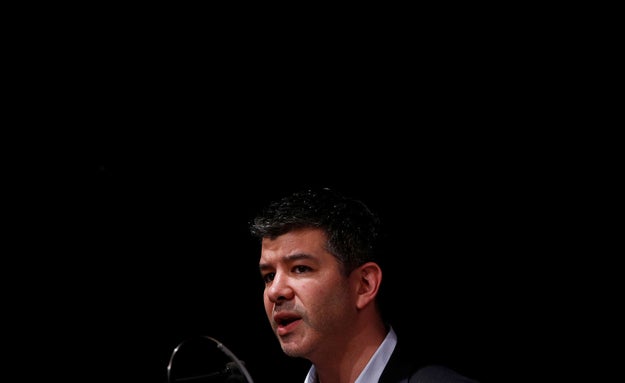
Uber CEO Addresses Claims Of Workplace Sexism At Company-Wide Meeting

Uber CEO Travis Kalanick

Adnan Abidi / Reuters

During a Tuesday all-hands meeting with employees, Uber CEO Travis Kalanick addressed claims of systemic sexism at the company recently detailed in a viral essay penned by a former Uber engineer Susan Fowler Rigetti. Kalanick — described as visibly upset by multiple sources in attendance — apologized to employees, told them to hold him accountable for the company&;s failings, and promised Uber would “do better” going forward.

Over the course of the meeting — which ran well over an hour — Kalanick explained Uber&039;s protocols for reporting sexism and harassment, announced plans for training sessions on unconscious bias, and took questions from employees wondering why the company is only now launching an investigation into misogyny and sexism.

Uber CTO Thuan Pham also spoke at the meeting. Referring to the circumstances around Rigetti&039;s allegations, he called the situation “an utter failure.” Thuan went on to say that last October, he fired a high-performing manager because that person was wrongly blocking another employee&039;s transfer and falsifying performance reviews. Uber does not consider high performance more important than another person’s abuse, he said.

Uber&039;s human resources team held a 90 minute “listening” session immediately after the all-hands. The company will hold additional sessions in the coming days.

Liane Hornsey, who joined Uber recently as chief human resources officer, promised employees at the meeting that she would work to create a “new Uber.” Hornsey&039;s pledge follows Kalanick&039;s earlier announcement that Uber is bringing on former Attorney General Eric Holder to conduct a workplace environment review. After the all-hands meeting, Uber posted a blog with comment from board member Arianna Huffington, who will join the review. “I hope that by taking the time to understand what’s gone wrong and fixing it we can not only make Uber better but also contribute to improvements for women across the industry,” the blog said.

In a memo to employees on Monday, after Rigetti&039;s blog post went viral, Kalanick told employees that “What is driving me through all this is a determination that we take what’s happened as an opportunity to heal wounds of the past and set a new standard for justice in the workplace.”

“It’s been a tough 24 hours. I know the company is hurting, and understand everyone has been waiting for more information on where things stand and what actions we are going to take,” Kalanick wrote. “It is my number one priority that we come through this a better organization, where we live our values and fight for and support those who experience injustice.”

Quelle: <a href="Uber CEO Addresses Claims Of Workplace Sexism At Company-Wide Meeting“>BuzzFeed

A Senator Will Introduce Legislation Requiring Warrants Before Phones Can Be Searched At The US Border

Sen. Ron Wyden will soon introduce legislation to prevent Customs and Border Patrol agents from demanding the passwords to online accounts and mobile devices from American travelers without a warrant.

In a letter sent to Secretary of Homeland Security John Kelly dated Feb. 20, the senator from Oregon said that border searches that take place without a warrant circumvent the right to privacy and “weaken our national and economic security.”

“I am alarmed by recent media reports of Americans being detained by U.S. Customs and Border Protection (CBP) and pressured to give CBP agents access to their smartphone PIN numbers or otherwise provide access to locked mobile devices,” Sen. Wyden writes. “Circumventing the normal protections for such private information is simply unacceptable.”

He goes on to say that he will introduce legislation that will ensure that the “4th Amendment is respected at the border.”

Read the letter in full:

Quelle: <a href="A Senator Will Introduce Legislation Requiring Warrants Before Phones Can Be Searched At The US Border“>BuzzFeed

These Photos Tell The Stories Of Tech Workers Hurt By Trump’s Immigration Order

Helena Price / Via bannedproject.com

Banned, a new online photo project that debuts today, looks at the impact of President Trump’s immigration order through the lens of tech workers whose lives have been affected by the ban. The collection features portraits and in-depth interviews with six individuals, like Shahrouz, an Iranian-American product designer for Pinterest, who lives in fear of being separated from his wife and son, and Ruthia, a product designer for Facebook here on a work visa from Beijing, who is worried that Trump’s policy could increase anti-immigrant sentiment among the people around her.

In the interviews, subjects describe a sudden sense of panic following Trump’s order, which is still being debated in court. “I have [US] citizenship, so I think that grants me certain rights, but overnight, people with green cards are no longer able to be in the country,” said Gabriel, a virtual reality product designer at Facebook, who was born in Cuba. He said he has family members who are trying to enter the US stuck in limbo.“Who knows? All these things that we take for granted that we think are like a foundation of security, all those things might be stripped away overnight.”

On January 27, Trump signed an executive order banning refugees and immigrants from seven Muslim-majority nations from entering the US. A few days later, after the ban inspired large protests in the US and caused chaos and confusion at airports around the world, a federal judge issued a nationwide order halting enforcement of both visa and refugee provisions of Trump&;s order. Since then, a federal appeals court has denied the government’s request to allow it to enforce the order as the case challenging it makes its way through the courts. Late last week, Trump announced plans to soon issue a new executive order to replace his first travel and refugee ban.

Omid, an Iranian citizen here on a green card who used to work for Google and is currently getting his MBA at Stanford, said he felt “humiliated” after living in the US for seven years. “Suddenly I felt degraded as a second-class person in this country.”

Helena Price, the photographer and oral historian behind the project, told BuzzFeed News that the goal of Banned is to fight stereotypes around immigration, which exist even in Silicon Valley, where tech companies have made a big show of disavowing Trump’s executive order. People who have been hurt by the administration’s policies, “might be working next to you at Google or Facebook, but they are secretly dealing with existential crises than most of us can’t even comprehend,” said Price.

Banned is a “special edition” of Techies, Price&039;s larger scale photo project that attracted a lot of media attention when it was released last April. Techies also blended art and activism, featuring portraiture and interviews that focused on groups that typically get excluded from the Silicon Valley narrative, such as women or people of color. Price said that tech companies have used the repository of 100 profiles to recruit speakers and employees. One Google employee even got promoted after the company read her entry, she said.

But Price was dubious about whether Banned could make an impact beyond artistic impression. “I don’t know, to be honest,” she said. “I think at the lowest level it’s really just me sticking to my philosophy that we should always use our skills in a way that elevates those who don’t have the same advantages.”

Compared to other immigrants singled out by Trump’s executive order, tech workers seem to have the support of their employers and more resources at their disposal. Still, said Price, “All of the Silicon Valley privilege in the world can’t help them because of where they’re from. It’s kind of this big equalizer, when you think about it, if suddenly your papers don’t count.”

The lengthy interviews, presented both as text and audio, touch on similar facets of the immigrant experience — the bureaucratic vetting process, the anxiety of hoping to win the visa lottery. Many of the subjects also described the sense of belonging they felt living in the Bay Area before Trump’s immigration order was issued.

“The funny thing is I never … Until two weeks ago, I never even thought of myself as an immigrant,” Omid told Price. “I know I was not an American because I didn&039;t have the citizenship, but I always saw myself as a fully contributing and highly integrated member of the society, paid my taxes, embraced American values, lived the American dream in many ways, and suddenly you get this stamp on you which says you&039;re an immigrant. Not only that, you&039;re also from one of those seven countries we just suddenly decided not to like.”

Shahrouz, the designer from Pinterest, spoke candidly about his reaction to the new administration. “Immediately after Trump was elected, my first thought was, &039;Thank goodness my son looks white,&039; which is a terrible thought to have. There&039;s something psychologically profound about being labeled an enemy even though I have nothing but love for this country and its potential. In the eyes of so many people who don&039;t know me, who don&039;t know my family, just having a bias against us that we would want to hurt them in some way, is troubling at best.”

Quelle: <a href="These Photos Tell The Stories Of Tech Workers Hurt By Trump’s Immigration Order“>BuzzFeed

WhatsApp's New Status Feature Looks A Lot Like Snapchat Stories

WhatsApp's New Status Feature Looks A Lot Like Snapchat Stories

Today, WhatsApp debuted a new feature: your status updates can now include pictures, videos, and GIFs. Like Stories on Snapchat, they&;ll also last for just 24 hours. Previously, status updates were text-based and stayed for as long as you left them.

The new version of status updates is rolling out across Europe this week and will likely hit the rest of the world in the weeks soon after, according to WhatsApp.

View Video ›

WhatsApp

Sharing status updates was once WhatsApp&039;s only function, but soon after its founding it morphed into a texting app and became one of the most popular messaging services in the world.

As with WhatsApp&039;s text conversations, status updates will be encrypted by default. People in your contacts will be able to see your status updates, though you can select who can and can&039;t see them. You can also send them en masse to individuals with WhatsApp&039;s broadcast feature, which sends the same message to several individual conversations.

The feature looks a lot like Instagram Stories, which looks a lot like Snapchat Stories. WhatsApp status updates mimic the bars at the top of the screen from Instagram Stories, which show how much time is left in the story. Both Instagram and WhatsApp are owned by Facebook.

When asked whether WhatsApp consciously borrowed from Snap, WhatsApp product manager Randall Sarafa said, “I don’t think the format exists in just one app at this point. This is a model that others have contributed to and has been widely adopted, and we adopted it ourselves. It’s groundwork for the things we want people to be able to share.” Unlike Snapchat, WhatsApp does not plan to introduce ads into the new status feature.

Snap Inc may have cause to be worried by increasing competition from other social apps launching features similar to its own. In 2016, its monthly active user growth stagnated in comparison to Instagram Stories and Snow, a Snapchat-esque app that&039;s booming in Asia. Facebook and Messenger have both integrated features similar to Snapchat Stories.

Sarafa said that the timing of the update has nothing to do with Snap&039;s imminent IPO, but rather coincides with WhatsApp&039;s eighth anniversary on February 24.

The update to the status feature, Sarafa said, is the culmination of three things WhatsApp has focused on in the past year. It retooled how the app handles video so that you can play a video right away in the app rather than downloading it; it overhauled the camera in the app to provide a more immediate experience, and it made it possible to send and share GIFs. The new WhatsApp camera feature, which debuted in October 2016, lets you crop, add emoji and text, and draw on photos much in the same way you can on Snapchat.

“These are things we’re seeing people do already,” Sarafa said. “So we don’t want them to have to jump out of our app to do them.

“A lot of our users, especially ones outside the US where there isn’t as much choice, who are spending much of their time in WhatsApp, will find this is a novel way to share media. It doesn’t mean they have to update their WhatsApp status and then do the same thing in another app.”

The messaging app has seen media-sharing explode over the past year among its 1.2 billion users (up from a billion a year ago). Sarafa said that WhatsApp users send 3.3 billion photos per day, double what they did this time last year, and 760 million videos per day, triple last year&039;s amount. Since launching the ability to share GIFs in November, the app&039;s seen that type of sharing increase to 80 million GIFs per day. Overall, people on WhatsApp send 50 billion messages per day.

“Videos are a hard format to deal with when you’ve got such a diverse user base,” Sarafa said. “They&039;re on all kinds of different phones and networks, and videos are inherently larger than photos. It’s a challenge, but it’s an especially rich format.”

Quelle: <a href="WhatsApp&039;s New Status Feature Looks A Lot Like Snapchat Stories“>BuzzFeed