Here's How Apple Is Doing On Conflict Minerals
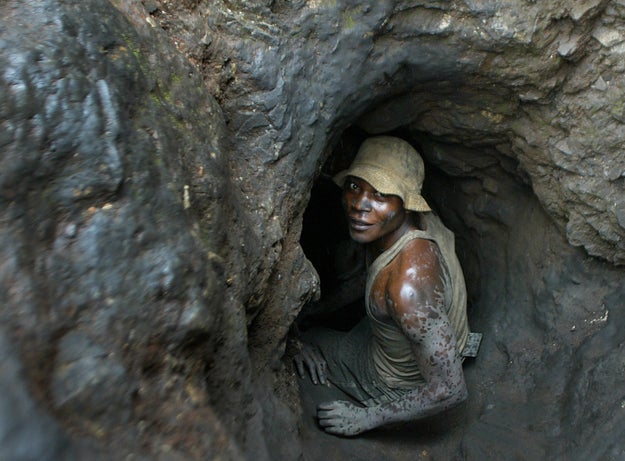
A cobalt miner in the Democratic Republic of Congo.

Schalk Van Zuydam / ASSOCIATED PRESS

Apple released its 2017 Supplier Responsibility Report today, as concern mounts over the potential impact of a draft directive from the Trump administration that would suspend legislation requiring companies to disclose whether their products contain conflict minerals.

Conflict minerals — substances like tantalum, tungsten, tin, and gold — are used in a variety of popular electronics, including smartphones. They are typically sourced from war-torn countries including the Democratic Republic of Congo, where their mining and sale has historically funded armed groups associated with murder, rape, and other human rights violations.

In an interview on Friday, Paula Pyers, Apple&;s senior director of supply chain social responsibility, told BuzzFeed News that 2016 was the company&039;s best year on record in terms of improvements in the supply chain. Apple conducted 705 assessments of its supply chain in 2016 and removed three suppliers for failing to meet its standards on labor and human rights, environmental standards, and health and safety. (Apple conducted 574 such assessments in 2015.) Separately, in 2016 Apple audited and booted from its supply chain 22 smelters of conflict minerals.

“We&039;ve been really clear with our suppliers that, notwithstanding any changes to regulations — or deregulation, if you will — we&039;ll continue to run the same program we&039;ve been running for the last six years,” Pyers said. “We will continue to drive third-party audit programs. We&039;ll continue to dig really deep, and stand up accountability and our incident report system. Candidly, we don&039;t plan any change in that which we are doing.”

Last year, Apple celebrated a supply chain milestone, announcing that 100% of its suppliers of conflict minerals submitted to third-party auditing. While well over 1,000 companies file annual conflict minerals reports with the US Securities and Exchange Commission, few have managed to fully audit their supply chains.

“Notwithstanding any changes to regulations, we&039;ll continue to run the same program.”

In February, news broke that the Trump administration was considering loosening regulations on businesses that buy conflict minerals; a leaked draft directive would put a Dodd–Frank rule requiring companies to report conflict mineral usage on hiatus for at least two years.

Officials in the Democratic Republic of Congo are concerned that removing the rule could spark armed conflict in the region, Bloomberg reports. It&039;s estimated that 5.4 million people died between 1998 and 2007 in the DRC as the result of a civil war partially funded by proceeds from control of conflict mineral mines. At the time she spoke with BuzzFeed News, Pyers said she was aware Congolese officials had recently expressed “deep concern for repression of human rights that could occur on the ground.”

Last month, Apple told the Washington Post that it doesn’t want to see conflict mineral regulation rolled back, a point Pyers reiterated to BuzzFeed News.

“We&039;re going to continue to do what we&039;re doing,” Pyers said. “We&039;re going to continue to press for third-party audits. We&039;ve already put that message out to our smelter partners earlier this year. We&039;re going to continue running the program we run today. We&039;re going to continue looking beyond audits to incident reports on the ground, and in the case of cobalt, working on the ground level. We&039;ll continue to call for collective action because we truly believe, whether it&039;s regulated or self-regulated, this is the way business should be run, and the way we&039;ll continue to run our business.”

A fighter from the Union of Congolese Patriots militia group controls workers at the gold mine in the conflicted Ituri region of the DRC, June 18, 2003.

Eric Feferberg / Getty Images

Pyers said Apple will file its conflict minerals report with the SEC by the required late May deadline. She noted that the company has had “quite a bit of dialogue” with the agency and members of the Trump administration over the possible suspension of the conflict minerals reporting requirement.

The SEC is currently accepting public comments on the reporting requirement; the Electronic Industry Citizenship Coalition, of which Apple is a member, filed a letter in support of regulation on March 14. But Pyers said for Apple’s efforts at transparency to be effective, other companies will have to follow suit.

“If more companies do not come to the table to press for change through their own supply chains, particularly in the absence of regulation, the types of systemic change we are all seeking are frankly not going to occur,” Pyers said.

Apple’s 2017 conflict minerals report includes another milestone: For the first time, the company has published a complete list of its cobalt smelters. It says all of them are participating in third-party audits.

Last year, a Washington Post investigation into cobalt supply chains forced Apple and other tech companies to acknowledge that some of the cobalt — which is not officially considered a conflict mineral — used in their products was coming from smelters that relied on child labor and engaged in other human rights abuses. In December, Apple joined other tech companies in forming the Responsible Cobalt Initiative; at the time, Amnesty International’s Mark Dummett told the Washington Post that he hoped Apple’s next step would be to “disclose the names of their cobalt smelters.”

Said Pyers, “We think transparency is a critical component of standing up as a global leader and saying, &039;Here&039;s where we are on cobalt. Here&039;s our map. Here&039;s our smelters. They&039;re in audits.&039; Just like we do with our manufacturing data, we&039;ll be the first to say it&039;s not perfect. We have work to do.”

Also included in Apple’s 2017 Supplier Responsibility Report: an update on the company&039;s supply-chain worker training programs. Apple says that in the past year it trained 2.4 million people on employee rights and provided career growth and life skills programming to 689,000 people — all in local languages. To date, the company has trained some 2.1 million students via its Supplier Employee Education and Development program. “We think education is hugely important,” said Pyers. “That’s information these people take with them anywhere they go — whether they work in the Apple chain, or anyone else’s.”

Quelle: <a href="Here&039;s How Apple Is Doing On Conflict Minerals“>BuzzFeed
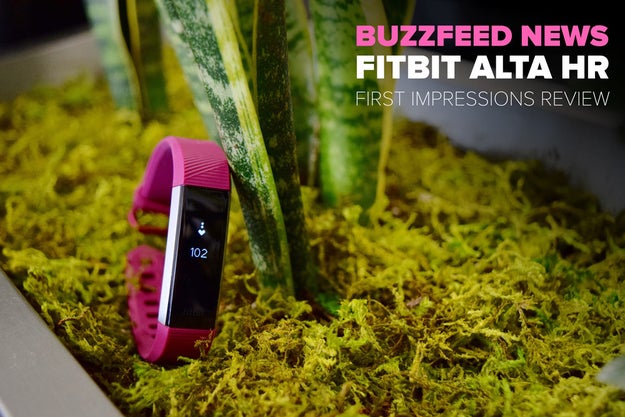
We Tried The Fitbit Alta HR, An Ultra-Thin Heart-Rate Tracker

The stylish fitness wearable gets an upgrade, and the app gets new sleep-tracking features.

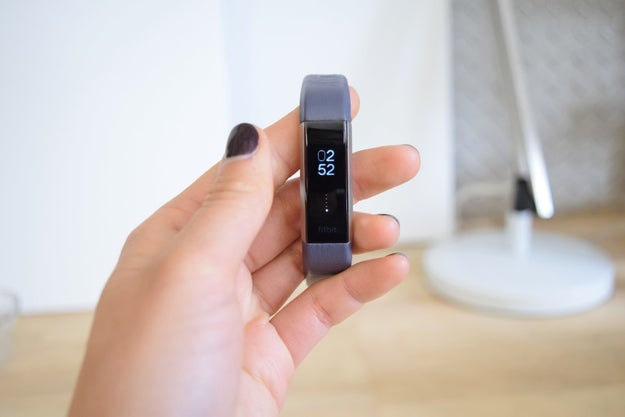
The ultra-slim Alta was one of Fitbit’s most popular wearables in 2016. Barely a year later, Fitbit is debuting the slightly rebooted Alta HR, which adds a feature for the fitness-conscious: heart-rate tracking. The technology is typically found on chunkier wristbands and smartwatches, like the Apple Watch or Fitbit’s own Charge 2 — but now it’s available on the skinny-as-a-bracelet Alta HR.

At the same time, Fitbit is rolling out new app features that purportedly tell you about your sleeping habits in detail.

We tried out the Alta HR and the sleep features for a couple of days. While we didn’t have enough time to draw definitive conclusions about each new product, we’re sharing our first impressions. Fitbit’s latest wristband can be preordered now and will be available in April, while the sleep features will go live sometime this spring.

Nicole Nguyen / BuzzFeed News

The overview

The overview

The same things we loved and hated about the Alta were also true of the Alta HR. The device itself is very comfortable to wear and, as we mentioned in our previous review, it’s also one of the sleekest, most attractive fitness wearables available on the market.

The touchscreen, however, remains a guessing game. The Alta is a button-less device, which means that to scroll through your stats or turn on the screen, you need to tap it. The problem is, it usually takes two or three tries (targeting different parts of the screen, tapping with varying levels of force) to get the screen to respond.

A Fitbit representative tells us that swiftly double-tapping the bottom corners of the tracker are most effective – but even with that advice in mind, it’s tough to get the motion exactly right while on the move, specifically when attempting to view your heart rate during a dimly-lit spin class.

The Alta HR’s “smart features” – call, text, and calendar notifications – are helpful, unless you use an alternative messaging app like WhatsApp, Messenger, or Signal, in which case you won’t get a text alert. The trackers’ “smart features” are limited to SMS.

Nicole Nguyen / BuzzFeed News

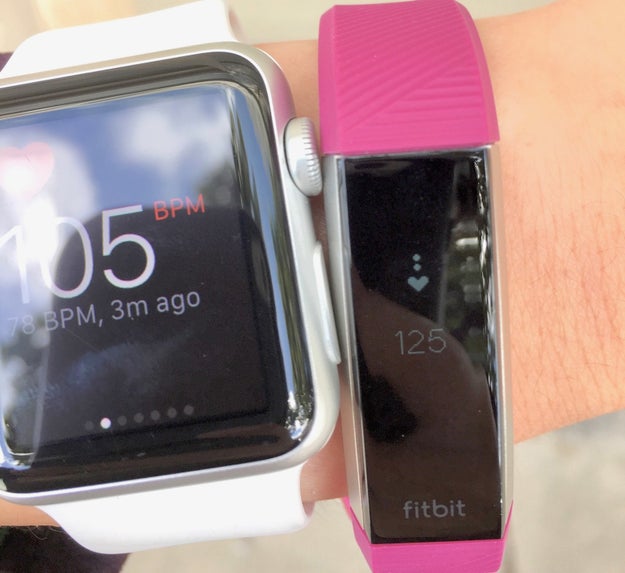
During our workouts with the Alta HR and Apple Watch for comparison, it was hard to get a consistent reading.

During our workouts with the Alta HR and Apple Watch for comparison, it was hard to get a consistent reading.

Fitbit products have gone beyond counting steps and focused increasingly on measuring exercise. Last year, the company introduced a “cardio fitness score” that shows you how fit you are (and can be) on its devices with heart-rate tracking. That&;s based on your resting heart rate and profile (weight, height, age, and gender). And the app recommends ways to improve; for example, Nicole was told to increase the intensity of her exercise in order to increase her score by 20%. Intensity is measured in part by being in different heart rate zones, like peak (the most intense), fat burn (least intense), cardio, and out of zone (not exercising).

This all depends on the accuracy of the heart-rate reading, of course, so we worked out with the new Alta HR and compared it to the Apple Watch (both the original and second-generation versions, which share the same heart-rate sensor). And in our experience, the Alta HR&039;s accuracy seems to wane with activity.

Stephanie went on a run and, at one point, the Alta HR said her heart rate was 173 beats per minute, while the Apple Watch said 88. Another time, the Alta HR said 125 and the Apple Watch read 105. Both bands were affixed tightly, with the watch further up the wrist.

Shelten Yuen, Fitbit&039;s vice president of research, said he didn&039;t want to comment on the Apple Watch&039;s readings since he doesn&039;t know much about how it works. But “the Alta HR seems like it was probably working pretty well,” he told BuzzFeed News.

Stephanie M. Lee / BuzzFeed News


View Entire List ›

Quelle: <a href="We Tried The Fitbit Alta HR, An Ultra-Thin Heart-Rate Tracker“>BuzzFeed

60 Minutes Interview Shows How Unprepared The Mainstream Media Is For Pro-Trump Media

@cernovich

Scott Pelley wasn’t prepared for a troll.

On Sunday’s 60 Minutes segment on fake news, CBS Evening News anchor Scott Pelley brought Americans face to face with some of the men behind the online, pro-Trump media universe. There was a brief set-up in which Pelley noted that “the nation was assaulted by imposters masquerading as reporters” who “poisoned the conversation with lies on the left and on the right.”

Then the segment turned its focus to Mike Cernovich, a pro-Trump blogger and Twitter personality who championed rumors of Hillary Clinton’s poor health during the final months of the election. Pelley introduced Cernovich as an online writer “who has become a magnet for readers with a taste for stories with no basis in fact.”

Pelley — armed with the truth on his side — started in aggressively:

Pelley: These news stories are fakes

Cernovich: They’re definitely not fake.

Pelley: They’re lies.

Cernovich: They’re not lies at all. 100-percent true.

It was the kind of rhetorical impasse that’s common in a tense interview. But it only took a moment for Cernovich to flip the conversation on Pelley. Just a minute in, Pelley inquired about an August article Cernovich wrote with the title, “Hillary Clinton has Parkinson’s Disease, physician confirms.” Hoping to catch him in a moment of contrition, Pelley asked Cernovich to admit now that the article was misleading:

Cernovich: She had a seizure and froze up walking into her motorcade that day.

Pelley: Well, she had pneumonia. I mean–

Cernovich: How do you know? Who told you that?

Pelley: Well, the campaign told us that.

Cernovich: Why would you trust the campaign?

Pelley: The point is you didn’t talk to anybody who’d ever examined Hillary Clinton.

Cernovich: I don’t take anything Hillary Clinton is gonna say at all as true. I’m not gonna take her on her word. The media says we’re not gonna take Donald Trump on his word. And that’s why we are in these different universes.

Cernovich’s mention of “different universes” is arguably the most important moment in the 10-minute piece on the dangers of a new, unfamiliar media ecosystem. “Different universes” also illustrates how Cernovich was able to take an interview designed to discredit him and use it to his advantage. As Cernovich’s fans will see it, Pelley got owned. Pelley, like other legacy journalists who are unfamiliar or only lightly acquainted with the meme-wielding arm of the right, confronted the pro-Trump Upside Down media without an understanding of its cardinal rule: the New Right media isn’t just an opposition force to the mainstream media, it’s a parallel institution armed with its own set of facts that insists on its own reality.

“Dude I slaughtered it,” Cernovich direct messaged me shortly after the interview aired. Cernovich appeared to be reveling in the appearance — he Periscoped himself watching the interview live and then gleefully retweeted praise from the MAGAsphere as it poured in.

Among Cernovich’s supporters, the “Why would you trust the campaign?” line hit on two fronts: it effectively stopped Pelley’s line of questioning by asking him to prove an impossible negative while also tacitly suggesting that Pelley took the Clinton campaign at its word with little skepticism.

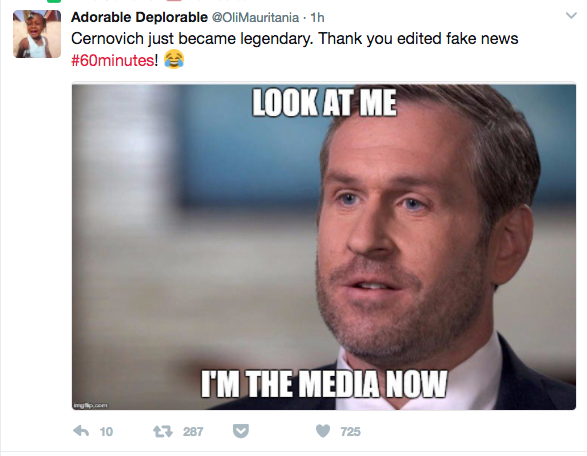
“You can tell he never considered for a second that the campaign would lie. His worldview crumbling is palpable,” alt-right media personality Lauren Southern tweeted during the segment. Another supporter chimed in, suggesting that Cernovich had Pelley “stuttering and fumbling over his words.” Pelley, a veteran interviewer, didn&;t actually stutter but it didn&039;t matter, the narrative was already off and running, retweeted over 1,400 times. Then came the memes:

“These people think I&039;m some angry troll, that&039;s what they expected,” Cernovich said, describing the interview. Cernovich said he refused to play the part of a basement dweller or somebody strictly trying to cash in on Trump (though his detractors suggest he’s doing just that). He dressed in a pressed suit and took pains to point out his law degree to Pelley. He appeared ready for an aggressive line of questioning. “I knew I&039;d be set up and had my talking points (which are hard to edit out of context) prepared,” he told me.

Pelley, well-versed in the fake news universe, was less prepared for Cernovich’s straight-faced responses. Pelley had plenty of facts on his side, of course — besides the unrelated pneumonia incident, there’s zero evidence at all to support any of the Clinton health rumors of Parkinson’s Disease — but Pelley didn’t take into account that for his interview subject and his followers, Pelley’s reliance on the Clinton campaign was equally hollow evidence. The facts aren’t viewed as facts at all, so long as they’re coming from a “different universe” like CBS or the New York Times or CNN.

More importantly, Pelley didn’t appear to realize how his question set Cernovich up for his big applause line among his supporters. And how approaching Cernovich as an “imposter masquerading as a reporter” would afford him the opportunity to take the moral high ground and claim the interview was an “ambush.” Nor did Pelley appear to realize how, by virtue of even interviewing Cernovich on the most hallowed of old media institutions such as 60 Minutes, Pelley would simultaneously give the him the mainstream validation and the ability to criticize the program for a shallow understanding of the pro-Trump media ecosystem.

It’s not the first time that mainstream media has fallen into this trap. Two weeks ago a New York Times reporter tweeted jokingly at a dog-related Twitter account about a story referencing a controversial comment the rapper Bow Wow made about Melania Trump being “pimped out.” Cernovich piled on the tweet and called on the Times’ Public Editor to reprimand the reporter for endorsing sex trafficking. For those that follow Cernovich, it was a standard bit of concern trolling — a tongue-in-cheek play, masquerading as a gravely serious offense that aimed to rile up his base and direct scorn at the mainstream media. On a good day, Cernovich fires off a half dozen of these kinds of tweets, to the delight of his followers.

But New York Times Public Editor Liz Spayd, seemingly unfamiliar with Cernovich or the pro-Trump Twittersphere, took the bait after a series of increasingly outraged tweets by Cernovich. She publicly condemned the tweet and the reporter. Cernovich and his following celebrated the response from Spayd as a victory. While others like Media Matters, The Daily Beast, and scores of savvy reporters on Twitter bemoaned Spayd’s column as an “Alt-Right Blindspot.”

There was an important lesson in Spayd’s column, which was largely lost in the ensuing conversation. It wasn’t who was right or wrong (for the record: Spayd was wrong to engage, Cernovich was disingenuous, and Sopan Deb, the Times reporter, got caught in the middle). Instead, it was a warning to newsrooms and reporters who find themselves dipping their toes into the MAGA media fever swamp to take the other side seriously and to understand the legitimacy that personalities like Cernovich carry with their vocal followers. Put another way: know your enemy and stop giving them ammunition.

Cernovich&039;s 60 Minutes segment struck a sharp contrast with different interview on CBS that morning between Ted Koppel and Fox News pundit, Sean Hannity. Koppel&039;s evisceration of Hannity — calling him “bad for America” to his face — made headlines and forced Hannity to complain that Koppel and CBS edited down the video in a biased way. Koppel was on his home turf, calling Hannity out as a pale imitation of an actual newsman — that is, of Koppel. But Pelley&039;s questioning of Cernovich didn&039;t expose Cernovich as an imitation but as something new and free from the rules and conventions of traditional American journalism, darker in vision and raw.

Pelley and 60 Minutes’ decision to focus on fake news proved that it took the threat of the far-right’s information war seriously. But Pelley didn’t do his homework on Cernovich and the ecosystem he’s a part of. And it showed, despite the fact that CBS got to edit down the video.

“They don&039;t understand new media,” he wrote Sunday evening. “Also they all think I&039;m a moron. It&039;s perfect microcosm of the election and media&039;s view on Trump.”

I asked him to elaborate.

“They don&039;t understand me and didn&039;t even try.”

Quelle: <a href="60 Minutes Interview Shows How Unprepared The Mainstream Media Is For Pro-Trump Media“>BuzzFeed

A Self-Driving Uber Rolled To Its Side After A Crash In Arizona

Afp / AFP / Getty Images

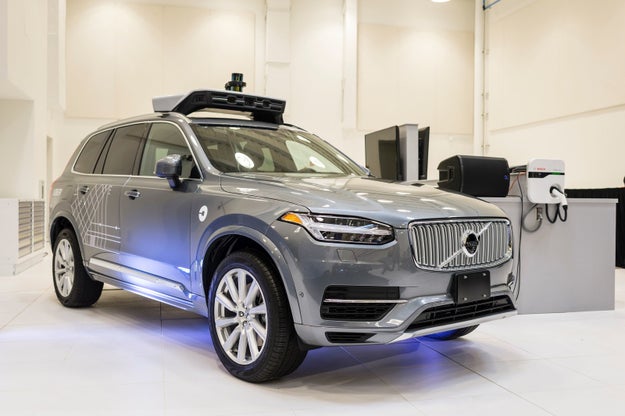
A self-driving Uber car was involved in a crash and flipped to its side in Arizona on Friday night.

A car failed to yield for the self-driving car and hit it, causing the Uber car to roll to its side, according to ABC 15 News.

“We are continuing to look into this incident and can confirm we had no backseat passengers in the vehicle,” Uber said in a statement.

The vehicle was in self-driving mode and there were no serious injuries.

The company also said it has grounded its Arizona cars as it investigates.

Uber sent its self-driving vehicles to Arizona in December, after the company was kicked out of testing in San Francisco because it did not obtain a permit from the California Department of Motor Vehicles.

Its self-driving test vehicles in Arizona require intervention from a human driver behind the wheel about once per mile, according to internal performance metrics obtained by BuzzFeed News.

The crash comes as Uber&;s self-driving car program is facing allegations that its leader stole key technology from Alphabet&039;s Waymo before leaving to join the ride-hail giant.

Uber&039;s car program has also drawn scrutiny after one of its vehicles ran a red light in San Francisco in December.

Uber said that the traffic violation resulted from human error, but the New York Times reported in February that “the self-driving car was, in fact, driving itself when it barreled through the red light.”

Why Uber’s Board Is Standing By Its CEO

Quelle: <a href="A Self-Driving Uber Rolled To Its Side After A Crash In Arizona“>BuzzFeed

Uber Employees Are Questioning Arianna Huffington’s Role In The Internal Sexism Investigation

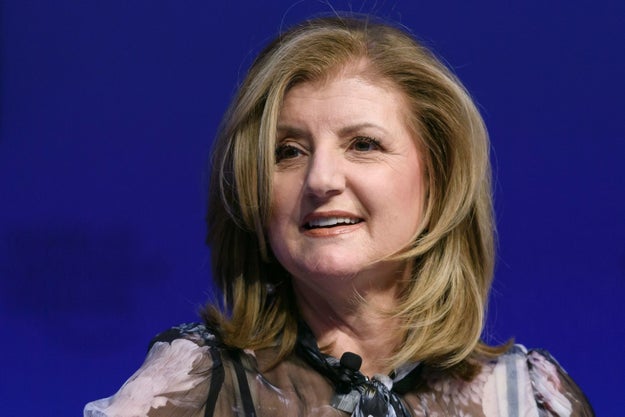
Arianna Huffington

Fabrice Coffrini / AFP / Getty Images

Some Uber employees are frustrated by board member Arianna Huffington’s role overseeing the ride-hail giant’s internal investigation into sexism allegations, citing her close relationship with CEO Travis Kalanick and recent comments to the media.

Huffington, who joined Uber’s board last year, will on Friday afternoon meet with a group of female engineers who plan to raise concerns about whether she can lead an impartial review of the company’s workplace practices, particularly after remarks she made on CNN. CNN posted an interview on Monday that quoted Huffington saying sexism was not a “systemic problem” at Uber. On a conference call with reporters on Tuesday, Huffington said she was referring to sexual harassment, rather than sexism broadly, and that CNN had updated its story accordingly. Still, the interview unnerved some Uber employees, who told BuzzFeed News they were already concerned about whether Huffington could help lead an independent investigation into Uber’s workplace culture, given her relationship to the company and friendship with Kalanick.

“Everyone is mad with her. There is no way she is independent,” one employee told BuzzFeed. “Sexism versus sexual harassment — both are really demoralizing. Her correction doesn’t matter. Giving an interview without the investigation finishing was incredibly unprofessional and careless.”

Huffington told Uber employees in an email after her call with press Tuesday that “I want to assure you that whether sexism or sexual harassment is a systemic problem at Uber will ultimately be determined by the investigation that Eric Holder and Tammy Albarrán are conducting. And that the board and management team will act upon whatever their investigation finds so that we can create a completely equitable workplace where there is zero tolerance for both sexual harassment and sexism.”

“She’s on the board. She’s qualified. But she needs to be honest about her conflicts here,” another employee said. Referring to the interview with CNN, the employee said sexism and sexual harassment could be considered on “the same spectrum,” and also noted that it’s troubling she made comments while the investigation is ongoing.

“Arianna made this huge fuss over pedantics,” the employee said. “Before this, people internally were already definitely worried about her not being impartial.”

After Susan Fowler Rigetti published a viral blog post alleging systemic sexism at the ride-hail giant on Feb. 19, Uber hired former attorney general Eric Holder to lead an internal investigation into its workplace environment. Huffington was named to a board subcommittee that will receive and push to implement the results of the investigation, and has become a public face for Uber as it weathers this particular public relations crisis. She appeared alongside Kalanick at the company’s first all-hands meeting after the sexism allegations became public.

On a call with reporters on Tuesday, Huffington said the investigation — which is being conducted with the help of Tammy Albarrán, a partner at Holder&;s law firm — will be “completely thorough, completely independent,” and presented to a board subcommittee she sits on. “I am not conducting the investigation,” she said. Earlier in the call, Huffington noted that she had spoken to “hundreds of employees either personally or on the phone” in recent weeks.

Several Uber employees told BuzzFeed News that Kalanick’s handling of Uber’s recent scandals has shaken their confidence in him as a leader, noting that they’ve been frustrated by his apologies. “I’m extremely unhappy and disappointed in the leadership,” said one. Other employees raised an eyebrow over Huffington’s recent comments, noting that she publicly described Kalanick as “a close friend” in a post announcing her decision to join Uber’s board and told employees at an all-hands meeting that the Uber CEO had been so upset by allegations of sexism at the company that she had to cook him an omelet. (Huffington also referenced making Kalanick an omelet in her “Why I&039;m Joining Uber’s Board” post.) “Glad she is taking precious care of the CEO while there is a serious disconnect going on,” one employee said of Huffington.

Huffington declined comment.

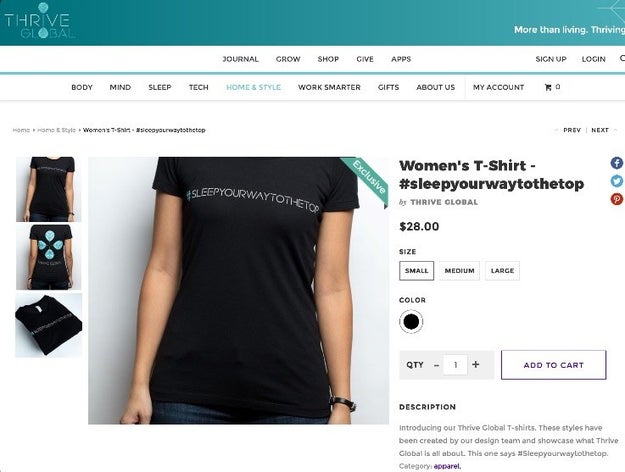
This isn’t the first time Uber employees have raised concerns about Huffington. In the winter of 2016, sources say, a T-shirt for Huffington’s Thrive Global health and wellness company with the slogan “” sparked outrage among women at Uber, some of whom believed it was available only in women&039;s sizes. A number of Uber employees, complained to Huffington and Uber senior vice president Ryan Graves. The shirt was ultimately removed from the Thrive website.

Reached for comment, Thrive sent BuzzFeed News a screenshot indicating the company also sold the shirt in men’s sizes.

In her call with reporters on Tuesday, Huffington said part of her goal is to help make Uber “the most admired workplace.”

“I want to say, as I said at the first all-hands with Travis when all this started, that this is very personal for me,” she said. “I want to make sure…no woman ever has to choose between advancing her career and completely unacceptable treatment.”

Uber declined comment.

If you have information or tips, you can contact this reporter over an encrypted chat service such as Signal, WhatsApp, or Telegram at 732-615-8367. You can also send an encrypted email to priya.anand@buzzfeed.com using the PGP key found here. Find our SecureDrop information here.

Quelle: <a href="Uber Employees Are Questioning Arianna Huffington’s Role In The Internal Sexism Investigation“>BuzzFeed

Apple Says Hackers Threatening To Wipe iPhones Haven’t Breached iCloud

Lucy Nicholson / Reuters

A hacking group that appears to be London-based and calls itself the Turkish Crime Family is boasting to media outlets that it has access to hundreds of millions of iCloud accounts. It’s threatening to wipe the devices associated with them if Apple does not pay a ransom of $75,000 in Bitcoin, Ethereum, or $100,000 in iTunes gift cards by April 7, as first reported by Motherboard. But Apple denies the group’s claims and says it will not pay the ransom.

Apple said in a statement to BuzzFeed News, “There have not been any breaches in any of Apple’s systems including iCloud and Apple ID. The alleged list of email addresses and passwords appears to have been obtained from previously compromised third-party services.”

“We&;re actively monitoring to prevent unauthorized access to user accounts and are working with law enforcement to identify the criminals involved. To protect against these type of attacks, we always recommend that users always use strong passwords, not use those same passwords across sites, and turn on two-factor authentication,” Apple continued in the statement.

The veracity of the hack is in question, especially since the number of accounts the group said it had access to shifted from 300 million to 559 million during its discussion with Motherboard, and ZDNet reported 250 million accounts. Turkish Crime Family has reportedly reached out to multiple media outlets, a tactic that hacking groups sometimes use to bolster their own reputations as serious threats by gaining attention and inflating panic.

ZDNet obtained a sample — 54 accounts — of the hacked accounts and found that although all of the credentials were legitimate, only a few were unique to iCloud, meaning that some data could have been aggregated from other compromised sources instead of a direct iCloud hack. ZDnet also said that the breach could have occurred between 2011 and 2015.

Hamza Shaban contributed reporting for this article.

Quelle: <a href="Apple Says Hackers Threatening To Wipe iPhones Haven’t Breached iCloud“>BuzzFeed

On-Demand Delivery Startup Postmates Laid Off Multiple People Today

Michael Nagle / Getty Images

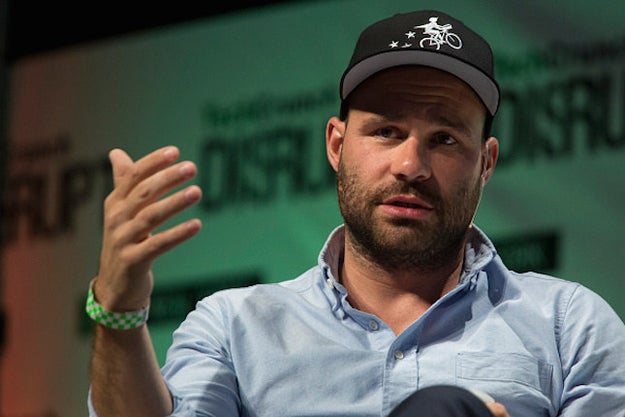
Postmates, an on-demand delivery startup, laid off multiple people holding “community manager” titles in cities across the US today, BuzzFeed News has learned.

A source close to the company told BuzzFeed News that about 30 people lost their jobs.

In an emailed statement, senior vice president of operations Russell Cook said he was “thankful” for their “hard work.”

“To fuel our continued growth and efficiency, we have redefined the roles of our local teams and operations,” the statement says. “While we’re hiring for positions across the markets in which we operate, part of this redefinition includes the difficult decision to phase out our community manager position.”

Indeed, Postmates&; website currently lists over a dozen open positions in operations, including a general managers for regions including Chicago, Los Angeles, Miami, New York, and San Francisco.

Postmates says it employs 500 people nationwide, and is currently hiring for a variety of positions. Over the past year, the company says it&039;s consolidated its support center that serves both customers and its fleet of delivery workers into a central office in Nashville, TN.

Competition has been heating up in food delivery as of late. Instacart recently raised $400 million in venture capital.

Quelle: <a href="On-Demand Delivery Startup Postmates Laid Off Multiple People Today“>BuzzFeed

Scam Calls Are The Devil, So Phone Carriers Are Doing More To Block Them

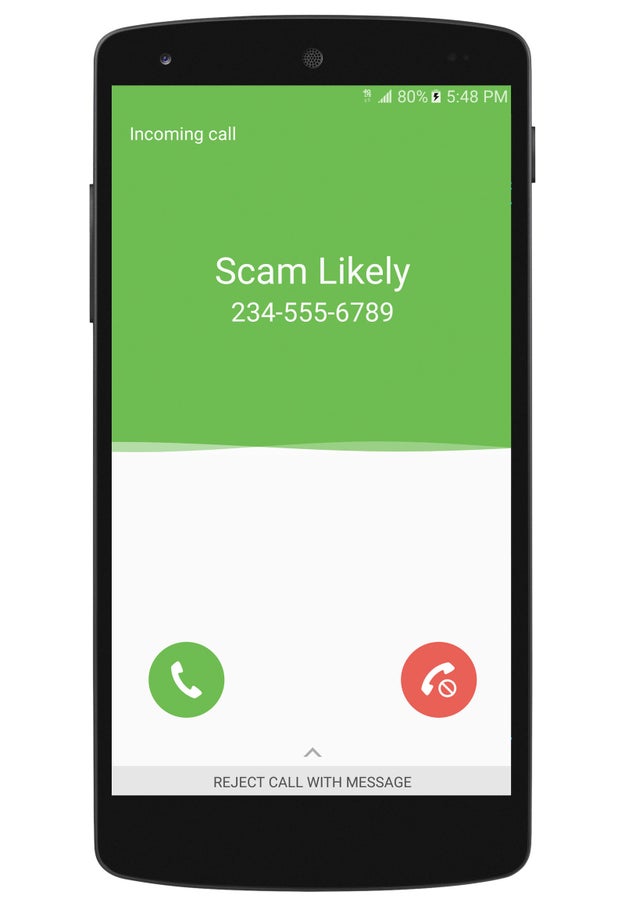
T-Mobile said today that it will start labeling scam calls in caller ID.

In a statement, T-Mobile told BuzzFeed News the filtering technology works by comparing an incoming call to a “database of tens of thousands of known scammer numbers” and analyzing how people typically respond to the number. If identified as a possible scam, the number will identify the caller as “Scam Likely” on the phone&;s screen.

T-Mobile

T-Mobile users will also be able to opt into complete scam call blocking by dialing # (), which won&039;t allow any calls labeled as possible scams to go through. The technology is launching on April 5. Scam calls affect 75% of Americans and collectively cost consumers half a billion dollars, according to T-Mobile estimates.

T-Mobile said these calls come in myriad forms, “from IRS scam to Medicare cons to &039;free&039; travel to credit card scams,” according to its press release. The company is specifically targeting automated calls that ping thousands of customers per minute.

AT&T introduced similar technology, AT&T Protect, in December 2016, for iOS and Android phones.

T-Mobile said the feature was part of its collaboration with the Federal Communication Commission to battle robocalling. The FCC voted unanimously on March 23 to give telecommunications companies broader power in filtering out spam calls.

FCC chairman Ajit Pai said robocalls are the consumer complaint his bureau receives.

And the commission is establishing a “Robocall Strike Force” in hopes of eliminating these loathed calls.

Giphy

Which isn&039;t surprising.

Quelle: <a href="Scam Calls Are The Devil, So Phone Carriers Are Doing More To Block Them“>BuzzFeed

President Trump Just Re-Announced Another Old Corporate Hiring Plan

President Trump Just Re-Announced Another Old Corporate Hiring Plan

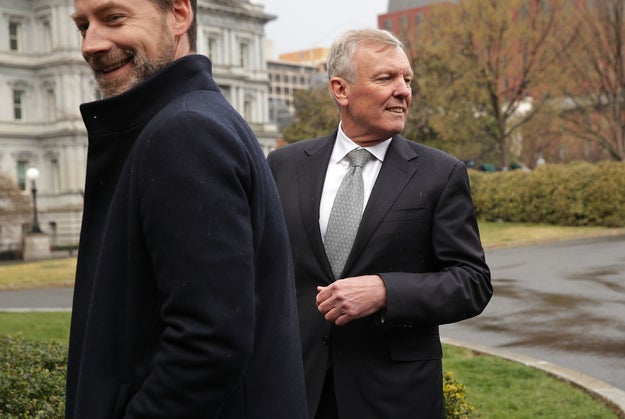
Charter Communications CEO Thomas Rutledge &; outside the West Wing after meeting President Trump March 24.

Alex Wong / Getty Images

In a ritual that is becoming familiar to White House watchers, President Trump, flanked by businessmen, announced on Friday that another American company has told him it plans to go on a hiring and investment spree during his presidency.

And in a detail that has become equally familiar, those hiring and investment plans were recycled from plans first revealed more than 18 months ago.

This time around it was Charter Communications, the cable company that last year bought Time Warner Cable for $55 billion. As Charter was pushing for the detail to be approved by US regulators, it said it would hire about 20,000 new workers if the deal went through, as part of a plan to bring outsourced call centers back to the US. The takeover was approved and finalized in the Spring of 2016.

“We&;ve already begun insourcing efforts for the new company. The process of insourcing will take several years and will require that we hire 20,000 people,” Charter CEO Tom Rutledge said on a call with analysts last August. “That process has already started, as we are building Charter&039;s first Spanish-language call center in McAllen, Texas, with approximately 600 seats.”

On Friday, Rutledge stood behind President Trump as those numbers were re-announced in the Oval Office.

“Today I am thrilled to announce that Charter Communications has just committed to investing $25 billion dollars here in the United States and is committed further to hiring 20,000 American workers over the next four years,” Trump said. “Charter is also committed to completely ending its offshore call centers…and to base 100% of its call centers in the United States…Tom will be opening a brand new, beautiful call center in McAllen, Texas…where they will create 600 new American jobs.”

The $25 billion, four-year investment also seems like business as usual for the company. Charter&039;s total capital expenditure last year, not counting expenses for the merger, was $7.1 billion according to its financial filings. That means that if investments remained at 2016 levels for the next four years, the would invest $28 billion.

On Friday, Rutledge gave the company&039;s ongoing capital expenditure a fresh coat of paint, saying the company was “excited about the opportunity in the right regulatory climate and the right tax climate to make major infrastructure investments.

“We&039;re going to spend $25 billion predicated on the regulatory consistency and efficiency we expect as a country,” Rutledge said.

View Video ›

Facebook: video.php

Justin Venech, a Charter spokesperson, told BuzzFeed News that today&039;s announcement went above and beyond previous comments.

“We have spoken before about plans to hire 20,000 before, it wasn&039;t a commitment” Venech said, adding that the specific four-year timeframe for the hires was a new commitment. He said that the spending on infrastructure was “based on the deregulatory policies of the administration and the FCC.”

The Federal Communications Commission&039;s new chairman, Ajit Pai, is a longtime critic of many Obama-era regulations on cable companies, including the FCC&039;s net neutrality rules. Congress just voted to lift privacy rules that FCC voted to impose on internet providers last year.

This is far from the first time an old hiring or investment announcement has been given a new lease of life by the white house. In February, Intel said it would invest $7 billion in a Arizona semiconductor factory, again with its chief executive standing text to Trump in the Oval Office. The company had previously announced its investment in the factory almost exactly six years earlier, alongside President Obama.

During the transition, Japanese telecom conglomerate and Sprint owner SoftBank, said that it would invest $50 billion into the United States and create 50,000 new jobs over the next four years. SoftBank&039;s chief executive Masayoshi Son was already working on creating a $100 billion fund for technology investments, with funding from Saudi Arabia.

Earlier this month, a long-running program by Exxon-Mobil to invest in energy facilities in Texas and Louisiana was announced again by both Exxon and President Trump, with a White House statement lifting text word-for-word from Exxon&039;s press release.

Quelle: <a href="President Trump Just Re-Announced Another Old Corporate Hiring Plan“>BuzzFeed

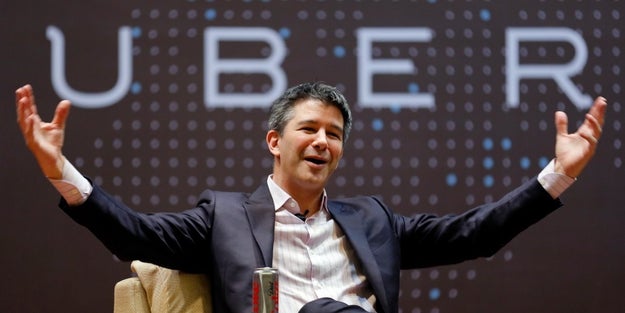
Why Uber’s Board Is Standing By Its CEO

Reuters / Danish Siddiqui

Whether to keep Travis Kalanick as CEO of Uber, amid an ever-expanding controversy, isn’t up to his fellow board members. It’s up to Travis Kalanick.

During a call with reporters on Tuesday, Arianna Huffington, the media entrepreneur who sits on Uber’s board, answered a question about whether the board had considered asking Kalanick to step down as chief executive amid a proliferation of scandals that includes — in no particular order — accusations of systemic sexism, a nasty customer revolt against Kalanick&;s decision to join President Trump’s economic advisory council, allegations of trade secret theft, claims that the company used one of its logistics tools to evade law enforcement, and Kalanick’s embarrassing public admission that he needs to seek “leadership help” and “grow up.”

Huffington’s response was definitive and perfunctory. “It’s not something that’s been addressed,” she replied. “We don’t expect it to come up.”

Uber’s board may profess to have full confidence in Kalanick, but it likely little recourse to do otherwise. Kalanick, cofounder Garrett Camp, and Ryan Graves — the company’s first employee — each hold a significant number of so-called super-voting shares, which carry 10 votes per share, according to sources and Uber’s articles of incorporation.

Together, the trio controls as many as nine of the company&039;s 11 board seats, according to The Information, making the minority of independent directors essentially powerless. If Kalanick were to step down, it would have to be of his own volition. And as Huffington said, that&039;s not something the board expects to come up.

Uber declined comment.

“If he controls the votes to replace the board, it’s pretty unlikely he would be replaced by the board.”

Charles Elson, a professor and director of the University of Delaware’s John L. Weinberg Center for Corporate Governance, said that at private companies like Uber, board members are more like advisers than monitors of behavior.

“Put it this way,” he said. “If he controls the votes to replace the board, it’s pretty unlikely he would be replaced by the board. If they disagree, they just leave. You got the votes, you do what you wish.”

In February, Uber investors Mitch and Freada Kapor wrote in an open letter to Uber’s board that they were “frustrated and disappointed” in the company. “We feel we have hit a dead end in trying to influence the company quietly from the inside,” they wrote.

“Can Travis stay as CEO? I really haven&039;t had any significant discussions with investors in Uber on that subject,” Mitch Kapor told BuzzFeed News earlier this month.

Kapor attributed the lack of discussion on the topic to the idea that Kalanick has proven in his time as Uber’s CEO that he can “revolutionize urban transportation globally.”

“He&039;s already done something that nobody thought he could do. That suggests he has special capabilities,” Kapor told BuzzFeed. “So then the question is, does he get engaged in a sustained way about his self-transformation and a transformation of the culture?”

It&039;s not unheard of for a well-funded Silicon Valley startup to replace its CEO amid scandal. In early 2016, Zenefits, the prominent human resources startup, faced a regulatory crisis so severe that the board moved to oust the founding CEO, Parker Conrad. But the details of that episode help illustrate why such a parting of ways is so unusual.

“Can Travis stay as CEO? I really haven&039;t had any significant discussions with investors in Uber on that subject.”

Like Kalanick at Uber, Conrad had an iron grip on Zenefits. Though he had received funding from powerful venture capitalists, he still controlled three of the four seats on Zenefits&039; board, making it virtually impossible for him to be fired. So even when others at the company recognized that Zenefits faced potentially serious legal and financial trouble, Conrad could dictate the terms of his own departure.

Unlike Uber, Zenefits had a powerful No. 2 executive in David Sacks, who had joined about a year before the scandal erupted, and who led the effort to remove Conrad, according to people familiar with the matter. But Sacks&039;s power was limited, and he had to make a case to Conrad about why the company — and Conrad&039;s sizable stake in it — would be better off without him. Between the time when Conrad verbally agreed to resign and when he actually signed the separation agreement, Sacks feared Conrad might change his mind, according to people familiar with Sacks&039;s thinking.

Conrad, with maximum leverage, was able to secure several sweeteners from Zenefits as conditions of his departure. In addition to keeping his Zenefits shares, he got a $130,000 severance payment and was permitted to keep unvested stock that would vest over the subsequent six months, BuzzFeed News has reported.

Later, Bloomberg News reported that Conrad regretted resigning, underscoring his awareness that the decision to leave was ultimately his alone.

On the conference call with reporters, Huffington outlined the company’s plan to “make Uber the most admired place to work in” and said she is a “big believer in people, leaders, companies being allowed to evolve.”

“I have seen personally Travis’s evolution,” she said. “It’s clear that both Uber and the ride-sharing industry would not be where we are today without Travis.”

Mitch Kapor struck a less conclusive tone as to whether Kalanick, a brash CEO who led the company through its regulatory battles worldwide and to its nearly $70 billion valuation, could bring Uber stability and change its culture.

“I don&039;t think it&039;s impossible,” Mitch Kapor said, but “I think the odds are against it.”

Quelle: <a href="Why Uber’s Board Is Standing By Its CEO“>BuzzFeed