Our newest Azure reservations features can help you save more on your Azure costs, easily manage reservations, and create internal reports. Based on your feedback, we’ve added the following features to Azure reservations:
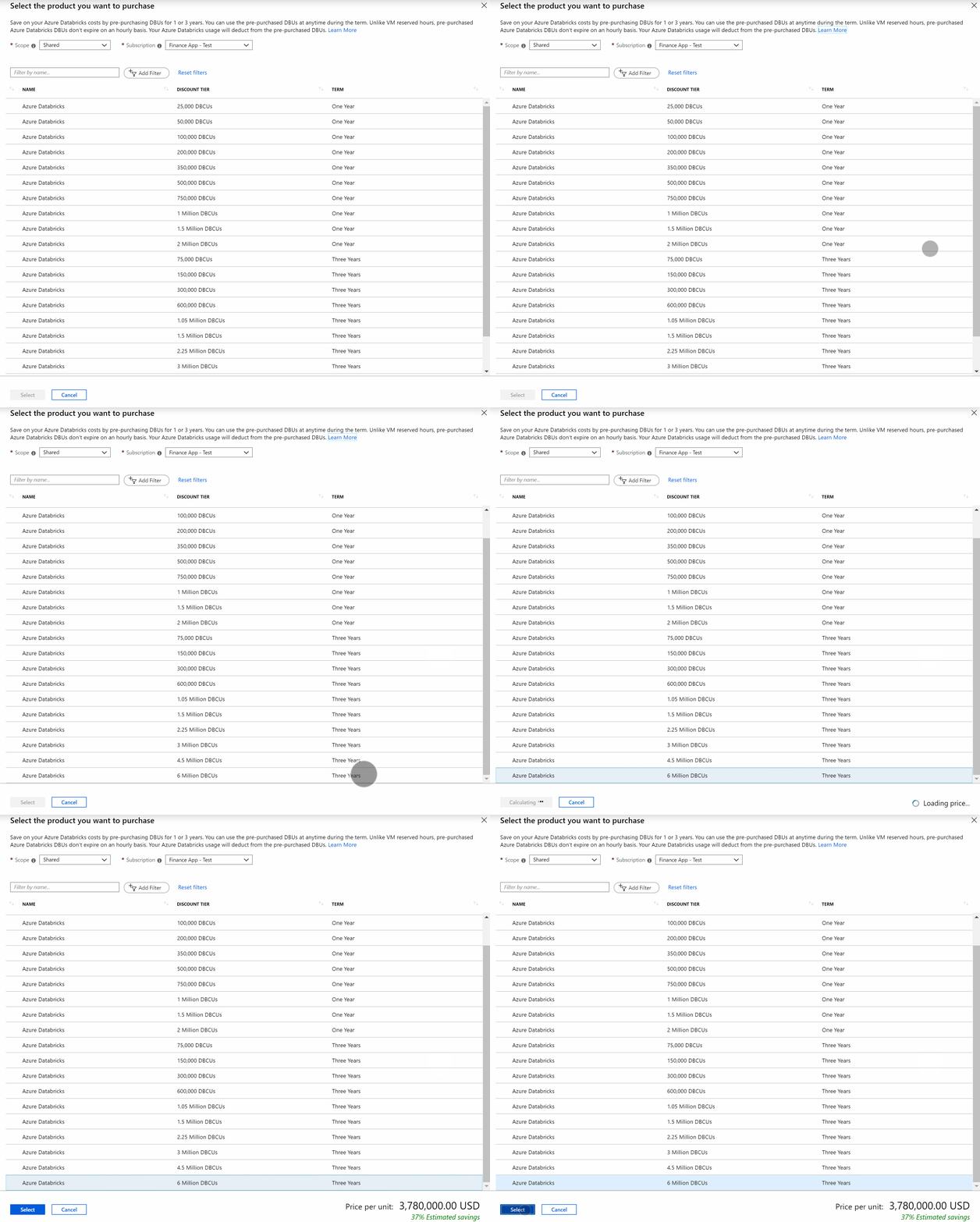
Azure Databricks pre-purchase plan
AppService Isolated Stamp Fee reservations
Ability to automatically renew reservations
Ability to scope reservations to resource group
Enhanced usage data to help with charge back, savings, and utilization
API to get prices and purchase reservations
Azure Databricks pre-purchase plans
You can now save up to 37 percent on your Azure Databricks costs when you pre-purchase Azure Databricks commit units (DBCU) for one or three years. Any Azure Databricks use deducts from the pre-purchased DBUCs automatically. You can use the pre-purchased DBCUs at any time during the purchase term.
See our documentation "Optimize Azure Databricks costs with a pre-purchase" to learn more, or purchase an Azure Databricks plan in the Azure portal.
AppService Isolated stamp fee reservations
Save up to 40 percent on your AppService Isolated stamp fee costs with AppService reserved capacity. After you purchase a reservation, the isolated stamp fee usage that matches the reservation is no longer charged at the on-demand rates. AppService workers are charged separately and don’t get reservation discount.
Visit our documentation "Prepay for Azure App Service Isolated Stamp Fee with reserved capacity" to learn more or purchase a reservation in the Azure portal.
Automatically renew your reservations
Now you can setup your reservations to renew automatically. This ensures that you keep getting the reservation discounts without any gaps. You can opt-in to automatically renew your reservations anytime during the term of the reservation and opt-out anytime. You can also update the renewal quantity to better align with any changes in your usage pattern. To setup automatic renewal, just go to any reservation that you’ve already purchased and click on the Renewal tab.
Scope reservation to resource group
You can now scope reservations to a resource group. This feature is helpful in scenarios where same subscription has deployments from multiple cost centers, represented by their respective resource groups, and the reservation is purchased for a particular cost center. This feature helps you narrow down the reservation application to a resource group making internal charge-back easier. You can scope a reservation to a resource group at the time of purchase or update the scope after purchase. If you delete or migrate a resource group then the reservation will have to be rescoped manually.
Learn more in our documentation "Scope reservations."
Enhanced usage data to help with charge back, savings, and utilization
Organizations rely on their enterprise agreement (EA) usage data to reconcile invoices, track usage, and charge back internally. We recently added more details to the EA usage data to make your reservation reporting easier. With these changes you can easily perform following tasks:
Get reservation purchase and refund charges
Know which resource consumed how many hours of a reservation and charge back data for the usage
Know how many hours of a reservation was not used
Amortize reservation costs
Calculate reservation savings
The new data files are available only through Azure portal and not through the EA portal. Besides the raw data, now you can also see reservations in Cost Analysis.
You can visit our documentation "Get Enterprise Agreement reservation costs and usage" to learn more.
Purchase using API
You can now purchase azure reservation using REST APIs. The APIs below will help you get the SKUs, calculate the cost, and then make the purchase:
Get SKUs
Calculate cost
Purchase
Quelle: Azure