AWS CloudTrail Enhances Configuration Setup

AWS CloudTrail now allows you to add data events, management events, and activity filters during the CloudTrail configuration setup in the console. With data events logging, you can record all API actions on Amazon S3 objects and receive detailed information, such as the S3 object level API activity, AWS account of the caller, and time of the API call. With management events logging, you can record operations that occur on your AWS accounts and resources, such as administrative actions to create, delete, and modify EC2 instances or user access activities. Activity filters allow you to specify read-only, write-only, or read/write account activity collection for management and data events. 
Quelle: aws.amazon.com

Twitter Is Testing A Bot That Listens To Your Suggestions And Complaints

Twitter has been promoting its potential as a customer service platform for brands for some time now. And today, it&;s stepping up its efforts for its own users — with a bot.

The company&039;s @support account will now handle basic user inquires via a direct message bot, one that seems like it&039;ll be used most often to tackle the abuse and harassment issues which have plagued the company through its existence.

The bot, released this afternoon, is still experimental. Twitter plans to see how people engage with it and will tweak it accordingly, according to a spokesperson. In many scenarios BuzzFeed News tested, the bot was unable to do more than simply directing us to its website to fill out forms. Still, it could be a helpful new channel for those looking for a simple way to report problematic behavior on the platform. Abuse can also be reported on tweets and accounts themselves, or via a form.

“We’re testing a new @Support DM tool to make it easier for people to get help with certain support issues, directly on Twitter. This is a very early test and will be limited in scope for the time being,” the Twitter spokesperson told BuzzFeed News.

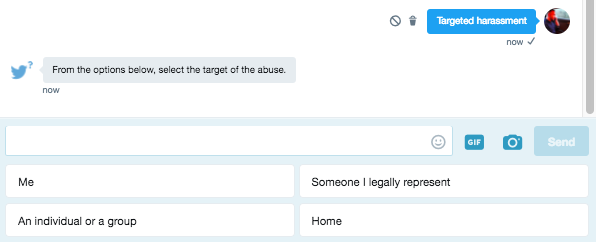
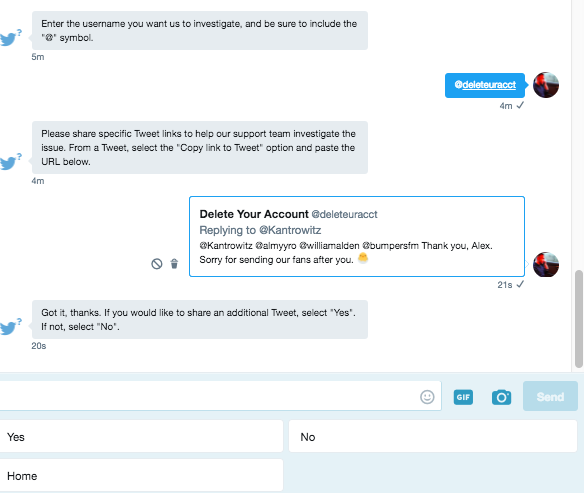
The bot currently focuses on five categories: Accounts, Abuse, Impersonalization, General, and . Of those, the abuse category is the most built-out. Here&039;s what it looks like:

(BuzzFeed News did not actually send this report)

The bot is not well-equipped to deal with other common user requests, such as an edit tweet button. So keep dreaming on that front.

Quelle: <a href="Twitter Is Testing A Bot That Listens To Your Suggestions And Complaints“>BuzzFeed

Amazon QuickSight now available in US East (Ohio)

Amazon QuickSight is now available in US East (Ohio). New users can sign up for QuickSight with US East (Ohio) as their home region, making SPICE capacity available in the region and ensuring proximity to AWS and on-premises data sources. Existing QuickSight users can switch to US East (Ohio) via the region switcher in the User Interface to provision SPICE capacity, and to enable faster and cheaper connectivity to data sources in the region. With this launch, QuickSight is now available in US East (N. Virginia and Ohio), US West (Oregon) and EU (Ireland) regions.
Quelle: aws.amazon.com

What Happens When Your Neighbor Is A Venture Capitalist

Via sfphoenix.wixsite.com

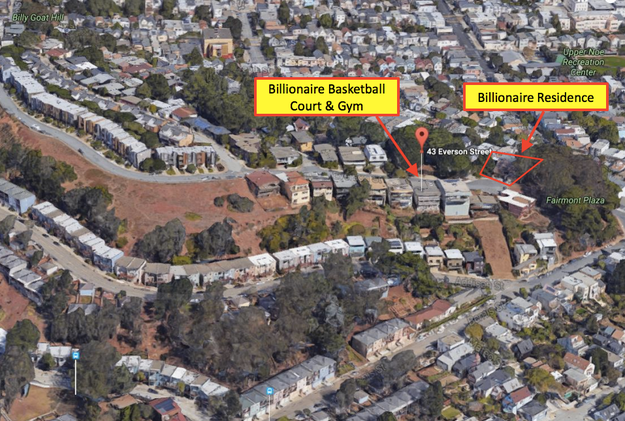
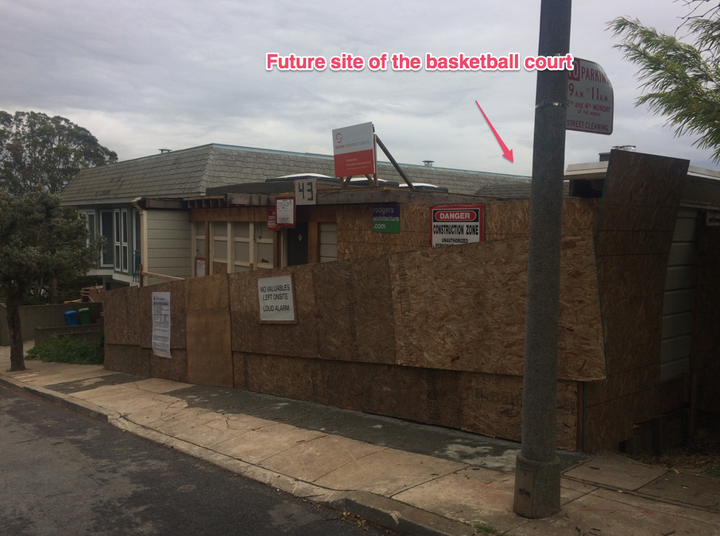
Waging a public battle against your rich neighbor with obscene tech money is practically a Bay Area tradition. In David Cowfer’s case, his angry website about an invasive species of Silicon Valley billionaire practically wrote itself. Cowfer is fighting plans to turn a six-bedroom family home in a sleepy cul-de-sac on a picturesque Glen Park hilltop into the ultimate bachelor gymnasium, including a basketball court, lockers, sauna, wet bar, lounge, and a cantilevered swimming pool. Plans also include a two-story garage door with glass panels will roll open to show a spectacular view of San Francisco — and could cause a spectacular nuisance for Cowfer, who lives next door.

The house, which sold for $2.35 million in 2015, was purchased under an anonymous LLC. So it took Cowfer nine months to figure out that the baller behind the renovation was prominent venture capitalist Keith Rabois, a Silicon Valley veteran with a contrarian Twitter account and a Stanford pedigree, who, like his buddy Peter Thiel, is also part of the so-called PayPal mafia.

This is when an ordinary NIMBY narrative — of the haves vs. the have-mores — veered in caricature. San Francisco’s Planning Department found nothing objectionable about Rabois’ construction plans, but Cowfer filed for a discretionary review to bring the issue before the city’s seven member Planning Commission. At a hearing on Thursday, neighbors told the the commission that Rabois is building a personal recreation center, not a home, because Rabois already lives in another home in the same small cul-de-sac, purchased for $3.5 million in 2011. What’s more, his co-worker at Khosla Ventures, venture capitalist Benjamin Ling, owns a $1.8 million house, purchased in 2013, next door to Rabois’ primary residence.

“It&;s like a Zuckerberg-style neighborhood takeover&;” Ryan Patterson, Cowfer’s lawyer, told BuzzFeed News after the hearing, in reference to the CEO of Facebook secretly buying up the four houses surrounding his Palo Alto mansion in 2013. “It’s a cul-de-sac with a lot of homes built in the ‘60s. Now we have two billionaires who own three homes within 150 feet of each other,” said resident Mark Brennan, who grew up across the street in the same house where his parents still live.

Rabois, however, didn’t see the big deal. “What does that have to do with anything?” he asked BuzzFeed News in response to questions about how two investors from the same firm happened to live on the quiet same block. “He bought a house, people are allowed to buy houses. People think it’s some kind of conspiracy, but I found a cool neighborhood,” and my friend followed, said Rabois.

Cowfer’s website, No Court @ Everson, refers to both investors as billionaires, a claim that was picked up in coverage of the dispute in Curbed, SFist, and a local CBS station. There is one small glitch in the all-powerful techie narrative: Ling is not a billionaire. When BuzzFeed News asked Rabois to verify the billionaire claim for himself, Rabois wrote back, “Lol.”

The view from the property being renovated

Via zillow.com

For Cowfer, however, signs of a hostile takeover kept adding up. A few months ago, a real estate agent cold-called him on behalf of Ling about buying his home, which Cowfer interpreted as an attempt “to remove me from the equation,” he said. Ling characterized it differently in an email to BuzzFeed. “I had heard that the property might be coming on the market shortly, and had made a single inquiry in hopes of getting an early look, but nothing ever came of it.”

Rabois insists that he’s made every effort to follow the rules. “[San Francisco is] one of the most heavily regulated real estate markets in history. This is so in the middle of what’s acceptable to complain about,” he said.

But at the hearing on Thursday in City Hall, neighbors argued that the renovation is out of character for Glen Park. Cowfer told the commission that lights and noise could drive down the value of homes by as much as 25 percent. “In a neighborhood where the homes are priced anywhere between $2 million and $4 million, this is not insignificant,” he said.

“I have no problem with him spending his money; he should be spending that in Pacific Heights,” said Joe O&039;Donoghue, the former head of the Residential Builders Association and final resident to argue against Rabois at the hearing. O&039;Donoghue, who speaks in a heavy Irish brogue, was the most animated speaker that afternoon, throwing his hand out with disgust when he mentioned Rabois’ plan to build “a garage door going nowhere.”

The Bay Area has a rich and varied history of absurd real estate spats between tech moguls and their neighbors. In 2011, Oracle CEO Larry Ellison got ticked off because his neighbor’s redwood trees blocked the view from his house on Billionaire’s Row in Pacific Heights. (The Wall Street Journal tried to inquire about the debacle, but “Mr. Ellison would only speak through his tree attorney,” the paper reported.) Typically these kind of clashes happen in tonier neighborhoods. Perhaps the basketball tussle in Glen Park, once a streetcar suburb for working and middle class residents, is just a sign that these disputes are moving down market.

Like real estate fights everywhere, each side is painting the other as unreasonable. Rabois had a company board meeting and couldn’t attend the hearing, but he told BuzzFeed News, “[Cowfer is] wasting taxpayer money, driving the staff actually crazy.”

Residents, however, insist that Rabois is downplaying the scope of initial plans of the basketball court. “The way Rabois’ team is talking now, it almost sounds like they’ve got a nerf hoop down there [and are] just goofing around,” said Brennan, who also pointed out that Rabois pushed through related permits before this dispute was settled.

The Planning commissioners concluded that there was enough common ground around Cowfer’s request — to shift the basketball court into the hill, so that it doesn’t jut out as far — that they told the two parties to take a few weeks and see if they could sort it out.

“This is a fairly quiet neighborhood. I don’t think people want a bunch of valet partners coming up here all the time and having all these wild parties, said Brennan “It’s not the Red Army coming out of the mountains to try to take this guy’s property away from him.”
Nitasha Tiku / BuzzFeed News

Quelle: <a href="What Happens When Your Neighbor Is A Venture Capitalist“>BuzzFeed

Delta Suffered "Failure Of Crew Tracking Systems" During Canceled Flight Fiasco

Instagram: @jolieice7

As masses of Delta fliers were left stranded at airports across the country last week, a separate drama was unfolding behind the scenes.

With thousands of flights delayed and cancelled during the five-day crisis, crew members said the airline&;s computer system lost track of them amidst the chaos. That failure poured gas on the fire, delaying more flights as the airline scrambled to get crew and pilots to the airports where they were needed. It helped turn a storm in Delta&039;s Atlanta hub on Wednesday into a multi-day fiasco that played out across the country.

The disruption was worse than the one Delta experienced last August when it suffered from a power outage that knocked out systems and grounded hundreds of flights.

This time around, “pilots and flight attendants proactively attempted multiple contacts with Crew Scheduling, went days without receiving Crew Scheduling or Tracking contact, were placed on hold (in some cases for over six hours), and were camped out in crew lounges and airports resembling refugee camps,” the chairman of Delta&039;s pilot union said in a letter to pilots on Tuesday.

The problem was acknowledged by Delta CEO Ed Bastian in an internal memo to sent to employees on Monday.

“Our recovery was hampered by a lack of available seats to accommodate customers as well as a failure of crew tracking systems to adequately position our people to do their jobs,” he wrote in the memo, which was reviewed by BuzzFeed News.

instagram.com

By Monday morning, Delta said its operations were mostly recovered, and it expected to operate more than 99% of its scheduled flights.

But at the height of the crisis, staff said the company&039;s systems were struggling to cope with a massive disruption. “The problem compounds over and over again, as more crews become stranded, a Delta employee told BuzzFeed News on Friday. “Right now, as we speak, there are hundreds of flights in our internal system that will not leave because we just don&039;t have the staff to cover them.”

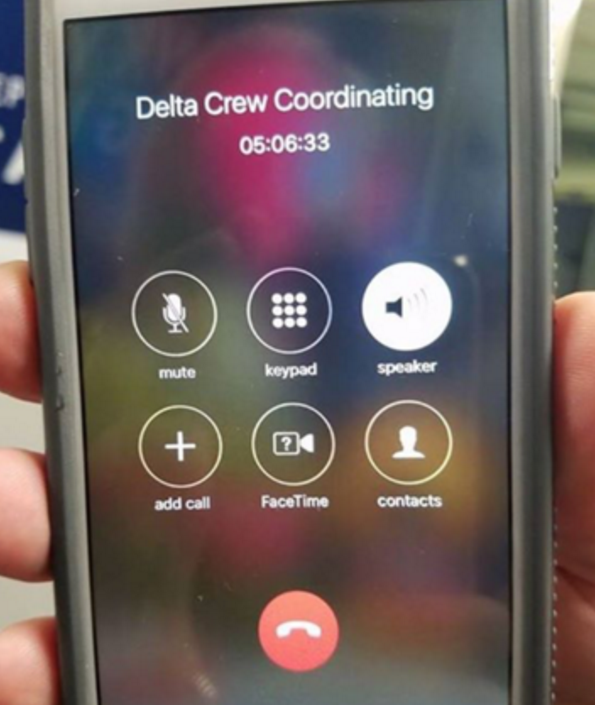
According to private social media posts seen by BuzzFeed News, some crew members said they were unable to sign into Delta&039;s scheduling system, or faced hours-long waits (and sometimes disconnections) trying to get through to scheduling by phone.

BuzzFeed News source

“Many couldn&039;t log in,” another Delta employee said. “Phone lines are useless. There is definitely an issue regarding wait times.”

Other crew members said they were not accurately tracked by Delta, which scheduled them for a flight in one airport when they were in fact in another city. Some said they were not receiving updates about their flights.

“I feel like we are lost in the system,” an employee wrote.

Many flight attendants were stranded in airport lounges far from their home cities, said one staffer who asked not to be named. Like Delta&039;s passengers, some were unable to stay in hotels and slept in the airport.

“The average wait time for crews to even get ahold of scheduling was five hours. As of [Friday], our phone line to contact scheduling and crew tracking no longer work. Crews literally have no where to turn,” said an employee.

The pilots union letter said the main problem was about connecting crew to planes, and called on the company to improve its systems. “Answers will include corporate information technology (IT) investments in crew tracking and operational control, and likely enhanced staffing in those areas. We encourage the Company to expand the technology investments they have already accelerated since the recent IT &039;disruption&039;,” the letter said.

Delta did not immediately respond to a request for more details. Bastian said in his memo that Delta continues to make investments in replacing and upgrading technology, including “significant enhancements to our crew tracking system,” and has a new data center scheduled to go on line this summer.

Last August, Delta suffered a similar widespread debacle when a power outage in Atlanta disrupted hundreds of flights.

“Since the technology outage in August, it has been my top priority to make sure Delta people don’t have to endure this type of situation again,” Bastian said. “We have made progress but clearly must redouble our efforts.”

Quelle: <a href="Delta Suffered "Failure Of Crew Tracking Systems" During Canceled Flight Fiasco“>BuzzFeed

Decentralized integration: The innovation enabler

Integration has always been hard work. It requires dealing with the complexity of the diverse landscape of applications and the nuances of how these apps expose their information and services. As we move forward, the diversity of things that need to be integrated is rising exponentially. SaaS applications, APIs from internal and external sources, new big data environments—all of these systems are growing aggressively and putting pressure on integration teams.
This expansion, coupled with the need for business to move faster, changes the way we need to look at integration patterns. And increasingly, these forces move integration beyond the control of central IT.
The challenge for integration today: how we enable the innovators across the organization to use integration capabilities to meet their requirements yet retain an IT landscape we can manage. Let’s talk about the two key audiences involved.
Developers and power users
Modern application developers rapidly prototype creative ideas to reach new markets for the business. They need access to data from multiple sources within and beyond the company in real-time. These developers expose data as APIs so that their applications bring a compelling user experience.
The risk is that developers will write reams of new code to connect data and applications. And so will the next application development team. And the next. Anyone who has tried to unpick the decades-old problems of point-to-point integration will recognize where this is going.
Business power users drive innovation by using new capabilities from modern SaaS applications. These business power users access multiple SaaS applications daily and regularly introduce new ways to use those systems.
Business teams need to be able to make separate systems feel more connected, without having to constantly copy information from one source to another. They may find isolated tools to perform those integrations, perhaps provided independently by each of the SaaS vendors they use. The complexities will pile up. Before long, it could become impossible to unpick all the weird and wonderful ways those applications have been connected.
Neither of these groups have time to work through waterfall enterprise planning to engage with an IT team to perform those integrations. They need to be empowered to do it themselves. But they need to be empowered to do it in a way that others can understand and manage going into the future.
Decentralized integration
The answer is decentralized integration. You want to enabling modern application developers as well as business power users to help themselves wherever possible.
How do you help drive self-service integration that won’t break the business? Fundamentally, both groups need two sets of capabilities.
Better runtimes. You need lightweight, simple-to-use, cloud-ready integration runtimes. Modern developers can easily incorporate them into their solutions without needing highly-specialized skills or centralized installations from another team. You need integration runtimes tuned to the needs of microservices architecture. This blog post on the latest enhancements in IBM Integration Bus dives deeper into lightweight runtimes.
Simple SaaS integrations. Look for managed integration software that simply connects common SaaS applications, but helps users define more complex connections as they go. Capabilities like these are part of the growing software segments called integration platform as a service (iPaaS), and integration software as a service (iSaaS). Either may help non-integration specialists to create powerful integrations directly.
IBM has chosen to take a unique approach by coupling both iPaaS and iSaaS into a fluid experience so the simple things stay simple. Users who need a bit more complexity can go further. Interested? Explore more about IBM App Connect here.
Connect your teams, too
Finally, both groups of users need to be able to collaborate on solutions with one another. Neither should work in a silo. Your application developers should be able to make an integration available to any business user. Just one example in action: IBM offers a model for tight collaboration by allowing the integrations in IBM Integration Bus to be introduced as simple triggers and actions within IBM App Connect.
In summary, IBM Cloud Integration caters to multiple user groups by providing capabilities that can be used independently by teams. At the same time, it helps user groups converge on common techniques and patterns of integration. It also builds cohesion and collaboration across teams. Finally it offers IT the opportunity to analyze and manage the landscape in a unified way to help deliver business innovation faster.
To learn more about IBM Cloud Integration please visit our site at https://www.ibm.com/integration.
The post Decentralized integration: The innovation enabler appeared first on news.
Quelle: Thoughts on Cloud

AWS Config Improves Discovery of Managed Rules

AWS Config now has a redesigned experience for discovering and setting up AWS-managed Config rules. You can now search managed rules by name, label, or description. This allows you to quickly filter rules based on services and rule descriptions. For example, you can type "EC2" in the search field to display all rules that apply to your Amazon EC2 resources. 
Quelle: aws.amazon.com

Jump-start your mobile app testing on AWS Device Farm with increased free trial minutes and discounted device slots

For a limited time, get 1000 device minutes as part of your one-time free trial on AWS Device Farm, four times more than the usual 250. Furthermore, get 3 months for the price of 1 on your first device slot purchase, giving you additional time to set-up, tune, integrate, and ramp your testing efforts into your release cycle at a lower introductory cost.
Quelle: aws.amazon.com

AWS Batch Managed Compute Environments Support Customer Provided AMIs

AWS Batch now supports customer provided AMIs. Previously, Managed Compute Environments launched instances of the ECS Optimized AMI. Now, when creating Managed Compute Environments, you can choose the specific AMI used by specifying the imageId. This makes it possible to change your EBS configuration, automatically mount EFS filesystems for shared storage among jobs, use local instance storage for scratch space, or configure drivers for GPU-accelerated jobs. 
Quelle: aws.amazon.com