Facebook Is Developing A Video App For Your Set Top Box

Facebook Is Developing A Video App For Your Set Top Box

Frederic J. Brown / AFP / Getty Images

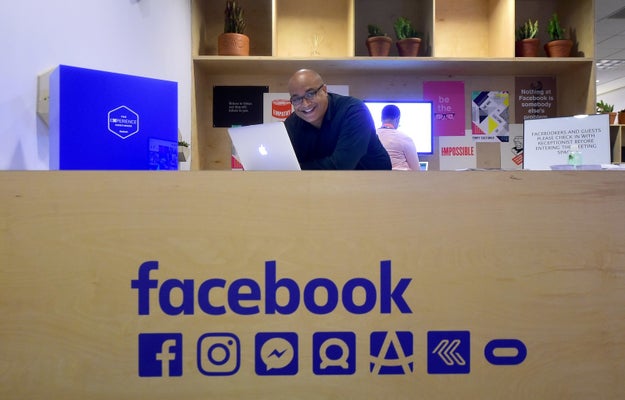
Facebook is developing a video app that&;s coming soon to Apple TV and other streaming devices.

On Tuesday at the Code Conference in Dana Point, California, Facebook announced that it&039;s developing a standalone video app for cable set top boxes.

The app will be available on Apple TV, Amazon Fire TV, and Samsung Smart TV, and it will roll out “soon,” according to the company. Users will be able to watch videos, both live and otherwise, shared by friends and publisher pages, as well as videos recommended by Facebook. Last year, the company debuted a feature that would allow users to stream Facebook video to TV, but the new app will be native to televisions and streaming devices.

As the social network runs out of space for ads in its news feed, longer videos and Facebook&039;s own premium content may be a way for it to compete for the $70 billion annually spent on television ads.

According to Recode, Facebook is in discussions with media companies to license TV shows rather than produce them in-house. Facebook is the second-largest seller of digital ads behind Google. Recode reports that these videos would likely be upwards of 10 minutes in length. Facebook has already adjusted its News Feed algorithm to promote videos that are longer than 90 seconds.

CEO Mark Zuckerberg has said that video is the format at the heart of what Facebook is and what it does. The company is currently promoting Facebook Live with a national ad campaign, and despite controversy surrounding the product and how it&039;s used, Facebook may soon start playing 15-second ads in the middle of publishers&039; livestreams. According to the Wall Street Journal, Facebook has told publishers it will share that ad revenue with them.

The news comes as Apple is also considering producing original shows and films. Both Apple and Facebook will be entering a competitive field ruled by Netflix and Amazon Prime Video, which have the advantage of already being major players. Apple isn&039;t likely to become a direct competitor against Netflix or Amazon, but it&039;s unclear what Facebook&039;s ambitions are or how much it will spend on licensed video content.

Facebook currently serves users video ads on the web and in its mobile app, but the company said the TV app will not serve ads when it launches. Facebook declined to say whether it will license content or create proprietary shows for the app and what role ads will play in its programming.

Facebook bundled announcement of the TV app with the release of several new features in the news feed: videos on the social network will now automatically play with sound, vertical videos will now “look better on mobile” thanks to small tweaks, and users will be able to minimize videos to watch them as they scroll.

View Video ›

Facebook: video.php

Quelle: <a href="Facebook Is Developing A Video App For Your Set Top Box“>BuzzFeed

The Work Visas Tech Companies Love Might Be Bad For Programmers

http://<a rel=”nofollow” target=”_blank” href=”http://Peopleimages.com” target=”_blank”><a rel="nofollow" target="_blank" href="http://Peopleimages.com“>Peopleimages.com</a> / Getty Images

The salaries of US-born computer scientists might be higher were it not for the influx of high-skilled immigrants into the tech industry, a new report suggests.

According to a working paper published by the National Bureau for Economic Research, a spike in the immigration of high-skilled immigrants is generally good for American consumers, American tech companies and the average American worker; it can bring more jobs, cheaper products, and faster innovation. But it can also depress earnings for US-born computer scientists.

The report, which analyzed the economic impact of high-skilled immigration during the dot com boom, found that if there had not been a wave of high-skilled immigrants allowed into the country during the 1990s, by 2001 “wages for US computer scientists would have been 2.6% to 5.1% higher.”

Since his inauguration, President Trump has signaled a coming crackdown on high-skilled immigration. A leaked draft of an executive order on the work visa program advocates for regulation that “prioritizes the interests of American workers.” Tech execs argue that, for the pace American innovation to continue abreast, the country needs foreign born computer scientists; Apple CEO Tim Cook, who’s been meeting with leading Republicans, wrote in a letter to employees that immigration is important “both to our company and to our nation’s future.” But this new report finds that, while companies would profit and the economy overall would benefit, high rates of immigration can have a negative impact on programmer pay.

In order to measure the impact of high-skilled immigration on the tech industry, researchers used the tech boom of the late 1990s as a model; the goal was to figure out whether US-born computer scientists would experience a net positive or net negative impact if the US hadn’t opened the doors to more and more immigrants during that time. What they found was that, in the absence of immigration, both wages and overall employment for US computer scientists would have been higher.

“We did end up finding that there are costs to US born computer scientists, but on average, US workers are still better off under high-skill immigration,” said Gaurav Khanna, one of the report’s authors. “The average US worker is better off, managers are better off, owners are better off, consumers are better off, anyone who uses a computer is better off, because they’re using better technology to do their own work.” Even US-born computer scientists, facing the lower wages that follow a spike in immigration, typically just sought other, higher-paying careers, such as management, he said.

Also better off are the tech companies themselves. For years, leaders in the tech industry have been staunch defenders of high-skilled immigration, pushing policymakers to raise the limit on the number of workers allowed into the country. And the NBER report found that there’s a good reason for that — more immigration increases the overall profits of the tech sector. As its authors note, “It is then no surprise that Bill Gates and other IT executives lobby in favor of increasing quotas for high-skill immigrants.”

But the impact of immigration isn’t just about the bottom line. Innovation and immigration are positively correlated — if the US doesn’t continue to bring in top talent from around the world, its tech industry could lose its competitive edge.

“A lot of people in the tech industry do believe that immigration is going to help the US maintain this advantage they have in IT production that has slowly been slipping away to other countries like India,” Khanna said. According to data from job search site Indeed.com, tech workers looking for jobs outside their home country look at the US first, but also consider Canada, Australia and the UK, among others. A throttling of high-skilled immigration into the US could be a real boost for the tech industries in those countries.

Silicon Valley venture capitalist Sam Altman, who has spoken out publicly against the early immigration crackdowns of the Trump administration, says it’s actually because of immigration that the US tech industry became dominant in the first place. Top paying companies like Google or Facebook wouldn’t be able to pay those high salaries, Altman believes, if it weren’t for their ability to bring in “the best talent from around the world.”

“Although I’m willing to believe that in a normal environment immigration puts some downward pressure on wages, I think the fact that we can have these giant wages for software engineers is a factor of how powerful these companies have gotten,” Altman said. “[One reason tech] companies have become so powerful and valuable is because of immigrants.”

Khanna echoed that sentiment. “I do think [the US tech industry] would definitely exist and be a major player,” he said, “but it would probably not be as strong.”

Quelle: <a href="The Work Visas Tech Companies Love Might Be Bad For Programmers“>BuzzFeed

Read The IBM CEO’s Letter On Why She Won’t Stop Advising Trump

Kevin Lamarque / Reuters

The head of IBM, who also advises the president on business matters, sent a company wide memo Thursday defending her collaboration with the Trump Administration, as tech executives from Travis Kalanick to Elon Musk face intensifying pressure to challenge the White House on immigration and other issues.

“Some have suggested that we should not engage with the U.S. administration. I disagree,” IBM CEO Ginni Rometty told employees last week, in a letter obtained by BuzzFeed News. “Our experience has taught us that engagement – reaching out, listening and having authentic dialogue – is the best path to good outcomes.”

IBM declined to comment but did confirm the authenticity of the memo.

Rometty, like SpaceX and Tesla chief Elon Musk, serves as a business advisor to the president on his Strategic and Policy Forum. The group first met with Trump earlier this month, when they discussed jobs, cybersecurity, and the president&;s recent immigration order that barred refugees and people from seven Muslim-majority countries from entering the US.

At the White House meeting, Rometty said in the letter that she discussed “ways that advanced technology could address national security imperatives while also permitting lawful immigration and travel.” She added: “I explained that this is not an either/or choice. Our points were heard, and we will continue to engage to find solutions that align with our values.”

Rometty described her meeting with the president as part of a long history of non-partisan, public engagement at the company. “IBM leaders have been engaging directly with every U.S. president since Woodrow Wilson, and this was my ninth such meeting since becoming CEO,” she said.

Her stance contrasts with that of Uber CEO Travis Kalanick, who was slated to attend that White House meeting but backed out just a day before after mounting criticism and a viral campaign. In a letter to his employees, Kalanick announced that he would no longer be a part of the economic council. “Joining the group was not meant to be an endorsement of the President or his agenda but unfortunately it has been misinterpreted to be exactly that,” he said. Musk, on the other hand, said he would stay on as an advisor to the president for “the greater good.”

And while Uber, SpaceX, and Tesla were among the more than 130 tech companies that joined a friend-of-the-court brief opposing Trump&039;s immigration order, IBM was not a signatory.

In December a spokesperson for the company told BuzzFeed News that IBM would no help build or provide data for a Muslim registry, an idea Trump proposed during the presidential campaign. “No, IBM would not work on this hypothetical project. Our company has long-standing values and a strong track record of opposing discrimination against anyone on the basis of race, gender, sexual orientation or religion. That perspective has not changed, and never will.”

Quelle: <a href="Read The IBM CEO’s Letter On Why She Won’t Stop Advising Trump“>BuzzFeed

Red Hat Announces Schedule and Speaker Line-Up for OpenShift Commons Gathering March 28th in Berlin

The OpenShift Commons Gathering will bring together the brightest technical minds to discuss the future of OpenShift and its related upstream open source projects. With OpenShift Container Platform quickly gaining adoption around the world, the OpenShift Commons Gathering will feature talks from upstream project leads and case studies from users like Red Hat, Google, Microsoft Azure, Amadeus, T-Systems, Volvo, Weave, CNCF and more. This event will also include face-to-face meetings for all the OpenShift Commons Special Interest Groups and allow ample time for peer-to-peer networking.
Quelle: OpenShift

Bluemix powers productivity for IBM Business Partners

What do data discovery, call center productivity and genomic data analytics have in common?
Though they’re functions of wildly different industries and businesses, they’re all areas in which IBM Business Partners have put Bluemix to use, driving digital transformation.
IBM launched Bluemix for its business partners channel in September 2015, and by the last quarter of 2016, almost a third of Bluemix signings were from partners. Those partners make use of the 54 IBM Cloud data centers worldwide to create custom solutions that make their businesses run more smoothly.
At the PartnerWorld Leadership Conference in Las Vegas this week, three such IBM Business Partners shared their successes with Bluemix:

Mark III Systems offers clients the IBM Cognitive Call Center on Bluemix to filter, analyze and take actions based on calls to and from client call centers. Working with call center software provider Cistera, Mark III’s development unit, BlueChasm, brought about an 80 percent increase in call center productivity.
Global information technology, consulting and business process services company Wipro offers clients the Bluemix-built Data Discovery Platform. The platform uses analytics to help clients anticipate problems and reduce costs. One client, Western Power in Australia, saved $5 million in one year on overhead power line replacement and maintenance.
Bluebee uses IBM Cloud bare metal servers, Aspera and Cloud Object Storage to run a cloud-based genomics platform that enables speedy processing of large volumes of data for cancer diagnostics. It has reduced time to diagnosis from five to two days.

Also at the PartnerWorld event, IBM announced the first-ever Watson Build, a program which encourages partners to brainstorm and pitch new cognitive business solutions, similar to a program for IBM employees. IBM will offer technical and business support while partner teams develop their solutions.
Along with those announcements, IBM unveiled a new PartnerWorld program which includes 40 competencies, including information, risk and protection; cloud video; high-speed transfer; continuous engineering, and global financing. Partners will also have access to a new voice-and-text-activated, Watson-based support tool called PartnerWorld Advisor.
Find out more about IBM PartnerWorld.
The post Bluemix powers productivity for IBM Business Partners appeared first on news.
Quelle: Thoughts on Cloud

Here’s Who Drops The Most Cash On Candy Crush And Clash Of Clans

Alberto E. Rodriguez / Getty Images

If you were wondering how games like Candy Crush and Clash of Clans rake in millions of dollars, look to Norway and North Dakota. That&;s where the games&039; power players live.

In a recent study, “iPhone&039;s Digital Marketplace: Characterizing the Big Spenders,” researchers at the University of Southern California analyzed receipts from 776 million iPhone transactions totaling $4.6 billion from March 2014 to June 2015, and found that geography and gender play big roles in who&039;s buying digital goods from the App Store and iTunes.
USC

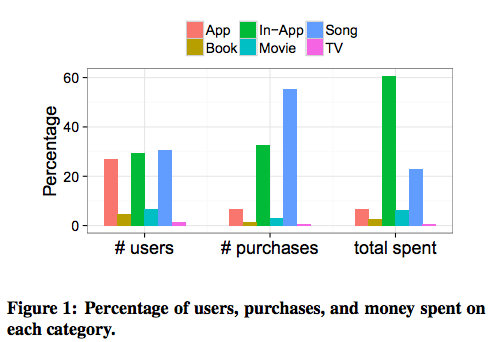
Researchers also found that in-app purchases account for 61%, or a whopping $2.8 billion, of all in-app purchases made through Apple&039;s stores. They defined in-app purchases as “bonuses or coins in games, for example,” but also included subscriptions within an app to services like Netflix or Apple Music.

The researchers used six categories to sort the various purchases people made on their iPhones: applications (apps), songs, movies, TV shows, books, and in-app purchases.” Purchasing an application, for instance, means paying to download an app and is separate from in-app purchases.

Farshad Kooti, one of the authors of the study and now a data scientist at Facebook, said, “The purchasing gap surprised us. I didn&039;t expect in-app purchases to dwarf all other kinds of media so vastly.”

What&039;s even more startling is that of those in-app purchases, 59% of them were made by only 1% of the 26 million people surveyed. That means this relatively tiny group was spending about $1.65 billion. By comparison, the bottom half of people who bought things in Apple&039;s digital stores accounted for less than 2% of the total purchases.

Among the people studied, nationality was a determining factor in who spends the most in Apple&039;s digital stores. Overall, Scandinavia had the highest concentration of “big spenders,” the term researchers used for the 1% of people who spend almost 60% of the money. The researchers also noted that Greek, Turkish, and Romanian users were more likely to be fall into that category. People in the United States were not as prone to making in-app purchases, but of all the states, North Dakotans were the most likely to do so.

Kooti hypothesized that the reasons for the skew are counterintuitive: “People in the US are more likely to have credit cards, which are what you use to purchase things in the App Store, but since everyone has one, that leads to more casual app users and players than hardcore ones. People outside the US, by contrast, are less likely to have credit cards, so if they’re playing these games and have entered their credit card information, they&039;re likely to be much more serious about gaming and spend more money per person.”

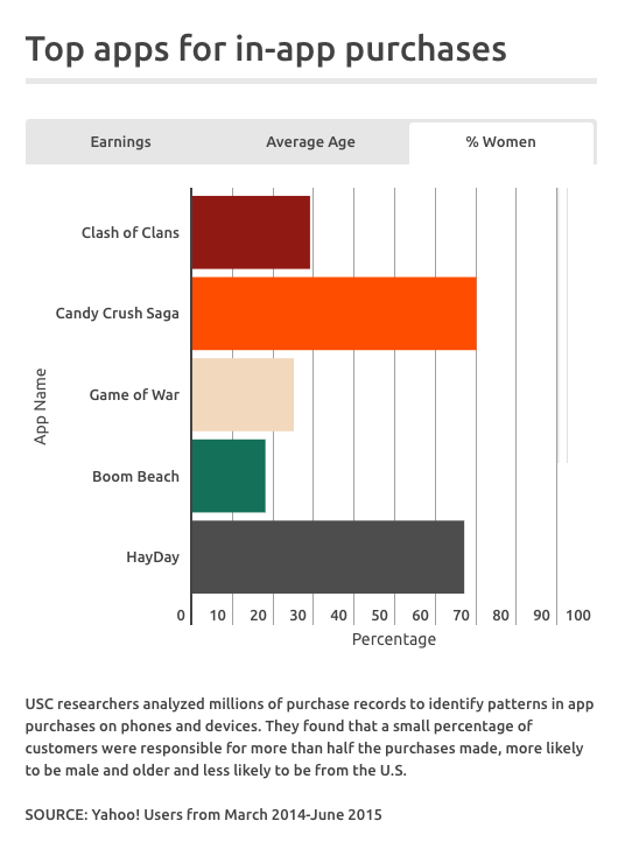
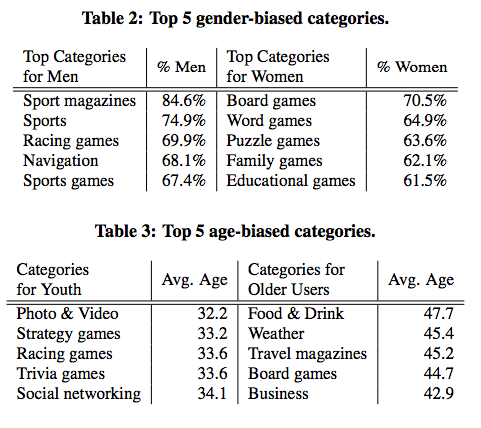
Gender also played a big role in who made a purchase and from what apps. Big spenders were 55% men and 45% women. Of the five most popular games, men heavily favored the war games Clash of Clans, Game of War, and Boom Beach. Women, by contrast, were more into Candy Crush Saga and the farmer-themed Hay Day.

Overall median spending during the time period studied was $31.10 among women, and among men it was $36.20. Peak age for spending was in the mid-30s for men, and mid-40s for women. Kooti hypothesized that, like gamers outside the US who have credit cards, older people who commit to familiarizing themselves with an iPhone game and playing it might be more likely to spend money because of the effort they&039;ve already put into the endeavor.
A breakdown of in-app purchases based on gender and age.

USC

The apps these people spent money on are familiar names: Clash of Clans and Candy Crush Saga have been among the most-downloaded and top-grossing apps for years. After Candy Crush became popular, some people got hooked and couldn&039;t stop buying lives and power-ups to feed that addiction. That obsessive gameplay has lured players into spending sprees that earned the games&039; creators millions.

It&039;s also worth noting that the same company, Supercell, is behind Clash of Clans, Boom Beach, and Hay Day. The company seems to have optimized in-app purchases: there were 330% more purchases in Candy Crush Saga than in Clash of Clans, but the amount per transaction for the latter were much higher, leading to 210% more revenue for the war game.

The app market remains risky, though. Researchers found that around just 0.1% of the apps measured took home 71% of in-app purchase dollars.

Kooti advised future developers that the App Store is a gamble: “People don’t pay attention to the fact that very few apps make any money at all. It&039;s very risky to go after the App Store market, but the apps that do well do very, very well.”

Besides in-app purchases, people spent money on individual songs from iTunes — 23% of the money — about a billion dollars — and buying apps outright — 7% of of the money, roughly $320 million. The study did not account for music purchases outside of iTunes. The people in the study purchased 430 million songs, and in the same period, they made 255 million in-app purchases, which had a much higher value per transaction, according to the study.
Apple raked in $20 billion from the app store in 2015, and that number likely rose in 2016. The company disclosed that it made $3 billion in December 2016 alone.

The study had one major limitation of note. It only targeted users of Yahoo&; Mail, which Kooti said became irrelevant for two reasons: the sample size, 26 million people, was large enough to smooth out demographic differences, and the researchers were comparing percentages of populations that behaved certain ways rather than comparing raw numbers.

Quelle: <a href="Here’s Who Drops The Most Cash On Candy Crush And Clash Of Clans“>BuzzFeed

Announcing Docker Birthday #4: Spreading the Docker Love!

Community is at the heart of and thanks to the hard work of thousands of maintainers, contributors, Captains, mentors, organizers, and the entire Docker community, the Docker platform is now used in production by companies of all sizes and industries.
To show our love and gratitude, it has become a tradition for Docker and our awesome network of meetup organizers to host Docker Birthday meetup celebrations all over the world. This year the celebrations will take place during the week of March 13-19, 2017. Come learn, mentor, celebrate, eat cake, and take an epic !
Docker Love
We wanted to hear from the community about why they love Docker!
Wellington Silva, Docker São Paulo meetup organizer said “Docker changed my life, I used to spend days compiling and configuring environments. Then I used to spend hours setting up using VM. Nowadays I setup an environment in minutes, sometimes in seconds.”

Love the new organization of commands in Docker 1.13!
— Kaslin Fields (@kaslinfields) January 25, 2017

Docker Santo Domingo organizer, Victor Recio said, “Docker has increased my effectiveness at work, currently I can deploy software to production environment without worrying that it will not work when the delivery takes place. I love docker and I&;m very grateful with it and whenever I can share my knowledge about docker with the young people of the communities of my country I do it and I am proud that there are already startups that have reach a Silicon Valley level.”

We love docker here at @Harvard for our screening platform. https://t.co/zpp8Wpqvk5
— Alan Aspuru-Guzik (@A_Aspuru_Guzik) January 12, 2017

Docker Birthday Labs
At the local birthday 4 meetups, there will be Docker labs and challenges to help attendees at all levels and welcome new members into the community. We’re partnering with CS schools, non-profit organizations, and local meetup groups to throw a series of events around the world. While the courses and labs are geared towards newcomers and intermediate level users, advanced and expert community members are invited to join as mentors to help attendees work through the materials.
Find a Birthday meetup near you!
There are already 44 Docker Birthday 4 celebrations scheduled around the world with more on the way! Check back as more events are announced.

Thursday, March 9th

Fulda, Germany

Saturday, March 11th

Madurai, India

Sunday, March 12th

Mumbai, India

Monday, March 13th

Dallas, TX
Grenoble, France
Liège, Belgium
Luxembourg, Luxembourg

Tuesday, March 14th

Austin, TX
Berlin, Germany
Las Vegas, NV
Malmö, Sweden
Miami, FL

Wednesday, March 15th

Columbus, OH
Istanbul, Turkey
Nantes, France
Phoenix, AZ
Prague, Czech Republic
San Francisco, CA
Santa Barbara, CA
Singapore, Singapore

Thursday, March 16th

Brussels, Belgium
Budapest, Hungary
Dhahran, Saudi Arabia
Dortmund, Germany
Iráklion, Greece
Montreal, Canada
Nice, France
Saint Louis, MO
Stuttgart, Germany
Tokyo, Japan
Washington, DC

Saturday, March 18th

Delhi, India
Hermosillo, Mexico
Kanpur, India
Kisumu, Kenya
Novosibirsk, Russia
Porto, Portugal
Rio de Janeiro, Brazil
Thanh Pho Ho Chi Minh, Vietnam

Monday, March 20th

London, United Kingdom
Milan, Italy

Thursday, March 23rd

Dublin, Ireland

Wednesday, March 29th

Colorado Springs, CO
Ottawa, Canada

Want to help us organize a Docker Birthday celebration in your city? Email us at meetups@docker.com for more information!
Are you an advanced Docker user? Join us as a mentor!
We are recruiting a network of mentors to attend the local events and help guide attendees through the Docker Birthday labs. Mentors should have experience working with Docker Engine, Docker Networking, Docker Hub, Docker Machine, Docker Orchestration and Docker Compose. Click here to sign up as a mentor.

Excited to LearnDocker at the 4th ! Join your local edition: http://dockr.ly/2jXcwz8 Click To Tweet

The post Announcing Docker Birthday 4: Spreading the Docker Love! appeared first on Docker Blog.
Quelle: https://blog.docker.com/feed/

Key updates to Azure Backup Server

Microsoft Azure Backup Server (MABS) is a cloud-first backup solution to protect data and workloads across heterogeneous IT environments of enterprises. It is available as a free download with Azure Backup without the requirement of System Center License or SQL license for server DB. The latest update released for Azure Backup Server ensures that customers are able to centrally monitor all their backup entities, perform agentless backups, secure data against cyber threats like ransomware, machine compromise, and recover from them. Azure Backup Server now goes a step further and provides security based mechanisms to safeguard all the operations that impact availability of cloud data.

If you are new to Azure Backup Server:

You can download Microsoft Azure Backup Server and start protecting your infrastructure today. It is available as a free download with Azure Backup without the requirement of System Center or SQL license for the server DB.

Learn more about Azure Backup Server using these short videos to get started.

Key features

Azure Backup Server recently added the following enterprise grade features to strengthen security, provide a centralized view of backup entities, and support key workloads:

Central monitoring –  Customers can now monitor their on-premises assets backed up in Azure Backup Server from portal. Recovery Services vault now provides a centralized view of backup management servers, protected servers, backup items, and their associations. This gives a simple experience to search for backup items, identify Azure Backup Server they are associated to, view disk utilization, and other details related to these entities.
Security features – Azure Backup recently announced Security Features, available as part of latest update. These features are built on three principles – Prevention, Alerting, and Recovery – to enable organizations increase preparedness against attacks and equip them with a robust backup solution.
VMware support – Azure Backup Server also contains support for VMware backup. This capability provides agentless backups, seamless discovery, and auto-protection features.
Availability in new regions – Azure Backup is already available in multiple regions. Customers can now backup data to new regions as well including Canada, UK, and West US2.

Getting started

To start leveraging these features, navigate to the links, and videos below.

Central monitoring

To start using central monitoring for Azure Backup Server, you must create a Recovery Services vault, download latest Azure Recovery Services Agent, and register Azure Backup Server to this vault. If your Azure Backup Server is already registered to Recovery Services vault, you can start leveraging these features by upgrading Azure Backup Server to update 1 and installing latest Azure Recovery Services Agent (minimum version 2.0.9062).

Security features

The video below explains how to get started by enabling Security features and how to leverage them in Azure Backup Server.

VMware backups

Please go through 4 simple steps to protect VMware VMs using Azure Backup Server. The first video in the series is linked below.

Related links and additional content

Download Azure Backup Server update 1
Learn more about Azure Backup Security Features
Getting started with Recovery Services vault
Need help? Reach out to Azure Backup forum for support
Tell us how we can improve Azure Backup by contributing new ideas and voting up existing ones
Follow us on Twitter @AzureBackup for latest news and updates

Quelle: Azure