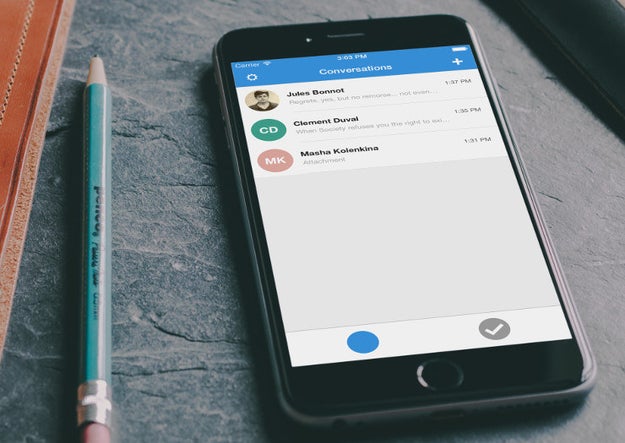
Apple Might Soon Start Producing Original TV Shows Like Netflix

Apple may soon start releasing original TV shows and movies to subscribers of its Apple Music streaming service, the Wall Street Journal reports.

Apple has been in talks with producers, directors, and film and TV marketers in recent months about buying the rights to various shows and promoting them, according to the Journal, and the company is aiming to release the original programming by the end of 2017.

Apple has had a few other small forays into TV. It produced a few short documentaries about musical artists and recently bought the rights to James Corden&;s “Carpool Karaoke,” a segment on his late night show. The company is also producing a semi-autobiographical scripted show, “Vital Signs,” about Dr. Dre, an executive at the company and the creator of the Apple-owned Beats headphones. Apple has yet to buy scripted programming from outside producers, though, and the content it&039;s currently considering will not be directly tied to music, the Journal reports.

Apple Music won&039;t become the next Netflix or Amazon Video any time soon, however. Without a plan for an entire slate of programming costing hundreds of millions of dollars, it is unlikely that Apple will be a direct competitor to either. Still, the move signals that Apple is heading towards being a media company as well as a technology company. Whether the company will distribute the original programming via Apple TV remains unclear. Beats Radio creates original content in addition to working as a distribution and discovery engine for Apple Music: It employs DJs who host talk shows as well as curate playlists.

The pivot to original programming comes as sales of Apple&039;s flagship products are slowing. The iPhone 6S, launched in September 2015, met with lower demand than expected. And competition in the smartphone market is rising after Google debuted the Pixel, its first designed-from-scratch phone, and as Chinese smartphone companies like Huawei and Xiaomi race catch up to their American rivals. Apple reported a 33% decline in Chinese sales in July 2016.

Apple Music, too, has some catching up to do. Its biggest rival, Spotify, holds a huge lead in paid subscribers. The Swedish company boasted 40 million paid subscribers in September 2016. Apple Music&039;s paid subscribers doubled in 2016, but that still only put the service at 20 million subscribers.

An Apple spokesperson declined to comment.

Quelle: <a href="Apple Might Soon Start Producing Original TV Shows Like Netflix“>BuzzFeed

This "My Little Pony" Figurine In A Jar Will Delete Your Faith In Humanity

The final chapter in a jar of bodily fluids that&;s been developing since 2014. WARNING: extremely vile gross stuff below.

When BuzzFeed covered this back in 2014, we wrote:

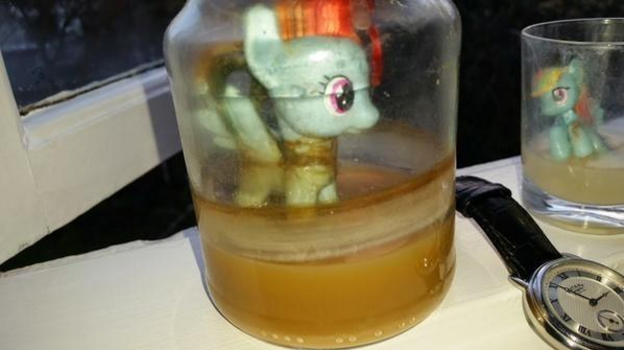
The original poster claims that for some ungodly reason he was collecting his ejaculations in a jar that contained a figurine of the Rainbow Dash from My Little Pony. The name for this little endeavor? “The Pony Cum Jar Project.” He unfortunately stored his “cum jar” too close to a radiator, accidentally boiling his My Little Pony figurine in his own seminal fluid.

Warning: this is extremely gross. It’s a Rainbow Dash figurine in a jar of very gross looking liquid.

Warning: this is extremely gross. It's a Rainbow Dash figurine in a jar of very gross looking liquid.

In the 4chan original post, he claimed that the smell was too bad, and he was giving it up. He also said he planned on burying the jar (as one does).

But the jar prevailed. And this week, our hero returned triumphantly to the /mlp board to post what he says may be the final update to the saga: he is transferring it to a more secure jar.

He posted a video of the transfer, from one jar that looks like a Yankee candle jar (???) to another, more secure jar. Wait for the exciting moment when Rainbow Dash finally appears&;

BuzzFeed reached the jizzmaster by email and asked him… why?

“Sheer curiosity and scientific research,” he replied. Sounds good.


View Entire List ›

Quelle: <a href="This "My Little Pony" Figurine In A Jar Will Delete Your Faith In Humanity“>BuzzFeed

Sleep easier with availability monitoring

Necessity is the mother of invention. Anything that can fend off the Saturday 2 AM call to my fellow developers, or even just reduce the pain of late-night troubleshooting, is worth the invention. If your team uses DevOps practices, offers your organization continuous delivery and is responsible for delivering always-on code, you know what I mean.
So what happens when a developer does get that call? It depends. We sometimes struggle a bit the first few times. Some of us are still discovering the smart way to instrument our application to get a quick pulse of the system rather than jumping from log to log to figure it out. That can hurt in the middle of the night, right?
More experienced developers might handle the call differently. They can go to a metrics dashboard and quickly pinpoint which part of the system needs a reboot – or even better, run a runbook automation.
No matter how you approach solving a problem, you are always keen to know whether an outage affects customers—and how badly. “Is the meter still ticking?” some developers say. This is where IBM Bluemix Availability Monitoring comes in.
Bluemix Availability Monitoring (BAM) can monitor your Bluemix Cloud Foundry application through 15 global points of presence by running continuous tests against it. You get to create tests which grow in sophistication every release, updated nearly every month. By running tests, you get a comprehensive view of how bad the outage is, and if it affects customers. Furthermore, you can see how the availability and response time of your synthetic tests aligns with your code push into the system.
Imagine you are in a continuous delivery mode making several daily code pushes. You BAM dashboard can tell you exactly which push caused the hiccup and set up alert notifications so there’s no need to keep staring at the UI. And to ensure all is well, some of us check the trend lines before leaving office or going to bed.
It takes only a few minutes to get set up with BAM, watch this video to see how:

You can get set up with BAM here. You’ll notice that when the tests run, BAM accurately measures how much time each element of a web page took to load from different parts of the world. Thid will also come in handy when you’re looking to optimize page response times by modifying images, style sheets or content delivery networks.
Interested in learning some additional DevOps best practices?  Watch this space. In future posts, I’ll blog  about developer pain points and more ways to solve them. At IBM, we are developing solutions in the same way you are – building them cloud native. We’re always glad to share tips and best practices.
I’d love to hear your feedback or questions, just leave a comment below. You can learn more about the importance of monitoring applications here.
The post Sleep easier with availability monitoring appeared first on news.
Quelle: Thoughts on Cloud

Amazon Aurora Now Offers Advanced Audit Capability

Starting today, you can audit your Amazon Aurora database cluster with minimal impact to performance. Auditing allows you to log a customer-specified spectrum of events and publish these logs in a way that can be consumed either manually or using another application. This will help you with log analysis, auditing user actions, setting up alarms for security-related events, and more.
Quelle: aws.amazon.com

New Azure Storage Release – Larger Block Blobs, Incremental Copy, and more!

We are pleased to announce new capabilities in the latest Azure Storage Service release and updates to our Storage Client Libraries. This latest release allows users to take advantage of increased block sizes of 100 MB, which allows block blobs up to 4.77 TB, as well as features like incremental copy for page blobs and pop-receipt on add message.

REST API version 2016-05-31

Version 2016-05-31 includes these changes:

The maximum blob size has been increased to 4.77 TB with the increase of block size to 100 MB. Check out our previous announcement for more details.
The Put Message API now returns information about the message that was just added, including the pop receipt. This enables the you to call Update Message and Delete Message on the newly enqueued message.
The public access level of a container is now returned from the List Containers and Get Container Properties APIs. Previously this information could only be obtained by calling Get Container ACL.
The List Directories and Files API now accepts a new parameter that limits the listing to a specified prefix.
All Table Storage APIs now accept and enforce the timeout query parameter.
The stored Content-MD5 property is now returned when requesting a range of a blob or file. Previously this was only returned for full blob and file downloads.
A new Incremental Copy Blob API is now available. This allows efficient copying and backup of page blob snapshots.
Using If-None-Match: * will now fail when reading a blob. Previously this header was ignored for blob reads.
During authentication, the canonicalized header list now includes headers with empty values. Previously these were omitted from the list.
Several error messages have been clarified or made more specific. See the full list of changes in the REST API Reference.

Check out the REST API Reference documentation to learn more.

New client library features

.NET Client Library (version 8.0.1)

All the service features listed above
Support for portable class library (through the NetStandard 1.0 Façade)
Key rotation for client side encryption for blobs, tables/ and queues

For a complete list of changes, check out the change log in our Github repository.

Storage Emulator

All the service features listed above

The storage emulator v4.6 is available as part of the latest Microsoft Azure SDK. You can also install the storage emulator using the standalone installer.

We’ll also be releasing new client libraries for Java, C++, Python and NodeJS to support the latest REST version in the next few weeks along with a new AzCopy release. Stay tuned!
Quelle: Azure

How Encrypted Chat Apps Like Signal Risk Ratting Out Whistleblowers

Following the election of Donald Trump, many concerned about the future of surveillance have signed up for secure messaging systems, like Signal, which saw a 400% increase in daily downloads in the weeks following election day. Yet that app can also provide a false sense of security by revealing who uses it, based on their phone numbers. And as President-elect Donald Trump’s own pick for CIA Director, Rep. Mike Pompeo, told Congress, the use of encryption in personal communications can be a factor used against American suspects.

When you sign up for Signal, it plugs into your address book. That lets you see who else in your contacts list uses Signal, and lets others see that you have joined Signal as well (even firing a notification to others about new users). In recent weeks, Signal users have seen their contact lists swell. But as some have pointed out, these user lists, which cannot be opted out of, undermine attempts to communicate securely. Simply put: if you know someone’s number, you can tell whether or not that person is on Signal.

For example, employers, law enforcement, and other government agencies could create and upload address books of suspected leakers to check for matches. This means if a whistleblower signs up for Signal to communicate with a reporter, that whistleblower becomes much easier to identify. The app even calls out new users; when someone in your address book signs up, the app sends a notification encouraging you to greet them. And while you can opt out of receiving these notifications, you can’t opt out of having them sent about you. Worse; nor can users opt out of letting others see whether any given phone number is associated with a Signal account.

“There is definitely some form of privacy leak here.”

“There is definitely some form of privacy leak here,” Matthew Green, a professor at Johns Hopkins University who focuses on applied cryptography, told BuzzFeed News. “If I join Signal with my real number, anyone else who knows my number can see if I&;m on Signal. It is definitely something to be cognizant of if you are concerned about people knowing you use the software.”

Moxie Marlinspike, the founder of Open Whisper Systems, the nonprofit behind Signal, told BuzzFeed News, “Using Signal is not supposed to be a secret. We’re trying to develop a messenger that’s for everybody. That is something that people can use for all their messaging, everyday, and in every context. It’s not designed just for super-secret spycraft.” For people with concerns about being tied to their phone number, Marlinspike suggested using a throwaway Google Voice or VoIP number to sign up for Signal.

While the app is marketed as a tool secure enough even for secretive figures like Edward Snowden, users may not realize they need to take that extra, cumbersome step of setting up a secondary phone number to enhance their privacy. This could leave them vulnerable to detection.

To its credit, Signal only stores contact lists locally. Signal doesn’t save users’ contact lists on its servers. And when the government subpoenaed Open Whisper for information associated with two phone numbers last year, it turned over just the date a user signed up, and the last time their account connected to the service. That’s the only data Open Whisper had kept. However, even that would still be enough to verify that someone signed up before a leak took place.

“Privacy concerns include what information other people keep about us, just as much as what information vendors and providers keep about us.”

“Privacy is not about austerity,” Marlinspike said, making the case that an app that connects people to their existing contacts is part of what makes Signal a robust and dependable tool. “We’re not trying to build something where you live in a vault.”

“Privacy concerns include what information other people keep about us, just as much as what information vendors and providers keep about us,” Wendy Nather, the principal security strategist for Duo Security, told BuzzFeed News.

While Marlinspike did acknowledge that there are “legitimate use cases where people don’t want to publicize their phone number,” he believes that Signal’s encrypted messaging system, based around a user’s phone book, is both “privacy-preserving” and places people in control of their own social network. Marlinspike told BuzzFeed News that allowing people to opt out of showing up in others’ contact lists would create an “unworkable” product that requires users to rebuild their network from scratch anytime they get new phones.

Yet Wickr, another secure messaging app, which claims to have 5 million users, does not require people to enter their phone numbers when they sign up. Chris Howell, Wickr’s cofounder and CTO, told BuzzFeed News that about half its customers join using only a unique handle, while the other half sign up using their phone numbers and email address. A user’s contacts are stored on Wickr’s servers, but the company encodes the information in such a way that the service doesn’t know who a person’s contacts are, even when people choose to sync their phonebook. Like Signal, Wickr also has an in-app notification for customers who turn on phone book matching when people in their contacts join the service.

Contact list matching does come with a positive tradeoff, Howell explained. It’s easy and quick to connect. And a messaging app that doesn’t sync with phone books could limit its ability to attract and keep users, he said.

One way around the “red flag” of encryption use is for encrypted messaging apps to eventually become so mainstream that most people rely on them.

“Hopefully we get to a day where it’s as ubiquitous as SSL, [like] having a lock on your website when you hit a browser,” Howell said. “That’s not a cause for alarm.”

Quelle: <a href="How Encrypted Chat Apps Like Signal Risk Ratting Out Whistleblowers“>BuzzFeed
Azure Networking Fridays with the Azure Black Belt Team – Winter 2017!

Happy 2017 everyone! After wrapping up the Fall 2016 season of Azure Networking Fridays, we&;re kicking off the 2017 Winter edition!

With that said, join us for our season&039;s premiere on January 20th!

This hour long session will occur every other Friday this winter and spring. It is open to all customers and partners to learn more about Azure Networking, including ExpressRoute and Virtual Networking, and how to plan and design their connectivity to the Microsoft Cloud.

There will be an open Q&A session at the end where customers can ask the experts. Content and partner speakers will vary for each session, but the general agenda is as follows:

Azure Networking fundamentals (10 minutes)
Deep dive topic of the week (15-20 minutes)
Partner spotlight of the week (15-20 minutes)
Q&A

We’re kicking off the winter edition series on Friday, January 20th, 2017.

Join the Skype Meeting and make sure you don’t miss out on future sessions by adding this the series to your Outlook calendar. You can also download ICS.

Here are a few links that we’re posting for convenience:

Future session recordings will be posted on Channel 9. Previous sessions are already posted on Channel 9.
https://aka.ms/ERCheckList for the check list presented in our sessions.

January 20th’s call agenda:

Deep dive topic with a Microsoft Guest!
Partner Spotlight with Cisco

Quelle: Azure

A Stronger Foundation for Creating and Managing Kubernetes Clusters

Editor’s note: Today’s post is by Lucas Käldström an independent Kubernetes maintainer and -Cluster-Lifecycle member, sharing what the group has been building and what’s upcoming. Last time you heard from us was in September, when we announced . The work on making kubeadm a first-class citizen in the Kubernetes ecosystem has continued and evolved. Some of us also met before KubeCon and had a very productive meeting where we talked about what the scopes for our SIG, kubeadm, and kops are. Continuing to Define SIG-Cluster-LifecycleWhat is the scope for kubeadm?We want kubeadm to be a common set of building blocks for all Kubernetes deployments; the piece that provides secure and recommended ways to bootstrap Kubernetes. Since there is no one true way to setup Kubernetes, kubeadm will support more than one method for each phase. We want to identify the phases every deployment of Kubernetes has in common and make configurable and easy-to-use kubeadm commands for those phases. If your organization, for example, requires that you distribute the certificates in the cluster manually or in a custom way, skip using kubeadm just for that phase. We aim to keep kubeadm useable for all other phases in that case. We want you to be able to pick which things you want kubeadm to do and let you do the rest yourself.Therefore, the scope for kubeadm is to be easily extendable, modular and very easy to use. Right now, with this v1.5 release we have, kubeadm can only do the “full meal deal” for you. In future versions that will change as kubeadm becomes more componentized, while still leaving the opportunity to do everything for you. But kubeadm will still only handle the bootstrapping of Kubernetes; it won’t ever handle provisioning of machines for you since that can be done in many more ways. In addition, we want kubeadm to work everywhere, even on multiple architectures, therefore we built in multi-architecture support from the beginning.What is the scope for kops?The scope for kops is to automate full cluster operations: installation, reconfiguration of your cluster, upgrading kubernetes, and eventual cluster deletion. kops has a rich configuration model based on the Kubernetes API Machinery, so you can easily customize some parameters to your needs. kops (unlike kubeadm) handles provisioning of resources for you. kops aims to be the ultimate out-of-the-box experience on AWS (and perhaps other providers in the future). In the future kops will be adopting more and more of kubeadm for the bootstrapping phases that exist. This will move some of the complexity inside kops to a central place in the form of kubeadm.What is the scope for SIG-Cluster-Lifecycle?The SIG-Cluster-Lifecycle actively tries to simplify the Kubernetes installation and management story. This is accomplished by modifying Kubernetes itself in many cases, and factoring out common tasks. We are also trying to address common problems in the cluster lifecycle (like the name says!). We maintain and are responsible for kubeadm and kops. We discuss problems with the current way to bootstrap clusters on AWS (and beyond) and try to make it easier. We hangout on Slack in the sig-cluster-lifecycle and kubeadm channels. We meet and discuss current topics once a week on Zoom. Feel free to come and say hi! Also, don’t be shy to contribute; we’d love your comments and insight!Looking forward to v1.6Our goals for v1.6 are centered around refactoring, stabilization and security. First and foremost, we want to get kubeadm and its composable configuration experience to beta. We will refactor kubeadm so each phase in the bootstrap process is invokable separately. We want to bring the TLS Bootstrap API, the Certificates API and the ComponentConfig API to beta, and to get kops (and other tools) using them. We will also graduate the token discovery we’re using now (aka. the gcr.io/google_containers/kube-discovery:1.0 image) to beta by adding a new controller to the controller manager: the BootstrapSigner. Using tokens managed as Secrets, that controller will sign the contents (a kubeconfig file) of a well known ConfigMap in a new kube-public namespace. This object will be available to unauthenticated users in order to enable a secure bootstrap with a simple and short shared token.You can read the full proposal here.In addition to making it possible to invoke phases separately, we will also add a new phase for bringing up the control plane in a self-hosted mode (as opposed to the current static pod technique). The self-hosted technique was developed by CoreOS in the form of bootkube, and will now be incorporated as an alternative into an official Kubernetes product. Thanks to CoreOS for pushing that paradigm forward! This will be done by first setting up a temporary control plane with static pods, injecting the Deployments, ConfigMaps and DaemonSets as necessary, and lastly turning down the temporary control plane. For now, etcd will still be in a static pod by default. We are supporting self hosting, initially, because we want to support doing patch release upgrades with kubeadm. It should be easy to upgrade from v1.6.2 to v1.6.4 for instance. We consider the built-in upgrade support a critical capability for a real cluster lifecycle tool. It will still be possible to upgrade without self-hosting but it will require more manual work.On the stabilization front, we want to start running kubeadm e2e tests. In this v1.5 timeframe, we added unit tests and we will continue to increase that coverage. We want to expand this to per-PR e2e tests as well that spin up a cluster with kubeadm init and kubeadm join; runs some kubeadm-specific tests and optionally the Conformance test suite.Finally, on the security front, we also want to kubeadm to be as secure as possible by default. We look to enable RBAC for v1.6, lock down what kubelet and built-in services like kube-dns and kube-proxy can do, and maybe create specific user accounts that have different permissions.Regarding releasing, we want to have the official kubeadm v1.6 binary in the kubernetes v1.6 tarball. This means syncing our release with the official one. More details on what we’ve done so far can be found here. As it becomes possible, we aim to move the kubeadm code out to the kubernetes/kubeadm repo (This is blocked on some Kubernetes code-specific infrastructure issues that may take some time to resolve.)Nice-to-haves for v1.6 would include an official CoreOS Container Linux installer container that does what the debs/rpms are doing for Ubuntu/CentOS. In general, it would be nice to extend the distro support. We also want to adopt Kubelet Dynamic Settings so configuration passed to kubeadm init flows down to nodes automatically (it requires manual configuration currently). We want it to be possible to test Kubernetes from HEAD by using kubeadm.Through 2017 and beyondApart from everything mentioned above, we want kubeadm to simply be a production grade (GA) tool you can use for bootstrapping a Kubernetes cluster. We want HA/multi-master to be much easier to achieve generally than it is now across platforms (though kops makes this easy on AWS today!). We want cloud providers to be out-of-tree and installable separately. kubectl apply -f my-cloud-provider-here.yaml should just work. The documentation should be more robust and should go deeper. Container Runtime Interface (CRI) and Federation should work well with kubeadm. Outdated getting started guides should be removed so new users aren’t mislead.Refactoring the cloud provider integration pluginsRight now, the cloud provider integrations are built into the controller-manager, the kubelet and the API Server. This combined with the ever-growing interest for Kubernetes makes it unmaintainable to have the cloud provider integrations compiled into the core. Features that are clearly vendor-specific should not be a part of the core Kubernetes project, rather available as an addon from third party vendors. Everything cloud-specific should be moved into one controller, or a few if there’s need. This controller will be maintained by a third-party (usually the company behind the integration) and will implement cloud-specific features. This migration from in-core to out-of-core is disruptive yes, but it has very good side effects: leaner core, making it possible for more than the seven existing clouds to be integrated with Kubernetes and much easier installation. For example, you could run the cloud controller binary in a Deployment and install it with kubectl apply easily.The plan for v1.6 is to make it possible to:Create and run out-of-core cloud provider integration controllersShip a new and temporary binary in the Kubernetes release: the cloud-controller-manager. This binary will include the seven existing cloud providers and will serve as a way of validating, testing and migrating to the new flow.In a future release (v1.9 is proposed), the `–cloud-provider` flag will stop working, and the temporary cloud-controller-manager binary won’t be shipped anymore. Instead, a repository called something like kubernetes/cloud-providers will serve as a place for officially-validated cloud providers to evolve and exist, but all providers there will be independent to each other. (issue ; proposal ; code .)Changelogs from v1.4 to v1.5kubeadm v1.5 is a stabilization release for kubeadm. We’ve worked on making kubeadm more user-friendly, transparent and stable. Some new features have been added making it more configurable.Here’s a very short extract of what’s changed:Made the console output of kubeadm cleaner and more user-friendly kubeadm reset and to drain and cleanup a node and checks implementation that fails fast if the environment is invalid and logs and kubectl exec can now be used with kubeadm a lot of other improvements, please read the full changelog.kopsHere’s a short extract of what’s changed:Support for CNI network plugins (Weave, Calico, Kope.io)Fully private deployments, where nodes and masters do not have public IPsImproved rolling update of clusters, in particular of HA clustersOS support for CentOS / RHEL / Ubuntu along with Debian, and support for sysdig & perf toolsGo and check out the kops releases page in order to get information about the latest and greatest kops release.SummaryIn short, we’re excited on the roadmap ahead in bringing a lot of these improvements to you in the coming releases. Which we hope will make the experience to start much easier and lead to increased adoption of Kubernetes.Thank you for all the feedback and contributions. I hope this has given you some insight in what we’re doing and encouraged you to join us at our meetings to say hi!– Lucas Käldström, Independent Kubernetes maintainer and SIG-Cluster-Lifecycle member
Quelle: kubernetes

A Stronger Foundation for Creating and Managing Kubernetes Clusters

Editor’s note: Today’s post is by Lucas Käldström an independent Kubernetes maintainer and -Cluster-Lifecycle member, sharing what the group has been building and what’s upcoming. Last time you heard from us was in September, when we announced . The work on making kubeadm a first-class citizen in the Kubernetes ecosystem has continued and evolved. Some of us also met before KubeCon and had a very productive meeting where we talked about what the scopes for our SIG, kubeadm, and kops are. Continuing to Define SIG-Cluster-LifecycleWhat is the scope for kubeadm?We want kubeadm to be a common set of building blocks for all Kubernetes deployments; the piece that provides secure and recommended ways to bootstrap Kubernetes. Since there is no one true way to setup Kubernetes, kubeadm will support more than one method for each phase. We want to identify the phases every deployment of Kubernetes has in common and make configurable and easy-to-use kubeadm commands for those phases. If your organization, for example, requires that you distribute the certificates in the cluster manually or in a custom way, skip using kubeadm just for that phase. We aim to keep kubeadm useable for all other phases in that case. We want you to be able to pick which things you want kubeadm to do and let you do the rest yourself.Therefore, the scope for kubeadm is to be easily extendable, modular and very easy to use. Right now, with this v1.5 release we have, kubeadm can only do the “full meal deal” for you. In future versions that will change as kubeadm becomes more componentized, while still leaving the opportunity to do everything for you. But kubeadm will still only handle the bootstrapping of Kubernetes; it won’t ever handle provisioning of machines for you since that can be done in many more ways. In addition, we want kubeadm to work everywhere, even on multiple architectures, therefore we built in multi-architecture support from the beginning.What is the scope for kops?The scope for kops is to automate full cluster operations: installation, reconfiguration of your cluster, upgrading kubernetes, and eventual cluster deletion. kops has a rich configuration model based on the Kubernetes API Machinery, so you can easily customize some parameters to your needs. kops (unlike kubeadm) handles provisioning of resources for you. kops aims to be the ultimate out-of-the-box experience on AWS (and perhaps other providers in the future). In the future kops will be adopting more and more of kubeadm for the bootstrapping phases that exist. This will move some of the complexity inside kops to a central place in the form of kubeadm.What is the scope for SIG-Cluster-Lifecycle?The SIG-Cluster-Lifecycle actively tries to simplify the Kubernetes installation and management story. This is accomplished by modifying Kubernetes itself in many cases, and factoring out common tasks. We are also trying to address common problems in the cluster lifecycle (like the name says!). We maintain and are responsible for kubeadm and kops. We discuss problems with the current way to bootstrap clusters on AWS (and beyond) and try to make it easier. We hangout on Slack in the sig-cluster-lifecycle and kubeadm channels. We meet and discuss current topics once a week on Zoom. Feel free to come and say hi! Also, don’t be shy to contribute; we’d love your comments and insight!Looking forward to v1.6Our goals for v1.6 are centered around refactoring, stabilization and security. First and foremost, we want to get kubeadm and its composable configuration experience to beta. We will refactor kubeadm so each phase in the bootstrap process is invokable separately. We want to bring the TLS Bootstrap API, the Certificates API and the ComponentConfig API to beta, and to get kops (and other tools) using them. We will also graduate the token discovery we’re using now (aka. the gcr.io/google_containers/kube-discovery:1.0 image) to beta by adding a new controller to the controller manager: the BootstrapSigner. Using tokens managed as Secrets, that controller will sign the contents (a kubeconfig file) of a well known ConfigMap in a new kube-public namespace. This object will be available to unauthenticated users in order to enable a secure bootstrap with a simple and short shared token.You can read the full proposal here.In addition to making it possible to invoke phases separately, we will also add a new phase for bringing up the control plane in a self-hosted mode (as opposed to the current static pod technique). The self-hosted technique was developed by CoreOS in the form of bootkube, and will now be incorporated as an alternative into an official Kubernetes product. Thanks to CoreOS for pushing that paradigm forward! This will be done by first setting up a temporary control plane with static pods, injecting the Deployments, ConfigMaps and DaemonSets as necessary, and lastly turning down the temporary control plane. For now, etcd will still be in a static pod by default. We are supporting self hosting, initially, because we want to support doing patch release upgrades with kubeadm. It should be easy to upgrade from v1.6.2 to v1.6.4 for instance. We consider the built-in upgrade support a critical capability for a real cluster lifecycle tool. It will still be possible to upgrade without self-hosting but it will require more manual work.On the stabilization front, we want to start running kubeadm e2e tests. In this v1.5 timeframe, we added unit tests and we will continue to increase that coverage. We want to expand this to per-PR e2e tests as well that spin up a cluster with kubeadm init and kubeadm join; runs some kubeadm-specific tests and optionally the Conformance test suite.Finally, on the security front, we also want to kubeadm to be as secure as possible by default. We look to enable RBAC for v1.6, lock down what kubelet and built-in services like kube-dns and kube-proxy can do, and maybe create specific user accounts that have different permissions.Regarding releasing, we want to have the official kubeadm v1.6 binary in the kubernetes v1.6 tarball. This means syncing our release with the official one. More details on what we’ve done so far can be found here. As it becomes possible, we aim to move the kubeadm code out to the kubernetes/kubeadm repo (This is blocked on some Kubernetes code-specific infrastructure issues that may take some time to resolve.)Nice-to-haves for v1.6 would include an official CoreOS Container Linux installer container that does what the debs/rpms are doing for Ubuntu/CentOS. In general, it would be nice to extend the distro support. We also want to adopt Kubelet Dynamic Settings so configuration passed to kubeadm init flows down to nodes automatically (it requires manual configuration currently). We want it to be possible to test Kubernetes from HEAD by using kubeadm.Through 2017 and beyondApart from everything mentioned above, we want kubeadm to simply be a production grade (GA) tool you can use for bootstrapping a Kubernetes cluster. We want HA/multi-master to be much easier to achieve generally than it is now across platforms (though kops makes this easy on AWS today!). We want cloud providers to be out-of-tree and installable separately. kubectl apply -f my-cloud-provider-here.yaml should just work. The documentation should be more robust and should go deeper. Container Runtime Interface (CRI) and Federation should work well with kubeadm. Outdated getting started guides should be removed so new users aren’t mislead.Refactoring the cloud provider integration pluginsRight now, the cloud provider integrations are built into the controller-manager, the kubelet and the API Server. This combined with the ever-growing interest for Kubernetes makes it unmaintainable to have the cloud provider integrations compiled into the core. Features that are clearly vendor-specific should not be a part of the core Kubernetes project, rather available as an addon from third party vendors. Everything cloud-specific should be moved into one controller, or a few if there’s need. This controller will be maintained by a third-party (usually the company behind the integration) and will implement cloud-specific features. This migration from in-core to out-of-core is disruptive yes, but it has very good side effects: leaner core, making it possible for more than the seven existing clouds to be integrated with Kubernetes and much easier installation. For example, you could run the cloud controller binary in a Deployment and install it with kubectl apply easily.The plan for v1.6 is to make it possible to:Create and run out-of-core cloud provider integration controllersShip a new and temporary binary in the Kubernetes release: the cloud-controller-manager. This binary will include the seven existing cloud providers and will serve as a way of validating, testing and migrating to the new flow.In a future release (v1.9 is proposed), the `–cloud-provider` flag will stop working, and the temporary cloud-controller-manager binary won’t be shipped anymore. Instead, a repository called something like kubernetes/cloud-providers will serve as a place for officially-validated cloud providers to evolve and exist, but all providers there will be independent to each other. (issue ; proposal ; code .)Changelogs from v1.4 to v1.5kubeadm v1.5 is a stabilization release for kubeadm. We’ve worked on making kubeadm more user-friendly, transparent and stable. Some new features have been added making it more configurable.Here’s a very short extract of what’s changed:Made the console output of kubeadm cleaner and more user-friendly kubeadm reset and to drain and cleanup a node and checks implementation that fails fast if the environment is invalid and logs and kubectl exec can now be used with kubeadm a lot of other improvements, please read the full changelog.kopsHere’s a short extract of what’s changed:Support for CNI network plugins (Weave, Calico, Kope.io)Fully private deployments, where nodes and masters do not have public IPsImproved rolling update of clusters, in particular of HA clustersOS support for CentOS / RHEL / Ubuntu along with Debian, and support for sysdig & perf toolsGo and check out the kops releases page in order to get information about the latest and greatest kops release.SummaryIn short, we’re excited on the roadmap ahead in bringing a lot of these improvements to you in the coming releases. Which we hope will make the experience to start much easier and lead to increased adoption of Kubernetes.Thank you for all the feedback and contributions. I hope this has given you some insight in what we’re doing and encouraged you to join us at our meetings to say hi!– Lucas Käldström, Independent Kubernetes maintainer and SIG-Cluster-Lifecycle member
Quelle: kubernetes






