Streit: Deutsche Glasfaser und DNS:NET kämpfen um kleine Gemeinde
DNS:NET und Deutsche Glasfaser wollen beide zugleich in der Gemeinde Nuthetal ausbauen und versuchen, Kunden zu gewinnen. (Deutsche Glasfaser, Open Access)
Quelle: Golem

DNS:NET und Deutsche Glasfaser wollen beide zugleich in der Gemeinde Nuthetal ausbauen und versuchen, Kunden zu gewinnen. (Deutsche Glasfaser, Open Access)
Quelle: Golem

If you’re like us, you’re eager to send 2020 off to the dustbin of history. So grab your running/walking/yoga shoes and join us as we resurrect the historic #wwwp5K and celebrate reaching the 2020 finish line! As an added incentive and in the spirit of the season, we’ve also created a special wwwp5K Givz page, where participants can make a donation to three of our favorite charities: Black Girls Code, Internet Archive, and the WordPress Foundation. Automattic will match every dollar donated to any organization through the Givz page, up to $50,000.
What’s a 5K?
A 5K is the equivalent of about 3.1 miles. The virtual run will work on the honor system, but if you want to be accurate, apps like Strava, Garmin Connect, Runkeeper, Fitbit, and many others can help you measure the right distance.
Sounds awesome! How do I participate?
The virtual wwwp5K officially kicks off tomorrow, December 1, and will be open through December 31st. You can run, skip, walk, hop, walk backwards, or even swim the equivalent distance in an indoor pool — as long as you’re practicing appropriate safety precautions given local conditions and staying healthy, your activity counts.
Everyone is welcome! WordPress fans, friends, and family, as well as Automatticians around the world.
When you’re done, don’t forget to post a selfie on your WordPress site and tag it with “wwwp5k” so that we can share the love and others can read about your experience. Of course, you can also blog about your journey preparing for the wwwp5K, but most of all, we’d love to see your smiling face and happy shoes as you complete the 5K.
Is there swag?
What would a virtual run be without swag with a custom logo? To commemorate the 2020 run, we’ve created a limited edition technical shirt featuring the official wwwp5K Wapuu!
They’ll be available for purchase in the WordPress Swag Store starting tomorrow until supplies last, so don’t forget to place your order.
Will you be joining us? Let us know in the comments!
Quelle: RedHat Stack
The 21st Century Cures Act, a United States law enacted at the end of 2016, mandates patient data interoperability for payers, providers, and healthcare organizations. As we approach rolling implementation deadlines, healthcare organizations are wrestling with how to liberate data from siloed systems—not only to give patients more granular control of their data, but also to improve outcomes by giving doctors a more complete view into their patients’ conditions.The stakes are significant. Yet, in speaking with our customers, the number of healthcare organizations that feel prepared to meet these new requirements is small. Why is this the case? In short, providers and payers aren’t sure where to start. And with many critical applications running on legacy IT systems that aren’t built on modern web standards, the goal can seem daunting.That’s why today, we’re launching the Google Cloud Healthcare Interoperability Readiness Program. The program is designed to help healthcare organizations:Understand their current interoperability maturity levels;Map out a stepwise journey to enable interoperability; and Navigate changes and increase their readiness for the new Office of the National Coordinator for Health Information Technology (ONC) and the Centers for Medicare and Medicaid Services (CMS) rules.With COVID-19 underscoring the importance of even more data sharing and flexibility, the next few years promise to accelerate data interoperability and the adoption of open standards even further—ideally ushering in new and meaningful partnerships across the care continuum, new avenues for business growth, and new pathways for patient-centered innovation. Our program is built to meet customers wherever they are on their interoperability journeys, and to empower them with tailored services, technologies and strategies. We’re working with a variety of both consultants and ISV partners like Bain & Company, Boston Consulting Group, Deloitte, HCL Technologies, KPMG, MavenWave, Pluto7, SADA and 8K Miles Healthcare Triangle to meet our customers’ unique needs and support the changes needed to meet the upcoming regulatory requirements. How is interoperability achieved?Just as interoperability is foundational to achieving the transformational goals in healthcare for everything from telemedicine to app-based healthcare ecosystems, application programming interfaces, or APIs, are the foundation for interoperability. APIs have been around for decades and allow data to flow across disparate systems. Whereas older APIs were designed for bespoke integration projects, modern APIs are designed to be easy for developers and have become the standard for building mobile applications.API management tools can put a security gateway between patient data and developers or apps, helping to protect a patient’s control over access to and uses of their data. And with API management, healthcare organizations can pursue the same sort of innovative models around healthcare data, while also applying governance and security controls, streamlining infrastructure complexities, and maintaining regulatory compliance and patient privacy. In addition to APIs, implementation of open data standards—such as FHIR—is another critical step toward interoperability. We’ve worked closely with the U.S. Department of Health and Human Services (HHS) and collaborated across the tech industry to support open standards to electronically exchange healthcare information and build an ecosystem that supports data privacy, security, compliance, and API management.How can the Google Cloud Interoperability Readiness Program help? Google Cloud has long supported data interoperability and an API-based ecosystem to reduce friction surrounding healthcare data. Through our Healthcare Interoperability Readiness Program, we’ll help customers understand the current status of their data and where it resides, map out a path to standardization and integration, and make use of data in a secure, reliable, and compliant manner. This program provides a comprehensive set of services for interoperability, including: HealthAPIx Accelerator provides the jumpstart for the interoperability implementation efforts. With best practices, pre-built templates and lessons learned from our customer and partner implementations, it offers a blueprint for healthcare stakeholders and app developers to build FHIR API-based digital experiences.Apigee API Management provides the underpinning and enables a security and governance layer to deliver, manage, secure and scale APIs; consume and publish FHIR-ready APIs for partners and developers; build robust API analytics, and accelerate rollout of digital solutions.Google Cloud Healthcare API enables secure methods (including de-identification) for ingesting, transforming, harmonizing, and storing your data in the latest FHIR formats, as well as HL7v2 and DICOM, and serves as a secondary longitudinal data store to streamline data sharing, application development, and analytics with BigQuery. Interoperability toolkit that includes solution architectures, implementation guides, sandboxes and other resources to help accelerate interoperability adoption and streamline compliance with standards such as FHIR R4. As we reflect on the lessons of COVID-19, building resilient interoperable health infrastructure will not only be a catalyst, but table stakes for delivering better care. The Healthcare Interoperability Readiness Program aims to help free up patient data and make it more accessible across the continuum of care, as well as set up organizations for long-term success with more modern, API-first architectures. We’re eager to help payers, providers, and life sciences organizations navigate these changes—and ultimately save patient lives.Related ArticleOur Healthcare API and other solutions for supporting healthcare and life sciences organizations during the pandemicAt Google Cloud, our healthcare and life sciences team is committed to supporting healthcare and life sciences organizations during this …Read Article
Quelle: Google Cloud Platform
Happy 10 years of OpenStack! Millions of cores, 100,000 community members, 10 years of you. Storytelling is one of the most powerful means to influence, teach, and inspire the people around us. To celebrate OpenStack’s 10th anniversary, we are spotlighting stories from the individuals in various roles from the community who have helped to make… Read more »
Quelle: openstack.org

Wer wird die Führungsrolle im 21. Jahrhundert übernehmen? Die Schaffung einer Freihandelszone in der Asien-Pazifik-Region setzt ein klares Zeichen. Eine Analyse von Werner Pluta (Politik/Recht, Internet)
Quelle: Golem

Es wird derzeit ein Hardware-Defekt an den Bluetooth-Hörstöpseln vermutet. Die Oneplus Buds werden weiter verkauft. (Bluetooth-Hörstöpsel, Oneplus)
Quelle: Golem

8-Gang-Getriebe, V12-Motor und aufklappbare Scherentüren: Die LEGO-Technic-Version des Lamborghini Sián FKP 37 spart nicht mit Details. Das meditative Ineinanderstecken der 3.696 Teile bläst Belastungen durch die Arbeit fort. Ein Erfahrungsbericht. (Lego)
Quelle: Golem

Bundesinnenminister Seehofer lehnt ein Verbot von Huawei wie in Großbritannien ab. In Deutschland habe man nun ein gutes, ausgewogenes Ergebnis zur technischen Prüfung. (5G, Huawei)
Quelle: Golem

Dank Resizable BAR Support bekommen AMDs Big-Navi-Grafikkarten auch mit Intels Comet-Lake-Prozessoren einen Performance-Schub. (AMD Navi, AMD)
Quelle: Golem
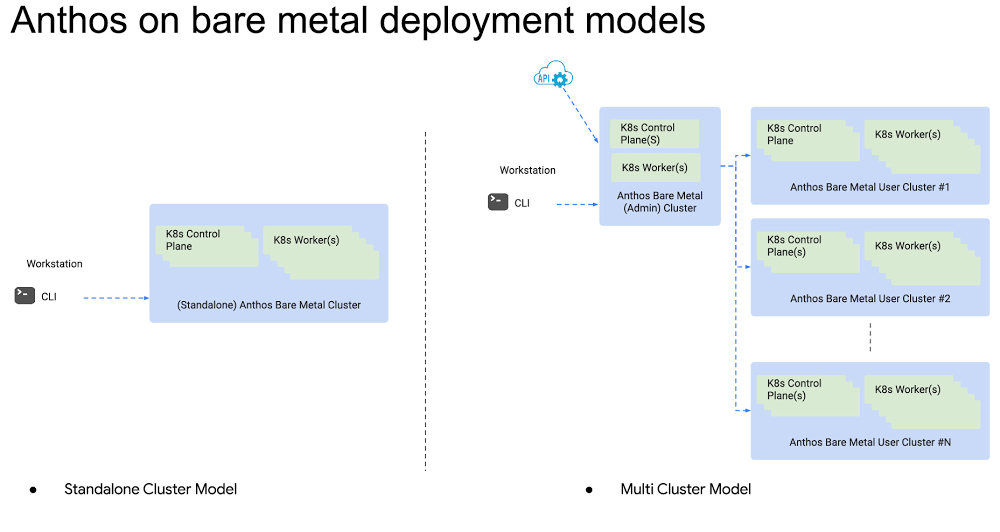
Enterprise IT organizations want it all, don’t they? Choice and freedom in their technology choices, but also automation, security, scale, and support. From the beginning, Anthos has been about putting you back in charge of how you consume the cloud (private or public), while imparting some of the best practices we’ve learned from running a global cloud at scale. With Anthos on bare metal, now generally available, we’ve gone a step further. Anthos on bare metal opens up new possibilities for how you run your workloads, and where. Some of you want to run Anthos on your existing virtualized infrastructure, but others want to eliminate the dependency on a hypervisor layer, to modernize applications while reducing costs. For example, you may consider migrating VM-based apps to containers, and you might decide to run them at the edge on resource-constrained hardware. Anthos on bare metal is generally available today, with subscription or pay-as-you-go pricing. Let’s dive into the specifics of Anthos on bare metal and also share technical details for how to get started. Leverage your existing investmentsAnthos on bare metal allows you to leverage existing investments in hardware, OS and networking infrastructure. The minimal system requirement to run Anthos on bare metal at the edge is two nodes with a minimum of 4 cores, and 32 GB RAM, and 128GB of disk space with no specialized hardware. The setup allows you to run Anthos on bare metal on most any infrastructure.Anthos on bare metal uses a “bring your own operating system” model. It runs atop physical or virtual instances, and supports Red Hat Enterprise Linux 8.1/8.2, CentOS 8.1/8.2, or Ubuntu 18.04/20.04 LTS. Anthos provides overlay networking and L4/L7 load balancing out of the box. You can also integrate with your own load balancer such as F5 and Citrix. For storage, you can deploy persistent workloads using CSI integration with your existing infrastructure.You can deploy Anthos on bare metal using one of the following deployment models:A standalone model allows you to manage every cluster independently. This is a good choice when running in an edge location or if you want your clusters to be administered independently from on another. A multi-cluster model allows a central IT team to manage a fleet of clusters from a centralized cluster, called the admin cluster. This is more suitable if you want to build automation, tooling or to delegate the lifecycle of clusters to individual teams without sharing sensitive credentials such as SSH keys or Google Cloud service account details.Click to enlargeLike with all Anthos environments, a bare metal cluster has a thin, secure connection back to Google Cloud called Connect. Once it’s installed in your clusters, you can centrally view, configure, and monitor your clusters from the Google Cloud Console. We’ve been working on Anthos on bare metal with early-access customers and design partners, and their feedback has been overwhelmingly positive. For example, VideoAmp offers a video measurement and optimization platform, and uses Anthos on bare metal to help reduce the operational overhead of managing clusters while also maximizing the utilization of their cloud infrastructure. “Here at VideoAmp, we run real-time compute-intensive applications, which enable advertisers to optimize their entire portfolio of linear TV, OTT and digital video to business outcomes. Kubernetes is a critical part of our strategy because of the scalability, portability, and flexibility it provides our developers,” says Hector Sahagun, Director of Engineering at VideoAmp. ”Anthos brings centralized lifecycle and policy management tools, allowing our infrastructure teams to focus on key initiatives instead of the day-to-day management of Kubernetes.” Expanding the Anthos Ready Partner Program We’re launching Anthos on bare metal with our partners in the Anthos Ready Partner Initiative. The program highlights partner solutions that adhere to Google Cloud’s interoperability requirements and meet the infrastructure and application development needs of enterprise customers running Anthos. These solutions are validated to work across Anthos deployment options including: Anthos on Google Cloud, Anthos on VMware, and Anthos on bare metal.Atos, Dell Technologies, Equinix Metal, HPE, Intel, NetApp, Nutanix, NVIDIA, and other partners have committed to delivering Anthos on bare metal for their customers’ infrastructure requirements. In addition, our storage partners including Dell Technologies, HPE, NetApp, Portworx, Pure Storage, and Robin.io are providing shared storage solutions by qualifying their respective CSI drivers for Anthos on bare metal.Finally, system integrators including Arctiq, Atos, IGNW, SADA, SoftServe, and World Wide Technology can help you get started with Anthos on bare metal with services and solutions to integrate Anthos on bare metal in your environment. More workloads from more places, with more ease No matter where you run your workloads—in Google Cloud, on-prem, in other clouds or at the edge—Anthos provides a consistent platform on which your teams can quickly build great applications that adapt to an ever-changing world. We developed Anthos to help all organizations to tackle multi-cloud, taking advantage of modern cloud-native technologies like containers, serverless, service mesh, and consistent policy management; both in the cloud or on-premises. Now, with the option of running Anthos on bare metal, there are even more ways to enjoy the benefits of this modern cloud application stack. To learn more about Anthos on bare metal, check out this video, from which you’ll learn how to create a cluster and how to deploy your own application on an on-prem cluster. Then, if you’re interested in seeing how Anthos on bare metal can help your organization get hybrid cloud right, reach out to our sales team to schedule an architecture design session.Related ArticleIntroducing the Anthos Developer Sandbox—free with a Google accountThe new Anthos Developer Sandbox spins up all the tools you need to learn how to develop for the Anthos platform.Read Article
Quelle: Google Cloud Platform






