Intel 13th Gen: Asrock hat schon Mainboard-Firmware für Raptor Lake
Intels Raptor Lake ist weder offiziell angekündigt noch verfügbar, die Hauptplatinen-Unterstützung ist aber bereits gegeben. (Intel Raptor Lake, Prozessor)
Quelle: Golem

Intels Raptor Lake ist weder offiziell angekündigt noch verfügbar, die Hauptplatinen-Unterstützung ist aber bereits gegeben. (Intel Raptor Lake, Prozessor)
Quelle: Golem

Bei der Entwicklung des Containers mit Wasserstoffmotor sind Erfahrungen aus Einsätzen bei der Flutkatastrophe im Ahrtal eingeflossen. (Umweltschutz, Vodafone)
Quelle: Golem

Nach der Flutkatastrophe im Ahrtal setzen Bund und Länder auf eine Neuausrichtung. Auch Innenministerin Faeser will den Wiederaufbau von Sirenen. (Politik/Recht, Internet)
Quelle: Golem

Die Geforce GTX 1630 wird unter der Arc A380 positioniert, weshalb Nvidia einen alten Chip in stark beschnittener Form wieder aufleben lässt. (Geforce GTX, Raytracing)
Quelle: Golem

Die Nikon Z 30 richtet sich an Nutzer, die auch sich selbst aufnehmen, und kommt mit einem klappbaren Monitor und Stereomikrofonen. (Nikon, Digitalkamera)
Quelle: Golem

In der Europäischen Union sollen ab 2035 nur noch Neuwagen mit emissionsfreiem Antrieb verkauft werden. Darauf haben sich die EU-Umweltminister geeinigt. (EU, GreenIT)
Quelle: Golem

Die Ransomware-Gruppe Lockbit hat ein Bug-Bounty-Programm gestartet, bei dem eine Million US-Dollar ausgezahlt werden soll. (Ransomware, Sicherheitslücke)
Quelle: Golem
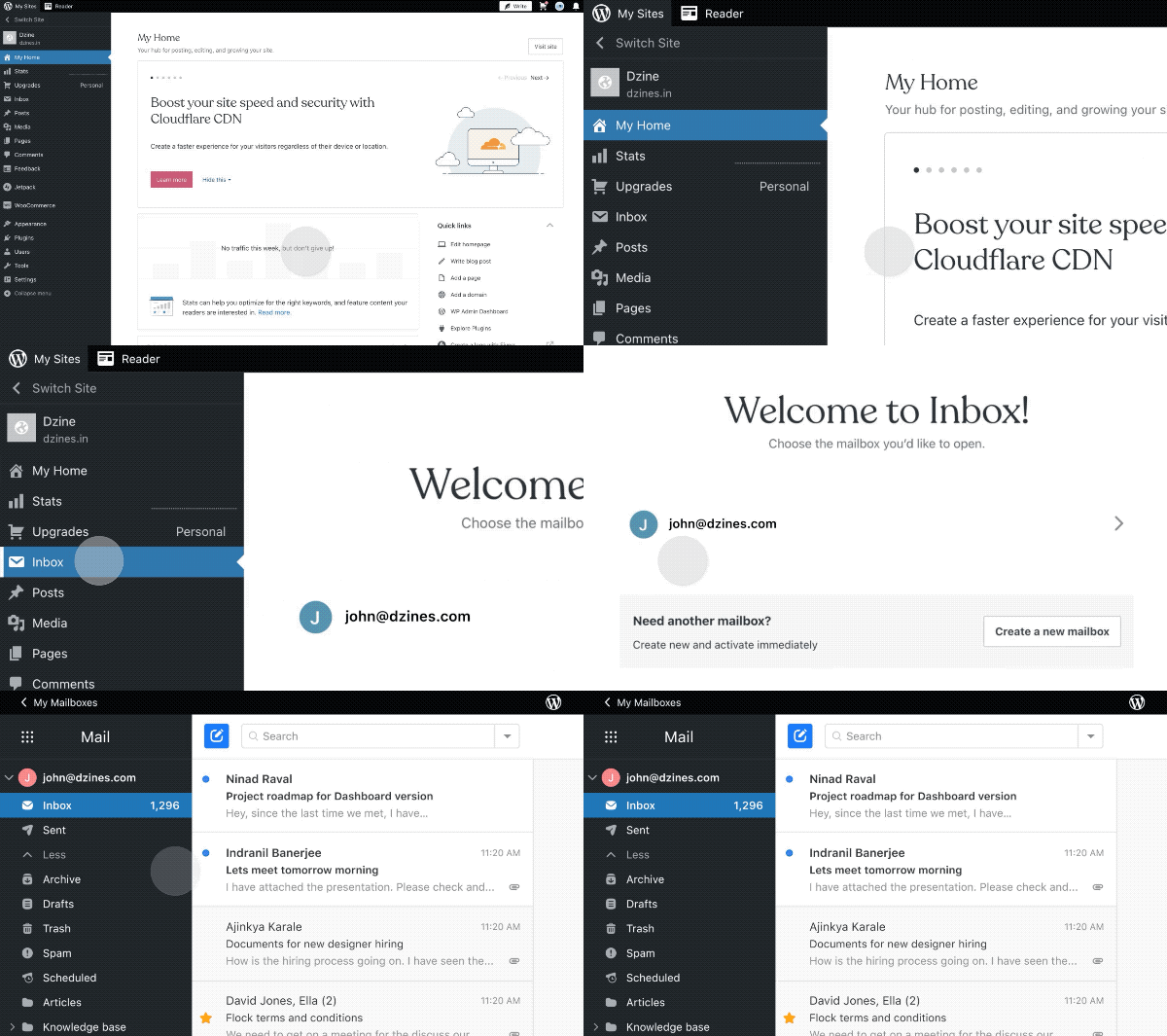
Every day we’re connected to a million apps, and we browse through multiple browser tabs just to complete a single action item. We have busy schedules that would benefit from streamlined processes, simple tools, and powerful workflows. With that in mind, our team asked for feedback, and that inspired us to put together a new solution—your Professional Email inbox baked right into your WordPress.com site.
You can now manage your inbox and website from the same place, eliminating the need for multiple sets of credentials and URLs. Once you’re securely logged in, we’ll save you the clicks and multiple tabs that managing your work used to take, allowing you to operate directly from your website dashboard.
A few time-saving hacks to get the most from your embedded inbox:
Easily connect with your audience or community from your site while checking your site followers.
Post a blog post, head directly to your inbox, and share it with your customers.
Create a new product to sell and share the news directly from your site dashboard.
Ready to try it out?
Start here
Quelle: RedHat Stack
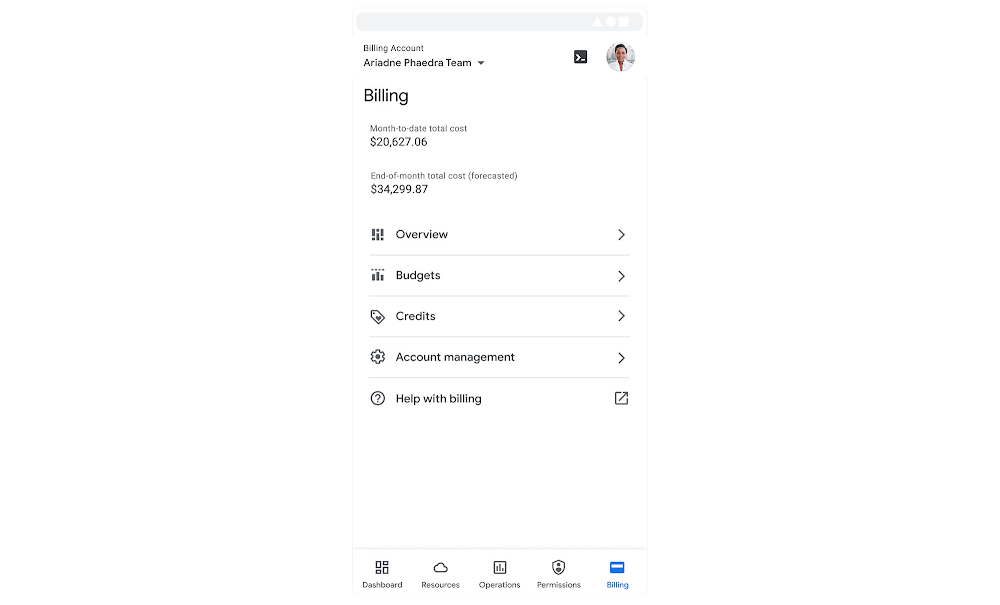
Cloud billing is an important part of managing your cloud resources, and understanding your cloud spend estimates or accessing invoices is critical for many businesses. Thus far, the best way to check your billing information has been to use the Google Cloud Console from your favorite web browser. But Google Cloud users tell us that they want to be able to access billing data on the go.Today, we’re introducing a new way of accessing billing information — from the Cloud Console mobile app. Now, with your Android or iOS mobile device, you can access not only your resources (App Engine, Compute, Databases, Storage or IAM), logs, incidents, errors, but also your billing information. With these enhanced billing features, we are making it easier for you to understand your cloud spend.Billing in the Cloud Console mobile appWith the newest app release, you can add a billing widget on the home dashboard of the Cloud Console mobile app using the “plus” button on the home screen. Whenever you open the app you will see the current spend of the selected billing account. You can also switch the active project from the home screen.If you go from the main screen to the Billing tab you can see your cost forecast. We also added sections to make navigation easier, while the Overview screen lets you see graphs of monthly trends, costs per project or per cloud service. The Budgets screen, meanwhile, lets you preview how each of your predefined budgets are being spent. You can learn more about Cloud Billing budgets in this blog post.The new Credits page shows you the usage for all the credits that were ever used in your account, such as the one from Climate Innovation Challenge, and the Account management page shows you details about your billing account. You can also check the account’s id, which users are managing the billing accounts or which projects are using the active account.And if you ever need help, you can always reach out to us directly from the app using the “Help with billing” section on the Billing tab!To summarize we’ve enhanced billing on your smartphone with:Smoother navigationForecasted costAccess to billing graphsThese new features are available for you to use today. If you have any feedback, we want to hear from you — just click the “Send feedback” button in the app. And don’t forget to pin the dashboard card to the main screen, so you always have your billing information at your fingertips. Go ahead and download the app today from Google Play or the Apple App Store.Related ArticleProtect your Google Cloud spending with budgetsBudgets are the first and simplest way to get a handle on your cloud spend. In this post, we break down a budget and help you set up aler…Read Article
Quelle: Google Cloud Platform
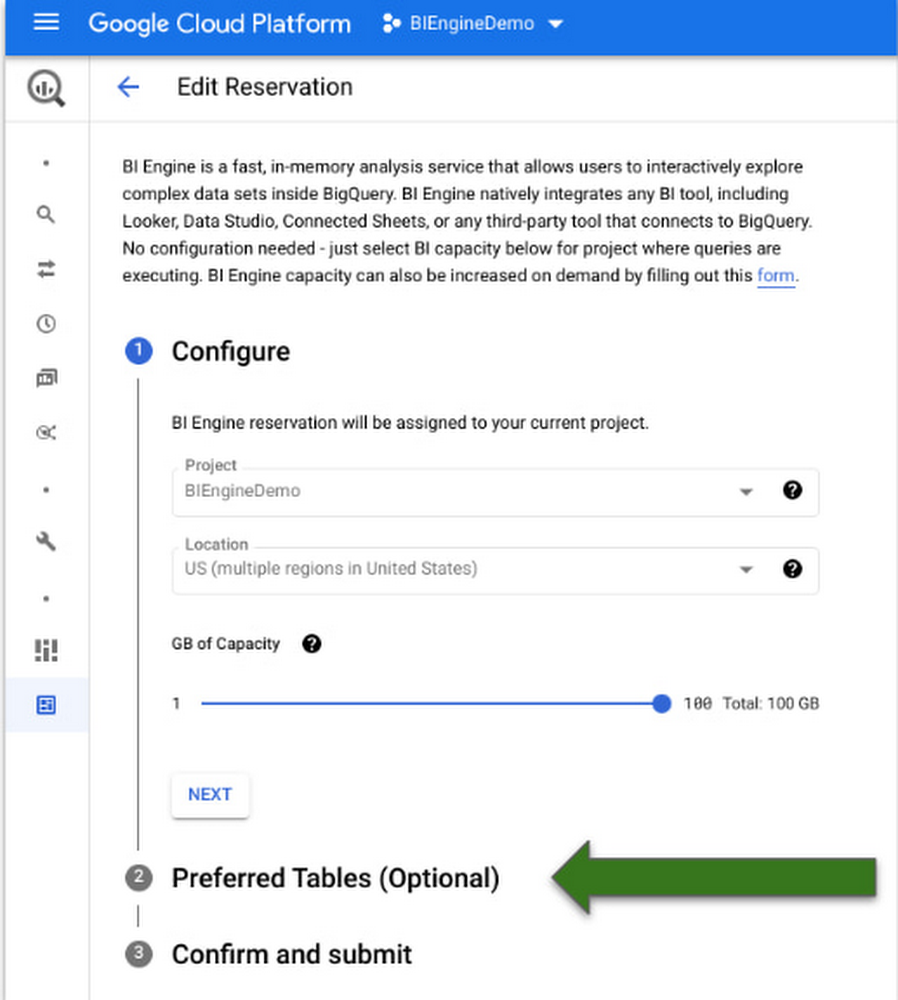
Earlier in the quarter we had announced that BigQuery BI Engine support for all BI and custom applications was generally available. Today we are excited to announce the preview launch of Preferred Tables support in BigQuery BI Engine! BI Engine is an in-memory analysis service that helps customers get low latency performance for their queries across all BI tools that connect to BigQuery. With support for preferred tables, BigQuery customers now have the ability to prioritize specific tables for acceleration, achieving predictable performance and optimized use of their BI Engine resources. BigQuery BI Engine is designed to help deliver freshest insights without having to sacrifice the performance of their queries by accelerating their most popular dashboards and reports. It provides intelligent scaling and ease of configuration where customers do not have to worry about any changes to their BI tools or in the way they interact with BigQuery. They simply have to create a project level memory reservation. BigQuery BI Engine’s smart caching algorithm ensures that the data that tends to get queried often is in memory for faster response times. BI Engine also creates replicas of the data being queried to support concurrent access, this is based on the query patterns and does not require manual tuning from the administrator. However, some workloads are more latency sensitive than others. Customers would therefore want more control of the tables to be accelerated within a project to ensure reliable performance and better utilization of their BI Engine reservations. Before this feature, BigQuery BI Engine customers could achieve this by using separate projects for only those tables that need acceleration. However, that requires additional configuration and not the best reason to use separate projects.With the launch of preferred tables in BI Engine, you can now tell BI Engine which tables should be accelerated. For example, if you have two types of tables being queried from your project. The first being a set of pre-aggregated or dimension tables that get queried by dashboards for executive reporting and the other representing all tables used for ad hoc analysis. You can now ensure that your reporting dashboards get predictable performance by configuring them as ‘preferred tables’ in the BigQuery project. That way, other workloads from the same project will not consume memory required for interactive use-cases. Getting startedTo use preferred tables, you can use cloud console, BigQuery Reservation API or a data definition language (DDL) statement in SQL. We will show the UI experience below. You can look at detailed documentation of the preview feature here. You can simply edit existing BI Engine configuration in the project. You will see an optional step of specifying the preferred tables, followed by a box to specify the tables you want to set as preferred.The next step is to confirm and submit the configuration and you will be ready to go! Alternatively, you can also achieve this by issuing a DDL statement in SQL editor as follows:code_block[StructValue([(u’code’, u’ALTER BI_CAPACITY `<PROJECT_ID>.region-<REGION>.default`rnSET OPTIONS(rn size_gb = 100,rn preferred_tables = [“bienginedemo.faadata.faadata1″]);’), (u’language’, u”), (u’caption’, <wagtail.wagtailcore.rich_text.RichText object at 0x3e3bfa4a22d0>)])]This feature is available in all regions today and rolled out to all BigQuery customers. Please give it a spin!Related ArticleLearn how BI Engine enhances BigQuery query performanceThis blog explains how BI Engine enhances BigQuery query performance, different modes in BI engine and its monitoring.Read Article
Quelle: Google Cloud Platform






