Sicherheitslücke: Gematik untersagt Videoident-Verfahren bei Krankenkassen
Die Krankenkassen dürfen vorerst keine Personen mehr per Videodienst identifizieren. Offenbar gibt es Sicherheitsprobleme. (Medizin, Sicherheitslücke)
Quelle: Golem

Die Krankenkassen dürfen vorerst keine Personen mehr per Videodienst identifizieren. Offenbar gibt es Sicherheitsprobleme. (Medizin, Sicherheitslücke)
Quelle: Golem

Meyers Manx baut ab 2024 einen Elektro-Buggy in Anlehnung an die ersten Dünen-Buggys. Statt eines VW-Käfer-Motors arbeitet darin ein Elektromotor. (Elektroauto, Technologie)
Quelle: Golem

Die US Space Force wird einen hundeähnlichen Roboter von Ghost Robotics auf Patrouille schicken, um Personalkosten zu senken. (Überwachung, Technologie)
Quelle: Golem

Viele tausend Menschen berichteten von kurzen Ausfällen der Suchmaschine. In einem US-Rechenzentrum kam es zudem zu einem Unfall. (Google, Suchmaschine)
Quelle: Golem

Das Berliner Fintech findet keine neuen Investoren. Nuri hat mit der insolventen Krypto-Börse Celsius zusammengearbeitet. (Fintech, Wirtschaft)
Quelle: Golem

Eine Umsatzwarnung vorab: Nvidia hat im zweiten Quartal 2022 weit über eine Milliarde US-Dollar weniger mit Geforce-Grafikkarten verdient. (Nvidia, Wirtschaft)
Quelle: Golem

CutefishOS ist eine von Hunderten Linux-Distibutionen. Es starb, sollte geforkt werden und war plötzlich wieder da. Und wieso? Weil es “cute” ist. Von Boris Mayer (Linux-Distribution, Debian)
Quelle: Golem

Nach einer Entscheidung des Landgerichts München erhalten Webseitenbetreiber mit eingebundenen Google Fonts vermehrt Abmahnungen. (Politik/Recht, Google)
Quelle: Golem
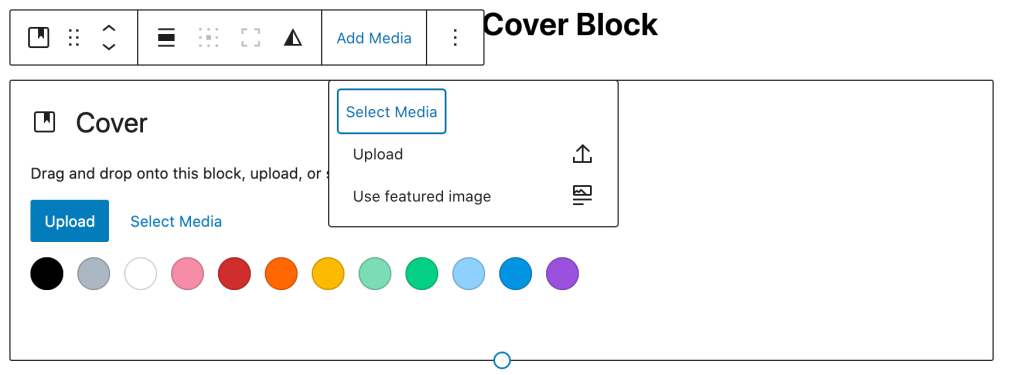
One of the most exciting things about WordPress is that it’s constantly improving. In fact, did you know that Gutenberg releases new functionality and improvements every two weeks?! There have been a number of really cool and powerful capabilities rolled out over the last few months that give you even more control over the design of your site and your content. We wanted to take a minute to highlight some that we’re especially excited about.
Note: These updates are most relevant to those of you who have a block theme activated.
Use Your Featured Image in the Cover Block Borders in Layout BlocksSee What Margin vs Padding Actually DoesPatterns Are Easier to Find and More Convenient to UseLeveling Up the Query Block Notable Mentions
Use Your Featured Image in the Cover Block
Over the last few months the Gutenberg team has really powered up the cover block and its ability to leverage the featured image set in your post/page. Not only can you do that when creating new content, you can use it in your templates too, making it easier than ever to make your featured image a bigger part of every post.
Borders in Layout Blocks
You now have the ability to add and customize borders in the columns, row, stack, and group blocks. Use them for subtle dividers or go nuts to create some fun retro drop-shadows. This is a great way to make different sections on your site stand out!
See What Margin vs Padding Actually Does
I’ve been working in the web space for a long time and I still get confused with how padding and margin will impact my layout — especially when there are multiple layers of blocks involved! You will now see exactly where the change is being applied as you adjust your settings.
Patterns Are Easier to Find and More Convenient to Use
Gutenberg 12.7 brings patterns front and center to help save you time and energy. Why recreate a layout block by block when you can start with something more complete? Take advantage of all of the great patterns the WordPress.com designers put together for our customers or maybe consider adding a pattern of your own to the WordPress.org pattern directory.
Leveling Up the Query Block
The Query Loop has grown a lot over the past few months. Not only can you filter by different authors or taxonomies, but you can now filter to show all content under a parent category. This is perfect for creators who create different types of content or jump between drastically different subject matters. It’s really the ultimate block for displaying a collection of posts and it just keeps getting better.
Notable Mentions
You can now customize and display text on your social icons. We’ve made it easier to transform your content into different blocks without losing the work you’ve already done. Your new buttons will keep the design settings you already applied, preventing you from having to re-apply the settings for every button you add.
This is just a small subset of new features released over the last few months. Let us know what you think in the comments and feel free to share your favorites!
Quelle: RedHat Stack

Editor’s note: Today we hear from NTUC Enterprise, which operates a sprawling retail ecosystem, including NTUC FairPrice, Singapore’s largest grocery chain, and a network of Unity pharmacies and Cheers convenience stores. As a social enterprise, NTUC Enterprise’s mission is to deliver affordable value in areas like daily essentials, healthcare, childcare, ready-to-eat meals, and financial services. Serving over two million customers annually, NTUC Enterprise strives to empower all Singaporeans to live more meaningful lives.In August 2021, NTUC FairPrice launched a new app payment solution, allowing customers to pay for purchases and accumulate reward points at any FairPrice store or Unity pharmacy, by simply scanning a QR code. The app eliminates the need to present a physical loyalty or credit card and integrates all customer activities across NTUC FairPrice’s network of stores and services. By using the FairPrice app’s payment feature, customers enjoy a seamless checkout experience at all FairPrice and Unity outlets.The mission to build an integrated app across a network of over 200 stores encountered two challenges that we were able to overcome with Google Cloud solutions, namely Cloud Functions, BigQuery, and Cloud Run:Financial reconciliation: FairPrice transactional data sits in multiple locations, including the point-of-sale (POS) server, the FairPrice app server, and the payment gateway (third-party technology used by merchants to accept purchases from customers). For the app to work, our finance team needed to ensure that all sales data coming from disparate sources are tallied correctly.Platform stability: Instead of a staggered rollout, we opted for a ‘big bang’ launch across all FairPrice and Unity stores across Singapore. System resilience, seamless autoscaling, and a near-zero latency network environment were critical for ensuring that customers weren’t stuck in line due to network delays or outages, especially during peak hours.For a complex operation such as ours, the main technical hurdle was agile syncing between transaction systems. Our finance team needed to ensure that all funds that land in the bank correspond with sales made through our stores’ POS machines. Resolving this issue required a custom solution that integrates disparate data sources across the sales spectrum.At the time, the architecture of our sales system was as follows: The POS system processed a transaction and sends the data into our SAP network. From there, the data was funneled through enterprise resource planning (ERP) workflows managed by the finance team.The actual financial transaction, however, was performed on our FairPrice app server. This communicated with a third-party payment gateway that then transferred funds electronically to our bank.The POS system was sophisticated enough to aggregate different payment methods registered in the FairPrice app, from GrabPay to Visa and Mastercard, and send granular transactions information to finance. But given that it wasn’t executing actual transactions, finance then needed to make extra reconciliations to ensure that the POS data and payment data corresponded. This process placed a significant manual strain on the team, which would only increase as the business continued to grow. Automating financial processes to drive business growth with cloud technologyTo automate financial reconciliation, we used Google Cloud tools and designed a custom solution to integrate POS data with the payment network. Here’s a step-by-step summary of how we integrated all the elements of our transactions ecosystem, unlocking the potential for growth in our FairPrice app: We first worked with the POS team to set up real-time data pipelines to import all transactional data across our retail network, from online sales to physical store purchases, into Cloud Storage every five minutes. Next, we deployed Cloud Functions to detect changes made in Cloud Storage, before processing the data and syncing it with BigQuery, our main data analytics engine for data imported from POS systems into SAP systems. Leveraging CloudSQL as our main managed database, we created data pipelines from the app server into BigQuery. We created two parallel channels to ingest datastreams into BigQuery, which then became a unified data processing engine for unlimited, real-time insights. At that point, we used Google Cloud Scheduler to send BigQuery data analytics at the end of each day to a SAP secure file transfer protocol (SFTP) folder for processing by the data analytics team. Combining readouts from these two data sources, our data scientists can now build an easy-to-read Data Studio dashboard. If transactions from different systems do not match up, an email alert will be sent to the finance team and other platform stakeholders. Finance then reconciles the transactions in Data Studio to ensure all sales from the POS system and the app server correspond correctly.Combining the power of BigQuery with the convenience of Data Studio provided us with an additional advantage: the finance team, without requiring in-depth technical knowledge, can now easily obtain any piece of data they need without seeking help from the engineering team. The finance team can directly query what they need in BigQuery, and create an instant visualization on the Data Studio dashboard for any business use case. Keeping customers happy with seamless autoscaling driven by Cloud RunOne of the key objectives of launching Pay for our FairPrice app is to enable faster, more seamless checkouts across all stores in our retail network, through quick-and-easy QR code scanning. With a ‘big bang’ rollout, we needed the most powerful and agile computing infrastructure available to handle fluctuations in footfall at our stores, from peak lunchtime to dips in the middle of the night. We sought to combine this ability to autoscale with minimal infrastructure configuration, so our development team could focus on building innovative solutions that delight our customers.Google Kubernetes Engine (GKE) had been powering NTUC FairPrice solutions for a long time. When it came to developing our new payment solution, we decided that it would be a good time to try Cloud Run, cognizant of the complex interplay of APIs required to evolve the app. The aim was to see if we could achieve even more automation and ease-of-use in scaling and deploying our solution. The experiment paid off as we gained a new dimension of API agility through the optimized deployment of Cloud Run features. Here’s an overview of how we leveraged Cloud Run to support failure-free store operation with virtually no manual configuration:Default endpoints: Our FairPrice app deploys a wide range of proprietary APIs to synchronize all aspects of the solution. Cloud Run’s key advantage here is that provides a secure HTTPS endpoint by default. This automates the connection of APIs to software programs, removing the need to set up extra layers of network components to manage APIs. Ensuring this strong connectivity results in a seamless experience for shoppers.Automated configuration: Even with Autopilot, the new GKE operating environment, we still needed to set up CPU and memory for our microservices clusters. With Cloud Run, we’re freed from this task. All that is required is to set the maximum instance variable, and Cloud Run takes care of the rest, by automatically scaling microservice clusters in real-time according to our needs. This saves our DevOps team several hours per week, which they can devote to developing new features and updates for the FairPrice app. Ultimately, this convenience is passed on to our customers, translating into a more seamless and enjoyable shopping experience. In just one year since launching Pay for the FairPrice app, we have gained measurable benefits from the innovations enabled by Google Cloud tools: A 90% rate of return to the app. This means that nine out of 10 customers who use the app once will continue using it for subsequent purchases. Added nearly 270,000 new FairPrice customers to the app, and that number is growing at an exponential rate. Since launching the app, we have been able to convert 6% of offline transactions into digital transactions.Given that app availability and seamless end user experiences are major factors in Net Promoter Scores (NPS), NTUC FairPrice has achieved ~75% in overall customer satisfaction.Building Singapore’s food “super app” with Google Cloud toolsWe’re excited about the next stage of our digital evolution, which is to turn the FairPrice App into a food ‘super app.’ We aim to spark customer delight in everything related to food within the NTUC FairPrice Group network. This includes “hawker centers” (food courts), restaurants, deliveries, and takeaways.All of these services will be built on Google Cloud solutions, in particular Cloud Run and BigQuery. We believe that with our newfound autoscaling and data analytics capabilities, NTUC FairPrice is ready to bring the business to new heights, and meet Singapore’s appetite for great food.Related ArticleNew Singapore GCP region – open nowThe Singapore region is now open as asia-southeast. This is our first Google Cloud Platform (GCP) region in Southeast Asia and our third …Read Article
Quelle: Google Cloud Platform






