People in Los Angeles Are Getting Rid Of Their Cars

Pete Saloutos / Getty Images

Eric Spiegelman grew up in a six-car family in the San Fernando Valley and has lived in Los Angeles for the majority of his life. At the end of May, he let the lease on his Volkswagen CC expire, opting to live car-free in a city synonymous with car culture. For the past three months, he&;s been commuting to and from work exclusively via Uber and Lyft — mostly using Pool and Line, cheaper options that allow passengers to share trips with other riders on similar routes.

“It ran so contrary to the culture that I’d been brought up in, and also my sense of what was doable,” Spiegelman, 39, told BuzzFeed News. “It was the most unnatural feeling thing at first. But it was so freeing.”

An understandable sentiment — after all, Spiegelman is president of the LA Taxicab Commission.

Spiegelman had been studying the economics of riding Uber and Lyft versus a taxi or driving a personal vehicle when he decided to run the math for his own car. He made a spreadsheet outlining the cost of leasing his Volkswagen: $458 monthly for the lease itself, $158 for insurance, $70 for gas, and at least $72 for parking, for a total cost of about $758. Based on those calculations, he said he has saved more than $1,100 in the last three months, spending an average of $3.42 for each UberPool or Lyft Line ride to work in August.

Ride-hail companies are betting that in the future — particularly after the introduction of self-driving cars — owning a car will become a thing of the past. LA, a city long known for car dependency, sprawl, and gridlock, has become a proving ground for this shift. More than a half-dozen Angelenos told BuzzFeed News they have ditched their cars recently and instead rely on Uber, Lyft, public transportation, bikes, and, for longer trips, ZipCar, Turo or similar services. And they’re part of a growing movement that’s slowly reshaping the Autopia that is LA.

“If you think about it, the ideal form of public transportation for LA is cars on demand.”

There were nearly 6.3 million cars registered in Los Angeles County from January through December 2015, according to the California Department of Motor Vehicles. Nearly 73% of workers ages 16 and older in LA County drove to work alone in 2014, according to the most recent US Census Bureau data, and 67% in the city of LA. Residents complained in an LA Times poll conducted in September that traffic is their biggest concern. LA drivers spent 81 hours each sitting in traffic in 2015, more than drivers in any other US city, according to the transportation analytics company Inrix.

“LA, that confluence of sort of an extremely high dependence on cars, a lack of public transportation, does in fact make it very well suited to transition more rapidly to Uber or Lyft,” said Arun Sundararajan, a New York University professor and author of a book called The Sharing Economy. “If you think about it, the ideal form of public transportation for LA is cars on demand.”
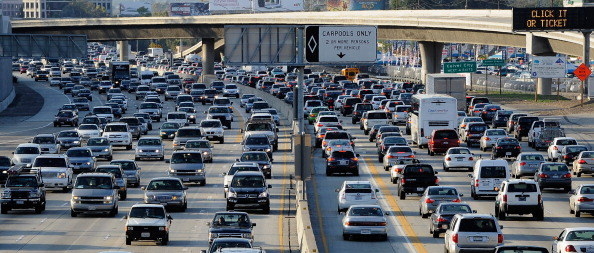
Interstate 405

Kevork Djansezian / Getty Images

Lyft has grown 25-fold in LA since January 2014, the company told BuzzFeed. Line, the cheaper ride-sharing option it introduced in LA in September 2014, now accounts for 30% of rides. Derek Kan, Lyft’s general manager for LA, said the “vast majority” of wait times are under 3 minutes, and that the highest-volume passengers in the city take up to 200 rides a month.

Uber, which provides more than 150,000 rides in LA per day, has seen similar popularity for Pool. About five months after Lyft launched Line in LA, Uber launched UberPool. That ride-sharing service now accounts for 25% of trip requests.

“I was actually surprised by how well Angelenos have adopted UberPool,” Brian Hughes, Uber’s general manager for that market, told BuzzFeed. “We knew as we were launching UberPool that we were asking for a significant change in behavior from the Los Angeles population.”

It helps that rides can be dirt cheap. Compare the base UberX fares for several cities: $2.55 in New York City, $2 in San Francisco, $1.15 in Washington, DC, and $1.70 in Chicago, according to Uber’s fare estimator. And the minimum fares: $8 in New York City, $6.55 in San Francisco, $6.35 in Washington, DC, and $4.20 in Chicago.

In LA, the base fare for UberX is $0; the minimum fare is $5.15. The per-minute rate is 15 cents and the per-mile rate is 90 cents, lower than the corresponding rates for the other cities, except Chicago, which has the same per-mile rate.

For UberPool and Lyft Line rides, which are shared with other passengers, the cost goes down even further.

Uber Wait Times in Los Angeles
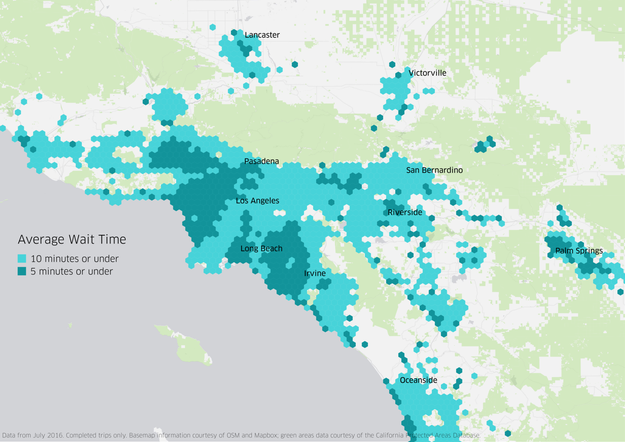
Uber Wait Times in Los Angeles

Courtesy of Uber

On average, choosing to share a ride with UberPool only adds about 4.2 extra minutes to a rider’s trip, Hughes said. But Uber found that LA riders were nervous that getting in a car with another passenger would make them late. After finding that was a concern in other markets as well, Uber added “you’ll arrive by” estimates to its app.

If there’s anything as frustrating as driving in LA, it’s parking there: The city issues more than 2.5 million parking citations each year, raking in $165 million. Christian Nurse, a 36-year-old commercial and music video producer who lives in the Fairfax District, had been living in LA for about 14 years by the time Uber launched there in 2012. He was sick of all the parking tickets that regularly collected on his Jeep Wrangler’s windshield.

A parking lot in Los Angeles.

Michael H / Getty Images

“Having a car in LA is a giant pain in the ass. You’re always worried about it,” Nurse said “It’s this giant expensive thing that you constantly need to be aware of when you’re in it, when you’re not in it.”

Nurse did the math and realized even if he rode Uber everywhere, it would cost him about the same amount as owning a car. So he sold the Jeep.

“I tell people I live in LA like it’s New York. Uber and Lyft are my public transit station.”

“I tell people I live in LA like it’s New York. Uber and Lyft are my public transit station,” he said. “Before ride-sharing, I wasn’t really taking taxis everywhere. It’s not like calling a taxi, and you have to give them your address, and they’re dispatched out, and they’re more expensive.”

It’s worth noting that this is a relatively new phenomenon. In December 2014, when the Transportation Sustainability Research Center at the University of California, Berkeley, asked LA residents about their usage of Uber and Lyft, they didn’t feel the same way.

“The focus group … told us that they use Uber and Lyft periodically for commutes and for other trips, but that they did not use it, they would not sell a vehicle, they would not rely upon it on a daily basis because of surge pricing and the uncertainty of trip costs,” said Adam Cohen, a research associate for the center who focuses on Southern California. “It would be good to get a reassessment on that now.”

But that was just a few months after Lyft Line launched, and before the debut of UberPool and the companies’ price wars to win market share.

Whether Uber and Lyft have made a significant dent on parking congestion in LA is unclear. Donald Shoup, an urban planning professor at the University of California, Los Angeles, who has studied parking in the city, said riding Uber and Lyft round-trip is generally cheaper than owning a car and paying to park it in LA. But he said it’s difficult to determine if it’s made finding parking any easier, or rates cheaper in garages. Uber approached him to ask whether he had studied if the company’s services reduced vehicle travel or parking demand, but he said he didn’t have the evidence to answer the question.

There’s one area where Uber and Lyft have had a much more noticeable impact: They’ve decimated the taxi industry.

There’s one area where Uber and Lyft have had a much more noticeable impact: They’ve decimated the taxi industry. The number of LA taxi trips dropped 30% from 2012, when Uber and Lyft began operating there, to 2015. Unlike in New York, where without promotional rates Uber and Lyft could cost the same amount as a yellow cab, taxis are notoriously expensive in LA. For example, a ride between Universal Studios and Melrose Avenue would cost about $11 in UberX or Lyft, according to Ride Guru, a fare comparison website. A taxi for the same route would run about $23. A ride from Los Angeles International Airport to Universal Studios would cost $84 in a taxi, or $38 in an UberX or Lyft.

The city itself has also been attempting to get people out of their cars. LA is working toward a 20-year plan, approved by the city council last year, to improve public transportation and safety for pedestrians and bicyclists, and reduce the number of miles traveled by vehicle. Claire Bowin, a senior planner for the city, told BuzzFeed News that while the mobility plan had been in the works for years, the increasing popularity of Uber and Lyft have created a turning point. Before, she said, it was difficult to tell people that not owning a car in LA could ever be an option.

“By introducing Uber and Lyft into that equation, you’ve introduced that other option for people,” Bowin said. “There&039;s a comfort level. I’m not in a bus with 30 other people or having to walk and get sweaty carrying my groceries.”

LA Metro opened up the Expo Line, a light rail between downtown LA and Santa Monica, in May as part of its effort to wean people off car ownership. When it began running, Uber ran a promotion for $5 off Pool rides to or from Expo line stations. For ride-hail companies, partnering with public transportation agencies to market themselves as companion services can increase mutual ridership. Kan, Lyft’s LA general manager, said three of the top 10 destinations for Lyft rides are metro stations.

Ashton Dunn, a 33-year-old strategy director in advertising, said he was intrigued by the city’s move to make public transportation and biking more viable options for LA residents. To test whether he could survive without owning a car, he put himself on a two-month experiment in which he biked, hailed rides, and carpooled. Dunn sold his 2009 Honda Civic, which he estimates cost him about $100 weekly, on July 23. Now he spends $50-$60 on Uber and Lyft every week and bikes 10 miles to and from work.

“I was spending so much time inside of a car and I was absolutely sick of driving. This is not how I want to spend my life, in a car. No thanks,” Dunn said. “I feel free.”

Quelle: <a href="People in Los Angeles Are Getting Rid Of Their Cars“>BuzzFeed
Three-Day Weekends Are A Way Of Life At These Companies

Kristin Tinsley of iBeat hiking on a day off.

Courtesy / Kristin Tinsley

At the startup iBeat, every other weekend is Labor Day weekend.

That’s right: The special three-day weekend many of you in the United States are about to relish is a matter of routine for this San Francisco health-tech company.

CEO Ryan Howard, who’s made shortened weeks a staple of iBeat since he founded it this year, spends his days off riding his motorcycle, running errands, and taking out-of-town trips. “I don’t burn out at all at this job,” he told BuzzFeed News. “My life doesn’t feel so cramped. It’s nice. I’m more aware; I’m tuned in; I’m much more sustainable at work.”

iBeat may be onto something. A growing body of research suggests that the traditional five-day workweek, still the norm for the majority of US workplaces, isn’t necessarily most efficient. Shorter weeks may actually boost employees’ productivity — not to mention their happiness. And they can be a powerful recruitment and retention tool, especially for small startups that can’t offer all the other perks that tech giants give employees.

As workers grow out of their 20s or just burn out, some think less favorably of Silicon Valley’s ingrained workaholic culture.

iBeat’s emphasis on work-life balance helps attract talented employees, Howard says, including those disenchanted with Silicon Valley’s ingrained workaholic culture of all-nighters, meals at the office, and nonstop emailing and Slacking. As workers grow out of their 20s and start families, or just burn out, some think less favorably of the work-life balance espoused by people like Yahoo CEO Marissa Mayer, who recently told Bloomberg of her time at Google, “‘Could you work 130 hours in a week?’ The answer is yes, if you’re strategic about when you sleep, when you shower, and how often you go to the bathroom.”

The idea of giving employees a more flexible schedule seems to be slowly catching on. Forty-three percent of companies allow some employees to work compressed weeks during at least part of the year, according to a 2014 survey by the Society for Human Resource Management. And as BuzzFeed News reported last month, Amazon is beginning to test four-day, 30-hour workweeks for some of its tech employees.

Why do we work five days to begin with?

Five-day workweeks date back to 1908, when a New England mill became the first American factory to offer workers two days off; Saturday until that point had been a half, not full, day of rest. Most of its workers were Jewish, and the new schedule let them observe their Sabbath on Saturday. In 1926, Ford became the first large-scale employer to put its plants on the schedule, and the practice spread from there.

The year is now 2016, and the five-day workweek is still firmly in place in the US and much of the world. But it may be time to rethink that tradition, as evidence suggests that longer hours don’t necessarily lead to higher productivity. A 2009 study of 2,000 British civil servants showed that working more than 55 hours a week was associated with lower cognitive performance, compared to 40 hours a week.

Kristin Tinsley getting a jump-start on the weekend in Napa.

Courtesy / Kristin Tinsley

In 2008, then-Utah Gov. Jon Huntsman started a “4/10” workweek – 10 hours a day, Monday through Thursday — for thousands of state workers in hopes of saving money and improving efficiency. When Brigham Young University professors Rex Facer and Lori Wadsworth dug into what people thought about the first-in-the-nation policy, as well as about similar schedules in other places, they found that just about everyone involved had good things to say. Employees enjoy the reduced commute and chance to spend more time with their families, and they are able to squeeze in more tasks on the days they are at the office.

“Whether you ask managers or ask employees, they both report their employees are more productive. They tend to report there are higher levels of job satisfaction. And one of the things that was surprising to us was that they report that they take less time off work,” Facer, an associate professor of public management, told BuzzFeed News. That likely means that employees are scheduling errands on their scheduled days off, reducing the need to take vacation, he said.

Utah ultimately didn’t take these lessons to heart, and in 2011, lawmakers cancelled the experiment everywhere but Provost. But several other companies have offered four-day workweeks in some form, including online education startup TreeHouse, project-management tool startup Basecamp, Web development company Reusser Design, global tax and audit firm KPMG, and the US Government Accountability Office.

A great recruiting tool

Last year, as Howard was figuring out next steps after the startup he’d founded, Practice Fusion, had ousted him as CEO, one of his friends died in his sleep from undetected heart problems. That loss gave Howard the idea for what became iBeat: a heart rate-monitoring wristband that calls 911 in emergencies. This time, though, he’d do things differently.

“I worked on Practice Fusion for ten years, and I woke up one day and I was 40,” he said. “I didn’t want to lose another decade of my life.” So around January, when he started pitching venture capitalists and hiring employees, Howard decided to offer alternate four-day workweeks from the get-go. (He thought that having them every week would be tougher for investors to swallow.)

iBeat, which raised $1.5 million in seed funding last month, isn’t flush with the capital and prestige of established companies, which makes hiring hard. It doesn’t have round-the-clock catered meals or on-site haircuts and laundry. But 26 three-day weekends a year are a bonus that’s relatively affordable and especially attractive to older employees who have both family obligations and enough work experience to be productive right away. “It allows me to recruit a caliber of candidates because this perk’s not available anywhere else,” at least not in the Bay Area, according to Howard. “And so I can recruit in a way that Google and Facebook can’t.”

Brian Boarini of iBeat and his 1-year-old son.

Courtesy / Brian Boarini

Brian Boarini, the director of product management at iBeat, was a Google contractor at the beginning of his career. “I had the buses and cafeterias and gyms,” he recalled. “They’re everything they’re cracked up to be, in my limited experience.”

But Boarini, now 33, jumped to join iBeat and its team of 10 or so employees partly because he could spend more time with his 1-year-son.

“I’ve never heard of any other company offering that — you get a day back every other week — which right now is really the most important thing, no question,” he said. “When you’re up at 5 and you don’t stop until 10 o’clock with dinner and dishes and laundry, to get a free day to run chores or just hang out and relax — I can’t imagine a better situation.”

“There&;s no hitch.”

“There’s no hitch,” Howard said. People work a regular 10 a.m.-to-6 p.m. schedule. Salaries and health insurance coverage are competitive and the same as if employees worked five days a week, Howard says. There’s also unlimited vacation time, although, given the company’s small size, employees are requested to not take more than two weeks off at a time. They’re also encouraged to schedule their doctor’s appointments, haircuts, and other errands for their Fridays off, so the team can make the most of the shorter weeks.

iBeat employees say that people outside the company have been understanding — and more than a little jealous — when it comes to scheduling meetings and phone calls. For some inside the startup, one of the hardest adjustments has been to actually feel comfortable with working less. Howard admits that he’ll occasionally run errands and take meetings on Fridays. Kristin Tinsley, director of marketing and communications, said, “The one thing I think was the hardest habit to change was just not checking my emails.” So she puts her phone in “do not disturb” mode and sets up a reminder to stay out of her inbox. Getting a massage every other Friday also doesn’t hurt.

iBeat CEO Ryan Howard at the dentist on a Friday.

Courtesy / Ryan Howard

Working less may not work for everyone

“So why don’t we have three-day weekends?” you think, as you begin to paste this article into an angry email to your boss.

It’s tricky. Cutting a day out of the week isn’t a cut-and-dry matter, according to Facer, the BYU professor. His studies have focused on workweeks of 10 hours per day over four days — but research doesn’t yet show that working a typical eight hours a day, four days a week, also improves productivity, he said. That’s because the practice hasn’t been adopted widely enough to be studied.

“There are a lot of workers” — especially millennials — “who argue they can get as much done in 32 hours as a lot of other people could get done in 40,” he said. “We just haven’t seen that used in any kind of large-scale trials and so we don’t know how it’ll really play out.”

Most importantly, four-day workweeks aren’t a one-size-fits-all solution. If “the best choice is a traditional schedule, great. If the best choice is a four-day work schedule with 32 hours, fantastic. If it’s a four-day workweek with 40 hours, great,” Facer said. To do it right, he says, you have to “make decisions deliberately so you’re thinking about, ‘How is this affecting the employees I have, and am I able to provide the set of services necessary for the organization I’m working for?’”

You&039;d be surprised what you can get used to

Sometimes, as hard as this might be to accept, a four-day-a-week schedule isn’t the best option year-round. That was the case for Basecamp, which makes Web-based project management tools and had enforced that policy since it was founded in 1999.

It may sound like a dream. But about six years ago, Jason Fried, CEO of the Chicago company, sensed that three-day weekends were beginning to feel more routine than rare. Now, three-day weekends are only in place May through September.

“I didn’t want to lose another decade of my life.”

“By making it special, you have more of a feeling that ‘I’m going to take advantage of this, I only have this for five to six months a year,’” he said. It wasn’t because people were slacking off, he insisted; he genuinely wanted to bring back the kinds of breaks that divided up the year when you were a child, like school letting out for the summer.

Admittedly, employees were “probably a little bit disappointed.” But Fried said that people are now used to the policy, which he credits with helping to retain most of Basecamp’s 50 employees for four, five, or six years, a long time in startups. Basecamp also offers three weeks of vacation — and takes time off so seriously that it even pays for employees and their families to travel to destinations like Morocco and Thailand.

Fried is curious to see how shortened workweeks play out now that Amazon and other companies are now adopting them. What’s important for bosses to keep in mind, he said, is that they can’t offer four-day weeks while celebrating people who pull all-nighters. “If you tell people they don’t have to work Fridays and make them feel guilty they aren’t,” he said, “that’s not really following through on the idea.”

This Labor Day weekend, Fried is planning to travel to Wisconsin to catch up with some old friends. Call it putting philosophy into practice.

Quelle: <a href="Three-Day Weekends Are A Way Of Life At These Companies“>BuzzFeed
Samsung Stops Sales Of Galaxy Note7 After Reports Of Phones Catching Fire

Samsung Stops Sales Of Galaxy Note7 After Reports Of Phones Catching Fire

Kim Hong-ji / Reuters

Smartphone giant Samsung said it would be stopping sales of its Galaxy Note7 phablet in a statement issued on Friday morning, and would “voluntarily replace” all customers&; devices.

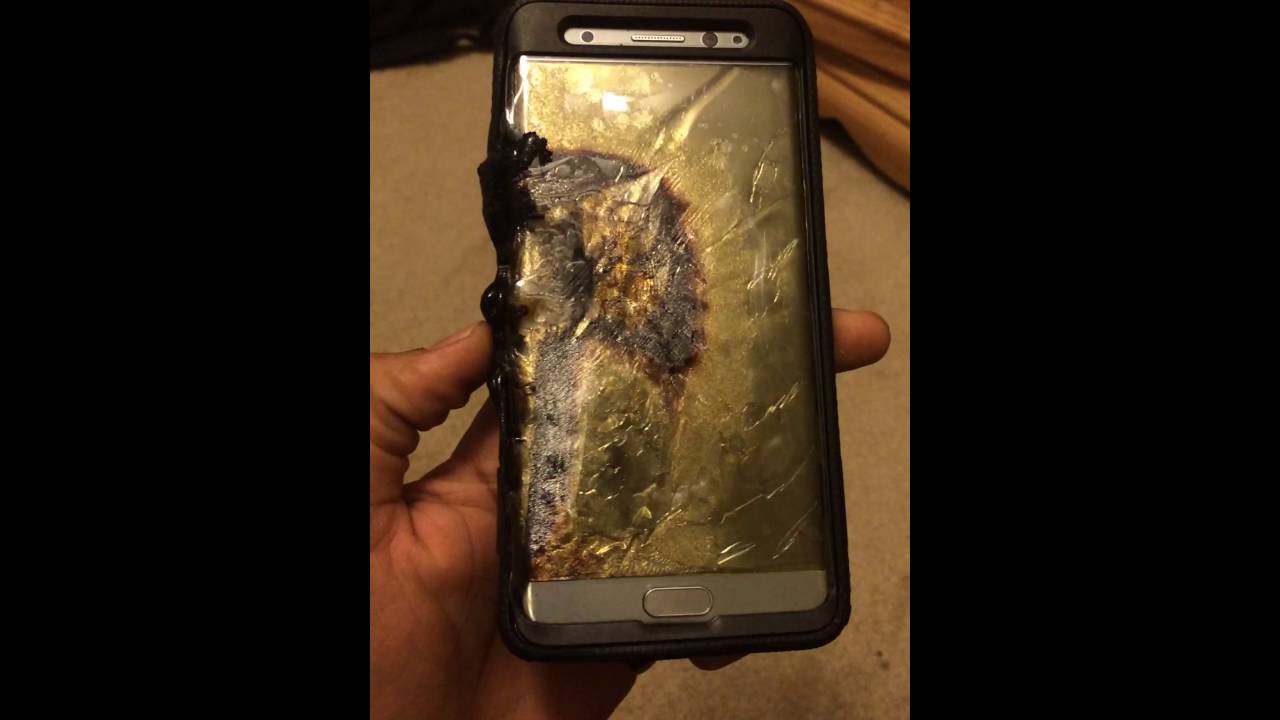
The move comes after users on social media reported that the large-screened smartphone caught fire during charging.

YouTube user Ariel Gonzalez had posted a video of a severely damaged phone earlier this week, which has been viewed over 220,000 times.

Ariel Gonzalez / Via youtube.com

Other images of fire-damaged Galaxy Note7 devices were shared on South Korean social network Kakao Story on Tuesday, according to BBC News.

Samsung&039;s statement on the issue can be found below:

Samsung is committed to producing the highest quality products and we take every incident report from our valued customers very seriously. In response to recently reported cases of the new Galaxy Note7, we conducted a thorough investigation and found a battery cell issue.

To date (as of September 1) there have been 35 cases that have been reported globally and we are currently conducting a thorough inspection with our suppliers to identify possible affected batteries in the market. However, because our customers’ safety is an absolute priority at Samsung, we have stopped sales of the Galaxy Note7.

For customers who already have Galaxy Note7 devices, we will voluntarily replace their current device with a new one over the coming weeks.

We acknowledge the inconvenience this may cause in the market but this is to ensure that Samsung continues to deliver the highest quality products to our customers. We are working closely with our partners to ensure the replacement experience is as convenient and efficient as possible.

This is a developing story. Check back for updates and follow BuzzFeed News on Twitter.

Quelle: <a href="Samsung Stops Sales Of Galaxy Note7 After Reports Of Phones Catching Fire“>BuzzFeed
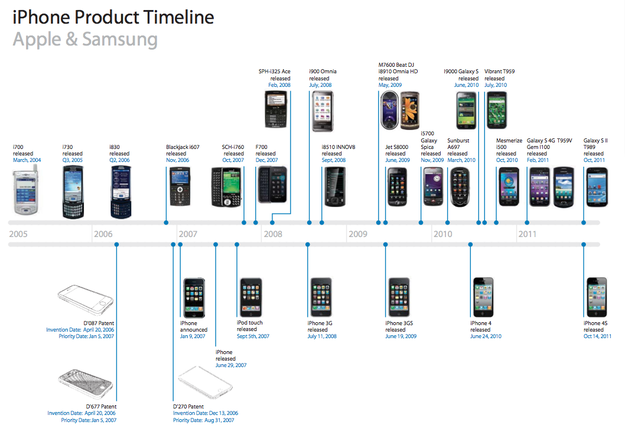
Samsung Tells Supreme Court Apple May Inspire New Breed Of Patent Troll

Court documents / Apple v. Samsung

For the first time in more than 100 years the Supreme Court will take on a design patent case pitting the world’s two largest phone manufacturers against each other, a major legal battle that both sides say will shape the future of consumer technology and alter incentives for designers and engineers to create new products.

Next month, the Supreme Court will hear arguments from Samsung and Apple over how much money Samsung should be forced to pay for infringing on several of the iPhone maker’s design patents. The design elements include the iPhone&;s rectangular face with rounded edges and bezel, and a home screen populated by a grid of icons. Stemming from a lawsuit that began in 2011, Samsung was ordered to hand over $548 million. A significant portion of that amount, $399 million, was derived from the total profits Samsung took in from the sale of patent-infringing phones. Samsung will try to convince the Supreme Court that it shouldn&039;t have to forfeit all of the profits it generated from its devices, since only some components of its phones were patented by Apple.

In its latest brief filed this week, the final written argument before the two parties appear before the Supreme Court in October, Samsung argued that a ruling in favor of Apple would inspire a new breed of patent troll. Samsung believes that it shouldn’t be forced to hand over all the profits from its infringing phones, but only a percentage. This reflects the fact that portions of the phone were patented by Apple, but other significant portions were Samsung’s. Otherwise, Samsung argues, a company that infringes on a tiny percentage of another firm’s product could unfairly be held liable for 100% of its profits.

By forcing companies who infringe on design patents to hand over all their profits, as opposed to just a portion of their earnings, litigation-hungry entities will be encouraged to target technology companies whose products encompass hundreds or thousands of complex parts. Samsung argued that Apple’s take on patent law “would open up new frontiers of litigation that would stifle the very innovation that the patent system seeks to encourage.”

Samsung isn’t alone in thinking so. In a brief backing the company, tech giants including Google, Facebook, Dell, and eBay argued that the rationale behind Apple’s stance was “out of step with modern technology.” By way of analogy, the tech companies said that a manufacturer of a smart TV could be required to pay its total profits in damages if the TV infringed on someone else’s design patent, even in a very insignificant way. Samsung offers a more striking hypothetical: A car manufacturer that copied someone&039;s design for a cup holder would be compelled to turn over its entire profit generated from the car.

Apple maintains that the design of the now iconic iPhone was crucial to its success, and that Samsung’s copycat infringement was not merely ornamental. Last month, more than 100 design professionals including Calvin Klein and Alexander Wang agreed with Apple, writing in a brief to the Supreme Court that design is not just one insignificant aspect of a product, but — in the minds of consumers — represents the product itself.

Apple insists that the lower court correctly interpreted the law by ordering Samsung to turn over its total profits. “Samsung’s arguments are addressed to the wrong branch of government,” Apple’s lawyers wrote, suggesting that its rival take the issue to Congress rather than seek a reinterpretation of the law by the high court.

David Opderbeck, a law professor at Seton Hall University, told BuzzFeed News that the Supreme Court will likely rule in one of three ways: The justices may decide that the infringement of a design patent should always lead to damages equaling the total profits of a product; that the damages should be limited to the specific components and not the entire product; or take a kind of dynamic middle ground, where each case must depend on the specific facts and damages would be determined by how important the design patents were to the total product.

“In this age when product design is so closely wedded to technology, how does patent law adjust?” Opderbeck said. “Giving a reward to an innovator but not allowing an innovator to dominate the whole technology just based on design?”

Samsung and Apple will argue in front of the Supreme Court on Oct. 11.

Quelle: <a href="Samsung Tells Supreme Court Apple May Inspire New Breed Of Patent Troll“>BuzzFeed
Facebook Messenger Adds Live Video Sharing

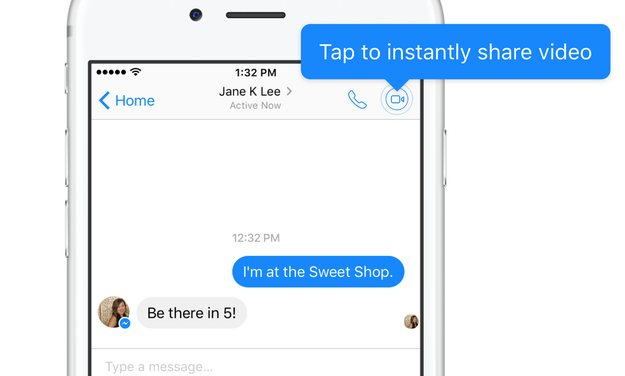
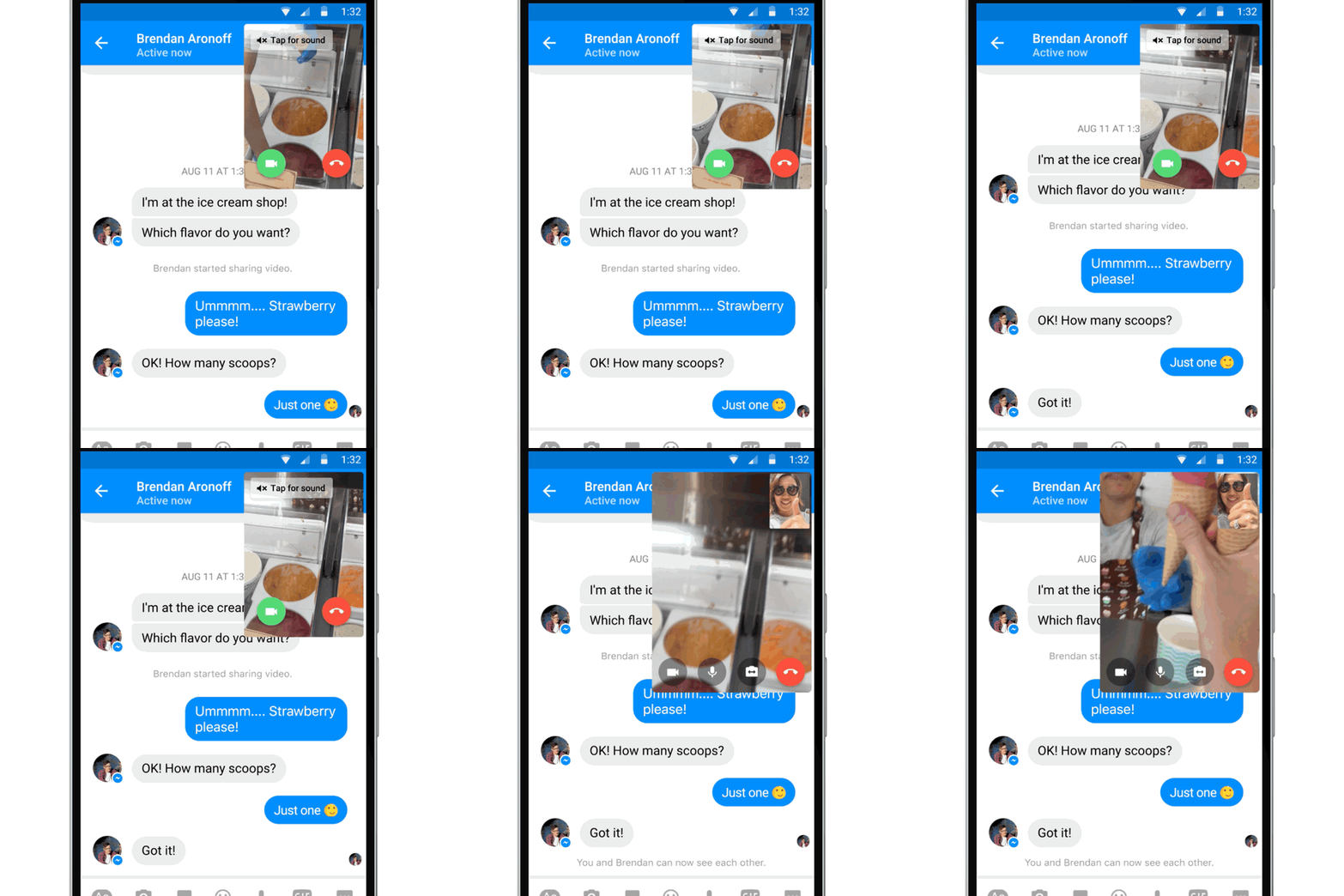
Today, Facebook is bringing live video sharing to Messenger via a new feature called “Instant Video.”

Today, Facebook is bringing live video sharing to Messenger via a new feature called "Instant Video."

Facebook

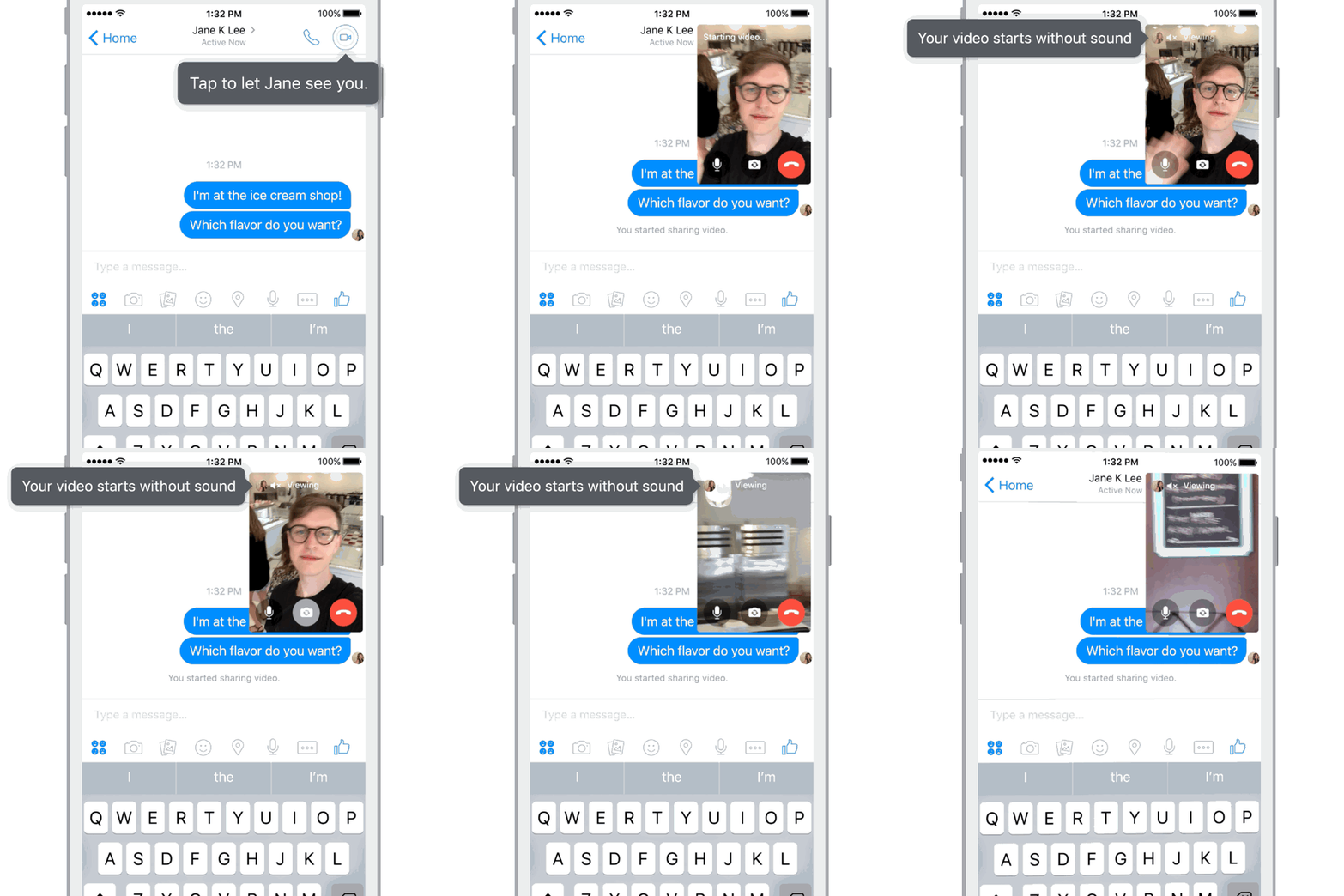
Open Messenger in iOS or Android, start a conversation with a friend and the app will offer you the option of adding live video to your chat.

Tapping the camera button in the app&;s upper right corner will instantly share your video stream; There&039;s no need for your contact to accept.

Facebook

The video starts without sound, but you can turn it on if you want.

And you can continue chatting via text while the video is live.

Facebook

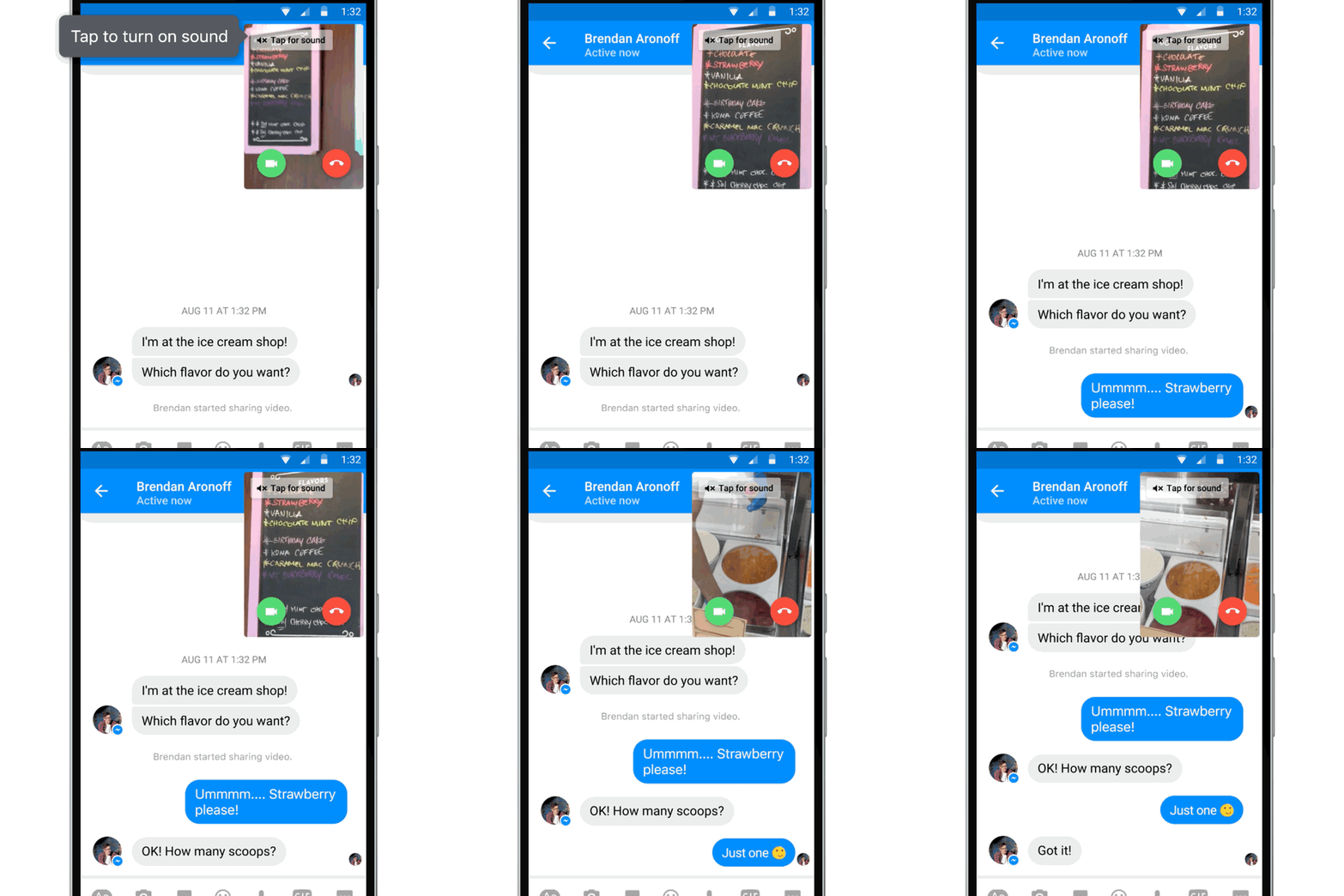
You can also turn your Messenger Instant Video into a full blown video call. The person on the receiving end simply needs to hit the green video camera button.

Facebook

Facebook isn&039;t the first company to debut this sort of live video sharing concept. It exists in other apps already, including Google&039;s Duo and Snapchat.

Here’s what it looks like in Google Duo.

Here's what it looks like in Google Duo.

Google

With Messenger growing faster than Facebook itself, the company is putting a lot of effort into improving it and growing its user base. Indeed, in June, the app — which is the second most popular iOS app of all time, after Facebook — hit 1 billion monthly active users. As Messenger head David Marcus told BuzzFeed News earlier this summer, “We want everyone to be able to use Messenger, not only Facebook users.”
Quelle: <a href="Facebook Messenger Adds Live Video Sharing“>BuzzFeed
America’s Sexiest Ranked College Football Schools, According To Tinder

AP Photo/Heather Ainsworth

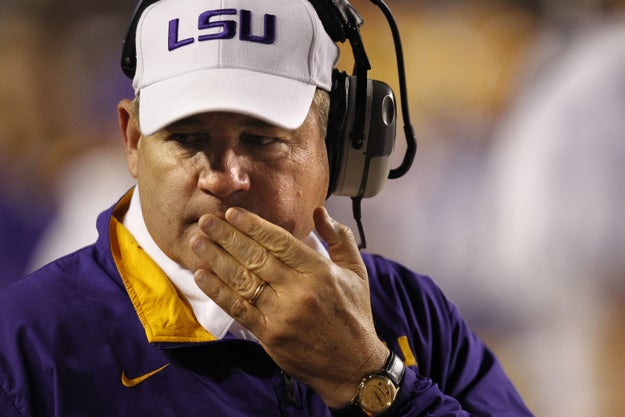
LSU may be good at football, but…

It&;s no Florida State in the battle for right-swipes on Tinder.

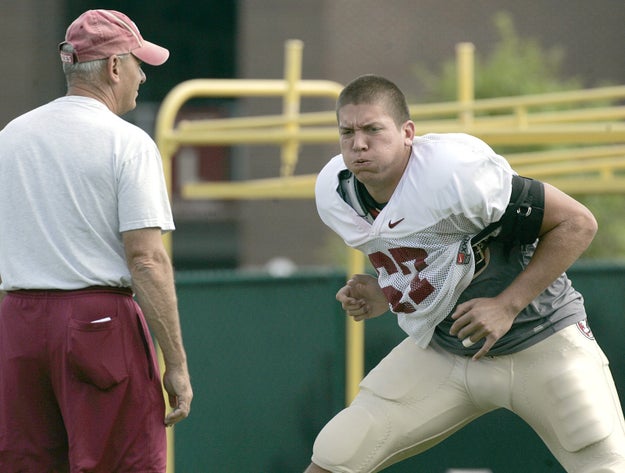
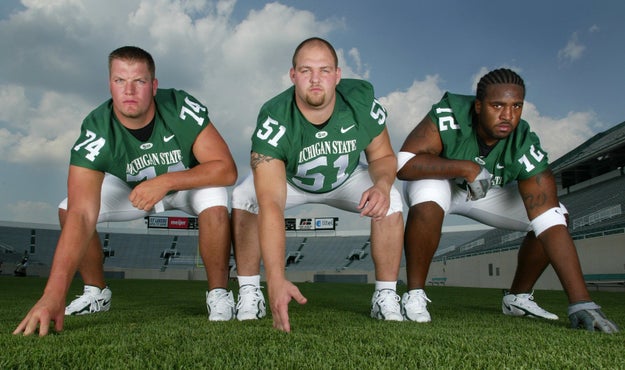
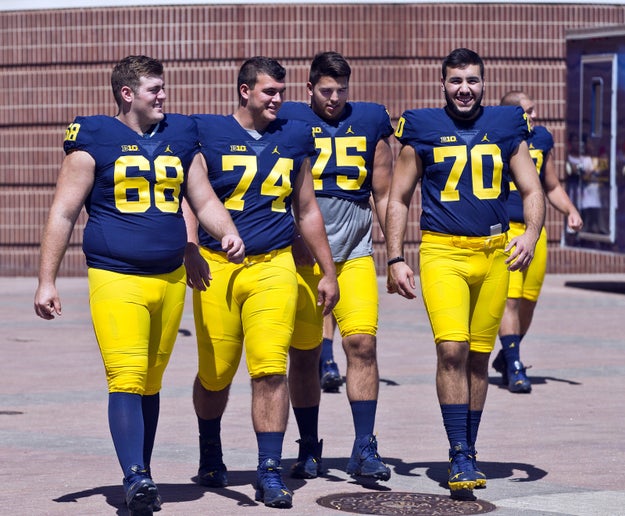
On Thursday, Tinder reordered the AP Top 25 ranking of college football’s best teams, using its data to determine which schools’ students are right-swiped at the highest rate. Florida State — ranked fourth in the AP poll — topped Tinder&039;s rankings. Nice job, Florida State. LSU, on the other hand, ranked dead last. Coach Les Miles, it&039;s time for a pep talk.

Tinder sociologist Dr. Jess Carbino had some advise for under-performers at LSU and elsewhere. “Most important is your smile – people smiling are considered to be more kind and approachable,” she said. “So, if you&039;re a football player, be sure to take your helmet off for your Tinder photos – but leave your jersey on. We&039;ve found that making sure you’re not covering up your face and avoiding neutral colors lead to more right swipes.”

Here&039;s the full list:

1. Florida State

Phil Coale / ASSOCIATED PRESS

2. Ohio State

3. Michigan State

Al Goldis / AP

4. Florida

5. UCLA

6. Michigan

Tony Ding / AP

7. USC

8. Washington

9. Alabama

Lm Otero / AP

10. North Carolina

11. Georgia

12. Oregon

Matt York / AP

13. Iowa

14. Houston

15. Clemson

Rainier Ehrhardt / AP

16. Tennessee

17. Oklahoma State

18. Stanford

19. Louisville

Timothy D. Easley / AP

20. Baylor

21. Oklahoma

22. Notre Dame

23. Ole Miss

Thomas Graning / AP

24. TCU

25. LSU

Gerald Herbert / AP

Quelle: <a href="America’s Sexiest Ranked College Football Schools, According To Tinder“>BuzzFeed
Court Affirms The Right To Leave A Bad Yelp Review

A Texas judge has dismissed a lawsuit against a couple accused of violating their contract with a pet sitting business by leaving a 1-star review on Yelp.

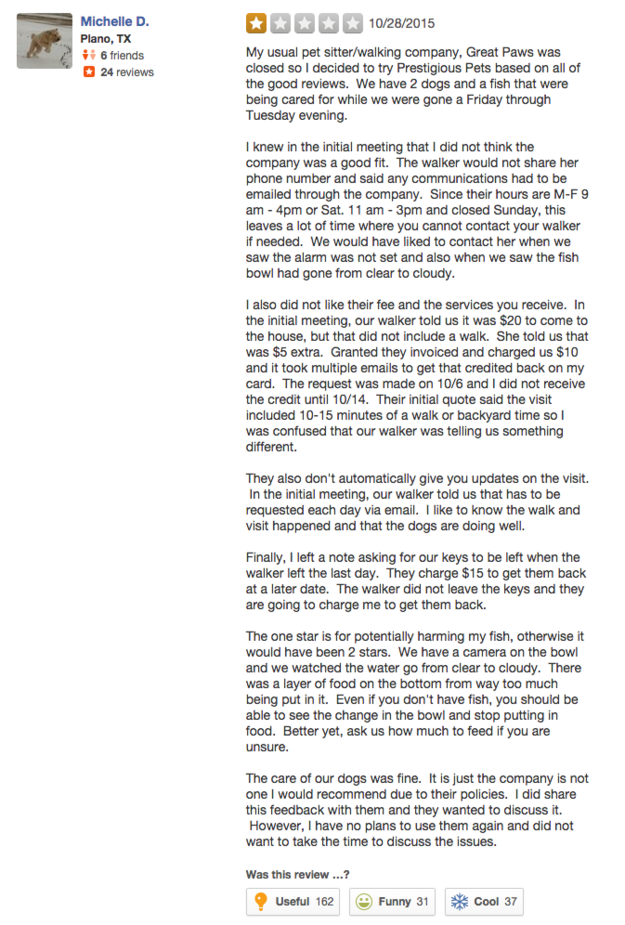
A Texas judge has dismissed a lawsuit against a couple accused of violating their contract with a pet sitting business by leaving a 1-star review on Yelp.

Carrington Coleman Law Firm/Monica Latin

Robert and Michelle Duchouquette from Plano, Texas were sued by Prestigious Pets in Dallas after they wrote the one-star review. The company said the review violated a clause in its contracts which prohibits customers from publicly criticizing the business.

The Yelp review complained of poor communication from the company and a lack of clarity about prices — along with lackluster maintenance of the couple&;s fish bowl. “The one star is for potentially harming my fish,” Michelle Duchouquette wrote in its conclusion. “Otherwise it would be have been two stars.”

Prestigious Pets sought $200,000 to $1 million in damages in the suit, claiming the couple defamed it and violated a non-disparagement clause in its contract with them.

In response to the judge&039;s dismissal of the case, a Prestigious Pets spokesperson told BuzzFeed News the company is considering appealing the ruling, and is “confident that Texas law supports enforcing their contract, including the non-disparagement clause.”
The company said its claim is particularly strong “given the proof presented that Prestigious Pets never agreed to care for the fish, was not paid or hired to care for the fish, and the fish was never harmed.”

The business has said in court documents that the Duchouquettes&039; “media campaign” around the lawsuit led to a “dramatic decrease in new business and the loss of current clients that has left Prestigious Pets a shell of its former success.”

The couple asked the court to dismiss the case in June, arguing their review was an exercise of their right to free speech.

The couple asked the court to dismiss the case in June, arguing their review was an exercise of their right to free speech.

Yelp / Via yelp.com

“The burden is on the plaintiffs to establish, by clear and specific evidence, each essential element of each of their claims,” the couple said in a court document. “They cannot do so.”

The judge apparently agreed. District Court Judge Jim Jordan dismissed the allegations against the Duchouquettes and ordered Prestigious Pets to cover their attorneys’ fees.

The judge also said the couple was entitled to “recover sanctions against the plaintiffs sufficient to deter them from bringing similar actions” under the state&039;s free speech codes.

In May, Yelp placed an alert on its page for Prestigious Pets, warning users the company may be issuing “questionable legal threats” against reviews. The consumer alert was the first of its kind issued by Yelp.

Paul Levy, an attorney with Public Citizen, who represented the Duchouquettes, told BuzzFeed News that the order is a useful step in efforts to protect consumers from being slapped with similar so-called gag clauses.
“The very fact that a non-disparagement clause was held unenforceable shows other consumers that they can stand for their rights,” he said. “What consumer wants to hire a company that sues its customers and has a non-disparagement clause in its contract?”

Michelle Duchouquette said in a statement to BuzzFeed News that the couple is “thankful to have a ruling that supports our right to free speech.”
Michelle Duchouquette said in a statement to BuzzFeed News that the couple is "thankful to have a ruling that supports our right to free speech."
“We are so grateful for the attorneys who have supported us through the case,” she said. “It took lots of hours and many smart minds spending too much time talking about Gordy the betta fish. Thank goodness they did not lose sight of the real issue: the threats posed by non-disparagement clauses to our right to free speech.”

LINK: A Pet Sitting Business Sued These Customers For Posting A Negative Yelp Review

LINK: Yelp’s Warning: This Dentist Might Sue You For Posting A Negative Review

Quelle: <a href="Court Affirms The Right To Leave A Bad Yelp Review“>BuzzFeed

This Gadget Helps You Find Your Wallet When It's Lost

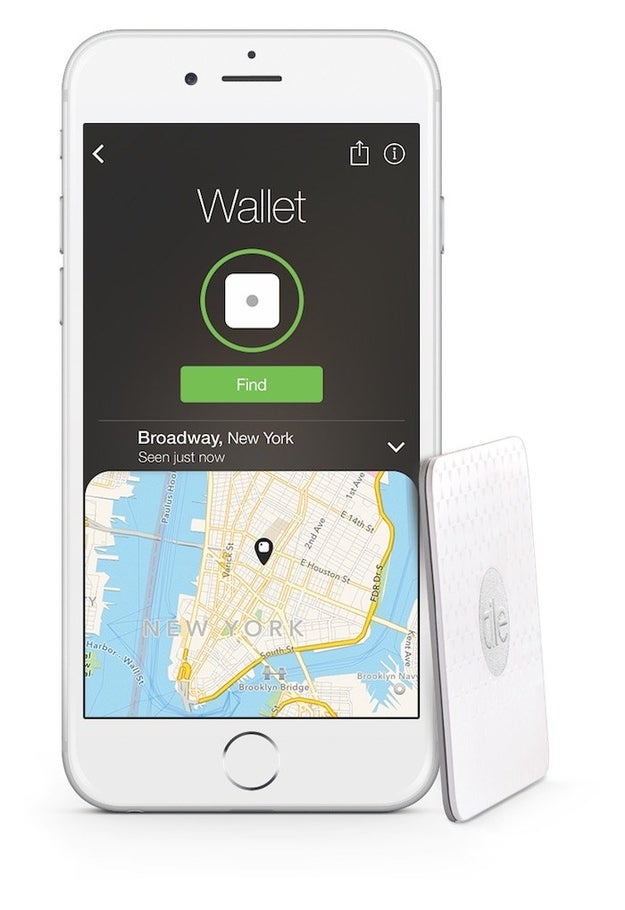
The Tile Slim is an ultra-thin tracker that can fit anywhere a credit card can.

Jenny Chang / BuzzFeed

I was an hour late to a dentist appointment, when I realized I had spent too many damn lifetime minutes looking for my keys.

I was an hour late to a dentist appointment, when I realized I had spent too many damn lifetime minutes looking for my keys.

Which jacket was I wearing yesterday? Are they in that one purse? How about the backpack? Did I leave them in my pants that are now IN THE DRYER? Noooo.
– Me, every morning.

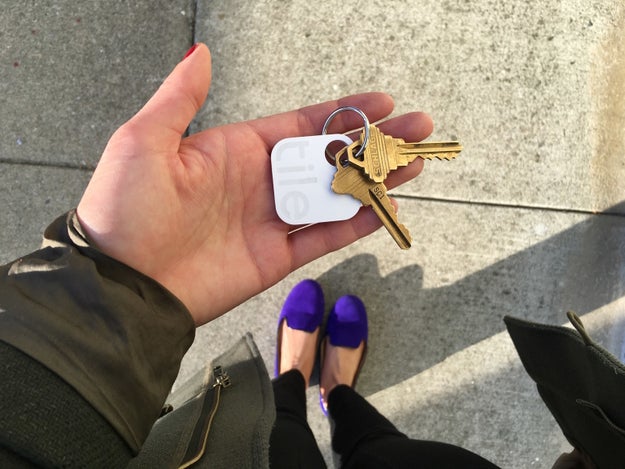
There are a lot of useless gadgets on the market – Dash buttons for binders, $700 juicers, internet-connected laser pointers for cats, and the like – but Tile isn&;t one of them. It can find your stuff when memory fails you.

Bluetooth trackers, like Tile, are a pretty elegant tech solution for an everyday problem. They&039;re small, typically no larger than a tin of lip balm. Almost every tracker has the same features (including Trackr, Chipolo, and, of course, Tile): the ability to ring the item from your phone, display the item&039;s last known or current location on an app, reverse find a phone by pressing on the tracker itself, and tap into a network of the device&039;s users to crowdsource your search when the tracker goes out of Bluetooth range.

I bought my Tile more than a year ago. Of the three trackers I considered, Tile had the most Facebook likes and therefore, perhaps, the most users (“millions,” according to the company)?? Yeah. Idk. Those users, I figured, could come in handy when I lose them for good. ¯_(&;)_/¯

But even on my own, Tile has come in handy more times than I&039;d prefer to admit. My boyfriend has been driven INSANE by the 90-decibel Tile chirp I activate every morning to find my door key.

Nicole Nguyen / BuzzFeed

Tile Slim, a thin, wallet-friendly tracker, is the company’s newest product.

Tile Slim, a thin, wallet-friendly tracker, is the company's newest product.

The company sent a review unit over, on loan, and I&039;ve been playing with it, and trying to lose my stuff ever since.

It&039;s fundamentally the same product as the original Tile, but much slimmer and minus a key ring. There&039;s an integrated button you can double tap to locate your phone, and it will also appear in the app with a map of its current or last known location. It has the same IP5 splash-proof rating and 100-foot Bluetooth LE range.

Tile

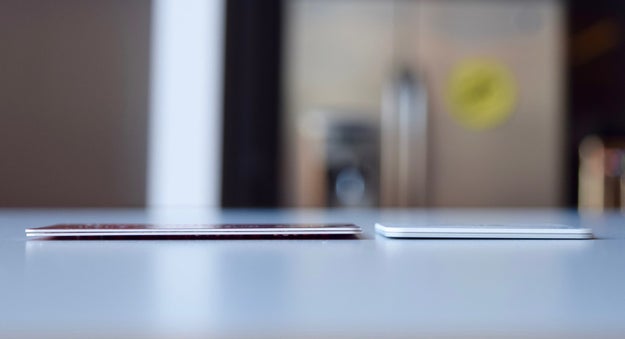
It’s lighter (9.3 g), thinner (2.4 mm, or about two credit cards stacked), but has a larger surface area (about 1.5 times larger than the original Tile, diagonally).

It's lighter (9.3 g), thinner (2.4 mm, or about two credit cards stacked), but has a larger surface area (about 1.5 times larger than the original Tile, diagonally).

Nicole Nguyen / BuzzFeed


View Entire List ›

Quelle: <a href="This Gadget Helps You Find Your Wallet When It&039;s Lost“>BuzzFeed

Twitter Says Wishing Rape On A Woman Doesn't Count As Harassment

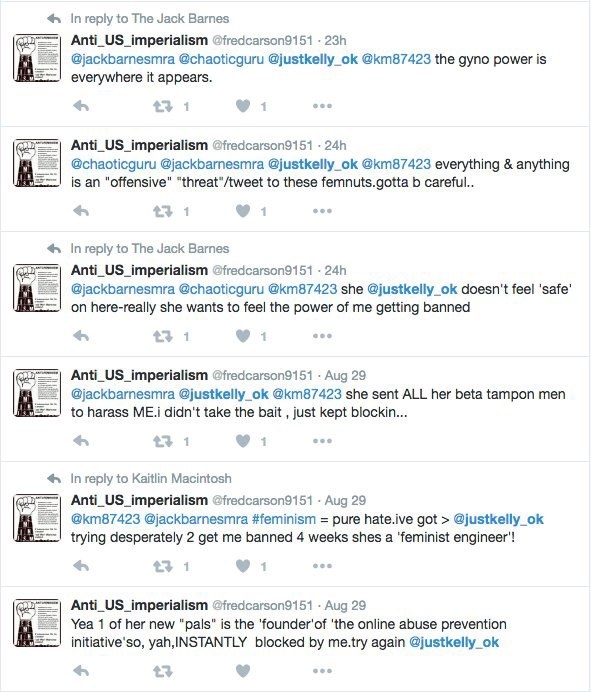
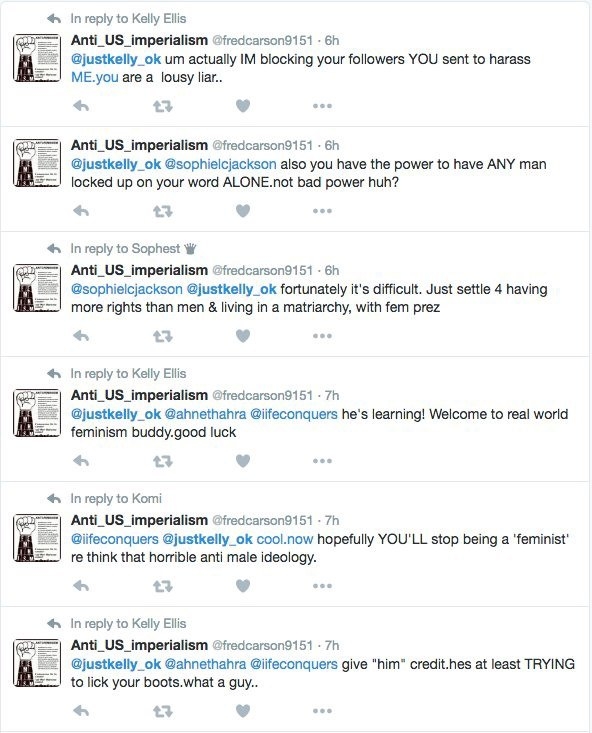
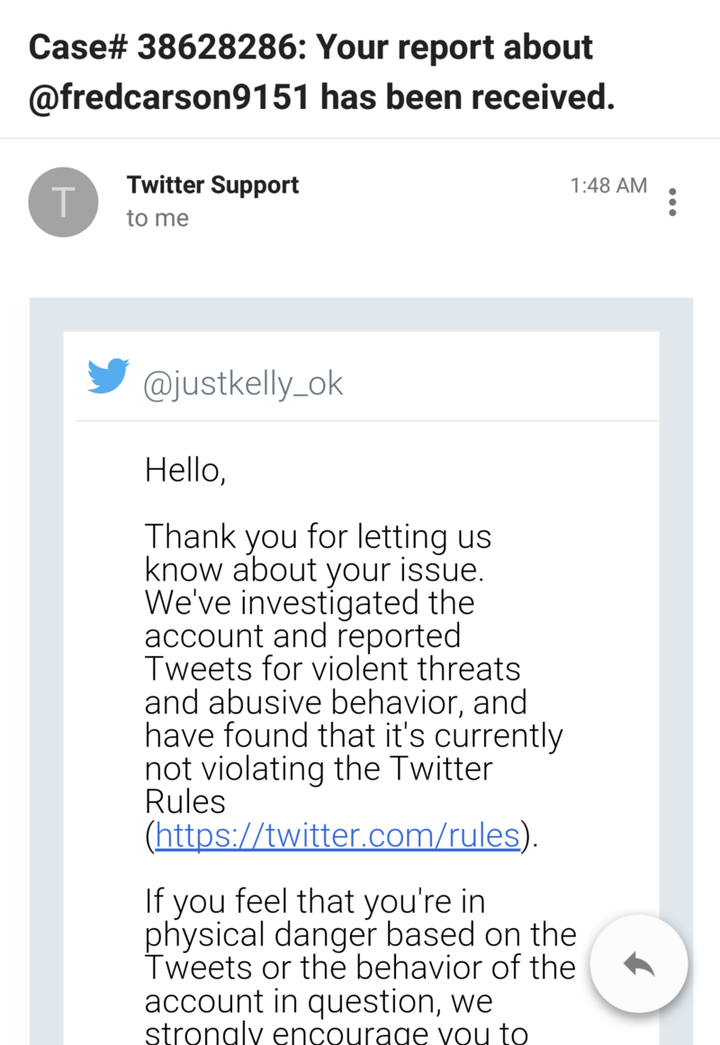
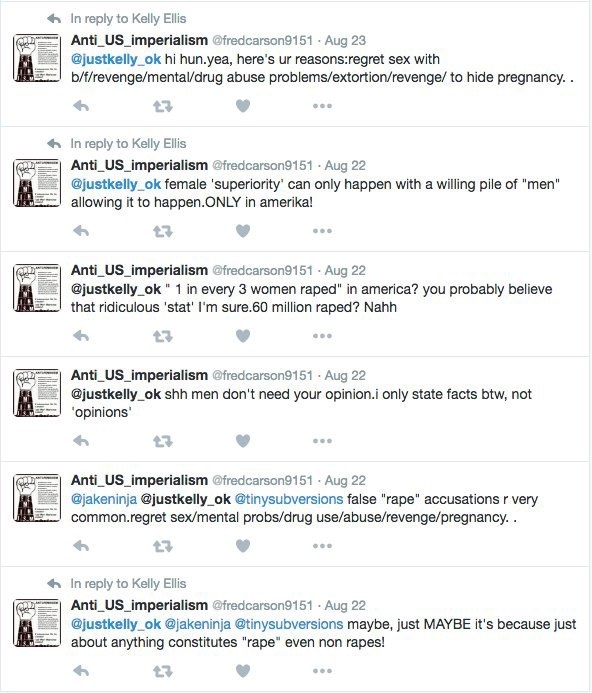
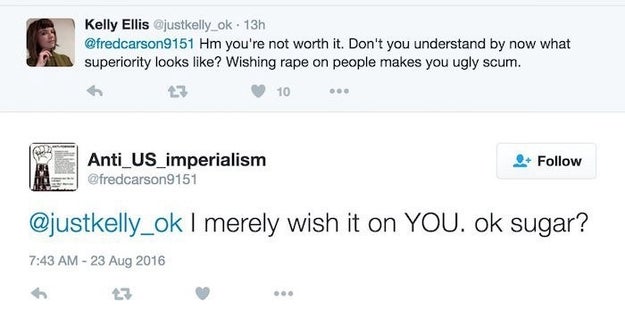
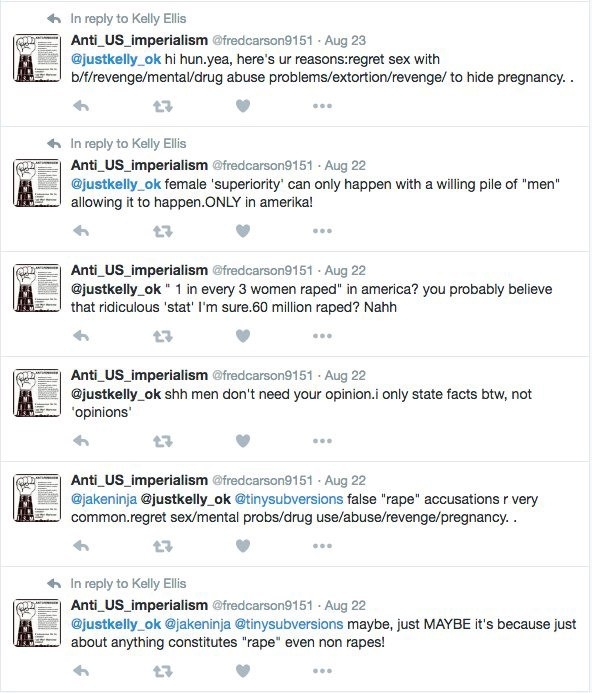
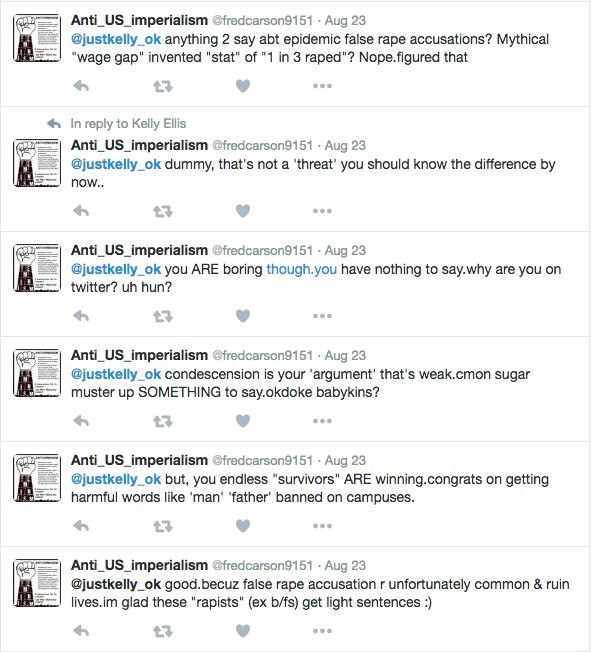
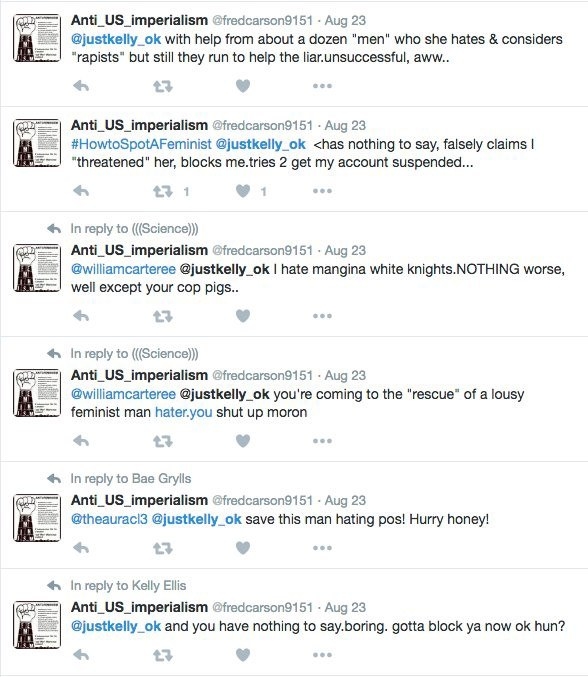
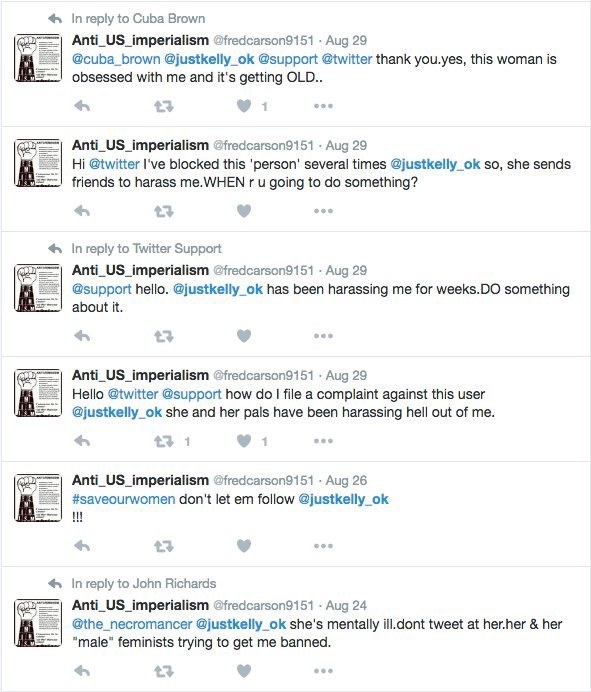
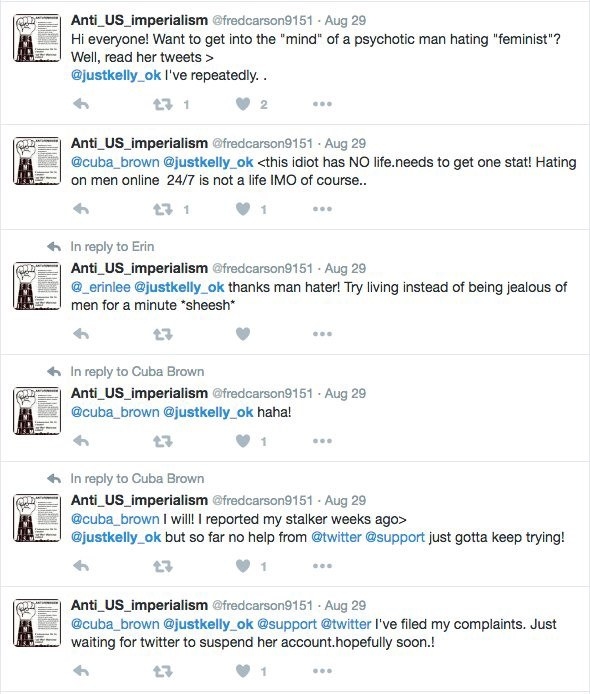
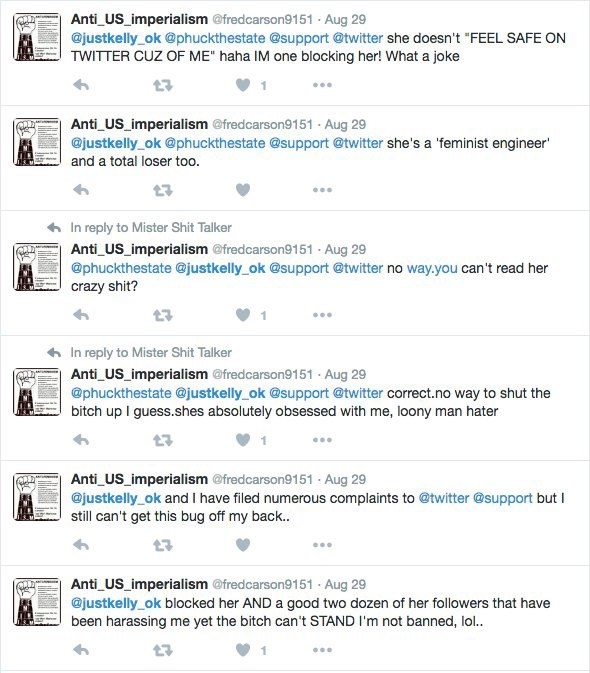
Kelly Ellis is an software engineer at Medium. She&;s verified on Twitter and has roughly 11,000 followers. And for the past week or so, Ellis has been the subject of relentless targeted abusive tweets from @fredcarson915. Among the barrage of 70 tweets (all of which were posted to Medium by Ellis), @fredcarson9151 tells Ellis he wishes she would be raped and calls her a “psychotic man hating &039;feminist&039;.”

When Ellis reported the abuse, Twitter replied that its investigation found the alleged violent and abusive tweets did not violate Twitter&039;s rules, which prohibit tweets involving violent threats, harassment, and hateful conduct. Twitter&039;s rules explicitly state that one may not “threaten other people on the basis of race, ethnicity, national origin, sexual orientation, gender, gender identity, religious affiliation, age, disability, or disease.”

Anyhow, here are some tweets that Twitter does not believe rise to the level of violent, abusive, or hateful:

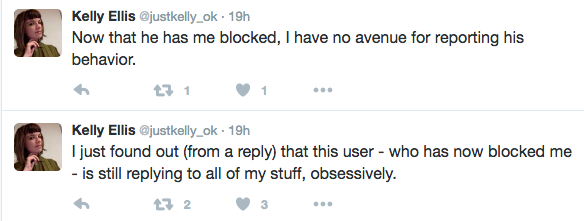
When Ellis responded to her harasser&039;s tweets, @fredcarson9151 blocked her, but continued to respond to her tweets, rendering Ellis unable to report new instances of harassment.

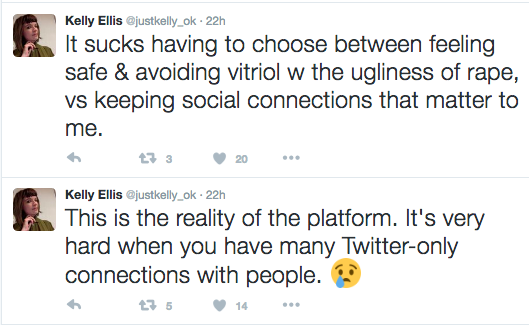
In response to Twitter&039;s inaction (she alleges in her tweets she has been in contact with some Twitter employees), Ellis said she&039;ll be leaving the network.

As of this writing, @fredcarson9151 is still tweeting.

As of this writing, @fredcarson9151 is still tweeting.

Twitter did not immediately respond to a request for comment.

Quelle: <a href="Twitter Says Wishing Rape On A Woman Doesn&039;t Count As Harassment“>BuzzFeed

9 Alternatives To The Sunrise Calendar App That Don't Suck

Get your life under control.

Zoe Burnett / BuzzFeed

Sunrise, the best calendar app ever made, is sunsetting on August 31.

Sunrise, the best calendar app ever made, is sunsetting on August 31.

:cryingforever:

The app is being killed as a part of an acqui-hire by Microsoft, and folded into Outlook for mobile, which sounds like a deathbed but is actually my favorite email client for iOS. Here are some alternatives that aren&;t as good, but will be just fine until the next Sunrise comes along.

CBS / Via cbs.com

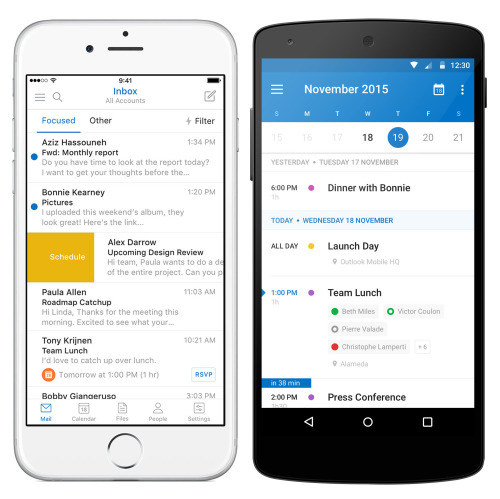
If you’re a Sunrise purist, just download Outlook (free, iOS and Android).

If you're a Sunrise purist, just download Outlook (free, iOS and Android).

The Good &; – Outlook is an email, calendar, and cloud storage app in one. You can easily manage multiple accounts, which makes it great for merging your personal and work lives.

Best of all, Outlook’s calendar already incorporates a lot of Sunrise features. The daily agenda and 3-day view look nearly identical. Email in the app is surprisingly good, too. Outlook sorts messages into two inboxes: Focused (for important stuff) and Other (for everything else).

The Bad &; – Because Outlook’s email and calendar views are side-by-side, you might get caught in an email vortex when all you want to do is look up where you’re supposed to be right now.

Also, activities on Outlook for mobile can’t be synced with the Outlook web app, so you’re shackled to your phone. Currently, there are no plans to revamp the web app or integrate the Sunrise experience. However, you *can* open the Outlook app and go to Settings > Help & Feedback > Suggest A Feature to give the team a lil’ nudge in the right direction.

Outlook


View Entire List ›

Quelle: <a href="9 Alternatives To The Sunrise Calendar App That Don&039;t Suck“>BuzzFeed