Social Justice YouTubers Are About To Get A Big Boost

Social Justice YouTubers Are About To Get A Big Boost

Today, YouTube announced a global initiative that endorses a select group of YouTube video creators who confront issues ranging from hate speech to xenophobia in their videos posted on the site. The program, called Creators for Change, will profile and promote six “ambassadors” — though there are more to come, the company says — and provide $1 million in grants and equipment to videographers aspiring to make work focused on positive change.

In a press release, the company said it wants the ambassador project to “demonstrate the incredible power YouTube has to generate a positive social impact,” especially “in a time when the internet is criticized for fueling division and distrust.”

The six ambassadors each focuses on different issues, including minority media representation, xenophobia, and religious tolerance. Each creates different types of videos, ranging from lifestyle vlogs to design theory lessons to comedy. They hail from an array of countries, and not all of them are even YouTube famous, with the exception of Australia’s Natalie Tran, also known as CommunityChannel, with 1.8 million subscribers, and Nilam Farooq of Germany, who has 1.1 million. The other ambassadors are Fakir Almobtaghi Abdelouahid of Belgium, known on his channel as Abdel en Vrai, Omar Hussein of Saudi Arabia, Bar&x131;&x15F; Özcan of Turkey, and Humza Arshad of the United Kingdom, known by his channel name HumzaProductions.

YouTube will give its Creators for Change ambassadors production and equipment grants to fulfill a social impact project of their choice. The ambassadors will also work with YouTube to select the recipients of the $1 million in grants and production equipment.

Arshad said in a prepared statement, “I&;m honoured Google and YouTube have asked me to be their global ambassador for their campaign against Islamophobia. Right now so many people are suffering because of faith-based hatred and are too afraid to go on about their daily lives.” He creates short comedic videos about his life as a Muslim man in the UK in the series Diary of a Bad Man.

HumzaProductions&039; Diary of a Bad Man

youtube.com

As part of the Creators for Change initiative, YouTube will create its own videos profiling each of the ambassadors. In his profile, Arshad focuses on the negative perception of Islam and how he uses comedy to work against it. “I thought I should bring that positive energy that Muslims bring to the table to the mainstream,” he said in the video. “I try my best to change the perception that people have of Muslims. We’re just like everyone else…just a bit hairier.”

youtube.com

Tran, who has been creating videos since 2006 about her travels, her life and the representations of Asian people in media, has accrued half a billion channel views. In prepared statement, she said that one of things she appreciated about YouTube “is how willing people are to start or engage in real conversations.”

Here she is her talking about Asian representation in media and how it’s affected her life:

Here she is her talking about Asian representation in media and how it's affected her life:

justinjonestv.tumblr.com / Via justinjonestv.com

justinjonestv.tumblr.com / Via justinjonestv.com


justinjonestv.tumblr.com / Via justinjonestv.com

YouTube has struggled with a reputation for having some of the worst comment sections on the internet, though it has in recent years attempted to clean them up. When asked how it plans to moderate comments on Creator videos, a YouTube spokesperson told BuzzFeed News, “We are deeply troubled by reports of harassment on YouTube, and we work hard to address this issue through strict policies that prohibit misconduct.”

YouTube also plans to support more localized versions of Creators for Change in conjunction with NGOs and schools that will resemble its recent program in France that explored fraternité, French for “brotherhood,” in 140 videos featuring 700 participants. The company told BuzzFeed News it may name American ambassadors soon. The announcement of Creators for Change comes alongside a $2 million commitment from Google.org to nonprofits promoting inclusion and cross-cultural understanding.

Quelle: <a href="Social Justice YouTubers Are About To Get A Big Boost“>BuzzFeed

The Internet's Domain Naming System Is Now A 2016 Campaign Issue, Somehow

Mike Stone / Reuters

Donald Trump and Sen. Ted Cruz see eye to eye on at least one issue: blocking the long-planned transfer of the internet&;s technical management to an international body.

“Donald Trump is committed to preserving Internet freedom for the American people and citizens all over the world,” Stephen Miller, the national policy director for the Trump campaign, said in a statement released Wednesday. “The U.S. should not turn control of the Internet over to the United Nations and the international community.”

Since 1998, an international nonprofit called the Internet Corporation for Assigned Names and Numbers (ICANN) has been responsible for overseeing the web&039;s global domain naming system — which allows us to connect to unique Web addresses from anywhere in the world.

Oversight of the naming system officially resides with the US Department of Commerce. But for almost two decades the agency has contracted out the responsibility to ICANN. To remove the US government as a middleman, and to advance a vision of the internet as a truly global, open network, ICANN is scheduled to take on the management responsibilities of the naming system on Oct. 1.

Cruz, however, has been mounting a campaign to block the transfer and has been gathering support on the Hill from key Republicans. They fear that ceding authority to an international, multi-stakeholder organization will empower authoritarian governments to censor what people see online. Trump&039;s endorsement of the position elevates the ICANN transfer to the 2016 campaign stage.

“Internet freedom is now at risk with the President’s intent to cede control to international interests, including countries like China and Russia, which have a long track record of trying to impose online censorship,” Miller said.

Awkwardly, Cruz has thus far not endorsed Trump for president though his spokeswoman said the senator is “glad to have” Trump&039;s support on this particular issue.

In a recent congressional hearing on the ICANN transition, ICANN&039;s president and a top official in the Commerce Department insisted that fears of a Russian-Chinese takeover of the internet are unfounded. While authoritarian governments do deploy a variety of methods to filter, block, and surveil internet traffic, the domain name system that ICANN manages operates at a different level than those forms of censorship.

Experts say that blocking the transfer would actually embolden Russia and other foreign powers who would rather see internet stewardship reside with state governments, as opposed to the global, non-governmental make-up of ICANN.

But Cruz, and now Trump, remain unconvinced. Along with dozens of congressional Republicans, Cruz is working to delay the transfer of ICANN&039;s oversight. The disagreement over ICANN has also become entangled with protracted budget negotiations that must be resolved by Sept. 30, in order for the government to remain open.

“Congress needs to act, or Internet freedom will be lost for good, since there will be no way to make it great again,” Miller said. ICANN declined to comment for this story. The Clinton campaign did not immediately respond to a request for comment.

Quelle: <a href="The Internet&039;s Domain Naming System Is Now A 2016 Campaign Issue, Somehow“>BuzzFeed

Mark Zuckerberg And Priscilla Chan To Give $3 Billion To Science

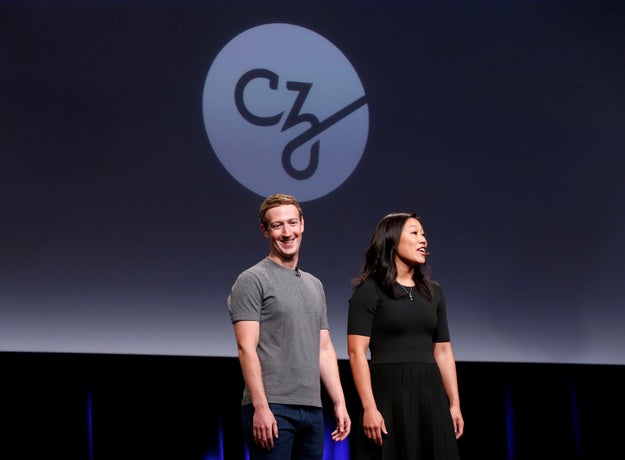
Pricilla Chan and her husband Mark Zuckerberg announce the Chan Zuckerberg Initiative at a news conference in San Francisco, California on September 21, 2016.

Beck Diefenbach / Reuters

When Mark Zuckerberg and Priscilla Chan welcomed their daughter, Max, into the world in December 2015, it was a birth announcement with a bang: They unveiled the Chan Zuckerberg Initiative, a limited liability company intended to “advance human potential and promote equality.” They funded it with 99 percent of their Facebook shares, then valued at about $45 billion.

On Wednesday, the pair announced the Initiative&;s biggest investment to date: at least $3 billion over the next decade to an all-star team of doctors and academics who will search for breakthroughs and develop tools to tackle the most common diseases — heart disease, cancer, infectious disease, and neurological disease. The goal? “Cure, prevent, or manage all diseases by the end of the century.” (No big deal.)

“That doesn&039;t mean that no one will ever get sick,” Chan said during an event at UC San Francisco, the university where she trained to become the pediatrician she is today after meeting Zuckerberg at Harvard University. “But it does mean our children and their children could get sick a lot less. And when they do, we should be able to detect and treat it or at least manage it as an ongoing physician.”

At times tearing up, Chan cited her difficult experiences as a doctor — “from making a devastating diagnosis of leukemia, to sharing with a family they were unable to resuscitate their child” — in showing her that “we are at the limit of what we understand about the human body and disease.” “We want to push back that boundary,” she said.

Curing, preventing, or managing “all diseases” in the foreseeable future is a lofty goal, to put it mildly, and the announcement was met with more than a little skepticism.

But the couple have assembled an impressive team to at least attempt this feat. Chan Zuckerberg Science is led by Cori Bergmann of Rockefeller University, whose work has investigated how neurons and genes affect behavior. And the first effort is a $600 million, 10-year “biohub” at UC San Francisco that will bring together researchers from that university, as well as nearby UC Berkeley and Stanford University. Leading it are two prominent Bay Area scientists: Stanford bioengineer and physicist Stephen Quake and UC San Francisco&039;s Joe DeRisi, who studies the underlying genetics of infectious diseases. Their initial focus, they said, will be on constructing a “cell atlas” — a characterization of all the cell types in the human body — and developing new ways to detect, respond to, treat, and prevent infectious disease.

Programmers will work alongside scientists on these kinds of problems, an interdisciplinary approach that fits Zuckerberg and Chan&039;s respective backgrounds. Zuckerberg described his own optimism for the future as rooted in an “engineering mindset.” “It&039;s this belief you can take any system, no matter how complex,” he said, “and make it much, much better than it is today, whether it&039;s code, hardware, biology, a company, an education system, a government — anything.”

This initiative isn&039;t the couple&039;s first contribution to health and medicine. Not far from the site of Wednesday&039;s event is San Francisco&039;s public hospital, which was recently renamed the Zuckerberg San Francisco General Hospital and Trauma Center after Chan and Zuckerberg donated $75 million toward its equipment and technology last year. Last year, Facebook said its engineers had developed personalized-learning software for a public school system. And Chan is opening a free school in East Palo Alto with a dual focus on health and education.

The couple&039;s philanthropy efforts have been controversial in the past; in 2010, they donated $100 million to Newark, N.J. public schools, an effort that critics described as poorly managed. Zuckerberg defended it.

On Wednesday, Zuckerberg and Chan stressed that they had done their homework over the last two years, “talking to scientists ranging from Nobel Prize laureates to graduate students,” as Chan put it. “We&039;ve learned a lot and we know we have a lot more to learn.”

At the end of the event, they got an endorsement from someone who&039;s been in their shoes: Bill Gates, whose foundation with his wife Melinda Gates has also backed projects tackling everything from public health to education. “This idea of curing and preventing all diseases by the end of the century,” Gates said, “that&039;s very bold, very ambitious, and I can&039;t think of a better partnership to take it on.”

Quelle: <a href="Mark Zuckerberg And Priscilla Chan To Give Billion To Science“>BuzzFeed

Azure Stream Analytics support for IoT Hub Operations Monitoring

Azure Stream Analytics is a real-time, highly scalable, and fully managed stream analytics service that can process millions of events per second and perform aggregations and computations in near real-time.

Stream Analytics and Azure IoT Hub have worked really well together for some time, allowing you to easily gather insights over the data your IoT devices send to the IoT Hub. To get going with the IoT Hub all you need to do is simply configure an Input as described in the Create an IoT Hub data stream input documentation. We have many customers using this today with their IoT solutions and it works really well; however, a common ask from customers is how to monitor the status of operations on your IoT hub in real time. Well, today, we’re happy to announce that you can now do this by hooking up to the IoT Hub Operations Monitoring endpoint.

IoT Hub operations monitoring enables you to monitor the status of operations on your IoT hub in real time. IoT Hub tracks events across several categories of operations, and you can opt into sending events from one or more categories to an endpoint of your IoT hub for processing. You can monitor the data for errors or set up more complex processing based on data patterns.

IoT Hub monitors five categories of events:

Device identity operations
Device telemetry
Cloud-to-device commands
Connections
File uploads

For more information on IoT Hub Operations Monitoring please refer to the Introduction to operations monitoring documentation.

A common ask by customers is how to know in near real-time if a device disconnects from your IoT Hub and does not reconnect within a period of time, say one minute. When this occurs you want to send an email or kick-off a workflow in near real-time. For some devices it is crucial that these alerts go out as soon as possible and maintenance is carried out before there becomes a problem.

To demonstrate how easy it is to do this with Stream Analytics we’re going to use the IoT Hub Operations Monitoring capabilities and configure the “Connections” event monitoring.


As you can see from the image above, enabling starts logging events when devices connect and when they disconnect. To start using this, toggle the Connections switch to Verbose as shown:


Once this has been configured, events should start being captured when devices connect to your IoT hub. To verify this, use a tool like the Service Bus explorer and connect it to the "Event Hub – compatible name / endpoint" and view the messages.

A sample message collected could resemble something like this:

{
"durationMs": 1234,
"authType": "{"scope":"hub","type":"sas","issuer":"iothub"}",
"protocol": "Amqp",
"time": "2016-09-13T20:00Z",
"operationName": "deviceConnect",
"category": "Connections",
"level": "Error",
"statusCode": 4XX,
"statusType": 4XX001,
"statusDescription": "MessageDescription",
"deviceId": "device-ID"
}

Similarly, when a device disconnects from the IoT Hub, an event will be captured with the operationName == deviceDisconnect.

Now that we have confirmed these messages are arriving in our IoT Hub, using them in a Stream Analytics job is easy:

1. Create a new Stream Analytics job.

For assistance in creating a new Stream Analytics job, refer to How to create a data analytics processing job for Stream Analytics

2. Create a data stream Input pointed to your IoT Hub. Be sure to select “Operations monitoring” from Endpoint and not “Messaging”.

3. Create the following query:

WITH
Disconnected AS (
SELECT *
FROM input TIMESTAMP BY [Time]
WHERE OperationName = &;deviceDisconnect&039;
AND Category = &039;Connections&039;
),
Connected AS (
SELECT *
FROM input TIMESTAMP BY [Time]
WHERE OperationName = &039;deviceConnect&039;
AND Category = &039;Connections&039;
)

SELECT Disconnected.DeviceId, Disconnected.Time
INTO Output
FROM Disconnected
LEFT JOIN Connected
ON DATEDIFF(second, Disconnected, Connected) BETWEEN 0 AND 180
AND Connected.deviceId = Disconnected.deviceId
WHERE Connected.DeviceId IS NULL

This query has two steps: the first step that gets all disconnect events, and the second that gets all connect events.

We then join these two streams together using the Stream Analytics DATEDIFF operation on the LEFT JOIN, and then filter out any records where there was a match. This gives us devices that had a disconnect event, but no corresponding connect event within 180 seconds.

The output of this job can now be directed to any of the supported Stream Analytics outputs, including Service Bus queues. Once it lands in a Service Bus Queue, it is easy to create an Azure Function, or even an Azure Logic App, which will run as soon any message is published to the queue.

And just like that, with a very simple SQL-like query you can have real-time updates from your IoT Hub Operations Monitoring endpoint.

Sometimes I miss the good old days when coding complex scenarios like this was difficult and time consuming…no, wait, I don’t! Using the PaaS services and serverless computing capabilities of Azure is so much easier and powerful, allowing me to focus on building value add.

Related Services

Microsoft Azure IoT Hub – connect, monitor, and manage millions of IoT assets

Microsoft Azure Event Hubs – ingest data from websites, apps, and devices

Microsoft Azure Service Bus – Keep apps and devices connected across private and public clouds

Microsoft Azure Logic Apps – Quickly build powerful integration solutions

Microsoft Azure Functions – Process events with serverless code

Next Steps

We’re really excited about this close integration with IoT Hubs and hope it will unlock many new, exciting capabilities for you and your IoT applications.

We invite you to provide feedback on our User Voice page about what you want added next to the service!

If you are new to either Microsoft Azure or Stream Analytics, try it out by signing up for a free Azure trial account and create your first Stream Analytics job.

If you need help or have questions, please reach out to us through the MSDN or Stackoverflow forums, email the product team directly.
Quelle: Azure

This Company Wants You to Stop Making Terrible Charts in Excel

Melanie Perkins, CEO of Canva, a company that makes online graphic design tools, wants her to software to “power the modern workforce.” But what she really wants is for people to stop making ugly graphics.

That’s why the company is debuting Canva for Charts, a simple tool to turn columns of data into pie charts and bar graphs with tasteful color schemes and fonts.

Canva, launched in 2013 in Perth, Australia, allows you to easily create and collaborate on visual content—like invitations, graphics, posters—and save them in the cloud. Most of the images you can make with Canva resemble greeting cards and are meant to be shared on social media. But with the introduction of Charts, Perkins is hoping that eventually, you’ll start using Canva in your office.

Regular Canva:

Regular Canva:

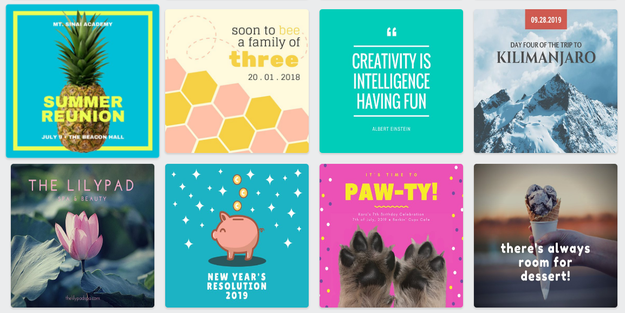
Examples of Canva&;s social graphics templates.

Canva / Via canva.com

Canva for Charts:

Canva for Charts:

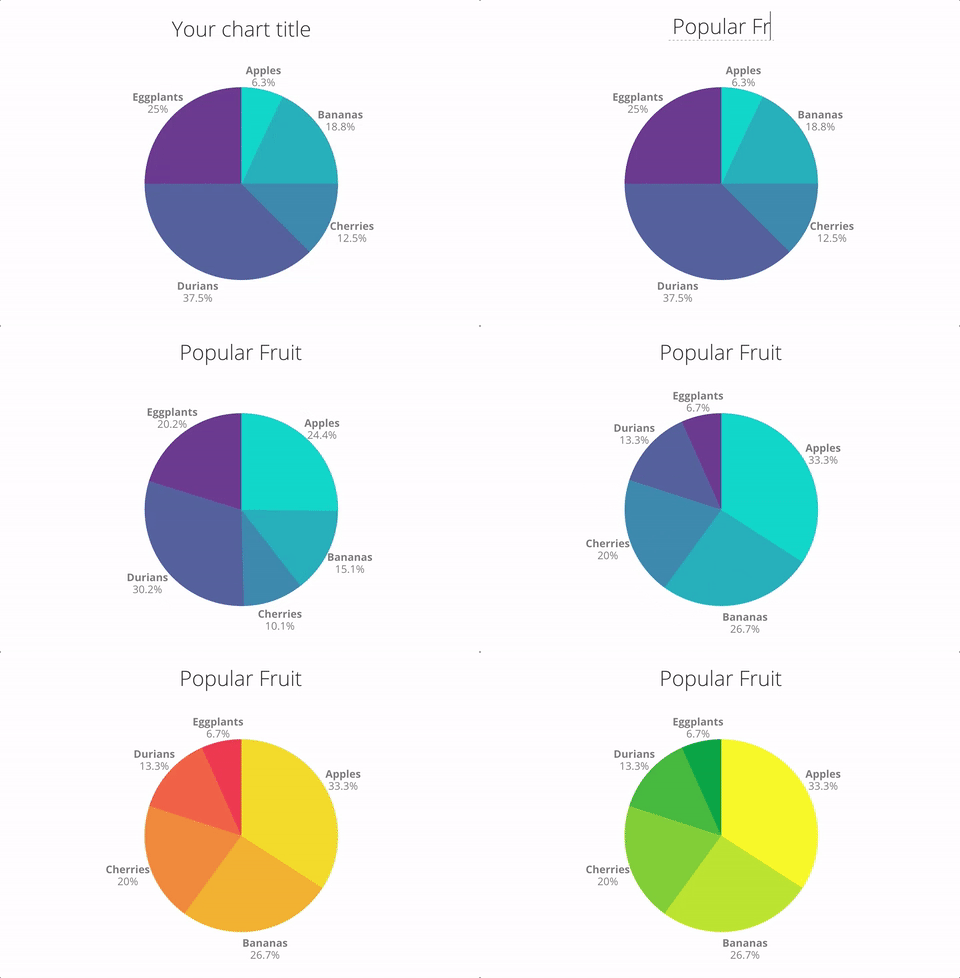
A pie chart made with Canva for Charts.

Canva

Why the shift from cute social images to hard data? “Every profession is becoming more visual. There’s a huge demand for visual content in every industry,” Perkins told BuzzFeed News. She said things like sales pitches and investment decks — traditionally drab parts of doing business — are places where companies are looking for much more visual oomph in 2016.

Canva has big goals. Perkins hopes Canva for Charts will someday replace legacy software like Microsoft Office or Adobe Creative Cloud. It’s not total war, though: Canva users will still be able to download their charts in PDF format or as images to insert them into other applications.

Either way, it will be an uphill battle. Canva has 12 million users, Perkins said. The Microsoft Office suite boasts 1.2 billion users worldwide, according to Microsoft. And Adobe Creative Cloud cites a community of 6.6 million people on its Behance social network as of March 2016, though the company has not disclosed the total number of Creative Cloud subscribers. Convincing more than a billion individual users — and the historically slow-moving corporations where they work — to switch to a new design software will not be easy.

Canva’s ambition to take down legacy software recalls another attempt to make more user-friendly professional software: Prezi, which went after PowerPoint several years ago. As of February 2016, it has registered 60 million users, which is still a drop in the bucket compared to Office’s one billion plus. Perkins, though, told BuzzFeed News that Canva will make more of an impact because of its “high quality ingredients, previously only accessible to designers and a niche market, that we combine and make available to everyone. Now lots of people can use them.”

“Most design tools are too complicated,” Perkins added. “They’re hard to use and look bad.” Canva, she says, is so simple to use, it doesn’t require any design training.

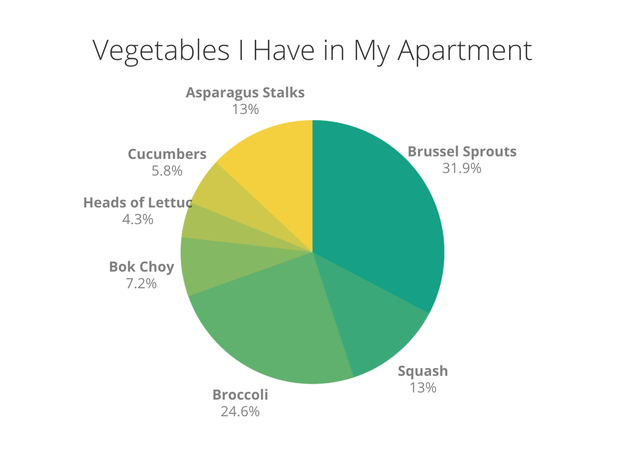
I mocked up this chart in Canva, visualizing the vegetables in my apartment. It isn’t that much fancier than one I’d make in Microsoft Word, Excel, or Adobe, but it was easier to do — it only took me about five minutes, including taking inventory of my fridge.

Blake Montgomery

On a larger scale, Perkins hopes that being able to save and share work in the cloud will eliminate the frustrating, chaotic workflow of sending multiple versions of visual content back and forth to a designer to make every single change. However, Microsoft Office 365 also allows users to save their creations in the Cloud and collaborate on them, as does Adobe Creative Cloud.

Canva for Charts is free, like the other tools Canva offers, though Perkins said she can imagine a premium version in the future. Currently, about 50,000 teams pay for Canva for Work, the site’s professional subscription version, which retails for $120 per user per year or $12.95 per user per month. Canva also makes money when users buy stock images for $1 from its library.

Quelle: <a href="This Company Wants You to Stop Making Terrible Charts in Excel“>BuzzFeed

Meet Google Allo: The New Messaging App That Talks For You

There’s an episode of Black Mirror, a British television show that imagines life in the near future, that tells the story of a woman who reunites with her deceased lover, reincarnated thanks to the wonders of artificial intelligence. While alive, Ash, the boyfriend, spends his time religiously jotting down observations and recording images of things he sees in an app. And when he dies, a tech company uses this information to create a chatbot that mimics the way he talks and what he’s interested in (it gets darker from there). It&;s a future that seems a bit far off in the show, but then again, the episode came out a few years before Google’s new messaging platform, Allo.

Channel 4

Allo is a new AI-powered messaging app that debuts today on iOS and Android. It’s a fun, conversational interface, to be sure. But not only does it host your conversations, it also learns how you talk, and composes messages for you, in your style.

Using Allo, which I first got my hands on last week, you can feel the mind-blowing aspects of AI in a way you simply can’t in other daily-use consumer products. And while Allo will likely struggle to break through in a saturated messaging app market, it would be foolish to write off its capacity to bring AI deeper into our lives. Remember, it&039;s powered by the heft of Google’s 18 year history of learning what we want via our searches, and its seven distinct billion-plus user products. Allo doesn’t quite take you into Black Mirror territory, but, for likely the first time in your life, it travels close enough for you to see it.

Consider the following conversation between Nick Fox, Google’s VP of communications products, and myself:

Me: “Hey&; How are you?”

Nick: “Pretty good. How are you?”

Me: “I’m doing well”

Nick: “That’s good to hear&033;”

It may appear banal, but there’s something amazing about this conversation: None of it was written by either of us.

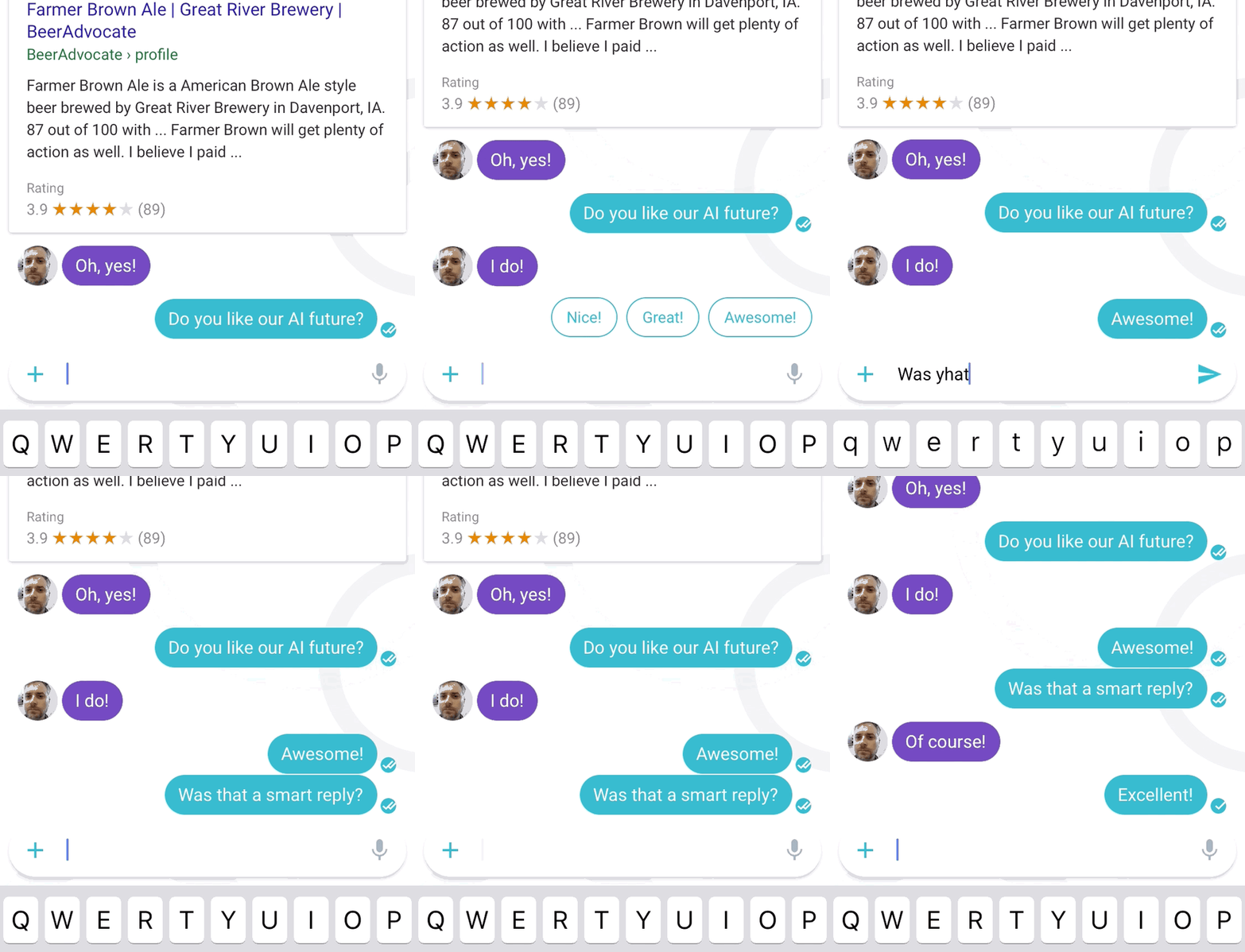
For each of those messages, Nick and I picked text suggested by Allo via a feature called Smart Replies. Smart Reply suggestions are shown underneath the compose field in Allo and updated based on the context of the conversation. Tapping a Smart Reply sends it along as a message. When Fox sent me a picture of his kid, Allo looked at the picture and suggested I write back “beautiful smile” along a smile emoji.

What’s even more remarkable is how Allo adjusts after some use. If you usually say “Yo&033; Sup?” as a greeting, Allo will learn that and suggest the phrase instead of something more generic like “Hey&033; How are you?” It will also learn how you converse with different people, so it will suggest different messages to send to your boss and your wife and your pal. (Unless they’re the same person.) Smart Replies are available in Google’s Inbox product already (where people opt to use the AI-generated replies about 10% of the time, according to Google), but the live, fluid world of messaging is very different than the stilted world of email. In Allo’s case, the machines can talk to us — or each other, or some hybrid — in near real time.

When Fox and I spoke without the assistance of AI, he told me that Allo’s Smart Replies work better for pleasantries and basic responses, and it probably won’t suggest things with deep detail, such as intentions to fly to another city later that day. “We&039;re not trying to replace human expression with smart replies,” he said. “We think of Smart Reply like a spell check, it&039;s assisting you with your expression, it&039;s helping you with your expression rather than a replacement.”

Smart Replies, of course, are not simple spell check. They are far more advanced. But Fox’s implication was clear: temper your expectations, and don’t fear this thing taking over human expression. Fair enough, but I still found myself tapping Smart Replies at almost every opportunity.

The Google Assistant

While I was messaging with a Google team member on Allo, I wanted to share a bit more information about “Be Right Back,” the Black Mirror episode starring the chatbot boyfriend. My usual process for doing this would be to go to Google, search for “black mirror be right back” click a link, copy it, and paste it into the messaging app. But inside Allo I simply wrote “@google black mirror be right back” and Google replied with a card filled more information about the episode. This was the work of the Google Assistant, the other big AI-powered feature in Allo.

Assistant is akin to a souped up Chatbot included in Allo, and you can bring it into any conversation you’re having within the app. In my discussion with Fox, he suggested I ask it to find nearby sushi places, and after I asked, it instantly replied with ten options. Fox responded with the name of one place, and Assistant sent a card showing its rating, cost, hours, and a short description. Within the card, I could hit shortcuts to call the restaurant, get directions or look at the menu.

You can also talk directly to Google Assistant in a private chat. It can tell you the weather, find places to eat, search the internet, call up messages from your Gmail, play games and more. It’s the most useful chatbot I’ve used other than Facebook’s M. (Of course, that’s a weak field; most chatbots make me want to throw my phone out the window.)

But it is perhaps most useful when it just pops into chats to help out. When I sent a colleague a photo of the Golden Gate Bridge, it suggested he respond with the a Google query for Golden Gate Bridge, which fired a “quick intro” culled from Wikipedia. Tapping a follow-up prompt gave us toll information, and then another tap sent us to Google Maps for directions. This all happened within a few seconds, and none of it felt like “searching.”

With Assistant, Google is creating a version of search adjusted for the fact that we spend most of our time in apps when we use our phones, and not in web browsers, which Google Search is built for. To remain competitive in this new world, Google knows search must live in various other forms, and releasing Assistant in Allo is just the start. Google will also embed Assistant in its Amazon Echo-like, voice operated product Google Home, and elsewhere. Fox described the product as “a cohesive glue across a number of Google services.”

So yes, Allo is another messaging app entering a market where there are already more than enough. But to think of it as simply a messaging service misses the point. Allo’s introduction gives humans a place to interact with AI more intimately than ever before. A few days into using Allo, I’m on board with that. And frankly, if a company wants to take my conversations turn me into chatbot after I die, I’m down with that too. Google, you have my permission.

Quelle: <a href="Meet Google Allo: The New Messaging App That Talks For You“>BuzzFeed

How To Beat Uber’s Surge-Pricing Algorithm (And Lyft’s Too)

Uber surge pricing, Lyft Prime Time: Call it what you will, but it&;s never fun to fire up a ride-hailing app when you&039;re in a hurry only to discover that everyone else is in a hurry too — and your ride is going to cost more because of it.

Surge pricing is almost always a nasty surprise. And it&039;s widely loathed by ride-hail passengers — so much so that in January, Uber said it was moving away from surge multiplier notifications (like “3.0x the normal fare”) and instead showing prospective passengers the estimated total cost of their ride before its request. That makes it easier to avoid situations like this:

instagram.com

But surge pricing can still be frustrating, even if you know the cost of your ride in advance. Below, we&039;ve gathered a few handy tips and tactics for avoiding it, from the quick and dirty to some that require a bit more planning and effort.

Check the ride-hailing tab in Google Maps.

Priya Anand / BuzzFeed News

Google integrated Uber into its Maps service back in 2014. Earlier this month, it added Lyft and a handful of other ride-hail companies. Today, you can use Google Maps to compare estimated fare ranges and trip times for nine ride-hail companies across more than 60 countries — no need to fire up each app individually.

Schedule Lyft rides in advance.

Priya Anand / BuzzFeed News

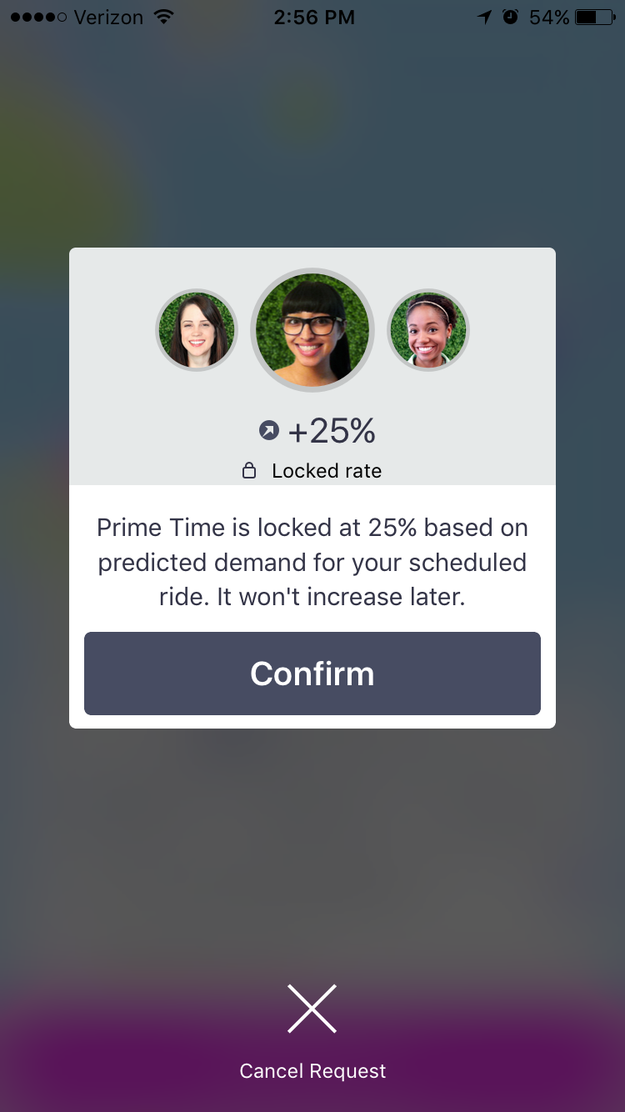
Uber and Lyft recently began rolling out a feature that allows passengers to schedule their trips in advance. Uber says these rides are subject to the pricing conditions at the time — including surge multipliers. But Lyft locks in your price if you schedule a ride in advance. The company&039;s estimate does account for whether or not your ride will occur during “Prime Time,” for example, if you schedule a pickup during rush hour. But beyond that, the rate is set and you aren&039;t susceptible to additional price hikes if demand increases further. You must schedule the ride at least 30 minutes or up to 7 days ahead of the pick-up time.

Wait it out — or walk a few blocks — and try again.

In a 2015 study, researchers at Northeastern University found that passengers with some free time on their hands have a reasonable chance of escaping Uber&039;s surge pricing simply by waiting it out — or by moving beyond the surge zone. They ran 43 versions of the Uber app pretending to be people in various parts of each city, and found that cities are divided into surge areas that look like this:

Courtesy of Christo Wilson

They also found that surge prices change frequently. “Theres a 60% chance the price is not going to stay high for more than five minutes,” Christo Wilson, who led the Northeastern team, told BuzzFeed News. “If you happen to be standing at a location that&039;s right between the border … you can actually get different prices just by walking across it.”

But that advice comes with a caveat: You could end up walking deeper into a surge zone. “The easiest thing is just to wait,” Wilson said. “If it&039;s not rush hour — or last call, when all the bars close simultaneously — the rest of the time if you see a surge, it&039;s ephemeral. It will go away.”

Try apps like SurgeProtector.

SurgeProtector, which launched in 2014, claims to take the guesswork out of gaming Uber&039;s surge. It uses Uber&039;s API to find locations close to you with lower surge pricing. Simply drop a pin and move it around to locate a surge-free locale. Reviews are mixed; SurgeProtector has three stars in the iTunes Store.

Download the driver apps.

If you&039;re really dedicated to saving your hard-earned cash, apply to drive for Uber and Lyft and then download their driver apps. Both use heat-map visualizations to show areas of heightened demand where fares will temporarily rise. In order to access these driver apps, you&039;ll have to share a bit more of your personal information with each company. But hey, you&039;re already giving them your credit card number, contact information, and location anyway.

Quelle: <a href="How To Beat Uber’s Surge-Pricing Algorithm (And Lyft’s Too)“>BuzzFeed

Bletchley – release & roadmap – Cryplets deep dive

In the introduction of Project Bletchley white paper in June, we introduced some of the requirements needed for building consortium-based blockchains as well as Cryptlets, a primitive for next generation blockchain applications. Today, I&;m proud to announce the release of Bletchley v1 and the next level of detail regarding the roadmap of features for Cryptlets.

Bletchley v1 is the release of the first consortium blockchain template that allows customers and partners to spin up a private consortium Ethereum network from a handfull of nodes to 100s of nodes in the network.  It reduces the estimated 3 week process of setting up a globally distributed multi-node consortium Ethereum network down to 8 questions and 5-8 minutes.  Not only does Bletchley v1 automate the setup of the network infrastructure but it sets up a portal for rapidlly getting started developing applications on Ethereum.

Additionally, more information about the roadmap for Bletchley with details about Cryptlets is available here. Cryptlets are building blocks for a new layer of capability we are calling the Cryptlet Fabric, where these components can be developed, published and accessed in a standard way.  They will be discoverable within developer, architect, and business process modeling tools for easy use and can be created with an SDK to expose your own logic for reuse and sale.  

Cryptlets provide a common and approachable way for developers to use cross cutting capabilities like integration into existing systems, secure execution and data, privacy, scalability in programming languages enterprise developers use most.  Microsoft Azure offers a world wide footprint that will allow Bletchley to offer a hyper-scale secure data and execution platform to help build the next generation applications on any blockchain platform.

Click here to view the Bletchley Roadmap – Cryptlet Deep-Dive Features and Behaviors.
Quelle: Azure

The Algorithm That Predicts What The Ultra-Wealthy Want

The pool at the Beverly Hills Hotel.

The Dorchester Collection

A computer told Ana Brant that the ultra-rich care deeply about their breakfast options. This came as a surprise.

Brant is the director of guest experience and innovation for the Dorchester Collection, a hotel group that counts among its properties the Beverly Hills Hotel, the Hotel Eden in Rome, and Le Meurice in Paris, where rooms start at $780 a night and wind their way up to over $16,000 for the Belle Etoile (“beautiful star”) suite. Her job, which she describes on LinkedIn as “the science of luxury service,” is to listen to the very wealthy people who stay in her company&;s hotels, so they keep staying there instead of, say, the Peninsula, the St. Regis, or the Mandarin Oriental.

Hotels of this kind throw mountains of money at celebrity chefs to build fine dining destinations. Dinner is the main event. Breakfast is often an afterthought. And yet here was big-data proof — delivered by machine learning software called Metis, which analyzes online customer reviews — that Dorchester Collection guests write way more about breakfast in their reviews than dinner.

The algorithm found that the ultra-wealthy actually do like the idea of a buffet — but only if it comes in the form of a waiter who says he can make anything.

Metis also found that guests loved to customize their breakfasts; they were, as Brant put it, “looking at breakfast menus as an inspirational list of ingredients.” So she went to her chefs. It turned out Metis was right: Dorchester kitchens reported that somewhere between 80 and 90% of breakfast orders are modified.

So today, when you sit down to breakfast at the Beverly Hills Hotel (which has 1,019 reviews on TripAdvisor, 298 on Booking.com, 235 on Yelp, and 294 on Expedia), a waiter comes up to you and asks what you want — they&039;ve got everything. No menu.

“Guests love it,” Brant said. “It&039;s a Hollywood crowd. Everyone has their own diet.”

And it&039;s all because of an algorithm, one that could signal a new way for customer service businesses to study their clientele: through the collection and analysis of their own words.

In the past, luxury businesses have had to rely on “secret shoppers” and customer feedback forms to improve their service. Now, Metis is taking the massive trove of consumer data on customer review sites like TripAdvisor and Booking.com and turning it into market research that will tell businesses what their elite clients want, before they know they want it. It began with a little bit of customer feedback. Around five years ago, as review sites started to flourish, David and Kyle Richey, who for nearly four decades have run the luxury consulting firm Richey International, noticed that their clients were aghast.

“Hotels that we were dealing with were starting to feel overwhelmed by the amount of data that was coming at them,” said Kyle Richey.

Hotels didn&039;t know how to handle the sheer volume of feedback on the sites and saw it as a headache. But the Richeys — whose clients include the Ritz Paris, Viking River Cruises, and the NFL — saw it as a potential source of value. “We realized that there is rich content within the reviews, but everyone was using them for PR value,” Kyle Richey said. “No one was using them for operational value or strategy, because it&039;s hard to read thousands of reviews and find the trends.” In other words, businesses were slapping positive Yelp reviews on their windows, not using the feedback to improve.

The Hotel Bel Air&039;s Swan Lake.

The Dorchester Collection

In 2013, the Richeys started meeting with text analytics firms in the Bay Area, where they&039;re based, to develop a way to turn reviews into advice. But all of the firms&039; proposals were overly complex. So they hired their own engineers to write machine learning software that could look for words and phrases that correlate with important customer service metrics like emotional bond and loyalty. Then they turned that software over to Werner Koepf, the senior vice president of engineering at Conversica, which makes AI for marketing and sales, to build a web app that their clients could use.

Finally, after two years and several million dollars of their own money, the Richeys were ready to demo Metis. Brant, their first client, was bowled over.

“I thought, Oh my goodness,” Brant said. “This is going to be the most amazing thing ever.

In June 2015, Brant took a Metis demo comparing six ultra-luxury hotels in New York to a meeting of Dorchester Collection general managers in LA. The managers were impressed, particularly by a finding that a “super iconic and amazing hotel had a serious issue with leadership — people were running away when a customer complained.” They approved a Metis study on the spot.

So the Richeys ran Metis on over 8,000 TripAdvisor reviews, some on Dorchester hotels and some on competitors. That&039;s what led Brant to the realization that the ultra-wealthy actually do like the idea of a buffet — choosing exactly what they want — but only if it comes in the form of a waiter who says he can make anything.

“If you want to continue to be a true luxury, you have to figure out a way to draw insights that no one has ever had.”

Metis&039;s findings went further than breakfast. The analysis found that words related to relaxation and unwinding were closely correlated with words related to emotional bond and loyalty (words like “recommend” and “return”). In reviews of the Dorchester-owned Hotel Bel-Air, the software found that guests frequently mentioned words like “relaxation,” “unwinding,” and “pampered” alongside descriptions of patios, terraces, and fireplaces. Brant realized that photos on the hotel website didn&039;t emphasize the rooms&039; outdoor features — a situation she quickly changed. Now the Dorchester Collection places Google keyword bids on words such as “fireplace” and “terrace.” (Companies pay Google for ads to show up next to search results for certain words.)

If the changes prompted by Metis seem granular — some music in the hotel bar here, an easily selfied vantage point there (“If the customer can’t insinuate himself into the view, it doesn’t exist,” said David Richey) — that&039;s sort of the point. The hidden desires of ultra-high-end hotel customers, who are used to an extraordinarily high standard of service, come down to the details. Differentiation happens at the margins.

“If you want to continue to be a true luxury,” Brant said, “you have to figure out a way to draw insights that no one has ever had.”

Yes, luxury hotels now have at their disposal a computer program that can divine the small details to lure the, as Brant put it, “C-suite executives, A-list celebrities, fashion executives, politicians, and notable businessmen” away from their competition.

The red carpet at the Beverly Hills Hotel.

The Dorchester Collection

And who, exactly, will be drawing these insights and adjusting these details? So far, the Richeys have used Metis for about 15 clients, including Viking River Cruises and a “major sports league.” That&039;s not for lack of demand: Kyle Richey said Metis has received “strong interest from major brands, including a very well-known Swiss jeweler.” The Richeys stressed, though, that the tool is in its early days and that they want to proceed slowly.

That said, their goals are huge. “My hope is that it will change the nature of market research,” Kyle Richey said.

That would mean, presumably, broadening Metis&039;s use past luxury industries and into the larger world of customer service. Could we one day soon see major changes to the Cheesecake Factory and Foot Locker based on an algorithm&039;s analysis of thousands of online reviews?

Perhaps, but don&039;t ask Ana Brant.

“I&039;ve always been in luxury,” Brant said. “I&039;m not sure what triggers the masses.”

Quelle: <a href="The Algorithm That Predicts What The Ultra-Wealthy Want“>BuzzFeed

The Federal Government Releases Standards For Autonomous Vehicles

A fleet of Uber&;s Ford Fusion self driving cars are shown during a demonstration of self-driving automotive technology in Pittsburgh, Pennsylvania, U.S. September 13, 2016.

Aaron Josefczyk / Reuters

The federal government released 116 pages of guidelines for self-driving cars on Tuesday, outlining broad goals and questions companies must answer for regulators on the safety of their technology and how it handles ethical dilemmas.

The guidelines, which are more of a set of recommendations than a rulebook with specific benchmarks, list a 15-point safety assessment and several other expectations: Companies should record and share data on crashes and near-misses, and be prepared to reconstruct them. They should be programmed to deal with somewhat common road scenarios, such as direction of traffic by a police officer, or disabled vehicles in a lane. And they should include fallback plans for when the technology is malfunctioning, such as directing the vehicle to a safe place and stopping.

“We believe we have struck the right balance between safety and innovation,” US Department of Transportation Secretary Anthony Foxx said on a call with reporters.

In “several months,” the agency will move toward turning the recommendations into rules, Foxx said at a press conference. The framework comes at a time when companies are racing to put self-driving vehicles on the road. Uber launched a pilot program in Pittsburgh last week, becoming the first company in the US to let people hail rides in self-driving cars, and Google has been testing its autonomous vehicles in several states for years.

“We believe we have struck the right balance between safety and innovation.” — US Department of Transportation Secretary Anthony Foxx

The industry has been waiting for the Department of Transportation to release standards for autonomous vehicles, particularly since the federal government opened two investigations into a fatal Tesla crash earlier this year to determine whether its semi-autonomous technology played a role. Tesla has called Autopilot, its advanced driver assist system, an incremental step toward self-driving cars. At the same time, Autopilot doesn’t fulfill the promise implied by that term – by definition, a technology that can drive itself in place of a person.

The new federal guidelines also address “highly automated vehicles,” including technology like Tesla’s that expects humans to remain on guard to take the wheel at any time, and note that manufacturers should account for both misuse and the fact that people could become complacent if technology has taken over some of their duties. (Earlier this month, Tesla said it plans to update Autopilot to put limits on how long people can go hands-free. If people don’t heed warnings to keep their hands on the wheel, the car will disable Autosteer until it is parked and reengaged.)

Companies already testing vehicles will be given a period of time to send the DOT their responses to the new guidelines and the safety assessment.

Regulators pointed out that they won’t hesitate to crack down on vehicles if they find a company is putting unsafe technology on the road. “Our enforcement authority stands strong and it will be used to its full effect as needed,” Mark Rosekind, head of the National Highway Traffic Safety Administration, told reporters on a conference call. “We have defect recall authority, and we’ll use that to its full effect.”

The policy also asks states to write laws that allow for the safe testing of self-driving vehicles, but to otherwise leave these vehicles’ regulation to the federal government. For fully autonomous vehicles, states won’t need to regulate licensing because the software would be the driver.

When asked for comment, Uber directed BuzzFeed News to a statement released by the Self-Driving Coalition For Safer Streets, an industry group that the company is part of. Google did not return a request for comment.

“We support guidance that provides for the standardization of self-driving policies across all 50 states, incentivizes innovation, supports rapid testing and deployment in the real world,” the coalition, which also includes Google, Lyft, and Ford, among others, said in a statement. Joe Okpaku, vice president of government relations at Lyft, which is developing self-driving cars with General Motors, called the guidelines “a step in the right direction” in a statement.

Quelle: <a href="The Federal Government Releases Standards For Autonomous Vehicles“>BuzzFeed