Oculus Diversity Program Members "Shocked And Dismayed" By Founder's Alt-Right Ties

Palmer Luckey

Kevork Djansezian / Getty Images

This May, 100 virtual reality developers from around the country gathered at Facebook’s Menlo Park campus for a bootcamp in making software for the Oculus Rift. They were there as a part of the Launch Pad program, a fellowship designed “for diverse creators to build for VR.” After a long day of meetings, the final speaker was Oculus founder Palmer Luckey, wearing his trademark Hawaiian shirt. By keynoting the event, some attendees felt, Luckey was sending a message: The future of VR looked like them.

Now, four short months later, many of the Launch Pad fellows are reconsidering their involvement with the program after revelations that Luckey donated money to a pro-Trump nonprofit associated with the alt-right, the online political movement of trolls that sees offensive speech as a patriotic duty and views cultural diversity with disdain.

“I&;m doing a Day of the Dead project. … How can I promote that when the head of Oculus is giving money [to support] Trump?”

“The mood is surprise, shock, dismay, and disappointment,” one Launch Pad fellow, a California-based producer, told BuzzFeed News. “A number of people are creating documentaries to address social issues, and they are questioning whether Oculus is the right platform.”

Announced in March, the Launch Pad program comprises the May bootcamp as well as the possibility of tens of thousands of dollars in funding for Oculus projects. In the announcement, the company encouraged “women, people of color, members of the LGBTQ community and anyone who is willing to share how their perspective adds to the &039;diversity of thought&039; in our community” to apply.

The program also includes a community: a closed Facebook group set up for the fellows by in-house coordinators, where dozens of fellows are now sharing their anger and disappointment.

“Let me get this straight, the founder of Oculus thinks my sister should be banned from visiting me in the US because she&039;s Muslim? And hates my husband because he&039;s Jewish?” wrote one fellow.

Alejandro Quan-Madrid, a Launch Pad fellow based in Los Angeles, said Luckey&039;s political donations make him feel like a hypocrite. “I&039;m doing a Day of the Dead project and showing it at Day of the Dead festivals,” he told BuzzFeed News. “How can I promote that when the head of Oculus is giving money [to support] Trump — and Trump wants people in my community to be deported?”

On Friday, Luckey wrote a Facebook post apologizing for “my actions … negatively impacting the perception of Oculus and its partners.” But he did apologize not for the activity of Nimble America itself, which was formed to turn “shitposting and meme magic” into a “real life” political operation. As the Daily Beast reported, Nimble America gestated on r/The_Donald, the Trump subreddit whose community members say that liberals are “cucks” and “left wing SJWs,” Syrian immigrants are “animals” who should be “put in a cage,” and that black people would “still be living in mud huts” if not for colonialism.

Palmer&039;s apology didn&039;t move many of the Launch Pad fellows. “It didn’t say anything of real substance,” said the California producer. “At some point, I’m not sure if there is anything to be said. It feels like he probably really believes this stuff.”

Several of the fellows asked the Launch Pad coordinator, Oculus Diversity Lead Amy Thole, for clarification on Luckey&039;s apology. Thole, who declined to speak to BuzzFeed News, sent an email to the fellows yesterday announcing that because of a planned move to Oregon, Monday was her last day at the company. There would be an “Oculus Diversity Transition” to new leadership, she wrote. She did not mention Luckey or Nimble America. (According to the email, Thole&039;s replacement is Ebony Peay, who previously worked as an executive assistant at Oculus.)

Peay will be thrust into a difficult situation — now many of the fellows are hesitant about Oculus publicly using their work. At the bootcamp, Oculus employees talked about the importance of “making VR inclusive” from the very beginning of the new industry, one of the fellows told BuzzFeed News. But now, fellows say, people are going to view Project Launch skeptically. “I feel bad for the organizers,” said Quan-Madrid. “Any time they come out and talk about Launch Pad, it will look like a PR cover-up.”

Launch Pad fellows will have until October to decide whether or not they will accept funding from Oculus; that&039;s when the company plans to announce the winning projects. If they don&039;t, they&039;ll join a handful of developers who have already decided to withdraw support from the platform in the wake of last week&039;s report about Luckey. Among other things, that&039;s not good news for Facebook, which faces major competition in the burgeoning VR market from Sony, HTC, and Google.

“The days of separation between a founder&039;s values and his company’s values are waning,” the California producer and Launch Pad fellow said. “And there’s a bigger question: Are the values he embodies good for Facebook?”

Quelle: <a href="Oculus Diversity Program Members "Shocked And Dismayed" By Founder&039;s Alt-Right Ties“>BuzzFeed


Ready To Die On Mars? Elon Musk Wants To Send You There

Ready To Die On Mars? Elon Musk Wants To Send You There

This is what SpaceX&;s Interplanetary Transport System, which Elon Musk hopes will take people to Mars one day, would look like.

SpaceX / Via Flickr

Elon Musk has said he wants to die on Mars — “just not on impact.” In a speech on Tuesday, Musk outlined how his company Space Exploration Technologies (SpaceX), which has yet to even send a human into orbit, hopes to shuttle people to Mars to forge a self-sustaining civilization within 40 to 100 years.

What the billionaire did not explain, however, is how the people he plans to shuttle there would survive on a planet no human has ever set foot on. In 2002, Musk founded SpaceX with the goal of “making life multi-planetary.” When Musk teased his intent to discuss a plan to colonize Mars in April, he warned, “it’s going to sound pretty crazy.” It does.

“Are you prepared to die? If that’s ok, then you’re a candidate for going.”

“Are you prepared to die? If that’s ok, then you’re a candidate for going,” Musk said. Would he become the first man on Mars himself? Probably not. “I’d definitely need to have a good succession plan because the probability of death is really high on the first mission. And I’d like to see my kids grow up.”

But for those who are willing to risk death – Musk would not advise sending your children – he pulled up a presentation slide that showed SpaceX’s timeline to begin flights to Mars in 2023. The cost of bringing a person to Mars right now is about $10 billion, he said. And his goal is to bring that figure down to $200,000, the median price of a home in the US, and hopefully even lower, to $140,000. Who’s going to pay for it? “Ultimately, this is going to be a huge public-private partnership,” Musk said. He also said he will fund the project with his own money. (Forbes estimates his net worth at $11.7 billion.)

The speech marks a big moment for Musk, and casts aside his troubles on Earth: Tesla, his electric car company, is under federal investigation after a driver&039;s fatal crash while operating one of its cars with its Autopilot system engaged. Several shareholders are suing Tesla as well, after the company made an offer to purchase SolarCity, the solar energy company Musk is chairman of. Not to mention the fact that a SpaceX rocket carrying a satellite for Facebook’s Internet.org initiative exploded at its launch site, Cape Canaveral Air Force station, earlier this month.

“There’s a tremendous opportunity for anyone who wants to go to Mars to create something new…Everything from iron refineries to the first pizza joint.”

“If you’re an explorer and you want to be on the frontier and push the envelope and be where things are super exciting, even if it’s dangerous, that’s really who we’re appealing to here,” Musk said. He compared SpaceX’s plans to shuttle people to Mars in spaceships that could fit 100 (and eventually 200) people to the construction of the Union Pacific Railroad, which was built in the late 1800s to connect about two dozen western states. “There’s a tremendous opportunity for anyone who wants to go to Mars to create something new and bold, the foundations of a new planet. Everything from iron refineries to the first pizza joint, things on Mars that people can’t even imagine today that might be unique to Mars,” he said.

People might not be able to imagine them because humans have yet to set foot on Mars. For 40 years, NASA has been sending out rovers, orbiters and landers to learn more about the planet. Scientists and researchers have spent lengthy periods of time in cold, dangerous environments like Antarctica, and inside barren volcano slopes in Hawaii, to simulate life on the Red Planet. But dreaming big is perfectly in character for Musk, who started SpaceX in 2002. In 2012, the company’s Dragon rocket became the first commercial spacecraft to deliver cargo safely to the International Space Station for NASA and return to Earth. Since then, it’s been landing (and failing to land) reusable rockets on barges in the middle of the ocean.

youtube.com

The company released a video of its new rocket, which would be the biggest rocket ever, as part of the presentation. It’s called BFR – short for “big fucking rocket.” For scale, Musk pulled up an image of it on the screen behind him. This is what it looked like:

That small man to the right, just a blip, is Elon Musk. He projected the BFR on the screen behind him.

Scott Hubbard, formerly the director of NASA Ames Research Center and its “Mars czar,” told BuzzFeed News that building such a rocket would be an engineering feat. “That&039;s way beyond anything anyone&039;s ever built before,” he said. The individual components of Musk&039;s engineering goals are very optimistic, but not technologically impossible, Hubbard said – it&039;s not like Musk said he&039;s trying to build a transporter beam.

“The scale of it, though, is so much larger than anything NASA&039;s ever done, and I am skeptical about the timeline. The specifics require engineering development that has yet to be done,” Hubbard said. “The history of launch vehicles is littered with failures…rocket science is called rocket science for a reason.”

In a statement after Musk’s presentation finished, NASA said it “applauds all those who want to take the next giant leap – and advance the journey to Mars. We are very pleased that the global community is working to meet the challenges of a sustainable human presence on Mars.”

“Rocket science is called rocket science for a reason.”

Still, NASA’s timeline for putting humans on Mars is several years out from Musk’s, and its plans are much less grandiose.

Ellen Stofan, chief scientist at NASA, told BuzzFeed News prior to Musk’s announcement that the agency sees value in its partnership with SpaceX and that the company can help accelerate the dream of getting humans to Mars. But the biggest hindrance is figuring out how to keep humans healthy and sustain life there. Humans lose bone density in space, and radiation levels on Mars are so high that “for humans to stay on Mars for any duration, you’d have to be living underground.”

“When you think about large-scale movement of humans to Mars, it’s just not practical or desirable,” Stofan said. “I think our timeline of aiming to get humans to mars in the early 2030s, say 2032, is the one that gets people there on a path where we can feel comfortable that we can get them there safely, and get them home safely.”

Then there are other human issues, like one that an audience member asked Musk in the Q&A after his presentation. He said he came up with the question while at Burning Man, with no plumbing, in a hot, dusty Nevada desert that got chilly in the evenings. Will Mars have toilets?

“Is this what Mars is going to be like? Just a dusty, waterless shit storm?”

“There was a lot of shit, and there was no water to take it into the rivers,” he told Musk. “Is this what Mars is going to be like? Just a dusty, waterless shit storm?”

Musk clearly wasn’t prepared for the question.

After all, his presentation touched only lightly on how people would live upon getting to Mars. He presented a simple solution as to how people would be fed: “We can grow plants on Mars just by compressing the atmosphere.”

John Logsdon, the founder and former director of the Space Policy Institute at the George Washington University in DC, said Musk’s presentation lacked details on how any of his goals would be funded, and that it left “lots of open technical issues.”

“This is very much a vision rather than a detailed plan,” Logsdon said. “We need bold visions for anything to happen.”

Quelle: <a href="Ready To Die On Mars? Elon Musk Wants To Send You There“>BuzzFeed

Those Online Polls Showing Trump Winning The Debate Were Probably Not Rigged By Russia

Timothy A. Clary / AFP / Getty Images

SAN FRANCISCO — Many of the online polls following the first presidential debate were manipulated to make it appear as though Trump had won, but those trying to skew the polls appeared to be be pranksters and Trump supporters rather than organized Russian hackers.

As it emerged Tuesday that dozens of online polls showed landslide victories for Trump following the first debate, rumors swirled that Russian hackers had been behind a campaign to hack the polls and hand Trump a victory.

A tweet by Twitter user @DustinGiebel purported to show a map of Twitter activity in the Russian city of St Petersburg as evidence that the hashtag had originated there. The tweet has since been deleted but a screengrab is below.

The tweet has since been deleted and the account has not answered numerous requests for comment on which program was used to reach the conclusion that Russians were behind the Trumpwon hashtag. A blog post from the Washington Post also pointed out that the map used in the tweet is not typical of mapping programs used to plot Twitter trends, including TrendsMap which was originally identified as the source of the graphic.

This is certainly not from any of our tools and do not know of any tools that look this way,” TrendsMap spokesperson Kathy Mellett said in an email to the Post. “Based upon our analysis, TrumpWon primarily came from the US. There was an initial spike just after the debate followed by a much larger one a few hours later. In particular, around 97% of the initial spike of approximately 6,000 tweets came from the US.”

An analysis by BuzzFeed News showed that while there was one St. Petersburg-based Twitter account repeatedly using that hashtag, it was also widely used across the United States at the same time.

Meanwhile, a look at the poll results, however, showed that the polls themselves were so poorly designed and secured that simple tricks suggested by Trump supporters on the 4chan messaging board were enough to manipulate the results at dozens of media outlets, including Time, CNBC, and BuzzFeed News.

The idea to manipulate the polls was suggested on 4chan in the week leading up to the debate. In one dedicated chat room Monday night, Trump supporters shared tips on how to manipulate the polls using easy methods such as opening an incognito browser window, or turning a phone&;s airplane mode off and on.

4chan / Via boards.4chan.org

4chan / Via boards.4chan.org

A developer at BuzzFeed confirmed that in-house this poll, run in the wake of the debate, had indeed been manipulated to give Trump a hardy victory over Clinton. The developer said that someone had executed a JavaScript script to register votes repeatedly, basically running a program that let them vote repeatedly in the same poll.

BuzzFeed News reached out to Time and CNBC for comment, both of whom ran polls created by the same Playbuzz platform, which gave Trump a huge victory in the debate. A spokeswoman from Time said the company had seen more unique viewers than votes on the page where they ran the poll. CNBC did not respond to a request for comment, though it appears it was heavily targeted by 4Chan users. A spokesperson from Playbuzz did not answer a request for comment on how it ensures that its polls are conducted securely, but a Playbuzz employee, who answered a call from BuzzFeed and agreed to speak on condition of anonymity, said their polls were “not scientific, they aren&039;t meant to be taken as scientific evidence.”

That media companies continue to run online polls, especially around important news events such as the first debate in right race for the presidency is a “failing of journalism,” said one editor at a news organization who ran one of the polls conducted Monday night.

“I spent all morning asking and no one knows if our poll was secure, how it was conducted, or if someone scammed it. Now people are pointing to our poll saying that it shows Trump won,” said the editor, who asked to remain anonymous as he was not authorized to speak about his company&039;s polling system. “That&039;s not good journalism.”

CNN is currently the only news outlet to have run a poll in which verified people were asked how Hillary Clinton and Donald Trump fared in the debate Monday night. The CNN/ORC poll conducted immediately following the debate found that Clinton topped Trump 62 to 27.

Quelle: <a href="Those Online Polls Showing Trump Winning The Debate Were Probably Not Rigged By Russia“>BuzzFeed

Azure Media OCR Simplified Output

Not sure what Azure Media OCR is? Check out the introductory blog post on Azure Media OCR.

Thanks to all of the customers and partners who have been part of the Azure Media OCR public and private previews. We have continued to iterate on valuable first-hand feedback over the past 5 months, and today are tackling one of the most common painpoints that we have heard: the complexity of the output format. 

It turned out, for most customers, we were simply providing too much detail in our default output format. This led to a lot of frustration.

Most customers utilize Azure Media OCR to index videos by the text displayed within them at various times.  In conjunction with Azure Media Indexer, this creates an excellent alternative to manual video tagging for augmenting the discoverability of your video content in a search engine. 

By providing positional data for every single word (in addition to the phrases and regions), we were needlessly inflating the output with little to no additional value. 

Today we are releasing our new output format, a simpler schema that will cover most end-user scenarios with less headache.  In case you were one of the advanced users who found value in the additional data from our previous output format, you can simply use the “AdvancedOutput” flag.

Advanced Output

The advanced output format of a JSON object is made of time fragments, each of which contained separate events comprised of regions, lines, and words, all tagged with positional and language data. 

The new “simple” output format simply contains time fragments which contain text.

Here’s an example of one fragment in the simple output format:

New output

"fragments": [
{
"start": 0,
"duration": 1435434,
"interval": 1435434,
"events": [
[
{
"language": "English",
"text": "Notes File WOF MYM Edit Format View oo Window Help index-html – MvWebSite Q Search Visual Studio Code for Mac Developers Today June 1, 2016, 1:07 PM Visual Studio Code for Mac Developers 211. Google Chrome extensions Sergii Baidachnyi Principal Technical Evangelist Microsoft Canada sbaydach@microsoft.com @sbaidachni"
}
]
]
},


The following is a heavily-truncated equivalent “advanced output” from the same fragment.

Note: the actual advanced output that corresponds to the above fragment is over 600 lines of JSON!

Old output

"fragments": [
{
"start": 0,
"duration": 120000,
"interval": 120000,
"events": [
[
{
"region": {
"language": "English",
"orientation": "Up",
"lines": [
{
"text": "Notes File",
"left": 74,
"top": 7,
"width": 109,
"height": 15,
"word": [
{
"text": "Notes",
"left": 74,
"top": 8,
"width": 54,
"height": 14,
"confidence": 974
},
{
"text": "File",
"left": 154,
"top": 7,
"width": 29,
"height": 15,
"confidence": 848
}
]
},
{
"text": "WOF",
"left": 155,
"top": 117,
"width": 33,
"height": 12,
"word": [
{
"text": "WOF",
"left": 155,
"top": 117,
"width": 33,
"height": 12,
"confidence": 397
}
]
},
{
"text": "MYM",
"left": 156,
"top": 206,
"width": 32,
"height": 12,
"word": [
{
"text": "MYM",
"left": 156,
"top": 206,
"width": 32,
"height": 12,
"confidence": 309
}
]
}
]
}
},
{
"region": {

As you can see, unless you need all of the detail, a lot of the advanced output features may be redundant for your scenario.

How do I use this?

Minimal preset for Old Output

{
&;Version&039;:&039;1.0&039;,
&039;Options&039;: {
&039;AdvancedOutput&039;:&039;true&039;
}
}

Minimal preset for New Output

{
&039;Version&039;:&039;1.0&039;
}

Want to learn more about the input configuration? Check out our previous blog post introducing the configuration.

Love the new output? Hate it? Share your feedback with us!

If you want to learn more about this product, and the scenarios that it enables, read the introductory blog post on Azure Media OCR.

To learn more about Azure Media Analytics, check out the introductory blog post.

If you have any questions about any of the Media Analytics products, send an email to amsanalytics@microsoft.com.
Quelle: Azure

Facebook's Suspensions Of Political Speech Are Now A Pattern

Facebook, a vital forum for online speech, can’t seem to stop removing significant political content from its platform.

Last week, the company disabled several prominent Palestinian journalists’ accounts, following user reports that they were violating Facebook standards. These weren&;t small time reporters — they&039;re people who manage pages followed by millions. Facebook later reinstated their accounts, blaming their removal on an error: “The pages were removed in error and restored as soon as we were able to investigate,” a Facebook spokesperson said, using an excuse that didn’t need dusting off, since Facebook has offered variations of it at least four times in past six months.

In April, Facebook removed six pro-Bernie Sanders groups before reinstating them and blaming a technical error. In July, Facebook pulled a video showing Philando Castile dying after being shot by police at a traffic stop, only to subsequently reinstate it and again blame its original removal on a glitch. In August, Facebook suspended two big libertarian Facebook pages for days before reinstating them, saying: “The pages were taken down in error.” Last week, it was an “error” again.

“We sometimes get things wrong”

After four such errors in six months, Facebook&039;s takedowns seem less like occasional missteps and more like symptoms of a flawed policy that needs to be addressed. Asked if there are fundamental issues within Facebook’s systems that need to change, a Facebook spokesperson pointed BuzzFeed News to a public statement, stating: “Our team processes millions of reports each week, and we sometimes get things wrong.”

The company did not respond to a follow-up question about whether Facebook plans to review its tendency to erroneously silence politically significant speech.

Facebook depends on a system of user reports to police content on its platform. When someone sees content they think violates Facebook’s community standards, they can flag it and send it into review. While this system might work well for content that&039;s broadly recognized as objectionable and in clear violation of Facebook policies, it doesn&039;t work quite as well in situations with more nuance. In some of those situations, it seems people with one political perspective are gaming Facebook&039;s system to silence people with other perspectives.

User reports are used as weapons in other scenarios on Facebook, such as the company&039;s “real names,” policy, which has been exploited to suspend transgender Facebook users.

This probably won&039;t be the last time a Facebook review team member makes a curation decision that the company will reverse after complaints and further consideration. If the company doesn&039;t change its review system, there’s little preventing errors like this from occurring again, and again.

Quelle: <a href="Facebook&039;s Suspensions Of Political Speech Are Now A Pattern“>BuzzFeed

Two Unicorns Go To War In Business Software

Hulton Archive / Getty Images

Josh Reeves, the 33-year-old CEO of the payroll and benefits startup Gusto, is an Eagle Scout with a sweet smile and a sensible haircut. He speaks softly, blushes easily, and gently reminds guests to remove their shoes before entering the office.

But last week, at a press briefing in a private dining room of an upscale San Francisco lunch spot, Reeves slung mud at Zenefits, his most prominent — and most prominently troubled — rival. He had just been telling the reporters about Gusto&;s new product, a Zenefits-like human resources software system. With Zenefits expected to unveil its own product upgrade next month — dubbed Z2 — Reeves seemed keen to ensure his rival&039;s past missteps wouldn&039;t be forgotten.

“Z2 sounds like a sequel,” Reeves said. “Ideally the first movie is good enough on its own.”

“There are no shortcuts. There&039;s always a poster child for that,” he added, in a not-so-subtle dig at Zenefits&039; past failures to comply with insurance broker licensing rules. “Things like compliance have to be there from the beginning.”

“We&039;ve been thrilled by the customers moving to us from Zenefits,” Reeves continued. The burger he had ordered remained untouched.

The beef between Gusto and Zenefits — which fired its founding CEO and lost hundreds of employees earlier this year in the wake of its broker licensing scandal — stretches back about a year. That&039;s when BuzzFeed News reported that Zenefits, known for making human resources software and selling health insurance, was secretly developing a payroll processing system, stepping directly onto the turf of its onetime partner Gusto, then known as Zenpayroll.

Zenefits&039; effort had the tongue-in-cheek nickname “Project Nutshot.”

Sergei Supinsky / AFP / Getty Images

Gusto — which at that time was itself quietly moving onto Zenefits&039; turf by preparing to sell health insurance — has now fired back in force. On Tuesday it announced it has created an “all-in-one” human resources software system, including features to help small companies onboard new employees and manage 401(k)s. The effort is a direct challenge to Zenefits, which has long offered similar features but has lately been busy patching things up with regulators and customers.

Told of Reeves&039;s comments, Zenefits spokesperson Jessica Hoffman picked up the gauntlet.

“It&039;s great to hear that our competitors are already in a panic about Z2,” Hoffman said in an email to BuzzFeed News. “They&039;re still trying to copy version one of our product while we are about to launch version two, which will redefine this industry.”

“The fact that they&039;re talking so much about Zenefits indicates who the market leader is,” Hoffman added.

Silicon Valley startups aren&039;t often willing to spar like this in public (they&039;re usually more comfortable criticizing giant incumbents in their industry, as Zenefits did last year in a legal fight with ADP). That Gusto and Zenefits would publicly trade blows underscores their yearning to capture potential riches in the business of HR and payroll management. Both startups are trying to bring technology to an antiquated, paperwork-heavy industry that can cause real headaches for small businesses. Zenefits moved early in offering a software-powered HR system, but it moved too quickly, and now Gusto is trying to seize an advantage.

At the media briefing last week — held at celebrity chef Tyler Florence&039;s Wayfare Tavern, where spiced deviled eggs seem as plentiful as tap water — Gusto staff handed out embargoed press releases with details on the startup&039;s progress and plans. Over 40,000 small businesses use Gusto&039;s payroll software, according to the release and an email from a spokesperson. (Zenefits, by comparison, says it has more than 20,000 customers using its HR software.) The new Gusto HR product will include a “welcome wall” where coworkers can warmly greet a new employee, according to the release. An executive at a healthcare company was quoted saying he was “confident that everything is done right with Gusto.”

Many details seemed intended to highlight how Gusto was different than Zenefits, though the release never mentioned its rival by name. Reeves, however, was less coy. After introducing the subject of Zenefits by saying he wanted to discuss the “ecosystem,” Reeves said he had heard “horror stories” from companies that had used Zenefits and switched to Gusto.

Borrowing a line that Zenefits once used, Reeves said he was “excited to be the fastest-growing company in this space, as far as I can tell,” by number of customers. (Still, Gusto has been in payroll processing for most its existence, while Zenefits has been in the slightly different business of insurance and HR management.)

Reeves also said he was “excited to be doubling our valuation in our last financing round, while others are halving their valuation.”

Gusto, which launched in 2012, was valued by investors at $1 billion in a financing round in December, doubling its valuation in under a year. Zenefits, launched in 2013, agreed in June to cut its valuation in half — to $2 billion from $4.5 billion — in a deal with its investors.

Zenefits&039; new CEO, David Sacks, has undertaken a sweeping effort to remake the company, including by taking a contrite tone and forging a string of settlements with state regulators. In May Sacks announced he had changed the company&039;s stated values: “Everyone’s shit stinks,” for example, became “Put the customer first.”

Reeves, as his burger got cold, had something to say about company values, too.

“You don&039;t really change them,” he said. “You have to know them from the beginning.”

Sacks, as it happens, invested in Gusto in its seed round several years ago. Reeves said at the briefing that Sacks — an experienced entrepreneur who sold his software startup Yammer to Microsoft for just over $1 billion — currently has no access to Gusto&039;s confidential information. The two spoke in 2012, when Reeves got advice from Sacks on building a business, and haven&039;t spoken since, Reeves said.

Quelle: <a href="Two Unicorns Go To War In Business Software“>BuzzFeed

These Ex-Googlers Want To Test You (And Your Family) For Cancer

Katarzynabialasiewicz / Getty Images

DNA-testing startup Color Genomics, which launched in spring 2015, is notable in the biotech world because of its emphasis on the “tech” side: Two of its cofounders are former Google and Twitter engineers. Another way it&;s setting itself apart from the competition: Its costs. Color prices its cancer gene tests at a fraction of the cost of many tests on the market in an attempt to make them accessible and affordable — and in turn to broaden its data pool.

San Francisco Bay Area–based Color now has plans to make its tests even more widely available. Currently, its $249 saliva-based test scans 30 genes to detect an individual&039;s risk of common hereditary cancers, including breast, ovarian, colon, pancreatic, prostate, uterine, colorectal, and stomach cancer; in contrast, other tests range from $1,500 to $4,500. Color&039;s test is cheap enough that many people could pay for it out of pocket, instead of going through insurers, who traditionally shoulder the bulk of the cost for genetic tests.

Now, the startup is teaming up with the BRCA Foundation and private donors to offer the tests at an even steeper discount — $50 — to first-degree relatives of people who have already tested positive for one of the 30 mutations on Color&039;s test. Parents, siblings, and adult children are then eligible to also take a Color test. A relative of someone with a BRCA mutation, for example, has a 50% chance of having the mutation, too, which can lead to breast or ovarian cancer. Color has partnered with private donors and the BRCA Foundation to subsidize the screening program.

Unlike DNA-testing startup 23andMe, whose tests can be bought without the approval of a medical professional, doctors and genetic counselors are involved in interpreting and reviewing the results of Color&039;s “spit kits.” Already, the tests are being used in a $14 million study in which the University of California is aiming to put 100,000 women through personalized breast cancer screening. Color customers can choose to contribute their anonymized data to research, or not.

To support its growth more broadly, Color also said it&039;s raised $45 million from General Catalyst, U2 frontman Bono, Khosla Ventures, 8VC, Laurene Powell Jobs&039; Emerson Collective, and Susan Wagner, a BlackRock cofounder. Wagner is also joining its board of directors, along with General Catalyst managing director Hermant Taneja. To date, the startup has raised $60 million in total.

Color is up against several other hereditary cancer-testing companies, including both startups and established heavyweights, such as Myriad Genetics, Invitae, and Counsyl. The company says it keeps costs low by employing advanced software and machine learning technologies to be more efficient — from highly automating the analysis of DNA samples, to automatically creating family trees for the Color genetic counselors who explain results to customers.

“We’re viewing what we’re doing as biology 2.0,” CEO and cofounder Elad Gil told BuzzFeed News. That tech mindset comes from Gil&039;s years as a former vice president for corporate strategy at Twitter, as well as a product manager at Google. Another cofounder, Othman Laraki, also worked at Google and was vice president of product at Twitter. (The two came to Twitter after founding Mixer Labs, which made geolocational software, and selling it to the social networking company in 2009.) But Gil also has a PhD in biology from the Massachusetts Institute of Technology, and chief scientific officer Taylor Sittler trained in clinical pathology at UC San Francisco.

Referring to the idea of tailoring therapies to individuals&039; unique backgrounds and risk factors, Gil said, “The thing we ask ourselves every day is, &039;How can we help facilitate things so precision medicine will be available to everybody next year or in two years?&039;”

Quelle: <a href="These Ex-Googlers Want To Test You (And Your Family) For Cancer“>BuzzFeed

Palantir Discriminated Against Asians, Labor Department Alleges

Palantir CEO Alex Karp

Sean Gallup / Getty Images

The Department of Labor is suing Palantir, accusing the data analysis company of systematic discrimination against Asian job applicants.

The government agency said that it filed the suit after being “unable to resolve the findings” in negotiations with the Silicon Valley company, which works with government clients including the the FBI, the U.S. Special Operations Command, and the U.S. Army.

The suit alleges that, beginning in 2010, Asian applicants were “routinely eliminated during the resume screen and telephone interview phases despite being as qualified as white applicants with respect to the QA Engineer, Software Engineer, and QA Engineer Intern positions,” and that the company&;s employee referral program also unfairly discriminated against Asian applicants.

Palantir denies the allegations and intends to contest the lawsuit. “Despite repeated efforts to highlight the results of our hiring practices, the Department of Labor relies on a narrow and flawed statistical analysis relating to three job descriptions from 2010 to 2011,” the company said in a statement.

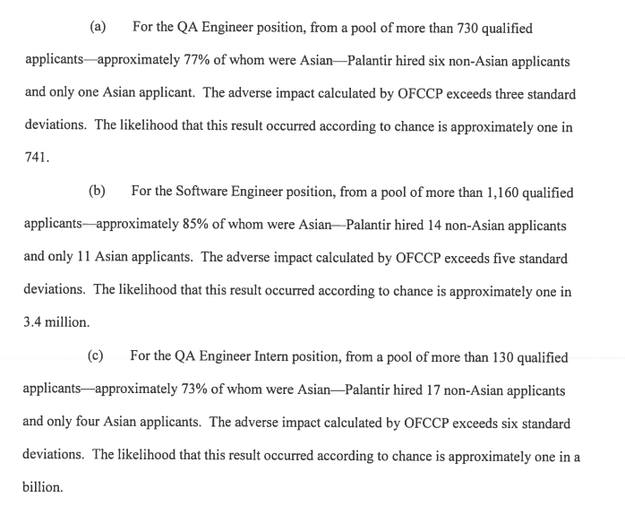
When comparing the number of qualified Asian applicants for a position with the number eventually hired, the Labor Department&039;s Office of Federal Contract Compliance Programs found evidence of discrimination.

In one case where Asian applicants made up 85% of the the qualified candidates for a job but only 11 of the 25 people eventually hired, Labor Department calculated that the the odds of such a hiring pattern happening by chance were “approximately one in 3.4 million.” In another case, it said the odds were more like one in a billion.

Department of Labor / Via dol.gov

As a government contractor, Palantir “has agreed not to discriminate against any employee or applicant for employment because of race, color, religion, sex, or national origin,” the complaint notes.

The Labor Department is seeking compensation for those affected by the company&039;s hiring practices, including for “lost wages, interest, retroactive seniority and all other lost benefits of employment.” If the company is ordered to provide such relief, and fails to do so, it could lose its current government contracts and be barred from bidding on future ones.

The full complaint is available to read here.

Quelle: <a href="Palantir Discriminated Against Asians, Labor Department Alleges“>BuzzFeed

Inside Apple Music's Second Act

Inside Apple Music's Second Act

Justin Sullivan / Getty Images

Music streaming is a buyer’s market, and over the course of its first 14 months, Apple Music has pitched itself to customers in a few marquee ways. There’s the army of in-house music experts, working to craft note-perfect playlists for your commute and workout; the radio station Beats 1, which seeks to reinvent real-time, communal music discovery; and the exclusive releases from big-name artists — including Drake and Taylor Swift — before fans can get them anywhere else.

But for music streaming services, which rely on a delicate web of relationships with the artists, publishers, and record labels that supply them, keeping customers satisfied is only half of the equation. Viewed from up close, it’s the benefits Apple Music has promised its industry partners — still reeling from decades of digital disruption — that have arguably defined the service’s short life more than anything else.

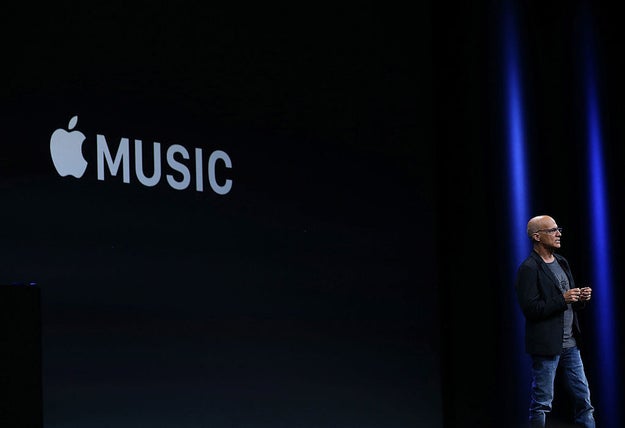
“I don&;t know how to do this any other way, except to help make really good music, get it exposed, and get it handled and treated the way it deserves to be treated,” Jimmy Iovine, who runs Apple Music after a long tenure as the founder and chief executive of Interscope Records, told BuzzFeed News in a recent interview. “That&039;s the only thing that we know how to do coming from where we&039;re coming from. You use all the tools you have to do that.“

Iovine was striking a rare note of contrition, one month after a controversy over the implications of Apple Music’s exclusives caused the world’s largest label group, Universal Music Group, to distance itself from his company. UMG decided it would end most exclusives in late August after it was embarrassed by a lucrative deal between Apple Music and Frank Ocean, which enabled the superstar to go independent. The ban upended one of Apple Music’s main selling points, and it left Iovine — a former record producer who sees bridging the worlds of music and technology as a personal calling — caught between the existential demands of his old business and his new one.

Apple’s streaming service has tried to position itself as a kind of sixth man for the established music industry.

The clash over exclusives, which came to a head just weeks before Apple Music underwent a much-anticipated relaunch designed to make it more appealing to users, served as a reminder that the music service faces a war on two fronts: It’s vying to lure subscribers from a field of strong competitors on the one hand, while defending its aggressive plans to skittish content owners on the other.

“We put a lot into this, we’ve had some real successes, and we always hold up our end of the relationship,” Iovine said, insisting that he has no intention of encroaching on record labels’ territory. “We’re feeling our way around and seeing what works … Every time we do [an exclusive], we learn something new.” He added that Apple Music would move forward with its pursuit of exclusives from other partners, such as Sony Music Entertainment and the Warner Music Group, noting, “It’s Apple’s show. As long as Apple’s asking me to do what I’m doing, I’m gonna keep doing it.”

Kanye West criticized Apple Music and Tidal&039;s rivalry over exclusives.

Twitter.com

If exclusives have drawn the ire of some record labels, they haven’t always endeared Apple Music to consumers, either. Fragmentation in music streaming — requiring fans to either pivot between services to access exclusive albums, wait days or weeks until they are released widely, or download them illegally — has accelerated in the past year, as artists are increasingly pledged to one service or another. Responding to whether fragmentation would hurt the business in the long term (as Kanye West and others have argued), Iovine was unfazed.

“I don’t think we know yet, I don’t think anyone knows yet,” he said, musing that people could end up paying for multiple music streaming services, as they do with Netflix and Hulu. “A year from today could look extremely different from what it looks like right now.”

More concerning to Iovine is something that directly impacts his company’s bottom line: the proliferation of free, ad-supported music on competing services like Spotify and YouTube. Both have been accused by artists and labels of using a business model that takes money out of their pockets, and both boast user bases that dwarf Apple Music&039;s (it has 17 million subscribers compared to Spotify’s 40 million; YouTube says it has over a billion users). “The rights holders, whoever they are, have to do something, because there&039;s a lot of free [music] out there, and it&039;s a problem,” Iovine said. “There&039;s enough out there to make people say, ‘Why should I subscribe to something?&039;”

The tension over exclusives highlights a central challenge for Apple Music, which believes its future relies on forging ever-closer ties with artists and record labels. More so than any of its competitors, whom have had to contend with the deep suspicion of rights holders, Apple’s streaming service has tried to position itself as a kind of sixth man for the established music industry, a white knight riding in to restore the commercial and cultural value of music after decades of decline.

The feasibility of such a commitment was tested even before Apple Music launched. In June 2015, Taylor Swift, an industry unto herself, joined critics who protested that the service wasn’t planning to pay royalties for music streamed during its free three-month trial period. Apple responded by quickly reversing the policy, eating the costs of the trials and earning a distinction as the only on-demand streamer to carry Swift’s music in the process.

Justin Sullivan / Getty Images

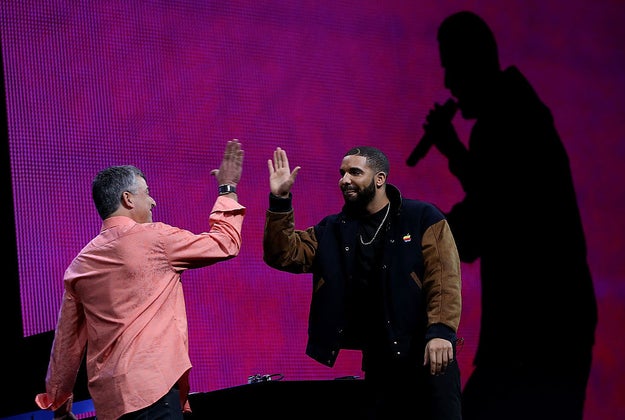
“I think Apple Music is the place that helps artists tell their stories,” said Zane Lowe, who presides over Apple Music’s radio station Beats 1. Lady Gaga, in an interview with Lowe, recently used the station to announce the title of her forthcoming comeback album, Joanne. And Drake, who is among a growing roster of paid contributors to Apple Music and has his own Beats 1 show, used it to premiere “Hotline Bling.” “It’s where artists can come and feel comfortable,” Lowe said. “And that’s not just on Beats 1, it&039;s through the releasing of their records, it&039;s through our editorial, through content, all sorts of ways.”

For the moment, Apple Music executives trying to make their case to music owners have the numbers on their side. Revenues for recorded music in the US — driven by the growth of services like Apple’s and Spotify’s — are up by 8.1% in the first half of 2016, which puts them on track for the second full year of growth in a row. The music industry hasn’t seen back-to-back revenue increases since 1998–1999, and the money, as always, talks. Work with us and the happy days will come again.

“We were too ambitious in the beginning — we put too much into it.”

Looking at the new version of Apple Music offers some clues as to where subscription music is going. At this point, the most coveted new audience for the service, which comes preloaded on every iPhone and iOS device, consists of older and international users who have no prior experience with streaming music. The redesign answers criticism that the first iteration was overly complicated, introducing a cleaner interface with larger images and text care of Apple design guru Jonny Ive. Additionally, the tabs at the bottom of the screen have been re-ordered, with the one that gets the most use — the music library — moved to the first, far-left position.

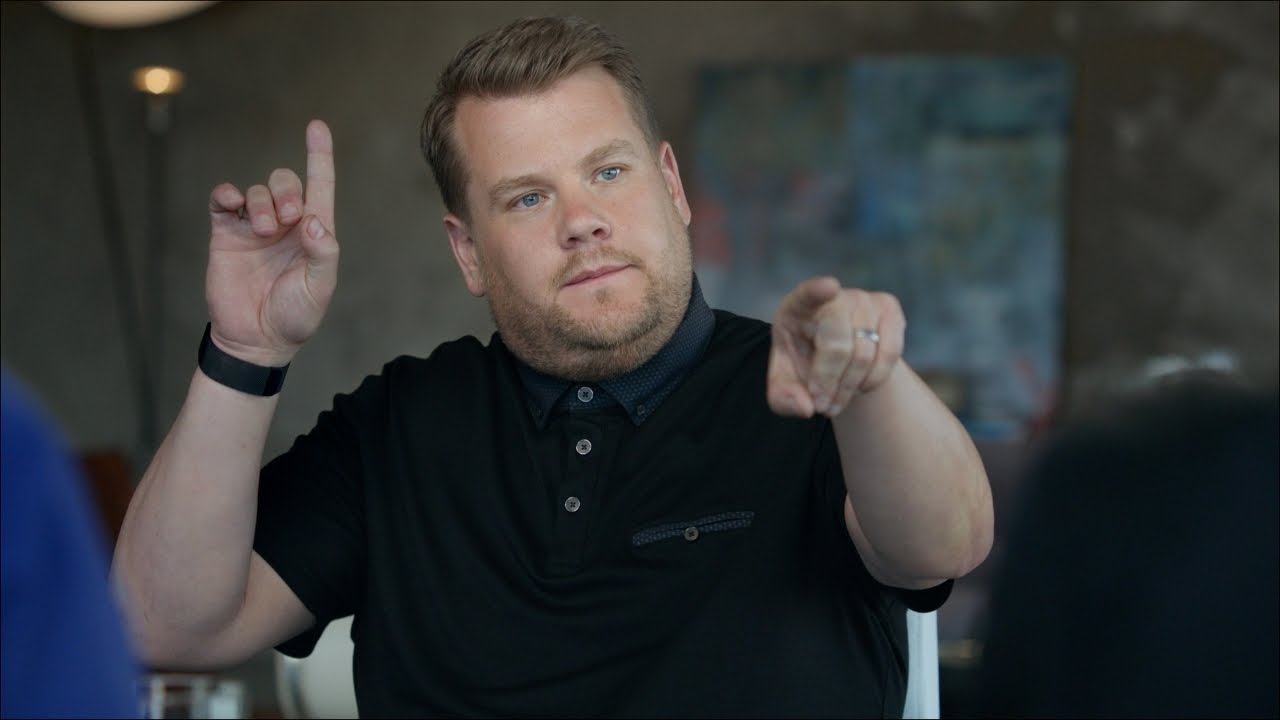
An Apple Music ad with James Corden.

Apple.

“The question we ask is: In the normal course of your day, how are you actually interacting with music?” Bozoma Saint John, head of global consumer marketing for Apple Music and iTunes, told BuzzFeed News. She co-stars in a new ad for the service with Iovine and “Carpool Karaoke” star James Corden. “What are you going to it for? And how can we better serve that up?”

The other big change is the addition of two new personalized playlists: My Favorites Mix and My New Music Mix. The playlists are generated by algorithms, a first for the service, which has largely relied on human curation for its playlists up to this point. Revealing how the mixes operate for the first time to BuzzFeed News, Apple claimed a potential advantage over similar algorithmically personalized playlists, including Spotify’s Discover Weekly and Pandora’s Thumbprint Radio: deep historical knowledge of individual users’ tastes and habits, based on years of data carried over from iTunes.

If you gave high ratings to a song or album in your old iTunes library, or just played it a lot more than others, you’ll find that behavior reflected in your My Favorites Mix. Meanwhile, the My New Music Mix algorithm serves recently released songs — as well as songs that Apple Music knows you haven’t played before — that the service’s music experts have flagged as similar to others in your taste profile. Apple Music executives suggested even more personalized playlists will follow in the series; but only after prototypes have been vetted, with all possible outcomes — intentional and otherwise — given careful consideration.

“We were too ambitious in the beginning — we probably put too much into it,” said Iovine. “But we’re getting there now, one foot in front of the other, and the stuff we’re creating I don’t think anyone is gonna see coming.”

Quelle: <a href="Inside Apple Music&039;s Second Act“>BuzzFeed