Azure DocumentDB SDK updates include Python 3 support

Azure DocumentDB, Microsoft’s globally replicated, low latency, NoSQL database, is pleased to announce updates to all four of its client-side SDKs. The biggest improvements were made to the Python SDK, including support for Python 3, connection pooling, consistency improvements, and Top/Order By support for partitioned collections.

This article describes the changes made to each of the new SDKs.

DocumentDB Python SDK 2.0.0

The Azure DocumentDB Python SDK now supports Python 3. The DocumentDB Python SDK previously supported Python 2.7, but it now supports Python 3.3, Python 3.4 and Python 3.5, in addition to Python 2.7. But that’s not all! Connection pooling is now built in, so instead of creating a new connection for each request, calls to the same host are now added to the same session, saving the cost of creating a new connection each time. We also added a few enhancements to consistency level support, and we added Top and Order By support for cross-partition queries, so you can retrieve the top results from multiple partitions and order those results based on the property you specify.

To get started, go to the DocumentDB Python SDK page to download the SDK, get the latest release notes, and browse to the API reference content.

DocumentDB .NET SDK 1.10.0

The new DocumentDB .NET SDK has a few specific improvements, the biggest of which is direct connectivity support for partitioned collections. If you&;re currently using a partitioned collection – this improvement is the go fast button!  In addition, the .NET SDK improves performance for the Bounded Staleness consistency level, and adds LINQ support for StringEnumConverter, IsoDateTimeConverter and UnixDateTimeConverter while translating predicates.

You can download the latest DocumentDB .NET SDK, get the latest release notes, and browse to the API reference content from the DocumentDB .NET SDK page.

DocumentDB Java SDK 1.9.0

In the new DocumentDB Java SDK, we’ve changed Top and Order By support to include queries across partitions within a collection. 

You can download the Java SDK, get the latest release notes, and browse to the API reference content from the DocumentDB Java SDK page.

DocumentDB Node.js SDK 1.10.0

In the new Node.js SDK, we also changed Top and Order By support to include queries across partitions within a collection.

You can download the Node.js SDK, get the latest release notes, and browse to the API reference content from the DocumentDB Node.js SDK page.

Please upgrade to the latest SDKs and take advantage of all these improvements. And as always, if you need any help or have questions or feedback regarding the new SDKs or anything related to Azure DocumentDB, please reach out to us on the developer forums on Stack Overflow. And stay up-to-date on the latest DocumentDB news and features by following us on Twitter @DocumentDB.
Quelle: Azure

Justin Bieber-Backed Shots Prioritizes Making Video For Other Platforms

Justin Bieber-Backed Shots Prioritizes Making Video For Other Platforms

Lele Pons, one of Shots Studios&; stars, with Benita, a character in the Shots series Awkward Puppets

Shots

Quality online video creators are gaining a tremendous amount of power now that Facebook, Twitter, Snapchat, and YouTube are all trying to fill their feeds with video content. And there may be no better lens for seeing this shift than through the transformation of Shots, the Justin Bieber-backed company known for its social app by the same name. In a striking move, the company is prioritizing producing video content for competing platforms, betting that creating quality online video will be a more lucrative business than running a social app used by millions.

Shots’s move comes at a time when social media is moving toward a future in which video is the dominant content format. In that world, each platform will only be as good as the video it hosts. And just like TV, the most compelling video is likely to draw the biggest audience. But good video costs money, and the platforms are already paying for it — Twitter is paying for football, Facebook is paying for live video — with more payments likely to come as the battle heats up.

“If I had to choice on betting on an app or a creator— I&039;m putting all chips on the creator,” Shots CEO John Shahidi told BuzzFeed News in an interview inside the company’s San Francisco headquarters. “While these companies all fight over features and stuff like that, I’d rather focus on content, because at the end of the day, that’s what they’re all going to need anyway.”

youtube.com

Shots is taking an untraditional approach to creating its videos. The company, under the new name Shots Studios, is signing promising social content creators, providing them with business guidance and resources like sets, writers and distribution, and then sharing video revenue with them. Six creators have already signed with Shots, each publishing at least one video a week, and the company plans to sign around six more by the end of the year.

Shots is currently publishing its videos only on YouTube, though it plans to publish on other platforms as well. Its creators’ videos regularly notch over 1 million views, with many reaching into multiple-million territory.

From Backyard To Bieber

Justin Bieber standing between John (left) and Sam Shahidi (right)

John Shahidi

Shots started in 2010 as a mobile gaming company called RockLive. Using an idea hatched when Shahidi and his brother were neighbors with then-USC quarterback Mark Sanchez, the two created celebrity-themed games based on Mike Tyson, Cristiano Ronaldo, and Usain Bolt. In late 2010, the Shahidis met Bieber, who partnered with them to develop the Shots app, which debuted in 2013. Shots, a selfie app that later evolved into one focusing on comedy content, still has millions of users. Building it taught the Shahidis how content spreads on social media and helped them master the type of content the under-30 crowd is interested in. And the two brothers found their first stars, then-emerging Vine creators Lele Pons and Rudy Mancuso, inside their app.

As Shots developed, the social landscape changed. Mobile internet speeds increased, smartphones became even more powerful, and social platforms with an eye on revenue began to push more and more video, now playable without dreaded buffering, into their streams. When they surveyed the social video landscape around them, with all its redundancies and feature copying, the Shahidis made a tactical decision: They&039;d rather be arms dealers than combatants in a war being fought with video.

Shots’ engineers, brought on to work on the app, review data like what themes dominate video comments, at what point people stop watching videos, and who people search for after landing on their videos. They then use this information to help find Shots its next big stars. The data team plays a big role in Shots’ decision-making. Once, relying on insights such as someone&039;s likes-to-comments ratio, it decided to turn down an Instagram user with 15 million followers while signing another with only 1 million.

“If I had to choice on betting on an app or a creator, I&039;m putting all chips on the creator” — Shots CEO John Shahidi

Shots&039; bet comes at a good time. Video creators are now more boldly exercising their power than ever before, winning real concessions from social platforms who are coming to terms with their users’ clout. Late last year, for instance, a handful of Vine creators walked into Twitter’s headquarters and demanded payment for their work. Twitter eventually relented, cutting Vine creators in on pre-roll ad revenue with a generous 70/30 split. And last month, YouTube angered its platform’s stars with a small tweak in the way it notifies them when their videos are no longer eligible for revenue sharing. The tweak, although very tiny, was enough to get the hashtag trending on Twitter, and sparked a dire warning to platforms regarding their treatment of video creators from the YouTube allstar Casey Neistat: “Loyalty is a very delicate thing,” he said.

Without quality video creators, these platforms would be stuck with the same amateur videos their competitors have, so their businesses rely on making the equation work for the creators too — something John Shahidi knows well. “At the end of the day, we’re seeing the same thing on every app. It’s the same picture, it’s the same selfie,” he said. “Are you going to get the regular, me walking down the street, me doing this, me hanging out with my family? Or are you going to get, fresh brand new sketch comedy or music? Which is what we’re providing right now.”

To The Moon

Not only does Shots provide logistical support, like sets and writers, but it’s able to regularly get its creators&039; videos in front of thousands of people via a built-in weapon: John Shahidi’s Twitter account. Shahidi is followed by over 500,000 rabid fans on Twitter. And, when he tweets, his followers go so nuts that if he mentions you, your notifications keep buzzing for weeks (I know, it’s happened to me). The phenomenon even has its own name: Getting Shahidi’d.

When Shahidi tweets a video, his highly engaged followers clicks through. “Everyone’s always wondered about this whole Shahidi thing; how does this turn into a business? Well, this is how it turns into a business,” Shahidi said. “We create great content, we’re responsible for the first 15% or so of the traffic, and from there, the content is great, and it’s just going to go viral.” Viral videos help add subscribers, which guarantee a recurring audience. Shots&039; first stars are doing pretty well: Pons now has 1.7 million subscribers, and Mancuso has 693,000. The company began dabbling in video content production in October 2015, so it knows what it&039;s doing.

youtube.com

If that’s not enough to attract great video creators, and get their videos moving, there’s also Justin Bieber. The recording superstar is involved in each signing decision, and meets each creator before they’re signed. “Justin is not just an investor, he’s a partner,” Shahidi said. “So he’s got to be on the same page as Sam and I. He’s got to really like the person. He’s got to appreciate their art, whether it’s comedy or music, and also like them as a person as well.” And there’s always a chance Bieber will appear in the creators’ videos as well, as he&039;s done in the past. Bieber has also tweeted a few videos himself.

In a letter to investors announcing the company&039;s shift and adoption of its new Shots Studios name, Shahidi said he&039;s going after millennials: “Why do we need a new MTV? Their viewership has dropped by 40% in the 12-34 demo over the last five years. Meanwhile, YouTube is becoming the new television for millennials, with its total watch time up by 60% over the past year.” Shots, Shahidi continued, is already generating over 1.5 million views a day on YouTube with an 80% retention rate. Not a bad start for a company on a mission to provide other platforms with video, and then watch as the dollars pour in.

Quelle: <a href="Justin Bieber-Backed Shots Prioritizes Making Video For Other Platforms“>BuzzFeed

The Internet Is Pissed Yahoo Built The US A Custom Tool For Email Spying

In what seems to be an unprecedented act, troubled internet giant Yahoo Inc built custom software for US intelligence to probe hundreds of millions of Yahoo users’ emails, according to Reuters.

Citing a few unnamed sources familiar with the matter, Reuters reported that the software could search any incoming email to a Yahoo account for specific sequences of characters sought by the US government. The software could also store the information for later retrieval by US spy operatives. It&;s still unclear whether this software searched only US citizens&039; email accounts, or if its scope was more broad. Reuters notes that it is likely that the government demanded that other email providers comply with its spying directive as well.

Yahoo&039;s compliance with government spying at this scale seems to be previously unheard of, especially because it built the customized software for the government&039;s spying purposes. Earlier this year, Apple successfully fought a publicized battle with the FBI after the agency demanded that Apple develop software to break encryption on an iPhone owned by one of the San Bernardino shooters.

The ACLU responded in a prepared statement: “The order issued to Yahoo appears to be unprecedented and unconstitutional…It is deeply disappointing that Yahoo declined to challenge this sweeping surveillance order, because customers are counting on technology companies to stand up to novel spying demands in court.”

And after the Snowden leaks uncovered the PRISM scandal in 2013, tech companies, from Yahoo to Google to Apple, denied their involvement in the NSA&039;s surveillance and emphasized how they had fought the government over orders for data from the Foreign Intelligence Surveillance Court. In 2007, Yahoo did wage a scrappy fight against a Foreign Intelligence Surveillance Act demand for the company to search specific email accounts without a warrant, but it was ultimately unsuccessful.

Cybersecurity and legal experts are not, to say the least, pleased with Yahoo&039;s latest news.

Yahoo replied to BuzzFeed News&039; requests for comment only with the following statement: “Yahoo is a law abiding company, and complies with the laws of the United States.”

Reuters also reported that Yahoo’s security team, which was not informed about the company&039;s development of the spying software, discovered the program in May 2015, just weeks after its installation, and thought it was a hack. Yahoo’s email engineers developed the program.

Yahoo’s Chief Information Security Officer, Alex Stamos, left the company after discovering the compliance with US intelligence. According to Reuters, he advised Yahoo that hackers beyond simply US spies would be able to access the stored emails due to a programming flaw. Recently, news broke that Yahoo endured a hack of 500 million user accounts in 2014, which does not seem to be related the installation of the email spying software.

The company also announced a new app, Newsroom, which it called “Reddit for the masses,” on the same day as the spying became public. Yahoo is in the midst of a $4.8 billion sale to Verizon.

Quelle: <a href="The Internet Is Pissed Yahoo Built The US A Custom Tool For Email Spying“>BuzzFeed

Here’s Pixel, The First Phone Designed Entirely By Google

Google’s getting into the phone manufacturing business.

Google

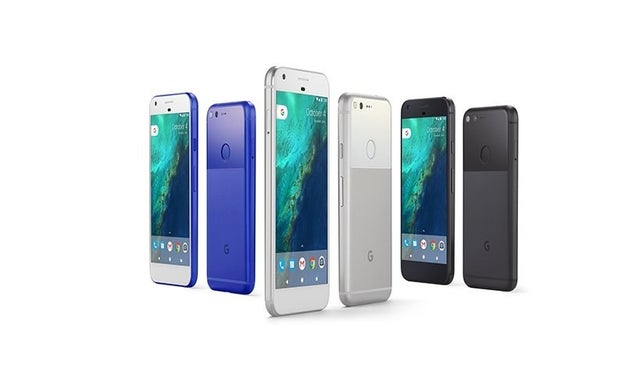
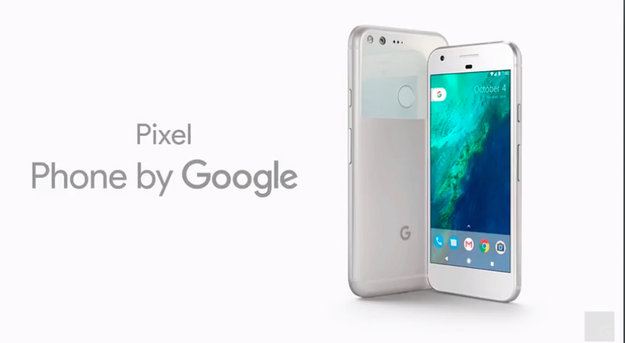
Nexus is no more. This year, Google is breaking tradition with its two new phones, the Pixel and Pixel XL.

Google typically premieres the latest version of its Android software on a Nexus phone, made by a rotating cast of phone makers, every fall. At today’s “Made by Google” event, the company announced that it was sunsetting the Nexus brand, in favor of a new line of smartphones, the first to be designed and manufactured entirely by Google.

The Pixel is Google’s first foray into the smartphone “OEM” (original equipment manufacturer) space. The device takes its name from the Chromebook Pixel laptops, which are also Google-manufactured.

The phones come in two sizes: the 5-inch Pixel and the 5.5-inch Pixel XL.

Google

The three colors are (I kid you not) Really Blue (US only), Very Silver, and Quite Black. Yes, those are official names.

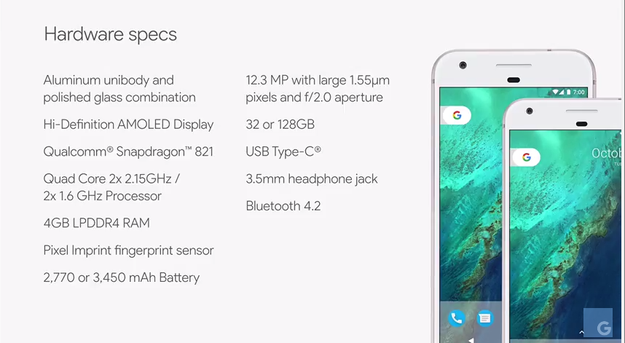
The phone has a rear glass panel on the back, with a polished aluminum casing. There&;s a “subtle ledge” along the edge of the phone, making it easy to hold. There&039;s also no camera bump.

Customers can pre-order starting today, Oct. 4, to receive devices when they first ship on Oct. 20. Both phones will be available in 32 GB ($649 for the Pixel, $769 for the XL) and 128 GB ($749 for the Pixel, $869 for the XL). In November, the devices will be available in Canada, the UK, Germany, Australia, and India.

Google

The Pixel phones, which run Google’s new Android N mobile operating system, come with features only Google can offer.

Pixel users will get unlimited Google Photos storage at full resolution. A new feature called “Smart Storage” will automatically free up space on the phone when necessary.

Normal Google Photos users get unlimited photo storage at 16 MP for free. Any image with higher resolution can be stored at its original size, but it will count toward the 15 GB of free storage Google offers (storage plans can also be upgraded to 100GB for $24/year).

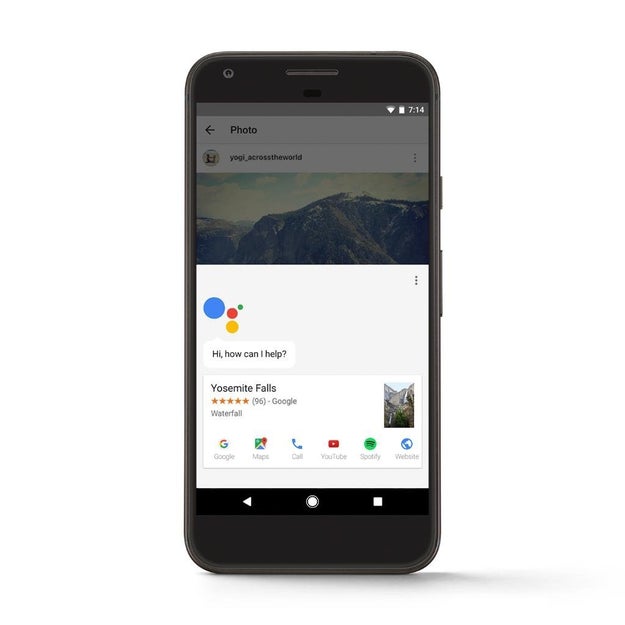
The phone will also come with Google Assistant, a “conversational” virtual assistant. Users can touch and hold the Home Button to start or simply say, “OK Google.” Google Assistant is primed to answer contextual questions. If “What’s playing tonight?” is followed by, “We’re taking the kids,” then Google Assistant will show you kid-friendly movies. The camera can also be used as input for questions such as, “Who designed this?”

Google

Google Assistant is also built into Allo, another app that comes pre-loaded on the Pixel. In the messaging app, you can type “@google” followed by a search (“Vietnamese restaurants nearby” or “damn daniel video”) to yield results right in a conversation. When a BuzzFeed colleague sent a photo of the Golden Gate Bridge in Allo, for example, Google Assistant suggested he respond with a Wikipedia-powered information card about the bridge. Another follow-up prompt was “@google Toll” which, when typed, offered information on toll rates for crossing. The creepiest feature is Smart Reply — canned text responses based on Google Assistant’s analysis of the way you converse. It learns how you communicate and will suggest pre-written messages it thinks you’d say.

The Pixel will also ship with Duo, a video chat app for iOS and Android, that has the truly terrifying feature of previewing incoming video from your caller before you answer.

Google honed in on low-light capabilities and HDR for the Pixel’s camera.

Google

DXoMark, a company that rates all cameras on the market, awarded the Pixel camera an 89, the highest rating ever for a smartphone. The new phones have a 12MP rear camera with f/2.0 aperture.

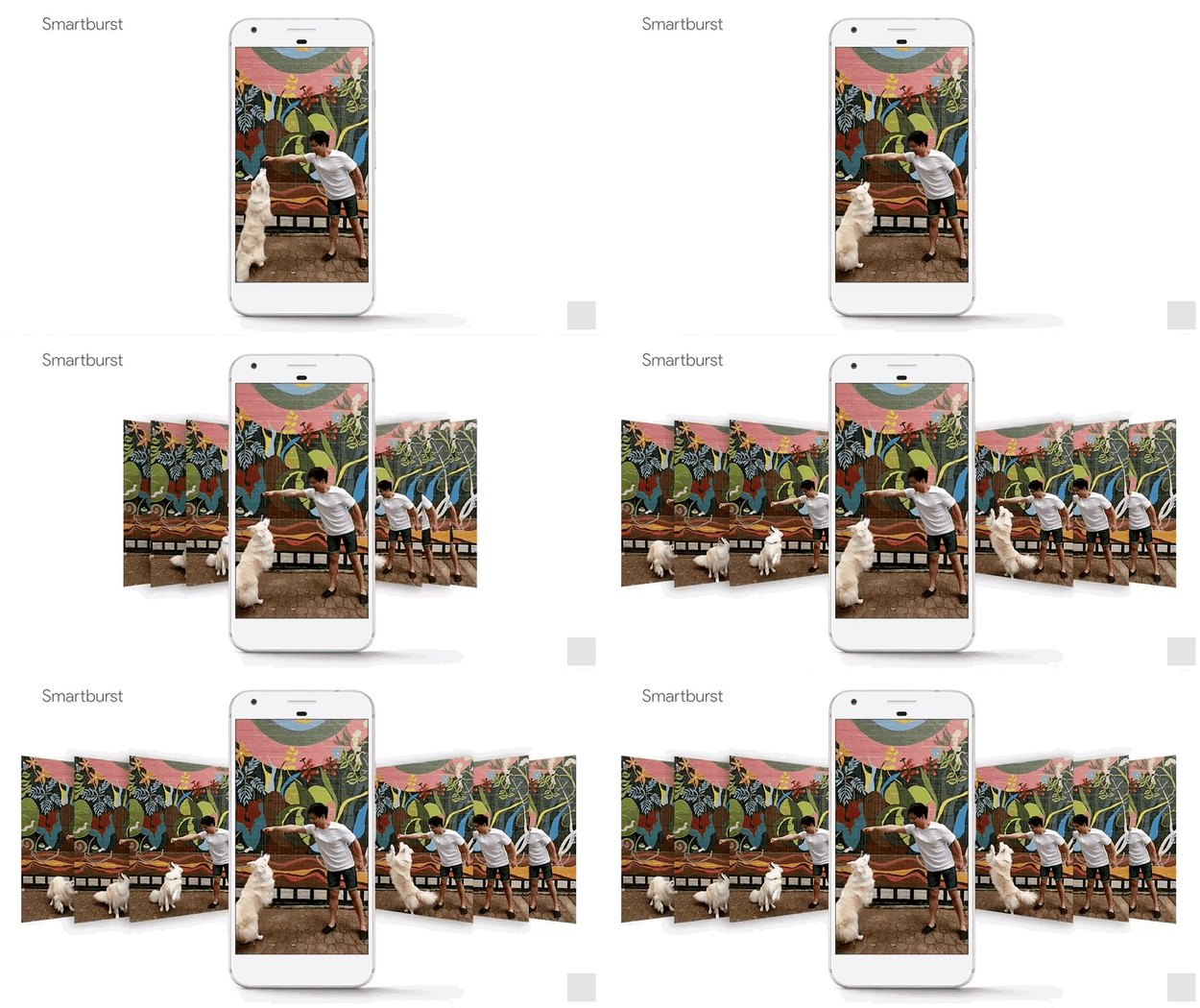
From a software perspective, it comes with Smart Burst, which picks the best photo out of a short burst. HDR+, another new feature, splits images up to short exposures, and then combines the image pixel by pixel. There&039;s also zero shutter lag, so you can keep shooting “rapid fire.” Google claims that it has a shorter capture time than any phone they&039;ve tested. It also comes with image stabilization for smooth videos.

The Pixel also has quick charging.

After a 15-minute charge, the Pixel gets seven hours of battery life via a USB Type-C charger.

Google is also providing a 24/7 customer care support team to help new Pixel users move contacts, photos, videos, music text, calendar events, and iMessages to their new Android devices from iPhone.

Google is teaming up exclusively with Verizon, and also selling the phone unlocked online from the Google Store. The Pixel is also the latest device compatible with Project Fi.

Google

Quelle: <a href="Here’s Pixel, The First Phone Designed Entirely By Google“>BuzzFeed

Here's What You Need To Know About Google's First VR Headset

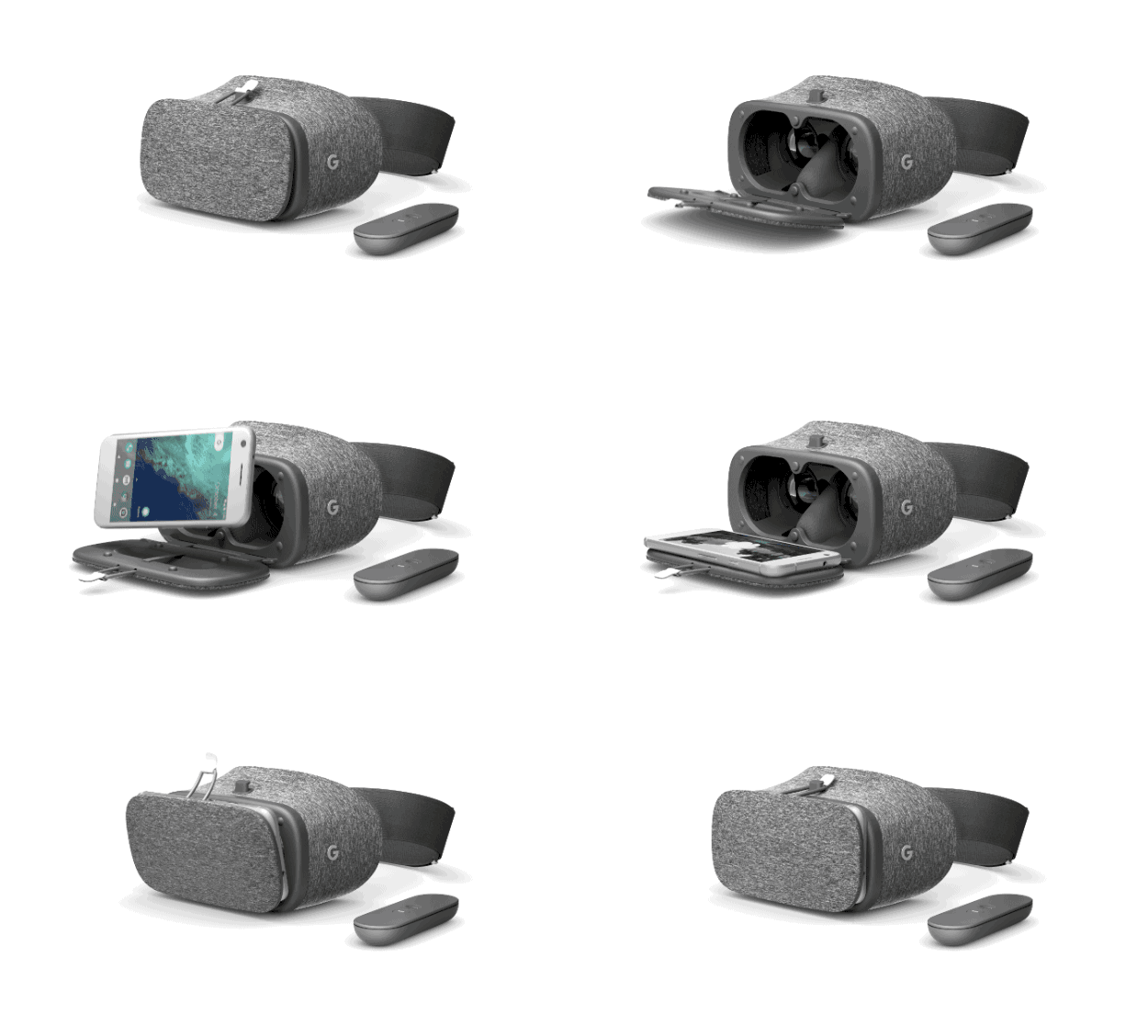
The Daydream View is soft, lightweight, and $79.

Google just unveiled its first ever virtual reality headset. It’s called Daydream View.

Google just unveiled its first ever virtual reality headset. It's called Daydream View.

Today, Google debuted Daydream View, its take on a virtual reality headset for smartphones, designed to bring 360º movies, games, and photos to life. The announcement follows the launch of the Daydream VR platform for Android, which was introduced at Google I/O earlier this year.

Daydream View is the successor to Google Cardboard, the dirt cheap, Android and iOS-compatible VR handheld introduced in 2014. Google&;s new headset, which competes with the likes of Samsung&039;s Gear VR ($100), Zeiss&039;s VR One Plus ($130) and LG 360 VR ($200), is more advanced than Cardboard in every way — but it still requires you to strap in a smartphone to work.

It offers a more comfortable, hands-free experience, and access to an entirely new platform focused on low latency head tracking (in other words, speeding up the time between when you move your head and when the screen adjusts to match that movement).

Daydream View will be available for pre-order on Oct. 20 through the Google Store and ships early November for $79. Before you mark your calendars, here&039;s what you should know about Google&039;s first attempt to strap an immersive photo and video machine on your head.

Nicole Nguyen / BuzzFeed News

The first device that will work with Daydream View is Google’s new Pixel phone.

The first device that will work with Daydream View is Google's new Pixel phone.

Pixel, which starts at $649, is the first smartphone designed and manufactured entirely by Google, and will be the only “Daydream-ready device” at launch. Google is working with Samsung, HTC, ZTE, Huawei, Xiaomi, Alcatel, Asus, and LG on smartphones that will also compatible with the headset in the future. Unlike Cardboard, Daydream View will not be compatible with iOS devices.

Google

There’s no pairing involved: the phone and headset will perform a “wireless handshake” automatically.

There's no pairing involved: the phone and headset will perform a "wireless handshake" automatically.

To use the headset, open the front portal using the elastic band, and plop the phone into the viewer. The phone will recognize that it&039;s in the headset and open VR mode automatically.

Users don&039;t have to waste time lining up the device with the lenses — capacitive pieces in the headset detect where the phone is and will auto-align the content that appears on the phone&039;s display.

Google

The controller is stored inside of the headset itself.

The controller is stored inside of the headset itself.

Most apps are controlled by looking left, right, up and down. But for some apps, like Street View, you can point and click the controller to move forward. The remote is also used to get back to the homescreen, where all of your apps live.

The controller has a clickable touchpad, a smooth multi-purpose “app” button, and a recessed home button.

Nicole Nguyen / BuzzFeed News


View Entire List ›

Quelle: <a href="Here&039;s What You Need To Know About Google&039;s First VR Headset“>BuzzFeed

Google's $129 Smart Speaker Ships In Early November

Google

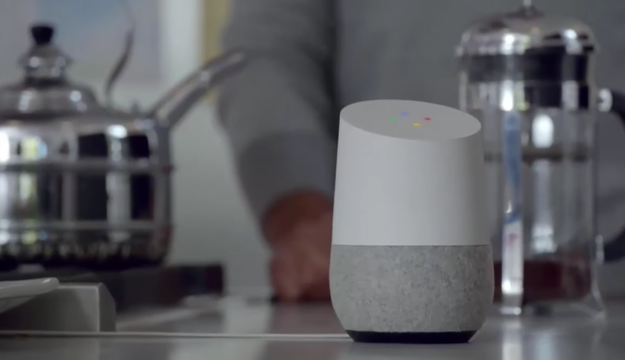
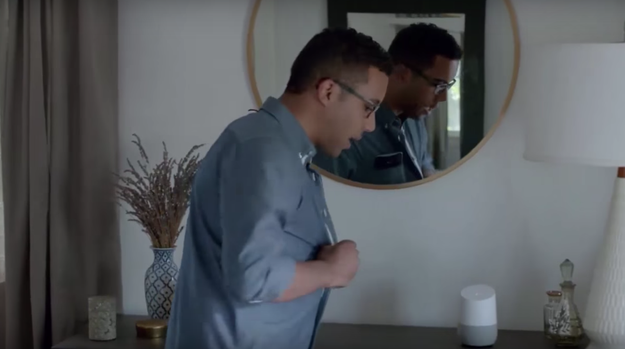
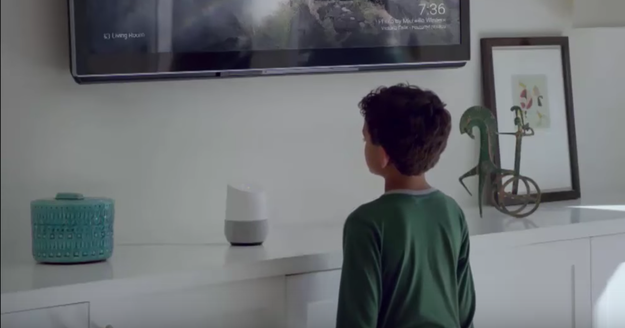
In nondescript building at Google’s Mountain View, California headquarters, Google product VP Rishi Chandra glanced at the small, cylindrical Google Home speaker beside him, and said, “Ok Google, tell me about my day.”

An emotionless female voice gave Chandra a very specific answer: “Good day Rishi,” it said. “It is 3:34 p.m. The weather in Mountain View currently is 73 degrees and sunny, with a high of 77 degrees. Don’t forget your sunglasses. Your flight from San Francisco international airport to San Diego international airport departs at 5:35 PM. It will take 43 minutes to get to the airport with current traffic. Today at 6 PM, your kids have a swimming lesson. By the way, you need to pick up groceries for dinner.”

Hot damn.

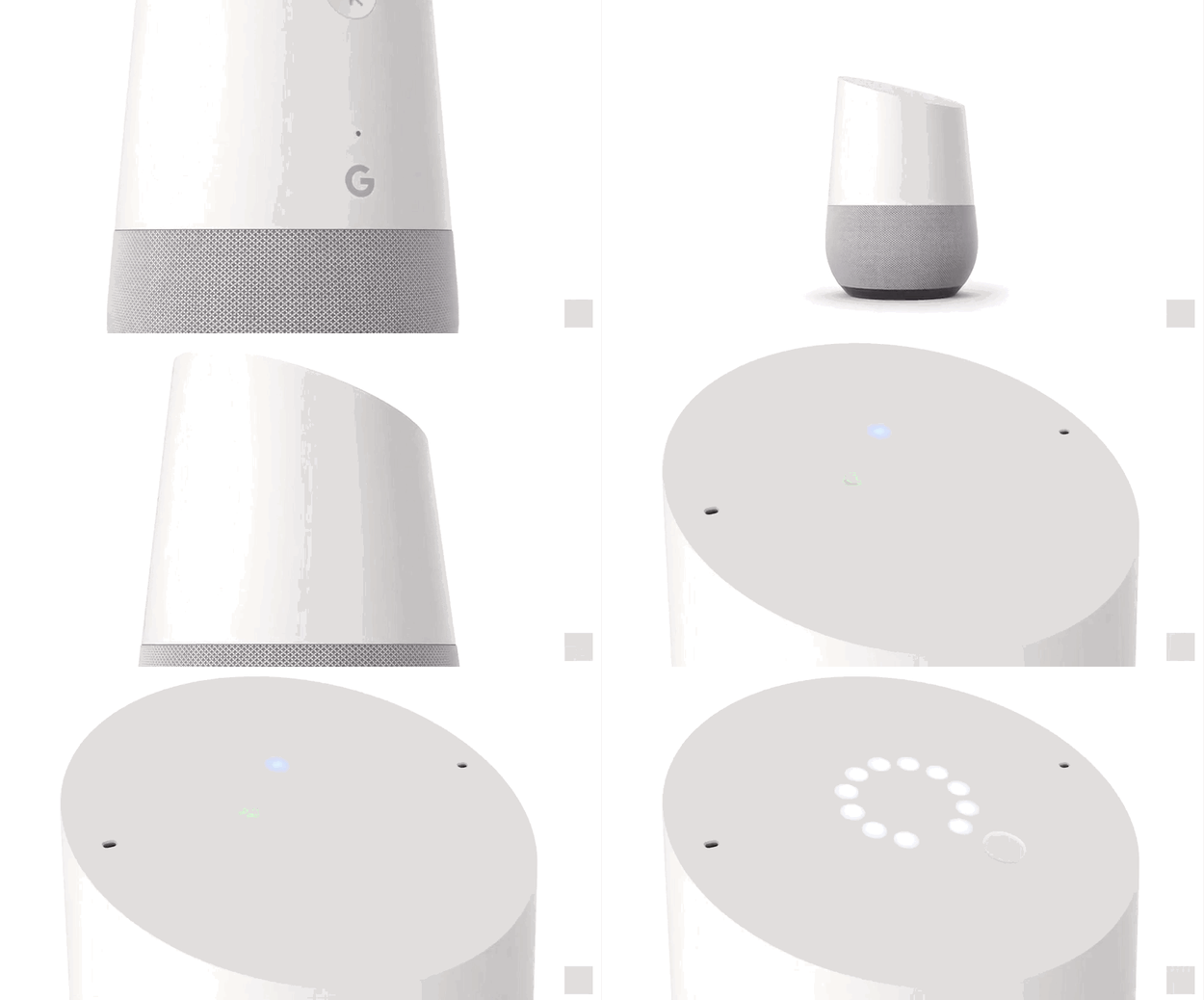
Home, which Google will begin selling for $129 in early November, is the company’s answer to the Amazon Echo, a wildly popular ‘smart speaker’ that has reportedly sold over 3 million devices. Like Echo, Home relies on simple voice commands to play music, answer easily-answered questions, set timers and control smart lighting fixtures. And though Amazon has a significant head start in the nascent smart speaker market, Google’s device could give the e-commerce giant a run for its money.

Google

For years, Google “organized” that information by indexing the Web. But following the advent of smartphones, some of that information migrated into apps and services. Google rolled out Google Now in response, digging through the stuff buried in your email or calendar to deliver just in time notifications. It created an intelligent voice assistant to serve as the layer between you and your apps — “okay google, play Drake on Spotify.” Now, with Home, it&;s attempting to again use voice to become the layer between you and all the devices in your home, and all the information previously captured behind screens.

When the sudden popularity of Amazon&039;s Echo and its Alexa assistant demonstrated there was a market for a small in-home speaker that served as a portal to those services, Google&039;s path became clear. The company had an entire ecosystem of services — search, calendar, streaming music — and in its virtual assistant Google Now (which has since morphed into Google Assistant) an easy way to access them with voice as the primary user interface. Echo — with its quick and easy voice command access to information, music and Amazon&039;s retail experience — was clearly an emerging threat to Google&039;s information-at-your-fingertips ubiquity. But Google, with its array of services and AI acumen, was well-poised to develop a rival device to temper it.

In Google’s office, Chandra showed off a number of neat tricks Home is capable of. He asked it to play happy music, and it played some goofy tunes from YouTube Music. When Chandra told home “play that famous song from Frozen,” the device obliged and played “Let it go.” The latter example showed off one of the cool advantages Google has in this space: artificial intelligence. Google Home can sometimes figure out what we&039;re looking for even if we&039;re only able to provide it with partial information. When I asked the device to play a clip of Conan O’Brien ribbing his employees, it promptly pulled up a YouTube video on on Chandra’s Chromecast showing the TV host crashing a “Conan” show conference room.

Google

Google Home also benefits from a line of productivity products in wide use across the globe. We use Gmail to store our flight details. We use Google Maps to navigate to the airport. Home can tap into all these things. When we ask it about our day, it can tell us when our flight is and when we need to leave to make it. In the future, it could also alert us to flight delays and help to change travel reservations.

Home&039;s power lies in how well it&039;s able to become a new ever-present interface for the ecosystem of Google services many of us already use. If you’re using Google Calendar, Gmail and Maps, Home could become a powerful voice-activated command center for your daily life — assuming you&039;re willing to accept the privacy risks associated with that level of access to your personal information.

Home’s initial release offers basic third party integrations with apps like Pandora and Spotify, but Google eventually plans expand to many more. Which is smart, because — as Amazon has shown us with Echo&039;s voice purchase requests — the business case for these voice-powered assistants is clear. “Once I have this product and it can get me directions, it can also order me flowers and get me a cab and a number of those things are monetizable,” said Google’s Scott Huffman, the engineering lead on Google Assistant.

Google isn’t going to simply bulldoze Amazon in the war to dominate the ‘smart speaker’ market. Amazon currently has over 400 jobs open for positions on its Alexa/Echo team. But this is a key battleground for Google, and if it’s going to keep organizing the world’s information, the company must put its financial and computing weight behind products like Home, or risk seeing a competitor like Amazon run away with its bread and butter.

Quelle: <a href="Google&039;s 9 Smart Speaker Ships In Early November“>BuzzFeed

Google Debuts A New Wi-Fi Router And Chromecast Ultra

Google debuted its advanced Chromecast Ultra streaming device and a new Wi-Fi router at a launch event in San Francisco on October 4th.

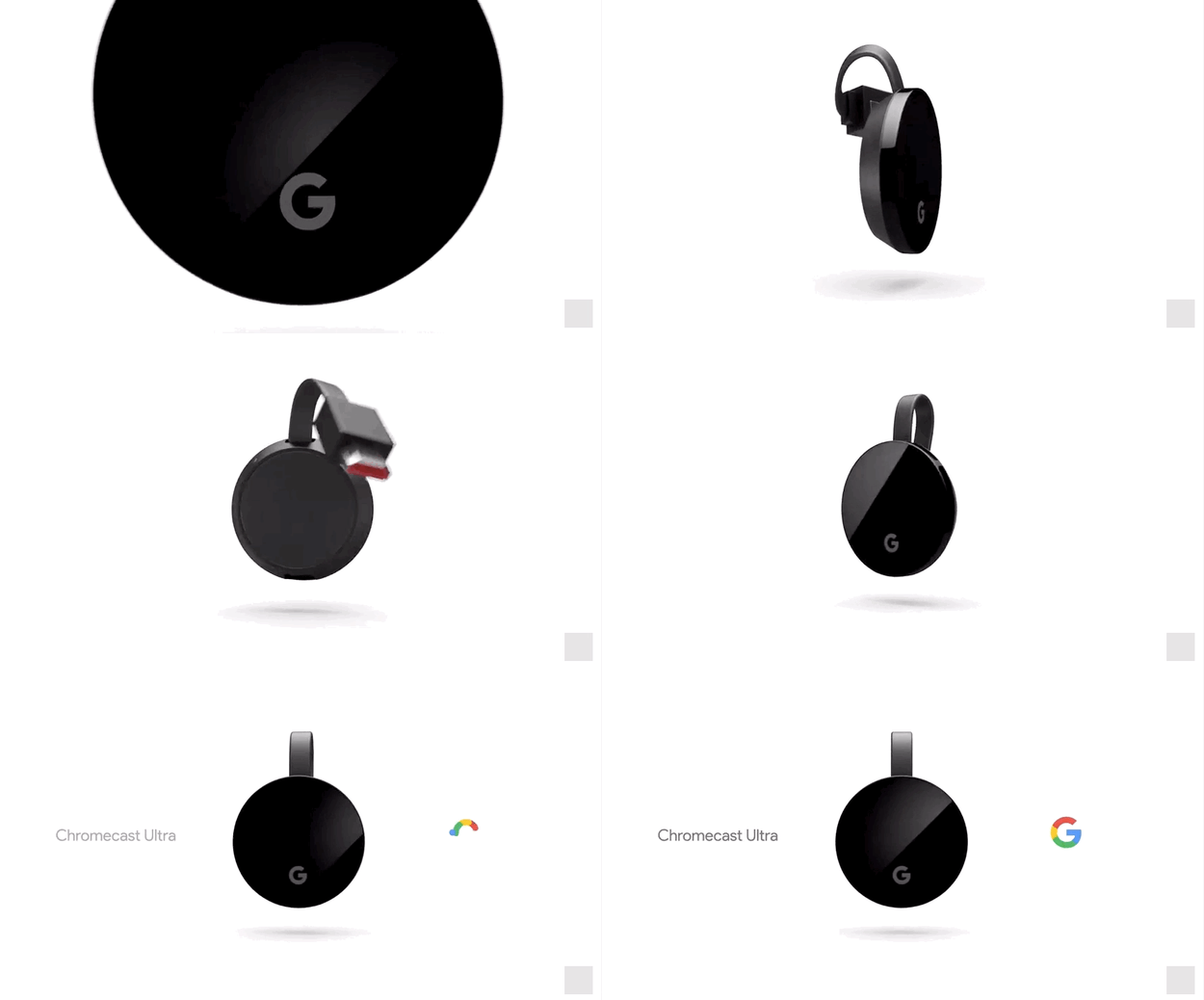
Alongside Google’s new Pixel phones, Daydream View VR headset, and its new Google Home device, the company announced Chromecast Ultra, an advanced version of Chromecast, which allows computers and phones to broadcast to other devices such as TVs and speakers. It also announced Google Wifi, a new wireless router.

Building on Chromecast&;s popularity — Google said it had sold 30 million copies of the device and that watching time is up 160% since 2015 — the revamped Chromecast Ultra will feature faster and higher quality streaming, as well as ethernet support. It retails for $69 and will be available in November.

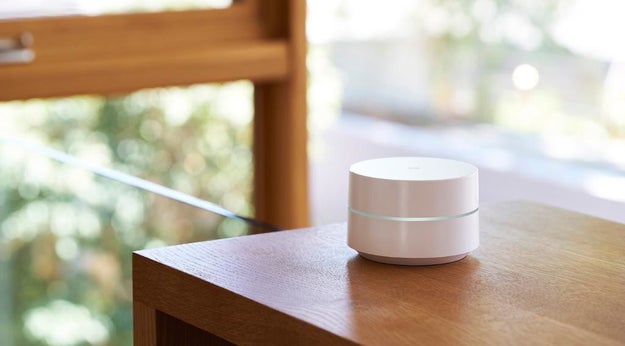
Google Wifi, a mesh network Wi-Fi router similar to Eero and Luma, will retail for $129 for one device and $299 for three. Eero&039;s routers sell for $199 each and $499 for three. Google&039;s device will feature an updated version of Google Assistant, which resembles Amazon’s Alexa voice control. This new router is an update to Google OnHub, announced in 2015 to little fanfare.

“Traditional routers weren’t designed for the way we use the internet today,” said a Google spokesperson during the announcement.

The router comes with Network Assist, a feature that controls and optimizes the network, transitions users to the nearest and strongest router, and allows users to pause Wi-Fi access on connected devices through an app. Google said it added Network assist “so you don&039;t have to deal with your router.” Google Wifi will be available for preorder in November — $129 for one, $299 for three — and will ship in December.

Quelle: <a href="Google Debuts A New Wi-Fi Router And Chromecast Ultra“>BuzzFeed

This Saudi Teen Is Probably Behind The Hacks Of Dozens Of Tech CEOs And Celebrities

This Saudi Teen Is Probably Behind The Hacks Of Dozens Of Tech CEOs And Celebrities

Over the past six months, the hacking group OurMine has attacked the social media accounts of some of the biggest names in tech, including Google CEO Sundar Pichai, Facebook CEO Mark Zuckerberg, and Uber CEO Travis Kalanick. Lacking a clear raison d&;être — OurMine has variously claimed to be raising awareness of security problems and to be charging for its security services — the group has nevertheless established themselves as a nuisance to dozens of tech luminaries and celebrities.

And while OurMine comprises an unknown number of hackers, BuzzFeed News can confirm that one of the OurMine crew is likely a young man living in Saudi Arabia who goes by the name “Ahmad Makki” on social media.

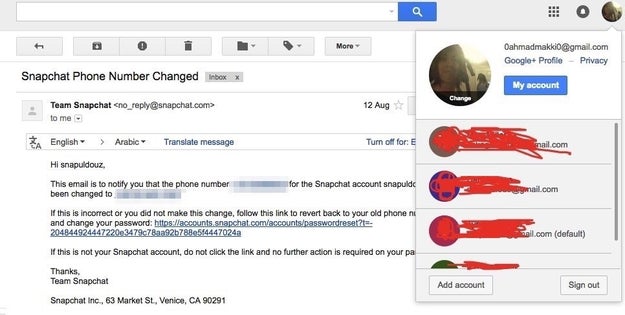
A screenshot provided to BuzzFeed News shows an August 12 Snapchat email notification, sent to “0ahmadmakki0@gmail.com,” of a phone number reset for an account belonging to “snapuldouz.” That account belongs to Uldouz Wallace, an actress and model with a huge following on Instagram and YouTube. The same day, Wallace tweeted that OurMine hacked her Snapchat and Twitter accounts. By publicly announcing their hacks and sometimes posing as benevolent researchers, OurMine has annoyed many in the hacking and cybersecurity worlds, and Makki&039;s name has repeatedly come up in doxxes by rival hacking groups. But this screenshot is the first hard proof of his participation in OurMine.

The email in the screenshot corresponds to an Instagram account with the username 0ahmadmakki0 that appears to belong to a high schooler in Saudi Arabia who goes by “Ahmad Makki” on social media. An image on 0ahmadmakki0&039;s Instagram from 2013 shows that the biography text on the page used to read “Our-Mine.net.” A corresponding Facebook page shows that Makki is soccer-obsessed and lives in Jeddah. (One of the aforementioned doxxes traced the IP address used by a Skype account allegedly associated with OurMine to Jeddah.)

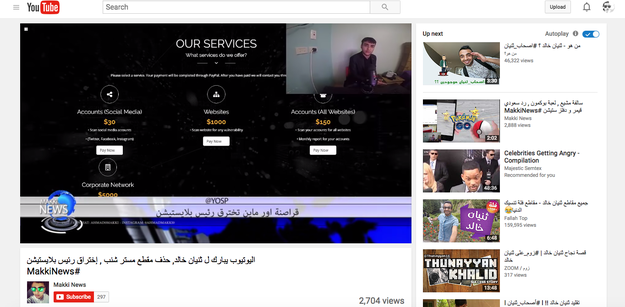
Makki also maintains a YouTube channel, Makki News, where in a news-style broadcast he announced the hack of Sony Studios President Shuhei Yoshida and solicited donations for OurMine.

In a message from its official email account, OurMine denied that Makki is a member: “Nope a lot of people thought he is a member of OurMine , but he is just afan, for this reason people thought we are from saudi arabia, we are not.”

Makki did not respond to an email, Instagram, Snapchat, or Facebook request for comment.

Quelle: <a href="This Saudi Teen Is Probably Behind The Hacks Of Dozens Of Tech CEOs And Celebrities“>BuzzFeed

SnelStart uses Azure SQL Database Elastic Pools to rapidly expand its business services

SnelStart makes popular financial and business management software for small and medium-sized businesses (SMBs) in the Netherlands. SnelStart turned to Azure and SQL Database to provide flexibility for their customers who wanted to move between on-premises deployments and the cloud. 

As part of the process of providing this flexibility for their customers, SnelStart also extended its services by becoming a cloud-based SaaS provider. Azure SQL Database platform helped SnelStart get there without incurring the major IT overhead that an infrastructure-as-a-services (IaaS) solution would have required. SnelStart&;s new SaaS service also enables them to fix bugs and provide new features rapidly, without customers needing to download and upgrade software. 

To learn more about SnelStart&039;s journey and how you can take advantage of Elastic Database Pools to build SaaS, take a look at this newly published case study.


Quelle: Azure

How Uber Plans To Conquer The Suburbs

Summit, New Jersey, a bedroom community to New York City, will begin subsidizing Uber rides for residents traveling to and from the local train station starting Monday – a move the town initiated to avoid building a new parking lot, a multimillion dollar effort. For Uber, the partnership is another step in a series of strategic moves to extend its reach to the suburbs.

Summit has a population of about 22,000 people, and its own NJ Transit Rail Station, which is a 45-minute ride from New York’s Penn Station. When Michael Rogers became Summit’s city administrator about a year ago, he noticed that most everyone complained to him about parking, he told BuzzFeed News.

Parking near Summit’s train station is a nightmare. Commuters buy parking permits, but are not assigned spaces, and often waste 15-20 minutes prowling for a spot in the morning, Rogers said. But building a new parking lot to address commuter demand would be a long-term, costly, multimillion dollar endeavor. So Rogers reached out to Uber’s New Jersey general manager, Ana Mahony, last October and pitched an idea: What if Summit subsidized commuters’ Uber rides to the town’s train station? Priced at $2 each way, the rides would cost commuters the same as an all-day parking permit. The deal would reduce demand for Summit&;s hard-to-come-by parking spaces and create a steady pool of demand for Uber.

“We wanted to offer residents a convenient alternative to driving and looking for parking spaces, which can be scarce,” Rogers told BuzzFeed News. “If I could free up 100 parking spaces, that would help alleviate some of the demand and capacity constraints. One hundred parking spaces is pretty significant in our system.”

Uber was intrigued. After some discussion, it agreed to a 6-month pilot program for about 100 Summit residents.

Summit is about 6 square miles, which keeps ride-hail fares within its boundaries relatively inexpensive. Residents will have to opt into the Uber pilot program, and the ride-hail company will denote their accounts for the promotion. Residents who have already purchased $4-per-day parking permits will be able to take Uber to the train station for free. Those without prepaid parking permits will pay $2 each way. Summit will reimburse Uber for the difference between the flat fares and the true cost of a ride, which drivers will receive upfront.

The benefit is clear for Summit, which now can forgo massive capital expenditures on a new parking lot it would otherwise need to build and maintain. Instead, it can pay a fraction of that amount to shuttle people to and from the train using Uber. Rogers told BuzzFeed News that he expects the deal will only cost Summit about $167,000 annually, a far cry from the likely $10 million it would cost to building a parking lot – plus, Summit doesn’t have enough idle land downtown, anyway.

Via cityofsummit.org

For Uber, the Summit pilot is a new way to tap into the sprawling and unconquered U.S. ride-hail market beyond the major metropolitan ones it dominates. While Uber and Lyft have saturated most major cities, only 15% of Americans say they have used ride-hailing services, and another 33% claim to be unfamiliar with them, according to a late 2015 Pew Research Center survey. Meanwhile, the same survey found that 21% of urban Americans say they have used ride-hail services, compared to 15% of suburb-dwellers.

Partnerships with local governments also help Uber show commuters how ride-hail can be an alternative to driving – especially if it doesn’t cost any more than parking a car in the lot outside the train station. (Los Angeles, a city synonymous with car culture, has become a proving ground for this shift.)

It helps that Summit’s affluent population is already familiar with Uber. In December, while negotiating the commuter pilot program, Summit paid for an Uber promotion that gave residents $5 rides within its borders, an effort to ease congestion and drunk driving during the winter holidays. Rogers said called the promotion “very, very successful.” The partnership worked out nicely for Uber as well: Ridership increased 300% for the month compared to the year prior, Rogers said.

Uber&039;s partnership with Summit is one of a handful of deals with smaller cities and towns outside the major metro areas on which the company built its business. In March, Altamonte Springs, Florida, became the first town to subsidize ride-hail services for its residents. Ten miles north of Orlando, Altamonte underwrites 20% of the cost of every Uber ride within its borders; It covers up to 25% if the rider is going to or from the local light rail. Passengers need only enter “Altamonte” in the promotion code field in the Uber app to receive the proper discount for rides within the city&039;s geofenced boundaries. Then Uber bills Altamonte Springs at the end of the month, and the city cuts a check.

For city administrators and local transportation agencies with strained budgets, ride-hail subsidy programs like these are another solution to the so called “first and last-mile” problem: getting people to a bus or rail stop so they can ride public transportation to their final destinations.

In February, the Pinellas Suncoast Transit Authority County, near Tampa Bay, Florida, launched a pilot program in which the agency covers half the cost of Uber rides up to $6 to and from designated stops near local transit centers and bus stops. And in San Francisco, the developers of Parkmerced, an apartment and townhome community, offer new residents a $100 monthly stipend toward “multimodal transportation,” including Uber.

The Summit partnership, though, offers a different spin on that model. While other cities have offered Uber or Lyft subsidies in an effort to increase ridership for public transportation, Summit is using Uber to streamline its residents’ commutes, a move that could foster a dependency on the ride hail service in a town, where people own homes with multi-car garages and drive to get everywhere.

“It may affect decisions personally in the future where they realize, a family doesn’t necessarily need two cars,” Rogers said. “They might say, ‘you know, we used to have this second car because I needed it to go to the train station.’ And the car would just sit there.”

Quelle: <a href="How Uber Plans To Conquer The Suburbs“>BuzzFeed