OpenAI’s open‑source model: gpt‑oss on Azure AI Foundry and Windows AI Foundry 

AI is no longer a layer in the stack—it’s becoming the stack. This new era calls for tools that are open, adaptable, and ready to run wherever your ideas live—from cloud to edge, from first experiment to scaled deployment. At Microsoft, we’re building a full-stack AI app and agent factory that empowers every developer not just to use AI, but to create with it.

That’s the vision behind our AI platform spanning cloud to edge. Azure AI Foundry provides a unified platform for building, fine-tuning, and deploying intelligent agents with confidence while Foundry Local brings open-source models to the edge—enabling flexible, on-device inferencing across billions of devices. Windows AI Foundry builds on this foundation, integrating Foundry Local into Windows 11 to support a secure, low-latency local AI development lifecycle deeply aligned with the Windows platform. 

With the launch of OpenAI’s gpt‑oss models—its first open-weight release since GPT‑2—we’re giving developers and enterprises unprecedented ability to run, adapt, and deploy OpenAI models entirely on their own terms. 

For the first time, you can run OpenAI models like gpt‑oss‑120b on a single enterprise GPU—or run gpt‑oss‑20b locally. It’s notable that these aren’t stripped-down replicas—they’re fast, capable, and designed with real-world deployment in mind: reasoning at scale in the cloud, or agentic tasks at the edge. 

And because they’re open-weight, these models are also easy to fine-tune, distill, and optimize. Whether you’re adapting for a domain-specific copilot, compressing for offline inference, or prototyping locally before scaling in production, Azure AI Foundry and Foundry Local give you the tooling to do it all—securely, efficiently, and without compromise. 

Create intelligent applications with Azure AI Foundry

Open models, real momentum 

Open models have moved from the margins to the mainstream. Today, they’re powering everything from autonomous agents to domain-specific copilots—and redefining how AI gets built and deployed. And with Azure AI Foundry, we’re giving you the infrastructure to move with that momentum: 

With open weights teams can fine-tune using parameter-efficient methods (LoRA, QLoRA, PEFT), splice in proprietary data, and ship new checkpoints in hours—not weeks.

You can distill or quantize models, trim context length, or apply structured sparsity to hit strict memory envelopes for edge GPUs and even high-end laptops.

Full weight access also means you can inspect attention patterns for security audits, inject domain adapters, retrain specific layers, or export to ONNX/Triton for containerized inference on Azure Kubernetes Service (AKS) or Foundry Local.

In short, open models aren’t just feature-parity replacements—they’re programmable substrates. And Azure AI Foundry provides training pipelines, weight management, and low-latency serving backplane so you can exploit every one of those levers and push the envelope of AI customization. 

Meet gpt‑oss: Two models, infinite possibilities

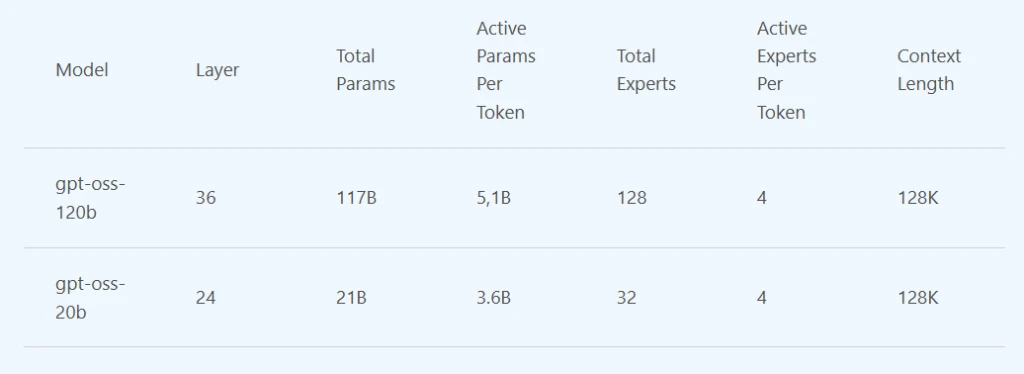
Today, gpt‑oss-120b and gpt‑oss-20b are available on Azure AI Foundry. gpt‑oss-20b is also available on Windows AI Foundry and will be coming soon on MacOS via Foundry Local. Whether you’re optimizing for sovereignty, performance, or portability, these models unlock a new level of control. 

gpt‑oss-120b is a reasoning powerhouse. With 120 billion parameters and architectural sparsity, it delivers o4-mini level performance at a fraction of the size, excelling at complex tasks like math, code, and domain-specific Q&A—yet it’s efficient enough to run on a single datacenter-class GPU. Ideal for secure, high-performance deployments where latency or cost matter.

gpt‑oss-20b is tool-savvy and lightweight. Optimized for agentic tasks like code execution and tool use, it runs efficiently on a range of Windows hardware, including discrete GPUs with16GB+ VRAM, with support for more devices coming soon. It’s perfect for building autonomous assistants or embedding AI into real-world workflows, even in bandwidth-constrained environments. 

Both models will soon be API-compatible with the now ubiquitous responses API. That means you can swap them into existing apps with minimal changes—and maximum flexibility. 

Bringing gpt‑oss to Cloud and Edge 

Azure AI Foundry is more than a model catalog—it’s a platform for AI builders. With more than 11,000 models and growing, it gives developers a unified space to evaluate, fine-tune, and productionize models with enterprise-grade reliability and security. 

Today, with gpt‑oss in the catalog, you can: 

Spin up inference endpoints using gpt‑oss in the cloud with just a few CLI commands.

Fine-tune and distill the models using your own data and deploy with confidence.

Mix open and proprietary models to match task-specific needs.

For organizations developing scenarios only possible on client devices, Foundry Local brings prominent open-source models to Windows AI Foundry, pre-optimized for inference on your own hardware, supporting CPUs, GPUs, and NPUs, through a simple CLI, API, and SDK.

Whether you’re working in an offline setting, building in a secure network, or running at the edge—Foundry Local and Windows AI Foundry lets you go fully cloud-optional. With the capability to deploy gpt‑oss-20b on modern high-performance Windows PCs, your data stays where you want it—and the power of frontier-class models comes to you. 

This is hybrid AI in action: the ability to mix and match models, optimize performance and cost, and meet your data where it lives. 

Empowering builders and decision makers 

The availability of gpt‑oss on Azure and Windows unlocks powerful new possibilities for both builders and business leaders. 

For developers, open weights mean full transparency. Inspect the model, customize, fine-tune, and deploy on your own terms. With gpt‑oss, you can build with confidence, understanding exactly how your model works and how to improve it for your use case. 

For decision makers, it’s about control and flexibility. With gpt‑oss, you get competitive performance—with no black boxes, fewer trade-offs, and more options across deployment, compliance, and cost. 

A vision for the future: Open and responsible AI, together 

The release of gpt‑oss and its integration into Azure and Windows is part of a bigger story. We envision a future where AI is ubiquitous—and we are committed to being an open platform to bring these innovative technologies to our customers, across all our data centers and devices. 

By offering gpt‑oss through a variety of entry points, we’re doubling down on our commitment to democratize AI. We recognize that our customers will benefit from a diverse portfolio of models—proprietary and open—and we’re here to support whichever path unlocks value for you. Whether you are working with open-source models or proprietary ones, Foundry’s built-in safety and security tools ensure consistent governance, compliance, and trust—so customers can innovate confidently across all model types. 

Finally, our support of gpt-oss is just the latest in our commitment to open tools and standards. In June we announced that GitHub Copilot Chat extension is now open source on GitHub under the MIT license—the first step to make VS Code an open source AI editor. We seek to accelerate innovation with the open-source community and drive greater value to our market leading developer tools. This is what it looks like when research, product, and platform come together. The very breakthroughs we’ve enabled with our cloud at OpenAI are now open tools that anyone can build on—and Azure is the bridge that brings them to life. 

Next steps and resources for navigating gpt‑oss

Deploy gpt‑oss in the cloud today with a few CLI commands using Azure AI Foundry. Browse the Azure AI Model Catalog to spin up an endpoint. 

Deploy gpt‑oss-20b on your Windows device today (and soon on MacOS) via Foundry Local. Follow the QuickStart guide to learn more.

Pricing1 for these models is as follows:

*See Managed Compute pricing page here.

1Pricing is accurate as of August 2025.

The post OpenAI’s open‑source model: gpt‑oss on Azure AI Foundry and Windows AI Foundry  appeared first on Microsoft Azure Blog.
Quelle: Azure

Everyone’s a Snowflake: Designing Hardened Image Processes for the Real World

Hardened container images and distroless software are the new hotness as startups and incumbents alike pile into the fast-growing market. In theory, hardened images provide not only a smaller attack surface but operational simplicity. In practice, there remains a fundamental – and often painful – tension between the promised security perfection of hardened images and the reality of building software atop those images and running them in production. This causes real challenges for platform engineering teams trying to hit the Golden Mean between usability and security.

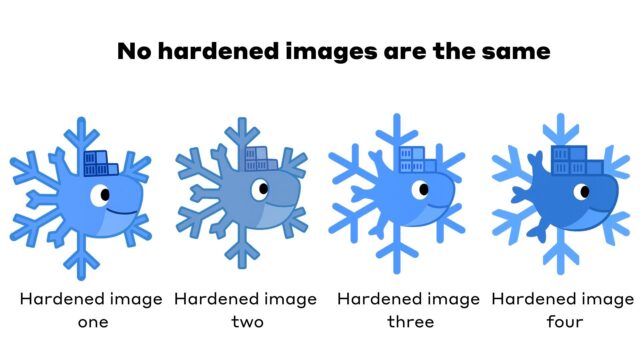
Why? Everyone’s a snowflake. 

No two software stacks, CI/CD pipeline set ups and security profiles are exactly the same. In software, small differences can cause big headaches. When a developer can no longer access their preferred debugging tools, or cannot add the services they are used to pairing in a container, that causes friction and frustration. Naturally, devs who must ship figure out workarounds or other methods to achieve desired functionality. This snowflake reality can have a snowball affect of driving modifications underground, moving them outside of the hardened image process, or causing backlogs at hardened image vendors who designed their products for rigid security, not reality. In the worst case, they simplify ditch distroless and stymie adoption.

The counterintuitive truth? Rigid container solutions can have the opposite effect, making organizations less secure. This is why the process of designing and applying hardened images is most effective when developer and DevOps needs are taken into account and flexibility is baked into the process. At the same time, too much choice is chaos and chaos generates excessive risk. This is a delicate balance and the ultimate challenge for platform ops today.

The Snowflake Problem: Why Every Environment is Unique

The Snowflake Challenge in container security is pervasive. Walk into any engineering team and you’ll find them standardized not only on an OS distro and changes to that distro will likely cause unforeseen disruptions. They’ve got applications that need to connect to internal services with self-signed certificates, but hardened images often lack the CA bundles or the ability to easily add custom ones. They need to debug production issues with standard system tools, but hardened images leave them out. They’re running containers with multiple processes because splitting legacy applications into separate containers would break existing functionality and require months of rewriting. And they rely on package managers to install operational tools that security teams never planned for.

Distribution, tool and package loyalty isn’t just preference. It’s years of institutional knowledge baked into deployment scripts, monitoring configurations, and troubleshooting runbooks. Teams that have mastered a specific toolchain don’t want to retrain their entire organization just to get security benefits they can’t immediately see. Platform teams know this and will bias towards hardened image solutions that do not layer on cognitive load.

The reality is this. Real-world deployment patterns rarely match the security team’s slideshow. Multi-service containers are everywhere because deadlines matter more than architectural purity. These environments work, they’re tested, and they’re supporting actual users. Asking teams to rebuild their entire stack for theoretical security improvements feels like asking them to fix something that isn’t obviously broken. And they will find a way not to. So platform’s job is to find a hardened image solution that recognizes these types of realities and adjusts for them rather than forces behavioral change.

Familiarity as a Security Strategy

The most secure system in the world is worthless if your development teams route around it or ignore it. Flexibility and recognition that at least giving teams what they are used to having can make security nearly invisible and quite palatable.

In this light, multi-distro options from a hardened image vendor  isn’t a luxury feature. It’s an adoption requirement and critical way to mitigate the Snowflake Challenge. A hardened image solution that supports multiple major distros removes the biggest barrier to getting started – the fear of having to adopt an unfamiliar operating system. Once they recognize that their operating system in the hardened images will be familiar, platform teams can confidently begin hardening their existing stacks without worrying about retraining their entire engineering organization on a new base distribution or rewriting their deployment tooling.

Self-service customization turns potential friction into adoption drivers. When developers can add their required CA certificates easily and through self-service instead of filing support tickets, they actually use the tool. When they can merge their existing images with hardened bases through automated workflows, the migration path becomes clear. The goal isn’t to eliminate necessary customization but to make it just another simple step that is no big deal. No big deal modifications leads to smooth adoption paths and developer satisfaction.

The adoption math is straightforward. DDifficulty correlates inversely with security coverage. A perfectly hardened image that only 20% of teams can use provides less overall organizational security than a reasonably hardened image that 80% of teams adopt. Meeting developers where they are beats forcing architectural changes every time.

Migration Friction and Community Trust

The gap between current state and hardened images can feel daunting to many teams. Their existing Dockerfiles might be single-stage builds with years of accumulated dependencies. Their CI/CD pipelines assume certain tools will be available. Their developers assume packages they are comfortable with will be supported.

Modern tooling for hardened images can bridge this gap through progressive assistance. AI-powered converters can help translate existing Dockerfiles into multi-stage builds compatible with hardened bases. Converting legacy applications to hardened images through guided automation removes much of the technical friction. The tools handle the mechanical aspects of separating build dependencies from runtime dependencies while preserving application functionality. Teams can retain their existing development flows with less disruption and toil. Security adoption will be greater, while down-sizing the attack surface.

Hardened image adoption can depend on trust as much as technical merit. Organizations trust hardened image providers who demonstrate knowledge of the open source projects they’re securing. Docker has maintained close relationships with each open source project of the more than 70 official images listed on Docker Hub, That signals long-term commitment beyond just security theater. The reality is, the best hardened image design processes are dialogues that include project stakeholders and benefit from project insights and experience.The upshot? Platform teams need to talk to their developer and DevOps customers to understand what software is critical and to talk to their hardened image provider to understand their ties and active interactions with the upstream communities. A successful hardened image rollout must navigates these realities and acknowledge all the invested parties. 

The Happy Medium: Secure Defaults, Controlled Flexibility, Community Cred

Effective container security resembles building with Lego blocks rather than erecting security monoliths. The beloved Lego kits not only have a base-level design but are also easy to modify while maintaining structural integrity. Monoliths make appear more solid and substantial but modifying them is challenging and their strong opinionated view of the world is destined to cramp someone’s style.

Auditable customization paths maintain security posture while accommodating reality. When developers can add packages through controlled processes that log changes and validate security implications, both security and productivity goals get met. The secret lies in making the secure path the easy path rather than trying to eliminate all alternatives. At the foundational level, this requires solutions that integrate with existing practices rather than replacing them wholesale. 

Success metrics need to include coverage and adoption alongside traditional hardening measurements. A hardened image strategy that achieves 95% team adoption with 80% attack surface reduction delivers better organizational security than one that achieves 99% hardening but only gets used by 30% of applications. Platform teams that understand this math are far more likely to succeed in hardened image adoption and embrace.

Beyond the Binary: A New Security Paradigm

The bottom line? Really good security deployed everywhere beats perfect security deployed sporadically because security is a system property, not a component property. The weakest link determines overall posture. An organization with consistent, reasonable security practices across all applications faces lower aggregate risk than one with perfect security on some applications and no security on others.

The path forward involves designing hardened image processes that acknowledge developer reality and involves community in order to improve security outcomes. That comes through broad adoption and minimal disruption.. This means creating migration paths that feel achievable rather than overwhelming, providing automation to smooth the path, and delivering self-service options rather than more Jira-ticket Bingo. Every organization may be a snowflake, but that doesn’t make security impossible. It just means hardened image solutions need to be as adaptable as the environments they’re protecting.

Quelle: https://blog.docker.com/feed/