Qualcomm: Snapdragon 8 Elite Gen 5 ist "weltschnellstes Mobile-SoC"
Qualcomms neues Premium-SoC ist nach Angaben des Herstellers das schnellste auf der Welt und soll auch beim Thema KI mehr bieten. (Snapdragon Summit 2025, Prozessor)
Quelle: Golem
Qualcomms neues Premium-SoC ist nach Angaben des Herstellers das schnellste auf der Welt und soll auch beim Thema KI mehr bieten. (Snapdragon Summit 2025, Prozessor)
Quelle: Golem
Qualcomm zufolge ist der Snapdragon 8 Elite Gen 5 das schnellste Mobile-SoC der Welt – Benchmarks geben dem Hersteller recht. Von Tobias Költzsch (Snapdragon Summit 2025, Prozessor)
Quelle: Golem
Mit neuer CPU-Architektur und ungewöhnlicher Speicherbestückung setzt Qualcomm die Wettbewerber unter Druck. (Prozessor, TSMC)
Quelle: Golem
Oberflächlich professionelle, aber inhaltsleere KI-Texte zwingen Mitarbeiter zu stundenlanger Nacharbeit und kosten Unternehmen Millionen Euro. (KI, Wirtschaft)
Quelle: Golem
Nach sechs Jahren bekommt die 360-Grad-Kamera Gopro Max einen Nachfolger. Außerdem zeigt die Firma einen KI-Gimbal und eine Kamera mit LED. (Gopro, Kameras)
Quelle: Golem
Die neue Serie mit Jessica Chastain sollte am 26. September starten. Drei Tage vorher hat Apple TV+ die Serie verschoben. (Streaming, Apple TV)
Quelle: Golem
Für Entwickler sind Besuche auf Events wie den MD Dev Days wichtig. Wir haben mit dem Organisator über Freud und Leid seiner Entwicklerkonferenz gesprochen. (Chefs von Devs, Softwareentwicklung)
Quelle: Golem
Zuerst sind die USA dran, aber es wird wohl nicht mehr lange dauern, bis Disney+ auch in Deutschland teurer wird. (Disney+, Disney)
Quelle: Golem
Every organization has an innovation agenda. Whether it’s building AI-native applications, creating more engaging customer experiences, or unlocking new efficiencies—ambition is never the problem. But for many teams, it’s their technical debt that stands in the way. Legacy systems, outdated codebases, and fragmented infrastructure slow progress and drain resources. In fact, over 37% of application portfolios require modernization today—and that number will remain high over the next three years.1 Developers want the freedom to innovate, but migration and modernization is often slow, complex, and hard to start. These delays translate into lost opportunities and stalled transformation.
Generative AI changes the game. Teams are using it to tackle migration and modernization faster and with less friction. At today’s Migrate and Modernize Summit, we’re sharing agentic AI tools built to drive real progress—quickly. From GitHub Copilot’s app modernization for Java and .NET, to new AI-powered features in Microsoft Azure Migrate that simplify migration across teams, to Microsoft Azure Accelerate—a new offering that pairs expert guidance with investment support—these tools help organizations move forward with confidence.
GitHub Copilot app modernization for Java and .NET
Modernizing legacy apps used to take months. With GitHub Copilot’s autonomous AI agents, it can now take days.
Over 150 million developers—including engineering teams at 90% of the Fortune 100—use GitHub to build and collaborate. Now, with new capabilities in GitHub Copilot for application modernization across Java and .NET, those organizations can accelerate their modernization efforts significantly.
Get started with modernizing your Java and .NET apps today.
What’s new:
General availability of automated .NET and Java upgrades—Upgrading to the latest versions of .NET and Java unlocks performance, security, and feature enhancements, but managing breaking changes and dependency updates can be time-consuming. GitHub Copilot now automates this process with AI agents that analyze your codebase, detect breaking changes, suggest safe migration paths, and apply build fixes (including dependency updates and security vulnerability checks.) The Microsoft Teams organization used this capability to upgrade multiple projects to .NET 8—cutting months of effort down to just hours.
App modernization for Java is now generally available, with .NET in public preview. Running modernized applications on Microsoft Azure unlocks a scalable, secure, and cost-efficient foundation. With built-in high availability, global reach, integrated monitoring, and enterprise-grade security—Azure makes it easier for teams to deploy, operate, and scale with confidence. The modernization process is streamlined: it analyzes your app, identifies dependencies, resolves platform-specific issues, containerizes the code, generates deployment artifacts, and launches into dev/test environments—all while aligning with your organization’s security and compliance standards. Ford China used this approach to modernize middleware apps, cutting time and effort by 70%.
With GitHub Copilot app modernization, developers can stay focused on building what’s next—while AI handles the tedious, time-consuming work of updating legacy code. The results are already showing up: customers are cutting timelines, reducing effort, and unlocking faster paths to innovation.
Learn more about the new GitHub Copilot capabilities here
What’s new in Azure Migrate: Streamlining migration and modernization across apps and teams
Migration and modernization often stall when IT, developers, data, and security teams aren’t aligned. Azure Migrate is introducing new agentic AI features to close those gaps, simplify complexity, and expand support—so teams can move faster, together:
AI-powered guidance (Preview): Agentic capabilities in Azure Migrate now offer a guided experience that automates key tasks and builds on what your teams already know. This helps you move faster and smarter—without retraining or retooling.
Connected workflows with GitHub Copilot (Preview): IT and developers can now collaborate seamlessly. Azure Migrate links directly to GitHub Copilot’s app modernization tools, so both teams can plan and execute modernization in sync.
Application-awareness by default (Preview): Get broad visibility across your portfolio and deep insights into each app. Understand dependencies, keep resources aligned, and make smarter, data-driven decisions throughout your migration.
Expanded support for databases and infrastructure (Preview): Azure Migrate now supports more scenarios—including PostgreSQL and popular Linux distributions—so no app gets left behind.
Learn more about the new Azure Migrate capabilities here
Migrate and modernize your databases in Azure
At the heart of every digital transformation is data. This year’s Migrate and Modernize Summit was more than a showcase of new features—it was a demonstration of how Microsoft Azure is reimagining the migration and modernization journey for organizations of every size, including for their databases.
Azure’s commitment to open source shines through in our latest PostgreSQL innovations. The journey to using PostgreSQL in Azure begins with the recently announced public preview of Azure Migrate Discovery and Assessment for PostgreSQL, a new capability that streamlines planning and accelerates migrations from on-premises, AWS, or GCP to Azure Database for PostgreSQL. This tool provides comprehensive discovery and assessment, helping organizations confidently map their migration path.
This and other Azure databases migration innovations are not just features—they are part of a unified approach to data modernization that reduces migration complexity and ultimately empower you to create the next generation of AI apps. Whether you’re migrating SQL Server, Oracle, PostgreSQL, or Sybase workloads, Azure’s latest tooling and services provide a streamlined, intelligent path to the cloud.
Learn more about the new database migration and modernization capabilities here
Accelerate transformation with Microsoft expertise and support
Transformation isn’t just about adopting new technology—it’s about empowering your teams and refining processes to meet business goals. Microsoft provides a range of resources to help you build skills, reduce risk, and move faster with confidence. That includes expert help through Microsoft Unified, free role-based training and certifications with Microsoft Learn, and curated technical guidance and best practices through Azure Essentials.
Now, with Azure Accelerate, we’re going further. This program connects you directly with trusted experts, unlocks funding for eligible projects, and supports every stage of your cloud and AI journey—from migration and modernization to data platforms and intelligent agents. One standout feature is the Cloud Accelerate Factory, where Microsoft engineers work alongside your team or partners to provide zero-cost deployment support for over 30 Azure services. That means faster delivery, fewer roadblocks, and more time for your teams to focus on high-impact work. Customers like Thomson Reuters have already used Azure Accelerator to migrate over 500TB of data and modernize mission-critical systems.
Learn more about Azure Accelerate in our announcement blog
Move forward with confidence
Modernization shouldn’t be a guessing game. Tools like GitHub Copilot and Azure Migrate are designed to bring every app—legacy or new—into the software development lifecycle. With agentic AI and end-to-end support, it’s easier than ever to start strong and scale fast.
Whether you’re kicking off your cloud journey or expanding AI across your organization, Azure gives you the clarity, speed, and support to move forward with confidence.
Explore GitHub Copilot for App Modernization.
Learn about the latest Azure Migrate capabilities.
Unlock the full value of cloud and AI with expert help with Azure Accelerate.
1 IDC, Top Application Types for Modernization: Worldwide, doc #US53053825, January 2025
The post Accelerate migration and modernization with agentic AI appeared first on Microsoft Azure Blog.
Quelle: Azure
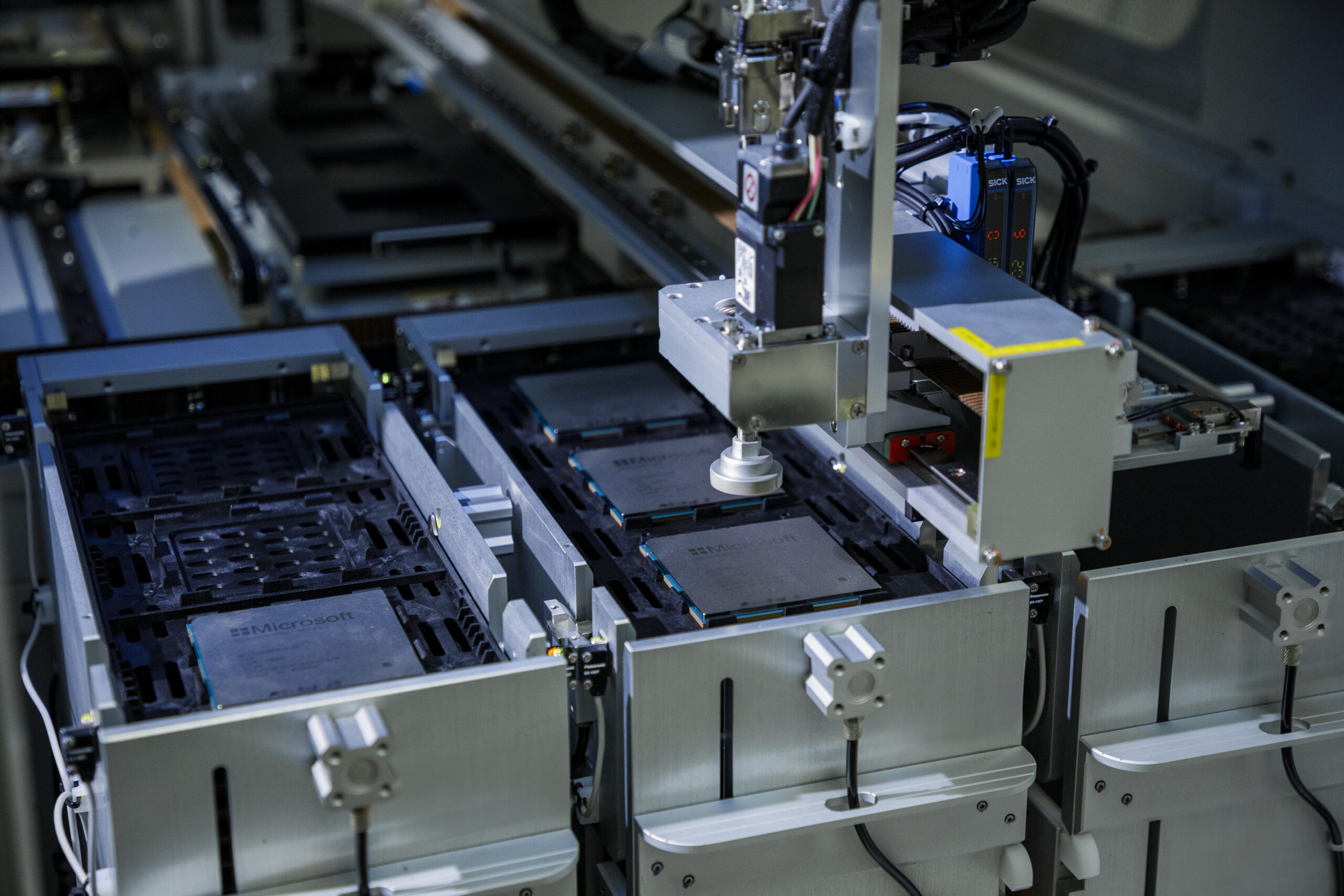
Azure Cobalt 100 is our in-house, custom-built, Arm-based cloud CPU powering general compute workloads in the cloud. Cobalt 100 systems are designed to deliver high performance, energy efficiency, and cost effectiveness for a wide range of workloads. Cobalt 100 systems have been live for nearly a year and now available in 29 Microsoft datacenter regions globally, delivering meaningful results and benefits to Azure customers across industries.
Get started with Azure Cobalt 100 VMs
Cobalt 100, Microsoft’s in-house CPU for the cloud
Cloud analytics leaders like Databricks and Snowflake are adopting Cobalt 100 VMs to support their data platforms. These companies handle massive volumes of data and rely on scalable infrastructure to deliver real-time insights and machine learning capabilities. The balance of compute power and energy efficiency offered by Cobalt 100 VMs makes it an ideal choice for large-scale data processing.
We continue to see adoption of Cobalt 100 VMs from customers who are achieving real world performance and efficiency gains:
“At OneTrust, we’re constantly optimizing our platform to deliver scalable, high-performance solutions for AI-ready governance. The Azure Cobalt 100 VMs represent a major advancement in cloud infrastructure, and we’ve seen meaningful improvements in throughput and efficiency during our evaluations. Microsoft’s innovation in Arm-based architecture enables us to better serve our global enterprise customers with faster, more cost-effective services.”
— Steve Finch, VP of Architecture & Ops, OneTrust
“At Siemens, we’re committed to pushing the boundaries of silicon verification performance. By adopting Azure Cobalt 100 VMs, we’ve achieved up to a 20% performance boost in our Questa One DFT simulations – accelerating fault and formal verification cycles across analog, memory, and digital workloads. This leap in efficiency empowers our teams to deliver faster, more reliable results for one of the most complex designs in the industry.”
– Abhi Kolpekwar, VP & GM, Siemens EDA, Siemens Digital Industries Software
“We conducted extensive benchmarking of the new Cobalt 100 VMs for containerized application workloads running on AKS and observed measurable price-performance gains compared to Azure’s previous-generation Arm-based VM series, with improvements evident across both throughput and cost-efficiency metrics. Following these results, we have migrated 70% of our AKS workloads to Cobalt 100 VMs and are in the process of migrating the remaining 30%.”
— Gopala Krishna Padidadakala, Sr Director of Cloud Engineering, Sprinklr
“Temenos is proud to set a new industry benchmark for scalable, AI-powered banking on Microsoft Azure, leveraging the breakthrough performance of Cobalt 100 VMs. The combination of Temenos’ cloud-native platform and Azure’s Arm-based Cobalt 100 VMs allowed us to achieve over 40% efficiency improvement compared to the 2024 benchmark exercise, enabling banks to run demanding workloads with greater efficiency and sustainability. This collaboration empowers financial institutions to innovate faster and scale securely, transforming the future of digital banking.”
— Eugene Khmelevsky, Head of Architecture and Data, Temenos
Microsoft’s own services are also benefiting from the adoption of Cobalt 100 VMs. The deployment of Cobalt 100 VMs for Microsoft’s services demonstrates its ability to support large-scale, mission-critical applications.
Microsoft Teams has achieved up to 45% better performance using these VMs than previously possible. Teams is a latency-sensitive application that serves millions of users worldwide, and the ability to process requests more efficiently has a direct impact on user experience. The media processor capability in Teams—supporting audio/video streaming—runs on Cobalt 100 VMs with lower compute footprint. That translates to resource reduction of up to 35% fewer compute cores needed for the workload. Cobalt 100 VMs unlock exceptional efficiency, empowering teams to achieve more, faster, with fewer resources.
Microsoft Defender for Endpoint (MDE) is a cloud-native security service with hundreds of microservices that perform threat detection, data analysis, and protection at massive scale. We have seen 40% better performance in MDE’s cyber data curator, running on Cobalt 100 VMs. Curator groups high-volume data into partitions in real time for fast, scalable processing. Faster processing and higher throughput translate to better user experiences, including faster threat response in MDE.
These results underscore the value of Microsoft’s approach to architect and develop customized infrastructure; Cobalt 100 is not just a new type of general compute VM, but one of the most optimized compute products in Azure. Whether it’s accelerating product development, scaling analytics platforms, or improving user experiences, customers are finding that the combination of performance, efficiency, and cost-effectiveness makes Cobalt 100 VMs a compelling choice for modern cloud workloads.
Cobalt 100 demonstrates Microsoft’s end-to-end systems strategy in practice. By designing the CPU in-house and optimizing it for Azure’s infrastructure, Microsoft has created a tightly integrated infrastructure that delivers consistent performance across a variety of cloud scenarios. This approach allows for better control over power consumption, thermal management, and workload distribution, resulting in a powerful and efficient cloud environment.
As more organizations look to modernize their infrastructure and adopt cloud-native technologies, the demand for highly performant and energy-efficient compute resources will continue to grow. Azure Cobalt 100 VMs are well-positioned to meet this demand, offering a scalable and sustainable solution for a wide range of applications.
By delivering faster, more efficient computing, Azure Cobalt 100 empowers organizations to push the boundaries of what’s possible with better price performance across industry use cases in their respective fields.
Start your journey on Cobalt 100 VMs – try today!
Check out the Cobalt 100 panel from Arm and Azure at Microsoft Build 2025.
Learn more about Azure’s breakthrough microfluidics cooling for AI chips.
Learn more about how Azure is scaling networking innovation in hollow core fiber.
Learn more about Microsoft’s global infrastructure.
The post How Azure Cobalt 100 VMs are powering real-world solutions, delivering performance and efficiency results appeared first on Microsoft Azure Blog.
Quelle: Azure






